


New York Times best selling author Patrick Vlaskovits joins Josh for a Spunky Conversation. Their discussion touches on subjects from what you should really be thinking before you start a business to a broken board leash and a harrowing at-sea rescue. The latter occurred the last time they stand-up paddled in a secret location in Panama. Enjoy!
In this episode, we discuss:
- How to start a reliable business in an expat town.
- How to avoid dumb mistakes most people make.
- Why you should use Lean Business philosophy to make your next venture profitable.
- How the biggest obstacles to your success can be dealt with before you even start.
And much more.
Listen to the show
You can listen to the show using the player above or grab it and listen on the go via one of the following options:
- Click here to download the mp3
- Click here to subscribe via iTunes
- Click here for the RSS feed (non iTunes)
- Click here for the show archive
React to the Show
We appreciate your reaction to episodes of Viva Radio and feedback about how we’re doing.
Send us your thoughts any time in an email or comment below.
The Show Notes
- The Lean Entrepreneur by Patrick Vlaskovits and Brant Cooper
- Follow Patrick on Twitter
- Eric Ries the inventor of Lean Philosophy
- Boca Chica Panama – an article by Viva Tropical
- Boca Chica Island– Our adventure colony project in Panama.


OliverH
There’s a lot of buzz about Ecuador as an expat haven that’s among the world’s best places to retire or live in Latin America. But not a lot of people know much about it.
Like, for starters, where is Ecuador? I mean, it’s on the equator, right? Hence the name. But doesn’t that mean it’s unbearably hot?
And is it a long way away? How do I get there and how long is the flight?
We’ll answer these and other questions you may have about this popular destination. But let’s start with the most important one.
Where Is Ecuador on a Map?
There it is! Right there on the west coast of northern South America. Between Colombia to the north and Peru to the south. The equator does pass through it, roughy ¼ of the way down, near Quito.

Andrew Turner
How Do I Get There?
Ecuador has two main airports. There’s Mariscal Sucre in Quito and Simon Bolivar in Guayaquil. Quito’s airport is new and modern. It even has an on-site hotel that’s currently being built. However, both are a bit of a hike from the city. The old airport, which was more centrally located, is now closed and is being transformed into a park.
Some travelers also fly into Guayaquil on the coast. It also has a modern international airport with all the amenities you’d expect, like restaurants and duty-free shopping. It’s only a few minutes north of the downtown area.
Once in the country, buses are plentiful and affordable. There are also a number of regional airports, including two in the Galapagos Islands, which can only be accessed via mainland Ecuador.
What Airlines Fly into Ecuador?
U.S. Airlines that offer flights to Ecuador include Delta, United, and American Airlines. TAME, an Ecuador-based airline, flies into New York City. LAN Ecuador also flies there, as well as Miami.
From the U.K., you can fly American Airlines from Heathrow to Quito. KLM will also get you to Quito from Heathrow, by way of Amsterdam.
Other airlines that fly into Ecuador from destinations throughout Latin America are Copa, Avianca, Aeromexico, Iberia, and TACA.

Morpholux
Do I Need a Visa to Go There?
Not unless you want to stay for more than three months. By presidential decree, citizens of any country may visit Ecuador and stay for a period of 90 days. You won’t need a visa. However, you’ll want to check with your embassy to see what other paperwork might be required. For North Americans and most European travelers, it’s usually just a passport and a copy of your return ticket.

Sara Y Tzunky
When Is the Best Time to Go?
Because Ecuador is located on the equator, it has roughly the same weather year-round. So there’s really no bad time to visit. However, depending on the region, some seasons are a little better than others, as Ecuador’s climate varies greatly among its four distinct areas.
The coastal lowlands stay between 80 and 90 degrees. During the rainy season (December to April), you can expect a torrential downpour pretty much every day.
The Andean highlands are much cooler with daytime highs in the mid 70s. Nights can get pretty cool with lows around 50 degrees. The rainy season is the same, with April generally being the wettest month and June to September representing the driest period.
The Amazon region is probably much closer to what most people picture when they try to imagine a climate along the equator. Predominantly tropical lowland rainforest, it’s hot and humid with temps in the 80s and 90s and steady rainfall throughout the year.
It’s still popular among adventure travelers despite its challenging climate. The frequent showers make for excellent whitewater rafting and kayaking.
Despite being situated almost directly along the equator, the Galapagos Islands get some relief from the heat thanks to the cool Pacific waters. As result, they enjoy temps between the mid 60s and upper 80s with surprisingly little rainfall.
What Places in Ecuador Should I Visit?
Ecuador is jam-packed with natural wonders and cultural attractions. Here are some of the most popular spots that you won’t want to miss.
-
Banos is the adventure capital of Ecuador. It sits at the foot of the active Volcano Tungurahua. It’s also surrounded by a number of hot spring mineral baths.
-
Canoa is a beach town that hasn’t lost its appeal as primarily a laid-back fishing village.
-
Cotacachi is a small village that’s only 90 minutes from the capital city of Quito. It enjoys a rich cultural heritage.
-
Cuenca is a beautiful colonial city in the mountains that’s quickly becoming one of the most popular expat destinations in Latin America.
-
Esmeraldas is a cozy beach town that’s a little more laid-back but still one of the country’s most popular.
-
The Galapagos Islands are an archipelago scattered far off the country’s coast. Made famous by Charles Darwin, they’re visited by scientists and nature lovers from all over the world.
-
Guayaquil is the largest city in Ecuador. A bustling coastal town, it’s a functioning port city with a relaxed Caribbean feel.
-
Loja is another mountain town that’s growing in popularity. Smaller and more affordable, it’s known for its cultural importance and musical roots.
-
Manta is a beach town that offers coastal living combined with all the big city amenities of a modern industrial city.
-
Montanita is another popular beach town. Known for its surfing and nightlife, it attracts a whole host of colorful characters from all walks of life.
-
Otavalo is another mountain town that has retained its quaint, authentic appeal. It’s most famous for its popular textile market.
-
Quito is Ecuador’s capital city. Located in the mountains, it has a well-preserved historic district and a monument situated on the equator marking the “middle of the world.”
-
Riobamba is the gateway to Mount Chimborazo, Ecuador’s highest peak. It’s also the starting point of the famous train ride down the Nariz del Diablo.
-
Salinas is a crowded beach town that’s often dubbed the Miami of Latin America. It’s popular among locals and boasts a number of water sports.
-
Vilcabamba is located high in the mountains. Its water comes from melting glacier pools and is among the purest on earth, possibly contributing to the good health and longevity of its residents.
As you can tell, there’s a lot to see and do in Ecuador. It’s also one of the least expensive destinations of its kind. Now that you know how to get there, consider taking a trip to experience the sights of Ecuador firsthand.
Ecuador Fast Facts
- Population: About 15.49 million
- Typical temperature: Ecuador is known for its micro climates, learn more here.
- Major airports with U.S. flights: Quito, Cuenca and Guayaquil. Complete list of airports in Ecuador.
- Nearest U.S. consulate: Quito and Guayaquil
Phil and his wife Meg came to Panama to meet Josh and Park on their island (Boca Chica Island) about a year ago. At that time Phil and Meg had never been to Central America. Meeting the guys was his first stop on a multi-stop tour of the region.
Since then he has traveled all over Central America from Panama to Mexico, at which point Josh caught up with him to discuss what has happened since their island meeting.
In this episode Phil and Josh discuss why he left the NFL and what led him to consider the Latin Tropics for living. After he traveled all over the region to find the perfect place to reside, Phil talks about why he wanted to leave the U.S. and look for greener pastures.
In this episode, we discuss:
- Why Phil and his wife traveled all over Central America by bus.
- What places they liked and why.
- Why he isn’t very excited about the current direction of the U.S. and why you might need to protect yourself in the future.
And much more.
Listen to the show
You can listen to the show using the player above or grab it and listen on the go via one of the following options:
- Click here to download the mp3
- Click here to subscribe via iTunes
- Click here for the RSS feed (non iTunes)
- Click here for the show archive
React to the Show
We appreciate your reaction to episodes of Viva Radio and feedback about how we’re doing.
Send us your thoughts any time in an email or comment below.
The Show Notes
- Chris Martenson Website
- Crash Course Book
- Boca Chica Panama – an article by Viva Tropical
- Boca Chica Island– Our adventure colony project in Panama.
As comfortable in a dug out canoe as as a yacht, Josh’s adventures take him and his business partner into uncharted regions all over Central America.
Viva Tropical Radio is about the people, places and ideas discovered on those journeys.
On its surface the show is about the Latin Tropics, but Josh’s multitude of interests take the show much deeper.
From strange local myths and unique plants, to how to retire to the region. From offshore investment strategy to how to build a sailboat.
We welcome you to an eclectic mix of subjects as diverse as the region.
In the inaugural episode Josh has a discussion with Park Wilson about what you should know before you invest in Central America.
In this episode, Park and I discuss the following:
- Why Market Stages are a must understand when buying property in the tropics.
- How to approach different regions in Central America
- Common mistakes most folks make when buying real estate in Central America
- If you only have 72 hours to buy how you should prepare for quick trip.
And much more.
Listen to the show
You can listen to the show using the player above or grab it and listen on the go via one of the following options:
- Click here to download the mp3 | 72.6MB | 45:12
- Click here to subscribe via iTunes
- Click here for the RSS feed (non iTunes)
- Click here for the show archive
React to the Show
We appreciate your reaction to episodes of Viva Radio and feedback about how we’re doing.
Send us your thoughts any time in an email or comment below.
The Show Notes
- Market Stages Chart that Defines the Stages – by Viva Tropical
- Map of Market Stages in Panama – by Viva Tropical
- Understanding Market Stages: The Key to Profiting on Central American Real Estate – by Josh Linnes for Escape Artist
The Transcript
Transcript coming soon!


Steve’s Travel World
Granada, Nicaragua real estate is a popular choice among investors and would-be expats who are looking for a bit of a different experience than those offered by many popular tropical destinations.
While similar to many of its Central American competitors in its beauty and charm, Granada offers an adventurous and authentic experience that appeals to a uniquely special breed of expats.
Granada, Nicaragua Real Estate Stands Out from Its Surroundings
One of the most important factors that makes real estate in Granada so distinctive is the way the city functions as a sort of oasis among the Nicaraguan wilderness. While the country is Central America’s largest area-wise, it’s also the least populated.
Much of the nation is uninhabited and lacks modern amenities and infrastructure. Yet, there amidst it all is Granada real estate, the city that has stood since it was first established as one of the continent’s earliest settlements.
Among its attractions is its ancient Spanish colonial architecture, which consists of block buildings, vibrant colors, clay tile roofs, and open courtyards. The beautiful buildings are situated along cobblestone streets lined with horsedrawn carriages and dotted with shady parks.
While it may seem for a moment like you’ve traveled back in time, the first world comforts available in Granada will quickly zap you back to reality. Although the city is quaintly traditional, it still enjoys such modern amenities as reliable utilities, phone, and internet service. Not to mention luxury hotels, four-star restaurants, and state-of-the-art fitness centers.

Khaufle
It Offers a World of Adventure Right at Your Fingertips
In addition to these conveniences, Granada also benefits from close proximity to a number of natural attractions that lure adventure-seeking expats from all around the globe. Surrounding the city are forests, farmland, lakes, volcanoes, rainforests, and even the nearby Pacific Ocean.
The city itself is located on Lake Nicaragua, one of the largest freshwater lakes in the world. The lake is dotted with 365 tiny islands, many of which are inhabited. It’s also home to the world’s only freshwater shark that adapted, along with a number of other species, to a salt-free life after the lake was formed by a volcanic eruption thousands of years ago.
Also nearby is the towering Mombacho volcano, which affords spectacular views of the lake, as well as opportunities to see howler monkeys, birds, reptiles, and deer. The Laguna de Apoyo, the local swimming hole that’s one of three volcanic lagoons, is another great place to spot exotic species of flora and fauna.
If you’re looking for more than swimming, you can head on over to the coast, which is about a 90 minute drive from Granada. There you’ll find some of the most beautiful beaches in Central America, popular among surfers from around the world.

Boris G
How Granada Bounced Back from Near Demise
Granada has long existed as a sleepy little colonial town nestled in the middle of a largely underdeveloped region. However, almost 30 years ago it lacked much of the appeal it possesses today.
The country itself was debt-ridden and bankrupt, and the ancient city had suffered as a result. Much of the town looked forlorn and weary, and its historic buildings were deteriorated and in disrepair.
Around 1990 the country launched an initiative to encourage foreign investment and assistance, and aid began to pour in. Sources included American and European expats and investors, as well as substantial interest from the Spanish government.
Foreigners began to purchase Granada, Nicaragua, real estate, buying up historic buildings and turning them into residences, rental properties, and new businesses. The growth was steady until around 2007 when the global economy took a hit, but it quickly resumed once the market began to bounce back.
Today Granada is a hubbub of construction and improvement projects. It’s the most rapidly growing city in a country that has one of the fastest GDP growth rates in the region.
The city’s infrastructure has also come a long way, with plenty of access to cable and cell service. There are Internet cafes, libraries, health food stores, and still plenty of room for investment opportunities.
Granada Offers Incentives for Expats and Investors
To encourage continued growth and development, the Nicaraguan government has implemented several incentives that make living and investing there quite appealing.
Law 306
This bill offers a number of tax-free incentives to those who invest in the tourism industry and real estate development. Those who qualify can be exempt from taxes on real estate for up to 10 years. This even includes a savings of between 80-100% on the income tax applicable to rental profits.
Other benefits include sales tax exemptions on supplies purchased for tourist projects and exemptions from the transfer tax applied to real estate transactions. Since its implementation in June of 1999, the country has approved well over 400 tourism projects for a total of close to $3 billion in investments.
Decree 694
More recently, the Nicaraguan government followed the lead of some of its Central American neighbors and began offering a package of retiree discounts and tax exemptions. Qualifying individuals (those over age 45 who have a minimum monthly income of $600) can import their household goods (up to $20,000) and a vehicle (valued at $25,000 or less) with no tax repercussions.
They can also bring in another car duty-free every 5 years and receive a tax exemption of up to $50,000 on the cost of building materials for constructing a home.

Adalberto.H.Vega
One of the Biggest Benefits of Buying Granada, Nicaragua Real Estate
If its authentic charm and gorgeous natural surroundings aren’t enough to make you fall in love with Granada, then its price tag may do the trick. Despite the fact that it’s an established destination with many of the same amenities as some of the top expat havens, Granada is a surprisingly affordable city.
Inexpensive luxuries like an hour long massage ($20) and a meal in a high end organic cafe ($4) allow for an exceptionally high quality of life on an extremely reasonable budget. In fact, with affordable rental rates to round out the equation, many couples find they’re able to live on a budget of a mere $1200 per month on average.
Even though it’s considered prime real estate, and valued slightly higher than most other areas in the country, Granada is still a very affordable place to live, invest, and raise a family. From real estate to a four-course meal, most things still cost at least half what they would in the U.S.
Granada’s Expats Are Truly Special
Many Latin cities have their own close-knit expat community. But Granada’s is a unique group. Perhaps due to the city’s status as an established town in the midst of an underprivileged area, many of its expats share a strong commitment to volunteering and improving the living standards of the surrounding community.
Its foreign population includes many teachers, anthropologists, environmentalists, agricultural specialists, and even students looking for some hands-on experience with humanitarian projects. There are schools, research programs, health clinics, and a number of other opportunities for employment and volunteer work.
As a result, much of Granada’s expat population is youthful and energetic. With the low costs of buying real estate and starting a business, many young entrepreneurs are choosing Granada as the perfect place to start their businesses or try out self-employment.

Craig James
Granada, Nicaragua Real Estate Options
Another great thing about Granada is the wealth of property types and living options it offers. There are colonial homes in the historic district, many of which now boast air conditioning and swimming pools, for between $150,000 and $250,000. You can also buy one that needs fixing up and do the work yourself, or just rent a room in someone else’s colonial mansion for a mere $400 per month.
Some expats have taken these historic homes and turned them into properties that double as both their residence and business or office. Still others opt to rent properties on the outskirts of town, where many claim to be able to live more like the locals and get by on only $800, including rent.

Sally South American Cruise
What Your Money Will Currently Buy in Granada
For comparison’s sake, here are a few properties that are currently on the market in Granada, Nicaragua.
-
A mere $69,000 will get you in a 2 bedroom, 1 bath fixer-upper that’s a 5 minute walk from the Central Park, with its restaurants, bars, and market.
-
$165,000 buys a turn-key 2 bedroom, 2.5 bath property in the city center that was recently remodeled and includes a pool and second-floor terrace.
-
Your $185,000 investment can purchase a 3 bedroom, 4.5 bath home that’s 2 blocks from the main strip. It has walk-in closets, several gardens, dedicated parking, and an ornate iron fence that encloses the entire property.
-
For $215,000 you can buy a 3 bedroom, 2 bath home within walking distance of the Plaza Central and all its dining and shopping options. It includes a pool and terrace with views of Volcan Mombacho.
As a destination that hasn’t [yet] seen quite the boom that some other Central American cities have experienced, Granada is an excellent choice for expats and investors who don’t want to feel like they’re buying at the top of the market.
And with its entrepreneurial, philanthropic, and adventurous set of expats, the city’s appeal is likely to continue to grow in the coming years. As a result, it’s a great place to invest and an even better place to start a new chapter of your life. For everything you need to know about the Granada, Nicaragua download our starter kit today.
Map of Granada, Nicaragua
Granada, Nicaragua Fast Facts
- Population: 117,569
- Typical temperature: Most days are between 82 and 88 F, year round
- Major airports with U.S. flights: Granada is served by Augusto C Sandino Airport located in Managua, Nicaragua
- Nearest U.S. consulate: Managua, Nicaragua


photo by Best of the Better
Can I be frank for a minute? And forgive me if you already know this, but…it’s important that you, as someone who’s interested in investing or living in Latin America, understand that you can’t trust what anyone out there is telling you about international living.
Not even us.
Why, you ask?
Well, it should hopefully come as no surprise to you that those who write about topics like living and investing overseas aren’t just doing so out of the goodness of their heart. Like everyone else these days they’re ultimately looking to turn a profit in some form or fashion.
Whether it’s selling ads on their website, getting you to buy their ebooks, luring you to a seminar, or even selling you a piece of tropical real estate. And those are all perfectly acceptable means of making money. Just so long as you, the consumer, know to take their opinions and advice with a grain of salt.
Why we’re only slightly more trustworthy than other international living sites
Around a decade ago, my business partner and I both sat right where you are. Working in unfulfilling careers in corporate America, trying to get ahead, and dreaming about what it might be like to break free and start a life with our families in a completely new context.
Long story short…we both mustered up the courage and took the plunge. Now we and our families have never been happier.
What’s more, we think there are a lot of other North Americans (maybe even you) who might benefit from making a similar move. They just need a little guidance and reassurance. We wanted to serve as an unbiased, reliable resource for individuals like you.
I say unbiased, because we soon realized that there are a lot of marketers and gurus out there spouting a whole bunch of misinformation. Because they have something to gain from your subscription or your investment, they tell you a lot of what you want to hear and gloss over the tough parts about life abroad and the process of uprooting your family.
The truth is that becoming an expat isn’t always easy. You know how hard it is to move your family from one side of town to another. Imagine that multiplied exponentially when it comes to transitioning to a new country and a different culture.
We’ve seen the devastating effects that unrealistic expectations can have on families, marriages, finances, etc. We want to help you learn how to see through those scams and objectively evaluate tropical destinations and the expat lifestyle for yourself.
That being said, while we at VivaTropical try to provide you with the most relevant, accurate, and unbiased information available, even our articles are biased by our own opinions. It isn’t intentional. It’s just inevitable. There’s no substitute for forming your own objective opinion.
Pay close attention to the man behind the curtain.
The first step in evaluating any recommendation on tropical destinations or tropical real estate is to consider your source. And, if we’re being completely honest here, a lot of the articles out there about international living are written by people that you probably wouldn’t even listen to for more than 30 seconds if they were standing in front of you.
But a fancy website, a credible-sounding URL, and the word “Expert” after the author’s name can go a long way in making them seem a bit more legit. So, just make sure you remain as objective as possible and do your best to read between the lines.
For example, if you’re reading an article on a website called ElSalvadorBeachProperties.com then, yes, they’re probably going to tell you all about how that country has Latin America’s best beaches. They’re also probably going to gloss over its crime problem and poor education system.
The same goes for marketers who claim you can move to grand expat cities like Boquete, Panama, and Cuenca, Ecuador, and get by on some ridiculous amount of money. Yeah, you could live on less than $1000 per month. But only if you live like a local and don’t plan to take advantage of the amazing opportunities to travel the region.
Sometimes it’s a little harder to determine a site’s agenda when it’s not explicitly spelled out in their domain name. You might have to look for a copyright or a Contact Us page to find out who’s behind the information and what their motives might be.
But, once you know who you’re dealing with, you can view their information under the right lens and learn to spot a false claim a mile away.
Consider the folks who got married at McDonald’s.
That’s right. More than one engaged couple has, when faced with a plethora of options for a wedding venue, chosen to say their vows beneath the golden arches. We’re talking about linking arms and sipping from straw cups rather than champagne flutes and posing with wedding cakes built out of strategically stacked hot apple pie boxes.
That right there ought to be enough to tell you that what suits one individual or family is by no means right for everyone out there.
One man’s paradise can easily equate to another person’s idea of hell on earth. If you don’t believe us, then just go read an article about a Latin city–any city–and then read the comments people have posted below it.
For every article singing the praises of a certain destination there are usually at least a dozen critics who think it’s the worst place they’ve ever set foot in. Our articles included.
Does that mean we’re wrong about some of these places? No. Well, not exactly. It just means that not everyone is going to share our views about every destination we write about. Nor do we share the opinions of some of the other international living bloggers out there.
It’s all a matter of preference and priorities. The only way to settle on a destination that will make YOU happy is to consider your values and what’s important to your family. Then have the time of your life looking for the place that fits that bill.
Read everything you can find about a place, including the bad stuff.
Once you decide you’re serious about giving the expat lifestyle a try, start researching to narrow down your search. Read guides. Read articles from “experts.” Read the comments from people who think the author is an idiot or at least someone who’s clearly never set foot in that destination.
Join expat forums and chat with people who live in or have been to the city. Ask them questions and get real answers from people who aren’t trying to sell you a timeshare.
Learn to decipher some of the terms or descriptions marketers use to mask some of the less appealing aspects of some tropical cities. A lot of them are the same as the tricks North American realtors use. (You know the ones. A bedroom described as “cozy” might barely accommodate a twin bed. “Tranquil” means it’s in the middle of nowhere, while “convenient” can mean it’s in an area that’s noisy or busy.)
Likewise, with tropical destinations, there are similar cues you can look for. A place that’s “undiscovered” might be cheap, but it probably doesn’t have the most reliable utilities or even paved roads. In a city that enjoys daily afternoon rainbows, you’ll also have to contend with the necessary afternoon rain shower. Don’t miss what the author is really telling you.
Consider it a red flag if an author or source never has anything bad to say about a place. I assure you there’s no problem-free location in Central America, or anywhere for that matter. However, at the same time, don’t be turned off by the slightest negative detail about a city. The cool nights in towns at higher elevations may be too chilly for some, but could be ideal for you.
Always kick the tires and take her for a test drive before you buy.
You can learn a lot from reading articles, looking at pictures, and talking to other expats (and you should definitely do all of those things). But there is NO substitute for actually boarding a plane and flying down to see a place for yourself.
Sure you hear the stories about the folks who buy tropical real estate sight unseen, move their families down, start a business, and live happily ever after in paradise.
That is NOT the process that we recommend.
You need to really see and experience a place for yourself in order to determine if it’s a good fit for you. And not just for one weekend, during the dry season, with a driver, a tour guide and an interpreter. Plan to experience the place the way it would really feel if you lived there.
Walk around and talk to the locals. Eat something they consider a ‘delicacy.’ Go exploring and get lost somewhere. In town. In a jungle. (Ok, well, maybe you should have a tour guide for that excursion.)
Not only does taking a trip and enjoying an authentic experience in a new setting sound like an amazing vacation, it’s often the last step in nailing down that final decision on which tropical city would make the best backdrop for the next chapter of your life.
What are you waiting for? Turn the page. You’re gonna love how this one ends.

The U.S. State Department estimates that there are currently 6.32 million Americans living overseas, in over 160 countries. But where exactly are they choosing to reside?
Thanks to a new interactive map that uses migration data from the United Nations Population Division, we can now tell where Americans are living abroad (as well as nationals of any other foreign country).
Not surprisingly, many of the countries that top the list of popular destinations for U.S. citizens are located just to the south, in Latin America. Due in part to their proximity, pleasant climates, and affordability, the countries of Central and South America are a natural choice for would-be expats who are looking to experience something new.
Here are a few of the most popular countries U.S. immigrants choose, along with what makes them such desirable destinations.

Joseph Martinez
849,000 Americans Live in Mexico
With an astounding number of U.S. immigrants (more than twice that of just a decade ago), Mexico is the #1 place Americans go when they leave the U.S. It’s also more than twice that of the second most popular country, Canada.
In fact, you might also be surprised to know that more people from the U.S. have moved south of the border than Mexicans have moved north. And the reasons for this choice are numerous.
For starters, relocating to Mexico is just easy. It’s close. There are plenty of other expats. You can access the country with only a short flight, or even drive across the border if you really want to.
In many places the infrastructure is good, quality health care abounds, and it can all be had at a fraction of the cost of living in the U.S. The long-standing U.S. expat presence has paved the way for newcomers, and there are plenty of the same U.S. franchises and name brands that foreigners recognize.
Yet despite its U.S. influence, Mexico maintains a rich culture that many say has been lost in other expat havens, such as countries in Europe. Mexico’s immigrants claim the country is alive with possibility and a vibrance that just isn’t found anywhere else right now.

Dave Bezaire
39,000 Americans Live in Ecuador
Ecuador continuously battles nearby Panama for top billing as the world’s best place to retire. In 2014 it lost by only .1 of a point, according to International Living’s annual survey. Among the reasons for its consistently high scores are its unrivaled scenery and its extremely affordable cost of living.
A couple can live quite comfortably in most Ecuadorian cities on $1500 to $1800 per month, which includes housing and even luxuries like a part-time maid. That same feat can be achieved elsewhere in Latin America, but it won’t come with the same quality of life.
Ecuador has historic colonial cities like Quito and Cuenca with their cathedrals and Spanish colonial architecture. The weather in the mountains is pleasantly mild, and even on the coast the temperature rarely reaches 90 degrees.
There’s good private health care, particularly in the large cities. Infrastructure is also improving, with enhancements like a new airport just outside Quito and the widening of the Pan-American Highway.
The country’s economy is stable and growing, The friendly and welcoming Ecuadorians are thriving, enjoying better lifestyles than previous generations.

Sergio Quesada
13,000 Americans Live in Costa Rica
For a few decades now, Americans have been flocking to Costa Rica for its natural beauty and the “pura vida” (pure life) atmosphere it offers. Named the world’s happiest country, accordingly to the 2009 and 2012 Happy Planet Indexes, it possesses a lot of factors that contribute to an overall fantastic quality of life.
Both Costa Rica’s locals (called Ticos) and expats enjoy a much slower pace of life than U.S. residents are used to. There are plenty of options for healthy living, including yoga classes and organic food options. The country is also committed to sustainability, and green initiatives abound.
The country’s public health system is among the best in the world (ranked higher than that of the U.S.). After a monthly payment that’s based on income (between $50 and $150 for most expats) residents receive health care that’s completely free and includes routine visits, prescriptions, and even major surgeries. No exclusions apply due to age or pre-existing conditions.
Costa Rica is safe, politically stable, and enjoys year-round warm weather, although the higher Central Valley is even milder than the tropical coasts. There’s also a great pension program for retirees earning an income of $1,0000 or more from an outside source.

Bocas del Toro via Tysnfst
12,000 Americans Live in Panama
Edging out Ecuador to take the top spot as the best place to retire in 2014, Panama is a popular choice among expats for its convenience and affordability, as well as its unmatched retirement program. Thanks to some new visa options, it’s also recently become an even easier place to live as an expat.
Its list of conveniences includes easy access, thanks to several international airports, a dollarized economy, widely-spoken English, and a thriving international community. The country is also undergoing a massive overhaul of infrastructure projects ranging from new highways and a metro system to an expansion of the canal.
Few Latin American countries can rival Panama’s variety and value. It has quaint mountain cities flanked by rainforests and coffee plantations, laid-back Caribbean beach towns, and a bustling first world capital city that has a national park within its city limits.
Panama’s pensionado visa has always been a popular choice. It’s available to anyone, regardless of age, who can prove $1,000 per month income from a guaranteed source. For those who qualify, the list of benefits and discounts are too extensive to list.
Much of Panama is more affordable than its Costa Rican neighbor, in many cases with the same or better amenities, making it a great place to invest in real estate or the growing tourism industry.
Guillén Pérez
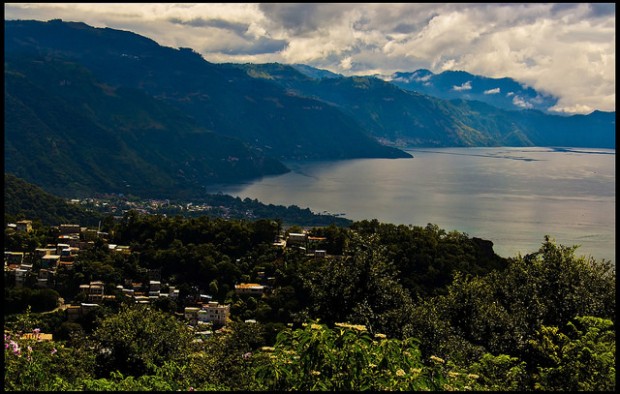
8,000 Americans Live in Guatemala
Guatemala, known as the Land of the Eternal Spring, has also crept onto the radar of many U.S. expats in recent years. Its popularity is largely due to the fact that it shares many of the same perks as its Latin American neighbors (slower pace of life, beautiful surroundings, close proximity to the U.S.), without being too overcrowded.
It’s also a bit less expensive than some of its competitors, with expat couples claiming the ability to live comfortably on well under $1500 per month. Domestic help, like the services of a maid or gardener, is only $2-$3 per hour. And a week’s worth of fresh fruits and vegetables costs only $6-$10 at the market. Real estate in Guatemala is also on the affordable side.
One of the country’s biggest selling points is its authentic culture, particularly the area around Lake Atitlan, a popular expat destination. Located about 75 miles from Guatemala City, the lake is surrounded by volcanoes and a number of villages where natives still practice their ancient Mayan traditions.
Even closer to the capital is Antigua, which is full of cobblestone streets and colorful flora. Much of the country enjoys a mild climate with warm days, cool nights, almost no humidity, and little need for either heating or air conditioning.

David F. Barrero
4,000 Americans Live in Nicaragua
Two of Nicaragua’s most beautiful colonial cities, Granada and Leon, aren’t just impressive due to their shady parks and Spanish architecture. They’re also among the hemisphere’s most ancient.
Granada and Leon continually vie for the title of Oldest City in the Americas. Both boast colonial churches and public buildings, as well as plazas that are well-preserved specimens of the area’s rich history.
Equally breathtaking are the country’s two coastlines (one sand, one surf), its jungle and cloud forests, its lakes and volcanoes, its capuchin monkeys and rare orchids. Visually, Nicaragua is a rare gem, having much of the same ecotourism appeal as Costa Rica and Panama, just less discovered, less developed, and less expensive.
In fact real estate, even in some of the developed areas, is quite a bargain in Nicaragua. Land on the Pacific Coast selling at 40-50% below its peak, and a small Spanish-colonial home in Granada can go for as little as $40,000-$50,000. Many developers are quite eager to sell, offering special deals and discounts such as developer financing.

Zhu
3,000 Americans Live in Belize
Like its Latin American neighbors, Belize offers an amazing climate and an affordable lifestyle. It also delivers stunning natural beauty, much of which is completely unspoiled. Adventurous expats can explore its sandy white beaches, tropical rainforest, ancient Mayan ruins, mountains, waterfalls, and more.
Most notably, the warm waters off the coast of Belize are home to the world’s second largest barrier reef (the largest in the western hemisphere), which makes for excellent diving, snorkeling, fishing, windsurfing, and a number of other aquatic activities.
Also, as the only English-speaking country in Central America (due to its origins as a British, rather than Spanish colony), Belize is an easy place for expats to make themselves comfortable. The country’s system of law is also based on British principles.
Another perk of living and investing in Belize is its stable economy. It has one of the lowest inflation rates in the world and a number of tax benefits for residents and investors. As a result, it’s also a popular offshore banking center.
So, if you’re considering relocating to Latin America, those are a few of the places where you might be most likely to have other expats as neighbors.
But don’t read much into the numbers other than just that. No single expat destination is right for everyone, so a country that draws thousands of new immigrants each year might have no appeal for you at all.
The decision to become an expat is life-changing one. The process of deciding where is the fun part. Start exploring today.


Playa Negra in Costa Rica’s Guanacaste on the Northwest Pacific Coast probably isn’t on your radar. It feels worlds away from the popular, developed surf towns of Tamarindo and Jaco. With barreling waves, beautiful tide pools for swimming, and a relaxed community atmosphere, Playa Negra is Costa Rica’s hidden gem.
You should go there now.

Vagablonding
Location
Playa Negra is less than a two-hour drive from the Liberia International airport, making it a convenient first stop after landing in the country. It’s also just a half hour drive away from the world famous waves in Tamarindo. The town and surrounding area can be accessed only by small dirt roads, making a 4-wheel drive vehicle necessary. The road can be rough and there are several river crossings. However this difficult path is exactly what keeps out most of the tourists and development.
To reach the capital of San Jose, visitors and residents can fly from Tamarindo in under an hour or drive around four to five hours depending on weather. Public buses leave from the town of Santa Cruz, just a few miles away from Playa Negra.

Magalie L’Abbé
Activities
Most famous for its great surfing, there is plenty to do in Playa Negra. The town has two popular surf breaks and several more nearby that you can drive or take a boat to. A break exists for any surf level and beginners can take lessons right in front of Playa Negra. Swimming on the beach is possible because of tide pools, making it a great hangout beach for families. There are also horseback riding tours down the beautiful beach, fishing trips in small boats, body boarding, mountain biking in the gorgeous jungle, canopy tours, and yoga classes; just like at other popular spots in Costa Rica.
For even more adventure the Ostional National Wildlife refuge, a nesting site for the Olive Ridley sea turtle, is less than thirty miles away. During the months of July through December hundreds of turtles run from the beach out into the sea under the full moon, a stunning natural phenomenon.

Drew Domkus
Why You Should Go to Playa Negra Now
First Class International Dining
Playa Negra may be a small town, but the quality of restaurants serving international dishes puts it on par with much larger cities for dining. From wood fired pizza to Tex-Mex to French pastries, this town seems to have it all. Café Playa Negra has the best Peruvian food in Costa Rica serving ceviche patacones, passionfruit cheesecake, and of course Pisco Sours. A former five star restaurant chef from the U.S. has opened Villa Deevena with elegant dishes and an extensive wine list. There are also plenty of local Costa Rica restaurants that add some fusion and flair to their cuisine.
Excellent Surf Opportunities
Tamarindo may be famous for its consistent barreling waves, but Playa Negra has excellent surfing with less crowds and development. The main peak in Playa Negra is considered the best reef break in all of Costa Rica and has a fast, long right that tends to get quite hollow with plenty of green room. This area is unpolluted, which means the ocean remains crystal clear and full of animals. While surfing you can simply look down into the water and see parrotfish, sea turtles, and colorful reef fish; a truly magical experience.
Just a five minute drive away is famous Playa Avellanas which caters to many surfing abilities. Beginners and intermediates can surf the soft rights and lefts near the shore with a long board. Surf camps and surf instructors generally take students here. More advanced surfers can walk down to the Avellanas Rivermouth to surf an A-frame break with long barrels on both sides. Just north is Little Hawaii with a powerful Hawaiian-style right hand break. Finally, Playa Negra is close enough to Tamarindo to hit all of the famous spots including Witches Rock, with long lefts and rights that are easy to surf, and Ollie’s Point, with fast hollow waves that break on a rocky floor.
The Perfect Place to Get Away

Kim F
This small, sleepy town is home to just a few hundred residents, making it a peaceful place to hang out and relax. The long stretches of white and black sand beach are great for laying in the sun and reading a book or taking long walks. Tide pools with still water make little swimming pools for anyone looking to relax, especially kids, away from the waves. Perhaps one of the most relaxing things you can do is simply lay in a hammock with a cold beer and watch the sunset and Playa Negra is the perfect place to do just that.
Remote Yet Accessible
Playa Negra may feel like a quiet haven far away from it all, but it remains in close proximity to the development further up the coast. Just around the corner are the luxury resorts, variety of restaurants, and thumping night clubs in Tamarindo. This makes Playa Negra the perfect place to live out your deserted beach fantasies without missing out on any of the first world luxuries.
Map of Playa Negra, Costa Rica
Play Negra Fast Facts
- Population: A few hundred residents
- Typical temperature: Average temperature is 85 degrees
- Nearest airport with U.S. flights: Liberia International Airport
- Nearest U.S. consulate: San Jose, Costa Rica


Anoldent
Where is the best place to live? According to Mercer, an international consulting and human resources firm, it’s Vienna, Austria.
Based on their research of 460 cities across the globe, of which they rank the top 223, Vienna offers the highest quality of life of all of the places they surveyed, making it the best place in the world to live and work.
Other top ranking cities were Zurich, Switzerland; Auckland, New Zealand; and Munich, Germany. Vancouver, Canada, the highest-ranking North American city, came in 5th. Two more German cities, Dusseldorf and Frankfurt, claimed the 6th and 7th slots.
The highest U.S. city to appear in the rankings was San Francisco, at 27th. New York scored 43rd, and Detroit ranked the lowest (70th) of all the U.S. cities surveyed.

Anthony Doudt
What’s the Basis for the Survey’s Rankings?
The cities studied are evaluated based on a number of factors in order to compile the annual list of rankings. Some areas they look at include the political and social environment, medical and health considerations, education, public services, consumer goods, and housing, to name a few.
Examples of elements that the survey conductors consider to be beneficial to an area’s quality of life include an abundance of entertainment options, easy access to medical services, good public transportation, and a pleasant climate.
Factors that might cause them to dock points include crime, political instability, natural disasters, traffic congestion, and air pollution.

Bonsairolex
Why Are the Results Wrong?
Well, maybe they’re not exactly wrong per se. Just a bit misleading. Touting a city as the best place to live is a pretty bold claim. Then again, it’s not so far off base when you take into consideration the purpose of the survey itself.
Consider the survey’s target audience.
The survey is conducted each year in order to help educate businesses on the quality of living in the cities where they operate. Why? So that, when they relocate employees overseas or place them on international assignments, they’ll know how to compensate them fairly.
For example, say an employee was being transferred from #10 ranked Sydney, Australia, to St. Petersburg, Russia (#168). That person might be offered a “hardship” allowance to account for the decrease in the standard of living between his or her home base and the destination city.
The survey’s other purpose is to help city leaders see how they compare to competitors in terms of attracting multinational companies and mobile talent. By evaluating their quality of living rankings they can better align their goals with what’s needed to improve their city’s appeal.

David Dennis
Keep in mind the limited number of cities surveyed.
The survey ranks only the top 223 global cities. With 196 countries in the world (at last count), that’s not a very good representation. However, as the survey is geared towards international businesses, it understandably focuses on those that are considered major players in the global market.
However, recognizing their own shortsightedness, this year the researchers did begin to broaden their scope to include a few places that are newer to the international scene. These “second tier” or “emerging” cities are ones that “have been investing massively in their infrastructure and attracting foreign direct investments by providing incentives such as tax, housing, or entry facilities,” said Slagin Parakatil, a senior researcher.

Casey
Remember it ultimately comes down to individual preference.
Quality of life is such a subjective concept. One man’s paradise could be another’s idea of absolute hell on earth.
Take the employee from our previous example. If he has absolutely no interest in cricket or rugby and loves the idea of 100+ days of annual snow cover, then the move might not present him with that much of a “hardship.”
Or look at most of my clients and the quality of life they’re seeking. When I talk to people from other parts of the world about starting a new chapter of their lives in the Latin tropics, not many of them mention wanting to be near an 18-screen multiplex theater or a car dealership. And most don’t give a rip about whether there’s media censorship or free waste disposal services.
What more of them care about is being able to live sustainably in a place where they’re free to enjoy a laid-back lifestyle and live according to their own priorities. They also understand that, while there are some things (like safety) that can’t be compromised, there are a number of issues for which you can easily find a work-around.
No access to quality international schools can be a problem for some. But homeschooling is a great solution. Being a bit farther from a grocery store can be an inconvenience. But having fresh produce delivered, or being able to grow your own year-round, can help combat it.

Panama ATP
Some Contenders I’d Like to Have Seen in the Ring
So, let’s say the survey had been based on the actual health and happiness of the cities’ residents, rather than arbitrary factors like the saturation of doughnut shops and the availability of appliance repair technicians. Where is the best place to live according to VivaTropical standards?
Here are a few that I think could have stood up against even the most worthy competitors. And interestingly they’re all located in some of the most popular countries North American expats choose to call their home away from home.
Panama
Panama topped a survey of a different kind when it ranked number one in International Living’s Global Retirement Index (which looks at 8 completely different categories than the Mercer survey) as the best place to retire overseas in 2014.
It performed well in the Real Estate category, as well as Health Care, Entertainment and Amenities, Ease of Integration, and Special Benefits for Retirees (thanks to the generous discounts offered by its Pensionado program).
It’s also incredibly affordable and offers a ton of options to suit every lifestyle. Here are some of its top cities:
-
Panama City – Panama’s capital is a cosmopolitan, first-world city, so even the most diehard urbanite would lack very little in the way of amenities living there.
-
Coronado – Those looking for a less hurried lifestyle that’s still close to big city conveniences love this upscale beach town that’s only an hour from the capital city.
-
Boquete – Home to Panama’s largest expat population (and a well-organized one at that), this mountain haven offers a break from the coastal heat, amazing vistas, and plenty of outdoor adventures.
-
Boca Chica – Located a mere hour from the major city of David (and its newly renovated international airport), Boca Chica is an otherworldly destination that offers a quality of life that could rival any place on the planet.
Costa Rica
Costa Rica has long been a popular choice among North American expats for its laid-back bohemian lifestyle, healthy living options, sustainability, and drop dead gorgeous scenery.
Here are a few of its better options:
-
Nosara – It’s safe. It’s clean. It’s family friendly. Nosara is the result of what happens when a town is intentionally developed accordingly to a well-designed master plan. Did I mention it’s beautiful?
-
San Jose – Located in Costa Rica’s Central Valley, its capital city is also rich with all the same modern conveniences, cultural offerings, and other creature comforts that make living abroad easy.
-
Tamarindo – Your typical beach town, Tamarindo is a funky city with an eclectic mix of friendly residents. Shoes are optional, and time is relative. Except every day at sunset, when your presence is required at the daily beach gathering.
Ecuador
Panama ranked as the top retirement destination for 2014, but Ecuador was right at its heels (with scores of 91.2 and 91.1 respectively). It continually scores well for its extremely affordable cost of living (one of the lowest in the world).
Yet it offers some of Latin America’s best authentic culture, healthy lifestyles, and some of the top expat destinations in the region. Here are our top picks:
-
Cuenca – Located high in the Andes this colonial city offers spectacular architecture, an established expat community, a lively art and music scene, several universities, and all the goods and services you could possibly need.
-
Vilcabamba – Known as the Valley of Longevity, this mountain town has some of the purest water in the world. Thanks to the fresh springs and their active lifestyle, many of its residents live to be over 100.
-
Salinas – Think of this popular coastal destination as South Beach on a budget. It’s the same glamorous beaches and resorts, but for about ⅛ of the price.
-
Quito – Ecuador’s capital, it has a well-preserved historic district as well as a monument to mark the location of the equator. However, thanks to its elevation, its climate is surprisingly pleasant.

Sally American Curise
Nicaragua
Another affordable Latin American country, Nicaragua has stayed a little farther off most North Americans’ radar. As a result, it’s less crowded and less expensive.
-
Granada – Located on the shores of Lake Nicaragua, it’s a charming colonial city with a number of ways to explore nature nearby. It has a European flair with lively squares and a vibrant art scene.
-
Leon – Similar to Granada, it’s a little hipper and more laid back. It’s also close to several popular Pacific beaches, as well as 8 volcanoes.
-
San Juan del Sur – Nicaragua’s biggest beach town, it’s becoming increasingly popular with expats. It has great surfing, plenty of dining options, and a happening party scene.
-
Managua – Nicaragua’s capital city offers museums, cultural centers, and many other forms of entertainment. It’s also located on a lake of the same name and offers a wide array of beautiful flora.

O En Voyage
So, Where Is the Best Place to Live?
The ultimate answer to this question is dependent, not on any particular study (especially since they can be quite biased), but on your individual interests and priorities. Don’t let anyone else tell you where is the best place to live.
Don’t trust a survey. Heck, don’t even trust me. Pick a few places that seem to line up with the things you value. Then plan a trip to visit your top choices and decide for yourself.

Anoldent
The beautiful island of Ambergris Caye, Belize, was recently named the best island in the world by the readers of TripAvisor. The island takes top billing for the second year in a row, knocking out favorites like Bora Bora and Chile’s Easter Island.
When choosing it as their top pick, voters cited its beautiful natural environment, its perfect balance of quaint-meets-contemporary, and the myriad of activities the island offers. Here are a few of the things that make Ambergris Caye such a great choice for tourists and expats.
It has a relaxing laid-back feel.
Despite being popular enough to rank tops with TripAdvisor travelers, Ambergris Caye has retained its quaint island atmosphere. There are no high-rise buildings, no traffic lights, and nothing but palm trees lining the long stretches of beautiful beach.
Most everything is within walking distance, and most inhabitants do their walking in bare feet. Beyond that, golf carts are about the most sophisticated vehicles you’ll see on the sandy roads.
The people are an eclectic mix of locals as well as expats from all over the globe. Many residents come over from mainland Belize, but there are also immigrants from other Latin American countries, the U.S., and elsewhere. They’re all helpful, super friendly, and eager to share their love for the island with other newcomers.
Yet it’s far from sleepy.
Even though Ambergris Caye can be peaceful and quiet, there’s no shortage of things to do, thanks to its well-developed tourist culture. There are a variety of restaurants, due largely to its diverse blend of cultures.
You can visit a hot dog or burrito stand for lunch, snack on ceviche or stuffed jalapenos from a street vendor, and enjoy dinner at an elegant restaurant serving authentic Belizean cuisine. The island also has a happening evening scene, with plenty of bars, beach parties, and more.
It offers some of the world’s best scuba diving.
Ambergris Caye is less than a mile from the Belize Barrier Reef, the largest in the Western Hemisphere and the second largest in the world. It’s also a short distance from the Great Blue Hole, one of the world’s top diving sites.
The waters around the island are also great for snorkeling. The fishing is great, and you can also sail to the nearby cayes, like Caye Caulker which is another popular Belize vacation spot.
Not to mention, the amazing scenery.
Ambergris Caye is much more than the sand and sea of your average beach town. It does have some great sand beaches that have been cleared for the enjoyment of sunbathing tourists. But what’s even more interesting are the other ecosystems on and around the island.
From the mangrove swamp that occupies the center of the island to the jungles on the surrounding cayes to the reef itself, there’s so much to observe in Ambergris Caye. If you’re only looking for the white sand beaches with shady palms, you can definitely find them. But don’t miss the other opportunities the island offers.
If you like Ambergris Caye, you’ll love these options…

James Willamore
Roatan, Honduras
Located just off the country’s northern coast, Roatan is also only a short hop from the reef. As a result, it offers the same opportunities to explore seawalls and shipwrecks while swimming with dolphins and sea turtles in the warm waters of the Caribbean.
Except when there are cruise ships docked offshore, Roatan is pleasantly uncrowded compared to some of its Central American competitors. Yet it also enjoys all of the same amenities tourists and locals seek, like great bars and restaurants.
It has equally friendly locals, many of whom speak English, and plenty of expats. Prices there are also still relatively affordable.

Roman Königshofer
Bocas del Toro, Panama
Also located in the Caribbean is the archipelago of Bocas del Toro, Panama. The country’s vacation destination, it’s popular among travelers from all over the world.
With its network of buildings built on stilts out in the water, it’s everything you picture when dreaming about a Caribbean vacation. It also enjoys the same easygoing vibe as the other destinations.
Visitors to Bocas del Toro can participate in diving, snorkeling, world-class surfing, jungle hiking, or just relaxing on the beautiful beaches.

Jackiemora01
Nosara, Costa Rica
A longtime popular choice among expats, Nosara is a great mainland beach option. It’s known for its fantastic surfing and healthy, active culture. It’s also gaining popularity among young expat families.
It’s a safe community that lacks the drug problem that plagues many other destinations. Its longstanding status as an expat haven has resulted in the addition of many amenities families seek, such as quality schools.
It also has some of the country’s most beautiful beaches, which are protected from the scars of any large-scale developments. They offer nothing but shady palms, rocky cliffs, and long expanses of sand.

VivaTropical
Boca Chica Island, Panama
Located in an archipelago in the Gulf of Chiriqui, off Panama’s Pacific Coast, Boca Chica Island is one of the country’s final frontiers. Its sandy beaches give way to lush virgin rainforests, making it the perfect place to relax in a tranquil setting away from the crowds and noise.
From Boca Chica, you can hop to one of the over 50 surrounding islands and explore deserted beaches, eerie mangroves, and ancient jungles. The area also offers some of the world’s best sport fishing.
While it sounds remote (and it certainly feels that way), Boca Chica Island is only a 10 minute boat ride from the town of Boca Chica on the mainland, and then it’s less than an hour to the city of David (Panama’s 3rd largest).
Because of its excellent location, plus the massive renovation of David’s airport that now allows for international flights from the U.S., property on Boca Chica Island is also a fantastic investment. It’s the perfect place to enjoy an active tropical lifestyle without giving up any modern conveniences.
And thanks to our newest Adventure Colony development, you can still buy oceanfront lots in this up-and-coming area at unbelievable prices. For more information on the Adventure Colony experience and its investment potential, here are some helpful insights and cool video of the area.
Map of Ambergris Caye, Belize
Belize Fast Facts
- Population: 324,060
- Typical temperature: mid-80s
- Nearest airport with U.S. flights: Philip S. W. Goldson International Airport, Belize City
- Nearest U.S. consulate: Belmopan, Belize


bengarland
Cuenca, Ecuador, is a rare find among expat destinations. Latin America has its share of quaint mountain retreats, eclectic beach towns, and even cosmopolitan cities.
But Cuenca is in a class of its own.
It’s large enough to house a wealth of cultural offerings and first world amenities, yet not so big that it loses its small town feel. It’s authentically Ecuadorian, but with enough North American familiarities to make expats feel right at home.
These factors, combined with its ideal climate and low cost of living (including housing), are the reasons that Cuenca, Ecuador, real estate has been in such demand in recent years.
Cuenca, Ecuador: From “Panama” Hats to Publicized Hotspot
Cuenca’s roots date back to the ancient Incas, before it was conquered by the Spanish in the mid-16th century. Many of the churches, plazas, and other structures they built still remain, earning Cuenca a place as a Unesco World Heritage Site.
The city thrived as an important industrial, manufacturing, and agricultural center. It also saw much success from the production of the erroneously named “Panama” hat, which was made from local palms. Other lucrative industries included the making of ceramics, furniture, and jewelry.
While tourism was always central to its economy, the industry really began to pick up speed over the past dozen or so years. However, the big tourist and expat boom came in 2009 when International Living named Ecuador as the world’s best retirement destination, citing Cuenca as its most attractive city.
Since that time, expats from all over have flocked to Cuenca in droves. They range from retirees to young families or singles, looking to start a business or even work for their same company by telecommuting from abroad.
Why Expats Love Cuenca
Sure there’s the culture, the colonial charm, and the ideal climate (temps in the mid-70s year round). But lots of cities offer those same perks.
Here are a few of the factors that make Cuenca, Ecuador, real estate stand out above the rest when expats are choosing a place to retire or raise their family.
It’s an incredibly livable city.
There are a number of features that not only add value to Cuenca’s already-desirable real estate. They also make residents’ day-to-day life much simpler and more enjoyable.
Recent infrastructure projects include pedestrian walkways, bike paths, underground parking facilities, and a light-rail system that will transport an estimated 100,000 people per day. As a result, very few people find it necessary to own a vehicle in Cuenca.
Other pluses include about 20 modern medical facilities (offering highly qualified medical professionals and state-of-the-art technology), shopping malls, high speed internet, and plenty of restaurants and bars.
It’s family friendly.
In addition to its beautiful architecture, Cuenca is full of public parks and common areas where families can gather. It sits high in the Andes Mountains where four rivers converge, allowing for plenty of opportunities to explore the surrounding natural environment.
Cuenca is also extremely safe, with very little violent crime. It’s quiet and conservative, with most establishments shutting down by 10:00 at night (or at least turning down their music).
Of utmost importance for families with children are quality schools, and the ones in Cuenca are top notch, eliminating the need for a costly private education. The community as a whole places great value on education. There are also multiple universities, which even offer Spanish classes for adults who want to learn the language.
It has a well-established, yet integrated expat community.
Cuenca’s population is quite diverse. In addition to locals and expats from all over the globe, there is also a huge number of Ecuadorians (born in other parts of the country) who’ve lived abroad and then chose Cuenca upon returning to their home country.
North American expats alone account for an estimated 4,000 of the city’s roughly half a million inhabitants. What’s unique about Cuenca’s expats is that they generally live intermingled with the local culture, rather than separated by themselves in a gated community (as expats in many other cities do).
However, they’re still well organized as a group, with many expats events being held regularly.
The cost of living is pleasantly low.
As expenses go, Ecuador offers one of the world’s lowest costs of living. As Ecuador goes, Cuenca is on the higher end. That being said, those two basically cancel out, placing Cuenca on par with (or in many cases still cheaper than) most other expat hotpots in Latin America. Although most would argue that Cuenca has far greater perks and amenities.
Dinner and drinks for two at a first-rate restaurant can be had for $30 or less. Haircuts start at $1.50, as do four-course lunches. A dozen roses cost a mere $2. You can even hire full-time domestic help for as little as $10 per day.
Cuenca, Ecuador, real estate is also affordable. You can get a two bedroom, two bath condo near downtown for as little as $80,000 or rent a fully furnished place for $650 per month. Throw in low cost utilities, food, and transportation, and you could easily get by comfortably on $1200 per month. For $1500 you could really live it up.

Paulo Garcia
Cuenca, Ecuador, Real Estate Is Still a Solid Investment
While not the rock bottom prices you’ll find in some parts of Latin America (including elsewhere in Ecuador), Cuenca, Ecuador, real estate is still a bargain. It’s much pricier than the Cuenca of a decade ago, as properties have been appreciating at rates between 5-12% over the past 10 years, but it’s proven to hold its value well.
El Centro, the compact historic district, remains the most expensive area, and condos boast the highest returns. Just outside the city center are a number of neighborhoods (such as Estadio, 12 de Abril, Remigio Crespo, and the Zona Rosa) that are cheaper and still within walking distance.
Beyond those are areas like Totoracocha and Ordonez Lazo that offer larger homes, plus some modern apartments, at bargain prices. Suburbs such as San Joaquin and Chaullabamba are even more affordable, but those living on the outskirts would need a car due to the less frequent bus routes.
Cuenca’s popularity among students and tourists results in a larger than average pool of potential renters. This is great for those who own property there but only live in it during a portion of the year. Due to the affordability of Ecuador’s real estate, many choose this option, sometimes owning a beach house, a city flat, and a country retreat.
What’s the Future of Cuenca, Ecuador, Real Estate?
Isn’t that the million dollar question. While I can’t say exactly where the Cuenca’s real estate market is headed, I can tell you about a few trends that have been noticed in the past year or two.
The market seems to be cooling down.
Cuenca’s property values are still holding steady, but the days of double-digit appreciation appear to be over. Homes are staying on the market longer, and fewer are selling in general.
There won’t be a huge bursting of Cuenca’s real estate bubble, like what the U.S. experienced in 2008 (due to a history of more responsible lending standards, among other factors), but the market does seem to be topping out.
Construction and new developments are slowing.
There are still plenty of large-scale projects, mostly condominiums, underway in Cuenca, but the number is down from between 40 and 45 a few years ago to closer to 30 today. Likewise, the Chamber of Commerce reports the issuance of fewer building permits.
With more properties on the market, there’s an oversupply of housing for buyers looking for properties over $80,000. There’s simply less demand for new construction properties.
As a result, property values could decrease slightly.
The above factors are likely to lead to a buyer’s market that could help to stabilize, or even decrease, the cost of properties in Cuenca. This decline won’t be a rebound resulting from investor speculation and anticipations of long-term profit, as some expat towns have seen.
Rather, it’s more of the market’s way of righting itself following several years of increasing material and labor costs that had driven up prices considerably. In other words, it’s a good time to score a great bargain.
Many gringos are shifting from buying to renting.
It’s hard to say what’s driving this trend. One possibility is that various categories of expats (e.g. retired couples, families living abroad for only a year or two, etc.) just aren’t looking to buy something long-term.
What they need instead is a turn-key rental complete with furniture, included utilities and a property manager who speaks English. These types of properties average around $850 per month but can vary greatly depending on size, amenities, and location.
Even those mid-range visitors to Cuenca often opt for a nice unfurnished rental for a mere $300-$400 per month with flexible one- to two-year lease terms.
More and more buyers have their eyes on the historic district.
With the introduction of the new train system, as well as the addition of number of public parks and plazas, the historic district has never been more appealing. As a result, El Centro is becoming a highly coveted area for buyers looking to live in a historic building in the center of it all.
It’s also a prime location for developers who want to transform centuries-old properties into boutique hotels, swanky lounges, and luxury condominiums. It’s likely that the historic district could look like a totally different place in another 5 or 10 years. Relatively speaking, that is, since zoning regulations exist to preserve the authentic charm of the city center.

James Wilson
How Much Cuenca, Ecuador, Real Estate Will Your Dollars Currently Buy?
Here are some examples of current listings in the Cuenca area.
-
A mere $65,000 gets you a 2 bedroom/2 bath condo near shopping and a short cab ride away from El Centro.
-
$115,000 buys a modern two-story 3 bedroom/3 bath home near the historic district with high end finishes.
-
For $215,000 you get a 3 bedroom/3 bath home located 3 miles west of downtown that has an open floor plan, a landscaped outdoor space with built-in barbeque, and parking for 3 cars.
-
With $320,000 you can buy a four-story colonial home in El Centro, complete with 5 bedrooms, 4 baths, and a separate commercial space with income potential on a whopping 7,350 square feet.
What Are You Waiting For?
Cuenca, Ecuador, is one of the most desirable locales in all of Latin America. It’s full of authentic culture (plus modern amenities), breathtaking skylines, and some of the region’s friendliest people.
It offers affordable living without sacrificing any creature comforts. And it’s about to be cheaper to get in than it has been in years. How much more convincing do you need? Check out what Cuenca, Ecuador has to offer today.
Map of Cuenca, Ecuador
Cuenca, Ecuador Fast Facts
- Population: About 329,000
- Typical temperature: Ecuador is known for its micro climates, learn more here.
- Major airports with U.S. flights: Quito, Cuenca and Guayaquil. Complete list of airports in Ecuador.
- Nearest U.S. consulate: Quito and Guayaquil


Chaz Jaz
With its beautiful beaches, world class amenities, and excellent location, Coronado, Panama, has often been compared to the glamorous beaches of South Florida. Except without the jaw-dropping price tag.
In fact, despite the area’s incredible growth and development, Coronado, Panama, real estate remains rather affordable. Especially when you consider all the amazing perks that come with owning a piece of this Pacific paradise.
How Coronado, Panama, Real Estate Became So Popular
Like most towns in Latin America, Coronado’s story starts with a Spanish takeover of the native tribes. However, rather than a Colonial city, the Spaniards had a different purpose for the area in and around present-day Coronado.
Recognizing its natural beauty and vast resources, they established large estates where they farmed produce and raised livestock to sell in nearby Panama City and other towns. They also fished the rich waters off the Pacific Coast.
The region remained a largely agrarian settlement until the early 1940’s when the beach town of Coronado was officially founded. The rest, as they say, is history.
In its early days, Coronado attracted Panama’s elite. Its inhabitants included wealthy nationals who purchased second homes in the area, as well as weekend visitors from Panama City looking to escape the urban hustle.
Today, no longer content to hide in the shadow of the Capital, Coronado has become an established destination in its own right. With many of the same conveniences as the big city, offered in a cleaner, quieter, and less frantic package, it’s a popular destination for tourists and expats from all over the world.

R. Moreno H
The Best of What Coronado Has to Offer
It’s hard to compile a concise list of all of the benefits to owning Coronado, Panama, real estate. There are just so many. Here are a few of the biggest perks that make owning property in the area so satisfying.
Coronado’s beaches are postcard-worthy.
It’s hard to talk about the great things about Coronado without first mentioning its gorgeous beaches. Made up of white and volcanic black sand, the town’s pristine shoreline stretches on for miles and miles. On a weekday, you can probably even mark off a whole secluded section just for yourself.
At no point is Coronado’s coast more beautiful than at sunset when the orange sun and pink-streaked sky are reflected in the warm, crystal clear waters. It’s a great time to dine al fresco at one of the seaside resort restaurants or enjoy a cocktail poolside.
Its coastal location also makes Coronado a great place to enjoy all kinds of water sports. Popular favorites are surfing, scuba diving, kiteboarding, sailing, and deep sea fishing.
Its list of amenities is a mile long.
Perhaps because it was the first vacation haven of its kind in Panama, Coronado is light years ahead of most other Latin beach towns. Despite the fact that it’s a developing country, Coronado’s list of features and attractions reads more like that of a first-world resort community.
For starters, it has excellent infrastructure. The roads, transportation systems, and other public services are top notch. Utilities are reliable, and wireless internet is accessible and affordable. Coronado residents can enjoy far less inconveniences than inhabitants of many inferior beach towns.
Beyond the basics, Coronado also offers a wealth of options for shopping and other professional services. There are 3 supermarkets (open 24/7), pharmacies, restaurants serving all types of cuisines, and a private medical facility. Other businesses include a veterinarian, a health club, a dry cleaner, a home improvement store, and a Mailboxes Etc.
For families with children, there are 3 international schools in Coronado. There are also plenty of options for recreation, including tennis courts and a professional 18-hole golf course designed by the world’s top-ranked designer Tom Fazio.
Other amenities include pool and spa facilities, which are included with a resort membership. There’s also an equestrian club for boarding horses.
It’s true what they say about location.
One of the most attractive benefits of Coronado, Panama, real estate is its easy access to…well, anywhere really. It’s situated just a short distance off the Pan-American highway, making the drive to nearby Panama City doable in about an hour (a little longer on weekends or holidays). As a result it’s easy quite easy to get to Coronado by way of Tocumen National Airport.
In addition to the airport, the Capital city also offers any retail solutions that residents aren’t able to find in Coronado, although the beach town now offers almost everything its residents could ever need.
In Panama City, however, the options are much more varied. There are 18-screen movie theaters, high-end boutiques offering brand name clothing, cultural offerings such as museums and art galleries, every type of cuisine imaginable, and a vibrant nightlife. Between the two cities, residents would be hard pressed to find anything they lack.
Despite its well-developed amenities, Coronado maintains a small town feel.
Don’t be fooled by Coronado’s big city conveniences. It’s still a relaxed beach town at heart.
The population is an eclectic mix of native Panamanians and expats from all over North and South America, the U.K., and many other places across the globe. In fact Coronado’s expat community is Panama’s second largest. Only Boquete has more immigrants.
The expat community, as well as the locals, enjoy a deep camaraderie and a lively social scene. The town is welcoming to all foreigners, particularly the many North American immigrants. English is also widely spoken.
Coronado is a great place to get, or stay, fit.
Coronado’s residents are generally very health-conscious. Many grow their own fruits and vegetables, as well as spices for cooking. Those who don’t can easily find fresh options to purchase from numerous street vendors. There are also papaya, mango, and plantain trees everywhere you look.
Not to mention, there are plenty of options for staying active. I mentioned the health club, golf, tennis, and water sports. You can also find groups or classes for practicing yoga or meditation. It also helps that practically everything in Coronado is within walking distance.

Panama Realtor
Coronado Offers a Wealth of Real Estate Options
Obviously Coronado is a great choice for those who are looking for an upscale, turnkey property with loads of amenities for a reasonable price. But thanks to its variety of housing options, it has something to offer buyers with all sorts of interests and at a wide range of price points.
For that first group, there’s Coronado’s central neighborhood, which is gated, guarded, and situated right next to the Coronado Police Department for added safety. For the rest, there’s everything from efficiency apartments to beachside bungalows to sprawling villas on multiple acres.
Prices can vary greatly, depending on the amenities and location of the property, but there are smaller homes to be found in Coronado for as little as $250,000 (or less than that just outside of town). While relatively expensive for Panama, this is extremely affordable by North American standards, especially considering you’re talking about a South Florida lifestyle on a Central American budget.
Some of the less central locations that offer great bargains include Punta Chame, Gorgonia, Santa Clara, Playa Blanca, and Farallon. If you prefer a higher elevation (and a bit of a relief from the heat), there’s El Valle and Altos Del Maria.
Rental rates are also all over the board, with options as low as $700 or as high as $3000 for high-end properties in the most desirable areas. You should also keep in mind that Coronado, like most of Panama, enjoys an incredibly low cost of living.
Luxuries like resort memberships and domestic help are viable options even for those on a moderate budget. For those who qualify for Panama’s pensionado visa, even those who aren’t near retirement age, there are even more savings to be had.
Coronado, Panama, Real Estate Outlook
Don’t be turned off by the fact that Coronado is an established destination that has already arrived. With the area still growing at a rapid pace, there are still plenty of opportunities to profit from real estate investments, as well as new business ventures.
New neighborhoods and communities have been popping up in the Coronado area, even within the past few years. A few example are the Decameron Resort, Breezes, Nikki Beach, Buenaventura, Playa Blanca, Vista Mar, and Bijao.
Along with these new developments comes the need for more and varied retail establishments and other services, making the Coronado area a great choice for the entrepreneurial expat. And with more and more expats continuing to settle there, Coronado, Panama, real estate still has plenty of room for appreciation.
Here’s What You Can Get for Your Money in Coronado
This is a great example of how much pricing can vary in an area, depending on what you’re looking for. Here are some actual properties that are currently listed for sale in Coronado.
-
A mere $115,000 is the price of a 3 bedroom, 2 bath home in a gated community in nearby Las Lajas.
-
For $275,000 you can have a 3,000 square foot 3 bedroom, 4 bath apartment with an ocean view, a maid’s quarters, and only a short walk to the beach.
-
$375,000 buy you a 4 bedroom, 5 bath furnished condo on the golf course with two private balconies offering views of both the sea and the surrounding lush mountains.
-
In the same building, $650,000 will get you the 3 bedroom, 3.5 bath penthouse, which includes terrace with stunning wrap-around views and a lifetime membership to the Coronado Golf and Beach Resort.
Coronado truly has something for everyone: the beach bum, the sports enthusiast, the socialite, and more. It’s just a matter of finding your niche.
And with such amazing natural beauty and some of Central America’s best amenities, there’s no better place to look. See what particular piece of Coronado, Panama, real estate might be calling your name.