


Jorge Luis G
Are you looking for a change? One that involves a healthier lifestyle, a more well-rounded cultural experience, and a fatter wallet?
If so, look no further than Ecuador.
With its beautiful surroundings, ever-improving infrastructure, and near-perfect weather, more and more would-be expats are ending their search by finding themselves living in Ecuador. It’s a great place for investors, young families, retirees, and just about anyone else we can think of.
Here are a few of the reasons that those looking for a better life often find it living in Ecuador.
1. Ecuador is consistently ranked one of the best places to retire abroad.
Each year International Living ranks destinations based on factors like climate, cost of living, and friendliness of the locals in its Annual Global Retirement Index. Ecuador has been performing well in most categories in recent years.
In fact, in 2014, it came in a close second (with a score of 91.2 to 91.1) to Panama as the #2 overall destination. The survey results cite a number of reasons that living in Ecuador in retirement is such a great choice, many of which appear later in this list. Two big ones were its affordability and its variety of lifestyle options.
It’s also an easy place to do business. Processes like buying property, investing in business, and getting a visa are all relatively simple in Ecuador.
2. Its various micro-climates offer a little something for everyone.
Not only is it blessed with immense natural beauty, Ecuador is one of the most biodiverse countries in the world. It boasts close to 50 different ecosystems, in a country that’s roughly the size of Nevada.
Overall, most of the country enjoys spring-like weather year round (with merely a wet and dry season), due to its location along the equator. As in most Central American countries, adjusting the temperature or humidity while living in Ecuador is just a matter of moving up or down the mountain as both generally decrease as you ascend.
The Pacific Coast offers an array of picturesque beaches. There are also two chains of the Andes Mountains, which offer relief from the heat and a number of historic colonial cities.
There’s also the tropical and humid Amazon Rainforest which is largely unexplored, save a recent spike in adventure travel. And don’t forget about the breezy Galapagos Islands, a popular attraction among tourists and scientists for decades.

ARKNTINA
3. Your U.S. dollars stretch a lot further living in Ecuador.
One of the most appealing characteristics about Ecuador is its low cost of living. With the exception of some harder-to-find consumer goods, most everything is considerably cheaper than in North America. Also, we mentioned U.S. dollars, because that’s the currency the country uses, since 2000.
You can find a furnished property to rent for as little as $500 per month. Fresh fruits and veggies for the week (enough to feed two) are fresh, readily available, and will only set you back about $15-$20 per week. Fuel in Ecuador is subsidized and hovers right around $1.50 per gallon.
While real estate prices have been steadily climbing in recent years, it’s still extremely affordable compared to North American prices (although costs can vary greatly from one city to the next). You can also splurge on the services of a maid or domestic helper, which will run you about $10-$15 per day.
All in all, most couples find it possible to lead a satisfying lifestyle living in Ecuador on less than $1500 per month.
4. The country’s conditions are conducive to a healthy lifestyle.
The population of Ecuador is one of the healthiest in the region, particularly in cities like Vilcabamba, which is known as the “Valley of Longevity” as its residents reportedly live longer than in any other place on earth.
Much of their well-being is attributed to the clean air and clean water. There’s little pollution, and the rivers that flow down the mountains are fed by the overflow of glacial pools high in the mountains that are rich in minerals and nutrients.
This pure, healthy water nourishes the fruits and vegetables, most of which grow year-round due to the conducive weather conditions. There’s an abundance of organic oranges, bananas, avocados, almonds, papayas, and more.
Due to the fresh produce, as well as the topographical barriers that make importing unhealthy packaged foods rather difficult, most Ecuadorians eat very healthy diets. They’re also quite active, tending gardens on the slopes of the mountains and using their own two legs as their primary mode of transportation.

Maurizio Costanzo
5. Ecuador is rich with culture of every kind.
Whether you’re looking for the arts and music offerings of a first-world country or the authentic cultural charm of a developing one, Ecuador is happy to oblige. It’s home to 13 indigenous populations, many of whom still adhere closely to their native traditions.
You can find groups of natives who still speak their own language and wear their native dress. Yet at the same time, Ecuador’s larger cities offer many of the luxurious amenities you’d expect from the most highly developed destinations.
Cities like Cuenca, Guayaquil, and Quito have the usual list of cultural happenings, such as symphonies, art exhibits, festivals, and museums. Cuenca and Quito are also UNESCO World Heritage Sites, which makes for the perfect blend of historic and modern culture.
The people of Ecuador are friendly and welcoming. They’re very receptive to foreigners and, as a result, Ecuador is home to people from all over the globe who’ve embraced the country as a fantastic place for enjoying a rich multi-cultural experience.
6. It’s well-connected, both physically and technologically.
Another thing that makes living in Ecuador so convenient is its easy access. It has two international airports, Quito and Guayaquil, and direct flights from the U.S. are less than four hours long.
You can fly straight to Quito from Miami, Houston, and New York, as well as from nearby Panama City, Panama, and Bogota, Colombia. Once in the country, local transportation is also widely available, reliable, and inexpensive.
The country also has a high rate of internet connectivity. Cell phones have relatively good reception, and there are internet cafes throughout most decent size cities. Many homes have high-speed internet, and the government is actively working to increase this percentage.
7. Ecuador offers excellent healthcare.
While you might have to sacrifice a few first-world conveniences when making the transition to living in Ecuador, quality health care isn’t one of them. Quite the contrary.
In most of Ecuador’s larger cities you’ll find world-class medical facilities with the latest technology. Many doctors speak English, and a large number of them trained in the U.S. They spend more one-on-one time with patients, often offering their personal cell phone numbers or calling patients at home to check on their progress.
Despite the impressive quality of the medical care in Ecuador, the prices are only a fraction of what you’d pay for the same services in North America. As a result, it’s become a popular destination for medical tourism.
Patients travel to Ecuador to receive services such as plastic surgery, dental procedures, orthopedics, and more. The country is also well known for its alternative medicine and natural healing options.

Maurizio Costanzo
8. Ecuador is a great place to pursue the American (or any other) Dream.
Many North Americans these days would agree that the American Dream is broken. It’s becoming increasingly more difficult to realize success and have the things you want for your family, while still having enough spare time and money to enjoy them.
The reality is, though, that all of the things associated with that ideal quality of life we dream about are available in much greater abundance in Ecuador. It’s the South American Dream, if you will.
Living in Ecuador you can spend more time doing what you love (in some fantastic surroundings, we might add) and less time doing the bland, tedious, hurried things you wish you never had to do again.
That’s not to say you can’t pursue your passions and live the life you’ve always envisioned in North America. You can. It’s just that the ability to do so is now financially out of reach for most of its residents.
Who wants to expend every last drop of their time, energy, and money just to pay the bills and stay afloat in a merely nice suburb when you can work less, experience more, and enjoy the unsurpassed beauty of a place like Ecuador?
Give Living in Ecuador Some Thought
These and other reasons are why so many families are realizing their version of the American Dream, just a little further south of the border. Ecuador is a great place to live immersed in authentic culture, without giving up any of the modern conveniences you crave, and with still enough left over to explore everything else the region has to offer.
There’s a reason Ecuador continues to top the charts of best places to retire or even visit abroad. And it’s been further validated by the thousands of expats who now call it home. Living in Ecuador is more than just a bargain retirement. It’s a value proposition that’s definitely worth considering.
Map of Ecuador
Ecuador Fast Facts
- Population: 15,439,429
- Typical temperature: Ecuador is known for its micro climates.
- Major airports with U.S. flights: Quito, Cuenca and Guayaquil. Complete list of airports in Ecuador.
- Nearest U.S. consulate: Quito

Park Wilson, professional real estate investor, founder of Viva Tropical, Emerging Terrains and island owner joins the show. You may not know him yet, but he is Josh’s business partner and today they talk about everything you need to know about investing in real estate.
With over 30 years combined experience this is a can’t miss episode for anyone considering buying or investing in Central America.
Don’t miss this podcast/investment course on today’s show.
In this episode, we discuss:
- What makes property values increase
- How to avoid getting killed on your investment
- How to evaluate markets
- How to approach investing like a professional
- Find out how to spot appreciation
- How to control a market
- How assumptions çan kill your deal and what to do about it
And much more.
Listen to the show
You can listen to the show using the player above or grab it and listen on the go via one of the following options:
- Click here to download the mp3
- Click here to subscribe via iTunes
- Click here for the RSS feed (non iTunes)
- Click here for the show archive
React to the Show
We appreciate your reaction to episodes of Viva Radio and feedback about how we’re doing.
Send us your thoughts any time in an email or comment below.
The Show Notes
- Park and Josh’s island
- Get Pay Dirt! Our investment book free!
- Learn more about Real Estate Market Stages
- Our Panama Real Estate Listings
- Our Costa Rica Real Estate Listings
Andrea Pignataro is today’s guest, an attorney who specializes in residency in Costa Rica. Get inside information straight from the source in this informative and ultra detailed conversation.
We discuss everything you need to know about residency from the different options to costs involved, to if you even need residency at all. You will learn what is involved in the process, what choices you have and how to hire the right professional.
In this episode, we discuss:
- If you need residency to purchase property, buy a car, or open a bank account in Costa Rica
- What type of residency is best for you or if you need one at all
- How much and what costs are involved in the process
- If you can do it yourself without an attorney
- A fee breakdown so that you know you are not getting ripped off
- What paperwork you need from your home country to apply for Costa Rican residency
And much more.
Listen to the show
You can listen to the show using the player above or grab it and listen on the go via one of the following options:
- Click here to download the mp3
- Click here to subscribe via iTunes
- Click here for the RSS feed (non iTunes)
- Click here for the show archive
React to the Show
We appreciate your reaction to episodes of Viva Radio and feedback about how we’re doing.
Send us your thoughts any time in an email or comment below.
The Show Notes
- Email Andrea or give her a call (506) 8846-0985

William Friar
Whether due to a need to supplement their retirement income or simply due to the same restless spirit that led them to move overseas in the first place, more and more expats are choosing to use their time abroad as an opportunity to begin an encore career in the tropics.
It’s a great way to experience new things and make friends in your new home. It’s also the ideal way to let your expat life pay for itself.
The idea of launching a new career in a foreign country or starting an expat business might seem daunting to some. However, with these help of these tips, the entrepreneurial expat is sure to find the right enterprise to suit his or her city and situation.

Rita Willaert
Step One: Do Your Homework.
Before you choose a business, or even a city to start it in, it’s best to find out everything you can about the area and its requirements. You’ll want to research local labor laws and employment practices. Find out what permits and licenses you’ll need.
Embassies and chambers of commerce can be helpful for this. They can also help you get referrals for credible attorneys, accountants, and other business contacts. Find out about your tax liability, if applicable, and your options for structuring your business.
Explore your visa options and make sure you won’t have any trouble finding an immigration path that will allow you to work or do business.
Step Two: Learn the Local Culture.
Doing all your research from afar is great. But there’s no substitute for actually getting your boots on the ground in your destination city so you can pick up on some of the more subtle nuances of the culture.
Talk to other business owners. Talk to local working people. Find out how difficult it is to find reliable employees and how high the turnover rate is. You’ll need to know where to find good employees and what is the best way to go about recruiting them.
You’ll also need to know what makes your employees tick. What’s important to them and what incentives will help them work to the height of their ability? What’s their idea of a satisfactory work-life balance, and how big of a commitment can you expect from them?
Even if you won’t be hiring help, it’s still important to get to know the ins and outs of the area where you’re moving. If you’ll be shipping (or receiving) products, you’ll want to know the cost and timeliness of deliveries. If working online, it’s important to consider how reliable the internet service is.
photo by William Friar
Step Three: Choose Your Venture.
You’d think this would be the first step, but oftentimes it isn’t. While some expats may know from day one that they want to open a surf school, others may prefer to be a little more strategic and make their choice of business contingent on the location they choose.
In other words, when starting a business or career as an expat, you have two options. You can either search for the best place to start the particular business you’ve always dreamed of launching. Or you can open the type of business you think might be successful in the one place you’ve always dreamed of living.
Here are some common paths expats take:
- Resume your same field overseas. There are many fields that transition easily from North to Central America. Retired medical professionals open small practices in their new city. The same goes for financial advisors and other professional services. Teachers can easily find jobs at international schools. Many workers even find they can continue their same jobs working remotely from overseas.
- Open a franchise. By opening a branch of an already established business, you can save a lot of time and headache. Chain businesses often have a proven business model, marketing strategies, and plenty of support to help you get started.
- Start an online business or website. Because of the low startup costs, Internet-based businesses are a great option for expats. Examples include consulting services, blogs, and other professional services.
- Fill a niche. Because the Latin tropics are still developing, most areas have a number of specialty product and services that aren’t available but that might be welcomed by other expats as well as the local population. You could open a wine shop, a yoga studio, or a restaurant serving up a specific cuisine the area lacks.

Delwin Steven Campbell
Step Four: Take Advice from Other Expats
When becoming an expat business-owner, there’s no better resource than other expats who have already paved the way. There’s much you can learn from their mistakes and successes. They can refer you to trusted attorneys and other professionals, advise you on business options that might not be viable, and fill you in on a number of invaluable tips and tricks.
Owning a business overseas can be rewarding on many levels. But it’s not a venture to be entered into lightly. Doing your due diligence and seeking sound advice from folks who know can help ensure that your expat life is as profitable as it is pleasurable.
Further Info
Viva Tropical founder Josh Linnes recently interviewed Patrick Vlaskovits, author of the New York Times best selling business book, The Lean Entrepreneur. They discussed this very topic and gave several great tips. Click here to learn how to start your own profitable business in paradise.
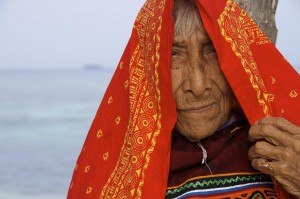

So, just how happy are you? Do you feel respected? Well-rested?
What about yesterday? Did you smile a lot? Or laugh? Did you learn or do anything interesting?
These are some of the questions participants were asked in Gallup’s recent survey, which compiled respondents’ “yes” answers into a Positive Experience Index. The survey queried residents of 138 countries and, not surprisingly, a whopping 9 out of the top 10 most positive countries are in Latin America.
Central America Dominates the Leaderboard
More specifically, of the 7 countries in Central America, 6 of them appeared in the top 11 slots. Panama took #2 with an estimated 86% of its population claiming positive emotions.
(The missing Central American nation was Belize. Only because it wasn’t one of the countries surveyed. And we’d easily argue that there are some darn positive people there as well.)
Paraguay, in South America, topped the charts for the 3rd year in a row, with 87% of respondents reporting positive emotions on the previous day. After Panama came a 3-way tie between Guatemala, Nicaragua, and Ecuador (83%) and then another tie (at 82%) between Costa Rica, Colombia, and Denmark (the only non-Latin American country in the top 10, which consistently reports high levels of happiness and well-being).
Honduras, El Salvador, and Venezuela, each of which has been plagued by political unrest and slow economic growth, came in next with 81% of their residents reporting positive feelings. The U.S. tied with 8 other countries for 19th place, at 78% positive.

Proof that Money Doesn’t Buy Happiness
What’s interesting about these results is that, while Latin America is certainly known for its laid-back atmosphere and satisfying quality of life, the region (particularly Central America) is also home to some of the world’s highest rates of poverty, murder, and social and economic inequality. Those are stats that aren’t often met with exuberance.
However, the survey’s results found that, while money does seem to influence people’s happiness levels, it’s only to a small extent. In the U.S., for example, previous research found that a higher income does impact an individual’s overall happiness, but only up to $75,000.
Beyond that amount, income seems to have little effect at all. In fact, the population least likely to report positive emotions was that of Singapore (36%), one of the wealthiest and most developed nations in the world.
So it would appear that some of the most prosperous nations in the world can also be some of the most unhappy ones. While those whose residents live in the depths of poverty bask in positivity.

Is It All a Facade?
You may be tempted to ask, as many critics already have, whether Latin America reports more positive emotions merely due to a cultural tendency to hide behind a smile and try to focus on the positive. It’s possible, as the region does seem to generally try to avoid negative statements regardless of their true feelings.
This naturally positive outlook could easily cause them to respond to these, or any, types of questions in a more favorable way than some of their counterparts. A valid point, but you’d have a hard time making a case for why that’s a bad thing.
Contrast this with countries like Iraq, Afghanistan, and Haiti where feelings of unhappiness are what’s socially acceptable. Or Armenia, for example, whose residents feel ashamed about positive experiences such as success.
Other critics claim that Latin Americans, while unarguably positive, are perhaps just emotional in general. This is evidenced by the fact that they also scored the second highest as a region (after the Middle East) in negative emotions.
Sure they laugh a lot, but they also claim to experience a considerable amount of emotions such as anger and worry. In response to this polarization, some Latin Americans agreed that the findings merely highlighted their culture’s habit of focusing on positive elements like family, friends, and religion despite leading day-to-day lives that can often be incredibly challenging.

Funky Tee
What Latin Americans Have to Say About the Results
Nothing explains the survey’s findings better than the words of the respondents themselves. Take the 33-year-old businessman from wealthy Singapore who said the following about his outlook on life:
“We work like dogs and get paid peanuts. There’s hardly any time for holidays or just to relax in general because you’re always thinking ahead: when the next deadline or meeting is. There is hardly a fair sense of work-life balance here,” he said.
Compare this to a 30-year-old surfing instructor in Guatemala, a country that barely ranks higher than Iraq on the U.N.’s Human Development Index, which measures factors like education, life expectancy, and per capita income.
“In Guatemala, it’s a culture of friendly people who are always smiling. Despite all the problems that we’re facing, we’re surrounded by natural beauty that lets us get away from it all.“
Perhaps no one said it better than the street vendor in #1 ranked Paraguay who wasn’t discouraged at all by the country’s tough economic conditions.
“Life is short and there are no reasons to be sad because even if we were rich, there would still be problems. We have to laugh at ourselves.”
It’s true that much of Latin America has struggles that first-world countries know nothing about. But this data proves those difficulties are doing little to get them down.
And if putting on a smile and facing one’s troubles with the world’s documented most positive outlook is wrong, then we don’t want to be right.

If you’re a would-be expat who has your sights set on an island destination, then it’s likely Roatan, Honduras, has found its way onto your radar. It’s relatively inexpensive, yet offers a well-developed tourist infrastructure.
And, hey, if some of the globe’s top cruise lines have added Roatan to their list of stops, then surely there must be something there worth seeing, right?
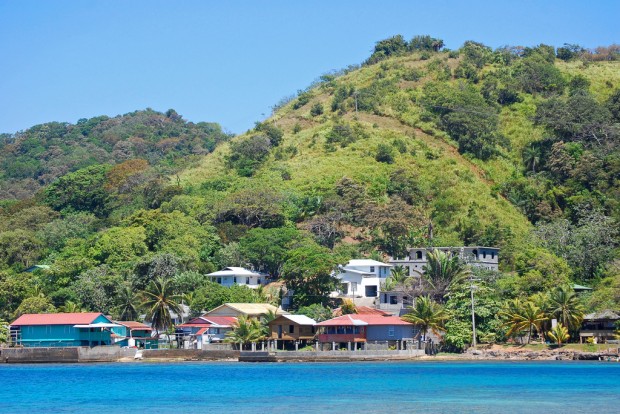
Roatan is great, and its recent spike in popularity has certainly been warranted. But just in case you’re looking for a little less tourist traps and a little more authentic island atmosphere, let’s see how it stacks up against Boca Chica, Panama.

Viva Tropical
Round #1: Accessibility
Winner: It’s a Tie
Thanks to recent and coming improvements in both countries’ transportation options, you’ll find both of these islands incredibly easy to get to. Roatan, Honduras, is now accessible via direct flights from several major U.S. cities, such as Houston, Miami, and Atlanta.
You can basically hop on a plane and be there in as little as 2 hours. Not too shabby. This is a drastic difference from a few years ago when the only way to get to the island was via a ferry to the island or a separate domestic flight from the mainland.
Similar improvements are soon to come to fruition in Boca Chica as well. While Panama is also already accessible by way of a short international flight, Panama City has historically been the only option for arrivals.
That’s about to change when David’s Enrique Malek International Airport opens its runways to flights from the U.S. and other nations for the first time. Once you land, it’s only a 30 minute drive and a 10 minute boat ride and you’re on an island archipelago that feels more like you’re hours from civilization.
So, while Roatan is a slightly quicker trip (for now, anyway), Boca Chica stomps its Honduran counterpart in terms of access to other nearby destinations. If you need something that you can’t get on the island, you have to take a 90 minute ferry ride to the mainland.
Boca Chica’s islands require only a quick trip in a motorboat. Once on land, there are a ton of options for everything from shopping and dining to getting your boat repaired or picking up your dry cleaning. You can also explore nearby places like Boquete, Volcan Baru, and other popular tourist attractions in the Chiriqui province.
Round #2: Consumer Goods and Services
Advantage: Boca Chica
Speaking of dry cleaning and repair shops, that’s another area where Boca Chica wins out over Roatan. In Roatan you’re pretty much limited to the options available on the island. Most consumer offerings are located on the west end in places like Coxen Hole and French Harbour.
The options are decent, but the prices reflect the fact that they’ve had to be shipped over from the mainland. Plus if the island doesn’t have what you need, then back on the ferry you go.
From Boca Chica island, you can motor over to the mainland where the town of Boca Chica has enough to meet your basic needs. However, if you’re seeking something a little less common all you have to do is drive the half hour to David which is guaranteed to have what you’re looking for.
It’s so convenient that it wouldn’t be unheard of for someone to spend their day out exploring deserted islands in the archipelago, then shower, change, and head into David for a world-class steak dinner. In the city you’ll also find hardware stores, modern hospitals, government offices, and even a Mailboxes Etc.
James Willmore
Round #3: Investment Potential
Winner: Boca Chica By a Large Margin
The fact that you’re at least somewhat familiar with Roatan, Honduras, but may have never even so much as heard of Boca Chica, Panama, should be your first clue as to which has the greatest potential for appreciation.
Roatan is a well-developed tourist destination that’s been drawing international attention for a while. Boca Chica Island is a hidden gem. The mainland town of Boca Chica attracts a few tourists, mainly because of its popularity as a sport fishing mecca. But most of the islands of its archipelago are virtually untouched.
Roatan has a fair share of real estate that’s a little further off the beaten path as well, but its prices still reflect the level of development available on the island itself. Boca Chica, on the other hand, offers the same (if not better) gorgeous scenery and opportunities for adventure and exploration. But at rock-bottom prices.
Not to mention, that airport expansion we mentioned is about to cause the entire Chiriqui province, including Boca Chica, to explode. More and more travelers from all over the globe will begin visiting the area. Infrastructure will continue to improve. New businesses will open. And the result will be a tremendous spike in property values.
These projections are huge for investors.

Round #4: Atmosphere
Outcome: It Depends
Both Roatan and Boca Chica are great destinations with a really cool laid-back vibe. They also both have a good bit of variety if you’re willing to move around a bit. But each excels in a particular genre the other lacks.
In the more populated areas of Roatan you’ll find your typical Caribbean atmosphere. There are your usual tourist developments and hotels within walking distance of bars and restaurants that offer a vibrant night life.
Boca Chica doesn’t have that. There are good times to be had in Boca Chica, but they generally come in a more low-key format, like a relaxed happy hour spent on a restaurant patio.
By contrast, Boca Chica offers opportunities for complete solitude that would make even Robinson Crusoe drool. You can relax in a hammock on your private patio with nothing but your thoughts and a few howler monkeys to keep you company. Roatan has a few more secluded spots too, but they don’t compare.

Viva Tropical
Round #5: Tourist Infrastructure
Advantage: Roatan by a Landslide
Whereas Roatan has all the activities and tourist offerings you’d expect of any world-class vacation spot, Boca Chica’s options are drastically skewed towards one genre: aquatic adventures. It’s a great jumping-off spot for deep sea fishing, sailing, and other seafaring activities. For much more than that, you’ll need to venture to one of the other destinations in the province.
Roatan has a variety of options for dining, lodging, and other amenities. It’s a well-developed tourist hotspot. But that also has its drawbacks. Like the hordes of cruise ship passengers that crowd the beaches every few days or so.
It’s important to note though that Boca Chica’s relative lack of tourist offerings represents another great area that’s primed for growth. As the number of visitors to the area increase, there will be tremendous potential for entrepreneurs looking to profit by opening attractions like yoga retreats and sport fishing operations.

Michael McDonough
Round #6: Host Country
Advantage: Easily Panama
Outside of Roatan, there just aren’t a lot of expats flocking to Honduras. With the world’s #1 highest intentional homicide rate (82 of every 100,000 deaths), to say the country has a crime problem is a gross understatement.
Likewise its education system is fair, and its infrastructure is well below average for the region. You can’t drink the water, and many cities have inadequate wastewater treatment systems. Health care is also subpar, with only 57 physicians per 100,000 people.
Contrast this with Panama, whose infrastructure rivals that of first-world countries in some of the larger cities. It has good roads, reliable public transit, and some of the best internet and cellular access in all of Latin America.
There are a number of established expat communities where large numbers of English-speaking immigrants have more than paved the way for newcomers. There’s also Panama City, a bustling cosmopolitan city that many compare to Miami.
Panama’s schools are good. Its healthcare is great. It’s also one of the safest countries in the region, with less violent crimes in a year than New York City has in a day.
Panama’s government is pro-business, pro-investor, and extremely friendly to foreigners. Its pensionado program, with discounts as high as 50% on things like entertainment and travel, is the reason it’s often dubbed one of the best places to retire in the entire world.

Round #7: Snorkeling
Winner: Roatan
Boca Chica has a few private beaches where you can spend an afternoon snorkeling. Most notably there’s nearby Islas Secas, which is a 45 minute boat ride away, or Coiba National Park. It’s one of the largest marine parks in the world, but it’s a good 2-3 hours by boat.
In the waters surrounding Roatan there are over 100 diving and snorkeling sites, many of which are accessible directly from the beach. And since the island is so popular with cruisers, there are a number of outfits offering snorkeling excursions for tourists.
Round #8: Diving
Verdict: Boca Chica by a Nose
Roatan does have the benefit of being located near the Mesoamerican Barrier Reef, which reaches down to the island from Belize. As a result, it attracts many divers and is great for beginners.
However, Boca Chica lies in close proximity to a spot that offers some of the world’s best dives, according to National Geographic. Just 27 miles south is Islas Ladrones, which is teeming with schools of jack, snapper, and barracuda. There are also smaller species like surgeonfish, parrotfish, triggerfish, angelfish, and more that can be seen year round.
You can also spot several species of shark and, at certain times of the year, giant manta rays and humpback whales. Visibility near the island is 30-80 meters.
Further away, as mentioned for snorkeling, is Isla de Coiba, where you can explore a 330,000-acre reef which contains 60 of the world’s 75+ species of hard and soft coral. In these protected waters you’ll also find mullet, stingray, puffers, moray eels, and gentle sea turtles.

Snowmanradio
Round #9: Fishing
Winner: Boca Chica Hands-Down
Due to the abundance of species represented in Boca Chica, the fishing in its waters is second to none. A large majority of its tourist accommodations are comprised of fishing lodges, and the number of world record catches that were landed in and around Boca Chica is remarkable.
Most of these were snagged near Hannibal Bank, a world-famous fishing hotspot where the ocean floor rises sharply from thousands of feet deep to a mere 120 feet. Where this cliff juts out, tremendous schools of inshore fish merge with the offshore species who feed on them. Marlin in excess of 1,000 pounds and tuna over 300 pounds have been caught in these waters, as well as snapper, amberjack, and snook.
Since the island actually started as a commercial fishing hub (until tourism began to dominate), you won’t be disappointed with the fishing in Roatan. That is, unless you’ve already experienced the fishing around Hannibal Bank in Boca Chica. That’ll definitely ruin it for you.

Viva Tropical
Round #10: Land Exploration
Verdict: Boca Chica Takes the Round
Roatan has a few areas available for exploration if you’re willing to venture over to the east side of the island and get away from the more heavily touristed areas. There are botanical gardens and nature trails, but it’s also somewhat of a controlled environment.
By contrast, the jungles and rainforest of the Boca Chica archipelago are absolutely prehistoric. There’s an abundance of old growth trees and entire islands that are completely covered in dense untouched forest. There’s also a general attitude of preservation and conservation among the local population, as well as the developers who are starting projects in the area.
Take for example Boca Chica Island, the site of our latest Adventure Colony. It’s a place where like-minded expats can own their very own unspoiled piece of nature. It’s a community with a shared vision of living in harmony with the environment, as evidenced by Monte Vida, the world’s first crowd-funded park.

Viva Tropical
Grand Champion
Just like many of the individual categories, the verdict of which island destination is the right place to establish your expat home is one that’s best left for you to decide.
If you’re looking for an established spot with amenities already in place and a thriving expat community, then check out Roatan. If you’re a more intrepid expat who wants to be one of the first on the scene, for both investment potential as well as bragging rights, then Boca Chica might be the place for you.
Map of Boca Chica
Boca Chica Fast Facts
- Population: About 1,200 (Numbers are hard to nail down, but this is a good guestimate)
- Typical temperature: From 70 to 88 degrees Fahrenheit
- Nearest airport with U.S. flights: Tocumen Airport. Domestic flights to Panama City, Panama and international flights to Costa Rica depart from Enrique Malek International Airport in David
- Nearest U.S. consulate: Panama City, Panama
Map of Roatan
Roatan Fast Facts
- Population: 50,000
- Typical temperature: From 80 to 88 degrees Fahrenheit
- Nearest airport with U.S. flights: Juan Manuel Gálvez International Airport
- Nearest U.S. consulate: Tegucigalpa, Honduras

You may have heard about Playa Negra and assumed it was only for diehard surfers. And it is one of the premier surfing spots in Costa Rica, if not the world. But what’s more is that Hotel Playa Negra and the surrounding area offers a truly relaxing and authentic experience that’s guaranteed to delight everyone in the family.
Let’s start with the area itself.

Viva Tropical
Bona Fide Pura Vida
Many Costa Rican beach destinations are either convenient, but really touristy. Or they’re more laid-back, but completely isolated. Playa Negra is a great compromise between the two.
You can make the 1 hour and 45 minute drive from Liberia’s international airport. Another option is to take a domestic flight from San Jose (which is a 4-5 hour drive away) to Tamarindo. There are also buses, taxis, and of course rental cars that can get you to the hotel from nearby Santa Cruz.
Once you arrive you’ll find a quaint little surfing town that isn’t the least bit tawdry or touristy. It’s just simple and clean and quaint for those seeking a bona fide tropical getaway without any of the unnecessary accoutrements. It’s also only a short drive to other popular destinations like Tamarindo, which offers a bit more in the way of development and tourist infrastructure should you desire it.

Viva Tropical
World-Class Surfing Without the Crowds or Commotion
One of the most popular activities in Playa Negra is surfing. In fact, the world famous surf break, featured in the movie “Endless Summer II,” is situated directly in front of Hotel Playa Negra.
It has a rock bottom with right-hand barreling waves and a well-defined channel for easy paddling out. The water is crystal clear, and the swells are consistent year-round. The dry season of December to April provides a steady supply of cloudless skies and offshore breezes. While May through November is generally rainy, there is the occasional veranillo, or “little summer,” that offers the same near-perfect conditions coupled with a Southern Hemisphere swell.
Within walking distance are a number of other breaks, as well as some offshore reefs. You can also make the 10-minute drive to nearby Avellanas with its reef, beach, and river mouth breaks. Another half hour will find you in Tamarindo, which is considerably more crowded at popular spots like Playa Grande and Langosta.
If surfing isn’t your thing, there are plenty of other ways to enjoy the beach at Hotel Playa Negra. The shore that lies along the property is composed of a beautiful sand beach that’s dotted with rocky outcroppings and tide pools that beg for exploration. Just 100 yards south lies a white sand beach that’s perfect for swimming, boogie-boarding, or just relaxing near the water’s edge.
There’s plenty of sea life to observe, including sea turtles and parrot fish. There isn’t much development around the hotel, which makes for a pristine, private setting that easily trumps any artificially manufactured beachfront tourist development.
Viva Tropical
Privacy and Relaxation with Top Notch Amenities
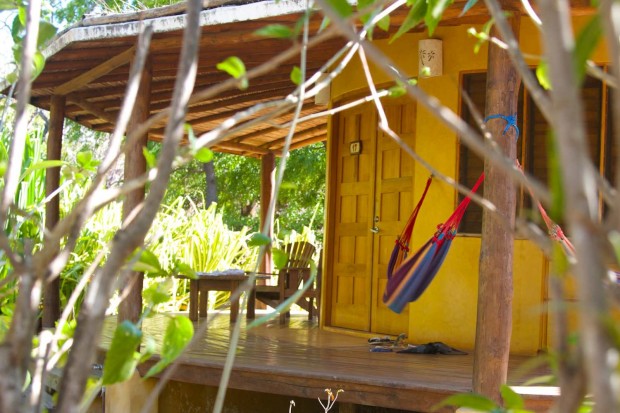
The property itself consists of a sprinkling of bungalows that are nestled into a tropical garden. Each is a stand-alone hut with a roof of palm leaves, known locally as “rancho.” The many windows allow the ocean breeze to flow freely, and many boast a wooden deck complete with a sitting area and hammock.
There’s a large oceanside swimming pool, just steps from the sand. There’s also a yoga area and surf shop on-site.
Viva Tropical
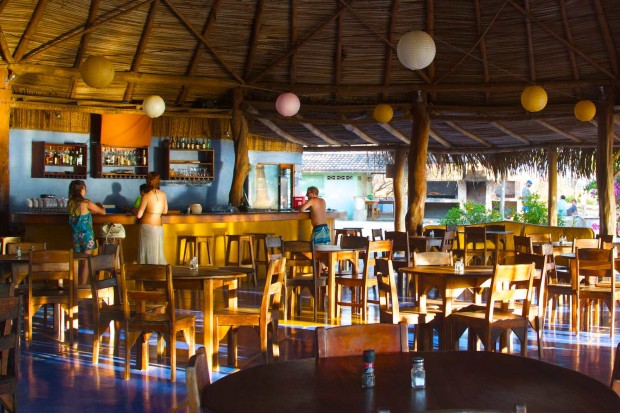
The hotel’s restaurant and bar are also located right on the beach. From 7:00 a.m. to 9:00 p.m. the kitchen serves up salads, burgers, tropical fruit platters, steaks, fresh seafood, sandwiches, and traditional Costa Rican cuisine. There’s also a weekly Argentinian barbecue, which guests love.
The bar stays open much later and offers fresh fruit smoothies, cocktails, margaritas, and other frozen libations. It’s the perfect place to sit a while or even an entire day, just relaxing under the thatch roof, watching the surfers, and conversing with other travelers from all over the globe.
In the evenings, people gather on the beach to watch the spectacular sunsets.
Hotel Playa Negra is the perfect place to get away from it all and enjoy an authentic tropical beach vacation, without having to compromise any of the creature comforts you’d get at other, more well-visited locales. Whether your interests include surfing, sunning, or just soaking up your surroundings, this is a destination that promises not to disappoint you or the family.

A discussion with off-grid specialist Eric Youngren, one part adventurer and one part alternative energy expert. Eric is the perfect person to talk about off-grid technology for Viva Tropical readers and listeners. With extensive experience in remote and third world locations we set out to learn some practical advice from a qualified person. Eric can install systems anywhere in the world which makes him a potential candidate for any project you might have.
Tune in and find out if off-grid living is worth it for you.
In this episode, we discuss:
- How do you know how much energy you need?
- What system is right for you?
- Is living off-grid hard?
- What do I need to know before considering getting off the grid?
And much more.
Listen to the show
You can listen to the show using the player above or grab it and listen on the go via one of the following options:
- Click here to download the mp3
- Click here to subscribe via iTunes
- Click here for the RSS feed (non iTunes)
- Click here for the show archive
React to the Show
We appreciate your reaction to episodes of Viva Radio and feedback about how we’re doing.
Send us your thoughts any time in an email or comment below.
The Show Notes

When looking at lists published by international living gurus citing the best places to live in and retire to overseas, the nations of Ecuador and Panama consistently appear among the places with the highest rankings.
As beautiful, affordable tropical destinations go, they’re among the best of the best. And, while they’re both excellent overall as places to retire, raise a family, start a business, or just live for a short time, each has certain areas where it shines brighter than the other.
We’d be hard-pressed to say which country is the best or, even more specifically, which one is the best for YOU and your particular situation. That decision is best left up to your family, based on your individual needs and priorities.
What we can do is highlight a few categories that are important to expat families and tell you which country excels in that area.

D. Bmcnicol
Round #1 – Lifestyle Hacks
Winner: It’s a Tie
One of the coolest things about living abroad is the ability to enlist help for tasks that you might be fed up with doing yourself, but would’ve never had the means to hire out in North America. Some examples are maids, gardeners, drivers, tutors, and nannies.
And domestic help is abundant and affordable in both Panama and Ecuador. We’d be tempted to give this category to Ecuador for its lower cost (around $10 per day for the services of a maid vs. $15 for the same work in Panama).
However, as is often true, you tend to get what you pay for. So some might argue that the quality of service you receive from domestic helpers is superior in Panama.

Eddie Codel
Round #2 – Connectivity
Outcome: Panama By a Nose
This is another area where both countries excel far beyond the reach of most of their Latin American neighbors. And, up until recently, this category would have gone to Panama by a landslide.
However, Ecuador is aggressively working to improve its internet coverage. As a result, the country’s connectivity is increasing by leaps and bounds with a goal of access in 50% of households by 2015. (It’s currently closer to 35%.) Free public access centers are also widely available across the country.
While Ecuador’s connectivity is great, Panama’s is excellent due in part to a long-standing U.S. military presence. In fact, it ranks #2 in all of Latin America for technology and internet penetration and #1 for wireless availability.
Most Panamanian cities offer affordable broadband service, and there are free wi-fi hotspots nationwide. Because of its technological advances, companies such as Dell, 3M, and Philips have chosen it for their regional headquarters and customer service centers.

Pavel Kirillov
Round #3 – Living Options
Slight Edge: Panama
Both Ecuador and Panama have a lot to offer in terms of variety of living options. When it comes to mountain towns, Cuenca, Ecuador, and Boquete, Panama, are among some of the top expat destinations in Latin America. There are others as well, such as Loja, Quito, and Vilcabamba in Ecuador and Volcan, El Valle, and Santa Fe in Panama.
There are also popular beach towns in both countries. Salinas, Ecuador, has been compared to Miami’s South Beach. There’s also Montanita and Manta. Panama has Bocas del Toro, the quintessential Caribbean beach town, as well as Coronado and Pedasi.
Panama City trumps places like Ecuador’s Quito and Guayaquil if you’re looking for something that more closely resembles a first-world city. The other place where Panama takes the cake is with its options for island living. Ecuador has the Galapagos Islands, a great place for tourists to visit or explore but not necessarily live.
However, Panama offers options like Boca Chica Island, which offer nature-loving expats the opportunity to own their very own piece of a private island that’s only a hour away from the country’s second-largest city and an international airport.

Wogo 24220
Round #4 – Green Living
Winner: Ecuador
While Panama has long had its sights on continuing to improve its infrastructure and commerce, it lags a bit behind in its sustainability initiatives. However, it is making some strides in the right direction. Take for instance the village of Kalu Yala, a development that has a goal of becoming the world’s most sustainable residential community.
Most green efforts in Panama are more grass roots and less government-driven. On the other hand, Ecuador has the unique distinction of being the only country in the world where the rights of the natural environment are protected by the nation’s constitution.
Sustainability issues are on the government’s radar in Ecuador as it battles issues like the threat of drilling in its Yasuni National Park, the most biodiverse place on earth.

Vilseskogen
Round #5 – Cost of Living
Clear Winner: Ecuador
Ecuador and Panama both offer the ability to live satisfying lifestyles for a fraction of the North American budget. As you can imagine, prices vary greatly from one city to the next, with some of the more developed areas running much closer to U.S. prices.
However, overall the cost of living is considerably less in Ecuador. In fact, it’s often one of the country’s biggest selling points, with many expat couples claiming to live just fine on a mere $1200 per month including rent, which averages around $450. This includes luxuries like high speed internet and once-a-week maid service.
Both countries have great discount programs for their senior adults, with Panama’s pensionado program being one of its most attractive benefits for retirees. However for most expats, particularly young families, it’s cheaper to live in Ecuador.

Rivera Notario
Round #6 – Ease of Access
Advantage: Panama
This was an easy one. Mainly because the majority of Ecuador’s incoming flights have layovers in places like Panama City (as well as Miami, Bogota, and places in the Caribbean). As a result, travel to Ecuador is longer and a bit more expensive.
It does have great public transportation once you fly in to Quito or Guayaquil, as well as connecting flights to a number of regional airports.
By contrast, Panama’s recently expanded Tocumen International Airport receives direct incoming flights from multiple U.S. cities, as well as various points in South America. David’s Enrique Malek International Airport will also soon begin welcoming international flights, opening up the western regions of Panama to expats and tourists from all over the world.

Matthew Straubmuller
Round #7 – Business Climate
Champion: Panama, Hands Down
To decide this category, you only need to look at the stats. The International Finance Corporation ranks Panama 55th in the world for ease of doing business, compared to Ecuador’s rank of 135th. This survey is based on factors that affect one’s ability to start and operate a local business.
This comes as no surprise, as Panama’s government has historically been extremely pro-business and pro-investor. It’s also somewhat of a tax haven and an increasingly popular place to open an offshore bank account. Panama also offers a whole host of visa options, with the number of choices increasing frequently.
Ecuador, on the other hand, has a reputation of being a bit unstable and unpredictable. It struggles with issues such as high government turnover rates and an economy that is based a bit too heavily on petroleum.
However, Ecuador’s economy is growing. The country is also taking steps to reduce the government’s influence in certain business sectors.

Gaspar Serrano
Round #8 – Banking
Advantage: Panama
Both Ecuador and Panama benefit from having a dollarized economy. However, both have seen requirements tightening in recent years due to laws like FATCA and other U.S. tax evasion agreements. As a result, it’s becoming increasingly difficult for foreigners to open an account.
That being said, the banking process is far more friendly to foreigners in Panama. It’s home to a number of international banks and is emerging as a major player on the global banking scene.
Ecuador, on the other hand, suffers from inconsistent regulations and subpar accounting standards, although its banks’ performance has improved in recent years. Due to the inconsistencies, however, the process of opening an account can be a bit long and tedious.

thinkpanama
Round #9 – Investment Opportunities
Our Pick: Panama
When you look at the ingredients for a savvy investment, they include factors like low costs, massive infrastructure projects, a focus on tourism, and government incentives. Both Ecuador and Panama have all of these. And lots of them.
Panama just has more. Its real estate is still affordable. The government has recently invested $15 billion in projects like airport expansions, new roads, and a metro system. There are tax breaks on everything from the importation of building materials to build a hotel to income tax on land purchased for reforestation.
Ecuador offers many of those same advantages, and often at a lower cost. So you could argue that in Ecuador there’s a bit more room for appreciation. However, the benefits of investing in Panama are just still too good to award this category to anyone else.

Presidencia de Republic de Ecuador
Round #10 – Health Care
Outcome: Another Tie
Ecuador and Panama both benefit from having excellent health care systems, with skilled medical staff and modern facilities. English is widely spoken by doctors in both countries, many of whom trained in the U.S, and hospitals offer the latest in technological advancements.
The low cost of care is also a big plus, with procedures generally running about ¼ of the price for the same service in North America. Health insurance is also affordable and widely available.
Both countries suffer from the same main drawback in this category: availability in rural areas. While they both have state-of-the-art hospitals, they’re found only in the largest cities. Clinics in more remote locations may be limited to basic services or even first aid only.

ThinkPanama
Round #11 – Consumer Goods
Winner: Panama
Both Ecuador and Panama have a surprisingly good selection of consumer goods. As a result, you usually need only drive to the nearest city to find exactly what you’re looking for, or at least a comparable replacement.
Where Ecuador suffers in this arena is due to its ever-increasing taxes. Many items have become more difficult to find, or at least more expensive, in recent years. Consequently, fewer and fewer items (like vehicles and cell phones) are being imported.
Panama, on the other hand, has become quite the shopping hub for folks all across Latin America. This is due in part to its low value-added tax of 7% (vs. 12% in Ecuador). We’ve even seen people who traveled from Ecuador to Panama City to buy several flat-screen TV’s due to the better prices and availability.

D. Rorfold
Round #12 – Foreign Land Ownership
Victor: Panama
In both Ecuador and Panama, foreigners who buy property have their rights protected by the constitution just the same as nationals of that country. There are also few restrictions on what land they can buy. Well, there’s only one really, and it’s in Panama where foreigners can’t own land within 10 kilometers of the border.
Both countries offer an abundance of land available at, in some cases, rock-bottom prices. However due diligence is absolutely necessary before buying land in either country.
Purchasing real estate as a foreigner can be a challenge, but the whole process is a bit easier in Panama. A good attorney is a must, so choose one who’s experienced in land transactions and can handle things like researching the title, drafting contracts, and registering the deed.

D Rorfold
And the Grand Champion Is…
Nah. We didn’t keep score. There’s just too much to love about both of these countries for us to try to give the trophy to one or the other.
What’s more important than our opinion is your own experience with each of these fine countries. So, if Ecuador and Panama are on your short list of potential expat destinations, then we suggest you open a new tab and start looking for flights. There’s no better way to pick a winner than to just let the two duke it out firsthand.
Map of Panama
Panama Fast Facts
- Population: 3.8 million
- Typical temperature: Temperature typically varies from 72°F to 91°F
- Nearest airport with U.S. flights: U.S. bound flights leave daily from Tocumen International Airport
- Nearest U.S. consulate: Panama City
Map of Ecuador
Ecuador Fast Facts
- Population: About 15.49 million
- Typical temperature: Ecuador is known for its micro climates.
- Major airports with U.S. flights: Quito, Cuenca and Guayaquil. Complete list of airports in Ecuador.
- Nearest U.S. consulate: Quito and Guayaquil
In this episode Josh calls up his friend Rich Lipner, owner of Dos Jefes coffee farm in Boquete, Panama. Rich has been diligently producing his own coffee called Cafe De La Luna as well as giving coffee tours on his private farm. His knowledge is very high when it comes to the world of coffee.
Think of this show as your introduction to coffee growing as you hear from two passionate coffee drinkers.
In this episode, we discuss:
- Where is the best area on the globe to grow coffee.
- Perfect French Press, The exact time to wait before you press.
- What are the best ways to prepare coffee.
- Where the most expensive coffee in the world is grown, up to $300 a pound.
- Why you should ask where the beans come from at your local coffee shop.
And much more.
Listen to the show
You can listen to the show using the player above or grab it and listen on the go via one of the following options:
- Click here to download the mp3
- Click here to subscribe via iTunes
- Click here for the RSS feed (non iTunes)
- Click here for the show archive
React to the Show
We appreciate your reaction to episodes of Viva Radio and feedback about how we’re doing.
Send us your thoughts any time in an email or comment below.
The Show Notes


Laughing Bird Stock
When looking for a tropical destination that scores big on many levels, more and more expats are considering purchasing Belize real estate as the backdrop for their next adventure.
The tiny country (it’s barely bigger than New Jersey) is the northernmost of Central America, tucked neatly under Mexico’s Yucatan Peninsula. It’s also the only one that borders only the Caribbean Sea, which is a factor that heavily influences its real estate offerings.
With just over 320,000 inhabitants in the entire country (about as many as St. Louis, Missouri), it has a laid-back small-town feel. Even the capital of Belize City, which has only 70,000 residents.
There’s also a very youthful vibe, with 40% of the country being age 15 and under. And, although the country encompasses only 8,800 square miles, it claims a whopping 149 miles of Caribbean coastline. What’s more, it’s all protected by the world’s second largest barrier reef.
Expats are drawn to Belize real estate for its affordability, as well as the natural beauty that abounds throughout much of the country. They love the climate, the friendly locals, and the familiarness of the ways of doing things.
Belize Has Always Been a Refuge
Belize, unlike any other country in Central America, was originally founded as a British (not Spanish) colony. In fact, until 1973 it was still known as British Honduras. It only gained independence from Great Britain somewhat recently, in 1981.
It’s long served as a refuge of sorts, beginning with pirates looking for a place to trade their treasures. Other immigrants included Mennonite farmers who fled their homes in Germany and the Netherlands seeking religious freedom.
The British were next, establishing colonies in Belize where they could do their banking in private. Immigrants from neighboring Mexico and Guatemala also flocked to this peaceful country to escape turmoil and caste wars in their own nations.
Today, it’s expats from all over the globe who are drawn to Belize. This history of refuge-seeking immigrants has resulted in a fantastic cultural fusion that is evident throughout the country. From the languages to the cuisine, there are so many ethnicities reflected in every region and in every aspect of life in Belize.

Anoldent
The Unique Appeal of Belize Real Estate
What makes Belize real estate such a hot commodity is the fact that much of what it offers literally cannot be found anywhere else. That’s not an exaggeration or a marketing strategy. It’s the God’s honest truth. Here are a few of the factors that have made this haven so popular among expats.
It’s Close to North America in More Ways than One
Due to its physical location, Belize is one of the easiest places to get to in Latin America. And while expats obviously desire to get away when they relocate overseas, it’s not uncommon to want to find that home away from home as close to your original home as possible.
You can find direct flights to Belize from a number of U.S. cities, such as Dallas, Houston, Miami, and Atlanta. Even better, it’s three hours tops.
Not only is Belize physically close to the U.S., it’s also similar in a number of other ways. Due to its origins as a British colony, Belize is English-speaking. There’s a lot of Spanish floating through the streets, but the important stuff (i.e. street signs, legal documents, menus, newspapers, and television stations) is all in English.
The court system is based on British common law, which is familiar to U.S. residents. The education system is also all done in English and is well-regarded, which is important for families with children.
There’s no metric system, so it’s all inches, feet, miles, and acres. And while there is an official form of currency, the Belize dollar, it’s permanently tied to the U.S. dollar at a rate of two to one. So there are no conversion issues. Not to mention, the U.S. dollar is accepted practically everywhere (except government offices).
Belize Is an Ocean Lover’s Dream
Due to its geographical location, much of Belize’s population (and most of its desirable real estate) lies along and near the coast. What’s inland is overwhelmingly undeveloped (Read: There’s little to no infrastructure.).
In fact, an estimated 80% of the country is not being used by humans. That’s not to say it’s wasteland. Belize’s inland areas are packed with jungles, waterfalls, ancient ruins, and thousands of species of flora and fauna. So one could argue that it’s also a land lover’s paradise. But that’s not why most people come here.
What they do come for is the Mesoamerican Barrier Reef, the longest in the western hemisphere and the second largest in the world (after Australia’s Great Barrier Reef). It’s the country’s top tourist attraction and offers some of the world’s best fishing, scuba diving, and sailing.
If you’re not into all of those active aquatic adventures, there’s also the fact that it’s just gorgeous. In fact, the Great Blue Hole is one of the most spectacular sights on earth.
Not only does Belize offer an extensive amount of coastline, off its shores lie roughly 450 islands. Some are among the world’s most popular tourist destinations. Others are sparsely populated. A few are completely uninhabited and available for purchase. Not many tropical destinations can make such an offering.

Anoldent
It’s an Easy Place to Buy and Own Property
Not only does the end result of owning a piece of Belize real estate sound pretty appealing, but the process itself is a relatively simple one as Latin American transactions go. For starters, Belize places no restrictions on foreigners buying property, even beachfront real estate. That’s unheard of in many countries that are popular with expats.
There are also no capital gains taxes. You will have to pay a transfer (or stamp) tax, but even that is low, usually around 5% of the value of the property. Even annual property taxes are low, with even the priciest lots accruing no more than $200 or $300.
Many other transactions are also easy in Belize, making it an ideal destination for those who wish to invest or operate a business. In fact, it’s a popular offshore banking center and a great place to set up a corporation or trust. Opening a bank account is a relatively simple process, and interest rates are quite favorable (as high as 6% on deposit accounts).
The country is also politically stable. It’s a fairly young nation with a small population. Politics are a matter of great concern for most residents, and they’ve been known to show up at rates as high as 75% for national elections. While politically interested, however, everyone remains peaceable and good-natured with their political opinions.
Belize Real Estate Outlook
Belize is a great example of a tropical place whose property values have seen tremendous increase in recent years. However, there’s no indication that this trend appears to be slowing. Growth in Belize has been steady, stable, and consistent. The stable government deserves some of the credit for this.
Future growth projections are promising, particularly with the prospect of direct flights from Europe on the horizon. Tourism is on the rise, and the government is actively taking steps to ensure that popular attractions, like the rainforests and natural coastline, remain intact as development continues.
Current property values are often as low as half of that of similar lots in the nearby Bahamas. However, with the influx of new visitors from Europe, prices can be expected to rise drastically as the market is opened up to a whole new set of buyers. This could be great news for current Belizean property owners or those looking to invest in land in the immediate future.

P Shoun
Popular Places to Own Real Estate in Belize
As mentioned, much of the available (and desirable) real estate in Belize is located near the coast. However, even more specifically, there are several key areas that are the most popular among expats.
Ambergris Caye
Belize’s largest island, Ambergris Caye has become increasingly popular among scuba divers and fishermen, thanks to its proximity to the Belize Barrier Reef. Because of its popularity and numerous amenities, it is one of the pricier places to own Belize real estate. However, there are still bargains to be had if you don’t mind a bit of a walk to the beach.
Caye Caulker
Even though Ambergris Caye has a distinctly small-town feel, the atmosphere of Caye Caulker is even more laid-back. It has only about 1,500 residents and no motorized vehicles. Prices are lower than its larger island neighbor, but that gap is likely to close as Caye Caulker increases in popularity.
Stann Creek District
While the first two hotspots are island destinations in northern Belize, there are also a lot of expats buying homes in the Stann Creek area to the south. One of the most popular spots is Placencia, which sits on a peninsula.
Some claim that it has a more authentic Caribbean feel than the luxurious island developments. It also has wider beaches with whiter sand that are often virtually empty of other people in some spots. This area can also be pricey, but good value can be found just a little further outside of town.

Belize Cove
What Your Money Will Currently Buy in Belize
Here are a few properties listed for sale in Belize at the time this article was written.
-
A mere $75,000 will get you a 1 bedroom, 1 bath cottage on over an acre in Esperanza Village, near the Guatemalan border.
-
The same $75,000 buys you a 2.89 acre lot with around 75 feet of beachfront on Cross Caye in the Stann Creek District.
-
For $431,000 you can own a 2 bedroom, 3 bathroom beachfront home on Maya Beach in the same area, complete with a pool, high end finishes, and lots of great outdoor space.
These are just a few of the great opportunities available in Belize. Depending on your individual preferences there are tons of other options that could make for the perfect setting for you to begin your expat life overseas.
Due to the inefficiencies of the real estate market, prices can often range all over the board for properties with similar features. So plan to set aside plenty of time to perform your search. Most importantly, you’ll want to plan a trip soon to see for yourself what this beautiful country has to offer. The pictures don’t do it justice.
Map of Belize
Belize Fast Facts
- Population: About 324,000
- Typical temperature: 84 degrees
- Nearest airport with U.S. flights: Belize City, Belize
- Nearest U.S. Consulate: Belmopan, Cayo, Belize


Global Pacific
The decision to move abroad and join the thousands of expats who are living in Boquete, Panama, is an exciting adventure. But it can also be a bit daunting.
There are a million questions to answer and hurdles to surmount before you actually, finally find yourself living in your own tropical paradise. One of the biggest ones is the question of housing.
Renting is often the best option for those who might want to take their time finding a more permanent place to live. It’s also great for those who only plan to live in Boquete for a short time, like families who spend only a year or two overseas to experience other places and cultures.
Much like buying a home, finding the perfect property to rent can be a complicated process. But here are some great options and ideas to help simplify your search.
1. Walk the streets.
If you’re already on the ground in Boquete, one of the best ways to find a place to live is by strolling the streets in the area where you want to be. Look for “For Rent” signs. Check bulletin boards in grocery stores, restaurants, and other businesses to see if any ads are posted.
It’s a great way to meet people and get a feel for the area. It also allows you to immediately rule out any places that don’t look up to par.
2. Check local websites.
Even if a home exchange doesn’t work for your particular situation, local websites are a great resource when searching for rental properties. A few examples are Craigslist.com, Viviun.com, and Encuentra24.com.
Check these sites often for new listings, and follow up on all possible leads. Don’t rule out a potential property based on the posting alone. You never know what you might be able to negotiate if you just reach out to the seller.
In addition to searching, you can also try posting your own ad indicating what type of property you’re searching for. Post the same ad on all your social networking sites. You could have a friend who has a friend who has a property that fits your exact specifications.
3. Read blogs.
There are a number of local bloggers in Boquete who might have leads that can help you. Those sites are authored by folks who are right there on the ground. They have lots of knowledge they can probably share. You just need to ask.
A few local sites in Boquete are ChiriquiChatter.net and BoqueteGuide.com. The authors of this site also have a few connections to Boquete.

Kris
4. Try the local newspapers.
Most local newspapers, both Spanish and English, have classified sections with real estate listings. That’s another good place to find out about available properties. Most papers also have a website.
In Boquete, there’s El Visitante, La Prensa (the national newspaper), and El Informante (based in David). It’s also a great idea to place your own ad, much like with the classified sites.
5. Ask around.
In addition to asking friends and friends of friends, you can also reach out to Boquete locals on forums or by contacting members of expat clubs and organizations. You might come across someone who was toying with the idea of renting their property or stumble on a great listing before it’s even offered to the general public.
Boquete.ning.com is a great expat community site. Post a discussion or try reaching out to key people in the community.
6. Try a home exchange.
As times get tougher, many expats and travelers are looking to save a few bucks on costly hotels and apartment rentals by offering their home to willing residents in their destination city. It’s pretty simple. You open up your home to a Boquete homeowner, and they do the same.
What you get is comfortable, furnished living quarters for virtually no cost whatsoever. It’s also a great way to see what it’s like to truly live like a local.
You can find available properties by signing up for an online home exchange club or just by posting ads on local Boquete sites like forums and classified pages.

Best of the Better
7. If all else fails, contact a professional.
There are certainly ways to locate a property on your own, but if you find it difficult or if time is of the essence you can always hire a real estate agent. They can scour all of the resources available for property listings and set up showings for you when you come to visit. Or they can supply you with all the information you need to make a decision sight unseen.
Keep in mind that realtors are often paid a little differently overseas, so you might need to consider payment for their time and not just a commission when the property is located.
What’s on the Market Now
Just to give you an idea of what’s out there, here are a few properties that are currently listed for rent in and around Boquete.
-
A monthly rate of $500 gets you a 1 bedroom studio apartment on an organic farm in the mountains just ten minutes outside of town. The property is gated, fenced, and monitored by a full-time caretaker.
-
For $675 per month, you can rent a 1 bedroom (plus loft) casita in the beautiful Volcancito area of Boquete. It comes fully furnished and includes utilities as well as gardening services.
-
$850 per month will put you in a recently renovated 3 bedroom, 1 bath home that’s a minute walk from downtown and offers sweeping views of the valley. It features high-end finishes and all new electrical and plumbing systems.
-
For $1,350 per month, you can have a 3 bedroom, 3 bath home that faces Volcan Baru, Panama’s highest peak. It’s 5 miles from town and features two fireplaces and an outdoor kitchen.
These are just a sample of what’s available, but there are plenty more just waiting for you to give them a look. Whether you’re seeking a villa outside of town or a luxury condominium within walking distance of everything, you’re sure to find what you’re looking for in Boquete.
Call, click, or visit today!
Map of Boquete, Panama
Boquete Fast Facts
- Population: About 22,435
- Typical temperature: Average temperature is 70 degrees
- Nearest airport with U.S. flights: U.S. bound flights leave daily from Tocumen Airport, both domestic and international flights to San Jose, Costa Rica depart from Enrique Malek International Airport in David
- Nearest U.S. consulate: Panama City