


Bonsairolex
Most up-and-coming tropical hotspots go through various stages of development. They’re relatively unheard of. They get discovered and developed. Expats and tourists arrive in droves from all over the globe. Prices skyrocket. And suddenly everyone is looking for the next up-and-coming destination.
Not so with Salinas, Ecuador real estate.
Unlike many of its coastal counterparts, Salinas is neither primed for or coming off some big real estate or tourism boom. It hasn’t experienced any sudden growth or development. Well, at least not in the past few decades.
When it comes to the Salinas real estate market, what you see is what you get. And what you get is a whole lot of bang for your buck in terms of beautiful beaches, great weather, modern amenities, and incredible bargains.

Bonsairolex
Salinas Has Been Growing Steadily for At Least 7 Decades
Like most popular coastal destinations, Salinas began as a quiet fishing village. However even in the early 20th century it was a popular vacation spot due to its warm, calm waters and abundance of sunshine.
While most of those visitors arrived mainly for the summer months (December to April), the establishment of a U.S. naval base in 1943 opened the door for even more tourists, particularly young women. Since that time, Salinas has steadily grown as it’s been frequented by more tourists and settled by more residents with each passing year.
The only real spike in population occurred about a decade ago when many Ecuadorians working in the shrimping business began to move their families to Salinas, turning it even more from a seasonal destination into a bustling city year-round. Today around 50,000 people call Salinas home.

Salinas, Ecuador Has All the Makings of a Dream Destination
The factors that have historically made the town popular as a vacation destination are the same ones that make Salinas, Ecuador real estate an ideal choice for many expats and investors. For starters there’s the weather.
Despite its proximity to the equator, Salinas enjoys a surprisingly mild climate, especially as tropical beach towns go. During the summer (December to April), which is the peak season, temps range from daytime highs in the mid 90s to evening lows near 70. And it’s sunny almost every single day.
From May to November an almost daily cloud cover leads to much cooler temperatures (low 70s down to low 50s). There’s also an occasional rain. In both seasons there’s a nice breeze that blows in from the sea.
The entire area boasts beautiful white to gray sand beaches and warm, clear waters. There’s also a wealth of aquatic adventures to enjoy. You can charter a boat for whale watching or game fishing or give surfing or wakeboarding a try. There are also a number of adventure companies offering activities such as parasailing, banana rides, and jetski rentals.

Rinaldo Wurglitsch
Does Salinas Live Up to Its Nickname?
Salinas has been dubbed by some as a “Little Miami” due to its popularity among locals and its highly developed tourist infrastructure. Can this South American beach town really compare to the glitz and glitter of South Beach? In some ways, yes. In others, heck no. And in one aspect, it blows Miami out of the water.
At first glance, yes, Salinas on a busy summer weekend could easily be confused with Miami’s crowded shore. The beach is a sea of umbrellas and oil-slicked sunbathers lined towel to towel. There are vendors and marketers crammed in everywhere, hawking their wares and plastering their logo on every exposed surface.
Stereos thump by day and discos by night (and into the wee hours of the morning). Beyond the malecon are rows of glistening high rise condo and apartment buildings. There are first-class resorts, restaurants, bars, and even a yacht club.
A Closer Look Reveals Some of the Town’s Flaws
While it does resemble Miami from a distance, there are stark differences once you come in a little closer to the Salinas crowd. For instance, even though Salinas is a highly developed city (and one of Ecuador’s only well-developed beach towns), it still isn’t a first world lifestyle.
You won’t find the same brand names and status symbols of South Beach. There are two supermarkets, a movie theater, and some small shopping centers. But you’ll have to drive a little farther to find much more than that.
Also, due to its appeal as a vacation haven and its close proximity to Guayaquil (just over an hour away), it’s extremely popular among Ecuadorians as a weekend getaway spot. (Read: It’s crowded.)
Many of these vacationers also have concern for little more than their own enjoyment. As a result, common courtesies like reasonable stereo volumes, use of trash receptacles, politeness, and other considerations are often lost on them.
Note: This kind of atmosphere obviously isn’t for everyone, for those who want a more laid-back vibe there’s Chipipe Beach which is located just on the other side of the jetty and the yacht club. It’s much quieter and more family-oriented. The beach is also wider, giving sunbathers and swimmers much more room to move around.

Nicole Rogers
Why the Town’s Biggest Downside Could Be an Investor’s Greatest Advantage
If Salinas was sounding like a great place to own property right up until that last part about the throngs of loud, rude, vacationing Ecuadorians, then you’ll like this next little tidbit.
Those weekenders from Guayaquil? They pack up and leave on Sunday evening and head back to their normal lives. Salinas remains a much quieter and calmer place Monday morning through Friday afternoon.
So, perhaps a better way to look at those incoming weekenders is how an investor would see them: as a fantastic pool of potential renters. They’re the second biggest reason that Salinas, Ecuador real estate is such a smart investment.
In addition to peak season weekends, they’re also eager to visit the coast around big holidays, like Christmas and New Year’s Eve, as well as Carnival which takes place in February. Even during the off season, many Ecuadorians like to vacation in Salinas while their kids are out of school. It’s also popular with newlyweds, as it’s sort of like the Ecuadorian equivalent of a Hawaiian honeymoon.

The Number One Reason Salinas, Ecuador Real Estate Is a Great Investment
Were you wondering where on earth you would go if you decided to rent your apartment or condo in Salinas and spend your time elsewhere during parts of the year? Well, if you’re like many natives and expats who own property there, you could go to your city flat for a few days or spend a week enjoying your mountain hideaway.
Due to the unbelievably low cost of real estate in Salinas (not to mention the equally low cost of living), it’s entirely possible–and quite common–for its residents to own two or even three homes in several of Ecuador’s diverse regions and climates.
Just how cheap is it? Well, relatively speaking, Salinas, Ecuador real estate represents one of the lowest priced real estate markets in the single lowest-priced country in the world, according to real estate giant Coldwell Banker (as of 2011).
I say “relatively,” because there a lot of places in the world where you can buy property for rock-bottom prices. But there are hardly any where you can enjoy top-notch amenities in an incredible setting the way you can in Salinas.
Its incredibly low real estate prices are the one area where Miami doesn’t hold a candle to Salinas.
On top of the affordable properties, things like entertainment, food, and other consumer goods are also extremely cheap in Salinas, as they are throughout Ecuador. You can eat a delicious meal of freshly caught seafood, including oysters and shrimp ceviche, for $8 or less and wash it down with a 20 ounce beer for a buck.

Rinaldo Wurglitsch
Just How Much Salinas, Ecuador Real Estate Will Your Money Buy?
So, that’s how much it costs to eat and drink in Salinas, but it’s time to get down to brass tacks. To give you an idea of what kind of real bargains are out there, here are a few of the actual listings currently on the market in Salinas.
-
A mere $70,000 buys you 4 bedrooms/4 baths spread out over a whopping 2,690 square feet with a city view that comes fully furnished.
-
For $120,000 you get a brand new home in a small gated community with a modern American-style kitchen, a shared pool, and a view of the beach a half block away.
-
With $200,000 you can have a 3/3 in a brand new beachfront development that’s centrally located and boasts the finest amenities and high-end finishes.
With prices like these it’s easy to see why Salinas, Ecuador real estate is such a tempting purchase. It offers almost everything there is to love about a South Florida beach town, but at a fraction of the cost.
And, if you’re willing to overlook the influx of rowdy weekenders, or even use them to your benefit, then it could be the ideal place for you to own the beachfront property of your dreams. The only way to know is to try the place on for size. Just make sure to experience both seasons before you decide.
Map of Salinas, Ecuador
Salinas, Ecuador Fast Facts
- Population: 28,650
- Typical temperature: Ecuador is known for its micro climates, learn more here.
- Major airports with U.S. flights: Quito, Cuenca and Guayaquil. Complete list of airports in Ecuador.
- Nearest U.S. consulate: Quito and Guayaquil

With its authentic culture, great investment opportunities, and unmatched natural beauty it’s no wonder so many North Americans are considering an Ecuador retirement as one of their options.

Jorge
The nation consistently tops most lists of best places to retire. In fact, for 2014, the country was barely edged out by Panama (by a score of 91.2 to 91.1) when it ranked as the #2 overall destination on International Living’s Annual Global Retirement Index.
The study ranks popular expat destinations on a number of factors ranging from the cost of consumer goods to climate to the friendliness of the local population. They consider an Ecuador retirement ideal, particularly for its affordability and variety of lifestyle options.
Top Ten Perks of Ecuador Retirement
Here are a few of the top reasons to consider Ecuador if you’re a soon-to-be retiring would-be expat.
1. Ecuador offers an incredibly low cost of living.
In Ecuador, expats can enjoy some of the lowest prices in Latin America on everything from groceries to real estate to domestic help. A couple could easily live a modest lifestyle on as little as $1,200 per month, including rent.
With less money needed for things like housing and utilities, retirees have the ability to travel or pursue other hobbies. Inexpensive transportation that’s readily available makes getting around and seeing the rest of the country a breeze.
Ecuador also offers great benefits to its senior residents, with discounts as high as 50% on things like international airfare and entertainment.
2. Ecuador has surprisingly good health care.
Many expats who retire to Ecuador find themselves extremely pleased with the country’s medical system, particularly with the quality of care they receive.
Most doctors speak English, and many even trained in the U.S. Hospitals are clean and equipped with state-of-the-art technology. Best of all is the cost. Medical treatments can run anywhere from ½ to 1/10 of the cost for the same services in the U.S.
What’s more, Ecuador is known for the alternative treatments and natural healing options offered throughout much of the country. Not to mention, its beautiful scenery makes for an excellent place to recover.
3. Many factors make Ecuador feel a bit more familiar to expats.
For those who aren’t quite ready to take the plunge and completely immerse themselves in a new culture, Ecuador is a great option.
Expats and tourists will notice many familiar sights, like chain restaurants and other businesses.
English is widely spoken, both among the thousands of North American expats as well as many native Ecuadorians.
The country also uses the U.S. dollar as its official currency. This makes it easier to keep track of your budget and understand what things really cost. It also eliminates any concerns over exchange risks.

Ximena
4. Ecuador’s varied regions offer a wealth of climate and lifestyle options.
Expats who want the option of spending the morning sipping coffee in the mountains and the afternoon relaxing on a tropical coast should definitely consider an Ecuador retirement. In fact, many foreign residents choose to have their main home in the city, plus a beach property or a country retreat.
The country has 4 extremely varied regions, each with its own unique climate and intriguing surroundings.
La Costa (Coastal Lowlands)
Ecuador borders the Pacific Ocean and has mile after mile of beautiful coastline. There are bustling beach towns with great nightlife, as well as secluded stretches of unspoiled sand.
Due to its location, on the equator, most of the country enjoys a full twelve hours of sunshine each day. Temps on the coast range between 80 and 90 degrees Fahrenheit. There is, however, a rainy season from December to April when you can expect a torrential downpour almost daily.
La Sierra (Andean Mountains)
Ecuador has not one but two parallel chains of the Andes mountains. Among the famous peaks are both active and extinct volcanoes.
This region is much cooler, thanks to the altitude, with daytime highs around 75 degrees and nightly lows around 50. The temperature varies little throughout the year, although this area also has a rainy and dry season with April being the wettest month. June to September is the driest period.
El Oriente (Amazon Region)
Ecuador’s Amazon basin is mostly tropical lowland rainforest. As a result it’s sparsely populated, accounting for only 5% of the population even though it makes up almost half of the country’s land mass.
Despite this fact, it’s becoming increasing popular among adventure travelers who enjoy kayaking and rafting its wild rivers and exploring its uncharted wilderness for sightings of birds and other rare species.
This region is hot and humid, 80 to 90 degrees, with steady rainfall throughout most of the year (what most people imagine when they think of an equatorial climate). The driest months are August through March.
Galapagos Islands
These islands, of Darwinian fame, are located a few hundred miles off Ecuador’s coast. Even though they’re situated almost directly on the equator, the cool waters of the Pacific Ocean keep them from getting too hot.
As a result, they’re quite pleasant. Temperatures range between 66 and 90, and there’s surprisingly little rainfall.
Visitors still flock to these islands to see the impressive variety of unique species that call the islands home, many of which can’t be found anywhere else on earth.
5. The people of Ecuador are incredibly friendly and welcoming.
From the 13 indigenous groups who call the country home to the thousands of expats from all over the globe, the people of Ecuador are extremely welcoming to foreigners. The diverse population also makes for a fabulous melting pot of cultures.
There are many indigenous peoples who still wear their native dress, speak their own languages, and practice their ancient customs. Most towns have local markets where natives sell their handmade items and other wares.
6. Ecuador is connected and accessible.
Ecuador is only a 3.5 to 4 hour plane flight from the U.S., making it an easy place for family and friends to come visit you (or vice versa). Once you’re in Ecuador, public transportation is widely available. Buses cost around $1 for an hour of travel. Taxis will take you across town for no more than a few bucks.
Not only is Ecuador physically accessible, its internet connectivity is excellent. There are free public access centers, called Infocentros, located everywhere. Roughly 35% of the population is currently connected, and that’s projected to increase to 50% of all households by 2015.
7. Residents of Ecuador can enjoy many healthy lifestyle options.
The people of Ecuador are among the healthiest in the world, with some even claiming to live longer than most populations on earth. This longevity can be attributed to the clean air and pure water, which supplies the country’s fresh fruit and vegetable crops.
Most residents also do most of their travel on foot, since most cities are easily walkable. They lead active lifestyles and eat mostly local products, which include few processed or unhealthy options.
8. For its authentic charm, Ecuador has no shortage of luxurious amenities.
Although much of its appeal lies in its natural environment and authentic culture, Ecuador still offers most of the services and amenities that many expats expect from a retirement destination.
Beach towns boast five-star resorts. Many cities offer world-class spas and hotels. There are restaurants serving up a variety of international cuisines.
Larger cities, or those with established expat communities, offer plenty of cultural options such as art exhibits, festivals, symphonies, and more. Many of these attractions can also be enjoyed free of charge.
9. It’s easy, and profitable, to own land in Ecuador.
For those considering an Ecuador retirement, renting is always an easy option. However, an even better option is buying a property of your very own. Ecuador places no restrictions on foreigners who wish to purchase land, and their rights are guaranteed by the constitution as well as those of natives.
Because property can often be found at rock-bottom prices, land in Ecuador has tremendous growth potential. The government is also currently investing heavily in infrastructure, which is always good news for increasing property values.
10. Ecuador also offers a number of visa options.
By comparison, obtaining a visa in Ecuador is relatively straightforward. The process takes between two and four months, with the help of a lawyer, and usually runs between $500 and $1000.
A variety of visas are available for pensioners, real estate (or business) investors, business professionals, and more.
There are some unique stipulations, however. For example, if you leave the country for more than six months at a time you can lose your visa.

M&MdelEcuador
Best Places to Enjoy an Ecuador Retirement
Ecuador’s various regions offer a wealth of options for those who choose to retire there. Here are a few of the cities that have been most popular among expats.
Canoa – A laid-back fishing village.
Cotacachi – A small village with rich culture that’s only a 90 minute drive from the capital of Quito.
Cuenca – A beautiful colonial city in the mountains that’s extremely popular with expats.
Guayaquil – Largest city in Ecuador, a sea port with a relaxed Caribbean feel.
Loja – Smaller, more affordable mountain town famous for its musical roots.
Manta – A somewhat industrial coastal town with big city amenities.
Montanita – A surfing hotspot with lively attractions and some colorful characters.
Otavalo – Authentic mountain town with a popular textile market.
Quito – Capital city with a well-preserved historic district and “middle of the world” equator monument.
Salinas – Crowded coastal city with lots of water sports that’s popular with locals.
Vilcabamba – Serene mountain town that claims to possess healing qualities and the earth’s longest living citizens.
These are a few, but there are many more cities that would make for the perfect Ecuador retirement. Find the one that’s right for you!
Map of Ecuador
Ecuador Fast Facts
- Population: About 15.49 million
- Typical temperature: Ecuador is known for its micro climates, learn more here.
- Major airports with U.S. flights: Quito, Cuenca and Guayaquil. Complete list of airports in Ecuador.
- Nearest U.S. consulate: Quito and Guayaquil

Everything you need to know that happened in the last 2 months in Belize.
Each day we sift through hundreds of articles in English & Spanish to bring you the very best ones from Central America.
From investment indicators to new infrastructure projects. Adventure stories to politics. It’s all here.
Belize April 2014.

James Willamor
Belize Lifestyle
- Belize offers Mayan ruins, Caribbean pleasures “Living in Belize is like living in the U.S. in the mid 1950s.” says one expat who has called Belize home after he left Seattle to retire in San Ignacio.
- Deep in Mayan Country Looking for a tranquil spot on a Caribbean beach? In Belize you can stretch out in a hammock, explore rich jungle, or look for ruins in ancient Mayan caves.

Joise Showaa
Belize Tourism
- Belize’s Ambergris tops TripAdvisor’s 10 best islands (LA Times) Ambergris Caye, in Belize, has held on to the title of world’s No. 1 island for the second year running in awards by the travel review site TripAdvisor. The island is acclaimed not only for its beaches but for its coral reef — the second largest in the world — limestone caves, and tracts of tropical rainforest dotted with waterfalls.
- 10 things you must do during your next trip to Belize (Huffington Post) Here are 10 inspiring reasons why you need to book a trip to Belize…quick! Belize’s 9,000 square miles have so many adventures to offer adventure seekers and the casual tourists will not want to leave.
- Belize reports 6.1 percent increase in tourist arrivals (Caribbean Journal) Belize welcome 6.1% more tourists in 2013, its strongest numbers of any tourism destination in the Caribbean last year. The country received a total of 294,176 tourist arrivals, up from 277,136 tourist arrivals in 2012, according to the CTO.

Anoldent
Belize Real Estate
- How much does a property cost on the world’s number one island? (Your Investment Property) For the price of a condo in Florida, you could own a studio on the world’s best island, Ambergris Caye, Belize. No worries, it has excellent roadways, healthcare, food and connectivity making it more convenient for residents.
- How to budget for retirement overseas (US News) Thinking about buying a home abroad? Good! Just remember, your move abroad is likely to include these common costs too.

S Sharker
Belize Economy
- Belize’s Tropic Air is now flying to Merida, Mexico (Communities Digital News) Belize’s largest national airline Tropic Air, is now flying nonstop to Merida, Mexico. The two-hour flight from Belize City was inaugurated on March 3.
- 2% growth forecast for 2014-2015 (Amandala Newspaper) Belize is not limping along, growing tourism and other reasons have given them a guarded growth forecast. According to Prime Minister Dean Barrow, the country’s economy is expected to grow at a modest rate of 2% percent.

Wade Lehmann
Belize Environment
- Has Belize been spoiled? (Outside) David Ewing Duncan wrote a magazine article 27 years ago about his tropical discovery, Belize, and in turn inspired a wave of adventure travelers that changed the tiny country forever. Recently he went back with his son, bracing for a country drastically changed by progress, but what he found was that paradise was not completely lost.
- Belize, conservation group in pact to protect jaguar (Stabroek News) Belize jaguars are now protected following a critical conservation agreement between the government of Belize, global wildcat conservation organization Panthera, and the Environmental Research Institute (ERI) of the University of Belize.
- Belize tops 2014 Eco-Audit (Amandala News) Belize holds its spot as a top-ranked eco-nation in The 2014 Eco-Audit released by Healthy Reefs and PricewaterhouseCoopers (Costa Rica). Belize scored 3.2 out of a possible 5.0.
Like this country brief? Get it in your inbox weekly for free.
Be sure to catch the weekly country briefs by subscribing via email right here:
Everything you need to know that happened in the last 2 months in Mexico.
Each day we sift through hundreds of articles in English & Spanish to bring you the very best ones from Central America.
From investment indicators to new infrastructure projects. Adventure stories to politics. It’s all here.
Mexico March 2014.
Shubert Ciencia
Mexico Lifestyle
- Mexico remains the number one choice for American expatriates (Vioxx) Despite its bad rap it for the ongoing violence, Mexico remains the number one destination for expatriates from the United States with 510,000 expats calling it home.
- U.S. boat owners still struggling with fallout from Mexican tax investigation (Sacramento Bee) Unfortunately, many individuals were snared in an operation that has led to the broadest and most complicated seizure of foreign-owned sailboats and yachts in Mexico’s history; and the fallout continues.
- 7 Caribbean beaches you need to try (Charlotte Observer) Instead of Cancun, head to the Maya Riviera home to more than 190 miles of beautiful sandy beaches.
- Baby boomers savor retirement living on boats in Mexico (Dallas News) Guided by just one thought; float, there is a new breed of expats surfacing in Mexico…the nomadic expat, who calls life on the high seas home.
- Living in Mexico on $500 a month (Merced County Times) You will need some kind of motorhome, camper, R.V. or be willing to rough it in a tent. But it is very possible to live in Mexico on $500 a month, John Derby explains how he has done it for the past 14 years.
- 5 things you need to know before retiring overseas (Huffington Post) Living overseas shouldn’t make you scratch your head or be a lesson from the school of hard-knocks. Changing your perception before you hit the ground might just make the difference between a happy life overseas and regret.
Kyle Simourd
Mexico Tourism
- Juárez opens U.S. office to lure tourists back to Mexico (WFAA) As tourism improves for Mexico, border cities are doing their best to attract visitors again. Ciudad Juárez is in the front of the pack with the opening of the first visitor information center on the Texas side of the border.
- Mexico earns $1.44 bn from international tourism in January (Global Post) Mexico’s tourism revenue is up 17.4% and it earned $1.44 billion from international tourism in January 2013.
- Unexplored Mexico (Travel Weekly) There is so much more for the casual traveler who wants to experience Mexico without seeing gringos at every bend in the road, says Travel Weekly. Your best place to encounter authentic Mexico is in the country’s hidden gems tucked away in villages, pueblos, and family-run lodgings throughout the nation.
- Mexico showcases to the world (Travel Daily Media) Mexico looks for boost with ITB partnership announced in February 2014 as it takes the spotlight as the show’s country partner this year, using its infrastructure growth to appeal worldwide.
Gabrieel13
Mexico Real Estate
- The Riviera Maya – making a clear path for expats to live the dream in paradise (The Yucatan Times) It only took 10 years for the Riviera Maya to go from a quiet hidden getaway to being a prime expat destination. Why? The Riviera Maya is safe, boasts great advancements in technology and is among the best spots to live and retire affordably.
- U.S. economic recovery on track to boost future property values in Expat-Mexico (The Yucatan Times) Lower foreclosure rates in the USA are good for Mexico. With lower numbers, potential retirees will be feeling optimistic and that translates directly in purchasing power for a home abroad.
- Which of these 5 top retirement havens is right for you? (Huffington Post) Puerto Vallarta, Mexico ranks fifth on Huffington Post’s list of the 5 Top Retirement Havens. Check out the reasons why it is the best fit for a “happy, vacation-time feel” lifestyle.

Frank C. Müller
Mexico Economy
- Mexico’s impressive progress (Cyprus Mail) Mexico is making impressive advances during the first 15 months of the newly elected Enrique Peña Nieto government. His party, the Partido Revolucionario Institucional (PRI) immediately set out to make changes to education, labor, telecoms, elections, and energy, in addition to major new legislation on fiscal and financial affairs.
- Mexico faces rising risks to growth: top official (Reuters) Facing increased risks when the U.S. Federal Reserve rolls back its massive stimulus, Mexico has kept its growth forecast conservative, forecasting its growth by 3.9% for 2014.
- What does Mexico’s President know that President Obama doesn’t? (Cananda Free Press) It seems Mexican President Peña Nieto understands the need to build solid energy reforms for the country; Obama’s energy policies have failed. While Peña Nieto’s energy reforms are not a sure thing, he does understand how important developing Mexico’s energy resources are to economic growth.
- Dubai Chamber briefing focuses on Mexico’s investment potential (Albawaba Business) With excellent investment opportunities in Mexico, no wonder Dubai is interested in investing in the nation’s trade, tourism, construction, and real estate sectors.
Like this country brief? Get it in your inbox weekly for free.
Be sure to catch the weekly country briefs by subscribing via email right here:

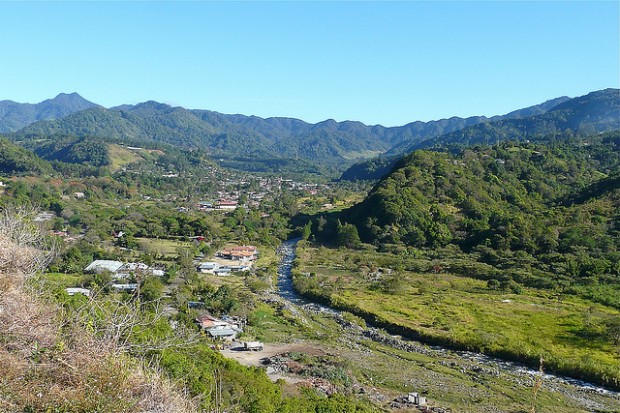
Boquete, Panama real estate has become a hot commodity in recent years, ever since the town emerged on the scene as one of the hottest expat destinations in the world. Once a small farming community, the city has gained immense popularity due to a number of factors, most notably its beautiful natural surroundings and year-round spring-like weather.
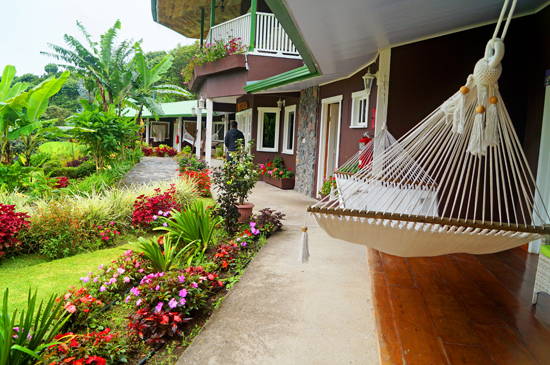
Finca Lerida
Conveniently located near David, the capital of the Chiriqui province, Boquete is easily accessible. And at an elevation of almost 4,000 feet above sea level, it offers a pleasant respite from the heat and humidity of the nearby coastal cities.
Although it’s grown considerably, Boquete still maintains a quaint small-town feel. Its population is made up of locals, including the indigenous Ngobe-Bugle people, as well as a growing number of expats. With these immigrants has come a wealth of businesses and services that many would-be expats find attractive when looking for a place to call home abroad.
Rita Willaert
Boquete, Panama Real Estate Looked Very Different a Decade Ago
Like most desirable expat destinations, you usually needn’t look too far backwards to discover the town’s humble beginnings and an era when property values were nowhere near their present day prices.
With real estate in Boquete, you’ll only have to rewind about a dozen years or so. Back then it was made up of mostly local coffee farmers, with only a few expats and tourists who trickled in and out of town while birdwatching in the nearby rainforests or hiking the slopes of Volcan Baru, the nation’s highest peak.
As interest in the area began to grow, a number of developments sprang up. A major one was Valle Escondido, an exclusive resort community that offered its residents a first-world lifestyle in an amazing setting…and all for bargain basement housing prices, coupled with a low overall cost of living.
This project helped set the stage for Boquete’s growth when it drew international attention and was featured by networks and publications such as HGTV and Forbes. It was named AARP’s #1 retirement destination in the western hemisphere in 2002, and in 2005 it made Fortune’s list of the top 5 best lifestyle values in the world.
In those early years of its emergence on the expat scene, not only was real estate in Boquete, Panama, a great buy, but the cost of living was insanely cheap when compared to other destinations with the same amenities.
The next few years saw continued growth for Boquete, along with a corresponding boom in its real estate market (and a steady uptick in its cost of living). And the growth in Boquete did much to fuel what turned out to be a nationwide real estate boom throughout much of Panama, which continues to earn accolades as one of the best countries in the world to call home as an expat.
Boquete, Panama Real Estate Is Still a Great Value
Despite the fact that Boquete, Panama real estate prices have risen steadily over the last decade, properties in the area still offer a lot of bang for your investment buck. However, before diving too deep into the specifics of what houses in the area cost, it’s important to understand the nature of Panama’s real estate market.
From our experience, it’s best to approach property valuation based on how the area measures up in terms of the 5 market stages we’ve created for classifying developing areas. The stages range from 1, which is a small local community, to 5, which is a full scale town like Panama City. On this scale, Boquete is a stage 4 area. What that means is that it has a good-sized population with an established sense of community, as well as all the things you’d expect in an organized town (e.g. restaurants, shopping, repair shops, financial services, and tourism operations).
As a result, Boquete is most suited for those who are looking for a more developed city with an established expat community. You won’t find as many rock bottom deals on real estate, but at this point it’s all about the value.
That isn’t to say that there aren’t any investment opportunities left in Boquete. They’re still there. They just look a little different at this stage of the model.
Rather than pioneers hoping to buy large tracts of land they can subdivide and sell to end users, stage 4 opportunities are all about catering to those end users. Boquete is the perfect place for investors who want to open a niche business, like a German bakery or an English bookstore. Other business opportunities include boutique hotels and tourism companies.
Why Boquete’s Popularity Won’t Be a Passing Craze
The very factors that drew the first newcomers to Boquete are the same delightful characteristics that are sure to keep expats relocating to this mountain town in droves in the coming years. There are also a few recent developments (as well as some others on the horizon) that may even lead to another spike in its popularity.
One that that will never change is the natural beauty that surrounds the city. Known as the Valley of Flowers and the Eternal Spring, it offers breathtaking vistas of the surrounding mountains, as well as frequent rainbows as a result of its almost-daily afternoon drizzle. Its weather conditions, with temps perpetually between 70 and 80 degrees Fahrenheit, are what some would argue to be the world’s most perfect.
Not only are the surrounding areas beautiful, but they also offer a whole host of activities for those who want to take every opportunity to enjoy the great outdoors. From whitewater rafting to zip-lining through the rainforest canopy, Boquete can entertain even the most intrepid adventurer.
People also love Boquete for its friendly population. Both locals and expats alike are extremely welcoming to new folks, and the small-town atmosphere makes it an easy place to meet people. The city is home to people of all walks of life, so if you’re willing to put in a little effort you’ll have no trouble finding a network of like-minded individuals.
Some Insider Information on Why Property in Boquete Is about to Become Even More Valuable
We mentioned its accessibility earlier, but we failed to point out that it’s about to improve dramatically. To help explain, here’s another little nugget we’ve picked up during the time we’ve spent learning the ins and outs of the Central American real estate market. When it comes to increasing the value of land and homes in a given area, there’s one key ingredient that never fails to have a huge impact on prices: infrastructure.
As infrastructure improves, more people have access to a given area. That opens the door for more residents, an influx of tourists, new businesses, better services and amenities, and increasing property values.
This is about to happen for Boquete.
A large-scale airport expansion is currently underway at the nearby Enrique Malek International Airport in David, which will enable the area to welcome international flights from the U.S. as well as many other countries. What’s more, a newly constructed 4-lane highway has shortened the drive from Boquete to David to a mere 35 minutes.
It’s never been easier for tourists, expats, and entrepreneurs to make their way to Boquete from all over the globe. This increased demand will mean big things for the Boquete, Panama real estate market.

IMIX
What Your Dollars Will Currently Buy in Boquete
Naturally Boquete, Panama real estate values are going to fluctuate from time to time based on availability and the state of the housing market. But here are a few examples of what you might find if you were looking at properties for sale in the area today:
-
$198,000 will buy a newer home that’s over 2,500 square feet, with 3 bedrooms, 2.5 baths, a walk-in closet, an outdoor fireplace, a gated entrance, and an in-ground pool.
-
$279,000 is the listing price for a 4 bedroom/4 bath home with a massive kitchen, multiple outdoor storage buildings, a small pond, and immaculate landscaping.
- $375,000 will get you a fully furnished home with 3.5 bathrooms, 3 bedrooms (plus a bonus room), 2 floors connected by an impressive staircase with tile detail, and a large private back yard with mature trees.
- $875,000 is the price tag for an almost 6,000 square foot home in an upscale private community within walking distance of restaurants and shopping, complete with a guest house and many custom features.
What Boquete Has That Other Mountain Towns Lack
So, Boquete has great weather, affordable home prices, a friendly expat community, and lots of room to explore. Well, so do a lot of other mountain towns in Central America and even Panama.
So, what is it that sets Boquete apart? The beach.
Yeah, that’s right.
While Boquete isn’t located on the beach, it is situated awfully close to it. Just a short drive south of David is the coastal town of Boca Chica, which is surrounded by 50+ islands, most of which are uninhabited.
As a result, it’s entirely possible for you to sip your delicious, locally-grown morning coffee in the cool Boquete mountain air and then, an hour later, step ashore on a sun-kissed white sand island beach in an other-worldly archipelago off Panama’s Pacific coast.
It’s like having the best of both worlds. In fact, a lot of Boquete residents do, as many choose to own a home in the mountains as well as one at the beach.
It’s because of this rich natural beauty and ideal location that we’re thinking of developing our next Adventure Colony in the highlands surrounding Boquete. We have our eye on several properties that are within a 30 minute drive from Boquete that we think would be ideally suited for the simple, nature-loving lifestyle.
Map of Boquete, Panama
Boquete Fast Facts
- Population: About 22,435
- Typical temperature: Average temperature is 70 degrees
- Nearest airport with U.S. flights: U.S. Bound flights leave daily from Tocumen Airport, both domestic and international flights to San Jose, Costa Rica depart from Enrique Malek International Airport in David
- Nearest U.S. consulate: Panama City

Everything you need to know that happened in the last 2 months in Costa Rica.
Each day we sift through hundreds of articles in English & Spanish to bring you the very best ones from Central America.
From investment indicators to new infrastructure projects. Adventure stories to politics. It’s all here.
Costa Rica March 2014.
AJ Doudt
Costa Rica Lifestyle
- These Top Three Countries Offer the World’s Best Benefits and Incentives for Retirees (Virtual Strategies) Costa Rica is one of the top three countries who are home to the worlds’ best benefits and incentives for retirees. Luring retiring foreigners with special visas and significant discounts on everything from airfare to health care.
- Playa Guiones, Costa Rica is Top World Travel Destination for Great Surf (Costa Rica Star) Want to live like a surfer?Playa Guiones might just be the world’s best surfing spot. Want to know a bit more, check out the inf at the 2014 Olympus National Surfing Circuit site.
Guy Buchanon
Costa Rica Investment
- Mel Gibson, others not happy as new route planned between Samara beaches (Inside Costa Rica) Mel Gibson doesn’t want a road in Samara Costa Rica to be built. Gibson’s Nicoya home is situated smack-dab in the middle of a planned beach access route. Municipality of Nicoya Plans to Open Route Between Samara Beaches (Costa Rica Star) Gibson and several other land owners are protesting the beach access point. But it appears the municipality is pushing forward with the project.
- New CR International Airport on the Horizon? (Costa Rican Times) Costa Rica has pushed aside once again its plans for a southern airport, instead Orotina is the new spot for a brand new international airport. It sits at sea level, is 30 minutes from San Jose, and is being billed as the perfect spot to build.
Taraji Blue
Costa Rica Tourism
- Eco-Escape: The Landscapes and Wildlife of Costa Rica (Weather Channel) According to the Weather Channel, the only way to avoid the next big polar freeze is with an eco-escape to Costa Rica.
- Chasing Snakes in Piedras Blancas National Park (The Expert Vagabond) The Central American nation’s natural beauty and richness is one of the reasons many travelers and travel-blogger photographer Matthew Karsten continue to return to Costa Rica.
- Costa Rica: Your family and other animals (Independent UK) Lonely Planet is in love with Costa Rica too. In its ‘Great Escape’, series the well-established traveler’s handbook once again shows travelers how to get the most out of the nation’s wildlife, beaches, and jungles.
- Costa Rica welcomed record number of tourists in 2013 (Fox News Latino) Costa Rica welcomed a record number of tourists in 2013, with just over two million tourists setting foot in the nation.
- Costa Rica Launches Tourism Campaign During the 2014 Sochi Winter Olympics (The Costa Rica News) Even with posting those high numbers, Costa Rica went after an eveng reater U.S. audience, the approximately 1.5 million watching the 2014 Olympic Winter Games in Sochi.
Brad Coy
Costa Rica Real Estate
- BUDGET Analysits of Panama, Costa Rica, & Ecuador to date! (Lyman’s Journey) An interesting comparison of cost of living report by blogger Tricia Lyman (who made the decision to sell everything and go country shopping) shows that a comfortable expat life in Costa Rica can be cheaper than in Ecuador, Mexico, Panama, and even Nicaragua -as long as you don’t live in Tamarindo Beach. Find out why here (Costa Rica Star).
- Tourism, Wealth and Unemployment: Guanacaste in Costa Rica (Costa Rica Star) Real estate in Guanacaste, Costa Rica is booming. Lots of new commercial and residential construction is underway along with an influx of new faces, which has some experts are wondering if there is another real estate boom taking place on the coast? And why now? Learn more at here (Costa Rica Star) .
- Jaco Beach: Costa Rica’s Real Estate Hotspot (The Costa Rican Times) Those not flocking to Guanacaste are ending up in Jaco beach, another real estate hot spot in Costa Rica. This popular little beach town has a little over two miles of beach front with plenty of world renowned surfing, authentic local culture and a caliente nightlife.
- It’s a Buyer’s Market for Private Islands (New York Times) Island buying in Costa Rica continues to establish itself with affluent buyers, who are seeking out non-traditional (think the Caribbean and St. Barts) warm climates. Here affluent buyers are splurging on land in the emerging areas of Costa Rica’s Southern Zone.

Arturo Sotillo
Costa Rica Economy
- Costa Rica’s Economy Rebounding, Vice President Says (Bloomberg) Bloomberg says Costa Rica’s economy is waking up. Following the global financial crisis of 2008, exports and foreign direct investment are picking up and there is a lower unemployment rate.
- Starbucks steps up search for Latin America’s El Dorado (Seattle Times)Where do you find the best coffee in the world? Starbucks of course and now you can get Starbucks in Costa Rica who is betting Costa Rica, and other coffee-rich Latin American nations, will be a source not only of fine Arabica, but also middle class customers.

MD Verde
Costa Rica Environment
- Costa Rica Aims For Carbon Neutrality With Payments For Ecosystem Services (Ecosystem Marketplace) Costa Rica’s grandiose experiment with payments for ecosystem services has restored millions of hectares of forest. The nation continues to establish a domestic carbon market with plans to link it to international markets in the future; all as part of its plan to become carbon neutral by 2021.
- Environmental Performance Index: Costa Rica (Yale) Is Costa Rica really as green as it says it is? Not according to Yale’s Environmental Performance Index. Costa Rica fell from fifth place to 54th out of 178 other countries in the well regarded environmental index.
Like this country brief? Get it in your inbox weekly for free.
Be sure to catch the weekly country briefs by subscribing via email right here:

Costa Rica has long been a favorite of expats and international travelers. With its beautiful beaches, friendly locals, and perfect weather it has claimed the top spot on lists of best tropical destinations for decades.
But what about newcomer Ecuador?
Rich in culture, and with a wide variety of climates and settings, Costa Rica’s South American neighbor is giving it a run for its money. Speaking of which, the cost of living in Ecuador is another perk that’s causing it to take top billing in many of those lists that Costa Rica once dominated.
Which is the better travel destination or expat haven?
Well, that depends solely on you and your priorities and expectations. To help you make a more educated decision, we’ve aligned the two countries in a side-by-side comparison so you can see how they stack up in several of the most important categories.

Ecuador vs Costa Rica
Use the Infographic on Your Own Site
Round #1 – Lifestyle Hacks
Slight Advantage: Ecuador
One of the most amazing benefits of living in Latin America is the opportunity to outsource a lot of your less desirable tasks. With a wealth of local labor resources that aren’t available in North America, you can hire helpers ranging from gardeners to tutors to drivers to grocery delivery guys.
You can even enlist the full-time services of a maid. (Think cooking, cleaning, grocery shopping, and laundry.) And, in Ecuador, that’ll only run you a mere $10 per day!
The cost in Costa Rica is a little higher, closer to $15 per day, but it can be argued that this is one area where you get what you pay for. With Costa Rica’s heavily customer-oriented service culture, the aid you’ll get there is top-notch.
However, the service in Ecuador is excellent as well so, in terms of value, we have to award this category to them.

Mathew Kebbeckas
Round #2 – Connectivity
Outcome: Ecuador Advances
For a country that excels so well in so many areas, Costa Rica is light years behind the rest in terms of internet speed and availability. Broadband is available in most of the larger cities, but it’s often difficult to find a signal elsewhere.
The country’s connection speed has increased by 43% in the past year. However, at 2.1 megabytes per second, it’s still barely enough to stream a movie in standard definition (and you can forget high def).
Ecuador, on the other hand, is aggressively working to increase its internet coverage. Currently, over 35% of the population is connected, with a goal of access in 50% of households by 2015. In Ecuador there are also free public access centers, called Infocentros, scattered all over the country, even in more remote areas.

Anthony Doudt
Round #3 – Living Options
Winner: Costa Rica for its Tropical Lifestyle
Both Costa Rica and Ecuador, with their varied topography and diverse ecoclimates, offer a wide range of living and travel options. There are mountain towns, beach communities, and bustling cities.
In most of those categories, Ecuador is a worthy competitor. Cities like Cuenca and Loja offer colonial charm plus all the modern conveniences. The Galapagos Islands offer some of the world’s best biodiversity. Ecuador also has major cities, like Quito and Guayaquil, for those who want easy access to services and amenities (arguably better than boring, unattractive San Jose, Costa Rica).
Where Ecuador falls flat is with its tropical lifestyle. In short, beach towns. While it has a handful of established destinations, like Salinas and Montanita, those towns aren’t even in the same ballpark with what Costa Rica has to offer.
Tropical living and ecotourism are exactly what Costa Rica does so well. As a result, it can be a bit overrun with tourists at times and in certain locations. However, with so many options, there are still a number of places off the beaten path where you can find a secluded beach or a remote surfing spot. Costa Rica is the epitome of most expats’ ideal tropical lifestyle.

Wanja Krah
Round #4 – Green Living
Slight Edge: Costa Rica
In keeping with its commitment to the natural environment and its push towards ecotourism, Costa Rica is about as green as they come. Almost ¼ of the country’s total area is parkland. Over 90% of its electricity comes from renewable energy sources, with 95% projected by year end. It’s also well on its way to becoming the world’s first carbon-free economy.
It also feels greener in Costa Rica, with many businesses and communities promoting green initiatives and healthy living. However, Ecuador is certainly taking strides in this direction as well.
It’s the only country in the world where the rights of the natural environment are protected in the nation’s constitution. Ecuador is also home to Yasuni National Park, the most biodiverse place on earth. Although the region is constantly being threatened due to its 800-million barrel oil reserve, the country has undergone tremendous measures to protect it.

Tibo
Round #5 – Cost of Living
Clear Winner: Ecuador
Costa Rica is a top tropical destination for tourists and expats alike. However, it isn’t for its low costs. While still a fraction of what you’d pay for the same goods and services in North America, Costa Rica has one of the highest costs of living in Latin America.
By contrast, Ecuador’s reasonable cost of living is often one of its biggest selling points. There a couple could live simply on a mere $1200 per month. This total even includes rent, which runs around $450 on average.
And, by “simply,” we don’t mean completely free of luxuries like once-per-week maid service and high speed internet. While Ecuador’s cost of living is low, the lifestyle it affords is far from meager.

Sean Hobson
Round #6 – Ease of Access
Advantage: Costa Rica
Because of its long-standing status as a top Latin American destination, Costa Rica is serviced by a whopping 13 large airlines. It’s only 2 ½ hours from Miami and air travel from North America is often quite reasonable.
So not only is Costa Rica easy to access, it’s also a great starting point for travel in and around Central America. The only downside is that it has relatively few airports.
Ecuador has two international, Quito and Guayaquil, as well as a number of regional airports. However, most incoming flights have layovers in Miami, Panama City, Bogota, or the Caribbean, resulting in longer (and more expensive) travel.
Once you arrive in either country, public transportation is available to get you to points throughout the country. However, some trips in Ecuador can grow quite long. And Costa Rica isn’t exactly known for the quality of its roads.

CC
Round #7 – Business Climate
Champion – Costa Rica
We’ll go with some cold hard facts on this one. The International Finance Corporation ranks Costa Rica #102 for ease of doing business. Ecuador comes in at #135. In other words, neither has the ideal business climate, but Costa Rica’s is significantly better.
While far from perfect, Costa Rica’s business environment is one of the most stable in Latin America, with numerous incentives like low tariffs and competitive tax rates. Recent legislation has been aimed at attracting foreign investment and supporting the private sector. Processes like obtaining a visa or starting a business are relatively hassle-free, by developing country standards.
Ecuador’s business climate has been somewhat unpredictable in recent years. Its dollarized government is heavily based on petroleum, resulting in the need for the nation to look for ways to improve its trade balance. However, recent strides in economic policy have led to an estimated 5% growth.
Ecuador also offers a number of visa options. However, a number of stipulations (like losing your visa if you’re gone for more than 6 months) make maintaining residency a challenge at times.

My Future
Round #8 – Banking
Lesser Evil: Costa Rica
Due to FATCA and other U.S. tax evasion agreements, both Costa Rica and Ecuador have recently implemented stricter measures that create difficulties for foreigners attempting to bank there. You can no longer open an account with merely a passport, in either location. In fact, the requirements are very much the same for both countries.
Why Costa Rica? Mainly because of Ecuador’s inconsistent regulations and subpar accounting standards. The process of establishing an account can also take a good bit longer there.
One advantage Ecuador has is its use of the U.S. dollar as its official currency. Costa Rica’s colon, while it generally follows the dollar, is thinly traded and could present a problem in the event of a worldwide financial crisis.

Patrick Hall
Round #9 – Investment Opportunities
Winner: Ecuador
Costa Rica’s economy is one of the safest in Latin America, and its policies encourage foreign investment. However, though it excels in stability, it lags behind in opportunity.
Ecuador offers a wealth of real estate and business opportunities at a lower cost and, consequently, with a larger growth potential. The country is investing heavily in infrastructure, which generally results in increased property values. Infrastructure improvements are the #1 catalyst for real estate appreciation, as we discuss extensively in Pay Dirt, our latest ebook.
Tourism investments are also a great option in Ecuador. For its incredible number of natural attractions, Ecuador has a relatively weak tourist infrastructure. There’s a lot of potential for savvy entrepreneurs to profit in this arena as Ecuador continues to gain popularity among expats and international travelers.

Yannis
Round #10 – Health Care
Slight Edge: Costa Rica
This was a close one. Both countries offer excellent health care with skilled medical professionals and modern facilities, particularly in the larger cities. Costs are often as low as ¼ of the price for the same service in North America. Health insurance is also widely available and extremely affordable.
English is widely spoken among doctors in both countries, and many physicians even trained in the U.S. Hospitals are clean and equipped with the latest technological innovations.
While the care provided is great in both countries, the quality of Costa Rica’s health care system is ranked 36th in the world, ahead of the U.S. at 37th. It’s also physically closer to the United States, which could come in handy in the event that medical evacuation or frequent medical travel were necessary.

Mathew Johnson
Round #11 – Consumer Goods
Winner: Neither
Both Ecuador and Costa Rica have a few strikes against them when it comes to the availability and affordability of consumer products. Costa Rica taxes consumer goods heavily (its Value Added Tax is 14%), so as a result less of them are imported.
This can make it particularly hard to find the things you’re after. And if you do locate a hard-to-find item, you’re very likely to pay out the wazoo for it.
At 12%, Ecuador’s VAT is only slightly lower than that of Costa Rica. However taxes on imported goods have been steadily increasing. As a result, many Ecuadorians are actually going outside of the country to buy things like electronics.

Andrew Hall
Round #12 – Foreign Land Ownership
Our Pick: Ecuador
While both countries’ laws protect foreigners who own property, Ecuador’s are much more liberal. Property rights are guaranteed by the constitution, and they apply equally to foreigners and Ecuadorians alike.
What’s more, Ecuador places no restrictions whatsoever on foreigners who wish to purchase land. And there’s an abundance to choose from, often at rock bottom prices.
Compare this with Costa Rica who do not allow foreign residents to purchase land considered restricted or concession areas (which includes 95% of all beachfront property) until they’ve lived in the country for at least 5 years. However, many circumvent this limitation by buying property in the name of a Costa Rican corporation in which they have 49% ownership.
Due diligence is an absolute must before buying land in either country. We recommend the services of a qualified attorney, with experience in land transactions, who can thoroughly research the title and ownership rights.
Costa Rica vs. Ecuador – Who’s the Grand Champion?
Were you keeping score? We weren’t. That’s because it’s so difficult to say for certain exactly which destination is right for an individual.
Our best advice? Come see for yourself.
Is Costa Rica, with its tropical lifestyle and established expat communities, your idea of a dream destination? Or do you prefer to invest in up-and-coming Ecuador, where there’s excellent investment potential and so much left to discover?
There’s only one way to find out.

Burica Panama Coastline
Burica, Panama, is one of the country’s best kept real estate secrets. But you needn’t take our word for it. One visit to this remote paradise is enough to make any traveler or would-be expat feel like a pioneering explorer.
It’s as pristinely beautiful as it is mysterious and secluded. And both nature and adventure abound in Burica.
However, before you categorize it as a place meant only for those who want to live out their childhood Swiss Family Robinson dreams, there’s a lot more to this place than just its raw, undisturbed natural beauty.
Despite its remote feel, Burica is surprisingly close to civilization. And not just any old town either. It’s less than a 2 hour drive from David, Panama’s second largest metropolis.
And the wheels are currently turning on several large-scale infrastructure and private development projects that have Burica, Panama, primed for a tremendous boom and accompanying increase in property value.
However, for now, it’s still relatively off the radar of most buyers. That’s why we think Burica is one of Panama’s last remaining secret investment opportunities.
But, for those hoping to score a killer bargain on a property in a place with exploding investment potential, we recommend you act fast. The best deals could soon be gone.
Here are a few of the things that make real estate in Burica, Panama, such a great investment.
Accessing Burica, Panama is an adventure in itself.
Nothing says “remote destination” like having to go off-road to get there. Burica is located on Panama’s Pacific coast on a peninsula the country shares with Costa Rica. And up until about three years ago, there wasn’t even a road to get you to the end of the Burica peninsula. The landscape is made up of dense jungles that just don’t lend themselves well to vehicle travel.

Viva Tropical
In fact, the end of the peninsula was once only accessible during low tide, when residents were able to drive directly on the beach. Otherwise, it was a no go. So, here you had this stunning tropical paradise that virtually no one in the world even knew about or could get to. Talk about exclusive!
Well a few years ago, the government finally put in a road that created access to the entire peninsula. It’s still a rough ride, but the views at the end are totally worth it for those who don’t mind being bounced around in a jeep for the last few miles.
The Burica landscape is otherworldly.
What awaits you at the end of the road to the Burica peninsula is a lush tropical paradise situated on a volcanic reef that juts out over 200 meters in some places. This makes for some amazing waves that serve as an impressive view and calming background noise as you relax in your hammock beneath the coconut palms.
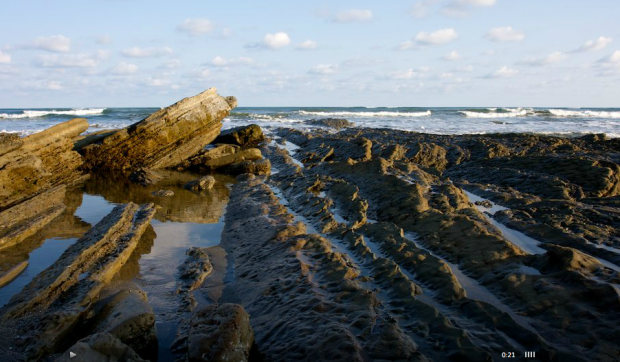
During low tide, the underwater reef is exposed, creating a completely different silhouette that literally makes the shore look like a completely different place. It also makes for an amazing moonscape.
Viva Tropical
There’s also no shortage of wildlife, as Burica is home to a number of exotic species. Among the most prevalent are monkeys. Howler monkeys and capuchins, with their white faces, are all over the place. You can also see the endangered red-backed squirrel monkeys, which are unique to the region and can’t be seen anywhere else.
Burica is an ocean lover’s paradise.
Whatever your choice of aquatic thrill, you can find it in Burica, Panama. If enjoying the coastal breeze while you watch the waves roll in is as adventurous as you get, then you can while your days away in solitude on the beaches of Burica. If that’s merely where your adventure begins, then Burica makes the perfect jumping off point for a long list of aquatic activities.
For starters, it’s full of incredible surf spots that are mostly only known by the locals, who guard these secrets with their life. The great surfing conditions are made possible by the peninsula’s exposure to southern swells, combined with the reef, which drops to depths as low as 300 feet and makes for some amazing waves.
Burica is also home to world-class deep sea fishing. Nearby Islas Ladrones and Isla Montuosa formed the backdrop for many a world record tuna, black marlin, wahoo, and dorado. So far, Burica has one great fishing lodge called Hooked on Panama. And many more are sure to follow as the area develops.
Viva Tropical
Burica, Panama, is home to the first-ever Adventure Colony.
After reading the above, you can probably imagine why we saw such potential in the Burica area when choosing the location for our first Adventure Colony, Playa Burica. Not only did it have the atmosphere and great natural resources that we value, but we also realized what a great investment opportunity it was due to several proposed improvements (like the road we mentioned, which was only a rumor when we first discovered the area).
Our Adventure Colonies are developments for people like us who value wild and beautiful places and want to live in harmony with their natural environment, while also taking advantage of all of the opportunities it offers for adventure. However, even we couldn’t have imagined the success Playa Burica would have.
We’ve sold lots to retired doctors from the midwest U.S., young entrepreneurs from Poland and the U.K., restaurant owners from the Caribbean, and many more individuals who now make up a diverse population that shares our vision and is committed to our dream of maintaining the pristine natural beauty of Burica, Panama.
Viva Tropical
There’s never been a better time to invest in Burica, Panama, real estate.
Over our years of experience in the Central American real estate market, we’ve identified the various stages every area goes through on its way to becoming an established expat community. We’ve also pinpointed the exact step in that process where maximum return on investment is achieved.
In Burica, Panama, it’s about to happen.
Burica is currently in market stage 2 of our development model. Pretty much the only people who’ve been buying land there are pioneers like us who’ve been able to purchase large tracts of land at rock bottom prices based solely on its agricultural use to the locals who owned it.
It required a lot of work and due diligence, but the end result is that we’re now able to offer the land in manageable plots to end users who otherwise wouldn’t have been able to enter such a market on their own.
Well, when large land investors and pioneering developers start buying up land in an area, people start to talk. Interest is generated in the area and even more investors start to show up and begin developing the area.
That’s already happening around Playa Burica. Our scouts tell us that two large pieces of property have been purchased at prices that quite honestly shocked us. This is good news for Playa Burica owners and buyers.
Not only are their property values automatically going to increase, but those nearby developments will have to include more and better amenities in order to be financially feasible in this market. So, Playa Burica owners will also benefit from the businesses and services being offered in the surrounding areas.
That’s why it’s important to act fast if you’re considering investing in the Burica, Panama area. It’s too late to be the first on the scene. But it isn’t too late to profit from the improvements that are coming.
Thomas Richman
Two ongoing projects that will have a major impact on Playa Burica
We’ve already seen the effects that the new road has had on property values in Burica. It’s part of the reason we saw such great potential in the area. Well, it doesn’t stop there. Panama’s government is currently in the process of completing two huge infrastructure projects that will have an even bigger impact on the area.
New Access Via Air
The first is the airport in nearby David. The city’s Enrique Malek International Airport is undergoing a massive expansion and renovation, which will ultimately open its runways to flights from the U.S. and many other nations for the first time ever. That means that people from all over the world will soon have access to Playa Burica via a world-class airport that’s a mere two hour drive away. For now, that is.
Improved Ground Transportation
Why’s that? You guessed it. Construction has just begun on a new 4-lane road from Paso Canoas (at the Costa Rican border) to Puerto Armuelles, the last stop before you begin the trek across the Burica Peninsula. Not only is that good news in terms of access, it’s also a good indication that the government plans to continue to invest in Puerto Armuelles.
And, while the city itself isn’t the type of place that caters to people who enjoy the Adventure Colony lifestyle, it’s the closest place for those in Burica to stock up on supplies. So any growth in Puerto Armuelles is a tremendous benefit to Playa Burica owners and residents.
Bonus offer for Viva Tropical readers!
We realize that, as much as we love Playa Burica, it isn’t for everyone. Namely those who need to be within walking distance to shopping malls and movie theaters. But if you love the idea of getting back to nature on your own private piece of tropical paradise, just a short drive from those other conveniences, then Playa Burica could be right for you.
If so, you should check out our free Adventure Colony book, which explains a little bit more about the concept and what it means to live the Adventure Colony lifestyle, something that’s only available in places like Burica, Panama. The book also contains over $20,000 in exclusive real estate discounts, so download it today!
Map of Burica
Burica Fast Facts
- Population: About 1,360 (Numbers are hard to nail down, but this is a good guestimate)
- Typical temperature: Low 90s
- Nearest airport with U.S. flights: Tocumen Airport. Domestic flights to Panama City, Panama and international flights to Costa Rica depart from Enrique Malek International Airport in David
- Nearest U.S. consulate: Panama City

Saroy
There are a few things you should consider when planning a trip to explore the beautiful Belize beaches on your next vacation.
With almost 240 miles of coastline and hundreds of offshore islands and cayes, you might expect the nation to be home to dozens of the world’s most pristine sandy beaches. Well, that’s not exactly the case.
While there are a number of gorgeous stretches of coastline, among which we’re going to share with you some of our favorites, much of Belize’s coast is occupied by mangrove forests.
These important eco-systems house many species of birds, fish, reptiles, amphibians, and even mammals. They also protect the shores from erosion and damage from hurricanes.
However, they don’t necessarily provide the best conditions for swimming or sunbathing. As a result it’s important to thoroughly research any areas you plan to visit to make sure that each offers the types of activities and atmosphere you’re seeking.
Whether you’re looking to spend your days relaxing in the sand, enjoying some of the world’s best scuba diving in Belize, or soaking up the local culture, Belize has a beach that’s sure to suit your tastes.

Side 78
1. Ambergris Caye: Best for Aquatic Adventures
Ambergris Caye is a 36-mile long island off the northernmost coast of Belize. In fact, it’s believed that it was once part of the Yucatan Peninsula before the Mayans dug a narrow channel to separate it from Mexico.
One of the largest islands, it’s also the country’s most popular tourist destination due to its beautiful scenery, friendly locals, and great access to a number of water sports.
The island has a great tourist infrastructure, with plenty of hotels, bars, restaurants, and shopping. San Pedro Town, the only city on the island, has all the amenities visitors need.
However, despite its popularity, the island still enjoys a relaxed, laid-back feel. This is largely due to the lack of high-rise hotels and other large developments.
Most of the beaches in the tourist areas have been cleared, and some have even had sand brought in to further enhance guests’ enjoyment of the shoreline. However the real star of the show in Ambergris Caye is the wealth of activities that are available just short distance from the coast.
A mere half mile off the coast of the island lies the Belize coral reef system, the second largest in the world. In just a few minutes you can access dive sights like Mexico Rocks and the world-famous Great Blue Hole.
For those who don’t dive, you can also snorkel in 3 feet of water with brightly-colored parrot fish in spots like Shark Ray Alley and the Hol Chan Reserve.
Other popular aquatic activities include deep sea fishing and sailing the cayes. The shore is dotted with piers where you can rent a boat for diving, fishing, or exploring. Diving schools and equipment rentals are also widely available.

Unquencahble Fire
2. Caye Caulker: Best Laid-Back Atmosphere
Just a short distance from Ambergris Caye is Caye Caulker, one of the most easy-going of all the Belize beaches. It also has a number of cleared sections of beach, as well as an area called the Split on the southern tip of the island which is one of the area’s best swimming spots.
The island’s motto is “Go Slow”, and this sentiment is echoed throughout the attitudes of the locals, as well as their methods of transportation.
Cars aren’t allowed on the island, with the exception of a few delivery trucks, so folks get around via golf carts, one-speed bikes, and their own two–usually bare–feet.
Much like the disposition of its residents, the island itself is also fairly unassuming. Businesses are locally owned. Tourist accommodations are small-scale and affordable. The island also remains true to its distinct cultural flavor, without seeming too overly touristy.
Much smaller (only four miles long) than nearby Ambergris Caye, Caye Caulker also enjoys the same close proximity to the Belize Barrier Reef, just a mile away. As a result, it’s also a popular destination for those interested in diving, sailing, and fishing.
Among its other offerings are manatee tours. You can swim alongside these friendly sea cows or just watch as they swim right up to the edge of your boat.
Caye Caulker also enjoys a strong eastward wind throughout most of the year, making it a great place for wind surfing.
Land loving adventurers can explore the jungles and mangrove forests, which are home to over 190 species of birds. Several areas of the island are designated as protected reserves.

Walter Rodriguez
3. Placencia: Best of the Mainland Belize Beaches
If you’re still looking for that pristine stretch of sandy coastline that goes on for miles, you’ll find it in Placencia. In fact, there are 12 miles of it.
The beaches here are wide and welcoming, with fantastic views of the nearby cayes. Of all the Belize beaches, it’s undeniably one of the most postcard-worthy.
But just because it’s on the mainland, that doesn’t mean it lags behind its island neighbors in the adventure category. Placencia lies only a short boat ride from the Belize barrier reef so, like several on our list, it also offers some amazing diving and snorkeling opportunities.
It’s also a good place for fly fishing and trolling, as well as spotting the area’s famous whale sharks. However, in Placencia, the story doesn’t end with the aquatic adventures.
Just inland from Placencia lies the majestic Maya Mountains, which are packed with culture, history, rushing rivers, and cascading waterfalls. These attractions are so close, you can even experience the thrill of the beach and the mountains in the same day.
Placencia is also a cultural and culinary hub. The abundance of fresh seafood lends itself to a wide variety of local ethnic preparations, as well as international cuisines. There’s also a Lobsterfest each year in June. The Placencia Sidewalk Arts and Music Festival in February is another popular event.
Placencia also boasts a vibrant nightlife, with many local bars and nightclubs where patrons can dance to local rhythms ’til the wee hours of the morning.
However, due to its beautiful beaches, festivals, and abundance of tourist attractions, Placencia has a tendency to become a bit crowded.

Joshua Skaroff
4. Hopkins: Best for Authentic Culture
Hopkins is the least known of all the Belize beaches on our list. As a result, it’s a great option for those who hope to avoid the crowds.
It’s also jam-packed with culture, as it’s considered by some to be the cultural center of Belize’s Garifuna population, a people of African, Carib, and Arawak descent. The town hosts Hopkins Day, as well as Garifuna Independence Day, with drum ceremonies and other festivities.
Though it’s gaining popularity, Hopkins is home to only about 1,500 residents, most of whom make a living by farming or fishing. Due to its growth, more and more are finding work in the tourism industry.
The locals are welcoming to visitors, and the area was even recently voted “The Friendliest Village in Belize” by Belize First Magazine.
The town’s shoreline boasts a long stretch of sand that’s perfect for walking or jogging. While tourist attractions are still few, there are a number of restaurants, gift shops, and small bars. Hopkins is also a short 20 minute boat ride from the reef, making it likely to continue to grow in popularity as an up-and-coming dive destination.
Due to their fishing background, the Garifuna people are excellent navigators and tour guides. They can also lead you to some of the area’s best fishing. Some also offer lessons on how to play the Garifuna Drums, a unique instrument of African and Amerindian design played to authentic Caribbean beats.
Hopkins also offers a number of inland attractions to explore, such as Mayan temples, caves, waterfalls, and a dense rainforest. Another site unique to Hopkins is the nearby Cockscomb Basin, a jaguar preserve that offers hiking, camping, and jaguar sightings among fantastic mountain and rainforest views.
Which Beach is Right For You?
Whether your ideal vacation involves long walks on white stretches of sand, world-class fishing and diving, or even both you’re sure to find what you’re looking for somewhere on these beautiful Belize beaches.
You can choose a long span of beach on the mainland, an island getaway, or–better yet–a combination of the two. Just pack your laid-back attitude and your casual attire (shoes optional) and head on down.
Map of Best Beaches in Belize
Belize Fast Facts
- Population: About 324,000
- Typical temperature: 84 degrees
- Nearest airport with U.S. flights: Belize City, Belize
- Nearest U.S. Consulate: Belmopan, Cayo, Belize


Ron Lewis
Located on the Nicoya Peninsula on the country’s Pacific Coast, Nosara, Costa Rica began as an agricultural community with a deforestation problem. The town caught the eye of a developer with a plan to leverage the area’s natural beauty and turn a piece of land into a community.
After over 40 years and several conservation and preservation initiatives (yet no paved roads), Nosara, Costa Rica real estate is highly coveted by investors, would-be expats, and their families.
Nosara is different in many ways than most other beach towns in Latin America, and even Costa Rica. Its natural beauty has made it a popular tropical destination. Yet it maintains a slightly bohemian, small-town feel.
Unlike most coastal towns, its beaches aren’t dotted with luxury high-rise condos and all-inclusive resorts, as much of the area consists of a protected wildlife refuge. However, it still has the amenities you’d expect, such as grocery stores, pharmacies, medical clinics, banks, and a police station. Construction is also constantly ongoing on new housing and retail developments.

Carlos Adampol
The Humble Beginnings of Nosara, Costa Rica Real Estate
For centuries, the area around present-day Nosara was used primarily for grazing cattle. As a result, much of the area had been deforested, greatly diminishing its beauty.
Finally, in the 1970’s, developer Alan Hutchinson flew over the peninsula in a small plane and was taken by the beauty of the Nosara River and the surrounding mountains. He purchased the land from a local and started building what came to be known as “The American Project.”
With labor from the nearby pueblo and supplies that were brought in by boat, the first few houses were constructed at Playa Pelada. The going was slow, with goods being brought in from San Jose or even the U.S. Fresh vegetables came once a week, and the only electricity came from generators that ran a few hours each day.
Sure it’s a great story. But what’s even more important about the way that the Nosara project began is that there was a master plan devised by its developers, something that was unheard of back then and still isn’t even that common today.
As a result of having a plan, Nosara has been able to avoid the pitfalls of amateur development. Along with community effort Nosara has been able to avoid zoning issues that are common in most coastal towns. Its real estate has benefited greatly from these factors making it a perfect place to invest in real estate with a bright future.
In Nosara, you may not drive on a paved road, but you will see million dollar homes. Thanks to a development plan that included thousands of acres you just don’t see beautiful hotels next to chicken coops, and it can’t be underestimated how valuable that makes the land today. And don’t forget the beach. Thanks to the town’s development plan, it’s as pristine as it ever was with no development visible on the coastline. Which is why Travel and Leisure and The New York Times love it and why it is home to people who could afford to live anywhere, but they choose an isolated stretch of coast called Nosara.

FK Nosara
Nosara, Costa Rica Today
The intentional directives of those earliest developers definitely paid off. Today those who have the privilege of owning property in Nosara enjoy one of the greatest lifestyles in all of Costa Rica, if not the entirety of Central America. The Nosara Civil Association, among a number of other groups, have launched initiatives that contribute to the preservation of the town and the enhancement of its residents’ quality of life.
Areas that were cleared for cattle now boast thick, rich forests, thanks to the reforestation component of the master plan. Nosara has the cleanest water table in Costa Rica with no dumping of gray or black water into its streams or beaches (an unfortunately common practice in Costa Rica, where waste management and other basic services are often lacking). Regular trash collection, recycling programs, and sustainability initiatives have also contributed immensely to the area’s cleanup and beautification.
Residents also enjoy an adequate water system, dependable electricity (for Costa Rica), decent roads and bridges, phone and wi-fi service, medical facilities, and a number of other amenities. The bargains scored by those earliest settlers are no longer to be found, but neither are the difficulties those first residents faced.
Nosara is comprised of four main communities, each of which is named after its respective beach: Playa Nosara, Playa Guiones, Playa Pelada, and Playa Ostional. These areas are the most populated, particularly with expats. They, along with the small area of Esparanza de Nosara, are also home to most of the hotels, restaurants, and other tourist attractions.

John and Christina
Nosara Enjoys One of Central America’s Healthiest Lifestyles
A major selling point of Nosara, Costa Rica real estate is the active, healthy lifestyle the area offers. In keeping with its residents’ aim to protect the natural environment, most are equally committed to maximizing their own health and wellness. As a result, Nosara offers a number of options for those who want to enjoy optimum nutrition and fitness.
-
Surfing – Nosara is internationally known for some of the best surfing in Central America. It enjoys consistent waves that allow for all-day enjoyment. There are also breaks that are perfect for every skill level, from beginners to experts. A number of surfing schools in the area offer lessons for beginning surfers of all ages.
-
Yoga – Nosara is one of the most popular places in the country to practice yoga, and there are classes, studios, and teacher certifications available on every corner. Yoga, with its focus on balance and awareness, is also a great complement to surfing and helps to relieve the tension that results from paddling.
-
Other Activities – Those aren’t the only active hobbies that Nosara residents engage in. Others include boxing, hiking, and stand-up paddleboarding. Football (soccer) and tennis are also popular, with access to fields and courts available.
-
Health Food – Healthy and nutritious food options are available throughout Nosara, from raw food cafes to smoothie stands to organic markets and grocers. You can find health drinks, local dairy products, organic produce, bulk nuts and spices, and even artisan foods like coconut and cacao products. Fresh fish is widely available, and there’s even a program that allows for you to sign up online for deliveries of fresh, organic goodies.
-
Green Initiatives – From recycling programs to sustainable building practices, there are a number of efforts in place aimed at keeping Nosara green. Recent programs include campaigns to reduce styrofoam use, beach cleanups, and tree plantings.
-
Nature – There’s much evidence to support the fact that merely being in nature is enough to improve one’s health and wellbeing. And there’s plenty of it to behold in Nosara. From gathering with locals on the beach at sunset to watching turtles nesting in their natural habitat, the area is brimming with wildlife just begging to be observed.
Nosara Is Also an Ideal Place to Raise a Family
Much of the buying pool for properties in today’s Nosara, Costa Rica real estate market consists of young families who are looking for a place to give their children the valuable experience of living abroad. And Nosara is one of the rare places in Central America where you can actually raise a family. As a result, you’ll see families shopping together at the market, eating in a cafe, or just hanging out at the beach, making it an easy place to meet other expat families.
Nosara also feels very North American, with a large number of English speakers (including locals), so it’s a natural choice if you’re looking for a place that’s an easy transition from the North American culture (although there’s still plenty of authentic culture to enjoy in Nosara).
Another huge advantage to raising kids in Nosara is the presence of two bilingual schools, the Del Mar Academy and the HSB Academy. Both have small class sizes and a diverse curriculum, allowing children to learn about the many cultures represented in their classroom. Del Mar Academy also offers a summer program for those who wish to try out the area for a short time.
In addition to their formal education, there are many other opportunities for expat children. Examples include surfing, dancing, boxing, gymnastics, and yoga. Not to mention all the ways your children can connect with nature. Rather than having to go to a zoo or wildlife preserve to see exotic animals, it’s perfectly common to see howler monkeys, lizards, and exotic birds just walking home from the beach.
Another tremendous benefit of Nosara is that it’s safe. Unlike many other beach towns in Costa Rica, it has little drug culture and no real party scene. As a result, it remains free of most shady individuals and maintains a low crime rate. Residents of the small community also do a great job looking out for one another.
What’s important about these characteristics is that they practically guarantee Nosara’s consistent growth as an established town with amenities and services to meet the needs of real families. It isn’t just some latest and greatest destination that’s heavily reliant on its tourism industry and destined to fail once another up-and-coming spot moves into the lead.
Instead it’s a rare find, especially among beach towns. Few other options in the Central American real estate market offer safe, family-friendly beach living, complete with farmers markets, desirable schools, and everything else you need to raise a family.

Jen Watkins
Is Nosara Primed for Another Real Estate Boom?
While it’s been growing steadily in recent years, there are some who suspect the Nosara, Costa Rica real estate market could be about to experience its largest growth spurt since 2006. And a visit to the town these days would quickly confirm those suspicions.
There are many new faces on the street, new homes and businesses going up at record speeds, and many other changes underway. Likely many are beginning to realize the value of living in a small, beach community as opposed to a large, fast-paced city (whether elsewhere in Central America or back in their home countries).
However, there’s no reason to worry that development in the area might get out of control. Due to the federally protected zone being established along the beach, no structures can ever destroy the natural beauty of Nosara’s coastline. This of course is affecting the price of land values as there is a limited supply. Likewise, height restrictions in the areas that are available for development also help to prevent the buildings from dominating the surrounding natural environment.

Philip Reid
Nosara, Costa Rica Market Data and Trends
The lifestyle available in Nosara is without a doubt a critical driver of the real estate market. You don’t see many real estate offices that don’t have vacation rentals as an offered service. This is because vacation renters end up buying lots of real estate, which is a testament to the attractive lifestyle offered in the area.
There are a few things that we’ve seen happening in Nosara’s real estate market over the past few years. For starters, the quality of the construction that buyers are seeking has changed considerably. Today’s buyers aren’t looking for quaint little shacks with thatched roofs, prices for land are far too high to make this idea work. People want high turnkey properties with all the conveniences you would expect in an emerging tourist mecca, a trend that’s also being echoed by the quality of new businesses that are being built or renovated.
Another trend is that property appreciation rates exceeded expectations in 2013, particularly on land prices which were up as much as 50% in some cases. This is a result of dwindling supply, in a 40-year old project there isn’t much that is new and most people at this point don’t want to drive very far to get to town.
As we mentioned previously, one of the easiest themes to notice right now in Nosara is the incredible amount of construction that’s underway. With hardly enough supply to meet the increasing demand (and with sophisticated buyers who know exactly what they want and are willing to wait for it to be built) there is more construction going on in Nosara than ever before. You can’t drive anywhere without seeing something getting built, from houses, to hotels, to tennis courts, the town is changing right before our eyes.
Also, with limited space in the central areas (due in part to the zoning ordinances we referenced), many of these new homes are being built on the outskirts of town or in the surrounding mountains. In those areas, lot sizes are much larger. They offer more privacy and tranquility, as well as a somewhat cooler climate and some killer views. Its expected that the higher prices in town or more space will push buyers into nearby areas.

Chris Goldburg
Why Your Investment Is Safe in Nosara
With so much to love in Nosara, it should be no surprise that it isn’t one of the cheapest places to live. Quite the contrary. It’s one of the pricier options in Costa Rica and in Central America in general. But the desire to live there is really strong and will continue to be for the foreseeable future. Even if you don’t want to live there a vacation rental can deliver a healthy return on investment up to 10% to 20% .
So, while properties in Nosara may not have the emerging upside of those in some lesser-known areas, it’s clear that its real estate market continues to go nowhere but up. If you want proof, you must only look at the expanding schools, new businesses, and infrastructure improvements, such as airport renovations and road pavings (finally!).
These advancements, combined with the slower pace of life and natural harmony, are what make Nosara the best of both worlds. And that trend isn’t one that’s changing any time soon.
Map of Nosara, Costa Rica
Nosara Fast Facts
- Population: About 1,700
- Typical temperature:Mid 80’s
- Nearest airport with U.S. flights: Liberia
- Nearest U.S. consulate: San Jose


Tony Vincelli
There are a lot of reasons you might be considering relocating to Central America. There’s the pleasant climate, the opportunities for adventure, the ability to live at your own pace. Those benefits are all excellent reasons to look to the Latin tropics when thinking about a move abroad.
But what about improving your brain health and cognitive functioning and lowering your risks of developing Alzheimer’s disease? That didn’t make your list? Then maybe you should check out the following stat.
A whopping 24.8 of every 100,000 deaths in the U.S. are due to Alzheimer’s-related causes. Yet the average in Central America is only 2.48. That means that you are 10 times as likely to die from Alzheimer’s disease living in the U.S. than in Central America.
Given that information, you might want to go ahead and add “preventing Alzheimer’s” to the “pro” column on your list of reasons why you should or shouldn’t consider joining the thousands of other U.S. expats who are finding a better, and healthier, life in Central America.
It’s Not a Joke. It’s a Serious Epidemic.
The symptoms of Alzheimer’s disease are issues we once thought of as merely senility, a normal symptom of old age. Many senior citizens even use this diagnosis to justify their own actions when they misplace their false teeth/hearing aid/bifocals or when they forget a grandchild’s name and instead call them by the name of another relative/neighbor/pet.
However, these symptoms are what we now know as the condition commonly referred to as dementia. While not a disease, in and of itself, dementia instead refers to a group of symptoms that include memory loss and difficulties with language, attention, problem solving, spatial skills, and organization (among other areas).
Much like a fever, dementia is an indication of an underlying issue. And in 70-80% of cases it’s caused by Alzheimer’s Disease, an irreversible degenerative brain disease that’s currently the 6th leading cause of death in the U.S.
Wait, It Gets Worse.
Not only are dementia and Alzheimer’s very real problems. But they’re significantly more prevalent in the U.S. In fact, it ranks 3rd IN THE WORLD for deaths as a result of Alzheimer’s and other diseases that cause dementia.
Between 2000 and 2010, U.S. Alzheimer’s deaths have increased by a whopping 68%, while other top killers like breast and prostate cancer, heart disease, and stroke have decreased by 2, 8, 16, and 23% respectively.
Yeah, I know what you’re thinking. Since the risk of Alzheimer’s increases with age (it doubles every 5 years after age 65, reaching 50% likelihood after age 85), then won’t there naturally be more cases as people live longer?
While that’s a valid argument, and certainly one that accounts for a slight increase in the instances of Alzheimer’s, the numbers are extremely disproportionate. During the same decade when the disease increased to claim 68% more lives, the U.S. life span increased by less than 2 years (from 77 to 78.7).

Andrew Morrell
So Who’s Getting It Right?
Although U.S. residents are leading the world (in a bad way) when it comes to Alzheimer’s deaths, their south-of-the-border neighbors are faring quite well in this same area. While the U.S. ranked 3rd (Canada came in 16th, by the way), the Latin American countries of Mexico (120th), Belize (166th), Costa Rica (40th), El Salvador (169th), Guatemala (161st), Honduras (168th), Nicaragua (162nd), and Panama (117th) all did much better.
Let’s address life spans again, since it does in part account for a small portion of the additional Alzheimer diagnoses. But again, there’s hardly much difference. Costa Rica ties the U.S. for 33rd place in the world for its long lifespan (79 currently). That partially explains its somewhat higher Alzheimer’s rate than its Central American counterparts.
But it doesn’t help justify the much lower number of occurrences in places like Mexico and Panama, whose life expectancies are 75 and 77, respectively.
It isn’t the quality of the care provided, as only Costa Rica comes close to the U.S. in the WHO’s ranking of the world’s healthcare systems. And considering the U.S. is the 4th best educated nation in the world (Canada is #1), according to data from the Organization for Economic Cooperation and Development, education isn’t to blame either.
So, if those factors aren’t the culprits behind the U.S.’s growing Alzheimer’s epidemic, then there’s got to be another explanation. The gravitational pull of the moon, a genetic predisposition, or maybe exposure to an abundance of Walmart stores. No?
Proof That It Isn’t In Their Genes
Although the theory that susceptibility to Alzheimer’s is merely in the genetic makeup of U.S. residents doesn’t seem all that farfetched, recent findings have shown the complete opposite of that fact to be true. Let me explain.
As mentioned, the countries of Central America (and Mexico) have relatively low rates of death due to Alzheimer’s, when compared to the U.S. Now, what happens when you transplant those Latinos into the U.S. and let them live like much of the rest of the North American culture?
THEY BECOME 1.5 TIMES AS LIKELY TO DEVELOP ALZHEIMER’S DISEASE.
That’s right.
Latinos make up roughly 17% of the U.S. population and, even though they have no genetic predisposition to developing Alzheimer’s, they are being affected by alarming rates. Rates that are projected to increase 600-fold by 2050.
Doctors chalk most of this phenomenon up to an also high occurrence of chronic illnesses in Latinos, including obesity, cardiovascular disease, hypertension, diabetes, and stroke. More diseases that occur in a relatively low percentage to these same individuals in their countries of origin!

G. Vermin
The North American Lifestyle Is Killing Them!
All other factors unchanged, the only other explanation is that these immigrants have succumbed to a North American lifestyle that creates the ideal climate for brain degeneration. And we aren’t merely suggesting they are all turning into couch potatoes who sit around and east fast food all day.
While that is an unhealthy way to live, recent studies suggest that there are a lot more factors leading to the high occurrence of U.S. Alzheimer’s cases than just diet and exercise (although those are certainly major ones).
The study, Environmental Threats to Healthy Aging published by Greater Boston Physicians for Social Responsibility and the Science and Environmental Health Network, identified several environmental factors that alter human cells and cause a number of health problems.
They contribute to what’s called the “Western disease cluster” and includes obesity, diabetes, cardiovascular disease, and metabolic syndrome–all which greatly increase the risk of Alzheimer’s disease. These diseases, they claim, are being driven by changes made in the past century to the U.S. food supply, exposure to toxic chemicals, and an increasingly sedentary way of life.
Here are some of the leading causes they identified.
-
Lead – Lead exposure has recently been linked to cognitive impairment, as much as 15 years’ worth of aging in those with the highest amount of exposure.
-
Air pollution – In addition to the brain, air pollution can also damage the nose, lungs, heart, and blood vessels. The resulting inflammation and cellular damage have been linked to Alzheimer’s and Parkinson’s diseases.
-
Pesticides – Exposure to pesticides has been proven to impair memory and attention spans, and those with a high level of occupational exposure more than double their risk of developing Alzheimer’s.
-
Dietary risk (and protective) factors – Diet and nutrition can both increase and decrease the risk of disease. Diets high in saturated fat, for example, have been shown to increase the risk of dementia. However, diets high in omega-3 fatty acids and those that resemble a Mediterranean diet (consisting of fresh produce, legumes, whole grains, fish, nuts, and olive oil) have been linked to a reduction in the risk of Alzheimer’s, as well as other diseases.
-
Physical activity – Getting some exercise as little as two days a week, during midlife, can lead to a reduction of 50% or more in the risk of developing dementia or Alzheimer’s later in life.
Are You About Ready for Some Good News?
If poor eating habits, an inactive lifestyle, and exposure to harmful gases and chemicals can INCREASE your chances of developing Alzheimer’s, then is it too much of a stretch to think that the opposite type of lifestyle can actually DECREASE those odds?
It isn’t. And it can!
Just look at the suggestions that same study gave to both communities and individuals to help them lower their risks of developing Alzheimer’s.
-
Sustainable, diversified, local alternatives to industrial farming
-
Reformed chemical policies to prevent pollution
-
Accessible health care that focuses on disease prevention
-
Energy policies focusing on reduced emissions and conservation
-
Eating healthy and nutritious foods (high in vegetables, fruits, fish, and nuts–low in meat, sugar, fat, and processed foods)
-
Staying physically and mentally active
-
Being socially engaged with friends, family, and community
Sounds doable, right? It’s a list full of positive strides you hear political candidates promising and just generally things you know you should be doing.
So why aren’t you doing them?

Rita Willaert
Wait, It Gets Better.
While it’s possible to take some difficult baby steps towards better brain health living in North America, it’s flat out simple in Central America. That’s because there it isn’t just about phoning it in and finding ways to artificially incorporate these practices into your life.
It’s a completely different way of life.
It isn’t squeezing in a quick high-intensity workout at the gym in the morning and then a day full of sitting around. It’s getting exercise that’s naturally built into your daily life as you tend your own organic garden on a hillside, walk into town or along the seashore, or engage in sports or other activities you enjoy.
It isn’t taking a processed pizza crust and piling it high with “healthy” toppings or buying some obscure vegetable and experimenting with ways to make it borderline edible. It’s eating healthy the right way by going to the local farmer’s market and buying fresh, locally-grown fruits and vegetables that taste phenomenal just the way they are.
It isn’t doing crossword puzzles and brain teasers to help keep your mind active. It’s stimulating all areas of your brain by being exposed to new people and ideas, learning a new language, and trying new things. (In fact, one study revealed that bilingual patients delayed their dementia risk by almost 5 years.)
And Better…
Other factors linked to a reduced risk for Alzheimer’s include low stress levels, a sense of purpose, strong ties to family and community, spirituality, and plenty of sleep. What better place to find these qualities than in Latin America where life moves at a slower pace, where friends are like family, and where family is everything.
It’s a place whose culture is heavily steeped in religion and tradition and whose people enjoy a quality of life that is virtually unmatched elsewhere.
And, because we so strongly believe in this healthy life-altering lifestyle, we’ve begun building a series of Adventure Colonies that offer an ideal setting for residents who wish to align their lives with these principles. You can learn more by downloading our free ebook and reading about the Adventure Colony lifestyle.
Whether you’re looking to make a change for the sake of your brain, or just for your heart and soul, it could be the smartest move you’ll ever make.

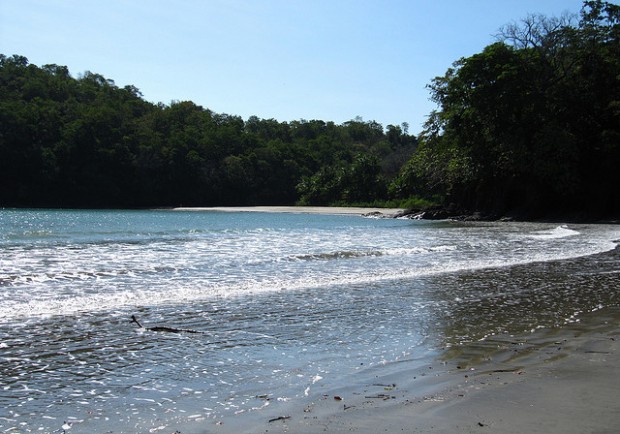
BTimes
You’ve probably heard of beautiful Bocas del Toro, a group of islands off Panama’s Caribbean coast that, in recent decades, has become one of the country’s most popular tourist destinations.
But there’s also another emerging destination just a few hours away on Panama’s Pacific side that we think is, in many ways, superior (or at least on par) with its Caribbean counterpart.
That place is Boca Chica, Panama.
Because of their coastal locales, the two share many common attractions. However, each has specific areas where it excels beyond its competitor.
Both are fantastic places to visit or live, but–to help you decide if one of these destinations could be right for your next vacation or even your permanent home overseas–take a look at how the two stack up in several important categories.
Round #1: Accessibility
Winner: Boca Chica
The best way to reach Bocas del Toro is by plane, which is a 40 minute flight from Panama City or San Jose, Costa Rica. By land, travel is far less simple. Bocas del Toro is on the Caribbean (northern) side of the country, and the Pan American highway generally hugs the Pacific (southern) side. As a result, it takes hours to get from Bocas del Toro to any other decent-sized city, such as Boquete and David.
Boca Chica, however, is on Panama’s Pacific coast a short distance from the town of David, just over half an hour in fact, thanks to a new 4-lane highway. Even in a slow boat, you could get to one of Boca Chica’s closer islands from the airport in David in about 40 minutes or so.
That’s not to say that Boca Chica isn’t remote. Due to the fact that it has less people and tourist attractions, it feels much more secluded than Bocas del Toro once you get there. It’s just the ‘getting there’ part that’s much more advanced.
What’s more, Boca Chica also boasts proximity to a number of other adventures and attractions throughout the Chiriqui province, one of the nation’s biggest up-and-coming areas for tourism. There’s hiking and whitewater rafting at Volcan Baru, the country’s highest peak, coffee plantations and canopy tours in Boquete, and a number of other places to visit nearby.
Round #2: Consumer Goods and Services
Advantage: Boca Chica
Due to the problems with access and proximity to a large city, what’s available to you in Bocas del Toro is mostly limited to whatever is offered or sold locally. There are grocery stores, banks, ATMs, and a number of restaurants and bars. The town also offers basic health care in the form of a few public (and even a handful of private) clinics.
However, most (or, in some cases, all) of these are located in Bocas Town on the main island of Isla Colon. That means that if you’re staying elsewhere you’ll need to take one of the many water taxis, which are available on up into the wee hours of the morning.
If you need something beyond the local options, you have two options. You can drive the 4 hours over the mountain ridge to David where there’s practically every kind of service imaginable: hardware stores, modern hospitals, repair shops, government offices, and a variety of dining and shopping options. Or you can incur the cost (and the wait) associated with having goods shipped.
Boca Chica has roughly the same local options, in the way of small retail establishments. The major difference between the two is that the latter is a mere 40 minutes from David. As a result, it’s reasonable to conceive of driving into town for a world-class steak dinner or towing your boat into the city to a reliable mechanic.

Viva Tropical
Round #3: Investment Potential
Winner: Boca Chica by a Large Margin
Bocas del Toro, while still a great place to invest in property, is already very much on the radar of many travelers and would-be expats. Because it’s a well-known tourist destination with an established expat community, the prices in the area reflect that.
On the other hand, Boca Chica offers all the same gorgeous scenery and opportunities for adventure at prices that still represent a great value. But, most importantly, the Boca Chica area has screamin’ investment potential.
We mentioned that it’s close to David, much closer than Bocas del Toro. Well, factors like location and accessibility play a huge role when it comes to property valuation. As does infrastructure.
And both of those are better in and around Boca Chica, particularly in terms of the easy access to David and its international airport. Even more prophetic is what’s currently going on at said airport: millions of dollars in renovations and expansions that will soon open its runways to international flights from the U.S. (among other countries) for the first time in history.
What will result is more visitors and new residents in Boca Chica, which will in turn lead to the need for new businesses, even better infrastructure, and continually rising home and land prices.

Viva Tropical
Round #4: Atmosphere
Outcome: Boca Chica for Solitude, Bocas del Toro for Socializing
Both Boca Chica and Bocas del Toro have a great vibe. They’re just different in their appeal.
Bocas del Toro is your quintessential Caribbean beach town. It’s fun and funky with many of its buildings and businesses built out over the water on stilts (no high rise condominiums here). It’s charming and quaint, that is until nightfall when things can tend to get a little crazy as Bocas del Toro is known for its partying nightlife. Peace and quiet can be found, but you’ll have to venture outside of town or to one of the smaller islands.
Boca Chica, on the other hand, is quieter and a bit more subtle. Instead of hovering atop the water, its lodges and resorts are tucked away into hillsides or scattered among the many islands of the archipelago. There are good times to be had on Boca Chica evenings as well, but they’re usually in the form of lively happy hours on restaurant patios rather than in thumping discos.

Autoridad de Turismo de Panamá
Round #5: Tourist Infrastructure
Advantage: Bocas del Toro
By comparison, Bocas del Toro is the much more established of the two areas, particularly when it comes to tourist attractions in Bocas del Toro. Populated by locals, as well as an established expat community, it caters to backpackers, families, honeymooners, and more.
Bocas del Toro has plenty of hotels and restaurants, most of which are concentrated in and around Bocas Town. There are also dive shops, deep sea fishing charters, a number of boat cruises and tours, bike and moped rentals, and various land and sea excursions…everything you’d expect to find in a Caribbean beach town.
On the other hand, many of these same operations are just beginning to appear in Boca Chica. You can enjoy most of these same activities there. You just might have a harder time locating a few of them (with the fishing, sailing, and other aquatic adventures being the overwhelming exception, as they’re all abundant in Boca Chica).
As mentioned, Boca Chica is poised for tremendous growth in the coming years. The potential for new tourism offerings is certainly there. It’s also another great investment option for entrepreneurs who want to open a boutique hotel or sport fishing lodge.
Round #6: Surfing
Advantage: Bocas del Toro
Both Boca Chica and Bocas del Toro have beautiful beaches that are perfect for swimming or sunning, including long stretches of secluded beaches where you can find yourself totally alone.
However, if hitting the surf is the excitement you crave, you’re better off in Bocas del Toro.
Some of the best spots include Bluff Beach, which has large enough waves even for advanced surfers; Carenero Point, which has the islands’ longest left break and perfect tubes when the conditions are right; and Isla Batimentos, which is home to the popular Wizard Beach and Red Frog surf spots.
There’s good surfing to be found near Boca Chica, but getting there will require a little longer drive or boat ride than in Bocas del Toro.
Round #7: Snorkeling
Advantage: Bocas del Toro
The same goes for snorkeling. There are a few private beaches in Boca Chica where you can enjoy a day of snorkeling. You can also take a 45 minute boat ride to the waters around the nearby Islas Secas, or a longer 2 to 3 hour trip to Coiba National Park, one of the largest marine parks in the world.
The options in Bocas del Toro are much more prevalent. One of the best places is Bahia de Almirante in Admiral Bay, with its protected coral reefs, clear waters, and few waves. In and around Bocas del Toro you can see reefs, kelp forests, shipwrecks, caves, over two dozen types of coral, and hundreds of species of fish.
Another popular spot is Hospital Point. It’s only five minutes away by boat, making it easily accessible and a great way to get in a little exploring without taking up too much of your day. You can rent equipment for as little as $12 per day and hire one of many locals along the wharf to drop you off and pick you up for around $3.

Chuck Holton
Round #8: Diving
Verdict: Boca Chica Wins
Bocas del Toro has a number of good options for scuba diving, often the same spots you would go for snorkeling as some of the reefs go down as deep as 60 feet. However, the waters around Boca Chica offer some of the world’s best dives, according to National Geographic.
Islas Ladrones, which lies 27 miles due south, is teeming with schools of jack, snapper, and barracuda. There are also smaller species like surgeonfish, parrotfish, triggerfish, angelfish, and more that can be seen year round. You can also spot several species of shark and, at certain times of the year, giant manta rays and humpback whales. Visibility near the island is 30-80 meters.
Slightly farther away, along Isla de Coiba, you can also explore a 330,000-acre reef which contains 60 of the world’s 75+ species of hard and soft coral. In these protected waters you’ll also find mullet, stingray, puffers, moray eels, and gentle sea turtles.
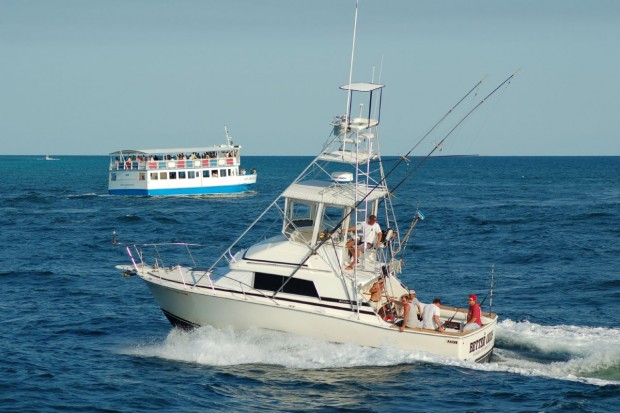
CMC corkle 2005
Round #9: Fishing
Winner: Boca Chica Hands-Down
As you could guess based on the abundance of species represented in Boca Chica, the fishing in its waters is second to none. Fishing lodges make up a big majority of the tourist accommodations in the area, and we’ve lost count of the number of world record catches that were landed in and around Boca Chica.
Much of these whoppers were reeled in near Hannibal Bank, a world-famous fishing hotspot where the ocean floor rises sharply from thousands of feet deep to a mere 120 feet. This underwater cliff is home to the merging of schools of inshore fish with the offshore species who feed on them. Marlin in excess of 1,000 pounds and tuna over 300 pounds have been caught in these waters, as well as snapper, amberjack, and snook.
These and other species can also be caught in Bocas del Toro. The best fishing is a bit more seasonal there and, while still world-class, it isn’t even in the same ballpark as Hannibal Bank.
Round #10: Land Exploration
Verdict: Boca Chica Takes the Round
Being composed at least partially of islands, both Bocas del Toro and Boca Chica have plenty of options for exploring. Each island offers its own varied topography and environment. You can find hundreds of different species of monkeys, reptiles, birds, and plants, many still unidentified.
We’re giving this round to Boca Chica based mainly on the fact that its islands and jungles have a much more otherworldly appeal to them. A number of its islands are completely covered in untouched rainforests, with an abundance of old growth trees so ancient-looking that you would almost bet they pre-date the great flood.
One such is Boca Chica Island, the location of our latest Adventure Colony. To help maintain the island’s prehistoric feel we’ve created Monte Vida Park, a 50-acre crowd funded preserve dedicated to protecting the surrounding rainforests and in turn adding value to property on the island.
Because of Boca Chica’s incredible investment potential, as well as its stunning natural environment, it was a natural choice when we were looking for a spot to establish a place where like-minded people could take advantage of all the area has to offer.