


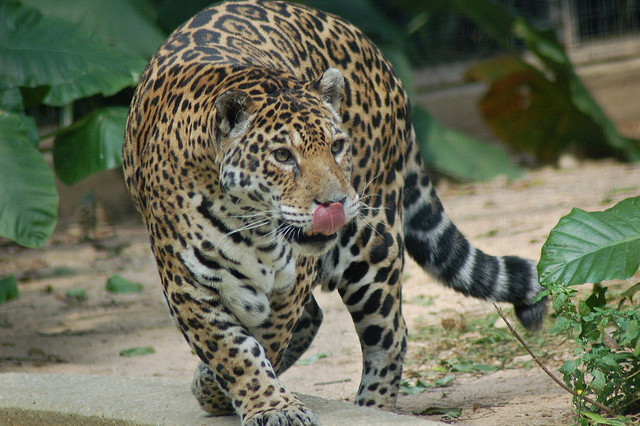
Sek Keung Lo
The third largest feline in the world (behind the tiger and lion) and the largest in the western hemisphere, the jaguar makes its home in the jungles from Northern Mexico to Northern Argentina.
Today this majestic giant, recognized by its pale yellow coat and black spots, is found almost exclusively in the forests of government-protected reserves and is considered a ‘near threatened’ species by the International Union for the Conservation of Nature (IUCN).
Why are Jaguars ‘near threatened’?
Hunted heavily for its gorgeous coat in the 1960’s and 1970’s, thousands upon thousands of jaguars were killed annually until the Convention on the International Trade in Endangered Species (CITES) brought the fur trade to an almost immediate halt in 1973.
Extinct in El Salvador and Uruguay, yet still living in 18 countries in Latin America, the best place to catch a glimpse of these mysterious animals is Belize.
Why Belize?
In Belize you will find the only jaguar preserve on the planet, the Cockscomb National Park. This park covers 150 miles of lush rainforest and is home to 200 jaguars.
And while there is no guarantee that you will spot a jaguar if you make the trip down to Cockscomb, here your odds will be better than any other place on earth.
Jaguars have binocular and color vision, an extremely heightened sense of hearing and are known for their stealth. Needless to say they are not the easiest animals to find and spotting one would be a rare and thrilling occurrence.
But with a little luck and these tips to direct you, you may just get to view one of these breathtaking cats stalking through their jungle home.
Follow these jaguar spotting tips:
- Search at night: Jaguars are nocturnal, so the best time to go looking is at night when they will be out and about (although some lucky observers have seen them sunning themselves in the early morning). Cockscomb is equipped with rentable camp sites and cabins built specifically for jaguar spotting expeditions.
- Go during rainy season: The best time to spot a jaguar is during the rainy season (June and July) when they are most active.
- Hire a guide: Be sure to hire a licensed guide to help direct you through the rainforest. They will be able to track the jaguar’s prints and droppings which will increase your odds of a sighting. You can look for a guide in either Belmopan or Placencia. For added comfort, the guides at Ian Anderson’s Caves Branch just out of Belmopan are also trained medics.
- Keep quiet: As hard is it may be, stay as silent as possible. Shy by nature, the jaguar will avoid foreign sounds at all costs.
Even if you don’t spot a jaguar, you will not leave Cockscomb disappointed. Alive with a diverse range of animals like peccaries (wild pigs), toucans, and howler monkeys and simply bursting with colorful flora and over 290 species of birds, Cockscomb is still worth the trip.
Jaguars in Costa Rica
Although your chances of seeing a jaguar in Costa Rica may not be as good as they were on the jaguar reserve in Belize, jaguars still roam the jungles of Costa Rica. Scattered across the country in numerous protected areas, the large cats have been spotted in places like the Children’s Eternal Rainforest, La Selva Biological Station, and the Corcovado National Park to name a few.
Corcovado National Park covers 475 square kilometres and is packed with 500 species of trees, 370 species of birds, over 4,000 insects and thousands of wild pigs.
Once an ideal habitat for jaguars, around 100 cats lived in Corcovado in 1997, but sadly the number dropped to 40-50 in 2004.
Despite being on a protected reserve, poachers continued to illegally hunt peccaries until the jaguars were forced to venture out to the neighboring farmland in search for food, where they were often killed on site.
Despite the low number of jaguars, your best chance of spotting one is by boat. Jaguars prefer the river bank to rest and hunt, so climb in a boat and scan the river bank for a glimpse of these spotted felines.
Are you ready to spot a jaguar?
No, it won’t be the easiest task, but if you are determined to see a jaguar in its natural environment, there is still a chance. Play the odds and head for Belize.
And once there, hire a guide, practice extreme patience, cross your fingers for a little extra luck and you just might get the rare opportunity to see this beautiful and secretive animal up close.
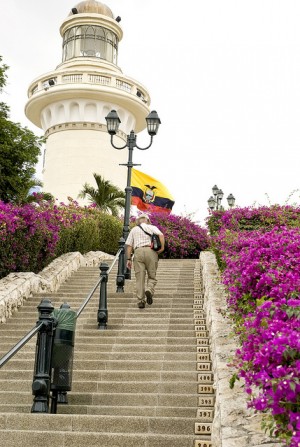

Hola America
If your knowledge of Ecuador is limited to its strategic positioning along the Equator and a sticker on your banana, these Ecuador facts will help you become better acquainted with this South American country.
Ecuador Facts
The country itself is just slightly smaller than the state of Nevada and is situated on the northwest coast of South America. While much of the country is coastal, it also contains two parallel chains of the Andes Mountains.
Ecuador is bordered by the Pacific Ocean to the west, Colombia to the north, and Peru to the east and south. While the Equator does divide the country, it isn’t equally. Most of the country is actually in the Southern Hemisphere.
Ecuador History
Ecuador was originally part of the Incan Empire, until it was taken in 1533 by the Spanish Conquistador Francisco Pizzaro. Known as “Quito,” which is today the name of its capital city, it became a seat of Spanish colonial government.
The nation withdrew in 1830 and changed its name to “Republic of the Equator.” Since that time, the country has seen great instability and many tumultuous years of border wars. The most recent, with Peru, was ended with a peace treaty in 1999.
Ecuador Regions
Ecuador is divided into four distinct regions, which are occupied by peoples of varying ethnicity. The Costa, or coastal plain, has a tropical climate that produces enough bananas to earn the country top billing as the world’s largest banana exporter.
The Sierra, or Andean uplands, has a much cooler climate, which makes it suitable for farmland. The jungles to the east of the Andes, or the Oriente, are a source of oil, which contributes greatly to the country’s economy.
The Galapagos Islands, of Darwinian fame, are also part of Ecuador. These volcanic islands, located 605 miles off the coast, attract hoards of tourists with their unusual species of birds, plants, and reptiles.
Ecuador People
Ecuador’s population is equally as diverse as its landscape. The majority (71.9%) are mestizo, of both European and American Indian (“Amerindian” to Ecuadorians) descent. Montubios (7.4%) and Afroecuadorians (7.2%) make up the next largest segments of the population, followed by Amerindian (7%) and white (6.1%).
Spanish is the official language of Ecuador. Quechua and Shuar (indigenous languages) are also spoken. Approximately 95% of the population identifies with the Roman Catholic Church.
Ecuador’s cultural diversity is easily recognized between its various regions. Those of European descent (though representative of a small percentage of the population) often own land in Quito and the Andean uplands, which is populated by most of the country’s indigenous people who work as subsistence farmers. Consequently, land-tenure reform is an ongoing battle.
Guayaquil, the country’s largest city and most important business center, is located on the coastal plain and populated mainly by mestizos. This region represents the richest area of the country. Yet arguments exist that tax revenues are disproportionately spent in the capital city of Quito. These and other issues contribute to the country’s constant political instability.
Ecuador Government
Ecuador’s government is a republic, and its capital is Quito. Plagued by years of turmoil, the country saw 48 presidents during its first 131 years as a republic. The nation was under military rule in the 1970s, and the past 30 years haven’t been much more effective. This is largely due to a weak executive branch, combined with a cantankerous congress.
The executive branch consists of a president and vice-president, elected (on the same ticket) to a four-year term and eligible for a consecutive term. The legislative branch is made up of a unicameral National Assembly of 137 members, who also serve four-year terms and are elected through a party-list proportional representation system. The National Court of Justice, containing elected judges, and the Constitutional Court, whose justices are appointed by the other government branches, round out Ecuador’s judicial system.
Three of the country’s last 4 elected presidents have been ousted before their terms expired. Current president Rafael Correa was re-elected in the February 2013 general election. Ecuador also ratified a new constitution in 2008, the nation’s 20th governing document since gaining its independence.
Ecuador Economy
The U.S. dollar has been the official currency of Ecuador since 2000, when Congress approved its adoption to help stabilize the country’s economy which was reeling from a banking crisis. This move worked, as the economy has improved, due also in part to high oil prices as the country is heavily dependent on its petroleum industry. It accounts for more than half the country’s exports and roughly 40% of public sector revenues.
The current administration’s default on some bonds and its termination of investment treaties (including one with the U.S.) contributed to growing uncertainty and a decline in private investment, which led to a few years of economic downturn. However, the economy has been growing steadily in recent years, up as high as 8% in 2011 and with a slight slowdown to 4% growth in 2012.
Ecuador’s GDP (official exchange rate) was $73.23 billion as of 2012. By sector, this breaks down into agriculture 6.4%, industry 36.1%, and services 57.5%.
In addition to petroleum, Ecuador’s other large industries include food processing, textiles, and chemicals. Its largest agricultural outputs are bananas, coffee, cocoa, rice, balsa wood, fish, and livestock.
Ecuador’s exports, naturally, include petroleum, bananas, shrimp, coffee, and cut flowers. An overwhelming majority of Ecuador’s exports are shipped to the U.S. (37.8%), followed by Panama (9.9%), Peru (6.2%), Venezuela (5.2%), Chile (4.9%) and Russia $4.6%).
The country imports mainly industrial materials, fuels and lubricants, and non durable consumer goods from places like the U.S. (27.6%), China (10.1%), Colombia (9%), Panama (4.6%), Peru (4.5%), Brazil (4.3%), and South Korea (4%).
Ecuador Stats
Just in case we failed to mention any specific Ecuador facts you were looking for, here are a few more stats you might find helpful.
-
Population 15,439,429
-
Unemployment 4.1%
-
GDP (ppp) $134.7 billion
-
GDP (per capita) $8,800
-
Population below poverty line 27.3%
-
Investment (gross fixed) 24.6% of GDP
-
Taxes and other revenues 21.7% of GDP
-
Budget Revenues $15.9 billion
-
Budget Expenditures $20.1 billion
-
Budget Deficit -5.7% of GDP
-
Public Debt 23.3% of GDP
-
Current Account Balance -$1.387 billion
-
External debt $20.03 billion
-
Exports $23.77 billion
-
Imports $24.67 billion
-
Inflation 5.3%
-
Commercial Bank Prime Lending Rate 8.7%
-
Industrial Production Growth Rate 10.1% (excludes oil refining)
-
Reserves of foreign exchange and gold $2.482 billion


photo by Evan
If you’re considering relocating to Panama, you probably already know that its health care is among the best and the most affordable in Central America. What you might be a little less sure of are your health insurance needs and how to go about meeting them.
Do I even need private health insurance in Panama?
Some expats choose to self-insure their medical expenses. This is a valid option for those who are in good health and can afford to do so. If you don’t want to take such a risk, you’ll need to obtain health insurance when moving to Panama.
While some U.S. policies may provide limited coverage in Panama, many don’t offer coverage for treatments obtained outside the States. Medicare is also useless, as it doesn’t apply to those residing in other countries.
Check with your current provider to determine if you’ll be covered once you leave the U.S. If you are, the worst case scenario is that you might only get the benefits available for out-of-network providers. You also may have to foot the bill yourself initially and get reimbursed on the backend.
If your coverage doesn’t extend outside the U.S., there are some very good and inexpensive policies available both internationally and from Panamanian sources.
Does Panama’s government provide any healthcare benefits to expats?
At the most basic level, Panama offers government-sponsored health insurance to its citizens and permanent residents. However the coverage isn’t great. Treatment is available only from public hospitals and clinics. While many great public facilities exist, they can sometimes have their challenges. While the doctors are well-trained, the hospitals are often understaffed. Public facilities often equate to long waits and inferior technology when compared to private hospitals.
Carrying private health insurance affords you more options to choose when, where, and by whom you’ll be treated. It also offers a higher level of comfort and other attractive benefits, such as private hospital rooms. Doctors in private hospitals are often trained in the U.S., and many are bilingual. Even though they’re more expensive than their public counterparts, medical treatments in private Panamanian hospitals are still a fraction of what you would pay for the same procedure in the U.S. And for the same quality of care.
How do I go about finding private health insurance?
When shopping for health insurance, there are a lot of factors to consider. Obviously, the cost of the policy should be taken into account. You should also look at things like the coverage territory (if you’ll be traveling much outside of Panama), any applicable annual or lifetime limits, whether the policy applies only to a certain network of providers, how claims are paid, and whether your existing health conditions will be covered.
If you aren’t comfortable interpreting and comparing policies, you may want to opt for buying through a broker or agent. Insurance representatives who are licensed with multiple companies can compare costs and features to help you select the plan that best suits your needs.
What types of health insurance policies are offered in Panama?
The two major types of policies available include local health maintenance organizations (HMO’s) and international HMO’s. Local policies only apply for services obtained in Panama. Common limits are between $300,000 and $500,000, and deductibles can be as low as $300 or $500. Treatment from in-network providers are fully reimbursed, but you can often receive as much as 60% towards treatment received from other doctors or facilities.
International policies work the same way, but they also offer networks in other countries as well. They also often carry limits as high as $700,000 to $1.5 million in lifetime coverage, with deductibles ranging from $1,000 to $10,000. Premiums for both types of policies are in the $600-$700 range. They often require medical screenings, and premiums usually rise with age.
A few of the companies that provide coverage in Panama are Pan-American Life Insurance Group, MAPFRE, Aseguradora Ancon, and even familiar names like Blue Cross Blue Shield of Panama.
Another option available in Panama is private hospital memberships. These are discount programs offered specifically by private hospitals, which apply only to treatment received at that same facility. Costs are as low as $18.00 per month and include benefits such as 100% reimbursement for emergency room services, 70% reimbursement for diagnostic tests, and 50% reimbursement for routine screenings. Waiting periods apply for some services, as do annual coverage limits.
 International living is an adventure that most of us have on our bucket list. Choosing to live overseas, either short or long term, is a huge adventure: and those who’ve done it usually say it was the best thing they’ve ever done.
Not only does becoming an expat open your mind to more of what the world has to offer, it can also remind you about the most important things in life.
The benefits of international living are wide and varied. If you’re thinking about making a big move overseas, some of our favorite expat benefits might encourage you to take the plunge.
The chance to start afresh
One of the things that attracts people to the idea of moving overseas is the chance it offers to start afresh. Many people give up stressful jobs, huge social networks, and large expenses when they leave the U.S., and giving up all these things is a brilliant opportunity to simplify your life.
Becoming an expat gives you the chance to get back to basics and really learn what’s important to you. Often, expats find that they get to know themselves better in the first year they spend abroad than they did in a whole lifetime of living at home.
The chance to own less and do more
When you live in the U.S. it’s so easy to get caught up in a cycle of endless bills. Things like gym memberships, cable subscriptions, and active credit cards seem like vital parts of life: but they don’t have to be. Moving overseas breaks the cycle of these bills, and gives you a new way to spend your money.
Expats tend to travel, explore and do so much more than the rest of us. They know that in the long run, experiences are much more valuable than belongings, and they remember this as they trek through the jungle, visit ancient ruins, and take part in exotic celebrations.
The chance to learn new things
When you live internationally, learning new things becomes a key part of everyday life. It’s likely that there will be huge differences between your home country and the country you decide to emigrate to. Holidays, celebrations, behavior, social customs, and language will all be different, and learning about and experiencing all those differences can be great fun.
Learning these new things can also be one of the more challenging parts of international living. Settling into a new lifestyle can take time, but it can also be incredibly rewarding. You may also find that you’re much stronger and more capable than you thought.
The chance to get inspired
When you move overseas, you can expect to open yourself up to all sorts of new opportunities. Doing this is always incredibly inspiring. If you are a creative, the benefits of being inspired in this way will be immediate. Seeing and learning new things on a daily basis will encourage you to create like you have never created before!
If you’re not a creative, you’ll still find this kind of inspiration valuable. You probably won’t be tempted to start a blog or pick up your camera… but you might find yourself dreaming up new business ideas or trying your hand at a new hobby.
Is there a downside to expat life?
Of course, even the most wonderful adventures aren’t wonderful all the time. There are some downsides to expat living, and it’s important to weigh these up against the positives and decide if it is really right for you.
- When you decide to emigrate overseas, you will be opening yourself up to exciting new adventures; but you’ll also be missing things back home. Expats sometimes find it hard to spend long periods of time away from friends and family. It can also be hard to return home after a prolonged period overseas, as it can be hard to adjust to the changes that have occurred while you were away.
- The constant flow of new things and opportunities you will face as an expat can be exhilarating, but it can also be frightening. Living a successful life overseas will involve conquering that fear!
- Holidays that you are used to at home may not be celebrated in your chosen country, or they may be celebrated in a very different way. This can result in some interesting new experiences, but missing out on your favorite holiday the way you are used to it can make you feel homesick.
Is international living for you?
Of course, there are downsides to the expat life, but for most people they are well outnumbered by the positives. Cheaper and more regular flights as well as the growth of the internet and services like Skype have made communicating with people back home much easier.
If you’re hungry for a new adventure, moving overseas could be the right choice for you. Becoming an expat is likely to change your whole perspective on life for the better. It can enable you to reduce your spending habits, embrace change and really get back to basics.
The biggest benefit of international living and the expat life is that you never know where it might take you.

Costa Rica is home to some of the most beautiful beaches in the entire world. Whether you are looking for five star luxury, epic waves, jungle immersion, or your own private paradise, you will find it here.
In short: GO!
For those planning a trip, here is a list of some useful and lesser-known facts about this small but dense Central American gem.
Photo Credit: Halle
1. It Is Possible to Spot Animals Virtually Anywhere
Costa Rica is home to over 150 national parks filled with rare and endangered flora and fauna. It’s well worth a trip into some of the less trodden regions, namely Manzanillo on the South Caribbean and the Osa Peninsula on the South Pacific, but it is possible to find animals virtually anywhere.
In the small surf town of Pavones don’t be surprised to look up from your surfboard and see ten Scarlet Maccaws soaring over your head.
In Puerto Viejo Talamanca traffic jams are often caused by three toed sloths crossing the road.
In the town of Manuel Antonio be careful that a monkey doesn’t steal your lunch or your passport!
Look around and you will be amazed at what you see.
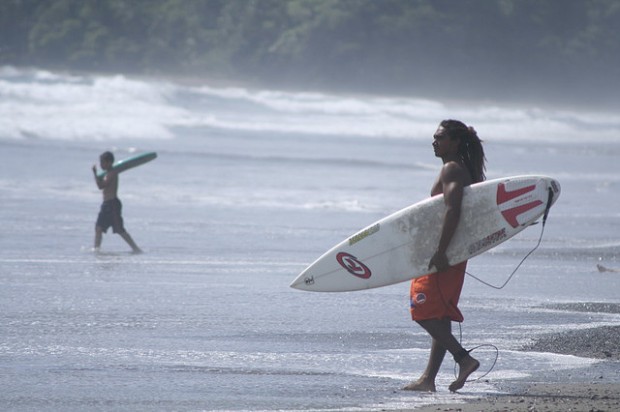
Photo Credit: F. Sosa
2. The Caribbean Coast Is Worlds Away from the Pacific
Though it’s only a four hour ride from the major airport terminal in San Jose to the South Caribbean Coast, it may feel like you’ve entered a different continent.
Homes are painted bright Caribbean colors, reggae music plays in the streets from sarong shops, rastas sell lobster stew and coconut rice on every corner, and Jamaican Creole mingles with heavily accented Spanish. The ocean is turquoise and covered in coral reef.
Costa Ricans in the rest of the country may tell you not to go. “It’s too dangerous.” Ignore them. It’s one of the best parts of the entire country.
3. Always Use the Pronoun “Usted”
In many Latin American countries, including Mexico, it is absolutely appropriate to use the pronoun “tu” when referring to “you”.
“Tu tienes un novio?” (Do you have a boyfriend?)
Well, in Costa Rica it is incredibly impolite to use the “tu” form. Generally they understand that you are a foreigner and will not take offense, but blend in better and show some respect by using “usted.”
“Usted quiere una novia?” (Do you want a girlfriend?)
4. It Is Expensive
Costa Rica has a reputation for being expensive. That reputation is well deserved. Plan to budget around double what you would spend in other Central American countries like Guatemala and Nicaragua.
You can strike deals on hotels and housing rentals in the low season, but food and restaurants tend to consistently be the same price as Western countries like the United States. Certain items, like cheese, are imported and cost nearly double what they do in the U.S.
5. You Can Drink the Water
In most of the country it is absolutely safe to drink water from the tap. In Pavones and Corcovado National Park the water comes from mountain springs and actually tastes better than bottled. The water is also safe to drink on the entire Nicoya Peninsula.
With water costing around $1 a liter in grocery stores, much more in restaurants, this is a huge money saver. Besides, do you want to put more plastic into the Earth?
Keep in mind this is not true everywhere. Some locals drink the water on the South Caribbean but I have heard horror stories from tourists who have done the same.
6. The Rip Currents Are Relentless
The surf in Costa Rica is world class, which can make for extremely dangerous swimming. Always check with locals before jumping in and never swim alone.
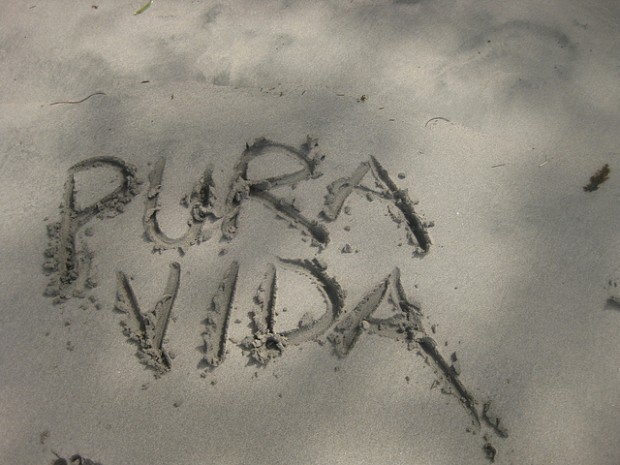
Photo Credit: Kate
7. Learn the Meaning of Pura Vida
Don’t be surprised when you hear locals say “pura vida” in response to virtually anything. “How are you?” “Pura vida.”
“Oh, excuse me.” “Pura vida.”
“The whole town is flooded and the roads are closed for the next week?!!!” “Ah, pura vida.”
This phrase, which directly translates to “pure life”, encompasses an entire way of life in Costa Rica.
It means letting go of what you can’t control. It means accepting what life hands you and making the most of it. It means finding happiness wherever you are, whatever your situation.
I suggest you learn it quickly and use it as often as possible.


Panama Pensionado Visa: Savings and Benefits
Panama has a lot of extremely attractive features that beckon expats to its beautiful beaches and lush mountain havens. It is a nation that is extremely welcoming to foreigners and perhaps never more so than when it offers to retirees a whole host of discounts, on everything from airfare to home phone service.
These benefits are part of Panama’s Pensionado Program, a neat little package of perks tailored to retirees of all ages. Depending on where you choose to settle, the cost of living in Panama is already extremely affordable. However, the benefits offered to pensioners can make retiring to this Central American destination all the more lucrative.
Panama’s Pensionado Program’s Benefits
The discounts and advantages of the pensioner’s visa are quite numerous. Here they are in a nutshell:
-
50% off on recreation and entertainment such as movies, theaters, sports, etc.
-
50% off hotels Monday through Thursday (30% off on weekends)
-
50% off passports
-
30% off public transportation like buses, trains, and boats
-
25% off airfare
-
25% off restaurants (15% off fast food)
-
25% off electrical, telephone, and water service
-
20% off doctors and specialists
-
20% off prosthetics and other personal assistance devices
-
15% off hospitals and private clinics
-
15% off dental and optometry services
-
10% off prescription medications
-
tax-free importation of household goods, up to $10,000
-
tax-free importation of a vehicle, or tax-free purchase of a local vehicle, every 2 years
In addition, retirees are now able to obtain a cedula, the national identification card issued to residents of Panama. While participants in the retirement program can easily get by with merely their pensionado card and a passport issued from their home country, the cedula allows for greater ease of getting around and transacting in Panama. Locals feel a bit more comfortable when dealing with someone they know is “documented,” so to speak. While holding a cedula doesn’t grant you any additional benefits, it’s just one more step towards diving headfirst into your new culture.
The Qualifications Required for the Pensionado Visa
While it sounds like, and is often referred to as, a “retirement” program, the pensionado visa is actually available to expats of any age who meet the specified criteria. Even better, recipients are grandfathered in under the law and can never lose their benefits, as long as they continue to meet the requirements. To qualify you must have the following:
-
Monthly income of $1,000 for life from a guaranteed source such as a pension or annuity
-
Or income of $750 per month and a $100,000 minimum investment in Panamanian real estate
-
An additional $250 monthly income for each dependent child
The $1,000 per month is a total amount for a married couple. In other words, it isn’t necessary for both spouses to meet the income requirement. Dependent children cannot be over the age of 18, unless they are attending college. Exceptions can also be made for adult children with disabilities. The $250 can also be obtained in the form of interest earned on deposits in a Panamanian bank.
How to Get a Pensionado Visa?
The process of applying for and obtaining your pensionado visa is a fairly straightforward one. The whole shebang takes about six months and costs between $1,500 and $2,000 per person, including attorney fees. If you’re applying for yourself, your spouse, and your dependents all at the same time, you can sometimes save a few pennies on the legal fees. A good bit of paperwork will be required, and it will all need to be properly authenticated. A reputable attorney with experience in immigration issues will be an invaluable tool as you navigate this process. In general, you’ll need to be prepared to provide the following:
-
Certified letter from the appropriate organization or entity guaranteeing your monthly pension for life
-
Government certification that the source of your income is in good standing, if your pension comes from a private company
-
Proof of prior pension payments (e.g. check stubs, bank statements, etc.)
-
Certificate of public registration of Panamanian real estate in your name, if applicable
-
Police record from the country where you resided the past 5 years
-
Marriage and/or birth certificates, if applicable
The Fine Print
While the program no doubt has some great benefits available to expats, there are some who question whether or not it’s all it’s cracked up to be. Take, for example, the discounts on utilities. Water in some areas may be as low as $7. So 25% off of that isn’t a whole heck of a lot. Then again, it all adds up. Another criticism of the program is the fact that exclusions often apply. So, pensioners shopping for airline tickets may end up finding another flight that is actually less than the discounted rate they could get on what was already a higher priced ticket. And, understandably, the entertainment discounts aren’t available on events such as charity functions. Would-be expats who know little Spanish will want to quickly learn this phrase: Por favor, deme mi descuento de pensionado. Which means “Please give me my pensioner’s discount.” Benefits aren’t automatic. You have to ask for them, and some small businesses may even be reluctant to grant them. It’s also important to note that, for those of retirement age (women over 55 and men over 60), you are eligible for most of these benefits anyway. It’s up to you whether you want to jump through the additional hoops to obtain the pensioner’s visa, or just opt for another type of visa.
The Breakdown
So, we said it all adds up. But just how much could you really save in a year with the benefits offered by the pensioner’s visa? Here’s a theoretical breakdown that shows how a hypothetical couple could easily save as much as $10,000:
|
Movie tickets |
$2.75/person x 2 per month |
50% |
$66 |
|
Dinner theater |
$20/person x 2 per month |
50% |
$480 |
|
Three-night hotel stay |
$375 total x 6 per year |
30-50% |
$1,125 |
|
Bus ride |
$6/person round trip x 15 per year |
30% |
$54 |
|
In-country flight |
$175/person round trip x 4 per year |
25% |
$350 |
|
Flight to US |
$450/person round trip x 3 per year |
25% |
$675 |
|
Dinner for two |
$30 total x 2 per week |
25% |
$780 |
|
Mid-range meal |
$12/person x 4 per week |
25% |
$1,248 |
|
Fast food |
$7/person x 2 per week |
15% |
$218.40 |
|
Home phone bundle |
$70/month |
25% |
$210 |
|
Water |
$7/month |
25% |
$21 |
|
Electric service |
$80/month |
25% |
$240 |
|
Doctor visit |
$40/person x 3 per year |
20% |
$48 |
|
Dentist visit |
$40/person x 2 per year |
15% |
$24 |
|
Specialist visit |
$45/person x 1 per year |
20% |
$18 |
|
Medications |
$7/ea x 2 per month |
10% |
$33.60 |
|
Vehicle import |
18% of value (e.g. $25,000) |
100% |
$4,500 |
|
Total |
$10,091 |
*Amounts given are examples based on our experience and are for two people.
Whether it’s the Pensionado Visa, or one of Panama’s many others, you’re certain to find the visa that’s right for you. Start your search today!


The Future Is Turning Green
Our budding future is evident in all stages of policy making, in the classroom, and in public opinion. Some of the top degree programs securing a rewarding future are for MBA students specializing in resource economics, sustainable agriculture, and environmentally compatible architectural design.
Public interests continue their shift toward renewable energy resources and organic foods. Developing countries are favoring infrastructure that uses natural resources wisely for sustained growth and healthy populations.
Panama is no exception. Its law-making body has crafted policies that allow for modest investments by international interests for the purposes of owning and developing real estate for private or business use. The opportunities for retirees and for entrepreneurs have been tempting. For half the capital needed, they can place their savings in an enterprise, take up residency in Panama, and become citizens within five years.
The Law 24 Reforestation Investment
The pensioner plan is advantageous primarily to retirees and business owners. An alternative course for international investors is participation in the teak reforestation program. Enacted as Law 24 of the year 1992, the design includes an incentive for foreign investors who would like to obtain a permanent visa residency in Panama.
The package deal comes with two options: A minimum small reforestation investment of $60,000 or a minimal large business reforestation investment of $80,000.
There are also legal fees delivered in three phases. These are the Provisional Residency fees and costs (US $2,000), the second renewal (US $1,000) and the Permanent Visa (US $2,000).
The reforestation of teak is critical for Panama’s environmental plan and sustained resource use. Soil erosion from large-scale farming, clear cutting, and ranching projects resulted in a nearly 70% loss of its forests. Because teak grows quickly and easily in tropical areas, and can be harvested through rotation, this seed producing tree provides a sound environmental background for the restoration of renewable resources.
Documentation Requirements
You must pass a police clearance report before you can apply for immigrant status into Panama. All necessary documents are to be issued no more than four months before submitting the visa application.
You must have at least three months remaining on your passport before its expiration date. You must appear in person to the Department of Immigration for the initial visit and all renewals.
All legal requisites are to be handled by a Panamanian lawyer. Your investment must be through a certified teak reforestation program.

Teak Reforestation Is a Long-Term Investment
Teak is one of the most commodious of the hardwood trees. Favored not only for its constructive qualities, its handsome texture and grain make it desirable for cabinetry, framing, and furnishing. Teak resin is typically water-resistant, which contributes to the beauty of the wood and helps protect it from decay, bacteria, fungus, and insects.
Be cautious of companies that offer quick and easy returns. Quality teak requires 20 to 25 years for maturity. Profit margins can be low, particularly in the beginning years of your investment.
However, as one of the world’s leading hardwoods, the demand for teak is high. An investment of $80,000 into five hectares of land will yield approximately $125,000 per hectare by its 25th year.
Tax Benefits
Some of the benefits are immediate.
- Teak reforestation is a tax-deductible investment.
- The equipment needed for the development of a teak reforestation project can be imported free of tax.
- Exports to the U.S. are tax-exempt within the United States.
- Investments in reforestation projects provide tax exempt interest payments, exemption on dividend payments, and on capital gains.
Investment Alerts
There are many companies that offer investment into the teak reforestation program. Most of them study all the requirements and obtain the certification necessary for visa applicants to fulfill their residency credentials.
You will find that the average Panamanian company invested in teak demonstrates responsible management and yield roughly the same amount of teak per hectare. The differences are in the packages offered.
Management charges can vary greatly. Commonly, land is measured in hectare in Panama. A hectare consists of 2.5 acres. Without knowing the difference in measurement, you could buy into a package that requires more in management fees per acre than you would be charged per hectare.
Read the fine print. Some companies will sell you the trees but not the land. Your ownership ends with the completion of the final harvest. Make sure you know exactly what you’re buying. Figure the cost of your investment over time, and how much land you’ll be receiving.

Sustainable Teak Production
The key word to modern investment is sustainability. Teak production originated in Asia, primarily in Indonesia, Burma, India, and Thailand. About 28 million hectare of this area is covered by natural teak. Additionally, about 90% of teak plantations worldwide are in Asia.
However, all production of natural teak, except in Burma, has been restrained. Illegal timber poaching is high and there is a constant battle between teak production and land for cattle grazing. In its native soil, teak is plagued by pests that inhibit both growth and quality. Throughout Asia, teak forests are shrinking, with no solid reforestation plans in effect for nurturing renewed growth.
Panama’s Future in Teak
Although teak is able to grow under a variety of soil conditions, its habitat is limited to tropical regions. Typically, it prefers areas with a heavy rain season and accompanying 3-5 month dry season.
Panama’s climate is favorable to teak, and is relatively free from insects that harm teak production. As teak production in Asia wanes, the attention of investors shifts to Central America and its own teak-producing countries.
The uses for teak are numerous. Its natural oils help to keep it from warping, and eliminates the need for protective coating. This unique trait also gives it a great deal of desirability for boat decks and for outdoor furniture.
The demand for the strong, durable wood is expected to reach 135 million cubic meters by 2050. Without vigorous teak cultivation, there will be a deficit.
Responsible Harvesting
Teak plantations are the responsible use of renewable resource management. Teak is one of the only plantation species that is resistant to termites and fungi. Trees are grown and harvested according to rotation. In this manner, they are allowed to reach full maturity, delivering a quality product while maintaining a healthy environment.
Invested Residency
Law 24 was designed to allow a smooth transition into Panama citizenship while partaking in a program with positive future impact. The world cannot afford the continued dwindling away of forests that provide us with an oxygen rich atmosphere, shelters wildlife, prevents erosion, and generously gives us the products we use in our daily lives.
By investing in teak, you are investing in a quality wood with uses ranging from decorative to practical purposes, such as ship decks, door frames, and furniture. You are investing in a product that analysts predict will not be able to meet the demands of supply by 2050 if Asian production continues its downward trend. You are investing in the greatest favor you can do for your community; you are contributing to the greening of Earth.
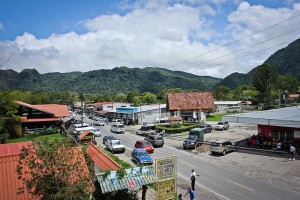
A tourist friendly country with pristine beaches, majestic mountain views, and an affordable cost of living, Panama has so much to offer expats, including the mountain towns of Volcan, Cerro Punto, Boquete, El Valle, and Santa Fe.
While each of these towns has spectacular views, year round spring-like weather, and expat friendly communities, they each have something special that makes them unique.
First Stop, Volcan

Rich Young
Famous for its “eternal spring” climate, Volcan sits atop a plateau at 4,200 feet. And it’s not surprising that Volcan means volcano, since the large green mountain that provides the amazing backdrop for Volcan is in fact the dormant peak of Volcan Baru (the highest peak in Panama).
This quaint mountain village was first settled by indigenous people thousands of years ago and artifacts are still found in farmer’s fields to this day. While some Ngobe Bugle people still reside in Volcan, expats can mainly expect to find the same relaxed and laid-back way of life that you can find across the country.
There is an established expat community in Volcan and over the years many have opened hotels and restaurants, further expanding Volcan as a prime retirement spot.
Only twenty minutes from David, the third largest city in Panama, Volcan is perfect for those who are seeking the quiet, mountain town way of life, with urban amenities close by.
On to Cerro Punta
Celen Aper
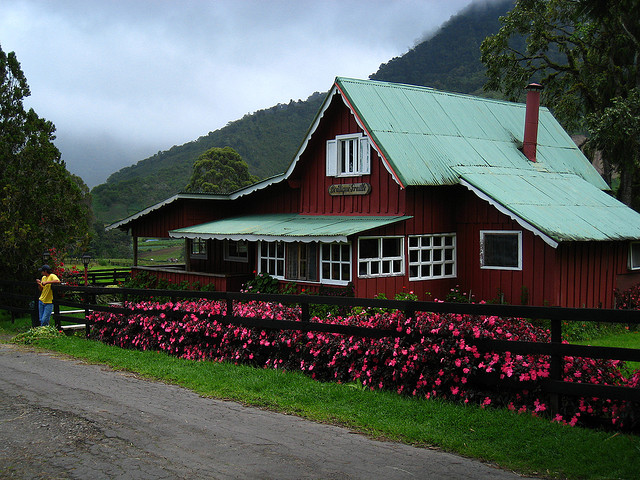
Located in the highlands above Volcan, 2000 meters above sea level, Cerro Punta is the agricultural center of Panama. The hypothetical bread basket of Panama, Cerro Punta produces nearly 80% of the fresh produce for the entire country, and due to the high altitude, Cerro Punta has a slightly cooler, some might even say cold, temperature.
The friendly people and the relaxed farming atmosphere provide Cerro Punta with that small village feel that is sought after by many expats and as you stroll through Cerro Punta you will see many local farms, gorgeous mountain ranges and Ngobe families dressed in colorful traditional garb.
Next, Boquete

Boquete- roaming the planet – doors
Arguably the most popular expat spot in the province of Chiriquí, Boquete was rated by the AARP as one of the world’s top retirement spots. This popularity began in 2001 and as a result, you will find a well-developed expat community in Boquete today.
Only a 45 minute drive from David, Boquete is known for its misty rain (bajareque), coffee, and flowers, especially orchids.
Boquete is actually considered the flower capital of Panama and upon entry, you will be greeted by buildings simply covered with magenta and coral bougainvillea.
With fresh produce and seafood in abundance, Boquete promotes a healthy lifestyle for all who live there, and because of the low cost of living, a delicious dinner for four can be purchased for around $10.
Boquete also has a strong arts community with a yearly jazz festival and even an English language theater group.
Consider El Valle

Orban Lopez Cruz
The world’s only inhabited volcano, this mountain village remains close to the urban metropolis of Panama City while keeping its coveted small town atmosphere.
Known for its wind, water, rich volcanic soil, and perfect spring climate, El Valle attracts many people interested in eco-tourism and wellness vacations.
And even though the volcano has been dormant for 5 million years, many volcanic hot springs have surfaced, providing proof that there is definite volcanic activity happening underground.
Relaxed during the week, El Valle is alive with activity on the weekends as people come out of the woodwork to visit El Valle’s famous arts and crafts market. There is much to be seen at this massive market as the locals and the Kuna Yala Indians come out to sell their colorful wares.
Last Stop Santa Fe

Jerry W. Lewis
Expats come to Santa Fe to experience a truly authentic taste of Panamanian living.
Because Santa Fe is smaller and not as developed, you can really experience the serenity of Panama mountain life. Sitting at an altitude of 1350 feet, you will find the same year round spring weather and sweeping mountain views in Santa Fe, but with fewer expat additions.
The expats here don’t tend to participate in as many group activities as they do in the other mountain towns, and while there are still many outdoor activities to experience, there are not as many tour groups.
In addition, housing in Santa Fe tends to cost less, and although it will be equipped with cable and internet, the facilities will definitely feel more traditional.
Which Panama Mountain Town is right for you?
Rich with all the wonders that drew you to Panama in the first place, but with little differences that make each town a unique experience, any of these five towns could be the perfect place to set up shop.
A land covered in volcanoes, rivers, and lush forests, with a laid-back way of life and a low cost of living, Panama and its mountain towns are definitely an expat friendly treasure to behold.
So plan a trip and hop around to each town as you search for that ideal place to call home.
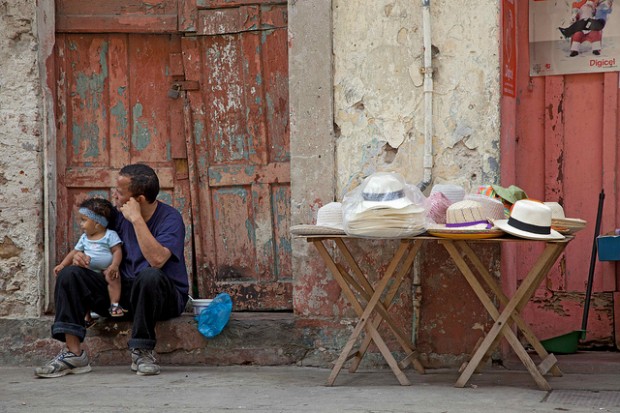
Martha de Jong
If you’ve done much reading about the state of the Panama economy, you probably already know that it’s “stable” and “growing” and “pro-business” and maybe even “foreigner-friendly.”
But what’s the basis for these types of claims? What is it that really drives Panama’s economy, and how is it performing during some globally tough economic times?
Panama Economy Overview
Panama has a dollar-based economy that is heavily dependent on the services sector. Namely logistics, banking, tourism, and of course the Panama Canal. In fact, services account for over ¾ of the nation’s Gross Domestic Product (GDP).
With an estimated GDP of $30.68 Billion as of the end of 2012, Panama’s economy is the third largest in Central America and the fastest growing, racking up a whopping 10.7% increase last year (its second consecutive double-digit growth rate). GDP per capita is around $9,444 and has more than doubled over the past decade.
The general composition of Panama’s GDP is 79.1% services, 16.6% industry, and 4.3% agriculture. Transport and communications make up the biggest chunk of the service arena, followed by property and services, commerce, and financial services. Here’s a breakdown of all areas and the percentage of GDP they represent:
Private Education .7%
Social Services/Private Healthcare .8%
Fishing 1.1%
Mining/Quarrying 1.4%
Utilities 2.8%
Farming, cattle ranching, hunting, and forestry 3.2%
Real estate, corporate, and rental activities 5.2%
Manufacturing 5.6%
Construction 5.8%
Financial intermediation 8.2%
Banking 8.6%
Wholesale and retail 14.6%
Transport, storing, and telecommunications 26.4%
The Panama Canal
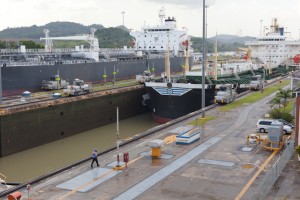
It’s interesting to note that the Panama Canal itself accounts for only 4% of the nation’s GDP. However, due to the multiplier effect, its impact is much farther-reaching. Take into consideration, for example, expenditures by canal employees. Their income in turn fuels businesses such as grocery stores, restaurants, schools, and other businesses. As a result it’s estimated that the existence of the canal generates approximately 30% of the country’s GDP.
The Canal is currently undergoing a $5.5 billion expansion that will more than double its capacity. Begun in 2009, this expansion has already contributed greatly to the nation’s economic growth. Transport, storage, and communications increased by 15.3% in 2010. Port operations during that same time frame also rose by 25.2% due to the increased movement of 20-foot containers.
With the completion of the expansion scheduled for 2014, additional growth is anticipated. Some estimate that 40% of the $5.5 investment will be recouped in the next 5 years.
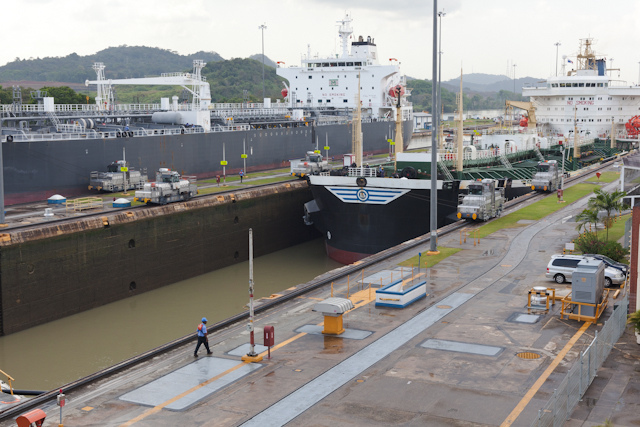
Tom Geibel
Imports/Exports
Approximately 65.2% of Panama’s GDP is exported, in the form of both goods and services. The $12.52 billion that is exported annually is made up of bananas, shrimp, sugar, coffee, and clothing which ship mainly to the U.S. (13.1%). Other recipients of these goods include South Korea (12.5%), Honduras (10.2%), Japan (9.3%), India (7%), Canada (4.4%), and Mexico (4.2%).
Panama imports roughly $15.18 billion each year, which includes fuel products, medicines, vehicles, iron and steel rods, and cellular phones. These come from Japan (23.5%), China (23%), Singapore (18.1%), the U.S. (13%), and South Korea (6%). Because it imports more than it exports, Panama has a negative trade balance, or trade deficit, of -12.7%.
Debt
Panama’s ratio of public debt as a percentage of GDP is a relatively low 39.2%. This number is down drastically from 66.2% in 2005, due to fiscal consolidations by the current administration. Panama’s Standard & Poor’s bond rating is BBB. It also received a Moody’s credit rating of Baa2 with an outlook of Stable. This positions Panama among the highest ranking emerging markets, alongside Mexico, Brazil, and Peru.
Inflation
Panama’s inflation rate, which has been as high as 6.82% several months ago, was down to 4.1% as of March 2013. This rate fluctuates greatly in Panama’s dollarized economy, since the country lacks the ability to implement policy or adjust exchange rates to counteract rising consumer prices. Panama’s inflation rate has generally averaged around 5.24% for the past 5 years.
Unemployment
Panama’s unemployment situation is a unique one. Although generally low (it’s hovered around 4.2% for the past 3 years), it’s also unbalanced. While Panama experiences a surplus of unskilled labor, it also has a shortage of skilled labor.
Efforts are currently underway to address this problem. Millions are being invested into education to build a strong, skilled labor pool. In the interim, the country is welcoming business professionals from other “friendly” countries to come to work or start a business in Panama. This is quite a shift, since Panama has historically taken great care to prevent foreigners from taking jobs away from Panamanians.
Business Climate
Panama continues to rank higher and higher on surveys citing the best places to do business. It recently appeared at #57 on Forbes’ list of Best Countries for Business. Panama also ranked 40th (out of 144 countries) for Global Competitiveness per the World Economic Forum.
World Bank and the International Finance Corporation ranked it #72 (out of 183 countries) on a list of Best Countries for Doing Business. The same survey scored it as #11 for Trading across the Border, #23 for Starting a Business, and #32 for Getting Credit. However, it fell to #113 in the same survey for Registering Property and #119 for Enforcing Contracts.
Panama was also given a rank of #71 by the Wall Street Journal and the Heritage Foundation on its Index of Economic Freedom. It scored a 62.5 on the index, where 100 = totally free and 0 = totally repressed. This survey measured freedom in a variety of areas. Panama’s lowest scores were the result of governmental corruption and political interference in the judicial system.
Economic Challenges
Like any developing nation, Panama has and will continue to face a myriad of economic challenges. Many are merely the flip side of the same coin that has led to its economic growth. For instance, Panama’s economy is extremely open. As a result, it is highly susceptible to external factors. Fluctuations such as a decreased demand for exports to the U.S. or a smaller flow of capital into Panamanian banks could have huge implications for the nation’s economy.
Panama is also plagued by high poverty and inequality of income distribution (the second worst in Central America), so it has a tremendous need for sustained growth that is socially inclusive. As previously mentioned, the country has begun to address the issue and is currently investing heavily in its educational and vocational programs.
This brings us to the issue of government spending. As it grows, Panama will continue to struggle with the need to strike a balance between investing in more and better improvements while also maintaining good fiscal management and eliminating corruption from the projects it undertakes. While these enhancements are warranted if Panama expects to keep up with other major players in the areas of tourism and banking, the nation will have to be prepared to take measures to sustain its economy, such as raising taxes.
Outlook
In terms of its economic outlook, Panama has a lot of good things going. Its recent $15 billion investment into infrastructure has and will continue to fuel many investment opportunities. Airport expansions will bring more visitors to the country. Better roads and methods of transportation will ease companies’ ability to do business within the country. Additional utilities, such as water, power, and phone service, will add value to real estate.
Panama recently signed Free Trade Agreements with the U.S., Canada, and the European Union. Proposed mining projects will also give the economy a boost. Not to mention the Canal, which will more than double its capacity with the current improvements.
If Panama continues to post 10%+ growth, it could soon be poised to earn its slot as the largest economy in Central America. If you’re considering investing or starting a business in Central America, find out more about Panama and the options it offers.
More Numbers
Just in case there’s some other piece of information you’d like to know, that we haven’t already covered, here are a few more statistics on Panama’s economic profile (as of 2012):
Gross Domestic Product (Purchasing Power Parity) $55.8 billion
GDP per capita (PPP) $15,300
Population 3,571,185
Population below poverty line 29%
Investment 30.1% of GDP
Taxes and other revenues 26.5% of GDP
Budget Deficit or Surplus -2.9% of GDP
Commercial bank prime lending rate 6.6%
Market value of publicly traded shares $10.68 billion
Industrial production growth rate 10.9%
Current account balance -$4.191 billion
Reserves of foreign exchange and gold $3.314 billion
External debt $13.13 billion

Honduras 3 Count, where we bring you 3 Honduras stories that you shouldn’t miss.
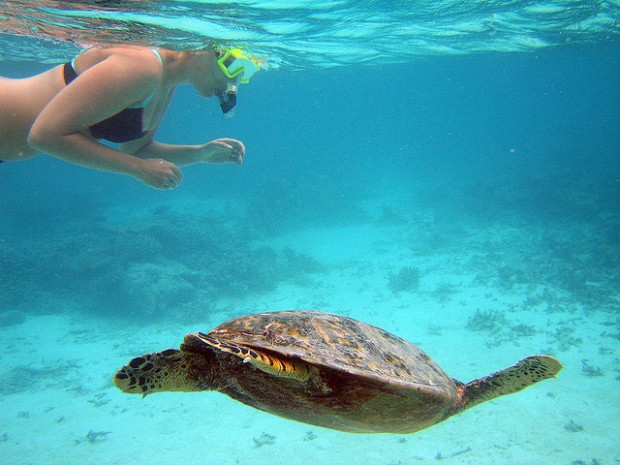
Photo: Christian Steen
1. Wow! 130 Spots to Snorkel in Roatan
Roatan is surrounded by a barrier reef that lies approximately 300 feet from the shoreline and that brings you a wealth of snorkeling spots, more than 130. These amazing spots, along with a maze of underwater sunken treasures, make the island a diver’s or snorkeler’s paradise.
2. What Kite Surfers Can Teach Us About Honduran Culture
A small island named Guanaja in Honduras features near perfect waves and breezes…ideal for kite surfing. This little island, and its inhabitants, are completely disconnected from the rest of Honduras, and in some ways, the rest of the world. Here, tourism is still in its infancy, which made it the perfect place for a group of kite surfers to gear up, tackle the waves, and discover Honduran culture along the way.
3. Finding the Hidden Mountain: Cerro Las Minas
Cerro Las Minas is the highest mountain in Honduras and relatively unknown. Two hikers from Distan Peak take on the challenge of finding Cerro Las Minas and reaching its peak. They went in expecting a jungle experience, but found it was more like a long walk in the park.
Gaia’s Way Estate is a unique residential development in Belize focusing on completely eco-friendly homes. Each is setup for Living off the Grid, with low environmental impact, using rain water catchments and solar panels to provide each with its own power and water.
Viva Tropical took a deeper look at Gaia’s Way Estates sustainability success through an email interview. Here are their thoughts on going off grid and why:
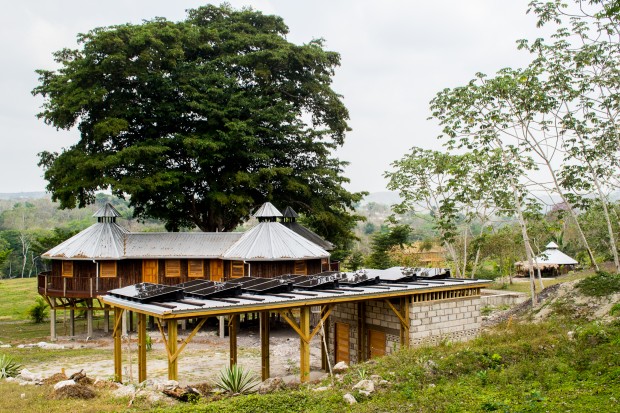
Gaia’s Way Estate www.facebook.com/JCariddiPhotography
Why was off grid power chosen?
Off Grid Power was chosen because it is Environmentally Friendly, Low Impact, and It is essentially the wave of the Future. Self Sustainability is the Vision of Gaia’s Way. The properties are set out as 3/4 to 1 Acre of highly fertile soil as to provide for sufficient living space, and room to have your own orchard, small garden, and a few livestock.
Were there any environmental factors like winds, shade, water, etc. that make this site unique in terms of using off grid power?
The area Gaia’s Way was established has natural terracing allowing for easier planning for home construction, and all homes are designed to collect solar power on their roofs. The idea is for all the solar generators to eventually feed into the grid, and essentially sell excess power. The main power grid is located only 300 ft. away from the Property.
Grid Power being only 300ft Away from the Property, it will be easy to Connect to the Grid to Excess Power, and in Turn earn Credits with the Power Company.
Sometimes money can be saved by using local techniques to build, were any of these techniques used in the project?
All the houses have been designed off of Ancient Mayan housing designs. Local palmetto (A Local Savannah Palm) is used for siding, making for really cool and bug resistant homes. We also use Caliche (Natural White Lime Plaster) which was also used by the Mayans for their homes, and temples.
It has a High Silica content that makes it water resistant. Caliche, being white reflects sunlight, and in turn keeps the homes cool, without the need for Insulation.
These homes are Built Green/Eco Friendly, by using recyclable materials, farmed lumber, and only using hardwoods for finishing, uniquely designed metal roofs to be able to collect rain water for home use.
The builder designer used her knowledge of Mayan construction and 40 years of experience, to design Mayan styled homes. All house designs are original to Gaia’s Way Estate.
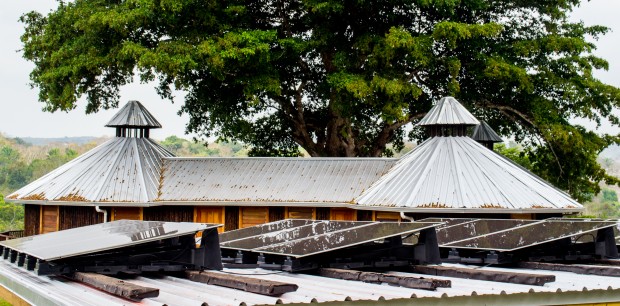
Gaia’s Way Estate www.facebook.com/JCariddiPhotography
How did you source your solar power and what brands and products were used?
We searched for the best company to provide us with the most Efficient, High Yield, Solar Panels along with an Inverter System to Convert the Power to a More Efficient AC 110V Backbone, with a Variety of Packages that deliver different outputs to provide the freedom to Maintain Luxury with Self Sustainability.
We use a Variety of Brands, but Exclusively at Gaia’s Way Estate, we would Recommend one of our Newer German CIGS Thin Film Panels, that are Highly Efficient, being able to capture more sunlight during cloudy weather than most conventional panels today.
Who is off grid living for?
Off grid living is for anyone who wants to be Self Sustainable, Environmentally Friendly, and easily live off of a fixed income.
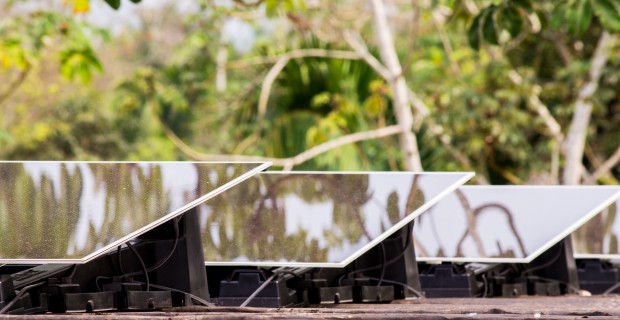
Gaia’s Way Estate www.facebook.com/JCariddiPhotography
How much power is there per dwelling? What kind of appliances are powered in this community?
Each solar system is set up for an individual needs and wants.
We recommend the use of Gas Water Heater, Gas Refrigeration, and Gas Stove/Ovens. The Natural Gas is produced here Locally in Excess.
Do you need a back up generator?
Small backup generators are recommended for Servicing of Batteries.
Living in Central and South America is a dream many Northerners hold but simply do not know how to make a reality. Financially supporting your life and travel abroad in Latin America is surprisingly simple and actually common among many travelers. You do not need a work visa and you do not need a resume. Get savvy and explore these options, which offer valuable work and life experience while funding your time abroad.
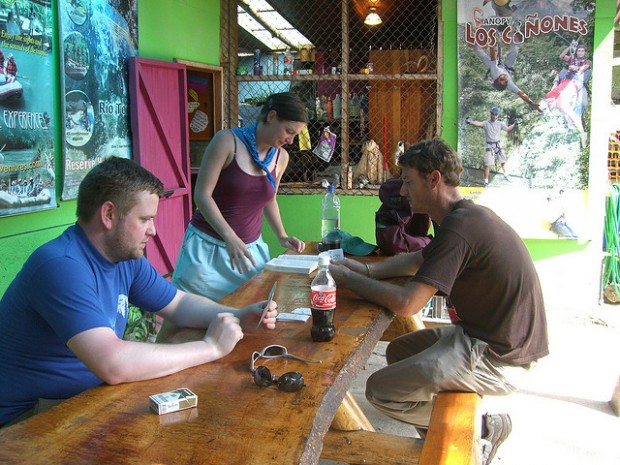
Live for Free in a Hostel
Hostels all over provide free food and lodging for volunteers who contribute to the upkeep of hostels. Meet other travelers and get a taste of what it would be like to own and run your own. Consider where you would like to live, then contact hostels with good reviews on sites like TripAdvisor or Hostel World. Better yet, build relationships while backpacking and circle back to the hostels that made you feel at home.
Work in a Local Café
Expat-owned cafes tend to hire foreigners who can speak English fluently with tourists. Wages tend to be low but if you work in places frequented by North Americans you will likely make enough in tips to get by. This is an excellent experience in learning what it takes to run a café in a developing country.
Volunteer on a Farm
Contact permaculture and organic farms which usually operate with the help of local and expat volunteers. Learn how to grow your own food while living for free. Some farms may even pay you based on how much you yield. Research areas near National Parks with farming and expat communities. In Costa Rica many opportunities exist on the Osa Peninsula and in the mountainous region of Panama surrounding Boquete.
Become a Divemaster
Providing dive lessons in tourist towns can be lucrative and it’s a great way to dive for free. It takes some investment to get your certification through PADI, but if you love to dive it is an ideal job.
Teach English
It may not be as lucrative as teaching in Japan or Korea, but opportunities exist in Latin American cities for foreigners teaching English. Seek out cities looking for native English speakers.
Give Massages
Many spas in beach and tourist towns all over Latin America employ foreigners certified to practice massage. Prices are geared towards tourists which can offer a pretty decent income. It is also possible to avoid the overhead expense of working in a spa by setting up your own shop on the beach. Be aware that this is often illegal but the law is rarely enforced.

Teach Yoga
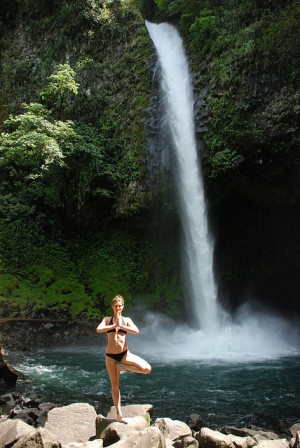
Like massage therapists there is a demand for yoga instructors, particularly in Costa Rica which tends to have at least one studio in every town. You can also offer private lessons to tourists in their homes or hotels or teach your own public classes on the beach.
Manage Rental Properties
Many foreigners who own homes abroad choose to live elsewhere for a good part of the year. This is so common that a demand exists for rental agents advertising and managing vacation rentals. If you have a background in real estate or property management this is a great way to make first world wages abroad. It is possible to represent yourself or become part of a local company.
Invest in Your Own Business
This is the most common path expats tend to take when deciding to live abroad. Is there a business you have always dreamed of running? Perhaps a hotel and spa? An organic café? A hip wine bar? A shop selling artisan goods? A tour company showing the best of the country you love? Your options are endless and investment tends to be much less expensive than in Western countries. If your business is geared towards tourists you can charge first world rates and make a good livable income.
Work Online
You can find incredible freedom to live and work anywhere in the world at any given time when you are able to work online. Depending on your skill set you can create a freelance business online likely makes the same wages you made in your home country. Look on job boards for freelance writing opportunities, develop a client base for web and graphic design, or find a way to make your other skills work online. There are Interior Designers, Nutritionists, Project Managers, Marketers, and others who have shifted their careers to be entirely based online.
Get creative and find a way to finance living abroad if you feel called to do so. It is more than possible.