


Samoano
So why haven’t you already settled on your expat destination in Central America? What’s keeping you from pulling the trigger and beginning your official house hunt in your own tropical paradise?
Maybe you’ve fallen in love with a place you recently vacationed, but just aren’t sure you can see yourself living there full time. Perhaps you’re settled on a remote island destination, while your spouse wants something a little closer to civilization.
It could even be that you’re having trouble finding a place that meets all your “must-haves,” or at least one that does so without totally breaking the bank.
Have you tried Roatan, Honduras?
Let me introduce you to the quaint Caribbean island that literally checks off every box on the list of most potential expats. It’s Roatan, Honduras.
This established expat destination, named the #1 island to retire to in 2011 by Island Magazine, excels in pretty much every way possible and represents the perfect balance in so many important categories.
Note I didn’t say that Roatan “offers something for everybody.” A lot of destinations make that claim, and it’s often a good indicator that they dabble a little bit in all the things important to tourists and expats, without really doing any of them all that well.
By contrast, Roatan meets or exceeds even the highest expectations in every classification, no matter what your preference. Often the yin to its own yang, there are few expats who won’t find what they (or the rest of their families) are looking for somewhere on this 30-mile long island paradise.

Kayla Sawyer
Roatan, Honduras, is easy to get to, but still feels worlds away.
Many would-be expats want an island home, but not the hassle of taking a plane, a bus, and a boat to get there and back every time they go back to visit family or just need a new washing machine or some more of their favorite brand of breakfast cereal.
That isn’t a problem in Roatan. It has its own international airport right there on the island, with direct flights to the U.S. via several major airlines. You can get from from Houston to Honduras in a mere 2.5 hours, without ever even having to set foot on the mainland.
If you do need to venture over for one of the few consumer items you can’t find on the island, there’s a reliable, safe, and inexpensive ferry that can take you to the mainland port of La Ceiba in just an hour.
However, despite its accessibility, Roatan is an island destination through and through. It offers amazing scenery, a slower pace of life, and a shirt-and-shoes-optional tropical culture that quickly makes you forget how easy it is to get back to the hustle and bustle of the rest of the world.

Marc AuMarc
You can do as much or as little as you want with your time.
Although not totally overrun by tourists, the island of Roatan has a thriving tourism industry. Largely due to the wealth of natural attractions that both cover and surround the island, the abundant opportunities for adventure ensure that you’re never bored.
Just off the island’s shores lies the world’s second largest barrier reef, the largest in the Western Hemisphere. It offers over 130 easily accessible snorkeling and dive sites, including shipwrecks and Mayan artifacts, and the chance to see numerous species of tropical marine life.
You can also go kayaking or hop to one of the other Bay Islands. There are sport fishing charters, mangroves to explore, and many other aquatic adventures.
The land loving adventurer can enjoy zip lining through the canopy, visiting a wildlife refuge, riding ATVs through the jungle, or even visiting a local Garifuna village to see how these natives live. There are also plenty of dining, nightlife, and shopping options.
For the expat who’s looking to slow down and spend more of their time relaxing, maybe even in solitude, that’s also entirely possible in Roatan. This may seem next to impossible on a small island frequented by a number of tourists and cruise ships. However, the island as a whole is not densely populated.
While the West End is hopping with activity, there are many areas of the island, such as the northern shores, where you can find a long stretch of isolated beach that you can enjoy all to yourself.
There are villages that still don’t have electricity and roadside markets and shops that are more in keeping with the authentic experience you’d find on the mainland. To many expats, this is a nice contrast from the souvenir vendors and thatched roof bars in the more heavily-touristed areas.

Timothy Wildey
Roatan offers authentic culture, with enough familiarity to make you feel immediately at home.
Finding a place with the right amount of North American influence is one area where many expats struggle to achieve the right balance. The equilibrium in Roatan is a good one.
While not completely overrun with tourists and other expats, there is certainly a well-established expat community in Roatan. There are also plenty of individuals of Caribbean, European, and African descent, which makes for a refreshing blend of diverse cultures. And they’re all quite friendly.
In terms of languages, you’ll hear a lot of English, as well as Spanish and even the traditional Garifuna language. And while you won’t see a Walmart or any of the universal golden arches, there are plenty of businesses and services to meet your consumer needs, such as an Ace Hardware and several excellent local supermarkets.
Whether you’re after the active lifestyle of an established island destination, the tranquility of a remote tropical setting, or the absolute best of both of those worlds, don’t settle for less until you give Roatan a try.
Perhaps Lonely Planet said it best when they called the beaches of Roatan “pitch perfect.” Neither too much nor too little, this island destination is just right.
Map of Roatan
Roatan Fast Facts
- Population: 50,000
- Typical temperature: From 80 to 88 degrees Fahrenheit
- Nearest airport with U.S. flights: Juan Manuel Gálvez International Airport
- Nearest U.S. consulate: Tegucigalpa, Honduras

Just a short distance from the bustling and dynamic capital city of San Jose and just minutes from the upscale expat community of Escazu, Santa Ana, Costa Rica has become a unique location where expats, investors, and visitors can experience the vibrant atmosphere of a traditional Costa Rican town while enjoying the modern amenities of a major and modern urban center.

Santa Ana, Costa Rica
While smaller than its more built-up neighboring communities, Santa Ana has begun to experience a kind of growth that is making it a prime location in the popular Central Valley and a major financial and economic focal point throughout the country. Both residential and commercial development makes the Santa Ana, Costa Rica area a prime location for future growth and investment.
Valley of the Sun
Moderate Climate Makes for Comfortable Living
Santa Ana, Costa Rica is known as Valle del Sol – the Valley of the Sun. Being at a lower altitude than either Escazu or San Jose, the temperatures are more moderate ranging from the low 70s to the low 80s during the day and to a comfortable mid-to high 60s at night.
A Taste of Colonial Costa Rica
Like most traditional Costa Rican towns, Santa Ana’s center is anchored around the soccer field, the church which is opposite it, and a beautiful park in between them. Santa Ana is famous for its ceramics and has more than 100 shops that have unique items for purchase. The best known is the Ceramica Las Palomas where local pottery, which Santa Ana is famous for, can be purchased.

CRT
The Feria – A True Slice of Pura Vida
One of the most important parts of life in Costa Rican towns is the “Feria del Agricultor” or Farmer’s Market. Each community has its own market on different days of the week. Santa Ana, Costa Rica’s market is held on Sundays from 5 a.m. through noon. Fruits, vegetables, freshly prepared snacks, and more can be bought directly from the farmers and merchants who grew or made them. Visiting the Feria is a great way to experience the culture of Santa Ana and Costa Rica in general.
Santa Ana Costa Rica – Close and Convenient
Santa Ana’s location makes it an ideal place to consider for relocation or a place to stay while exploring the Central Valley.
Airport Access
Santa Ana’s location, roughly 18 miles west of the airport, is a 30 minute drive. Whether you are renting a car, taxing a taxi, or using some other form of transportation, the ease of being able to get to and from this destination is a major plus.
Public Transportation Options
Buses
There is a wide variety of public transportation that can make getting to and from Santa Ana very convenient. There are numerous public bus companies that operate between Santa Ana, San Jose and Escazu with buses leaving from the La Coca-Cola Bus station in San Jose for the 25 minute drive to Santa Ana.
Taxis
There are two major types that operate in the Central Valley area that includes Santa Ana. The traditional cabs are painted red and have a yellow triangle displayed on the door. There is a separate fleet of cabs that operate exclusively from the airport and provide to-and-from transportation between the terminals and the desired location.
Shuttle Services
There are numerous shuttle companies that can arrange both shared and private transportation from the airport to Santa Ana, Costa Rica. The information for rates and bookings is readily available online.
Shopping and Entertainment
Santa Ana has a wide variety of entertainment options and choices for shopping that could rival many U.S. communities.
Shopping Malls and More
Santa Ana is very close to the largest shopping mall in the country, Multiplaza Escazu. Other U.S. stores, such as Walmart, PriceSmart (the Costco chain), Office Depot, Ashley Furniture, and others make purchasing items not readily available elsewhere in the country much more convenient.
Indoor and Outdoor Fun
In addition to movie theaters, Santa Ana, Costa Rica also boasts a wide variety of restaurants, quality hotels, and nightclubs. The town is also home to the only golf club in the Central Valley, the Parque Valle del Sol, and two equestrian clubs. Tours to such attractions as the Arenal Volcano, the Peace Garden in La Paz, and the Poas Volcano are numerous and easy to arrange.

Santa Ana, Costa Rica
Housing and Cost of Living
The cost of housing in Santa Ana has been undergoing a surge in recent years as expats and investors alike have been viewing it as an alternative to the more established and more crowded areas in Escazu and San Jose. Depending on your desires and budget, you can find upscale housing in such communities as Alto de Las Palomas where larger homes are available.
However, if you are interested in less expensive housing, some of the local neighborhoods a short distance outside the city center may offer a wider choice for either rental or purchase. The ever-expanding expat community makes Santa Ana, Costa Rica an attractive choice especially for those who are uncertain how to adapt to living in a new country with a new language.
Location Can Mean Higher Costs
Being closer to the major centers of San Jose, the cost of living is higher in Santa Ana than in other parts of Costa Rica. The important trade-offs are having access to the type of shopping, and conveniences that are more American/European in nature as well as a large and vibrant expat community that can make the transition to Costa Rican living much easier.
Investment and Business Potential – A Growing Market
With the expansion and growth in the greater Santa Ana area, the possibilities for investment are increasing by leaps and bounds.
The Real Estate Market Has Reawakened
As the world economy has emerged from the recession of recent years, building and property sales in Santa Ana, Costa Rica have also improved. As a result, the opportunities to purchase attractive properties are also increasing. Contacting a real estate professional is a good first step to exploring the possibilities that Santa Ana may hold for you.
Business and Employment
Many American companies have established operations in the San Jose area; Santa Ana’s proximity makes living there while working in the city a viable option. There is also an ongoing effort by Costa Rica to encourage investment in the country and may be worth looking into.
Santa Ana’s Potential
As a potential spot to visit, relocate, or invest in, Santa Ana has many upsides that retain the cultural atmosphere of classic Costa Rica while providing the modern day living that many visitors and expats are seeking.
Map of Santa Ana, Costa Rica
Santa Ana, Costa Rica Fast Facts
- Population: 48,879
- Typical temperature: Average temperature of 85
- Nearest airport with U.S. flights: San Jose’s Juan Santamaría International Airport
- Nearest U.S. consulate: San Jose, Costa Rica


Ibarra, Ecuador
Far from the vibrant commercial and cultural centers of Guayaquil and Quito, Ibarra, Ecuador offers a potential for a different, more laid-back style of living that can appeal to expats seeking a change of pace from other hubs in Central and South America.
Known as “the White City” due to the many colonial style houses with white paint and red roofs, Ibarra is located in Northern Ecuador at the base of the Imbabura Volcano. This quiet community of roughly 150,000 provides a unique opportunity to immerse oneself in the culture of Ecuador – both past and present – that may provide an alternative to the “typical” expat experience.
The History of Ibarra – From Incan Center to the Youngest Ecuadorian City
Birthplace of an Emperor and a Country
The suburb of Caranqui, known locally as the ancient center of Ibarra, is said to be the birthplace of the last great Incan Emperor Atahualpa. After the Spanish settled in Quito, Don Miguel de Ibarra, the first Governor of the Kingdom of Quito, sent Cristóbal de Troya y Pinque to found the city of Ibarra (named in his honor) on September 28, 1606.
And from a Coconut, a New City Grew
Following the almost complete destruction of Ibarra, Ecuador by an earthquake in 1868, a German planner arrived in the devastated town and, using a surviving coconut palm tree as the center point, surveyed what would become Ecuador’s youngest community when it was re-founded on April 28, 1872.
Ibarra Is Not Your Typical Expat Destination
While Ibarra, Ecuador has a lot to offer the enterprising expat, there are several aspects to consider before making a commitment to relocating to this Andean gem. Ibarra is not for everyone. Learning about the city and the surrounding area is a great way to see if Ibarra is a good fit for the future and investing in Ecuador Real Estate.
A Two to Three Hour Drive from Quito
There are buses, taxis and car rentals available in Quito that can transport you to Ibarra. Expect the trip to last roughly three hours; road conditions and weather could make this a longer journey.
Buses are the least expensive with the trip running $2.50 per person. Since these are public conveyances, there is no way to guarantee seating and maneuvering with luggage may also be an issue.
Taxis are the more private (and more expensive option) with a one-way trip averaging in the $50-$60 dollar range; this would not include the tip. Taxi Lagos does specialize in shared rides at a cost of $8-$10 dollars per person. Again, however, the luggage situation could rule this out as an option. Also, the language barrier may lead to some confusion in trying to give directions.
Car Rentals – Probably the most expensive option. Unless you are comfortable driving in Central and South America and either speak Spanish or have a GPS this should probably be the last option to consider.
The Positives of Ibarra
Ibarra, Ecuador has a lot of positive elements that make it a desirable location to consider for a relocation opportunity or potential investment. The old adage about “location, location, location” can easily describe the upsides of Ibarra.
Ibarra’s location provides an alluring combination of highland beauty, lush gardens and a reasonable distance to the capital city of Quito while retaining the quaint vibe of colonial Spain.
Great Climate, Great Weather
Unlike so many other Central and South American locations, Ibarra’s weather is pleasant and moderate. There are basically three seasonal climates; warm, cool (at night) and hot.
There isn’t a lot of variation in temperature with highs being in the mid-70s to occasionally reaching the 80s during the day and comfortable sleeping temperatures in the mid-to high 40s to low 50s.
Not surprising for a location so close to the Equator, Ibarra does have a humid climate and annual rainfall can range from an average of less than an inch per month during the dry season (June through August) to three inches per month during the wet season (February through May).
With year-round moderate and constant temperatures and reasonable and reliable rainy seasons, Ibarra presents a pleasant meteorological pallet that makes living comfortable and relaxing.
Lower Costs of Living Make Property Affordable to Rent or Buy
One of the most attractive features of Ibarra, Ecuador is the extremely reasonable prices for properties. Whether you are looking to rent or buy as an investment the prices are certainly much less than in some of the larger city centers.
As with any other destination, the first step in buying or renting is to decide how much space you need. Do you want to be in the city center or in one of the adjoining neighborhoods? How much space do you need? Regardless of how these questions are answered, Ibarra, Ecuador offers great real estate potential.
A one bedroom apartment in the city center can rent in the range of $120-$150 per month; the same unit in one of the surrounding neighborhoods can go for $100-120. Three bedroom units are equally affordable; $300 in the central district and $220-$240 outside.
Buying As an Investment – A True Economic Option
Prices per square meter on properties within the city can range from $600-$700; an 85 square meter (900 square feet) could run a very reasonable $51.500 to $59,500. With monthly utilities (including heat, electricity, water, garbage, cable, and internet) under $100, real estate investment in this expanding community could be a profitable way to fund a retirement or provide additional income.
A Growing Infrastructure
With new and improved roads going into Ibarra and its surrounding communities, the potential for new business and commerce will also expand. Additionally, high-speed internet and cable services continue to enhance the connectivity needed in a 24/7/365 business environment.
A Special Multicultural Experience
Ibarra is home to two universities, Catholic University and the Universidad del Norte, whose students add a youthfulness and modern counterpoint to the colonial vibe. In addition, the blend of Afro-Ecuadorians, mestizos, and indigenous members of the highland tribes provide an exciting and diverse experience that visitors and residents can share and participate in.
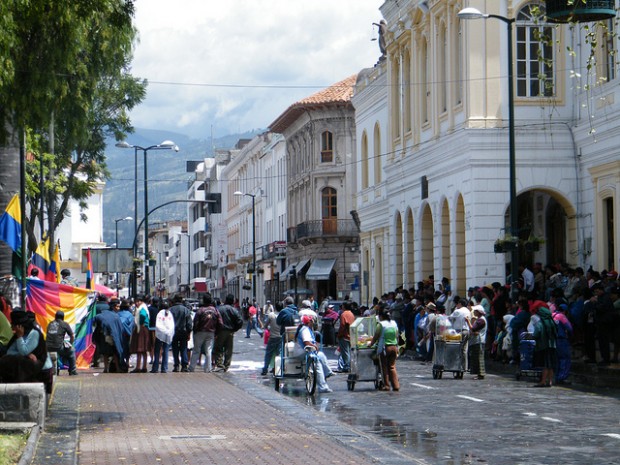
Points of Interest in and around Ibarra
Exploring Ibarra, Ecuador and experiencing elements of the local culture is perhaps the best and most exciting way of become part of this growing community.
Market Day
Saturdays are market days when local farmers, craftspeople and artisans bring their wares into the city center to display and sell. The sights and sounds of the market will transport a visitor back to the days of colonial Spain.
Festivals
Like many Central and South American towns, Ibarra’s festivals are an important part of the culture of the community. Marked by celebration and parades, Ibarra’s two main festivals are “Virgen del Carmen” held on July 16th and the most popular one “The Festival of the Lakes” which takes place on the 24th through 28th of September each year.
Potential Negatives of Ibarra, Ecuador
Even in paradise, there are potential downsides that could make relocation or investment in Ibarra an option that may not meet everyone’s expectations.
The Challenge of Getting There – No Direct Flights
Perhaps the major stumbling block in relocation to Ibarra, Ecuador is the fact that there is no major airport in the city. The closest international airport, Mariscal Sucre International Airport, located roughly 70 miles away (via driving) in Quito, has both international and domestic flights. A smaller airport, Teniente Coronel Luis A Mantilla Airport, located in Tulcan – slightly farther away at 77 road miles, handles a more limited schedule.
Ibarra does have a private jet charter airport, Atahualpa Airport, a little more than a mile outside the city center.
The Language Barrier
Much less English is spoken in Ibarra than in the larger metropolises of Quito and Guayaquil. If you are uncomfortable with trying to learn Spanish and do not have friends or partners who can speak the language, much of what this colonial center has to offer may be more of a task than a treasure and immersing yourself in the society may be extremely difficult.
A Smaller Expat Community
While Ibarra is a growing destination, the expat community is much smaller than in the major centers of Ecuador. Although this provides a wonderful opportunity to truly become a part of the town’s daily life, not having a large number of fellows expats as a kind of support group may make the transition from visitor to resident a challenge.
Is Ibarra Right for Me?
As with any new location, there are positives and negatives that should be taken into consideration before deciding to uproot your life and relocate to Ibarra, Ecuador. Ultimately, the best way to make such an important decision is to plan a visit. Research online and begin your adventure with an open mind. Once you arrive and immerse yourself in the ebb and flow of the city, the answer will make itself clear.
Map of Ibarra, Ecuador
Ibarra, Ecuador Fast Facts
- Population: 1.6 Million
- Typical temperature: Ecuador is known for its micro climates.
- Major airports with U.S. flights: Quito is the closest along with options at Cuenca and Guayaquil. Complete list of airports in Ecuador.
- Nearest U.S. consulate: Quito

When planning a visit to or an excursion from your home in Central America, there are probably a lot of activities that come to mind. You could relax by the beach, visit an ancient colonial city, sail out for some great fishing or scuba diving opportunities, or a whole host of other adventures.
But for a truly one-of-a-kind experience, we recommend you give one of Central America’s many volcanoes a go. Hiking to the peak of some of these amazing natural landmarks is a great way to see the region from a whole new vantage point, get your adrenaline rushing, and build your collection of tropical expat bragging rights.
Due to its high concentration of active and dormant volcanoes, you won’t have to travel far from where you live or plan to visit in order to find a volcano to climb. Here are a few of our favorites and the features that make each of them so intriguing.

Jono Hey
Tajumulco, Guatemala
For travelers that are just starting to explore the wilder side of traveling with volcano tours, Tajumulco is a great place to start. As one of the highest mountains in Guatemala, it is a great hike. Although it is a high mountain, it is not nearly as high as many of the other volcanoes throughout Central America.
This volcano is also a great option for travelers who are wary of hiking a volcano. It has not erupted in many years, and has had the least amount of eruptions out of all of the volcanoes in Central America.
This volcano is a great place to start because it has not erupted in years, it is a lower height mountain and it is an easy hike even for beginners. The altitude adjustment is the worst part of the hike, and it will often be started overnight to ease the complications of altitude adjustment.
Hikers can even expect to take a bus up the volcano for a small part of the hike. This is a great volcano to visit for first-time volcano hikers and experienced volcano travelers alike.

Adalberto.H.Vega
Massaya, Nicaragua
If you are a traveler who wants a more unique volcanic experience, the Massaya volcano is the place to be. It is one of the only active volcanoes in Central America that is safe for visitors to view. It is not a typical volcano – it does not spew lava, but is constantly spitting out fumes from the top.
Visitors can drive to the very top of the volcano to look into the top of the volcano. The most popular place to see in is the largest of the volcanic craters. While it is a somewhat safe journey, it is still a good idea for novice volcano viewers to take someone who is more experienced. There are various tour services that help people get the most out of their Massaya experience.
One thing to note when it comes to the Massaya volcano is that it may not be what visitors have expected. When people picture a volcano, they picture a cone shaped mountain figure. The Massaya is not cone shaped, but has a flat top to it. It is more of a mound than a mountain.
Many visitors also expect to see molten lava in the volcano when they look in. Visitors who are expecting lava may be disappointed if they go during the daytime. Due to the fumes that are constantly rising from the volcano, lava can usually only be seen at night.

The Rohit
Arenal, Costa Rica
The national park located in Arenal has plenty to offer its visitors. With everything from ATV rides to canopy rides high above the park and tours through the relaxing hot springs, there is something for everyone. All of this is possible due to the volcano that stands above the park and is a constant reminder of why these things are there.
This volcano is an active one and was one of the only active volcanoes in Central America for many years. Due to the fact that it is an active volcano, visitors are not able to access the rim of the volcano.
While it is not possible to visit the rim of the volcano, visitors will not be disappointed with the amount of activities they can do from the base of the volcano. The park offers daily tours around the base, offers canopy rides to get a unique view of the volcano and guided tours into the geothermal springs where guests can soak after a day filled with activity.

Monty VanderBilt
Cerro Negro, Nicaragua
For the more adventurous volcano explorer, Cerro Negro offers the ultimate volcano experience. The lower elevation of this volcano, which stands right at 2,000 feet, makes it much easier to hike. Cerro Negro is also made up of volcanic sand on one side, making it the ideal volcano for volcano boarding.
This extreme sport is done through the use of a wooden board and can only be accomplished when on volcanic sand. Boarders start toward the top of the volcano and ride their volcano board down to the base of Cerro Negro. This can only be accomplished on volcanoes that have lower elevations, and on ones that do not have steep incline.
While this volcano may not be the most popular one in Nicaragua, it has a very different offering than the Massaya. It is a newer volcano that does not have quite the same history as the others in Central America – it’s only around 150 years old.
Although it is not as old as some of the others in the area, it is possibly one of the most active. Since it was discovered until the turn of the century, it erupted 20 times. It has not erupted since 1999 and is considered to be moderately safe.
Pacaya, Guatemala
Travelers that are looking for some of the best views from a volcano can greatly benefit from the Pacaya in Guatemala. It is an active volcano that hikers can enjoy. It is a taller volcano, at 8,000 feet. While the Pacaya is tall, it is a somewhat easy hike.
It will take most of the day to hike and hikers must be sure that the volcano is at a safe point when they are deciding to hike. Since it is active, there are many things that could compromise the safety of hikers. It last erupted 2 years ago, but there has not been much lava seen in between its eruptions. Choosing to visit this volcano may be for some of the most daring hikers, but it is sure to give some of the best views possible.
Whether you choose one of these or any number of other volcanoes to climb in Central America, make sure your adventure is one that’s well-suited for your health and fitness level. Hire a guide where recommended, and make sure to always use common sense for the sake of your safety.
Oh, and take lots of photos! Anyone can snap a great pic of a Pacific Coast sunset while vacationing in the tropics. Not everyone can say they took that photo from 8,000 feet atop an active volcano!
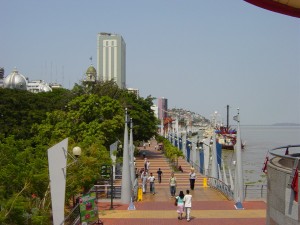
Ecuador has been under the expat radar in recent years, being overshadowed by Costa Rica, Panama, and Belize, to name a few. But the potential that is springing up in this South American location now makes this more than just a stopover for the Galapagos or the jumping off point for adventure expeditions to locales such as Vilcabamba. This dynamic growth is on full display in the economic center of Guayaquil, Ecuador.

Wikimedia
Guayaquil – Ecuador’s Financial Machine
Long recognized as the business and commercial hub of Ecuador, as well as being the largest city, Guayaquil is now coming into its own as a desirable location for expats looking for investment potential as well as a diverse and exciting lifestyle.
The competition between Guayaquil and the capital, Quito, mirrors the dynamic friction between those two American cultural and polar opposites – New York City and Los Angeles.
Just as New York is considered the financial and business center and Los Angeles the arts and entertainment mecca of the U.S., the financial engine of Guayaquil contrasts with the cultural highlights of Quito, the capital. For native Ecuadorians this contrast can be summed up in a local saying: “The money is made in Guayaquil and spent in Quito.”

Johnny Chunga
Bolivar, San Martin, and Pirates – A Brief History of Guayaquil Ecuador
Although formally established by the conquistador Francisco de Orellana as “the Most Noble and Most Loyal City of St. James of Guayaquil” on July 25th, 1538, Guayaquil had existed as an indigenous settlement for some time previous. As part of the Viceroyalty of New Granada (including all of what is now Ecuador, Panama, Venezuela and Colombia), the city grew from a population of roughly 2000 in 1600 to over 10,000 a hundred years later.
The battle for territory and wealth in the New World swept over Guayaquil – known even then as a valuable port of call. French and English pirates attacked and looted the city in 1687 and again in 1709, this time under the command of William Dampier. Although hoping for ransom, Dampier’s men left the city after an outbreak of yellow fever threatened them.
In 1820, local citizens backed by members of a battalion stationed in Guayaquil removed Spanish royalists and declared independence from Spain. This independence was to be short lived as both Peru and Colombia desired this strategic and economic location to be part of their own emerging nations.
It was this set of competing interests that lead the two leaders of South American independence, Bolivar and San Martin to meet in 1822 and decide that Guayaquil should be part of Bolivar’s “Gran Colombia.” To this day, many Guayaquil residents view Bolivar, not as a hero, but as a traitor, who made them give up their independence in exchange for being part of his vision of a unified South America.
Bolivar’s vision did not have a long lifespan however and, in 1830, Ecuador left Gran Colombia to become an independent nation taking with it the cities of Quito, Cuenca, and the thriving and growing port of Guayaquil.
Colonial Ambiance Meets Modern Vision
As Guayaquil has continued to expand both in terms of business and population a conscious effort by local officials to make it an attractive destination for expats and tourists as well as providing investment opportunities has transformed this metropolis from the colonial bastion that it had been to a 21st century destination.
With a population in 2010 of 2,278,691 (per El Instituto Nacional de Estadística y Censos del Ecuador) – or roughly 16% of total Ecuadorian citizens – Guayaquil is meeting the challenges of the 21st century. Not surprisingly, this has resulted in Guayaquil being on the “short list” of many potential expats and those looking to invest in new and growing areas.
Just Like New York City? Almost. Well, Sort of.
Like its North American counterpart New York City, there are pockets of poverty within the affluence. Nonetheless the growth and development that have been experienced since the late 1990s continue to transform this diverse and vibrant metropolis into an important South American hub and destination for those looking to find new avenues for investments or a change of lifestyle. Here are just some of the most interesting and exciting neighborhoods and attractions.
Las Peñas
This is the traditional barrio that has been largely restored to reflect the classic Spanish Colonial style of the city. As a part of the original Spanish settlement, the cobblestone streets, multicolored houses and mysterious hidden courtyards and gardens harken you back to a more romantic time.
Las Peñas is also the location for the most prominent tourist site in the city-the Cerro Santa Ana. The 444 steps up to the top of the hill are filled with a variety of artisans, shops, restaurants, and cafes.
Once you have arrived at the summit you are greeted by the Faro de Santa Ana – a 59 foot lighthouse and the Naval Museum; the latter contains some of the cannon used to defend the city from pirate attacks in times past.
Malecón 2000
Perhaps one of the most ambitious restoration projects through South and Central America, this was the brainchild of the former president of Ecuador, León Febres-Cordero Ribadeneyra whose vision was to revitalize the commercial district of Guayaquil as a place that could be enjoyed by visitors while retaining the dynamic functionality of a 21st century business center.
The Donors’ Pavilion marks the contributions made by Ecuadorians to the revitalization of the country’s largest city and acts as a kind of center point to the entire project. Next to the Pavilion is South America’s first IMAX theater, aptly named the Malecon 2000.
Along the 2.5 kilometer stretch of boardwalk, visitors can enjoy a variety of open spaces, restaurants, shops and the Chamber Rotunda, playgrounds and rest areas and the Jardines del Malecón whose multicolored floral displays have become a source of pride and delight to both locals and visitors who experience Guayaquil’s resurgence and transformation from a Spanish shipping hub to a vibrant and prosperous community fit for the 21st century and beyond.
The Museo Antropológico y de Arte Contemporáneo can be found at the end of the river walk and is an excellent place for a first time visitor to be exposed to fine examples of Ecuadorian art and gain an understanding of the unique social history of this South American jewel.
Parque de las Iguanas
The actual name of the park is Parque Bolivar (also known as Parque Seminario) but for reasons that become immediately obvious to anyone visiting it, “park of the iguanas” is certainly an appropriate nickname. This may well be the only location in a major city where these land lizards, some of which can be more than three feet in length, reside in abundance. Ironically, some of the best hotels in the city surround the park. On the west side, the Municipal Museum is home to ancient Incan relics from one of the earliest cultural groups that inhabited what is now Ecuador, the Valdiva tribe.
The Galapagos
Guayaquil has long been known as the jumping-off point for tours to the Galapagos archipelago. There are a wide selection of tours and tour operators that offer an opportunity to visit one of the most unique and naturally diverse locations on Earth. Having this kind of access to the land of Darwin makes conducting your own explorations both convenient and more affordable.
Expats Have Lots of Living and Employment Options
For those considering Guayaquil as a potential location to retire or move to, it is important to keep in mind that like its North American counterpart, New York City, this is a textbook example of big city living. Obviously prices in the better parts of the city are significantly higher than those outside the city center. Are you moving with a family? Retiring? Relocating for work? These are all questions that should factor into your choice along with budget and security.
Find Your Home
The first, best piece of advice is to do your homework; talk to expats, check online social media sites i.e. Facebook, Twitter to find others who have already completed the journey. Talking to realtors is also important as these individuals have experience answering just the kinds of questions you might ask and, even more importantly, anticipating the ones you might forget.
Some of the communities favored by expats are Samborondon, Los Ceibos, and Via La Costa. While these are all a short distance outside the city center, the types of housing offered mirrors that which is found in the States. The types of housing is mixed with multi-unit structures (apartments, condos) outnumbering standalone houses. Prices vary and depend on the amenities included as well as the size of the unit.
If you are considering buying property, there is definitely a learning curve. While non-Ecuadorians have the same right to buy land and property, the process is different from what you may be used to. This is most definitely an area that you should research before signing on the proverbial dotted line.
Finding a Source of Income
With Guayaquil’s continued growth many American and European businesses are setting up operations and are in need of staff. Ecuador, unlike many other South American countries, has made it much easier for expats to find employment. All that is required for a work visa is a letter from the perspective employer stating the reasons that they are contracting your services and your importance to the company. This is usually done in the Ecuadorian consulate in your home country. Generally, your first employment contract is three months in length.
As business continues to flourish it can be expected that, as the principal economic center in the country, Guayaquil will be at the forefront of creating jobs and in providing opportunities for those who are looking for new horizons while staying with their current employers. The need for skilled personnel by Ecuadorian companies is also increasing and has created a favorable environment for individuals with those skills who are not residents.
Retirement
In recent years, both Central and South America have seen an increase in the number of retirees, primarily from the U.S., who are relocating for both the difference in lifestyle and the lower cost of living. A number of recent surveys report that most retired couples are living comfortably for under $2000 per month. Significantly lower property taxes, cheaper medical costs, lower rents and entertainment expenses all contribute to the desirability of retiring here.
The unique part of Guayaquil, from the retiree’s perspective is the accessibility to most of the modern conveniences of stateside living. Cell phone and wifi services are plentiful and, with the growth of expat communities in and around the city center, the number of opportunities for social and cultural events is also increasing.
Guayaquil in a Nutshell
From an ancient Valdiva settlement, to a Spanish shipping port, to becoming the economic engine that powers the growth and development of Ecuador, Guayaquil’s history can be summed up in a single word: Potential. At each step in its long and colorful history this South American port of call has continued to advance and move towards the future while maintaining a close connection with its heritage.
As a 21st century destination, Guayaquil can truly be viewed as the “Big Apple” of Ecuador, and with its blend of revitalization, economic dynamism, and cultural diversity, this city is well placed to become an important destination of choice for expats, retirees, and businesses alike. In a very real sense, Guayaquil’s promise for tomorrow is as rich and colorful as the flowers of Jardines del Malecón.
Map of Guayaquil, Ecuador
Guayaquil, Ecuador Fast Facts
- Population: 2.27 million
- Typical temperature: Ecuador is known for its micro climates.
- Major airports with U.S. flights: Quito, Cuenca, and Guayaquil. Complete list of airports in Ecuador.
- Nearest U.S. consulate: Guayaquil

Everyone who has ever dreamed about owning property has, at one point in time, dreamed of owning their own island. Who wouldn’t want to be a Richard Branson, David Copperfield, or Larry Ellison, king or queen of their own domain?
We are here to dispel the myth that you must be a billionaire or world-famous magician to own your own island, or a piece of one. You, too, can own a piece of paradise. Let’s take a look at some amazing island options, right here in Central America.

Joy Drive
Bocas del Toro, Panama
You can own a piece of Isla Popa in the Bocas del Toro island chain off the Atlantic shore of Panama. Discovered by Christopher Columbus in 1502, this chain of islands features plenty of ecotourism opportunities, including Parque Internacional Amistad, a UNESCO World Heritage Site. Whether you enjoy diving, surfing, or a beachside piña colada, Bocas del Toro has you covered.
What you can buy
A piece in Isla Popa will set you back $220,000, but that includes 9.1 hectares of land, a 30 ft. deep natural harbor, a two-story, two-bedroom wooden home, and a natural spring with swimming hole.

Gaspar Serrano
Pearl Islands, Panama
Shifting to the Pacific coast of Panama, we find the Pearl Islands. Only thirty miles off the coast of Ciudad de Panama, the most famous and most populated of these islands is Isla Contadora, which features white sand beaches, several bars and restaurants, and a great diving scene.
Want to Move to Paradise?
Think about Isla Del Rey in the Pearl Islands, which offers 130 acres of beachfront land, and can be yours for $4,500,000.

Belizian Way
Stann Creek, Belize
Located in the southeast of Belize, the Stann Creek District features many beautiful parks and reserves, including the Cockscomb Basin Wildlife Sanctuary and Victoria Peak, the second highest mountain in Belize.
Go for the Whole Island
Little Coco Caye in Belize is for sale. This is a five acre island with great diving and fishing. The offer range for your own island is between $365,000 and $395,000.

Bluefield Nicaragua
Bluefields, Nicaragua
The actual town of Bluefields is very developed, with about 50,000 English-speaking citizens within its borders. It is located about 50 minutes by air from Managua, the capital of Nicaragua.
Rustic Island Living
Go rustic in Bluefields where you can purchase a two-bedroom home with generator, septic system, and water, as well as an infinity pool, small caretaker home, cement pier and white-sand beach. This island located an hour by boat from the town of Bluefields, Nicaragua offers up a fully-developed 2.5 acres for $560,000.

Gonzlaught
Pink Pearl Island, Nicaragua
Again located off the Caribbean coast of Nicaragua, Pink Pearl Island features reefs, palm trees, and quite an impressive amount of infrastructure. It’s a great island retreat for a week, month, or as long as you like.
A Vacation Villa Like No Other
Three cabanas on the island can be used for tourism, a ‘shack’ with four bunk beds and a shower room, and a main house with one bedroom, living area, full kitchen, and wraparound balcony. There is also a bar and restaurant on the island. All of this can be yours for $500,000!

knotinvein
Diamond Caye, Honduras
Shifting to the country of Honduras, Diamond Caye is located off the western end of Utila Island, and is non-developed. Like a clean island slate where your imagination can run wild. With 1.43 acres in the Bay Islands, the reef around Diamond Caye is some of the best diving in the Caribbean,
No Rules Apply
This island is only 20 minutes from East Harbour on Utila where you can stock up on necessities and take a moment to embrace society before heading back out to paradise. This tropical dream could be yours for $650,000.

Gregorio
Isla Golfito, Costa Rica
Departing from the white-sanded coasts of the other islands we’ve covered in this article, the Island Golfito is a jungled barrier island, located right in front of the town of Golfito.
Close, Yet Far Enough Away from Civilization
Over two miles long and one mile wild, the island listing offers 34.5 acres of decidedly off-grid living, with the island hosting ‘more monkeys than humans.’ Close enough to the mainland to require only a kayak or rowboat to shore, Island Golfito would be a perfect option for those wanting to get away from it all. And, at a $130,000, the patch of land is quite a steal!
So, What Next?
I’m sure many of you are much more interested in owning a swatch of your own island now that you’ve seen some of the options available all across Central America. Where do you begin?
Start by looking at some islands for sale! And if you just aren’t ready to think about buying an island, here are a whole bunch more properties around Central America.

If the boho vibe and nonstop partying in Montanita leave you searching for a little tranquility, then look no further than Olon, Ecuador.
This serene oasis off the central coast of Ecuador is just a few kilometers down the road from Montanita, and a two and a half hour drive from the metropolis of Guayaquil.

Johny chung
Olon affords travelers and expats alike the chance to bask in Ecuador’s natural beauty while experiencing the easy pace of the beachcomber’s lifestyle; many even choose to call Ecuador home and invest in Ecuador Real Estate.
Olon, Ecuador is located off the Santa Elena peninsula, which sits right in the center of Ecuador’s coastline. It is the westernmost land area in the country and contains some of the most famous surfable beaches in South America. People don’t just travel to Olon and Santa Elena to surf however, as you’ll see when you read on.

Johnny Chunga
What to Expect on Arrival
If it’s your first time to Olon, Ecuador, don’t expect to find an overdeveloped resort community like you’d encounter off the coast of say, Florida or southern California. While those types of areas offer their own perks, they can’t beat Olon Beach in terms of undisturbed natural beauty. Once a well-kept secret enjoyed by Guayaquil professionals and Latin American retirees, Olon today is home to many expats from the world over.
The small town sports a coastline of charming and refreshingly simple bungalows and hostels for locals and travelers alike. There are a handful of restaurants, a malecon (more on that later) and a stunning nature preserve to the north, and that’s about it.

Johnny Chunga
There Is Lots to Do in Olon, Ecuador
Despite the town’s sleepy appearance, there are actually plenty of activities available to pass the time in Olon Beach. Many people enjoy surfing the waves, hiking to nearby waterfalls, or just taking a dip in the cool waters. Lifeguards are on duty during summers and events to help keep you safe in the water.
If sports are not really your thing, don’t fret; Olon also offers plenty more relaxing fare. Many residents enjoy animal watching near the water, where exotic birds and reptiles can often be seen in their natural habitat.
If you’ve only ever seen these beautiful creatures in zoos or in pictures, then there is no comparison. You can also enjoy whale watching from the shore, where migrating humpback whales have been known to approach. Some even report spotting wild horses galloping across the sand! What a treat!
The malecon, or boardwalk, sits on the beach and features a recently refurbished red brick esplanade for leisurely walks on the beach, among other activities. There are several restaurants and other attractions lining the malecon, including public restrooms.
Amateur and professional photography buffs alike will appreciate Olon, Ecuador’s soothing vistas, pristine beaches, and unforgettable sunsets. You might even be able to snap a pic of the majestic humpback whales we discussed earlier!

Johnny Chunga
You’ll Be in Good Company
Are you thinking right about now that Olon Beach sounds like a retiree’s dream? You wouldn’t be alone. The international community in Olon includes many investors, businessmen, and retired citizens who saw the potential to get more bang for their buck in Olon Beach.
While property near the beach can cost more than other comparable coastal areas in the country, it is still an affordable option for many. The quality of life is what really counts here, as the restful pace and incomparable surroundings contribute more to Olon residents’ happiness than their “bottom line”.

Yassef Briceño García
If It’s Not in Olon, Ecuador, Just Drive Down the Road
There are a few things you should know before checking out or even settling down in Olon, Ecuador. For one, if you’re looking for anything beyond a dinner out or a few souvenirs to send home to your grandkids, you may have to travel a bit outside of Olon Beach to find it.
This means groceries, toiletries, and any other living essentials you might need. Most residents choose to travel up the road to the much more established Montanita to do their weekly shopping.
For many this can be a big lifestyle change, especially if you’re coming from life in the United States where unless you live in farmland, most “convenience” stores are at most a few minutes’ drive away. Expect to travel a bit up the road for other modern necessities as well, such as managing finances or shopping for new clothes.
Another aspect of life in Olon, Ecuador to consider is whether you want to go through the hassle of driving a vehicle around town.
Olon is a prized destination in Ecuador; the beauty and serenity of the area that initially brought you to the coast will invariably draw crowds during the high season as well.
Because Olon, Ecuador is such a small community, parking becomes scarce during these times. What’s more, it is not uncommon to see those large travel “coaches” loading and unloading right next to the beach on a regular basis. These oversized buses can halt traffic close to the water, so avoid them at all costs if you’re in a car.
There are plenty of other ways to get around Olon, as most of the town’s attractions are very close to one another. In most cases you can easily get around with a bicycle or motorized scooter.
Of course, it never hurts to simply walk around and take in the sights while you reach your destination! However, keep in mind that these towns are quite isolated from the rest of Ecuador. You will want to have a decent car (and be prepared to drive it quite a ways) in order to reach a proper city.
Is Olon, Ecuador Right for You?
We hope you’ve enjoyed this overview of the natural beauty and relaxing lifestyle available in Olon, Ecuador. From the wild horses to the pristine waters, the breathtaking waterfalls to the unforgettable sunsets, Olon offers tourists and expats an enriching environment and an enviable lifestyle that’s more accessible than you might think. One thing’s for sure; you won’t find anywhere else quite like it.
Map of Olon, Ecuador
Olon, Ecuador Fast Facts
- Population: 25,000+
- Typical temperature: Ecuador is known for its micro climates.
- Major airports with U.S. flights: Quito, Cuenca and Guayaquil. Complete list of airports in Ecuador.
- Nearest U.S. consulate: Quito, Ecuador

It is no small wonder that Ecuador was recently named the second most retirement-friendly country on the planet.
With top of the line medical facilities, low procedure costs (only 7-10% of the cost of similar procedures in the U.S. and Europe according to Ecuador’s Investment Corporation), and a Ministry of Public Health avidly focused on continually improving the quality of public and private medical care within its borders: Ecuador has become one of the most well-praised medical tourism destinations for retirees and visitors alike.
But before you book your medical visit abroad, start buying property, or get your Ecuador visa, it’s a good idea to take a deeper glimpse at the medical system you’re about to jump into, and what your expat or visitor status means in a country with a well-rounded national health system, a myriad of admired private and specialist hospitals, and a widespread network of local rural clinics.
The most important thing to consider is location. The majority of significant facilities are located in the three largest cities in Ecuador: Guayaquil, Quito, and Cuenca.
If you suspect you’ll be needing high-tech treatment frequently you might want to stay close to these centers. The rural clinics, though well-lauded for their well-trained staff and the pleasantness of the visit, often have less equipment and fewer staff fluent in English.

Mount Sinai
But that doesn’t mean the urban centers will be any less personal than a local clinic—Ecuador’s hospitals are known as bastions of personalized and amiable care at more than reasonable costs.
In fact, on an international scale, the Ecuador health system was ranked in the top 20 of efficient healthcare systems by the most recent Bloomberg analysis of World Health Organization (WHO) information—a rapid rise up, given that in 2011 Ecuador only ranked 111th on similar scales.
Here’s a quick guide to some of the most well-noted hospitals in Ecuador to expand on the basic information the U.S. Embassy doles out regarding your expat and tourist healthcare choices in Ecuador.

Construdipro
Hospital Alcivar, Guayaquil, Ecuador
Up first is the Hospital Alcivar. The most well-respected and oldest continual hospital in Ecuador, it was founded in 1937 and has continued operating since its inception.
Located in Ecuador’s largest city, Guayaquil, the once small clinic morphed over the past century from being a small specialized orthopedics service to one of the largest and most modern facilities in the country, focusing on a wide array of medical treatments.
Though the hospital has expanded significantly, its orthopedic services remain as one of the best regarded in all of South America.
With the most developed post-graduate medical training program in Ecuador, the hospital Alcivar is also the home of Ecuador’s internationally respected premiere medical journal Actas Médicas, which was founded by its former director Dr. Eduardo Alcívar Andretta.
It has 140 prestigious doctors, a staff of 700+, its own theme song (the aptly named Hymn to Hospital Alcivar), and handles everything from trauma to rehabilitative services, including Neurosurgery, Cardiology, Pediatrics, and Obstetrics. Hospital Alcivar is located close to the commercial center of the city and is within ten minutes of the city’s airports.

Dario
Hospital Metropolitano de Ecuador, Quito, Ecuador
Hospital Metropolitano is the most famous hospital in Ecuador. Located in the capital city of Quito, it was founded in 1985 with support from American Medical International (AMI). It is arguably the most technologically and procedurally progressive hospital in the country.
In addition to its bevy of cutting-edge equipment for medical visualization, intensive procedures, and patient monitoring, it is well-known for performing the most difficult types of surgeries (open heart, spine, brain surgery, etc.) and frequently collaborates with well-recognized American medical institutions like the Mayo Clinic and Mount Sinai Hospital.
Hospital Metropolitano is a teaching hospital which trains a huge majority of the doctors of Ecuador as well as international students. It has one of the largest and most well-run emergency rooms in the city.
And in conjunction with the Metrofraternidad Foundation, Hospital Metropolitano is noted for its social work and has special programs which provide its already reasonably priced services as no-cost medical care for the city’s poor.

Hospitalario Kennedy
Grupo Hospitalario Kennedy Hospital/Clinica Kennedy, Guayaquil, Ecuador
Back in Guayaquil, you also have the choice of visiting the smaller Clinica Kennedy, one of the Grupo Hospitalario Kennedy’s many hospitals.
Founded in 1978, Clinica Kennedy is a university hospital with a special emphasis on medical visualization technologies and integrated digital medical record services, in addition to programs devoted to in-vitro fertilization, stem cell research, and molecular biology.
With a staff of over 250 staff medical specialists and only 125 hospital beds, the care offered in its emergency and trauma units, clinical laboratory, diagnostic center, intensive care unit, neonatal intensive care, and cardiopulmonary unit is personal and devoted.

Junta de Beneficencia de Guayaquil
Hospital de Niños Dr. Roberto Gilbert Elizalde, Guayaquil, Ecuador
The fourth highest ranked on our list is Ecuador’s premiere children’s hospital: the Hospital de Niños Roberto Gilbert Elizalde. Also a teaching hospital, it focuses in-depth on all aspects of pediatrics.
It provides medical care at several levels and possesses both regular facilities and specialized private facilities for the children of wealthier clients. The hospital uses the cost of their fancier areas to offset the cost of the cheaper but still nice general facilities.
With historic claims back to a nineteenth century clinic at a different site, the Hospital de Niños Roberto Gilbert Elizalde is arguably the oldest hospital on our list. However its current building was finished in 1999 and opened in 2000 to much acclaim.

salud de Ecuador
Hospital Eugenio Espejo, Quito, Ecuador
With the best google reviews (all of our entries have over 4 stars, but at 4.5 this hospital has the populist vote), the fifth entry on our list is back in the capital of Quito.
Built in 1912 at the behest of the national government, Hospital Eugenio Espejo is the premiere national hospital of Ecuador and is the epicenter for the Ecuadorian national health policy and medical education. It features the most comprehensive array of general medical practices, including:
- Transplant services
- Service of infectious diseases
- Orthotic and prosthetic workshops
- A service unit of comprehensive care for the elderly
- Rheumatology
- Imaging services
- Clinical neurology
- Internal medicine
- Physical medicine and rehabilitation
- Clinical laboratory and pathology
- Immunology
- Hematology services
- Emergency services
- Epidemiology services
- Coloproctology services
Don’t Worry, Ecuador Has Quality Dental Care Too
Unlike the other entries on the list, Hospital Eugenio Espejo should be especially noted for offering dental services.
Contrary to conceptions of concern regarding dental service outside the United States, Ecuador is particularly well noted for its excellent dental services. Featuring highly trained dentists and dental hygienists, dental clinics in Ecuador are well reviewed for utilizing the most cutting edge dental technologies and their exceptional performance of procedures at a fraction of the cost of similar work in the United States.

Voz Andes
There Are Many Hospitals to Choose from, Even If They Didn’t Make Our List
Also in Quito is the missionary general Hospital Voz Andes. A cozy 104-bed hospital, it was founded in 1955 by the Catholic Ecuadorian-founded enterprise HCJB Global Hands.
With a well-equipped twenty-four hour emergency room, it handles trauma cases, but it is particularly noted for the rehabilitative care of its physical, occupation, and speech therapy programs and its mental health counseling services.
Though none of Ecuador’s third largest city, Cuenca, made the top five list, there are several well deserved honorable mentions. And as medical tourism rises in the region, it is very likely that these already fine establishments will only continue to accrue further and further medical accolades and reviews.
Hospital Universitario del Rio
This hospital is Cuenca’s newest and fanciest hospital. Opened in 2009, it is a mixture of state-of-the-art technology, spacious rooms, and customer service. Located on the edge of Cuenca, it too, is a teaching hospital whose academic profile is rapidly climbing the ranks of the international medical community.
It features a clinical laboratory, microbiology laboratory, retail pharmacy, as well as units devoted to gastroenterology, adult intensive care, surgery, neonatal intensive care, and pediatric intensive care, among others.
Hospital Santa Inés
In the center of Cuenca is the Hospital Santa Inés (or St. Agnes). The Hospital of Santa Inés is a smaller hospital than the Hospital Universitario del Rio, but as it is located proximally to the University of Cuenca and the parts of town where the majority of expats live—it is much closer and easier to get to its emergency room.
Though smaller, Hospital Santa Inés still features seven floors filled with state-of-the-art medical equipment, well-trained staff, and a well-organized ambulance service.
Hospital Mt. Sinai
The oldest Cuenca hospital, the Hospital Mt. Sinai falls between its two sister medical facilities in the city—like the Hosptal Universitario del Rio it is large. In fact, it is based in several buildings, including several modern ones. But its emergency service department is smaller than that at Hospital Santa Inés.

Udri
Medical Tourism in Ecuador
In addition to Ecuador’s well reputed and affordable hospital services, the reasonably priced retirement facilities, rehabilitative training programs, and homeopathic medical communities contribute to Ecuador’s status as a medical tourism destination.
The Ecuadorian government seems committed to providing national healthcare at international standards to citizens and visitors alike, going so far as to recently raise its government health budget and to favorably handle recent debts incurred by private hospitals in the nation.
And with such an emphasis, it seems likely that Ecuador’s health system will only thrive further, extending its top-notch urban care out further into the countryside.
Before you settle down in Ecuador, research your current and speculative health needs thoroughly and make sure you are near to the kind of medical service you might require.
Editor’s Note: The rankings are determined by the Cybermetrics lab of the National Research Council in Spain (Consejo Superior de Investigaciones Científicas (CSIC) which is devoted to identifying the best international digital presences of world hospitals and augmented by expat opinions and reviews.
If you are in Ecuador, reading this, and currently experiencing a medical emergency, you can call an ambulance at 911, the Red Cross at 131, the local police at 101, and if in Quito, the Quito Fire Department at 102.


Mario Arias
Does your idea of owning property in the tropics involve a panoramic view of your own private beach, the presence of abundant exotic plants and animals, and the absence of annoyances like noisy neighbors, motorized vehicles, and tourist traps?
If so, then perhaps you should expand your real estate search parameters to include island properties or even entire islands for sale in Latin America. And, for some really great island options, might we also suggest narrowing your search to Panama.
Off its Pacific and Caribbean coasts lie a number of spectacular, often uninhabited, islands whose ecosystems include rainforests, coral reefs, mangroves, cloud forests, and sandy beaches. And these are home to tropical flowers, shady palms, ancient trees, and animals you’ve never seen in any textbook.
Once relatively unknown, Panama’s islands have been gaining popularity as the country’s government has taken a number of drastic measures to encourage both tourism and investment in the country and its many archipelagos.
Today there are a number of private islands for sale, including some that are going for rock-bottom prices, making them primed for impressive appreciation as improvements to the country’s already good infrastructure continue to cause property values to climb.
While there are a few restrictions, it’s entirely possible for foreigners to own islands or waterfront island lots in Panama. In fact, the entire buying process in Panama is relatively simple compared to many of its Central American neighbors.
We’ve written more extensively about the steps in our Panama real estate guide. Here’s a quick recap, along with a few stipulations that apply specifically to island property.
Rights of Possession vs. Titled Property
In Panama, there are two types of property available for purchase. The first is titled property which, once purchased, belongs to you and is titled in your name in the public registry. You pay taxes on it and can do with it as you wish.
With Rights of Possession (ROP) property, the title is owned by the Panamanian government. You can still use it however you’d like. You just don’t hold the title and, consequently, you don’t pay property taxes.
Sound kind of cool, yet a little bit scary at the same time? Yeah, you’re right on both counts. ROP property can be a great investment. It’s also one of the best, if not only, ways to get your hands on some really desirable real estate in Panama, as most (but not all) islands and beachfront properties are ROP land.
The way to eliminate any risks associated with this type of real estate purchase is to do your due diligence to research the ownership rights. There may be conflicting claims to the property, involving multiple parties or even several generations of family members. There can also be squatters who might make a claim for the land.
Resolving any of these potential issues on the front end is absolutely essential to purchasing ROP property and being able to walk away from the transaction with peace of mind, knowing no one else can come back and try to take it for themselves.
Don’t Even Start the Process Without Consulting an Attorney
At this point, it may go without saying (but we’re going to say it anyway)…you absolutely need to hire a qualified attorney who has experience with all types of real estate transactions in Panama, including island real estate and ROP property.
And, by experience, we mean someone who has verifiable references or who comes highly recommended by another friend or professional whom you know and trust. Not just the one with the best website or the neatly bundled real estate buying package with the price tag that ends in $???.99.
Even if your real estate transaction seems straightforward enough, we strongly suggest hiring a qualified attorney, realtor, and any other professional(s) you need to handle the entire process and save you a lot of headaches. Having a team of professionals you can trust is the most important piece of the puzzle that comes together into a picture of you lying in that hammock without a care in the world.
The Buying Process
At the end of the day, the process of buying an island in Panama looks a lot like buying real estate pretty much anywhere in North America. You’ll search online or with a realtor and look at places you’re considering. Note: There’s no MLS in Panama, so you do have to get a bit more creative in order to find available properties. Our Panama Real Estate site is a good place to start.
Once you find the right one, you’ll sign a contract and pay a deposit, like earnest money. Once the title or ownership rights have been researched (this is generally the longest part of the process and may also include a survey), you’ll complete a bill of sale and have it notarized. Then a new title or certificate will be created and approved.
When all is in order, and not a minute before, then you’ll actually transfer the money to the seller from the bank or escrow company who’s been holding it in trust. You’ll also pay any other applicable commissions or service charges, like closing costs. If your property is titled, it can then be recorded in the public registry.
A Note About Waterfront Property
There is a specific restriction regarding beachfront property, which also affects island owners. The first 20 meters from the high tide mark on all Panama beaches is public access. So if you plan to build anything within this area, you’ll need to obtain a concession. This applies to anything from a pier to entire home on stilts over the water.
This process can take a while, and unfortunately you’ll need the concession in order to get a building permit. The good news is that this only applies to the public access area. All that means is that you’ll need to build your house first, while your request is awaiting approval, and then the dock or waterfront gazebo can come later.
Panama’s Most Attractive Archipelagos
So, now that you know how, all that’s really left is WHERE you should search for your island home in Panama. Here are a few of the most beautiful and popular choices.

VivaTropical
Boca Chica
When we mentioned those areas where island real estate can be had for a bargain with some incredible investment potential to boot, this is the main place we had in mind. Boca Chica, on Panama’s Pacific coast, is a true hidden gem that is just beginning to come into its own as a destination for island lovers, fishing enthusiasts, and investors.
With over 50 islands, boasting all kinds of ecosystems, this archipelago is absolutely breathtaking. There’s currently little in the way of tourist infrastructure, which offers a practically blank slate for entrepreneuring expats.
And tourists are definitely anticipated, as the nearby (less than an hour away) Enrique Malek International Airport in David will soon be receiving flights from the U.S. and other destinations for the first time ever. These along with several other infrastructure improvements will mean big things for the Boca Chica area.
The islands themselves, including Boca Chica Island, a 400-acre private development and the home of our latest Adventure Colony, are wild and untouched. Although only a few minutes from the mainland by boat, you’ll feel like you’re a million miles and several centuries away from civilization.

Gaspar Serrano
Pearl Islands
Located near the capital of Panama City, the Pearl Islands can be reached in 15 minutes by plane or 2 hours by ferry. Once there, you’ll feel immediately a part of the rich history of pirates and treasures that gave the archipelago its name.
On the islands you’ll find secluded beaches, bird sanctuaries, coral reefs, and only a few small settlements, although tourism has been increasing as of late. The islands’ beautiful beaches have formed the backdrop for the filming of several seasons of the hit series “Survivor.”
The calm waters surrounding the islands are ideal for fishing, snorkeling, and sailing. The enhanced focus on tourism makes these islands another great investment opportunity.
The most visited of the Pearl Islands, Contadora (so named because it was the location where the pirates counted their pearls), is a resort island where many wealthy Panamanians and foreigners own second homes. There are also a number of luxury tourist accommodations.

Panapro
Bocas del Toro
On Panama’s Caribbean coast, is the archipelago of Bocas del Toro, Panama’s most visited tourist destination. The epitome of the laid-back Caribbean lifestyle, its postcard-worthy skyline includes a number of dwellings and other tourist attractions built out on stilts atop the water.
This archipelago is a popular place for snorkeling and scuba diving, as well as surfing. It has also hosted episodes of the “Survivor” series and as a result has been gaining even more popularity among tourists worldwide.
The six large and numerous small islands offer spectacular beaches that stand out against the thick rainforests, making it an ideal place for ecotourism. However, it also has its share of development, particularly on Isla Colon, which has a fair share of tourist accommodations and a small airport that offers daily flights to Panama City and David.
Although it’s the most developed of Panama’s archipelagos, there are still remote lots that can be found for a reasonable deal if you’re willing to venture away from the tourist areas.

Seibert
Veraguas Islands
If you’re looking to get out…way out…then Veraguas Island and its surrounding area might be a good place to check out. This remote group of islands is covered in lush jungles and offers proximity to Coiba National Park, which includes the largest uninhabited, forested island in the Americas.
The islands also boast a varied assortment of marine life, some white sand beaches, and a number of possibilities for their use. They would make a great setting for a remote residence, an ecotourism outfit, or a private resort in an untouched natural setting.
These ideas should give you a great start, but there are plenty of other islands to choose from in Panama and beyond. Check back frequently to our listings of islands for sale throughout Latin America.

Andrew Henderson travels the world looking for opportunity and ways to protect his wealth. Find out why he is absolutely convinced you are insane to not keep some of your wealth in a different country.
We also talk about second passports and opening foreign bank accounts as further ways to diversify your exposure to liability. The offshore world can be complicated and vast, but all you need is a little knowledge to get started.
Tune in now and begin moving down the path before it’s too late.
In this episode, we discuss:
- Why you need to get some money offshore now.
- Why you need a second passport.
- How to get a new offshore bank account.
- Why you can’t rely on your government to protect all your wealth.
And much more.
Listen to the show
You can listen to the show using the player above or grab it and listen on the go via one of the following options:
- Click here to download the mp3
- Click here to subscribe via iTunes
- Click here for the RSS feed (non iTunes)
- Click here for the show archive
React to the Show
We appreciate your reaction to episodes of Viva Radio and feedback about how we’re doing.
Send us your thoughts any time in an email or comment below.
The Show Notes
- Who is Andrew Henderson?
- Andrew’s website Nomad Capitalist
- Vivatropical Offshore Strategy Guide

What’s your favorite part about the tropics?
Is it the warm sea breezes? Maybe the laid-back lifestyle? Maybe it’s just the idea of being in a land that offers more freedom. Or maybe getting some of your life back by having great domestic help?
Today, let’s see some Hibiscus!

First, you have to understand that these flowers are HUGE!

So it’s rainy season now and we’re getting ready to do some planting on our island and out on our Burica project. I’ve been looking for hibiscus, which there is quite a bit of here in Panama.

But I hit the mother load today!

I found a lady that has over 100 colors of hibiscus! 100 different colors!

I mean, really….100 different colors? At any rate, I snapped a few photos as I was buying them. Were planning on loading down the parcels with them so that we’ll have our own little mini “vivero” or nursery on the property.

And if you don’t know much about hibiscus (other than that there are tons of colors and the flowers get big!), then they grow tall. Like 15′ tall, tall. They are great for planting property lines.

As far as where to plant them, they don’t like overly wet areas. So don’t put them where you might have water pooling. They are also an extremely hardy plant. Josh was just mentioning to me that they are planting them in his back yard at the moment. They literally broke off some of the branches, stuck them in the ground, and left them.

Then there are some certain fertilizers that make them flower more. You can trim them or just let them go nuts, like these that you see in the photos.

They prefer sun over shade.


So what are your favorite flowers in the tropics? Even better. Why do you love the tropics?


Joseph Dsilva
If you’re planning on moving to southern Costa Rica, or at least spending a considerable amount of time there, then Uvita, Costa Rica, is a place you’ll probably end up frequenting. While not a highly sought-after destination in its own right, it’s an important one for those living in the more popular Costa Rican beach hotspots that surround it.
Located on Coastal Highway 34 (Costanera Sur), it’s conveniently situated close to a lot of popular destinations in Costa Rica, such as Dominical, Hatillo, Coronado, and Ojochal. And thanks to Uvita’s recent growth, it serves as a place where residents of those towns can find basic services or stock up on goods, saving them the trip to San Isidro in the mountains.
Uvita, Costa Rica, is a great commercial hub for the surrounding towns
Just a few short years ago, travelers passing through Uvita were greeted with one small soda (another word for a Costa Rican diner), a local grocery store, a machine shop, and a sprinkling of residential areas. However, much has changed in recent years.
One of the fastest growing communities in the Southern Zone, Uvita, Costa Rica, now boasts 2 major grocery stores, a number of restaurants, furniture stores, several banks, and even a new recreation center which plays host to an organic market each weekend. As a result, it’s the commercial center of the Costa Ballena area.
Because of its convenient location, it’s also the place to go to find a number of tours to allow you to explore the incredible beauty that surrounds Uvita. There are opportunities for whale watching, snorkeling excursions, and ATV jungle tours. Uvita also offers a few lodging options for tourists from hostels all the way up to luxurious boutique hotels.
The area around Uvita is packed with nature and adventure
Just to the south of Uvita, Costa Rica, is Marino Ballena National Park. One of the most picturesque parks in Costa Rica, it’s a great place for hiking, kayaking through the mangroves, exploring the rainforests, birdwatching, scuba diving or snorkeling, horseback riding, rafting, rappelling, and sport fishing.
Nearby Dominical has emerged as one of the region’s most popular surfing spots, with waves perfect for beginners as well as those with more experience. Corcovado National Park is also a short distance away and is considered one of the most biodiverse places on earth. Also close by is Coronado, which offers stunning views of the mountains, the sea, and the rushing river.
The jungle-covered mountains to the east of Uvita are full of spectacular waterfalls, some of which are rumored to be among the country’s best. In fact, the entire stretch of coastline, from Dominical all the way down to Corcovado National Park, is stunningly gorgeous.

B.D. Hagg
Uvita has its fair share of attractions as well
That’s not to say that there’s nothing at all to see and do right in the heart of Uvita. In fact, there are a number of expats from North America and Europe who have made Uvita, Costa Rica, their home.
The town is growing rapidly, both with residential and commercial developments. It even hosts an annual Envision Festival, which highlights various forms of music, art, and dance.
It isn’t exactly a beach town, but it’s fairly close to the shore. Nearby at the Marino Ballena National Park is a unique beach that forms the shape of a whale’s tale where two bays come together. (It’s much more evident when viewed from the air.) During low tide you can hike out on the rocks to the point at the tail’s end. Just make sure you leave plenty of time to get back before the tide rises.
Ironically, the waters off the coast of Uvita are a fantastic place to spot humpback whales which migrate between the months of December and April. You can also go swimming or snorkeling in the calm waters or stroll along the white sand beach.
The area doesn’t offer nearly the same surfing conditions as some of its neighboring towns, but it’s still a decent place for beginners to dabble in the surf. You can also take a kayak tour of the nearby mangroves and estuaries.

Bodhi Surf
But you’ll likely prefer another town as your final destination
Ultimately, while you could get by with a meager vacation to Uvita, there are far more interesting places nearby. And, while it does have a decent beach nearby and enough attractions to keep you entertained for a few days, you’d be selling yourself short to choose it over all the other amazing beach towns in Costa Rica.
A better option? Choose one of the other fabulous towns near Uvita that have much more to offer in the way of ecotourism, nature, and coastal living. Save Uvita as the place to do your banking or stock up on groceries when your provisions are running low.
While it plays an important role in the region, among the surrounding cities, it’s an up-and-coming commercial hub. Not a thriving tourist and expat community.
Map of Uvita, Costa Rica
Uvita, Costa Rica Fast Facts
- Population: 1000+
- Typical temperature: average maximum temperature is 32℃ / 90℉
- Nearest airport with U.S. flights: San Jose, Costa Rica
- Nearest U.S. consulate: San Jose, Costa Rica