


Jonny Ueda
You get off the plane and immediately catch her eye. The hot, sticky air compels your body to sacrifice more moisture as it attempts to claw back to homeostasis against the tropical sun. You follow her entranced to the luggage carousel. The crowd magically opens to reveal a place to wait for your bags, right next to the gorgeous Latin goddess.
She turns, smiles, bats her enormous lashes surrounding her milk chocolate, larger-than-life eyes, and says the following, “Hola guapo. ¿Cómo te llamas?”
It is at that point that you wish with every fiber of your rapidly pounding heart that you had invested your time in those Spanish classes when you had the chance.
“I’m sorry, I don’t speak Spanish,” you blurt out in a pitchy, trembling voice. “Do you speak English?”
Not your best pick up line. She gives you a quizzical smile, cocks her head to the side to study the terrified whites of your eyes, and says very simply, “No.”
She then grabs her luggage from the carousel, turns, and walks out of your life forever, leaving you only with the memory of the most amazing legs you’ve ever encountered.
Don’t let this happen to you!
Do I have your attention yet? Good. Do you see why knowing Spanish is important? Excellent!
It’s no secret that breaking through the language barrier can be intimidating, even downright scary. I mean, it’s hard enough for us to communicate in our own language sometimes, right?
Is this how you feel? Are you scared of moving to the Latin tropics because you find the idea of the nuances of a new language about as overwhelming as teaching a burro how to catch a sombrero like a frisbee? Don’t worry! Your brain is much less stubborn and inclined to be distracted by the flowering weeds than your attempt at equine to canine translation education.
It’s actually very easy to become fairly proficient in Spanish in less than three months. In fact, you really only need to learn 1% of the roughly 100,000 words to unleash your own Antonio Banderas impersonation and speak about 90% of the spoken word. Don’t believe me? Read on dear doubter!
Many people feel intimidated by learning a new language and moving to a place where trying to convey your pressing need to use the restroom is not immediately apparent. While Google Translate is a great app in a pinch, it really betrays any attempt you make to not look like a gringo.
If you want to gain a certain comfort with a new language, it’s time to dive in. You’ll be impressing that saucy hot local you just met with your talented tongue’s linguistic skills in no time, instead of watching her walk away!
Bilingual benefits
If the advantage in the ability to communicate well enough to order a burrito instead of chicken feet doesn’t convince you to give a new language skill your time investment, there are more subtle ways learning Spanish, or any language, can be worth your time.
For one thing, it just makes you smarter. It has been shown that the act of learning a new language increases cognitive benefits such as concentration and the ability to tune out distractions. Studies also show that it can delay diseases such as Alzheimer’s.
Of course, there are the obvious social benefits of being able to communicate with people, create new friendships, get driving directions, find clean bathrooms, and in general be the life of the party. And, the best part is, once you learn how to grasp a new language, it makes conquering your next foreign dialect that much easier.
Let Dr. Seuss make you feel better!
I’m a huge Dr. Seuss fan. Did you know Dr. Seuss’ vocabulary for “Green Eggs and Ham” was written on a bet that Dr. Seuss (a pen-name of Theodor Seuss Geisel) couldn’t write a book using only 50 words? Thankfully, children everywhere benefit from the successful outcome of that bet. This was after the completion of Dr. Seuss’ book, “The Cat in the Hat,” which was written on only 225 words.
So, if Dr. Seuss could effectively communicate a book with just 50 words in the English language, when the Oxford English Dictionary states that we have 171,476 English words, it stands to reason that you also don’t need to learn all 100,000 words in the Spanish Diccionario de la Real Academia Español.
Why Spanish lingo math translates better than the Pareto (80/20) Principle.

LexnGer
Many people are aware of the Pareto Principle. It simply states that for any effort exerted, 80% of the results will come from just 20% of the effort. Now, while this translates well for business endeavors, the results for learning a new language actually show an even easier equation.
You see, in order for you to be able to understand about 90% of the spoken word and 77% of the written word, you really only need to know the 1,000 most popular Spanish words.
If you feel like getting even more adventurous and double your learning to 2,000 Spanish words, you would increase your knowledge to 85% of all written and 93% of spoken Spanish.
With a 3,000-word Spanish vocabulary, you would be close to 90% of all written and 94% of conversational Spanish.
Do you see how your return on your investment goes down after the first 1,000 words?
Doubling your knowledge base only increases your linguistic talents by 8% in reading and 3% in speaking.
Adding an additional 1,000 words will only give you a 5% return on reading and a 1% improvement in speaking.
Therefore, learning the additional 97,000 words to know every Spanish word that you could possibly encounter, which would take you years to accomplish, will only give you a 10% return on reading and a 6% return on speaking.
If you just want to be able to talk to people and have a working knowledge of the language, it makes sense to focus on your first 1,000 words, and then pick up others as you become more immersed in the culture. After all, if you hear a word you don’t understand, you will have the language skills to ask for clarification and learn on the go.
Essentially, learning just 1% of the Spanish dictionary yields a 90% efficacy rate on understanding the Spanish channel on your T.V. or trying out your pick up lines at the nearest watering hole. Those ratios should encourage you and remove all fear of the Spanish dialect.
Now, let’s break this down even further.
Just focus on learning 100 of the most common Spanish words. Then, set a goal to learn 100 new words every week, while also brushing up on your previous words from past weeks so you don’t forget them.
Learning 100 new words per week translates to just about 15 words per day. If you keep up this schedule, in 10 weeks or about 2.5 months, you will have gained a working knowledge of the 1,000 most commonly-used Spanish words and will be able to comprehend 90% of any Spanish conversation.
To get you started, here’s 100 of the most commonly-used words to commit to memory this week.
1. el / la (def. art.) the 2. de (prep.) of, from 3. que (conj.) that, which 4. y (conj.) and 5. a (prep.) to, at 6. en (prep.) in, on 7. un (indef. art.) a, an 8. ser (verb) to be 9. se (pron.) -self, oneself [reflexive marker] 10. no (adv.) no 11. haber (verb) to have 12. por (prep.) by, for, through 13. con (prep.) with 14. su (adj.) his, her, their, your (fam.) 15. para (prep.) for, to, in order to 16. como (conj.) like, as 17. estar (verb) to be 18. tener (verb) to have 19. le (pron.) [3rd pers. indirect object pronoun] 20. lo (art.) the (+ noun) 21. lo (pron.) [3rd pers. masc. direct object pronoun] 22. todo (adj.) all, every 23. pero (conj.) but, yet, except 24. más (adj.) more 25. hacer (verb.) to do, make 26. o (conj.) or 27. poder (verb) to be able to, can 28. decir (verb) to tell, say 29. este (adj.) this (m); esta (f) 30. ir (verb) to go 31. otro (adj.) other, another 32. ese (adj.) that (m); esa (f) 33. la (pron.) [3rd pers. fem. direct object pronoun] 34. si (conj.) if, whether 35. me (pron.) me 36. ya (adv.) already, still 37. ver (verb) to see 38. porque (conj.) because 39. dar (verb) to give 40. cuando (conj.) when 41. él (pron.) he 42. muy (adv.) very, really 43. sin (prep.) without 44. vez (noun, f.) time, occurrence 45. mucho (adj.) much, many, a lot 46. saber (verb) to know 47. qué (pron.) what?, which?, how (+ adj.) 48. sobre (prep.) on top of, over, about 49. mi (adj.) my 50. alguno (adj.) some; (pron.) someone 51. mismo (adj.) same 52. yo (pron.) I 53. también (adv.) also 54. hasta (prep.) until, up to; (adv.) even 55. año (noun, m.) year 56. dos (num.) two 57. querer (verb) to want, love 58. entre (prep.) between 59. así (adv.) like that 60. primero (adj.) first 61. desde (prep.) from, since 62. grande (adj.) large, great, big 63. eso (pron., n.) that 64. ni (conj.) not even, neither, nor 65. nos (pron.) us 66. llegar (verb) to arrive 67. pasar (verb) to pass, spend (time) 68. tiempo (noun, m.) time, weather 69. ella (pron.) she; ellas them 70. sí (adv.) yes 71. día (noun, m.) day 72. uno (num.) one 73. bien (adv.) well 74. poco (adj.) little few; (adv.) a little bit 75. deber (verb) should, ought to; to owe 76. entonces (adv.) so, then 77. poner (verb) to put (on); get (+ adj.) 78. cosa (noun, f.) thing 79. tanto (adj.) much 80. hombre (noun, m.) man, mankind, husband 81. parecer (verb) to seem, look like 82. nuestro (adj.) our 83. tan (adv.) such, a, too, so 84. donde (conj.) where 85. ahora (adv.) now 86. parte (noun, f.) part, portion 87. después (adv.) after 88. vida (noun, f.) life 89. quedar (verb) to remain, stay 90. siempre (adv.) always 91. creer (verb) to believe 92. hablar (verb) to speak, talk 93. llevar (verb) to take, carry 94. dejar (verb) to let, leave 95. nada (pron.) nothing 96. cada (adj.) each, every 97. seguir (verb) to follow 98. menos (adj.) less, fewer 99. nuevo (adj.) new 100. encontrar (verb) to find
So, what do you need to be a Spanish rock star?

Edward Kimmel
There are many programs to help you learn Spanish. Just make sure when choosing them, that they have a strong rating to help you learn the language effectively, quickly, and easily. You should evaluate the program carefully to decipher if this is something you can stick with for a few months.
You can have the best material in the world, but if it doesn’t suck you in like a black hole and keep you consistently coming back for more, than you may as well use the books for an expensive door stop.
There is no better way to learn a new language than to immerse yourself fully in the culture. If you can, choose a private tutor and begin actively learning over passively sitting in the classroom. I mean, honestly, how much Spanish do you remember from high school? If it’s anything like my experience, it’s about enough to ask where the bathroom is and sing “La Cucaracha.”
Another way to ensure you pick up your Spanish quickly is to become an active vs. passive learner. Don’t allow yourself to be taught at. Instead, ask questions, get engaged, and really relate to the material covered.
To keep yourself entertained, find ways to read about things in Spanish that you already enjoy reading about in English. If you hate reading about knitting in English, getting through an article about it in Spanish will make you want to stick knitting needles in your eyes to stop the boredom. But, if you love parasailing, then grab a Spanish article about it and take off into that world. You will enjoy the learning experience so much more.
The best way to learn is to actively converse with native speakers. You will learn better talking with someone, and being humble enough to let them correct your pronunciation, than staring blankly at a book.
Just remember to keep your sense of humor through it all. They are allowed to laugh when you mix up the Spanish phrase for “I am hungry” and “I am a man.” Being a women and having this happen, laughing with them was my only option at that moment.
So, why is Spanish one of the easiest languages to learn?
First, many of our English words originated from the Spanish language. You will encounter words that make sense to you, just because you have seen a similar version of them in your mother tongue. Here is a list of English words of Spanish origin that will help you immediately feel smarter about your grasp of Spanish.
Second, most people in Spanish-speaking countries are extremely helpful and will patiently guide you, so that you can pick up on their language. If you can learn a few common phrases that you can utilize to gain further knowledge, you can certainly broaden your base just by befriending a few locals.
I used the phrase “¿Cómo se dice?” which means “How do you say?” along with pointing my finger at an object for which I didn’t know the Spanish name many times in my travels through Spanish-speaking countries. While I may have annoyed my local friends after the tenth question, they certainly were gracious enough not to show it.
If you can get a few of these phrases under your belt, this works like a charm for times when you can’t remember what something is called. And, you will make great friendships just reaching out and asking for help.
Third, the Spanish language only has about 100,000 total words. People actually only use a fraction of this number in daily conversation. While this amount of words may seem intimidating, when you consider that the Japanese or Korean dictionaries have 5 times that amount, you begin to realize that as far as languages go, there could be a much larger learning hurdle to overcome.
Besides, as we already mentioned, learning 1,000 to 3,000 words will get you all the linguistics you need to be conversational.
Don’t let the language barrier stop your adventure!
OK. For all of you doubters who feel you still can’t learn Spanish after reading this, I will play “worse case scenario” with you. Even if you never can roll the romantic “r” sounds of the Spanish language and find it impossible to learn a new skill, you actually don’t have to become bilingual to visit the Latin Tropics. Many people know English and can help you get around quite well.
Not knowing the language is not an excuse to limit yourself to English-speaking countries in your travels. So embrace your pioneering spirit and don’t ever let your lack of language stop you from tasting ever corner of this globe. While I would recommend learning the local lingo to enrich your travel experience, we all know a smile can still speak louder than words anyway.
And, for times when it doesn’t, it’s OK to use Google Translate and embrace your inner gringo. I just can’t promise that you will impress many Latin goddesses.

For those of you that don’t know, we’ve nearly sold out our Adventure Colony in Burica, Panama. This video was taken just in front of Lot 16, which was sold a few years ago.
While on the pacific coast, due to the shape of the peninsula, we actually see the sun rise over the ocean. Check the vid to see what I mean.
Actually the lot where I shot this video is 1.6 acres, has a cabana, and you can own it for under $150k
Due to some financial troubles, the owner has to sell and is offering a discount beyond even the original purchase price.
This is pretty unheard of in a development that’s been as successful as Playa Burica.
Not only that, if you’ve grabbed your copy of Adventure Colony already, you’ll also qualify for another $15,000 in discounts.
You can head over to the Playa Burica page to get all of the details, but here are the main ones:
Size: 1.6 acres Amount of Ocean Frontage: 282 feet Includes Cabana that’s already built. Price: $149,900. And there is financing available.
This one won’t last long.
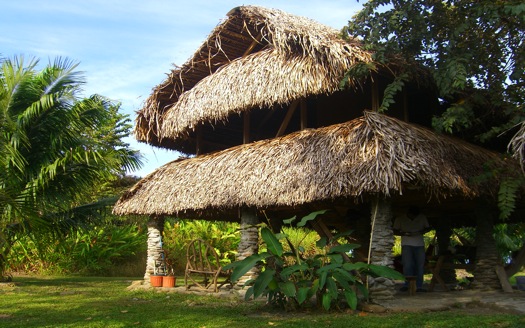
P.S. Here’s a Pic of the included Cabana
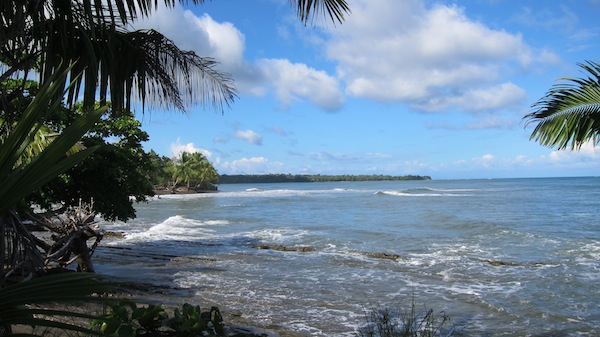
And another shot of its ocean frontage…

Sandra Conoso
Coronado Panama, could be the ideal place for expats who are looking for world-class amenities and natural beauty all wrapped up in one convenient little package. Coronado offers a resort lifestyle comparable to the atmosphere of some of South Florida’s beaches, but without the seven figure price tag. However, with its nice variety of housing options, it’s also great for the would-be expat who’s looking for a place a little further off the beaten path.
For many years Coronado served as a destination where wealthy Panamanians purchased second homes or where people flocked on weekends and holidays to escape the hubbub of Panama City. Today it’s become an international tourist and expat hotspot in its own right. An established destination, it offers many of the same conveniences and attractions as the nearby capital, but in a cleaner, quieter, and less hurried atmosphere.
Here are a few of the reasons Coronado, Panama, is one of the nation’s best places to live as an expat:
1. Coronado offers convenient proximity to Panama City.
Coronado can be reached easily from North America, by way of Panama City’s Tocumen International Airport. It’s also just a short distance off the Pan-American highway, making it very accessible by car or bus from the nation’s capital, although the roads can sometimes be congested (particularly on weekends or around holidays).
While Coronado now has almost everything its foreign residents could ever need, nearby Panama City offers even more. Panama City is quite cosmopolitan, with its 18-screen movie theaters, numerous museums and galleries, high-end boutiques, and vibrant nightlife. So, expats seeking a particular flavor of fusion cuisine or a specific brand name clothing label can likely find it only a short hour’s drive away.
While in Panama City, you can also stock up on things that might be slightly more difficult to find in Coronado, although the beach community’s selection of most items is rapidly growing as more and more businesses open. Those needing a break from the coastal heat can also find relief in the cooler elevations of the nearby Valle de Anton, which is about 50 minutes up the hill.
Coronado also offers excellent routine health care and emergency services at its San Fernando Clinic. However, those who require more specialized care can find it with the local hospital’s affiliate, Clinica Hospital San Fernando, one of Panama City’s best.

Matthew Straubmuller
2. Coronado Panama has a well-established expat community.
After many years as a hotspot for wealthy Panamanians, Coronado has recently gained tremendous popularity among expats. In addition to immigrants from the U.S. and Canada, Coronado is also home to expats from the U.K. and places all across South America. In fact, it boasts Panama’s second-largest expat community (after Boquete).
As a result of decades of expat influx, Coronado has become increasingly friendly to North Americans and other foreigners. English is widely spoken, and many North American conveniences have already been established.
However, despite its size and its strong North American influence, residents love Coronado for its strangely small-town feeling. It is a close-knit community, with a lively social scene. A deep camaraderie exists, not only among its expats, but also between them and the native Panamanians who live or vacation in Coronado.

Marcio Da Mata
3. Coronado has some of the most beautiful beaches on Panama’s Pacific coast.
Those visiting Coronado might often find themselves having to do a double take to be sure they haven’t mistakenly landed somewhere on an established beach in South Florida. Its black and white sand stretches on for miles and miles, allowing for a beautiful natural setting that’s adjacent to world-class resorts and high-rise condos.
Coronado’s seaside location also makes it a great place to enjoy a variety of water sports, such as surfing or kiteboarding. You can also enjoy activities such as scuba diving, sailing, or deep sea fishing.
And everything is within walking distance. You can spend the morning at the health club, playing tennis. Then you can stroll down the beach to dine with a friend at a seaside cafe. After a dip in the ocean, you can walk back to your condo for a shower before meeting your spouse for a fine dining experience at the neighboring resort’s restaurant, looking out on a spectacular sunset.
4. Coronado offers an abundance of lifestyle and leisure options.
As Coronado’s expat population has grown, so have the number of options available for shopping, recreation, and other professional services. A resort membership provides you access to a professional golf course and tennis courts. You can also enjoy the pool and spa facilities. There’s even an equestrian club available for boarding horses.
Shopping plazas continue to pop up everywhere, and there are three supermarkets that are open round-the-clock. A variety of restaurants offer plenty of cuisine options. There are pharmacies, a private medical clinic, and even a veterinarian. There’s also a popular department store and a popular Panamanian home improvement store.
Other conveniences include a dry cleaner, a Mailboxes Etc., and a new gym. There are also three international schools in Coronado, making it a great option for young expat families with children. Businesses and services grow in response to expat needs, so as more and more foreign residents relocate to Coronado its options are likely to continue to increase.
5. Coronado’s infrastructure is better than that of most other coastal areas.
Great infrastructure is often somewhat of a rarity for beach communities. Not so in Coronado, due in part to its location and its long-standing rank as a top destination for locals and expats. This equates to conveniences like water and electrical service that are widely available and extremely reliable.
Also readily accessible is wireless internet, which is also very affordable. Coronado also has great roads, transportation, and other public services. As a result, it’s one of the country’s most turnkey options for expats who want a move-in ready home, community, and city. Coronado isn’t up-and-coming. It has already arrived.
6. Coronado offers lots of options for staying healthy and fit.
The people of Coronado, Panama, are an extremely health-minded community. Many residents grown their own fruits and vegetables, as well as spices for healthy cooking. Mango, papaya, plantain, and banana trees can be found everywhere. Fresh, locally-grown produce can also be purchased from a number of street vendors.
In addition to healthy eating, many residents of Coronado lead very active lifestyles. In addition to water sports you can find expats playing golf or tennis at the resort or gym. There are also groups and classes where you can participate in yoga or meditation. Many expats also spend their time staying mentally and spiritually fit by volunteering or supporting local causes.

Vivi Panama
7. Coronado has community and housing options for every budget and lifestyle.
Coronado’s central neighborhood is a gated community, which is guarded and also situated next to the Coronado Police Department for added security. This upscale area is well secured and has top-notch private facilities.
However, resort-style living isn’t necessarily for everyone. Coronado has a wide variety of choices to suit any preference. You can choose a Tuscan villa on a secluded lot, an efficiency apartment in a high-rise building, or a beachside bungalow with a view of the sea.
Prices can vary drastically, depending on the property’s location and amenities, but a smaller home can be had for as little as $250,000. Rental rates could range from $700 on up to $3000 or more for some of the most desirable properties.
While slightly more expensive than many areas in Panama, Coronado is still extremely affordable by North American standards. For expats who don’t mind being a bit farther from the action, you can find bargains on real estate in nearby areas such as the hillside town of Las Lajas, where you can find a modest home for under $200,000.
Coronado also has the added benefit of being in Panama, which enjoys an incredibly low cost of living. All this luxury can still be enjoyed for a fraction of the cost for the same lifestyle in North America, including high-speed internet and a full-time maid. Those eligible for the country’s pensionado visa can benefit from even greater savings.
Coronado, Panama, could be the perfect place for you if you’re a would-be expat who doesn’t want to compromise your lifestyle. And why should you? Here you can enjoy all the amenities of a South Florida retirement on a Latin American budget. Combine that with easy access and first-world infrastructure and you have a recipe for luxury.
Whether or not Coronado ends up being your ideal retirement destination, it certainly isn’t a shabby place to visit. Plan your trip today to find out if Coronado, Panama, is right for you.
Map of Coronado Panama
Use this quick map to see where Coronado fits in Panama and its proximity to the nearest international airport, Tocumen International Airport.
Fast Facts
- Population: About 20,000.
- Typical temperature: Ranges mid 80s to upper 90s
- Nearest airport with U.S. flights: Tocumen Airport, Panama City
- Nearest U.S. consulate: Panama City


Viva Tropical
Boca Chica, Panama is a little-known island destination that delivers big on adventure and atmosphere. Located on Panama’s Pacific coast, Boca Chica offers its visitors and residents opportunities for sport fishing, snorkeling, surfing, and awing over its exotic flora and fauna. With so much to see and do, Boca Chica has been gaining much attention recently, as more and more people are finding out about this coastal hideaway and all it has to offer.
And of course we have a special affection for Boca Chica, since that’s the home of our 400 acre private island Adventure Colony.
Because it’s somewhat remote, Boca Chica is also an ideal destination for those looking for a more relaxing or romantic getaway. Its fine sand and dark water make it a beach lover’s dream. Its tropical climate and landscape of lush valleys will make you think you’re in paradise. There you can sunbathe on an almost isolated beach or venture out to one of Boca Chica’s 50+ islands, many of which are uninhabited.
Boca Chica, Panama is within arms reach of banana plantations, deserted islands, jungles, mountains, and a marine park with coral reefs that are home to whales, manta rays, and a variety of sporting fish. And with the new airport in nearby David, it’s now easier than ever to access Boca Chica and all of these great attractions.
With so many opportunities for adventure in and around Boca Chica, it’s the perfect place to set up camp while you explore the area. Here, in no particular order, are the hotels that rank at the top of our list for accommodations on the Boca Chica mainland.
Gone Fishing Panama

Gone Fishing Panama
This resort offers upscale accommodations that include professionally decorated rooms, a large bar and dining area, and a vanishing edge pool that offers panoramic views of the surrounding natural beauty.
Gone Fishing Panama offers fishing charters aboard Good Fellas, its state-of-the-art 31′ boat. They’ll also take you for a day and a half excursion to Coiba Island National Maritime Park, a whale watching cruise, a jungle tour, a road trip to several nearby destinations (like Boquete), or just about anything else you want to do.
You can also relax on the beach or by the pool or take part in a variety of other land and sea activities, such as snorkeling, horseback riding, waterskiing, sailing, surfing, hiking, or bird watching.
The hospitality at Gone Fishing Panama is unrivaled. And the food is fantastic. Many packages include three meals a day. The menu includes the freshest fruits, vegetables, and herbs (many grown on site), as well as the “catch of the day” which is usually caught just a few hours before it’s served.
In-room massages are offered, as are manicures and pedicures. The bar has dancing and karaoke nightly. The beautiful grounds are available for weddings and other events.
Bocas Del Mar

Bocas del Mar
At Bocas Del Mar you’ll find the fresh, modern amenities you’d expect from a first world hotel. It’s the newest lodging establishment in Boca Chica and the one that most closely resembles the traditional hotel experience. Its 16 individual bungalows, or cabanas as the locals call them, are contemporary and well-appointed accommodations set into the natural beauty of tropical gardens and alongside the sparkling sea.
With a dedicated focus on customer service and attention to detail, the staff promises to deliver personalized attention and service to maximize each guest’s resort experience. Bungalow amenities vary, but some include hot tubs, private parking spaces, or dedicated courtyards.
Bocas Del Mar has two infinity pools, with waiter service for drinks and snacks. There’s also a gourmet restaurant and bar serving an international-style menu. Room service is also offered. Fresh seafood, including lobster, is usually available. The kitchen will also gladly prepare your very own fresh catch if you have one.
The resort has a private dock where you can book a variety of excursions such as deep sea fishing charters, island-hopping trips, and the hotel’s very own “4 Hour Tour” aboard its 26′ boat. The staff is very knowledgeable about Boca Chica and the surrounding areas and are more than happy to recommend and book tours for their guests. Transport to and from the airport in David is available upon request.
Seagull Cove Lodge

Trip Advisor
The accommodations at Seagull Cove Lodge feel like more of an extension of the natural environment. With its unique layout, it is a place where you can enjoy the beauty and tranquility of the area as well as modern conveniences and exceptional service. Each of its 5 bungalows offers an ocean view, and they cascade down a lush hillside where they lead to a tiki bar that’s built right out on top of the beautiful Pacific Ocean.
The lodge’s rooms offer plenty of privacy, while its common areas invite guests to meet and mingle with others from all across the globe. Committed to creating a harmonious atmosphere, the property has lots of green space, a private beach, and tropical gardens. It’s a great place to relax, rejuvenate, and recharge.
The Mediterranean-style lodge boasts a tranquil fountain lounge bar, a gourmet restaurant, and an artistic pool. Fresh fish is delivered daily to the private dock, and the menu is constantly changing. The chef at Seagull Cove Lodge serves up Central American and international fare that guests enjoy from tables overlooking the ocean.
Your day can be spent relaxing on the beach, or you can choose from a variety of activities. Excursions such as sea kayaking, whale watching, and deep sea fishing can all be arranged for you by the staff.
What are you waiting for? Plan a trip to beautiful Boca Chica, and book a reservation to stay at one of these fine establishments.


UNESCO
How much do you know about Panama? If you’re like many potential expats, your knowledge may be limited to the fact that it’s home to the Panama Canal and the birthplace of the Panama hat. And you’d be wrong about the latter. (They actually originated in Ecuador.)
If you’re considering visiting or relocating to this important international destination, or if you just want to brush up on your general knowledge of Central America, here are some Panama facts to educate you on some of the country’s highlights.
General Panama Facts
Panama is an isthmus that connects the Central American country of Costa Rica to Colombia in South America. Shaped like a sideways “S,” it runs from west to east and borders both the Caribbean Sea and the Pacific Ocean.
Its total area is around 29,150 square miles (slightly smaller than the state of South Carolina), and it has a population of about 3,595,490 (less than the city of Los Angeles). Many of the country’s residents (1,272,672 to be exact) live in or near the capital, Panama City.
The rugged terrain and lack of good roads can make accessing areas along the Caribbean coast more difficult. As a result, the population is also heavily concentrated on the southern, Pacific side of the country, where the Pan-American highway runs. Panama’s Darien province also contains the only break, known as the Darien Gap, in the entire highway system that connects the farthest tips of North and South America.
Panama enjoys a tropical climate, with temperatures ranging from 87 to 95 degrees Fahrenheit year round. Relief from the heat can be found at the higher elevations, where temps are generally in the 70s. Its only season variation is between its wet (April to December) and dry (January to April) seasons.
Panama’s History
The Isthmus of Panama was discovered by Spanish explorers Rodrigo de Bastidas and Vasco Nunez de Balboa in 1501. In 1510 Santa Maria La Antigua del Darien became the first permanent settlement on the American mainland. The Pacific Ocean was reached on an expedition led by Balboa in 1513, and Pedro Arias Davila established Panama City on August 15, 1519, almost a hundred years before Jamestown, Virginia, was founded.
Panama remained a Spanish colony until 1821 when it became part of the Gran Colombia, under the rule of Simon Bolivar. It gained its independence from Colombia in 1903.
The People of Panama
Panama is comprised mostly of mestizos (68%), those of mixed Amerindian and European descent. The other categories include black and mulatto (10%) and white (15%). Amerindians (or American Indians, those indigenous to the region) account for another 6%.
Spanish is the official language. However, English is widely spoken. In fact, approximately 14% of the country speaks English. Several Indian languages are also used among native peoples.
The majority of the population (75-85%) identifies with the Roman Catholic church. However, freedom of religion is guaranteed by the nation’s Constitution. Protestantism, Judaism, Islam, Buddhism, and many other religions are also practiced in Panama.

Lon & Queta
Panama’s Structure and Government
Panama is divided into nine provinces and three Indian territories. It is a constitutional democracy whose representatives are elected by direct vote. The executive branch consists of a President and Vice President who are elected for a non-renewable five-year term. The 71 members of the National Assembly, the legislative body, are also elected every five years, often resulting in sudden, drastic changes in policy. Supreme Court justices are nominated by the executive branch and designated by Parliament.
Panama’s Economy
The official currency of Panama is the Balboa. However, the U.S. dollar is also widely accepted and exchanges at a rate of 1:1, making it an easy place to live and invest. To further attract investors, a recent law was established to protect investments made in all economic sectors. Both natives and foreigners are free to do as they wish with the products and profits generated with Panamanian investments, up to and including trading or transferring them to other countries. It also establishes an arbitration provision, eliminating the danger of dealing with the Panamanian judicial system.
Its main industries include food processing, chemical manufacturing, textiles, and the manufacturing of machinery and metal products. Among its agriculture products are coffee, bananas, sugarcane, cotton, beef, and veal. Its largest exports are coffee, shrimp, lobster, cotton, tobacco, and bananas.
Other revenue producers include the banking and services industries, tourism, tax-free zones, and the Panama Canal. Panama’s economy has boomed in recent years, so much so that the country experienced a shortage of skilled workers. As a result, a new visa was introduced to attract foreign professionals and their families to live and work in Panama. The shortage also prompted large investments in Panama’s school system for a more long-term approach. The country has a high literacy rate at 93%.
Because its tax law is strictly applied to income produced within its territory, it is also considered something of a tax haven. All transactions made or executed in or affecting areas outside of Panama are exempt from income taxes. Property and other taxes are also quite favorable.
The Panama Canal
Among its most notable landmarks is the Panama Canal, a 48 mile ship canal that first opened in 1914 and took 33 years to build. The passageway was instrumental in opening up trade and travel to the west coast of the U.S. as well as nations in and around the Pacific Ocean.
The Canal was controlled by the U.S. until 1977 when a series of treaties made way for it to be handed over to Panama. Since 1999 it has been solely operated by the Panamanian government. Named one of the seven wonders of the modern world, it has been expanded many times with its third lane of locks slated to open in 2015.
Surprisingly, the canal itself only accounts for 4% of the country’s Gross Domestic Product (GDP). However, due to the multiplier effect, its impact is much more far-reaching. Its employees spend their income on consumer goods, which in turn fuels businesses like restaurants and grocery stores. As a result, it’s estimated that the canal indirectly accounts for closer to 30% of the nation’s GDP.
Panama’s Infrastructure
Panama has excellent infrastructure when compared to many of its Latin American neighbors. And recent investments into roads, airports, and other systems are literally paving the way for even more businesses and visitors to come to Panama. These include a $5.2 billion Canal expansion, airport renovations, five new highways, new hospitals, and $1.5 billion for a Metro line, Panama’s first subway system.
Panama is also a highly connected country, due in part to a longstanding U.S. military presence. In fact it ranked as the second best Latin American country for technology and internet penetration. Telephone service, high-speed internet, cable, and satellite service are also affordable and reliable.
Panama’s Nature

Angie Harms
Roughly a fifth of Panama’s entire land area is protected areas. This includes nature reserves, national parks, wilderness areas, and others. In addition to these land features, Panama is also home to three protected wetland sites.
Though not as naturally diverse as some of its Central American neighbors, Panama boasts a tremendous amount of flora and fauna that make it a nature lover’s paradise. Its forests are home to almost 10,000 species of plants, including 200 that are currently endangered. Panama’s resourceful natives have used many of these for centuries as medicine, food, and construction materials.
Panama also claims over 200 mammals, as well as many reptiles, amphibians, and fish. It also contains 10% of the world’s bird species, including the rare resplendent quetzal.
Traveling to Panama
Panama is five hours behind Greenwich Mean Time (GMT). It’s also one hour ahead of its Central American neighbors. It does not observe daylight savings time so, depending on the time of year, it corresponds with either the U.S.’s Eastern Standard Time or Central Standard Time. Most of its electrical outlets are 110 volts, although there are some areas with 220.
Entering Panama requires a passport (valid for at least 6 months) and the appropriate visa (90 or 180 days for tourists). You’ll also need to show proof of a return trip ticket or ticket to your next destination, as well as proof of financial solvency (e.g., bank statement or travelers checks) to guarantee you won’t be working while in the country.
Panama by the Numbers
Here are a few more Panama facts and figures:
-
GDP $36.253 billion
-
GDP per capita $9,526
-
GDP (PPP) $57.079 billion
-
GDP (PPP) per capita $15,616
-
Industrial production growth rate 15.7%
-
Unemployment rate 4.4%
-
Population below poverty line 26%
-
Revenues $9.07 billion
-
Expenditures $9.835 billion
-
Budget deficit -2.1% of GDP
-
Public debt 39.2% of GDP
-
Taxes and other revenues 25% of GDP
-
Inflation rate 5.7%
-
Commercial bank prime lending rate 6.91%
-
Current account balance -$4.191 billion
-
Exports $18.91 billion (includes the Colon Free Zone)
-
Imports $24.69 billion (includes the Colon Free Zone)
-
Reserves of foreign exchange and gold $3.303 billion
-
Debt – external $14.2 billion
If you still have questions about Panama, take a look at one of our many articles on various topics affecting those who are considering it as a retirement or vacation destination. Or, better yet, schedule a trip to the Latin tropics and check it out for yourself.
Map of Panama
Panama Fast Facts
- Population: 3.8 million
- Typical temperature: Temperature typically varies from 72°F to 91°F
- Nearest airport with U.S. flights: U.S. Bound flights leave daily from Tocumen International Airport
- Nearest U.S. consulate: Panama City
- Home of the Playa Burica adventure colony.

With its perfect climate, sandy beaches, and serene setting, Boca Chica is a destination all its own. But in addition to the opportunities to stick around and relax on its beaches and explore its waters, Boca Chica also offers a number of nearby attractions that can all be accessed and enjoyed within the course of a day.
Boca Chica is a great destination for expats who want plenty of options nearby for adventure and exploration. It’s also a great landing spot for the traveler who’s looking for a peaceful retreat where they can still easily get out and enjoy extreme sports or just connect with nature.
In Boca Chica itself, you can go snorkeling, scuba diving, or fishing. You can also visit Chiriqui Gulf National Park, which is home to sharks, turtles, and stingrays. But if you’re willing to venture out a little further, here are several great day trips to keep you entertained during your stay.
1. Go swimming at Los Cangilones de Gualaca.
This natural swimming hole lies in a basin that was created by the Esti River over the course of many thousands of years. Visitors can take a refreshing dip in its cool waters and enjoy the beautiful scenery that surrounds this natural wonder.
In addition to the pool, the formation also includes a channel which has enough current to provide some decent exercise, much like a stationary lap pool. You can bring a picnic or go into the local village for some food. Guided tours of the area are also available.
2. See two oceans from the top of Volcan Baru.

Ken Mayer
Panama’s highest point, at 11,400 feet, Volcan Baru offers an eight-mile hike to its peak that is best attempted by only those in excellent physical shape. The path takes hikers through lush hillsides and jungles before finally reaching the rocky cliffs of the summit.
Many ambitious travelers begin their climb at midnight, hoping to reach the summit in time for the breathtaking sunrise that illuminates views of both the Caribbean and the Pacific. Although clouds often obscure the view, the volcano’s peak also offers a panoramic view of the surrounding 35,000-acre park that is home to pumas, tapirs, and over 250 species of birds.
3. Save a sea turtle at Playa la Barqueta.
The wildlife refuge at Playa la Barqueta is home to five different species of sea turtles, which nest on its beaches. Olive ridley, hawksbill, loggerhead, and green sea turtles can be seen from June to November. Olive ridleys can also be seen from November to March, along with the enormous leatherback turtles.
At night during high tide you can see the turtles crawling onto the beach to bury their eggs in the sand, where two months later the babies will dig their way out and shuffle back to the sea. On occasion, visitors may see local advocates releasing rehabilitated turtles that have been injured by poachers or natural predators.
4. Zip through the clouds on a canopy tour in Boquete.

Angie Harms
Nearby Boquete offers many opportunities for adventure. But none can “top” the zip line tours located high in its mountainside cloud forests. Not only will participants enjoy a rush of adrenaline, they will also enjoy a guided tour through centuries-old forest as they zip past waterfalls and a variety of wildlife.
Species spotted along the 3.5 to 4 hour tour might include monkeys, exotic orchids, and possibly even the rare resplendent quetzal. Guides provide plenty of instructions and safety precautions. The 12 lines cover a total of three kilometers through the lush forests.
5. Discover ancient artifacts at Sitio Barriles.

Dianne Fristrom
Located near the town of Volcan, Sitio Barriles is one of Panama’s most famous archaeological sites. It’s also one of the few that’s regularly accessible to the public. On display at Sitio Barriles are a number of ancient artifacts, many unearthed from that very location.
Items unearthed indicate that the location was once a ceremonial site. They include basalt rock artifacts from Volcan Baru, pottery, and urns containing ashes of the ancient deceased. In addition to the artifacts, the owners of the property use the adjoining land to grow coffee, which is available for purchase. They also offer a selection of cheese, wine, and jelly.
6. Recharge from your adventures in the hot springs of Caldera.
Outside of Boquete lies a series of mineral water pools that are renowned for their healing properties. The Caldera hot springs are a great place to soak and recover from a few days of physically demanding adventures in and around Boca Chica.
These pools are uncrowded, and several large stones offer privacy for you and your group of travelers. For a refreshing splash following your hot bath, try taking a dip in the adjacent Rio Caldera whose cool waters also offer the occasional hot pockets.
7. Bodysurf at Las Lajas Beach.

Mor
Not too far from Boca Chica are the beaches of Las Lajas, which extend for eight miles along the coast. This stretch of coast owes its appeal to its water temperature and mild current that’s perfect for bodysurfing or swimming. Not to mention, it’s a place where you can stroll along the beach forever.
Not overly crowded, the beach is dotted with a few little shacks and cheap restaurants. However, your best bet is to pack a lunch. You’ll likely be eating it alone on your very own stretch of isolated beach.
What’s your favorite day trip from Boca Chica, Panama?
When visiting Boca Chica, you’ll likely be tempted to stick around in close proximity for the entire duration of your stay. However, if you choose to wander out in search of adventure, these and other destinations are well within arm’s reach.

Cliff Miller
Being an expat in Panama affords me many luxuries I never had back in the U.S. One is the ability to distance myself from the seemingly never-ending political debates that increasingly plague the country I once called home.
It’s not that I keep my head in the proverbial sand. Far from it, actually.
I certainly try to stay abreast of what’s going on back in the States, and the world for that matter. I’m just able to do it from a different perspective now. One that doesn’t cause my blood pressure to rise every time I hear about the government making a decision that takes even more hard-won freedoms and hard-earned dollars away from its constituents.
My North American friends are facing tough times ahead.
But I read something the other day that really made me realize how bad things have gotten.
It wasn’t a news story. It was a Facebook post.
I logged on to see what was happening in the lives of friends I keep in touch with through social media, since moving to Central America several years ago. I was shocked to read my buddy’s status update which stated that the health insurance for his family of four was increasing from $450 per month to a whopping $923. He wondered what others in his same boat were doing to combat similar rate hikes.
That’s a 105% increase just since last year!
Almost as shocking as his post were the comments in the thread. Friends shared stories about how they were experiencing the same increases. Not only were their premiums rising, but deductibles had doubled. Co-pays and out-of-pocket limits were increasing.
Most of the comments had to do with abandoning insurance all together and just paying the fines.
Triple and quadruple the premiums for less coverage?
I decided to research further and found that the implementation of Obamacare will cause the underlying insurance rates for young Americans to increase by 55 to 62 percent for women and 97 to 99 percent for men.
Those numbers are even higher in some areas, such as North Carolina where rates will triple for women and quadruple for men.
Of course these rates vary based on location, as well as the age and health of the individual. Americans who are youngest and healthiest will help foot the bill for sicker individuals or those who’ve been previously denied coverage.
And these increases don’t even take into account the fact that America’s middle class will not only pay higher premiums for their own coverage, they’ll also pay higher taxes to help fund the subsidies for those in the lower income group. They’re also not always comparing apples to apples, as most calculations use the second-cheapest option of the Obamacare plans.
I didn’t realize how good I have it!
Holy cow! Maybe I am a bit behind the times, living in Panama, but I honestly had no idea just how good of a thing I have down here!
I just paid my health insurance premium for my family of six. (Yeah, we have 4 kids!) It was $1,385…for the year. That’s right. THE YEAR.
What’s more is that our plan actually covers us in the U.S. too–as long as we spend at least 180 days abroad each year. That’s not a benefit we plan on using–because the health care here is fantastic–but it’s nice to have that peace of mind in knowing that we could travel back to the States for treatment if a really serious situation arose.
I’m saving over $14k per year by living here.
So, let’s do a little comparison here.
By the administration’s own estimation (so take that with a grain of salt), the average monthly cost for health insurance in the U.S. will now be $328 per person (according to Department of Health and Human Services data). That’s a broad average across the board. Regardless of age, health, location, blah-blah-blah.
Since that estimate is very general, it’s hard to know exactly what my family would pay. But let’s assume it’s the $328 average for my wife and myself and half that ($164) for each of our 4 kids. So my family would pay $1,312 per month, or $15,744 per year for health insurance.
That means my family is saving over 90% on health care by living abroad (not to mention all the other amazing benefits that you just can’t put a price on). I don’t really think that’s apples to apples either, since research shows that U.S. health care dollars don’t necessarily get its residents the best bang for their buck.
So can you!
There has never been a better time to consider moving your family overseas. Even if it’s just for a “gap year,” a trend that’s gaining popularity among many North American families.
Ever-improving technology is making working remotely and homeschooling your children simpler than ever. And an ever-flattening globe is making the ability to speak another language and interact with other cultures almost necessary requirements for the future generation of employees.
And, since health care isn’t the only thing that costs less in Central America, you could work a whole lot less and still live better than you ever dreamed. Consider the invaluable benefits to your children and the memories you could make together as a family. In short, the cost savings isn’t the only reason to consider a move. It’s not even in my top 5.
More places you can save…
But, since health care is the topic at hand, here are a few more places in Latin America where you can score a bargain on insurance.
-
Panama: I mentioned the cost for my family. But there are a lot of different plans available. A fellow expat friend of mine only pays $450 per year for her family of 4. Many doctors are U.S.-trained, and most speak English.
-
Ecuador: One of the cheapest places to live in Latin America, premiums are less than $40 per person (per month) for someone in their 50’s. Much less for younger adults and children.
-
Costa Rica: While it’s one of the pricier destinations in Latin America, health insurance can still be had for as little as $60 in Costa Rica. Its health care system also consistently outranks that of the U.S. when it comes to the quality of care and health of its citizens.
More reasons to give it a try…
I mentioned that the cost of living wasn’t a top priority in my family’s decision to move to Panama. So you might be wondering what was.
In actuality it was a lot of things. Namely the opportunity to have the freedom to live life on our own terms. The ability to simplify our lifestyle and shed the expectations of the North American culture. To teach our children what we believe is important, not what society dictates. To expose them to new things and people they might never have otherwise known about. And to allow them to have fun just being kids.
Was it scary at times? Absolutely. Especially in those first few months. But then again, so is logging onto Facebook these days.
There are lots of resources available for families considering moving abroad, including a guide that we compiled based on our experiences. If you’re one of the thousands of Americans currently considering becoming expats, you can find out more here.

Guy Buchmann
An influential factor for some North Americans who decide to move further south to Central America is the desire to lead a healthy lifestyle. However many residents in Central America consume high concentrations of pesticides and processed foods. Without a gym or a Whole Foods nearby it can be difficult for those moving abroad to be as healthy as they would like to be.
Here are some of the towns in Central America where expats and locals have created health meccas where organic food and healthy activities abound. People who are dedicated to healthy, sustainable living will find themselves connecting with the like-minded communities that exist in these towns.
Puerto Viejo, Costa Rica
Ana Munevar
Once the infamous party town of the South Caribbean, the gorgeous Costa Rican beach town of Puerto Viejo is making a name for itself in the health community. In addition to hiking, surfing, biking, and other physically healthy activities there are over five yoga studios which offer daily classes for those in need of some centering.
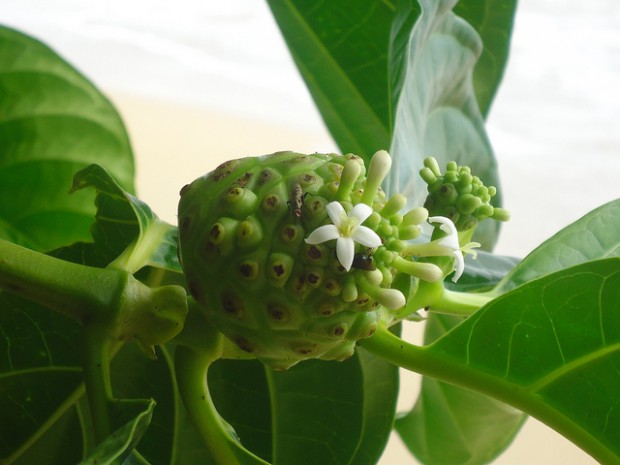
Residents enjoy healthy boxes of farm fresh organic produce twice weekly and access to incredible superfoods like noni juice, kombucha, and raw cacao at the farmers’ markets. There is also a farming cooperative in Playa Cocles in Puerto Viejo for those who want to get their hands dirty and help grow their own produce. There are also a few organic healthy cafes, even an entirely raw foods cafe. This makes it very possible to eat organic and healthy in Puerto Viejo.
The Tierra de Suenos health center in the Playa Chiquita neighborhood offers unique health opportunities for visitors and residents. The center works to heal individuals from all over the world suffering with chronic disease. There is an onsite holistic health consultant who works with community members on an as needed basis as well. Many residents in Puerto Viejo visit this center for a basic health analysis, to purchase vitamins and herbs, and for assistance with cleanses.
Lake Atitlan, Guatemala
This gorgeous lake surrounded by rainforest, mountain trails, and volcanoes is one of the top destinations for nature lovers in Guatemala. The clean mountain air and abundance of outdoor activities make it easy for residents to lead a clean, active lifestyle.
Some of the outdoor enthusiasts who fell in love with Lake Atitlan’s natural beauty decided to move here and contribute to the healthy lifestyle. Atitlan Organics is not only providing organic produce for much of the community, they also support local farmers with the intention of building a cooperative of farmers. They sell produce at the local farmers’ market and offer tours of their farm.
The La Voz organic coffee farm grows organic fair trade local coffee. Coffee lovers can enjoy some of the healthiest and best coffee in the world here and even take a tour of the farm.
The town of San Pedro de la Laguna is an expat’s health mecca with international restaurants ranging from all organic to Asian to vegetarian and vegan. They have daily yoga classes as well as retreat centers for those interested in a deeper immersion or a cleanse. The local hot springs are a great way to relax after a work week and you can dine on organic food while soaking.
Playa Gigante, Nicaragua
G. Gill
The Pacific coast of Nicaragua is an ecological paradise and most of the coast enjoys quiet serenity with no crowds and few tourists. Playa Gigante, known by travelers for its surfing, is a quiet little town that some expats looking for a laid-back lifestyle in an authentic surf and fishing town call home.
Many centers have opened that gear specifically towards health and wellness tourism, which presents the opportunity for those with plans to open a wellness-focused business or healthy restaurant. Residents can also enjoy many of the yoga classes and wellness packages offered at these centers.
Papaya Wellness has all kinds of yoga classes, pilates, and qi gong as well as Ayurvedic consultations, nutrition classes, and raw food preparation courses. Aqua Wellness Resort offers body work as well as healthy vegetarian meals.
Nosara, Costa Rica
Possibly the healthiest town in all of Central America is Playa Guiones in Nosara in Costa Rica. The town sits on a stunning white sand beach with perfect surf waves surrounded by jungle.
Costa Rica has the highest concentration of wellness businesses and eco tourism, so it’s not surprising that one of the healthiest towns resides here. Nosara first became a popular destination decades ago when the Nosara Yoga Institute opened its doors and began the yoga revolution in Costa Rica.
Today expats enjoy an incredibly healthy lifestyle. There is an abundance of physical activities like stand up paddleboarding, kick boxing, pilates, yoga, and even stand up paddleboard yoga.
Raw cafes, juice bars, and even an organic grocery store are available to keep residents from missing their former lives of shopping at Whole Foods. You can order from the community farm cooperative, frequent the farmer’s market, or stop by the organic grocer any day of the week for organic produce.
Being healthy abroad is easier than many people realize. Towns with health-focused expat communities tend to have healthy options already, but if you find the town you want to relocate to is missing something perhaps that’s your opportunity to open your own wellness business.

Central America has become a tourist hotspot for those looking to surf epic waves a short plane ride away. Some surfers fell in love with the beautiful landscape, the warm people, and the excellent surf and decided to create a home for themselves.

Mark Veraat
There is plenty of undiscovered stunning coastline and great surfing all over Central America. But for those looking to live or invest, what are the surf towns that you could actually live in?
We’ve compiled a list of the towns that have strong communities and basic amenities for those who enjoy a side of comfort with their morning surf.
Tamarindo, Costa Rica
Tamarindo is Costa Rica’s top destination for surf tourism. Surf schools are aplenty and surfing has become integral to the local culture. All skill levels can surf here as there are beach, rivermouth, and reef breaks. It is also located near many other beaches for surfing day trips. Just north of Playa Tamarindo are Witch’s Rock and Ollie’s Point, which became world famous from the film Endless Summer II.
Located a short one hour drive on a paved road from the Liberia International airport, Tamarindo is highly accessible from North America. As a result it is one of the most tourist frequented towns in Costa Rica and the tourist businesses thrive. There are also many more amenities here than in other parts of Costa Rica, including plenty of restaurants, shopping, and bars. This gives the area a fairly North American feel, which some people may enjoy while others may not. However outside of town it is still possible to find peace, tranquility, and even waves all for yourself.
Santa Catalina, Panama

Guillermo Duran
Until recently Santa Catalina was a secret kept by the locals who enjoyed its excellent surf. While still a small, quiet town, Santa Catalina is the top surf destination in all of Panama. It is now bringing surfers from all over the world and actually hosted the 2010 ISA World Master’s Surfing Championship.
The influx of health conscious surfing expats in recent years has developed an overall health conscious attitude in the area. It is one of the few towns in all of Panama that has health food and yoga.
The town is still difficult to access which has kept it quiet and relatively undeveloped. Consequently land prices, even beachfront, are quite low. However Santa Catalina is rapidly paving its way as the next big surf destination in Central America which makes investing now an excellent opportunity.
Playa Guiones, Nosara, Costa Rica
Playa Guiones (sometimes called Nosara after the region it’s in) is one of the most beloved towns in all of Central America by expats, and in large part due to the surf. It has some of the most versatile surf in the country with waves surfable at any tide level.
At the shore are clean rows of white water for beginners, further out is an intermediate break, and on the outside are expert level waves. There is also a volcanic reef break at Playa Pelada as well as rivermouth break near the Nosara River for experts. Plenty of other nearby beaches have great surfing as well.
The town itself boasts two exceptional private schools, several world class yoga retreat centers, delicious international cuisine, raw health food cafes, kickboxing, pilates, and tons of other activities. There is an organic grocery store in town as well as a farmers’ market and local organic produce delivery service. The town is known for its strong expat community and dedication towards health and sustainability.
San Juan del Sur, Nicaragua

Jeff R.
This crescent-shaped bay surf town is the gateway to many of Nicaragua’s best beaches. Just across the border from Costa Rica’s famed Nicoya Peninsula, San Juan del Sur enjoys similar weather, landscape, and surf. Playa Maderas is a twenty minute drive from the center of San Juan del Sur and picks up most of the swells that hit Nicaragua. It is a fun spot for surfers of all levels.
San Juan del Sur is the most popular tourist destination in Nicaragua because of the incredible surfing opportunities. As a result there are many hotels, restaurants, bars, yoga studios, and plenty of other North American luxuries. It can become touristy and crowded at times, but the nearby beaches are often completely deserted.
Central America is a great place for surf lovers with the desire to live among world class waves. These are just a few of the best spots for those looking to relocate. What are some of your favorites?


Wouter Van Doorn
One of the biggest perks of moving to Central America is the overwhelming prevalence of nature. Undoubtedly the breathtaking vistas and endless opportunities for exploration have been the driving force behind many expats’ decisions to move here.
But recent studies suggest that the benefits of being in close proximity to natural environments may include more than just a nice view.
Researchers have studied both the short- and long-term effects of exposure to nature, and–based on their findings–it’s no wonder that people living in Central America enjoy a quality of life that rivals any area on the globe.
Being Outside Combats Two of the World’s Largest Contributors to Disease
People who spend more time in a natural setting have been proven to be healthier overall than those who don’t. Period. Among the specific improvements in their health were lower blood pressure and cholesterol, an improved outlook on life, and a reduction in stress levels.
Most notably, spending time in nature provides improvement in the areas of mental health and cardiovascular disease, which are projected to become the two biggest worldwide contributors to disease within the next few years.
Other indirect benefits cited include decreased feelings of depression, greater satisfaction with life in general, increased self-esteem, and a reduction in negative emotions such as anger and anxiety. People who spend considerable time outdoors also tend to be less aggressive and violent, less likely to procrastinate, and better able to solve problems.
It Has Nothing to Do with Exercise
You may be surprised to learn that the benefits gained from being in nature don’t even take your activity level into consideration, although people who spend more time outside do tend to be more active. Instead, it’s the mere contact with nature that seems to do the trick.
Several studies even used photographs of serene natural settings to achieve the same outcome, (but–don’t worry–you won’t need to resort to that when the beautiful landscapes of Central America are all around you). As little as 20 minutes per day spent in nature was enough to increase participants’ vitality levels by as much as 90% and eliminate feelings of exhaustion.
So, forget hiking or rock climbing. All you really need to do to improve your overall health and wellness in Central America is spend some time bird watching in a nearby nature preserve or taking in the sights, sounds, and smells of your own garden.
photo by Bill Tacular
“Clearing Your Head” Isn’t Just a Figure of Speech
The mechanics behind what actually happens when you spend time in nature really aren’t all that complex. And, when you consider the fact that humans have lived in rural settings for centuries but only in urban environments for the past few decades, this really shouldn’t have been such a hard conclusion for scientists to reach.
Urban environments, where we’re surrounded by things like traffic and technology, serve as a continual drain on our mental resources. We’re bombarded by stimuli, making it increasingly difficult to focus, rest, or recharge.
Nature, on the other hand, has an innate ability to capture our attention. When we focus on the natural world around us, our brains are given a break from all of the artificial attractions that normally compete for our awareness. By contemplating nature, we involuntarily shut off a large part of our nervous system activity, giving our brain the time it needs to refuel.
By isolating the part of the brain that performs more focused introspection, we also increase our creativity, attention span, and performance on a number of cognitive tests. And the longer the better. Participants of one study improved their scores by 20% after a 3-hour hike. However, those who were gone for four days saw an improvement of 50%.
Contact with Nature Is Even More Crucial for Expats
In one particular study, the benefits of being in nature were found to be even more important for those in an unfamiliar setting, such as expats living abroad. It gave these individuals a greater sense of identity and oneness with their new country. They tended to feel more integrated, rather than isolated. They also reported a greater sense of possibility and empowerment.
Being in nature has also proven to benefit entire communities, as it often lends itself to increased social contact and cohesion. Parks and community gardens provide opportunities to socialize. Environmental volunteer opportunities allow locals and expats to bond through social connections and a shared sense of commitment to the local environment.
How Moving to Central America Can Be Beneficial to Your Children’s Health
Increased time spent in nature has been linked to the reduction of many of the chronic health conditions that increasingly plague America’s youth, such as obesity, asthma, ADD, and ADHD. Not to mention mental health concerns like depression and anxiety.
A growing problem in the U.S. is vitamin D deficiency, which has been linked to cardiovascular problems later in life. Vitamin D is produced by the skin after sunlight exposure. This nutrient is important for a number of bodily functions and is essential for the proper absorption of calcium.
With an abundance of natural settings to choose from in Central America, your children could benefit from the scientifically-proven increase in good health and happiness that comes from free and unstructured play outdoors. Research has shown that it improves children’s independence and sense of self, their cognitive development, and their overall well-being.
Want to improve your ability to focus and your children’s ability to cooperate? Find out more about the benefits of moving your family abroad.


Jessie Harrell
Living on a tropical island is an incredible fantasy shared by many people. Being surrounded by water, drinking out of fresh young coconuts, and bathing in the ocean are some of the alluring images that come to mind.
Some people have actually chosen to make the fantasy of island life a reality. Many once deserted islands in Central and South America are becoming more and more inhabitable with building development, electricity, and even wifi.
However how does the reality truly live up to the fantasy?
Island life is not always paradise. With power shortages, few or often no roads at all, and a limited supply of goods it can be challenging at times living on an island.
Here are the pros and cons of living on an island for you to consider before moving to your own private paradise.
Pros of Living on an Island
They Are Beautiful

Caneles
There is no denying that tropical islands are absolutely stunning. Depending on the size of the island, there may be very little development and consequently nature everywhere. While some islands, like Isla Bastimentos in Bocas del Toro, Panama have incredible surfing, many like the Bay Islands in Honduras have completely flat water that is perfect for diving and snorkeling.
They Can Help You to Relax
Far from the mainland, islands offer the chance to truly get away. Life moves at a slower pace on islands and you will likely find yourself in a deep state of relaxation. Some islands have no cars and electricity for only part of the day. This makes relaxing and unplugging that much easier. If you are looking to really slow down your lifestyle, living on an island may be a great fit.
They Have Strong Communities
Small islands in particularly tend to have strong communities. People don’t leave islands as often as towns so living on an island you usually find yourself around most of the same people. This helps the community to work together. Most people living on islands do so for the same reasons and this shared love and respect of the island bonds people together.
They Are Easy to Navigate
Some islands are so tiny, like Caye Caulker in Belize, it’s possible to walk their perimeter in under an hour. Going to and from work, getting together with friends, and plenty of other everyday activities can be dramatically simplified when living in such a small place. Driving can be impossible or unnecessary and living on an island you may get around by foot, bicycle, canoe, or golf cart.
With all of these incredible aspects of island life it’s easy to see why many fantasies are built around them. But what are some of the difficulties of island life?
Cons
There Is a Limited Supply of Goods

Anoldent
Islands tend to be much more expensive than mainland towns for a very important reason: there is a limited supply. Gasoline, first aid supplies, even fruits and vegetables can become scarce commodities and the prices will often reflect that. Depending how far the island is from the mainland, it can become costly and time consuming to have goods sent. You may notice that at the end of the week the markets lack most produce and fueling your car can be quite expensive.
There Is Limited Access to Medical Care
Most islands lack hospital facilities and some do not have medical care at all. In emergency situations this can be concerning as you may have to fly, or even take a boat, to access proper medical care. If you suffer from a medical condition in general this may be a big factor for you to consider.
A Slow-Paced Lifestyle Has Its Frustrations Too
The slower-paced lifestyle on islands is one of the wonderful benefits that helps its residents truly relax. However sometimes this slow pace can actually lead to stressful situations. If you own a business on the island you may struggle with the speed that the builders construct your space. You may struggle with training your employees to offer prompt service to tourists. Electrical outages may go on for days while you wait for the utility companies to come to the island. These are especially important considerations for those who plan to open a business, but they affect anyone who lives on the islands.
Living on an island could become the most magical experience of your life, fulfilling your every tropical fantasy, or it could be an incredibly difficult frustrating experience. Nowhere is perfect, so weigh the pros and cons and decide if island living is right for you. If you do decide to move to an island, take a deep breath and learn to adapt to this different lifestyle.


Dennis Kruyt
The tourist visa is by far the easiest Panama visa to obtain. Why? Because it’s free, and for citizens of most countries (including the U.S. and Canada), it’s automatically granted when you enter the country.
The tourist visa is good for 180 days, but many expats in Panama are finding that it’s all they ever really need. With virtually no requirements, other than the renewal, it’s entirely possible to live in Panama for a long time as a permanent tourist!
Not only is the tourist visa easy to obtain, it’s fairly simple to renew as well. Since it’s automatically granted to those who enter Panama from approved countries, essentially the only thing you have to do to renew it is…you guessed it:
Leave and come back!
Every six months or so, expats in Panama load up their families and take the Pan American highway west to the border the country shares with Costa Rica. (Driving east is not an option, since the road literally ends at the Darien Gap, leaving no viable way to reach Colombia.) Once there, they stand in a total of four lines to 1.) exit Panama, 2.) enter Costa Rica, 3.) exit Costa Rica, and 4.) re-enter Panama.
And it’s all perfectly legal!
While many simply choose to leave and return and be done within a few short hours, others opt to spend a few hours shopping in the tax free zones on both sides of the border. If you have even more time, you can even use your “visa run” as an opportunity to take a little vacation. Rather than driving to the nearest border, you can take a short flight to another nearby Central or South American country, or even return to your native country for a visit.
Even though the process of obtaining and renewing a tourist visa is definitely among the easiest immigration procedures in Panama, keep in mind that you’re still dealing with the governmental operations of a developing country. That being said, here are a few important things to remember about renewing your Panama visa as a tourist:
1.) There’s “what the law says,” and then there’s “what’s commonly practiced.” It’s a common occurrence in Panama for immigration officials, or any governmental entity for that matter, to just sort of make things up as they go. The law may say one thing, but if they’re operating under a completely different standard…just go with it. For example, the law says that when you renew your tourist visa, you have to show proof of solvency so they know you won’t be working while you’re in the country. Sometimes they ask for it, sometimes they don’t. (Editor’s Note: It’s best to be prepared, check for changes in Panama’s migration laws prior to making your trip.)
On the flip side, nowhere in the law does it say how long you have to be out of the country before you can re-enter. However, some officers will tell you to wait 72 hours. If you run into this, don’t try to refute it. Just smile and nod and maybe try again when another employee steps up to the window. I will note that we have been specifically told, in 2013, that 72 hours is no longer a requirement.
2.) Officials can switch at any time, without warning, from abiding by the law or by common practice. Just because you’ve renewed your visa 5 times without ever being asked for anything other than your passport, that may not always be the case. Our best advice is to be prepared every time with all the documents you could possibly be asked to show.
For instance, the law states that you are to show proof of a planned departure date within 180 days from your entry into Panama (i.e. a bus or plane ticket). They may or may not ask to see one. A good solution is to buy a bus ticket that’s good for 6 months. Even if you don’t end up using it, at least it isn’t a huge investment, especially on Air Panama who currently charges $11 to refund a ticket.
3.) Exit and re-entry is a bit tougher if you bring a car. Those leaving and returning with a vehicle must stand in a separate line and provide a bit more paperwork than those doing so on foot. So, if you drive yourself to the border, you can park your car and walk the short distance between immigration stations. If you plan to do some traveling in Costa Rica, there are buses and taxis available just inside the border.
4.) Even though the immigration department will let you stay in the country for 180 days, they only trust you to drive for the first 90. That’s right. True to typical bureaucratic asininity, tourists are only allowed to drive for 3 months after entering the country. So although the length of stay has been extended to 6 months, permission to drive did not follow suit.
One option for overcoming this is to renew every 3 months instead of 6. You can also, like many expats, just keep on driving and be prepared to pay the fine, which can be as much as $500 if you’re caught. You should also know that you can forfeit your auto insurance if you are involved in an accident while driving without a license.
As always, when dealing with the renewal of any Panama visa, our best advice is to be prepared and remain patient. Have everything you think you might need and then some, and don’t get frustrated if the rules have changed since the last time you renewed…or since last week. In the end it’s all worth it.
If the tourist visa sounds like too much of a hassle or uncertainty for you, find out if another Panama visa might be more appropriate for your situation.