


Carolin Azuarq
So, how has your IRA been performing over the past few years? If you’re like most, you’ve probably seen minimal growth or even stagnant returns at best. At worst, your retirement account may have lost money and/or been eaten alive by broker fees.
These difficult economic times have not been kind to what was once our most promising option for saving for retirement and reducing our taxable income. Surely, Americans are telling themselves, there must be a better way.
Well, here’s good news. There’s another option. Although it requires a bit more involvement and initiative on your part.
How To Take Control of Your Own Financial Future
Rather than relying on the standard options that have failed them in recent years, many Americans are taking control of their own retirement savings. And with the subpar performance of traditional domestic investments, many are also looking overseas at emerging real estate markets, such as the many opportunities available in Central America.
Investing in offshore real estate is a far cry from the boring Option A, B, or C type investment choices most custodians offer. It’s exciting. It’s outside the box. It gives you complete freedom over your funds and your future. And it offers incredible investment potential that no traditional option could ever rival.
Better yet, it’s all perfectly legal.
Where Traditional IRAs Went Wrong
Individual Retirement Accounts (IRAs) were first introduced in 1974. Through these accounts, retirement funds were handed over to a custodian, a broker who would manage the account and invest the funds in various stocks, bonds, and mutual funds in hopes of increasing the value of the IRA.
The account would grow either tax-deferred or tax-free (depending on the type of IRA) until the individual reached retirement age, at which point he or she could begin taking distributions without facing a penalty.
Having Someone Else Manage Your Funds Isn’t Safe Anymore
While not the most exciting investment concept, there was at least an element of safety involved. The account owner was protected from the responsibility of any decision-making, IRS reporting, or other administrative duties associated with the account, tasks that may be outside the comfort level of many Americans earning a middle class income in a field other than the financial industry.
But where there’s little risk, there’s often little reward. Many of these accounts have suffered at the hands of high fees, limited investment options, flat returns, and custodians who often based their decisions more on what brought in the highest commissions, not what was truly best for their clients.
Meet the Self-Directed IRA
Like you, many Americans have grown tired of seeing their hard-earned money underperform, particularly as retirement looms ever closer. As a result, many are turning to non-traditional methods for saving for retirement. And, thanks to the Self-Directed IRA (which now accounts for roughly 2% of all retirement accounts), they can still do so on a tax-deferred or tax-free basis.
The main difference between a traditional and a self-directed IRA lies within the duties of the custodian. Rather than one who makes the decisions concerning the investment of the funds in the account, the custodian or trustee of a self-directed IRA is merely responsible for holding and distributing the assets, filing the required documents with the IRS, and little else.
The person responsible for the investment decisions in a self-directed IRA account is…well, um…YOU. As the owner of a self-directed IRA, you hold the checkbook. You write the checks. You have the freedom and flexibility to invest your funds as you see fit, with no one looking over your shoulder.
Don’t Let the Self-Directed Option Scare You
To quote Voltaire, with great power comes great responsibility. So, if you’re thinking the self-directed IRA option sounds a bit intimidating, well then you’re quite right. But it really is a manageable risk. I’ll explain more later about how you can minimize the risks associated with controlling your own retirement account, particularly when it comes to the variety of investment options available to you.

Side 78
Freedom: The Biggest Benefit to Self-Directed IRAs
That variety is perhaps an even bigger benefit to the self-directed IRA. With traditional IRAs, investment option are generally limited to stocks, bonds, and mutual funds. Account owners generally aren’t permitted to invest in things like real estate, business enterprises, or–heaven forbid–foreign CD’s or other offshore investments.
Note: I should clarify here that all of the above are perfectly legal and permitted by the IRS. What prevents these investments from being allowed or recommended are the custodians themselves, not any government regulation. Keep reading to understand why that’s the case.
Why Brokers Can’t Offer Non-Traditional Options
With a traditional IRA, your funds are managed by an SEC-licensed investment advisor who has to answer as to what happened if your investments tank. He’s not going to recommend or permit an investment into a non-traditional option where he’s not capable of performing the necessary due diligence, lest he risk losing his livelihood.
That’s not to say non-traditional options are too risky in general. It’s just that the fees your broker is getting from your account aren’t enough to justify him spending the time necessary to research that type of investment, nor would his management approve such a recommendation if he were willing to propose it.
That’s why it’s up to you. As the decision-maker for your account, you can invest in almost anything you desire: mobile homes, storage units, gold bullion, small businesses, land, homes, and more.
There are a few things that aren’t allowed, such as life insurance and collectibles (e.g. stamps, coins, and artwork). But for the most part, your options are virtually unlimited.
Why Real Estate Is a Great Option for Self-Directed IRAs
While many investors are still a bit leery of investing in real estate, due to the devastating demise of the housing market in recent years, the fact remains that real estate is still a great long-term investment.
It’s totally permissible as a holding for IRAs, and it isn’t limited only to domestic properties. It can also include raw land, farm land, commercial properties, property renovations, and rental properties, both in country and abroad.
The reason many investors are turning to the latter option is due to the incredible values available overseas. With lower costs for land and houses, international real estate is an excellent option for those who want to maximize their investment return. Foreign properties also have far fewer restrictions and regulations on everything from zoning issues to paint colors.
Think Long-Term
And, while you can’t live in the home until you reach the appropriate age to begin receiving distributions from your account, many Americans are choosing to purchase rental properties overseas that will one day become their very own retirement homes.
Then, upon reaching retirement age they can take advantage of their own tropical dream home, purchased tax-deferred or even tax-free, where they can also enjoy other benefits like an ideal climate and lower cost of living.
Invest in Something You Can Really Feel a Part Of
If freedom is the biggest benefit of owning a self-directed IRA, then involvement would have to be one of my favorite perks of being an international real estate investor.
When purchasing land overseas, you can buy raw land in some remote location and just sit on it for a few decades hoping it’ll appreciate. But that’s not what I recommend. It’s incredibly difficult as a foreigner, for one thing. For another, it’s just too risky a move.
Partner with a Trusted Professional
By investing in projects headed by skilled developers, you gain several important benefits. For one, you can benefit from their knowledge of the area and the market.
Secondly, you can actually build relationships with both the developers and the locals, as you work together towards a common vision. You also have the ability to influence the community or the development that you’ve invested in and sit back and watch its continued growth and success.
A Different Kind of Proposal Meeting
Take for example, Boca Chica Island, the latest Adventure Colony that my business partner and I have developed. Those who invest with us in this project aren’t just buying a piece of land in a place they’ll never see.
We encourage our prospective buyers to spend a few days experiencing the island–our treat. We want them to get to know us and understand our vision for the project.
We won’t pass around a prospectus. But we can tell you all about the years of research that we’ve poured into analyzing the market and carefully selecting the areas we choose for our developments.
Or you can download our free investment ebook, Pay Dirt, if you want to learn more about our strategy for investing in land in Central America.
Even more importantly, our prospective clients have each of our cell phone numbers. When they call, we answer. How many of your mutual fund managers can say that? When you have control of your IRA, you can choose where you invest and go with people you trust.

Viva Tropical
So How Does All This Work?
There are understandably a few extra steps involved when choosing the self-directed IRA option and using those funds to purchase real estate. Here’s the process in a nutshell.
-
Thoroughly research your options before making any decision. Talk to an accountant, an attorney, and a real estate agent to get a good handle on the whole picture. Make sure you understand the tax ramifications, as well as the rules for the type of IRA you have (e.g. Simple, Roth, Traditional, SEP, etc.). Take into consideration any applicable contribution limits or penalties that may apply.
-
Choose an administrator who has experience handling self-directed IRAs. These won’t be the typical brokerage firms you’re used to hearing about, as there are relatively few who offer this service. Pensco and Equity Trust are two examples. Do your homework. Gauge their experience with IRA-related real estate transactions, and ask for references.
-
Once you’ve selected a custodian, move your account from your current institution to your new self-directed IRA. This will be handled as a roll-over and can take up to a few weeks to process.
-
Solicit the services of a local attorney in the country where you plan to purchase property. Again, we recommend doing thorough research before selecting this individual. Make sure he or she has experience with these types of transactions.
-
Select the property you wish to purchase. This is the fun part! Keep in mind your goals for the property, whether you plan to use it solely for growing your retirement account or whether you one day hope to enjoy it for personal use, and tailor your search accordingly. A qualified local real estate professional can help to simplify this process and work with you and your attorney to keep the hassles to a minimum.
-
Sign a contract for purchase and send it to the custodian for review. Once approved, the custodian can release the funds to the title company who’s handling the transaction.
-
Transfer ownership of the property. The details of this step could vary greatly depending on the details of your particular situation. If purchasing the property entirely with funds from your IRA, the property would be titled in the name of the account. You could also purchase it partially with personal assets and the remainder with funds from the account. However, keep in mind that the ownership percentages would also need to be reflected in the reinvesting of any income as well as the paying of any expenditures such as repairs.
-
Hire a property manager to handle the day-to-day dealings associated with the property, particularly if it’s a rental. Since there are so many restrictions on how involved the account owner himself can be with the property, it’s best to involve a third party as a buffer.
Some Important Considerations for IRA Real Estate Transactions
Just as there are a number of extra steps involved with investing in real estate using a self-directed IRA, there are also a lot of concerns that are unique to these types of transactions.
-
IRAs are individual accounts. As a result, involving your spouse or other family member would require a joint ownership between your individual retirement account and the other entity(ies) of your choice. The good news is you can literally own the property with as many other entities as you want.
-
You can’t always convert an IRA through your current employer into a self-directed IRA. While it’s always possible with a prior employer, check with your HR department to see what your options are at your present company.
-
Traditional mortgages aren’t available for real estate in an IRA. If you don’t have the money to buy the property outright you’ll need to consider a partnership or other joint arrangement. If you must borrow money, it will be a non-recourse loan using the property itself as collateral. These are often difficult to find and have higher interest rates. In addition, any income earned on the debt-financed percentage of the property is subject to Unrelated Business Income Tax (UBIT), though there are perfectly legal techniques (UBIT Blocker Corporations) for mitigating these taxes.
-
You will not be able to deduct the depreciation on real estate in an IRA. While this is typically a write-off for rental properties, the deduction does not apply in this case. However, any rent being collected is also not taxed until distributions begin, so the two may offset.
-
All repairs, taxes, and other fees must be paid from the IRA. This includes everything from property taxes to homeowners’ dues. As a result, you’ll need enough liquid funds in the account to cover any costs. While most IRAs allow a maximum annual contribution (generally $5,000), it might not always be enough to cover any expenses. You also can’t do your own repairs, as your “sweat equity” is considered a contribution.
-
Likewise, all income generated by the property must also remain in the account. This includes rental income, as well as capital gains from the sale of a property. This money, along with any additional contributions, stays there, tax-deferred (or tax-free if it’s a Roth), until you reach retirement age. This is especially beneficial if you anticipate being in a lower tax bracket at retirement.
-
Neither you nor your family can benefit in any way from the property owned by the IRA. For example if you let your daughter live o’in the property or if you get rental income from it directly, you could invalidate the status of your IRA account and become subject to penalties. Likewise you yourself can’t live in the property, lest the entire value be deemed as a distribution. Upon reaching age 59 ½ (or earlier with a 72T election), you may begin taking annual distributions. The property could subsequently be retitled each year to reflect the new ownership percentage.
-
You alone are responsible for maintaining adequate records to document your use of funds and investment returns. Your custodian will complete an account valuation and report the necessary information to the IRS. However, as the one who holds the checkbook, you carry the burden of proving where any money went.
-
Beware of scammers. Many people grow desperate as they approach retirement age and start to panic because they don’t have enough money saved. This makes them more likely to invest in schemes they know little about. This, combined with the fact that there’s little oversight of self-directed IRAs with alternative investments, makes them ideal vehicles for con artists selling bogus investments. Investigate all potential deals carefully, especially if they sound too good to be true.
You’re One Step Closer to Controlling Your Future
As you can see, using a self-directed IRA to purchase real estate abroad requires a great deal more know-how than simply reading over a quarterly account statement from your current custodian. The risks are much greater. But the rewards can be as well.
Just think of the possibilities. You could buy a bungalow in a popular tourist destination that could generate rental income until you’re able to retire to it permanently. Or how about a secluded lot on a private island where you’ll one day build your dream home?
Your options are limited only by your imagination, and the red tape at your brokerage firm. What are you waiting for? Free your IRA from the bondage of traditional thinking, and take financial control of your own future.


Tony Vincelli
There are a lot of reasons you might be considering relocating to Central America. There’s the pleasant climate, the opportunities for adventure, the ability to live at your own pace. Those benefits are all excellent reasons to look to the Latin tropics when thinking about a move abroad.
But what about improving your brain health and cognitive functioning and lowering your risks of developing Alzheimer’s disease? That didn’t make your list? Then maybe you should check out the following stat.
A whopping 24.8 of every 100,000 deaths in the U.S. are due to Alzheimer’s-related causes. Yet the average in Central America is only 2.48. That means that you are 10 times as likely to die from Alzheimer’s disease living in the U.S. than in Central America.
Given that information, you might want to go ahead and add “preventing Alzheimer’s” to the “pro” column on your list of reasons why you should or shouldn’t consider joining the thousands of other U.S. expats who are finding a better, and healthier, life in Central America.
It’s Not a Joke. It’s a Serious Epidemic.
The symptoms of Alzheimer’s disease are issues we once thought of as merely senility, a normal symptom of old age. Many senior citizens even use this diagnosis to justify their own actions when they misplace their false teeth/hearing aid/bifocals or when they forget a grandchild’s name and instead call them by the name of another relative/neighbor/pet.
However, these symptoms are what we now know as the condition commonly referred to as dementia. While not a disease, in and of itself, dementia instead refers to a group of symptoms that include memory loss and difficulties with language, attention, problem solving, spatial skills, and organization (among other areas).
Much like a fever, dementia is an indication of an underlying issue. And in 70-80% of cases it’s caused by Alzheimer’s Disease, an irreversible degenerative brain disease that’s currently the 6th leading cause of death in the U.S.
Wait, It Gets Worse.
Not only are dementia and Alzheimer’s very real problems. But they’re significantly more prevalent in the U.S. In fact, it ranks 3rd IN THE WORLD for deaths as a result of Alzheimer’s and other diseases that cause dementia.
Between 2000 and 2010, U.S. Alzheimer’s deaths have increased by a whopping 68%, while other top killers like breast and prostate cancer, heart disease, and stroke have decreased by 2, 8, 16, and 23% respectively.
Yeah, I know what you’re thinking. Since the risk of Alzheimer’s increases with age (it doubles every 5 years after age 65, reaching 50% likelihood after age 85), then won’t there naturally be more cases as people live longer?
While that’s a valid argument, and certainly one that accounts for a slight increase in the instances of Alzheimer’s, the numbers are extremely disproportionate. During the same decade when the disease increased to claim 68% more lives, the U.S. life span increased by less than 2 years (from 77 to 78.7).

Andrew Morrell
So Who’s Getting It Right?
Although U.S. residents are leading the world (in a bad way) when it comes to Alzheimer’s deaths, their south-of-the-border neighbors are faring quite well in this same area. While the U.S. ranked 3rd (Canada came in 16th, by the way), the Latin American countries of Mexico (120th), Belize (166th), Costa Rica (40th), El Salvador (169th), Guatemala (161st), Honduras (168th), Nicaragua (162nd), and Panama (117th) all did much better.
Let’s address life spans again, since it does in part account for a small portion of the additional Alzheimer diagnoses. But again, there’s hardly much difference. Costa Rica ties the U.S. for 33rd place in the world for its long lifespan (79 currently). That partially explains its somewhat higher Alzheimer’s rate than its Central American counterparts.
But it doesn’t help justify the much lower number of occurrences in places like Mexico and Panama, whose life expectancies are 75 and 77, respectively.
It isn’t the quality of the care provided, as only Costa Rica comes close to the U.S. in the WHO’s ranking of the world’s healthcare systems. And considering the U.S. is the 4th best educated nation in the world (Canada is #1), according to data from the Organization for Economic Cooperation and Development, education isn’t to blame either.
So, if those factors aren’t the culprits behind the U.S.’s growing Alzheimer’s epidemic, then there’s got to be another explanation. The gravitational pull of the moon, a genetic predisposition, or maybe exposure to an abundance of Walmart stores. No?
Proof That It Isn’t In Their Genes
Although the theory that susceptibility to Alzheimer’s is merely in the genetic makeup of U.S. residents doesn’t seem all that farfetched, recent findings have shown the complete opposite of that fact to be true. Let me explain.
As mentioned, the countries of Central America (and Mexico) have relatively low rates of death due to Alzheimer’s, when compared to the U.S. Now, what happens when you transplant those Latinos into the U.S. and let them live like much of the rest of the North American culture?
THEY BECOME 1.5 TIMES AS LIKELY TO DEVELOP ALZHEIMER’S DISEASE.
That’s right.
Latinos make up roughly 17% of the U.S. population and, even though they have no genetic predisposition to developing Alzheimer’s, they are being affected by alarming rates. Rates that are projected to increase 600-fold by 2050.
Doctors chalk most of this phenomenon up to an also high occurrence of chronic illnesses in Latinos, including obesity, cardiovascular disease, hypertension, diabetes, and stroke. More diseases that occur in a relatively low percentage to these same individuals in their countries of origin!

G. Vermin
The North American Lifestyle Is Killing Them!
All other factors unchanged, the only other explanation is that these immigrants have succumbed to a North American lifestyle that creates the ideal climate for brain degeneration. And we aren’t merely suggesting they are all turning into couch potatoes who sit around and east fast food all day.
While that is an unhealthy way to live, recent studies suggest that there are a lot more factors leading to the high occurrence of U.S. Alzheimer’s cases than just diet and exercise (although those are certainly major ones).
The study, Environmental Threats to Healthy Aging published by Greater Boston Physicians for Social Responsibility and the Science and Environmental Health Network, identified several environmental factors that alter human cells and cause a number of health problems.
They contribute to what’s called the “Western disease cluster” and includes obesity, diabetes, cardiovascular disease, and metabolic syndrome–all which greatly increase the risk of Alzheimer’s disease. These diseases, they claim, are being driven by changes made in the past century to the U.S. food supply, exposure to toxic chemicals, and an increasingly sedentary way of life.
Here are some of the leading causes they identified.
-
Lead – Lead exposure has recently been linked to cognitive impairment, as much as 15 years’ worth of aging in those with the highest amount of exposure.
-
Air pollution – In addition to the brain, air pollution can also damage the nose, lungs, heart, and blood vessels. The resulting inflammation and cellular damage have been linked to Alzheimer’s and Parkinson’s diseases.
-
Pesticides – Exposure to pesticides has been proven to impair memory and attention spans, and those with a high level of occupational exposure more than double their risk of developing Alzheimer’s.
-
Dietary risk (and protective) factors – Diet and nutrition can both increase and decrease the risk of disease. Diets high in saturated fat, for example, have been shown to increase the risk of dementia. However, diets high in omega-3 fatty acids and those that resemble a Mediterranean diet (consisting of fresh produce, legumes, whole grains, fish, nuts, and olive oil) have been linked to a reduction in the risk of Alzheimer’s, as well as other diseases.
-
Physical activity – Getting some exercise as little as two days a week, during midlife, can lead to a reduction of 50% or more in the risk of developing dementia or Alzheimer’s later in life.
Are You About Ready for Some Good News?
If poor eating habits, an inactive lifestyle, and exposure to harmful gases and chemicals can INCREASE your chances of developing Alzheimer’s, then is it too much of a stretch to think that the opposite type of lifestyle can actually DECREASE those odds?
It isn’t. And it can!
Just look at the suggestions that same study gave to both communities and individuals to help them lower their risks of developing Alzheimer’s.
-
Sustainable, diversified, local alternatives to industrial farming
-
Reformed chemical policies to prevent pollution
-
Accessible health care that focuses on disease prevention
-
Energy policies focusing on reduced emissions and conservation
-
Eating healthy and nutritious foods (high in vegetables, fruits, fish, and nuts–low in meat, sugar, fat, and processed foods)
-
Staying physically and mentally active
-
Being socially engaged with friends, family, and community
Sounds doable, right? It’s a list full of positive strides you hear political candidates promising and just generally things you know you should be doing.
So why aren’t you doing them?

Rita Willaert
Wait, It Gets Better.
While it’s possible to take some difficult baby steps towards better brain health living in North America, it’s flat out simple in Central America. That’s because there it isn’t just about phoning it in and finding ways to artificially incorporate these practices into your life.
It’s a completely different way of life.
It isn’t squeezing in a quick high-intensity workout at the gym in the morning and then a day full of sitting around. It’s getting exercise that’s naturally built into your daily life as you tend your own organic garden on a hillside, walk into town or along the seashore, or engage in sports or other activities you enjoy.
It isn’t taking a processed pizza crust and piling it high with “healthy” toppings or buying some obscure vegetable and experimenting with ways to make it borderline edible. It’s eating healthy the right way by going to the local farmer’s market and buying fresh, locally-grown fruits and vegetables that taste phenomenal just the way they are.
It isn’t doing crossword puzzles and brain teasers to help keep your mind active. It’s stimulating all areas of your brain by being exposed to new people and ideas, learning a new language, and trying new things. (In fact, one study revealed that bilingual patients delayed their dementia risk by almost 5 years.)
And Better…
Other factors linked to a reduced risk for Alzheimer’s include low stress levels, a sense of purpose, strong ties to family and community, spirituality, and plenty of sleep. What better place to find these qualities than in Latin America where life moves at a slower pace, where friends are like family, and where family is everything.
It’s a place whose culture is heavily steeped in religion and tradition and whose people enjoy a quality of life that is virtually unmatched elsewhere.
And, because we so strongly believe in this healthy life-altering lifestyle, we’ve begun building a series of Adventure Colonies that offer an ideal setting for residents who wish to align their lives with these principles. You can learn more by downloading our free ebook and reading about the Adventure Colony lifestyle.
Whether you’re looking to make a change for the sake of your brain, or just for your heart and soul, it could be the smartest move you’ll ever make.

BTimes
You’ve probably heard of beautiful Bocas del Toro, a group of islands off Panama’s Caribbean coast that, in recent decades, has become one of the country’s most popular tourist destinations.
But there’s also another emerging destination just a few hours away on Panama’s Pacific side that we think is, in many ways, superior (or at least on par) with its Caribbean counterpart.
That place is Boca Chica, Panama.
Because of their coastal locales, the two share many common attractions. However, each has specific areas where it excels beyond its competitor.
Both are fantastic places to visit or live, but–to help you decide if one of these destinations could be right for your next vacation or even your permanent home overseas–take a look at how the two stack up in several important categories.
Round #1: Accessibility
Winner: Boca Chica
The best way to reach Bocas del Toro is by plane, which is a 40 minute flight from Panama City or San Jose, Costa Rica. By land, travel is far less simple. Bocas del Toro is on the Caribbean (northern) side of the country, and the Pan American highway generally hugs the Pacific (southern) side. As a result, it takes hours to get from Bocas del Toro to any other decent-sized city, such as Boquete and David.
Boca Chica, however, is on Panama’s Pacific coast a short distance from the town of David, just over half an hour in fact, thanks to a new 4-lane highway. Even in a slow boat, you could get to one of Boca Chica’s closer islands from the airport in David in about 40 minutes or so.
That’s not to say that Boca Chica isn’t remote. Due to the fact that it has less people and tourist attractions, it feels much more secluded than Bocas del Toro once you get there. It’s just the ‘getting there’ part that’s much more advanced.
What’s more, Boca Chica also boasts proximity to a number of other adventures and attractions throughout the Chiriqui province, one of the nation’s biggest up-and-coming areas for tourism. There’s hiking and whitewater rafting at Volcan Baru, the country’s highest peak, coffee plantations and canopy tours in Boquete, and a number of other places to visit nearby.
Round #2: Consumer Goods and Services
Advantage: Boca Chica
Due to the problems with access and proximity to a large city, what’s available to you in Bocas del Toro is mostly limited to whatever is offered or sold locally. There are grocery stores, banks, ATMs, and a number of restaurants and bars. The town also offers basic health care in the form of a few public (and even a handful of private) clinics.
However, most (or, in some cases, all) of these are located in Bocas Town on the main island of Isla Colon. That means that if you’re staying elsewhere you’ll need to take one of the many water taxis, which are available on up into the wee hours of the morning.
If you need something beyond the local options, you have two options. You can drive the 4 hours over the mountain ridge to David where there’s practically every kind of service imaginable: hardware stores, modern hospitals, repair shops, government offices, and a variety of dining and shopping options. Or you can incur the cost (and the wait) associated with having goods shipped.
Boca Chica has roughly the same local options, in the way of small retail establishments. The major difference between the two is that the latter is a mere 40 minutes from David. As a result, it’s reasonable to conceive of driving into town for a world-class steak dinner or towing your boat into the city to a reliable mechanic.
Viva Tropical
Round #3: Investment Potential
Winner: Boca Chica by a Large Margin
Bocas del Toro, while still a great place to invest in property, is already very much on the radar of many travelers and would-be expats. Because it’s a well-known tourist destination with an established expat community, the prices in the area reflect that.
On the other hand, Boca Chica offers all the same gorgeous scenery and opportunities for adventure at prices that still represent a great value. But, most importantly, the Boca Chica area has screamin’ investment potential.
We mentioned that it’s close to David, much closer than Bocas del Toro. Well, factors like location and accessibility play a huge role when it comes to property valuation. As does infrastructure.
And both of those are better in and around Boca Chica, particularly in terms of the easy access to David and its international airport. Even more prophetic is what’s currently going on at said airport: millions of dollars in renovations and expansions that will soon open its runways to international flights from the U.S. (among other countries) for the first time in history.
What will result is more visitors and new residents in Boca Chica, which will in turn lead to the need for new businesses, even better infrastructure, and continually rising home and land prices.

Viva Tropical
Round #4: Atmosphere
Outcome: Boca Chica for Solitude, Bocas del Toro for Socializing
Both Boca Chica and Bocas del Toro have a great vibe. They’re just different in their appeal.
Bocas del Toro is your quintessential Caribbean beach town. It’s fun and funky with many of its buildings and businesses built out over the water on stilts (no high rise condominiums here). It’s charming and quaint, that is until nightfall when things can tend to get a little crazy as Bocas del Toro is known for its partying nightlife. Peace and quiet can be found, but you’ll have to venture outside of town or to one of the smaller islands.
Boca Chica, on the other hand, is quieter and a bit more subtle. Instead of hovering atop the water, its lodges and resorts are tucked away into hillsides or scattered among the many islands of the archipelago. There are good times to be had on Boca Chica evenings as well, but they’re usually in the form of lively happy hours on restaurant patios rather than in thumping discos.

Autoridad de Turismo de Panamá
Round #5: Tourist Infrastructure
Advantage: Bocas del Toro
By comparison, Bocas del Toro is the much more established of the two areas, particularly when it comes to tourist attractions in Bocas del Toro. Populated by locals, as well as an established expat community, it caters to backpackers, families, honeymooners, and more.
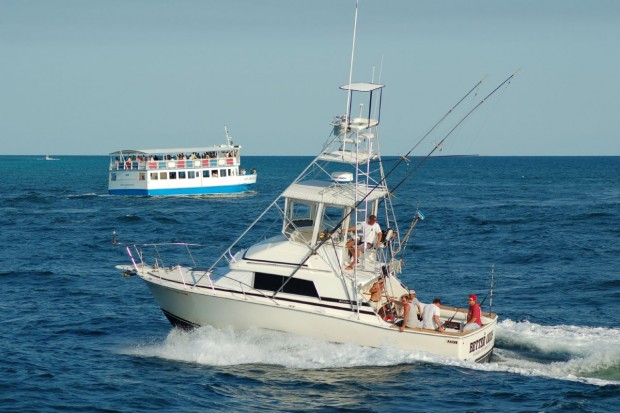
Bocas del Toro has plenty of hotels and restaurants, most of which are concentrated in and around Bocas Town. There are also dive shops, deep sea fishing charters, a number of boat cruises and tours, bike and moped rentals, and various land and sea excursions…everything you’d expect to find in a Caribbean beach town.
On the other hand, many of these same operations are just beginning to appear in Boca Chica. You can enjoy most of these same activities there. You just might have a harder time locating a few of them (with the fishing, sailing, and other aquatic adventures being the overwhelming exception, as they’re all abundant in Boca Chica).
As mentioned, Boca Chica is poised for tremendous growth in the coming years. The potential for new tourism offerings is certainly there. It’s also another great investment option for entrepreneurs who want to open a boutique hotel or sport fishing lodge.
Round #6: Surfing
Advantage: Bocas del Toro
Both Boca Chica and Bocas del Toro have beautiful beaches that are perfect for swimming or sunning, including long stretches of secluded beaches where you can find yourself totally alone.
However, if hitting the surf is the excitement you crave, you’re better off in Bocas del Toro.
Some of the best spots include Bluff Beach, which has large enough waves even for advanced surfers; Carenero Point, which has the islands’ longest left break and perfect tubes when the conditions are right; and Isla Batimentos, which is home to the popular Wizard Beach and Red Frog surf spots.
There’s good surfing to be found near Boca Chica, but getting there will require a little longer drive or boat ride than in Bocas del Toro.
Round #7: Snorkeling
Advantage: Bocas del Toro
The same goes for snorkeling. There are a few private beaches in Boca Chica where you can enjoy a day of snorkeling. You can also take a 45 minute boat ride to the waters around the nearby Islas Secas, or a longer 2 to 3 hour trip to Coiba National Park, one of the largest marine parks in the world.
The options in Bocas del Toro are much more prevalent. One of the best places is Bahia de Almirante in Admiral Bay, with its protected coral reefs, clear waters, and few waves. In and around Bocas del Toro you can see reefs, kelp forests, shipwrecks, caves, over two dozen types of coral, and hundreds of species of fish.
Another popular spot is Hospital Point. It’s only five minutes away by boat, making it easily accessible and a great way to get in a little exploring without taking up too much of your day. You can rent equipment for as little as $12 per day and hire one of many locals along the wharf to drop you off and pick you up for around $3.

Chuck Holton
Round #8: Diving
Verdict: Boca Chica Wins
Bocas del Toro has a number of good options for scuba diving, often the same spots you would go for snorkeling as some of the reefs go down as deep as 60 feet. However, the waters around Boca Chica offer some of the world’s best dives, according to National Geographic.
Islas Ladrones, which lies 27 miles due south, is teeming with schools of jack, snapper, and barracuda. There are also smaller species like surgeonfish, parrotfish, triggerfish, angelfish, and more that can be seen year round. You can also spot several species of shark and, at certain times of the year, giant manta rays and humpback whales. Visibility near the island is 30-80 meters.
Slightly farther away, along Isla de Coiba, you can also explore a 330,000-acre reef which contains 60 of the world’s 75+ species of hard and soft coral. In these protected waters you’ll also find mullet, stingray, puffers, moray eels, and gentle sea turtles.
CMC corkle 2005
Round #9: Fishing
Winner: Boca Chica Hands-Down
As you could guess based on the abundance of species represented in Boca Chica, the fishing in its waters is second to none. Fishing lodges make up a big majority of the tourist accommodations in the area, and we’ve lost count of the number of world record catches that were landed in and around Boca Chica.
Much of these whoppers were reeled in near Hannibal Bank, a world-famous fishing hotspot where the ocean floor rises sharply from thousands of feet deep to a mere 120 feet. This underwater cliff is home to the merging of schools of inshore fish with the offshore species who feed on them. Marlin in excess of 1,000 pounds and tuna over 300 pounds have been caught in these waters, as well as snapper, amberjack, and snook.
These and other species can also be caught in Bocas del Toro. The best fishing is a bit more seasonal there and, while still world-class, it isn’t even in the same ballpark as Hannibal Bank.
Round #10: Land Exploration
Verdict: Boca Chica Takes the Round
Being composed at least partially of islands, both Bocas del Toro and Boca Chica have plenty of options for exploring. Each island offers its own varied topography and environment. You can find hundreds of different species of monkeys, reptiles, birds, and plants, many still unidentified.
We’re giving this round to Boca Chica based mainly on the fact that its islands and jungles have a much more otherworldly appeal to them. A number of its islands are completely covered in untouched rainforests, with an abundance of old growth trees so ancient-looking that you would almost bet they pre-date the great flood.
One such is Boca Chica Island, the location of our latest Adventure Colony. To help maintain the island’s prehistoric feel we’ve created Monte Vida Park, a 50-acre crowd funded preserve dedicated to protecting the surrounding rainforests and in turn adding value to property on the island.
Because of Boca Chica’s incredible investment potential, as well as its stunning natural environment, it was a natural choice when we were looking for a spot to establish a place where like-minded people could take advantage of all the area has to offer.


Rainer Wiege
Considering a trip to Central America this summer but concerned about the so-called rainy season? The rainier months of May to October are in many ways the best months to see the country. Here is why.
There Are Still Sunny Days
Traveling during the rainy season in Central America does not mean you miss out on sunny beach time. Mornings and early afternoons are usually sunny and beautiful with showers in the afternoon or evening. The rain can actually be a welcome reprieve from the heat of the sun, cooling everything off. September and October are the rainiest months of the year, but May through August offer plenty of sunny days.
Everything Is Greener
One of the best reasons to travel to Central America is to experience the stunning forests and flowers. During the dry season there is little to no rainfall on the Pacific Coast. Consequently the jungle becomes dry and the land becomes arid making everything dusty and brown. Dust can become a serious problem causing many locals to wear masks when driving down or cycling on the road. The rainy season is locally called “the green season” because it is when the jungle becomes the most lush and beautiful. With afternoon or overnight showers in the green season, the entire landscape comes to life. The habitat flourishes which makes wildlife more abundant and easier
Less Crowds
Possibly the best reason to travel to Central America in the rainy season is because there are so many less tourists. Laying on the beach, hiking up a volcano, swimming in hot springs, and spotting animals in the jungle is much more enjoyable without crowds of people. Peak season runs between December and April, so the rest of the year it’s not uncommon to find your own private stretch of beach.

MD Verde
Less Expensive
Green season also means slow season which means great deals! Hotels, housing rentals, and flights are at significantly discounted prices, often cut in half, during this time which boosts your budget for adventure tours. A trip that you may not be able to afford in the winter may be below your budget in the summer.
Rushing Waterfalls and Rapids
Swimming in waterfalls and white water rafting are big tourist draws in Central America. Pacuare, Costa Rica in particular is a worldwide rafting destination and during the rainy season the higher water levels offer faster, more thrilling rafting. With more rainfall the waterfalls also become more dramatic and rushing.

Mike Beard
Easier to Connect with Locals
If you are considering relocating to Central America, the rainy season is a great time to come visit. It’s often much easier to befriend and gain insight from locals and expats during this time because there are significantly less tourists. Restaurants and cafes are quiet and usually frequented by residents or long-term travelers.
Whale Watching and Turtle Nesting
Humpback whales migrate up the Pacific coast in Costa Rica beginning in August which is an incredible time to take a whale-watching tour. This time of year is also when the leatherback turtles on the Caribbean coast begin to hatch which brings tourists from all over the world to witness the incredible event. You can even volunteer to help the baby turtles make their journey into the ocean.
Prime Surfing
Epic surf put Costa Rica on the map for tourism, and rainy season lends some of the best swells all year. While the Northern Nicoya Peninsula and the South Caribbean coast experience their best surfing conditions between December and March, the Central and Southern Pacific peaks from May until November. With less tourists you will also have less competition for catching world-famous Costa Rican waves. Check out Dominical and Pavones for world-class surfing during the rainy season and little to no crowds.
There are plenty of reasons to come to Central America in the rainy season, but if you really do not want to risk the rain, consider heading to the Caribbean coast which tends to be driest and sunniest in August and September with calm seas for snorkeling. No matter the time of year there is somewhere beautiful to enjoy in Central America.


Alex E. Proimos
The nation of Panama has touted itself as “The Way.” The way to adventure, the way to realizing your dreams, the way to a dream vacation, or the way to whatever it is you may be looking for.
And it’s true.
Every year thousands of expats are finding exactly what they’re seeking in Panama. Whether it’s an opportunity to start their own business, the ability to experience new adventures with their family, or just a quiet place to settle down and enjoy the fruits of their labors.
So, what is the secret to Panama’s appeal? There are actually too many to name. But here are just a few facts about Panama and why expats continue to pick it as their destination of choice.
1. Panama has unmatched natural beauty and biodiversity.

Christoffer Undisclosed
Almost half of Panama’s land mass consists of rainforests, mountain cloud forests, and mangrove wetlands. And they’re all teeming with an abundance of flora and fauna. Not to mention all the aquatic species in the surrounding seas and coral reefs.
Much of the country’s biodiversity is due to its strategic position as a “biological corridor” connecting the Americas. Its Darien province, which is almost impenetrable and lacks much infrastructure, is considered by some as one of the most biodiverse areas in the entire world.
It’s home to jaguars, harpy eagles, American crocodiles, giant anteaters, and more. Among the country’s other species are over 10,000 types of plants (including 1,200 varieties of orchids and 1,500 types of trees) and over 250 types of mammals, several of which can be found nowhere else in the world.
2. Turtles and whales and birds…Oh, my!
Of all the animals to see in Panama, few are as prevalent and as fascinating as these. Five of the eight species of sea turtles in the entire world swim ashore to nest on Panama’s beaches. Several national parks encompass havens for these turtles that swim in by the thousands to lay their eggs in the sand.
Panama is also home to a whopping 972 species of birds, more than the U.S. and Canada combined. You can observe them in the mountains or in the mangroves. One of the best places is in Baru Volcano National Park, where you can spot the Resplendent Quetzal along with many other species.
Every year from June to November, humpback and sperm whales migrate to Panama’s Pacific Coast to mate. The sight of them leaping out of the water in areas like Coiba, the Gulf of Chiriqui, and the Pearl Islands is quite a sight to behold.
3. Finding the right climate in Panama is almost as easy as adjusting your thermostat.
In general, Panama has a warm, tropical climate with very little seasonal variation. Coastal areas are much more hot and humid, and the mountain towns are more temperate with less rainfall. The year is essentially divided into a rainy season (roughly April to December, give or take a month or two depending on location) and a much drier rest of the year.
Finding the right climate for you basically involves testing out spots on a sliding scale from Caribbean to Pacific and from lower to higher elevations. The Pacific coast is a bit cooler and drier, with a nice evening breeze. The Caribbean side, by contrast, gets significantly more rainfall and is a few degrees warmer.
Likewise, you can also adjust your temperature and humidity by moving further up into the mountains. It gets cooler and cooler (maybe even too cool for some), with areas like the Cordillera de Talamanca in western Panama even seeing a little bit of frost.
With such great weather year-round, Panama’s residents can enjoy its beauty and opportunities for adventure in every season! In other great news, while parts of Panama do see the occasional strong thunderstorm, it’s outside the hurricane belt.
4. Panama is an ocean lover’s paradise.

Diesel Demon
Panama is a narrow isthmus that connects Costa Rica in Central America with Colombia in South America. It’s lined by miles and miles of coastline on both the Pacific Ocean and Caribbean Sea. Its coastal ecosystems consist of gorgeous beaches, rocky cliffs, mangrove forests, and coral reefs.
As a result, Panama’s coasts offer opportunities for every water sport and activity imaginable. Coiba National Park contains the longest reef on Central America’s Pacific coast. Both it and Chiriqui Gulf National Marine Park are great places to go diving or snorkeling or watch whales and dolphins.
The name “Panama,” in the Indian language, means “abundance of fish.” It’s a great place for sport fishing, as a number of world record fish were caught of its shores. Surfing is also popular in Panama, particularly in world-famous Santa Catalina. Other available water sports include paddle boarding, kayaking, and kite surfing.
5. Panama’s fun doesn’t stop at the shore.
Panama’s interior offers a wealth of other options for adventure. Many hiking trails wind through the country’s jungles and rainforests, including several that run through Metropolitan Natural Park in Panama City, the only protected forest in Central America that’s located within the city limits.
A hike to the summit of Volcan Baru, the country’s highest point, affords visitors the opportunity to simultaneously take in views of both the Atlantic and Pacific Oceans. The most intrepid adventurers often start this hike at midnight in order to reach the peak by sunrise.
Not far from Volcan Baru, also in the Chiriqui province, is the mountain town of Boquete which offers some of the world’s best zip lining tours through the canopy of the cloud forest. The area also has some first-rate places for kayaking and whitewater rafting, with rapids ranging from Class III to Class V, depending on the season.
6. Panama’s capital city is truly cosmopolitan.

Jasperdo
Much of Panama enjoys great infrastructure for a developing country. In Panama City, it’s top-notch. There’s world-class shopping, fine dining, museums, modern medical facilities, and much more. And recent urban development has attracted even more residents to this thriving hub.
But it’s not all concrete and skyscrapers. As mentioned, Panama City has a 655-acre rain forest within its limits. There you can find a variety of birds and mammals, including toucans, parrots, and sloths.
There’s also a coastal strip with lots of green space that leads to the Old Town, Casco Viejo. This area, a UNESCO World Heritage site, is a unique blend of ancient and modern. With its boutique hotels, located in historic buildings, and open-air cafes it’s an eclectic mix of people and cultures.
7. Panama is a unique and diverse blend of people and customs.
Speaking of culture, Panama is a great place to go if you want to experience the real, authentic customs and traditions of a nation’s people. Panama is still home to 7 different indigenous tribes, although they represent only 6% of the country’s total population. They live in groups called comarcas, which are self-contained sovereignties, with many being very welcoming to visitors who want to observe how they live.
Among the cultural heritage of these ethnic groups are indigenous dances, like the tamborito and congo. They also produce a variety of handmade arts and crafts. These include molas (patchwork pictures that can be sewn to garments or used as pillow covers or wall hangings), jute bags, wood carvings, beaded jewelry, and woven baskets. (However, one of the most commonly mistaken facts about Panama is the origin of the Panama hat. It actually hails from Ecuador.)
Locals also celebrate a number of festivals, most notably Carnival which takes place four days before Ash Wednesday. Towns elect two queens to represent separate sections of the city. For five nights, the queens and their troupes entertain the crowds with parades, dancing, and fireworks.
8. The Panama Canal is an amazing piece of living history.
The largest contributor (directly and indirectly) to the nation’s GDP, the Panama Canal is such an integral part of the story of the country’s progress. And it’s currently undergoing a massive expansion.
The 90-year old waterway, which is already operating at almost 100% of its ability, will have doubled its capacity by the time its over $5 billion expansion project is completed in 2015. A new Observation Center gives visitors the opportunity to watch the construction, as well as take in views of Gatun Lake. Also available are full and partial tours through the canal, where visitors can experience the journey for themselves.
9. Panama enjoys a pleasantly low cost of living.
While it’s true that the cost of living is low throughout most of Latin America, it’s difficult to find a much better bang for your buck than in Panama. Costs vary, of course, from one area to the next (with larger cities requiring much more money to live on than more rural areas).
However, it’s within reason that a couple could enjoy a nice standard of living for $1,500 or less, including rent, in most parts of Panama. And that includes such luxuries as the services of a maid and gardener.
Other services that are quite reasonable in Panama include reliable high-speed internet, public transportation, and excellent health care.
10. Panama is an excellent place to invest or do business.
Not only is Panama a great place to visit or live, it’s very friendly to investors or those who want to open a business, particularly in the tourism industry. Its tax laws are favorable, and setting up a Panamanian corporation is relatively simple.
The government has also recently signed into legislation a number of incentives that make it even more attractive to invest in Panama.
Whether you want to start up an outfit that offers ATV jungle tours, or you just want to buy a piece of land and build your own little piece of island paradise, Panama is a great place to make that happen.
Bonus Facts About Panama…#11. Panama is home to two Adventure Colonies.
I know what you’re thinking. What’s an Adventure Colony, right?
Adventure Colonies are our one-of-a-kind developments that are specially tailored towards would-be expats like you who share our love for the natural environment and a life lived a bit more simply. After reading these facts about Panama, I’m sure you can see why we chose it for our first two projects.
Playa Burica is located on Panama’s Pacific coast on a peninsula the country shares with Costa Rica. Its oceanside lots are covered with untouched jungle, making it great for adventure lovers. It’s also a savvy investment choice, as several factors make the area prime for a boom in the coming years.
Our newest development, Boca Chica Island, is a 400 acre private island covered in jungle and rainforest. It lies 10 minutes off of Panama’s Pacific coast and is surrounded by about 50 other mostly uninhabited islands. We think Robinson Crusoe would approve.
If your idea of a dream destination abroad involves something more–or in this case, less–than a string of high-rise condos and all-inclusive resorts, then maybe an Adventure Colony could be right for you.
Map of Panama
Panama Fast Facts
- Population: 3.8 million
- Typical temperature: Temperature typically varies from 72°F to 91°F
- Nearest airport with U.S. flights: U.S. Bound flights leave daily from Tocumen International Airport
- Nearest U.S. consulate: Panama City


Net Efeckt
Could the North American lifestyle be sending you to an early grave? It sounds a bit dramatic, but the truth is that factors like stress, a poor diet, overstimulation, a sedentary lifestyle, and not spending enough time outdoors (all of which are rampant in North American culture) have been proven time and time again to have devastating effects on your health.
For that matter, so have some other surprising contributors like sitting behind a desk all day and using too much hand sanitizer. Study after study has shown that these kinds of practices can actually take years off your life.
The good news is it is entirely possible to reduce, and in some cases even reverse, the harmful side effects of a lot of these lifestyle choices. In fact, there’s just as much research out there that shows how living an active life, free of modern distractions and full of meaningful interaction with nature, can improve your health and wellbeing.
Here are 10 easy steps you can take today to help you begin living a happier, healthier, and more vibrant life.

Sarah444
1. Turn off your electronics.
In a recent study of employees at the Boston Consulting group, led by a Harvard Business School professor, 26% of those surveyed say they sleep with their smartphones within reach. A majority of that same group (51%) check email while they’re on vacation. North Americans just can’t seem to let go of their devices.
And their kids are picking up on the same behaviors their parents are modeling. In a 2010 study by the Kaiser Foundation, North American teens spent 7.5 hrs per day texting, using social media apps, and streaming videos.
This constant overstimulation leads to problems with concentration and difficulties recharging our brains. In one Chinese study, overstimulated subjects showed signs of atrophy of the connective tissue in areas of the brain responsible for behavior and emotions.
By contrast, however, powering down your devices can allow your brain to recover and refuel, increasing your creativity, attention span, and cognitive function. Learning to unplug will take some getting used to, but the benefits will be well worth it.
2. Get off the couch.
Many North Americans spend their days working at sedentary jobs and then come home only to resume equally sedentary activities, like watching TV and sitting around talking. Even for those who do exercise, even say 30 minutes 5 times a week, that’s still a lot more sitting than moving, an average of 15.5 hours per day.
The problem with this is that when you’re sitting you’re using very few muscles, especially big ones like those in your legs and back. As a result, your metabolism slows down. Those who sit a lot often have unhealthy levels of cholesterol, blood sugar, triglycerides, and waist size…all which increase the risk for diabetes, heart disease, and other serious health problems.
In addition to the cardiovascular and other physical benefits associated with exercise, physical activity has also been shown to help people relax and improve their mood. And we’re not just talking hard-core weight lifting here. And any and all kinds of activities are beneficial. Even things like gardening or working around the house are great ways to keep your body in motion.
Recent studies at England’s University of Essex have also shown that exercising in nature, otherwise known as “green exercise,” offers even more benefits for your mental health. Not to mention the fact that those who spend time outdoors are approximately twice as likely to be active than those who spend almost all of their time indoors. So, forget heading to the gym to get your heart rate up. Just head to the back yard or the park and let it happen naturally.
3. Go outside.
As we mentioned, today’s North American lifestyle involves an unprecedented amount of time spent indoors. Even for those who do have an interest in nature, there’s still the temptation to read about it online or simply kick back in the recliner and watch the Discovery Channel.
However, none of these offer the same positive benefits as actually BEING in nature, which studies have shown to have a positive effect on both attention and memory.
Nature has an uncanny way of capturing our awareness, giving us a break from artificial attractions that constantly vie for our attention. Just merely looking at nature, not even actively participating in it, heightens activity in the anterior cingulate gyrus (responsible for emotional stability) and the basal ganglia (which helps recall happy memories), per a study at South Korea’s Chonnam National University.
Studies also show that the benefits increase with prolonged exposure to nature. Even 5 minutes outside can produce some positive effects. However, one study showed that participants improved their cognitive performance by 20% following a 3-hour hike. Those who spent 4 days in nature upped their scores by 50%.
4. Soak up the sun.
Most North Americans have less than optimal levels of Vitamin D, among a number of other nutrient deficiencies. Just another result of our underutilization of the great outdoors, this situation can be rectified by a mere 5 to 30 minutes of UV exposure per day, according to a University of Wyoming study.
The benefits of adequate amounts of Vitamin D? Better defense against conditions ranging from cancer to osteoporosis to depression to heart attacks and stroke. In addition, the right amount of exposure to natural light helps the pineal gland regulate its output of melatonin, the hormone responsible for sleep. So getting plenty of sunshine may actually help fall asleep faster and stay asleep longer.
On the flip side, too much artificial light at night can have the opposite effect on our internal clock. For instance, staring at a backlit screen before going to bed can decrease melatonin production and disrupt sleep.
Note: Of course, care should always be used to protect your skin from the harmful effects of the sun. Using sunscreen can block UVB rays, but unfortunately those are the same ones that provide beneficial Vitamin D. Professionals are split on this issue, but in general it seems that a limited amount of unprotected exposure can be beneficial, while too much can certainly have serious consequences.
5. Just add water.
Not only are many North Americans lacking in their exposure to the great outdoors. Many are also missing out on another important benefit of nature: water. A study by the University of Exeter Medicine School found that being near water improved subjects’ moods to an even greater degree than merely being in just any old natural setting.
In a separate study, they also showed that good health seems to be more prevalent the closer you live to the coast. Living near the seaside has been proven to reduce stress, and it also seems to encourage physical activity, a known stress reducer.
Researchers at Columbia University also identified the fact that negative ions–which are in high concentration near moving water such as waterfalls, breaking waves, and river rapids–actually act as natural antidepressants. A study by Indoor Air saw its participants improve their energy levels by 33% after breathing negative ions for an hour.
6. Play with your kids.
As North Americans are living increasingly inactive lifestyles, perhaps no one is suffering the consequences as much as their children. Most young people spend more than 7 hours a day in front of an electronic screen and less than 30 minutes in unstructured outdoor play.
As a result, childhood obesity rates have doubled in the past 20 years. Pediatric antidepressant prescriptions have skyrocketed. And the U.S. is the world’s largest consumer of ADHD medications. As kids are missing out on the essential connection with nature, they’re becoming out of shape, unfocused, and mentally stressed.
Playing outside builds active, healthy bodies and prevents a number of future health issues. It also raises vitamin D levels and improves distance vision, lowering the chance of nearsightedness. It has also been shown to improve concentration and critical thinking skills and has been linked to a reduction of ADHD symptoms.
Being in nature also causes children’s stress levels to fall almost immediately. It also reduces the anxiety associated with a hurried lifestyle. So, do the whole family a favor and stay outside and play until the sun goes down.
7. Get your hands dirty.
This may sound counterintuitive, but many North Americans have become too clean for their own good. Known as the “hygiene hypothesis,” this problem has arisen as humans have decreased their exposure to helpful microbes, like gut flora, probiotics, parasites, and good bacteria.
Without these usual suspects for our immune systems to fight, they’re instead forced to attack harmless substances like pollen and pet dander. In essence, our overuse of bleach, anti-bacterial sprays, and hand sanitizers has left us in a sterile environment where we’re more susceptible to allergies, asthma, and other serious conditions.
A new study in Finland showed that the skin of young people who lived near forests and farms had a different composition of microbes than that of their counterparts who lived in more urban areas. The rural kids also had healthier immune systems and a significantly lower occurrence of allergies.
The solution? Get outside. Let your kids play in the dirt, and maybe even eat a little of it.
The good news is that a few recent studies, conducted on laboratory animals, have shown that by reintroducing bacteria you can actually reset your immune system and its capacity for certain allergens.
8. Eat fresh fruits.
Many North Americans fail to eat their recommended daily amount of fruit. And often what they do get is genetically modified or doused in harmful pesticides or other chemicals, rendering them almost a net zero in terms of nutritional value.
A few fruits that you can introduce into your diet for an immediate boost in nutrients are coconuts, avocados, and mangos. The increasingly popular coconut water has a wealth of health benefits. It also makes a great sports drink, since it’s lower in sodium and sugar and higher in potassium than most commercial brands. The coconut’s flesh and oil are also good for you.
Avocados pack a double punch when it comes to nutritional value. Not only do they lower cholesterol and provide folic acid, which can prevent cancer and birth defects, they also help you absorb the nutrients of other vegetables that you eat alongside them. So, add a few slices to your salad for an added benefit.
Eating one mango gives you half your daily recommended allowance of Vitamins A and C, as well as Omega-3 fatty acids, beta-carotene, some B-Vitamins, and more. These and other fresh fruits should be important staples in your daily diet.
9. Don’t forget about your brain.
Mental deterioration is just as much, if not more of, a problem in North America as physical atrophy. In fact, the U.S. currently ranks 3rd in the world for Alzheimer’s deaths, up 68% over the past decade.
Some contributors to this trend include lifestyle factors, like some of those we’ve already mentioned, but a lack of mental stimulation can also be to blame.
Want to know one easy way to improve your mental ability while also broadening your horizons? Learn a foreign language.
Becoming bilingual has been proven to delay Alzheimer’s disease in at-risk individuals by as much as five years. That’s a higher success rate than any Alzheimer’s drug currently on the market.
Speaking multiple languages also improves listening skills, focus, and one’s ability to adapt. The benefit to your kids will also be a positive one, as children raised in bilingual environments have stronger working memories and are better at mental calculation, reading, and many other skills.
10. Allow for plenty of down time.
Overworked and highly stressed North Americans aren’t exactly famous for knowing how to slow down and take it easy. But doing so is essential to optimal health and wellness.
Studies have shown that those who spend the most time enjoying leisure activities report the most positive emotions and the lowest occurrence of depression. Other benefits include lower blood pressure, lower stress hormones, and smaller waist sizes.
Even the good old fashioned nap has its place in a healthy, active lifestyle. According to the National Sleep Foundation, a 20-30 minute nap can do wonders for your physical and mental stamina. It can help restore alertness, enhance performance, and reduce mistakes and accidents.

Viva Tropical
These Principles Are the Driving Force Behind Our Adventure Colonies.
Because we truly believe that these are essential strategies for living a healthy, well-balanced life, we make every effort to put them into practice in our own lives. However, we saw firsthand how hard it was to do that living in the North American culture.
Yeah, you can get exercise at the gym, and you can make the six hour drive to take your family to the beach every now and then. But what we were looking for was a scenario where all of these ten lifestyle choices just came a bit more naturally.
That’s what’s so great about our Adventure Colony concept. Adventure Colonies are the ideal setting for those of us who want a place where we can unplug, recharge, and live our lives more in tune with the way nature and our bodies intended us to.
If these healthy choices sound like the much-needed change you’re looking for, learn more about how you can live the Adventure Colony lifestyle. Download our free informative ebook today and see how you can reset your routine and experience a whole new way of living.

Stephanie Sykora
There are a lot of options for what your life as an expat in the Latin tropics could look like. Maybe you envision yourself growing fresh fruits and veggies in the back yard of your garden home situated in a gated community full of other expats.
Or maybe your dream involves watching monkeys swing overhead as you lie in a hammock on the porch of your private cabana on a sparsely populated island.
No matter what your setting, you’re eventually going to find yourself in need of some equipment to handle basic tasks around the house.
And whether it’s chopping down an orange tree in your yard or blazing a trail through the jungle in an attempt to find undiscovered Aztec ruins, a good machete is all you need for the job.
Don’t Try to Overcompensate with Fancy Gadgets
When people aren’t familiar with how to live and function in tropical surroundings, they often try to make up for their lack of experience by wielding really complicated or scary-looking contraptions. These might range from a Swiss Army-type gadget with 17 accessories, including a corkscrew and a toothpick, all the way to a large rigid-blade knife with sharp saw-teeth. And those both certainly have their appropriate uses.
But when it comes to Central American adventure and exploration, there’s no better choice than the simple, inexpensive, multi-function machete. Its design allows it to be used for numerous purposes, making it an appropriate substitute for probably a dozen of the knives and saws you have hanging in your garage right now.
Anyone who’s spent some time in the area will tell you how useful these things are. Their long, thin blade allows them to cut easily through brush and undergrowth. They can also be used to swiftly split open a coconut or chop up some wood for a fire pit. Due to their sword-like design, they can also be used as a weapon in the unlikely case of an unexpected encounter with the wrong kind of critter.
Sound pretty tough? You betcha. It should come as no surprise that the word “machete” is a form of the word “macho.”
The locals are certainly well aware of the machete’s value. They never seem to leave home without one. They’re as ubiquitous in Central America as tattoos are among hipsters.
So, since you’re likely going to have to use one at some point or another during your time in Latin America, you’d better know what you’re doing. It’s all in the technique.
Step One: Get a Grip.

Sustainable Harvest International
This first step is by far the most important. If you don’t hold the machete properly your efforts will be less effective. Plus you’re likely to get blisters and tire out sooner. With the wrong grip, you also run the risk of losing a toe or, even worse, a traveling companion.
Start by wrapping your thumb and forefinger (pointer) around opposite sides of the handle and pinching them together tightly, as if you were making the “OK” sign. Then just let your other three fingers wrap loosely around the base of the handle.
The handle should be able to wiggle around in your hand a small amount, so don’t put a death grip on it (a common beginner mistake). If you’re concerned it might slip out of your hand, especially given the heat and humidity throughout much of Central America, you can wear a glove or even attach the handle to your wrist by slipping a lanyard through the hole in the base (Think Wii controller.).
Step Two: Use Proper Form.
Don’t let the machete’s thin, rudimentary construction fool you. It’s a powerful tool when used correctly. This is largely due to the fact that using a machete does not require the strength of your wrist or even your shoulders.
When you swing a machete, you rely on the momentum of your core.
You do this by dropping your shoulder and allowing your core to whip your arm and the machete around for maximum thrust. As your arm comes around, let your elbow lead. Your wrist should hang back until the last second when you’ll give it a flick just before you make contact.
If it helps, pretend you’re trying to skip rocks across a body of water. Then put your whole body into it. Using proper form will save you a lot of wasted energy and also prevent unnecessary strain on your wrist.
Step Three: It’s All About the Angle.
Nothing says “gringo” like a guy trying to hack perpendicularly through a log or fallen tree. If you do that, several things are going to happen. 1.) You’re going to be there all day. 2.) Your machete is going to get stuck, probably a number of times, and 3.) Any locals or seasoned expats nearby will probably start laughing. Hopefully to themselves.
Instead of a perpendicular approach, use at least a 45 degree angle. And adjust your method to whatever it is that you’re cutting. If you’re slashing through vegetation like grasses or vines, use swift strokes with an upward flick. For thicker or woodier stuff, slash downward.
To tackle tougher, thicker tasks (like branches or small trees), cut a V-shaped notch alternating upward and downward strokes. Keep chopping slivers off each side, widening the notch until you get through the entire trunk.
Safety Tips: Because Common Sense Isn’t All that Common
Machete’s can be just as dangerous as they are useful, especially if your inexperience causes you to overlook any important precautions. Here are a few general tips to protect you and your fellow explorers from harm.
Some of these probably go without saying, but we’re going to say them anyway.
-
Always make sure the area within range of your swing is clear of anything or anybody that could either be injured or damaged by the machete, or that might deflect the blade.
-
When clearing trails, make sure to cut far enough away from your body that you don’t endanger your own legs and feet.
-
If you get tired, take a break. Fatigue can lead to accidents and injuries. You can also switch to your weaker arm, but only if you’re reasonably coordinated with it.
-
Always have a well-stocked first aid kit handy.
So, while machetes may not look like much alongside some of those widely marketed North American knives with all the bells and whistles, in the right hands they can be far more effective and versatile. Pick one up and start practicing. Then when you grab one to start chopping down that orange tree, you’ll look like you’ve been doing it all your life.

Everything you need to know that happened in the last 2 months in Panama.
Each day we sift through hundreds of articles in English & Spanish to bring you the very best ones from Central America. From investment indicators to new infrastructure projects. Adventure stories to politics. It’s all here.
Panama February 2014.

Viva Tropical
Panama Lifestyle
Panama named best place in the world to retire (NY Daily News)
The folks over at AARP, the New York Daily News and USA Today have been pointing south to Panama as the world’s top choice for where to think about retiring overseas.
Top 10 Reasons to Live, Work and Retire in Panama (Newswire)
But if you need more than one reason to take the plunge and move overseas, here are 10 Reasons to Live, Work and Retire in Panama.
Panama: A Real Estate Alternative to Costa Rica (Costa Rica Star)
If 10 reasons were not enough, did you know that Panama has over taken Costa Rica as a top retirement destination?

Dssasso
Panama Investment
Panama – the Latin American business hub? (Global Legal Post)
Panama is fast emerging as a business hub in Latin America with many incentives for companies to set up in the region.
Panama seeks to be international arbitration center (Panama America translated by Google)
Recently, Panama approved a law to regulate domestic and international arbitration. This will allow Panama to position itself as an international arbitration center. Just one more example of how Panama is positing itself as a desired home for global businesses.
Investment in Oil in Puerto Armuelles, Panama (AB Panama)
Once home to the Chiquita Banana Company, and a bustling economic center, the now sleepy port town of Puerto Armuelles (Chiriqui Provence) is being courted by Qatar as the spot for a possible oil refinery in Panama.
Deadline to resolve Panama Canal expansion receives extension to Feb. 1 (Tico Times)
Finally there is the on-again, off-again, Panama Canal Expansion which is facing major budget overruns. For now, work on expanding the Panama Canal will continue after the construction consortium officially extended the deadline until Feb. 1 to resolve a dispute over $1.6 billion in cost overruns.

Royal Caribbean
Panama Tourism
Celebrating 100 years on the Panama Canal (Travel Weekly)
There is going to be a big party in Panama this year, and you should make plans to attend the 100th anniversary of the Panama Canal.
Practically every cruise line has one trip scheduled through the 48-mile Panama Canal, which is a bucket-list item for many cruisers, especially Americans.
Copa Airlines to offer service from Fort Lauderdale to Panama (Miami Herald)
Getting to Panama is about to get even easier. Copa Airlines is to begin service between Fort Lauderdale and Panama City, Panama, in July 2014. Flights will depart Fort Lauderdale on Mondays, Wednesdays, Fridays and Saturdays.
Airlines Include Panama in Plans (La Prensa – Translated by Google)
If Copa connections were not enough, even more airlines are coming to Panama. TAP, BlueSky and Aeromexico are all negotiating flight connections from Portugal, Grand Cayman, and Mexico City to Panama’s Tocumen International Airport.
Tourism manager wants to cap Panama dengue reports (Today Panama)
But the tourism sector has been a casualty to the epidemic of dengue in Panama, as several large-scale package tours that were bound for Panama have been cancelled.
Tourist arrivals exceeds the expected target in 2013 (Panama America Translated by Google)
Even with these cancellations, Panama’s 2013 tourism statistics speak for themselves. In 2013, 2.27 million visitors came to Panama, stayed an average of 9.3 days and spent $168 per day.

Noel Maurer
Panama Economy
Panama’s Economy Will Grow Over 5 Percent In 2014, Making It The Fastest Growing Economy In Latin America (International Business Times)
Panama’s economy is expected to grow over 5% in 2014, making Panama the fastest growing economy in Latin America.
What’s pushing this economic powerhouse along?
First, the Panama Canal is knee-deep in a $3.2 billion expansion, even with the Canal’s budget hiccups and pushed back budget deadlines, it is going full steam ahead.
PANAMA GDP ANNUAL GROWTH RATE (Trading Economics)
Second, Panama saw its GDP rise 5.57%, and is expected to repeat the performance in 2014, according to Trading Economics. But the International Monetary Fund is even more optimistic, calculating Panama’s GDP growth at 6.9%, the highest in the whole of Latin America.
Like this country brief? Get it in your inbox weekly for free.
Be sure to catch the weekly country briefs by subscribing via email right here:

Boca Chica Panama from Seagull Cove Lodge – Photo by Viva Tropical
There aren’t many places in Central America, or anywhere for that matter, where you can truly have it all. Pristine natural beauty, access to modern conveniences, solitude, and adventure lurking around every corner.
These are all things that top most expats’ wish lists of characteristics they want in a home in the tropics, but unfortunately they aren’t often found wrapped up together in one neat little package.
I’ve found just such a place in Boca Chica, Panama.
What’s even less common is finding a place that offers all of these features at a great value and–as a really sweet bonus–unbelievable investment potential.
Unless, like me, you’re one of the first on the scene.
Even rarer is having the opportunity to invest in this same beautiful bargain property and watching its value increase soon after its purchase due to no effort on your part.
That’s happening in Boca Chica.

Boca Chica Panama Boat Launch – Photo by Viva Tropical
And it’s not just because it’s a quaint little fishing village that tourists and expats are just beginning to catch wind of, although it is. A lot of tropical hotspots get their start that way, and that’s great.
But Boca Chica is different. Not only is it a place with aesthetic appeal to please your senses, it also offers a serene natural environment with plenty of opportunities for active living that can actually help you improve your health and wellbeing. And, seeing as how this beautiful landscape is less than an hour away from an airport that’s about to receive international flights from the U.S. for the first time, its potential return on investment could have you smiling all the way to the bank.
****Disclaimer: This is NOT just some rumored up-and-coming hotspot whose bandwagon I’ve decided to hop on.****
If you’re thinking that it sounds like I’m incredibly optimistic about both the lifestyle and the Panama Real Estate investment potential offered by Boca Chica…well, then you’d be right. However, what you should also know is that these opinions are not ones at which I arrived hastily.
I’m not quick to jump on the bandwagon of some these “undiscovered gems” that are sure to be the next big thing in tropical real estate. By contrast, when my business partner and I were looking for a place to serve as the location for our newest development, we drove the entire Pacific Coast from Nicaragua all the way down through Ecuador, excluding Colombia.
Boca Chica was the place that stood out from the rest.
Not only for its amazing landscapes and the incredible lifestyle it offers. But, due to several factors I’ll discuss later, it hits an out-of-the-park home run in terms of investment potential.

Tropical Modern Villa in Boca Chica – Viva Tropical
Boca Chica, Panama, is like all of your tropical fantasy settings rolled into one.

Photo From Bolanos Island – A short hop from Boca Chica
There are no words to describe the landscape of Boca Chica and its surrounding islands. But I’ll try.
Located on Panama’s Pacific Coast, the Boca Chica mainland is a relatively unknown destination that’s accessed by only one paved road. Its rolling green hills are dotted with a few eco-friendly lodges and cabanas that wind their way down to secluded inlets with private beaches.
On the horizon, in the Gulf of Chiriqui, is an archipelago that is made up of over 50 islands, many completely uninhabited, which National Geographic described as “myriad emerald isles strewn like jewels in a sapphire sea.”
I couldn’t have said it better. It’s on these islands where the real beauty of Boca Chica, Panama, is to be found.
Equally as important as their beauty is the diversity to be found on the islands near Boca Chica. On some are deserted sand beaches lined with shady palms. On others murky mangroves, with their eerie silhouettes, give way to dense jungles, teeming with species that have yet to be identified.
A few islands are almost completely covered in primary rainforests, completely untouched by human interference. You could explore for the rest of your life and never see all the amazing sights in and around Boca Chica, nor could all the memory cards you own contain the images you’d want to document.

Boca Chica Islands – Isla Gamez. Photo by Viva Tropical
It’s just the right distance from civilization.
Before you start picturing Robinson Crusoe or a delirious Tom Hanks with his volleyball, let me bring you back to reality. While these islands may have the feel of some faraway land that time forgot, they’re actually relatively close to the mainland, with some being as little as a mile or less off the coast.
Once on the mainland, not only is there the village of Boca Chica, but the bustling city of David (Panama’s third largest) can be reached in well under an hour. In David, you can buy groceries or electronics, get a massage, have your teeth cleaned, see a new release at the multi-screen movie theater, or even hop a flight to Panama City for a much more glamorous getaway.
You may not want to do any of these things. In fact, once you arrive in Boca Chica, you’re likely not going to want to leave. Ever. Just know that these amenities and more are a short distance away should you need them.
This is why Boca Chica is such a great place to enjoy a remote tropical lifestyle without sacrificing access to any modern conveniences. While you’re there you can unplug and recharge your mind and soul. But, when you get ready, it’s a quick trip into town to restock.

Phil Carter
Boca Chica offers a whole lot more than just lounging around on a deserted beach.
Because of its location and layout, the Boca Chica, Panama, area is an ocean lover’s dream. There’s so much to do on and around the many islands. It’s perfect for someone who’s looking for an active tropical lifestyle.
Island-hopping
Of course, as I mentioned, there’s island-hopping. Popular destinations are the beautiful beaches of Isla Bolanos (see video below) and Isla Gamez, as well as Punta Bejuco on the mainland. Another great place to explore is Monte Vida Park, a 50-acre crowd funded park on Boca Chica Island, whose aim is to preserve and protect the island’s rainforest.
Sport-fishing
The waters that surround the islands are brimming with aquatic life, much of it quite tasty. Nearby lies the world-famous sport-fishing destination, Hannibal Bank, home to over 50 IGFA world record catches. At this location, the ocean floor rises drastically from thousands of feet in depth to under 200 feet. These high elevations push oxygen and nutrients to the surface, attracting massive numbers of bait fish, which in turn draw large fish like black marlin and yellowfin tuna. Fishermen from all over the world travel to the Gulf of Chiriqui where they pay thousands of dollars to spend a week reeling in sailfish, swordfish, snapper, and more until they can barely move their arms. In fact, here’s a video of the 300-pound yellowfin tuna I caught just a few years ago off the coast of Boca Chica.
Scuba Diving and Snorkelling
This same underwater topography makes the area a prime spot for diving as well. As you swim among coral reefs and layers of volcanic rock, you’ll see colorful fish, sea turtles, and giant manta rays, with as much as 80 feet of visibility when conditions are right.
Some great sites are Islas Ladrones and Islas Secas. Coiba National Park is another popular dive spot, where the Smithsonian Tropical Research Institute estimates as much as half the species visible are as yet unidentified.
Surfing
Panama is also becoming a popular surfing destination and was home to the 2010 ISA World Masters Surfing Championship. A good place to find great waves in the Gulf of Chiriqui is off the coast of Moro Negrito, an island with a small surfing community. It boasts a few grass huts, a handful of instructors, and swells as much as 20 feet high.
While these spots do offer some world-class surfing, I should mention that accessing them does require either a bit of a drive or a quick boat ride. So if being able to walk straight out your back door and down to the water with your board is highest priority, there are better real estate options in other parts of the Chiriqui province.
Sailing
Boca Chica, Panama is also great for boating enthusiasts. Its waters have ideal sailing conditions, and you can rent a vessel at the Boca Chica marina or the Port of Pedregal, as well as the new Marina and Yacht Club on Isla Palenque. Other options for exploring include motor boats and even kayaks.
Boca Chica is a nature lover’s paradise.
Every single inch of Boca Chica’s land and sea is swarming with plant and animal life, a majority of which you’ve never seen before. In the rainforests, toucans and howler monkeys soar overhead. At sea, bottle-nosed dolphins swim alongside orca and sperm whales.
Study after study has proven the scientific benefits that being in nature has on your health, and there’s plenty of it to be found in Boca Chica.

Huge Rainforest on Boca Chica Island
Mangrove Forests
In that place in between, the inner mangroves serve as a source of beauty and play an incredibly crucial role in the delicate balance of the tropical environment. Their roots filter pollutants and prevent them from reaching the open sea. Their nutrient-rich water and soil sustains a variety of species, including young tropical fish that hide in the mangroves’ depths until they’re large enough to survive in the nearby reefs.
They also prevent erosion and serve as a buffer from flooding due to hurricanes. On the flip side, they also serve as reservoirs, slowly releasing their supply during Panama’s dry season.

Standup Paddle-boarding with Boca Chica Mangroves in the distance
Migratory Whales
One of the most majestic sights in and around Boca Chica is the migration of the humpback whale, which makes its annual 4,000 mile trek (the longest of any animal) from the arctic to the warm waters of the Gulf of Chiriqui, their tropical mating ground.
They’re seen often starting as early as May, but their sightings peak around October and November just before their return.
National Parks
The waters around Boca Chica are home to Chiriqui Gulf National Park and Coiba National Park, both home to a number of marine species including whales, dolphins, and turtles. While many of these can be seen throughout the gulf, they’re most prevalent within the parks’ protected waters.
Visitors to the parks can enjoy sailing, whale watching, snorkelling, fishing, and camping.
There’s even more if you’re willing to venture a short distance from Boca Chica.
As if all of that wasn’t enough, there are even more things to see and do if you’re willing to take a short drive inland from the coast of Boca Chica, Panama. The Chiriqui province is full of amazing adventures, so much so that the Panamanian government has been heavily developing it as a major tourist draw.
Whitewater Rafting
Both the Rio Chiriqui and the Chiriqui Viejo rivers are home to some of the country’s best whitewater rafting. The high elevations and frequent rainfall make it a perfect destination for enjoying year-round rapids, ranging from Class I to Class V.
Boquete
Nearby Boquete, in the Chiriqui highlands, is a popular expat destination and a great day trip from Boca Chica. Famous for its flowers and coffee plantations, it’s a beautiful place to spend some time.
Canopy Tours
Another popular attraction is zip lining or canopy tours through the cloud forests of Chiriqui. It’s a great adrenaline rush, and it’s also one of the best ways to see the forest interior, as well as birds like the resplendent quetzal.
Volcan Baru
The highest point in Panama, at 11,400 feet above sea level, Volcan Baru is also a short distance from Boca Chica. A hike to its summit is a once-in-a-lifetime opportunity. Many visitors start at midnight, reaching the peak just in time to see the breathtaking sunrise and hope for a clear view of both the Atlantic and Pacific Oceans.
Overlooking Boca Brava Hotel & Boca Chica – Photo by Viva Tropical
But I haven’t even told you the best part.
I hinted around at the investment potential hidden deep beneath the surface of the waters around Boca Chica, Panama. Now let me unpack a little bit more about why it’s such a savvy choice.
For starters, there’s still a ton of investment upside.
Boca Chica has all the ingredients for a world-class destination: natural beauty, plenty of adventure options, and close proximity to services and amenities. Yet, it’s still relatively unknown.
As a result prices haven’t skyrocketed. Yet. Even with all of these amazing opportunities, you can still buy oceanfront property on one of the many gulf islands at a really great price.
The Panamanian government is in the process of investing tens of millions of dollars into the Enrique Malek International Airport in David, which you’ll remember is less than an hour from Boca Chica. These improvements include expansions and renovations that will open this region of Panama to direct international flights from the U.S. and Canada for the first time ever.
Accessing Boca Chica, which is already easy, is about to become simpler than ever.
What that means is an increase in visitors to the area, an increase in new businesses, and a big jump in real estate values.
It’s a foolproof formula that my business partner and I have used time and time again with our own real estate investments. I’ve seen it on a small scale, where the value of an inaccessible virgin beach was driven up sharply just because they built a road where there wasn’t one before.
I’ve also seen entire regions benefit from improved infrastructure. Take Costa Rica’s Daniel Oduber Quirós International Airport in Liberia, for example. When it was built in the late 1970’s, the province of Guanacaste was just a hole in the wall. The building of an international airport changed that.
It set things in motion, and today the region is full of resorts like the Four Seasons and a Hilton.
The country saw a similar phenomenon when talk surfaced about the possibility of a new international airport in its Southern Zone. The mere mention of its construction, which still has yet to begin, was enough to spur tourism operators into business and cause real estate values to increase.
It’s easy to see why we bought a 400-acre island in Boca Chica for our newest Adventure Colony.

Boca Chica Island – Our Latest Adventure Colony
That’s why I’m so sure that Boca Chica is the single best place to buy real estate in Central America. Because I believe in this model for real estate investment, because I love Boca Chica and its serene natural environment, and because I believe there are others out there who might also like to benefit from the opportunities it offers.
That’s why it’s the site my partner and I have chosen for our latest Adventure Colony. What’s an Adventure Colony? It’s a place for people who want a tropical lifestyle, but not the kind that involves gated communities or all-inclusives or high-rise condos. The island is almost completely covered in primary rainforest, and we intend to keep it that way.
If you’re interested in learning more about the Adventure Colony lifestyle and how you can invest in property on Boca Chica island, you can get the answers to your questions by downloading our latest ebook.
Map of Boca Chica
Boca Chica Fast Facts
- Population: About 1,200 (Numbers are hard to nail down, but this is a good guestimate)
- Typical temperature: From 70 to 88 degrees Fahrenheit
- Nearest airport with U.S. flights: Tocumen Airport. Domestic flights to Panama City, Panama and international flights to Costa Rica depart from Enrique Malek International Airport in David
- Nearest U.S. consulate: Panama City

For would-be expats looking to relocate to Central America, Costa Rica and Panama are natural front runners.
And for good reason.
Located adjacent to one another at the southernmost end of Central America, the two are quite similar in many ways. Both consistently top the lists of best places to retire in Latin America, and the world for that matter.
They both boast amazing vistas, near-perfect climates, modern amenities with a low cost of living, excellent health care, and some really great options for how you can spend your free time. However, there are a few areas where one nation has a slight advantage over its neighbor.
While many areas of consideration depend largely on personal preference, we lined up Panama vs. Costa Rica in a head-to-head cage match to see which one comes out on top.

Use the Infographic on Your Own Site
Round #1: Lifestyle Hacks
Advantage: Costa Rica
Both Panama and Costa Rica offer the opportunity to simplify your life by hiring out a number of services that, quite frankly, you’d just rather not have to do on your own. You can easily enlist the help of a gardener, a driver, a tutor for your children, or even a full-time maid who cleans your house, buys your groceries, does your laundry, and prepares your meals six days a week (for less than $15 per day).
While the costs are fairly close, domestic help can be a bit more expensive in Costa Rica. Why’d we pick it as the winner if it’s the more expensive of the two? Easy.
When comparing Panama vs. Costa Rica, Costa Rica has a much more customer-oriented service culture. So, while you may pay a few more dollars per day for domestic help in Costa Rica, the extra money is totally worth it in terms of the quality of personal service you’ll receive.
Round #2 – Connectivity
Winner: Panama by a Landslide
Due in part to a long-standing U.S. military presence, Panama is one of the most connected countries in Latin America. Broadband internet service is available in most cities and is very affordable. There are also numerous free wi-fi hotspots nationwide.
In fact, Panama was recently named #2 in all of Latin America for technology and internet penetration. It also earned the #1 spot for wireless availability. That’s why so many multinational companies like Dell, 3M, and Philips are choosing to establish regional headquarters there.
By contrast, Costa Rica is light years behind its Central American neighbors in terms of internet speed. Although its average connection speed has increased 43% percent in the past year, it’s still only 2.1 megabytes per second. (Streaming a movie requires 1.5 Mbps, or 4 Mbps in high definition.)
Brian Gratwicke
Round #3 – Living Options
Outcome: Varies by Region
This category is a hard one to call. Both Costa Rica and Panama have such varied topography and eco-climates. Not to mention all the other factors that can vary greatly from one region to the next, such as climate, infrastructure, and proximity to attractions.
For comparison’s sake, we’ll compare Panama vs. Costa Rica in four subcategories and examine the top cities expats are choosing for each type of area.
-
Mountain towns…Winner: Panama A popular mountain destination for North American expats in Costa Rica is Atenas. Located in the Central Valley, it enjoys mild weather year-round, great views of the surrounding mountains, proximity to San Jose, and an established expat community. Boquete, Panama, offers all those things plus cooler temps, better roads and infrastructure, and a million things to do nearby, from ziplining through cloud forests to climbing volcanoes to sport fishing off the coast.
-
City living…Champion: Panama Again Panama City, the nation’s capital, is a vibrant cosmopolitan city that caters to residents and travelers looking for both business and adventure. It offers world-class shopping and dining, as well as a 655-acre rain forest that’s within its city limits. On the other hand, San Jose, Costa Rica, is much smaller, much less attractive, and much more limited in terms of anything interesting to do.
-
Beach communities…Advantage: Costa Rica Beach living is right in Costa Rica’s wheelhouse. Towns like Nosara and many, many more have been drawing nomads and expats for decades, and the country caters very well to this genre. Costa Rica’s beach towns have everything you need, from aquatic adventures to quaint accommodations. Panama has a few good options, such as Coronado near the capital, but none can hold a candle to the laid-back coastal cities of Costa Rica.
-
Island retreats…No Contest: Panama Costa Rica was almost a no-show for this match. There just simply aren’t many island living options available for comparison. Cano Island offers a serene natural setting among the reefs, but with such slim pickings island ownership is pretty much out of the question. However, in Panama, you can own your own piece of paradise on our own Boca Chica Island, a 400-acre private island offering lots ranging from 5 to 50 acres. It’s just off the coast in an area that’s surrounded by a multitude of land and sea adventures.
Round #4 – Green Living
Winner: Costa Rica, Hands Down
Both Panama and Costa Rica have great options for living in harmony with nature. However, Costa Rica is committed to protecting its natural environment, due largely to its importance in the country’s eco-tourism industry. Almost ¼ of its total area is dedicated to parkland.
Over 90% of the country’s electricity comes from renewable energy sources, with a plan to increase this to 95% by 2014. It’s also on its way to becoming the first carbon-free economy in the world.
Both countries have tons of options for eco-tourism, from jungle tours to mangrove exploration to scuba diving.

Smilla4
Round #5 – Cost of Living
Slight Edge: Panama
Panama and Costa Rica both boast a cost of living that is a fraction of that of the U.S. or Canada. However, from the cost of property to the cost of a bunch of bananas, prices are a bit lower in Panama on average.
It’s true that in both countries there are certain regions or cities (typically the most developed or heavily-touristed areas) where everything from rent to a three-course meal runs close to North American prices, but in general you can find more places in Panama where those expenses are considerably less.
One of the largest contributing factors to Panama’s affordability for many expats is its Pensionado Program. Available to “retirees” of any age, those who meet the income requirements can qualify for discounts ranging from 15-50% on everything from health care to entertainment.
Round #6 – Ease of Access
Verdict: It’s a Tie
Panama and Costa Rica are fairly neck and neck in this category, each for their own reason. Panama takes the prize for international arrivals and departures. Its Tocumen International Airport has flights to several North American cities, as well as various points in South America, making Panama a great destination for those who want easy access to faraway places.
Costa Rica wins for being a great jumping-off point for other adventures throughout Central America, due to its more central location and affordable travel options.
Round #7 – Business Climate
Advantage: Panama
The International Finance Corporation ranked Panama 55th in the world for ease of doing business, compared to a rank of 102 for Costa Rica. Their findings are based on an examination of 10 factors to determine which countries are most conducive to the startup and operation of a local business.
And the difference is obvious if you’ve experienced the business climate of the two nations. Panama’s government is extremely pro-business and pro-investor. It’s also something of a tax haven. Costa Rica on the other hand is much more bureaucratic, with slower processes and higher taxes and fees.

Arturo Sotillo
Round #8 – Banking
Winner: Costa Rica (For Now)
With changing regulations, in both the U.S. as well as Costa Rica and Panama, this category tends to fluctuate greatly over time. However, for the past few years at least, banking for North Americans has typically been easier in Costa Rica.
This is mainly in terms of opening and holding a bank account. Both countries share many of the same requirements (identification, proof of residence and income, etc.). However, Costa Rica only requires a $25 minimum deposit (vs. Panama’s $1,000). Panamanian banks may also ask for additional documents such as proof of employment or reference letters from one or more North American banks.
One difference worth noting is that Panama’s official currency is the dollar, while Costa Rica uses the colon. Because it’s so thinly traded, the colon generally follows the dollar. However, in the event of a financial crisis, this could mean problems for Costa Rica.
Round #9 – Investment Opportunities
Our Pick: Panama
To put this showdown into perspective, let’s use the analogy that Panama is basically the Costa Rica of twenty years ago. When North American retirees began to get tired of the overcrowded expat communities and rising costs of Mexico, they turned to Costa Rica. Now that Costa Rica has reached mega-expat status, people are looking to Panama.
Costs are still lower and, as a result, there is much more capacity for growth. In addition to those factors, the Panamanian government is and has been placing heavy emphasis on tourism investment, largely in the form of tax incentives. It’s also possible for foreign residents to obtain financing in Panama, something they can’t get in Costa Rica.
Round #10 – Healthcare
Outcome: Too Close to Call
Healthcare is excellent in both Costa Rica and Panama. The two countries both have inexpensive public health care, with Costa Rica’s being touted as one of the world’s best low-cost medical programs. In fact, the quality of its health care system is ranked 36th in the world by the WHO, with the U.S. in 37th place.
Both countries also have private hospitals available, where many of the doctors speak English and trained in the U.S. Panama has several state-of-the-art hospitals that are affiliated with world-renowned facilities in the U.S., such as Johns Hopkins.
Panama’s only drawback is the accessibility of its modern private medical facilities. They’re often found only in the largest cities, specifically Panama City and David. Those in rural areas may have trouble finding the care they need, as often only first aid is available in the most remote areas.

World Bank
Round #11 – Consumer Goods
Winner: Panama
We mentioned that the cost of living is slightly higher in Costa Rica. This is especially true when it comes to consumer goods, like groceries–for instance–which generally run about 15-20% higher than in Panama. Exports are also taxed more heavily in Costa Rica, so as a result a lot of products are much harder to find.
Costa Rica also has a higher value added tax (VAT), 14% vs. 7% in Panama. It also has a lot more taxes on luxury items like cars, electronics, and appliances. Compare this with Panama which has lower taxes and even a number of duty-free zones.
These factors have made Panama quite the shopping hub for folks in Latin America. In fact, on one of our last trips to Ecuador we met some people who were on their way back from Panama City where they’d gone specifically to buy several flat screen TVs, due to the country’s lower prices and better selection.
Round #12 – Foreign Land Ownership
Undisputed Champ: Panama
Panama has virtually no restrictions on the ownership of property by foreigners. In fact, there’s only one, and here it is. Foreigners, or foreign owners of Panamanian corporations, can’t own property within 10 kilometers of the country’s borders. That’s it. Also, under Panamanian law, foreigners have all the same protections as citizens.
By contrast, Costa Rica’s land ownership laws are not as liberally applied to foreigners. Land considered restricted or concession areas, including 95% of all beachfront property, is not eligible to be owned by foreign residents (unless they’ve lived in Costa Rica for at least 5 years). The only option for use of this kind of property is through 49% ownership in a corporation with a native Costa Rican.
The buying process is also much easier in Panama, where a good attorney can help to simplify things like title searches, purchase agreements, and the registering of the deed.

Coco Lime Monkey
Panama vs. Costa Rica…Which is the Grand Champion?
Were you keeping score during that match-up of Panama vs. Costa Rica? If so, we would advise you to take our recommendations with a grain of salt. Panama and Costa Rica both offer a host of great places to live as an expat. And determining which one is right for you depends 100% on your values and what you want out of your life in a new location.
Want to Learn about Residency Options?
Each one of these countries has different strengths, but you can listen to our interviews with the experts and find out what it takes to become a resident or if you need to do it at all. The Costa Rica residency interview is here and the Panama residency discussion can be found here.
Our best advice? Plan a trip down to Central America. Check out both of these amazing expat destinations and choose for yourself which one is right for your family.

Viva Tropical
Meet Gary Dierking, specialty outrigger sailing canoes designer and builder who calls Coromandel, New Zealand home. Gary acknowledges that while catamarans and trimarans are now the norm in ocean racing, cruising, and charter fleets, the characteristics of the sailing outrigger canoe are still unknown to most sailors. Read on, as Gary helps explain the different designs and benefits of outrigger sailing.
1. What is an outrigger sailing canoe?

Viva Tropical
An outrigger canoe is a very narrow canoe that would not be stable without the addition of a float on the end of a pair of beams to stabilize it. The advantage of making it very narrow is the ease with which it can be driven through the water and especially waves. An outrigger canoe can be paddled, sailed, or powered with an engine. A sailing model requires a bigger ama and stronger crossbeams to counter the forces of the sail. Over half of the earth’s surface, from Madagascar to Easter Island, was originally explored and settled with this type of vessel. An outrigger canoe can range from twelve foot in length to over one hundred feet.
2. What are they used for?
Today most outrigger canoes are used for fishing by indigenous people in the Pacific or for recreation all over the rest of the world. In Hawaii they are used for surfing and racing between the islands.
3. Can you use them on the open ocean?
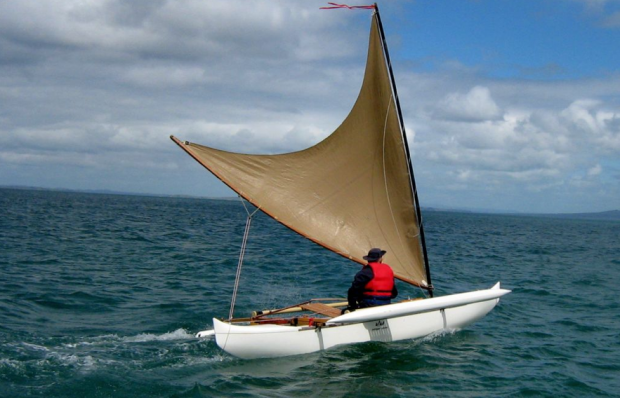
Viva Tropical
Outrigger sailing canoes can be safely used on the open ocean if they are designed and built for that purpose. An 18 foot outrigger with a windsurf sail crossed 700 miles of open Pacific several years ago. One of my T2 designs cruised for over 1000 miles from Northern Mexico to Panama. The success of a voyage like these depends on good workmanship, water tight compartments, and an experienced sailor. Take baby steps first; don’t finish a canoe and immediately take off into a long voyage. Learn to sail it in light winds and calm seas until your instincts are developed. Capsize it on purpose and learn to right it. Then imagine doing that in a big seaway.
4. Are there different designs?
There is a wide variety of outrigger sailing canoes. The most important published work, “Canoes of Oceania” is 1000 pages long. There are a limited number of plans available for modern builders but I have been trying to interpret traditional designs so that they can be reproduced with modern materials. The sailing rigs and the resulting differences in hulls and structure can be divided into two types. Shunting rigs allow the canoe to be sailed with either end as the bow and always keep the ama (outrigger float) on the windward side where it acts as floating ballast. Tacking rigs sail like normal Western sailing boats and will have the ama to windward or leeward depending on the tack being sailed.
5. How do the differences of the design affect performance?

Viva Tropical
Some hulls like the classic Hawaiian were optimized for landing in heavy surf due to the lack of protected harbors. All boat design involves compromises and a canoe optimized for surf with buoyant ends and plenty of rocker will not be the best performer sailing on a lake. Traditional outriggers never had centerboards or leeboards but I have added them to greatly improve their performance to windward. Some traditional sailors would use their paddles as leeboard when sailing to windward but this is poor substitute for a good deep high aspect foil.
Steering can be accomplished with a large paddle, a long steering oar, or a rudder mounted either on the stern or on the side like a Viking ship. All of these methods were used in Oceania. Modern recreational sailors can use any of these methods but the paddle and oar are more difficult if you are sailing alone.
6. How quickly could you build one using your plans?
The big hull can usually be completed in 100 hours or less, but there are many additional parts to an outrigger sailing canoe that can take another 200 hours to complete. Much is determined by the standards of finish and ability of the builder.
Wa Kuk Wa Jimor – Marshallese Canoes Today from Rachel Miller on Vimeo.
Editor’s Note:
Gary Dierking specializes in building Outrigger sailing canoes, you can see more at his blog, Outrigger Sailing Canoes.


David Panama – Pedregal Marina
Just ask anyone who lives in or has ever traveled through Panama’s Chiriqui Province, and they’ll tell you what a vital role the town of David, Panama, plays in making life easier in the surrounding Province of Chiriqui.
Located in a basin on the coastal plain, the Chiriqui capital of David is situated about 55 kilometers from the border of Costa Rica on Panama’s Pacific Coast.
The town has a population of just under 145,000 people, and isn’t as densely populated as many other cities its size, since there are few buildings over 5 stories tall.
The low population density and meager skyline give David a very small-town feel. However, it remains Panama’s second largest city and a major hub for transportation and commerce. It’s a relatively wealthy city, with a dominant middle class and a very low poverty index and unemployment rate.

David Panama
David, Panama, is different in many ways than a lot of other tropical destinations. On the one hand, a lot of its buildings are newer construction. That’s good, in that they’re functional and solidly built. But it’s bad in the sense that the city lacks the colonial charm associated with the clay structures and tile roofs common to many Latin American destinations.
So, while it isn’t exactly the country’s most aesthetically pleasing destination to purchase Panama Real Estate, David and its surrounding areas still have many factors that make the city quite attractive to tourists and expats alike. As a result, it has a large established expat community.
However, even more notable is the number of expats living in close proximity to David, who take advantage of all the amenities and conveniences it offers while foregoing its drab environment.
Here are a few of the reasons the area in and around David is so attractive to expats and travelers.
FutureExpat
1. David makes exploring & living in the amazing Chiriqui province much simpler.
Within a short distance from David are a number of fantastic destinations. The majestic Volcan Baru, the country’s highest peak, and the town of Volcan are about an hour away.
Both the mountain town of Boquete, with its coffee plantations and vibrant expat community, and the beach town of La Barqueta are only a 30 minute drive from David. It’s also only 19 miles from the country’s boundary with Costa Rica, making it an important border town.

David Panama Airport Runway
Playa Burica and Bocas del Toro are two other destinations within a short drive from David.
Also nearby (only 5 minutes from the airport) is the Pedregal Marina. This port houses the private boats and yachts owned by David’s residents. It’s also a great place to do some sport fishing. From this port, you can also explore the nearby mangroves or the Gulf of Chiriqui.
It also provides access to exotic Boca Chica and the beautiful Boca Chica Island, before giving way to the open Pacific Ocean.
While these are all amazing places to live & visit, what makes them even better is that fact nearby David offers a place to restock on supplies. It has everything travelers and residents of these more remote areas might need, making all of these areas incredibly accessible.
Situated halfway between San Jose, Costa Rica, and Panama City, Panama, David is conveniently located right smack on the Pan-American highway. It also has an international airport with flights to San Jose and Panama City. You can’t get much more accessible than that (although David may be about to…more on that later).
2. David is also a great place to stay while you explore the surrounding areas.
With so much to do within such close proximity to the city, David is a natural choice for where to set up camp while you take advantage of all the natural beauty, exotic wildlife, and opportunities for adventure that surround it.
Sure, some expats may choose to make David their home base, but when given the choice between living among cinder block buildings vs. living in an internationally-renowned mountain paradise (Boquete) or on a stunning secluded island (Boca Chica), most people are going to opt for one of the latter choices.
For those who wish to make David their temporary basecamp, it has hotels available to suit every budget.

Hotel Cuidad de David
Our favorites are Cuidad de David Hotel, whose rooms rent for around $120 per night, and for a lower cost option, Alcala Hotel ($30 per night) is clean, has a restaurant, and is centrally located.
You can also try Hotel Iberia or Hotel Iberia Sur (two hotels, same management). It has a nice restaurant, is within easy walking distance of the downtown area, and rents for about $42 per couple.

David, Panama Hotel Alcala
David, Panama Hotel Iberia
3. David, Panama, is jam-packed with supplies you’ll need.
Thousands of expats live in Chiriqui Province. Towns like Boquete and Volcan have modern conveniences and almost everything their residents need. When they can’t find something, they go to David. It’s where expats from all over Panama go for a quality piece of furniture, brand name clothing, or an obscure electronic gadget.

David Panama shopping center
There are about a dozen large supermarkets, 10 auto dealerships, six appliance and electronic stores, four department stores, three furniture outlets, two theaters (with movies in English), a Price Smart (similar to Costco or Sam’s Club), and a Do-It Center (like Lowe’s or Home Depot). Other businesses and services include clothing boutiques, shoe stores, dry cleaners, bakeries, video stores, pharmacies, salons, and even chain restaurants like KFC and T.G.I.Friday’s. And new businesses are opening regularly to accommodate a growing number of tourists and expats.

KFC in David
The roads are in good condition, and most public services are reliable. Privatized companies offer electrical service, as well as cable, telephone, and high speed internet. You can drink the water from the tap. David has frequent bus service throughout the city, and it’s quite reasonable. There’s also garbage collection twice per week and a number of local radio stations.
One thing to understand is that shopping in David (or Latin America for that matter) is different than in North America. You’ll have to get use to hunting for the things you need. It can be tough to go into one store and find everything. But once you get the hang of it, there isn’t much that you can’t find.
4. Among David’s amenities is a top-notch medical facility.

Hospital Chiriqui
Don’t let the photo fool you. Hospital Chiriqui is the largest private hospital in the region. Its state-of-the-art equipment and over 100 doctors offer quality care at extremely affordable prices. Several of the hospital’s doctors and nursing staff know at least some English, and many trained in the U.S. or Europe.
The entire experience is very different than a visit to a North American doctor. Rather than zipping patients in and out like they’re on an assembly line, the doctors take extended personal time with each patient.
There’s less government and insurance regulation, so doctors are free to make decisions based on their professional opinions. Wait times are pleasantly short once you learn to either book an appointment or show up right around the time that the doctor will begin seeing patients.
And while the care provided is top notch, the associated costs are minimal. Doctors don’t perform a lot of unnecessary tests and procedures. And, since the Panamanian society is not a litigious one, they aren’t shelling out half their income to pay for liability and malpractice insurance. As a result, those savings are passed along to the patient. For example, a visit to the ER might only cost around $25.
Services offered at Hospital Chiriqui include emergency, trauma, orthopedic, gynecology, neurology, cardiology, pediatrics, and many more. Although costs are already low, compared with the price for the same service in North America, the hospital also offers a discount program to members. The MSChiriqui program provides medical coverage and savings at Hospital Chiriqui and, in many cases, at least partial benefits at other facilities.
Like the rest of Panama, healthcare in David is nuanced. So check out our Panama healthcare report to learn more.
5. A major airport expansion means huge investment opportunity for David and the surrounding area.
David’s Enrique Malek International Airport has always been a great feature for the city. Located on the opposite side of the country from Panama City it’s always been the best way to access all the great destinations in Western Panama.
Panama’s current administration has been investing heavily in infrastructure, which is a good thing for the country and its tourism industry. One of the projects underway is the expansion of the David airport, which is a great thing for David and the areas close to it.

Grab a rental car at the David airport
Renovations include an extension of the runway, facility upgrades, and a more streamlined immigration process, all of which would make David an attractive candidate for more international flights.
In fact, Copa Airlines has indicated they plan to begin direct flights to David from the U.S. (likely beginning with Miami and/or Houston). This is all speculative at this point, but all it takes is one trip through the airport these days to convince you that major changes are underway.
This represents huge potential from a real estate and investment perspective. When infrastructure improves and towns become more accessible, they become more attractive to visitors and new residents. As a result, this expansion could have a tremendous impact on David, Panama’s real estate, particularly in areas that haven’t had the huge boom some of their neighbors have experienced.
David will certainly benefit, as will areas like Boquete, Volcan, and Playa Burica. However, towns like Boca Chica are probably best poised to see appreciation.
6. The cost of living in David is very low, even for Panama.
After hearing the list of services and amenities available in David, Panama, you wouldn’t expect to learn that it’s all offered surprisingly cheaply. But it’s true. Products and services in David costs much less than in Panama City, in many cases even half as much. You can get a nice lunch in a restaurant for $5, including a soda. A large Panamanian working-class lunch is only $2.75 and usually includes a plate full of rice, chicken, plantains or beans, and a salad.
For those who do decide to set up residence in David, utilities and services are also affordable. You can find reliable high-speed internet for as little as $19 per month, and water service for a two-person household is only about $7. You can hire domestic help for $10-$12 per day, or a full-time maid for only $175 per month. All in all, you could easily get by in David for no more than $1,500 per month, including rent, although the cost will vary depending on your lifestyle.
Real estate in David is also a bargain. You can get a smaller, Panamanian-style home that needs a little remodeling for as low as $40,000. Even a move-in-ready property would still only come in at about $75,000.
7. Recent incentives make David a great place to invest, particularly in the tourism sector.
Many of the factors we’ve already mentioned make David a prime location for investment in Panama. Although it has a lot of businesses and services already in place, there is a lot of money in David. Not to mention, expats living in nearby areas come to David to shop.
They would likely love to see more options for evening entertainment, specialty shops, and even more specialized services. And with expats continuing to settle in the Chiriqui region, David’s economy is expected to boom in coming years.
What’s more, Panama’s government is heavily focused on increasing tourism to the country. And much of its efforts are concentrated in and around David. When recent legislation offered huge incentives to those who wanted to establish tourism companies or developments in certain targeted areas, over 80% of them were in Chiriqui.
It’s clear that the government believes that in this area lies its best opportunity for tourism growth. If you spend some time there, you’ll see why.
Among the incentives available to those investing in tourism are exemptions on taxes on everything from property to imports to building materials and, in some case, even income tax. The various laws all have different specifics and qualifications. But the bottom line is that, if you want to invest in Panama (and specifically the areas around David) the government wants to make it as easy as possible for you.

Arisa
8. While there are a few negatives about David, the list is short.
No place is perfect. We all know that. And David is not without its list of shortcomings. The heat is a big one. As is the humidity. David can be absolutely sweltering with little relief from the heat. The best way to beat it is to relax in the city’s beautiful Parque Miguel de Cervantes with a cool drink of helados (fresh coconut juice) or a fresh fruit smoothie.
This is a big reason many expats don’t choose David as a place to actually set up residence. If you’re going to deal with the heat, you might as well be on the coast or a nearby island, with a nice coastal breeze to cool your skin. Or move up into the mountains where you can enjoy all the conveniences of David in close proximity, with much cooler temperatures and less rainfall.
Also, while there’s a ton to do in the areas surrounding David, the city itself doesn’t have a whole lot to offer in the way of entertainment and culture. Oh, it’s purely Panamanian. But when it comes to museums, night clubs, and fine dining restaurants, David leaves a lot to be desired. It’s a city that’s more focused on agriculture and industry than on being a cultural hub.
That being said, if that’s the worst it’s got, then David isn’t that bad of a destination for expats and tourists. In fact it gets a lot of both. However, for the most part, people tend to settle in the outlying areas. They’re just too spectacular not to! So, if you think David might not be the right place to live, then check out some of the other fantastic areas in Chiriqui. David will be there when you need it.
Map of David, Panama
David Fast Facts
- Population: About 150,000
- Typical temperature: 73 degrees lows with the highs in the upper 90’s
- Nearest airport with U.S. flights: U.S. Bound flights leave daily from Tocumen Airport, both domestic and international flights to San Jose, Costa Rica depart from Enrique Malek International Airport in David
- Nearest U.S. consulate: Panama City