


Al H.
Did you know that in Minnesota it’s illegal to cross the state line with a duck on your head? Or that a law in Galveston, Texas, states that bicycles must be operated at a “reasonable speed”? Or how about the Alabama law that says it’s illegal for a driver to be blindfolded while operating a vehicle?
Those states’ traffic laws may seem outlandish, but they’ve got nothing on their Latin American neighbors.
Developing countries often face challenges such as poorly paved roads, narrow city streets, insufficient signage, and not enough police to patrol populated areas. Pedestrians are often unaware of the dangers at hand. And local taxi and bus drivers barrel through busy thoroughfares like bats out of hell.
With motorist and pedestrian fatalities a serious problem in Latin American countries, it goes without saying that laws are needed, as is their stringent enforcement. However, no matter how well-meaning their intentions, traffic laws and regulations in Mexico and Central and South America can often range from the excessive to the outright bizzare.
Here are the stupidest laws we’ve found during our time here:
#3. Cyclists in Mexico must keep both feet on the pedals.
Coming in third is one from Mexico. After a cyclist was killed in an 1895 hit-and-run incident, a number of laws were put into place to protect bicycle riders from future injuries. Consequently, in order to prevent them from losing control of their bike, cyclists “may not remove either foot from the pedals.” While clearly outdated, and likely unenforced, this crazy law remains on the books for now.
#2. A speeding ticket in Costa Rica will run you over $600. Minimum.
In second place on our countdown is a hefty fine in Costa Rica. Over 450 traffic cameras in 150 different locations in Costa Rica were installed in 2011. The government claims their purpose is to reduce traffic deaths, which is a big problem in the country. However residents think the excessive fines, which start at $616, are unfair–although the Roadway Safety Council allows for quite a generous cushion, only ticketing drivers who are going at least 20 km over the speed limit. The first 16 cameras, all located in the Central Valley, racked up fines of over $9 million in just the first two weeks of being installed.
#1. Speeding in Cuenca, Ecuador, can land you up to 3 days in jail.
Coming in first place is a new development in Ecuador. Because speeding is the largest contributor to roadway deaths in Cuenca, law enforcement decided to amp up the penalty for those charged with the offense. As a result, having just the slightest bit of a heavy foot can cost you $292 and 3 days in jail. The sentence can be charged to those going as little as 10 km over the posted (or unposted, as is often the case in Ecuador) limit.
Within a few short days after the law was enacted, 139 drivers had been arrested and 18 of those actually spent time behind bars. Vehicle speeds in Cuenca are monitored by radar detectors and computerized photographic devices, none of whose locations are known.
If your upcoming travels include a drive through any of these Latin America countries, might we suggest making it a leisurely one. You’re putting yourself in enough danger just by being on the road with most of the other crazy drivers.
If you do insist on putting the pedal to the metal, be prepared to fork over a substantial fine or even spend some time in the slammer. Laws down here can be asinine, and the cops can be brutal.
Consider yourself warned.


photo by Will Travel
Here at Viva Tropical, we talk a lot about great it is to live and invest in Panama. While we definitely do think it’s one of the best places to retire and invest in Central America, or the world for that matter, it certainly isn’t without its frustrations.
Would-be expats find a number of things to complain about once they arrive in Panama. And many end up leaving. Their reasons vary, but in most cases they agree that they never would have come in the first place had they known “x.”
While we don’t know what “x” is for you, we do want you to be educated on some of the things that might peeve you in Panama.
Some may seem very high-level and almost irrelevant for the day-to-day life of an expat. But the reality remains that, when you call a country your home (particularly a developing country), things like constant changes in governmental regulations do affect you. It can be frustrating to try and get a visa or buy property in Panama when the rules keep changing.
Multiply that by 1,000 if you plan to do business in Panama. Imagine trying to meet deadlines and stay on schedule (and budget) when people are painfully late for meetings and contractors never show up to finish their work.
Here are a few of the biggest complaints we’ve experienced and overheard during our time here.
Practically the entire government turns over every 5 years.
Elections in Panama occur every 5 years and include both the presidential office and all 71 seats of the National Assembly. The country’s multiple political parties work together to form a coalition government, and it’s not at all unusual to see entire administrations ousted all at once.
The personnel changes continue all the way down the line, much like when a new head football coach comes to town with his own team of assistants. With that comes not only new faces, but completely new ways of doing things.
So, if you were in the middle of completing a project or process based on how it was supposed to be done when you started it, be prepared to start over.
While you may never see it, corruption is very real.
Corruption is often a problem in developing countries, and Panama is no exception. The country ranked 83rd out of 174 countries in the 2012 Corruption Perceptions Index (conducted by Transparency International), with a score of 38 on a scale where 0 = “Highly Corrupt” and 100 = “Very Clean.”
In Central America, only Costa Rica fared better with a score of 54 and a rank of 48th. (For comparison, the U.S. ranked 19th with a score of 73.) So, while corruption does exist in Panama, it’s no more present than in other developing countries.
As far as what it looks like, it’s hard to say. Because it’s not like it’s constantly in your face. It could be something as high level as the government hiring less than credible contractors for infrastructure projects, to serve its own interests, all the way down to policemen being paid off to avoid issuing a traffic ticket.
The bottom line is that it’s there. So don’t be shocked if you run into it. But don’t make too much of a big deal out of it either. Business gets done every day without paying bribes.
Efficiency is not Panama’s strong suit, to say the least.
It’s important to note that, on the polar opposite end of this spectrum stands the Panama Canal. One of–if not THE ONLY–exception to this rule, the Canal runs like a well-oiled machine.
As for everything else…we’re not sure what most employee training programs in Panama emphasize, but it’s likely not punctuality, speed, or efficiency. From the guy who comes to fix your roof to the guy behind the immigration desk, prepare to be frustrated with how things are (or aren’t) run.
Long waits and long lines are imminent, whether you’re at a public health clinic or at the water works office to pay your utility bill. Patience is key. Bring a book or magazine, or use the opportunity to brush up on your Spanish.
On that note, a good place to start with learning the official language of Panama is with the word “mañana.” You may think you know what that word means. We did before we came to Panama. We were wrong. “Mañana” does not, in fact, mean “tomorrow.” It actually could be interpreted to mean a number of things. “Next Friday,” “the week after next,” “eventually,” or even “never.”
While it’s impossible to know exactly what someone means when they tell you something will get done “mañana,” what’s important in almost every situation is to remain calm, keep your cool, and be persistent. Use every opportunity to steadily push the ball forward. Don’t blow a gasket and get in a frantic rush, which is the normal reaction of most North Americans.
While it has come a long way, Panama is still a developing country.
The government and economies of third-world countries lend themselves to a whole different set of uncertainties. As a result, investing in Panama can be quite the risk, even to the most savvy investor.
Then again, what isn’t these days?
On the flip side, what some see as risk, others see as opportunity. It really all comes down to the attitude of the individual investor. Succeeding in this market requires the kind of outlook that says “Even if things change or something goes wrong, I will work it out. Somehow.”
For those types, making an investment in Panamanian real estate or starting a Panamanian business can be a rewarding venture.
For those who freak out when the slightest detail doesn’t work out exactly according to plan, completing even the smallest business transaction in Panama could be a struggle. If you’re one of those, you’ll want to carefully assess your drive and risk tolerance.
Panama is a judicial hellhole.
When it comes to Panama’s legal system, let’s start with the good news. It’s entirely possible–well, almost possible–to avoid it entirely.
One way is by ensuring that all of your business contracts have an arbitration clause. Since arbitration is a much better way of reaching a fair resolution, it is what’s most often used in business dealings, as opposed to judicial proceedings.
Another way is by proactively doing your due diligence in any type of transaction, business or otherwise. Whomever coined the adage about an ounce of prevention being worth a pound of cure, was very possibly talking about the Panamanian judicial system. Do your homework on the front end, and work with a team you can trust.
Let’s reiterate the trust part. Just as important as the credibility of the transaction is the reliability of the people you’re working with. Don’t assume that all professionals are legit. Ask for recommendations from other expats or from other business people who’ve already earned your trust.
Otherwise, you could end up in court, where verdicts can range from inconsistent (at best) to corrupt (at worst). Sadly, foreigners are often viewed as having endlessly deep pockets, and as a result the courts often rule unfairly against them.
That’s not to say that, as an expat, you’re never going to get a fair shake. It is to say that, if you find yourself headed to a Panamanian court, you’ll need to have a good attorney to represent you and be prepared to roll with the punches.
You won’t always be able to find the exact consumer goods you’re used to.
While the same is true throughout Latin America (and most any foreign country), you’re not going to find the exact same brands or products you’re accustomed to buying in your home country. If you do, they’re likely to cost 5% to 25% more than they would in Miami.
You might also discover that something you saw at the store one week might not be there the next time you shop. So, if you see something you can’t live without, it’s best to snatch it up before it’s gone. Some examples are imported name brand products and specialty items.
But, while you might not find your usual breakfast cereal with the same cartoon rabbit on it, what you will find is a comparable, or even superior replacement, at a fraction of what you would have paid in the U.S. Also, what Panama lacks in North American brands it more than makes up for in fresh, organic produce and authentic, local goods that you could never find in the U.S.
There’s literally hardly anything you could want that you can’t get in Panama. The trick is learning to compromise and think outside the same old cereal box with the same old cartoon rabbit.
While the weather is great, it’s not all sunshine and rainbows.
Most people who’ve lived or visited here agree that there are many parts of Panama where the weather is near perfect. The key word here is “near.” Panama’s climate varies greatly throughout the country and its various elevations.
So, if you like the temperate climate of Boquete, don’t assume you can move to Panama City and enjoy the same spring-like weather year-round. Many complain about the heat and humidity in coastal areas.
Others aren’t prepared for the chilly nights in the higher elevations. And some say there’s too much rain almost everywhere. If you’re seriously considering relocating to Panama, it’s not a bad idea to first experience it in all seasons, of which there are only two: wet and dry.
The good news is that, with its varied topography, you can find the climate you’re looking for somewhere between the country’s borders. It might just take a little bit of moving up and down the side of the mountain to get it just the way you like it.
But knowing is half the battle if you want to live and invest in Panama.
So, whether you’re just considering retiring to Panama, or perhaps thinking of starting up your own business venture, just know that you will not do so without your share of challenges. They could be as simple as never being able to find your favorite blend of Indian spices or as complicated as waiting over two years to get your Panamanian visa.
As long as you have realistic expectations about what makes Panama a great place to live or invest, you’ll come out just fine. Because, for most investors and expats, Panama’s benefits far outweigh any negatives about the country.
Still considering Panama after what you’ve just learned? Head over to our Panama Section and learn the Pros and Cons of living or investing in Panama.


If you’re thinking about emigrating to the Latin tropics in order to get closer to nature, you’ll want to choose a destination where preservation is key. Though most of Latin America boasts gorgeous landscapes, some areas offer just that little bit extra. One of those areas is Nosara in Costa Rica.
Nosara is situated on the Pacific Coast in the Guanacaste province of Costa Rica. It is one of the oldest expat communities in the country, and due to the hard work of the city’s civic association, it offers a wonderful quality of life to newcomers.
The History of Nosara
Historically, Nosara is best known for its beautiful rural surroundings. The area was predominantly used for fishing and agricultural purposes, and was not very highly populated.
In the twentieth century the pastures in the area were used for cattle pastures, and the deforestation that happened as a result of this began to threaten the area’s natural beauty.
Luckily, in the 1970s, help arrived in the form of a group of expats. This group moved to the area and founded the Nosara Civic Association. Together, they worked to make reforestation a priority for the area, and they began to instigate other regulations to make sure the area would stay beautiful for a long time to come.
The Role of the Nosara Civic Association
From their creation in the 1970s, the Nosara Civic Association have worked hard not only to make Nosara a wonderful place to live, but also to preserve the natural beauty of the area and its wildlife. They introduced ‘green zones’ that are not able to be built on by law. The land within these zones covers around 170 acres, and is all under the guardianship of the association.
In addition to the green zone initiative and reforestation, the Nosara Civic Association have also worked to prevent pollution. Because of their hard work, Nosara has the cleanest water table in the whole of Costa Rica and pristine beaches with no dumping. The association has also been instrumental in preserving the habitats of wildlife native to the area. They have been a huge support to the Ostional Turtle Refuge that covers a large area beside Nosara.
The association have also initiated policies to improve quality of life for the people living in the area. Thanks to them there is regular trash collection in the area, as well as excellent water, health, and education facilities.
The work the Nosara Civic Association have done in the area over the past five decades hasn’t always been easy. The positive changes they’ve made in the area have sometimes been an uphill struggle, and the success they’ve had is testament to just how passionate they are about the welfare of their community.
What Is Life Like in Nosara Today?
Today, Nosara is a haven for expats. It’s well accepted as one of the most beautiful natural areas in the whole of Costa Rica, and there are large areas of forest around the town development.
In the time since the 1970s, the Nosara Civic Association have done brilliant work planning and developing the city in a thoroughly responsible way. There are a large number of homes and facilities in the area, but it still feels like a well-preserved, natural environment.
The health, education and general facilities in the city have also been well developed over the years. There are a large number of local businesses and services in the area, and it has the only free lending library in the whole of the peninsula. For those who like their technological comforts, Sky TV, internet connections and smartphone 3G are all available!
Nature lovers will fall in love with the Ostional Turtle Refuge just beside the city. The refuge covers 21 kilometers of coastline, and ensures that the turtles native to the area are well looked after and protected. Because of the refuge, up to a hundred thousand turtles lay eggs in the area on any one night. The preservation of this refuge means that there are almost no developments on Nosara’s beaches. This is rare for a developed area, and is something Nosara Civic Association can be very proud of.
If you are thinking about emigrating to Costa Rica, Nosara is a city that is well worth considering. Not only is this a place where nature is cherished and appreciated, you can also be sure that you are choosing a city with a strong community and a bright future.

The Guatemala 3 Count, where we bring you 3 Guatemala stories that you shouldn’t miss.

Carlos VanVegas
1. What’s Driving Guatemala’s Tourism Boom?
The Guatemalan government has increased its foreign investment by over 300% since 2003 in an attempt to drive economic growth, stability, and improvements in infrastructure. Its efforts are paying off as more and more tourists are flocking to places rich in culture and heritage such as Antigua.
2. Investing in Guatemala Just Got Easier
Last year, foreign investment in Guatemala grew by 25 percent and, with the government’s recent reforms to the country’s employment law and judicial security, analysts are predicting an additional 15 percent growth for 2013.
3. Pulling Out of a Downward Spiral
Guatemala remains a troubled country, threatened by the international drugs trade as well as by its own weaknesses. But there are signs that it may at last be pulling out of its downward spiral. Leading the way to change is a president bent on changing the future for his country, but old habits are hard to break.


If you’re considering living abroad, then I’m sure you’ve heard this story. Guy goes to Costa Rica on a surfing trip. He falls in love with the place. What was supposed to be a long weekend turns into two weeks. While he’s there he starts scoping out a place to live.
Guy goes home and collects his wife. They sell everything and buy a house near the beach in the tropics for forty grand. They move to paradise. He makes a living teaching gringos how to surf. She opens up a cafe in a beachside cabana. And they all live happily ever after.
Sounds great, right? Right? Wrong.
That’s not to say that the above scenario can’t happen. Apparently it did for that guy. It’s just that it isn’t the norm. In fact, it’s quite the anomaly. Hence the reason so many marketers like to tell that story, to make you think you could be next.
Unfortunately, though, thousands of expats every year live out stories that more closely resemble this one…
Guy gets tired of working behind a desk 50 hours per week. He’s sick of watching his taxes increase and his freedoms decrease. Guy says, “Honey, let’s move to the tropics!” His wife says, “Um…okay?”
Guy researches countries on the Internet and settles on one he thinks they’ll like. They pick a city in Central America and plan a trip down to visit. They stay at a local resort, sip piña coladas, and think “This is the life.” So they buy a little house and relocate their family.
Fast forward a few months. It’s the rainy season now, so it rains every day. The roof leaks, and they can’t find a single contractor who’ll finish the job. His “get rich quick” scheme is taking a little longer than expected.
The place they’ve moved has few expats, and they’re having trouble making friends. She’s sick of the weather and bored out of her mind. Frustrated, she announces that she’s moving back to the States. Alone.
While this second scenario is a much more accurate picture of many couples and individuals who try their hand at living abroad, it doesn’t have to be.
This couple just missed out on the next, and ultimately the most important, step in the whole process.
They may have picked out dishes and curtains for their new place. But they overlooked a lot of more crucial issues like how they were going to meet people, what activities were going to fill their newfound free time, and how they were going to cope when they encountered difficulties.
These and other considerations are all part of the mental preparation for moving abroad. Just as important as choosing a location, packing your belongings, and getting your paperwork in order is the need to formulate a shared vision for what your life will look like in your new home. And a carefully drawn plan of attack for you to implement once you arrive.
There are a lot of reasons that people cite for why they didn’t fare so well in what they thought was going to be the destination of their dreams. But almost all of them share the same underlying lack of sufficient mental preparation. Here are some of the most common mental mistakes expats make when living abroad, along with our suggestions of how you can avoid them.
#1. They have unrealistic expectations.
Erma Bombeck said it best. “The grass is always greener over the septic tank.” And when you’re fed up with life in the U.S., it’s easy to see living abroad as the answer to all of the things that frustrate you about your current life.
While living overseas can be great, it’s never going to be perfect. Too many expats over-romanticize life abroad, only to be met with great disappointment when things don’t go exactly as planned.
Like the guy in our scenario learned, doing business in another country can be a real challenge. Your plan to meet a Latin hottie and live happily ever after, might make a better Lifetime movie than a reality show. Not to mention, living in a developing country presents a whole other set of issues that many expats just aren’t prepared to deal with.
The bottom line is that when you get your feet on the ground in your new country, and you remove those rose-colored glasses to wipe off the fog from the sweltering humidity, you may begin to see that everything isn’t always going to be sunshine and rainbows.
How to Prepare:
Don’t be naive. While it’s fun to let yourself believe that everything will work itself out and you’ll never have any problems, it just isn’t realistic. A better approach is to actively anticipate hurdles and be prepared to deal with them.
Learn some common complaints about the area where you’re headed and decide if they’re things you can handle. If they aren’t, maybe you should reconsider your destination, or even your move altogether. If the concerns are manageable ones for you, go ahead and decide exactly how you’re going to deal with them.
Living abroad, like living anywhere, is all about trade-offs. Think long and hard about what you value and what you’re willing to do without in order to have what’s most important to you. If freedom, opportunity, and adventure are your priorities, you’ll find them in Central America. If punctuality’s something you need to maintain your sanity, you’ll go crazy there.
Most importantly, and we can’t stress this enough, have a PLAN. Whatever your goals–launching a new business, meeting the man or woman of your dreams, becoming a world-champion surfer, etc.–map out the steps you’re going to take to make them happen. Be ready to get started as soon as you arrive.
#2. They get bored.
Many expats make the mistake of thinking that, once they move to the tropics, every day for the rest of their lives is going to be like a vacation. That usually lasts less than a month. When the honeymoon phase is over, even living abroad in paradise can start to lose its luster.
Lying in a hammock and drinking beer all day can quickly get old (not to mention wreak havoc on your health). And with nothing to fill your time and hold your attention, all the cracks in your new life will start to show through.
Besides, no matter what you might think, there’s virtually no one who can live [happily] doing absolutely nothing all the time. Sounds nice, but it doesn’t work. You’re eventually going to need a purpose. Or, at the very least, a pastime.
How to Prepare:
When making preparations to move abroad, try to see it as planning a life instead of just a really long vacation. Sure, you’ll have the time and freedom to do things you never could back in the U.S., but you also want to enjoy a meaningful existence. The hedonistic lifestyle can quickly become an empty one.
When you visit the cities you’re considering, look at the locals and other expats. See how they live and what they do. Think realistically about what you’ll do once you get there. Look at your current lifestyle and see what matches up.
Find opportunities to explore new hobbies, volunteer, and stay active both physically and socially. Not only will these activities stave off the boredom, they’ll help you get plugged in and find community in your new home.
#3. They aren’t on the same page.
Sadly many couples who move to the tropics have lopsided enthusiasm. One may be thirsty for adventure, while the other one hates being so far away from family. This partner may be gung-ho about a new business opportunity, which requires their companion to put their career on hold as a sacrifice.
It could even be as simple as a difference of opinion about where to move. He wants a small beach community, while she wants a more cosmopolitan city.
Whatever the discrepancy, it’s important to share the same vision and values. And it’s important to negotiate any compromises before you come, not after. The stress of an international move is hard enough. Throw in the lack of a support system and a whole slew of temptations in your new city, and it’s a recipe for disaster for a relationship that is already on the rocks.
Too many expat couples quickly find themselves getting a divorce, all because they failed to communicate about their goals.
How to Prepare:
Before making any decisions about living abroad, have a candid conversation with your partner about exactly what it is you want. Make sure you agree on important issues like where to move and what you’ll do when you get there.
With so many great places to live in Central America, there is almost surely a place that can accommodate both parties’ interests, so that no one has to sacrifice their dreams unnecessarily. If one wants a cooler climate, but the other wants to live near the beach, find a place on a lush mountainside overlooking the sea from a higher elevation.
The same compromise goes for your interests as well. If one of you is a theater buff and the other thrives on giving back, find a place where an established expat community has formed both a local theater group and a humanitarian organization that assists the local indigenous group.
#4. They have no idea what they are getting into.
Much expat turnover can be attributed to simply failing to do an adequate amount of homework. Many of the common complaints–such as unpleasant weather, inferior amenities, and lack of other expats–could be avoided with just a little more research into the destination city.
For families living abroad, a common mistake is to fail to take into account the needs of the children. If a city has a large expat community, but they’re all retirees, then the children might have trouble making friends. If the local school is subpar or there’s no private alternative, parents may need to homeschool.
While disappointment is never a good thing as an expat, it’s never more frustrating than when the issue could have been avoided entirely…with just the slightest bit of extra sleuthing.
How to Prepare:
Make sure your research on your destination city is exhaustive. Find out everything you can about it, from the perspective of a resident, not a tourist. Experience it in all seasons. Talk to other expats who live there. Talk to some who have left!
Think about what you require to live comfortably (e.g. high speed Internet, local yoga classes, etc.). Does your city have those things? Conversely, what are some of your biggest pet peeves (e.g. low water pressure, long waits at the health clinic, etc.)? Is there anything in your new city that’s likely to drive you bananas? What about the other members of your family? Will their needs be fulfilled there?
If you don’t yet feel like you could write a 10-page essay (from memory) on all the various aspects of your destination city and its surroundings, then maybe you need to keep researching. At the very least, you’ll go into the move with confidence knowing you’ve investigated every aspect as carefully as you possibly could.
That being said, realize that–if things don’t turn out exactly like you thought–there are still plenty of options available to you. If you’re unhappy in your destination city, there might be a better one a few towns over. One of the beauties of becoming an expat is that you have the freedom to pull the plug at any time if another, more appealing door opens for you.
#5. They don’t give it enough time.
Even expats who’ve lived and thrived abroad for decades will tell you that a little bit of homesickness and disorientation is completely normal, especially in the early days. But many new expats take it to mean something that it doesn’t.
Many react to those emotions by withdrawing and isolating themselves further. Rather than reaching out and embracing their new culture, they try to almost recreate their home country in their new country.
They eat at restaurant chains they recognize from home. They surround themselves with mementos and reminders of the things they left. They eventually begin to romanticize “home” and even start to forget or minimize the reasons they left.
Even those who seek the companionship of other expats can get caught in the trap of trying to only surround themselves with things that are familiar and comfortable. Before they know it, the only solution is to return to where they came from.
How to Prepare:
Rather than focusing on the challenges of your new city, especially as you struggle to acclimate yourself, remember what drew you there to begin with. If it was the weather, spend lots of time outside enjoying it. If it was freedom, glance at a few U.S. headlines now and then as a reminder of the negative things you gave up.
Living abroad is really all about attitude and optimism. It’s also about endurance.
Do yourself a favor and promise that you’ll give it a minimum of six months before you throw in the towel. It takes at least that long to really get settled into a Latin country. To find people you’re comfortable with and establish a routine.
Most importantly, be open to new experiences and let yourself be pleasantly surprised by the new things your new city has to offer. Remember that the opportunity to enjoy a new culture is one of the reasons you chose to live abroad, and you just can’t do that effectively at an Outback Steakhouse.
Avoid these mistakes when living abroad
Just as important as the physical logistics of moving abroad are all the ways you’ll need to mentally prepare to relocate. Don’t make the move without a plan for what you’ll do when you get there. Have those important conversations with your family now.

Away from Boredom in Granada Nicaragua
The town paints itself. Cement block buildings, boldly painted in bright splashes of red, green, and yellow. The clay tile roofs bend over the streets of Granada Nicaragua, then hesitate and separate for furious sprigs of bright, flowering plants, shaded parks, and clean, gentle streets easing by colonnaded buildings. In the air, is a feeling of excitement and energy.
Face it. The modern concepts of city planning have become boring. Look-alike houses, all painted the same color, with tiny lawns and only a number to separate one home from another, and a street sign to tell you you’re in the right neighborhood. Shopping malls, fast food diners, playgrounds, and parks all based on the same architecture. It’s little wonder creativity has taken a nose dive and a person’s favorite “real estate” is an Internet capable cell phone. Real-time adventure is limited to zip-lining over a rock quarry. Romance is a dirty word, associated with melodrama and cheap paperback books.
Yet there is absolutely no ignoring the fact that Granada, Nicaragua is romantic. How could it be otherwise? Founded in 1529, it’s not only the first colonial town built on firm land, its marked Baroque style is based off early Moorish architecture, giving it a unique flavor found nowhere else in Central America.
You Can Truly Get Away from It All
Secluded from the modern world by the miles of wilderness characteristic of Nicaragua, Granada slumbered peacefully through the Sandinista civil war in a backdrop of rich agricultural land, dry forests, and tropical rain forests and volcanoes. As though this pastoral setting wasn’t enough to keep the dreamer dreaming, it’s also located on one of the largest lakes in the world, Lake Nicaragua, or, as the locals call it, Cocibolca.

It is a natural playground for adventurers. It has three volcanic lagoons; Manares, Genirzaro and the famous Apoyo, the largest lagoon in Nicaragua. Due to its rough, unpredictable waters, as well as industrial pollution, swimming in Lake Nicaragua isn’t recommended, but tourists and locals take full advantage of the crystal clear waters of Apoyo.
You Can Also Take It with You
Although the area surrounding Granada is largely underdeveloped, with few modern conveniences, Granada, Nicaragua is no longer a sleepy little town. An initiative to preserve and restore the ancient colonial architecture that had begun to seriously deteriorate with Nicaraguan bankruptcy, resulted in foreign aid and investments, beginning in 1990. The Spanish government in particular, took a keen interest in the refurbishment of the city, even transforming the Calle La Calzada into Peatonal – a foot traffic only – street.
It didn’t take long for Americans and Europeans to discover the charm of the quaint city, and a Granada’s real estate appeal much greater than owning a few cubic yards of lawn and a two car garage. It wasn’t long before they were buying the historic buildings, turning them into retirement homes, apartments, and businesses. The pace slowed down in 2007 with the global recession, but word had already gotten around. Granada, Nicaragua was the smart place to invest in, and after a brief lull, attention turned once more to the accommodating and entirely affordable town.
Modern day Granada wakes to the sound of hammers, saws, and mixers. The repaired city has cable and cell phone service, Internet cafes, luxury hotels with swimming pools and hot, running water, four star restaurants, a new supermarket, health food stores, libraries, gyms, and still plenty of opportunities for investors.

Government Initiative
There are many advantages for investors in Granada Nicaragua. There are no real restrictions on foreign capital investment, and regulations concerning business development are minimal. There are no real estate taxes for up to ten years and supplies for starting your business are tax-free. You may import up to $20,000 in personal items tax-free. You may also import or buy a vehicle worth up to $25,000 without paying a tax.
The GDP growth rate in Nicaragua is one of the fastest in Central America. The economy has expanded at 5.2%, and construction is up 30%. Granada is one of Nicaragua’s fastest growing towns. Its recent overhaul has included updated utility services and major improvements in road maintenance.
Nicaragua’s low income base makes it once of the most affordable Central American countries to invest in, raise families, or retire. Although Granada is considered prime real estate, giving it a higher value than other locations within Nicaragua, the value of real estate and cost of living is still half what it is in the United States.
Easy Flight
Granada is located within a forty minute drive of the capital city, Managua. Air flights from Houston or Miami to the Managua International Airport take about two hours. There are shuttles available for $15. Most of the shuttle services will drop you off at nearly any point in Granada. There are also taxis available for around $35. Recently, the small airport at Granada has begun offering services between the town and the Managua airport.
Granada, Nicaragua’s Solid Economic Base
Granada’s escape from major conflict during the Nicaragua civil war was largely due to its reputation as a place to relax and refresh your mind from critical issues and decisions. Businessmen, states people, and diplomats regarded Granada as a prime vacation spot. As the war settled to a close, it attracted a growing number of European and U.S. travelers as an ideal tourist spot.
However, tourism is not its only industry. Granada has long been a Nicaraguan hub for commerce, with a vigorous trade in timber, gold, and silver. It’s also rich in agricultural land, capable of growing a large variety of fruits, vegetables, herbs, spices, as well as cotton, tobacco, coffee, and livestock.
Fishing Bonus
The fishing is good in nearby Cocibolca, keeping both the local fishermen and expat community happy. Fish include several species of mojarra and other cichild fish, sardines, tarpon, big and small tooth sawfish, and the unique fresh water bull shark. The shark, once considered a hazard to the public and nearly exterminated, is now a protected species.
It is believed the unusual appearance of the shark, tarpon, and sawfish in the Nicaragua Lake is due to a geographic event. Millennia ago, the lake was once a Pacific bay until volcanic eruptions sealed it into a landlocked body of water. As the water sweetened, the marine life slowly adapted to their fresh water home.
A Culture of Art
Its seclusion, its lakeside vantage, and its early colonial architecture aren’t all that attracts tourists. Even before it was established as a colonial settlement, it was a center for art, music, and philosophy among the indigenous culture. The music of Nicaragua is an energetic blend of Spanish and indigenous rhythms, progressing into modernism with the cheerful incorporation of jazz, hip-hop, rock, and rap. The multi-cultural blend has been the inspiration of international poets since 1929. Each year, there is a local festival of the poets in which marchers symbolically bury ignorance and intolerance.
There is no end of subject matter for artists, who have also been enthusiastically setting up their easels on the narrow streets of Granada Nicaragua. The scenery, the performing arts, the distinct cultural aspects are immortalized on canvas and fashioned into handcrafts.
The Expat Community of Granada Nicaragua
There are a variety of reasons why people choose to move abroad, but the greatest common denominator is opportunity. Just as many people from underdeveloped countries look to the Western countries as an opportunity to improve their lifestyles, Western citizens who have been severely affected by the economic slump are anxiously guarding their remaining assets and speculating on the increasing stability of the emerging countries.
Granada attracts a large number of youthful investors. With real estate available for as low as $60,000, and no restrictions on foreign ownership, opportunity holds a special meaning. Many bring their business ideas, their entrepreneurship, and their organizational skills, finding the restrictions in trying to generate self-income too discouraging in their home countries. In Granada, their modest capital can go far. All it takes is a little ingenuity and labor.
Opportunity also knocks on the door for teachers, environmentalists, agricultural specialists, botanists, anthropologists, and geologists. The field of foreign studies brings in students ready to gain hands-on experience in a volunteer project.
The expat community is close knit, with a strong sense of volunteer commitment. Many are engaged in helping Nicaragua meet its goal of higher education and health care standards for the rural communities. Although the infrastructure of Granada is excellent, with English/Spanish transitional schools, several hospitals and clinics, and a highly competent professional staff, the largely rural population within the Pacific district of Granada still suffer from limited education and inadequate health care.
The Best Way In
Those who consider uprooting and relocating to Granada Nicaragua are urged to try it out first. The average lifestyle in Granada is energetic, even among the retirees. They have a strong affinity to the outdoors.
In the tradition of Spanish/Moorish architecture, the colonial homes surround small, open court yards. Their living rooms and kitchens rest under awnings, looking out to their cultivated space.
The narrow streets encourage foot traffic and bicycles far more than automobiles. Those who own vehicles usually leave them parked in the garage unless they’re taking an excursion to Managua to buy supplies, or going on a cruise to one of the many wonderful nearby destinations. In Granada, it’s a short trip to the Pacific Ocean, or to the San Juan Rio.
The grapevine is the best way to find apartment housing, real estate deals, job opportunities, coming events, and bargain tips. By hooking in to the Internet community, you can break the ice online, and learn about expat meeting places, or you could just stroll around until you see a large congregation of expats spilling out in front of the coffee shops, sitting around small, shaded tables on the sidewalk.
Any Lifestyle Is a Good Lifestyle in Granada Nicaragua
If you talk to ten expats, you’ll find ten different opinions of the best lifestyle in Nicaragua. Many are proud of the newly renovated colonial homes, complete with swimming pools, air conditioning, Internet, cable television, guest rooms, and maid services. High-end homes can be purchased or restored for $150,000 to $250,000. Some who have invested in high-end homes rent their extra rooms for $400 a month.
Other expats build businesses or offices into their colonial homes. Their amenities may be somewhat more modest, but these budget-conscious venturers into small enterprise report a comfortable lifestyle with evenings out, restaurant dining, medical services, and automobile maintenance for $1,200 a month.
There are still others who gradually begin blending with the locals. They rent lower-cost housing outside the Central, buy products and groceries at the outdoor market and spend money at the street stands. They learn fluent Spanish and participate in the festivals and other activities. Many report living quite well on $800 a month.
The Great Motivating Factor
Opportunities exist throughout the emerging countries, but the opportunities that bring the expats together is marked by the spirit of self-determination. They visualize how things could be in a country truly open to free expression, and understand the liberties you ask for yourself are also the liberties requested of others. Free expression might be given with colorful explosions or in a musician wistfully playing a flute on a street corner. It might be flamboyant. It might be nothing more rhythmic and plodding than a farmer’s cart being pulled by a horse.
This free expression is what they embrace most. Whether they are starting a business, working a profession, volunteering services, or just planning that perfect retirement home, they thrill in the expression of their individual creativity and anticipate their roles in society. For them, anything is possible in this newly recovering country.
Granada mixes the ancient with the modern, hand-crafted items with sophisticated electronics. It is historically diplomatic, serving as a meeting place for scholars and a busy hub for commerce. The expats who choose to live there do because they believe in a future where individuals can make a difference and that Granada Nicaragua can help shape that difference.
Further Reading on Granada
For an in depth look at Granada check out our Granada Starter Kit, a 64 page book packed full of info on Granada.

M. Drumb
Whether you’re retiring to Panama with a pensioner’s income or moving down as a young professional to work in a specialized field, you can easily find a Panama visa option that’s right for your particular situation. Now actually obtaining that visa, on the other hand, can be a completely different story.
While Panama is known the world over for its friendliness to foreigners and its inviting list of visa options, its efficiency and straightforward processes are unfortunately not among its strong suits.
Picture the DMV in the U.S. On a Friday. The last day of the month. With the computer system down. Now double it.
That’s not to say that obtaining your visa in Panama is always difficult. It isn’t. But it can easily become that way. And it’s due largely in part to the Panamanian way of doing things.
Things in Panama move slower, in general. You can wait days for a repairman to actually show up at your house to fix a leaky faucet. Panama Immigration Services is no different.
In addition, the rules in Panama are always changing. The requirements someone laid out for you yesterday might not hold true tomorrow. Or you might just get a different story from the person you talk to the next time.
Don’t let it frustrate you.
While the process of obtaining your Panamanian visa can be stressful, it’s manageable. And, most importantly, it’s worth it. With the right team of professionals and these important tips, you can make things go a little more smoothly.
-
Be represented. A qualified attorney can be a huge asset when navigating the immigration process, beginning with choosing the best visa for your needs. Find someone who has experience with the system and has helped other gringos obtain the same visa you’re after. You can get recommendations from other trusted professionals you’ve dealt with or from other expats.
-
Be knowledgeable. Before applying for your visa, make sure you’ve researched your options and are choosing the right one for you. Take into consideration whether you’ll be investing in property, whether you have a high enough monthly income, or whether you plan to work once you get here. These factors determine whether you will qualify for a specific visa at all, so don’t miss this important step.
-
Be reasonable. With your expectations, that is. Obtaining a visa is not like renewing your driver’s license, where you go in, wait in a long line, and leave with what you came for. Understand the process for what it is and prepare yourself to approach it calmly and with your end goal in mind. Remember that, despite the fact that the government or even your attorney gives you a projected time frame, it’s never a guarantee. If you know that going in, it can make the entire process far less stressful.
-
Be prepared. Once you know (or at least think you know) what all will be required for your application, get all of your documentation in order. This will include things like your passport, proof of income, employment verification, and other important papers. It’s best to have a few copies of each if possible. Make sure they’re all in Spanish and notarized where necessary.
-
Be patient. And not just the waiting-in-a-long-line kind of patient. Sure, you’ll do some of that too. You’ll want to bring a book or magazine, or maybe even use the time to brush up on your Spanish. But, beyond the temporary waiting in line, there can be months of frustration and uncertainty. Don’t worry. Don’t stress. Just trust your team to do everything they can to keep moving the ball forward. Then wait patiently and trust that you’ve done everything you can for the moment. When it’s time for the next step, move the ball forward a little more. Repeat.
-
Be polite. It’s true in almost any situation, but when dealing with Panama Immigration Services you can truly catch more flies with honey than with vinegar. A simple “Buenos dias” and a smile can brighten the day of the person stuck behind the desk you’re standing in front of. Especially when they’ve just dealt with hundreds of people before you who weren’t nearly as affable. While there’s probably not a lot of leeway for any kind of special treatment, they’re much more likely to offer it if you’re nice.
-
Be persistent. We mentioned that rules and requirements change a lot in Panama, and foreigners are often left in the lurch when that happens. When you show up with everything you need, only to be told you’ll need something else, simply smile graciously and go back to the drawing board. When it happens again the next time (and it could), just keep doing everything you can to keep the ball moving forward.
-
Be ready to do it all again. With many visas, such as the popular Pensionado Visa, the government requires an annual renewal to ensure that you’re still meeting the requirements that allow you to hold the visa, such as proof of your continued income. Don’t let these dates sneak up on you. Remain proactive and line up the required documents well in advance of any deadlines. Hopefully the renewal process will only get easier with time.
While obtaining a visa in Panama isn’t always a walk in the park, it’s well worth the sacrifice to be able to call this attractive retirement haven your home. Now that you know how to approach the process, you’re miles ahead of many other would-be expats. The next step is to narrow down your options.


The Caribbean gem of Costa Rica, Puerto Viejo Talamanca, with its stunning beaches, abundant wildlife, international vibe, and lower price tag is an appealing place for travelers and those looking to invest and live abroad. With ten miles of pristine jungle-backed beach and five distinct neighborhoods it can be difficult to know where to base yourself.
Beaches become more natural and animals are more plentiful the further you venture outside of town. However, the road runs through dark jungle, which is not walkable at night, and comforts like pharmacies and ATMs are only in town.
Here is a breakdown of the neighborhoods to help you decide which best suits your needs.
Puerto Viejo Costa Rica
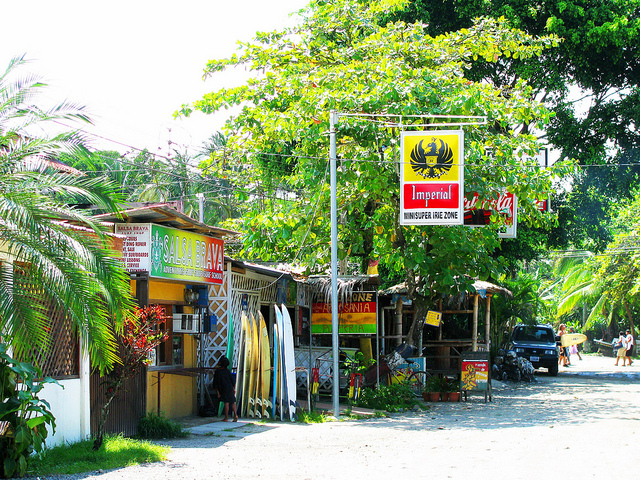
The town of Puerto Viejo Costa Rica is famous (or infamous) for its seedy authenticity. Colorful fishing boats rock against a coral covered harbor, reggae sounds from nearby bars and restaurants, and sarong, jewelry, and souvenir vendors set up shop on the beach.
In town you will find the only banks and ATMs in the entire area. Bicycle rentals are on every corner and taxis are readily available if you do not have a car to explore other neighborhoods.
Every Saturday morning a large farmer’s market commences with raw cacao, fresh whole chickens, a wide assortment of produce, and fresh breads and pastries. Several grocery stores and various household stores offer most items you might need. Restaurants in town are the most populated and affordable, but the true culinary treasures lie in outer neighborhoods.
Accommodations tend to be less expensive but can be noisy as Puerto Viejo hosts several parties every night of the week.
Playa Cocles (1-3 miles from town)
Expats and vacationers looking for tranquility and proximity to town stay in Cocles. The beaches are sprawling and the waves can get enormous. These beaches are best for sunning and surfing rather than swimming. Beach Break is the most populated beach in the area and the only beach with lifeguards.
The one grocery store, Pirripli, has a good wine selection, special imports, and fresh produce. There are many restaurants to choose from including the famous Italian restaurant La Pecora Nera. The one luxury hotel in Puerto Viejo, El Cameleon, is next door and throws Reggae and Calypso parties on Friday and Saturday nights. Laid-back travelers will enjoy the beach bonfire party every Tuesday night at Tasty Waves in front of Beach Break.
Otherwise this neighborhood tends to be quiet at night.
Playa Chiquita (3-5 miles from town)
The moment you step foot in Playa Chiquita the community vibe becomes apparent. Expats from all over the world carry their children and groceries down the street, sit and sip coffee in darling open air organic cafes, and swim in the natural pools created by the coral reef. There is one grocery store, El Duende Gourmet, with specialty items like local homemade bread, quinoa, and sriracha. A small farmer’s market takes place every Wednesday morning offering local yogurt, bread, cheese, and produce.
Punta Uva (5-7 miles from town)
Beautiful beaches, elegant cabins, and incredible cuisine all grace the quiet jungle neighborhood of Punta Uva. This neighborhood is popular with long-term vacationers and families. Three of the best restaurants in the entire area are in Punta Uva: El Refugio for perfect grilled steaks and seafood, Selvin’s Restaurant with arguably the best Caribbean food in the world, and Pita Bonita with freshly baked pita and homemade falafel. The beaches are calm for swimming and snorkeling and are famed as some of the most beautiful in all of Costa Rica. Playa Chiquita nearby is a necessary stop for markets and cafes.
Manzanillo (7-10 miles from town)
The quiet Caribbean fishing village of Manzanillo rests along a rugged wildlife refuge with stunning wilderness beaches. Accommodations and restaurants are somewhat sparse in this area so having a car is essential. Maxi’s, the most famous Caribbean restaurant in the greater Puerto Viejo area, serves delicious meat and seafood and throws Reggae parties every Friday night. There is one small convenience store, but you will need to venture all the way to Playa Chiquita for a proper market. If you are looking for proximity to animals, peace and quiet, and do not mind the 10 mile trek to town, Manzanillo is right up your alley.
Whatever neighborhood you choose you will be near beautiful beaches and lovely communities. Weigh the pros and cons between proximity to town and peace and solitude for your best fit.


Javier Hidalgo
Mexico is home to one of the world’s famous tropical playgrounds–the Riviera Maya Mexico. Here, you can scuba dive, jet ski, and just lounge around.
Craving more of a city experience? Think Mexico City, the nation’s capital, and one of the largest metropolitan areas in the world. Take a fascinating video tour of Mexico City to the Rivera Maya and discover for yourself the contrasting cultures, destinations, and activities in Mexico.
Let us know what you do in Mexico City in the comment section!
D Barefoot
Central America is a great place to call home. We certainly like it here. But we also know it isn’t for everyone.
While some of the negatives of living in a developing country can be managed by carefully choosing your specific area, there are others that can never be overcome. Period.
That’s important to know before you spend valuable time and money transplanting your life and all your worldly goods to a place thousands of miles away from friends and family. Every year, tons of expats move to Central America only to realize that a life in the Latin tropics isn’t right for them.
We don’t want that to happen to you.
We probably don’t have to tell you all of the many things there are to love about living abroad in Central America. But we’re going to anyway. We’re going to tell you the not-so-great things as well.
Of course, we firmly believe that the benefits of living here far outweigh any negatives. But that’s for you to decide. Here’s a list of what we think are some of the biggest pros and cons of living abroad in Central America.
The Pros of Living Abroad in Central America
1. Freedom
Sure, U.S. citizens sing about being “the land of the free.” But, if you really want to understand what freedom feels like, move to Central America. Theirs is a life lived less encumbered.
Freedom from virtually all government regulation. Freedom from neighborhood covenants. Freedom from the rat race and 60-hour work weeks. Freedom from cell phone tapping. Freedom from the need to keep up with the Joneses.
There’s nothing like it.
2. Cost of Living
Particularly in a time when your U.S. dollar seem to be stretching a shorter distance than ever before, the thought of living on between $1000-$2000 per months sounds pretty tempting. And it’s entirely possible almost anywhere you go in Central America. And that includes housing.
While costs vary greatly from one location to the next (and are, of course, higher in the larger cities), it isn’t unheard of to find a decent 2-bedroom house for under $500 per month. Dinner for two at a world-class restaurant, with a bottle of wine, will set you back no more than $30. You can get a dozen roses for $4 and a four-course lunch for $2.50.
The affordability of Central America is one reason it attracts so many retirees who can live an extremely comfortable retirement without sacrificing anything about their lifestyle.
3. Affordable Health Care
Almost everything is cheaper in Central America. And health care is no exception. It’s so inexpensive that many expats choose to self-insure their medical costs. However, for those who do choose health insurance coverage, they can get it for as little as $50 per month for coverage that pays 100% for in-network providers.
Doctor visits cost generally around $25, and that includes an extended time with the actual physician who may send you home with his or her private cell phone number. A specialist costs closer to $50, and an ER visit runs around $100.
Many countries even offer free health care at public clinics and hospitals, although a lot of expats opt to pay for private care. Most larger cities have hospitals that rival those in the U.S.
A lot of medical practitioners in Central America speak English, and many doctors even trained in the U.S. As a result, many Central American countries are beginning to emerge on the medical tourism scene, with patients traveling abroad to undergo procedures ranging from heart transplants to facelifts.
4. Climate
The countries of Central America boast some of the best weather you’ll find anywhere in the world. There’s really no winter at all, with the only distinctions in seasons coming as a result of a few rainier months each year.
While generally mild everywhere, the climate does vary from location to location. In general, coastal areas are warmer with higher humidity. Highs can get into the upper 80’s and low 90’s.
However, you only have to move up to a slightly higher elevation to get a little bit of relief from the heat. Many areas in the highlands never even reach 80 degrees and have a spring-like climate year-round.
The steady, temperate climate means there’s no need for two separate wardrobes. With just a light jacket or sweater and an umbrella you’re set for day and nighttime in any season.
5. Fresh Produce
The perpetual spring-like weather in Central America means that fruits and vegetables can be grown year round. And they’re like nothing you’ve ever eaten. Maybe like nothing you’ve ever even SEEN.
Farmer’s markets are loaded with the usual favorites, like plantains and mangoes. You can also find jicama, tomatillos, papayas, and guava.
Also among the offerings are more unusual options like nopals and prickly pears, respectively the stems and fruit of the prickly pear cactus. You might also see yuca root, tamarind, and chayote squash.
Fruit and vegetables in Central America are fresh, organic, locally-grown, and widely available. They’re also affordable. You can buy a week’s worth of produce for a family of four for less than eight bucks.
And nothing’s ever out of season.
6. Nature
The countries of Central America are some of the most ecologically and biologically diverse places in the world. And rather than driving cross country to experience a different climate or ecosystem, all you have to do is drive up or down the mountain.
Central America has it all. From beautiful beaches to active volcanoes to coral reefs to lush rain forests to mountain waterfalls. And each of those areas is teeming with rare, and often endangered, species of plants and animals.
The region is home to sea turtles, jaguars, toucans, sloths, snakes, monkeys, and much more. It also offers great sites for bird and butterfly watching. If adventure’s your gig, there are also opportunities for jungle expeditions, white water rafting, and some of the world’s best sport fishing.
7. Uncharted Territory
For many, Central America represents a place where you can truly find that new frontier that can never, ever be had in the U.S. With miles of unexplored reefs, untouched beaches, and undiscovered jungles, you can truly feel like a pioneer.
You can explore these areas (often only on foot or horseback), and–if you’ve got good negotiating skills–you might even call them yours.
Whether you want to build a hut and live like Robinson Crusoe, or just spend an afternoon alone on a deserted beach and then call it a day, you can do that in Central America.
8. Indigenous Culture
Depending on where you go in Central America, there are a number of opportunities to experience the culture of the area’s indigenous people groups or even live alongside them. You’ll see women washing clothes in the river and drying them on rocks. Many still practice the religious ceremonies of the Mayans and turn to alternative healers for medical treatment.
They set up booths in local markets to sell their wares: bead jewelry, straw goods, and textiles. They hunt, farm, and raise livestock. Many groups wear their own colorful native dress, and there are dozens of indigenous languages spoken throughout Central America.
9. The Simple Life
We’re not sure how or why, but in Central America the days seem longer. Things move slower, and there’s time left over for so many more things you could never have fit into your schedule back in the U.S.
The workaholic lifestyle is unheard of here. It’s replaced with 2-hour lunches and shorter work weeks. Many businesses still close for lunch. And, in fact, lunch is often a time that is reserved for families to spend together.
Most of Central America is untouched by consumerism, and there’s less of a need to have more and get more and do more. While some of the larger cities are becoming increasingly more North American in their practices, a simpler, slower pace of life is easy to find wherever you go.
Cons of Living Abroad in Central America
1. Crime
While some are certainly safer than others, the countries of Central America present some real concerns in terms of violence and crime. While there’s the obvious drug trafficking and its related criminal activity, there’s also a gang problem.
Some of the countries in Central America have alarmingly high homicide rates, and tourists often fall victim to burglary and theft. Many nations are taking great strides in this area, but there’s still a lot of room for improvement.
The good news is that much of the more violent crime often occurs in areas that aren’t necessarily as popular for expats. The biggest concerns in areas populated by foreigners are petty theft, pickpocketing, and other scams aimed at gringos.
Our best advice is to use common sense. Don’t leave valuable items in an unlocked car, and don’t run around flashing wads of cash.
2. Consumer Selection
While Central America does have ample options when it comes to fresh fruits and vegetables, in some other areas the selection can be lacking. The more dead set you are on having the same products and goods you enjoy in the U.S., the more disappointed you’ll be in the options available to you.
It’s not that there are a lot of things you can’t find here at all. It’s just that they might not be the same quality or same brands you’re used to. However, they will be cheaper. Imported and gourmet items are some of the only things that could end up costing you MORE in Central America.
So, if you can find a comparable substitute, you’re likely to save considerable money buying the local option. Likewise, if there’s something you absolutely can’t live without, you can have it shipped to you. But you’ll pay a pretty penny.
3. The Simple Life
No, we’re not crazy. Yes, we realize this was also the “Pro” list. The reason it appears again here is because the slow, simple pace of life isn’t for everybody. If you’re someone who thrives on busy-ness, you could actually become bored by the lack of hubbub in Central America.
Likewise you won’t find all of your North American television channels and other conveniences you’re used to. Certainly the larger cities offer more options and activities, but even there it’s not uncommon for businesses to close early. However, most areas have a vibrant night life, particularly the more touristy cities.
If the loss of a large social network is your complaint, it’s also easy to find other expats and enjoy regularly scheduled activities such as theater groups and poker nights.
4. Lack of Sophistication
While Central America offers plenty of culture, it’s often in the form of local culture. Things like art museums and live music venues are sparse and are usually found in only the larger cities. Even then, the scheduled exhibits and performers will be few and far between. They’ll also be mostly local talent.
You can find a variety of cuisines, especially in more populated areas, as well as specialty shops. Larger cities offer modern shopping malls and supermarket chains. You can even find movie theaters (some with flicks in English) and bowling alleys.
In addition to the cultural sophistication, many are often turned off by the level of infrastructure in Central America. Roads are often poorly maintained. Airports have unpaved runways. And contaminated water sources can be a concern.
5. Education
Although it’s not a problem for many expats, particularly retirees, the education system in many parts of Central America leaves a lot to be desired. While it’s free and compulsory in most countries, classroom sizes are often large, resulting in a poor student to teacher ratio.
Some areas do have bilingual schools. Private schools are also an option, although they can be expensive. Many expats instead opt to homeschool their children, giving them more freedom and flexibility to make good use of their time in their new country.
Central America does have a number of good universities and language schools.
6. Inefficiency
Central America marches to the rhythm of a different drum. And it’s often a slower and more erratic pace than most North Americans are used to. It’s very easy for expats to become frustrated at how things are run and how long it often takes to accomplish what seems to be such a relatively simple task.
Government requirements and processes are continually changing. People are always late, even in business settings. Contractors often leave work unfinished and never come back. It can be taxing to say the least.
The only real solution for this issue is to be prepared and set your expectations accordingly.
7. Difficulty Doing Business
While Central America is a great place to live, it’s a difficult place to do business. For starters, the type of visa you hold can limit your ability to work. Many countries protect their citizens by refusing to give jobs to foreigners if there’s a citizen who can do the job.
For those who want to open a business, that’s a whole other can of worms. The business climate of Central America is very different from that of the U.S. Combine that with the inefficiencies and delays mentioned above, and it can be a recipe for disaster.
While these pros and cons of living abroad in Central America are general observations, the individual countries and cities offer a variety of other perks and problems. If you think the downsides of living in Central America are things you could overlook, the next step is narrowing down the specific country you’d like to consider.


Playa Burica property in Panama
There are a lot of great up-and-coming places in Panama that are perfect for those who want to relocate to the tropics but don’t want to pay the hefty price for a place in an established area. These locations are also ideal for any would-be pioneers who are looking for a rising hotspot that isn’t quite so “last week.”
So, whether you’re hoping to blaze a trail in an emerging area or just want to find your own piece of paradise with a slightly lower price tag, we recommend that you keep an eye on these 5 up-and-coming places in Panama.
1. Western Azuero
Unlike the eastern portion of the peninsula, the western coast of Azuero is much less developed. Known as the Azuero Sunset Coast, this area is sparsely populated and home to very few expats. While it has a couple of small towns–most notably, Torio, and Malena, a small fishing village–the region is mostly home to cattle ranches and those involved in other agricultural pursuits.
Situated on Panama’s Pacific Coast, the scenery on the Azuero is remarkable. Lush mountainsides, with cascading waterfalls, give way to deserted stretches of beach where you could easily find yourself to be the only sunbather or surfer for miles around. Speaking of surfing, this region, particularly Morillo Beach just south of Torio, offers some of Panama’s best and most consistent waves.
The Azuero’s western coast offers sightings of whales, dolphins, and sea turtles. It’s also home to world-class fishing, with an abundance of tuna, sailfish, marlin, dorado, wahoo, and yellow tail. And the rainforests of Cerro Hoya National Park are home to many endangered species.
Azuero coastal area does have some supermarkets and even a handful of new residential areas along the coast, but getting from point B to point B is indirect at best, however, if that doesn’t bother you, this area boasts one of the lowest costs of living in Panama.
With decent access to the larger city of Santiago, and even better access to more populated areas along the peninsula’s east coast (like Pedasi and Las Tablas), the western Azuero coast is a great fit if you want to live like a local without venturing terribly far away from modern conveniences.
2. Caribbean Coast
In contrast to Panama’s often rocky and varied Pacific coast, its northern coast borders the Caribbean, which offers pristine white sand and shady palms. Not to mention sparkling turquoise waters that offer crystal clear visibility.
Its beauty might suggest that Panama’s Caribbean coast would be its most desirable and home to many of its largest settlements. Not so.
One reason is its inaccessibility. The Pan-American highway, which stretches from Alaska down to the southernmost regions of South America (except for a brief gap through Panama’s Darien province), almost invariably clings tightly to Panama’s southern Pacific coast, making the Caribbean side of the nation much more difficult to reach by land.
Also, while there are areas such as Bocas del Toro that attract both tourists and expats in droves, they’re not the best bargains on the Caribbean coast. If you’re looking for a bigger discount, Panama’s northern coast also boasts miles and miles of virgin beaches that are great for the more adventurous destination-seeker.
Along with the discounted price tag, though, comes much less in the way of infrastructure. Think primitive roads, spotty internet, and fewer public water systems.
Additional challenges presented by Panama’s Caribbean coast include the large amount of protected land. With many national parks and indigenous lands, property is quite difficult to come by. Not to mention, the area gets a large amount of rainfall, roughly twice that of the Pacific Coast.
While the Caribbean coast offers opportunities to own stunning beachfront property at rock bottom prices, it’s not for everyone. We’d only recommend this region if you aren’t afraid to hurdle some obstacles in the buying process and are willing to contend with a lack of conveniences. At least, for now.
3. Burica Peninsula
In Panama’s southwest corner lies the Burica Peninsula, which juts into the Pacific Ocean and divides its territory between Costa Rica and Panama, which claims about ⅔ of the landmass. Accessible by a short scenic drive from David, the peninsula is home to Puerto Armuelles, which has shopping facilities and other modern conveniences.
However, Burica’s tropical wilderness, not its familiar amenities, are its real appeal. Covered mostly in rainforests, it contains beautiful flora and fauna and is home to many endangered species such as the Panamanian Red Spider Monkey.
The area also contains fields, where cattle graze, and rolling hills that often drop off directly into the Pacific Ocean. Its beaches are untouched and dotted with towering palms. In addition to lounging in a hammock on an isolated beach, the area also welcomes you to experience some of the world’s best sport fishing and a few of Panama’s secret surfing locations.
A drive down the recently completed road that leads all the way to the tip of the peninsula affords views of Volcan Baru, the country’s highest peak. You’ll cross a river and drive out on the beach, along the surf, to reach the Playa Burica community at the southernmost point. But only at low tide. Otherwise, you’ll need a boat to get there.
While this area is still up-and-coming, it likely won’t be for long. If you’re looking for an elusive destination that offers a remote feel, just a short distance from civilization, take a look at the Burica Peninsula.
Note: Article 121 is something one needs to research before buying here. Despite this Law most of the coastline is currently owned by foreigners.
4. Santa Fe
So, those are some beach areas. What about something for the mountain-goers?
The relatively small, albeit growing, town of Santa Fe, nestled into the Veraguas mountain range about 5 hours from Panama City, is a place we think you should watch.
Although surrounded by much higher mountains, Santa Fe sits at an altitude of just 1350 feet. That’s high enough to escape the heat and humidity of the lowlands, yet low enough to experience some nice warm days and no breathing problems.
While notes of traditional Panamanian culture still ring throughout, the city enjoys many modern conveniences such as clean drinking water and high speed internet. However, perhaps its biggest draw is its opportunity for adventure.
Santa Fe offers horseback riding, bird watching, and exploring…from mountainside coffee farms to waterfalls to orchid gardens. Among the town’s inhabitants are toucans, hummingbirds, and rare butterflies.
Also relatively rare in Santa Fe are expats. Sure, there are some. But rather than living isolated by themselves in gated communities, expats in Santa Fe often reside on large plots of land that they can use for coffee farming, reforestation, or even simply growing their own organic fruits and vegetables.
Santa Fe is a great value if you’re an outdoor enthusiast who wants community and conveniences, but in a place that’s rich in authentic culture and relatively unspoiled by developers.
5. Ruta Sur
Ruta Sur refers to the new stretch of road that was built to bridge the gap between Boquete and Volcan. Meaning “Southern Route,” it covers what is essentially 15 miles, as the crow flies, in many more winding miles of unmarked (and sometimes unpaved) roads.
Much different from the highly-developed and densely populated towns it connects, areas traversed by the Ruta Sur are rural and contain few inhabitants. The route takes you past miles of coffee and vegetable farms, by orange groves, past Volcan Baru, alongside waterfalls, through canyons and lush valleys, and finally to fields used for cattle farms and greenhouses.
Once fairly unknown, this region offers, not only new and improved access, but many opportunities for enterprise. Residents of this area are able to enjoy the breathtaking scenery and also earn a living operating a dairy farm or a spa retreat high in the mountains.
As the road begins to become more traveled, the region will likely gain popularity. However, it could take a while. The route is largely unlabeled, with only a telltale painted yellow stripe marking the way, much like Dorothy’s fabled quest for the land of Oz.
The areas along the Ruta Sur are perfect if you want to enjoy a life lived a little further off the beaten path and use your land as your livelihood. Shop for property along this stretch of road if you want to embrace life along the journey, not at the destination.

Situated in the northwestern province of Guanacaste, Costa Rica, Nosara is the kind of place you dream about at your desk while plucking away at your computer keyboard. And the beaches in Nosara are certain to be a part of that dream.
The lifestyle is relaxed, where you can fill your day with yoga, surfing, or visit one of the four beaches which emulate this laid-back, you-can-do-it-tomorrow lifestyle.
1. Playa Guiones

JP Clover
Playa Guiones is the main beach in Nosara and is known as the best place to surf. No one can really tell you when the surfers started to come, but it is clear this group can be credited for getting Nosara known, and help set the tone of the place, that it is far less about touristy activities and more about the simplicity of a beautiful beach and nearly perfect waves.
2. Playa Pelada
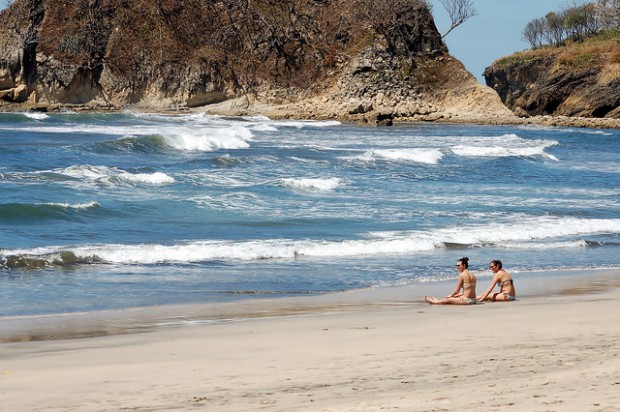
Mark LoCastro
Want to take a great walk on the beach and hunt for seashells? Then Playa Pelada is the place. A rocky reef protects Playa Pelada, just north of the point, making it the local swimming hole and it’s the only other beach in town for swimming.
3. Playa Ostional
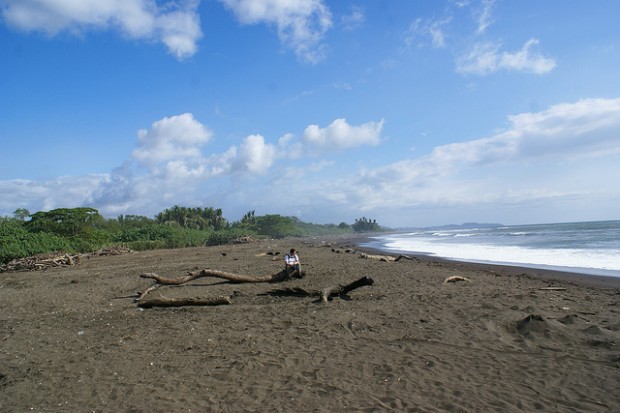
Organization for Tropical Studies
Playa Ostional is another of Nosara’s long and beautiful dark sand beaches. This is the place surfers come to ride the big, powerful and often hollow waves, but Ostional is probablay best known as one of Costa Rica’s most important turtle nesting sites.
4. Playa Garza

Micheal Banino
Take in the view under a shady palm tree, of white sandy beaches and calm blue waters at Playa Garza. If you get tired of lounging on the beach, take your chances with an activity on the water, as the beach is the main spot for sport fishing and boat trips.
What Are Your Favorite Beaches in Nosara?
Know of another great activity to do at one of the beaches in Nosara? Leave us a comment in the section below!