


The calm blue waters of Lake Nicaragua have made it a favorite destination for nature lovers across the world. Spanning 110 miles in length, it’s the largest freshwater lake in Central America.
In fact, the lake is so large that it actually has many ocean characteristics. The lake is tidal, and the area often experiences storms of the kind you’d find on the coast. The area around the lake is beautiful, and it’s not surprising that many expats set their heart on moving here.
If you are thinking of making Lake Nicaragua your home, you have the choice of five main areas. They are Granada, San Carlos, San Jorge, Ometepe Island and San Miguelito.
These five port towns all have a lot to offer. Around the banks of the lake you will find historical architecture, churches, markets, and nightspots waiting for you to discover them.
Which area you choose depends on your personal preference. Here is some guidance to help you make the right decision.
Granada
Granada is a very popular choice. It is a beautiful colonial city, with stunning Spanish-inspired architecture and a lot of cultural experiences to offer. As it is a comparatively wealthy area, Granada offers much more in the way of luxurious living than the other four port cities. A lot of money was spent on restoring the city in the 1990s, and the city now has amenities like:
- cable and cell phone service
- four star hotels and restaurants
- a brand new supermarket and a selection of health food stores
- libraries
- gyms
- Internet cafes
Because of this, Granada offers a high quality of life for expats. Not only does it enable you to get closer to nature and enjoy the fantastic landscapes and still waters of the surrounding area, it also lets you do it with all the comforts of a modern city! However, though the real estate in Granada still offers strong investment opportunities, it is more expensive than it is in other parts of the tropics.
San Carlos
Like Granada, San Carlos is a big city with a good selection of facilities and amenities. It is the capital of Rio San Juan, and here you’ll find doctors, lawyers, and most other professional services. The town also has its own small airport, which makes for very convenient travel.
One of the main benefits of San Carlos is that it sits right on the bank of the lake and offers beautiful views across the water. The city also has idyllic features such as a tropical atmosphere, friendly people, and a very low volume of traffic. Many of the people who live in San Carlos are fishermen by trade, which means that it’s a great place to eat!
The downside of San Carlos is that it is not as picturesque as other places in the area. The natural rainforest around the town is being threatened by slash-and-burn timber techniques, and the town’s accommodation is characterized by corrugated iron.
San Jorge
San Jorge is a small village on the western side of the lake. It’s best known for its ferry links, as it’s here that people go to to catch the boat to Ometepe Island. Though small, the village does have some popular restaurants.
This rural area is rich with vegetation and wildlife. If you’re looking for a truly rural retreat, San Jorge might be the right choice for you. If you’re looking for a new home base with a bit more life, you might want to look elsewhere.
Ometepe Island
Speaking of rural living, could island life be what you’re looking for? Ometepe Island sits right in the middle of Lake Nicaragua, measures 276 square kilometers and is home to two volcanoes. The island has fertile soil, lovely beaches, and rich biodiversity. In fact, Ometepe has long been described as a paradise.
Unlike Granada and San Carlos, Ometepe Island has little to offer in the way of facilities or luxuries. It is, however, a beautiful spot.
San Miguelito
San Miguelito is a mountainous municipality that looks out over the lake. In addition to gorgeous lake views, it is also home to two rivers and numerous waterfalls. The real beauty of this area is the sandy beaches that line the edge of the lake.
The town of San Miguelito is small but well formed. Between March 8th and 14th each year the town lights up to celebrate the traditional festival of San Miguel de Arcangel.
There are some travel links to the town, but it doesn’t have much to offer in terms of restaurants or nightlife.
Wherever you choose to live on Lake Nicaragua, you can be sure of two things; beautiful lake views and friendly locals.

Many people move to the tropics of Latin America in search of a healthier lifestyle in nature, however making this transition can be difficult.
The abundance of fried foods and sugary processed treats and lack of health food stores and gyms can in fact lead some to live less healthy than they did in the first world. So how can one be sure to live healthfully in Latin America? Here are some tips to consider.
Grow your own food or shop at the Farmer’s Markets

Kevin Krejci
Did you know that Costa Rica is one of the top users of pesticides in the world? Immersed in the jungle we may simply assume that all of our produce is fresh and local.
Unfortunately this is not always the case. In fact even coastal towns may be selling frozen fish from as far away as Asia! For this reason it’s particularly important to ensure that your food is coming from local fishermen and farmers. Many towns with expat communities have farmer’s markets and community-supported agriculture programs. Why not hop on board?
It’s a great way to connect with your community and the environment. Many locals and transplants sell farm fresh produce, dairy, homemade cheeses, whole grain unprocessed bread, even probiotic rich kombucha.
In health-conscious towns throughout Central America including Nosara and Puerto Viejo in Costa Rica and Boquete in Panama, expats have created their own markets for sharing health foods. Some sell organic produce from their own gardens and import specialty items like essential oils, spices, himalayan salt, and more.
You can also learn to grow your own food and many communities have garden shares where you can learn from others and share farming space. Your meat and fish can be purchased from local fishermen and hunters, or why not take up fishing as a hobby and catch what you need?
Find healthy hobbies
With a big transition it can be difficult to maintain your workout routine. When the sun is shining the gym may be the last place you want to be, if the town even has one. The good news is that there are tons of healthy, athletic outdoor activities you can partake in that are also plenty of fun.
If you’re on the coast take up surfing, go for runs on the beach, learn stand up paddleboarding, take hikes and connect with nature.
If you’re in the city ride your bike to get around, participate in yoga classes, and find some nearby wilderness to explore. One of the great advantages of living in Latin America is that nature is never far away, so seek it out and move your body at the same time. You will likely notice that outdoor activities are easy to integrate into your lifestyle here.
Drop the “vacation” mentality

Chi King
Feeling like you’re on a permanent vacation is great, so long as that does not become a life of unhealthy indulgence. Cocktail hour, hammock lazing, and meals out in restaurants are all treats that can make us feel relaxed and pampered.
However, in excess they can make us feel sluggish and demotivated. Can daily yoga, sunset gazing, cooking a healthy meal on a beach bonfire, and jungle exploration feel just as decadent?
Absolutely. The point of retiring and getting off of the grid is not to settle into a life of doing nothing, it’s to engage in activities that you enjoy. In fact when you participate in a motivating, active lifestyle you may find yourself craving more time outdoors connecting with others.
Plan ahead
A drastic difference between Latin America and North America is that it is often quite difficult to find healthy, ready-made foods. Forget about stopping in at Whole Foods and visiting the salad bar. For this reason planning meals ahead is especially important.
Keep your fridge well stocked in case you have difficulty accessing fresh produce, fish, meat, and dairy. Prepare salads at home for beach picnics and pack healthy snacks for hikes and trips like almonds, watermelon, hard boiled eggs, young coconut, and carrot sticks with guacamole. This prevents you from being hungry in a place where your only options may be fried chicken and empanadas… as delicious as they sometimes are!
Bring some staples from home

Adam Wyles
Latin America is still developing and for that reason it can be nearly impossible to access certain health foods and supplements. If there are specific herbs, organic nuts and seeds, and supplements you take, it’s a good idea to bring a stash with you. It’s advisable to do some research ahead of time and find out what health stores do exist and what they supply.
The opportunity to become a healthier individual and family certainly exists in Latin America, it just takes some transitioning. Find the health-centric community and you can quickly discover the many secrets for accessing health foods from home while staying active in the natural environment.


Avylze
You may have heard that Ecuador is one of the best places to retire on a budget. You may have heard that it offers reasonably-priced real estate and health care. But what about the things you pay for on a day-to-day basis?
Like food.
As it does in many Latin American countries, food costs in Ecuador can range from much less to, in some cases, slightly more than their U.S. equivalent. The main determining factors are your own individual tastes and preferences. However, on the whole, you can expect to pay about half of what you would in the U.S. for your typical trip to the grocery store.
Below is a sample list of what you might buy on a trip to the local supermarket. We’ve listed the price in Ecuador and, for comparison’s sake, the cost of the same item in the U.S. Prices can vary greatly, even from one region of the country to another, but these are some pretty good estimates based on what we’ve gathered from friends who live there.
| Item | Ecuador | U.S. | %Discount |
| 1 dozen eggs | $1.82 | $3.18 | 42% |
| Filet mignons steaks, 1 lb | $4.68 | $19.99 | 77% |
| 1 liter milk | $1.00 | $3.19 | 67% |
| Bananas, 12 | $ .60 | $2.36 | 75% |
| 3 lb. bag laundry detergent | $2.00 | $5.45 | 63% |
| Soap (1 bar) | $ .80 | $1.22 | 34% |
| Yogurt | $2.70 | $3.98 | 32% |
| Avocados, 2 | $ .50 | $ .66 | 24% |
| Rice | $ .82 | $2.82 | 42% |
| Cheese, large round(16oz.) | $2.00 | $6.99 | 71% |
| 3 heads organic lettuce | $1.50 | $5.07 | 70% |
| Dozen roses | $1.00 | $19.99 | 95% |
| Ground organic coffee (1 lb) | $4.56 | $9.32 | 51% |
| Fresh bread, 2 loaves | $2.50 | $4.18 | 41% |
| 1 rotisserie chicken, whole | $14.52 | $7.39 | -96% |
| Pork (1 lb) | $2.84 | $8.54 | 67% |
| 3.5 lb chicken breasts, frozen | $9.54 | $9.79 | 3% |
| Corvina (sea bass), 1 lb | $7.27 | $13.32 | 45% |
| Cereal, boxed | $6.00 | $4.29 | -40% |
| Total | $66.50 | $131.73 | 50% |
As you can see, food costs in Ecuador can represent a considerable savings if you shop wisely. A lot of packaged items, like cereal, can actually cost more to buy in Ecuador. However, if you’re willing to try a local brand, you can still save on those items as well. This is true for a lot of different products.
Another factor to consider is the quality of the items. Some things, like coffee and produce, don’t seem to be that much less expensive than they are in the U.S. However, many of those items are fresh, organic, and locally grown. You can’t beat ’em!
In looking at the total bill, it’s also easy to see that the quality of your meals is one thing that definitely doesn’t have to suffer if you choose to relocate to a low-cost destination like Ecuador. With some smart shopping, you can eat as well as or better than you ever have!
If you like the idea of making your retirement dollars stretch farther on all aspects of living, you might want to learn more about the opportunities available in Ecuador.

Costa Rica has enchanted yogis for years with its natural beauty and peaceful serenity. In fact, many came and decided to establish professional yoga centers to bring world-class yoga to the secluded beach towns. It’s no wonder that today Costa Rica is home to some of the best yoga centers in the world offering inspiring, often life-changing retreats.
With a plethora of yoga centers in the country, how does one choose the best place in Costa Rica for a retreat? We’ve compiled a list of the most professional studios in some of the most peaceful, beautiful places in the country.

lululemon athletica
Nosara
Nosara is undoubtedly the town that put Costa Rica on the map for yoga and wellness tourism. In fact the Nicoya Peninsula, where Nosara lies, is one of five places in the world considered a Blue Zone. Blue Zones are areas where people tend to live longer, past 100, more than anywhere else in the world. The town of Nosara is quiet and tranquil with a solid expat community, great surf, and stunningly beautiful sunsets. As the most popular place to practice yoga in Costa Rica, it hosts many yoga retreats throughout the year from a variety of centers. The two most reputable are Nosara Yoga Institute and Blue Spirit.
Nosara Yoga Institute
As one of the first yoga studios in Costa Rica, Nosara Yoga Institute paved the way for the many yoga centers throughout the country. High on a hill in the woods on the outskirts of Playa Guiones it is a very peaceful place to practice. The Nosara Yoga Institute is widely known for its exceptional yoga teacher trainings, which offer an interdisciplinary approach far beyond asana. They strive to deepen students’ inner voice and awareness and emphasize non-judgment and non-authority in their teaching to allow all students to explore their individual yogic path.
Those looking for non-teacher accredited retreats can find them at Nosara Yoga Institute, but they are offered by teachers from other institutions. The instruction and experience is consistently high quality.

Viva El Momento
Blue Spirit
Started by the same holistic physician who founded the Omega Institue in Rhinebeck, NY, Blue Spirit is one of the most famous places in the country to study yoga. The center overlooks the ocean on a long white sand beach that is a protected turtle refuge and has a lovely koi pond and salt water infinity pool. Yoga teacher trainings are done through the globally respected Yoga Works association which combines East and West philosophy in its curriculum.
They also host many retreats throughout the year covering a wide variety of topics and style including Yin and Vinyasa. The retreats are led by reputable instructors from all over the world. Teacher trainings and retreats include accommodation and three delicious vegetarian meals.
The Osa Peninsula
Those who have had the pleasure of visiting the wild Osa Peninsula understand why National Geographic called it the most biologically intense place on Earth. You immediately feel transported to another world, a world before modern development, when you enter the rainforest jungle of the Osa Peninsula. Scarlet macaws squawk over your head, monkeys swing from trees, and if you’re lucky you might see a jaguar or a tapir. Completely removed from the rest of the world, you can really disconnect from the modern world and connect deeper with yourself.
Blue Osa
With an onsite eco-resort, restaurant, and yoga studio, Blue Osa is a luxurious all-inclusive retreat center in the remote Osa Peninsula. They strive to run a completely sustainable facility with recycled waste and water, organic produce that comes directly from their own garden, environmentally friendly landscaping, and a completely self-sustaining micro grid for all of their power and sewage. In fact their center that comfortably accommodates 30 guests and 20 staff members uses the same amount of energy as a typical four-person home in the U.S.
They host teacher trainings as well as week-long retreats offering anything from shamanic journeys to life coaching in conjunction with incredible yoga offered by teachers and healers from all over the world. The founder’s intention in creating this center was to create a space that removes people from the distractions of life and awakens their innermost selves.

Mihaela Vorvoreanu
Pavones
At the very southern Pacific tip of Costa Rica lies the small, authentic surf town of Pavones. The black sand beaches with volcanic rock stretch for miles and the surf is some of the best in the world. In an untouched remote part of Costa Rica, the town of Pavones is teeming with wildlife and offers a unique view of true Costa Rican culture. The town may be small but it hosts one of the top teacher training centers in the country, the Pavones Yoga Center.
Pavones Yoga Center
Built on top of the hill overlooking the Pacific ocean and the town of Pavones, the Pavones Yoga Center is a breathtaking place to practice asana. The founder and lead instructor Indira grew up on the South Pacific of Costa Rica as a child. After studying yoga across the globe she worked as a teacher training instructor at the famous Nosara Yoga Institute before opening her own center in Pavones. The center hosts several teacher trainings a year, from one week to one month, but also hosts retreats. Their surf and yoga retreat held annually combines yoga classes with private surf lessons.
Trainings and retreats include accommodation in their beautiful center along with healthy delicious meals. The onsite spa offers a wide variety of body work as well as body wraps, scrubs, and other skin treatments.
The Yoga Farm
The Yoga Farm offers a highly affordable alternative to typical retreats. It is situated up in the hills overlooking completely deserted beaches in Pavones. The farm is covered in fruit trees and grows much of the produce that the kitchen prepares for guests. With packages starting at $260 per week for daily yoga and vegetarian meals, the Yoga Farm is a great option for those on a budget. They also have a work trade and volunteer program for those who intend to stay long term.
The South Caribbean
A different world from the rest of Costa Rica, the South Caribbean is becoming a yoga destination in its own right. With abundant wildlife, live coral reef, golden sand beaches, sparkling turquoise water, and world-renowned surf, it is an incredibly beautiful place to deepen your yoga practice. Two of the country’s most beautiful national parks sit on the Caribbean: The Cahuita National Park and The Manzanillo Wildlife Refuge. The beaches here are nearly deserted and consistently listed as some of the most beautiful in the world.
Culturally the Caribbean has a diverse mix of indigenous people as well as Afro Caribbean descendants who bring Calypso and Reggae music and spicy coconut-flavored cuisine. There are also plenty of international transplants from all over the world.
Samasati
The South Caribbean now hosts many yoga studios, but Samasati was the first to open and is one of the only studios offering retreats and teacher trainings. The center is high in the mountains on a secluded property with stunning views of the ocean. Samasati was built with the intention of creating a sustainable retreat center that contributes to the community. The space was built with minimal environmental impact and employs local residents exclusively. They aim to promote an alternative way of life through their practice of asana, serving local organic vegetarian meals, operating with energy efficiency, and giving back to the community.
Retreats offered cover a wide spectrum from yoga teacher trainings to wildlife adventures. Their yoga retreats are offered year round and include meditation, asana, pranayama, and daily shuttle service to the nearby Caribbean beaches of Puerto Viejo. Packages include accommodation and delicious vegetarian meals. They also offer tour packages to explore the wilderness and culture of the region.
Punta Mona
Deep in the Caribbean jungle in the Manzanillo Wildlife Refuge lies Punta Mona, or Monkey Point. Animals run wild, the beaches are deserted and gorgeous, and it’s not unusual to see dolphins swimming offshore. When the sea is calm it makes for incredible snorkeling. Entirely self-sustaining and isolated, the Punta Mona Center for Sustainable Living and Education is so remote it can only be accessed by foot, small boat, or horseback. The center is most famous for its permaculture design courses but it also offers tours for day-trippers as well as retreats and yoga teacher trainings.
Retreats consist of asana practice as well as guided meditations, underwater adventures, jungle explorations, medicinal plant ceremonies, natural mud baths, and many creative hands-on activities like cooking and arts and crafts. Lodging is included at the onside eco-center as well as three organic vegetarian meals a day sourced primarily from their own land. The Punta Mona Center is unique in that it also offers retreats for children of all ages led by Cirque de Soleil veterans. These retreats incorporate yoga, music, and dance and also teach children about permaculture and sustainability.

Tommy Davis
Mexico has long been a favorite of U.S. expatriates, and for good reason. Many cite its proximity to the U.S. as one of the country’s biggest perks. Others choose it for its affordable, quality health care options. Speaking of affordable, the cost of living in Mexico is another huge benefit to those hoping to stretch their retirement dollars or even raise their families in a more budget-friendly destination.
But, numbers aside, there’s another really big reason that a lot of people are choosing our neighbor to the south when looking for a place to relocate…
The beaches in Mexico are among the best in the world!
Whether you want a retreat that sits at the base of lush mountains or one that intermingles with the Mexican desert, a coastal area that’s dotted with the remains of an ancient civilization or one that’s adorned with the finest luxury resorts, a spot with opportunities for adventure and exploration or just a stretch of sand with no other inhabitants…
Mexico has it all.
Without a doubt one of the things that makes Mexico such an appealing destination, particularly for the long-term, is its variety. The 450+ beaches in Mexico cater to every interest, meaning there’s never a reason to sacrifice what you want. Instead, all you have to do is zero in on exactly which area or town offers the best options to suit your values.
Here’s a breakdown of some of the most (and least, if solitude’s your aim) popular beaches in Mexico, with a little more information about what makes each of them special.
Beaches in Mexico – Pacific Coast
Loreto
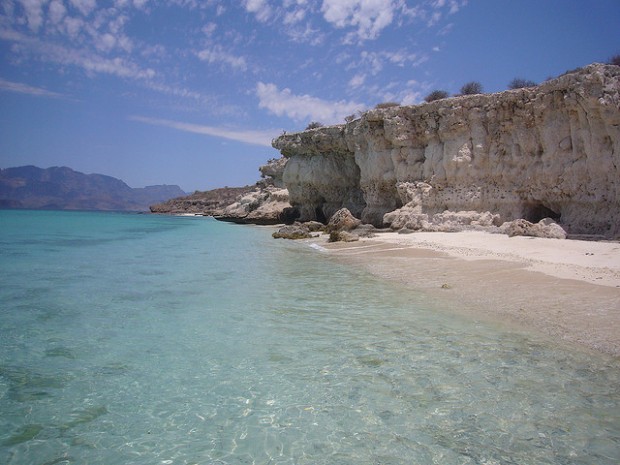
Elevated
Loreto sits on the coast of the Sea of Cortez adjacent to the great Sierra de la Giganta and is made up of 5 islands: Coronado, Del Carmen, Danzante, Monserrat, and Santa Catalina. Its beautiful beaches are juxtaposed alongside towering cliffs, striking rock formations, and lush vegetation.
One of the oldest settlements on the Baja California Peninsula, Loreto is a perfect fit for the expat who’s looking for a destination that is rich in culture and history. The first Mission was founded at this site and led to the establishment of the Church of Our Lady of Loreto, whose patron saint is celebrated with a joyful festival annually.
Loreto is a great place for sport fishing, with an abundance of mahi mahi, wahoo, and tuna. It also offers opportunities for diving and surfing, as well as whale watching during the winter months. The nooks and crannies along its coast are perfect places for kayaking, snorkeling, and exploring.
La Paz
Although an important port and political hub for the state of Baja California Sur, La Paz is a relatively small city that hasn’t changed much over the last century. It’s a great option for someone who’s looking for a laid-back lifestyle dotted with a hint of modern convenience.
It’s well-stocked with resort hotels, golf courses, and modern restaurants. Yet La Paz still boasts plenty of beaches that aren’t overcrowded and some that are almost isolated. Its historic city center has a beautiful square with paths made of Spanish tile, a pink quartz gazebo, and a cathedral that dates back to the 19th century.
The palms and laurel trees of La Paz stand like an oasis amid the surrounding desert. Its many tranquil bays are ideal for a leisurely swim. It also includes several offshore islands, as well as a deserted sandbar, that are ripe for exploration. The area is great for sport fishing, ecotourism, diving, and whale watching.
Los Cabos

Guillermo Flores
At the Southernmost tip of Baja California Sur lies Los Cabos. Technically two cities connected by a stretch of highway called the Corridor, it is the perfect spot for someone who’s looking for the best of both worlds. Many expatriates prefer it for its North American feel. It’s also one of the few destinations on the Sea of Cortez that claims both desert and mountain scenery.
San Jose del Cabo looks and feels like an authentic Mexican town, albeit an upscale one. Its quaint eateries are small and intimate and sit along cobblestone streets, adjacent to boutique hotels and the mission church. Twenty miles away sits Cabo San Lucas, with its high end bars, glistening shopping malls, and bustling marina.
The Corridor itself is its own destination, as it is home to most of the spas, resorts, and golf courses that have made Los Cabos such a popular tourist destination. Most of the region’s best beaches, including Medano beach, are also located along the Corridor, which is an ideal spot for enjoying various water sports.
Mazatlan

CGA Photo
If you’re the would-be expat couple who’s looking for a place you can enjoy long walks on the beach, try Mazatlan, where the beaches on both side of the city stretch for miles into the distance. It has a tropical climate, yet it enjoys less humidity than some of its counterparts, thanks to the dryer desert areas to the north.
While the area does attract a lot of tourists, most of them come for the newer resorts, bars, and restaurants of the Zona Dorada (or Golden Zone). Old Mazatlan remains relatively unaffected by the town’s popularity, with many of the hotels remaining as small, family-owned establishments. Its cafes, markets, and shady plazas don’t look even the slightest bit touristy.
Among Mazatlan’s claims to fame are its Carnaval celebration, one of the best in Mexico, as well as its fishing and shrimp fleets, which are the largest on the west coast. As a result the city also boasts a large variety of restaurants.
Puerto Vallarta

Van Hesselgesser
While many of the beaches in Mexico might be described as up-and-coming, Puerto Vallarta is one that has already arrived. Its world-class amenities, combined with its near-perfect weather, have immediately won the hearts of many expats who’ve decided to relocate after their very first visit to this Mexican hotspot. It’s popular among expats for the way it marries the beauty of a beach destination with the charm of a colonial city.
Puerto Vallarta is made up of the Romantic Zone, with its beautiful beaches and seaside bars, and the Hotel Zone, with its many restaurants and resorts. It also encompasses nearby areas such as Sayulita, which has some of Mexico’s most sought-after real estate. With first-world infrastructure and quality health care, Puerto Vallarta is perfect for someone who’s looking for a modern destination with a heavy North American influence.
Beyond the city’s beautiful beaches are its famed malecon, followed by a network of cobblestone streets etched into the jungles and foothills of the Sierra Madre Mountains. It sits at the same latitude as the Hawaiian islands and enjoys a tropical climate year-round.
Manzanillo
While it’s Mexico’s most vital seaport, Manzanillo is also a popular resort destination. Its opportunities for adventure include ecotourism, adventure sports, snorkeling, scuba diving, surfing, and some of the world’s best sport fishing. Nicknamed the “Sailfish Capital of the World,” Manzanillo is home to several international fishing tournaments.
In addition to its 40 miles of often unoccupied beaches, the city also has waterfalls, lakes and rivers, and an active volcano. While most of the beaches are composed of pebbles or golden sand, those to the south of the city are made up of black sand due to the presence of volcanic ash.
The city is made up of the hotel zone, which has many nice hotels and restaurants, and a newly renovated historic center. There in El Centro, you will find a plaza that overlooks the bay, surrounded by local shops and restaurants. The historic area also boasts a new malecon that was recently installed to make the city more attractive to tourists.
Ixtapa – Zihuatanejo

Erin & Ben R
Yet another great 2-in-1 destination is the area that includes the towns of Ixtapa and Zihuatanejo. Situated only 4 miles apart, the two couldn’t be more different. Ixtapa is made up of all-inclusive luxury resorts and high-rise hotels. All sorts of outdoor and aquatic adventures are offered, including a water park.
Zihuatanejo, on the other hand, has a laid-back atmosphere with its art galleries, boutique hotels, and small-scale restaurants. Its protected bays are perfect for snorkeling and exploring. Its beaches include rocky cliffs, in addition to the sand. Just off the coast, Los Morros de Potosi offers fantastic opportunities for diving among its granite protrusions and underwater caves.
With their luxury spas, endless adventures, and historic charm, Ixtapa and Zihuatanejo are a great option for someone who wants it all.
Acapulco
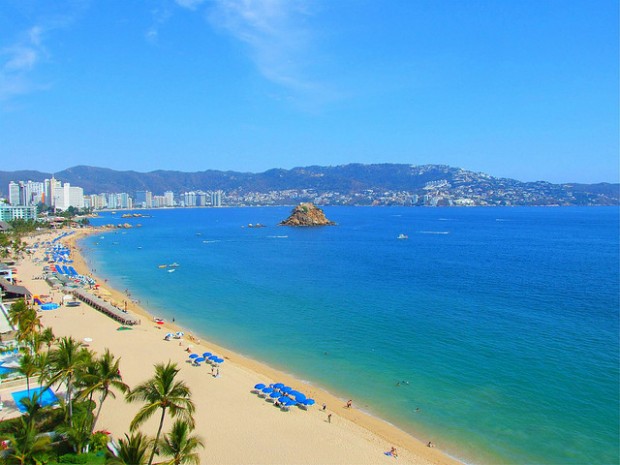
JSF306
Of all the beaches in Mexico, none are quite as lively as the metropolis of Acapulco. The area has been attracting visitors since the 1950s, and today is home to around 1 million residents. Although it’s a top resort destination, the city has more of an urban feel.
However, that’s not to downplay Acapulco’s natural beauty. Its two bays, Santa Lucia and Puerto Marques, are breathtaking–surrounded by cliffs, golden sandy beaches, and lush vegetations. They’re also bordered by the Sierra Madre del Sur mountains to the east.
In terms of activities, Acapulco has something for everyone. Party-goers love the round-the-clock excitement. Families enjoy the parks, laid-back beaches, and water sports park. Those seeking a more active lifestyle enjoy golfing, ecotours, and a variety of water sports. The area also has a wide assortment of restaurants, markets, and shopping malls.
Huatulco
One of the most relaxed and well-preserved beaches in Mexico is Huatulco. Spanning 20 miles of the coast, it includes 36 beaches that are distributed among nine bays, some of which can only be reached by boat. A 3-hour tour on a covered boat is a great way to see the area in its entirety.
The Mexican government carefully planned the development of Huatulco, which includes the Bahias de Huatulco National Park, a protected reserve. The area boasts luxury hotels, nightclubs, restaurants, and an urban city center. However, its real attraction is its natural beauty.
Huatulco has been awarded the Green Globe certification for its commitment to environmental protection. Its bays offer hidden beaches, a variety of flora and fauna, ancient archaeological sites, and opportunities to observe native cultures. It is also rich with ancient stories of pirates and early European explorers.
Puerto Angel

Adam Jones
The city of Puerto Angel offers some of the best variety of all the beaches in Mexico. Whether you’re looking for a great spot for surfing or a place where you can get back to nature–literally–Puerto Angel likely has what you’re looking for.
The area is composed of several beaches that offer a variety of activities. The Ventanilla Lagoon is a great spot for bird-watching. Those wanting to take a dip in the crystal clear waters can do so at Panteon Beach or the Paraiso spring. Several other neighboring beaches, like La Tijera, offer opportunities for scuba diving and snorkeling.
One of Puerto Angel’s most popular beaches, Zipolite, attracts surfers but is somewhat dangerous for swimmers. Also among its attractions is the opportunity to feel the ocean breeze on your body, as it is one of Mexico’s most famous nudist beaches.
Puerto Escondido
Like nearby Puerto Angel, Puerto Escondido is another one of the beaches in Mexico that has a great assortment of things to do. It sits on an attractive bay that’s adorned with some impressive large rock formations. Its beaches themselves are varied to suit anyone’s tastes, from the casual atmosphere of Bacocho Beach to Playa Principal–which is a great beach for families–to Zicatela, which has world-class surfing and a sophisticated, happening vibe.
Indeed, Puerto Escondido is regarded by some as being one of the world’s best spots for surfing. It’s also a place where those who wish can party ’til the break of dawn. In addition to its surfing and nightlife, the area also offers opportunities for exploring its mangrove forests, which are home to pelicans, spoonbills, hawks, and a variety of other birds.
Also worth mentioning in Puerto Escondido is its authentic culture. Several indigenous groups live nearby, including the Mazunte who offer visitors ecotours by rowboat or on horseback.
Beaches in Mexico – Gulf Coast
Veracruz

Ben Tatic
During its biggest party season, hotel rooms can be difficult to come by. However, during the rest of the year, Veracruz is not one of the most popular beaches in Mexico. While it does have a few sand beaches, particularly north of the city, both the beaches and the water tend to be a bit on the dirty side.
While not for the beach lover, Veracruz offers much in the way of historic architecture. It is home to two historic fortresses, some museums, and an assortment of other historic buildings on the malecon.
Nautla
Amidst the Mexican tropics sits one city that is decidedly unlike the rest. Nautla, along with some of its neighboring towns, is among the few Mexican cities of French origin. Now home to bars, peaceful beaches, and estuaries, traces of French culture can still be seen.
The architecture is French-inspired, and many restaurants serve old family recipes with French flavors. The theme is echoed in nearby towns like Santa Ana and San Rafael, where a mural painted on the wall inside City Hall details the town’s heritage.
The area boasts beautiful scenery, including banana plantations, lush tropical vegetation, and citrus groves. It’s a great place for the would-be expat who wants something that is truly extraordinary and different from any other destination.
Progreso

May LM
Also dotting the shore are many thatched-roof restaurants, serving up some of the Yucatan’s regional cuisine. However, one of the most notable fixtures in Progreso’s landscape is its pier, which extends a whopping four miles out into the Gulf of Mexico.
Progreso is a great place for sunning and swimming. It’s also very close to some important landmarks. The Mayan ruins at Uxmal and Chichen Itza are a short bus ride away. Also offered are excursions to neighboring villages to see flamingos and explore various archaeological sites.
Campeche
The city of Campeche is perfect for the expat who wants a beach community that isn’t an overcrowded resort town. Although it certainly has a more authentic and undiscovered feel, Campeche still has its share of attractions.
The port itself was declared a UNESCO World Heritage site for its Baroque Spanish architecture, naval history, and its timeless beauty. This title prompted the city to undergo a major restoration that included over 1,600 buildings and the malecon.
In addition to its historic buildings, Campeche is also home to several large Mayan ceremonial centers, as well as jungle reserves. The area is sparsely populated, and the local “campechanos” are a friendly and helpful people.
Beaches in Mexico – Caribbean Coast
Cancun

Andrew Hitchcock
Its amenities and infrastructure rival those of any city in the world, with top name hotel brands, golf courses, and much more to entertain the 3.3 million who visit each year. However, even with its modern conveniences, Cancun still has much to offer those seeking a more laid-back or culturally rich experience. Part of the ancient Mayan civilization, Cancun is considered the gateway to the Mayan World.
Activities offered to those visiting Cancun include diving, snorkeling, and sport fishing. Travelers can also tour the jungles and see all manner of flora and fauna, such as flamboyances and iguanas.
Isla Mujeres
Isla Mujeres is an ideal destination for those who want to make a living off of diving or fishing. A tiny island that sits less than 4 miles off the coast of coast of Cancun, Isla Mujeres bears very little resemblance to its glitzy resort neighbor.
Its shores have some of the best conditions of any of the beaches in Mexico. Its reefs and caves, combined with its crystal clear water, make it a perfect spot for snorkeling or scuba diving, or their hybrid friend “snuba.” While some can be crowded, due to excursions from nearby Cancun, there are plenty of lesser-known options for avoiding the crowds.
The quaint downtown area has shops, restaurants, and a few bars. A trip around the island, on its only road, will take you to a number of beautiful beaches and mangrove lagoons. The entire eastern shore of the island is mostly uninhabited, and its coast is rocky and rugged. The southern tip of the island houses a lighthouse and a small Mayan temple.
Playa del Carmen

Zanzibar
The atmosphere of Playa del Carmen is laid-back and bohemian, yet sophisticated, making it popular among expats for its artistic, multi-ethnic appeal. It’s an ideal place to enjoy a relaxed lifestyle in an established community amidst beautiful turquoise waters and white sand beaches.
Activities offered include tennis, golf, sport fishing, kayaking, diving, and snorkeling. The nearby archaeological sites of Coba, Tulum, and Chichen Itza also provide opportunities to learn about the ancient Mayans who once lived in the region.
Cozumel

Steve Philp
Ecological parks like Faro Celerain and Chankanaab are the most popular places for all levels of snorkeling and diving. The 30-mile by 10-mile island is only 6% developed, so it’s loaded with jungles, gardens, and tons of deserted beaches. Even in a location so close to the Riviera Maya mainland, it’s entirely possible to find isolation.
The island’s only city, San Miguel, has a wide array of restaurants, shops, and boutiques along a quaint malecon. Other options for the nature lover include dolphin encounters and sea turtle sanctuaries.
Beaches in Mexico – Undiscovered Retreats
If even the most authentic of the above list of beaches still sounds too touristy for you, here are a few of the lesser-known beaches in Mexico.
-
Isla Holbox – This island off the northern tip of the Yucatan Peninsula is only 100 miles from Cancun. However, it feels much more isolated. It’s a great place to unwind or swim with whale sharks, the world’s largest fish.
-
Rincon de Guayabitos – Just north of Puerto Vallarta, this area is just beginning to be discovered. It’s a laid-back beach town that’s never crowded, making it great for families with young children.
-
Mulege – Located on the Sea of Cortes, just north of the Bahia Concepcion (Baja California’s largest bay), this sleepy town has beautiful beaches but few of the amenities that attract tourists. Its calm waters are perfect for swimming, snorkeling, or kayaking.
-
Xcalak – This village, near the border of Belize, lies within the Xcalak National Reef Park in the Great Maya Reef. Check it out if you want to experience diving, snorkeling, or fishing without dealing with a lot of tourists.
-
San Agustinillo – This small fishing village on Mexico’s Pacific coast is situated between the more popular destinations of Zipolite and Mazunte. It has the same golden sand and turquoise water, but slightly calmer waves.
If one of these destinations sounds right for you, learn more about the benefits of relocating to Mexico.

When choosing a place to retire, one of the major things to consider is the weather. What is important to you? Warm days and cool nights? Sunny skies? Limited rain? Ecuador weather can offer just about any option that works for you.

Wendy
The spot you end up selecting might have a lot to do with the type of weather that you crave, and if you have your sights set on Ecuador, you’ll have a lot of choice when it comes to weather conditions.
Although it’s a small country, Ecuador weather is quite unpredictable. This is because Ecuador is a geographically diverse country and the weather patterns shift along with the landscapes.
Like most tropical countries, Ecuador weather is split into dry and wet seasons, but these seasons differ depending on the region. In Ecuador there are 4 distinct climate zones and each of these zones has something unique to offer expats.
So before you pack up and make the move down to Ecuador, take some time to learn a little about Ecuador weather and the different climate zones that can be found across the country.
1. Ecuador Weather in the Andes
First on the list is the Andes region. This includes the highlands surrounding the Andes Mountains and Ecuador’s capitol city Quito.
Due to the high altitude, the weather in the Andes can be pretty cool, especially during the dry/winter season.
In this region, the cool/dry season runs from June through September and the summer/rainy season, from December to March.
In the summer months, you can expect to experience daily showers, so despite the slightly cooler temperatures, the best time to visit the Ecuadorian Andes is during the dry months.
2. Ecuador Weather in the Pacific Coast
The next climate zone is the Pacific Coast region, where again, the weather rotates from wet to dry.
Along the Pacific Coast, the rainy season spans from December to May and will be coupled with very high humidity and equally hot temperatures.
But despite the rain, you will also enjoy the most sunshine during these months, which makes the rainy season the best time to visit the Pacific Coast if you’re looking to spend some time at the beach.
If you visit this region during the dry season, from June to September, the weather will be much cooler and not great for beach trips due to overcast skies and cold water.
However, if you’re interested in observing marine life, the cooler air temperatures attract whales and dolphins to the shores, so the dry months are prime for whale watching.
3. Ecuador Weather in the Oriente
Stretching to the east and made up of tropical rainforest and marshy lowlands, the Oriente region offers a different side of Ecuador weather.
Here, it rains year-round, with particularly heavy rainfall from December to April, and slightly drier weather from August to November.
You can expect hot weather in the Oriente, with temperatures often reaching an intense 90°F during the day.
If you are an animal lover, the best time to visit the Oriente region is from June to August when the wildlife is the most active.
4. Ecuador Weather in the Galapagos
Although they lie over 500 miles west of mainland Ecuador, the Galapagos Islands (and 4th climate zone) are still considered to be part of the country.
In the islands, the dry season is from June to December and during these months, the air and water will be cool and the waves relatively rough.
Of course, if you visit the Galapagos during the dry season, you may get the chance to witness the albatrosses and penguins that come up to the islands during these months.
The rainy season on the Galapagos runs from December to May and if you make a trip down during this season, you will experience warm sunny weather and daily light showers.
The rainy season is also nesting season for sea tortoises and sea lions and you will have an excellent opportunity to witness these amazing animals if you go during this time.
Which Region is Best for You?

romsrini
Now that you know more about Ecuador weather, it may be a little easier to begin searching for the perfect spot to call home.
Pack a bag and begin to move through the country, hitting each climate zone, until you find the region that fits your own personal taste.
Whether it’s in the cool Andes or the heat of the Oriente, the beautiful country of Ecuador is bound to have the perfect match for you.
Andy Browne takes you on a video tour of Boquete, in the green mountain highlands of Panama, in western-most Chiriquí Province, about 60 km. from the border with Costa Rica. Popular with expats, Boquete is a very cozy mountain village so you won’t have problems exploring the city on foot. For the surroundings you can either use taxis or the local area buses.
Touring around Boquete
There are also many tour companies that offer guided trips through the mountains to see waterfalls, coffee plantations, the cloud forest, and La Amistad National Park.

Because of its altitude, some 1,200 metres above sea level, its climate is cooler than that of the lowlands. Its scenic location, temperature, and natural environment make it extremely popular with Panamanians, and attracts tourists from all over the world.


A shift towards more sustainable living with less impact on the environment is often a driving force behind expats deciding to move to Latin America. However many countries lack many of the modern conveniences in the Western World that protect the environment.
Costa Rica in recent years has proven itself to be a trendsetter regarding ecotourism and sustainability on a national level. The country is filled with protected national parks that support the incredible biodiversity that abounds. However in many towns simple conservation efforts like waste management are completely undeveloped. In fact it’s not uncommon for people to litter and recycling is rarely even an option.
Nosara, situated on the coast of the Northern Nicoya Peninsula, has in recent years developed a highly environmentally sustainable community. The hope of this community is to set the trend for greater sustainability in Costa Rica on a micro level beyond ecotourism.
Nosara Recycling and Education Center
The efforts of the Nosara Recycling and Education Center aim to reduce the amount of trash in the Nosara garbage dump by 80% by educating the community about proper waste management and collecting and processing recyclables.
This project is part of sLAB Costa Rica, an initiative set forth by the NYIT School of Architecture. Through funding from kickstarter.com, sLAB has managed to send students from NYIT to Nosara to develop and build this program.
They have already built and developed the center that collects, sorts, compacts, and sells recyclables for future transformation and created a documentary film about waste management and sustainable practices in Costa Rica. They hope to inspire Costa Rica as a whole with these efforts, as well as other tropical towns all over the world.
Sustainable Nosara
The organization Sustainable Nosara has made huge strides in making Nosara a more sustainable place to live. Rather than address community issues as individual concerns, Sustainable Nosara brought together important community associations including the Nosara Civic Association, the Chamber of Tourism, and the Recycling Association.
The organization leads many conservation efforts including monthly beach cleanups and tree planting on beaches, rivers, and roads.
Sustainable Home Project
While many hotels and businesses in Nosara have worked to develop sustainable practices, Jessica Sheffield found that homes in the area had not followed suit. She developed the Sustainable Home project to create an incentive to promote sustainability in local homes in Nosara. The goal is to award homes that meet certain sustainability standards. This program has been adopted by the Ecological Blue Flag Program (PBAE), which works internationally to fight beach pollution and awards Blue Flags to organizations that meet their sustainability standards.
By offering these awards, she hopes to resolve many ecological challenges in the Nosara community including waste management, water scarcity, and wasted electricity and water. The goal is to create a culture that works towards decreasing consumption to promote a greener, healthier community.
Adopt a Blue Flag School Program
The Adopt a Blue Flag School Program works in a similar way to the Sustainable Home Project. It awards Blue Flags to schools that meet sustainability requirements on anything from water quality to environmental education. Five schools in Nosara are participating this year and they hope to eventually include all schools in the area.
Nosara Recycling Association
The Nosara Recycling Association was formed in 2008 and has paved the way towards proper waste management. In addition to working with sLAB on their community recycling center, they spearhead several efforts.
No Styrofoam Campaign
By asking consumers to demand biodegradable containers from businesses and building their own line of these disposables made from cornstarch and sugarcane, the Nosara Recycling Association hopes to stop the use of styrofoam. Their goal is to be the first community in Costa Rica to eliminate this environmentally damaging material.
Disposal of Cooking Oil
Cooking oil causes massive amounts of pollution and the association is leading the effort to collect cooking oil from restaurants, businesses, and homes, and convert it into biodiesel.
Workshops
To teach the community about composting, recycling, and waste management, the association has sponsored workshops in schools, local libraries, and churches.
Trash-Free Events
In collaboration with the Caricaco Music Festival, the Recycling Association managed to produce a trash-free event. In fact, most materials were completely compostable. They plan to continue to promote events like these in the future.
Reusable Shopping Bags
The Nosara Recycling Assocation sponsors reusable shopping bags to eliminate the use of plastic. They are made locally in San Jose and can be found at supermarkets in Playa Guiones.
Electronic Waste Collection
Discarded computers, batteries, and other electronics cause a huge problem for dumpsites and are highly hazardous. The association has begun a waste collection campaign to recycle and dispose of electronics without harm.
The environmental efforts by community members in Nosara is deeply inspiring and progressive for the rest of Costa Rica. With greater awareness, other villages in the country and in the world will hopefully follow this movement towards a cleaner, healthier community and Earth.


Ecuador has become a very popular destination for expats. Not only is it a beautiful country with a fascinating history and a rich culture, it also offers a well-entrenched expat community and plenty of support.
Cuenca is a particularly great spot for expats. This highland city is the capital of Ecuador’s Azuay Province. There are a lot of things that make this city popular with expats. It has stunning historical buildings, so much so that it has been named a UNESCO World Heritage Site. There are also a wide range of facilities, a large expat community, and a wide selection of celebrations and festivals.
There are a number of reasons why people choose to relocate to a place like Cuenca. For many, it is because they want to live a happier and more adventurous life at a lower cost. This is certainly a benefit that Cuenca, and Ecuador as a whole, can offer. The longer you live in a place like this, the more your monthly outgoings will reduce.
If you’re thinking of making Cuenca Ecuador your new home, here are five tips for living there successfully.
1. Get to Know the Culture of Cuenca
A city like Cuenca is a real treat to live in. The city’s UNESCO World Heritage Site status is testament to just how much there is to see and do. Museums such as the Museo del Sombrero, the Museo de las Culturas Aborigenes, the Museo del Monasterio de las Conceptas and the Museo Pumapungo all offer fascinating insights into the history of the area.
It’s also a good idea to keep on top of local events. There are festivals and programs of events running all year round, and many of them are free. This is a great example of how living in Ecuador can be so much cheaper than in the states: entertainment is much more varied and cultured and costs only a fraction of the price!
2. Learn the Lingo and Take a Spanish Course
Life as an expat in Ecuador will be much easier if you have even a basic grasp of Spanish. You may also find that you get a better price if you can negotiate in the local lingo! Luckily, there are hundreds of options for where to take a language course, and almost all of them will be much cheaper than it is in the USA. If you’re on the lookout for a language school, try the Simon Bolivar Spanish School. This is one of the oldest, largest, and most successful Spanish schools in Cuenca.
3. Get into the Habit of Carrying Small Change
Once you get the hang of how much cheaper things are in Ecuador, you’ll want to get into the habit of carrying small change. You may even find that carrying anything over a $20 bill is a waste of time, as you’ll have trouble changing it. Adjust the contents of your wallet to suit the price of the things around you, and things will be much easier!
4. Join the Cuenca for Expats Program
Cuenca’s Chamber of Commerce have put together the Cuenca for Expats program to aid transition into the city and to help new expats to feel at home. Joining this program can be a great way to get to know your new city quickly, and it can really help when it comes to meeting other people in the same position as you. The program can also help to make sure you avoid common pitfalls and start benefiting from cheaper living right away.
5. Hang Out at the SuperMaxi Grocery Store
A grocery store may not sound like the most happening spot Cuenca has to offer, but you might find it helpful to pay a visit to SuperMaxi. This is well known as a local expat meeting point, and it can be a great way to meet people and learn some local tips. As well as all the groceries you’d expect to find in a store like this, you’ll also be able to pick up some English speaking time and the 411 on local expat happenings!


La Prensa Panama
Technology has done much to improve expats’ ability to stay informed in their new countries. Today’s retirees can sit in a cafe and read a copy of La Prensa, Panama’s highest circulating newspaper, while they peruse expat news outlets online. A few decades ago, they’d have been lucky to find a days-old copy of some slanted commentary propagated by the government.
For expats in Panama who want to stay on top of the goings-on, there are many options available. There are national news outlets that report on the latest headlines affecting the nation. There are also those specifically tailored for expats, which are often found online and can be either authored by local marketers who are reaching out to newcomers or by other expats who want to offer information that is relative to others in their community.
There are also television news outlets and radio stations. With the exception of one government-owned TV channel and one radio station, all news outlets in Panama are privately owned. Many, such as La Prensa, can also be translated online.
Most expatriates read, watch, and listen to some combination of the above. And their selections often depend largely on their level of understanding of the native language, as well as the availability of internet, satellite, and radio in their area. Many also use the internet to stay abreast of news and developments from “back home” as well.
What do we recommend for the expat who wants to be informed?
Read the local news too.
Here Are Some Reasons You Should Read the Local News
- It’s a great way to stay current with the concerns of the nation. And, quite frankly, it’s a great way to know which areas to avoid when there’s a protest going on. While you likely aren’t dying to get involved in the politics of a new country (especially if your political frustrations were part of the reason you left your old one), having at least a general understanding of the local and national issues is just a good idea.
- You can also stay informed on major infrastructure issues. Things like road closings and airport expansions can affect your travel. Plans for new construction projects can also have a bearing on decisions like where to buy property. Since Panama continues to invest heavily in this area, it’d be smart to know more about how the proposed changes might affect you.
- Speaking of change, the laws tend to do it a lot. From new visa requirements to tax incentives to driver’s licenses, it’s always something. Whatever the process was the last time around, there’s no guarantee it’ll stay the same. Be proactive and learn about any new requirements ahead of time, not after you’ve already spent half your day in line.
- Expat news, while helpful, might sometimes be better labeled as “expat gossip.” Don’t be misinformed. When new laws, changes, and projects are implemented, get your information directly from the source. It’s a good way to avoid getting your hopes up unnecessarily or getting yourself in a lot of trouble if you’ve relied on inaccurate info. Look to expat media outlets when you’re searching for a gringo poker night, not when it’s time to apply for a visa.
- Staying informed provides you with a much more integrated approach to living abroad. If you’ve taken the adventure of a lifetime and relocated to Latin America, then you likely want to do everything you can to truly experience life in a new context. You can’t do that if you only tune in to what’s going on with other people like you.
- Reading Panamanian news is a great way to acquire and hone language skills. It’s one thing to be able to order arroz con pollo. It takes a lot more skill to comprehend an article about the ins and outs of the Canal expansion. While it may be difficult at first, you’ll eventually get the hang of it.
A Word of Caution
While Panama technically enjoys freedom of the press, the government tends to frown on any content that is critical of the government or threatens to expose any corruption. Journalists can face criminal charges for libel or slander against high-ranking officials, so most tend to practice self-censorship.
The bottom line is that the government has an agenda; the newspapers have an agenda. And most of the time, those aims don’t exactly align. Read with that filter and the local papers will be beneficial.
La Prensa Panama
“La Prensa” which translates to “The Press,” is also the name of Panama’s largest newspaper. Founded in 1980, La Prensa Panama was created to oppose Panama’s military dictatorship. Since then its many ground-breaking reports have left quite a mark on the country’s political history.
Here is a list of some of the other most popular newspapers in Panama, along with their websites.
La Prensa www.prensa.com
Panama America www.panamaamerica.com.pa
Critica www.critica.com.pa
El Siglo www.elsiglo.com
La Estrella www.laestrella.com.pa
Mi Diario www.midiario.com
Dia a Dia www.diaadia.com.pa
Metro Libre www.metrolibre.com
Pick up a copy or read online. Promote freedom while you read about the latest in sports and weather!


Matt Britt
From its quaint city center to its sparkling turquoise waters, Tamarindo Costa Rica, is the epitome of the “pura vida” for which this Central American country is known. Translated as “pure life,” it well describes the natural beauty and laid-back atmosphere that’s long attracted expats and tourists alike to this Latin hotspot.
Tamarindo, Costa Rica, is located on the Nicoya Peninsula in the Guanacaste region, along the country’s northwest Pacific coast. Reachable by paved roads, and less than an hour away from an airport, Tamarindo is not only Costa Rica’s most accessible city, it’s also its most developed.
Once a sleepy little fishing village, Tamarindo is now abuzz with activity. Yet it still maintains the same relaxed, bohemian vibe that its inhabitants prefer. Health and happiness are crucial to its visitors and residents, which include hundreds of expats from all over the world.
Tamarindo Culture
The people of Tamarindo Costa Rica, are made up of a great mix of Ticos, as the locals are called, and immigrants from all over the globe. Decades of expat influence have given the city a very North American feel. But it’s still authentic in many ways.
Trendy modern restaurants are nicely juxtaposed among outdoor markets and traditional bakeries. It’s really the best of both worlds. Tamarindo offers some of Costa Rica’s best dining, with dozens of restaurants and bars to choose from. It also has a vibrant nightlife.
Because it’s a well-developed city, it has an assortment of supermarkets and specialty shops. There are also plenty of banks, beauty parlors, and health services. Not to mention a whole slew of surf shops. There’s also an art gallery and a spa.
And the people are the friendliest you could ever hope to meet. Residents and tourists alike greet each other warmly and “pura vida” is exchanged, much like “aloha,” as a valid response to almost anything. “Pura vida.”…”Pura vida.” “How are you?”…”Pura vida.” “Your shirt’s on fire!”…”Pura vida.”
Expat Community in Tamarindo Costa Rica
Tamarindo is home to several hundred long-term expats, who moved to this tropical haven in search of better weather, a slower pace of life, or even a better atmosphere for raising a family. They cite opportunities for adventure, quality education systems, affordable health care, and rich culture among their reasons for choosing Tamarindo.
Tamarindo Climate
Tamarindo has a tropical climate with high heat and humidity year-round. It has a wet and dry season. However, due to its location on the Pacific coast, it does receive significantly less rainfall than its Caribbean counterparts. The humidity is lower during the dry season, November to April. The high winds that peak around February can be great for sailing and windsurfing.
During the wet season of May to October, temperatures are cooler. The highest amount of rain falls in June, September, and October, with a more moderate period in between. The wet season is when Costa Rica’s flora and fauna look their best. It also provides the most attractive conditions for surfers, although storms can often pop up quite quickly. Since Tamarindo lies on the Pacific coast, hurricanes are not a threat.
Tamarindo Cost of Living
While the cost of living in Tamarindo is less than in North America or Europe, it’s not by much. So, for those on a tight budget or whose motivation for relocating is to live on less, Tamarindo might not be the best option. Since it’s part of Costa Rica’s Gold Coast, Tamarindo has long been a top tourist destination. Its prices reflect that.
A one-bedroom apartment will run between $500-$800 per month, depending on the location. While you can find a house or condo for under $100k, the ones near the beach or with a view will run much higher. Things like food and utilities cost more than in other parts of the country. A loaf of fresh bread or head of lettuce costs $1. You can sit down and enjoy a pint of domestic beer for $2.
Tamarindo Beaches
One of the largest draws of Tamarindo, Costa Rica, is its beaches. There’s Playa Tamarindo, a wide sandy beach that is centrally located and bordered by an abundance of beach-side restaurants and bars. It’s a great place for swimming and surfing.
To the north is Playa Grande, a white sand beach that lies just across the Rio Matapalo where the river empties into the bay. This estuary hosts a large mangrove forest that is home to waterfowl and other animals. It’s also home to some of the world’s best surfing and the host city for several international surfing competitions.
Just south of Tamarindo is Playa Langosta, which is home to another white sand beach and a rocky outcropping. There more mangroves and wildlife are present in the brackish waters where the Rio San Francisco meets the Pacific. These beaches and estuaries comprise Las Baulas National Park–named for the world’s largest reptile, the leatherback turtle, which comes ashore to lay its eggs.
Also nearby is Playa Conchal, which offers excellent opportunities for snorkeling in its crystal clear waters.

Jarle Naustvik
Tamarindo Nature
In addition to Las Baulas National Park, Tamarindo, Costa Rica, is also home to the Tamarindo National Wildlife Refuge. Its 1,000 acres of protected forest include mangroves and estuaries. Canoe tours offer up close and personal views of all sorts of plant and animal life.
Tamarindo is rich in biodiversity, with many species of birds, monkeys, reptiles, and marine animals. Also nearby are the Refugio Nacional de Vida Silvestre Ostional and the Parque Nacional Barra Honda wildlife reserves.
Tamarindo Surfing
Tamarindo is one Costa Rica’s best known surfing hotspots. Because of its central location it offers easy access for those who want to explore a variety of surf breaks. It also offers beach, rivermouth, and reef breaks, making it a great destination for all skill levels.
Popular options close to town include the Rivermouth and the more challenging break at Playa Langosta. World-famous Playa Negra lies just south of town and, like Playa Langosta, can become quite crowded during peak times. To the north lie Ollie’s Point and Witch’s Rock. These spots, both reachable only by boat, were made popular by the movie “Endless Summer II.”
Tamarindo Fishing
Not to be outdone by its surfing, the sport fishing in Tamarindo is among the best in the world. Anglers can hope to hook a variety of fish, including marlin, tuna, sailfish, and wahoo. Fishing tours in the area offer reef and shoreline fishing, as well as deep sea excursions.
Many local restaurants will even gladly cook your fresh catch for you once you bring it in off the boat.
Tamarindo Activities
In addition to surfing and fishing, Tamarindo, Costa Rica, boasts many other options for adventure and recreation. Boat tours through the wildlife reserves offer opportunities to see all kinds of species, from capuchin monkeys overhead to crocodiles lurking in the water. Adventurers can go with a guide or strike off on their own in a kayak.
Sailboat tours are another great aquatic option. They’re a great way to see a sunset, view dolphins and whales, or find a great place to snorkel. The beaches and jungles can be explored on horseback or ATV. Eco-tours are available on almost any vehicle. There are also canopy tours and zip-lining for those looking for an adrenaline rush.
There are two world-class golf courses near Tamarindo, as well as a professional tennis court. It’s also home to great shopping. And if that’s not enough, there’s always relaxing on an uncrowded beach while sipping something out of a hollowed out pineapple.
Tamarindo Negatives
With both tourism and real estate accounting for large chunks of the nation’s economy, Costa Rica was affected as much or more than anyone by the global financial crisis and the corresponding drop in tourist activity. While things are on the upswing, Tamarindo still bears the scars of unfinished development projects and abandoned construction sites.
Another factor affecting the area was a temporary moratorium on new construction, put in place to protect the turtles of Las Baulas National Park. While the ban has since been lifted, it combined with the economic downturn to take a major toll on Tamarindo, causing many people to pack up and leave.
While Costa Rica enjoys Central America’s second lowest violent crime rate (behind Nicaragua), it is not without its share of other offenses. Burglaries, robberies, and home invasions are common and coastal communities, like Tamarindo, that have a high concentration of expats and tourists are among the most frequently targeted.
Since barbed wire fences and burglar bars aren’t among the more attractive features foreigners imagine in a vacation home, many expats fail to properly protect their homes. Both local and national police forces are underfunded and understaffed. These factors when combined do not fare well for tourists and expats, nor their high-tech electronics which burglars can easily steal to resell in San Jose.
Another less-than-perfect feature of Tamarindo is one that some, by contrast, might actually find to be ideal. It’s Tamarindo’s status as a top tourist destination. With such a large influx of visitors and a high concentration of expats, it’s not the right spot for someone who’s looking for secluded beaches and authentic culture. On the other hand, for those who want more development and don’t mind weaving through a sea of blankets to find a place to put their umbrella…they won’t mind a bit.
It’s often said that a place has something for everybody, but it’s never more true than when it’s spoken about Tamarindo, Costa Rica. From its beautiful scenery to its options for adventure, it’s the pure life with just the right amount of modern conveniences. What more could you ask for?

The Mexico 3 Count, where we bring you 3 Mexico stories that you shouldn’t miss.

Jonathan Caves
1. Own Beach Property in Mexico? Uncle Sam Just Gave You a Tax Break
American taxpayers who live in Mexico have caught a break thanks to a private citizen’s efforts. The IRS has actually changed its point of view and determined that a fideicomiso, a form of a land trust, is not considered a trust for federal U.S. tax purposes.
2. Mexico: Latin America’s Most Overlooked Nation
It should come as no surprise that Mexico’s reputation ranks poorly. Why does reputation matter? It all boils down to economics and being able to facilitate the growth of a nation by having a strong reputation.
3. 11 Awesome Things About Mexico You Didn’t Know
We don’t give Mexico enough credit. Our views are tainted by the media and their reporting of the nation’s violence, but take heart, there are plenty of amazing things about Mexico; here are 11 awesome things that don’t get the attention they deserve.