


Ecuador is about the size of Colorado. It straddles two hemispheres and is a symphony of culture and adventure. We’ve rounded up the best Ecuador has to offer, and if you’ve got six minutes, take an amazing video tour of this South American Gem.
The country is made up of a tropical climate along the coastline, it becomes cooler inland at higher elevations and remains tropical in the Amazonian jungle lowlands. The capital, Quito, is a world heritage site and a favorite expat destination along with the cooler climate of Cuenca.
“What is the cost of Living in Panama?”… Viva Tropical’s Park Wilson and Josh Linnes launched the site in an effort to educate would-be expats on the realities of life in Latin America. They hope to help others have the information they need to make informed decisions when relocating to Central and South America.

Photo Credit: P. Peter
They also wouldn’t mind debunking a few of the false claims made by marketers who are trying to lure folks down to the tropics under false pretenses. Here, Park talks about one of his particular pet peeves.
I guess you see a lot of extravagant claims promising a perfect life in paradise. What are some of the worst?
Park: “Move to Panama and live on $500 a month!” “You can move to the great town of David and live like a King!” I’ve been an expat in Panama for 6 years now, after a brief stint in Costa Rica. Not only am I surrounded by others in the expat community but, as a real estate developer, I’m also surrounded by the folks who are making these ridiculous claims.
Marketers deliver a lot of really misleading messages about moving here, but the ones about the cost of living are the ones that really make me sick to my stomach.
So, it isn’t really cheaper to live in a place like Panama?
Park: No, it totally is! I mean, it can be. I mean…well, it depends.
Let me explain. If you plan to move down here and continue doing and buying all the exact same things that you did in the U.S., you might actually pay more. In other words, if you want the same brand of cereal you eat every morning back home and your usual flash frozen steaks flown in from Omaha, then you can get those things. But at a fairly high premium.
Are you saying people need to be ready to make some sacrifices?
Park: Not at all. Quite the contrary, actually. You will need to make some changes, but I wouldn’t call them sacrifices at all. Let’s go back to the steaks, for example. My family buys filet mignon for $5.50 a pound, and we eat a heck of a lot of it. But it’s local beef, not imported.
We also steer clear of most things in a box or jar, because those things tend to be more expensive than in the U.S. But the way we see it, those things were probably taking a few years off our lives anyway. I don’t consider that much of a sacrifice.
So how do marketers get away with lying to their potential customers?
Park: I wouldn’t say it’s an out and out lie. It’s just misleading. In a country with a per capita GDP of $600 per month, you could probably get by on $500 a month. It just wouldn’t be the standard of living you’re probably looking for when moving to a place like this.
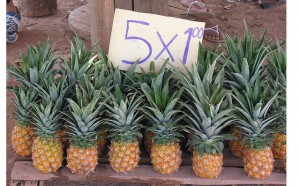
To live on that little, you’d need to live like a local. Eat only local foods, patronize local establishments. We’re talking 47 cent beers, 10 cent bananas, and big bags of rice for a few bucks. You could do it. But you would also experience a huge shift in your standard of living.
If that’s what you’re looking for, then great! Just know that before you make such a big decision.
How do you strike a balance between having the things you’re used to in the U.S. and taking advantage of the lower cost of living in Panama?
Park: It’s all about finding that sweet spot. There are a lot of items in a household budget that can be obtained at a great value in Panama. You just need to pick the ones that line up with your values. Here are a few of ours.
-
Domestic help. We have someone who works in our home every day: cooking 3 meals, buying our groceries, doing laundry, even babysitting our kids when needed. All for just $300 a month.
-
Fresh foods is another category. We eat so well at our house. But we don’t eat like we did in the States. And because we have help with the cooking and more time on our hands, we don’t have to eat hamburger helper.
-
Another place you can save on expenses in Panama is in medical costs. My daughter was born in Panama last year, and we saved $27,000 compared to what we would have spent in the U.S. But even for routine health care, the cost is much lower. Doctor visits are $5. Antibiotics cost $10. Our insurance premiums are also much less, and we even have a policy that works in the U.S. too.
-
Travel is another biggie. There’s so much to do, and it’s all so close. We love to go to the beach, take the boat out to nearby islands (including my own project), visit new areas…and it’s mostly all in Panama. We save a lot by traveling within the country.
So, what’s the magic number? If an expat can’t get by on $500 a month, then how much?
Park: It’s hard to say, really. It’s all up to you and the areas where you plan to splurge and save. No one can give you a guarantee on what it would cost for YOU to live in Panama. What’s more important is to look at your own habits and tastes and have realistic expectations about the lifestyle you can afford here.
For me? I spend about a third of what I would in the U.S. And I wouldn’t change a thing.

If you are planning on making a move down to the lush tropics of Panama, why not take a moment to learn a little something about the Panama health care system and where to find hospitals that will offer quality and expat friendly care.
Luckily, you won’t have to look far. Equipped with two branches of health care, public and private, Panama is recognized for its world class institutions and qualified medical professionals. But in a country with such a strong health care system, where should you go to find the best possible care?
The Best of the Best
1. Hospital Punta Pacifica

hospitalpuntapacifica.com
First on the list is Hospital Punta Pacifica. A full-service private hospital praised for its trained physicians and immaculate facilities, Punta Pacifica is not only the only John Hopkins affiliated hospital in Panama, but in Central America as well.
Hospital Punta Pacifica employs over 350 medical specialists, and through the use of continuing education programs, these specialists are constantly updated to keep their knowledge current. This hospital can be found in Punta Pacifica, and although it is one of the more expensive institutions in Panama, inside you can expect to receive first rate care at the hand of qualified professionals.
2. Paitilla Hospital (Centro Médico Paitilla)
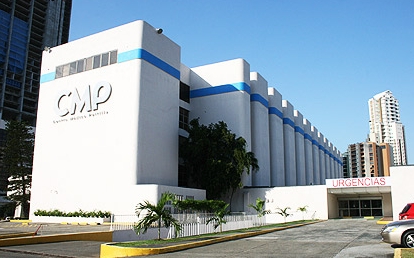
centromedicopaitilla.com
Next on the list is Paitilla Hospital. Located in Punta Paitilla, this facility is one of the oldest private hospitals in Panama and is a great choice for expats since most of the staff speak English. This is due to the fact that many of the doctors completed residencies in the United States and Europe before settling in at Paitilla Hospital.
While best known for its oncology unit, Paitilla Hospital is staffed with medical professionals that specialize in many different branches of medicine. Some of their departments include:
- Radiology and imaging
- Laboratory and anatomic pathology
- Cancer center
- Critical care unit for newborns and adults, and
- Cardiac catheterization unit
3. Hospital Chiriqui

hospitalchiriqui.com
Hospital Chiriqui, located in the city of David (near the Costa Rica border), is an institution with a reputation for providing exceptional medical care for over twenty years now.
The Hospital Chiriqui is a private hospital staffed with medical professionals that specialize in anesthesiology cardiology, reconstructive surgery, dermatology, and radiology (to name a few). In order to keep providing quality patient care, the Hospital Chiriqui is currently developing a clinic in the small town of Boquete, Chiriqui that will provide services like ambulance, pharmacy and primary health care to patients, twenty-four hours a day.
4. Hospital Nacional

www.hospitalnacional.com
If you visit Hospital Nacional, located in the Bella Vista area of Panama City, you can expect to receive quality care. This hospital is staffed with over 100 specialists and has an impressive nurse to patient ratio (one nurse per every ten patients). This facility also offers a diverse range of patient services like:
- A clinical laboratory
- A pathology laboratory
- A genetics center
- An emergency room
- and an intensive care unit
Hospital Nacional is also welcoming to out-of-towners for they even accept international health care plans.
5. Hospital Santa Fe

hospitalsantafepanama.com
Last on the list is the Hospital Santa Fe. Nestled in the center of Panama City and located mere minutes from the Panama Canal, the Hospital Santa Fe concentrates on creating individual health care plans that are patient specific. Founded in 1984, Hospital Santa Fe uses the latest technology, state-of-the-art equipment, and many English speaking, American-trained doctors to treat their patients.
Hospital Santa Fe is also on-board with the new wave of medical tourism and offers many health tourism packages that claim to provide the same quality care as American hospitals at a more affordable rate.
So before you pack your suitcase and whisk off to Panama, be sure to look into the local health care system and the available hospitals, so that when the time comes, you can make an educated and confident decision.

Herry Lawford
Whether you’re planning your retirement or just a quick getaway in Latin America, there are probably a lot of things on your “to-do” list. Spend some time at the beach. Hike to some waterfalls. Maybe take a tour of a coffee plantation. Get some dental implants. Explore the jungl…
What’s that? No dental implants?
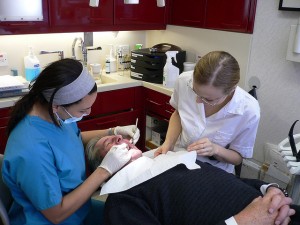
While it may not seem like your typical vacation agenda, more and more tourists are finding out what expats already know about dental care in Panama. That its excellence and affordability rival the care you could expect to receive almost anywhere in the world.
From the quality of care you’ll receive to the quaint surroundings in which you can recover, dental care in Panama has a lot to offer both residents and visitors alike. Here are a few of the major perks.
The Location
Panama’s easily-accessible, central location has helped to position it as a growing hub for medical tourism. It’s a short flight from the U.S. to Panama City, where most of the best doctors and facilities are located. Many medical tourism companies will even arrange for every last detail of your trip, from airfare all the way down to the procedure itself.
When in Panama City, you’ll find it to be a perfectly acceptable place to recuperate. It’s a very cosmopolitan city with top-notch accommodations and infrastructure. And once on your road to recovery, you may even want to venture to a local beach or into the interior to see some of the magnificent tourist attractions the country has to offer.
The Doctors
The professionals you’ll encounter when you undergo dental care in Panama, will also bear some striking similarities to those in the U.S. Since many of the doctors will have trained in the U.S., a lot of them are bilingual. Others may have studied in Brazil or France or at the University of Panama, which has a great medical and dental school.
Dentists in Panama possess and utilize the same technology that U.S. dentists use. The facilities are clean and modern and offer excellent service. One key difference may be that the dentist may actually perform much more of the work by him or herself. By lowering the number of assistants needed to perform tasks such as cleanings and x-rays, the ultimate cost to the patient can be even further reduced.
While the overall quality of dental care in Panama is above average, your experience will only be as good as the provider you choose. Talk to someone who’s used them. Maybe several people. If anything seems out of line with your prior dental encounters, it could be a red flag.
The Cost
Let’s talk a little about how much less you can expect to pay for dental care in Panama versus comparable procedures in the U.S. or Europe. Of course it all depends on your particular situation, but many expats and tourists have cited savings of as much as 50%. For those taking advantage of medical tourism, that includes airfare and accommodations. So the savings for local residents could be even higher.
A porcelain crown can be obtained for $475.00. Dental implants, which can be as high as $5,000 per tooth in the U.S., run around $1,550. Zoom whitening can be obtained for $100 bucks, as opposed to $550. And a routine cleaning will only set you back about $25. Panama also uses the U.S. dollar, so those coming from out-of-country won’t have to worry about exchanging currency.
The lack of malpractice lawsuits in Panama is a huge factor in keeping the cost of dental care low. It’s also a good reason to do your homework before choosing a medical provider. Ask for recommendations from other expats or use someone associated with a major hospital such as Punta Pacifica, an affiliate of Johns Hopkins.
You can also request that the dentist use materials (such as metals or porcelain) from the U.S., as opposed to Panama or Brazil. However, this could raise your costs slightly.
The Procedures
For expats, you can expect to see the same quality of dental care and cost savings on routine, as well as elective procedures. While some tourists may also decide to have a root canal or filling done in Panama, they’ll likely be coming to undergo a bit pricier procedure.
Some common cosmetic dentistry offerings are dental veneers, which are porcelain caps that are bonded to your teeth to hide gaps or discoloration. Dental implants are also offered to replace broken or missing teeth and improve the appearance of the mouth.
Inlays and onlays that serve as an alternative to fillings can be obtained. Orthodontic services are also available, as are restorative procedures like crowns, bridges, and even dentures.
As medical tourism continues to increase, the quality and affordability of dental care in Panama only stands to improve as well. This is good news if you’re thinking of becoming an expat. If you’re only visiting for a little while, explore your options to find out if you could improve your smile while you enjoy your vacation.

Only half an hour from San Salvador, the port town of La Libertad is known for its impressive surf breaks and beaches and is often cited as the main tourist attraction of El Salvador.
But there is more to see and do in this city than surf. Watch and discover what all goes on in a typical day in the port city of La Libertad, El Salvador.
El Puerto de La Libertad from herbertserpas on Vimeo.
Because of El Salvador’s lack of a solid tourism infrastructure, although they are working on improving their image, you’ll discover fewer tourists in La Libertad compared to other Central American beaches.
While that also means fewer luxury resorts than you’ll find in, say, Nosara in Costa Rica, visitors enjoy a far more authentically Central American experience.
Know a great place to visit in El Salvador? Let us know in the comments below.

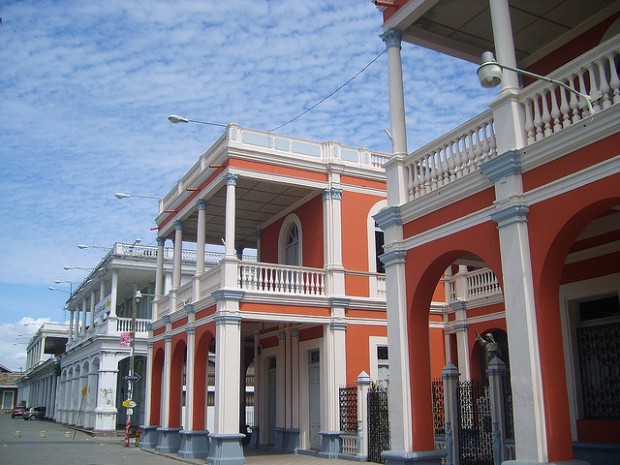
Retirement in Granada Nicaragua
For many of us, retiring overseas seems like a dream. Living out our twilight years in a new country sounds like an exotic adventure. It offers the chance to learn and experience new things, to get closer to nature, and to enjoy luxury at a much lower cost than at home.
Sadly, for most of us this dream is never realized. When it comes to the reality of moving overseas, we worry that it will be too expensive, too difficult, or too far from our family and friends.
This doesn’t have to be the case. Latin America is offering new and exciting opportunities for retirees to become expats. More and more people are flocking to the area every year, and it’s not hard to see why.
Nicaragua is becoming an increasingly attractive retirement location. The city of Granada is increasingly being described as one of the world’s best expat retirement locations.
Here are the five top reasons why you should retire to Granada, Nicaragua:
1. Granada is a beautiful, historic city with an awful lot to offer
Granada is a very popular city for expats for a number of reasons. It’s a stately, friendly city with great transport links and an interesting history. Property is also a brilliant draw for the city. Its Spanish colonial style homes are luxurious and affordable.
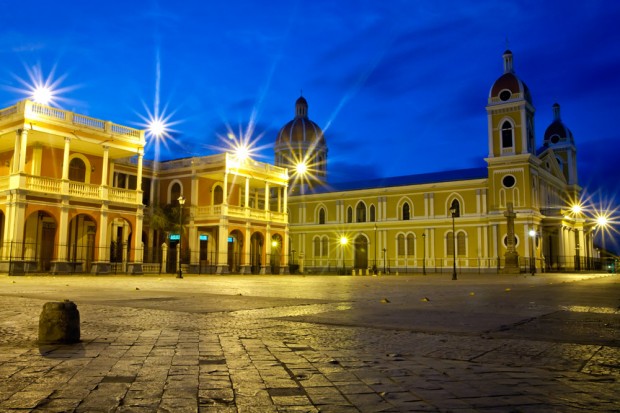
This year alone, 1.1 million tourists are expected to visit Granada, Nicaragua. They’re often drawn by the city’s picturesque cobbled streets and impressive historic churches. It’s also home to the Great Lake Cocibolca, which is one of the biggest lakes in the world. Imagine making a new life on the banks of the Great Lake, with the historic landmarks of the city just a stone’s throw away!
2. Nicaragua is a lot cheaper than you think
This life may sound idyllic, but it’s also within reach. If you have a retirement income of $20,000, you could make a very good life for yourself in the city. It’s estimated that living costs there are around $1,200 per month. For a more in depth look at how much it costs to retire to Granada, Nicaragua take a look at US News’ financial feature on the city.
3. It has great transport links
One of the huge benefits of retiring overseas is the opportunity it gives you to see more of the world. Nicaragua is well placed to visit nearby areas of Central and South America. If you’re concerned about being too far away from family and friends, you don’t need to be. The area is also only a two hour plane journey from Miami, which means that you’ll be able to enjoy regular visits to the States.
4. The weather is ideal
Many people choose to emigrate in their retirement in order to take advantage of some better weather! If that’s the case for you, Granada is a great choice. The weather in the city is great, and you can expect to enjoy temperatures in the 80s all year round. The lake the city is situated beside keeps a fresh breeze coming in, and makes sure that the city doesn’t reach the heat of other Nicaraguan cities.
The city also has a rainy season from May to October every year. During this time, there are thunderstorms every afternoon, which helps to keep the air fresh!
5. There’s a great expat community
It’s estimated that around 1000 expats live in Granada, and that the majority of those are retired. Though Granada has all the benefits of a big city, it also has much of the charm of a smaller community. The large expat community certainly helps: and you’ll find a wide range of clubs and activities waiting for your involvement.
One of the benefits of Granada is that it’s one of the safest places to live in Nicaragua. It’s a growing city, and it’s a very exciting place to be at the moment. In addition to the vibrant expat community, you’ll also be able to experience Nicaraguan culture first hand, and get a whole load of new experiences under your belt.
Thinking about making the move?
If you’re thinking about spending your retirement in Granada, Nicaragua, you don’t have to do it alone. There are professional companies on hand to help you get the best for your money, locate your new home, and get all the relevant paperwork completed.
Starting a new adventure in Nicaragua can be cheaper and easier than you think!
Nicaragua might be one of the world’s best kept retirement secrets among expats. But word is getting out, and Nicaragua is now a contender for Americans, Canadians, and Europeans thinking about retiring overseas.
Not too certain where to consider living in Nicaragua? Here are six places expats love in Nicaragua to get you started.
1. Granada
Granada is perhaps the most charming Colonial town of Nicaragua apart from Leon. It is a bustling city where you will have access to most, if not all, amenities as well as lots of restaurants, bistros, and a lively nightlife.
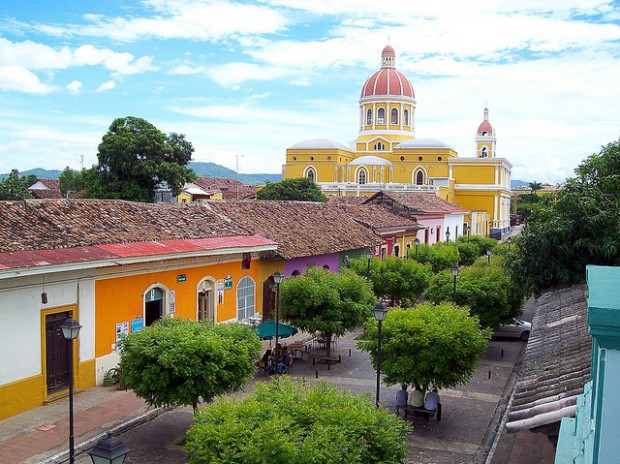
Adalberto.H.Vega
2. Leon
Leon is known by the locals as a young people’s town. It’s a busy, bustling, and attractive town and just a half hour drive away from the beaches on the west coast of Nicaragua.
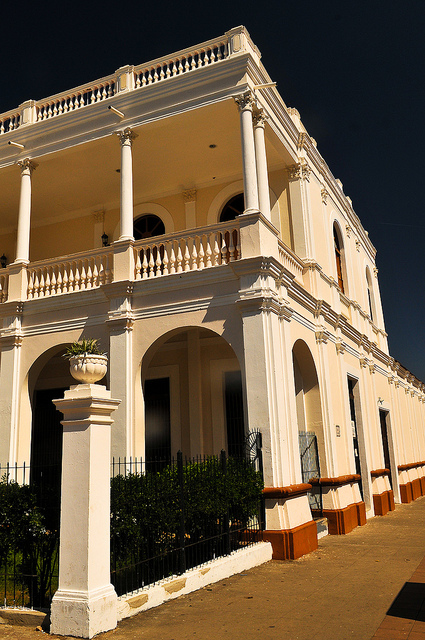
Jeff Maurone
3. San Juan del Sur
San Juan del Sur is one of the most developed beach communities of Nicaragua; if you are looking for a well-established expat community, this might be a good choice.

Sam Gibson
4. Masachapa
Masachapa is a seaside town based on an active fishing community. With great beaches and just enough restaurants and shops to keep you busy, it is not as well developed as San Juan del Sur.
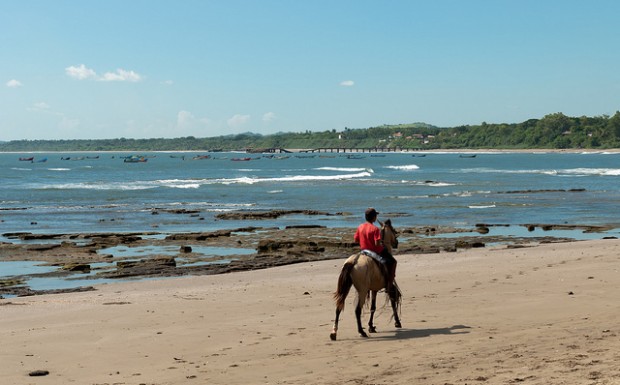
Arnoldo Castillo
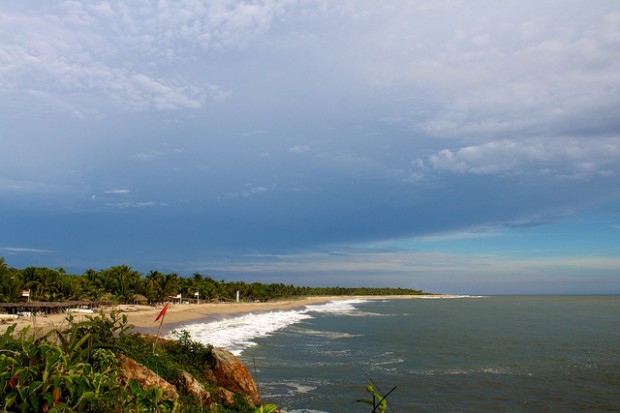
5. Las Penitas
Even less busy than Masachap, Las Penitas is a beach community based on surfing. This is a very laid-back community, and being only a a half hour drive from Leon, that is a good thing, especially if you need a bit of city life now and then.
Daniel VMV
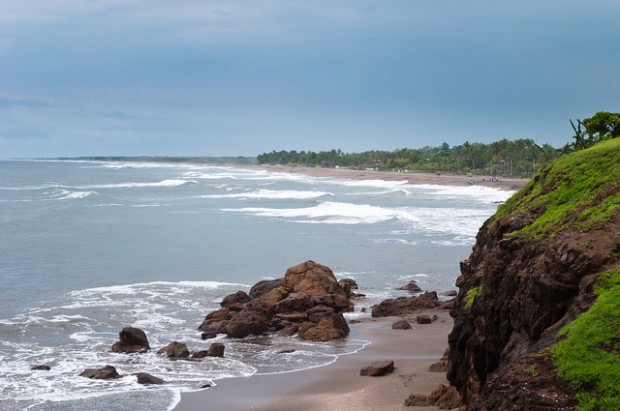
6. Poneloya Beach
Poneloya Beach is a true Nicaraguan vacation town, meaning it is deserted during the week and packed on Nicaraguan holidays. You’ll find a lack of many services here, but as with Las Penitas, people drive to Leon, a half hour away to get the things they need.
Arnoldo Castillo
Did we miss your favorite expat spot in Nicaragua? Be sure to let us know in the comment section below.

Sek Keung Lo
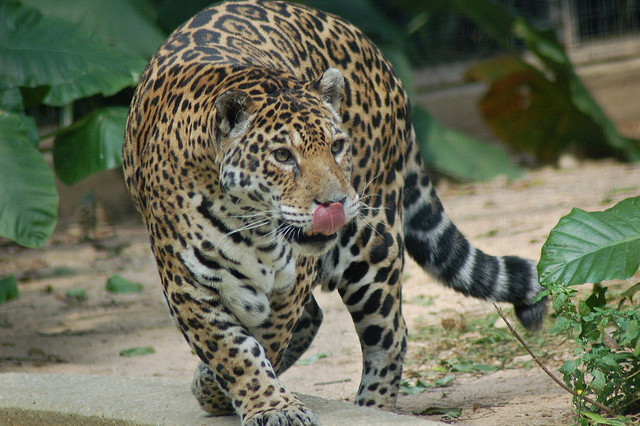
The third largest feline in the world (behind the tiger and lion) and the largest in the western hemisphere, the jaguar makes its home in the jungles from Northern Mexico to Northern Argentina.
Today this majestic giant, recognized by its pale yellow coat and black spots, is found almost exclusively in the forests of government-protected reserves and is considered a ‘near threatened’ species by the International Union for the Conservation of Nature (IUCN).
Why are Jaguars ‘near threatened’?
Hunted heavily for its gorgeous coat in the 1960’s and 1970’s, thousands upon thousands of jaguars were killed annually until the Convention on the International Trade in Endangered Species (CITES) brought the fur trade to an almost immediate halt in 1973.
Extinct in El Salvador and Uruguay, yet still living in 18 countries in Latin America, the best place to catch a glimpse of these mysterious animals is Belize.
Why Belize?
In Belize you will find the only jaguar preserve on the planet, the Cockscomb National Park. This park covers 150 miles of lush rainforest and is home to 200 jaguars.
And while there is no guarantee that you will spot a jaguar if you make the trip down to Cockscomb, here your odds will be better than any other place on earth.
Jaguars have binocular and color vision, an extremely heightened sense of hearing and are known for their stealth. Needless to say they are not the easiest animals to find and spotting one would be a rare and thrilling occurrence.
But with a little luck and these tips to direct you, you may just get to view one of these breathtaking cats stalking through their jungle home.
Follow these jaguar spotting tips:
- Search at night: Jaguars are nocturnal, so the best time to go looking is at night when they will be out and about (although some lucky observers have seen them sunning themselves in the early morning). Cockscomb is equipped with rentable camp sites and cabins built specifically for jaguar spotting expeditions.
- Go during rainy season: The best time to spot a jaguar is during the rainy season (June and July) when they are most active.
- Hire a guide: Be sure to hire a licensed guide to help direct you through the rainforest. They will be able to track the jaguar’s prints and droppings which will increase your odds of a sighting. You can look for a guide in either Belmopan or Placencia. For added comfort, the guides at Ian Anderson’s Caves Branch just out of Belmopan are also trained medics.
- Keep quiet: As hard is it may be, stay as silent as possible. Shy by nature, the jaguar will avoid foreign sounds at all costs.
Even if you don’t spot a jaguar, you will not leave Cockscomb disappointed. Alive with a diverse range of animals like peccaries (wild pigs), toucans, and howler monkeys and simply bursting with colorful flora and over 290 species of birds, Cockscomb is still worth the trip.
Jaguars in Costa Rica
Although your chances of seeing a jaguar in Costa Rica may not be as good as they were on the jaguar reserve in Belize, jaguars still roam the jungles of Costa Rica. Scattered across the country in numerous protected areas, the large cats have been spotted in places like the Children’s Eternal Rainforest, La Selva Biological Station, and the Corcovado National Park to name a few.
Corcovado National Park covers 475 square kilometres and is packed with 500 species of trees, 370 species of birds, over 4,000 insects and thousands of wild pigs.
Once an ideal habitat for jaguars, around 100 cats lived in Corcovado in 1997, but sadly the number dropped to 40-50 in 2004.
Despite being on a protected reserve, poachers continued to illegally hunt peccaries until the jaguars were forced to venture out to the neighboring farmland in search for food, where they were often killed on site.
Despite the low number of jaguars, your best chance of spotting one is by boat. Jaguars prefer the river bank to rest and hunt, so climb in a boat and scan the river bank for a glimpse of these spotted felines.
Are you ready to spot a jaguar?
No, it won’t be the easiest task, but if you are determined to see a jaguar in its natural environment, there is still a chance. Play the odds and head for Belize.
And once there, hire a guide, practice extreme patience, cross your fingers for a little extra luck and you just might get the rare opportunity to see this beautiful and secretive animal up close.


photo by Evan
If you’re considering relocating to Panama, you probably already know that its health care is among the best and the most affordable in Central America. What you might be a little less sure of are your health insurance needs and how to go about meeting them.
Do I even need private health insurance in Panama?
Some expats choose to self-insure their medical expenses. This is a valid option for those who are in good health and can afford to do so. If you don’t want to take such a risk, you’ll need to obtain health insurance when moving to Panama.
While some U.S. policies may provide limited coverage in Panama, many don’t offer coverage for treatments obtained outside the States. Medicare is also useless, as it doesn’t apply to those residing in other countries.
Check with your current provider to determine if you’ll be covered once you leave the U.S. If you are, the worst case scenario is that you might only get the benefits available for out-of-network providers. You also may have to foot the bill yourself initially and get reimbursed on the backend.
If your coverage doesn’t extend outside the U.S., there are some very good and inexpensive policies available both internationally and from Panamanian sources.
Does Panama’s government provide any healthcare benefits to expats?
At the most basic level, Panama offers government-sponsored health insurance to its citizens and permanent residents. However the coverage isn’t great. Treatment is available only from public hospitals and clinics. While many great public facilities exist, they can sometimes have their challenges. While the doctors are well-trained, the hospitals are often understaffed. Public facilities often equate to long waits and inferior technology when compared to private hospitals.
Carrying private health insurance affords you more options to choose when, where, and by whom you’ll be treated. It also offers a higher level of comfort and other attractive benefits, such as private hospital rooms. Doctors in private hospitals are often trained in the U.S., and many are bilingual. Even though they’re more expensive than their public counterparts, medical treatments in private Panamanian hospitals are still a fraction of what you would pay for the same procedure in the U.S. And for the same quality of care.
How do I go about finding private health insurance?
When shopping for health insurance, there are a lot of factors to consider. Obviously, the cost of the policy should be taken into account. You should also look at things like the coverage territory (if you’ll be traveling much outside of Panama), any applicable annual or lifetime limits, whether the policy applies only to a certain network of providers, how claims are paid, and whether your existing health conditions will be covered.
If you aren’t comfortable interpreting and comparing policies, you may want to opt for buying through a broker or agent. Insurance representatives who are licensed with multiple companies can compare costs and features to help you select the plan that best suits your needs.
What types of health insurance policies are offered in Panama?
The two major types of policies available include local health maintenance organizations (HMO’s) and international HMO’s. Local policies only apply for services obtained in Panama. Common limits are between $300,000 and $500,000, and deductibles can be as low as $300 or $500. Treatment from in-network providers are fully reimbursed, but you can often receive as much as 60% towards treatment received from other doctors or facilities.
International policies work the same way, but they also offer networks in other countries as well. They also often carry limits as high as $700,000 to $1.5 million in lifetime coverage, with deductibles ranging from $1,000 to $10,000. Premiums for both types of policies are in the $600-$700 range. They often require medical screenings, and premiums usually rise with age.
A few of the companies that provide coverage in Panama are Pan-American Life Insurance Group, MAPFRE, Aseguradora Ancon, and even familiar names like Blue Cross Blue Shield of Panama.
Another option available in Panama is private hospital memberships. These are discount programs offered specifically by private hospitals, which apply only to treatment received at that same facility. Costs are as low as $18.00 per month and include benefits such as 100% reimbursement for emergency room services, 70% reimbursement for diagnostic tests, and 50% reimbursement for routine screenings. Waiting periods apply for some services, as do annual coverage limits.
 International living is an adventure that most of us have on our bucket list. Choosing to live overseas, either short or long term, is a huge adventure: and those who’ve done it usually say it was the best thing they’ve ever done.
Not only does becoming an expat open your mind to more of what the world has to offer, it can also remind you about the most important things in life.
The benefits of international living are wide and varied. If you’re thinking about making a big move overseas, some of our favorite expat benefits might encourage you to take the plunge.
The chance to start afresh
One of the things that attracts people to the idea of moving overseas is the chance it offers to start afresh. Many people give up stressful jobs, huge social networks, and large expenses when they leave the U.S., and giving up all these things is a brilliant opportunity to simplify your life.
Becoming an expat gives you the chance to get back to basics and really learn what’s important to you. Often, expats find that they get to know themselves better in the first year they spend abroad than they did in a whole lifetime of living at home.
The chance to own less and do more
When you live in the U.S. it’s so easy to get caught up in a cycle of endless bills. Things like gym memberships, cable subscriptions, and active credit cards seem like vital parts of life: but they don’t have to be. Moving overseas breaks the cycle of these bills, and gives you a new way to spend your money.
Expats tend to travel, explore and do so much more than the rest of us. They know that in the long run, experiences are much more valuable than belongings, and they remember this as they trek through the jungle, visit ancient ruins, and take part in exotic celebrations.
The chance to learn new things
When you live internationally, learning new things becomes a key part of everyday life. It’s likely that there will be huge differences between your home country and the country you decide to emigrate to. Holidays, celebrations, behavior, social customs, and language will all be different, and learning about and experiencing all those differences can be great fun.
Learning these new things can also be one of the more challenging parts of international living. Settling into a new lifestyle can take time, but it can also be incredibly rewarding. You may also find that you’re much stronger and more capable than you thought.
The chance to get inspired
When you move overseas, you can expect to open yourself up to all sorts of new opportunities. Doing this is always incredibly inspiring. If you are a creative, the benefits of being inspired in this way will be immediate. Seeing and learning new things on a daily basis will encourage you to create like you have never created before!
If you’re not a creative, you’ll still find this kind of inspiration valuable. You probably won’t be tempted to start a blog or pick up your camera… but you might find yourself dreaming up new business ideas or trying your hand at a new hobby.
Is there a downside to expat life?
Of course, even the most wonderful adventures aren’t wonderful all the time. There are some downsides to expat living, and it’s important to weigh these up against the positives and decide if it is really right for you.
- When you decide to emigrate overseas, you will be opening yourself up to exciting new adventures; but you’ll also be missing things back home. Expats sometimes find it hard to spend long periods of time away from friends and family. It can also be hard to return home after a prolonged period overseas, as it can be hard to adjust to the changes that have occurred while you were away.
- The constant flow of new things and opportunities you will face as an expat can be exhilarating, but it can also be frightening. Living a successful life overseas will involve conquering that fear!
- Holidays that you are used to at home may not be celebrated in your chosen country, or they may be celebrated in a very different way. This can result in some interesting new experiences, but missing out on your favorite holiday the way you are used to it can make you feel homesick.
Is international living for you?
Of course, there are downsides to the expat life, but for most people they are well outnumbered by the positives. Cheaper and more regular flights as well as the growth of the internet and services like Skype have made communicating with people back home much easier.
If you’re hungry for a new adventure, moving overseas could be the right choice for you. Becoming an expat is likely to change your whole perspective on life for the better. It can enable you to reduce your spending habits, embrace change and really get back to basics.
The biggest benefit of international living and the expat life is that you never know where it might take you.

Costa Rica is home to some of the most beautiful beaches in the entire world. Whether you are looking for five star luxury, epic waves, jungle immersion, or your own private paradise, you will find it here.
In short: GO!
For those planning a trip, here is a list of some useful and lesser-known facts about this small but dense Central American gem.
Photo Credit: Halle
1. It Is Possible to Spot Animals Virtually Anywhere
Costa Rica is home to over 150 national parks filled with rare and endangered flora and fauna. It’s well worth a trip into some of the less trodden regions, namely Manzanillo on the South Caribbean and the Osa Peninsula on the South Pacific, but it is possible to find animals virtually anywhere.
In the small surf town of Pavones don’t be surprised to look up from your surfboard and see ten Scarlet Maccaws soaring over your head.
In Puerto Viejo Talamanca traffic jams are often caused by three toed sloths crossing the road.
In the town of Manuel Antonio be careful that a monkey doesn’t steal your lunch or your passport!
Look around and you will be amazed at what you see.
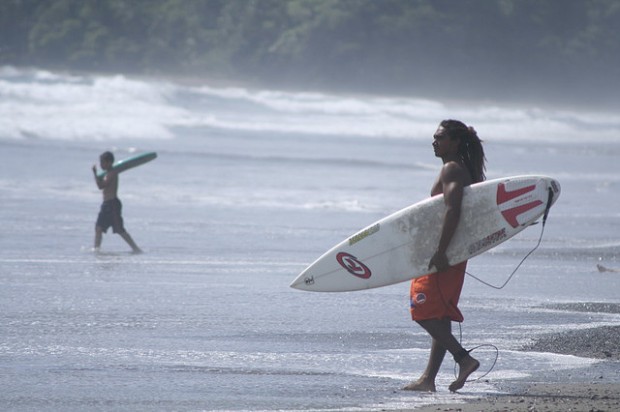
Photo Credit: F. Sosa
2. The Caribbean Coast Is Worlds Away from the Pacific
Though it’s only a four hour ride from the major airport terminal in San Jose to the South Caribbean Coast, it may feel like you’ve entered a different continent.
Homes are painted bright Caribbean colors, reggae music plays in the streets from sarong shops, rastas sell lobster stew and coconut rice on every corner, and Jamaican Creole mingles with heavily accented Spanish. The ocean is turquoise and covered in coral reef.
Costa Ricans in the rest of the country may tell you not to go. “It’s too dangerous.” Ignore them. It’s one of the best parts of the entire country.
3. Always Use the Pronoun “Usted”
In many Latin American countries, including Mexico, it is absolutely appropriate to use the pronoun “tu” when referring to “you”.
“Tu tienes un novio?” (Do you have a boyfriend?)
Well, in Costa Rica it is incredibly impolite to use the “tu” form. Generally they understand that you are a foreigner and will not take offense, but blend in better and show some respect by using “usted.”
“Usted quiere una novia?” (Do you want a girlfriend?)
4. It Is Expensive
Costa Rica has a reputation for being expensive. That reputation is well deserved. Plan to budget around double what you would spend in other Central American countries like Guatemala and Nicaragua.
You can strike deals on hotels and housing rentals in the low season, but food and restaurants tend to consistently be the same price as Western countries like the United States. Certain items, like cheese, are imported and cost nearly double what they do in the U.S.
5. You Can Drink the Water
In most of the country it is absolutely safe to drink water from the tap. In Pavones and Corcovado National Park the water comes from mountain springs and actually tastes better than bottled. The water is also safe to drink on the entire Nicoya Peninsula.
With water costing around $1 a liter in grocery stores, much more in restaurants, this is a huge money saver. Besides, do you want to put more plastic into the Earth?
Keep in mind this is not true everywhere. Some locals drink the water on the South Caribbean but I have heard horror stories from tourists who have done the same.
6. The Rip Currents Are Relentless
The surf in Costa Rica is world class, which can make for extremely dangerous swimming. Always check with locals before jumping in and never swim alone.
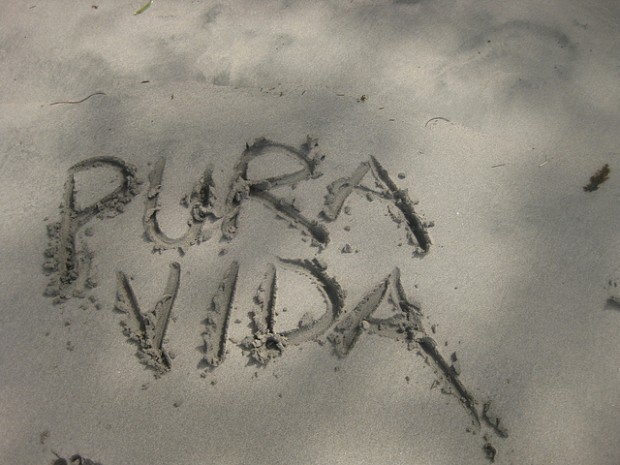
Photo Credit: Kate
7. Learn the Meaning of Pura Vida
Don’t be surprised when you hear locals say “pura vida” in response to virtually anything. “How are you?” “Pura vida.”
“Oh, excuse me.” “Pura vida.”
“The whole town is flooded and the roads are closed for the next week?!!!” “Ah, pura vida.”
This phrase, which directly translates to “pure life”, encompasses an entire way of life in Costa Rica.
It means letting go of what you can’t control. It means accepting what life hands you and making the most of it. It means finding happiness wherever you are, whatever your situation.
I suggest you learn it quickly and use it as often as possible.


Panama Pensionado Visa: Savings and Benefits
Panama has a lot of extremely attractive features that beckon expats to its beautiful beaches and lush mountain havens. It is a nation that is extremely welcoming to foreigners and perhaps never more so than when it offers to retirees a whole host of discounts, on everything from airfare to home phone service.
These benefits are part of Panama’s Pensionado Program, a neat little package of perks tailored to retirees of all ages. Depending on where you choose to settle, the cost of living in Panama is already extremely affordable. However, the benefits offered to pensioners can make retiring to this Central American destination all the more lucrative.
Panama’s Pensionado Program’s Benefits
The discounts and advantages of the pensioner’s visa are quite numerous. Here they are in a nutshell:
-
50% off on recreation and entertainment such as movies, theaters, sports, etc.
-
50% off hotels Monday through Thursday (30% off on weekends)
-
50% off passports
-
30% off public transportation like buses, trains, and boats
-
25% off airfare
-
25% off restaurants (15% off fast food)
-
25% off electrical, telephone, and water service
-
20% off doctors and specialists
-
20% off prosthetics and other personal assistance devices
-
15% off hospitals and private clinics
-
15% off dental and optometry services
-
10% off prescription medications
-
tax-free importation of household goods, up to $10,000
-
tax-free importation of a vehicle, or tax-free purchase of a local vehicle, every 2 years
In addition, retirees are now able to obtain a cedula, the national identification card issued to residents of Panama. While participants in the retirement program can easily get by with merely their pensionado card and a passport issued from their home country, the cedula allows for greater ease of getting around and transacting in Panama. Locals feel a bit more comfortable when dealing with someone they know is “documented,” so to speak. While holding a cedula doesn’t grant you any additional benefits, it’s just one more step towards diving headfirst into your new culture.
The Qualifications Required for the Pensionado Visa
While it sounds like, and is often referred to as, a “retirement” program, the pensionado visa is actually available to expats of any age who meet the specified criteria. Even better, recipients are grandfathered in under the law and can never lose their benefits, as long as they continue to meet the requirements. To qualify you must have the following:
-
Monthly income of $1,000 for life from a guaranteed source such as a pension or annuity
-
Or income of $750 per month and a $100,000 minimum investment in Panamanian real estate
-
An additional $250 monthly income for each dependent child
The $1,000 per month is a total amount for a married couple. In other words, it isn’t necessary for both spouses to meet the income requirement. Dependent children cannot be over the age of 18, unless they are attending college. Exceptions can also be made for adult children with disabilities. The $250 can also be obtained in the form of interest earned on deposits in a Panamanian bank.
How to Get a Pensionado Visa?
The process of applying for and obtaining your pensionado visa is a fairly straightforward one. The whole shebang takes about six months and costs between $1,500 and $2,000 per person, including attorney fees. If you’re applying for yourself, your spouse, and your dependents all at the same time, you can sometimes save a few pennies on the legal fees. A good bit of paperwork will be required, and it will all need to be properly authenticated. A reputable attorney with experience in immigration issues will be an invaluable tool as you navigate this process. In general, you’ll need to be prepared to provide the following:
-
Certified letter from the appropriate organization or entity guaranteeing your monthly pension for life
-
Government certification that the source of your income is in good standing, if your pension comes from a private company
-
Proof of prior pension payments (e.g. check stubs, bank statements, etc.)
-
Certificate of public registration of Panamanian real estate in your name, if applicable
-
Police record from the country where you resided the past 5 years
-
Marriage and/or birth certificates, if applicable
The Fine Print
While the program no doubt has some great benefits available to expats, there are some who question whether or not it’s all it’s cracked up to be. Take, for example, the discounts on utilities. Water in some areas may be as low as $7. So 25% off of that isn’t a whole heck of a lot. Then again, it all adds up. Another criticism of the program is the fact that exclusions often apply. So, pensioners shopping for airline tickets may end up finding another flight that is actually less than the discounted rate they could get on what was already a higher priced ticket. And, understandably, the entertainment discounts aren’t available on events such as charity functions. Would-be expats who know little Spanish will want to quickly learn this phrase: Por favor, deme mi descuento de pensionado. Which means “Please give me my pensioner’s discount.” Benefits aren’t automatic. You have to ask for them, and some small businesses may even be reluctant to grant them. It’s also important to note that, for those of retirement age (women over 55 and men over 60), you are eligible for most of these benefits anyway. It’s up to you whether you want to jump through the additional hoops to obtain the pensioner’s visa, or just opt for another type of visa.
The Breakdown
So, we said it all adds up. But just how much could you really save in a year with the benefits offered by the pensioner’s visa? Here’s a theoretical breakdown that shows how a hypothetical couple could easily save as much as $10,000:
|
Movie tickets |
$2.75/person x 2 per month |
50% |
$66 |
|
Dinner theater |
$20/person x 2 per month |
50% |
$480 |
|
Three-night hotel stay |
$375 total x 6 per year |
30-50% |
$1,125 |
|
Bus ride |
$6/person round trip x 15 per year |
30% |
$54 |
|
In-country flight |
$175/person round trip x 4 per year |
25% |
$350 |
|
Flight to US |
$450/person round trip x 3 per year |
25% |
$675 |
|
Dinner for two |
$30 total x 2 per week |
25% |
$780 |
|
Mid-range meal |
$12/person x 4 per week |
25% |
$1,248 |
|
Fast food |
$7/person x 2 per week |
15% |
$218.40 |
|
Home phone bundle |
$70/month |
25% |
$210 |
|
Water |
$7/month |
25% |
$21 |
|
Electric service |
$80/month |
25% |
$240 |
|
Doctor visit |
$40/person x 3 per year |
20% |
$48 |
|
Dentist visit |
$40/person x 2 per year |
15% |
$24 |
|
Specialist visit |
$45/person x 1 per year |
20% |
$18 |
|
Medications |
$7/ea x 2 per month |
10% |
$33.60 |
|
Vehicle import |
18% of value (e.g. $25,000) |
100% |
$4,500 |
|
Total |
$10,091 |
*Amounts given are examples based on our experience and are for two people.
Whether it’s the Pensionado Visa, or one of Panama’s many others, you’re certain to find the visa that’s right for you. Start your search today!