


Jessie Harrell
Living on a tropical island is an incredible fantasy shared by many people. Being surrounded by water, drinking out of fresh young coconuts, and bathing in the ocean are some of the alluring images that come to mind.
Some people have actually chosen to make the fantasy of island life a reality. Many once deserted islands in Central and South America are becoming more and more inhabitable with building development, electricity, and even wifi.
However how does the reality truly live up to the fantasy?
Island life is not always paradise. With power shortages, few or often no roads at all, and a limited supply of goods it can be challenging at times living on an island.
Here are the pros and cons of living on an island for you to consider before moving to your own private paradise.
Pros of Living on an Island
They Are Beautiful

Caneles
There is no denying that tropical islands are absolutely stunning. Depending on the size of the island, there may be very little development and consequently nature everywhere. While some islands, like Isla Bastimentos in Bocas del Toro, Panama have incredible surfing, many like the Bay Islands in Honduras have completely flat water that is perfect for diving and snorkeling.
They Can Help You to Relax
Far from the mainland, islands offer the chance to truly get away. Life moves at a slower pace on islands and you will likely find yourself in a deep state of relaxation. Some islands have no cars and electricity for only part of the day. This makes relaxing and unplugging that much easier. If you are looking to really slow down your lifestyle, living on an island may be a great fit.
They Have Strong Communities
Small islands in particularly tend to have strong communities. People don’t leave islands as often as towns so living on an island you usually find yourself around most of the same people. This helps the community to work together. Most people living on islands do so for the same reasons and this shared love and respect of the island bonds people together.
They Are Easy to Navigate
Some islands are so tiny, like Caye Caulker in Belize, it’s possible to walk their perimeter in under an hour. Going to and from work, getting together with friends, and plenty of other everyday activities can be dramatically simplified when living in such a small place. Driving can be impossible or unnecessary and living on an island you may get around by foot, bicycle, canoe, or golf cart.
With all of these incredible aspects of island life it’s easy to see why many fantasies are built around them. But what are some of the difficulties of island life?
Cons
There Is a Limited Supply of Goods

Anoldent
Islands tend to be much more expensive than mainland towns for a very important reason: there is a limited supply. Gasoline, first aid supplies, even fruits and vegetables can become scarce commodities and the prices will often reflect that. Depending how far the island is from the mainland, it can become costly and time consuming to have goods sent. You may notice that at the end of the week the markets lack most produce and fueling your car can be quite expensive.
There Is Limited Access to Medical Care
Most islands lack hospital facilities and some do not have medical care at all. In emergency situations this can be concerning as you may have to fly, or even take a boat, to access proper medical care. If you suffer from a medical condition in general this may be a big factor for you to consider.
A Slow-Paced Lifestyle Has Its Frustrations Too
The slower-paced lifestyle on islands is one of the wonderful benefits that helps its residents truly relax. However sometimes this slow pace can actually lead to stressful situations. If you own a business on the island you may struggle with the speed that the builders construct your space. You may struggle with training your employees to offer prompt service to tourists. Electrical outages may go on for days while you wait for the utility companies to come to the island. These are especially important considerations for those who plan to open a business, but they affect anyone who lives on the islands.
Living on an island could become the most magical experience of your life, fulfilling your every tropical fantasy, or it could be an incredibly difficult frustrating experience. Nowhere is perfect, so weigh the pros and cons and decide if island living is right for you. If you do decide to move to an island, take a deep breath and learn to adapt to this different lifestyle.

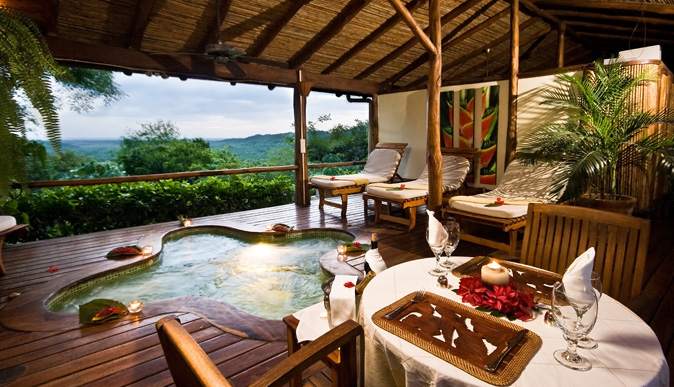
We recently had the chance to ask the owners of Los Altos de Eros, the Tamarindo, Costa Rica Viva Picks hotel winners, a few questions about their move to Costa Rica where they became expats.
1. How did you end up in Tamarindo?
We came here from Florida on our honeymoon. We liked the area so much that we decided to buy a condo here and spend half our time in Florida and half in Costa Rica. While looking for a condo, we saw a beautiful piece of land and just got totally carried away!
2. Did you have experience in the hotel business before you came to Costa Rica?
Not directly in the hotel business. I had an internet based company which I sold in 1999. I also had a little experience in the restaurant business. When it came to Los Altos de Eros, Jacqueline and I simply fell in love with the piece of property where it stands today and visualized building a Costa Rica luxury hotel and spa. We understood the risk we were taking and the amount of competition we were up against. That’s why we knew it had to stand out from the rest. My philosophy is you get what you give. So, we started out giving away complimentary Spa Days to our friends and acquaintances in Tamarindo. It was wonderful to put the whole thing to the test and realize people loved it! Soon enough, they were sending us business just through word of mouth. And that’s how our business began to ascend.
3. Explain to our readers what makes Altos de Eros unique and why they should stay there.
What can I say, if you are looking for a place with 5 star service, great value, gourmet cuisine, and the best Spa in Costa Rica, you should come stay here.
Our Guests are treated like royalty the minute they’re picked up from the airport. Our 3 to 1 staff to guest ratio guarantees exceptional, personalized service. Almost all of our staff have been with us 5+ years. They are happy and take pride in their work. As many guests have said, you are treated like family here, which is true, and we will do our very best to exceed all your expectations.
We take care of every detail, with no hidden charges or ridiculous prices, something you will not find elsewhere. From laundry service to Cuban cigars, our wonderful range of amenities is transparently included in our rates so you can just sit back, relax and enjoy your vacation.
Our food is spectacular, thanks to our talented Chef Andrea and kitchen staff, who prepare every meal to guarantee 5 star quality cuisine. Our Chef will even have a personal dialogue with our guests to accommodate food restrictions or special diets and create a custom menu that meets their needs.
Our breathtaking Spa de Eros is our jewel. The Balinese style, bamboo and teak layout opens up to views of the jungle and ocean. The spa attendants are exceptional massage therapists and deliver the most soothing treatments. It is a space for rejuvenation and pampering like no other.
4. What types of things can your clients do in Tamarindo?
We provide transportation, so clients can partake in all kinds of activities in Tamarindo and nearby areas. Activities include surf lessons, paddle boarding, sunset Catamaran, sports fishing, zip-lining, horseback riding, ATV tours and so much more. Clients also have the option to go into Tamarindo for lunch or dinner, shopping, night life, or simply to relax on the beach.
Situated on a 27-acre estate 20 minutes outside of Tamarindo, Costa Rica, we offer you a supreme “5-Star” destination. Los Altos de Eros means ‘”the heights of love” and you will love everything about us: our location, our ambiance, our cuisine, our Spa, and our Staff. All we ask of you is that you come with a smile on your face and a song in your heart.

Once the decision to move down to a gorgeous tropical destination to live out your retirement years has been made, the real work can begin. And of course, this work begins with one major question, where should I move? Consider living in Belize.
 With a plethora of unbelievable choices out there, what is it about the little country of Belize that has so many expats packing their bags and heading down to its sandy shores?
Positioned between Mexico, Guatemala and the clear blue Caribbean Sea, living in Belize will provide you with things that you could only dream of back in the States, and above all, it will offer you the chance to truly slow down.
Tropical beauty
As is the case with most Central American countries, many expats are lured down to Belize simply due to its stunning natural beauty, and because of this unspoiled beauty, Belize has been dubbed by some as “mother nature’s best kept secret.”
Most of Belize is wild and hasn’t been cultivated for human purposes, as such, living in Belize will allow you to enjoy a vast variety of tropical landscapes just as nature intended.
Experience white Caribbean shores, crystal blue water, tropical rainforest bursting with wildlife, waterfalls, ancient Maya ruins, and mountainscapes, and because Belize is so small, you can enjoy many of these environments all in one day.
Of course, another major perk that comes with living in Belize is the climate. A place where the sun shines almost every day, here the average temperature stays close to 79 degrees F year round and for many expats, this is absolutely perfect.

Sagoldst
It’s a country welcoming of expats
The people of Belize have a reputation for being kind and welcoming towards newcomers, so you don’t have to worry about feeling out of place. Quite the contrary, you will in all likelihood find yourself with a handful of new friends both local and expat early on as you begin to settle in.
And not only are the people friendly, but communicating is easy due to the non-existent language barrier. Belize is an English-speaking country (the only English speaking country in Central America in fact) and while this may be a drawback for expats who are searching for a taste of true Central American culture, for others it’s ideal. Day by day living and conducting business are made much easier for the average North American expat because everything including signs, brochures, etc. will all be in English.
It’s easy to get residency
Not only are the people of Belize welcoming of expats, but the country is too. Living in Belize permanently is quite easy to do and there are three options in which to achieve this dream.
Tourist card:
Your first option, and perhaps the simplest (although ultimately more costly) option, is to obtain your visitors card.
When you first enter Belize you will be granted a 1 month entry card, and after your 30 days is up, you will need to visit the immigration office each month to renew your Visa.
The initial 6 months will only cost you $25 a month, but after that, the price will increase to $50 a month.
While you can do this indefinitely, many expats opt for permanent residency since it’s the most economical choice.
Permanent residency:
Once you have lived in Belize for over a year, you are eligible to apply for permanent residency. Remember, after you apply you must remain in Belize for 14 consecutive days or your application may be denied.
In order to apply you will need:
- To fill out the form
- An HIV test
- A recent police certificate free of criminal convictions
- 2 recommendations from people you have known for over a year
After you become a resident of Belize you can apply for full citizenship in 5 years’ time.
Qualified Retired Person’s Program:
The last option for living in Belize is the Qualified Retired Person’s Program (QRP) and for many, it’s the least attractive option because of its grueling approval process and tendency to deliver a less than quality product.
Yet, if you can provide proof that you meet the required monthly income, this program allows tax-free entry of retiree’s goods, motor vehicles, marine vessels, and small aircraft. So if you plan on importing items of high value, the QRP program will eliminate high import duties.
Low cost-of-living
True, living in Belize will cost you a little more than other spots in Central America might, but the cost-of-living here is still much lower than back home in the states.
But even if the prices are a little higher, expats in Belize can enjoy certain advantages like banking privacy, schools with high academic standards, quality health care facilities. and overall economic stability, making Belize a no-brainer for many expats.
As is the case with any country, living expenses in Belize will vary depending on where you go and how you choose to live.
In Belize, a couple can expect to live very well for $3,000 a month, and if you don’t mind living a little simpler, $1,500 a month will more than cover your costs.
For example, you can dine out at a fancy restaurant in Belize and spend $45 a person, but if you venture out and seek recommendations from locals or your fellow expats, you can be directed to fantastic food at half the price.
Other costs to consider include:
- Yard work/gardener: $15-20 a day (although some communities will provide this service)
- Housekeeper-$15 a day
- Water-$15-20 a month
Things to do in Belize
Living in Belize can be as calm or as adventure-filled as you like, it all depends on your own unique interests.
If you choose to embrace the laid-back, small town pace of life, you can spend your days relaxing on the beach, hiking through the rich country side, and cooking fresh and healthy meals after a trip to the market.
On the other hand, if you seek excitement, Belize has much to offer in that regard as well.
In Belize you can fill the hours fishing, windsurfing, caving, kayaking, snorkeling, exploring archeological sites and of course, scuba diving.
Belize is known for its amazing diving that includes the Mesoamerican Barrier Reef, which is the 2nd largest barrier reef on the planet. People come from all around to dive and snorkel in this natural phenomenon, and if you make Belize your home, you will have access to this diver’s paradise all throughout the year.

Billy B
Does living in Belize sound like the life for you?
Complete with awe-inspiring scenery, welcoming, English-speaking locals, and a relaxed pace of life, many expats are finding life in Belize to be the perfect match.
So consider your options, tour around the country and discover firsthand if living in Belize is the retirement dream you always envisioned.

If you are considering a trip to Nosara on the Northern coast of the Nicoya Peninsula you may be wondering where exactly is the right spot for you.
The area of Nosara boasts five very different beach towns. Here is a breakdown of each neighborhood and what it has to offer to help you determine the best home base for you.
Playa Guiones

Desert Koi
When travelers talk about Nosara, what they are usually referring to is the area’s most popular neighborhood Playa Guiones. The beach stretches for three miles with white sand and great surf.
In fact it is known for having some of the most versatile and consistent surf in all of Costa Rica. At the shore is easy white water for beginners to learn on while further out are perfect waves for intermediate and even advanced surfers. The surf schools are plentiful in this neighborhood and many places have board rentals.
Most of the popular yoga studios like Nosara Yoga Institute and Harmony Hotel are in this neighborhood with many of the retreat centers on the outskirts of town. Here you will find pilates studios, bodywork, and other health and wellness activities.
Accommodations are available for all budgets with many backpacker hostels, mid-range hotels, and even luxury hotels. There are also plenty of delicious restaurants to choose from.
Of all the towns, Playa Guiones is the most developed with a strong expat community, however it is still small and one can easily find stretches of beach that are entirely deserted even in peak tourist season.
Playa Garza

Beatriz San Martín
A short drive from Playa Guiones is the beautiful crescent beach of Playa Garza. The beautiful white sand beach is small with big cliffs on each side of the bay making it perfect for fishermen and fishing boats.
In fact, it’s possible in the afternoon to purchase fresh fish right off the boat. This little pueblo is very undeveloped and consists mainly of fishermen. Some expats do live in and around Garza in the hills overlooking the bay.
In addition to fishing there is great swimming and snorkeling here which brings a few tourists looking to enjoy the scenic palm tree-lined beach. There are some reefs just beyond the beach with clear water for spotting marine life. These reefs keep the bay protected from the nearby big swells and make it the moorage point for boats and pangas. At low tide a small cove with pink sand made from seashells is accessible.
The beach itself is lined with quaint restaurants and bars.
Playa Pelada

Chris Goldberg
At Playa Pelada on the North side of Playa Guiones, snorkelers and divers can explore the rocky caves and swim in the calm tidepools. Fishermen also lead tours from here to observe dolphins, turtles, and whales during mating season.
With its small curving white sand beach between two points it is arguably the most beautiful beach in the area. The shore is lined with a few fishing pangas. A trail at the end of the beach winds through the jungle and onto the Nosara Rivermouth.
The town is quiet and perfect for those looking to relax. Community and fun can be found in front of Olga’s bar where local fishermen, tourists, expats, and employees come to watch the sunset and play sports on the beach. On the weekends many local families spend the day here at the beach, offering a look at local Costa Rican life.
The famous restaurant La Luna is a lovely beachfront place to watch the sunset and eat some delicious fusion cuisine.
Playa Nosara

C. Elise
Playa Nosara is a dark volcanic sand beach stretching from Playa Ostional to Playa Nosara and the Nosara Rivermouth. This is a popular beach for local Tico families on weekends.
The beach is backed by the lush mangroves of the Nosara River which makes it a great place for kayaking and stand up paddleboarding. You can spot 270 species of birds as well as monkeys, coati, raccoons, armadillos, anteaters, crabs, and crocodiles.
This beach is mostly deserted with the occasional surfer, turtle, or fisherman. Fishing can be excellent here especially at low tide when you can walk across the Nosara River to reach the beach on the other side. It is a great place for peace and relaxation.
Playa Ostional

Kat Brobson
Travelers come to Playa Ostional to witness one of the most incredible sights in the world. This seaside village is the largest nesting site in the world for the Olive Ridley Sea Turtle. On the darkest nights following a full moon hundreds of thousands of turtles come onshore to lay their eggs between May and November.
After the nesting it’s possible to see the turtle hatching where thousands of baby turtles run into the ocean. Volunteers come to protect the baby turtles from predators. There are many opportunities here to get involved.
Surfing is also prime here.
Each of these beach towns has something unique to offer. The great news is no matter which town you choose to stay in, all of the towns are accessible to one another and easy to explore.

In the waters of Lake Nicaragua lie over 400 islands. The largest of these, Ometepe, is also its most frequently visited. Spanning 16 miles long by 8 miles wide, it was formed by the lava from years of eruptions by the two volcanoes, Madera and Concepcion, which earned it its name (Ometepe comes from Nahuatl words meaning “two mountains”).
Not only is the island itself quite the sight to behold (picture two volcanoes rising up out of a lake), it also offers opportunities for exploration, relaxation, or a quick history lesson. Home to just a few small settlements and coffee plantations, it also contains some of the only cloud forests in the Pacific region of the country.
Here are a few things you should be sure not to miss on your next trip to Lake Nicaragua:

Kristian Golding
1. Moyogalpa
Your boat or ferry from the mainland will likely bring you to the island’s main port of Moyogalpa, which means “Place of Mosquitoes.” The city itself offers a few hotels and restaurants, as well as places where you can rent a vehicle or book a tour. It’s also the place to access the Concepcion volcano.
As you hike to its 5,280 foot peak, you’ll pass through forests full of exotic birds, insects, and several species of monkeys. At the top, you’ll enjoy great views of the lake and surrounding islands, provided that the clouds don’t block your view. Although the volcano is an active one, it hasn’t erupted since 1957. Don’t be alarmed by the tremors or occasional expulsions of gases. The locals will reassure you that they’re quite common.

B. Faucet
2. Charco Verde
In the shadow of Concepcion sits the Charco Verde area with its shady beaches and tranquil lagoon. The sand is dark with volcanic matter, and the lagoon is emerald green due to an abundance of algae. The waters are great for swimming, and the ecological reserve is home to many rare species.
The area is rich in history, including myths about the lagoon itself. Locals tell of the demonic Chico Largo who lives beneath its waters and materializes on the local paths, where he lures visitors into making an evil pact. Charco Verde is also home to the La Ceiba Museum, which contains many pre-Columbian artifacts that are native to the island.

Céline Colin
3. Altagracia
Second in size to Moyogalpa is the town of Altagracia, which lies on the northeastern slope of the volcano Concepcion. More authentic than its larger counterpart, Altagracia has a central park with a historic church and a wooden bell tower. The church’s grounds contain stone idols that have been found throughout the island.
Altagracia also gives access to Playa Santo Domingo, one of the island’s top vacation destinations. Located on the northeastern side of the island, the beach enjoys a constant breeze. The water, while generally choppy, is warm and shallow. There are established hotels and restaurants, and the beaches are home to over 40 species of birds.

MalmBerrys
4. Maderas
Unlike nearby Concepcion, the volcano Maderas is not active. Its base has coffee plantations, which give way to a thick cloud forest at its higher elevations. At its 4,573 foot peak, you’ll have a view of the lagoon that has formed inside the volcano’s crater. Its still waters and the mysterious mist that hangs over them make for a swimming experience like no other.
Due to the plant and animal life, as well as some ancient petroglyphs carved into its rock formations, much of the area around Maderas is designated as a nature reserve. Howler and capuchin monkeys, butterflies, orchids, and ferns grace its slopes. The volcano and its surrounding areas also sparked the formation of the Maderas Rainforest Conservancy, which works to preserve Mesoamerican forests.

Lee Hamilton
5. Merida and San Ramon
The cities of Merida and San Ramon lie just to the south of volcano Maderas. Merida is a small fishing and farming community that also offers a few rustic lodging facilities and kayak tours to the Rio Istian, an aquatic habitat on the island’s isthmus, and the Monkey Islands, which are home to troops of capuchin and spider monkeys. Beware the capuchins, which can bite.
Nearby San Ramon is home to a large waterfall that cascades down from the southern slope of the volcano. A 1.5 to 2 hour hike leads to the 164-foot waterfall, which fuels a hydro-electric plant before ultimately being collected and bottled as pure “Maderas Volcano Water.” Both Merida and San Ramon also have a number of petroglyphs.
Make sure your next trip to Lake Nicaragua includes a visit to Ometepe Island, where you can enjoy these and other sites full of nature, history, and mystery.

Hidden in the Andean slopes of Ecuador lies the small village of Vilcabamba, nicknamed the “Valley of Longevity.” Originally a haven where Incan rulers retreated for rest and rejuvenation, it’s also been called the “Playground of the Incas.” Some people, bewildered by the mystery behind the long lives of its residents, have even called it “Shangri La.”
Are these aliases accurate? It’s hard to say. Scientists from all over the world have studied the people of Vilcabamba Ecuador for decades, since their longevity first gained international attention in the 1970’s. Many of “The Old Ones,” as the town’s elders are called, declared themselves to be over 100 years old, with some even claiming to have reached the age of 120.
Years of research have been inconclusive as to the reason for the long lives of the people of Vilcabamba. In fact, some fallacies have even been revealed, which indicate that the people might not even be as old as they claim to be (and with no birth certificates or other written records, the truth is difficult to ascertain).
However, one fact is most certainly true. While the people of Vilcabamba may not live LONGER than others around the world, they are most certainly living BETTER. Instances of diabetes, heart disease, and other serious illnesses are drastically lower, if not non-existent. While there’s much speculation about the reasons for the health of the residents of Vilcabamba, these are the most commonly cited.
Will McElwain
1. They enjoy a pleasantly mild climate year-round.
Vilcabamba Ecuador lies just south of the Equator. But, at an elevation averaging around 5,000 feet, its temperature is quite mild. Lows rarely dip below 65 degrees, and highs only reach a maximum of around 82 degrees Fahrenheit.
There is a wet season from October to May and a dry season, which runs from June to September. However, rivers that run into the valley from the surrounding mountains keep it green during those months as well.
The air in Vilcabamba is clean and pure. There’s one cell phone tower, so electromagnetic pollution is kept to a minimum. There are also no airplanes that fly over the peaceful valley, eliminating any chemtrail residue from the area.

Johan Christian
2. The water is clean and packed with minerals.
Of all the factors contributing to the well-being of the residents of Vilcabamba, few have been studied as much as its water supply, which scientists have declared to be the purest and healthiest in the world. Here’s a little hydrology lesson that explains why.
Vilcabamba is surrounded by the Podocarpus National Park, which is made up of untouched rainforests and claims to have microorganisms that predate the Ice Age. Among the park’s highest peaks lies a tundra with 14 lakes which hold water that melted from uncontaminated glacier ice. This “glacial milk,” as it’s called, contains metallic colloidal minerals.
During the rainy season, these lakes overflow and flood the tundra. The waters are filtered by the lush, untouched grasses and vegetation that make up the tundra. They then flow into pools and hundreds of waterfalls that cascade down from the mountains, giving the water a beneficially high negative ion count.
Once it reaches the valley, the water is collected and consumed by the residents of Vilcabamba. No preservatives or other chemicals are added. It doesn’t get any more natural than that.

Feona
3. They eat fresh, organic fruits and vegetables and not much else.
We mentioned the rivers that flow into Vilcabamba, providing water even for the dry season. The year-round availability of pure water allows the town’s growing season to span pretty much the entire year. When leaving the tundra, the water also carries with it humus, an organic matter than serves as nutrients for the plants that are grown in the village. As a result, the area’s produce has some of the highest antioxidant content in the world.
Keep in mind that Vilcabamba was almost completely unknown to the world until a few decades ago. In fact, until the 1960’s, there wasn’t even a road that led into the valley. As a result, the area has been protected from “civilization” and a lot of its vices. Chemical additives have never been a part of the area’s farming. And, until recently, no packaged or prepared foods could be found on its grocery store shelves.
Residents of Vilcabamba have traditionally enjoyed a diet of fresh produce, whole grains, seeds, and nuts. They eat little fat and almost no animal products.

Carlos Adampol Galindo
4. They lead active, hard-working lifestyles.
The people of Vilcabamba don’t exercise. They don’t have to. Almost all of the area’s residents are farmers. And the often rugged terrain requires them to hike up the slopes to pick fruits and till the soil on sloping hillsides.
They lead simple lives and have very little stress. The elderly are treated with great respect, and it’s considered an honor to have reached old age.
When you lay it all out there, it’s a simple formula really. Keep things natural and simple. Put good in, get good out. Work hard. Play hard. And respect your elders. These are the things that have drawn decades of expats to Vilcabamba. But unfortunately many have brought their old habits with them.
Stores now stock many packaged and processed foods. Drug and alcohol abuse are at an all time high among natives, and obesity has found its way onto the town’s short list of medical concerns. The locals welcome foreigners and even some of their advancements, but many hope more of them will start to help keep this little-known paradise closer to the way they found it.

In the turquoise Caribbean waters of Panama, Bocas del Toro is a hotspot among travelers all over the world. World-class surfing, diving, snorkeling, jungle hiking, incredible wildlife, and stunning beaches make it the most popular vacation destination in all of Panama.

Rita Willaer
Many expats have chosen to call Bocas del Toro home, opening gourmet grocery stores, international restaurants, and beachfront lodges. A huge appeal of these islands is the fact that many businesses are built on docks overlooking the gorgeous Caribbean sea.
Each island has its own unique vibe and landscape, offering visitors and transplants a great deal of diversity. So which island is best for you? Read on to find out.
Isla Colon
The main island in Bocas del Toro is where most businesses, restaurants, and lodging have been developed. The airport with connecting flights to Panama City is here as well as the boat dock that takes passengers to the mainland in Panama.
Bocas Town
The only “town” in Bocas del Toro is on Isla Colon called Bocas Town. This is the main port where water taxis depart to other islands and the mainland. All of the grocery stores in Bocas del Toro are located in Bocas Town along with the bank and ATMs, post office, and most bars and restaurants. While this is the most bustling area of Bocas it maintains the vibe of a charming small Caribbean town.
In the day dive shops arrange tours on the main strip, travelers wander the streets, expats shop in the markets, and tourists dine at restaurants built on docks. At night Bocas Town can get pretty crazy with a party every night of the week and plenty of happy hours.
For this reason, Bocas del Toro has earned itself the reputation of being a party town. While many of the twenty-something backpackers who come to Bocas are here for the party, Isla Colon has so much more to offer.
Those seeking peace and quiet will do better on some of the smaller islands or outside of town. However for convenience and walkability Bocas Town is the most ideal place in Bocas del Toro to post up. Many locals live in and around Bocas Town.
Bluff Beach
Along the coast a few miles from town is Bluff Beach with huge waves for advanced surfers and miles of golden sand. There are a few homes, lodges, and restaurants up here, but generally it’s quite remote.
This is a great spot for those looking for peace and quiet or excellent surfing. It’s particularly suited to those who have cars, ATVs, or motorbikes as it’s a great place to get away from the main town without taking a water taxi to get around.
Starfish Beach
On the other side of the island is one of the most beautiful beaches in Panama: Starfish Beach in Boca del Drago. The golden sand is wilderness-backed and the perfect calm turquoise water is covered in starfish. The beach can get touristy but if you stay on the outskirts you may have a patch entirely to yourself. There are a few houses and lodges in this area, but it’s more geared towards tourists than expats.
Isla Carenero

Chris Goldberg
A short one dollar taxi ride from Bocas Town is Isla Carenero. With no cars and land overcome by mangrove forest, it’s a different world. Homes, vacation rentals, and hotels sit on the beach in front of the ocean or on a dock over the sea. Most come with their own private dock with hammocks. Many locals also live on this island.
There are several restaurants and bars on the island, the most famous being Bibi’s on the Beach for fresh seafood. No ATMs or grocery stores are on the island, but Bocas Town is a few minutes away and water taxis run until the wee hours.
Some of the best surfing in all of Bocas del Toro can be found on Isla Carenero. Carenero Point has the longest left break in all of the islands and when conditions are good the tubes are perfect. Stand up paddleboarding is also popular on this island; the protection from other islands give it glassy water in addition to big surf breaks. Local spots like Bibi’s and Gran Kahuna Hostel rent boards.
The island is sleepy and relaxed with the exception of popular nightclub and hostel Aqua Lounge which hosts parties on Wednesday and Saturday nights. Those looking to steer clear should be sure to stay at least a couple of blocks down where the ocean drowns out any of the noise.
Isla Solarte

A. Vision
This remote island across from Isla Carenero on the way to Isla Bastimentos is one of the best places to see marine and wildlife in Bocas del Toro. There are plenty of dive sites and mangroves to explore with dolphins, eels, lionfish, and beautiful coral. The island itself is very sparse but there are a few homes and eco lodges.
Isla Bastimentos

Magalie Labbe
Isla Bastimentos is the island for those who truly want a jungle immersion experience. The national park covers most of the island with lots of trails for spotting all kinds of wildlife including the ubiquitous poison dart frog. Boat rides can take tours through the Marine Wildlife Park to the stunning Salt Creek spotting caimans, sloths, monkeys, and more.
The only town, Old Bank, is a small strip of a few restaurants and a couple hundred indigenous Caribbean inhabitants. Lodging and restaurants are sparsely spread around the island including eco lodges, hotels, and budget backpacker hostels. Places close down early, during the rainy season many roads turn to mud, and water taxis to town stop running before dark so it’s important to plan ahead.
The island is also famous for its surfing. Wizard Beach and Red Frog beach are some of the most popular surf spots in all of Bocas.
Which Bocas Del Toro Island Will Be Your Favorite?
Bocas del Toro is filled with many more wonderful places to explore including Swan’s Key, Dolphin’s Key, and Caye Zapatillos. If you decide to spend some time in or even relocate to Bocas del Toro you can enjoy all that the many islands have to offer, regardless of where you base yourself.

For many families and individuals interested in moving abroad, the desire for a healthier lifestyle is often a big motivator.
Costa Rica is known for its many national parks, clean air, undeveloped beaches, and health-conscious expat community, making it a highly desirable place to relocate.

Supafly
The region of Nosara on the Nicoya Peninsula in particular manages to harness a commitment towards healthy living arguably unrivaled in the rest of Central America. From yoga and bodywork to raw food cafes and organic grocers, Nosara offers access to many first world health staples in undeveloped jungle paradise. The community also works to keep the area clean and healthy with its dedication towards proper waste management and recycling.
Healthy Activities in Nosara
There is no doubt that physical activity is necessary for a healthy lifestyle. In Nosara getting your exercise is possible in dozens of fun and exciting ways.
Surfing
Nosara is known for having some of the most consistent surf in the country, which explains why surfing is practically a religion here! The waves here can be surfed all day long, which never limits when you can get your fix. Beginners, intermediates, and experts can all find the right break for their skill level.
Yoga and Pilates
Nosara is one of the most popular places in Costa Rica to practice yoga and consequently there are studios everywhere. Many retreats are possible all year round for those looking to really delve in, and drop in classes are offered several times per day.
Yoga is an exceptional compliment to surfing, incorporating many of the same skills like balance and mindfulness, and relieves much of the tension that can occur from paddling. There is also a pilates studio for those interested in another style of stretching.
Boxing

Bryan Spahr
A gym in the jungle offers boxing classes which is a fun way to get sweaty and release stress.
Hiking
The surrounding Nosara Biological Reserve has 35 hectares of forest filled with flora and fauna including hundreds of species of birds, monkeys, deer, and even wildcats. There is endless exploration inside the reserve and along the river.
Kayaking and Stand up Paddleboarding

The Rohit
The ocean may be prime for surfing, but the Nosara River is ideal for kayaking and stand up paddleboarding. It’s possible to rent kayaks and paddleboards for your own exploration but many tour operators also take groups on excursions exploring the mangroves and river. There is even stand up paddleboard yoga for those really looking to test their balance.
Sunset Gazing
Each evening at sunset the town gathers on the beach in Playa Guiones to watch the sun set behind the Pacific Ocean. The colors are stunning and the silhouettes of the surfers coming in from the ocean is an incredible sight. The neighboring beach, Playa Pelada, offers beautiful sunsets in a more remote setting. This act of watching the sun set is a great way to feel connected to the Earth and is much healthier than going to happy hour.
The Food
More than any other beach town in Costa Rica, Nosara has healthy, organic food options. Many restaurants serve healthy smoothies and juices and fresh grilled fish.
The cafe Naked Foods sells all kinds of health drinks and decoctions as well as raw superfood snacks. Their small grocer, Organico, sells organic produce daily as well as local dairy and ready to eat food. They even have a bulk section with dried dates, nuts, and spices.
There is a weekly farmers market with all kinds of artisan foods including amazing coconut and cacao products.
Also, for added convenience there is a local program where you can order your produce online and receive a box delivery filled with local organic goodies. There are many fishing spots in the area and you can catch your own or buy fresh from a local fisherman.
The Community

Cisc1970
The community in Nosara is dedicated to making Nosara an even healthier place to live. In addition to the many established business that offer healthy activities, food, and drinks, the community has created waste management and clean up programs.
The Recycling and Education Center collects and properly processes waste as well as educates the town on sustainable practices. Sustainable Nosara leads efforts like beach clean ups and tree plantings to give back to the land.
The Nosara Recycling Association contributes to the sustainability of the community by leading initiatives on styrofoam banishment, electronic waste collection, proper oil disposal, and more.
The Nature
The beautiful natural environment is what lays the foundation for healthy living in Nosara. Being surrounded by nature not only contributes to cleaner air and less environmental pollutants, it also inspires you to make other healthy decisions.
The more connected we are to the earth, the healthier we want to eat, the more we want to move our bodies, and the more we want to give back to the place that makes it all possible.
While healthy living is possible anywhere, the people of Nosara have managed to both maintain and cultivate a community where health permeates everything. If a dedication towards personal and community health is a priority in your life, Nosara could be a great place for you to visit or even live.


Tom Davis
More than 450 beaches make up Mexico’s coastline. Each one is a memorable spot; from the cosmopolitan destination of Los Cabos, the ideal place to fish and scuba dive, to the mystic Riviera Maya, with unmatched natural surroundings, Mexican beaches stand out.
Choosing one of them is a difficult task, but you will get to the same result: all of them will take your breath away.


Katie Laird
Like some of its Central American neighbors, Nicaragua is another great place where you can live on much less than your cost of living in the U.S. And without sacrificing your quality of life in the slightest.
Take for example food costs in Nicaragua. While prices do vary according to where you live–and for that matter where you shop–buying food in Nicaragua can represent a considerable savings over what your grocery bill would run back home in the States, even as much as a 60% discount.
Now in order to see this kind of savings in your own household budget, there are a few things you’ll need to consider. But first, have a look for yourself at some of the bargains you can find in Nicaraguan markets and grocery stores, compared with the price of the same item in the U.S.
|
Item |
Nicaragua |
U.S. |
%Discount |
|
1 dozen eggs |
$1.35 |
$3.18 |
58% |
|
Filet mignons steaks, 1 lb |
$3.38 |
$19.99 |
83% |
|
1 liter milk |
$1.25 |
$3.19 |
61% |
|
Bananas, 12 |
$ .42 |
$2.36 |
82% |
|
Laundry soap |
$1.37 |
$5.45 |
75% |
|
Deodorant |
$1.89 |
$3.19 |
41% |
|
Watermelon |
$1.27 |
$5.99 |
79% |
|
Pineapple |
$ .85 |
$3.99 |
79% |
|
Rice |
$ .60 |
$2.82 |
79% |
|
Cheese, large round (16oz.) |
$1.90 |
$6.99 |
73% |
|
Organic lettuce, 1 head |
$3.40 |
$1.69 |
-100% |
|
Ice cream |
$ .52 |
$1.98 |
74% |
|
Nacho chips |
$ .78 |
$2.68 |
71% |
|
Fresh bread, 2 loaves |
$2.92 |
$4.18 |
30% |
|
Chocolate bar |
$ .82 |
$1.80 |
54% |
|
Shrimp, 1 lb |
$4.65 |
$8.99 |
48% |
|
Chicken breasts, 1 kg frozen |
$4.20 |
$6.15 |
32% |
|
Mahi mahi, 1 lb |
$2.96 |
$7.99 |
63% |
|
Coca-cola, 12 cans |
$5.07 |
$3.98 |
-27% |
|
Total |
$39.60 |
$96.59 |
60% |
As you may have noticed, not all food costs in Nicaragua are less than in the U.S. In fact some things, like Coca-Cola for example, are actually more. This is true of a number of name brand, imported items.
The good news is that many common U.S. labels are available, if you’re someone who just can’t live without your specific brand of breakfast cereal or barbeque sauce. However, you may pay slightly more than you would for the local equivalent. Our advice? Try the domestic varieties. You might be surprised to find that the taste is comparable or even better than what you’re used to.
Another great way to save is by avoiding the temptation to do any one-stop shopping. While there are a few stores that carry most everything you need, they may not have the best prices on everything. Shop at supermarkets for things like spices and other staples. Drinks, from cerveza to bottled water, are cheapest if you buy them directly from the beverage distributor. Go to markets or food carts for produce.
Speaking of produce, it’s one of the best things about living and eating in Nicaragua. Because of the climate, many fruits and vegetables can be grown almost year-round. They’re fresh, often organic, and they’re locally grown. And mangos grow almost everywhere in Nicaragua. You can pick them up off the ground, just like you would an acorn. Hey, it’s hard to beat free!
Because of the availability of fresh produce, fish, and other healthy options (as well as the absence of much of the junk food that’s common in North America), many expats in Nicaragua say they’ve also seen as much improvement in their health and weight as they have in their food budgets.
So, in order to save on your food costs in Nicaragua, learn to shop smart. Embrace the local brands and the local markets. Your wallet will thank you, as will your waistline.


fabulousfabs
Vilcabamba, Ecuador is pristine, clean, and natural. It is the type of place that begs you to slow down and enjoy life as long as you can.
Known also as the Valley of Longevity, some scientists believe the clean, mineral-rich water that flows from mountain streams and springs is akin to the fountain of youth. Or maybe the pure air itself keeps the ills of life away. Certainly, the climate has something to do with it.
Take a tour of the magical village of Vilcabamba, Ecuador, located in the Valley of Longevity.

Costa Rica has long been famous for having some of the most beautiful beaches in the world. This gorgeous shoreline with great surfing and incredible wildlife has lured expats for decades. Today many beach towns in Costa Rica are well established for those looking to relocate to towns with some of the same comforts of home in a tight-knit community with plenty of nature.
Playa Samara

Daniel Stenberg
Many cite Playa Samara, on the North Pacific Coast on the Nicoya Peninsula, as their favorite beach town in the entire country. The relaxed fishing village has a strong community feel for locals and tourists alike. The town has many local authentic “sodas (Costa Rican cafes) as well as expat-run sushi bars and Italian restaurants. The horseshoe bay is a great gathering place where fishermen wade into the water then run out with their fresh catch. Groups of people crowd around to admire what they pull out and some purchase it for their lunch or dinner. At more populated spots on the beach locals, expats, and tourists play games of volleyball or take kayaks and stand up paddleboards out into the ocean.
The many nearby beaches are great for hiking and exploration including Playa Carillo known for its crocodile sightings, Playa Buena Vista, and Playa Barrigona where Mel Gibson owns a home. All beaches can be accessed by long walks on the shore around rocky points or on back roads on a bicycle. Slightly further inland are farms with domesticated animals like sheep and cattle which gives the area an authentically Nicoyan cowboy feel.
Playa Guiones

Chris Goldberg
National Geographic named Playa Guiones one of the top surf towns in the entire world and we can see why. Beginners, intermediates, and experts can all enjoy the clean waves here that can be surfed all day long. Nearby beaches also offer a variety of breaks for those looking to really challenge themselves. Surf schools are everywhere as well as surf camps for kids.
In addition to having some of the most versatile and consistent surf in all of Costa Rica, it also has a well established expat scene. One of the first yoga studios in Costa Rica is in Playa Guiones, the Nosara Yoga Institute, which has led to the opening of many yoga studios and retreat centers. There is also pilates, kickboxing, massage, horseback riding, stand up paddleboarding, and many more physical activities. It is a great place for families as there are tons of activities for kids as well. Surf camps, horseback riding clubs, ballet, and gymnastics are just a few. There are also two reputable international schools that ensure quality education for children of all ages.
The dedication to health also makes Playa Guiones a great place for health-conscious individuals and families. The town boasts an organic grocery store, farmers market, and a few organic healthy cafes.
Playa Cocles

Magalie L’Abbé
Playa Cocles on the South Caribbean coast hosts stunning beaches, tons of wilderness, and tons of local and international culture. This neighborhood is most famous for its barreling waves at Beach Break and close proximity to Puerto Viejo just a couple of miles away, but it’s quickly becoming a yoga and health hotspot as well. The neighborhood houses locals and expats from North America, Canada, Europe, Australia, and South America giving it great international appeal in a very undeveloped town. The community here is infectious with a weekly farmer’s market, community garden project, community dinners, and events at Om Yoga.
About a century ago Caribbean islanders came to this part of Costa Rica, which lends a fascinating local culture to the area. Traditional Costa Rican rice and beans are steamed in coconut milk, reggae plays in the streets, and coconut curry with lobster is sold from big pots on the beach. Many families are multicultural with European, Jamaican, and Latin roots and locals often speak English, Jamaican Patois, and Spanish.
Unlike many Pacific Coast beaches, the water in Playa Cocles and nearby beaches, many named some of the most beautiful in the world like Manzanillo and Punta Uva, is turquoise and warm. Beach break can fill up on the weekends and for surf competitions, but a short walk away and you will find yourself in completely undeveloped deserted wilderness beaches.
Montezuma

Drivebysh00ter
Though it has become a popular tourist destination, Montezuma manages to maintain the laid-back hippie roots that made it popular in the first place. Health and environmentally conscious expats comprise most of the transplants in Montezuma and this is clear by the businesses that thrive here. Several yoga studios sit in town and on the beach and it’s even possible to take free community yoga classes several times a week.
The landscape in Montezuma is quite unique to many beach towns in Costa Rica with beautiful rocky cliffs to climb to secluded beaches, natural tide pools, and great surfing for beginners. There are also two waterfalls within walking distance of town.
Manuel Antonio

Zhu
Manuel Antonio is arguably one of the most popular destinations in all of Costa Rica. The beaches and national park are stunning, outdoor activities like snorkeling, parasailing, fishing, and whale watching make it a desirable vacation destination. However, it’s also a great place for expats to live.
The popularity of the area makes it a solid place for investing in tourism. Hotels, vacation rentals, and restaurants receive relatively consistent business year-round unlike many other beach towns in the country that tend to clear out in the low season. There are many local hotspots where it’s possible to meet expats like Emilio’s cafe and Agua Azul overlooking the ocean.
Because of the tourism industry nearly everyone in the area speaks English and most restaurants cater to North Americans. This can make for a much easier transition for those with hesitations about moving abroad.
These beach towns offer some of the most accessible expat communities in the country and are a great place to consider if you have dreams of relocating to Costa Rica.