


If you’re a would-be expat who has your sights set on an island destination, then it’s likely Roatan, Honduras, has found its way onto your radar. It’s relatively inexpensive, yet offers a well-developed tourist infrastructure.
And, hey, if some of the globe’s top cruise lines have added Roatan to their list of stops, then surely there must be something there worth seeing, right?
Roatan is great, and its recent spike in popularity has certainly been warranted. But just in case you’re looking for a little less tourist traps and a little more authentic island atmosphere, let’s see how it stacks up against Boca Chica, Panama.

Viva Tropical
Round #1: Accessibility
Winner: It’s a Tie
Thanks to recent and coming improvements in both countries’ transportation options, you’ll find both of these islands incredibly easy to get to. Roatan, Honduras, is now accessible via direct flights from several major U.S. cities, such as Houston, Miami, and Atlanta.
You can basically hop on a plane and be there in as little as 2 hours. Not too shabby. This is a drastic difference from a few years ago when the only way to get to the island was via a ferry to the island or a separate domestic flight from the mainland.
Similar improvements are soon to come to fruition in Boca Chica as well. While Panama is also already accessible by way of a short international flight, Panama City has historically been the only option for arrivals.
That’s about to change when David’s Enrique Malek International Airport opens its runways to flights from the U.S. and other nations for the first time. Once you land, it’s only a 30 minute drive and a 10 minute boat ride and you’re on an island archipelago that feels more like you’re hours from civilization.
So, while Roatan is a slightly quicker trip (for now, anyway), Boca Chica stomps its Honduran counterpart in terms of access to other nearby destinations. If you need something that you can’t get on the island, you have to take a 90 minute ferry ride to the mainland.
Boca Chica’s islands require only a quick trip in a motorboat. Once on land, there are a ton of options for everything from shopping and dining to getting your boat repaired or picking up your dry cleaning. You can also explore nearby places like Boquete, Volcan Baru, and other popular tourist attractions in the Chiriqui province.
Round #2: Consumer Goods and Services
Advantage: Boca Chica
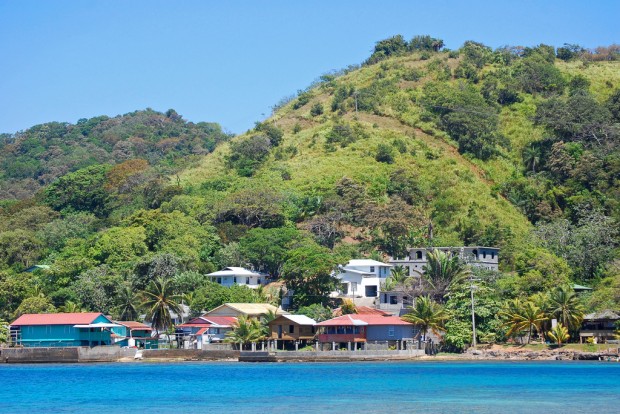
Speaking of dry cleaning and repair shops, that’s another area where Boca Chica wins out over Roatan. In Roatan you’re pretty much limited to the options available on the island. Most consumer offerings are located on the west end in places like Coxen Hole and French Harbour.
The options are decent, but the prices reflect the fact that they’ve had to be shipped over from the mainland. Plus if the island doesn’t have what you need, then back on the ferry you go.
From Boca Chica island, you can motor over to the mainland where the town of Boca Chica has enough to meet your basic needs. However, if you’re seeking something a little less common all you have to do is drive the half hour to David which is guaranteed to have what you’re looking for.
It’s so convenient that it wouldn’t be unheard of for someone to spend their day out exploring deserted islands in the archipelago, then shower, change, and head into David for a world-class steak dinner. In the city you’ll also find hardware stores, modern hospitals, government offices, and even a Mailboxes Etc.
James Willmore
Round #3: Investment Potential
Winner: Boca Chica By a Large Margin
The fact that you’re at least somewhat familiar with Roatan, Honduras, but may have never even so much as heard of Boca Chica, Panama, should be your first clue as to which has the greatest potential for appreciation.
Roatan is a well-developed tourist destination that’s been drawing international attention for a while. Boca Chica Island is a hidden gem. The mainland town of Boca Chica attracts a few tourists, mainly because of its popularity as a sport fishing mecca. But most of the islands of its archipelago are virtually untouched.
Roatan has a fair share of real estate that’s a little further off the beaten path as well, but its prices still reflect the level of development available on the island itself. Boca Chica, on the other hand, offers the same (if not better) gorgeous scenery and opportunities for adventure and exploration. But at rock-bottom prices.
Not to mention, that airport expansion we mentioned is about to cause the entire Chiriqui province, including Boca Chica, to explode. More and more travelers from all over the globe will begin visiting the area. Infrastructure will continue to improve. New businesses will open. And the result will be a tremendous spike in property values.
These projections are huge for investors.

Round #4: Atmosphere
Outcome: It Depends
Both Roatan and Boca Chica are great destinations with a really cool laid-back vibe. They also both have a good bit of variety if you’re willing to move around a bit. But each excels in a particular genre the other lacks.
In the more populated areas of Roatan you’ll find your typical Caribbean atmosphere. There are your usual tourist developments and hotels within walking distance of bars and restaurants that offer a vibrant night life.
Boca Chica doesn’t have that. There are good times to be had in Boca Chica, but they generally come in a more low-key format, like a relaxed happy hour spent on a restaurant patio.
By contrast, Boca Chica offers opportunities for complete solitude that would make even Robinson Crusoe drool. You can relax in a hammock on your private patio with nothing but your thoughts and a few howler monkeys to keep you company. Roatan has a few more secluded spots too, but they don’t compare.

Viva Tropical
Round #5: Tourist Infrastructure
Advantage: Roatan by a Landslide
Whereas Roatan has all the activities and tourist offerings you’d expect of any world-class vacation spot, Boca Chica’s options are drastically skewed towards one genre: aquatic adventures. It’s a great jumping-off spot for deep sea fishing, sailing, and other seafaring activities. For much more than that, you’ll need to venture to one of the other destinations in the province.
Roatan has a variety of options for dining, lodging, and other amenities. It’s a well-developed tourist hotspot. But that also has its drawbacks. Like the hordes of cruise ship passengers that crowd the beaches every few days or so.
It’s important to note though that Boca Chica’s relative lack of tourist offerings represents another great area that’s primed for growth. As the number of visitors to the area increase, there will be tremendous potential for entrepreneurs looking to profit by opening attractions like yoga retreats and sport fishing operations.

Michael McDonough
Round #6: Host Country
Advantage: Easily Panama
Outside of Roatan, there just aren’t a lot of expats flocking to Honduras. With the world’s #1 highest intentional homicide rate (82 of every 100,000 deaths), to say the country has a crime problem is a gross understatement.
Likewise its education system is fair, and its infrastructure is well below average for the region. You can’t drink the water, and many cities have inadequate wastewater treatment systems. Health care is also subpar, with only 57 physicians per 100,000 people.
Contrast this with Panama, whose infrastructure rivals that of first-world countries in some of the larger cities. It has good roads, reliable public transit, and some of the best internet and cellular access in all of Latin America.
There are a number of established expat communities where large numbers of English-speaking immigrants have more than paved the way for newcomers. There’s also Panama City, a bustling cosmopolitan city that many compare to Miami.
Panama’s schools are good. Its healthcare is great. It’s also one of the safest countries in the region, with less violent crimes in a year than New York City has in a day.
Panama’s government is pro-business, pro-investor, and extremely friendly to foreigners. Its pensionado program, with discounts as high as 50% on things like entertainment and travel, is the reason it’s often dubbed one of the best places to retire in the entire world.

Round #7: Snorkeling
Winner: Roatan
Boca Chica has a few private beaches where you can spend an afternoon snorkeling. Most notably there’s nearby Islas Secas, which is a 45 minute boat ride away, or Coiba National Park. It’s one of the largest marine parks in the world, but it’s a good 2-3 hours by boat.
In the waters surrounding Roatan there are over 100 diving and snorkeling sites, many of which are accessible directly from the beach. And since the island is so popular with cruisers, there are a number of outfits offering snorkeling excursions for tourists.
Round #8: Diving
Verdict: Boca Chica by a Nose
Roatan does have the benefit of being located near the Mesoamerican Barrier Reef, which reaches down to the island from Belize. As a result, it attracts many divers and is great for beginners.
However, Boca Chica lies in close proximity to a spot that offers some of the world’s best dives, according to National Geographic. Just 27 miles south is Islas Ladrones, which is teeming with schools of jack, snapper, and barracuda. There are also smaller species like surgeonfish, parrotfish, triggerfish, angelfish, and more that can be seen year round.
You can also spot several species of shark and, at certain times of the year, giant manta rays and humpback whales. Visibility near the island is 30-80 meters.
Further away, as mentioned for snorkeling, is Isla de Coiba, where you can explore a 330,000-acre reef which contains 60 of the world’s 75+ species of hard and soft coral. In these protected waters you’ll also find mullet, stingray, puffers, moray eels, and gentle sea turtles.

Snowmanradio
Round #9: Fishing
Winner: Boca Chica Hands-Down
Due to the abundance of species represented in Boca Chica, the fishing in its waters is second to none. A large majority of its tourist accommodations are comprised of fishing lodges, and the number of world record catches that were landed in and around Boca Chica is remarkable.
Most of these were snagged near Hannibal Bank, a world-famous fishing hotspot where the ocean floor rises sharply from thousands of feet deep to a mere 120 feet. Where this cliff juts out, tremendous schools of inshore fish merge with the offshore species who feed on them. Marlin in excess of 1,000 pounds and tuna over 300 pounds have been caught in these waters, as well as snapper, amberjack, and snook.
Since the island actually started as a commercial fishing hub (until tourism began to dominate), you won’t be disappointed with the fishing in Roatan. That is, unless you’ve already experienced the fishing around Hannibal Bank in Boca Chica. That’ll definitely ruin it for you.

Viva Tropical
Round #10: Land Exploration
Verdict: Boca Chica Takes the Round
Roatan has a few areas available for exploration if you’re willing to venture over to the east side of the island and get away from the more heavily touristed areas. There are botanical gardens and nature trails, but it’s also somewhat of a controlled environment.
By contrast, the jungles and rainforest of the Boca Chica archipelago are absolutely prehistoric. There’s an abundance of old growth trees and entire islands that are completely covered in dense untouched forest. There’s also a general attitude of preservation and conservation among the local population, as well as the developers who are starting projects in the area.
Take for example Boca Chica Island, the site of our latest Adventure Colony. It’s a place where like-minded expats can own their very own unspoiled piece of nature. It’s a community with a shared vision of living in harmony with the environment, as evidenced by Monte Vida, the world’s first crowd-funded park.

Viva Tropical
Grand Champion
Just like many of the individual categories, the verdict of which island destination is the right place to establish your expat home is one that’s best left for you to decide.
If you’re looking for an established spot with amenities already in place and a thriving expat community, then check out Roatan. If you’re a more intrepid expat who wants to be one of the first on the scene, for both investment potential as well as bragging rights, then Boca Chica might be the place for you.
Map of Boca Chica
Boca Chica Fast Facts
- Population: About 1,200 (Numbers are hard to nail down, but this is a good guestimate)
- Typical temperature: From 70 to 88 degrees Fahrenheit
- Nearest airport with U.S. flights: Tocumen Airport. Domestic flights to Panama City, Panama and international flights to Costa Rica depart from Enrique Malek International Airport in David
- Nearest U.S. consulate: Panama City, Panama
Map of Roatan
Roatan Fast Facts
- Population: 50,000
- Typical temperature: From 80 to 88 degrees Fahrenheit
- Nearest airport with U.S. flights: Juan Manuel Gálvez International Airport
- Nearest U.S. consulate: Tegucigalpa, Honduras

When looking at lists published by international living gurus citing the best places to live in and retire to overseas, the nations of Ecuador and Panama consistently appear among the places with the highest rankings.
As beautiful, affordable tropical destinations go, they’re among the best of the best. And, while they’re both excellent overall as places to retire, raise a family, start a business, or just live for a short time, each has certain areas where it shines brighter than the other.
We’d be hard-pressed to say which country is the best or, even more specifically, which one is the best for YOU and your particular situation. That decision is best left up to your family, based on your individual needs and priorities.
What we can do is highlight a few categories that are important to expat families and tell you which country excels in that area.

D. Bmcnicol
Round #1 – Lifestyle Hacks
Winner: It’s a Tie
One of the coolest things about living abroad is the ability to enlist help for tasks that you might be fed up with doing yourself, but would’ve never had the means to hire out in North America. Some examples are maids, gardeners, drivers, tutors, and nannies.
And domestic help is abundant and affordable in both Panama and Ecuador. We’d be tempted to give this category to Ecuador for its lower cost (around $10 per day for the services of a maid vs. $15 for the same work in Panama).
However, as is often true, you tend to get what you pay for. So some might argue that the quality of service you receive from domestic helpers is superior in Panama.

Eddie Codel
Round #2 – Connectivity
Outcome: Panama By a Nose
This is another area where both countries excel far beyond the reach of most of their Latin American neighbors. And, up until recently, this category would have gone to Panama by a landslide.
However, Ecuador is aggressively working to improve its internet coverage. As a result, the country’s connectivity is increasing by leaps and bounds with a goal of access in 50% of households by 2015. (It’s currently closer to 35%.) Free public access centers are also widely available across the country.
While Ecuador’s connectivity is great, Panama’s is excellent due in part to a long-standing U.S. military presence. In fact, it ranks #2 in all of Latin America for technology and internet penetration and #1 for wireless availability.
Most Panamanian cities offer affordable broadband service, and there are free wi-fi hotspots nationwide. Because of its technological advances, companies such as Dell, 3M, and Philips have chosen it for their regional headquarters and customer service centers.

Pavel Kirillov
Round #3 – Living Options
Slight Edge: Panama
Both Ecuador and Panama have a lot to offer in terms of variety of living options. When it comes to mountain towns, Cuenca, Ecuador, and Boquete, Panama, are among some of the top expat destinations in Latin America. There are others as well, such as Loja, Quito, and Vilcabamba in Ecuador and Volcan, El Valle, and Santa Fe in Panama.
There are also popular beach towns in both countries. Salinas, Ecuador, has been compared to Miami’s South Beach. There’s also Montanita and Manta. Panama has Bocas del Toro, the quintessential Caribbean beach town, as well as Coronado and Pedasi.
Panama City trumps places like Ecuador’s Quito and Guayaquil if you’re looking for something that more closely resembles a first-world city. The other place where Panama takes the cake is with its options for island living. Ecuador has the Galapagos Islands, a great place for tourists to visit or explore but not necessarily live.
However, Panama offers options like Boca Chica Island, which offer nature-loving expats the opportunity to own their very own piece of a private island that’s only a hour away from the country’s second-largest city and an international airport.

Wogo 24220
Round #4 – Green Living
Winner: Ecuador
While Panama has long had its sights on continuing to improve its infrastructure and commerce, it lags a bit behind in its sustainability initiatives. However, it is making some strides in the right direction. Take for instance the village of Kalu Yala, a development that has a goal of becoming the world’s most sustainable residential community.
Most green efforts in Panama are more grass roots and less government-driven. On the other hand, Ecuador has the unique distinction of being the only country in the world where the rights of the natural environment are protected by the nation’s constitution.
Sustainability issues are on the government’s radar in Ecuador as it battles issues like the threat of drilling in its Yasuni National Park, the most biodiverse place on earth.

Vilseskogen
Round #5 – Cost of Living
Clear Winner: Ecuador
Ecuador and Panama both offer the ability to live satisfying lifestyles for a fraction of the North American budget. As you can imagine, prices vary greatly from one city to the next, with some of the more developed areas running much closer to U.S. prices.
However, overall the cost of living is considerably less in Ecuador. In fact, it’s often one of the country’s biggest selling points, with many expat couples claiming to live just fine on a mere $1200 per month including rent, which averages around $450. This includes luxuries like high speed internet and once-a-week maid service.
Both countries have great discount programs for their senior adults, with Panama’s pensionado program being one of its most attractive benefits for retirees. However for most expats, particularly young families, it’s cheaper to live in Ecuador.

Rivera Notario
Round #6 – Ease of Access
Advantage: Panama
This was an easy one. Mainly because the majority of Ecuador’s incoming flights have layovers in places like Panama City (as well as Miami, Bogota, and places in the Caribbean). As a result, travel to Ecuador is longer and a bit more expensive.
It does have great public transportation once you fly in to Quito or Guayaquil, as well as connecting flights to a number of regional airports.
By contrast, Panama’s recently expanded Tocumen International Airport receives direct incoming flights from multiple U.S. cities, as well as various points in South America. David’s Enrique Malek International Airport will also soon begin welcoming international flights, opening up the western regions of Panama to expats and tourists from all over the world.

Matthew Straubmuller
Round #7 – Business Climate
Champion: Panama, Hands Down
To decide this category, you only need to look at the stats. The International Finance Corporation ranks Panama 55th in the world for ease of doing business, compared to Ecuador’s rank of 135th. This survey is based on factors that affect one’s ability to start and operate a local business.
This comes as no surprise, as Panama’s government has historically been extremely pro-business and pro-investor. It’s also somewhat of a tax haven and an increasingly popular place to open an offshore bank account. Panama also offers a whole host of visa options, with the number of choices increasing frequently.
Ecuador, on the other hand, has a reputation of being a bit unstable and unpredictable. It struggles with issues such as high government turnover rates and an economy that is based a bit too heavily on petroleum.
However, Ecuador’s economy is growing. The country is also taking steps to reduce the government’s influence in certain business sectors.

Gaspar Serrano
Round #8 – Banking
Advantage: Panama
Both Ecuador and Panama benefit from having a dollarized economy. However, both have seen requirements tightening in recent years due to laws like FATCA and other U.S. tax evasion agreements. As a result, it’s becoming increasingly difficult for foreigners to open an account.
That being said, the banking process is far more friendly to foreigners in Panama. It’s home to a number of international banks and is emerging as a major player on the global banking scene.
Ecuador, on the other hand, suffers from inconsistent regulations and subpar accounting standards, although its banks’ performance has improved in recent years. Due to the inconsistencies, however, the process of opening an account can be a bit long and tedious.

thinkpanama
Round #9 – Investment Opportunities
Our Pick: Panama
When you look at the ingredients for a savvy investment, they include factors like low costs, massive infrastructure projects, a focus on tourism, and government incentives. Both Ecuador and Panama have all of these. And lots of them.
Panama just has more. Its real estate is still affordable. The government has recently invested $15 billion in projects like airport expansions, new roads, and a metro system. There are tax breaks on everything from the importation of building materials to build a hotel to income tax on land purchased for reforestation.
Ecuador offers many of those same advantages, and often at a lower cost. So you could argue that in Ecuador there’s a bit more room for appreciation. However, the benefits of investing in Panama are just still too good to award this category to anyone else.

Presidencia de Republic de Ecuador
Round #10 – Health Care
Outcome: Another Tie
Ecuador and Panama both benefit from having excellent health care systems, with skilled medical staff and modern facilities. English is widely spoken by doctors in both countries, many of whom trained in the U.S, and hospitals offer the latest in technological advancements.
The low cost of care is also a big plus, with procedures generally running about ¼ of the price for the same service in North America. Health insurance is also affordable and widely available.
Both countries suffer from the same main drawback in this category: availability in rural areas. While they both have state-of-the-art hospitals, they’re found only in the largest cities. Clinics in more remote locations may be limited to basic services or even first aid only.

ThinkPanama
Round #11 – Consumer Goods
Winner: Panama
Both Ecuador and Panama have a surprisingly good selection of consumer goods. As a result, you usually need only drive to the nearest city to find exactly what you’re looking for, or at least a comparable replacement.
Where Ecuador suffers in this arena is due to its ever-increasing taxes. Many items have become more difficult to find, or at least more expensive, in recent years. Consequently, fewer and fewer items (like vehicles and cell phones) are being imported.
Panama, on the other hand, has become quite the shopping hub for folks all across Latin America. This is due in part to its low value-added tax of 7% (vs. 12% in Ecuador). We’ve even seen people who traveled from Ecuador to Panama City to buy several flat-screen TV’s due to the better prices and availability.

D. Rorfold
Round #12 – Foreign Land Ownership
Victor: Panama
In both Ecuador and Panama, foreigners who buy property have their rights protected by the constitution just the same as nationals of that country. There are also few restrictions on what land they can buy. Well, there’s only one really, and it’s in Panama where foreigners can’t own land within 10 kilometers of the border.
Both countries offer an abundance of land available at, in some cases, rock-bottom prices. However due diligence is absolutely necessary before buying land in either country.
Purchasing real estate as a foreigner can be a challenge, but the whole process is a bit easier in Panama. A good attorney is a must, so choose one who’s experienced in land transactions and can handle things like researching the title, drafting contracts, and registering the deed.

D Rorfold
And the Grand Champion Is…
Nah. We didn’t keep score. There’s just too much to love about both of these countries for us to try to give the trophy to one or the other.
What’s more important than our opinion is your own experience with each of these fine countries. So, if Ecuador and Panama are on your short list of potential expat destinations, then we suggest you open a new tab and start looking for flights. There’s no better way to pick a winner than to just let the two duke it out firsthand.
Map of Panama
Panama Fast Facts
- Population: 3.8 million
- Typical temperature: Temperature typically varies from 72°F to 91°F
- Nearest airport with U.S. flights: U.S. bound flights leave daily from Tocumen International Airport
- Nearest U.S. consulate: Panama City
Map of Ecuador
Ecuador Fast Facts
- Population: About 15.49 million
- Typical temperature: Ecuador is known for its micro climates.
- Major airports with U.S. flights: Quito, Cuenca and Guayaquil. Complete list of airports in Ecuador.
- Nearest U.S. consulate: Quito and Guayaquil

In this episode Josh calls up his friend Rich Lipner, owner of Dos Jefes coffee farm in Boquete, Panama. Rich has been diligently producing his own coffee called Cafe De La Luna as well as giving coffee tours on his private farm. His knowledge is very high when it comes to the world of coffee.
Think of this show as your introduction to coffee growing as you hear from two passionate coffee drinkers.
In this episode, we discuss:
- Where is the best area on the globe to grow coffee.
- Perfect French Press, The exact time to wait before you press.
- What are the best ways to prepare coffee.
- Where the most expensive coffee in the world is grown, up to $300 a pound.
- Why you should ask where the beans come from at your local coffee shop.
And much more.
Listen to the show
You can listen to the show using the player above or grab it and listen on the go via one of the following options:
- Click here to download the mp3
- Click here to subscribe via iTunes
- Click here for the RSS feed (non iTunes)
- Click here for the show archive
React to the Show
We appreciate your reaction to episodes of Viva Radio and feedback about how we’re doing.
Send us your thoughts any time in an email or comment below.
The Show Notes


Laughing Bird Stock
When looking for a tropical destination that scores big on many levels, more and more expats are considering purchasing Belize real estate as the backdrop for their next adventure.
The tiny country (it’s barely bigger than New Jersey) is the northernmost of Central America, tucked neatly under Mexico’s Yucatan Peninsula. It’s also the only one that borders only the Caribbean Sea, which is a factor that heavily influences its real estate offerings.
With just over 320,000 inhabitants in the entire country (about as many as St. Louis, Missouri), it has a laid-back small-town feel. Even the capital of Belize City, which has only 70,000 residents.
There’s also a very youthful vibe, with 40% of the country being age 15 and under. And, although the country encompasses only 8,800 square miles, it claims a whopping 149 miles of Caribbean coastline. What’s more, it’s all protected by the world’s second largest barrier reef.
Expats are drawn to Belize real estate for its affordability, as well as the natural beauty that abounds throughout much of the country. They love the climate, the friendly locals, and the familiarness of the ways of doing things.
Belize Has Always Been a Refuge
Belize, unlike any other country in Central America, was originally founded as a British (not Spanish) colony. In fact, until 1973 it was still known as British Honduras. It only gained independence from Great Britain somewhat recently, in 1981.
It’s long served as a refuge of sorts, beginning with pirates looking for a place to trade their treasures. Other immigrants included Mennonite farmers who fled their homes in Germany and the Netherlands seeking religious freedom.
The British were next, establishing colonies in Belize where they could do their banking in private. Immigrants from neighboring Mexico and Guatemala also flocked to this peaceful country to escape turmoil and caste wars in their own nations.
Today, it’s expats from all over the globe who are drawn to Belize. This history of refuge-seeking immigrants has resulted in a fantastic cultural fusion that is evident throughout the country. From the languages to the cuisine, there are so many ethnicities reflected in every region and in every aspect of life in Belize.

Anoldent
The Unique Appeal of Belize Real Estate
What makes Belize real estate such a hot commodity is the fact that much of what it offers literally cannot be found anywhere else. That’s not an exaggeration or a marketing strategy. It’s the God’s honest truth. Here are a few of the factors that have made this haven so popular among expats.
It’s Close to North America in More Ways than One
Due to its physical location, Belize is one of the easiest places to get to in Latin America. And while expats obviously desire to get away when they relocate overseas, it’s not uncommon to want to find that home away from home as close to your original home as possible.
You can find direct flights to Belize from a number of U.S. cities, such as Dallas, Houston, Miami, and Atlanta. Even better, it’s three hours tops.
Not only is Belize physically close to the U.S., it’s also similar in a number of other ways. Due to its origins as a British colony, Belize is English-speaking. There’s a lot of Spanish floating through the streets, but the important stuff (i.e. street signs, legal documents, menus, newspapers, and television stations) is all in English.
The court system is based on British common law, which is familiar to U.S. residents. The education system is also all done in English and is well-regarded, which is important for families with children.
There’s no metric system, so it’s all inches, feet, miles, and acres. And while there is an official form of currency, the Belize dollar, it’s permanently tied to the U.S. dollar at a rate of two to one. So there are no conversion issues. Not to mention, the U.S. dollar is accepted practically everywhere (except government offices).
Belize Is an Ocean Lover’s Dream
Due to its geographical location, much of Belize’s population (and most of its desirable real estate) lies along and near the coast. What’s inland is overwhelmingly undeveloped (Read: There’s little to no infrastructure.).
In fact, an estimated 80% of the country is not being used by humans. That’s not to say it’s wasteland. Belize’s inland areas are packed with jungles, waterfalls, ancient ruins, and thousands of species of flora and fauna. So one could argue that it’s also a land lover’s paradise. But that’s not why most people come here.
What they do come for is the Mesoamerican Barrier Reef, the longest in the western hemisphere and the second largest in the world (after Australia’s Great Barrier Reef). It’s the country’s top tourist attraction and offers some of the world’s best fishing, scuba diving, and sailing.
If you’re not into all of those active aquatic adventures, there’s also the fact that it’s just gorgeous. In fact, the Great Blue Hole is one of the most spectacular sights on earth.
Not only does Belize offer an extensive amount of coastline, off its shores lie roughly 450 islands. Some are among the world’s most popular tourist destinations. Others are sparsely populated. A few are completely uninhabited and available for purchase. Not many tropical destinations can make such an offering.

Anoldent
It’s an Easy Place to Buy and Own Property
Not only does the end result of owning a piece of Belize real estate sound pretty appealing, but the process itself is a relatively simple one as Latin American transactions go. For starters, Belize places no restrictions on foreigners buying property, even beachfront real estate. That’s unheard of in many countries that are popular with expats.
There are also no capital gains taxes. You will have to pay a transfer (or stamp) tax, but even that is low, usually around 5% of the value of the property. Even annual property taxes are low, with even the priciest lots accruing no more than $200 or $300.
Many other transactions are also easy in Belize, making it an ideal destination for those who wish to invest or operate a business. In fact, it’s a popular offshore banking center and a great place to set up a corporation or trust. Opening a bank account is a relatively simple process, and interest rates are quite favorable (as high as 6% on deposit accounts).
The country is also politically stable. It’s a fairly young nation with a small population. Politics are a matter of great concern for most residents, and they’ve been known to show up at rates as high as 75% for national elections. While politically interested, however, everyone remains peaceable and good-natured with their political opinions.
Belize Real Estate Outlook
Belize is a great example of a tropical place whose property values have seen tremendous increase in recent years. However, there’s no indication that this trend appears to be slowing. Growth in Belize has been steady, stable, and consistent. The stable government deserves some of the credit for this.
Future growth projections are promising, particularly with the prospect of direct flights from Europe on the horizon. Tourism is on the rise, and the government is actively taking steps to ensure that popular attractions, like the rainforests and natural coastline, remain intact as development continues.
Current property values are often as low as half of that of similar lots in the nearby Bahamas. However, with the influx of new visitors from Europe, prices can be expected to rise drastically as the market is opened up to a whole new set of buyers. This could be great news for current Belizean property owners or those looking to invest in land in the immediate future.

P Shoun
Popular Places to Own Real Estate in Belize
As mentioned, much of the available (and desirable) real estate in Belize is located near the coast. However, even more specifically, there are several key areas that are the most popular among expats.
Ambergris Caye
Belize’s largest island, Ambergris Caye has become increasingly popular among scuba divers and fishermen, thanks to its proximity to the Belize Barrier Reef. Because of its popularity and numerous amenities, it is one of the pricier places to own Belize real estate. However, there are still bargains to be had if you don’t mind a bit of a walk to the beach.
Caye Caulker
Even though Ambergris Caye has a distinctly small-town feel, the atmosphere of Caye Caulker is even more laid-back. It has only about 1,500 residents and no motorized vehicles. Prices are lower than its larger island neighbor, but that gap is likely to close as Caye Caulker increases in popularity.
Stann Creek District
While the first two hotspots are island destinations in northern Belize, there are also a lot of expats buying homes in the Stann Creek area to the south. One of the most popular spots is Placencia, which sits on a peninsula.
Some claim that it has a more authentic Caribbean feel than the luxurious island developments. It also has wider beaches with whiter sand that are often virtually empty of other people in some spots. This area can also be pricey, but good value can be found just a little further outside of town.

Belize Cove
What Your Money Will Currently Buy in Belize
Here are a few properties listed for sale in Belize at the time this article was written.
-
A mere $75,000 will get you a 1 bedroom, 1 bath cottage on over an acre in Esperanza Village, near the Guatemalan border.
-
The same $75,000 buys you a 2.89 acre lot with around 75 feet of beachfront on Cross Caye in the Stann Creek District.
-
For $431,000 you can own a 2 bedroom, 3 bathroom beachfront home on Maya Beach in the same area, complete with a pool, high end finishes, and lots of great outdoor space.
These are just a few of the great opportunities available in Belize. Depending on your individual preferences there are tons of other options that could make for the perfect setting for you to begin your expat life overseas.
Due to the inefficiencies of the real estate market, prices can often range all over the board for properties with similar features. So plan to set aside plenty of time to perform your search. Most importantly, you’ll want to plan a trip soon to see for yourself what this beautiful country has to offer. The pictures don’t do it justice.
Map of Belize
Belize Fast Facts
- Population: About 324,000
- Typical temperature: 84 degrees
- Nearest airport with U.S. flights: Belize City, Belize
- Nearest U.S. Consulate: Belmopan, Cayo, Belize
Phil and his wife Meg came to Panama to meet Josh and Park on their island (Boca Chica Island) about a year ago. At that time Phil and Meg had never been to Central America. Meeting the guys was his first stop on a multi-stop tour of the region.
Since then he has traveled all over Central America from Panama to Mexico, at which point Josh caught up with him to discuss what has happened since their island meeting.
In this episode Phil and Josh discuss why he left the NFL and what led him to consider the Latin Tropics for living. After he traveled all over the region to find the perfect place to reside, Phil talks about why he wanted to leave the U.S. and look for greener pastures.
In this episode, we discuss:
- Why Phil and his wife traveled all over Central America by bus.
- What places they liked and why.
- Why he isn’t very excited about the current direction of the U.S. and why you might need to protect yourself in the future.
And much more.
Listen to the show
You can listen to the show using the player above or grab it and listen on the go via one of the following options:
- Click here to download the mp3
- Click here to subscribe via iTunes
- Click here for the RSS feed (non iTunes)
- Click here for the show archive
React to the Show
We appreciate your reaction to episodes of Viva Radio and feedback about how we’re doing.
Send us your thoughts any time in an email or comment below.
The Show Notes
- Chris Martenson Website
- Crash Course Book
- Boca Chica Panama – an article by Viva Tropical
- Boca Chica Island– Our adventure colony project in Panama.


Jeff McNeill
Opening an offshore bank account is a relatively simple process for those who plan to work or simply live abroad. It’s also a great idea even for U.S. residents who wish to diversify their portfolios and reduce their exposure to litigation or political risks.
However, as a U.S. citizen or expat with an offshore bank account, it’s important that you realize the tax and reporting implications of foreign account ownership. It’s also important to note that many of these requirements aren’t tied to income. Merely having a financial interest in the account is enough to get you on the hook.
Who Is Required to Report?
Well, for starters, foreign financial institutions are required to enter into an agreement with the IRS and report on all their clients who are U.S. persons, or else face a 30% withholding tax on all U.S. transactions. (Furthermore, if you as their client do not comply with federal reporting requirements, they’re required to impose the same withholding on any payments to you.)
The IRS can then cross-check this information with the individual filings they have (or haven’t) received. So, if you were wondering whether the IRS could or would ever find your piddly little account and actually do anything about your failure to report it, the answer is yes. And, if that happens, then a 30% withholding tax will be the least of your worries. More on that later.
Bottom line: If you’re a U.S. resident or citizen (no matter where you currently reside) and you have interest in a foreign financial account (no matter whether it’s generating income) that meets the minimum reporting threshold, then you need to keep reading.
What Forms Do I Have to File?
This is probably as good a time as any to mention that we are by no means tax or legal advisers. The United States’ tax and reporting laws are complicated and can change on a whim. They also vary from one individual to the next, based on your specific situation.
Our best advice? Use this outline as a guide to help you know where to start. Consult the IRS website for more specific information or, if your situation warrants, a tax or legal professional with experience in foreign account reporting.
To give you a general idea of the requirements at the time of this post, here are the 3 main forms you’ll deal with:
Form 1040 – U.S. Individual Income Tax Return
If you’re a U.S. citizen or green card holder you’re required to file a U.S. tax return, no matter where you live now. That is, as long as your total income (domestic and foreign) is over $9,350. That’s because U.S. citizens are taxed on their worldwide income.
The U.S. has treaties with a number of foreign countries that may allow you to reduce or even eliminate any U.S. tax liability (if you’ve already paid taxes on the income overseas). However, you still have to file in order to take advantage of these credits. You’ll do this by attaching Forms 2555 and 1116.
Whether or not you’ll need to file a state return depends on where you lived before you moved away, as it varies from state to state. New Mexico, Virginia, California, and South Carolina are among those that will still require you to file.
Form 8938 – Statement of Foreign Financial Assets
In 2010, the U.S. Congress enacted the Foreign Account Tax Compliance Act (FATCA), a statute designed to help recoup federal tax revenues by making it more difficult for U.S. persons to hide assets in offshore accounts. As a result, U.S. citizens are now required to report any financial interests they have in foreign financial accounts or foreign financial assets, provided they meet the minimum threshold.
For those living in the U.S., that’s assets totaling at least $50,000 on the last day of the tax year, or at least $75,000 on any day during that year. This threshold is raised to $100,000 and $150,000 for married couples filing jointly.
For taxpayers who don’t live in the U.S., those minimum limits are raised to $200,000 on the last day and $300,000 during the year for individuals. For married couples outside the U.S., it’s $400,000 and $600,000 respectively.
These thresholds are aggregate, so multiple assets that collectively add up to these amounts also put you on the hook. Amounts are based on fair market value in U.S. dollars as of the end-of-the-year exchange rate.
The Form 8939 is filed with your federal income tax return and is due when your taxes are filed. In one piece of good news, U.S. citizens living overseas are given an automatic two-month extension (to June 15th) on any filing and payment requirements. Additional filing extensions can be requested. However any due payments made after June 15th will be subject to interest and penalties.
Form TD F 90-22.1 – Report of Foreign Bank and Financial Accounts (a.k.a. “FBAR”)
The FBAR is a product of the erroneously-named Bank Secrecy Act, and it’s required of anyone owning (or controlling) foreign financial assets totaling $10,000 or more at any point during the year. The value is determined by reviewing periodic account statements to determine its maximum value for the year and is reported in U.S. dollars based on the end-of-year exchange rate.
While the FBAR is filed with the IRS, it’s done completely separate from your tax return. Due on June 30th (meaning actually received, not just postmarked), it should be submitted electronically through the Financial Crime Enforcement Network (FinCEN) e-filing system.

Image Money
What Happens If I Fail to File the Required Forms?
Well, that depends. Penalties vary based on whether you failed to file one or multiple forms, whether your omission was committed in conjunction with any other illegal activity, and whether or not your failure to file is determined to have been a willful one.
Since the above forms are filed independently of each other, they’re also penalized as such.
Let’s start with the Form 8938. Failure to report any foreign financial assets when you file your tax return can earn you an initial fine of up to $10,000, plus an additional $10,000 for each month thereafter, up to a total of up to $60,000. Depending on the circumstances, criminal penalties may also apply.
With the FBAR, the punishment is even steeper. Even a non-willful violation can be earn you a $10,000 fine. However the penalty for a willful violation starts at the greater of $100,000 or 50% of the total balance of the applicable accounts. This offense can also be criminally prosecuted with additional fines up to $100,000 and/or up to five years in prison.
The limit on that penalty increases to $500,000 and/or ten years in prison (per offense) if you’ve also violated another law (e.g. the Internal Revenue Code) or been involved in criminal activity involving more than $100,000. In other words, there’s a special place in penal hell for those who use offshore accounts to hide their involvement in illegal activity. Don’t do it.
The IRS claims that their goal in enforcing these penalties is compliance with the law, not revenue. We’ll take their word for it on that one, but the bottom line is that everyday unsuspecting citizens can and are being charged these fines for simply failing to do their due diligence on what’s required.
What Determines Whether a Violation is Willful?
An act is considered to be willful when it’s done with the knowledge that it violates the law. Ignorance of the law is a defense. However, it’s a difficult one to prove.
Obviously, if you’re the one who opened the account, you’ve got a weak case. You’re similarly screwed if you intentionally responded incorrectly to question 7a on your Schedule B, Interest and Ordinary Dividends, which asks if you had “financial interest in or signature authority over a financial account (such as a bank account, securities account, or brokerage account) located in a foreign country.”
Oh @$#%! I’m in Big Trouble!
There’s good news for those who’ve either newly become aware of their delinquency or who’ve decided to come clean about their intentional evasion. Under the Offshore Voluntary Disclosure Initiative (OVDI), U.S. persons are given one last opportunity to comply with the law.
In exchange for their honesty, their maximum penalty is reduced to only 27.5% of the highest value of their accounts during the period of which they failed to report. In addition to paying the fines, they must also amend their federal income tax returns for the previous 8 years.
Note, the OVDI program is a voluntary one and is not an option for taxpayers who have already been contacted or are being investigated by the IRS. The process should only be attempted with the assistance of experienced legal counsel and should begin with a phone call to make sure no investigation is underway.
While this amnesty program could be a bit of a relief for some individuals, it’s no substitute for forthright and timely compliance with U.S. tax laws. Owning an offshore account can be of tremendous benefit to expats and investors. But it carries with it some hefty responsibilities.
Don’t find yourself on the wrong end of an IRS investigation. If you choose to take advantage of the opportunities associated with banking and investing overseas, make sure you dot your i’s and cross your t’s.
As comfortable in a dug out canoe as as a yacht, Josh’s adventures take him and his business partner into uncharted regions all over Central America.
Viva Tropical Radio is about the people, places and ideas discovered on those journeys.
On its surface the show is about the Latin Tropics, but Josh’s multitude of interests take the show much deeper.
From strange local myths and unique plants, to how to retire to the region. From offshore investment strategy to how to build a sailboat.
We welcome you to an eclectic mix of subjects as diverse as the region.
In the inaugural episode Josh has a discussion with Park Wilson about what you should know before you invest in Central America.
In this episode, Park and I discuss the following:
- Why Market Stages are a must understand when buying property in the tropics.
- How to approach different regions in Central America
- Common mistakes most folks make when buying real estate in Central America
- If you only have 72 hours to buy how you should prepare for quick trip.
And much more.
Listen to the show
You can listen to the show using the player above or grab it and listen on the go via one of the following options:
- Click here to download the mp3 | 72.6MB | 45:12
- Click here to subscribe via iTunes
- Click here for the RSS feed (non iTunes)
- Click here for the show archive
React to the Show
We appreciate your reaction to episodes of Viva Radio and feedback about how we’re doing.
Send us your thoughts any time in an email or comment below.
The Show Notes
- Market Stages Chart that Defines the Stages – by Viva Tropical
- Map of Market Stages in Panama – by Viva Tropical
- Understanding Market Stages: The Key to Profiting on Central American Real Estate – by Josh Linnes for Escape Artist
The Transcript
Transcript coming soon!


Steve’s Travel World
Granada, Nicaragua real estate is a popular choice among investors and would-be expats who are looking for a bit of a different experience than those offered by many popular tropical destinations.
While similar to many of its Central American competitors in its beauty and charm, Granada offers an adventurous and authentic experience that appeals to a uniquely special breed of expats.
Granada, Nicaragua Real Estate Stands Out from Its Surroundings
One of the most important factors that makes real estate in Granada so distinctive is the way the city functions as a sort of oasis among the Nicaraguan wilderness. While the country is Central America’s largest area-wise, it’s also the least populated.
Much of the nation is uninhabited and lacks modern amenities and infrastructure. Yet, there amidst it all is Granada real estate, the city that has stood since it was first established as one of the continent’s earliest settlements.
Among its attractions is its ancient Spanish colonial architecture, which consists of block buildings, vibrant colors, clay tile roofs, and open courtyards. The beautiful buildings are situated along cobblestone streets lined with horsedrawn carriages and dotted with shady parks.
While it may seem for a moment like you’ve traveled back in time, the first world comforts available in Granada will quickly zap you back to reality. Although the city is quaintly traditional, it still enjoys such modern amenities as reliable utilities, phone, and internet service. Not to mention luxury hotels, four-star restaurants, and state-of-the-art fitness centers.

Khaufle
It Offers a World of Adventure Right at Your Fingertips
In addition to these conveniences, Granada also benefits from close proximity to a number of natural attractions that lure adventure-seeking expats from all around the globe. Surrounding the city are forests, farmland, lakes, volcanoes, rainforests, and even the nearby Pacific Ocean.
The city itself is located on Lake Nicaragua, one of the largest freshwater lakes in the world. The lake is dotted with 365 tiny islands, many of which are inhabited. It’s also home to the world’s only freshwater shark that adapted, along with a number of other species, to a salt-free life after the lake was formed by a volcanic eruption thousands of years ago.
Also nearby is the towering Mombacho volcano, which affords spectacular views of the lake, as well as opportunities to see howler monkeys, birds, reptiles, and deer. The Laguna de Apoyo, the local swimming hole that’s one of three volcanic lagoons, is another great place to spot exotic species of flora and fauna.
If you’re looking for more than swimming, you can head on over to the coast, which is about a 90 minute drive from Granada. There you’ll find some of the most beautiful beaches in Central America, popular among surfers from around the world.

Boris G
How Granada Bounced Back from Near Demise
Granada has long existed as a sleepy little colonial town nestled in the middle of a largely underdeveloped region. However, almost 30 years ago it lacked much of the appeal it possesses today.
The country itself was debt-ridden and bankrupt, and the ancient city had suffered as a result. Much of the town looked forlorn and weary, and its historic buildings were deteriorated and in disrepair.
Around 1990 the country launched an initiative to encourage foreign investment and assistance, and aid began to pour in. Sources included American and European expats and investors, as well as substantial interest from the Spanish government.
Foreigners began to purchase Granada, Nicaragua, real estate, buying up historic buildings and turning them into residences, rental properties, and new businesses. The growth was steady until around 2007 when the global economy took a hit, but it quickly resumed once the market began to bounce back.
Today Granada is a hubbub of construction and improvement projects. It’s the most rapidly growing city in a country that has one of the fastest GDP growth rates in the region.
The city’s infrastructure has also come a long way, with plenty of access to cable and cell service. There are Internet cafes, libraries, health food stores, and still plenty of room for investment opportunities.
Granada Offers Incentives for Expats and Investors
To encourage continued growth and development, the Nicaraguan government has implemented several incentives that make living and investing there quite appealing.
Law 306
This bill offers a number of tax-free incentives to those who invest in the tourism industry and real estate development. Those who qualify can be exempt from taxes on real estate for up to 10 years. This even includes a savings of between 80-100% on the income tax applicable to rental profits.
Other benefits include sales tax exemptions on supplies purchased for tourist projects and exemptions from the transfer tax applied to real estate transactions. Since its implementation in June of 1999, the country has approved well over 400 tourism projects for a total of close to $3 billion in investments.
Decree 694
More recently, the Nicaraguan government followed the lead of some of its Central American neighbors and began offering a package of retiree discounts and tax exemptions. Qualifying individuals (those over age 45 who have a minimum monthly income of $600) can import their household goods (up to $20,000) and a vehicle (valued at $25,000 or less) with no tax repercussions.
They can also bring in another car duty-free every 5 years and receive a tax exemption of up to $50,000 on the cost of building materials for constructing a home.

Adalberto.H.Vega
One of the Biggest Benefits of Buying Granada, Nicaragua Real Estate
If its authentic charm and gorgeous natural surroundings aren’t enough to make you fall in love with Granada, then its price tag may do the trick. Despite the fact that it’s an established destination with many of the same amenities as some of the top expat havens, Granada is a surprisingly affordable city.
Inexpensive luxuries like an hour long massage ($20) and a meal in a high end organic cafe ($4) allow for an exceptionally high quality of life on an extremely reasonable budget. In fact, with affordable rental rates to round out the equation, many couples find they’re able to live on a budget of a mere $1200 per month on average.
Even though it’s considered prime real estate, and valued slightly higher than most other areas in the country, Granada is still a very affordable place to live, invest, and raise a family. From real estate to a four-course meal, most things still cost at least half what they would in the U.S.
Granada’s Expats Are Truly Special
Many Latin cities have their own close-knit expat community. But Granada’s is a unique group. Perhaps due to the city’s status as an established town in the midst of an underprivileged area, many of its expats share a strong commitment to volunteering and improving the living standards of the surrounding community.
Its foreign population includes many teachers, anthropologists, environmentalists, agricultural specialists, and even students looking for some hands-on experience with humanitarian projects. There are schools, research programs, health clinics, and a number of other opportunities for employment and volunteer work.
As a result, much of Granada’s expat population is youthful and energetic. With the low costs of buying real estate and starting a business, many young entrepreneurs are choosing Granada as the perfect place to start their businesses or try out self-employment.

Craig James
Granada, Nicaragua Real Estate Options
Another great thing about Granada is the wealth of property types and living options it offers. There are colonial homes in the historic district, many of which now boast air conditioning and swimming pools, for between $150,000 and $250,000. You can also buy one that needs fixing up and do the work yourself, or just rent a room in someone else’s colonial mansion for a mere $400 per month.
Some expats have taken these historic homes and turned them into properties that double as both their residence and business or office. Still others opt to rent properties on the outskirts of town, where many claim to be able to live more like the locals and get by on only $800, including rent.

Sally South American Cruise
What Your Money Will Currently Buy in Granada
For comparison’s sake, here are a few properties that are currently on the market in Granada, Nicaragua.
-
A mere $69,000 will get you in a 2 bedroom, 1 bath fixer-upper that’s a 5 minute walk from the Central Park, with its restaurants, bars, and market.
-
$165,000 buys a turn-key 2 bedroom, 2.5 bath property in the city center that was recently remodeled and includes a pool and second-floor terrace.
-
Your $185,000 investment can purchase a 3 bedroom, 4.5 bath home that’s 2 blocks from the main strip. It has walk-in closets, several gardens, dedicated parking, and an ornate iron fence that encloses the entire property.
-
For $215,000 you can buy a 3 bedroom, 2 bath home within walking distance of the Plaza Central and all its dining and shopping options. It includes a pool and terrace with views of Volcan Mombacho.
As a destination that hasn’t [yet] seen quite the boom that some other Central American cities have experienced, Granada is an excellent choice for expats and investors who don’t want to feel like they’re buying at the top of the market.
And with its entrepreneurial, philanthropic, and adventurous set of expats, the city’s appeal is likely to continue to grow in the coming years. As a result, it’s a great place to invest and an even better place to start a new chapter of your life. For everything you need to know about the Granada, Nicaragua download our starter kit today.
Map of Granada, Nicaragua
Granada, Nicaragua Fast Facts
- Population: 117,569
- Typical temperature: Most days are between 82 and 88 F, year round
- Major airports with U.S. flights: Granada is served by Augusto C Sandino Airport located in Managua, Nicaragua
- Nearest U.S. consulate: Managua, Nicaragua


photo by Best of the Better
Can I be frank for a minute? And forgive me if you already know this, but…it’s important that you, as someone who’s interested in investing or living in Latin America, understand that you can’t trust what anyone out there is telling you about international living.
Not even us.
Why, you ask?
Well, it should hopefully come as no surprise to you that those who write about topics like living and investing overseas aren’t just doing so out of the goodness of their heart. Like everyone else these days they’re ultimately looking to turn a profit in some form or fashion.
Whether it’s selling ads on their website, getting you to buy their ebooks, luring you to a seminar, or even selling you a piece of tropical real estate. And those are all perfectly acceptable means of making money. Just so long as you, the consumer, know to take their opinions and advice with a grain of salt.
Why we’re only slightly more trustworthy than other international living sites
Around a decade ago, my business partner and I both sat right where you are. Working in unfulfilling careers in corporate America, trying to get ahead, and dreaming about what it might be like to break free and start a life with our families in a completely new context.
Long story short…we both mustered up the courage and took the plunge. Now we and our families have never been happier.
What’s more, we think there are a lot of other North Americans (maybe even you) who might benefit from making a similar move. They just need a little guidance and reassurance. We wanted to serve as an unbiased, reliable resource for individuals like you.
I say unbiased, because we soon realized that there are a lot of marketers and gurus out there spouting a whole bunch of misinformation. Because they have something to gain from your subscription or your investment, they tell you a lot of what you want to hear and gloss over the tough parts about life abroad and the process of uprooting your family.
The truth is that becoming an expat isn’t always easy. You know how hard it is to move your family from one side of town to another. Imagine that multiplied exponentially when it comes to transitioning to a new country and a different culture.
We’ve seen the devastating effects that unrealistic expectations can have on families, marriages, finances, etc. We want to help you learn how to see through those scams and objectively evaluate tropical destinations and the expat lifestyle for yourself.
That being said, while we at VivaTropical try to provide you with the most relevant, accurate, and unbiased information available, even our articles are biased by our own opinions. It isn’t intentional. It’s just inevitable. There’s no substitute for forming your own objective opinion.
Pay close attention to the man behind the curtain.
The first step in evaluating any recommendation on tropical destinations or tropical real estate is to consider your source. And, if we’re being completely honest here, a lot of the articles out there about international living are written by people that you probably wouldn’t even listen to for more than 30 seconds if they were standing in front of you.
But a fancy website, a credible-sounding URL, and the word “Expert” after the author’s name can go a long way in making them seem a bit more legit. So, just make sure you remain as objective as possible and do your best to read between the lines.
For example, if you’re reading an article on a website called ElSalvadorBeachProperties.com then, yes, they’re probably going to tell you all about how that country has Latin America’s best beaches. They’re also probably going to gloss over its crime problem and poor education system.
The same goes for marketers who claim you can move to grand expat cities like Boquete, Panama, and Cuenca, Ecuador, and get by on some ridiculous amount of money. Yeah, you could live on less than $1000 per month. But only if you live like a local and don’t plan to take advantage of the amazing opportunities to travel the region.
Sometimes it’s a little harder to determine a site’s agenda when it’s not explicitly spelled out in their domain name. You might have to look for a copyright or a Contact Us page to find out who’s behind the information and what their motives might be.
But, once you know who you’re dealing with, you can view their information under the right lens and learn to spot a false claim a mile away.
Consider the folks who got married at McDonald’s.
That’s right. More than one engaged couple has, when faced with a plethora of options for a wedding venue, chosen to say their vows beneath the golden arches. We’re talking about linking arms and sipping from straw cups rather than champagne flutes and posing with wedding cakes built out of strategically stacked hot apple pie boxes.
That right there ought to be enough to tell you that what suits one individual or family is by no means right for everyone out there.
One man’s paradise can easily equate to another person’s idea of hell on earth. If you don’t believe us, then just go read an article about a Latin city–any city–and then read the comments people have posted below it.
For every article singing the praises of a certain destination there are usually at least a dozen critics who think it’s the worst place they’ve ever set foot in. Our articles included.
Does that mean we’re wrong about some of these places? No. Well, not exactly. It just means that not everyone is going to share our views about every destination we write about. Nor do we share the opinions of some of the other international living bloggers out there.
It’s all a matter of preference and priorities. The only way to settle on a destination that will make YOU happy is to consider your values and what’s important to your family. Then have the time of your life looking for the place that fits that bill.
Read everything you can find about a place, including the bad stuff.
Once you decide you’re serious about giving the expat lifestyle a try, start researching to narrow down your search. Read guides. Read articles from “experts.” Read the comments from people who think the author is an idiot or at least someone who’s clearly never set foot in that destination.
Join expat forums and chat with people who live in or have been to the city. Ask them questions and get real answers from people who aren’t trying to sell you a timeshare.
Learn to decipher some of the terms or descriptions marketers use to mask some of the less appealing aspects of some tropical cities. A lot of them are the same as the tricks North American realtors use. (You know the ones. A bedroom described as “cozy” might barely accommodate a twin bed. “Tranquil” means it’s in the middle of nowhere, while “convenient” can mean it’s in an area that’s noisy or busy.)
Likewise, with tropical destinations, there are similar cues you can look for. A place that’s “undiscovered” might be cheap, but it probably doesn’t have the most reliable utilities or even paved roads. In a city that enjoys daily afternoon rainbows, you’ll also have to contend with the necessary afternoon rain shower. Don’t miss what the author is really telling you.
Consider it a red flag if an author or source never has anything bad to say about a place. I assure you there’s no problem-free location in Central America, or anywhere for that matter. However, at the same time, don’t be turned off by the slightest negative detail about a city. The cool nights in towns at higher elevations may be too chilly for some, but could be ideal for you.
Always kick the tires and take her for a test drive before you buy.
You can learn a lot from reading articles, looking at pictures, and talking to other expats (and you should definitely do all of those things). But there is NO substitute for actually boarding a plane and flying down to see a place for yourself.
Sure you hear the stories about the folks who buy tropical real estate sight unseen, move their families down, start a business, and live happily ever after in paradise.
That is NOT the process that we recommend.
You need to really see and experience a place for yourself in order to determine if it’s a good fit for you. And not just for one weekend, during the dry season, with a driver, a tour guide and an interpreter. Plan to experience the place the way it would really feel if you lived there.
Walk around and talk to the locals. Eat something they consider a ‘delicacy.’ Go exploring and get lost somewhere. In town. In a jungle. (Ok, well, maybe you should have a tour guide for that excursion.)
Not only does taking a trip and enjoying an authentic experience in a new setting sound like an amazing vacation, it’s often the last step in nailing down that final decision on which tropical city would make the best backdrop for the next chapter of your life.
What are you waiting for? Turn the page. You’re gonna love how this one ends.

At VivaTropical, we’ve talked a lot about the benefits of owning an offshore bank account. Moving at least a portion of your portfolio overseas can help protect your assets from threats of litigation and the whims of the U.S. government.
Diversifying into international markets can also open wide the doors for a whole host of non-traditional investments that might not otherwise be available to you with a domestic bank or brokerage firm.
But with a whole world of options out there (literally), how do you choose which bank, or even which jurisdiction, to trust with your savings? And by what criteria should you judge the candidates you’re considering?
Well, that depends largely on your particular needs and investment goals. To some (even those doing business honestly), privacy is of the utmost necessity. To others who might be looking for income-earning opportunities overseas, favorable tax laws may be the most important factor.
Below, in no particular order, are what are considered to be some of the best overall offshore banking jurisdictions. We can’t say which characteristics might be most beneficial to you and your financial situation, but this list should give you a good idea of where to start your search.

Soman
Panama
Panama has long been a key player in the international banking industry, and the country’s recent economic growth has further solidified its place as a financial leader. With over 80 international banks, it has one of the world’s largest banking sectors.
The country has a good balance of stringent privacy guidelines combined with adequate controls to prevent money laundering. As a result, the industry is highly competitive, yet better monitored than many more peripheral jurisdictions.
Panama enjoys favorable tax laws, such as exemptions for foreign income, so you won’t be double-taxed. It’s also a great place to do business, invest in the growing tourism industry, or take advantage of great deals on Panama real estate. Many tax advantages exist for each of these types of investment.
Additional benefits to opening an offshore bank account in Panama are its close proximity to the U.S. if travel is needed to set up or maintain the account. English is widely spoken there. Plus, the dollarized economy eliminates any foreign exchange risks.
Seychelles
A rising star on the international scene, Seychelles scores big points for its high level of bank secrecy. Its long-standing privacy policy protects the identity of the beneficial owners of companies and corporations. As a result, it’s one of the world’s best places to set up a closely-held offshore corporation.
The nation is a bit lax about reporting interest income to foreign tax authorities, although it does maintain tax treaties with 46 countries, in compliance with the Organisation for Economic Co-operation and Development.
Interestingly, much of the local population of Seychelles has no access to banking services, and most of its businesses have virtually no way of borrowing capital. However, the country has been rapidly building its banking sector and has one of the fastest improving economies in the world.

Hong Kong
A number of key factors are working together to make Hong Kong one of the fastest growing offshore havens in the world today. It’s located near a rapidly-growing China, not to mention the rest of Asia. It’s also become the chosen destination of those who’ve moved their European and North American accounts due to the privacy crackdowns in those jurisdictions of late.
A perk to banking in Hong Kong is the ability to hold funds in a wide range of currencies and even change currency with the flip of a switch. Savings accounts can even be held in gold.
Interest rates are impressive, and tax laws are favorable for foreigners. There are no taxes on capital gains, inheritances, dividends, or deposit interest. Only local income is taxable. Even profits from overseas trades that pay to Hong Kong-managed accounts are usually exempt.
Singapore
Although Singapore regrettably earned its place as a top financial center by turning a blind eye to illegal foreign activity, it certainly hasn’t hurt this offshore haven. It’s currently one of the world’s fastest growing wealth management industries, expected to rival Switzerland by 2020.
It benefits greatly from its location as a hub for southeast Asia, and has a major advantage over rival Hong Kong whom many view as being too heavily influenced by China. Singapore’s tax rates are among, if not the lowest in Asia. A wide range of currencies, including gold, are available to account holders.
Today Singapore’s banking sector is much more compliant with banking regulations. However, due to the industry’s size, it exerts a high level of influence over the government, resulting in very little political opposition to its privacy practices.

twicepix
Switzerland
It’s hard to think of offshore banking without Switzerland coming immediately to mind. While it’s far from the picture most people have of James Bond making a withdrawal from an anonymous numbered bank account, Switzerland still offers some of the world’s strictest confidentiality.
The country is stable and politically neutral. The financial services industry is also protected by a strong consensus against any political changes that might affect the all-important offshore sector. As a result, Swiss banks offer a reliable, secure offshore banking environment.
Because of these benefits, Switzerland holds banking assets estimated to be roughly 820 percent of the country’s GDP. Switzerland has also been a leader in technology, with secure encryption, internet banking, electronic funds transfers, and electronic signatures.
United Arab Emirates
The UAE city of Dubai first emerged as an important financial center when it found itself lacking in some of the oil and gas reserves that some of its neighbors possessed. As a result, it shifted its focus to the flow of massive amounts of money circulating among its oil-rich neighbors and beyond.
It serves as a politically and financially stable banking option, amid a region plagued with turmoil. It’s also situated strategically along an all-important East to West trade route.
Benefits to banking in the UAE include low taxes, a number of tax-free zones, and a level of privacy that rivals that of Swiss banks. Due to its ask-no-questions philosophy, it’s home to considerable illegal activity. Much of the industry’s incoming funds are in the form of cash or gold.

H. Michael Miley
Cayman Islands
The offshore choice of political candidate Mitt Romney, the Cayman Islands benefit from the added support of being a territory of the United Kingdom. So, while still essentially autonomous politically and economically, it has a safer feel for those who are skeptical of international markets.
Like many of its competitors, the Caymans offer a number of tax-free incentives and little financial regulation and oversight. The nation has long held the opinion that savvy investors are perfectly capable of taking responsibility for their own compliance and that the markets always know best.
Today the country is the world’s fifth largest financial services center, taking on business from the world’s biggest banks and corporations. It plays host to over 10,000 mutual funds (only Luxembourg has more), over 200 banks, over 90,000 companies, and 140 trust companies. It’s the world’s top home for hedge funds and captive health insurance companies.

401k
Lebanon
Lebanon is often hailed as the “Switzerland of the Middle East” for its tight bank secrecy laws. Banking privacy in Lebanon is “absolute” and guaranteed by law, with violations being subject to criminal prosecution.
It’s also a tax haven, much like most of its competitors. Foreigners pay no local income tax on interest and revenues earned in Lebanese banks. Likewise there are no inheritance taxes, stamp duties on contracts, corporate income taxes, or taxes on dividend distributions or capital gains.
The country has a stable banking system, as well as measures in place to prevent money laundering.
Luxembourg
With over 12 percent of the world’s market for offshore banking, Luxembourg is a major player in the global financial sector. Like other banking secrecy jurisdictions, it’s full of tax loopholes and loose financial regulations.
It’s also extremely stable due to it political neutrality and the strong influence its financial sector holds over the nation’s political leanings. It’s central (both politically and geographically) to the heart of Europe and was a founding member of the European Union, giving it better access to European and international markets.
Its tight banking secrecy policies are based more on the principle behind professional lawyer-client relationships, with even more privacy laws in the works. The country is also reportedly setting up a high-security storage facility where clients can keep assets like paintings and gold with no fear of having these possessions reported to tax authorities in their home countries.
Whether you’re looking for a place to stow a Picasso or simply wanting to transfer your self-directed IRA where you’ll have a better variety of investment options, offshore bank accounts can open up a whole new world of possibilities.
Belize
Although only in its 3rd decade of international banking, Belize has been steadily growing its financial services industry since it first emerged on the scene in the early 1990s. Today it offers a myriad of products and services to international investors from all over the world.
It’s a popular choice among North Americans, due largely in part to its proximity and the fact that it’s an English-speaking nation. It’s also modeled after British (rather than Spanish) law, making a lot of legal processes much more familiar.
Belize is in close runnings with its international competitors in terms of the variety of its offerings. Clients can easily set up a corporation, trust, or limited liability partnership.
Before you choose a jurisdiction, do some additional research to determine the requirements for opening an account and to make sure the particular country or bank offers the best incentives to help you achieve your financial goals.
And, whatever you do, don’t forget to follow through with all of the latest forms the U.S. requires for offshore account holders. It doesn’t matter if your jurisdiction doesn’t report you. The IRS can and will find you.

The U.S. State Department estimates that there are currently 6.32 million Americans living overseas, in over 160 countries. But where exactly are they choosing to reside?
Thanks to a new interactive map that uses migration data from the United Nations Population Division, we can now tell where Americans are living abroad (as well as nationals of any other foreign country).
Not surprisingly, many of the countries that top the list of popular destinations for U.S. citizens are located just to the south, in Latin America. Due in part to their proximity, pleasant climates, and affordability, the countries of Central and South America are a natural choice for would-be expats who are looking to experience something new.
Here are a few of the most popular countries U.S. immigrants choose, along with what makes them such desirable destinations.

Joseph Martinez
849,000 Americans Live in Mexico
With an astounding number of U.S. immigrants (more than twice that of just a decade ago), Mexico is the #1 place Americans go when they leave the U.S. It’s also more than twice that of the second most popular country, Canada.
In fact, you might also be surprised to know that more people from the U.S. have moved south of the border than Mexicans have moved north. And the reasons for this choice are numerous.
For starters, relocating to Mexico is just easy. It’s close. There are plenty of other expats. You can access the country with only a short flight, or even drive across the border if you really want to.
In many places the infrastructure is good, quality health care abounds, and it can all be had at a fraction of the cost of living in the U.S. The long-standing U.S. expat presence has paved the way for newcomers, and there are plenty of the same U.S. franchises and name brands that foreigners recognize.
Yet despite its U.S. influence, Mexico maintains a rich culture that many say has been lost in other expat havens, such as countries in Europe. Mexico’s immigrants claim the country is alive with possibility and a vibrance that just isn’t found anywhere else right now.

Dave Bezaire
39,000 Americans Live in Ecuador
Ecuador continuously battles nearby Panama for top billing as the world’s best place to retire. In 2014 it lost by only .1 of a point, according to International Living’s annual survey. Among the reasons for its consistently high scores are its unrivaled scenery and its extremely affordable cost of living.
A couple can live quite comfortably in most Ecuadorian cities on $1500 to $1800 per month, which includes housing and even luxuries like a part-time maid. That same feat can be achieved elsewhere in Latin America, but it won’t come with the same quality of life.
Ecuador has historic colonial cities like Quito and Cuenca with their cathedrals and Spanish colonial architecture. The weather in the mountains is pleasantly mild, and even on the coast the temperature rarely reaches 90 degrees.
There’s good private health care, particularly in the large cities. Infrastructure is also improving, with enhancements like a new airport just outside Quito and the widening of the Pan-American Highway.
The country’s economy is stable and growing, The friendly and welcoming Ecuadorians are thriving, enjoying better lifestyles than previous generations.

Sergio Quesada
13,000 Americans Live in Costa Rica
For a few decades now, Americans have been flocking to Costa Rica for its natural beauty and the “pura vida” (pure life) atmosphere it offers. Named the world’s happiest country, accordingly to the 2009 and 2012 Happy Planet Indexes, it possesses a lot of factors that contribute to an overall fantastic quality of life.
Both Costa Rica’s locals (called Ticos) and expats enjoy a much slower pace of life than U.S. residents are used to. There are plenty of options for healthy living, including yoga classes and organic food options. The country is also committed to sustainability, and green initiatives abound.
The country’s public health system is among the best in the world (ranked higher than that of the U.S.). After a monthly payment that’s based on income (between $50 and $150 for most expats) residents receive health care that’s completely free and includes routine visits, prescriptions, and even major surgeries. No exclusions apply due to age or pre-existing conditions.
Costa Rica is safe, politically stable, and enjoys year-round warm weather, although the higher Central Valley is even milder than the tropical coasts. There’s also a great pension program for retirees earning an income of $1,0000 or more from an outside source.

Bocas del Toro via Tysnfst
12,000 Americans Live in Panama
Edging out Ecuador to take the top spot as the best place to retire in 2014, Panama is a popular choice among expats for its convenience and affordability, as well as its unmatched retirement program. Thanks to some new visa options, it’s also recently become an even easier place to live as an expat.
Its list of conveniences includes easy access, thanks to several international airports, a dollarized economy, widely-spoken English, and a thriving international community. The country is also undergoing a massive overhaul of infrastructure projects ranging from new highways and a metro system to an expansion of the canal.
Few Latin American countries can rival Panama’s variety and value. It has quaint mountain cities flanked by rainforests and coffee plantations, laid-back Caribbean beach towns, and a bustling first world capital city that has a national park within its city limits.
Panama’s pensionado visa has always been a popular choice. It’s available to anyone, regardless of age, who can prove $1,000 per month income from a guaranteed source. For those who qualify, the list of benefits and discounts are too extensive to list.
Much of Panama is more affordable than its Costa Rican neighbor, in many cases with the same or better amenities, making it a great place to invest in real estate or the growing tourism industry.
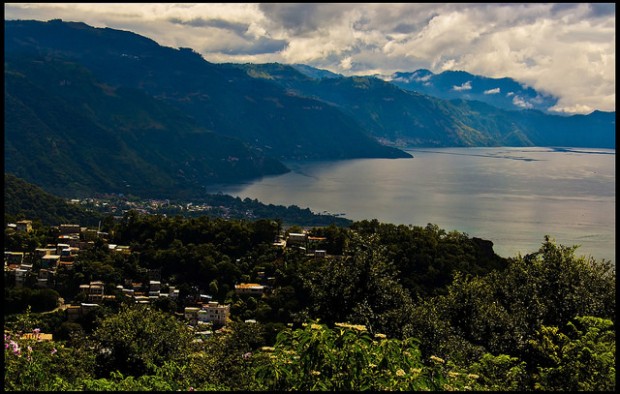
Guillén Pérez
8,000 Americans Live in Guatemala
Guatemala, known as the Land of the Eternal Spring, has also crept onto the radar of many U.S. expats in recent years. Its popularity is largely due to the fact that it shares many of the same perks as its Latin American neighbors (slower pace of life, beautiful surroundings, close proximity to the U.S.), without being too overcrowded.
It’s also a bit less expensive than some of its competitors, with expat couples claiming the ability to live comfortably on well under $1500 per month. Domestic help, like the services of a maid or gardener, is only $2-$3 per hour. And a week’s worth of fresh fruits and vegetables costs only $6-$10 at the market. Real estate in Guatemala is also on the affordable side.
One of the country’s biggest selling points is its authentic culture, particularly the area around Lake Atitlan, a popular expat destination. Located about 75 miles from Guatemala City, the lake is surrounded by volcanoes and a number of villages where natives still practice their ancient Mayan traditions.
Even closer to the capital is Antigua, which is full of cobblestone streets and colorful flora. Much of the country enjoys a mild climate with warm days, cool nights, almost no humidity, and little need for either heating or air conditioning.

David F. Barrero
4,000 Americans Live in Nicaragua
Two of Nicaragua’s most beautiful colonial cities, Granada and Leon, aren’t just impressive due to their shady parks and Spanish architecture. They’re also among the hemisphere’s most ancient.
Granada and Leon continually vie for the title of Oldest City in the Americas. Both boast colonial churches and public buildings, as well as plazas that are well-preserved specimens of the area’s rich history.
Equally breathtaking are the country’s two coastlines (one sand, one surf), its jungle and cloud forests, its lakes and volcanoes, its capuchin monkeys and rare orchids. Visually, Nicaragua is a rare gem, having much of the same ecotourism appeal as Costa Rica and Panama, just less discovered, less developed, and less expensive.
In fact real estate, even in some of the developed areas, is quite a bargain in Nicaragua. Land on the Pacific Coast selling at 40-50% below its peak, and a small Spanish-colonial home in Granada can go for as little as $40,000-$50,000. Many developers are quite eager to sell, offering special deals and discounts such as developer financing.

Zhu
3,000 Americans Live in Belize
Like its Latin American neighbors, Belize offers an amazing climate and an affordable lifestyle. It also delivers stunning natural beauty, much of which is completely unspoiled. Adventurous expats can explore its sandy white beaches, tropical rainforest, ancient Mayan ruins, mountains, waterfalls, and more.
Most notably, the warm waters off the coast of Belize are home to the world’s second largest barrier reef (the largest in the western hemisphere), which makes for excellent diving, snorkeling, fishing, windsurfing, and a number of other aquatic activities.
Also, as the only English-speaking country in Central America (due to its origins as a British, rather than Spanish colony), Belize is an easy place for expats to make themselves comfortable. The country’s system of law is also based on British principles.
Another perk of living and investing in Belize is its stable economy. It has one of the lowest inflation rates in the world and a number of tax benefits for residents and investors. As a result, it’s also a popular offshore banking center.
So, if you’re considering relocating to Latin America, those are a few of the places where you might be most likely to have other expats as neighbors.
But don’t read much into the numbers other than just that. No single expat destination is right for everyone, so a country that draws thousands of new immigrants each year might have no appeal for you at all.
The decision to become an expat is life-changing one. The process of deciding where is the fun part. Start exploring today.


S. Shumad
Like many U.S. citizens, you may consider offshore bank accounts to be tools best reserved for those who have something to hide. From the Internal Revenue Service, from the Drug Enforcement Administration, from their unsuspecting soon-to-be ex-spouse.
And, unfortunately, there are a few folks out there stashing cash overseas for some of those very reasons. But they’re far from the majority.
The people who make up the largest segment of offshore account holders are wealthy individuals who recognize the value and security of diversifying their portfolios to include overseas investments.
Also making an appearance are regular guys like you and me who have seen the light and realized that maybe–just maybe–all of these billionaires, their accountants, and their financial and legal advisors could actually be onto something.
Here are a few of the legitimate, if not compelling, reasons to get some of your money offshore sooner rather than later.
You could be the next defendant in a case that tops the “Stella” awards.
Named for the 79-year-old New Mexico woman who sued McDonald’s over a hot cup of coffee, the Stella awards list the most frivolous lawsuits filed in a given year. And they’re not all against multi-billion dollar corporations.
Average Joes get dragged into court every day over the most ridiculous of circumstances. Take the Massachusetts woman who was rescued from a near-drowning after her son-in-law crashed their car into the Connecticut River. She suffered some brain damage and sued the driver for damages. Also named in the suit? The rescue divers who risked their lives to save her.
And don’t forget the Alabama woman who accidentally got locked in the storage unit she had rented to store her belongings following the foreclosure of her home. She was inside late one night “looking for some papers” when the facility’s manager discovered her unit ajar–and locked it for her.
Despite being found 100% responsible for her own predicament, the jury awarded her $100,000 of the $10 million she sought for her distress, which included a total of 63 days locked inside and a grand total weight loss of almost 70 pounds. (Conveniently, she had some food stored inside the unit she claimed NOT to be living in.)
Then there was the D.C. man–an administrative law judge, mind you–who sued a mom-and-pop dry cleaners for $65,462,500 for losing a beloved pair of pants. While his case was thrown out (he’s appealing), there are many Americans each year who are forced to pay similarly ridiculous settlements that make tort reform look like a grass roots effort.
What does this have to do with offshore banking?
U.S. courts have no jurisdiction outside of the country. So, while you can’t protect yourself from being sued by your mailman when he trips over the package he just left on your doorstep, you can at least protect some of your assets by holding them overseas and away from the whims of the U.S. court system.

Bocas del Toro via Celine
Offshore funds are much more difficult to redistribute.
In addition to the litigation exposure, another common reason people seek places to house their money overseas is the perceived political risk. Common fears include the current administration’s socialistic undertones, increasing capital controls, threats of the redistribution of wealth, and other government rhetoric.
As a result, many U.S. citizens have never felt less confident in the intentions of their government or less secure within the confines of their country’s financial system. They have legitimate concerns about where the U.S. is headed.
What’s the solution for minimizing a non-systematic risk in your portfolio?
The answer is simple. Diversification. In this case it’s not only a matter of balancing out underperforming investments with more successful ones (although there are certainly many high-performing investment options overseas).
Here it’s more about jurisdictional diversification. Moving funds away from the reckless, unstable banking systems of the U.S. and securing them in a safer global environment.
Couldn’t the government just as well come after my funds in an offshore bank account in Panama or Belize, you ask? Well, sure. They could. And who’s to say they won’t? But it won’t likely be their first stop. Hopefully by the time they get around to going after money in the offshore accounts of its residents you’ll have time to apply for citizenship and meet up with your savings somewhere in a much more favorable climate.
The U.S. is having a hard time keeping pace with its competitors in an increasingly global marketplace.
In many cases, individuals’ decisions to hold capital in offshore accounts has less to do with any legal or political agendas and more to do with the fact that it just makes good financial sense. Our world is becoming increasingly flatter, and your options are no longer limited to only the financial instruments and institutions in your home country.
Similar to how large multi-national companies search the globe for the best places to house their communications centers or manufacturing operations, many individuals are now following suit when it comes to their own personal finances. And, not surprisingly, all of the popular offshore financial centers are outperforming U.S. banks in a number of ways.
One of the most obvious differences between domestic vs. global financial institutions is in the privacy they offer. The U.S. banking system is plagued with level after level of bureaucracy and government regulation, thus increasing banks’ cost of operation.
Some argue that this high overhead is in itself a sort of tax levied on domestic banking operations, resulting in higher fees, lower interest rates on deposits, and other unfavorable effects on customers’ bottom lines.
Speaking of taxes, that’s another benefit of owning an offshore bank account. Not in the sense that you’re exempt from paying taxes entirely, as U.S. citizens are taxed on their worldwide income. However, offshore accounts do afford you the ability to do business through an offshore corporation, trust, or other entity which may offer some specific tax advantages.

VivaTropical
So what’s the bottom line?
If you were about to buy a new luxury automobile, I doubt you’d just drive to the closest dealership to your house, choose the model you want from a list of options, agree without hesitation to the price and all the terms, sign on the dotted line, and call it a day.
Of course not. You’d probably research the different models and their features, take a few out for a test drive, call or visit a few dealerships to see where you could get the best deal, and drive away knowing you made the best possible decision in buying your new vehicle.
And that’s just a car. Why make such un-researched, limited, one-size-fits-all decisions when it comes to your entire life’s savings?
There are more and better options out there. Don’t you at least owe yourself a little time to look into them?