


Andrew Henderson travels the world looking for opportunity and ways to protect his wealth. Find out why he is absolutely convinced you are insane to not keep some of your wealth in a different country.
We also talk about second passports and opening foreign bank accounts as further ways to diversify your exposure to liability. The offshore world can be complicated and vast, but all you need is a little knowledge to get started.
Tune in now and begin moving down the path before it’s too late.
In this episode, we discuss:
- Why you need to get some money offshore now.
- Why you need a second passport.
- How to get a new offshore bank account.
- Why you can’t rely on your government to protect all your wealth.
And much more.
Listen to the show
You can listen to the show using the player above or grab it and listen on the go via one of the following options:
- Click here to download the mp3
- Click here to subscribe via iTunes
- Click here for the RSS feed (non iTunes)
- Click here for the show archive
React to the Show
We appreciate your reaction to episodes of Viva Radio and feedback about how we’re doing.
Send us your thoughts any time in an email or comment below.
The Show Notes
- Who is Andrew Henderson?
- Andrew’s website Nomad Capitalist
- Vivatropical Offshore Strategy Guide

Everyone wants their own island. It’s a scientific fact. And, studies have shown that if you own one, you are cool. The very fact that you are an owner means you join an elite group of people. We don’t want to come off as overly snobbish, but the idea is that islands are cool and so are island owners. And, more importantly, it’s not as hard as you think it is to own one.

Photo by Mor
Why Buy Your Own Private Island
There are many reasons why someone would want their own island. One type of person would want the seclusion necessary to build a secret villain lair (only kidding). But, the privacy that you receive as a result of owning a private island is unparalleled. You are the master of your domain!
Another reason to buy your own island is the fact that it may be cheaper to own than waterfront property in the States. In Central America, there are several listing sites you can check out that have affordable properties, like our listing site!
It’s not about being listed among Ellison, Gates, or Jay-Z, either. While looking at their million-dollar islands is really fun, many islands in the Caribbean can be had for less than $1,000,000.

Boris G.
What Sorts of Factors Should Play into Buying Your Own Island?
First and foremost, the most important factor is (say it with me) location, location, location. If your island is out in the middle of the Pacific, hours by private plane from anywhere, the expenses will add up. But, then again, that may be the style of island you’re looking for! For most, you’ll want an island no more than an hour away by boat from a town of importance for provisioning purposes.
The amount of privacy that your island affords you may also be important to you. For one, an island in the middle of nowhere will give you a lot of privacy. Other islands for sale, especially the more affordable ones, may be a part of a larger archipelago and be relatively close to other islands. Who knows… your neighbors might be nice!
Water
Yet another factor you’ll want to consider is water: both fresh and saltwater. Does your island have a freshwater spring? That would be very important, or you’re going to run into headaches down the line. I hear that desalination facilities are quite expensive these days!
Utilities
Other islands closer to the mainland may have utilities provided by the shore. Even more amazing, ones in tropical locations may be able to subsist on rainwater alone. It’s all about understanding the ecosystem where your island lives.
How are you going to turn the lights on? Many islands have generators, and with the rapid drop in price of solar panels, islands are becoming more and more equipped with power day-by-day. An internet connection seems necessary these days, and can be provided by satellite, though that is still costly.
You’ll also want to know about the water around your island. Is it full of reefs, making it hard to land ships? Is it good for diving?
Titles
A major issue is ownership rights of the islands. Hiring a local expert is key for this matter, as the local government may have special rules about resource ownership, beach ownership, or what improvements you may make to your new land. And, you’ll want to make sure there are no indigenous land rights issues involved, as those can play a role in the purchasing predicament.
Caretakers
Many island owners have bought these pieces of paradise to retire, and so they choose to higher a local employee to live on the island and care after it, especially if they are not living on the island full-time.
Living Quarters
Finally, and most importantly, does your island already have a house on it? Many islands come ‘unimproved,’ which means the burden is on you to construct a home, utilities, septic system, and dock. This is a major undertaking, and could skyrocket the final price of your paradise. And, if there is a house already on the island, is it up to your standards of building? Many homes may not be hurricane or weather-ready.

Cool Islands to Aspire to Buy
Everyone needs a goal in life, right? Well, if your goal is to own the largest private island, you’re in for some stiff competition. Let’s take a look at some heavy-hitter island owners.
Larry Ellison
Larry Ellison bought Lanai. Like, the Hawaiian island. Well, 98% of the island, which includes 88,000 acres of pineapple plantations and fifty miles of beaches. The price was undisclosed, but rest assured it was in the hundreds of millions, if not billions.
Richard Branson
One of the more famous private island owners, you can actually stay on Branson’s Necker Island, in the British Virgin Islands. But, it will cost you. The $293 million dollar, 74-acre island hosts celebrity getaways and weddings all the time, and you can bet the price tag matches the cache.
David Copperfield
Magic pays off, apparently. David Copperfield purchased Musha Cay in the Bahamas, which is really 11 separate islands transformed into a resort paradise. The price for landlubbers to come ashore? Just $265,000 a week.
Mel Gibson
If there’s someone that needs a private island with lots of privacy, it’s Mel Gibson. He bought an island in Fiji, Mago Island, in 2005. At 8.5 square miles, and 166 miles by sea away from the capital of Fiji, Suva, I’m guessing that he’ll have plenty there.
Louis Moore Bacon
Mr. Bacon wins the prize for buying a non-tropical island. His $11 million dollar island off the shores of New York isn’t his private paradise. He’s made it a point to restore the island to its former glory, ravaged by logging and deforestation. The island has some of the best turtle populations in New York. And, for fun, Bacon leads his friends on hunts of the invasive deer population on occasion. It’s fun, and good for the environment!

Sergio Quesada
So, you’ve seen your competition, and you’ve seen what it takes to own an island. Do you still want to own one? As mentioned above, it’s not as expensive as you think to own your own paradise. If you are still interested, definitely check out our listing page here, and see if any of the islands match your dreams.

Viva Tropical Radio
The Darien Gap is a roadless, jungle-covered gap of land that stretches from the Caribbean to the Pacific ocean, covering the edge of the Panama-Colombia border.
It is referred to as a gap because there are no roads and it is the only space or gap in the Pan-American Highway that stretches from Alaska to southern Chile. It is not the biggest undeveloped jungle area, but it is probably the most dangerous.
People who know where it is stay away based on a history of FARC kidnappings and well documented lawlessness. Most that venture into the area don’t want to be found.
Author Martin Mitchinson tells how he ended up in the Darien and spent 18 months there. Tune in and listen to his story and why he wrote a book about it called The Darien Gap, Travels in the rainforest in Panama.
In this episode, we discuss:
- Why the Darien is not as dangerous as they say
- Darien Gap’s storied history all the way back to conquistadors
- What indigenous groups live there
- What Martin did on a daily basis while he was there
And much more.
Listen to the show
You can listen to the show using the player above or grab it and listen on the go via one of the following options:
- Click here to download the mp3
- Click here to subscribe via iTunes
- Click here for the RSS feed (non iTunes)
- Click here for the show archive
React to the Show
We appreciate your reaction to episodes of Viva Radio and feedback about how we’re doing.
Send us your thoughts any time in an email or comment below.
The Show Notes
Get Martin Mitchinson’s book here
Viva Tropical Radio
This week we are joined by Karl Spaeth, expat business entrepreneur and Nosara Costa Rica resident.
He talks about his long road to figuring out how to support himself while living in paradise. Karl finally came up with the right formula and his business is booming. His product? Temple of White Dog ginger beer.
Join our discussion to find out how Karl went from driving deliveries of his ginger beer on his motorbike to getting approached by an American juice entrepreneur who just sold his own company to Starbucks.
In this episode, we discuss:
- How you can start a similar business.
- How Karl got the attention he needed to sell his ginger beer.
- What licenses he needed, if any.
- If you have your idea, how to get it noticed in Costa Rica.
And much more.
Listen to the show
You can listen to the show using the player above or grab it and listen on the go via one of the following options:
- Click here to download the mp3
- Click here to subscribe via iTunes
- Click here for the RSS feed (non iTunes)
- Click here for the show archive
React to the Show
We appreciate your reaction to episodes of Viva Radio and feedback about how we’re doing.
Send us your thoughts any time in an email or comment below.
The Show Notes
- Viva Tropical’s Complete Guide to Nosara, Costa Rica
- Learn more about Temple of the White Dog Ginger Beer

From its lofty perch (9,350 feet) on the eastern slopes of the active Pichincha Volcano, Quito, Ecuador is the highest official capital city in the world.
Long overlooked as a tourist or expat destination in favor what many had viewed as Ecuador’s premier attraction, the Galapagos archipelago, the unique blend of historical architectural neighborhoods, cultural diversity, stunning vistas and surprisingly affordable cost of living for those seeking to retire or relocate to a new and exciting locale, Quito has been “rediscovered” as a place to see and experience.

M. Surgenor
Why Quito, Ecuador has become a new investment and relocation hotspot
Favorable treatment of Ecuador by the U.S. Government as a trading partner
Over and beyond being a prime location to experience South American culture at its finest, Quito, Ecuador has also emerged as a vibrant spot for relocation, investment, and business opportunities for retirees and those who seek new horizons in which financial growth potential abound.
To begin with, the significant upgrades and improvements made by both municipal and Ecuadorian authorities have opened many investment and real estate opportunities both in the central area and in the ever-expanding outlying regions.
In 2011, as part, of the National Export Initiative, the U.S. government made a strong commitment to help U.S. companies grow their export market and expand business operations into Ecuador. Being the seat of the national government, Quito has become a major focal point for much of this growth and activity.
Importantly, on March 13, 2000, the U.S. Dollar became the official currency for the country. With U.S. products being favored by Ecuadorians, there is a real potential to develop business and financial partnerships that can provide true economic potential.

Rinaldo W
A new airport means enhanced access for both passengers and cargo
In 2013 the new Mariscal Sucre International Airport opened for business, expanding the growth potential for both the number of flights and the potential increase in cargo both imported into and exported from Quito.
The new airport also increased the safety of flights which no longer would have the task of taking off and landing over a dense urban area.
A vibrant and affordable real estate market
The real estate market is a strong and vibrant area that should appeal both for the investment potential and in terms of affordable housing. The biggest single draw for settling in a city like Quito is the affordability.
By way of example, an 85 square meter (900 Sq. Ft.) fully furnished unit located in an upscale part of Quito might run in the $700-$800 range with utilities running between $90-$100 per month.
If purchasing an apartment is under consideration, a potential buyer can expect to pay between $800 and $1100 per square meter (roughly 10 square feet) outside the city center and slightly higher ($800-$1200 per square meter) in the central area.

Thomas Obrian
Tax advantages for seniors
Importantly for retirees, seniors can apply for property tax exemptions on the sale of properties. Annual property taxes are reasonable throughout the country as a whole. Taxes are generally assessed at roughly 2%-to 2½ % of the market value.
As might be expected, locations like central Quito might run higher than a rural home. By way of example, a home in an urban area that runs in the $170,000 range could have a taxable value of only $4,250.00.
The advantages of living in a highly developed community, like Quito, Ecuador, combined with the very favorable real estate situation make this an exciting and viable option for a move overseas.

Brian Dubois
Living in Quito, Ecuador – the potential for expats
In recent years interest in Quito, Ecuador has dramatically renewed as the “baby boomer” generation looks toward retirement and new locations where those retirement dollars can return a maximum amount of benefit as economically as possible.
As the nation’s capital, Quito has the kind of benefits one would expect of the country’s second largest city. The infrastructure is constantly being upgraded with such features as an increased number of electric trolleys (for example) that will help reduce pollution in this city of just under two million.
Moderate temperatures, moderate rain
The climate is as unique as the city’s history; most locals would agree that it is possible to experience “four seasons in a single day.” If you are looking for the tropical “beach life,” Quito is not for you. The temperatures are moderate year-round ranging from an average in the mid to high 60s during the day to a comfortable low in the high 40s to low 50s at night.
Like much of central and South America, there are only two “official” seasons – wet and dry. The “dry” season, June through September, matches the summer months in the U.S. and only has an average of 7 days of rain per month.
The “wet” season is far less daunting than other tropical destinations; the monthly average of precipitation during these months is 12.5 days. The most moisture-laden months, March through May and October, range from 13 to 15 days.
Modern amenities and low cost of living
As one would hope to find in a modern city, high-speed internet, cell phones, cable and satellite television are all accessible. Importantly, Ecuador does not tax U.S. social security payments and like other central and South American countries, the cost of medical treatment is significantly lower than in the U.S.
If you are over 65, there are numerous 50% discounts for utility bills, admission to sporting or cultural events and, as the number of expats continue to grow (some estimates put the number at between 5,000 and 10,000) existing expat communities will expand and new ones will be developed as Quito’s real estate potential grows.
Getting around in Quito – lots of options for tourists and expats alike
Inexpensive public transit system makes getting around an easy matter
With all the colonial charm infused in the city, it is easy to expect that transportation from one point to another could be a real challenge. Surprisingly, there are a number of affordable options that make exploring this colorful and historical center much easier and, for those who have decided to make Quito their expat destination, an inexpensive way to enjoy life in Ecuador’s cultural hub.
There are three types of buses that operate in Quito: Metrobus El Trolio and Ecovia. The Metrobus stations are painted blue and are marked with the letter “Q”. They run from the Universidad Central in America to the last station located at Carcelen. This is the best bus to take to visit the Mitad del Mundo Monument.
El Trolio has green stations and run from the La Y location in the northern part of the city to El Recreo in the south passing through the downtown area and runs the closet to Plaza Grande.
The third line is Ecovia. This line has red stations and buses and actually runs inside the historic Old Town district. With stops that range from Rio Coca station in the north to La Marin station in Old Town, this would be the choice to visit the Casa de la Cultura and Estadio Olimpico.
When leaving the airport, there is also the option of taking buses with the “Amazonas” or “Juan Leon Mera” route markers displayed that will take passengers to La Mariscal; buses with “La Marin” indicated will drop visitors within a short walk of Old Town.
Lots of options for getting around town
Public transportation in Quito, Ecuador is much less expensive than their equivalent service in the U.S. or Europe. A typical fare is $0.25 per person (U.S.). Taxis are also much less costly; the minimum daytime fare being $1.00 and the nighttime minimum $2.00.
Just as in the other parts of the world, make sure that the cab is one of the “official” vehicles that are painted yellow with a number on the door and that the driver actually turns on the meter before the trip starts. “Enterprising” taxi drivers looking to improve their daily fares seem to be a worldwide phenomena and Quito is no exception.
For the more enterprising, adventurous and athletic, there are bike rentals available at Yellow Bike or the Ecuador Freedom Bike Rental. There is a well-marked bike path through the northern part of the town.
Motorized scooter and motorcycles are also available at these businesses. While it is possible to rent a car in Quito, the city is better explored using public transportation, bicycling or on foot.

Dogymho
Quito’s past is the cornerstone of its future
As one of the first two cities (Krakow, Poland is the other) designated by UNESCO as a World Cultural Heritage site, Quito can quite rightly be viewed as the cultural center of Ecuador as well as an important location in the history of South America.
Early beginnings as part of the Inca Empire
Quito’s roots were imbedded in time well before Sebastián de Belalcázar and 204 Spanish settlers founded the city on December 8, 1534. The site had been inhabited by the Quitus tribe. The Quitus were part of the pre-Columbian Quechua society that later became the Inca Empire in the early 1400s.
Known as the Kingdom of Quito, ancient Quito was the major community focal point for the pre-Incan people who first settled on the side of Pichincha. Under the Incan rule, Quito became the second most important city of their empire.
Quito figured prominently in the Incan Civil War. Following the death of the Incan ruler, Huyna Capac, in the early 1500s, two of his heirs, Atahualpa and Huscar, fought over who would succeed as the leader of the Empire. Atahualpa had the backing of Quito and several military leaders, while Huscar had the support of Cusco.
Atahualpa prevailed in 1532 only to fall to the Spanish under Pizzaro who executed the Incan in 1533. To spite the victorious Spaniards (and perhaps to keep any valuables from them) a local general, Rumiñahui, burned the city so that when de Belalcázar and his party arrived they found little of value remaining.

Roman Korzh
The Colonial era
During the Colonial era, Quito flourished as a center of commerce and importantly, an artistic pinnacle. The Quito School of Art, founded by students of the Franciscan missionary, Jodoco Ricke, displayed a unique and high quality of painting and sculpture that fused classic Spanish religious and indigenous native themes.
On May 24th, 1822, following nearly fifteen years of attempts to break the stranglehold of Spanish rule, Quito was liberated during the Battle of Pichincha and became part of Bolivar’s “Gran Colombia”.
Simón Bolivar and Manuela Sáenz
One of the key figures of Bolivar’s revolution is still revered as a hero in Quito, Ecuador today; although the correct designation should be “heroine”. Manuela Sáenz was the illegitimate daughter of a Spanish officer and Ecuadorian woman.
When she was born in Quito in 1797 her mother’s family disowned both of them and Manuela was sent to the Santa Catalina convent, located in Quito. A free spirit, Manuela, at age 17, also got involved with a Spanish officer and the nuns threw her out.
Her father decided to marry her off to a English doctor who relocated to Lima in 1819 after the wedding. Being well-to-do, the doctor and his young wife moved in a lot of prominent social circles where Manuela was introduced to the changing face of South America.
The call of revolution was like a siren song to the young woman and, in 1822, she left her husband and life in Lima and returned to Quito. It was there that fate intervened and Manuela met Simón Bolivar. The two fell in love and Manuela soon became part of the fight for independence.
As part of Bolivar’s cavalry, she distinguished herself and, on August 6, 1824 after the Battle of Junin; subsequently, she would rise to the rank of Colonel for her efforts in the cause at Ayachuco on the personal recommendation of Bolivar’s second-in-command, General Sucre.
But it was her bravery on the night of September 25th, 1828 that earned her a place of honor both in Quito and the history of South America.
She and Bolivar were spending the night at the San Carlos palace in Bogotá when political opponents tried to assassinate Bolivar. Manuela threw herself between her lover and the attackers, giving him time to escape.
It was this act of heroism (or love) that moved Bolivar to give her the nickname “the liberator of the liberator.”
Ecuador becomes independent and Quito becomes the capital
In 1830, Ecuador left Bolivar’s Gran Colombia to become an independent nation. As the seat of art, culture and the living symbol of the resistance and struggle for freedom, Quito became the capital city of the fledgling nation and remains so to the present.

Moya Peralta
The sights of Quito – true Ecuadorian works of art
Religion and culture have played important roles in the buildings and streets of Quito. With over 40 churches, convents, and monasteries and 17 public squares, Quito has been labeled as “The Reliquary of the Americas” for the variety, amount and blend of indigenous, colonial and independence eras of influence both in style and utility.
The three zones of Quito
Quito can be roughly divided into three parts; the Old City-which is located in the center of Quito, the modern Northern Zone, and the working class neighborhoods of the southern and northern zone (north of the airport) that have fewer tourist attractions.
Much of the dramatic architecture of the ancient community was constructed using indigenous carved stone and locally made sun-dried brick. Following the Spanish triumph over the Incas and de Belalcázar’s arrival, builders used these materials as part of their construction of many of the monumental buildings still in evidence today in the Old City.

Nicolas de Camaret
Top sites to visit in Quito, Ecuador
Here are just some of the unique and stunning “colors” to the pallet of Quito that completes the picture that this fascinating city paints:
Conjunto Monumental San Francisco: This grand house of worship dates back to the latter part of the sixteenth century. The Franciscan order was the first religious group to settle following the arrival of the conquistadors. The church is home to many fine examples of what has come to be known as “syncretic art”; these works embody the unique fusion of Roman Catholic religious art with native Ecuadorian elements. Perhaps the best known example of this is the sculpture of the “Virgin of Quito” by the artist Bernardo de Legarda.
La Virgin de Panecillo: Located on El Panecillo, a large hill next to the Old City, this sculpture is the inaccurate replica of the Legarda work. Visible from practically any point in the city, local Quitoans often say that she is the only virgin in the city. Given the steepness of the hillside, it is strongly recommended that a bus or taxi be used to make the climb.
Casa de la Cultura: Lots of local artisans can be found here. This is a great location to find handmade craft items and paintings not readily available anywhere else. There is no admission fee.
Mitad del Mundo: Meaning “middle of the world” this monument a short distance outside Quito commemorates the location where measurements were first taken in 1736 by members of the French Academy of Sciences to test the flattening of the Earth’s shape at the poles. The monument contains a marked line that supposedly indicated the path of the Equator; modern GPS technology has established that the actual equatorial line is roughly 240 feet north of the original line. The admission fee to the park is $2.00.
Calle de la Ronda: This street in Old Town was restored in 2007 with the help of the city and the local residents. With quaint shops, romantic cobblestone streets, cafes, restaurants and romantic atmosphere, visitors here are easily transported to the days of colonial Ecuador.
Museo Mindalae: This museum offers a distinct and unique perspective of the ethnic and historical background of Ecuador’s people and cultures. Covering the various societies from the Amazon basin to the Andes mountains, the exhibits demonstrate the rich heritage of Ecuador that Quito so rightfully represents.
Museo de la Ciudad: Located in the heart of Old Town across from the Carmen Alto monastery, this exhibition focus more on the social history of Quito and Ecuador than the other institutions. By viewing re-enacted scenes from the daily life of the common Ecuadorian, a true sense of living in this unique and colorful country can readily be gained. Whether looking at a domestic scene from the 1500s or witnessing a battle for independence with the Spanish, visitors can better appreciate the path Quito and Ecuador have taken.
Parque Bicentenario: The second largest park in the urban area, this open air recreational space is a tribute to the dedication to revitalizing Quito and making it a more desirable residential area as well as a commercial center. The area has actually reclaimed the space of the old Mariscal Sucre Airport that closed in 2013 and contains well marked paths for cycling and walking, outdoor exercise equipment and a man-made pond.
Plaza de la Independencia: Known locally as “Plaza Grande” it is both the physical and symbolic heart of Quito. As the central square of the city, it also represents the political and governmental power of Ecuador’s capital and the location of the offices of the country’s executives. The principal feature of the square is the monument to the heroes of August 10, 1809 marking the first declaration from Quito’s Royal Audience of the desire to be free of the Spanish rule.
TelefériQo Cruz Loma (or Teleferico): Billed as the second highest cable car/aerial lift in the world, these gondolas, located on the eastern face of the Pichincha volcano (which is still active) will carry visitors from a height of roughly 10,000 feet to a dizzying 14,000 in roughly eight minutes. At a cost of $8.50 per person ($4.00 for local residents), the ride is certainly worth it as the entire city of Quito is visible below on a clear day.

Become a part of Quito’s future
With all of the economic, cultural, and lifestyle potential that are contained in this thriving and growing Andean capital city the obvious question is: How to find out if this cultural cradle is a place for you? The only way to find out is to visit and experience all that Quito, Ecuador has and can offer in the future.
With an ever-tightening economy, Quito can provide a potential for those considering an expat lifestyle that is both economically practical and socially and culturally exciting.
There is a kind of magnetism in Ecuador’s capital city that is compelling and desirable. Allow Quito to weave its magic and the possibilities are endless.
Map of Quito, Ecuador
Quito, Ecuador Fast Facts
- Population: 1.6 Million
- Typical temperature: Ecuador is known for its micro climates.
- Major airports with U.S. flights: Quito, Cuenca and Guayaquil. Complete list of airports in Ecuador.
- Nearest U.S. consulate: Quito

Ecuador visa
There are many attractive features that make Ecuador an excellent destination for expats of all demographics. One of the biggest advantages of relocating to Ecuador is its relative ease of obtaining an Ecuador visa.
Whether you’re a recent college graduate who wants to spend a few months abroad before entering the workforce, a young entrepreneur who wants to invest in tourism or real estate, or a retiree with guaranteed income from a pension or annuity, Ecuador has a visa suited to your particular situation.
Compared to a lot of Latin American countries, an Ecuador visa has lower income requirements. The process itself also generally costs less (between $500-$1000), due in part to the fact that the quick turnaround time (two to four months) cuts down considerably on attorney fees should you decide to hire one.
An immigration lawyer is something you might want to consider, unless you’re only seeking a temporary visa. Their help can be invaluable in sorting through the stipulations and requirements, obtaining and certifying the necessary paperwork, and dealing with the immigration officials who can often up and change the rules on a whim.
If your stay in Ecuador will be a short one, you can probably figure things out on your own. This detailed guide will give you a great start, but you’ll still want to double-check everything with the Ecuadorian embassy or consulate in your home country before starting the process.
Ecuador Visas for Tourists
Under 90 Days (12-X Visa)
We should first note that, if you hail from the U.S., Canada, or most European countries, you don’t need to apply for a visa of any kind in order to visit Ecuador as a tourist. All you need is a valid passport (good for the next 6 months), proof of your planned departure from the country (via air, land, or sea), and evidence of your financial solvency (like a bank statement).
As long as your total time in the country won’t exceed 90 days in any calendar year and you don’t plan to draw income from an Ecuadorian source, then you can get by as a tourist on merely your T-3 tourist stamp in your passport.
90-180 Days (12-IX Visa)
If you need to stay longer than 90 days you can apply for a 12-IX visa, which is good for an additional 90 days (for a total of 180), but only once in a calendar year. Common reasons for such a stay, besides tourism, include studying abroad, conducting research, participating in international sports, or even traveling for business (just not for an Ecuadorian entity).
You’ll still need to prove that you have sufficient funds to support yourself while in the country. You can also provide a letter from any sponsor who might be providing you with support. The cost for this visa is $50.
Roubicek
Ecuador Visas for Non-Immigrants
Also known as non-resident, these visas remain in force for a specified amount of time, usually a year or two, but can be renewed as long as your status is unchanged. You’ll just need to show up again with all the required paperwork and fees you provided the first time around.
Below are some common types of non-immigrant visas:
- Student (12-V Visa) – Those studying abroad in Ecuador need only provide proof of their registration in an Ecuadorian educational institution, as well as proof of solvency. Acceptable forms include a statement from a relative who’s supporting the student, proof of a domestic bank deposit to cover the student’s financial needs, and several others. This visa costs $50 and must be renewed annually.
- Work (12-VI Visa) – If you’re traveling to Ecuador for business, government, or other professional reasons, you’ll need documentation from your company, government, or other agency to verify your need to be there, as well as their financial support. You’ll also need a labor contract certified by the Ecuadorian Labor Court, a work permit from the Ministry of Labor, and possibly a certificate from the Superintendency of Companies. There’s also a $50 fee for this visa, and the length of its validity is dependent on your work requirement.
- Volunteer/Missionary (12-VII Visa) – When traveling to Ecuador with a religious or volunteer organization, you’ll need a certificate from them stating why you’re there and describing what you’ll be doing. You’ll also need copies of the decree showing the organization has been authorized to work in Ecuador, the rules of the organization, and the document showing who legally represents the organization in Ecuador. This visa is free and good for two years.
- Cultural Exchange (12-VIII Visa) – Foreign students and teachers are permitted a one-year stay in Ecuador and need only provide a copy of the application they submitted to the institution sponsoring their visit, as well as a copy of the organization’s agreement explaining their exchange program. Teachers must also sign a statement to verify they won’t receive pay from an Ecuadorian source for their work abroad. There is no charge for this visa.
Ecuador Visas for Immigrants
Unlike non-immigrant status, immigrant (or resident) visas are issued for an indefinite period of time (as long as you continue to meet the requirements for the specific visa). They also allow their bearers to seek employment in Ecuador, unlike their non-resident counterparts.
Examples of immigrant visas are as follows:
- Pensioner (9-I Visa) – This visa option is available to people of any age who can prove income from a guaranteed source (like a pension or annuity) that equals at least $800 per month. Another income option is a cash deposit in an Ecuadorian bank that generates the required amount of monthly cash flow. Dependents are also eligible, but require an additional $100 each.
- Real Estate Investment (9-II Visa) – Foreigners can qualify for this visa by either purchasing property valued at $25,000 or more or by purchasing a certificate of deposit in an Ecuadorian bank for the same amount (plus $500 for each dependent) for at least a one-year fixed term.
- Industry Investment (9-III Visa) – Another investment option is to pour in at least $30,000 to an Ecuadorian enterprise, such as industry, agriculture, livestock, minerals, and more.
- Professional/Technical (9-IV and 10-V Visa) – These visas are offered to company representatives or technical experts who are working under contract for a company based in Ecuador (10-IV) and professionals with college degrees who wish to work in Ecuador (9-V). Applicants for the latter must have a degree that’s recognized by a local university and must also fulfill all other requirements for practicing their profession (i.e. exams and licensing).
- Economic Dependence (9-VI Visa) – This Ecuador visa is granted to family members of applicants receiving the above visas, as well as dependent spouses of current citizens or those whose child is an Ecuadorian citizen.
Rinaldo W.
General Ecuador Visa Requirements
In addition to the specific documents needed for the individual visas mentioned, the following Ecuador visa requirements may also be requested:
- Passport valid for more than 6 months into the future
- Police certificate from the applicant’s state of residency, detailing their criminal record
- Medical certificate to verify the applicant’s good health
- Two photographs
- Visa application form
- HIV test
Some Important Restrictions
While it’s relatively easy to obtain and maintain an Ecuador visa, the country does have a few quirky little nuances that you need to be aware of.
- If you overstay your 90-day tourist stamp on your passport, don’t think you’ll be able to just scoot right out of the country without anyone noticing. Instead, you’ll need to visit an immigration office to receive a stamp called a “salida” before you’ll be permitted to leave.
- While immigrant visas are issued indefinitely, you can lose them if you stop meeting the required criteria or if you fail to comply with one of the next requirements discussed.
- After being granted residency, you can’t be out of the country for more than 90 days (total) per year for the first two years. The 90 days apply separately to each year and can’t be carried over.
- After your initial two years as a resident, you can’t stay out of the country for more than 18 months at a time without losing your resident status.
- If your visa depends on a deposit made in a local bank, you can lose your residency if you withdraw it. The same applies if you sell the real estate you used to qualify, so any proceeds will need to be immediately reinvested.
- While some of these violations might not be immediately obvious, these Ecuador visa requirements are all reviewed when you go to renew your cedula (your Ecuadorian ID card). So, while you may not be immediately ejected from the country for a violation, you will still be found out eventually.
Disclaimer
It’s true that the Ecuador visa requirements and application process are relatively straightforward and hassle-free. However, we still don’t advise you go it alone, particularly when it comes to finding qualified investments or conducting other real estate or business transactions.
The services of a qualified attorney can make this already simple process even easier. They can also save you a lot of time, money, and headaches. Just make sure you choose someone who has plenty of experience with immigration issues, yours in particular.
Check out local expat forums or blogs for recommendations on professionals who can help you. And hop on over to our other Ecuador articles to learn more about the exciting things that await you once you arrive.

Andrew Hall
You may know Nicaragua for its affordable living and quaint colonial cities. But have you ever considered the country as a contender for island living?
If not, then it’s time you did. Nicaragua has a number of great island options for those looking to buy their very own private island. Or at least a sizeable lot on a larger isle.
Here are a few reasons Nicaragua is such a fantastic choice for those considering island life.
1. Much of Nicaragua is still undiscovered. At least…for now.
Located just south of Costa Rica, one of Central America’s biggest tourist draws, Nicaragua has historically flown just a little further under the radar. Not known as a vacation hotspot like some of its neighbors, the country has attracted a more adventuresome breed of pioneering expats.
However, even so, the vast majority of expats and retirees have gone elsewhere when seeking their dream destination in Central America. That is, until recently.
The Nicaraguan government has been investing significantly in its country’s future as a tourist destination and expat haven. They’re spending much-needed dollars on infrastructure and getting the word out about factors like the country’s affordability and safety.
As a result, more and more North Americans are adding Nicaragua to their short list of places to live abroad. There are still plenty of isolated properties and real estate bargains to be had. But those wanting to buy an island in Nicaragua while it’s still up-and-coming (before it truly arrives) had better act fast.
2. Speaking of bargains, Nicaragua offers a lot of island bang for your buck.
Generally speaking, island properties are more expensive than their mainland counterparts. One reason is because of their scarcity. You can always tack on more floors to a high-rise condominium development. You can’t construct a new island.
However, while islands are more expensive in comparison to other properties, Nicaraguan islands are a steal compared to the rest of the Caribbean.
Not only is the real estate itself affordable, but the cost of living in Nicaragua is another thing that makes buying an island there an appealing option. Most couples can get by on as little as $1200 per month.

Zsuzsa Poor
3. The archipelagos of Nicaragua offer the quintessential island experience.
Since Nicaragua borders Costa Rica, it offers much of the same natural beauty, great surfing, and near-perfect weather as its more popular (read: more expensive and crowded) neighbor.
Many of its islands are inhabited by nothing but lush vegetation and a myriad of rarely seen wildlife. Their beaches offer wide stretches of golden sand. The waters are calm. There are great spots for diving, fishing, and more.
The more populated islands are equipped with a few restaurants, reggae bars, and humble tourist accommodations. But even those areas still offer that Robinson Crusoe solitude just a few yards off the beaten path.
There’s also a lot of authentic culture in Nicaragua. The locals are friendly, as are the relatively few expats who call the country home. The lifestyle is laid-back, and the pace is as slow as you could hope for.
4. With two oceans and a gigantic lake, there are plenty of island options available.
The islands of Nicaragua don’t get a tremendous amount of press, compared to some of their Central American competitors like Ambergris Caye, Belize, and Roatan, Honduras. But the country actually has a surprising number of islands to choose from.
There’s the Corn Islands in the Caribbean, with their beautiful unspoiled beaches and glistening turquoise water. On the Pacific side of the country, Lake Nicaragua (the largest in Central America) also has a number of options, such as Ometepe Island.
For those who prefer a private island all to themselves, rather than a small lot on one of theses more populated choices, there are hundreds scattered throughout both oceans. You can find one that’s completely untouched or even an island complete with a guest house, docks, a swimming pool, and a full-time caretaker.

Kristian Golding
5. Buying an island in Nicaragua can be relatively painless.
Finding your dream property is the first hurdle to overcome in the buying process, and luckily there’s quite a bit of inventory available on the islands of Nicaragua. You’ll need to understand the nature of Central American real estate, as realtors and firms don’t work together in cooperation like they do in first-world countries.
Once you find a property, you’ll need to do your due diligence before you sign on the dotted line. Research things like any zoning issues, whether the island has any problems with erosion, and what you’re allowed to build on the property.
Note: This type of investigation is best handled by a qualified attorney who has LOTS of experience with land transactions (and islands, in particular) in Nicaragua. It’s so important to thoroughly research the title to ensure there are no other liens or claims to the land and that the seller does indeed have the ownership rights to be able to sell the land in the first place. Once you’re comfortable proceeding, the rest is about what you’d expect.
Do know that it’s buyer beware, so all the work you and your attorney do on the front end is absolutely invaluable in exchange for the peace of mind you’ll have when you’re confident in knowing the property is yours fair and square.

Alba Sud Fotografia
There are a lot of great island options in Central America, and Nicaragua is only one of many. If you’re interested in the concept of island living, but want a place that’s a bit more established in terms of infrastructure and commerce, take a look at Boca Chica, Panama.
Map of Nicaragua
Nicaragua Fast Facts
- Population: About 5.99 million
- Typical temperature: There are three temperature zones in Nicaragua. In the lowlands (Pacific and Atlantic coast) temperatures vary roughly between 72° F at night and 86° F at daytime (22° C – 30° C). Temperature can reach 100° F in May (38° C). The central part of the country is about 9° F (5° C) cooler, and in the mountains in the north it’s about 18° F (10° C) cooler.
- Nearest airport with U.S. flights: Managua
- Nearest U.S. consulate: Managua

It’s true that the consumer marketplace is becoming increasingly more global. Look around you. Check the tags on some of your clothing, the stickers on your fruit, or the assembly information on your electronics.
Chances are you’re surrounded by things that were grown, developed, or manufactured in places other than North America. It’s the state of the world these days.

Victor Amark
Now look at your investments. The odds are here that you’re probably buying goods from all corners of the globe yet your portfolio is heavily, if not entirely, invested in only U.S. stocks and other financial products. And that’s understandable.
International investing is an intimidating concept, particularly for the individual investor but even for the large firm whose name may appear on your quarterly financial statement. (Although that has more to do with the fact that they lack the resources to due the necessary due diligence or the willingness to assume any risks associated with foreign investments.)
It’s not that your broker doesn’t see the value of international options. It’s just that pitching them to his boss (who would be required to sign off on such an unconventional investment) would probably get him laughed out of the office at best. Most firms just aren’t set up to accept those types of holdings.
*Note: An obvious exception here are mutual funds, as there are many international funds where advisors will probably recommend that you stash 20-30% of your portfolio. Individual foreign stocks are also becoming increasingly more accessible, but they can often result in more hassle and foreign commissions.
What we’re suggesting is more of a hands-on approach to your international investing. You’ll save on commissions and fees, and you’ll also have the ability to sell underperforming stocks and reap the tax benefits.
That being said, we aren’t investment gurus or tax professionals. We’re just a couple of guys who’ve seen from our own experience in the international market that the following are some very real truths and benefits to international investing.

Victor Amark
1. If you only invest in U.S. markets, you’re missing out on over half of the options out there.
It’s true that the U.S. stock market is the world’s largest. However, when looking at the bigger picture, it only represents 49% of the $24.2 trillion value (as of 2010) of the world’s stocks. Throw in the U.K. (10%), Japan (10%), the rest of Europe (19%), the Pacific (6%), and Canada (5%) and you’ve doubled your choices.
If you’re limiting your portfolio to only U.S. stocks and domestic mutual funds, you’re only skimming the surface of the available investment options.
2. If you assume the U.S. is always number one, you’re wrong.
Whether you realize it or not, the U.S. isn’t always at the top of the charts when it comes to investment performance. In fact, in looking at the past four decades, the U.S. stock market came in dead last in two of them when compared to the annualized returns of other world indexes (according to the Ibbotson Stocks, Bonds, Bills, and Inflation Yearbook).
If you’re wondering, those worst decades were the 1970s (5.9%) and the 2000’s (-.9%). Only in the 90s did the U.S. outperform all the other indexes with 18.2% returns.
Interestingly, over the course of those 40 years, all the indexes averaged between 9.6% and 10.7%, with the U.S. coming it at an even 10%. So, while there’s not one region that consistently outperforms the others, the U.S. does not do so either. In other words, there’s just no logical reason to ignore international investments.
3. Neither is the U.S. leading in innovation.
There was a time when the U.S. was leading the world in technology, development, and innovation. That time was the 1970s. It’s well behind us.
Today the country cranking out the most patents is Japan. The U.S. is next, followed by China and South Korea. If you look at patent applications relative to factors like GDP and population, the U.S. falls even further down the list.
This just proves that the U.S. is no longer the leader in innovation and economic development. Other nations are catching up fast, and the only way to take advantage and ride the wave of their rapid growth is to invest in international stocks.
F Delventhal
4. Diversification protects against a number of risks.
We mentioned that there are ups and downs across the global market and it’s impossible to know which will perform well in any given year. Different countries are affected in various ways by things such as economic and political stimuli, as well as natural disasters and other factors. Investing in countries with little cross-correlations can greatly reduce risk.
Performance is understandably a huge motivating factor for international diversification. When money is invested in assets with similar long-term returns but differing short-term returns, the most effective strategy has proven to be holding a varied mix of those investments.
For example, given the 1970-2010 average returns mentioned earlier, $1,000 invested in a global portfolio turned into $65,307 vs. $49,378 in only Pacific stocks, $49,655 in U.S. stocks, or $63,906 invested in ony European stocks. Consequently, the best strategy appears to be to hold a portfolio that’s diversified across several countries.
*The exception here is during periods of global financial crises, in which across-the-board losses are often unpreventable.
Exchange risks are another area where diversification offers protection. Since the relationships between currency values change on a daily basis, international investing can also provide a hedge against the struggling U.S. dollar. Considering the U.S. government finances much of its shenanigans by merely printing more money, this is an important benefit.
5. While there are risks with international investments, they’re easily outnumbered by the benefits.
No investment comes without some level of risk. And, considering the volatility of international markets, international stocks are more risky than domestic ones.
When dealing with overseas investments there are also factors like political instability and shaky property rights. Other worries include looser government regulations, which can lead to problems like manipulation and fraud.
There are also the aforementioned exchange risks should another country’s currency lose value in relation to the dollar. So an increase in the exchange value of the dollar, a good thing for the U.S. in general, would in essence actually hurt the value of your foreign investments.
Not to mention, it’s hard enough to keep up with the goings on in the domestic economy, much less monitor headlines to determine if China’s bubble is likely to burst or whether Greece’s economic turmoil could in turn send all of Europe down the tubes.
Then again, it’s equally difficult and even more risky to rely solely on the performance of U.S. stocks. Despite the volatility in markets across the globe, the Vanguard Total International Stock Index reports a 7.21% 3-month return vs. only a 4.79% increase for the S&P 500 during the same period.
Pat (Cletch) Williams
6. Real estate is a great option for a less volatile long-term investment.
When choosing from a number of vehicles in which to invest abroad, real estate is a great option for even the most amateur investor. It offers some huge benefits over less tangible investments. Not to mention, it’s actually something you can USE if you’d like.
Real estate is finite. There’s only so much of it. Values can certainly fluctuate, but at the end of the day it always holds some intrinsic value. That’s more than you can say about a stock certificate. Land also has the benefit of being exempt from exchange risks, since it’s a hard asset that retains its value independent of any fluctuations in currency values.
Another perk is that a land investment is also yours to do with as you choose. You can sell it, rent it, develop it, or merely hold on to it for a while until a significant event, such as a new road or nearby development, causes its value to increase due to no action on your part whatsoever.
Not to mention, owning land is FUN. When you invest in a piece of property or a development, you have the ability to influence what goes on there. You’re invested not only in the dirt and trees, but in the community and its future.
Why We Believe So Strongly in International Real Estate Investments
This is one of the things we love about building our Adventure Colonies. We go in to emerging areas, find land that’s a great deal, develop it into usable lots or home sites, and then sell those to people who share our vision for the area.
Some buy the land to use as a place to retire or raise their families. Others choose a spot where they can launch the ecotourism business they’ve always dreamed of. Still more simply invest in the project because they believe in our mission and see can see the potential to profit tremendously as the surrounding area continues to grow and develop. And land investments can meet all of those goals.
If you’d like to learn more about investing in international real estate and our proven blueprint for success in this arena, check out our free ebook Pay Dirt. We believe in this model for international land investment, and we’d love to share our experience with you.


Paul D’Ambra
Almost everyone has at some point found him- or herself on vacation in a tropical setting, looked across the water to a secluded island, and thought…I want to vacation there.
For the more intrepid traveler, maybe it even goes a step further. Perhaps you’ve found yourself wanting to actually LIVE there. Or, heck, even own the whole stinkin’ island for yourself.
But then there’s that little voice in the back of your mind that beckons you back to reality. You know the one. The little whisper reminding you that there aren’t any 24 hour pharmacies on that island, that there are however a number of poisonous critters, and that there may also not be any internet access to speak of.
So you wonder. Could you really do it? I mean, sure you could survive there for a few days, or maybe even a week. But could you really live on a sparsely populated, or even…[gulp]…DESERTED island?
It’s true that island life isn’t for everyone. It’s basically a matter of considering your priorities and values, as well as weighing the pros and cons of living in a remote setting. We should also add that a number of those pros and cons pull double duty, as what is one man’s ideal picture of paradise might be another’s vision of absolute hell on earth.
It’s a weighted ranking system, really. And one where only you can assign each positive or negative attribute the importance it deserves. But to help you out, here are a few of the best and worst realities about living on an island.

Paul D’Ambra
Pro: Their undisturbed beauty is unrivaled by any planned development you can fathom.
Picture it. Powdery sand beaches, colorful splashes of tropical flora…with no signs of human intervention other than a hammock slung between two trees that’s gently calling your name. All this sits on the shores of the warm turquoise waters of your own private swimming pool that stretches infinitely toward the horizon.
There are no high-rise condos to block your view, no obnoxious souvenir vendors peddling their wares, and no loud neighbors blaring Jimmy Buffett on constant replay. Just you and whomever and whatever you’ve elected to bring with you.
Con: Sometimes a little development is a good thing.
Sure you’re considering island life because of its simplicity. But keep in mind that many islands, particularly the smaller, undeveloped ones, lack any utilities or infrastructure whatsoever. There may be no electricity, no hot water, no phones, no convenience stores.
What’s more, some islands that aren’t developed have remained that way because it’s not possible to get permission to develop them. So you can’t assume that you can later add some of the amenities you desire. That’s not always an option.
Compromise: If you’re someone who absolutely has to have a little bit of development to feel content or secure, you have basically two options available to you.
The first option is to choose a relatively larger island that has a few more amenities. There are some great options, like Roatan, Honduras, or Ambergris Caye, Belize, that offer all of the perks of island living but also have access to goods and services you might not find on a smaller island.
You won’t exactly be living the life of Robinson Crusoe, unless you can find a secluded lot somewhere well off the beaten path, but you’ll have those creature comforts you crave. You’ll also pay considerably more for property on one of these more developed islands.
Another alternative is to choose a secluded, private island that’s NEAR a place that has more development. A perfect example is Boca Chica Island, Panama. (Unashamed plug for our island!) There you can be completely alone with your thoughts and then, after only a 10-minute boat ride, find yourself on the mainland with access to all of the basic necessities you might need. For even more variety, the large city of David is only another half hour away once you reach the shore.

Salvatore Freni Jr
Pro: Island living is the epitome of freedom and easy living.
With no nosy neighbors, no authorities, no subdivision covenants, no schedules or deadlines, island life gives you the once-in-a-lifetime opportunity to live your life exactly the way you want to.
You make the rules. You set the agenda and the dress code. You essentially create your own reality. You can get up when you want to, spend your time doing whatever it is that fuels your existence, maybe take a siesta, and then get up and do it all again.
Con: There’s such a thing as something that’s too easy and too free.
While some people might jump at the chance to live a life of leisure and do nothing but swim, surf, fish, or snooze, there are others among you who might already be asking yourself what you’re going to do AFTER you’re done doing all those things.
The truth is that, for some, island life can become a bit monotonous and…well…downright boring without something productive to do or some way of contributing. Cabin fever can set in really quickly, especially if you’re living somewhere that’s completely deserted.
People from first-world countries have been conditioned to seek challenges and find satisfaction in overcoming obstacles. And by that we mean something a little more difficult than just figuring out how to get the coconuts down from that really tall tree.
Without enough healthy struggles, many people might quickly become frustrated with an all-too-easy lifestyle.
Compromise: Again another option is to choose a more populated or developed island with a few more options for socializing or a wider variety of activities to participate in.
You can also stick with the more secluded place and just look for other ways to find your purpose. A lot of island dwellers choose their locations because they’re the perfect setting for working remotely. The solitude and natural surroundings are great fuel for uncluttered thinking and ultimate productivity.

WWT
Pro: There’s an unlimited supply of fresh fish, fruit, and more.
Talk about fresh, organic, wild-caught foods. It doesn’t get any more natural than all of the amazing ingredients that are readily available on a tropical island.
You’ve never caught fish so easily in your life. And everything that grows on the trees is such a great natural complement to the flavors of the seafood. Coincidence? We think not.
So many people report weight loss and better health after moving to a tropical destination, even if they aren’t even trying to focus on their health. It’s just a natural consequence of island living, which is also often much more inherently active than even other tropical living options.
Con: On an island there’s little else in the way of supplies and consumer goods.
Depending as always on the level of development of your particular island, there may be very little access to the goods and services you need. You may have no stores at all, maybe just one, or perhaps only a boat that comes periodically to the island from the mainland and may or may not have the things you’re after.
The level of inconvenience to you will also depend on how high-maintenance your needs are. If you’re only slightly bummed that the local store doesn’t carry your brand of breakfast cereal, than that’s no biggie. If you absolutely can’t handle the fact that you never know whether the supply boat will have milk this week or not, then that’s a bigger issue.
There’s also the issue of paying slightly more for what’s sometimes lesser quality items, due to the added cost of transporting the goods. Transportation and availability become even more time- and money-consuming when it comes time to build an island home or make repairs or renovations as everything has to be brought over by boat.
Compromise: There isn’t really a whole lot you can do about this issue. What’s available is what’s available and your best bet is to just learn to have an extra measure of patience and to sweet talk the local business owners every opportunity you get.
This is also another area where living on a more populated island, or one that’s closer to civilization, affords you a much higher number of options in terms of goods and services. You just have to find the right balance between solitude and convenience.

Paul D’Ambra
Pro: Owning an island will make you a big hit at parties.
Let’s face it. Island ownership is the ultimate status symbol. Islands are the real estate equivalent of diamonds, extremely beautiful and valuable in their own right, but made even more desirable by their rarity.
Islands convey exclusivity, freedom, power, and a lot of other qualities associated with celebrities and other elite groups. It’s like having a yacht, except it’s a solid investment in real property.
Nothing shuts up the token show-off or the one-upper who’s bragging about his last blowout vacation like when you casually mention, “Yeah, that sounds kind of like my private island.”
That’s not to say that you should buy an island just for the bragging rights. In fact, that’s far from the mindset of most people who invest in island real estate. But there’s still the satisfaction of knowing you could brag about it. If you wanted to.
Con: There probably won’t be many parties on your deserted island.
Unless you’re willing to throw a soiree and somehow transport several dozen of your closest friends out to the island to attend it, you’re probably going to have to go elsewhere to find the above-described cocktail party.
Otherwise you’re going to have to be the one traveling to maintain any semblance of a social life. For that matter, you’re also going to have to travel a considerable distance for things like matches, movie nights, boat repairs, and access to postal services.
These occasional trips might not be a big issue to some, but it can be frustrating to run out of paint with ¾ of your room completed and a 45 minute one-way haul to the nearest hardware store.
Compromise: When loneliness creeps in or you discover your significant other just ate the last slice of bread you’ll get for a week, the best solution is to remind yourself of all of the amazing benefits to island living that far outweigh the occasional inconvenience.
Running out of eggs is a small price to pay for a panoramic view of both sunrise and sunset from your wrap-around porch. Spotty internet is not a bad trade-off when compared with the ability to enjoy complete solitude and total silence, save the howler monkeys and toucans flitting overhead.
Island living isn’t for everyone. And it isn’t for the faint of heart. But if you’re one of those for whom this lifestyle is a perfect fit, you’ll spend the rest of your days wondering why you didn’t make the leap sooner.
Don’t waste another one merely staring at that island in the distance. See what’s available and give island living a try for yourself.


Jorge Luis G
Are you looking for a change? One that involves a healthier lifestyle, a more well-rounded cultural experience, and a fatter wallet?
If so, look no further than Ecuador.
With its beautiful surroundings, ever-improving infrastructure, and near-perfect weather, more and more would-be expats are ending their search by finding themselves living in Ecuador. It’s a great place for investors, young families, retirees, and just about anyone else we can think of.
Here are a few of the reasons that those looking for a better life often find it living in Ecuador.
1. Ecuador is consistently ranked one of the best places to retire abroad.
Each year International Living ranks destinations based on factors like climate, cost of living, and friendliness of the locals in its Annual Global Retirement Index. Ecuador has been performing well in most categories in recent years.
In fact, in 2014, it came in a close second (with a score of 91.2 to 91.1) to Panama as the #2 overall destination. The survey results cite a number of reasons that living in Ecuador in retirement is such a great choice, many of which appear later in this list. Two big ones were its affordability and its variety of lifestyle options.
It’s also an easy place to do business. Processes like buying property, investing in business, and getting a visa are all relatively simple in Ecuador.
2. Its various micro-climates offer a little something for everyone.
Not only is it blessed with immense natural beauty, Ecuador is one of the most biodiverse countries in the world. It boasts close to 50 different ecosystems, in a country that’s roughly the size of Nevada.
Overall, most of the country enjoys spring-like weather year round (with merely a wet and dry season), due to its location along the equator. As in most Central American countries, adjusting the temperature or humidity while living in Ecuador is just a matter of moving up or down the mountain as both generally decrease as you ascend.
The Pacific Coast offers an array of picturesque beaches. There are also two chains of the Andes Mountains, which offer relief from the heat and a number of historic colonial cities.
There’s also the tropical and humid Amazon Rainforest which is largely unexplored, save a recent spike in adventure travel. And don’t forget about the breezy Galapagos Islands, a popular attraction among tourists and scientists for decades.

ARKNTINA
3. Your U.S. dollars stretch a lot further living in Ecuador.
One of the most appealing characteristics about Ecuador is its low cost of living. With the exception of some harder-to-find consumer goods, most everything is considerably cheaper than in North America. Also, we mentioned U.S. dollars, because that’s the currency the country uses, since 2000.
You can find a furnished property to rent for as little as $500 per month. Fresh fruits and veggies for the week (enough to feed two) are fresh, readily available, and will only set you back about $15-$20 per week. Fuel in Ecuador is subsidized and hovers right around $1.50 per gallon.
While real estate prices have been steadily climbing in recent years, it’s still extremely affordable compared to North American prices (although costs can vary greatly from one city to the next). You can also splurge on the services of a maid or domestic helper, which will run you about $10-$15 per day.
All in all, most couples find it possible to lead a satisfying lifestyle living in Ecuador on less than $1500 per month.
4. The country’s conditions are conducive to a healthy lifestyle.
The population of Ecuador is one of the healthiest in the region, particularly in cities like Vilcabamba, which is known as the “Valley of Longevity” as its residents reportedly live longer than in any other place on earth.
Much of their well-being is attributed to the clean air and clean water. There’s little pollution, and the rivers that flow down the mountains are fed by the overflow of glacial pools high in the mountains that are rich in minerals and nutrients.
This pure, healthy water nourishes the fruits and vegetables, most of which grow year-round due to the conducive weather conditions. There’s an abundance of organic oranges, bananas, avocados, almonds, papayas, and more.
Due to the fresh produce, as well as the topographical barriers that make importing unhealthy packaged foods rather difficult, most Ecuadorians eat very healthy diets. They’re also quite active, tending gardens on the slopes of the mountains and using their own two legs as their primary mode of transportation.

Maurizio Costanzo
5. Ecuador is rich with culture of every kind.
Whether you’re looking for the arts and music offerings of a first-world country or the authentic cultural charm of a developing one, Ecuador is happy to oblige. It’s home to 13 indigenous populations, many of whom still adhere closely to their native traditions.
You can find groups of natives who still speak their own language and wear their native dress. Yet at the same time, Ecuador’s larger cities offer many of the luxurious amenities you’d expect from the most highly developed destinations.
Cities like Cuenca, Guayaquil, and Quito have the usual list of cultural happenings, such as symphonies, art exhibits, festivals, and museums. Cuenca and Quito are also UNESCO World Heritage Sites, which makes for the perfect blend of historic and modern culture.
The people of Ecuador are friendly and welcoming. They’re very receptive to foreigners and, as a result, Ecuador is home to people from all over the globe who’ve embraced the country as a fantastic place for enjoying a rich multi-cultural experience.
6. It’s well-connected, both physically and technologically.
Another thing that makes living in Ecuador so convenient is its easy access. It has two international airports, Quito and Guayaquil, and direct flights from the U.S. are less than four hours long.
You can fly straight to Quito from Miami, Houston, and New York, as well as from nearby Panama City, Panama, and Bogota, Colombia. Once in the country, local transportation is also widely available, reliable, and inexpensive.
The country also has a high rate of internet connectivity. Cell phones have relatively good reception, and there are internet cafes throughout most decent size cities. Many homes have high-speed internet, and the government is actively working to increase this percentage.
7. Ecuador offers excellent healthcare.
While you might have to sacrifice a few first-world conveniences when making the transition to living in Ecuador, quality health care isn’t one of them. Quite the contrary.
In most of Ecuador’s larger cities you’ll find world-class medical facilities with the latest technology. Many doctors speak English, and a large number of them trained in the U.S. They spend more one-on-one time with patients, often offering their personal cell phone numbers or calling patients at home to check on their progress.
Despite the impressive quality of the medical care in Ecuador, the prices are only a fraction of what you’d pay for the same services in North America. As a result, it’s become a popular destination for medical tourism.
Patients travel to Ecuador to receive services such as plastic surgery, dental procedures, orthopedics, and more. The country is also well known for its alternative medicine and natural healing options.

Maurizio Costanzo
8. Ecuador is a great place to pursue the American (or any other) Dream.
Many North Americans these days would agree that the American Dream is broken. It’s becoming increasingly more difficult to realize success and have the things you want for your family, while still having enough spare time and money to enjoy them.
The reality is, though, that all of the things associated with that ideal quality of life we dream about are available in much greater abundance in Ecuador. It’s the South American Dream, if you will.
Living in Ecuador you can spend more time doing what you love (in some fantastic surroundings, we might add) and less time doing the bland, tedious, hurried things you wish you never had to do again.
That’s not to say you can’t pursue your passions and live the life you’ve always envisioned in North America. You can. It’s just that the ability to do so is now financially out of reach for most of its residents.
Who wants to expend every last drop of their time, energy, and money just to pay the bills and stay afloat in a merely nice suburb when you can work less, experience more, and enjoy the unsurpassed beauty of a place like Ecuador?
Give Living in Ecuador Some Thought
These and other reasons are why so many families are realizing their version of the American Dream, just a little further south of the border. Ecuador is a great place to live immersed in authentic culture, without giving up any of the modern conveniences you crave, and with still enough left over to explore everything else the region has to offer.
There’s a reason Ecuador continues to top the charts of best places to retire or even visit abroad. And it’s been further validated by the thousands of expats who now call it home. Living in Ecuador is more than just a bargain retirement. It’s a value proposition that’s definitely worth considering.
Map of Ecuador
Ecuador Fast Facts
- Population: 15,439,429
- Typical temperature: Ecuador is known for its micro climates.
- Major airports with U.S. flights: Quito, Cuenca and Guayaquil. Complete list of airports in Ecuador.
- Nearest U.S. consulate: Quito

Park Wilson, professional real estate investor, founder of Viva Tropical, Emerging Terrains and island owner joins the show. You may not know him yet, but he is Josh’s business partner and today they talk about everything you need to know about investing in real estate.
With over 30 years combined experience this is a can’t miss episode for anyone considering buying or investing in Central America.
Don’t miss this podcast/investment course on today’s show.
In this episode, we discuss:
- What makes property values increase
- How to avoid getting killed on your investment
- How to evaluate markets
- How to approach investing like a professional
- Find out how to spot appreciation
- How to control a market
- How assumptions çan kill your deal and what to do about it
And much more.
Listen to the show
You can listen to the show using the player above or grab it and listen on the go via one of the following options:
- Click here to download the mp3
- Click here to subscribe via iTunes
- Click here for the RSS feed (non iTunes)
- Click here for the show archive
React to the Show
We appreciate your reaction to episodes of Viva Radio and feedback about how we’re doing.
Send us your thoughts any time in an email or comment below.
The Show Notes
- Park and Josh’s island
- Get Pay Dirt! Our investment book free!
- Learn more about Real Estate Market Stages
- Our Panama Real Estate Listings
- Our Costa Rica Real Estate Listings

William Friar
Whether due to a need to supplement their retirement income or simply due to the same restless spirit that led them to move overseas in the first place, more and more expats are choosing to use their time abroad as an opportunity to begin an encore career in the tropics.
It’s a great way to experience new things and make friends in your new home. It’s also the ideal way to let your expat life pay for itself.
The idea of launching a new career in a foreign country or starting an expat business might seem daunting to some. However, with these help of these tips, the entrepreneurial expat is sure to find the right enterprise to suit his or her city and situation.

Rita Willaert
Step One: Do Your Homework.
Before you choose a business, or even a city to start it in, it’s best to find out everything you can about the area and its requirements. You’ll want to research local labor laws and employment practices. Find out what permits and licenses you’ll need.
Embassies and chambers of commerce can be helpful for this. They can also help you get referrals for credible attorneys, accountants, and other business contacts. Find out about your tax liability, if applicable, and your options for structuring your business.
Explore your visa options and make sure you won’t have any trouble finding an immigration path that will allow you to work or do business.
Step Two: Learn the Local Culture.
Doing all your research from afar is great. But there’s no substitute for actually getting your boots on the ground in your destination city so you can pick up on some of the more subtle nuances of the culture.
Talk to other business owners. Talk to local working people. Find out how difficult it is to find reliable employees and how high the turnover rate is. You’ll need to know where to find good employees and what is the best way to go about recruiting them.
You’ll also need to know what makes your employees tick. What’s important to them and what incentives will help them work to the height of their ability? What’s their idea of a satisfactory work-life balance, and how big of a commitment can you expect from them?
Even if you won’t be hiring help, it’s still important to get to know the ins and outs of the area where you’re moving. If you’ll be shipping (or receiving) products, you’ll want to know the cost and timeliness of deliveries. If working online, it’s important to consider how reliable the internet service is.
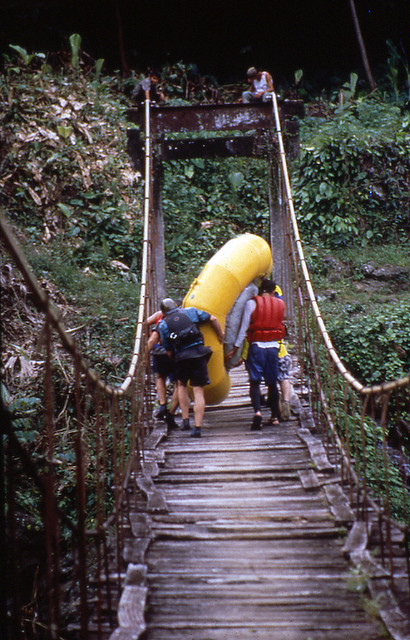
photo by William Friar
Step Three: Choose Your Venture.
You’d think this would be the first step, but oftentimes it isn’t. While some expats may know from day one that they want to open a surf school, others may prefer to be a little more strategic and make their choice of business contingent on the location they choose.
In other words, when starting a business or career as an expat, you have two options. You can either search for the best place to start the particular business you’ve always dreamed of launching. Or you can open the type of business you think might be successful in the one place you’ve always dreamed of living.
Here are some common paths expats take:
- Resume your same field overseas. There are many fields that transition easily from North to Central America. Retired medical professionals open small practices in their new city. The same goes for financial advisors and other professional services. Teachers can easily find jobs at international schools. Many workers even find they can continue their same jobs working remotely from overseas.
- Open a franchise. By opening a branch of an already established business, you can save a lot of time and headache. Chain businesses often have a proven business model, marketing strategies, and plenty of support to help you get started.
- Start an online business or website. Because of the low startup costs, Internet-based businesses are a great option for expats. Examples include consulting services, blogs, and other professional services.
- Fill a niche. Because the Latin tropics are still developing, most areas have a number of specialty product and services that aren’t available but that might be welcomed by other expats as well as the local population. You could open a wine shop, a yoga studio, or a restaurant serving up a specific cuisine the area lacks.

Delwin Steven Campbell
Step Four: Take Advice from Other Expats
When becoming an expat business-owner, there’s no better resource than other expats who have already paved the way. There’s much you can learn from their mistakes and successes. They can refer you to trusted attorneys and other professionals, advise you on business options that might not be viable, and fill you in on a number of invaluable tips and tricks.
Owning a business overseas can be rewarding on many levels. But it’s not a venture to be entered into lightly. Doing your due diligence and seeking sound advice from folks who know can help ensure that your expat life is as profitable as it is pleasurable.
Further Info
Viva Tropical founder Josh Linnes recently interviewed Patrick Vlaskovits, author of the New York Times best selling business book, The Lean Entrepreneur. They discussed this very topic and gave several great tips. Click here to learn how to start your own profitable business in paradise.