


What makes a destination a great place to live? Is it the place with the most pleasant surroundings? The lowest cost of living? Or even the healthiest and happiest people?
In compiling my list of the best places to live in the world, I took into consideration all of those factors. Plus some others I’ll mention as we go. And the common denominator among all ten of my top destinations is that they’re all in Latin America.

liveandinvest
Why? Because the countries just south of the U.S. border have so much to offer in terms of natural beauty, authentic culture, unrivaled quality of life, and a heck of a lot of bang for your buck.
That’s why these ten best places to live in the world are becoming home to an increasing number of North American expats each year. Because when it comes down to choosing a place to actually settle down and dive into the local culture and become a part of the expat community, you just can’t beat these ten destinations.
Boquete, Panama
Panama consistently ranks among the top retirement destinations in the world, taking top billing again in 2014. And Boquete is its crown jewel, claiming more North American expats than anywhere else in the country, with the exception of the capital of Panama City.
Yet even with its status as a top expat hotspot, it still maintains a small-town feel, due in part to its quaint mountain setting and friendly locals. It’s also home to pretty much any type of business or service you could ever need, thanks to a long-standing expat presence.
Surrounding Boquete are cloud forests, coffee farms, rivers, and numerous other natural landscapes that offer a wealth of activities for the adventurous expat. The area enjoys spring-like temperatures all year, with frequent showers that produce almost daily rainbows.
The cost of living is low, although it’s slowly climbing as more and more expats settle in the area. With fantastic infrastructure and a lot of modern developments, it’s still a great value. Panama is also a favorite destination due to its attractive retirement program benefits for those who qualify.
Cuenca, Ecuador
Cuenca is another mountain town with a large expat community, and for good reason. It’s known for its rich culture, which includes its colonial architecture and a lively art and music scene.
Ecuador also boasts one of the lowest costs of living in the Americas. You can plan to spend less on everything from fresh produce to a renovated condo in the bustling downtown area.
Cuenca is home to a number of universities, making it a hub for international students. It’s also a great, safe place for families with its excellent education and health care options.
There are also plenty of great restaurants, bars, shopping centers, and all of the other creature comforts you’d expect to find in a metropolitan city. Yet it enjoys the same slow pace of life you’ll find throughout Latin America. It’s the best of both worlds.
Though it’s recognized for the terra cotta roofs and blue church domes that dots its city skyline, the area around Cuenca is equally breathtaking. It sits at the convergence of four rivers and is surrounded by mountains, offering plenty of opportunities for outdoor adventure.

Tierra Magica
Nosara, Costa Rica
Nosara is the perfect example of what happens when a city is founded with a plan and the residents remain committed to that vision for decades running. Once used for grazing cattle, the land in and around Nosara has been developed very intentionally, and the results are really remarkable.
No high rise condos block your view of the beautiful sunsets on Nosara’s pristine beaches. Numerous conservation efforts and organizations work to maintain the area’s natural surroundings.
Nosara is known for its surfing, yoga, and healthy lifestyle options. It’s also a great place for families. It’s safe and has several really good schools.
And Costa Rica’s laid-back lifestyle easily adds to the reasons Nosara is one of the best places to live in the world. The locals are incredibly welcoming, greeting residents and visitors alike with the phrase “pura vida” (pure life) that’s become a motto of sorts for the country.
Nosara has a good-sized expat community, as well as the established infrastructure and development you’d expect from such a world-class destination.

Steve D.
Roatan, Honduras
The largest of the Bay Islands, Roatan is a great choice if island living is what you’re after. With plenty of development and consumer options, as well as an airport with direct flights from the U.S., there’s little need to ever leave the island.
There you can enjoy every imaginable aquatic adventure. From sailing to sport fishing to kayaking through the mangroves, it’s all possible in Roatan. Just off the coast you’ll also find access to the world’s second largest reef system, which makes for some incredible snorkeling and scuba diving.
Because it hasn’t quite yet reached the popularity of some of its Latin island counterparts, Roatan is still a bit more affordable. However with its growing tourism industry, including frequent visits from cruise ship passengers, Roatan’s appeal is being discovered by more and more would-be expats each year.
Despite its growing population Roatan still offers some off-the-beaten path areas that offer plenty of solitude, including a few villages that still don’t have electricity.

VivaTropical
Boca Chica, Panama
Another Panama destination has made the list, thanks to its attractive retirement benefits and amazing investment opportunities. Boca Chica is an island destination that’s still relatively unknown but has the potential for tremendous growth in the coming years.
Located in the Gulf of Chiriqui, it consists of a mainland city and an archipelago of over 50 islands, many of which are completely uninhabited. Residents of Boca Chica can spend their days exploring otherworldly islands covered in rainforests, mangroves, and even white sand beaches.
And because of its convenient location, those same adventurous expats can then take a quick shower and drive 45 minutes to enjoy a first-rate steak dinner in a world-class restaurant in the nearby city of David.
It’s this strategic location, combined with a whole host of ongoing infrastructure improvements, that makes Boca Chica real estate such a great investment.
An airport expansion that’s now bringing in direct international flights is among one of the biggest value-adds the area has seen. Folks can now fly in to David from anywhere in the world and find themselves in Boca Chica in under an hour.

P. Schenll
Granada, Nicaragua
Granada is another colonial city that’s absolutely brimming with culture and charm. Horse-drawn carriages still dot the cobblestone streets. If it weren’t for the freshly-painted tropical colors on the historic buildings, you might think you’d stepped back in time.
Well, that and the modern amenities available in the city, a stark contrast from the wilderness that occupies most of the rest of the country. In what’s a mostly underdeveloped country, Granada offers things like reliable utilities, four-star restaurants, and state-of-the-art fitness centers.
It’s located on Lake Nicaragua, one of the largest freshwater lakes in the world. It’s also surrounded by several volcanoes, so plenty of opportunities for exploration abound.
Granada is a town that fought its way back from near demise due to bankruptcy and other issues, but you’d never know it today. Instead, modern-day Granada is abuzz with construction projects and up-and-coming developments.
Granada real estate is extremely affordable, as is the cost of living in the country. It’s home to a number of expats, many of whom are involved in humanitarian efforts in the surrounding impoverished areas.
Ambergris Caye, Belize
If you want to feel like you’re on vacation 24/7 then look no further than the island of Ambergris Caye. Due to its status as a tourist mecca, it’s ripe with all kinds of activities and attractions.
There are surf shops and scuba schools, beach-side restaurants and bars, and plenty of flip flops and floral shirts. In fact, most of the island’s inhabitants are foreigners, particularly those who operate enterprises geared towards other expats and visitors.
The large expat community isn’t the only thing that makes Ambergris Caye feel familiar. Because Belize was originally a British colony, it’s the only Central American nation whose residents rely on the British legal system and speak English as their official language.
Among the biggest perks of the island are that it’s an ocean lover’s dream. Thanks to its proximity to the Belize Barrier Reef, the second largest in the world, it’s the perfect place to enjoy scuba diving, sailing, and sport fishing. You can also explore the more than 450 other islands that lie off the coast.
Antigua, Guatemala
If you’re looking for a place that’s a little less popular among expats and tourists, then you should definitely check out Antigua. It’s a well-preserved colonial city nestled in between some amazing mountains and volcanoes, which make for an impressive skyline.
Because it’s not as highly sought after as some of the other destinations on the list, the cost of living in Antigua is probably a little less than in some of its Latin competitors. Real estate is a great bargain, as are essentials like fresh fruits and veggies and utilities.
With the low cost of living, it’s also possible to splurge on luxuries such as domestic help, which at only $2 or $3 per hour is something many expats are thrilled to find that they can afford when they relocate to the tropics.
In addition to the mountainscapes, Antigua is also decorated with beautiful flora and fauna, as well as the cobblestone streets and other charming touches you’d expect in an ancient destination.
Equipped with just the right amount of infrastructure, Antigua is also known for its Spanish language schools.

Phil
Placencia, Belize
If you like Belize but aren’t crazy about the gringo-saturated island culture then the mainland city of Placencia is another place worth the title of best places to live in the world. If the islands are like living on a resort, then Placencia is like relaxing on a postcard.
The beaches are wider, whiter, and less crowded than in places like Ambergris Caye. There are still plenty of activities to enjoy, but there are also more places to spread out or even find a secluded spot all to yourself.
There’s also a more authentic Caribbean vibe on the mainland, which many expats prefer. It has an even more laid-back atmosphere (if that’s possible), with not even so much as a paved road anywhere in town.
As opposed to the expat-run businesses on the island, the locals are very involved in commerce in Placencia. They even offer guided diving and fishing excursions to visiting foreigners.
Plus, since Placencia is on the mainland, it’s also close to a number of activities suited for the land lover, like jungle exploration and archaeological sites.

Alex Torres
Lake Chapala, Mexico
Understandably Mexico is home to more U.S. expats than any other country. And, other than the border town of Tijuana, the majority of those live in the Lake Chapala area. So suffice it to say that 40,000 U.S. expats would agree that this city is one of the best places to live in the world.
Mexico’s largest freshwater lake, Chapala was once planned as a luxury resort town. It serves as a weekend getaway for locals from Guadalajara and has attracted expats for decades, including Tennessee Williams who chose it as the site from which to write A Streetcar Named Desire.
In addition to the beauty of the lake and surrounding mountains, Lake Chapala offers an ideal climate year-round. It’s also famous for its mariachi music.
Which of the best places to live in the world is right for you?
So if stunning scenery and adrenaline-pumping adventure are your thing, there’s a place on this list that’s right for you. If sustainable living and a relaxed vibe are what you’re into, there’s a destination where you can find those as well.
I’ve done the hard part by laying out the ten best places to live in the world. Now all you have to do is narrow it down.

Golfito, Costa Rica, in the rapidly growing Southern Zone, promises to be an area where undiscovered opportunities await both expats and investors. Golfito’s future and potential hold a promise far different from the days when it was a “company town” known as “Banana City”.
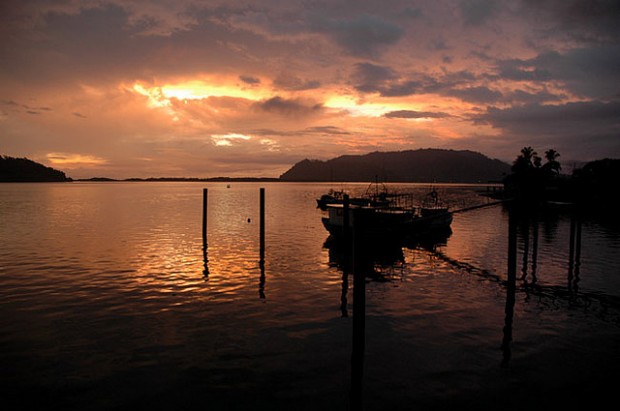
Golfito at Sunset
Costa Rica has become known for the many diverse lifestyle choices and living options available. From high-end luxury resorts to rustic rain forest lots, expats and investors have a vast selection to consider for the perfect location of their tropical paradise.
Often referred to as the “final frontier” in Costa Rica, life in Golfito is undergoing a transformation. With a new infusion of investment dollars and development, Golfito, Costa Rica is poised to be a major expat hub both for visiting and long-term investors.
The Colorful History of Golfito
The Southern Zone and the area in and around the Osa Peninsula and Drake Bay have played an often overlooked role in the country’s growth. Golfito is an essential part of this story. Golfito’s history is intertwined with that of Costa Rica.
Home to the indigenous Boruca people, it was here in 1519 that Spaniards entered from Panama to begin the conquest of the country. During the Colonial era, Golfito was a quiet fishing village and remained so until late in the 19th century.
An American exporter, Minor Keith, formed United Fruit Company in 1899. Keith had a special relationship with Costa Rica having married the daughter of the former president, Jose Maria Castro.
United Fruit Company (later United Brands) had established a strong presence in Costa Rica and, in 1938, moved its headquarters and banana export operations to Golfito. The closeness to Panama’s banana plantations and the natural harbor made Golfito a logical and profitable choice.

Golfito
A Color-Coded Community
In order to house the thousands of workers who poured into Golfito, United Fruit constructed a classic “company town” similar to those found in the United States at the same time.
Stores, schools, even a hospital were built for the workers and run by United Fruit. Even municipal services, such as water, electricity and other utilities were provided for. The three sections of Golfito were actually identifiable by the color of the homes and structures.
The Zona Americana was known as the “white zone”. It was here that the professionals and senior executives lived in well appointed homes, built in the British Colonial style, with walls painted white. The best amenities in Golfito were found here.
Zona Amarilla, or Yellow Zone, was home to middle management, foremen and supervisors. The yellow walls and tropical designs, while not as luxurious as those in the white zone, were still comfortable and well made. Access to both white and yellow zones was strictly controlled by guardhouses and security.
Zona Gris, the Gray Zone, was home to the plantation laborers and dock workers. The gray coloring of the small, cramped structures seemed quite appropriate given the dramatic difference between these homes and those of the other two zones. The gray zone had far fewer amenities beyond the basic necessities needed for living and the crowded conditions frequently made for unrest between workers and management.
End of One Era, Beginning of Another
The years of prosperity in Golfito came to an abrupt end in 1985. Labor unrest and rising export taxes caused United Fruit to close its banana operation and leave Golfito.
The resulting upheaval left Golfito in a state of poverty and general collapse. After five years of decline and decay, the Costa Rican government decided to try and reinvigorate the area by establishing the Deposito Libre Comercial de Golfito (Duty Free Zone) to attract shoppers and visitors from other parts of the country.
The large collection of stores offers electronics, appliances, and house wares at much lower prices than elsewhere in Costa Rica. This marked the gradual start of Golfito’s rebirth as a vibrant community filled with untapped potential.
Golfito, Costa Rica – Moving Ahead in the 21st Century
Golfito’s revival from the collapse of the banana import business is a great model for potential investors and expats seeking an exciting challenge. The start made by the Costa Rican government has opened the door for other projects and a different prospective on Golfito’s future growth. Building on this beginning, the region has the opportunity to flourish once more
Getting There by Land, Sea or Air
The completion of the Caldera Pacific Highway in 2010 has opened the Southern Pacific zone to a new group of expats and adventures seeking to follow the road less traveled. There are a variety of ways to access the Golfo Dulce region.
Regional airlines Sansa and Nature Air fly regularly scheduled flights to and from San Jose to Golfito Airport. Once there, bus service and rental cars make an easy access to Pavones, a popular surfing location. Bus service from San Jose and other parts of Costa Rica has become more accessible with the opening of the new highway.
Rental cars are also readily available; selecting a 4×4 wheel drive vehicle is highly recommended. For visitors to the Corcovado National Park on the Osa Peninsula, a ferry from Puerto Jimenez runs twice daily to Golfito.
Cruise Lines Discover Golfito and Add Ocean Access
One of the major enhancements to Golfito is that cruise lines have now added this location as a stop for unique, one-of-a-kind experiences. Major lines such as Paul Gaugin, Windstar, and Azamara Club Cruises now make Golfito a port of call and add access by sea to the ways to visit this former banana exporting center.
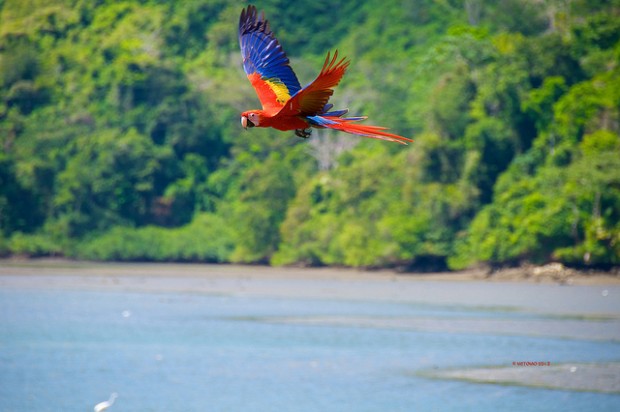
Scarlet Macaw
Golfito As an Eco-Tourism Hub
As the largest town in the Golfo Dulce region, Golfito has become a jumping off point for individuals seeking to explore Costa Rica’s rich biodiversity in a more primal setting.
The Corcovado National Park on the Osa Peninsula is a short ferry ride from Golfito’s docks. As the habitat conserving the largest primary forest on the Pacific coastline, Corcovado also has one of the remaining sizable stands of lowland tropical rainforest. National Geographic magazine refers to Corcovado as “ the most biologically intense place on Earth in terms of biodiversity”.
North of the town, the Piedras Blancas National Park has seen the establishment of a number of Eco-lodges. These rustic camps provide the ideal environment for those seeking to get up close and personal with the natural setting around them.
Surfing and Sport Fishing Continue to Thrive
The area in and around Golfito has long been known for its aquatic offerings. World-class sport fishing and surfing beckon followers of both sports to the Southern zone to try their hands against the elements.
Pavone and Zancudo are two of the most prominent surf breaks in Costa Rica and are only a short bus ride from the Golfito airport. Pavones has the second-longest left hand surf break in the world and is a must for any hardcore seeker of that “endless summer”.
With numerous fishing charters available, avid deep sea anglers visit the area in search of landing “the big one”. Marlin (Blue and Black), Yellowfin Tuna, Sailfish and Dorado all can be found in around the Golfo Dulce and Drake Bay areas in season.
Location, Location, Location
Golfito’s proximity to Panama provides a potential market as tourism and development begin to grow in the region. Much like Golfito’s early days when the Spanish migrated from Panama and began to colonize the land of Pura Vida, a new wave of visitors and investors from the South may bring a new wave of economic growth to the region.
Golfito’s Marina Project – Progress and Growth a Decade in the Making
Since the early 1990s, plans for a new and vibrant marina at Golfito had been in the works. In 2010, an order from CIMAT, the regulatory body for all marinas in Costa Rica, to the Golfito Municipality withdrawing all permits appeared to doom the project.
The key concern was the environmental impact to this important ecological area. However, a new group, Hacienda El Dorado, presented a revamped proposal on November 21, 2013.
With a proven track record of successful developments in Costa Rica, approval was granted and, on June 28, 2014, ground was finally broken for the new marina and village. This ambitious project will, in many ways, resemble other high end properties such as Los Suenos Marina.
When completed, the Marina will have 130 slips, including those suitable for super yachts and a special section for private super yachts. Access for cruise ships is also planned.
The luxury accommodations will include bungalows, guest residences and villas. All properties will be furnished with the kind of amenities that one would expect from a world class resort community.
Importantly, this ambitious design also includes the infrastructure of Golfito itself. Plans call for a renovation of the main street that connects Golfito to the regional airport, a new central city plaza, artisans and craft boutiques, a museum and other tourist friendly services and businesses.
Some Things to Consider About Moving to Golfito, Costa Rica
Golfito is definitely an “adventure camp” type of town with lots of potential but very rustic in setting and infrastructure. Those seeking a more modernized setting probably would not find this the most desirable location in Costa Rica.
There is an abundance of “fixer-upper” type properties in what remains of the old company town. However the infrastructure issues could make any serious rehabbing work difficult and expensive.
Aside from the Duty Free Zone, there isn’t much in the way of shopping and entertainment options in terms of grocery stores, restaurants, etc. While this adds an element of primitive charm, not having ready access to the same variety of commercial establishments as more developed areas could make living here a challenge.
While the property values remain lower than other parts of Costa Rica, the anticipated growth from the Marina and other projects may soon cause a rise in prices. This is a great time for investors; expats with budget constraints should look carefully before committing their resources on a long term project.
In a real sense, the revitalization of Golfito’s life as a port city and destination will also bring a renewed sense of growth to the region. With this kind of economic commitment, Golfito can look forward to a bright and prosperous future.

Blue Zones, those special places on earth where people live longer and healthier lives, first came to prominence in the ground-breaking book by Dan Buettner, Blue Zones.
Nicoya, Costa Rica is one of those unique locations where lifestyle, diet, and low stress have dramatically bettered the lives of Ticos and expats alike. Truly, Nicoya embodies the essence of the Costa Rica mantra “pura vida”– pure life.

Nicoya, Costa Rica
As a result of the publicity generated by Buettner’s book, towns in the Nicoya Peninsula, such as Nosara, are experiencing a new level of growth. Expats seeking a less frenzied existence have discovered what native Costa Ricans have known for years – that Nicoya is a special place to live, explore, and experience.
Nicoya, Costa Rica Has Been a Desirable Location from the Beginning
Even from its earliest days, the Nicoya Peninsula has been a valued location. In the pre-Colombian era, the peninsula was occupied by two groups: the Churusteca and the Nicoya. However, after a visit by the Spanish conquistador Gil Gonzalez Davila in 1523, Nicoya’s colonial era began in earnest.
From Spain to Nicaragua to Costa Rica, Nicoya Followed Its Own Course
The first chapel in Nicoya was erected in 1544 and is considered to be the oldest parish in Costa Rica. Ten years later, Pedro Ordonez was appointed magistrate of Nicoya as the whole Guanacaste region became part of what was known then as Nicaragua.
Natives of the area, called Gunacastecos, had a strong independent spirit and on July 25th, 1824 voted to secede from Nicaragua and join Costa Rica. Later, on December 7th, 1848 Guanacaste and the Nicoya Peninsula formally became a Costa Rican province.
Even today this spirit can be found throughout the peninsula. The flag of Guanacaste is still flown although the principles of “pura vida” temper this desire of a separate destiny from the rest of the country.
What Makes Nicoya a “Blue Zone”?
The term “blue zone” is defined as a region or group where the residents live longer, healthier lives. Originally used in studies done by demographers Gianni Pes and Michel Poulain of Sardina’s Nuoro County, the term was popularized by Dan Buettner in his book of the same name.
Buettner identified the Nicoya Peninsula as an area meeting the criteria for a “blue zone”. In 2007, Nicoya was the subject of a Quest Network expedition examining these findings.

Nicoya Peninsula from the air
What Expats Can Expect Living in Nicoya
Perhaps the key feature of moving to the Nicoya Peninsula is the pleasant discovery that the pace of life is slower. Three of the most popular towns on the peninsula – Nicoya, Nosara and Samara – are all small communities with a true Costa Rican “vibe” attractive to visitors, expats and locals. Amenities are basic and are continuing to be improved to provide service to the new arrivals from the U.S., Europe, and Canada.
The cost of living, while not the most inexpensive in the country, is far more affordable for those on a budget than other expat destinations such as Escazu, Tamarindo, or the Central Valley. The types of properties available for sale or rent is broad and can range from a small “tico” house to a modern residence with landscaping and pool; again, price can vary on what a particular individual is seeking as their ideal tropical escape.
Higher-end items like vehicles, appliances, and electronics are higher priced (as is the case throughout Costa Rica) since they have to be imported and are subject to import taxes. Most big ticket items would require a trip to the San Jose area since that is where the vendors who sell them are located.
Getting There and Back Again
International flights into Daniel Oduber Quiros airport in Liberia make travel from outside the country to the Nicoya region a convenient task. With the number of daily flights increasing, flight options will increase in the future.
There is a small airport at Tambor that does have scheduled flights with domestic carriers Sansa and Nature Air. There is a second airport located in Samara that does not have regularly scheduled flights. However, it is possible to arrange for private charter flights from San Jose.
There are a number of transportation options to get to the Nicoya Peninsula proper. The first option is to drive; while there are some paved roads, the number of gravel and dirt roads in the area make having a 4×4 vehicle the most desirable choice. Rental cars are available in Liberia or San Jose (if that is your initial point of arrival.)
There are buses that connect the communities in the Nicoya region with both Liberia and San Jose. This is part of the excellent public transportation system in Costa Rica and is an economical way to get where you are going and to actually have the time and freedom to enjoy the ride.
Lastly, for those seeking a different approach, the ferry from Puntarenas travels to both Naranjo (for the area around Nicoya and Nosara) and Paquera (for Tambor, Montezuma, and Santa Teresa). The roughly hour-long ride can give passengers a great opportunity to see the Gulf of Nicoya and views of the peninsula from a new perspective.
Things to See, Things to Do
The Nicoya Peninsula has a large collection of activities to go with its stunning beaches, natural preserves, and colorful villages. Whether your tastes run to pulse-pounding adventure or quiet contemplation, there is something here for everyone.
Adrenaline and Meditation – the Surf/Yoga Blend
As part of the lifestyle options available in Nicoya, there are many yoga, spa, and meditation retreats that have become world renown. Contemporaneously, surfing has become a major draw for those seeking the adrenaline rush of riding the challenging waves. In a uniquely “pura vida” approach, there are a growing number of ocean side establishments that offer both yoga and surfing in a merger of activities that challenge both participants’ bodies and minds.
Explore Natural Beauty
The Casa Blanca Absolute Wildlife Reserve, with its 3000 acres, has been rightly called one of the most scenic spots on the Pacific Coast. The Reserva Biologica Nosara is a 35 hectare reserve with trails that lead through a mangrove wetland. Well known as a great place for bird-watching, visitors can arrange for self-guided tours through the park.
One of the most ecologically important and profound experiences on the peninsula can be found at the Ostional Wildlife Reserve. It is here, during the months of August through November, where the giant leatherback and green sea turtles come ashore to nest.
These mass inland migrations, called arribadas, occur at night (usually between 8 p.m. and 4 a.m.) just prior to the new moon. Watching these special creatures heed this primal instinct is something that can truly be said to be a once-in-a-lifetime event.
Celebrations and Festivals
The Nicoya region has a number of special festivals that can allow visitors and expats to immerse themselves in the rich cultural heritage of this land. Perhaps one of the most important celebrations is the Fiestas Civicas.
Occurring in mid-January, this is a celebration of the life and culture of the sabaneros – the Costa Rican cowboys who are an essential part of Guanacastan and Nicoyan heritage. Much like their North American counterparts, this festival is a chance to demonstrate the skills of the sabanero in the form of contests and rodeos.
The week of July 20-25th celebrates the entire province of Guanacaste, including the Nicoya Peninsula, leaving Nicaragua and becoming part of Costa Rica. It is one of the major holidays of the year.
Pica de Leña, the festival of wood cutting, is held on November 12th, celebrated with music, food, and drink. A month later, on December 12th, the wood that was gathered is used for the communal cooking in the celebration of Yeguita – when the image of the dark Madonna is paraded through the streets of Nicoya and then returned to the main church where food and drink are once again served.
A Celebration of the Spirit
Nicoya is a special place where expats can spread their wings and explore what a life less encumbered may offer. Truly, this is the essence of what “pura vida” – the pure life – is all about.
Map of Nicoya, Costa Rica
Nicoya, Costa Rica Fast Facts
- Population: About 14,000
- Typical temperature: Mid 80’s
- Nearest airport with U.S. flights: Liberia, Costa Rica
- Nearest U.S. consulate: San Jose


Viva Tropical Radio
Yes, it’s true, you can get paid to travel! How? Just create an expedition company.
We talk to fellow travel lover Matthew Brumley and find out how he started his own expedition business. Founder of Earthbound Expeditions, Matthew talks candidly about what has worked for him and how he comes up with creative ideas that provide unique travel experiences.
He gives insight into why Costa Rica is one of his chosen destinations and how you can go back in time when you visit Cuba. If you ever thought about creating a travel-based business or are just interested in traveling with a small group of people, this discussion will inspire you.
In this episode, we discuss:
- Is it legal for U.S. citizens to visit Cuba?
- Why the sky is limit when developing unique experiences for expedition travel
- Why Matthew loves Costa Rica
And much more.
Listen to the show
You can listen to the show using the player above or grab it and listen on the go via one of the following options:
- Click here to download the mp3
- Click here to subscribe via iTunes
- Click here for the RSS feed (non iTunes)
- Click here for the show archive
The Show Notes

A “bucket list” is a collection of places to see and things to do before you die. There are so many once-in-a-lifetime activities to engage in and places to visit throughout Central America that could, literally, fill many bucket lists. Yet there are some that are truly must-see locations and unique adventures that make the Central America Bucket List one that everyone should try and check off.

Kenneth Garcia
The Central America Bucket List – a blend of history, culture, nature, wildlife, and adventure
If you’ve ever wanted to explore ancient ruins, immerse yourself in a totally different culture, stand in awe of a natural piece of beauty, get up close and personal with creatures of the jungle or try something new like zip-lining or deep-sea fishing, you have already created your ownCentral American Bucket list.
The places and activities that are listed below are not in any particular order of importance or priority. All should be seen and experienced regardless and truly appreciated for the wonders that they are; they may even inspire you to create your own list as well.

Tikal, Guatemala
Mayan Ruins – Tulum, Mexico and Tikal, Guatemala
The Mayan Civilization has long held a fascination for many people. Viewing the towering pyramids and intricate ruins can make memories that last a lifetime. Two of the best known locations that embody this vanished culture are the ruins in Tikal, Guatemala and Tulum, Mexico. Separated by only 600 kilometers, these two iconic locations symbolized the height and power of the Mayan culture.
Visiting the imposing Temple of the Jaguar in Tikal or the majestic and well preserved “City of the Sun” in Tulum, Mexico can be an awe-inspiring reminder of how important enjoying each day is and that nothing is eternal. With nearby airport access to both sites, such in the Mayan Riveria, the Central American Bucket List items are ones that everyone should see and experience.

Arenal Volcano
The Arenal Volcano in Costa Rica
Of all the volcanoes throughout Central America, none is more majestic than Volcan Arenal in Costa Rica. Still active (although quiet of late), this imposing and beautiful mountain towers over the surrounding region, including Lake Arenal, at a height of 5,437 feet and is easily accessible from nearby San Jose.

Jugrote
Lake Nicaragua
This is the biggest lake in Central America and the 19th largest in the world. Easily reached from Managua, this fresh water wonder boasts something that most fresh-water bodies of water lack: sharks. The bull sharks of Lake Nicaragua can grow up to 11 feet in length; encountering one of these predators certainly falls under the category of “Well, there’s something you don’t see every day”.

Chadica
Whitewater rafting on the Pacuare River, Costa Rica
Ranked as one of the top ten whitewater rafting locations in the world, the Pacuare River can provide the kind of adrenalin-filled adventure that should be a part of everyone’s bucket list. Combining the stunning beauty of the area with the heart-stopping class III and IV rapids, this river adventure is truly a ride for the ages.

Guillén Pérez
Meet a Mayan Shaman
With all of the recent attention paid to the Mayan Calendar and the mysticism surrounding it, the opportunity to meet and interact with a genuine Mayan Shaman could be a life-changing experience. Practitioners of this ancient spiritual craft can be found in Belize, Honduras and Guatemala and are more than ready to share their wisdom and provide a unique insight in the Mayan World.

Jasperdo
Tour the Panama Canal
Since its completion in 1914, the Panama Canal has been the major waterway between the Pacific and the Atlantic Oceans, fulfilling the dream envisioned for centuries. Modern tours through the Canal provide a special opportunity to view this engineering marvel and follow in the footsteps of explorers from the mists of history who had searched for this passage.

Galapagos Islands, Ecuador
The Galapagos Archipelago
Darwin’s visit to this group of islands, part of modern-day Ecuador, and filled with a vast collection of unique and endemic species, led him to develop his theory of evolution and natural selection. Following Darwin’s path will permit visitors the chance to discover penguins, giant tortoises, and many other creatures that cannot be found anywhere else in the world.

Tony Mendez
Whale watching in Costa Rica
The humpback whales migrate along the Pacific Coast of Costa Rica from between August and October every year. Being able to see these leviathans of the deep in their element is a magical and moving sight and should be a part of every bucket list.

Stephen Johnson
Ambergris Caye – home to the second largest coral reef system in the world
The coral reef along Ambergris Caye, Belize, is second in size only to the Great Barrier Reef in Australia. Being much more accessible than the great “Down Under” this unique and fragile ecosystem is worthy of a special place on the list.

Peace Garden Toucan
Have a toucan on your arm – the Peace Garden at La Paz, Costa Rica
Everyone has seen these colorful, comical birds but have you ever had one on your arm? At the Peace Garden, La Paz, Costa Rica, getting up close and personal with these multi-colored creatures is easier than you might imagine and certainly something that is not an everyday occurrence.

Steven Depolo
Rainforest adventures – zip-lining, hiking, waterfalls, and animals
Central America has wonderful opportunities to visit rainforests throughout the region. Zip-lining, hiking to secluded waterfalls, horseback rides through the jungle and seeing exotic birds, monkeys, sloths, and many other creatures in their natural state makes this a true bucket list item to be experienced and treasured.

Johnathan Nightingale
Monteverde Cloud Forest – home of the Resplendent Quetzal
Perhaps the best know cloud forest in the world, the Monteverde Cloud Forest has a charming and rare resident–the Resplendent Quetzal. Discovering this regal bird in the stunning backdrop of a cloud forest is a special treat that should be included in any bucket list. Stand on the Continental Divide with one foot on the Caribbean side and the other on the Pacific-something that can’t be done any place else.

Ari Bronstein
Deep sea fishing
Have you ever wondered what it would be like to have a blue marlin on the end of your line, fighting you every step of the way? Deep Sea Fishing in Costa can fulfill this “bucket list” wish; tuna, wahoo, sailfish and, or course, the mighty Marlin are all there waiting for the right angler and the right moment–a moment that can be yours.

Steven Gerner
A sea turtle haven – Tortugero, Costa Rica
For the nature lover, visiting the spawning and hatching ground for sea turtles can be a special item on a bucket list. Tortugero, on the Caribbean side of Costa Rica is the place where green, leatherback, and the rare hawkbill turtles can be seen nesting and hatching in the cycle of life. The National Park is also home to jaguars, tapirs, macaws, and monkeys.

Elena G.
The haunted island of San Lucas, Costa Rica
If paranormal investigation is part of your bucket list, the former prison island of San Lucas, Costa Rica will fulfill this desire. Long known as a haunted location, San Lucas has been featured on television and on numerous sites about ghost hunting. Bring your recorders and cameras and see if you can capture the spirits said to still remain there.

Lee Shaver
The Central America Bucket List – getting there is easy
Central America is readily accessible from the U.S. and Europe. Regularly scheduled flights to and from major jumping off points such as San Jose, Costa Rica, Panama City, Panama, Managua, Nicaragua, and Guayaquil, Ecuador–to name but a few–make getting to those bucket list locations convenient and affordable.
There are many tours and travel packages that are available that can be tailored to meet every desire and wallet size. Exploring and experiencing the wonders of Central America has never been easier.
The Central America Bucket List – living there is easy as well
As you explore, check off, and add items on your particular “Central America bucket list” you may discover that the best way to do and see everything is to actually live in Central America. With so many options available–from lots, homes, apartments, condos, and even commercial properties–living in Central America can be a desirable alternative to traveling and can place you in the heart of the experiences and adventures of a lifetime.

If living by a tropical lake surrounded by lush greenery sounds like your idea of paradise, Lake Arenal is the location for you. Nestled in the shadow of the majestic Arenal Volcano, Lake Arenal and its surrounding communities is rapidly becoming an expat magnet for retirees and investors alike.

Lake Arenal
Lake Arenal – A Brief History
Lake Arenal is a manmade lake that was enlarged to its present size as part of a massive hydroelectric project in 1979. The old towns of Arenal and Tonadora were abandoned and now lie at the bottom of the lake. The town of Arenal was relocated to a point northeast of the lake itself.
The lake has played a major role in helping Costa Rica become the eco-friendly nation that is known and loved today. At one time, the dam which helped enlarge the lake to its current size (33 square miles) was responsible for 70% of the nation’s electrical energy.

Anita Gould
Lakeside Living – Many Communities, Many Choices
The Lake Arenal area has a number of towns and residential areas that offer a wide selection of properties and options for investment or retirement. With a growing number of expats discovering the attractiveness of living close to the largest lake in Costa Rica, the real estate market is experiencing a resurgence from the decline of recent years
La Fortuna is the largest of the lake communities and prior to 1968 was known as El Borio. When the Arenal Volcano erupted on July 29th 1968, it destroyed three towns on its western flank. El Borio, on the eastern side was spared and, from that day forward, was renamed “La Fortuna”-the fortunate.
El Castillo has the best views of the volcano and is close to the park entrance and Lake Arenal. The village was created as a result of the 1968 eruption of Arenal that required mass relocation of the towns destroyed by the volcano. Recently, it has become popular with artisans and expats seeking a more bohemian lifestyle.
Rio Chiquito is located on the southern end of the lake and is known as the major transfer point for tours from the many hotels around the volcano to the Monteverde Cloud Forest. There is a real potential for investment as much of the land is not yet developed.
The Arenal region offers many opportunities for fun and exploration
In addition to the serenity of lakeside living, the area around Arenal is filled with opportunities for exploration and enjoyment of the rich natural diversity of the region. Having some of the finest and most unique hotels, bed and breakfasts, and lodges in Costa Rica, this location is ideal for tourists and expats who want to take advantage of the wide choice of activities available.
For nature and hiking enthusiasts, there are many options that will let participants immerse themselves in the beauty and diversity of the land. Tours of the Arenal Volcano, jungle canopy and horseback tours of various lengths and difficulty, and white water and rappelling tours are available for all interests and tastes–from mild to wild.
Water sports and therapeutic baths
Lake Arenal has become one of the foremost windsurfing locations in the world. The consistent high winds that sweep across the western end of the lake from November through April has made Arenal a magnet for followers of this exciting and adrenaline-filled sport. For those seeking more sedate water sports, bass fishing and kayaking are popular choices.
One of the special features of this area is the abundance of hot springs that are easily accessible to those seeking the healing properties that these natural baths offer. There are also a number of waterfalls that further enhance the eco-experience for visitors and locals alike.
Lakeside Living Offers Many Advantages
Living by a lake may not be the first thought when considering a move to Central America. The advantages that exist in and around Arenal are certainly worth a second look when deciding on a place to retire or invest in.
The climate in the Lake Arenal region is moderate with temperatures in the low to mid 80s during the day and comfortable mid to low 60s in the evening. For those concerned about the cost of air conditioning, this will come as welcome news.
The cost of renting property in the Arenal area can range from $250-$750 per month depending on location and size. Utility prices can range from $26 to $50 per month depending on usage. Overall the cost of living in the lake area is less expensive than other more established parts of the country.
The thriving expat community continues to grow which makes becoming part of the local scene that much easier. Many expats have opened businesses and, combined with industrious locals, have made the transition to expat life an easy one.
Things to consider before moving to the lake region
For all the positives aspects of living in the Arenal area, there some things to consider before making a financial commitment. It is important to remember that living in a foreign country is much different than vacationing there.
To begin with, the drive to the Arenal area from San Jose can run up to four hours. La Fortuna does have a small regional airport that is serviced by Nature Air (a domestic Costa Rican carrier) although cost and convenience may weigh against this option.
Shopping for food or other domestic items is going to be limited to the local mercados, or markets. If having access to more westernized items is important, this may be an issue as well.
Although the region is experiencing continued growth, internet and cable access may differ widely from one part of the area to the next. Once again, if having these conveniences is an essential item on your “must-have” list, then lakeside living may not be the best choice for you.
Lastly, remember that the lake region is not near the ocean. If having a beach lifestyle is the goal of becoming an expat, the Arenal area is not for you.
What is the best way to decide whether Lake Arenal is your tropical dream?
There is no substitute for visiting Arenal and the surrounding area and immersing yourself as much as possible in order to envision what life would be like there. Ask questions, look at expat boards and blogs, do the research, and discover what Lake Arenal holds for you.
Map of Lake Arenal, Costa Rica
Lake Arenal, Costa Rica Fast Facts
- Population: 8,291
- Typical temperature: Average temperature 65° to 90° F
- Nearest airport with U.S. flights: San Jose’s Juan Santamaría International Airport
- Nearest U.S. consulate: San Jose, Costa Rica

The best Central America hikes are certainly not your average walk in the park. For those who seek the “road less traveled” Central America is the place to visit and explore. Lush jungles, hidden waterfalls, breathtaking mountain vistas and untapped natural beauty make this part of the world a veritable hiker’s dream.

Wood Buildings-Cusuco National Park
Best Central America Hikes – Many Choices from Mild to Wild
You don’t have to be a hard-core experienced trekker to enjoy the wonders of hiking in Central America. There are many options throughout the region ranging from downhill jungle paths to rugged volcano trails and everything in between. The only hard part might be having to make a choice between the wonderful and diverse locations of the best Central America hikes.
Cusuco National Park, Honduras
If hiking along lush jungle paths, seeking out hidden waterfalls, and discovering exotic animals in their natural state sounds like your kind of adventure, then Cusuco National Park in Honduras is certainly the place for you. The primal force of Pulhapanzak Waterfall with its 140 foot drop, the mystery of the Taulabe Caves, and rich biodiversity of the jungle itself make this one of the best Central America hikes.
Chimborazo Circuit, Ecuador
On the other end of the hiking spectrum is Chimborazo Circuit in Ecuador. This multi-day experience along the “avenue of the volcanoes” is home to several peaks above 16,400 feet including mighty Chimborazo whose 20,564 height makes it the farthest point from the Earth’s surface at the Earth’s center.
Camping in tents, exploring glaciers and local villages, and become immersed in the culture and lifestyle of the Andean highlands are just some of the reasons that make this one of the best Central America hikes.

The Quetzal Trail, Panama
The Quetzal Trail, Panama
Panama’s foremost day hiking trail is the Quetzal Trail. Winding through the Volcán Barú National Park along the northeastern side of the volcano, this jungle path is home to its namesake, the stunning Resplendent Quetzal.
The trail is mostly a downhill trek through unspoiled primary jungle from Cerra Punta to the village of Boquete. Travelers can actually have their luggage sent ahead from Cerra Punta to their next lodging in Boquete which is just another feature making this one of the best Central America hikes.

Miguel Vieira
Corcovado National Park, Costa Rica
If true biodiversity is what you are looking for in a hiking experience, the Corcovado National Park in Costa Rica is the perfect destination.
From empty beaches along the Pacific Ocean, lush coastal forests filled with exotic jungle life such as monkeys, sloths, and the elusive jaguar with flocks of scarlet macaws in the trees, Corcovado may be one of the most unique and special hiking locations on Earth. With a ranger station that welcomes campers, Corcovado is clearly one of the best Central America hikes.
Maribos Volcanic Range, Nicaragua
Imagine hiking 21 volcanoes in seven days! The Maribos Volcanic range near Leon, Nicaragua can provide just that kind of adventure. With trails that can vary in difficulty depending on your preference and skill level, the Maribos Range, including the daunting Momotombo Volcano is just the kind of challenge hikers love to embrace, making another of the best Central America hikes.

Arenal Volcano
Arenal Volcano, Costa Rica
For sheer beauty, the Arenal Volcano and the surrounding area in Costa Rica is nearly impossible to beat. With a huge reservoir, a 2900-hectare national park, numerous accessible trails running through cloud and rain forests that surround it, hiking Arenal is definitely a must-do as part of the best Central America hikes.
Lake Atitlan Volcanoes, Guatemala
The three volcanoes that surround Lake Atitlan in Guatemala provide a variety of hiking adventures in one of the most picturesque locations in the world.
The tallest of the three, Atitlan (11,601 ft.) offers an 8 hour trek to a summit that provides a stunning view of the Pacific Coast; San Pedro (9,906 ft.) will allow those who make the 4 hour climb a chance to view and discover plants and animals rarely seen elsewhere; Toliman (10,358 ft.) has a forest area near the summit for camping. Having three different hiking choices in one location is unique among the best Central America hikes.

Monteverde Cloud Forest
Monteverde/St. Elena Cloud Forest Reserve, Costa Rica
No list of the best Central America hikes would be complete without including the Monteverde/St. Elena Cloud Forest Reserve. Filled with numerous trails that are well maintained and easy to navigate, Monteverde offers unparalleled natural beauty, a chance to see flora and fauna that are both unusual and rare including the Resplendent Quetzal. Lodging choices nearby complete a near perfect picture of nature hiking at its finest.
Guanacaste National Park, Belize
This 50 acre preserve is a birdwatcher’s paradise and another of the best Central America hikes. Located in the center of Belize, just 2 miles from the capital city of Belmopan, the small size and easy access makes it convenient for casual nature hikes as well as the opportunity to enjoy both the natural features, in terms of exotic plants and animals, and the cultural aspects of life in Belize today along with its Mayan past.

Brian B.
Pico Bonito Park, Honduras
Meaning ‘beautiful peak”, Pico Bonito is definitely a hike for those with expedition experience and a love of adventure. The over 300 species of birds, jaguars, pumas, and the every present howler monkeys make this journey one that is not easily forgotten and clearly, one of the best Central America hikes.
Pirre Mountain, Panama
The hike to the summit of Pirre Mountain, Panama follows a challenging jungle trail in one of the country’s most remote regions. Monkeys, sloths, exotic birds, and a great collection of trees and flowers make this difficult trek more than worth the effort and certainly worthy of being considered one of the best Central American hikes.
Get Close to the Best Central America Hikes
With some many choices for hiking adventures throughout Central America, the best way to experience them all is to find your own “base camp” to allow you to visit and explore on your schedule. Finding places to live, short term, long term, or even purchase is easier than you might imagine and just a mouse-click away. Let your trek start now!
Viva Tropical Radio
Josh talks to Eduardo Carillo, Jaguar expert and professor at University of Costa Rica. A legendary animal, the Jaguar is a Native American word meaning, “he who kills with one blow.”
The cats were once worshiped as gods in Peru, Mexico, and Guatemala, as well as in pre-Columbian America. The Mayans, Aztecs, and Inca all worshiped the Jaguar in some form too.
Eduardo has spent over 25 years, in many different countries, learning about these incredible animals. Find out what he knows and how it all began, while we discuss one of the most fascinating and elusive inhabitants of the rainforest.
In this episode, we discuss:
- What brand of cologne attracts the big cat
- How to help protect Jaguars
- How to spot one
And much more.
Listen to the show
You can listen to the show using the player above or grab it and listen on the go via one of the following options:
- Click here to download the mp3 (right click and then click “save as”)
- Click here to subscribe via iTunes
- Click here for the RSS feed (non iTunes)
- Click here for the show archive
The Show Notes
Contact Eduardo directly to support his work studying and protecting Jaguars.
Viva Tropical Radio
This week I talked to Phil Flanagan, world traveler and overland expert. Phil sourced and converted a European van to travel the world for less than $18,000 USD. He then proceeded to drive across Europe, Asia, North America, then South America for the ensuing 5-6 years.
In this episode Phil teaches you how to do it too, where to find a car, and his minimalistic approach to maximum travel experience. Phil and partner Angie were able to to travel this way for $50 a day, including food for both of them, maintenance, gas, and everything else.

Phil and Angie in Kyrgysztan
In this episode, we discuss:
- How to build your own overland vehicle for only $18,000 USD
- Learn what vans make the best choices
- What to consider before you buy your overland vehicle
- How to avoid the “extortion highway” in Honduras
- The incredible rewards just waiting for you on the road
And much more.
Listen to the show
You can listen to the show using the player above or grab it and listen on the go via one of the following options:
- Click here to download the mp3
- Click here to subscribe via iTunes
- Click here for the RSS feed (non iTunes)
- Click here for the show archive
The Show Notes
Phil Flanagan has his own travel site that you can see here
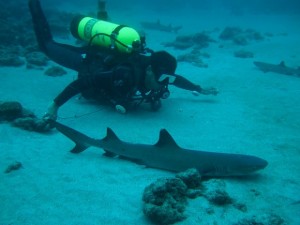
Long known for its eco-friendly tourism and as a surfing mecca, Costa Rica is gaining a reputation for undersea adventure as well. Scuba diving Costa Rica is attracting a whole new group of pura vida explorers seeking to experience the treasures of the deep.
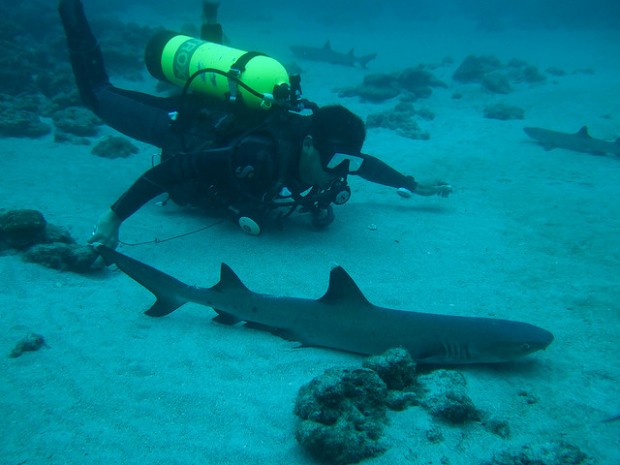
Scuba Diving in Costa Rica
Scuba Diving Costa Rica – A New and Thriving Dive Destination
Life in Costa Rica has long been geared toward an eco-friendly and sustainable culture. In 2007, the government declared that it wanted to be carbon-neutral by 2021. This has led to increased interest in ocean life, both above and below the surface.
Scuba enthusiasts have recently discovered the great potential for underwater adventures that exist in Costa Rica. As infrastructure improvements have made access to the Southern Pacific region that much easier, experienced and novice divers are making their way to prime dive locations.
The Best Locations for Scuba Diving in Costa Rica
The Pacific Coast of Costa Rica has become a vibrant and exciting scuba diving playground. From the resort areas of Guanacaste to the rustic and untouched beaches of the Southern Pacific zone, divers are enjoying the sites and adventures that await beneath the surface.
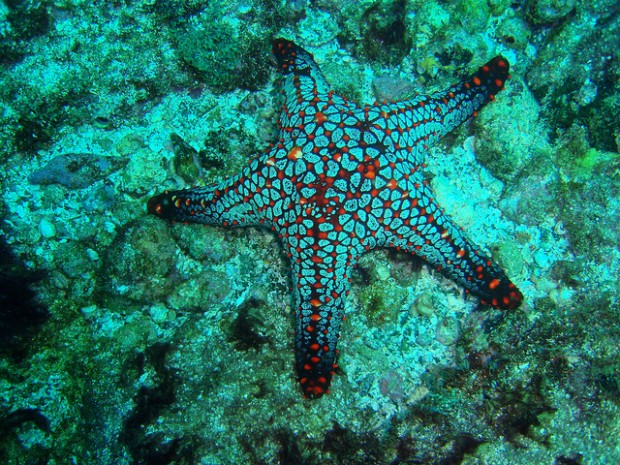
Scuba Diving in Costa Rica
Here, in no particular order, is a list of the best dive spots in the land of Pura Vida:
Playas Del Coco: Home to the first PADI (Professional Association of Diving Instructors) five star location in Costa Rica, this resort community has become a major hub for diving expeditions in the Gulf of Papagayo.
Cabo Blanco/Montezuma: In addition to being the first natural reserve established in Costa Rica, the Cabo Blanco Absolute Natural Reserve includes 18 hectares of ocean. With the abundance and diversity of the marine life in the area, divers will find plenty to see and experience in the course of their diving adventures.
Tortuga Island: A 40 minute boat ride from Herradura Bay will bring divers to this haven of underwater canyons and caves. Average depths of 30-50 feet make this a great location for less experienced individuals who still want to view the unique and diverse underwater habitat.
Bat Islands: During the months of May to November, divers flock to the Bat Islands area to experience some of the most exciting scuba experiences in Costa Rica. In an area known as “Big Scare”, divers can get up close and personal with bull sharks – some as large as six to seven meters long. This is the only spot in Costa Rica to dive with these ocean predators.
Another unique feature of the Bat Islands area are the Giant Pacific Mantas. These ocean-going “bats” and the smaller, devil rays, can provide divers with a once in a lifetime experience.
Catalina Islands: Like the Bat Islands, the Catalina Islands are easily accessible and filled with sea life. Since the dives are non-anchored, they are recommended for more experienced and certified individuals.
Cano Island: Thirteen miles from Drake Bay lies Cano Island. This largely undeveloped location has some of the best diving in the entire country. Being a protected marine park makes for a wonderful opportunity to see reef sharks, eels, and a wide variety of undersea life.
Cocos Island: Believed to be the home of the largest schools of hammerhead sharks on the planet, Cocos Island National Park is one of the premier scuba diving locations in the world. Located 300 miles off the Costa Rican mainland, this remote diver’s paradise is accessible by fully equipped dive boats that schedule week-and-a-half tours.
Aside from the natural treasures lying beneath the waves, legend holds that the island may contain three of the world’s largest caches of riches. The entire horde of Lima’s riches are said to be buried there to escape Bolivar and his men in 1821.
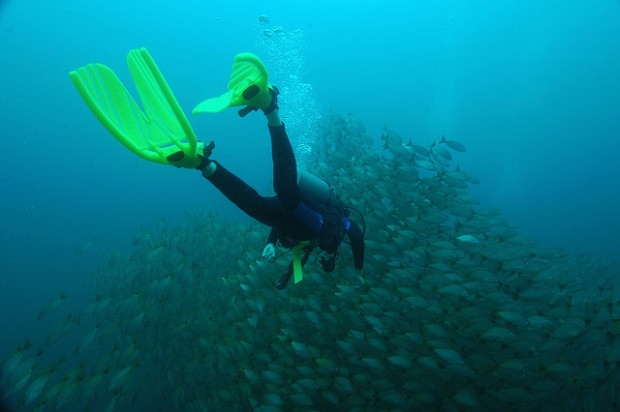
Martin van Gestel
Wreck Diving in Costa Rica
For those divers who like the thrill of exploring the remains of sunken vessels, Costa Rica has a number of wreck diving locations. With dates that range from the 170os through modern times, these wrecks offer a unique undersea experience.
Tortuga Island/Montezuma Wreck Sites: The only location in Costa Rica with three wrecks that are available for diving. The Caroline Star is a great wreck for advanced divers; the Franklin Chan Diaz, a former Costa Rican Coast Guard vessel is 95 feet in length and rests at 75 feet. Another Coast Guard ship, the Coronel Alfonso Monge is in about 50 feet of water.
Cahuita Wrecks: Within the nearly 600 acres in the national park are two shipwrecks. The premier attraction is the Spanish galleon from the 1700s, a scant six meters below the water’s surface. Cahuita is also the location of Costa Rica’s best coral reef.
Limon/Isla Uvita: This is the resting place of the Fenix, a cargo ship that sank off the island. This is one of the few wreck sites on the Caribbean side of Costa Rica.
Playas Del Coco: There are two small wrecks, one a fishing boat, the other a sail boat off the coast from Playas del Coco. The dive sites, known as Meros and Tortuga, are both in fairly shallow (40-60 feet) water.
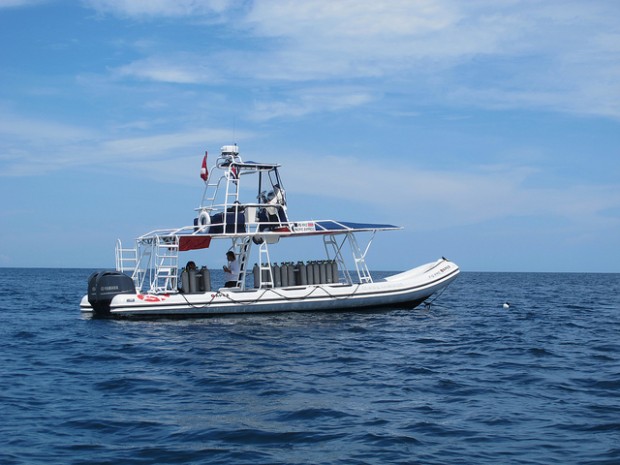
53Flickr
Scuba Diving in Costa Rica Isn’t Just for Experienced Divers
If you are interested in a scuba diving adventure but have little or no experience, Costa Rica’s growing diving population may be your doorway to adventure. With the number of PADI locations growing throughout the country, finding a beginner’s instruction course is easier than one might think.
Courses can be as basic as a one day, non-certification class that can provide an introduction to the adventurous world of scuba diving. Additionally, most centers offer certification/recertification options for more experienced individuals.
The thrill of seeing life undersea can add a perspective not gained elsewhere. Costa Rica is making the world of scuba diving a true pura vida experience.
My husband and I have been working remotely from Costa for the last three years. Over the course of those three years, the work that we do has evolved, but the lessons learned remain. Whether you are on vacation or staying for an extended period, Costa Rica is a remote worker’s paradise.

Boris G.
Remote Working, Telecommuting, Working Online
Before getting into the pros and cons, let’s define what ‘working remotely’ means. For the purposes of this article, remote work, telecommuting and working online are used interchangeably. They mean any work that happens via internet or phone line while not located in the same office as your clients, co-workers, staff or employers.
If this defines your situation, working in Costa Rica may be right for you.

Arturo Sotillo
The Pros of Working Remotely from Costa Rica
High Speed Internet High speed wireless internet is easy to find in most areas of the country. Most rental properties offer this amenity, as do restaurants, cafes and bars. You can enjoy a $1.25 bottomless cup of aromatic Costa Rican coffee and unlimited wifi without having to listen to an overenthusiastic Starbucks barista calling out coffee orders to his co-workers.
Low Cost of Living While Costa Rica is the most expensive Central American country, the cost of living – including internet and phone – is still more affordable than it is in the United States or Canada.
A Community of Remote Workers On any given day, you may find that yours is not the only laptop in the cafe. The number of online workers in Costa Rica is increasing. Networking opportunities and a collaborative environment exist in many communities, especially those with lots of expats. This means that even those of us who crave face-to-face interactions will find remote work makes sense here.
An “Office” with a View Costa Rica is all about outdoor living. Most buildings, especially in the coastal areas, have a roof to protect patrons from the rain, but no walls. You may find yourself overlooking the ocean while you work, or for a change of pace, you may orient yourself toward the trees. Just beware getting sidetracked by the troops of howler monkeys as they swing by.

R. Breve
The Cons of Working Remotely from Costa Rica
Service Interruptions The internet and power do go out in Costa Rica periodically, though usually only for a moment. We use these forced breaks as opportunities to find the man selling chilled coconuts on the beach.
Distractions Those monkeys I mentioned above, they can sure be distracting! The ocean can also have a magnetic pull that drags you away from computer.
Tech Hardware Takes a Beating The sand and the salt can be hard on your laptop, tablet and smartphone as well as their chargers. It can also be hard to find replacement parts in coastal towns. Your best bet is to keep spare power cords and use protective cases for all of your devices.
Do the pros outweigh the cons? You be the judge.
We think they do. That’s why we moved our family here.

With the proliferation of the internet, our vision began to take shape. We would free ourselves from the bonds of geography and the clock. The Family Freedom Project is our story. If you are considering a similar move, check out the resources and stories available on my website and in my book, The Family Freedom Project: A Step-by-Step Guide to Living Abroad with Kids. From Dream to Plan to Reality.

Jaco, Costa Rica offers many rare qualities that draw expats to its sunny shores. Beginning as a sleepy beach town, droves of surfers have since discovered its appeal.
This influx of new blood has made Jaco more lively and modern, without forsaking any of its original charm. Jaco, Costa Rica is known worldwide as the modern embodiment of a 1970’s California surfing town.

Anthony Doudt
While Jaco boasts the claim of the most developed beach town, the residents have not given up their simple, laid-back lifestyle. Despite the addition of more modern amenities and businesses, Jaco is still a small surfing community.
It manages to be the rare town that can grow and develop while still holding onto to its authentic, rustic Costa Rican atmosphere.
Despite Its Secluded Vibe, Jaco Costa Rica Is a Great Jumping-Off Point
While the edges of Jaco feel like a private hideaway, it is far from isolated. Only two hours from Jaco is San Jose, Costa Rica’s thriving capital city. San Jose is also home to Costa Rica’s primary international airport (SJO). This gives expats the freedom to travel the globe with minimal hassle.
There are a wide variety of towns nearby with a range of attitudes and atmospheres to satisfy the desires of any expat.
Jaco, Costa Rica is commonly used to refer to not only the surfing town, but also all of the Central Pacific region. This region is home to nearly any sort of town one can desire, from upscale resort towns to hidden, rustic villages.

Dan Gray
A Beautiful Climate with Enough Variety to Keep It Interesting
As a rule, Jaco, Costa Rica itself offers a warm and humid climate. The sunny days and balmy temps beckon expats outdoors and into the tempting weather. The rainiest months tend to be September and October.
The driest weather lasts from January through April. These months tend to bring the most amount of tourists, eager to soak up Jaco’s intense sunrays. Rain is off and on throughout the rest of the year, meaning nearly every day is an excellent chance to explore the world outside.
In another similarity to California, Jaco offers a variety of micro-climates throughout the region. The temperature will vary widely, based on topography and the current winds. You can find areas that are cooler, warmer, more humid, or drier – all within a short drive.

Anthony Doudt
Expats Will Never Tire of the Varied Beaches
Perhaps more than anything else, Jaco, Costa Rica’s beaches are its primary draw. Its exquisite shorelines bring awestruck visitors from all corners of the globe.
Jaco, Costa Rica itself is known for its beautiful cinnamon colored sand, reminiscent of California’s Pacific shores. There are also pure white beaches that allow the brilliant color of the sea to pop against the sand.
Even exotic black sand beaches are featured. You’ve not seen true beauty until you’ve witnessed jewel colored fish swimming in a rockpool, surrounded by rich, black sand.
Even when you are away from the shore, Jaco offers beautiful waterscapes everywhere. There are brilliant rivers, streams, and breathtaking waterfalls populating the region.
One is never far from a gorgeous water scene, no matter the location. Of course, most water lovers in Jaco are there for more than the sand and the views.

Michael Brashier
Jaco, Costa Rica Is One of the Undisputed Best Spots for Surfing on the Globe
More than anything else, it’s the waves that bring people flocking to the shores of Jaco. With astounding waves on nearly every shore, Jaco is a surfer’s dream.
Surfers on every beach and crowding the village complete the nostalgic feel of a Californian surf town. You will feel pleasantly like you’ve stepped back in time, and will relish the calming change of pace.
While moderate and new surfers can find waves in Jaco, Costa Rica, even the most hardcore surfers will have shores calling to them. Playa Hermosa, a gorgeous black sand beach, is a quiet six-mile stretch of consistently high waves. In fact, the waves are so continually challenging that the Quicksilver Competition is held here every August.
Even those who surf the calmer waves will love to kick back on the dark sand and watch the world’s best compete.

Chase Cheviron
Even Beyond Surfing, There Is a Paradise of Outdoor Activities
Few people know how to take full advantage of a gorgeous landscape and warm climate like the residents of Jaco. There will never be a dull day for even the most energetic outdoor adventurer.
Jaco, Costa Rica offers nearly every outdoor activity imaginable, from deep sea fishing to white water rafting, zip lining to ATV tours, horseback excursions to crocodile safaris, there never needs to be a dull day.
Even the most relaxing activities can be made into an adventure in Jaco. Why enjoy golfing on a typical course, when you can try yourself on the challenging La Iguana Golf Course, designed by Ted Robinson? While you are swinging and testing your skills, you can enjoy the enchanting views. Monkeys and macaws are frequent visitors on the course, making your game that much more special.
Wildlife Lovers Can Spend a Lifetime Exploring the Local Animals
Jaco is home to some of the most beautiful and exotic wildlife in the world. While the town itself is not over-developed, allowing for wildlife to remain naturally, there are also numerous wildlife refuges and parks nearby.
The Carara Biological Reserve is only 9.3 miles south of Jaco and offers several miles of trials. This reserve is a vital nesting ground of the famed scarlet macaw. A sunset or sunrise hike is your best chance to catch views of this gorgeous, colorful bird.
The Playa Hermosa Wildlife Refuge is also nearby, and is the shore where the Olive Ridley sea turtles come to nest. There are few natural events more beautiful to an animal lover than the steady, oncoming march of hundreds of ancient, expectant sea turtules.
The Manuel Antonio National Park is a short drive away, just 43 miles to the south of Jaco. Crocodiles are also seen from the bridge or sunning on the banks of the Tarcoles River. Those who crave the chance to experience wildlife in a new and exciting way can even sign up for canopy tours, giving themselves a bird’s-eye view of some of the most interesting animals in nature.

David Gordillo
For Party Lovers, the Night Life Can Be Just As Exciting
On top of all the natural beauty and easy charm of Jaco, Costa Rica this tourist spot has now become a thriving night life capital. There are discos, night clubs, and dive bars all dotting the streets, giving an expat an endless amount of choices for fun after dark.
For those looking for tamer sorts of entertainment, Jaco, Costa Rica has quickly become one of Costa Rica’s best spots for dining. Beautiful, exotic fare is served on the gorgeous shorelines, all with a friendly and hospitable atmosphere. Your taste buds will enjoy all the beauty that the area can offer, making Jaco a fully satisfying sensory experience.
Not Only a Safe City, But a Highly Livable One
You don’t have to give up your safety and comfort for a sense of adventure and after dark fun. While drugs and crime are something to consider, Jaco is no more dangerous than any other tourist spot. In fact, in some cases, it is much safer than your typical secluded getaway.
While prostitution is legal, it is subtle and generally restricted to only two or three bars. These places can easily be avoided, meaning an expat can feel comfortable bringing their family out after dark.
Jaco also has the most amount of police of any Costa Rican beach town. State, city, and tourism officers are all continually on hand, meaning you can relax and enjoy the fun Jaco has to offer without feeling threatened or worried.
Don’t Worry, It’s Relaxing Too
Despite its famed nightlife, Jaco typically does not become wild until after 10 p.m., and generally even then primarily on the weekends. A leisurely, quiet evening stroll is often possible, allowing you to savor the laid-back atmosphere after a long day surfing, exploring, and dining out.
To help keep the town pristine and rustic, great steps are taken to make sure it remains clean and environmentally friendly. Recycling centers are common throughout the village, helping keep littering at bay while encouraging sustainability.
Most residents navigate primarily by walking, as the slow pace of life and warm weather encourage a leisurely attitude towards even daily errands. For a more fun way to get away, bike and scooter rentals are also common.
While It May Be Perfect for Some, It Is Not Ideal for All Expats
Expats who are moving down with their family, especially if they have young children, may not find Jaco, Costa Rica to be their location. While the party scene is relatively contained, it is a very large part of the culture.
The town has become known internationally for its intense night life and parties, and therefore attracts tourists from all over who are seeking this out. Even if the locals are a bit tamer, people who are just visiting may be reckless and loud their entire stay. Legal prostitution may also make parents with young children uncomfortable, even if businesses that feature prostitutes are avoided.
Those seeking a quieter, more laid-back lifestyle also may find Jaco, Costa Rica a bit too wild and developed for their tastes. If an expat is craving escaping civilization, the most developed town in Costa Rica may make you feel like you are stuck on the mainland again.
It is surrounded by many smaller, less developed towns, however, so those who crave this pace of life are not out of luck. Also, investors may want to seek out areas besides Jaco; as the area is already highly developed, it is unlikely cheap property can be purchased in the hopes of cashing in once the area becomes more developed.
An Affordable Paradise
While somewhere so exotic, beautiful, famed, and modernized may seem like an out of reach luxury, that is not true when it comes to Jaco. While there are the expected, luxurious homes in Jaco that sell for the multi-millions, these are not the average properties available.
Homes can be found for as low as $150,000, making Jaco a realistic goal for an expat looking to settle somewhere gorgeous and unique.

Costa Rica Beauty
Still Growing While Holding Onto to Its Rustic Charms
As Jaco, Costa Rica becomes more and more popular, it is doing more to make sure its way of life never changes. An expat is guaranteed an environment harkening back to Californian surf towns while honoring the rich, Costa Rican landscape and wildlife.
From surfing to adventures, dining to shopping, biking to wildlife watching, Jaco offers all that an expat could hope for.
Map of Jaco, Costa Rica
Jaco, Costa Rica Fast Facts
- Population: About 10,000
- Typical temperature: Mid 80’s
- Nearest airport with U.S. flights: San Jose
- Nearest U.S. consulate: San Jose