


At VivaTropical, we’ve talked a lot about the benefits of owning an offshore bank account. Moving at least a portion of your portfolio overseas can help protect your assets from threats of litigation and the whims of the U.S. government.
Diversifying into international markets can also open wide the doors for a whole host of non-traditional investments that might not otherwise be available to you with a domestic bank or brokerage firm.
But with a whole world of options out there (literally), how do you choose which bank, or even which jurisdiction, to trust with your savings? And by what criteria should you judge the candidates you’re considering?
Well, that depends largely on your particular needs and investment goals. To some (even those doing business honestly), privacy is of the utmost necessity. To others who might be looking for income-earning opportunities overseas, favorable tax laws may be the most important factor.
Below, in no particular order, are what are considered to be some of the best overall offshore banking jurisdictions. We can’t say which characteristics might be most beneficial to you and your financial situation, but this list should give you a good idea of where to start your search.

Soman
Panama
Panama has long been a key player in the international banking industry, and the country’s recent economic growth has further solidified its place as a financial leader. With over 80 international banks, it has one of the world’s largest banking sectors.
The country has a good balance of stringent privacy guidelines combined with adequate controls to prevent money laundering. As a result, the industry is highly competitive, yet better monitored than many more peripheral jurisdictions.
Panama enjoys favorable tax laws, such as exemptions for foreign income, so you won’t be double-taxed. It’s also a great place to do business, invest in the growing tourism industry, or take advantage of great deals on Panama real estate. Many tax advantages exist for each of these types of investment.
Additional benefits to opening an offshore bank account in Panama are its close proximity to the U.S. if travel is needed to set up or maintain the account. English is widely spoken there. Plus, the dollarized economy eliminates any foreign exchange risks.
Seychelles
A rising star on the international scene, Seychelles scores big points for its high level of bank secrecy. Its long-standing privacy policy protects the identity of the beneficial owners of companies and corporations. As a result, it’s one of the world’s best places to set up a closely-held offshore corporation.
The nation is a bit lax about reporting interest income to foreign tax authorities, although it does maintain tax treaties with 46 countries, in compliance with the Organisation for Economic Co-operation and Development.
Interestingly, much of the local population of Seychelles has no access to banking services, and most of its businesses have virtually no way of borrowing capital. However, the country has been rapidly building its banking sector and has one of the fastest improving economies in the world.

Hong Kong
A number of key factors are working together to make Hong Kong one of the fastest growing offshore havens in the world today. It’s located near a rapidly-growing China, not to mention the rest of Asia. It’s also become the chosen destination of those who’ve moved their European and North American accounts due to the privacy crackdowns in those jurisdictions of late.
A perk to banking in Hong Kong is the ability to hold funds in a wide range of currencies and even change currency with the flip of a switch. Savings accounts can even be held in gold.
Interest rates are impressive, and tax laws are favorable for foreigners. There are no taxes on capital gains, inheritances, dividends, or deposit interest. Only local income is taxable. Even profits from overseas trades that pay to Hong Kong-managed accounts are usually exempt.
Singapore
Although Singapore regrettably earned its place as a top financial center by turning a blind eye to illegal foreign activity, it certainly hasn’t hurt this offshore haven. It’s currently one of the world’s fastest growing wealth management industries, expected to rival Switzerland by 2020.
It benefits greatly from its location as a hub for southeast Asia, and has a major advantage over rival Hong Kong whom many view as being too heavily influenced by China. Singapore’s tax rates are among, if not the lowest in Asia. A wide range of currencies, including gold, are available to account holders.
Today Singapore’s banking sector is much more compliant with banking regulations. However, due to the industry’s size, it exerts a high level of influence over the government, resulting in very little political opposition to its privacy practices.

twicepix
Switzerland
It’s hard to think of offshore banking without Switzerland coming immediately to mind. While it’s far from the picture most people have of James Bond making a withdrawal from an anonymous numbered bank account, Switzerland still offers some of the world’s strictest confidentiality.
The country is stable and politically neutral. The financial services industry is also protected by a strong consensus against any political changes that might affect the all-important offshore sector. As a result, Swiss banks offer a reliable, secure offshore banking environment.
Because of these benefits, Switzerland holds banking assets estimated to be roughly 820 percent of the country’s GDP. Switzerland has also been a leader in technology, with secure encryption, internet banking, electronic funds transfers, and electronic signatures.
United Arab Emirates
The UAE city of Dubai first emerged as an important financial center when it found itself lacking in some of the oil and gas reserves that some of its neighbors possessed. As a result, it shifted its focus to the flow of massive amounts of money circulating among its oil-rich neighbors and beyond.
It serves as a politically and financially stable banking option, amid a region plagued with turmoil. It’s also situated strategically along an all-important East to West trade route.
Benefits to banking in the UAE include low taxes, a number of tax-free zones, and a level of privacy that rivals that of Swiss banks. Due to its ask-no-questions philosophy, it’s home to considerable illegal activity. Much of the industry’s incoming funds are in the form of cash or gold.

H. Michael Miley
Cayman Islands
The offshore choice of political candidate Mitt Romney, the Cayman Islands benefit from the added support of being a territory of the United Kingdom. So, while still essentially autonomous politically and economically, it has a safer feel for those who are skeptical of international markets.
Like many of its competitors, the Caymans offer a number of tax-free incentives and little financial regulation and oversight. The nation has long held the opinion that savvy investors are perfectly capable of taking responsibility for their own compliance and that the markets always know best.
Today the country is the world’s fifth largest financial services center, taking on business from the world’s biggest banks and corporations. It plays host to over 10,000 mutual funds (only Luxembourg has more), over 200 banks, over 90,000 companies, and 140 trust companies. It’s the world’s top home for hedge funds and captive health insurance companies.

401k
Lebanon
Lebanon is often hailed as the “Switzerland of the Middle East” for its tight bank secrecy laws. Banking privacy in Lebanon is “absolute” and guaranteed by law, with violations being subject to criminal prosecution.
It’s also a tax haven, much like most of its competitors. Foreigners pay no local income tax on interest and revenues earned in Lebanese banks. Likewise there are no inheritance taxes, stamp duties on contracts, corporate income taxes, or taxes on dividend distributions or capital gains.
The country has a stable banking system, as well as measures in place to prevent money laundering.
Luxembourg
With over 12 percent of the world’s market for offshore banking, Luxembourg is a major player in the global financial sector. Like other banking secrecy jurisdictions, it’s full of tax loopholes and loose financial regulations.
It’s also extremely stable due to it political neutrality and the strong influence its financial sector holds over the nation’s political leanings. It’s central (both politically and geographically) to the heart of Europe and was a founding member of the European Union, giving it better access to European and international markets.
Its tight banking secrecy policies are based more on the principle behind professional lawyer-client relationships, with even more privacy laws in the works. The country is also reportedly setting up a high-security storage facility where clients can keep assets like paintings and gold with no fear of having these possessions reported to tax authorities in their home countries.
Whether you’re looking for a place to stow a Picasso or simply wanting to transfer your self-directed IRA where you’ll have a better variety of investment options, offshore bank accounts can open up a whole new world of possibilities.
Belize
Although only in its 3rd decade of international banking, Belize has been steadily growing its financial services industry since it first emerged on the scene in the early 1990s. Today it offers a myriad of products and services to international investors from all over the world.
It’s a popular choice among North Americans, due largely in part to its proximity and the fact that it’s an English-speaking nation. It’s also modeled after British (rather than Spanish) law, making a lot of legal processes much more familiar.
Belize is in close runnings with its international competitors in terms of the variety of its offerings. Clients can easily set up a corporation, trust, or limited liability partnership.
Before you choose a jurisdiction, do some additional research to determine the requirements for opening an account and to make sure the particular country or bank offers the best incentives to help you achieve your financial goals.
And, whatever you do, don’t forget to follow through with all of the latest forms the U.S. requires for offshore account holders. It doesn’t matter if your jurisdiction doesn’t report you. The IRS can and will find you.

The U.S. State Department estimates that there are currently 6.32 million Americans living overseas, in over 160 countries. But where exactly are they choosing to reside?
Thanks to a new interactive map that uses migration data from the United Nations Population Division, we can now tell where Americans are living abroad (as well as nationals of any other foreign country).
Not surprisingly, many of the countries that top the list of popular destinations for U.S. citizens are located just to the south, in Latin America. Due in part to their proximity, pleasant climates, and affordability, the countries of Central and South America are a natural choice for would-be expats who are looking to experience something new.
Here are a few of the most popular countries U.S. immigrants choose, along with what makes them such desirable destinations.

Joseph Martinez
849,000 Americans Live in Mexico
With an astounding number of U.S. immigrants (more than twice that of just a decade ago), Mexico is the #1 place Americans go when they leave the U.S. It’s also more than twice that of the second most popular country, Canada.
In fact, you might also be surprised to know that more people from the U.S. have moved south of the border than Mexicans have moved north. And the reasons for this choice are numerous.
For starters, relocating to Mexico is just easy. It’s close. There are plenty of other expats. You can access the country with only a short flight, or even drive across the border if you really want to.
In many places the infrastructure is good, quality health care abounds, and it can all be had at a fraction of the cost of living in the U.S. The long-standing U.S. expat presence has paved the way for newcomers, and there are plenty of the same U.S. franchises and name brands that foreigners recognize.
Yet despite its U.S. influence, Mexico maintains a rich culture that many say has been lost in other expat havens, such as countries in Europe. Mexico’s immigrants claim the country is alive with possibility and a vibrance that just isn’t found anywhere else right now.

Dave Bezaire
39,000 Americans Live in Ecuador
Ecuador continuously battles nearby Panama for top billing as the world’s best place to retire. In 2014 it lost by only .1 of a point, according to International Living’s annual survey. Among the reasons for its consistently high scores are its unrivaled scenery and its extremely affordable cost of living.
A couple can live quite comfortably in most Ecuadorian cities on $1500 to $1800 per month, which includes housing and even luxuries like a part-time maid. That same feat can be achieved elsewhere in Latin America, but it won’t come with the same quality of life.
Ecuador has historic colonial cities like Quito and Cuenca with their cathedrals and Spanish colonial architecture. The weather in the mountains is pleasantly mild, and even on the coast the temperature rarely reaches 90 degrees.
There’s good private health care, particularly in the large cities. Infrastructure is also improving, with enhancements like a new airport just outside Quito and the widening of the Pan-American Highway.
The country’s economy is stable and growing, The friendly and welcoming Ecuadorians are thriving, enjoying better lifestyles than previous generations.

Sergio Quesada
13,000 Americans Live in Costa Rica
For a few decades now, Americans have been flocking to Costa Rica for its natural beauty and the “pura vida” (pure life) atmosphere it offers. Named the world’s happiest country, accordingly to the 2009 and 2012 Happy Planet Indexes, it possesses a lot of factors that contribute to an overall fantastic quality of life.
Both Costa Rica’s locals (called Ticos) and expats enjoy a much slower pace of life than U.S. residents are used to. There are plenty of options for healthy living, including yoga classes and organic food options. The country is also committed to sustainability, and green initiatives abound.
The country’s public health system is among the best in the world (ranked higher than that of the U.S.). After a monthly payment that’s based on income (between $50 and $150 for most expats) residents receive health care that’s completely free and includes routine visits, prescriptions, and even major surgeries. No exclusions apply due to age or pre-existing conditions.
Costa Rica is safe, politically stable, and enjoys year-round warm weather, although the higher Central Valley is even milder than the tropical coasts. There’s also a great pension program for retirees earning an income of $1,0000 or more from an outside source.

Bocas del Toro via Tysnfst
12,000 Americans Live in Panama
Edging out Ecuador to take the top spot as the best place to retire in 2014, Panama is a popular choice among expats for its convenience and affordability, as well as its unmatched retirement program. Thanks to some new visa options, it’s also recently become an even easier place to live as an expat.
Its list of conveniences includes easy access, thanks to several international airports, a dollarized economy, widely-spoken English, and a thriving international community. The country is also undergoing a massive overhaul of infrastructure projects ranging from new highways and a metro system to an expansion of the canal.
Few Latin American countries can rival Panama’s variety and value. It has quaint mountain cities flanked by rainforests and coffee plantations, laid-back Caribbean beach towns, and a bustling first world capital city that has a national park within its city limits.
Panama’s pensionado visa has always been a popular choice. It’s available to anyone, regardless of age, who can prove $1,000 per month income from a guaranteed source. For those who qualify, the list of benefits and discounts are too extensive to list.
Much of Panama is more affordable than its Costa Rican neighbor, in many cases with the same or better amenities, making it a great place to invest in real estate or the growing tourism industry.
Guillén Pérez
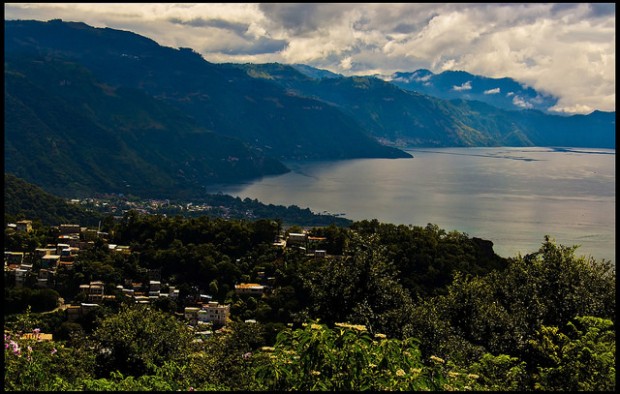
8,000 Americans Live in Guatemala
Guatemala, known as the Land of the Eternal Spring, has also crept onto the radar of many U.S. expats in recent years. Its popularity is largely due to the fact that it shares many of the same perks as its Latin American neighbors (slower pace of life, beautiful surroundings, close proximity to the U.S.), without being too overcrowded.
It’s also a bit less expensive than some of its competitors, with expat couples claiming the ability to live comfortably on well under $1500 per month. Domestic help, like the services of a maid or gardener, is only $2-$3 per hour. And a week’s worth of fresh fruits and vegetables costs only $6-$10 at the market. Real estate in Guatemala is also on the affordable side.
One of the country’s biggest selling points is its authentic culture, particularly the area around Lake Atitlan, a popular expat destination. Located about 75 miles from Guatemala City, the lake is surrounded by volcanoes and a number of villages where natives still practice their ancient Mayan traditions.
Even closer to the capital is Antigua, which is full of cobblestone streets and colorful flora. Much of the country enjoys a mild climate with warm days, cool nights, almost no humidity, and little need for either heating or air conditioning.

David F. Barrero
4,000 Americans Live in Nicaragua
Two of Nicaragua’s most beautiful colonial cities, Granada and Leon, aren’t just impressive due to their shady parks and Spanish architecture. They’re also among the hemisphere’s most ancient.
Granada and Leon continually vie for the title of Oldest City in the Americas. Both boast colonial churches and public buildings, as well as plazas that are well-preserved specimens of the area’s rich history.
Equally breathtaking are the country’s two coastlines (one sand, one surf), its jungle and cloud forests, its lakes and volcanoes, its capuchin monkeys and rare orchids. Visually, Nicaragua is a rare gem, having much of the same ecotourism appeal as Costa Rica and Panama, just less discovered, less developed, and less expensive.
In fact real estate, even in some of the developed areas, is quite a bargain in Nicaragua. Land on the Pacific Coast selling at 40-50% below its peak, and a small Spanish-colonial home in Granada can go for as little as $40,000-$50,000. Many developers are quite eager to sell, offering special deals and discounts such as developer financing.

Zhu
3,000 Americans Live in Belize
Like its Latin American neighbors, Belize offers an amazing climate and an affordable lifestyle. It also delivers stunning natural beauty, much of which is completely unspoiled. Adventurous expats can explore its sandy white beaches, tropical rainforest, ancient Mayan ruins, mountains, waterfalls, and more.
Most notably, the warm waters off the coast of Belize are home to the world’s second largest barrier reef (the largest in the western hemisphere), which makes for excellent diving, snorkeling, fishing, windsurfing, and a number of other aquatic activities.
Also, as the only English-speaking country in Central America (due to its origins as a British, rather than Spanish colony), Belize is an easy place for expats to make themselves comfortable. The country’s system of law is also based on British principles.
Another perk of living and investing in Belize is its stable economy. It has one of the lowest inflation rates in the world and a number of tax benefits for residents and investors. As a result, it’s also a popular offshore banking center.
So, if you’re considering relocating to Latin America, those are a few of the places where you might be most likely to have other expats as neighbors.
But don’t read much into the numbers other than just that. No single expat destination is right for everyone, so a country that draws thousands of new immigrants each year might have no appeal for you at all.
The decision to become an expat is life-changing one. The process of deciding where is the fun part. Start exploring today.


S. Shumad
Like many U.S. citizens, you may consider offshore bank accounts to be tools best reserved for those who have something to hide. From the Internal Revenue Service, from the Drug Enforcement Administration, from their unsuspecting soon-to-be ex-spouse.
And, unfortunately, there are a few folks out there stashing cash overseas for some of those very reasons. But they’re far from the majority.
The people who make up the largest segment of offshore account holders are wealthy individuals who recognize the value and security of diversifying their portfolios to include overseas investments.
Also making an appearance are regular guys like you and me who have seen the light and realized that maybe–just maybe–all of these billionaires, their accountants, and their financial and legal advisors could actually be onto something.
Here are a few of the legitimate, if not compelling, reasons to get some of your money offshore sooner rather than later.
You could be the next defendant in a case that tops the “Stella” awards.
Named for the 79-year-old New Mexico woman who sued McDonald’s over a hot cup of coffee, the Stella awards list the most frivolous lawsuits filed in a given year. And they’re not all against multi-billion dollar corporations.
Average Joes get dragged into court every day over the most ridiculous of circumstances. Take the Massachusetts woman who was rescued from a near-drowning after her son-in-law crashed their car into the Connecticut River. She suffered some brain damage and sued the driver for damages. Also named in the suit? The rescue divers who risked their lives to save her.
And don’t forget the Alabama woman who accidentally got locked in the storage unit she had rented to store her belongings following the foreclosure of her home. She was inside late one night “looking for some papers” when the facility’s manager discovered her unit ajar–and locked it for her.
Despite being found 100% responsible for her own predicament, the jury awarded her $100,000 of the $10 million she sought for her distress, which included a total of 63 days locked inside and a grand total weight loss of almost 70 pounds. (Conveniently, she had some food stored inside the unit she claimed NOT to be living in.)
Then there was the D.C. man–an administrative law judge, mind you–who sued a mom-and-pop dry cleaners for $65,462,500 for losing a beloved pair of pants. While his case was thrown out (he’s appealing), there are many Americans each year who are forced to pay similarly ridiculous settlements that make tort reform look like a grass roots effort.
What does this have to do with offshore banking?
U.S. courts have no jurisdiction outside of the country. So, while you can’t protect yourself from being sued by your mailman when he trips over the package he just left on your doorstep, you can at least protect some of your assets by holding them overseas and away from the whims of the U.S. court system.

Bocas del Toro via Celine
Offshore funds are much more difficult to redistribute.
In addition to the litigation exposure, another common reason people seek places to house their money overseas is the perceived political risk. Common fears include the current administration’s socialistic undertones, increasing capital controls, threats of the redistribution of wealth, and other government rhetoric.
As a result, many U.S. citizens have never felt less confident in the intentions of their government or less secure within the confines of their country’s financial system. They have legitimate concerns about where the U.S. is headed.
What’s the solution for minimizing a non-systematic risk in your portfolio?
The answer is simple. Diversification. In this case it’s not only a matter of balancing out underperforming investments with more successful ones (although there are certainly many high-performing investment options overseas).
Here it’s more about jurisdictional diversification. Moving funds away from the reckless, unstable banking systems of the U.S. and securing them in a safer global environment.
Couldn’t the government just as well come after my funds in an offshore bank account in Panama or Belize, you ask? Well, sure. They could. And who’s to say they won’t? But it won’t likely be their first stop. Hopefully by the time they get around to going after money in the offshore accounts of its residents you’ll have time to apply for citizenship and meet up with your savings somewhere in a much more favorable climate.
The U.S. is having a hard time keeping pace with its competitors in an increasingly global marketplace.
In many cases, individuals’ decisions to hold capital in offshore accounts has less to do with any legal or political agendas and more to do with the fact that it just makes good financial sense. Our world is becoming increasingly flatter, and your options are no longer limited to only the financial instruments and institutions in your home country.
Similar to how large multi-national companies search the globe for the best places to house their communications centers or manufacturing operations, many individuals are now following suit when it comes to their own personal finances. And, not surprisingly, all of the popular offshore financial centers are outperforming U.S. banks in a number of ways.
One of the most obvious differences between domestic vs. global financial institutions is in the privacy they offer. The U.S. banking system is plagued with level after level of bureaucracy and government regulation, thus increasing banks’ cost of operation.
Some argue that this high overhead is in itself a sort of tax levied on domestic banking operations, resulting in higher fees, lower interest rates on deposits, and other unfavorable effects on customers’ bottom lines.
Speaking of taxes, that’s another benefit of owning an offshore bank account. Not in the sense that you’re exempt from paying taxes entirely, as U.S. citizens are taxed on their worldwide income. However, offshore accounts do afford you the ability to do business through an offshore corporation, trust, or other entity which may offer some specific tax advantages.

VivaTropical
So what’s the bottom line?
If you were about to buy a new luxury automobile, I doubt you’d just drive to the closest dealership to your house, choose the model you want from a list of options, agree without hesitation to the price and all the terms, sign on the dotted line, and call it a day.
Of course not. You’d probably research the different models and their features, take a few out for a test drive, call or visit a few dealerships to see where you could get the best deal, and drive away knowing you made the best possible decision in buying your new vehicle.
And that’s just a car. Why make such un-researched, limited, one-size-fits-all decisions when it comes to your entire life’s savings?
There are more and better options out there. Don’t you at least owe yourself a little time to look into them?


Anoldent
Where is the best place to live? According to Mercer, an international consulting and human resources firm, it’s Vienna, Austria.
Based on their research of 460 cities across the globe, of which they rank the top 223, Vienna offers the highest quality of life of all of the places they surveyed, making it the best place in the world to live and work.
Other top ranking cities were Zurich, Switzerland; Auckland, New Zealand; and Munich, Germany. Vancouver, Canada, the highest-ranking North American city, came in 5th. Two more German cities, Dusseldorf and Frankfurt, claimed the 6th and 7th slots.
The highest U.S. city to appear in the rankings was San Francisco, at 27th. New York scored 43rd, and Detroit ranked the lowest (70th) of all the U.S. cities surveyed.

Anthony Doudt
What’s the Basis for the Survey’s Rankings?
The cities studied are evaluated based on a number of factors in order to compile the annual list of rankings. Some areas they look at include the political and social environment, medical and health considerations, education, public services, consumer goods, and housing, to name a few.
Examples of elements that the survey conductors consider to be beneficial to an area’s quality of life include an abundance of entertainment options, easy access to medical services, good public transportation, and a pleasant climate.
Factors that might cause them to dock points include crime, political instability, natural disasters, traffic congestion, and air pollution.

Bonsairolex
Why Are the Results Wrong?
Well, maybe they’re not exactly wrong per se. Just a bit misleading. Touting a city as the best place to live is a pretty bold claim. Then again, it’s not so far off base when you take into consideration the purpose of the survey itself.
Consider the survey’s target audience.
The survey is conducted each year in order to help educate businesses on the quality of living in the cities where they operate. Why? So that, when they relocate employees overseas or place them on international assignments, they’ll know how to compensate them fairly.
For example, say an employee was being transferred from #10 ranked Sydney, Australia, to St. Petersburg, Russia (#168). That person might be offered a “hardship” allowance to account for the decrease in the standard of living between his or her home base and the destination city.
The survey’s other purpose is to help city leaders see how they compare to competitors in terms of attracting multinational companies and mobile talent. By evaluating their quality of living rankings they can better align their goals with what’s needed to improve their city’s appeal.

David Dennis
Keep in mind the limited number of cities surveyed.
The survey ranks only the top 223 global cities. With 196 countries in the world (at last count), that’s not a very good representation. However, as the survey is geared towards international businesses, it understandably focuses on those that are considered major players in the global market.
However, recognizing their own shortsightedness, this year the researchers did begin to broaden their scope to include a few places that are newer to the international scene. These “second tier” or “emerging” cities are ones that “have been investing massively in their infrastructure and attracting foreign direct investments by providing incentives such as tax, housing, or entry facilities,” said Slagin Parakatil, a senior researcher.

Casey
Remember it ultimately comes down to individual preference.
Quality of life is such a subjective concept. One man’s paradise could be another’s idea of absolute hell on earth.
Take the employee from our previous example. If he has absolutely no interest in cricket or rugby and loves the idea of 100+ days of annual snow cover, then the move might not present him with that much of a “hardship.”
Or look at most of my clients and the quality of life they’re seeking. When I talk to people from other parts of the world about starting a new chapter of their lives in the Latin tropics, not many of them mention wanting to be near an 18-screen multiplex theater or a car dealership. And most don’t give a rip about whether there’s media censorship or free waste disposal services.
What more of them care about is being able to live sustainably in a place where they’re free to enjoy a laid-back lifestyle and live according to their own priorities. They also understand that, while there are some things (like safety) that can’t be compromised, there are a number of issues for which you can easily find a work-around.
No access to quality international schools can be a problem for some. But homeschooling is a great solution. Being a bit farther from a grocery store can be an inconvenience. But having fresh produce delivered, or being able to grow your own year-round, can help combat it.

Panama ATP
Some Contenders I’d Like to Have Seen in the Ring
So, let’s say the survey had been based on the actual health and happiness of the cities’ residents, rather than arbitrary factors like the saturation of doughnut shops and the availability of appliance repair technicians. Where is the best place to live according to VivaTropical standards?
Here are a few that I think could have stood up against even the most worthy competitors. And interestingly they’re all located in some of the most popular countries North American expats choose to call their home away from home.
Panama
Panama topped a survey of a different kind when it ranked number one in International Living’s Global Retirement Index (which looks at 8 completely different categories than the Mercer survey) as the best place to retire overseas in 2014.
It performed well in the Real Estate category, as well as Health Care, Entertainment and Amenities, Ease of Integration, and Special Benefits for Retirees (thanks to the generous discounts offered by its Pensionado program).
It’s also incredibly affordable and offers a ton of options to suit every lifestyle. Here are some of its top cities:
-
Panama City – Panama’s capital is a cosmopolitan, first-world city, so even the most diehard urbanite would lack very little in the way of amenities living there.
-
Coronado – Those looking for a less hurried lifestyle that’s still close to big city conveniences love this upscale beach town that’s only an hour from the capital city.
-
Boquete – Home to Panama’s largest expat population (and a well-organized one at that), this mountain haven offers a break from the coastal heat, amazing vistas, and plenty of outdoor adventures.
-
Boca Chica – Located a mere hour from the major city of David (and its newly renovated international airport), Boca Chica is an otherworldly destination that offers a quality of life that could rival any place on the planet.
Costa Rica
Costa Rica has long been a popular choice among North American expats for its laid-back bohemian lifestyle, healthy living options, sustainability, and drop dead gorgeous scenery.
Here are a few of its better options:
-
Nosara – It’s safe. It’s clean. It’s family friendly. Nosara is the result of what happens when a town is intentionally developed accordingly to a well-designed master plan. Did I mention it’s beautiful?
-
San Jose – Located in Costa Rica’s Central Valley, its capital city is also rich with all the same modern conveniences, cultural offerings, and other creature comforts that make living abroad easy.
-
Tamarindo – Your typical beach town, Tamarindo is a funky city with an eclectic mix of friendly residents. Shoes are optional, and time is relative. Except every day at sunset, when your presence is required at the daily beach gathering.
Ecuador
Panama ranked as the top retirement destination for 2014, but Ecuador was right at its heels (with scores of 91.2 and 91.1 respectively). It continually scores well for its extremely affordable cost of living (one of the lowest in the world).
Yet it offers some of Latin America’s best authentic culture, healthy lifestyles, and some of the top expat destinations in the region. Here are our top picks:
-
Cuenca – Located high in the Andes this colonial city offers spectacular architecture, an established expat community, a lively art and music scene, several universities, and all the goods and services you could possibly need.
-
Vilcabamba – Known as the Valley of Longevity, this mountain town has some of the purest water in the world. Thanks to the fresh springs and their active lifestyle, many of its residents live to be over 100.
-
Salinas – Think of this popular coastal destination as South Beach on a budget. It’s the same glamorous beaches and resorts, but for about ⅛ of the price.
-
Quito – Ecuador’s capital, it has a well-preserved historic district as well as a monument to mark the location of the equator. However, thanks to its elevation, its climate is surprisingly pleasant.

Sally American Curise
Nicaragua
Another affordable Latin American country, Nicaragua has stayed a little farther off most North Americans’ radar. As a result, it’s less crowded and less expensive.
-
Granada – Located on the shores of Lake Nicaragua, it’s a charming colonial city with a number of ways to explore nature nearby. It has a European flair with lively squares and a vibrant art scene.
-
Leon – Similar to Granada, it’s a little hipper and more laid back. It’s also close to several popular Pacific beaches, as well as 8 volcanoes.
-
San Juan del Sur – Nicaragua’s biggest beach town, it’s becoming increasingly popular with expats. It has great surfing, plenty of dining options, and a happening party scene.
-
Managua – Nicaragua’s capital city offers museums, cultural centers, and many other forms of entertainment. It’s also located on a lake of the same name and offers a wide array of beautiful flora.

O En Voyage
So, Where Is the Best Place to Live?
The ultimate answer to this question is dependent, not on any particular study (especially since they can be quite biased), but on your individual interests and priorities. Don’t let anyone else tell you where is the best place to live.
Don’t trust a survey. Heck, don’t even trust me. Pick a few places that seem to line up with the things you value. Then plan a trip to visit your top choices and decide for yourself.

Anoldent
The beautiful island of Ambergris Caye, Belize, was recently named the best island in the world by the readers of TripAvisor. The island takes top billing for the second year in a row, knocking out favorites like Bora Bora and Chile’s Easter Island.
When choosing it as their top pick, voters cited its beautiful natural environment, its perfect balance of quaint-meets-contemporary, and the myriad of activities the island offers. Here are a few of the things that make Ambergris Caye such a great choice for tourists and expats.
It has a relaxing laid-back feel.
Despite being popular enough to rank tops with TripAdvisor travelers, Ambergris Caye has retained its quaint island atmosphere. There are no high-rise buildings, no traffic lights, and nothing but palm trees lining the long stretches of beautiful beach.
Most everything is within walking distance, and most inhabitants do their walking in bare feet. Beyond that, golf carts are about the most sophisticated vehicles you’ll see on the sandy roads.
The people are an eclectic mix of locals as well as expats from all over the globe. Many residents come over from mainland Belize, but there are also immigrants from other Latin American countries, the U.S., and elsewhere. They’re all helpful, super friendly, and eager to share their love for the island with other newcomers.
Yet it’s far from sleepy.
Even though Ambergris Caye can be peaceful and quiet, there’s no shortage of things to do, thanks to its well-developed tourist culture. There are a variety of restaurants, due largely to its diverse blend of cultures.
You can visit a hot dog or burrito stand for lunch, snack on ceviche or stuffed jalapenos from a street vendor, and enjoy dinner at an elegant restaurant serving authentic Belizean cuisine. The island also has a happening evening scene, with plenty of bars, beach parties, and more.
It offers some of the world’s best scuba diving.
Ambergris Caye is less than a mile from the Belize Barrier Reef, the largest in the Western Hemisphere and the second largest in the world. It’s also a short distance from the Great Blue Hole, one of the world’s top diving sites.
The waters around the island are also great for snorkeling. The fishing is great, and you can also sail to the nearby cayes, like Caye Caulker which is another popular Belize vacation spot.
Not to mention, the amazing scenery.
Ambergris Caye is much more than the sand and sea of your average beach town. It does have some great sand beaches that have been cleared for the enjoyment of sunbathing tourists. But what’s even more interesting are the other ecosystems on and around the island.
From the mangrove swamp that occupies the center of the island to the jungles on the surrounding cayes to the reef itself, there’s so much to observe in Ambergris Caye. If you’re only looking for the white sand beaches with shady palms, you can definitely find them. But don’t miss the other opportunities the island offers.
If you like Ambergris Caye, you’ll love these options…

James Willamore
Roatan, Honduras
Located just off the country’s northern coast, Roatan is also only a short hop from the reef. As a result, it offers the same opportunities to explore seawalls and shipwrecks while swimming with dolphins and sea turtles in the warm waters of the Caribbean.
Except when there are cruise ships docked offshore, Roatan is pleasantly uncrowded compared to some of its Central American competitors. Yet it also enjoys all of the same amenities tourists and locals seek, like great bars and restaurants.
It has equally friendly locals, many of whom speak English, and plenty of expats. Prices there are also still relatively affordable.

Roman Königshofer
Bocas del Toro, Panama
Also located in the Caribbean is the archipelago of Bocas del Toro, Panama. The country’s vacation destination, it’s popular among travelers from all over the world.
With its network of buildings built on stilts out in the water, it’s everything you picture when dreaming about a Caribbean vacation. It also enjoys the same easygoing vibe as the other destinations.
Visitors to Bocas del Toro can participate in diving, snorkeling, world-class surfing, jungle hiking, or just relaxing on the beautiful beaches.

Jackiemora01
Nosara, Costa Rica
A longtime popular choice among expats, Nosara is a great mainland beach option. It’s known for its fantastic surfing and healthy, active culture. It’s also gaining popularity among young expat families.
It’s a safe community that lacks the drug problem that plagues many other destinations. Its longstanding status as an expat haven has resulted in the addition of many amenities families seek, such as quality schools.
It also has some of the country’s most beautiful beaches, which are protected from the scars of any large-scale developments. They offer nothing but shady palms, rocky cliffs, and long expanses of sand.

VivaTropical
Boca Chica Island, Panama
Located in an archipelago in the Gulf of Chiriqui, off Panama’s Pacific Coast, Boca Chica Island is one of the country’s final frontiers. Its sandy beaches give way to lush virgin rainforests, making it the perfect place to relax in a tranquil setting away from the crowds and noise.
From Boca Chica, you can hop to one of the over 50 surrounding islands and explore deserted beaches, eerie mangroves, and ancient jungles. The area also offers some of the world’s best sport fishing.
While it sounds remote (and it certainly feels that way), Boca Chica Island is only a 10 minute boat ride from the town of Boca Chica on the mainland, and then it’s less than an hour to the city of David (Panama’s 3rd largest).
Because of its excellent location, plus the massive renovation of David’s airport that now allows for international flights from the U.S., property on Boca Chica Island is also a fantastic investment. It’s the perfect place to enjoy an active tropical lifestyle without giving up any modern conveniences.
And thanks to our newest Adventure Colony development, you can still buy oceanfront lots in this up-and-coming area at unbelievable prices. For more information on the Adventure Colony experience and its investment potential, here are some helpful insights and cool video of the area.
Map of Ambergris Caye, Belize
Belize Fast Facts
- Population: 324,060
- Typical temperature: mid-80s
- Nearest airport with U.S. flights: Philip S. W. Goldson International Airport, Belize City
- Nearest U.S. consulate: Belmopan, Belize

There are a lot of misconceptions surrounding offshore banking. And if you think owning an offshore bank account is a maneuver only reserved for the likes of Al Capone, James Bond, and Mitt Romney (i.e. tax evaders, international spies, the super wealthy), then think again.

EPSos
The truth is that there are a number of important benefits to diversifying your assets into foreign accounts. Even for normal folks like you and me.
Ignore the Bad Rap Associated with an Offshore Bank Account
Even though Hollywood & the press like to associate them with crooks, mobsters, and otherwise shady characters, offshore accounts are actually quite common. In and of themselves, they aren’t illegal or immoral or whatever else the media tried to convince you of during the last presidential election.
The name itself came from the fact of the Channel Islands being “offshore” for account holders in the U.K. The term stuck, and today it refers to banks in any place other than the account owner’s home country, whether an island nation or a landlocked country like Switzerland or Luxembourg.
Despite their questionable reputation, an offshore bank account can be an excellent tool for the savvy investor. They’re of particular importance in a time when U.S. regulations and controls are becoming more stringent and restricting, all in the name of preventing terrorism.
Here are a few of the benefits they provide:
Increased Privacy
In the U.S., the walls protecting your personal financial activities are becoming more and more transparent. Any number of governmental agencies can easily gain information on your accounts, a trend that’s becoming even more common thanks to bills like the Patriot Act.
Not so with international banks. While foreign financial institutions are required to report to the IRS on their U.S. account holders, your information is generally much more private. Particularly if you own the account under the name of a foreign corporation or partnership.
Why Does This Matter?
Say, for instance, you’re wanting to buy up stock in a company you plan to take over. In the U.S., large trades like this are public record, and such activity could attract the attention of other investors who could then follow suit, driving up prices. Buying through an offshore bank account could help protect your identity.
Asset Protection
Another benefit of the privacy associated with offshore banking is the ability to protect the funds you have deposited in offshore accounts. In the incredibly litigious environment in the U.S., lawyers don’t think twice before suing you for all you’ve got.
But since U.S. courts don’t have jurisdiction overseas, your foreign accounts could be safe from the whims of the court. The same is true for any inexplicable government seizure of your assets.
Who Benefits from This Advantage?
This kind of protection could be beneficial to those whose occupations or activities put them at high risk for lawsuits, such as physicians who could be sued for malpractice.
Lower Taxes and Fees
Foreign banks generally have lower operating costs and overhead than their domestic counterparts, and that savings is generally passed on to you, the customer, in the form of lower fees.
An offshore bank account also offer some tax advantages, although not to the extent that you might be thinking. Americans are required to report and pay taxes on income earned anywhere in the world, and the punishments for failing to do so are severe. So evading (or fudging on) tax liabilities is not the goal I’m talking about here.
So What Are the Tax Savings?
The tax benefits are realized more so in the sense of avoiding or deferring taxes associated with conducting business from a foreign account. If you have an account in the country where you’re investing, interest can be paid gross without the withholding tax that might be imposed on a U.S. account.

Public Stock
Better Rates
This one’s pretty self-explanatory. Due to the aforementioned lower operating costs, foreign banks can often offer much better interest rates on savings and money market accounts than those in the U.S. And, no, I’m not surprised your domestic bank has failed to mention that recommendation.
What’s more, you can also often find lower rates on personal and business loans as well.
Who Could This Help?
Well, anyone really. From someone who’s looking for a better alternative to low-risk low-interest U.S. savings accounts to someone who wants to move to the tropics and open up a small business.
Less Political Risk
Many U.S. citizens have concerns about America’s financial situation and where the country’s headed. As a result, many are embracing the opportunity for “jurisdictional diversification.”
Ambiguous privacy laws leave U.S. citizens subject to search and seizure with little justification. The national debt is growing at alarming rates, and Americans’ retirement money has become the government’s latest target. It’s easy to understand why many would be in a hurry to get their funds offshore.
Who Does This Motivate?
Anyone who doesn’t want their assets frozen, seized, or redistributed. Or at least those who want to have some money set aside to hire an attorney if they do wake up to find all of their domestic accounts frozen.
Greater Investment Opportunities
Having an international account often makes it much easier for individuals to enter the global market and access a variety of investments. While the U.S. places legal restrictions on a number of transactions, those regulations won’t be a problem offshore.
What’s more, you’ll absolutely need an account in any country where you intend to invest, live, work, or even visit frequently.
How Does This Help You?
The U.S. has a special way of making transactions, even those that aren’t illegal, so much of a hassle that they might as well be.
Take IRAs, for example. While real estate is an ideal investment vehicle for long-term retirement accounts, the overwhelming amount of bureaucracy associated with most U.S. custodians and brokerage firms makes it next to impossible to purchase land with IRA money.
By changing to a Self-Directed IRA, you can have the freedom to transfer those funds offshore and invest in whatever you choose. You can find out more about our experience with raw land investment and why it’s such a great option by downloading our free ebook, Pay Dirt.
Explore these and other opportunities for getting the best return on your investments by broadening your horizons to include offshore options.


Chaz Jaz
With its beautiful beaches, world class amenities, and excellent location, Coronado, Panama, has often been compared to the glamorous beaches of South Florida. Except without the jaw-dropping price tag.
In fact, despite the area’s incredible growth and development, Coronado, Panama, real estate remains rather affordable. Especially when you consider all the amazing perks that come with owning a piece of this Pacific paradise.
How Coronado, Panama, Real Estate Became So Popular
Like most towns in Latin America, Coronado’s story starts with a Spanish takeover of the native tribes. However, rather than a Colonial city, the Spaniards had a different purpose for the area in and around present-day Coronado.
Recognizing its natural beauty and vast resources, they established large estates where they farmed produce and raised livestock to sell in nearby Panama City and other towns. They also fished the rich waters off the Pacific Coast.
The region remained a largely agrarian settlement until the early 1940’s when the beach town of Coronado was officially founded. The rest, as they say, is history.
In its early days, Coronado attracted Panama’s elite. Its inhabitants included wealthy nationals who purchased second homes in the area, as well as weekend visitors from Panama City looking to escape the urban hustle.
Today, no longer content to hide in the shadow of the Capital, Coronado has become an established destination in its own right. With many of the same conveniences as the big city, offered in a cleaner, quieter, and less frantic package, it’s a popular destination for tourists and expats from all over the world.

R. Moreno H
The Best of What Coronado Has to Offer
It’s hard to compile a concise list of all of the benefits to owning Coronado, Panama, real estate. There are just so many. Here are a few of the biggest perks that make owning property in the area so satisfying.
Coronado’s beaches are postcard-worthy.
It’s hard to talk about the great things about Coronado without first mentioning its gorgeous beaches. Made up of white and volcanic black sand, the town’s pristine shoreline stretches on for miles and miles. On a weekday, you can probably even mark off a whole secluded section just for yourself.
At no point is Coronado’s coast more beautiful than at sunset when the orange sun and pink-streaked sky are reflected in the warm, crystal clear waters. It’s a great time to dine al fresco at one of the seaside resort restaurants or enjoy a cocktail poolside.
Its coastal location also makes Coronado a great place to enjoy all kinds of water sports. Popular favorites are surfing, scuba diving, kiteboarding, sailing, and deep sea fishing.
Its list of amenities is a mile long.
Perhaps because it was the first vacation haven of its kind in Panama, Coronado is light years ahead of most other Latin beach towns. Despite the fact that it’s a developing country, Coronado’s list of features and attractions reads more like that of a first-world resort community.
For starters, it has excellent infrastructure. The roads, transportation systems, and other public services are top notch. Utilities are reliable, and wireless internet is accessible and affordable. Coronado residents can enjoy far less inconveniences than inhabitants of many inferior beach towns.
Beyond the basics, Coronado also offers a wealth of options for shopping and other professional services. There are 3 supermarkets (open 24/7), pharmacies, restaurants serving all types of cuisines, and a private medical facility. Other businesses include a veterinarian, a health club, a dry cleaner, a home improvement store, and a Mailboxes Etc.
For families with children, there are 3 international schools in Coronado. There are also plenty of options for recreation, including tennis courts and a professional 18-hole golf course designed by the world’s top-ranked designer Tom Fazio.
Other amenities include pool and spa facilities, which are included with a resort membership. There’s also an equestrian club for boarding horses.
It’s true what they say about location.
One of the most attractive benefits of Coronado, Panama, real estate is its easy access to…well, anywhere really. It’s situated just a short distance off the Pan-American highway, making the drive to nearby Panama City doable in about an hour (a little longer on weekends or holidays). As a result it’s easy quite easy to get to Coronado by way of Tocumen National Airport.
In addition to the airport, the Capital city also offers any retail solutions that residents aren’t able to find in Coronado, although the beach town now offers almost everything its residents could ever need.
In Panama City, however, the options are much more varied. There are 18-screen movie theaters, high-end boutiques offering brand name clothing, cultural offerings such as museums and art galleries, every type of cuisine imaginable, and a vibrant nightlife. Between the two cities, residents would be hard pressed to find anything they lack.
Despite its well-developed amenities, Coronado maintains a small town feel.
Don’t be fooled by Coronado’s big city conveniences. It’s still a relaxed beach town at heart.
The population is an eclectic mix of native Panamanians and expats from all over North and South America, the U.K., and many other places across the globe. In fact Coronado’s expat community is Panama’s second largest. Only Boquete has more immigrants.
The expat community, as well as the locals, enjoy a deep camaraderie and a lively social scene. The town is welcoming to all foreigners, particularly the many North American immigrants. English is also widely spoken.
Coronado is a great place to get, or stay, fit.
Coronado’s residents are generally very health-conscious. Many grow their own fruits and vegetables, as well as spices for cooking. Those who don’t can easily find fresh options to purchase from numerous street vendors. There are also papaya, mango, and plantain trees everywhere you look.
Not to mention, there are plenty of options for staying active. I mentioned the health club, golf, tennis, and water sports. You can also find groups or classes for practicing yoga or meditation. It also helps that practically everything in Coronado is within walking distance.

Panama Realtor
Coronado Offers a Wealth of Real Estate Options
Obviously Coronado is a great choice for those who are looking for an upscale, turnkey property with loads of amenities for a reasonable price. But thanks to its variety of housing options, it has something to offer buyers with all sorts of interests and at a wide range of price points.
For that first group, there’s Coronado’s central neighborhood, which is gated, guarded, and situated right next to the Coronado Police Department for added safety. For the rest, there’s everything from efficiency apartments to beachside bungalows to sprawling villas on multiple acres.
Prices can vary greatly, depending on the amenities and location of the property, but there are smaller homes to be found in Coronado for as little as $250,000 (or less than that just outside of town). While relatively expensive for Panama, this is extremely affordable by North American standards, especially considering you’re talking about a South Florida lifestyle on a Central American budget.
Some of the less central locations that offer great bargains include Punta Chame, Gorgonia, Santa Clara, Playa Blanca, and Farallon. If you prefer a higher elevation (and a bit of a relief from the heat), there’s El Valle and Altos Del Maria.
Rental rates are also all over the board, with options as low as $700 or as high as $3000 for high-end properties in the most desirable areas. You should also keep in mind that Coronado, like most of Panama, enjoys an incredibly low cost of living.
Luxuries like resort memberships and domestic help are viable options even for those on a moderate budget. For those who qualify for Panama’s pensionado visa, even those who aren’t near retirement age, there are even more savings to be had.
Coronado, Panama, Real Estate Outlook
Don’t be turned off by the fact that Coronado is an established destination that has already arrived. With the area still growing at a rapid pace, there are still plenty of opportunities to profit from real estate investments, as well as new business ventures.
New neighborhoods and communities have been popping up in the Coronado area, even within the past few years. A few example are the Decameron Resort, Breezes, Nikki Beach, Buenaventura, Playa Blanca, Vista Mar, and Bijao.
Along with these new developments comes the need for more and varied retail establishments and other services, making the Coronado area a great choice for the entrepreneurial expat. And with more and more expats continuing to settle there, Coronado, Panama, real estate still has plenty of room for appreciation.
Here’s What You Can Get for Your Money in Coronado
This is a great example of how much pricing can vary in an area, depending on what you’re looking for. Here are some actual properties that are currently listed for sale in Coronado.
-
A mere $115,000 is the price of a 3 bedroom, 2 bath home in a gated community in nearby Las Lajas.
-
For $275,000 you can have a 3,000 square foot 3 bedroom, 4 bath apartment with an ocean view, a maid’s quarters, and only a short walk to the beach.
-
$375,000 buy you a 4 bedroom, 5 bath furnished condo on the golf course with two private balconies offering views of both the sea and the surrounding lush mountains.
-
In the same building, $650,000 will get you the 3 bedroom, 3.5 bath penthouse, which includes terrace with stunning wrap-around views and a lifetime membership to the Coronado Golf and Beach Resort.
Coronado truly has something for everyone: the beach bum, the sports enthusiast, the socialite, and more. It’s just a matter of finding your niche.
And with such amazing natural beauty and some of Central America’s best amenities, there’s no better place to look. See what particular piece of Coronado, Panama, real estate might be calling your name.


Wikimedia
The idea of opening an offshore bank account may conjure up thoughts of 007 with a suitcase full of foreign currency or of mobsters having somebody whacked in the Caymans. But the reality of opening and maintaining an offshore account couldn’t be farther from those scenarios.
There are a number of misconceptions surrounding offshore accounts and those who hold them. (They aren’t limited to crooks, spies, and the super wealthy.) They offer a number of unrivaled benefits over domestic options, but they can also be a bit of a hassle.
For instance, using an offshore account is the perfect way to open up your investment options to include non-traditional alternatives, like international real estate. On the other hand, there are serious implications if you fail to follow IRS reporting guidelines on your foreign accounts.
To help you decide if an offshore account is right for you, here are a few reasons you should (or shouldn’t) consider opening one.
Don’t Open an Offshore Account If…
You’re Planning to Do Something Illegal
You’ve seen the movies. The bad guys never come out on the good end of that deal. Don’t assume that most people who bank offshore are doing something illegal and getting away with it. That’s just not the case.
Instead, people opt to bank overseas to take advantage of better privacy, more favorable interest rates, political and economic stability, and other benefits.
You’re Trying to Avoid Paying Taxes
See above. The penalties for tax evasion are fierce, and they’re often even steeper for offshore offenders. Not to mention, the perks that sparked the offshore craze are virtually a thing of the past.
While some tax benefits do still exist, they’re far from the perceived notion that any money on foreign soil is out of Uncle Sam’s reach. U.S. citizens are taxed on their worldwide income. However, foreign account holders can enjoy benefits like tax exemption on U.S. investments when operating through their foreign corporation.
You’re Bad with Paperwork
Even if offshore account holders have no tax liability for their overseas funds, there is still a stack of paperwork that must be filed: Schedule B, TDF, FBAR. Failure to report offshore accounts can result in hefty fines and even jail time.
Neglecting to file the FBAR alone can cost you $10,000 and up to 10 years in prison. That’s for a NON-willful violation. And you don’t want to know who gets to decide what is or isn’t willful. Hint: It won’t be a jury of your peers.
The paperwork isn’t overly complicated but it’s not something that you can skip.
Your Deposit Would Barely Cover the Start-up Costs
While simple checking and savings accounts with foreign banks have generally low minimum balance requirements and little to no fees, anything more complicated may involve considerable costs.
For instance, if you’re hoping to buy property or do business overseas, you’ll likely need to set up a foreign corporation to do so. This will involve legal fees, registration costs, and possibly even minimum deposit requirements.

Breezy Baldwin
Do Open an Offshore Account If…
You Want to Impress Your Friends on Your Next Overseas Vacation
One of the perks of owning an offshore account with an international bank is the ability to access your money anywhere in the world. Forget exchanging currency or carrying around wads of cash. With an ATM card from your overseas bank, you can walk up to any participating teller machine and withdraw funds in the local currency.
You’re Concerned About Your Financial Privacy
Foreign banks offer account holders the highest level of confidentiality, a benefit that’s no longer a reality in the U.S. As a result, facts such as customer identities, shareholder information, and other private details are much safer overseas.
This feature is important for investors who wish to keep aspects of their business dealings, such as stock purchases, a secret. Illegal activities, such as money laundering and drug trafficking, are clear exceptions to this rule.
You Need to Protect Your Assets
Many U.S. residents opt to protect a portion of their wealth by transferring it to an offshore account and holding it in the name of a trust, corporation, or other entities. Doing so makes those funds less susceptible to seizure.
Examples of situations where this would apply might be in the event of a foreclosure, lawsuit, or other domestic dealings.
You Want More Investment Options
One of the biggest benefits of opening an offshore account is the access it gives to a variety of investments. From simple options like higher interest savings accounts to foreign CDs and other instruments, there is a wealth of options available to foreign account holders.
Owning an offshore account allows you the freedom to take advantage of non-traditional options that aren’t offered by U.S. financial institutions. It also allows you to engage in transactions, such as real estate purchases, that wouldn’t be possible without an account in that country.
An increasingly popular option among U.S. citizens is foreign real estate. While not usually an option through a typical investment firm (although it’s perfectly legal), land investments are entirely possible through Self-Directed IRA funds held in a local LLC.
Land investments are one of the easiest ways to profit abroad, and they’re something we’ve researched extensively during our time in Latin America. You can find out more by downloading our ebook, Pay Dirt, where we’ve outlined our blueprint for investing in raw land.
This is just one of the many options you have if you readjust your financial sights on the incredible opportunities available abroad. Learn more about your overseas options. Your friends are sure to be impressed.

Sxenko
Don’t be fooled by Obama’s latest promise of “Opportunity for All.” His plan to secure “a dignified retirement for all Americans” is little more than a thinly veiled plot to use the hard-earned dollars of middle-income Americans to finance the government deficit.
And if things continue in the direction they’re headed, your existing retirement savings could be next.
Enter myRA.
The myRA program, or My Retirement Account, was launched by way of executive order (hence the only way to get it passed without Congressional approval). The program can’t be made mandatory without Congress passing the required legislation.
But don’t worry. It’s coming. Auto-enrollment is one of the features in a separate proposal that’s already being pushed forward by the Obama Administration.
What’s the natural next step once the program becomes mandatory? Well, at that point the government will be only one step away from getting its hands on an estimated $5 trillion in private IRA’s. And you can bet your bottom dollar they’ll be coming after them.
That’s why I strongly recommend getting your retirement accounts overseas while you still can. There you can invest in non-traditional options, like real estate, that have tremendous potential for growth and are subject to much more favorable taxes than you could expect to pay in the U.S.
Here’s What the Obama Administration Is Saying About MyRA
Basically, this program is designed as a starter retirement savings program for those in low- and middle-income households (those earning less than $191,000 per year). It’s also geared towards workers whose employers don’t offer savings plans or workers (such as part-time employees) who don’t qualify for the plans that do exist.
With only a $25 required initial investment and allowable contributions as low as $5, it’s a way to encourage those who currently aren’t saving for retirement (or can’t afford traditional options) to begin doing so. And with principal protection, backed by the U.S. government, the account can never go down in value.
The account will function like a Roth IRA, since contributions are made with after-tax dollars. As a result, post-retirement withdrawals are tax-free. There’s also no penalty on withdrawals made prior to retirement, other than the minimal taxes owed on any investment gains.
Funds in the account will earn the same variable rate of interest as the Government Securities Investment Fund (GSIF or “G” Fund) available to federal employees in their Thrift Savings Plan, which has earned an average annual return of 2.24% over the past 3 years (barely outpacing inflation).
Workers can keep the account until it reaches $15,000 or 30 years (whichever comes first), at which point it must be rolled into a private Roth IRA. They can also take the account with them when they change jobs.
Here’s What They Aren’t Saying
There are a number of problems with this proposed plan. Take for example the fact that the plan makes no provision for any financial education or investment planning to help these individuals understand their long-term needs.
Many who opt to enroll will mistakenly assume they are saving enough for retirement, when in fact their minimum contributions and low-return investments won’t even remotely suffice. Easy access to the principal also make the accounts entirely too easy to raid when something unexpected comes up.
However, these and other obvious flaws with the program are the least of my concerns.
What’s much more alarming about MyRA is that it’s just another way that the government is continuing to infiltrate the privacy and freedoms of U.S. citizens.
Government-backed retirement accounts will make your savings much more visible to the government. As a result, your retirement money will become the target of a myriad of future special taxes.
And let’s be clear on what’s really driving this initiative.
Currently, the U.S. government is roughly $17.5 trillion in debt. It’s what happens when the only way you’ve found to narrowly avoid bankruptcy is to print more money.
To an entity that’s sitting that far in the hole, the estimated $5 trillion in private retirement accounts looks awfully enticing. They need that money. YOUR money. And MyRA is a natural first step for getting their hands on it.
Why sell bonds in the public market when they can raise funds and finance the government with your savings? And I shudder to even think what kind of implications such a shift would have on the private investment sector.

Rachel
Make Sure You’re the Only One Profiting from Your Hard-Earned Retirement Dollars
Can you imagine loaning your entire life savings to your broke cousin Johnny, whose inability to balance a budget over the course of many decades had left him snowed under in debt and owing money to every single member of your family tree?
No, that’d be absurd. But on the flip side, why should you relinquish your decision-making ability with your own retirement savings and have them forced into treasury bonds to shore up a reckless U.S. government with no better track record?
Make no mistake. The U.S. government is running out of options for funding its ever-increasing debt. And your retirement savings are an easy target. I’m not saying Uncle Sam is going to come knocking tomorrow, but the implementation of this program (and the pending bill that could make it mandatory) should be all the proof you need that it’s a very real possibility.
Explore Your Options
It’s time to give serious thought to moving your retirement savings overseas while you still have that option. MyRA isn’t the only argument in favor of such a move. But it is one of the most compelling.
Though you may think you have no choice but to leave your accounts in the hands of traditional IRA custodians, that’s actually far from the truth. Options like Self-Directed IRAs put YOU, not a corporate-run financial institution (and certainly not the U.S. government) in charge of deciding where your money is invested.
There are tons of, perfectly legal, options. One of my favorites is real estate, particularly raw land in emerging international markets. I’ve seen first-hand what an incredible investment this can be, and its more long-term nature makes it the perfect vehicle for investing with your retirement dollars.
You can learn more by reading our free ebook Pay Dirt. It explains our blueprint for land investments in much greater detail.
The stats don’t lie. America’s debt is growing at unsustainable levels, and the government shows no signs of reigning it in. Don’t miss the obvious signs that the private retirement accounts of financially responsible citizens like yourself seem to be the best, if not only, solution they’ve got.
The logical response is to take control of your IRA funds yourself and diversify at least some (if not all) of them into jurisdictions that are behaving more responsibly. Hopefully, when Uncle Sam does get to your account, it’ll be one investment too late.


Shantanu Bhar
You probably knew the Patriot Act threatens the privacy of presumed terrorists. But did you know it can do the very same for you as an innocent citizen? Or that it, and other measures like it, are slowly eliminating the options you, as an American, have for protecting your hard-earned assets.
How is that possible? The same stringent reporting criteria required of U.S. financial institutions (all in the name of preventing terrorism) is being enforced on their foreign counterparts, and the accompanying risks and hassles are becoming entirely too cumbersome for them to bear.
In fact, over the course of a dozen years since the Act first passed, it has been systematically used to destroy people’s ability to move money offshore as the government reaches for new ways to keep capital from fleeing its borders. As a result, there has never been a more urgent need for Americans to mobilize and diversify their investments while they still can.
Many overseas options, like land and investment properties, or opening a new bank account offer asset protection potential in addition to investment returns. Allowing investment or funds to grow outside the country gives you more tax options and best of all tremendous protection from political and litigious liability. But the window of opportunity for taking advantage of these and other options is closing fast.
Most Americans Have No Idea What the Patriot Act Does
The sad part is that so few Americans realize that, or understand the extent to which, laws like the Patriot Act even affect them. Most people’s awareness of its scope is limited to rumors of roving wiretaps and the based-on-a-true-story movie “Rendition” (2007) where an innocent man (playing opposite Reese Witherspoon) was detained, interrogated, and tortured for his suspected involvement in a terrorist bombing.
These events, while shocking, have been brushed aside by most U.S. citizens who think (or at least hope) that “that’ll never happen to me.” Alas, there’s so much more to the law and how it affects private individuals on a day-to-day basis. And the trends of decreasing privacy and increasing bureaucracy show no signs of stopping.

kevin H.
You Mean the Patriot Act Isn’t Just Used to Prevent Terrorism?
Introduced on October 23, 2001, following the tragic events of September 11th of the same year, the bill was approved by a whopping majority of both the House and Congress over the course of the next two days.
And, while it may have been well-intentioned and warranted to some extent, the Act’s ambiguity has allowed it to be misused and abused in case after case. Individuals have had their accounts frozen. Banks have been shut down. All based on mere suspicion or failure to comply with the new stringent regulations, not because of any actual illegal or unpatriotic activity.
Much debate has been raised over the constitutionality of the USA Patriot Act and its provisions for rendering even the most private information of its citizens into fair game for the FBI, IRS, and other governmental entities.
While a few of these arguments have been heard, and some provisions of the law even repealed, the Patriot Act has also opened the doors wide for a number of similar laws that continue to infringe on the privacy of everyday citizens and limit their ability to do business both at home and abroad. One of the biggest impacts is the way the bill affects everyday U.S. citizens who are attempting to conduct perfectly legal business transactions overseas.

Otto Nassar
So, What Exactly Does the Act Do?
The USA Patriot Act, whose full title is the Uniting and Strengthening America by Providing Appropriate Tools Required to Intercept and Obstruct Terrorism Act, implemented major changes to a few key U.S. laws, namely the Foreign Intelligence Surveillance Act of 1978 (FISA), the Electronic Communications Privacy Act of 1986 (ECPA), the Money Laundering Control Act of 1986 and Bank Secrecy Act (BSA), as well as the Immigration and Nationality Act.
Here are some of the most important changes:
Searches and Surveillance
Title II of the Act governs the monitoring of suspected terrorists’ communications. This is the section that allows for things like email and phone surveillance and makes getting these techniques authorized much simpler, as they eliminate the need for a warrant. With relative ease, the government can seize electronic communications, voicemail messages, and other information and share the same with a network of law enforcement agencies.
Section 215
Of utmost concern to most citizens is Section 215 of Title II. This section broadens the scope of the situations under which the government can obtain your records. Basically, as long as they claim to be doing so in order to protect against terrorism (Note: they need not even suspect that YOU are a terrorist), they can get their hands on information from your financial institution, church/mosque/synagogue, medical providers, library, phone company, travel agent, and video store. True story.
It’s hard to say when or how often this being done (or whether or not it’s already been done to you), as law enforcement officials are not required to release any details of searches or surveillance that are performed.
Foreign Intelligence Investigations
This section deals specifically with investigations into other countries and their citizens. As a result, it’s received far less attention since it doesn’t explicitly impact the rights of U.S. citizens.
What it does do, though, is give an incredible amount of unchecked freedom to governmental agencies, as these investigations aren’t even limited to criminal activity or suspected terrorism.
The law also provides immunity from any civil liability to those who assist the authorities with a Foreign Intelligence Investigation.
Money Laundering
This is the section that has the most direct impact on U.S. citizens. For starters, it requires brokers, commodity dealers, advisors, and financial institutions to file Suspicious Activity Reports (SARs) regarding any questionable financial activities. It also prevents them from tipping off these clients when the report is filed.
Section 312
Under Section 312, all U.S. financial institutions are required to implement policies and procedures for identifying foreign accounts that could potentially be used for money laundering. This results in escalated due diligence to identify the ownership of foreign financial institutions, monitor account activities, and hold these foreign banks to the same standards of U.S. financial institutions.
Sections 311 and 313
In the event of a money laundering concern, these sections enforce even more stringent requirements on U.S. financial institutions. They can require beneficial ownership information, enforce stricter “know your client” requirements, and take additional measures when some part of the transaction seems questionable.
Under Section 313, they can even refuse a relationship with a foreign shell bank (one with no physical place of business) that isn’t subject to the appropriate regulatory supervisions.
Section 328
Under this section, U.S. regulatory authorities have the ability to require foreign banks to determine the identification of the originator of any foreign wire transfers into the U.S.

Trader Group
I’m Not a Terrorist, Tax Evader, or Money Launderer. Why Should This Matter to Me?
It’s easy to read about changes that affect the extent to which the government can access your private information and monitor your financial activities and think “What does this have to do with me? I have nothing to hide.”
Well, let me break it down for you. As a U.S. citizen, in order to invest, conduct business, live, work, or obtain residency in a foreign country, you’ll need a bank account in that country. In order to fund that account or take distributions from it, you’ll need to be able to send and receive wire transfers to/from a U.S. financial institution.
Under the revised laws, U.S. financial institutions are required to enforce on foreign banks the same standards imposed under the Patriot Act. If the foreign banks don’t comply, the U.S. bank can refuse any transactions.
And since the law’s guidance on what information it’s necessary to ascertain is so vague, most U.S. banks are erring on the side of caution. Compliance departments continue to add additional asinine requirements. Application forms are getting longer and longer. All due to an increasing fear of failing to meet a threshold of due diligence that hasn’t even been clearly defined.

Lukas
The U.S. Has Made Doing Business With Its Citizens Unattractive to Foreign Banks
These procedures create quite a hassle for even domestic dealings, but imagine the ramifications for foreign banks. Think of the added cost associated with unnecessary internal policies, increased staff training, more stringent client screening processes, and additional oversight measures at every level.
Not only must they jump through a series of hoops and hurdles in order to open an account for and accept funds from U.S. citizens, they also run the risk of being denied consideration by their U.S. institution.
And Let’s Not Forget FATCA
Another doozie enacted by the U.S. government was the 2010 Hiring Incentives to Restore Employment (HIRE) Act, just one of the dozens like it for which the Patriot Act paved the way. A portion of this bill, the Foreign Account Tax Compliance Act (a.k.a. FATCA…a.k.a. “the worst law that most Americans have never even heard of“), requires foreign financial institutions to report to the IRS about their U.S. clients or else face a 30% withholding tax.
What have foreign banks been doing to combat these issues? Exactly what you or I would do if faced with that choice. They’ve started unloading their U.S. clients like a sinking ship tosses excess cargo. Many foreign businesses have also followed suit, eliminating U.S. citizens as directors, partners, and shareholders.
Instead of listing with the NYSE, foreign companies are turning to the stock exchanges of more welcoming Hong Kong or Singapore. The U.S. is becoming increasingly less competitive in the global market, and the economic power is shifting to our overseas opponents.

Matt Smeltzer
What Recourse Do I Have?
So, what about the privacy of U.S. citizens? What about the Fourth Amendment? Is the U.S. Constitution still even worth the paper it’s written on?
The answer to those questions is that Americans have sadly little defense against the infringements described above. Even the Fourth Amendment only prohibits specifically “unreasonable” search and seizure.
I already mentioned the fact that the government need only cite a motive of preventing terrorism to justify their actions under the Patriot Act. If they can then prove that those specific investigations were effective at uncovering any amount of illegal activities (even other peoples’), then I’d say you’d have a pretty weak argument against their reasonableness.
Not to mention, since government agencies, law enforcement, and even foreign entities have zero obligation to notify you of any private information that’s being shared, you’ll likely never even be aware your privacy has been violated.
Opposition to these and other laws, as there are plenty more I didn’t specifically mention here, has been met with little success. And grassroots efforts have proved futile. The U.S. is headed down the same road as countries like Italy which has now placed restrictions on cash transactions over a certain amount.
Countries from Argentina to Ireland have already nationalized private retirement accounts and pensions. Think that won’t happen in the U.S.? Just Google “myIRA,” Obama’s new scheme to fund the deficit…er, I mean…help people save for retirement, which will likely work its way towards becoming mandatory.

Viva Tropical
Get Out While You Still Can
My advice? Stop trying to fight city hall and focus your time and energy on watching out for yourself and your own interests, whatever that looks like for you. Whether it’s making Folgers or Maxwell House your account holder of choice or taking your family (and your money) and getting the hell out of Dodge while you still can.
There are a number of foreign banks, not to mention an overwhelming number of foreign borders, that still welcome U.S. citizens. And many of the investment options available overseas offer the potential for incredible returns that would be unheard of in North America.
Take raw land investments, for example. From my years of experience in the Central American market, I’ve learned that one of the best ways to profit on real estate is by buying virgin property (think wild jungles, deserted islands, and untouched coastlines) that’s primed for growth due to proposed developments or coming infrastructure projects.
In fact, my business partner and I have written an informative ebook about our experiences where we outline our proven model for successfully investing in Central American real estate. You can download our free how-to guide and start learning more about your options.
The good news here is that there are still opportunities for protecting your assets, your privacy, and your freedom. But there are clear and obvious trends that cannot be ignored. You can’t afford to leave your head in the sand for too long.


Carolin Azuarq
So, how has your IRA been performing over the past few years? If you’re like most, you’ve probably seen minimal growth or even stagnant returns at best. At worst, your retirement account may have lost money and/or been eaten alive by broker fees.
These difficult economic times have not been kind to what was once our most promising option for saving for retirement and reducing our taxable income. Surely, Americans are telling themselves, there must be a better way.
Well, here’s good news. There’s another option. Although it requires a bit more involvement and initiative on your part.
How To Take Control of Your Own Financial Future
Rather than relying on the standard options that have failed them in recent years, many Americans are taking control of their own retirement savings. And with the subpar performance of traditional domestic investments, many are also looking overseas at emerging real estate markets, such as the many opportunities available in Central America.
Investing in offshore real estate is a far cry from the boring Option A, B, or C type investment choices most custodians offer. It’s exciting. It’s outside the box. It gives you complete freedom over your funds and your future. And it offers incredible investment potential that no traditional option could ever rival.
Better yet, it’s all perfectly legal.
Where Traditional IRAs Went Wrong
Individual Retirement Accounts (IRAs) were first introduced in 1974. Through these accounts, retirement funds were handed over to a custodian, a broker who would manage the account and invest the funds in various stocks, bonds, and mutual funds in hopes of increasing the value of the IRA.
The account would grow either tax-deferred or tax-free (depending on the type of IRA) until the individual reached retirement age, at which point he or she could begin taking distributions without facing a penalty.
Having Someone Else Manage Your Funds Isn’t Safe Anymore
While not the most exciting investment concept, there was at least an element of safety involved. The account owner was protected from the responsibility of any decision-making, IRS reporting, or other administrative duties associated with the account, tasks that may be outside the comfort level of many Americans earning a middle class income in a field other than the financial industry.
But where there’s little risk, there’s often little reward. Many of these accounts have suffered at the hands of high fees, limited investment options, flat returns, and custodians who often based their decisions more on what brought in the highest commissions, not what was truly best for their clients.
Meet the Self-Directed IRA
Like you, many Americans have grown tired of seeing their hard-earned money underperform, particularly as retirement looms ever closer. As a result, many are turning to non-traditional methods for saving for retirement. And, thanks to the Self-Directed IRA (which now accounts for roughly 2% of all retirement accounts), they can still do so on a tax-deferred or tax-free basis.
The main difference between a traditional and a self-directed IRA lies within the duties of the custodian. Rather than one who makes the decisions concerning the investment of the funds in the account, the custodian or trustee of a self-directed IRA is merely responsible for holding and distributing the assets, filing the required documents with the IRS, and little else.
The person responsible for the investment decisions in a self-directed IRA account is…well, um…YOU. As the owner of a self-directed IRA, you hold the checkbook. You write the checks. You have the freedom and flexibility to invest your funds as you see fit, with no one looking over your shoulder.
Don’t Let the Self-Directed Option Scare You
To quote Voltaire, with great power comes great responsibility. So, if you’re thinking the self-directed IRA option sounds a bit intimidating, well then you’re quite right. But it really is a manageable risk. I’ll explain more later about how you can minimize the risks associated with controlling your own retirement account, particularly when it comes to the variety of investment options available to you.

Side 78
Freedom: The Biggest Benefit to Self-Directed IRAs
That variety is perhaps an even bigger benefit to the self-directed IRA. With traditional IRAs, investment option are generally limited to stocks, bonds, and mutual funds. Account owners generally aren’t permitted to invest in things like real estate, business enterprises, or–heaven forbid–foreign CD’s or other offshore investments.
Note: I should clarify here that all of the above are perfectly legal and permitted by the IRS. What prevents these investments from being allowed or recommended are the custodians themselves, not any government regulation. Keep reading to understand why that’s the case.
Why Brokers Can’t Offer Non-Traditional Options
With a traditional IRA, your funds are managed by an SEC-licensed investment advisor who has to answer as to what happened if your investments tank. He’s not going to recommend or permit an investment into a non-traditional option where he’s not capable of performing the necessary due diligence, lest he risk losing his livelihood.
That’s not to say non-traditional options are too risky in general. It’s just that the fees your broker is getting from your account aren’t enough to justify him spending the time necessary to research that type of investment, nor would his management approve such a recommendation if he were willing to propose it.
That’s why it’s up to you. As the decision-maker for your account, you can invest in almost anything you desire: mobile homes, storage units, gold bullion, small businesses, land, homes, and more.
There are a few things that aren’t allowed, such as life insurance and collectibles (e.g. stamps, coins, and artwork). But for the most part, your options are virtually unlimited.
Why Real Estate Is a Great Option for Self-Directed IRAs
While many investors are still a bit leery of investing in real estate, due to the devastating demise of the housing market in recent years, the fact remains that real estate is still a great long-term investment.
It’s totally permissible as a holding for IRAs, and it isn’t limited only to domestic properties. It can also include raw land, farm land, commercial properties, property renovations, and rental properties, both in country and abroad.
The reason many investors are turning to the latter option is due to the incredible values available overseas. With lower costs for land and houses, international real estate is an excellent option for those who want to maximize their investment return. Foreign properties also have far fewer restrictions and regulations on everything from zoning issues to paint colors.
Think Long-Term
And, while you can’t live in the home until you reach the appropriate age to begin receiving distributions from your account, many Americans are choosing to purchase rental properties overseas that will one day become their very own retirement homes.
Then, upon reaching retirement age they can take advantage of their own tropical dream home, purchased tax-deferred or even tax-free, where they can also enjoy other benefits like an ideal climate and lower cost of living.
Invest in Something You Can Really Feel a Part Of
If freedom is the biggest benefit of owning a self-directed IRA, then involvement would have to be one of my favorite perks of being an international real estate investor.
When purchasing land overseas, you can buy raw land in some remote location and just sit on it for a few decades hoping it’ll appreciate. But that’s not what I recommend. It’s incredibly difficult as a foreigner, for one thing. For another, it’s just too risky a move.
Partner with a Trusted Professional
By investing in projects headed by skilled developers, you gain several important benefits. For one, you can benefit from their knowledge of the area and the market.
Secondly, you can actually build relationships with both the developers and the locals, as you work together towards a common vision. You also have the ability to influence the community or the development that you’ve invested in and sit back and watch its continued growth and success.
A Different Kind of Proposal Meeting
Take for example, Boca Chica Island, the latest Adventure Colony that my business partner and I have developed. Those who invest with us in this project aren’t just buying a piece of land in a place they’ll never see.
We encourage our prospective buyers to spend a few days experiencing the island–our treat. We want them to get to know us and understand our vision for the project.
We won’t pass around a prospectus. But we can tell you all about the years of research that we’ve poured into analyzing the market and carefully selecting the areas we choose for our developments.
Or you can download our free investment ebook, Pay Dirt, if you want to learn more about our strategy for investing in land in Central America.
Even more importantly, our prospective clients have each of our cell phone numbers. When they call, we answer. How many of your mutual fund managers can say that? When you have control of your IRA, you can choose where you invest and go with people you trust.

Viva Tropical
So How Does All This Work?
There are understandably a few extra steps involved when choosing the self-directed IRA option and using those funds to purchase real estate. Here’s the process in a nutshell.
-
Thoroughly research your options before making any decision. Talk to an accountant, an attorney, and a real estate agent to get a good handle on the whole picture. Make sure you understand the tax ramifications, as well as the rules for the type of IRA you have (e.g. Simple, Roth, Traditional, SEP, etc.). Take into consideration any applicable contribution limits or penalties that may apply.
-
Choose an administrator who has experience handling self-directed IRAs. These won’t be the typical brokerage firms you’re used to hearing about, as there are relatively few who offer this service. Pensco and Equity Trust are two examples. Do your homework. Gauge their experience with IRA-related real estate transactions, and ask for references.
-
Once you’ve selected a custodian, move your account from your current institution to your new self-directed IRA. This will be handled as a roll-over and can take up to a few weeks to process.
-
Solicit the services of a local attorney in the country where you plan to purchase property. Again, we recommend doing thorough research before selecting this individual. Make sure he or she has experience with these types of transactions.
-
Select the property you wish to purchase. This is the fun part! Keep in mind your goals for the property, whether you plan to use it solely for growing your retirement account or whether you one day hope to enjoy it for personal use, and tailor your search accordingly. A qualified local real estate professional can help to simplify this process and work with you and your attorney to keep the hassles to a minimum.
-
Sign a contract for purchase and send it to the custodian for review. Once approved, the custodian can release the funds to the title company who’s handling the transaction.
-
Transfer ownership of the property. The details of this step could vary greatly depending on the details of your particular situation. If purchasing the property entirely with funds from your IRA, the property would be titled in the name of the account. You could also purchase it partially with personal assets and the remainder with funds from the account. However, keep in mind that the ownership percentages would also need to be reflected in the reinvesting of any income as well as the paying of any expenditures such as repairs.
-
Hire a property manager to handle the day-to-day dealings associated with the property, particularly if it’s a rental. Since there are so many restrictions on how involved the account owner himself can be with the property, it’s best to involve a third party as a buffer.
Some Important Considerations for IRA Real Estate Transactions
Just as there are a number of extra steps involved with investing in real estate using a self-directed IRA, there are also a lot of concerns that are unique to these types of transactions.
-
IRAs are individual accounts. As a result, involving your spouse or other family member would require a joint ownership between your individual retirement account and the other entity(ies) of your choice. The good news is you can literally own the property with as many other entities as you want.
-
You can’t always convert an IRA through your current employer into a self-directed IRA. While it’s always possible with a prior employer, check with your HR department to see what your options are at your present company.
-
Traditional mortgages aren’t available for real estate in an IRA. If you don’t have the money to buy the property outright you’ll need to consider a partnership or other joint arrangement. If you must borrow money, it will be a non-recourse loan using the property itself as collateral. These are often difficult to find and have higher interest rates. In addition, any income earned on the debt-financed percentage of the property is subject to Unrelated Business Income Tax (UBIT), though there are perfectly legal techniques (UBIT Blocker Corporations) for mitigating these taxes.
-
You will not be able to deduct the depreciation on real estate in an IRA. While this is typically a write-off for rental properties, the deduction does not apply in this case. However, any rent being collected is also not taxed until distributions begin, so the two may offset.
-
All repairs, taxes, and other fees must be paid from the IRA. This includes everything from property taxes to homeowners’ dues. As a result, you’ll need enough liquid funds in the account to cover any costs. While most IRAs allow a maximum annual contribution (generally $5,000), it might not always be enough to cover any expenses. You also can’t do your own repairs, as your “sweat equity” is considered a contribution.
-
Likewise, all income generated by the property must also remain in the account. This includes rental income, as well as capital gains from the sale of a property. This money, along with any additional contributions, stays there, tax-deferred (or tax-free if it’s a Roth), until you reach retirement age. This is especially beneficial if you anticipate being in a lower tax bracket at retirement.
-
Neither you nor your family can benefit in any way from the property owned by the IRA. For example if you let your daughter live o’in the property or if you get rental income from it directly, you could invalidate the status of your IRA account and become subject to penalties. Likewise you yourself can’t live in the property, lest the entire value be deemed as a distribution. Upon reaching age 59 ½ (or earlier with a 72T election), you may begin taking annual distributions. The property could subsequently be retitled each year to reflect the new ownership percentage.
-
You alone are responsible for maintaining adequate records to document your use of funds and investment returns. Your custodian will complete an account valuation and report the necessary information to the IRS. However, as the one who holds the checkbook, you carry the burden of proving where any money went.
-
Beware of scammers. Many people grow desperate as they approach retirement age and start to panic because they don’t have enough money saved. This makes them more likely to invest in schemes they know little about. This, combined with the fact that there’s little oversight of self-directed IRAs with alternative investments, makes them ideal vehicles for con artists selling bogus investments. Investigate all potential deals carefully, especially if they sound too good to be true.
You’re One Step Closer to Controlling Your Future
As you can see, using a self-directed IRA to purchase real estate abroad requires a great deal more know-how than simply reading over a quarterly account statement from your current custodian. The risks are much greater. But the rewards can be as well.
Just think of the possibilities. You could buy a bungalow in a popular tourist destination that could generate rental income until you’re able to retire to it permanently. Or how about a secluded lot on a private island where you’ll one day build your dream home?
Your options are limited only by your imagination, and the red tape at your brokerage firm. What are you waiting for? Free your IRA from the bondage of traditional thinking, and take financial control of your own future.


Tony Vincelli
There are a lot of reasons you might be considering relocating to Central America. There’s the pleasant climate, the opportunities for adventure, the ability to live at your own pace. Those benefits are all excellent reasons to look to the Latin tropics when thinking about a move abroad.
But what about improving your brain health and cognitive functioning and lowering your risks of developing Alzheimer’s disease? That didn’t make your list? Then maybe you should check out the following stat.
A whopping 24.8 of every 100,000 deaths in the U.S. are due to Alzheimer’s-related causes. Yet the average in Central America is only 2.48. That means that you are 10 times as likely to die from Alzheimer’s disease living in the U.S. than in Central America.
Given that information, you might want to go ahead and add “preventing Alzheimer’s” to the “pro” column on your list of reasons why you should or shouldn’t consider joining the thousands of other U.S. expats who are finding a better, and healthier, life in Central America.
It’s Not a Joke. It’s a Serious Epidemic.
The symptoms of Alzheimer’s disease are issues we once thought of as merely senility, a normal symptom of old age. Many senior citizens even use this diagnosis to justify their own actions when they misplace their false teeth/hearing aid/bifocals or when they forget a grandchild’s name and instead call them by the name of another relative/neighbor/pet.
However, these symptoms are what we now know as the condition commonly referred to as dementia. While not a disease, in and of itself, dementia instead refers to a group of symptoms that include memory loss and difficulties with language, attention, problem solving, spatial skills, and organization (among other areas).
Much like a fever, dementia is an indication of an underlying issue. And in 70-80% of cases it’s caused by Alzheimer’s Disease, an irreversible degenerative brain disease that’s currently the 6th leading cause of death in the U.S.
Wait, It Gets Worse.
Not only are dementia and Alzheimer’s very real problems. But they’re significantly more prevalent in the U.S. In fact, it ranks 3rd IN THE WORLD for deaths as a result of Alzheimer’s and other diseases that cause dementia.
Between 2000 and 2010, U.S. Alzheimer’s deaths have increased by a whopping 68%, while other top killers like breast and prostate cancer, heart disease, and stroke have decreased by 2, 8, 16, and 23% respectively.
Yeah, I know what you’re thinking. Since the risk of Alzheimer’s increases with age (it doubles every 5 years after age 65, reaching 50% likelihood after age 85), then won’t there naturally be more cases as people live longer?
While that’s a valid argument, and certainly one that accounts for a slight increase in the instances of Alzheimer’s, the numbers are extremely disproportionate. During the same decade when the disease increased to claim 68% more lives, the U.S. life span increased by less than 2 years (from 77 to 78.7).

Andrew Morrell
So Who’s Getting It Right?
Although U.S. residents are leading the world (in a bad way) when it comes to Alzheimer’s deaths, their south-of-the-border neighbors are faring quite well in this same area. While the U.S. ranked 3rd (Canada came in 16th, by the way), the Latin American countries of Mexico (120th), Belize (166th), Costa Rica (40th), El Salvador (169th), Guatemala (161st), Honduras (168th), Nicaragua (162nd), and Panama (117th) all did much better.
Let’s address life spans again, since it does in part account for a small portion of the additional Alzheimer diagnoses. But again, there’s hardly much difference. Costa Rica ties the U.S. for 33rd place in the world for its long lifespan (79 currently). That partially explains its somewhat higher Alzheimer’s rate than its Central American counterparts.
But it doesn’t help justify the much lower number of occurrences in places like Mexico and Panama, whose life expectancies are 75 and 77, respectively.
It isn’t the quality of the care provided, as only Costa Rica comes close to the U.S. in the WHO’s ranking of the world’s healthcare systems. And considering the U.S. is the 4th best educated nation in the world (Canada is #1), according to data from the Organization for Economic Cooperation and Development, education isn’t to blame either.
So, if those factors aren’t the culprits behind the U.S.’s growing Alzheimer’s epidemic, then there’s got to be another explanation. The gravitational pull of the moon, a genetic predisposition, or maybe exposure to an abundance of Walmart stores. No?
Proof That It Isn’t In Their Genes
Although the theory that susceptibility to Alzheimer’s is merely in the genetic makeup of U.S. residents doesn’t seem all that farfetched, recent findings have shown the complete opposite of that fact to be true. Let me explain.
As mentioned, the countries of Central America (and Mexico) have relatively low rates of death due to Alzheimer’s, when compared to the U.S. Now, what happens when you transplant those Latinos into the U.S. and let them live like much of the rest of the North American culture?
THEY BECOME 1.5 TIMES AS LIKELY TO DEVELOP ALZHEIMER’S DISEASE.
That’s right.
Latinos make up roughly 17% of the U.S. population and, even though they have no genetic predisposition to developing Alzheimer’s, they are being affected by alarming rates. Rates that are projected to increase 600-fold by 2050.
Doctors chalk most of this phenomenon up to an also high occurrence of chronic illnesses in Latinos, including obesity, cardiovascular disease, hypertension, diabetes, and stroke. More diseases that occur in a relatively low percentage to these same individuals in their countries of origin!

G. Vermin
The North American Lifestyle Is Killing Them!
All other factors unchanged, the only other explanation is that these immigrants have succumbed to a North American lifestyle that creates the ideal climate for brain degeneration. And we aren’t merely suggesting they are all turning into couch potatoes who sit around and east fast food all day.
While that is an unhealthy way to live, recent studies suggest that there are a lot more factors leading to the high occurrence of U.S. Alzheimer’s cases than just diet and exercise (although those are certainly major ones).
The study, Environmental Threats to Healthy Aging published by Greater Boston Physicians for Social Responsibility and the Science and Environmental Health Network, identified several environmental factors that alter human cells and cause a number of health problems.
They contribute to what’s called the “Western disease cluster” and includes obesity, diabetes, cardiovascular disease, and metabolic syndrome–all which greatly increase the risk of Alzheimer’s disease. These diseases, they claim, are being driven by changes made in the past century to the U.S. food supply, exposure to toxic chemicals, and an increasingly sedentary way of life.
Here are some of the leading causes they identified.
-
Lead – Lead exposure has recently been linked to cognitive impairment, as much as 15 years’ worth of aging in those with the highest amount of exposure.
-
Air pollution – In addition to the brain, air pollution can also damage the nose, lungs, heart, and blood vessels. The resulting inflammation and cellular damage have been linked to Alzheimer’s and Parkinson’s diseases.
-
Pesticides – Exposure to pesticides has been proven to impair memory and attention spans, and those with a high level of occupational exposure more than double their risk of developing Alzheimer’s.
-
Dietary risk (and protective) factors – Diet and nutrition can both increase and decrease the risk of disease. Diets high in saturated fat, for example, have been shown to increase the risk of dementia. However, diets high in omega-3 fatty acids and those that resemble a Mediterranean diet (consisting of fresh produce, legumes, whole grains, fish, nuts, and olive oil) have been linked to a reduction in the risk of Alzheimer’s, as well as other diseases.
-
Physical activity – Getting some exercise as little as two days a week, during midlife, can lead to a reduction of 50% or more in the risk of developing dementia or Alzheimer’s later in life.
Are You About Ready for Some Good News?
If poor eating habits, an inactive lifestyle, and exposure to harmful gases and chemicals can INCREASE your chances of developing Alzheimer’s, then is it too much of a stretch to think that the opposite type of lifestyle can actually DECREASE those odds?
It isn’t. And it can!
Just look at the suggestions that same study gave to both communities and individuals to help them lower their risks of developing Alzheimer’s.
-
Sustainable, diversified, local alternatives to industrial farming
-
Reformed chemical policies to prevent pollution
-
Accessible health care that focuses on disease prevention
-
Energy policies focusing on reduced emissions and conservation
-
Eating healthy and nutritious foods (high in vegetables, fruits, fish, and nuts–low in meat, sugar, fat, and processed foods)
-
Staying physically and mentally active
-
Being socially engaged with friends, family, and community
Sounds doable, right? It’s a list full of positive strides you hear political candidates promising and just generally things you know you should be doing.
So why aren’t you doing them?

Rita Willaert
Wait, It Gets Better.
While it’s possible to take some difficult baby steps towards better brain health living in North America, it’s flat out simple in Central America. That’s because there it isn’t just about phoning it in and finding ways to artificially incorporate these practices into your life.
It’s a completely different way of life.
It isn’t squeezing in a quick high-intensity workout at the gym in the morning and then a day full of sitting around. It’s getting exercise that’s naturally built into your daily life as you tend your own organic garden on a hillside, walk into town or along the seashore, or engage in sports or other activities you enjoy.
It isn’t taking a processed pizza crust and piling it high with “healthy” toppings or buying some obscure vegetable and experimenting with ways to make it borderline edible. It’s eating healthy the right way by going to the local farmer’s market and buying fresh, locally-grown fruits and vegetables that taste phenomenal just the way they are.
It isn’t doing crossword puzzles and brain teasers to help keep your mind active. It’s stimulating all areas of your brain by being exposed to new people and ideas, learning a new language, and trying new things. (In fact, one study revealed that bilingual patients delayed their dementia risk by almost 5 years.)
And Better…
Other factors linked to a reduced risk for Alzheimer’s include low stress levels, a sense of purpose, strong ties to family and community, spirituality, and plenty of sleep. What better place to find these qualities than in Latin America where life moves at a slower pace, where friends are like family, and where family is everything.
It’s a place whose culture is heavily steeped in religion and tradition and whose people enjoy a quality of life that is virtually unmatched elsewhere.
And, because we so strongly believe in this healthy life-altering lifestyle, we’ve begun building a series of Adventure Colonies that offer an ideal setting for residents who wish to align their lives with these principles. You can learn more by downloading our free ebook and reading about the Adventure Colony lifestyle.
Whether you’re looking to make a change for the sake of your brain, or just for your heart and soul, it could be the smartest move you’ll ever make.