


Debbie Fishell knows what it’s like to travel internationally, take up a new residence abroad and invest in offshore real estate.
She recently sat down with Viva Tropical to chat about why now is the right time to move, invest, play, and “escape” to Puerto Armuelles, Panama, probably one of Panama’s most hidden up-and-coming investment hotspots.

Debbie Fishell
Why does Puerto Armuelles make a good place to invest?
Beautiful beaches! Puerto Armuelles is the second largest city in the Chiriqui province, with about 22k residents, and the only city on the Pacific side of Panama that is actually right on the beach.
Beachfront property is still affordable in this area, but don’t expect it to stay that way as more people hear about Puerto. I’ve seen beautiful Panama Real Estate beachfront lots here for $35k!
Puerto was a bustling town in the 1950’s when Chiquita Banana operated here, providing many jobs and building infrastructure. The banana company pulled out about eight years ago, leaving most of the town’s people unemployed, which is currently evident in the many homes and structures that are in disrepair. Many of these buildings can be purchased for a very low price and rehabbed for re-sale. I have seen older homes as low as $15k! Negotiations have been ongoing and, it looks like Chiquita will soon be up and running in Puerto Armuelles again.
A few miles south of town is a company called Petro Terminal Panama (PTP). The PTP facility has the capacity to pump over 850,000 barrels of crude oil per day through the pipeline from the Pacific shore to the Caribbean shore. There is currently a plan by American Occidental and Quatar Petroleum to build a multimillion dollar refinery close to the existing PTP facility, which could potentially bring millions of dollars into the local economy and become one of the area’s main employers.
There is also talk of a new Deep Container Port just outside of Puerto Armuelles. This future port would have 217 storage facilities, a deep-water container area, cruise ship landing, and a marina with a dry dock.
In addition Puerto Armuelles was designated a Free Trade Zone in 2001 (Baru Free Zone) for business and commerce, to make the area more attractive to private capital investors. There are currently numerous incentives to establish businesses in the area. Baru is the second largest free trade zone, after Colon, in the entire country.
Major highways are being built, a new large-scale cement plant is almost completed, the new and proposed businesses I mentioned above, all mean thousands of jobs and opportunities are being created for locals and foreigners. These people are going to need places to live and local business to help support their needs. Business opportunities abound!

Debbie Fishell
Are expats living there?
It’s tough to pin down exact numbers. Informal estimates are that there are about 400 expats living in the area. Most of these are concentrated at the beach or in Las Palmas, a neighborhood that was once the gated community for the Chiquita Banana Company executives.
There are about 45 homes in Las Palmas and I’ve been told that about 40% of those are owned by expats. There is an active Yahoo group where expats post questions and there are occasional gatherings. Right now there is a group working together to restore the old community swimming pool in Las Palmas, which is scheduled to open in December 2014. There is also a tennis court in the neighborhood!
Debbie Fishell
What are the main attractions to the area?
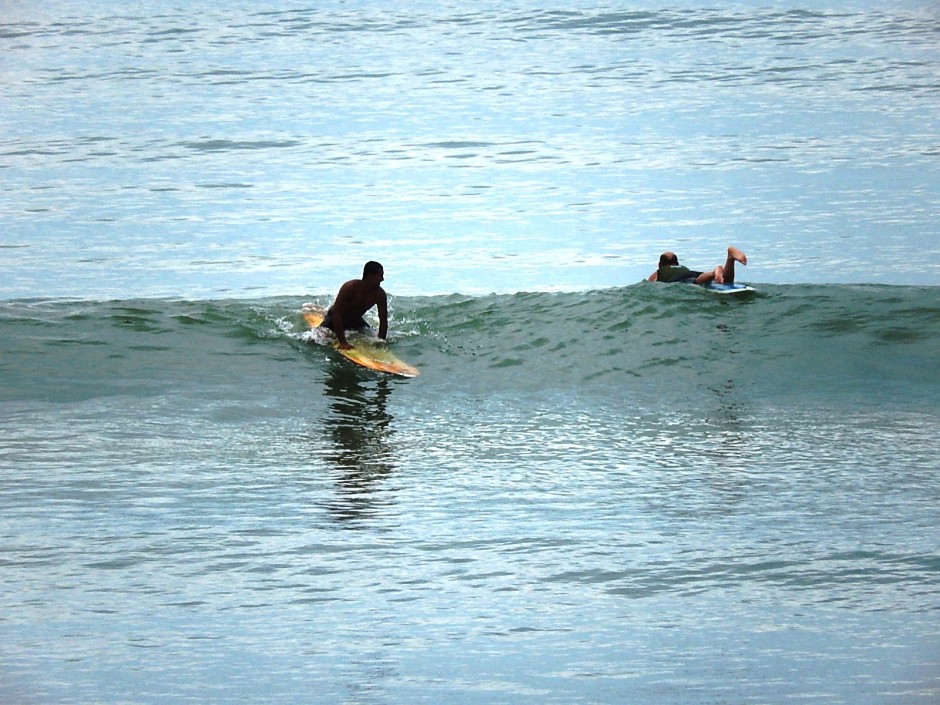
There are currently only a couple of very small hotels and decent restaurants (entrepreneurs: hint-hint) in Puerto Armuelles. There are numerous opportunities to attract visitors however. The beaches are fabulous and there are no crowds there, for now. Swimming, surfing, and canoe paddling are perfect sports for Puerto’s beaches.
Fishing offshore is some of the best in the world – yes, I said world! Chiriquí Bay has been featured in international fishing magazines for the amazing sport fishing here. There are a couple of fishing lodges in the area that cater to fishermen. The bird watching in the area is amazing! I have about 50 Amazon parrots and numerous other birds, that come by my house daily. Hiking and horseback riding offer great ways to see the beautiful, tropical countryside and exotic wildlife.
All of the amenities a person needs are here. There are supermarkets, hair salons, retail stores, gas stations, a hospital, and several banks. There is even an alternative medical clinic! Puerto is only about a half hour drive to Costa Rica and one hour to David, the second largest city in Panama. The best part of Puerto is the sense of community here. Everyone smiles and says “hola” or “buenos” when they pass. It is a town known for being “tranquilo” – no stress!
Debbie Fishell
Are there any major infrastructure changes underway or coming?
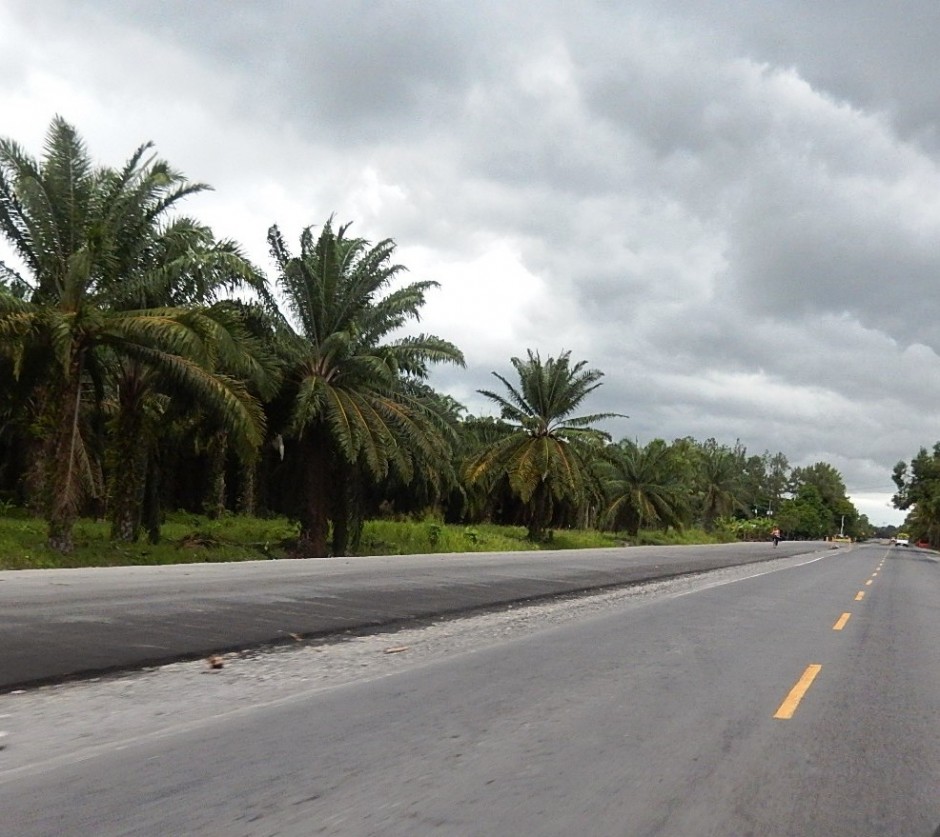
The road from the PanAmerican Highway (Paso Canoas) has been under construction to expand it to a four-lane road and is nearing completion. President Varela recently signed an agreement to improve the road going out to the beach community of Limones, south of Puerto and heading towards PTP.
New water and sewer pipes are being installed soon; we’ve see the surveyors out marking the streets recently. There is also a new, very large, commercial cement plant that is almost completed on the road coming into Puerto. A new hospital expansion is also underway.
Who would enjoy living in Puerto Armuelles?
Puerto Armuelles is a great place to live if you are an entrepreneur and have the vision to help create businesses as they are needed or build and/or rehab homes to sell to the new residents who are coming. I believe there are many opportunities available for the foreseeable future.
Puerto is also a perfect destination for anyone who wants to truly immerse themselves in the Panamanian culture; very few locals speak English here but they are genuinely friendly and eager to help you. The beaches are beautiful, with amazing fishing and even good surf sometimes.
There are fertile nearby “fincas” (farms) for sale on the outskirts of the town for very low prices. I recently looked at a one-acre farm with a house, fruit trees and gardens, water, and three new cement pig pens for $29K. These can easily be set up as a self-sufficient homestead for anyone who desires quiet seclusion or a perfect “bug out” location.
Is it a problem buying property so close to the Costa Rican border?
I wouldn’t call it an issue, but I would recommend using an attorney that is knowledgeable about real estate law here, or anywhere in Panama for that matter.
There are laws regarding how title can be held within a certain distance from beaches and the Costa Rican border. In Panama, real estate is typically Titled (able to get title insurance) or what is call R.O.P. (Right of Possession) property.
There are pros and cons to buying ROP real estate, so it should be investigated thoroughly before purchasing to see if it fits your expectations. Some of the ROP properties, which are generally near beaches and borders, can be a safe investment and many can be titled for a fee. Personally, I bought property that I could get a clear title on.
Learn more about Debbie, through her postings on Escape Artist.


Viva Tropical Radio
On this episode we discuss Nicaragua and all its awesome potential. Barry Oliver, a real estate professional, has over 10 years of experience in the country and his knowledge will make a difference if you are considering buying or investing there.
One of the safest countries in Central America, Nicaragua is often overlooked because of its turbulent history and lack of organization. Today’s situation is much different and many have already discovered why this is one of the best options for living in Central America.
In this episode, we discuss:
- Where the best investment opportunities are located?
- How much it costs to build?
- How much beachfront property costs?
- Who are buyers in Nicaragua?
Listen to the show
You can listen to the show using the player above or grab it and listen on the go via one of the following options:
- Click here to download the mp3
- Click here to subscribe via iTunes
- Click here for the RSS feed (non iTunes)
- Click here for the show archive
React to the Show
We appreciate your reaction to episodes of Viva Radio and feedback about how we’re doing.
Send us your thoughts any time in an email or comment below.
The Show Notes
Check out Barry Oliver’s Website.
Contact Barry directly.
Get Paydirt our free investment e-book now.
Viva Tropical Radio
Yes, it’s true, you can get paid to travel! How? Just create an expedition company.
We talk to fellow travel lover Matthew Brumley and find out how he started his own expedition business. Founder of Earthbound Expeditions, Matthew talks candidly about what has worked for him and how he comes up with creative ideas that provide unique travel experiences.
He gives insight into why Costa Rica is one of his chosen destinations and how you can go back in time when you visit Cuba. If you ever thought about creating a travel-based business or are just interested in traveling with a small group of people, this discussion will inspire you.
In this episode, we discuss:
- Is it legal for U.S. citizens to visit Cuba?
- Why the sky is limit when developing unique experiences for expedition travel
- Why Matthew loves Costa Rica
And much more.
Listen to the show
You can listen to the show using the player above or grab it and listen on the go via one of the following options:
- Click here to download the mp3
- Click here to subscribe via iTunes
- Click here for the RSS feed (non iTunes)
- Click here for the show archive
The Show Notes

A “bucket list” is a collection of places to see and things to do before you die. There are so many once-in-a-lifetime activities to engage in and places to visit throughout Central America that could, literally, fill many bucket lists. Yet there are some that are truly must-see locations and unique adventures that make the Central America Bucket List one that everyone should try and check off.

Kenneth Garcia
The Central America Bucket List – a blend of history, culture, nature, wildlife, and adventure
If you’ve ever wanted to explore ancient ruins, immerse yourself in a totally different culture, stand in awe of a natural piece of beauty, get up close and personal with creatures of the jungle or try something new like zip-lining or deep-sea fishing, you have already created your ownCentral American Bucket list.
The places and activities that are listed below are not in any particular order of importance or priority. All should be seen and experienced regardless and truly appreciated for the wonders that they are; they may even inspire you to create your own list as well.

Tikal, Guatemala
Mayan Ruins – Tulum, Mexico and Tikal, Guatemala
The Mayan Civilization has long held a fascination for many people. Viewing the towering pyramids and intricate ruins can make memories that last a lifetime. Two of the best known locations that embody this vanished culture are the ruins in Tikal, Guatemala and Tulum, Mexico. Separated by only 600 kilometers, these two iconic locations symbolized the height and power of the Mayan culture.
Visiting the imposing Temple of the Jaguar in Tikal or the majestic and well preserved “City of the Sun” in Tulum, Mexico can be an awe-inspiring reminder of how important enjoying each day is and that nothing is eternal. With nearby airport access to both sites, such in the Mayan Riveria, the Central American Bucket List items are ones that everyone should see and experience.

Arenal Volcano
The Arenal Volcano in Costa Rica
Of all the volcanoes throughout Central America, none is more majestic than Volcan Arenal in Costa Rica. Still active (although quiet of late), this imposing and beautiful mountain towers over the surrounding region, including Lake Arenal, at a height of 5,437 feet and is easily accessible from nearby San Jose.

Jugrote
Lake Nicaragua
This is the biggest lake in Central America and the 19th largest in the world. Easily reached from Managua, this fresh water wonder boasts something that most fresh-water bodies of water lack: sharks. The bull sharks of Lake Nicaragua can grow up to 11 feet in length; encountering one of these predators certainly falls under the category of “Well, there’s something you don’t see every day”.

Chadica
Whitewater rafting on the Pacuare River, Costa Rica
Ranked as one of the top ten whitewater rafting locations in the world, the Pacuare River can provide the kind of adrenalin-filled adventure that should be a part of everyone’s bucket list. Combining the stunning beauty of the area with the heart-stopping class III and IV rapids, this river adventure is truly a ride for the ages.

Guillén Pérez
Meet a Mayan Shaman
With all of the recent attention paid to the Mayan Calendar and the mysticism surrounding it, the opportunity to meet and interact with a genuine Mayan Shaman could be a life-changing experience. Practitioners of this ancient spiritual craft can be found in Belize, Honduras and Guatemala and are more than ready to share their wisdom and provide a unique insight in the Mayan World.

Jasperdo
Tour the Panama Canal
Since its completion in 1914, the Panama Canal has been the major waterway between the Pacific and the Atlantic Oceans, fulfilling the dream envisioned for centuries. Modern tours through the Canal provide a special opportunity to view this engineering marvel and follow in the footsteps of explorers from the mists of history who had searched for this passage.

Galapagos Islands, Ecuador
The Galapagos Archipelago
Darwin’s visit to this group of islands, part of modern-day Ecuador, and filled with a vast collection of unique and endemic species, led him to develop his theory of evolution and natural selection. Following Darwin’s path will permit visitors the chance to discover penguins, giant tortoises, and many other creatures that cannot be found anywhere else in the world.

Tony Mendez
Whale watching in Costa Rica
The humpback whales migrate along the Pacific Coast of Costa Rica from between August and October every year. Being able to see these leviathans of the deep in their element is a magical and moving sight and should be a part of every bucket list.

Stephen Johnson
Ambergris Caye – home to the second largest coral reef system in the world
The coral reef along Ambergris Caye, Belize, is second in size only to the Great Barrier Reef in Australia. Being much more accessible than the great “Down Under” this unique and fragile ecosystem is worthy of a special place on the list.

Peace Garden Toucan
Have a toucan on your arm – the Peace Garden at La Paz, Costa Rica
Everyone has seen these colorful, comical birds but have you ever had one on your arm? At the Peace Garden, La Paz, Costa Rica, getting up close and personal with these multi-colored creatures is easier than you might imagine and certainly something that is not an everyday occurrence.

Steven Depolo
Rainforest adventures – zip-lining, hiking, waterfalls, and animals
Central America has wonderful opportunities to visit rainforests throughout the region. Zip-lining, hiking to secluded waterfalls, horseback rides through the jungle and seeing exotic birds, monkeys, sloths, and many other creatures in their natural state makes this a true bucket list item to be experienced and treasured.

Johnathan Nightingale
Monteverde Cloud Forest – home of the Resplendent Quetzal
Perhaps the best know cloud forest in the world, the Monteverde Cloud Forest has a charming and rare resident–the Resplendent Quetzal. Discovering this regal bird in the stunning backdrop of a cloud forest is a special treat that should be included in any bucket list. Stand on the Continental Divide with one foot on the Caribbean side and the other on the Pacific-something that can’t be done any place else.

Ari Bronstein
Deep sea fishing
Have you ever wondered what it would be like to have a blue marlin on the end of your line, fighting you every step of the way? Deep Sea Fishing in Costa can fulfill this “bucket list” wish; tuna, wahoo, sailfish and, or course, the mighty Marlin are all there waiting for the right angler and the right moment–a moment that can be yours.

Steven Gerner
A sea turtle haven – Tortugero, Costa Rica
For the nature lover, visiting the spawning and hatching ground for sea turtles can be a special item on a bucket list. Tortugero, on the Caribbean side of Costa Rica is the place where green, leatherback, and the rare hawkbill turtles can be seen nesting and hatching in the cycle of life. The National Park is also home to jaguars, tapirs, macaws, and monkeys.

Elena G.
The haunted island of San Lucas, Costa Rica
If paranormal investigation is part of your bucket list, the former prison island of San Lucas, Costa Rica will fulfill this desire. Long known as a haunted location, San Lucas has been featured on television and on numerous sites about ghost hunting. Bring your recorders and cameras and see if you can capture the spirits said to still remain there.

Lee Shaver
The Central America Bucket List – getting there is easy
Central America is readily accessible from the U.S. and Europe. Regularly scheduled flights to and from major jumping off points such as San Jose, Costa Rica, Panama City, Panama, Managua, Nicaragua, and Guayaquil, Ecuador–to name but a few–make getting to those bucket list locations convenient and affordable.
There are many tours and travel packages that are available that can be tailored to meet every desire and wallet size. Exploring and experiencing the wonders of Central America has never been easier.
The Central America Bucket List – living there is easy as well
As you explore, check off, and add items on your particular “Central America bucket list” you may discover that the best way to do and see everything is to actually live in Central America. With so many options available–from lots, homes, apartments, condos, and even commercial properties–living in Central America can be a desirable alternative to traveling and can place you in the heart of the experiences and adventures of a lifetime.

Good news if you’re an expat living in Latin America or if you’re thinking about making the jump: safety and security is improving in numerous regions, according to several key criteria. A recent Gallup Law and Order Index looked at local perception of crime in each Latin American nation and found several countries had made big jumps in safety.

Irving Martínez
Why is this particular survey significant?
Because it is based on residents’ personal experience with criminal elements and their feelings about how secure they are in engaging in day-to-day activity. Rather than relying on a third-party assessment, this survey used face-to-face and phone interviews to get down to the local level to see what’s really happening.
The Gallup Law and Order Index examined perceptions from 2013 and compared them to data from 2009. Three main points were considered:
- Confidence in the local police force
- Feeling of safety walking alone at night
- Incidents of property or money stolen from the participant or family member within the last 12 months
So, what did the results show?
Panama is tied at the top as the safest country in the region and went up seven points in its score over the last four years. This should come as no surprise to expats who are already enjoying the pristine beaches and undisturbed jungle of Panama’s more rural areas or to those who have flocked to Panama City, making it a premium retirement destination.
Nicaragua tied with Panama as the safest perceived country in Latin America, up nine points from 2009. Both nations have experienced marked economic growth and a decrease in crime and political violence. Rounding out the top four were Chile (up seven points) and Ecuador.
Ecuador is a fantastic study in what can be accomplished in a relatively short time to both decrease actual crime statistics and boost public opinion about security. President Rafael Correa attributes his nation’s 14-point leap in the Gallup rankings to a three-tiered approach to fighting crime:
- Increased emphasis on arms control
- Widespread judiciary reform
- Improved methods for the capturing of criminals
Ecuador’s new ECU-911 system, implemented in 2012, plays a large part in this. The program coordinates national police, firefighters, armed forces, and transit authorities, as well as other government ministries and organizations, in order to respond immediately to emergencies.
Ana Freitas
The implications are important
The implications of the Gallup Law and Order Index are important not just to your personal safety, but to global economics as well.
Let’s get macro here for a second. A country’s annual gross domestic product (GDP) is basically the sum of what everyone in that country earned in the course of a year or what they spent in a year (those two sums should be about equal). GDP is therefore a primary measure of the health of any nation’s economy.
What happens when crime goes up? GDP goes down. Tourism is reduced, police costs rise, and there is a significant loss of income from incarcerated or otherwise non-participating individuals. Gang-related crime preys on this economic vulnerability, and local businesses suffer. Moreover, foreign investors run the other way, as a bad economy is no place to put their money. The cycle continues, and it can be devastating for a country until they figure out how to turn it around, largely by decreasing crime.

Jurgen Proschinger
That’s all well and good, but what does this mean for you?
If you’re going be investing your hard-earned cash in a foreign economy, you want it to be a stable one where crime is on the downturn and GPD is climbing. This is one of the reasons Panama continues to be so popular right now. It’s been steadily raising its GDP over the last decade and is predicted by the IMF to remain solid.
The Gallup Law and Order Index confirms what many people intuitively feel about crime and macroeconomic growth. Furthermore, the survey’s use of direct contact with the participants lends it a high confidence level (95%) that may not be achievable in other less objective studies conducted by local government or police.
It’s important, too, to look at the overall trends in this survey, rather than just pure rankings. Latin America as a region has improved since 2009. And look at the numbers for Colombia and Costa Rica, for example. Colombia is now perceived as being as safe as Costa Rica. Does that make Costa Rica any less safe? No, it simply points to the strides that Colombia has made in improving its safety and security.
While there are still pocket of violence in Honduras, Guatemala, and Mexico (particularly in the U.S. border regions of the latter), overall things are looking promising for Latin America. Knowing how the locals feel about their personal safety is the first step in addressing crime issues that have far-reaching effects on both the macro- and microeconomic level.
Brian O’Dea comes back on to finish his story of what it was like to be a professional smuggler. This time around we get to discuss some of the nitty gritty details about chance encounters, strategy, and the steps that led to smuggling and then selling $300,000,000 of marijuana.
Tune in now and hear what led to the biggest drug deal in U.S. history at the time it went down. There is no doubt why his story is being fast-tracked to a major motion picture and will probably be a big hit.
In this episode, you will learn:
- How Brian made the connections to start flying planes in to Colombia
- One rule Brian lived by and what it was
- And just how open cocaine culture was in LA in the early 80’s
And much more.
Listen to the show
You can listen to the show using the player above or grab it and listen on the go via one of the following options:
- Click here to download the mp3
- Click here to subscribe via iTunes
- Click here for the RSS feed (non iTunes)
- Click here for the show archive
React to the Show
We appreciate your reaction to episodes of Viva Tropical Radio and feedback about how we’re doing. Send us your thoughts any time in an email or comment below.

High, Confession of an International Drug Smuggler
The Show Notes
- High, Confession of an International Drug Smuggler. Download Brian’s book right now, it is a great book.
Viva Tropical Radio
Eric Youngren, Off-Grid Expert, returns to expand our knowledge and this time we focus on creating an off-grid escape. Last time Eric joined the show we discussed what you need to know before even thinking about living off the grid.
This time we discuss how to evaluate locations based on their ability to produce energy. We also talk about how each of the big three technologies, solar, wind, and hydro, could help you create your own off-grid retreat.
Some of the most incredible locations in Central America are off the grid, so what are you waiting for – listen to this and then go find your perfect getaway.
In this episode, we discuss:
- Why off-grid gives you so much freedom
- Why wind power is really hard to use near trees
- How to evaluate a water flow for hydroelectricity
And much more.
Listen to the show
You can listen to the show using the player above or grab it and listen on the go via one of the following options:
- Click here to download the mp3 (right click and then click “save as”)
- Click here to subscribe via iTunes
- Click here for the RSS feed (non iTunes)
- Click here for the show archive
The Show Notes
- Learn More About Eric
- Eric Youngren’s Company: Solar Nexus International
- Micro Hydro Video

The best Central America hikes are certainly not your average walk in the park. For those who seek the “road less traveled” Central America is the place to visit and explore. Lush jungles, hidden waterfalls, breathtaking mountain vistas and untapped natural beauty make this part of the world a veritable hiker’s dream.

Wood Buildings-Cusuco National Park
Best Central America Hikes – Many Choices from Mild to Wild
You don’t have to be a hard-core experienced trekker to enjoy the wonders of hiking in Central America. There are many options throughout the region ranging from downhill jungle paths to rugged volcano trails and everything in between. The only hard part might be having to make a choice between the wonderful and diverse locations of the best Central America hikes.
Cusuco National Park, Honduras
If hiking along lush jungle paths, seeking out hidden waterfalls, and discovering exotic animals in their natural state sounds like your kind of adventure, then Cusuco National Park in Honduras is certainly the place for you. The primal force of Pulhapanzak Waterfall with its 140 foot drop, the mystery of the Taulabe Caves, and rich biodiversity of the jungle itself make this one of the best Central America hikes.
Chimborazo Circuit, Ecuador
On the other end of the hiking spectrum is Chimborazo Circuit in Ecuador. This multi-day experience along the “avenue of the volcanoes” is home to several peaks above 16,400 feet including mighty Chimborazo whose 20,564 height makes it the farthest point from the Earth’s surface at the Earth’s center.
Camping in tents, exploring glaciers and local villages, and become immersed in the culture and lifestyle of the Andean highlands are just some of the reasons that make this one of the best Central America hikes.

The Quetzal Trail, Panama
The Quetzal Trail, Panama
Panama’s foremost day hiking trail is the Quetzal Trail. Winding through the Volcán Barú National Park along the northeastern side of the volcano, this jungle path is home to its namesake, the stunning Resplendent Quetzal.
The trail is mostly a downhill trek through unspoiled primary jungle from Cerra Punta to the village of Boquete. Travelers can actually have their luggage sent ahead from Cerra Punta to their next lodging in Boquete which is just another feature making this one of the best Central America hikes.

Miguel Vieira
Corcovado National Park, Costa Rica
If true biodiversity is what you are looking for in a hiking experience, the Corcovado National Park in Costa Rica is the perfect destination.
From empty beaches along the Pacific Ocean, lush coastal forests filled with exotic jungle life such as monkeys, sloths, and the elusive jaguar with flocks of scarlet macaws in the trees, Corcovado may be one of the most unique and special hiking locations on Earth. With a ranger station that welcomes campers, Corcovado is clearly one of the best Central America hikes.
Maribos Volcanic Range, Nicaragua
Imagine hiking 21 volcanoes in seven days! The Maribos Volcanic range near Leon, Nicaragua can provide just that kind of adventure. With trails that can vary in difficulty depending on your preference and skill level, the Maribos Range, including the daunting Momotombo Volcano is just the kind of challenge hikers love to embrace, making another of the best Central America hikes.

Arenal Volcano
Arenal Volcano, Costa Rica
For sheer beauty, the Arenal Volcano and the surrounding area in Costa Rica is nearly impossible to beat. With a huge reservoir, a 2900-hectare national park, numerous accessible trails running through cloud and rain forests that surround it, hiking Arenal is definitely a must-do as part of the best Central America hikes.
Lake Atitlan Volcanoes, Guatemala
The three volcanoes that surround Lake Atitlan in Guatemala provide a variety of hiking adventures in one of the most picturesque locations in the world.
The tallest of the three, Atitlan (11,601 ft.) offers an 8 hour trek to a summit that provides a stunning view of the Pacific Coast; San Pedro (9,906 ft.) will allow those who make the 4 hour climb a chance to view and discover plants and animals rarely seen elsewhere; Toliman (10,358 ft.) has a forest area near the summit for camping. Having three different hiking choices in one location is unique among the best Central America hikes.

Monteverde Cloud Forest
Monteverde/St. Elena Cloud Forest Reserve, Costa Rica
No list of the best Central America hikes would be complete without including the Monteverde/St. Elena Cloud Forest Reserve. Filled with numerous trails that are well maintained and easy to navigate, Monteverde offers unparalleled natural beauty, a chance to see flora and fauna that are both unusual and rare including the Resplendent Quetzal. Lodging choices nearby complete a near perfect picture of nature hiking at its finest.
Guanacaste National Park, Belize
This 50 acre preserve is a birdwatcher’s paradise and another of the best Central America hikes. Located in the center of Belize, just 2 miles from the capital city of Belmopan, the small size and easy access makes it convenient for casual nature hikes as well as the opportunity to enjoy both the natural features, in terms of exotic plants and animals, and the cultural aspects of life in Belize today along with its Mayan past.

Brian B.
Pico Bonito Park, Honduras
Meaning ‘beautiful peak”, Pico Bonito is definitely a hike for those with expedition experience and a love of adventure. The over 300 species of birds, jaguars, pumas, and the every present howler monkeys make this journey one that is not easily forgotten and clearly, one of the best Central America hikes.
Pirre Mountain, Panama
The hike to the summit of Pirre Mountain, Panama follows a challenging jungle trail in one of the country’s most remote regions. Monkeys, sloths, exotic birds, and a great collection of trees and flowers make this difficult trek more than worth the effort and certainly worthy of being considered one of the best Central American hikes.
Get Close to the Best Central America Hikes
With some many choices for hiking adventures throughout Central America, the best way to experience them all is to find your own “base camp” to allow you to visit and explore on your schedule. Finding places to live, short term, long term, or even purchase is easier than you might imagine and just a mouse-click away. Let your trek start now!
Viva Tropical Radio
Josh talks to Eduardo Carillo, Jaguar expert and professor at University of Costa Rica. A legendary animal, the Jaguar is a Native American word meaning, “he who kills with one blow.”
The cats were once worshiped as gods in Peru, Mexico, and Guatemala, as well as in pre-Columbian America. The Mayans, Aztecs, and Inca all worshiped the Jaguar in some form too.
Eduardo has spent over 25 years, in many different countries, learning about these incredible animals. Find out what he knows and how it all began, while we discuss one of the most fascinating and elusive inhabitants of the rainforest.
In this episode, we discuss:
- What brand of cologne attracts the big cat
- How to help protect Jaguars
- How to spot one
And much more.
Listen to the show
You can listen to the show using the player above or grab it and listen on the go via one of the following options:
- Click here to download the mp3 (right click and then click “save as”)
- Click here to subscribe via iTunes
- Click here for the RSS feed (non iTunes)
- Click here for the show archive
The Show Notes
Contact Eduardo directly to support his work studying and protecting Jaguars.

Do you love the climate and natural beauty of Boquete but hate the overcrowded, touristy feel it’s developed of late? Then you should check out Volcan, Panama.

Rich Young
Located just around the corner, on the other side of the Baru Volcano (the country’s highest peak, at 11,400 feet), Volcan offers many of the same inherent benefits as its neighbor. However, it comes with a simpler lifestyle, a more authentic Panamanian feel, and a considerably lower price tag.
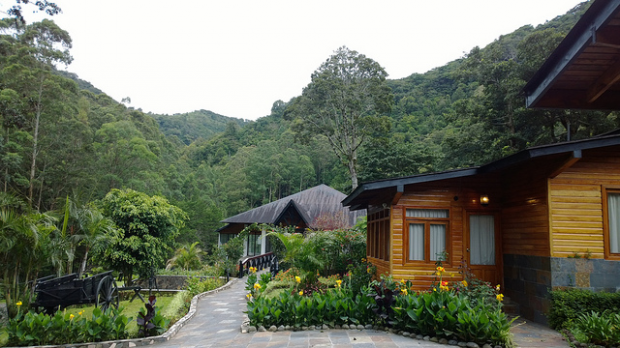
Volcan, Panama, offers a cool mountain climate and incredible weather year round.
Much like Boquete, Volcan’s elevation of between 4,000 to 5,000 feet allows for spring-like temperatures all year long. With lows nearing 60 and highs that rarely exceed 80 degrees Fahrenheit, there’s no need for heat, air conditioning (other than a ceiling fan), or multiple seasons of clothing.
You can move to this serene mountain town with just a light sweater for evenings and a rain jacket for the afternoon showers. Many expats choose it for its quaint pastoral setting, which some compare to a Colorado town without the snow, and the many opportunities for healthy living that are created by the climate and the abundant natural resources.
The area is blessed with rich, fertile soil that’s ideal for growing coffee, flowers, oranges, and many other crops. It’s also an important area for cattle farming, with 80% of the country’s milk, meat, and vegetables coming from the region. There are also numerous streams for fishing, and fresh fish and produce are widely available at roadside stands.
D. Delgado
The town is pleasantly less developed than Boquete.
With only about 10,000 inhabitants (of which about 250 are North American expats), Volcan is on the smaller side. As a result, there are no shopping malls, fast food chains, or movie theaters. However it still has everything you need to enjoy a simple lifestyle.
There are several large supermarkets, four hardware stores, three banks, pharmacies, bakeries, medical centers, gas stations, internet cafes, and more. There are also about 30 places to eat. They’re all small, charming, and locally owned.
For anything beyond your basic needs, up to and including a large hospital, you’ll need to make the 45 minute drive to David. For many expats, the simplicity and quaintness are worth the trade off.
Despite its size, Volcan has surprisingly good infrastructure. Even the winding roads that lead up to the town are paved and well-maintained. The tap water is drinkable. The electricity is reliable. And internet and cable are readily available.
Volcan also has a much more laid-back social scene than most of the larger cities. There aren’t a lot of hopping nighttime hotspots. However, there are a couple of bars, a disco, and even a pool hall in town.

Adam Mizrahi
Yet Volcan offers just as many amazing natural attractions as nearby tourist hotspots.
One thing’s for sure. Volcan’s small size certainly doesn’t translate into any fewer ways to enjoy the outdoors, as it offers a wealth of activities to adventure lovers of all kinds.
Sweet-water fishing is a popular pastime of locals and visitors alike. You can also spend time mountain biking, hiking, or whitewater rafting. A particular favorite is the hike up to the peak of Volcan Baru, where those who are blessed with a clear day can enjoy views of both the Pacific and Atlantic Oceans.
The region is also great for birdwatching, as both Volcan Baru National Park and La Amistad Park offer sightings of the elusive resplendent quetzal. There’s also Sitio Barriles Museum, a pre-colombian archeological site full of ancient remains such as statues, pottery, and other artifacts.
Volcan, Panama is also home to some incredible real estate opportunities.
With its immense beauty, amazing climate, wealth of natural attractions, and close proximity to a major city, you’d expect Volcan, Panama real estate prices to rival those in some of its popular neighboring cities. Guess again.
In addition to its significantly lower cost of living, Volcan also has plenty of homes priced well below the cost to buy a comparable property in most Panamanian towns. Like most areas, pricing varies widely with properties costing anywhere from $40,000 to $150,000 or more.
There are also plenty of lots available if you prefer to build your dream home on a large tract of land, next to a trout-bearing stream, with sweeping views of the surrounding valley. If you have closer to $200,000 to spend you can find a North American style home with acreage and all the modern conveniences.
Volcan’s expat population is still small, but word is definitely spreading about this quaint country village. There’s a growing number of residential developments under construction to accommodate the increasing influx of expats to the area.
The spike in interest has also resulted in several years of steady appreciation of Volcan, Panama real estate. The newly expanded international airport in David is also having a tremendous effect on property values in Volcan and throughout the Chiriqui Province, as visitors from various cities around the world can now easily access the area’s many attractions more easily than ever.

Rich Young
Now is the time to buy or invest in Volcan.
If the simple, country life sounds appealing to you, then you should definitely check out everything that Volcan, Panama has to offer. If you think it needs a few more amenities before it would suit your tastes, then you shouldn’t have to wait long. As the population grows, so will the number of services offered.
Better yet, don’t wait at all. Take advantage of the opportunity to use your entrepreneurial talents and fill a niche with the expat business you’ve always dreamed of opening. It could be just the ticket to a lifetime of success and happiness in charming Volcan, Panama.
Map of Volcan, Panama
Volcan, Panama Fast Facts
- Population: About 10,200
- Typical temperature: From 60 to the mid-80s Fahrenheit
- Nearest airport with U.S. flights: Tocumen Airport. Domestic flights to Panama City, Panama and international flights to Costa Rica depart from Enrique Malek International Airport in David
- Nearest U.S. consulate: Panama City, Panama

Adam Mizrahi
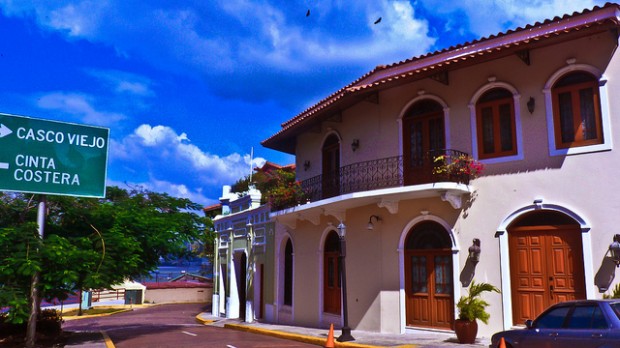
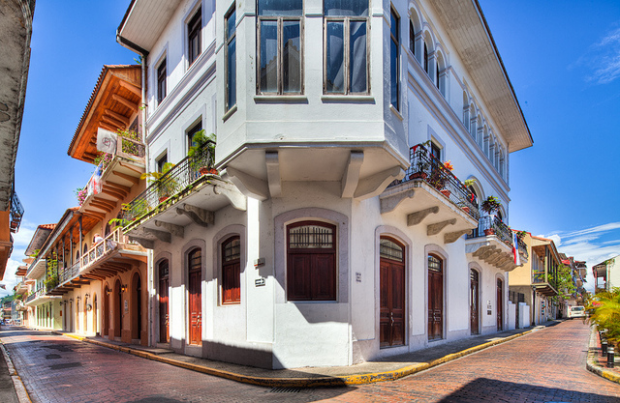
Just across the bay from the hustle and bustle of Panama City, with its towering buildings and cosmopolitan appeal, lies the cultural Panamanian hub of yesteryear…the charmingly historic and refreshingly eclectic Casco Viejo, Panama.
From Defending Against Marauders to Deteriorating into Rubble
It was founded in the 17th century in its strategic location, on a peninsula jutting into the Gulf of Panama, as a defense against pirates (the reason for its massive iconic seawall). Also of significance was the fact that its location marked the place of shortest distance between the Pacific and Atlantic Oceans of anywhere in the Americas, establishing it as an important shipping port.
However, over time Panama’s “Old City” fell into neglect as all the action moved across the bay where the modern capital of Panama City began to develop and skyscrapers began to sprout. As a result, much of Casco Viejo, Panama, was disintegrating and crumbling into ruins as high-rise condominiums and glistening office towers began to punctuate the opposing skyline.

Magda Wojtyra
Revitalization and Regeneration
The story has a happy ending, thanks to the foresight of its local population as well as the vision and ingenuity of some like-minded expats. Rather than allow this historic city, today a UNESCO World Heritage Site, to waste away, a massive revitalization of the area was begun and still continues today.
And, rather than just level ancient buildings and start afresh with new, modern construction, those involved with the renovations are committed to preserving both the history and elegance of Casco Viejo, Panama.
“Casco Viejo has been steadily being revitalized,” states Patrizia Pinzon of Arco Properties, a real estate professional who specializes in properties in this historic district. “And note that we like using that word revitalize instead of restore. We like to think of Casco Viejo holistically, not only in terms of buildings and square feet, but also its community component.”
Really Old Meets Refreshingly Current
The result to this preservation approach is a glorious juxtapositioning of ancient and modern. Sleek new nightclubs pulse with energy next to the historic town square. Boutique hotels and chic coffeehouses dot the spaces between dilapidated buildings still waiting for their turn to be rediscovered and re-imagined.
It’s an area that is perpetually reinventing itself. You needn’t spend long in Casco Viejo to realize that this is a place where things are happening. Grand things.
A Mix of People As Eclectic As Their Surroundings
When a place exists in a constant state of evolution, its people tend to reflect the same level of singularity and variation. Casco Viejo, Panama, is no different.
Its population consists of drifters and wanderers, entrepreneurial expats, overly eager tourists, and everything in between. Despite their differences, they share one major attribute in common: an innate fascination with the place they call home or are merely passing through.
“Buyers are those who connect with pedestrian-human scale cities and towns,” says Pinzon. “They come from everywhere. Europe has a big representation, but also the United States, especially people who have lived through the revitalization of a place. They are united by a sense of adventure, of romance. They all love walking and meeting people in the street. Above all, they place a high value on authenticity.”
And that walking the streets part isn’t necessarily by choice. The streets of Casco Viejo were laid out before there were cars, so this historic city is as pedestrian as they come. The town’s close-knit design makes it impossible not to get to know your neighbors, as well as the interesting strangers you’re likely to encounter.

Ana Freitas
The Future of Casco Viejo, Panama, Real Estate
Panama, as a whole, has seen incredible growth in recent years, even surpassing their pre-recession highs in most areas. The areas around the nation’s capital, including Casco Viejo, are no exception. In fact, they’ve seen an even greater appreciation than much of the country’s interior, where construction has somewhat slowed.
This is far from being the case in Casco Viejo, where locals and expats alike continue to see potential in the crumbling buildings of the historic district. Pinzon predicts that the area’s growth will continue, slowly but steadily. She remarks that there is also a substantial business community growing in Casco Viejo, Panama.
“The first big hotel (50 rooms, which is big for Casco Viejo) opened its doors earlier this year, and you can already see beautiful things happening around it. The American Trade Hotel, with its event hall and the Danilo Jazz Club, has started to attract new people and has given the district a stunning showcase on all levels: architecturally, culturally and socially.”
While there are many options for purchasing real estate in Casco Viejo, Panama, Pinzon suggests buying an apartment while it’s still in the pre-construction stages. With a place that’s already entering the development process, you can get the benefits of paying a known price up front and then acquiring the property a year or two later once it’s automatically experienced some appreciation.
In addition to avoiding the headaches of undertaking your own construction and renovations, you can also enjoy no property tax for 30 years if you qualify. Panama’s laws are extremely pro-business and pro-investor. There are also numerous perks for those who wish to launch a tourism operation, making Casco Viejo an excellent choice for opening a business that caters to the interesting mix of people who visit Panama’s old city each year.
Even those who live and work in Casco Viejo continue to be amazed by the changes that are constantly taking place around them. There’s certainly no doubt that big things are happening in Casco Viejo. The only question is…do you have the vision required to be a part of them?
Map Casco Viejo, Panama
Casco Viejo, Panama Fast Facts
- Population: 200,000+
- Typical temperature: From 60 to the mid-80s Fahrenheit
- Nearest airport with U.S. flights: Tocumen Airport. Domestic flights to Panama City, Panama and international flights to Costa Rica depart from Enrique Malek International Airport in David
- Nearest U.S. consulate: Panama City, Panama

Magda Wojtyra
Bocas del Toro, Panama, is like something from another planet, another era even. It’s been compared to Key West, Florida, with its quaint tropical-meets-Victorian architecture. It’s been dubbed the “Galapagos of the Caribbean” due to its rich ecological diversity.
But one thing is for sure. Bocas del Toro is uniquely alluring with a call that summons tourists and expats alike to return again and again to its myriad attractions. It’s a great place to visit and, according to local real estate experts, an even better place to invest or buy property.

Drriss & Marrionn
Conveniently located and perfectly climate-controlled
It’s rare to find a place that is the embodiment of the tropical paradise that time forgot, yet is so easily accessible. Bocas del Toro offers the best of both worlds.
Situated a short distance from Panama’s Caribbean Coast, just south of the Costa Rican border, it even has its own modern airport with several daily flights from Panama City and David. It can also be reached by ferry, water taxi, or private boat via three full-service marinas.
Because of its location it also offers gorgeous weather that’s among the best in the region. Rather than a long, extended wet and dry season, Bocas del Toro enjoys a bit more fluctuation throughout the year. Granted, it can rain at any time, but the islands are generally dry during February through May and September through October. July and December are generally the wettest months and September offers the calmest conditions at sea.
Daily temps range between the high 70s to low 90s. The islands can also be quite humid, but the cooling breeze off the ocean does much to mitigate the mugginess.
T Auchgurke
From buccaneers to bananas
The history of Bocas del Toro only adds to its modern-day charm. When Christopher Columbus first discovered the islands in 1502, he was so enamored with their beauty that he named several of them after himself: Isla Colon (Columbus Island), Isla Cristobal (Christopher Island), and Bahia de Almirante (Admiral’s Bay).
During the 17th century, the islands were popular among pirates who came to repair their ships and, reportedly, bury their treasures. Although, to date, none have been found. The indigenous people were nearly wiped out by disease and Spanish militia before the area was finally settled by wealthy aristocrats in the early 19th century.
Following the abolition of slavery, the servants of these early settlers were joined by Jamaicans and other islanders who began to make a living by fishing and raising bananas. This is still a thriving industry today, as the plantations of Bocas del Toro contribute to the multinational Chiquita Brands International, with Bocas alone exporting 750,000,000 tons of bananas annually.
Bocas del Toro, Panama offers nature galore
The entire archipelago lies in a tropical rainforest ecosystem. As a result, the islands are lush with tropical flora and fauna. It looks like a postcard everywhere you turn. In the jungles you’ll find rare species of birds, butterflies, sloths, monkeys, and even the tiny poison dart frogs that are indigenous to the islands.
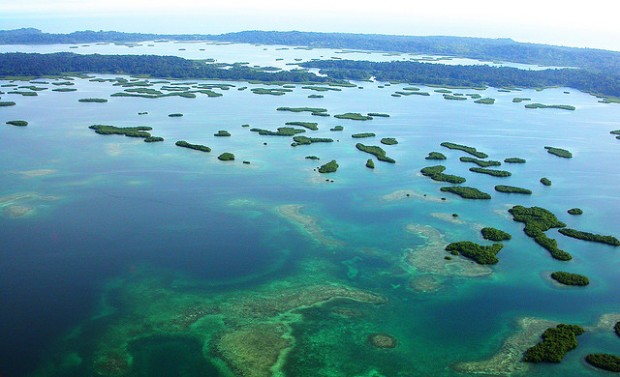
The island’s nine main islands, plus 52 cays and hundreds of additional islets, are perfect for exploring by kayak. Surrounding the islands are hundreds of mangrove keys and virgin coral reefs teeming with exotic aquatic species.
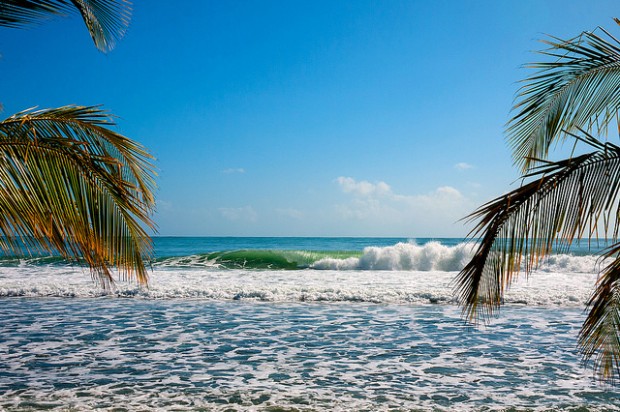
The islands themselves offer white sand beaches that are pristine against the turquoise waters. Snorkeling and diving are popular activities in Bocas del Toro, as are surfing, boating, and island hopping. On land, there are also plenty of opportunities for camping, hiking, and exploring the jungles.
Perhaps the largest attraction in Bocas del Toro, Panama is Bastimentos National Marine Park, the first in the country and one of the most important in the world. Covering over 30,000 acres, it’s a protected area for the endangered manatee, as well as a spawning ground for tarpon. The area is also a great place for watching dolphins and sea turtles.
Why photos of Bocas del Toro are so easily recognizable
Once you’ve been to Bocas del Toro, you can immediately choose its picture out of any lineup. The area is famous for its structures that are built on stilts in the water. As a result, it makes for a striking skyline.
Spending time in Bocas means shopping, dining, and even sleeping out over the calm waters of the Caribbean. Many beachfront homes in Bocas del Toro are situated out over the sea. These houses and commercial areas are charmingly set amongst the lush tropical landscape, which stands out against the 10,000 foot peaks that are visible on the mainland.
Aerial photos of the area show heavily treed islands dotting a crystal blue sea, with dozens of thatched roof structures sprinkling their shores, a scene you might recognize from the opening credits of any number of the “Survivor” series as so far 18 countries have traveled to Bocas to film theirs.

S. McCallum
It offers the right balance of rustic versus recent
The islands and their central city of Bocas Town are charmingly quaint, with their Caribbean colonial structures, a style that is required of all new construction. The streets are paved. The water is drinkable. And the hotels offer modern conveniences such as cable television and wireless internet.
Yet everything is distinctly laid-back and pleasantly behind the times. Accommodations lean towards rustic and authentic, rather than posh. Ecolodges abound, and sustainable tourism is a major focus. There’s no electrical grid, as the entire area is powered by a generator plant. As a result, the area is protected from overdevelopment and prices have remained low.
Another major nod to Bocas Del Toro’s authenticity is the way it has integrated the local Ngobe-Bugle people into the overall island experience. The indigenous people share their traditional customs with visitors. They thrive by fishing, farming, and selling their handmade crafts to tourists.

Pereira Miguel
Not too slow, not too fast…the pace of life in Bocas del Toro is just right
Many residents of Bocas del Toro choose it for their home due to the very same appeal that wows tourists the moment they step off the boat or plane. It’s the indescribable warmth and ease of the area and its people.
Much like being on a perpetual vacation, it’s completely free of the hassles the rest of the world encounters on a day-to-day basis. There’s no traffic, no smog, no hurried atmosphere.
In Bocas del Toro, Panama, everything moves at a calm pace so as not to distract your attention from the overwhelming abundance of unspoiled nature that surrounds you. And that won’t change any time soon.
The Bocas del Toro, Panama real estate market is enjoying the same steady pace
The islands of Bocas del Toro are known around the world for their distinct tropical appeal. Panama’s top tourist destination, they attract visitors from all over the world. Many of them are so wowed by the islands’ natural beauty and atmosphere that they end up making it their permanent home. Yet, property in Bocas del Toro remains surprisingly affordable.
In fact, it’s one of the few areas like it that are still left in the region. It offers a variety of living options, from oceanfront homes to jungle retreats, that can still be had for a fraction of the cost of similar properties elsewhere.
As a result, the area has been drawing quite a bit of attention in recent years. However, per J.B. Seligman of Buena Vista Real Estate, Bocas attracts a slightly different crowd than many other expat destinations in the tropics.
Seligman says today’s newcomers are around 35 or slightly older, ranging from those with young kids to those whose kids are almost ready to leave the nest. Rather than waiting until retirement age, they want to invest in property that they can use to earn an income so that they can start enjoying the tropical lifestyle now.
“It’s the younger crowd wanting income-producing property. So we are selling lots of this type of inventory, be it a small hotel, hostel, bar, or restaurant. But this type of inventory is limited, so now there’s a new resurgence in building.”

Magda Wojtyra
Where Bocas del Toro, Panama real estate is headed
According to Seligman, the global economic crisis was felt deeply in Bocas del Toro, but it’s definitely now on the upswing. More reasonably priced properties are what’s moving, and he indicates he sees that trend continuing.
“I see Bocas continuing this upward swing but at a controlled pace, a good pace, for the next 2-3 years,” says Seligman.

Sandy29
Come to visit…stay to live, work, and play
In short, Bocas del Toro, Panama, is a destination like no other. It’s rich with authentic culture, charm, and natural beauty. It’s no wonder tourism to the area is on the rise.
It’s also not a surprise that so many tourists are making the decision to live, invest, or even start a business in Bocas del Toro. With so much to do and see in the area, there’s no indication the influx will slow in the near future.
Bocas del Toro is the perfect setting for the right investor to open an ecolodge, tourism operation, or another business catering to travelers. The nation of Panama is pro-business, pro-investor, and incredibly pro-tourism. And the opportunity to own a perfect piece of island paradise has never been more attractive for the entrepreneurial expat.
Map of Bocas del Toro, Panama
Bocas de Toro Fast Facts
- Population: About 9,000
- Typical temperature: Average temperature is 80 degrees
- Nearest airport with U.S. flights: U.S. bound flights leave daily from Tocumen Airport, domestic flights depart for Bocas del Toro from David and Changuinola.
- Nearest U.S. consulate: Panama City