


A recent article in The Guardian noted: “Global debt has grown by $57 trillion to reach $199 trillion in the seven years following the financial crisis – a 40.1% rise, according to a new report.”
What this translates into is that global debt is now 286% of the world’s Gross Domestic Product, or GDP. GDP is the monetary value of a country’s (or in this case the world’s) finished goods and services that have been produced in a given time.
While these figures reflect the economic situation of governments, individuals too can be expected to feel the crushing impact of what is, obviously, an unsustainable debt load.
Under these circumstances, becoming an expat and owning property abroad is more than just a sound investment hedge against this economic shadow; it is a way of rediscovering what truly matters and having the opportunity to pursue those ideals.
epSos .de
Why Global Debt Should Matter to You
Global debt has many far-reaching implications that transcend the international geo-political scene. Though usually referred to by the media (both mainstream and alternative) in terms of governmental policies, this massive borrowing bubble could profoundly impact individuals’ savings, retirement, and investment portfolios in ways that seem almost unimaginable. Below are several of the major reasons that global debt should matter to you.
Haircuts Are Coming into Style
Much reporting has been done on the recent debt crisis in Cyprus and the resulting “haircuts” that savers and investors endured. However, not many people truly understand what a “haircut” means.
In simple financial terms, a “haircut” means taking a loss on an investment i.e. to receive or accept less than the face value of what is owed. An example of this concept would be if a government borrowed money from institutions and was not able to pay it back. Instead, the government offers to pay only $0.25 on every dollar owed. A bond, with a face value of $1000.00 (the purchase price), would now only be worth $250.00. Investors who “loaned” money (in the form of purchasing government bonds), would have to take a “haircut” of $750.00.
The recent situation in Cyprus is a prime example of how “haircuts” can dramatically impact individuals. There, the government ordered that bank accounts, in excess of 100,000 Euros, would have to take a haircut of 37.5%.
Put another way, if someone had a banking account with 100,000 Euros, the cash value of that account (the amount that could be withdrawn) was reduced to 52,500 with the remainder being made up of shares in the bank that could only be sold at whatever the market value would be. In practical terms, 37.5% of those accounts is now gone and the remainder will be subject to the whims of the marketplace.
As global debt continues to grow, other governments, including the U.S. and other European nations, may consider similar approaches to make up their monetary shortfall.
Freezing Assets and Other Chilly Prospects
Imagine walking into your bank to make a withdrawal and being told that you couldn’t because the government was freezing all accounts. That is exactly what happened in Cyprus. In order to “stabilize” the financial situation, the Cypriot government essentially prevented depositors from taking any money out of the banks.
When money is deposited in a savings account, the bank agrees to pay interest on those funds in exchange for having those sums available to the bank; in a real sense, savings accounts are a kind of “investment.” What happened in Cyprus was that the banking system ended up “owing” more to the depositors than it had. As a result, the only way to avoid total collapse was to keep all the money.
Similarly, other investment options, such as stocks, are also vulnerable to rising debt. Purchasing stock is giving money to a company with the promise that, at a later date, those stocks could be sold for a higher price than they were paid for. If a company’s debt becomes too high, dividend payments (like interest in a bank account) may be withheld or cancelled and, in a worst case scenario, the stock becomes worthless and the whole investment is lost.
Money, Currency and Wealth – Three Different Things
Though the terms “money,” “currency,” and “wealth” are often used interchangeably, their actual meanings are vastly different. When talking about global debt, these differences matter a great deal.
Money can be basically defined as a medium of exchange between buyers, sellers, producers, and consumers of material goods. Currency refers to a particular monetary system used within a country or other political unit.
Wealth is, by far, the most nebulous of these three items. It is defined as the measure of valuable items. Wealth can also be extrinsic (money in the bank, personal property, etc.) or intrinsic – the actual value of something, not just its price tag. Global debt has created only extrinsic wealth that consists of numbers on a ledger. Those numbers often cannot be supported by actual value when investors want their return paid out.
Playa Real
The Expat Advantage – Owning Property in Paradise
Aside from the opportunities to live abroad, immerse yourself in a new culture, live healthier, and rediscover yourself, there are real economic advantages to buying property in Latin America. Here are a just of few of those benefits:
Real Estate Is Both Real and Finite
There is an old saying that the reason property is so valuable is that they’re not making any more of it. As a result, land ownership carries a permanent value. Since it is a real, tangible asset, investing in it can be a real hedge against the growing debt crisis. Also, real estate has an intrinsic value; it exists, and it can be your paradise and security. Those are measures of wealth that far surpass anything on a balance sheet.
Central America Welcomes Expat Investment
Central American countries have actively created environments that promote expat investment. The rights of foreign property owners are, in many cases, identical to those held by a country’s own citizens. Favorable residency laws, discounts, and lower tax rates also make buying and living here a desirable alternative to staying in the U.S. or Europe.
There Are Bargains and Opportunities to Be Had
As the trend towards development sweeps through Central America, the affordability of property (especially parcels that are undeveloped or underdeveloped) is still quite good. For investors, this is an ideal situation where a lower initial outlay of funds can be expected to result in a good return on investment. Importantly, buying real estate in these tropical destinations carries much less risk than other options, such as stocks and bonds.

Best Jaco
Taking the First Step
Like any investment, buying and owning property in one of these tropical destinations does have challenges and some risks. Being an expat is not necessarily for everyone. Daring to reinvent oneself and rediscover the joys of learning a new culture and lifestyle may seem overwhelming.
How to discover if becoming a property owner in one of these tropical locations is right for you? Check out the kinds of residences, lots, and properties that are on the market. Above all, do some research and, if a country interests you, go there and visit – maybe more than once. You may discover that you don’t have to find paradise – paradise may find you.

With all the attention being focused on this area being a prime location for retirees and expats, many people are asking: Where is Panama? Discovering the special qualities of this country and learning about the potential there is a great way to decide if Panama is a place you should consider for your tropical escape.
Long overshadowed by its neighbors, Panama is coming into its own as a great place to invest, retire, or simply visit. With a streamlined residency program, easily obtained work permits, and use of the U.S. dollar as currency, Panama has become a prime location for investment, retirement, or reinventing oneself.

ThinkPanama
Answering the Geographic Question: Where Is Panama?
Panama is located at the end of Central America between Costa Rica and Colombia. The country is small – approximately 772 miles in length and only 37 miles wide at the most narrow part; this is roughly the size of the state of South Carolina.
This isthmus is the connecting link between North and South America and, of course home to the Panama Canal which connects the Atlantic and Pacific Oceans. Being so narrow, it is possible to visit both Atlantic and Pacific coasts in a single day.
When you visit Panama’s highest point, Volcán Baru, you are actually able to see both oceans at the same time. This is only one of three places on the planet that this is possible.

Mónica Mora
What About Getting There?
Panama is probably the most “connected” country in the region. In addition to the main international airport, Tocumen International Airport in Panama City, there are over thirty smaller regional airports throughout the country that handle domestic travel as well as charter flights. There are also three heliports in the country and plans to build an international airport on the Pacific Coast are under discussion.
Most major cities throughout Latin America and the Caribbean have regularly scheduled flights into Panama. Combined with flights from the United States, Europe, and South America, getting to Panama is easier than you might have thought.

Phossil .
Time and Distance
Looking at Panama’s location in relationship to other countries and cities is a great way to answer the question: Where is Panama? Below are some major cities, listed by continent, showing the distance from Panama and the time to fly to this tropical destination.
North America
| City or Town | Distance | Flight Time |
| New York City | 2220.69 miles | 5.5 hours |
| Miami | 1161.42 miles | 3 hours |
| Houston | 1765.98 miles | 4 hours |
| Los Angeles | 3006.67 miles | 7 hours |
| Chicago | 2328.52 miles | 5 hours |
| Atlanta | 1,727.29 miles | 4 hours |
| Mexico City | 1498.63 miles | 3.1 hours |
| Washington DC | 2075.57 miles | 5 hours |
| Toronto, Canada | 2395.88 miles | 5 hours |
South America
| City or Town | Distance | Flight Time |
| Rio de Janeiro | 3304.46 miles | 6.75 hours |
| Quito | 637.98 miles | 1.5 hours |
| Buenos Aires | 3317.48 miles | 6.75 hours |
| Caracas | 875.10 miles | 2 hours |
| Bogota | 462.2 miles | 1.1 hours |
| Lima | 1437.8 miles | 3 hours |
Central American and the Caribbean
| City or Town | Distance | Flight Time |
| Managua | 526.1 miles | 1.25 hours |
| Guatemala City | 841 miles | 2 hours |
| San Juan | 1112.6 miles | 2.5 hours |
| Havana | 1021.1 miles | 2.25 hours |
| San Jose | 318.85 miles | 1.1 hours |
Europe and Asia
| City or Town | Distance | Flight Time |
| London | 5292 miles | 11 hours |
| Paris | 5386.38 miles | 11.25 hours |
| Amsterdam | 5489.6 miles | 11.5 hours |
| Madrid | 5093.1 miles | 10.5 hours |
| Tokyo | 8418 miles | 17.5 hours |
| Rome | 5912.2 miles | 12.25hours |
| Sydney | 8806.58 miles | 22.5 hours |
And for Those Truly Wondering Where Panama Is in Relation to Important Global Points
| City or Town | Distance | Flight Time |
| The North Pole | 5603 miles | 12 hours if there were flights |
| Antarctica | 6564.22 miles | 13 hours if there were flights |
Where Is Panama in Terms of Your Future?
Knowing how far Panama is from major worldwide hubs, and how long it would take to fly there from those distant locations, is only one part of answering the question: Where is Panama? Begin by doing some research about this special country and decide where Panama is in terms of your ideas for retirement or investment.
Even better, plan a trip to Panama and see for yourself exactly where it may be located in your plans for investment, finding a place to retire, or becoming a favorite vacation spot. Panama is so much more than just a spot on the map; it may well be the dream location that you have been scouring the map to discover.


Peter Chapman, Financial Times reporter and author of Bananas: How the United Fruit Company Changed the World, joins the show to discuss a fascinating history of Central America known by few. This is an intriguing story that has inspired many from the Latin region to speak up, from Che Guevara to Pablo Neruda.
He covers the rise of United Fruit Company, one of the most powerful companies in the world during the early to mid 1900’s, and its integral part in forming many of Central America’s nations. For 100 years the company controlled most of the region; they rigged elections and massacred people, all while building their banana empire.
Peter also talks about how United Fruit Company set the blueprint for multinational companies today.
Enjoy the show.
Listen to the show
You can listen to the show using the player above or grab it and listen on the go via one of the following options:
- Click here to download the mp3
- Click here to subscribe via iTunes
- Click here for the RSS feed (non iTunes)
- Click here for the show archive
React to the Show
We appreciate your reaction to episodes of Viva Tropical Radio and feedback about how we’re doing. Send us your thoughts any time in an email or comment below.
Show Notes
Congratulations! You’ve made up your mind to go expat. Your expat status is imminent. But there’s still a looming question repeating itself in the back of your mind. “What do I need to know that I don’t already know about expat living?” There’s only one answer. Read to succeed. Then write a book based on your own personal experience.
SMS
Read Expat Books
This was my advice to John and Jessica. John Ellington and Jessica Horne met in Ecuador during a college study program abroad. Three kids and twenty-one years later, they’re acting on their dream of moving abroad. John says once they started a family, he doubted they would ever make it happen. But Jessica’s desire to raise their kids outside the U.S. grew stronger as their middle child entered school. This year the Ellingtons decided to place their family home on the market. They knew the real estate sign in the yard would be the catalyst to focus them on the move. John and Jess spent their honeymoon in Ecuador. And they vacationed several times throughout the years in Central America. They fell in love with the Latin lifestyle and culture. They had no doubt they wanted to move to Central or South America. But like all soon-to-be expats, their minds were bombarded with questions. “Where’s the best place to rent or invest? How do we go about buying property? How can we grow our income?”
The Expat Learning Curve
John and Jess sensed they were facing a big expat learning curve. Investment incentives, education, cost of living, health care, residency and visa requirements were all crucial elements. Where could they find the answers? Who could help guide them to expat status? In his search for answers, John stumbled across Viva Tropical’s free eBook, Pay Dirt. Drawn there by the Adventure Colony Lifestyle in Panama, John had uncovered the expert expat advice he was so desperate for. But still the overriding question loomed: “What else do I need to know about expat living?” So, I referred John and Jess to expat interviews with expats on the ground in Panama. And I pulled together this list of expat guides and handbooks (which you can see on Pinterest) that all potential expats should find helpful.

Pete
8 Expert Expat Books You Must Read
These are based on real-life expat experiences. They cover issues and concerns that confront all expats in their move abroad.
1. The Expert Expatriate: Your Guide to Relocation Abroad
This book tells you pretty much everything you need to know about relocating abroad. Melissa Hess and Patricia Linderman detail what to do before the move, during the move, and how to settle in.
2. Retirement Without Borders: How to Think About Retiring Abroad–in Mexico, France, Italy, Spain, Costa Rica, Panama, and Other Sunny, Foreign Places
Author Barry Golson knows a lot about retiring in foreign places. He and his wife have lived in six beautiful countries. His how-to-guide covers major expat issues like health care, finances, real estate, taxes, and immigration. You’ll get the facts from Barry and his team of resident expat writers who now call these foreign countries “home.”
3. Living and Retiring in Cuenca: 101 Questions Answered
A soon-to-be Cuenca, Ecuador expat describes this book as an “invaluable resource.” He writes: “Connie has taken the information that has taken me over a year to gather and distilled it into a well-organized and enjoyable read.” Perhaps you know nothing about why Cuenca is called the “Emerald of South America.” Or maybe you know exactly why it’s a new hotspot for expat living. Either way you’ll benefit from the Q&A.
4. Costa Rica Chica
One reader described this book as “just plain fun reading.” She says the author “did a great job of bringing the reader right into their lives in Dallas, their process of deciding whether or not to move, and then their actual move.” In her early 40’s, Jen Seymour quit her job and sold everything. She and her husband, Greg, packed 9 suitcases and headed for Costa Rica to retire early and simplify their life. Find out how they did it and why they’re so happy they made the move.
5. The Gringo Guide to Panama
Business executive and world traveler Elizabeth Vance relocated to Central America in 2008. Elizabeth introduces you to the realities of expat life in Panama. Find out What to Know Before You Go (Book 1) and what More to Know Before You Go (Book 2).
6. Third Culture Kids, Revised Edition: The Experience of Growing Up Among Worlds
Some say this book explains exactly how they feel. A book about living your formative years outside your birth country. David Pollock will enlighten you and your kids about the emotional tolls of expat life on children. Learn how moving abroad impacts personal development and identity.
7. Here We Are There We Go–Teaching and Traveling with Kids in Tow
Jill Dobbe’s travel memoir details the trials and tribulations of traveling abroad with kids. Overseas educators Jill and Dan (and their young kids) travelled, lived, and worked in over 25 countries over 10 years, including a remote Pacific island and Africa. Their return to the U.S. with teenagers is living proof it can be done.
8.The Grown-Up’s Guide to Running Away from Home: Making a New Life Abroad
In this guide for mid-life adults moving abroad, Roseanne Knorr provides detailed advice on topics like how to choose a destination, finances, and maintaining family relations stateside. Access interviews with other expats and gain the courage to chase the overseas adventure you’re hungry for.
If you haven’t yet chosen your destination, you’ll want to subscribe to receive the Viva Tropical eBook, Top 50 Places, coming soon. This new expert expat book will provide information on how to choose a destination, cost of living and finances, international health care, and working abroad. Meanwhile, visit the Viva Tropical Book Store for more recommended expert expat books. And I wish you all the best for your expat journey!

If you check out the lists of the best places to retire or live as an expat, you’ll see one location come up again and again: Panama City, Panama. Unlike many large metropolitan centers in Latin America, Panama City is a true first world city, boasting all the modern conveniences you would expect in places like San Francisco or New York.
You’ll be able to take for granted things like international banking, top-notch health care, and high-speed Internet in Panama City, while appreciating its proximity to some of the most beautiful natural spots in the world and two coastlines to explore. And you can still take advantage of the reasonable cost of living most people associate with the Latin Tropics.
Here’s a look at why Panama City, Panama, is such a popular expat destination.

Hectorlo
Welcome to a Vibrant, Modern City
Located at the western end of the Panama Canal, Panama City is known for being a rare first world Latin American city. With a population of just under a million people, its impressive steel and glass skyline overlooking the Bay of Panama could easily trick you into thinking you’re in Miami. In fact, if you read on, you’ll see that Panama City has much in common with the Miami of just a few decades ago, which bodes well for expats making it their new home.
The roads in Panama City are in great shape, and it is easy to find outpatient and hospital care there on par with U.S. standards. Numerous international corporations are headquartered there, and Panama City is also home to artists from around the globe. Each year Panama City hosts festivals celebrating jazz, dance, and film, and if you like to go out at night, there is no lack of entertainment.
Across the bay, close to downtown, visitors and locals alike can be found soaking up culture and cuisine in Casco Viejo, the old city. Built upon a seawall to defend the city against pirates, Casco Viejo is undergoing a major renovation, giving a facelift to historic buildings and providing a lively contretemps to the skyscrapers nearby.
Outdoor enthusiasts need look no further than than the outskirts of the city to find amusement. Water sports abound, and Panama is home to some of the best bird watching on the planet. Go east or west – either way you’ll hit some spectacular coastline worth making the focus of your next vacation. And if you’re a sports fiend, you don’t even have to leave Panama City to find soccer matches and golf courses to make your friends at home drool.

World Bank Photo Collection
Panama Is Growing
Panama was founded in 1519, and it has a rich history. But the real growth of Panama occurred after the end of the Noriega dictatorship and the return of the Panama Canal zone by the U.S. in 1999. Old U.S. military bases have been turned into stunning residential neighborhoods. While most of the rest of the world has languished during the recent financial downturn, the Panamanian economy has expanded by nearly 50%.
Panama is eager to attract commerce, expats, and tourists. A$5.25 billion renovation of the Panama Canal is expected to double its capacity. In the late 1990s, Panama City had only a few thousand hotel rooms; it now offers more than 15,000, with another 4,500 in the works, many with major chains.
You’ve probably heard that Panama City, Panama, is a popular expat locale. That it is, and not just with those escaping the U.S. The city is full of German, Chinese, and French influence, among others, and its international flavor is a fitting reflection of the canal that has linked two sides of the world for generations.
Food and hospitality are a common place to see this global influence, and it is here that the comparison with Miami in the late ’80s is often made. Urban Panamanian cuisine is still developing, but it will likely be a eclectic mix of the best of all world cultures with indigenous ones.
Panamanian food is not as spicy as what you find in other Latin American countries, and much of it features corn products. Seafood and fish are abundant, of course, with Panama’s ability to pull fresh catches from both coasts.
In spite of its tremendous growth, Panama is still geographically small enough that you can get a good taste of its varied topography and microclimates without having to travel very far. (You can still actually run into monkeys and anteaters within the Panama City limits.)
In the space of a few days, you can experience the big city, beach relaxation, and rural mountain life. Don’t like the climate where you are? Drive to the coast for a breeze or spend a few cool nights in the hills before heading back to the year-round heat of Panama City.

Steven Downers
Panama City, Panama, Has a Reasonable Cost of Living
Sometimes in Latin America, low cost of living comes at the expense of quality of life, modern amenities, or political stability – not so in Panama City. There you can find high quality living quarters that are within the means of someone subsisting on a pension or retirement benefits. A couple can live on about $1,500-2,000 per month in Panama City, and approximately half of that would be devoted to rent.
The more you can live like a local, the more money you can save. Eating foods grown nearby, using public transportation, and taking advantage of local entertainment, like in Casco Viejo, will not only make it easier on your wallet, it will truly enrich your expat experience. You don’t want to move to a foreign country just to replicate your life in the U.S. – you want to transplant some basic amenities in a new and exciting culture. This is the appeal of Panama City.
One of the amenities you won’t have to sacrifice is health care. Panama City has very cheap but high quality health care. Hospital Punta Pacifica, for example, is affiliated with Johns Hopkins but runs about 50% of the bill. Clinica Einstein in El Cangrejo is a smaller facility, but it offers most of the same services for half again what Punta Pacifica charges.

Irving Martínez
Panama Has Low Barriers to Residency
One of the things that makes the country of Panama so attractive to expats is how easy it is to move there. In fact, Panama has become so popular that it can sometimes take longer than expected to work out long-term visa applications, so it is wise to plan in advance as soon as you know what type of visa you want.
Panama has numerous visa options, some of which include routes to Panamanian citizenship, should you desire it. To dip your toe in the water, start with a 90-day tourist visa, which is renewable if you’d like to stay longer. There are also visas for retirement and business investment that require proof of financial stability.
Buying property in Panama is fairly straightforward. It is suggested to use a local attorney, however, to make sure you have all the laws covered and to help complete documentation that must be done in Spanish. The currency in Panama is the U.S. dollar (sometimes called a Balboa), so there are no exchange rate risks there.
Driving in Panama is quite similar to the U.S.:
- Traffic moves on the right side of the road.
- Drivers are required to have insurance.
- Driving while talking on a cell phone is illegal.
- Children must be secured in appropriate car seats.
A foreign drivers license is valid in Panama for 90 days, after which it must be converted to a Panamanian license. While traffic in Panama City can be as challenging as any large urban area, it can be nice to have a car to tour surrounding beach and mountain destinations.
Panama is in an ideal location, as it is an easy gateway to South America. But it’s not too far from the States either – just a couple of hours from Miami – which makes it easy for friends and family to pop down for a visit.
Panama City’s Tocumen International Airport has been recently expanded, and there are daily flights in every direction. To see if Panama City, Panama, is the right spot for you to unpack your expat life, grab a flight, book a boutique hotel, and spend a week exploring local life. You won’t be disappointed!

As more and more baby boomers reach retirement age, the interest in finding places to retire in Latin America is also increasing. The choices for an expat retirement have never been larger; beaches, islands, mountain areas, even larger cities all offer the promise of enjoying the pleasures and natural beauty of a tropical paradise.
2015 promises to be an exciting year for retirees as there are so many locations to choose from. Learning about these unique and special spots and what they offer is as easy a clicking a mouse.
The Best of the Best – Top Places to Retire in Latin America
With so many possible destinations for retirees in Central and South America, compiling a list of the best places is not easy. Yet there are some locations that, literally, stand head and shoulders above the others. Here, then, is our list of the top eight places to retire in the coming year:

Lucy Nieeto
8. Mérida, Mexico
This growing city in the northern part of the Yucatan Peninsula has become a magnet for those expats who want to experience the cultural and historical vibe of colonial Mexico combined with a contemporary setting.
With increased media attention given to this cultural and financial center of the Yucatan, it is little wonder that Mérida has garnered the interest of Americans seeking to rebuild and restore the historical center and become immersed in the daily life of this special place. Constant improvements in infrastructure also make living here a desirable choice.

Perry McKenna
7. Roatán, Honduras
Located off the coast of Honduras, Roatán has long been a destination for cruise ships, scuba divers, and a myriad of other tourists. In recent years, however, expat retirees have also begun to settle here, recognizing the potential to own island property near the Mesoamerican Reef System (second largest in the world).
With regular international flights by U.S. carriers, such as American, Delta, and United, improved access to Roatán has also added to the influx of new expats. The expansion and improvements of the public works systems in both West End Village and Coxen Hole have increased the number of those seeking an island refuge.
El Capitan
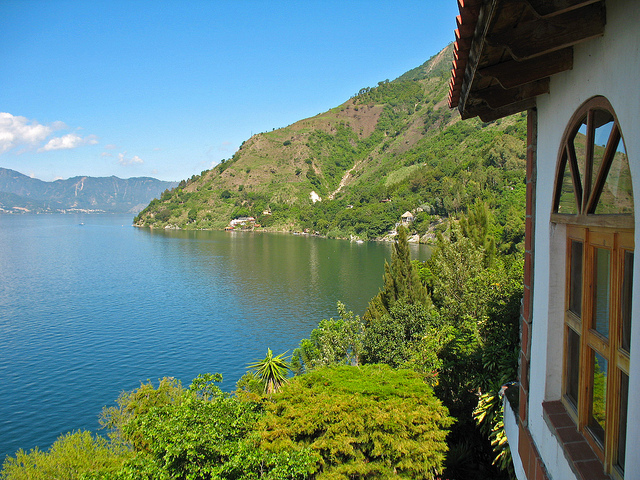
6. Lake Atitlán, Guatemala
If the idea of living in a serene lakeside village in the Guatemalan Highlands is your idea of a retirement paradise, the region around Lake Atitlán is the place for you. The fifteen small communities that surround Central America’s deepest lake are well off the beaten path and have long been places where meditation and Mayan culture have blended in harmony.
One of the best kept Latin American secrets, Lake Atitlán is gaining a larger audience among expats who are looking for a more simplistic, ecologically-connected lifestyle “somewhere else.”

Meredith Cook
5. Canoa Beach, Ecuador
With 17 kilometers of pristine sand, Canoa is the longest beach in Ecuador and is part of what promises to become Ecuador’s “Gold Coast.” Though primarily known for adventure sports like hang gliding, paragliding, and kitesurfing, the area has also become a prime expat destination.
This laid-back fishing village captures the rustic charm of Ecuadorian culture with a beach-party vibe; certainly the best of two worlds. Prices are still low and the potential for a high return on your investment continues to grow.

David Ellis
4. Quito, Ecuador: Our Top City Location
Quito has gotten a lot of exposure recently as being one of the most desirable expat locations in the world. At 9,350 feet, Quito is the highest capital city in the world and is also a UNESCO World Heritage location. With a modern infrastructure, tax breaks for seniors on property taxes, and use of the U.S. dollar as official currency, Quito promises to be a prime retirement destination for years to come.
When you factor in the new Mariscal Sucre International Airport, the moderate climate, and a rich cultural heritage, it is no wonder that Quito would be our choice for the top city location to retire in Latin America.

Parisa
3. Boquete, Panama: Our Top Mountain Location
Known as the “Napa Valley of Coffee,” Boquete came into focus as an expat destination after AARP named it as one of the best places to retire. Located on the Caldera River in Panama’s mountain highlands, this community has become known as much for its music and arts scene as its stunning views and caffeinated product-judged by many to be among the finest in the world.
A large expat community, the many discounts available to seniors, and favorable property prices have all contributed to Boquete’s popularity among foreign retirees and made it an obvious choice for the top mountain retirement location in Latin America.

Viva Tropical
2. Boca Chica, Panama: Our Top Island Location
Located in the Chiriqui National Marine Park, Boca Chica may just be one of the best kept secrets for a retirement mecca in Central or South America. While Chiriqui has long been known as a mountain destination, Boca Chica and the islands around it have come into their own as a great place to retire and invest.
The actual island of Boca Chica is six miles from the town of the same name and is unique in that it is covered in primary rainforest. Offering world-class sport fishing, snorkeling, and diving, the area’s growing real estate development offers the promise of an island paradise that is readily accessible to the U.S. from the nearby Enrique Malek International Airport in David.
All this tropical potential makes Boca Chica a clear choice for our top island location for retirees, investors, and expats.

Dakine Kane
1. And Our Top Beach Location and Number 1 on the Top Places to Retire is….?
Here are some clues to help you guess:
- This location has both a Blue Zone and a Blue Flag.
- There are yoga centers, bohemian/hippy hangouts, and artist collectives happily existing side by side.
- Four beach locations offer an eco-friendly family experience.
- Real estate prices are still affordable.
To see if you guessed correctly, and to learn more about our top eight retirement destinations (as well as other locations in Latin America), download our free e-book and begin your research on the best places to live and thrive in Latin America.


Photo Credit: Fred Pompermayer
Mark Healey discusses spearfishing, riding sharks, and how to stay calm when a 50-ft. wave pounds you. A long-time water enthusiast, Mark reveals how he gets ready for giant surf and how to tell if a shark is right for riding.
Josh and Mark also discuss breathing techniques as well as the disconnect between marine scientists and people who are in the water every day. An inspiring discussion that we hope will motivate you to start your own ocean adventure.
Listen to the show
You can listen to the show using the player above or grab it and listen on the go via one of the following options:
- Click here to download the mp3
- Click here to subscribe via iTunes
- Click here for the RSS feed (non iTunes)
- Click here for the Gallivanting show archive
React to the Show
We appreciate your reaction to episodes of Viva Tropical Radio and feedback about how we’re doing. Send us your thoughts any time in an email or comment below.

Show Notes
Learn More About Mark Healey here.
Check out Mark riding sharks and giant waves.
Mark offers elite access to incredible ocean experiences here.
Mark is grateful to his sponsors:



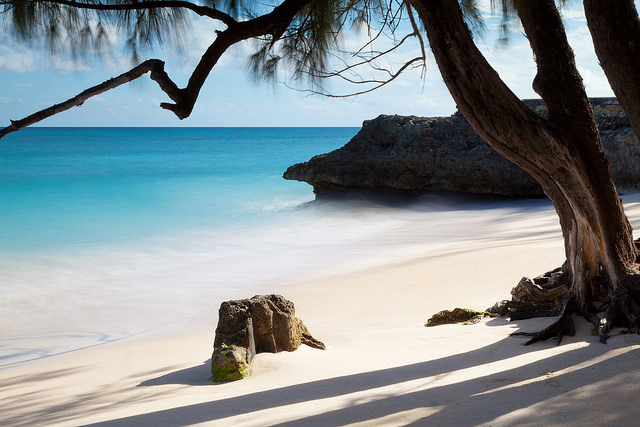
Thinking about investing in a second home? Retiring or going expat? Why not consider six spectacular places to live in Latin America?
Ingrid Khadijah
Why Should You Choose a Place to Live in Latin America?
For all the same simple reasons full-time expats and retirees flock to this part of the world. Simpler life. Tropical climate. Azure waters and gorgeous beaches. Jungle and mountains of unparalleled biodiversity. And growing numbers of flights from around the world.
You must be thinking, “Aside from the obvious, what else lures real estate investors to Latin America?”
Rich cultural heritage, pure beauty of nature, and simple lifestyle are truly magnificent. But Panama, Belize, Honduras, Ecuador, Costa Rica and Mexico have other ideal investment factors.
Why Do Investors Love Latin America?
These top emerging markets have healthy, growing economies. Construction and reconstruction are on the rise. Tourism, retirees, and expat numbers are steadily increasing. As a result, there are many fresh business opportunities. Generally speaking, there’s a robust need for rental properties.
Infrastructure improvements are a top priority. Internet access is typically a given. World-class hospitals and other modern medical facilities are available. Public transportation is solid.
New international airports are being built. Airline routes are growing. And visas and passports are easy to obtain.
Home prices are a real bargain. You can get a bigger house, a great location, and better views for so much less money compared to most other countries. You can find a modern two-story 3-bedroom/3-bath home with high-end finishes for $115,000.
The costs of living are low. In many places, a mere $2.50 will buy dinner at a local restaurant, and a couple can live really well on less than $2,000 per month.
Taxes, insurance, and utilities are low. And retiree incentives for expats are quite excellent.
So check out these six spectacular places to live in the Latin Tropics.

Cariberry
1. Ambergris Caye, Belize
“Best island in the world!” That’s what Trip Advisor readers said two years in a row. Ambergris Caye strikes a perfect balance between quaint and modern. High-rise buildings and traffic lights are non-existent. Locals, Latin immigrants, and expats from all over the globe traverse the island’s sandy roads barefoot or in a golf cart.
You’ll love exploring the diverse ecosystems around the island. From palm-lined beaches to mangroves, jungles, and reefs, you’ll never run out of things to do. Ambergris Caye is situated less than a mile from the second largest barrier reef in the world (Belize Barrier Reef). And one of the world’s top diving sites (Great Blue Hole). Scuba diving and snorkeling can’t get any better.
Can you imagine yourself sailing to the nearby cayes? Caye Caulker is a popular neighboring destination.

John Colby
2. Roatán, Honduras
Lonely Planet termed Roatán “pitch perfect.” The well-developed tropical setting offers an active lifestyle in a tranquil setting. Picture thirty miles of Carribean paradise with its own international airport, Juan Manuel Gálvez International Airport. Take your guests for a swim with the dolphins and sea turtles in Roatán’s warm Carribean waters.
Go sport fishing or kayaking. Explore shipwrecks, seawalls and Mayan artifacts. Scuba dive and snorkel in the nearby Belize Barrier Reef. And ferry to the mainland port of La Cieba in only an hour.
Take your land lover guests zip lining or ATV riding through the jungle.

Casey
3. Cuenca, Ecuador
Expats of all ages and from around the globe flock to Cuenca for its beautiful Andes mountain location. They’re lured there by Cuenca’s natural beauty, captivating colonial architecture, and 70-degree temperatures year-round.
Modern facilities and solid infrastructure make living here a charm. Among the breathtaking skylines, you’ll have the modern conveniences of pedestrian walkways, bike paths, underground parking facilities, and an excellent light-rail system.
State-of-the-art medical facilities combined with highly qualified medical professionals are added bonuses. And shopping malls, grocery and hardware stores, restaurants, and bars are plentiful in Cuenca.

Viva Tropical
4. Boca Chica, Panama
The Boca Chica economy is about to explode. Expansion at Enrique Malek International Airport (in David, Panama) will, for the first time, receive flights from major airlines around the world. A scenic 30-minute drive from the airport lands you in the serene little fishing village of Boca Chica. Picture rolling hills and secluded beaches. Sapphire waters and “emerald islands.” A so-called secret “tropical fantasy!”
How cool would it be to take a 10-minute boat ride to your home on Boca Chica Island? You’ll feel like you’re hours away from civilization. And you might even forget what day it is. But the truth is, it’s incredibly easy to get to.
There are no tourist traps on Boca Chica Island. Just unspoiled prehistoric nature. A place where locals and like-minded expats can still own a piece of heaven for a bargain.

Viva Tropical
5. Nosara, Costa Rica
Lonely Planet compared Nosara with Malibu and Oahu’s North Shore. Nosara’s surf-friendly beaches are some of the most beautiful in Costa Rica. Imagine dramatic rocky cliffs, tropical palm trees, and big expansive sand shores.
Internationally-recognized Nosara Yoga Institute made Nosara a popular travel destination with an enthusiastic health-conscious culture. Health food stores and organic markets are plentiful.
International schools with excellent academic and cultural programs make it ideal for raising a family.

Sean Savage
6. San Miguel de Allende, Mexico:
San Miguel is a UNESCO World Heritage Site. This interior city emerged from agriculture and industry to tourism and expat commerce. Although it has no beaches or blue waters, visitors fall in love with San Miguel’s cobblestone streets, rich history, and diverse culture.
The preserved colonial and Spanish architecture is truly breathtaking. And the “eternal spring” climate, combined with moderate costs of living and walkability, seals the deal.
You’ll enjoy roaming the vibrant art community and eclectic shopping venues.
Need you look further than these six spectacular places to live in Latin America?
Latin America provides an ideal lifestyle and perfect conditions for second-home investors, retirees and expats. Property bargains, benefits and amenities make your transition easy.
Take a trip down to see for yourself.

With all the excitement involved when getting ready to become an expat, it is important to keep in mind a few “must know” tips to help with the transition. Making and following a checklist ahead of time can prevent issues during the move and make your arrival a time of celebration and exploration.
The transition to expat status is also a transition from your stateside existence to a different way of being. Understanding how much you will need to live on and other financial considerations is an important aspect to moving abroad.

JPmatth
Top 8 Must-Know Tips Every Expat Needs
There are a number of tips that can really make your arrival as an expat much easier and much less stressful (and, yes, there will be some stress!!). Below is a list of the top 8.
1. Have a Plan
Doing your homework ahead of time can help you select which Central or South American location is the best fit for you. Research online, interact using social media with expat groups, and learn about the culture, geography, etc. of those countries and/or regions that interest you.
Be realistic in terms of how much it will cost you to make your move and maintain the kind of lifestyle you are thinking of. All budget-related matters should be done before – not after – your arrival.
The number one reason that becoming an expat may fall short of your expectations is if you end up having to face the harsh reality of “too much life left at the end of the money.” While this kind of monetary examination may cause you to put a hold on your plans, it can also provide both the knowledge and incentive to help you reach your paradise in the future.
There is no substitute for actually visiting the place you are thinking of calling home. If possible, make a number of visits to explore various parts of the country. Being there can help you decide whether you want a beach lifestyle, the tranquility of the mountains, a rustic village, a larger city, or something in between.
2. Explore
Once you arrive, start exploring your new environment. Learning where the locals like to shop, eat, visit, etc. can help you immerse yourself in the daily routine of your expat existence.
Part of this exploration should involve finding out your options for your utilities (water, heat, electricity, and garbage) as well as amenities such as phone, cable/satellite, and internet service. You will quickly discover that getting these items is a lot different than what you had come to expect in the states.
3. Experience the Seasons (All of Them)
Hopefully, you did look into the various climates and seasons of your Central or South American destination beforehand. While most countries have two basic seasons (rainy and dry), there are a number of micro-climates that also have unique variations. You may have the opportunity to experience everything from a dry desert climate to a tropical jungle. Be prepared (in terms of clothing, etc.) for all of them.
While entertaining, these locations are not a true representation of daily life. Once you have fully settled, you’ll have plenty of time to visit and experience these options, if you wish.

Wallygrom
4. Avoid Tourist Traps
With tourism a major industry in many Latin American countries, it isn’t surprising that any number of “tourist traps” (those areas designed to cater to the casual visitor/vacationer) can be found. Since your purpose in moving is to make this a new home, you should avoid these “tourist-centric” areas, at least initially.
Another area of discovery that should be an important part of your exploration is to learn what is required to establish a local bank account. Banking rules differ from country to country (and things have been made even more difficult with the increased impact of FATCA on foreign accounts), so it is important to learn what is and isn’t available to you. Additionally, it may be necessary to research what options can be utilized to access your funds from the U.S. or Europe while abroad.
5. Eat Like a Local
There is no better way to quickly immerse yourself in the culture of your new home than to eat like the locals eat. Shop at the local farmers’ markets, choose the specialties from restaurants that the locals go to, and, if you have an interest, learn to prepare those dishes at home.
This is also a great way to begin to learn Spanish (assuming that you do not already speak the language). Food truly is a universal language and, as you learn the names of fruits, vegetables, and dishes, you’ll find that you are also learning to speak with the locals as well.
Becoming part of the culture where your tropical paradise is located is an incredibly important part of the expat adventure. Remember this is not just a vacation, this is the place you have chosen for the next phase of your life.
Your tropical escape will have its ups and downs; not unlike anyplace else. However, when you fully commit yourself to becoming part of your Latin American world, the potential is limitless.
6. Keep an Open Mind
Keeping your mind open to the possibilities of expat life can expand your viewpoint in ways that could astound you. Perhaps the hardest thing for expats – even those who have been in their chosen location for some time – is being patient with the pace of life. It’s important to remember that the more relaxed approach to things, like appointments and bureaucracy, was one of the things that you found attractive about the idea of relocation.
The trade-off is that you cannot (and should not) expect that things will be done “immediately” or “on time.” To put it another way: Don’t sweat the small stuff.
It’s also important to remember that your cultural references will be different from the locals around you. You are a guest (even if a permanent one), in their country; be respectful and willing to learn those differences. You may be pleasantly surprised at the results.

Anoldent
7. Tie Up Loose Ends
Just because you’ve made the move, doesn’t mean that you can forget about matters back home. Driver’s licenses, medicines (and related medical issues) are other important aspects that can have a direct effect on your expat plans.
Get confirmations that everything that you put in place prior to your departure is correct and in order. The last thing an expat needs is to discover that something they thought was resolved now requires additional attention. Keeping the lines of communication open is always an important expat safety net.
8. One Final Tip
Becoming an expat is an experience like no other. Allowing yourself to truly look forward and to accept that the unknown can be an exciting and wonderful adventure can be the best tip of all. Begin the journey today; go online and read the experiences of others. Tomorrow is but a mouse click away.


Viva Tropical Radio
In this episode we cover the Southern Zone of Costa Rica, an area on the Pacific coast stretching from Manual Antonio south to the border of Costa Rica and Panama.
Casey Stamps, investment specialist, comes back to do a deep dive into this very large and diverse region.
We discuss building costs, where he thinks the opportunities are located, what is making this region grow, and the investment and buying strategies that are working today. We also discuss who would really love this stretch of coast and why.
Listen to the show
You can listen to the show using the player above or grab it and listen on the go via one of the following options:
- Click here to download the mp3
- Click here to subscribe via iTunes
- Click here for the RSS feed (non iTunes)
- Click here for the show archive
React to the Show
We appreciate your reaction to episodes of Viva Tropical Radio and feedback about how we’re doing. Send us your thoughts any time in an email or comment below.
Show Notes
Learn more here about Casey Stamps and his company.

Viva Tropical Radio
Maya scholar Dave Schaefer drops by to discuss the Mayan calendar and the Mayan creation book Popol Vuh. He speaks about his favorite ruins and how he got started studying Mayan hieroglyphs in Guatemala.
Dave and Josh also talk about why and how modern Mayan people aren’t being recognized. If you are interested in Mayan history or just want an introduction to Mesoamerican culture, this show is for you.
Listen to the show
You can listen to the show using the player above or grab it and listen on the go via one of the following options:
- Click here to download the mp3
- Click here to subscribe via iTunes
- Click here for the RSS feed (non iTunes)
- Click here for the show archive
React to the Show
We appreciate your reaction to episodes of Viva Tropical Radio and feedback about how we’re doing. Send us your thoughts any time in an email or comment below.
Show Notes
Dave Schaefer’s website for supporting local indigenous projects.
Cracking the Maya Code (documentary on the Maya)
Books to read to learn more
Popol Vuh: Palenque eternal city of the Maya
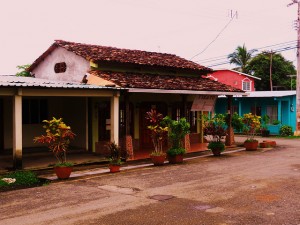
Pedasi, Panama is in the midst of a dynamic transformation. This little-known fishing village on the southeastern tip of the Azuero Peninsula, with a population of roughly 2000, has seen a surge in foreign investment that heralds a period of growth for both expats and investors.
Known for its local festivals, sportfishing, nearby pristine beaches, and natural beauty, it is also the home of Panama’s first female president, Mireya Moscoso Rodríguez de Arias. She has been instrumental in improving Pedasi’s infrastructure and making the real estate market more attractive for foreigners seeking to build new homes and invest in the region’s growth.

Zanzabar Photography
Pedasi, Panama – Historical and Cultural Heartland
The Azuero Peninsula was settled over 11,000 years ago and remnants of this pre-Columbian culture are still evident today. Pedasi, like other small towns in the area, tracse its cultural roots to this ancient civilization.
It was in 1671 that Pedasi and Las Tablas (a community just north of Pedasi) were formally established. Local history holds that the area became a choice for settlers after major fires in Old Panama City during the latter 16th century drove people to find safer locations. The region still has many colonial churches that reflect the beauty and richness of their Spanish heritage.
The waters around the peninsula have become known as Panama’s Tuna Coast. The abundance of yellowfin tuna, marlin, sailfish, and snapper in the area offer excellent year-round fishing. Restaurants in Pedasi will actually cook your edible catch to taste, something that you won’t find elsewhere in the region.
Playa Venao – Panama’s Surfing Destination
Just a short distance from Pedasi, Playa Venao has become one of the world’s premier surfing destinations. Recently, it hosted the DaKine ISA World Junior Surfing Championship and has become a favorite with wave riders from all over the globe. With the laid-back vibe, beach bars, and nightlife you’d expect from a surf-oriented town, Playa Venao can be a gateway to your own “endless summer.”
Come for Carnival, the Big Party in Pedasi
With over 500 celebrations and religious festivals each year, there is always something going on in and around Pedasi. Perhaps no festival has gotten as much attention as the Desfile de las Mil Polleras – the Thousand Pollera Parade. This is part of the larger regional Festival Nacional de la Pollera, based in Las Tablas in July.
The pollera is considered one of the most beautiful national costumes in Latin America. Consisting of a two-tiered skirt and a blouse, these elaborate garments have come to symbolize Panamanian culture at its finest.
Associated with Carnival, four days before Ash Wednesday, La Pollera is celebrated in full glory. The rich materials, brilliant colors and accessories (Tembleques) have become a centerpiece for Panamanian and Pedasi culture.
Isla Iguana and Cerro Hoya
Isla Iguana and the lesser known Cerro Hoya Nature Park are two locations where expats can get “up close and personal” with a wide selection of wildlife not found elsewhere in Panama. Five species of sea turtles, buffalos, sloths, monkeys, and even the occasional jaguar or ocelot can make visiting these natural preserves a once in a lifetime event.

Jason Cserny
Buying in Pedasi
The recent uptick in buying real estate in and around Pedasi has dramatically influenced property prices, even for undeveloped lots. With a number of luxury projects planned, it is not surprising that may foreign investors are pouring large amounts of money into the area.
For the single buyer, trying to make sense of the pricing can be both confusing and frustrating. It is necessary to look, not only what the value of your property might be, but also what the realistic value (and price) of the land you are interested in is in its current state.
Pedasi’s Market Stage Is Important
With all the potential that exists for investment and development in Pedasi, the Azuero Peninsula, and Panama in general, it is important to understand exactly at what stage the market is in terms of the prices that are being asked.
Think of a “market stage” as a description of where an expat location is in terms of land development. The price of property starts with its value to local residents and increases all the way to a full scale town complete with amenities.
Being able to identify what “stage” a particular area might be in can help you decide what to buy, what to build and, most importantly, what you should pay. As in any real estate market, prices are not always reflective of the value of a parcel of land in its current state. Remember that speculation on what property may be worth in the future might not support the price being asked today.
Being Selective Can Pay Dividends
The number of foreign investors buying large plots of land in Pedasi has increased dramatically in the last decade. The prices that many of these developers are asking are often in the “stage four” (established expat community level) range when, in truth, the area is only at a “stage two” or “stage three” level.
The remoteness and unsullied nature of Pedasi is both its biggest drawing card and major drawback. Being able to get building materials, and modern infrastructure amenities can be a challenge for investors who are working with a limited budget.
By being selective, you can maximize your potential in terms of finding property that is priced realistically. With the promise of a strong return on investment, Pedasi may just be the hidden tropical getaway you’ve been looking for
So What Are You Waiting for?
The best way to experience Pedasi is to go there. Plan a visit and see what this growing village has to offer; you won’t be disappointed.
Map of Pedasi, Panama
Pedasi, Panama Fast Facts
- Population: 2,000+
- Typical temperature: 86 Fahrenheit
- Nearest airport with U.S. flights: Tocumen International Airport (Panama City, Panama)
- Nearest U.S. consulate: Panama City, Panama