


Everything you need to know that happened in the last 2 months in Costa Rica.
Each day we sift through hundreds of articles in English & Spanish to bring you the very best ones from Central America.
From investment indicators to new infrastructure projects. Adventure stories to politics. It’s all here.
Costa Rica March 2014.
AJ Doudt
Costa Rica Lifestyle
- These Top Three Countries Offer the World’s Best Benefits and Incentives for Retirees (Virtual Strategies) Costa Rica is one of the top three countries who are home to the worlds’ best benefits and incentives for retirees. Luring retiring foreigners with special visas and significant discounts on everything from airfare to health care.
- Playa Guiones, Costa Rica is Top World Travel Destination for Great Surf (Costa Rica Star) Want to live like a surfer?Playa Guiones might just be the world’s best surfing spot. Want to know a bit more, check out the inf at the 2014 Olympus National Surfing Circuit site.
Guy Buchanon
Costa Rica Investment
- Mel Gibson, others not happy as new route planned between Samara beaches (Inside Costa Rica) Mel Gibson doesn’t want a road in Samara Costa Rica to be built. Gibson’s Nicoya home is situated smack-dab in the middle of a planned beach access route. Municipality of Nicoya Plans to Open Route Between Samara Beaches (Costa Rica Star) Gibson and several other land owners are protesting the beach access point. But it appears the municipality is pushing forward with the project.
- New CR International Airport on the Horizon? (Costa Rican Times) Costa Rica has pushed aside once again its plans for a southern airport, instead Orotina is the new spot for a brand new international airport. It sits at sea level, is 30 minutes from San Jose, and is being billed as the perfect spot to build.
Taraji Blue
Costa Rica Tourism
- Eco-Escape: The Landscapes and Wildlife of Costa Rica (Weather Channel) According to the Weather Channel, the only way to avoid the next big polar freeze is with an eco-escape to Costa Rica.
- Chasing Snakes in Piedras Blancas National Park (The Expert Vagabond) The Central American nation’s natural beauty and richness is one of the reasons many travelers and travel-blogger photographer Matthew Karsten continue to return to Costa Rica.
- Costa Rica: Your family and other animals (Independent UK) Lonely Planet is in love with Costa Rica too. In its ‘Great Escape’, series the well-established traveler’s handbook once again shows travelers how to get the most out of the nation’s wildlife, beaches, and jungles.
- Costa Rica welcomed record number of tourists in 2013 (Fox News Latino) Costa Rica welcomed a record number of tourists in 2013, with just over two million tourists setting foot in the nation.
- Costa Rica Launches Tourism Campaign During the 2014 Sochi Winter Olympics (The Costa Rica News) Even with posting those high numbers, Costa Rica went after an eveng reater U.S. audience, the approximately 1.5 million watching the 2014 Olympic Winter Games in Sochi.
Brad Coy
Costa Rica Real Estate
- BUDGET Analysits of Panama, Costa Rica, & Ecuador to date! (Lyman’s Journey) An interesting comparison of cost of living report by blogger Tricia Lyman (who made the decision to sell everything and go country shopping) shows that a comfortable expat life in Costa Rica can be cheaper than in Ecuador, Mexico, Panama, and even Nicaragua -as long as you don’t live in Tamarindo Beach. Find out why here (Costa Rica Star).
- Tourism, Wealth and Unemployment: Guanacaste in Costa Rica (Costa Rica Star) Real estate in Guanacaste, Costa Rica is booming. Lots of new commercial and residential construction is underway along with an influx of new faces, which has some experts are wondering if there is another real estate boom taking place on the coast? And why now? Learn more at here (Costa Rica Star) .
- Jaco Beach: Costa Rica’s Real Estate Hotspot (The Costa Rican Times) Those not flocking to Guanacaste are ending up in Jaco beach, another real estate hot spot in Costa Rica. This popular little beach town has a little over two miles of beach front with plenty of world renowned surfing, authentic local culture and a caliente nightlife.
- It’s a Buyer’s Market for Private Islands (New York Times) Island buying in Costa Rica continues to establish itself with affluent buyers, who are seeking out non-traditional (think the Caribbean and St. Barts) warm climates. Here affluent buyers are splurging on land in the emerging areas of Costa Rica’s Southern Zone.

Arturo Sotillo
Costa Rica Economy
- Costa Rica’s Economy Rebounding, Vice President Says (Bloomberg) Bloomberg says Costa Rica’s economy is waking up. Following the global financial crisis of 2008, exports and foreign direct investment are picking up and there is a lower unemployment rate.
- Starbucks steps up search for Latin America’s El Dorado (Seattle Times)Where do you find the best coffee in the world? Starbucks of course and now you can get Starbucks in Costa Rica who is betting Costa Rica, and other coffee-rich Latin American nations, will be a source not only of fine Arabica, but also middle class customers.

MD Verde
Costa Rica Environment
- Costa Rica Aims For Carbon Neutrality With Payments For Ecosystem Services (Ecosystem Marketplace) Costa Rica’s grandiose experiment with payments for ecosystem services has restored millions of hectares of forest. The nation continues to establish a domestic carbon market with plans to link it to international markets in the future; all as part of its plan to become carbon neutral by 2021.
- Environmental Performance Index: Costa Rica (Yale) Is Costa Rica really as green as it says it is? Not according to Yale’s Environmental Performance Index. Costa Rica fell from fifth place to 54th out of 178 other countries in the well regarded environmental index.
Like this country brief? Get it in your inbox weekly for free.
Be sure to catch the weekly country briefs by subscribing via email right here:

Costa Rica has long been a favorite of expats and international travelers. With its beautiful beaches, friendly locals, and perfect weather it has claimed the top spot on lists of best tropical destinations for decades.
But what about newcomer Ecuador?
Rich in culture, and with a wide variety of climates and settings, Costa Rica’s South American neighbor is giving it a run for its money. Speaking of which, the cost of living in Ecuador is another perk that’s causing it to take top billing in many of those lists that Costa Rica once dominated.
Which is the better travel destination or expat haven?
Well, that depends solely on you and your priorities and expectations. To help you make a more educated decision, we’ve aligned the two countries in a side-by-side comparison so you can see how they stack up in several of the most important categories.

Ecuador vs Costa Rica
Use the Infographic on Your Own Site
Round #1 – Lifestyle Hacks
Slight Advantage: Ecuador
One of the most amazing benefits of living in Latin America is the opportunity to outsource a lot of your less desirable tasks. With a wealth of local labor resources that aren’t available in North America, you can hire helpers ranging from gardeners to tutors to drivers to grocery delivery guys.
You can even enlist the full-time services of a maid. (Think cooking, cleaning, grocery shopping, and laundry.) And, in Ecuador, that’ll only run you a mere $10 per day!
The cost in Costa Rica is a little higher, closer to $15 per day, but it can be argued that this is one area where you get what you pay for. With Costa Rica’s heavily customer-oriented service culture, the aid you’ll get there is top-notch.
However, the service in Ecuador is excellent as well so, in terms of value, we have to award this category to them.

Mathew Kebbeckas
Round #2 – Connectivity
Outcome: Ecuador Advances
For a country that excels so well in so many areas, Costa Rica is light years behind the rest in terms of internet speed and availability. Broadband is available in most of the larger cities, but it’s often difficult to find a signal elsewhere.
The country’s connection speed has increased by 43% in the past year. However, at 2.1 megabytes per second, it’s still barely enough to stream a movie in standard definition (and you can forget high def).
Ecuador, on the other hand, is aggressively working to increase its internet coverage. Currently, over 35% of the population is connected, with a goal of access in 50% of households by 2015. In Ecuador there are also free public access centers, called Infocentros, scattered all over the country, even in more remote areas.

Anthony Doudt
Round #3 – Living Options
Winner: Costa Rica for its Tropical Lifestyle
Both Costa Rica and Ecuador, with their varied topography and diverse ecoclimates, offer a wide range of living and travel options. There are mountain towns, beach communities, and bustling cities.
In most of those categories, Ecuador is a worthy competitor. Cities like Cuenca and Loja offer colonial charm plus all the modern conveniences. The Galapagos Islands offer some of the world’s best biodiversity. Ecuador also has major cities, like Quito and Guayaquil, for those who want easy access to services and amenities (arguably better than boring, unattractive San Jose, Costa Rica).
Where Ecuador falls flat is with its tropical lifestyle. In short, beach towns. While it has a handful of established destinations, like Salinas and Montanita, those towns aren’t even in the same ballpark with what Costa Rica has to offer.
Tropical living and ecotourism are exactly what Costa Rica does so well. As a result, it can be a bit overrun with tourists at times and in certain locations. However, with so many options, there are still a number of places off the beaten path where you can find a secluded beach or a remote surfing spot. Costa Rica is the epitome of most expats’ ideal tropical lifestyle.

Wanja Krah
Round #4 – Green Living
Slight Edge: Costa Rica
In keeping with its commitment to the natural environment and its push towards ecotourism, Costa Rica is about as green as they come. Almost ¼ of the country’s total area is parkland. Over 90% of its electricity comes from renewable energy sources, with 95% projected by year end. It’s also well on its way to becoming the world’s first carbon-free economy.
It also feels greener in Costa Rica, with many businesses and communities promoting green initiatives and healthy living. However, Ecuador is certainly taking strides in this direction as well.
It’s the only country in the world where the rights of the natural environment are protected in the nation’s constitution. Ecuador is also home to Yasuni National Park, the most biodiverse place on earth. Although the region is constantly being threatened due to its 800-million barrel oil reserve, the country has undergone tremendous measures to protect it.

Tibo
Round #5 – Cost of Living
Clear Winner: Ecuador
Costa Rica is a top tropical destination for tourists and expats alike. However, it isn’t for its low costs. While still a fraction of what you’d pay for the same goods and services in North America, Costa Rica has one of the highest costs of living in Latin America.
By contrast, Ecuador’s reasonable cost of living is often one of its biggest selling points. There a couple could live simply on a mere $1200 per month. This total even includes rent, which runs around $450 on average.
And, by “simply,” we don’t mean completely free of luxuries like once-per-week maid service and high speed internet. While Ecuador’s cost of living is low, the lifestyle it affords is far from meager.

Sean Hobson
Round #6 – Ease of Access
Advantage: Costa Rica
Because of its long-standing status as a top Latin American destination, Costa Rica is serviced by a whopping 13 large airlines. It’s only 2 ½ hours from Miami and air travel from North America is often quite reasonable.
So not only is Costa Rica easy to access, it’s also a great starting point for travel in and around Central America. The only downside is that it has relatively few airports.
Ecuador has two international, Quito and Guayaquil, as well as a number of regional airports. However, most incoming flights have layovers in Miami, Panama City, Bogota, or the Caribbean, resulting in longer (and more expensive) travel.
Once you arrive in either country, public transportation is available to get you to points throughout the country. However, some trips in Ecuador can grow quite long. And Costa Rica isn’t exactly known for the quality of its roads.

CC
Round #7 – Business Climate
Champion – Costa Rica
We’ll go with some cold hard facts on this one. The International Finance Corporation ranks Costa Rica #102 for ease of doing business. Ecuador comes in at #135. In other words, neither has the ideal business climate, but Costa Rica’s is significantly better.
While far from perfect, Costa Rica’s business environment is one of the most stable in Latin America, with numerous incentives like low tariffs and competitive tax rates. Recent legislation has been aimed at attracting foreign investment and supporting the private sector. Processes like obtaining a visa or starting a business are relatively hassle-free, by developing country standards.
Ecuador’s business climate has been somewhat unpredictable in recent years. Its dollarized government is heavily based on petroleum, resulting in the need for the nation to look for ways to improve its trade balance. However, recent strides in economic policy have led to an estimated 5% growth.
Ecuador also offers a number of visa options. However, a number of stipulations (like losing your visa if you’re gone for more than 6 months) make maintaining residency a challenge at times.

My Future
Round #8 – Banking
Lesser Evil: Costa Rica
Due to FATCA and other U.S. tax evasion agreements, both Costa Rica and Ecuador have recently implemented stricter measures that create difficulties for foreigners attempting to bank there. You can no longer open an account with merely a passport, in either location. In fact, the requirements are very much the same for both countries.
Why Costa Rica? Mainly because of Ecuador’s inconsistent regulations and subpar accounting standards. The process of establishing an account can also take a good bit longer there.
One advantage Ecuador has is its use of the U.S. dollar as its official currency. Costa Rica’s colon, while it generally follows the dollar, is thinly traded and could present a problem in the event of a worldwide financial crisis.

Patrick Hall
Round #9 – Investment Opportunities
Winner: Ecuador
Costa Rica’s economy is one of the safest in Latin America, and its policies encourage foreign investment. However, though it excels in stability, it lags behind in opportunity.
Ecuador offers a wealth of real estate and business opportunities at a lower cost and, consequently, with a larger growth potential. The country is investing heavily in infrastructure, which generally results in increased property values. Infrastructure improvements are the #1 catalyst for real estate appreciation, as we discuss extensively in Pay Dirt, our latest ebook.
Tourism investments are also a great option in Ecuador. For its incredible number of natural attractions, Ecuador has a relatively weak tourist infrastructure. There’s a lot of potential for savvy entrepreneurs to profit in this arena as Ecuador continues to gain popularity among expats and international travelers.

Yannis
Round #10 – Health Care
Slight Edge: Costa Rica
This was a close one. Both countries offer excellent health care with skilled medical professionals and modern facilities, particularly in the larger cities. Costs are often as low as ¼ of the price for the same service in North America. Health insurance is also widely available and extremely affordable.
English is widely spoken among doctors in both countries, and many physicians even trained in the U.S. Hospitals are clean and equipped with the latest technological innovations.
While the care provided is great in both countries, the quality of Costa Rica’s health care system is ranked 36th in the world, ahead of the U.S. at 37th. It’s also physically closer to the United States, which could come in handy in the event that medical evacuation or frequent medical travel were necessary.

Mathew Johnson
Round #11 – Consumer Goods
Winner: Neither
Both Ecuador and Costa Rica have a few strikes against them when it comes to the availability and affordability of consumer products. Costa Rica taxes consumer goods heavily (its Value Added Tax is 14%), so as a result less of them are imported.
This can make it particularly hard to find the things you’re after. And if you do locate a hard-to-find item, you’re very likely to pay out the wazoo for it.
At 12%, Ecuador’s VAT is only slightly lower than that of Costa Rica. However taxes on imported goods have been steadily increasing. As a result, many Ecuadorians are actually going outside of the country to buy things like electronics.

Andrew Hall
Round #12 – Foreign Land Ownership
Our Pick: Ecuador
While both countries’ laws protect foreigners who own property, Ecuador’s are much more liberal. Property rights are guaranteed by the constitution, and they apply equally to foreigners and Ecuadorians alike.
What’s more, Ecuador places no restrictions whatsoever on foreigners who wish to purchase land. And there’s an abundance to choose from, often at rock bottom prices.
Compare this with Costa Rica who do not allow foreign residents to purchase land considered restricted or concession areas (which includes 95% of all beachfront property) until they’ve lived in the country for at least 5 years. However, many circumvent this limitation by buying property in the name of a Costa Rican corporation in which they have 49% ownership.
Due diligence is an absolute must before buying land in either country. We recommend the services of a qualified attorney, with experience in land transactions, who can thoroughly research the title and ownership rights.
Costa Rica vs. Ecuador – Who’s the Grand Champion?
Were you keeping score? We weren’t. That’s because it’s so difficult to say for certain exactly which destination is right for an individual.
Our best advice? Come see for yourself.
Is Costa Rica, with its tropical lifestyle and established expat communities, your idea of a dream destination? Or do you prefer to invest in up-and-coming Ecuador, where there’s excellent investment potential and so much left to discover?
There’s only one way to find out.

Burica Panama Coastline
Burica, Panama, is one of the country’s best kept real estate secrets. But you needn’t take our word for it. One visit to this remote paradise is enough to make any traveler or would-be expat feel like a pioneering explorer.
It’s as pristinely beautiful as it is mysterious and secluded. And both nature and adventure abound in Burica.
However, before you categorize it as a place meant only for those who want to live out their childhood Swiss Family Robinson dreams, there’s a lot more to this place than just its raw, undisturbed natural beauty.
Despite its remote feel, Burica is surprisingly close to civilization. And not just any old town either. It’s less than a 2 hour drive from David, Panama’s second largest metropolis.
And the wheels are currently turning on several large-scale infrastructure and private development projects that have Burica, Panama, primed for a tremendous boom and accompanying increase in property value.
However, for now, it’s still relatively off the radar of most buyers. That’s why we think Burica is one of Panama’s last remaining secret investment opportunities.
But, for those hoping to score a killer bargain on a property in a place with exploding investment potential, we recommend you act fast. The best deals could soon be gone.
Here are a few of the things that make real estate in Burica, Panama, such a great investment.
Accessing Burica, Panama is an adventure in itself.
Nothing says “remote destination” like having to go off-road to get there. Burica is located on Panama’s Pacific coast on a peninsula the country shares with Costa Rica. And up until about three years ago, there wasn’t even a road to get you to the end of the Burica peninsula. The landscape is made up of dense jungles that just don’t lend themselves well to vehicle travel.

Viva Tropical
In fact, the end of the peninsula was once only accessible during low tide, when residents were able to drive directly on the beach. Otherwise, it was a no go. So, here you had this stunning tropical paradise that virtually no one in the world even knew about or could get to. Talk about exclusive!
Well a few years ago, the government finally put in a road that created access to the entire peninsula. It’s still a rough ride, but the views at the end are totally worth it for those who don’t mind being bounced around in a jeep for the last few miles.
The Burica landscape is otherworldly.
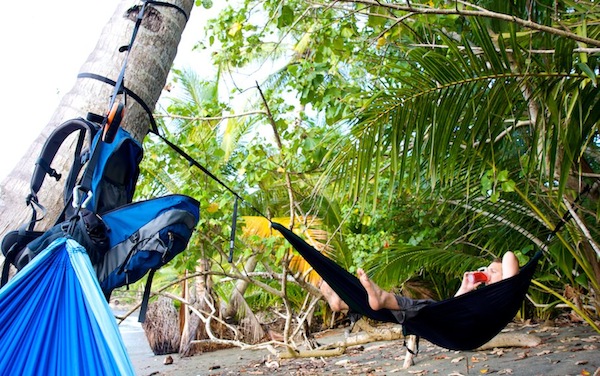
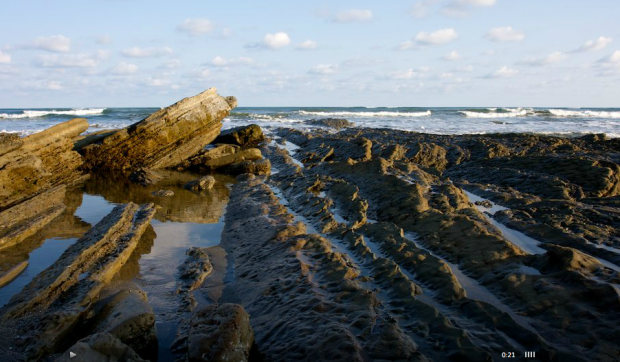
What awaits you at the end of the road to the Burica peninsula is a lush tropical paradise situated on a volcanic reef that juts out over 200 meters in some places. This makes for some amazing waves that serve as an impressive view and calming background noise as you relax in your hammock beneath the coconut palms.
During low tide, the underwater reef is exposed, creating a completely different silhouette that literally makes the shore look like a completely different place. It also makes for an amazing moonscape.
Viva Tropical
There’s also no shortage of wildlife, as Burica is home to a number of exotic species. Among the most prevalent are monkeys. Howler monkeys and capuchins, with their white faces, are all over the place. You can also see the endangered red-backed squirrel monkeys, which are unique to the region and can’t be seen anywhere else.
Burica is an ocean lover’s paradise.
Whatever your choice of aquatic thrill, you can find it in Burica, Panama. If enjoying the coastal breeze while you watch the waves roll in is as adventurous as you get, then you can while your days away in solitude on the beaches of Burica. If that’s merely where your adventure begins, then Burica makes the perfect jumping off point for a long list of aquatic activities.
For starters, it’s full of incredible surf spots that are mostly only known by the locals, who guard these secrets with their life. The great surfing conditions are made possible by the peninsula’s exposure to southern swells, combined with the reef, which drops to depths as low as 300 feet and makes for some amazing waves.
Burica is also home to world-class deep sea fishing. Nearby Islas Ladrones and Isla Montuosa formed the backdrop for many a world record tuna, black marlin, wahoo, and dorado. So far, Burica has one great fishing lodge called Hooked on Panama. And many more are sure to follow as the area develops.
Viva Tropical
Burica, Panama, is home to the first-ever Adventure Colony.
After reading the above, you can probably imagine why we saw such potential in the Burica area when choosing the location for our first Adventure Colony, Playa Burica. Not only did it have the atmosphere and great natural resources that we value, but we also realized what a great investment opportunity it was due to several proposed improvements (like the road we mentioned, which was only a rumor when we first discovered the area).
Our Adventure Colonies are developments for people like us who value wild and beautiful places and want to live in harmony with their natural environment, while also taking advantage of all of the opportunities it offers for adventure. However, even we couldn’t have imagined the success Playa Burica would have.
We’ve sold lots to retired doctors from the midwest U.S., young entrepreneurs from Poland and the U.K., restaurant owners from the Caribbean, and many more individuals who now make up a diverse population that shares our vision and is committed to our dream of maintaining the pristine natural beauty of Burica, Panama.
Viva Tropical
There’s never been a better time to invest in Burica, Panama, real estate.
Over our years of experience in the Central American real estate market, we’ve identified the various stages every area goes through on its way to becoming an established expat community. We’ve also pinpointed the exact step in that process where maximum return on investment is achieved.
In Burica, Panama, it’s about to happen.
Burica is currently in market stage 2 of our development model. Pretty much the only people who’ve been buying land there are pioneers like us who’ve been able to purchase large tracts of land at rock bottom prices based solely on its agricultural use to the locals who owned it.
It required a lot of work and due diligence, but the end result is that we’re now able to offer the land in manageable plots to end users who otherwise wouldn’t have been able to enter such a market on their own.
Well, when large land investors and pioneering developers start buying up land in an area, people start to talk. Interest is generated in the area and even more investors start to show up and begin developing the area.
That’s already happening around Playa Burica. Our scouts tell us that two large pieces of property have been purchased at prices that quite honestly shocked us. This is good news for Playa Burica owners and buyers.
Not only are their property values automatically going to increase, but those nearby developments will have to include more and better amenities in order to be financially feasible in this market. So, Playa Burica owners will also benefit from the businesses and services being offered in the surrounding areas.
That’s why it’s important to act fast if you’re considering investing in the Burica, Panama area. It’s too late to be the first on the scene. But it isn’t too late to profit from the improvements that are coming.
Thomas Richman
Two ongoing projects that will have a major impact on Playa Burica
We’ve already seen the effects that the new road has had on property values in Burica. It’s part of the reason we saw such great potential in the area. Well, it doesn’t stop there. Panama’s government is currently in the process of completing two huge infrastructure projects that will have an even bigger impact on the area.
New Access Via Air
The first is the airport in nearby David. The city’s Enrique Malek International Airport is undergoing a massive expansion and renovation, which will ultimately open its runways to flights from the U.S. and many other nations for the first time ever. That means that people from all over the world will soon have access to Playa Burica via a world-class airport that’s a mere two hour drive away. For now, that is.
Improved Ground Transportation
Why’s that? You guessed it. Construction has just begun on a new 4-lane road from Paso Canoas (at the Costa Rican border) to Puerto Armuelles, the last stop before you begin the trek across the Burica Peninsula. Not only is that good news in terms of access, it’s also a good indication that the government plans to continue to invest in Puerto Armuelles.
And, while the city itself isn’t the type of place that caters to people who enjoy the Adventure Colony lifestyle, it’s the closest place for those in Burica to stock up on supplies. So any growth in Puerto Armuelles is a tremendous benefit to Playa Burica owners and residents.
Bonus offer for Viva Tropical readers!
We realize that, as much as we love Playa Burica, it isn’t for everyone. Namely those who need to be within walking distance to shopping malls and movie theaters. But if you love the idea of getting back to nature on your own private piece of tropical paradise, just a short drive from those other conveniences, then Playa Burica could be right for you.
If so, you should check out our free Adventure Colony book, which explains a little bit more about the concept and what it means to live the Adventure Colony lifestyle, something that’s only available in places like Burica, Panama. The book also contains over $20,000 in exclusive real estate discounts, so download it today!
Map of Burica
Burica Fast Facts
- Population: About 1,360 (Numbers are hard to nail down, but this is a good guestimate)
- Typical temperature: Low 90s
- Nearest airport with U.S. flights: Tocumen Airport. Domestic flights to Panama City, Panama and international flights to Costa Rica depart from Enrique Malek International Airport in David
- Nearest U.S. consulate: Panama City


Carolin Azuarq
So, how has your IRA been performing over the past few years? If you’re like most, you’ve probably seen minimal growth or even stagnant returns at best. At worst, your retirement account may have lost money and/or been eaten alive by broker fees.
These difficult economic times have not been kind to what was once our most promising option for saving for retirement and reducing our taxable income. Surely, Americans are telling themselves, there must be a better way.
Well, here’s good news. There’s another option. Although it requires a bit more involvement and initiative on your part.
How To Take Control of Your Own Financial Future
Rather than relying on the standard options that have failed them in recent years, many Americans are taking control of their own retirement savings. And with the subpar performance of traditional domestic investments, many are also looking overseas at emerging real estate markets, such as the many opportunities available in Central America.
Investing in offshore real estate is a far cry from the boring Option A, B, or C type investment choices most custodians offer. It’s exciting. It’s outside the box. It gives you complete freedom over your funds and your future. And it offers incredible investment potential that no traditional option could ever rival.
Better yet, it’s all perfectly legal.
Where Traditional IRAs Went Wrong
Individual Retirement Accounts (IRAs) were first introduced in 1974. Through these accounts, retirement funds were handed over to a custodian, a broker who would manage the account and invest the funds in various stocks, bonds, and mutual funds in hopes of increasing the value of the IRA.
The account would grow either tax-deferred or tax-free (depending on the type of IRA) until the individual reached retirement age, at which point he or she could begin taking distributions without facing a penalty.
Having Someone Else Manage Your Funds Isn’t Safe Anymore
While not the most exciting investment concept, there was at least an element of safety involved. The account owner was protected from the responsibility of any decision-making, IRS reporting, or other administrative duties associated with the account, tasks that may be outside the comfort level of many Americans earning a middle class income in a field other than the financial industry.
But where there’s little risk, there’s often little reward. Many of these accounts have suffered at the hands of high fees, limited investment options, flat returns, and custodians who often based their decisions more on what brought in the highest commissions, not what was truly best for their clients.
Meet the Self-Directed IRA
Like you, many Americans have grown tired of seeing their hard-earned money underperform, particularly as retirement looms ever closer. As a result, many are turning to non-traditional methods for saving for retirement. And, thanks to the Self-Directed IRA (which now accounts for roughly 2% of all retirement accounts), they can still do so on a tax-deferred or tax-free basis.
The main difference between a traditional and a self-directed IRA lies within the duties of the custodian. Rather than one who makes the decisions concerning the investment of the funds in the account, the custodian or trustee of a self-directed IRA is merely responsible for holding and distributing the assets, filing the required documents with the IRS, and little else.
The person responsible for the investment decisions in a self-directed IRA account is…well, um…YOU. As the owner of a self-directed IRA, you hold the checkbook. You write the checks. You have the freedom and flexibility to invest your funds as you see fit, with no one looking over your shoulder.
Don’t Let the Self-Directed Option Scare You
To quote Voltaire, with great power comes great responsibility. So, if you’re thinking the self-directed IRA option sounds a bit intimidating, well then you’re quite right. But it really is a manageable risk. I’ll explain more later about how you can minimize the risks associated with controlling your own retirement account, particularly when it comes to the variety of investment options available to you.

Side 78
Freedom: The Biggest Benefit to Self-Directed IRAs
That variety is perhaps an even bigger benefit to the self-directed IRA. With traditional IRAs, investment option are generally limited to stocks, bonds, and mutual funds. Account owners generally aren’t permitted to invest in things like real estate, business enterprises, or–heaven forbid–foreign CD’s or other offshore investments.
Note: I should clarify here that all of the above are perfectly legal and permitted by the IRS. What prevents these investments from being allowed or recommended are the custodians themselves, not any government regulation. Keep reading to understand why that’s the case.
Why Brokers Can’t Offer Non-Traditional Options
With a traditional IRA, your funds are managed by an SEC-licensed investment advisor who has to answer as to what happened if your investments tank. He’s not going to recommend or permit an investment into a non-traditional option where he’s not capable of performing the necessary due diligence, lest he risk losing his livelihood.
That’s not to say non-traditional options are too risky in general. It’s just that the fees your broker is getting from your account aren’t enough to justify him spending the time necessary to research that type of investment, nor would his management approve such a recommendation if he were willing to propose it.
That’s why it’s up to you. As the decision-maker for your account, you can invest in almost anything you desire: mobile homes, storage units, gold bullion, small businesses, land, homes, and more.
There are a few things that aren’t allowed, such as life insurance and collectibles (e.g. stamps, coins, and artwork). But for the most part, your options are virtually unlimited.
Why Real Estate Is a Great Option for Self-Directed IRAs
While many investors are still a bit leery of investing in real estate, due to the devastating demise of the housing market in recent years, the fact remains that real estate is still a great long-term investment.
It’s totally permissible as a holding for IRAs, and it isn’t limited only to domestic properties. It can also include raw land, farm land, commercial properties, property renovations, and rental properties, both in country and abroad.
The reason many investors are turning to the latter option is due to the incredible values available overseas. With lower costs for land and houses, international real estate is an excellent option for those who want to maximize their investment return. Foreign properties also have far fewer restrictions and regulations on everything from zoning issues to paint colors.
Think Long-Term
And, while you can’t live in the home until you reach the appropriate age to begin receiving distributions from your account, many Americans are choosing to purchase rental properties overseas that will one day become their very own retirement homes.
Then, upon reaching retirement age they can take advantage of their own tropical dream home, purchased tax-deferred or even tax-free, where they can also enjoy other benefits like an ideal climate and lower cost of living.
Invest in Something You Can Really Feel a Part Of
If freedom is the biggest benefit of owning a self-directed IRA, then involvement would have to be one of my favorite perks of being an international real estate investor.
When purchasing land overseas, you can buy raw land in some remote location and just sit on it for a few decades hoping it’ll appreciate. But that’s not what I recommend. It’s incredibly difficult as a foreigner, for one thing. For another, it’s just too risky a move.
Partner with a Trusted Professional
By investing in projects headed by skilled developers, you gain several important benefits. For one, you can benefit from their knowledge of the area and the market.
Secondly, you can actually build relationships with both the developers and the locals, as you work together towards a common vision. You also have the ability to influence the community or the development that you’ve invested in and sit back and watch its continued growth and success.
A Different Kind of Proposal Meeting
Take for example, Boca Chica Island, the latest Adventure Colony that my business partner and I have developed. Those who invest with us in this project aren’t just buying a piece of land in a place they’ll never see.
We encourage our prospective buyers to spend a few days experiencing the island–our treat. We want them to get to know us and understand our vision for the project.
We won’t pass around a prospectus. But we can tell you all about the years of research that we’ve poured into analyzing the market and carefully selecting the areas we choose for our developments.
Or you can download our free investment ebook, Pay Dirt, if you want to learn more about our strategy for investing in land in Central America.
Even more importantly, our prospective clients have each of our cell phone numbers. When they call, we answer. How many of your mutual fund managers can say that? When you have control of your IRA, you can choose where you invest and go with people you trust.

Viva Tropical
So How Does All This Work?
There are understandably a few extra steps involved when choosing the self-directed IRA option and using those funds to purchase real estate. Here’s the process in a nutshell.
-
Thoroughly research your options before making any decision. Talk to an accountant, an attorney, and a real estate agent to get a good handle on the whole picture. Make sure you understand the tax ramifications, as well as the rules for the type of IRA you have (e.g. Simple, Roth, Traditional, SEP, etc.). Take into consideration any applicable contribution limits or penalties that may apply.
-
Choose an administrator who has experience handling self-directed IRAs. These won’t be the typical brokerage firms you’re used to hearing about, as there are relatively few who offer this service. Pensco and Equity Trust are two examples. Do your homework. Gauge their experience with IRA-related real estate transactions, and ask for references.
-
Once you’ve selected a custodian, move your account from your current institution to your new self-directed IRA. This will be handled as a roll-over and can take up to a few weeks to process.
-
Solicit the services of a local attorney in the country where you plan to purchase property. Again, we recommend doing thorough research before selecting this individual. Make sure he or she has experience with these types of transactions.
-
Select the property you wish to purchase. This is the fun part! Keep in mind your goals for the property, whether you plan to use it solely for growing your retirement account or whether you one day hope to enjoy it for personal use, and tailor your search accordingly. A qualified local real estate professional can help to simplify this process and work with you and your attorney to keep the hassles to a minimum.
-
Sign a contract for purchase and send it to the custodian for review. Once approved, the custodian can release the funds to the title company who’s handling the transaction.
-
Transfer ownership of the property. The details of this step could vary greatly depending on the details of your particular situation. If purchasing the property entirely with funds from your IRA, the property would be titled in the name of the account. You could also purchase it partially with personal assets and the remainder with funds from the account. However, keep in mind that the ownership percentages would also need to be reflected in the reinvesting of any income as well as the paying of any expenditures such as repairs.
-
Hire a property manager to handle the day-to-day dealings associated with the property, particularly if it’s a rental. Since there are so many restrictions on how involved the account owner himself can be with the property, it’s best to involve a third party as a buffer.
Some Important Considerations for IRA Real Estate Transactions
Just as there are a number of extra steps involved with investing in real estate using a self-directed IRA, there are also a lot of concerns that are unique to these types of transactions.
-
IRAs are individual accounts. As a result, involving your spouse or other family member would require a joint ownership between your individual retirement account and the other entity(ies) of your choice. The good news is you can literally own the property with as many other entities as you want.
-
You can’t always convert an IRA through your current employer into a self-directed IRA. While it’s always possible with a prior employer, check with your HR department to see what your options are at your present company.
-
Traditional mortgages aren’t available for real estate in an IRA. If you don’t have the money to buy the property outright you’ll need to consider a partnership or other joint arrangement. If you must borrow money, it will be a non-recourse loan using the property itself as collateral. These are often difficult to find and have higher interest rates. In addition, any income earned on the debt-financed percentage of the property is subject to Unrelated Business Income Tax (UBIT), though there are perfectly legal techniques (UBIT Blocker Corporations) for mitigating these taxes.
-
You will not be able to deduct the depreciation on real estate in an IRA. While this is typically a write-off for rental properties, the deduction does not apply in this case. However, any rent being collected is also not taxed until distributions begin, so the two may offset.
-
All repairs, taxes, and other fees must be paid from the IRA. This includes everything from property taxes to homeowners’ dues. As a result, you’ll need enough liquid funds in the account to cover any costs. While most IRAs allow a maximum annual contribution (generally $5,000), it might not always be enough to cover any expenses. You also can’t do your own repairs, as your “sweat equity” is considered a contribution.
-
Likewise, all income generated by the property must also remain in the account. This includes rental income, as well as capital gains from the sale of a property. This money, along with any additional contributions, stays there, tax-deferred (or tax-free if it’s a Roth), until you reach retirement age. This is especially beneficial if you anticipate being in a lower tax bracket at retirement.
-
Neither you nor your family can benefit in any way from the property owned by the IRA. For example if you let your daughter live o’in the property or if you get rental income from it directly, you could invalidate the status of your IRA account and become subject to penalties. Likewise you yourself can’t live in the property, lest the entire value be deemed as a distribution. Upon reaching age 59 ½ (or earlier with a 72T election), you may begin taking annual distributions. The property could subsequently be retitled each year to reflect the new ownership percentage.
-
You alone are responsible for maintaining adequate records to document your use of funds and investment returns. Your custodian will complete an account valuation and report the necessary information to the IRS. However, as the one who holds the checkbook, you carry the burden of proving where any money went.
-
Beware of scammers. Many people grow desperate as they approach retirement age and start to panic because they don’t have enough money saved. This makes them more likely to invest in schemes they know little about. This, combined with the fact that there’s little oversight of self-directed IRAs with alternative investments, makes them ideal vehicles for con artists selling bogus investments. Investigate all potential deals carefully, especially if they sound too good to be true.
You’re One Step Closer to Controlling Your Future
As you can see, using a self-directed IRA to purchase real estate abroad requires a great deal more know-how than simply reading over a quarterly account statement from your current custodian. The risks are much greater. But the rewards can be as well.
Just think of the possibilities. You could buy a bungalow in a popular tourist destination that could generate rental income until you’re able to retire to it permanently. Or how about a secluded lot on a private island where you’ll one day build your dream home?
Your options are limited only by your imagination, and the red tape at your brokerage firm. What are you waiting for? Free your IRA from the bondage of traditional thinking, and take financial control of your own future.


Ron Lewis
Located on the Nicoya Peninsula on the country’s Pacific Coast, Nosara, Costa Rica began as an agricultural community with a deforestation problem. The town caught the eye of a developer with a plan to leverage the area’s natural beauty and turn a piece of land into a community.
After over 40 years and several conservation and preservation initiatives (yet no paved roads), Nosara, Costa Rica real estate is highly coveted by investors, would-be expats, and their families.
Nosara is different in many ways than most other beach towns in Latin America, and even Costa Rica. Its natural beauty has made it a popular tropical destination. Yet it maintains a slightly bohemian, small-town feel.
Unlike most coastal towns, its beaches aren’t dotted with luxury high-rise condos and all-inclusive resorts, as much of the area consists of a protected wildlife refuge. However, it still has the amenities you’d expect, such as grocery stores, pharmacies, medical clinics, banks, and a police station. Construction is also constantly ongoing on new housing and retail developments.

Carlos Adampol
The Humble Beginnings of Nosara, Costa Rica Real Estate
For centuries, the area around present-day Nosara was used primarily for grazing cattle. As a result, much of the area had been deforested, greatly diminishing its beauty.
Finally, in the 1970’s, developer Alan Hutchinson flew over the peninsula in a small plane and was taken by the beauty of the Nosara River and the surrounding mountains. He purchased the land from a local and started building what came to be known as “The American Project.”
With labor from the nearby pueblo and supplies that were brought in by boat, the first few houses were constructed at Playa Pelada. The going was slow, with goods being brought in from San Jose or even the U.S. Fresh vegetables came once a week, and the only electricity came from generators that ran a few hours each day.
Sure it’s a great story. But what’s even more important about the way that the Nosara project began is that there was a master plan devised by its developers, something that was unheard of back then and still isn’t even that common today.
As a result of having a plan, Nosara has been able to avoid the pitfalls of amateur development. Along with community effort Nosara has been able to avoid zoning issues that are common in most coastal towns. Its real estate has benefited greatly from these factors making it a perfect place to invest in real estate with a bright future.
In Nosara, you may not drive on a paved road, but you will see million dollar homes. Thanks to a development plan that included thousands of acres you just don’t see beautiful hotels next to chicken coops, and it can’t be underestimated how valuable that makes the land today. And don’t forget the beach. Thanks to the town’s development plan, it’s as pristine as it ever was with no development visible on the coastline. Which is why Travel and Leisure and The New York Times love it and why it is home to people who could afford to live anywhere, but they choose an isolated stretch of coast called Nosara.

FK Nosara
Nosara, Costa Rica Today
The intentional directives of those earliest developers definitely paid off. Today those who have the privilege of owning property in Nosara enjoy one of the greatest lifestyles in all of Costa Rica, if not the entirety of Central America. The Nosara Civil Association, among a number of other groups, have launched initiatives that contribute to the preservation of the town and the enhancement of its residents’ quality of life.
Areas that were cleared for cattle now boast thick, rich forests, thanks to the reforestation component of the master plan. Nosara has the cleanest water table in Costa Rica with no dumping of gray or black water into its streams or beaches (an unfortunately common practice in Costa Rica, where waste management and other basic services are often lacking). Regular trash collection, recycling programs, and sustainability initiatives have also contributed immensely to the area’s cleanup and beautification.
Residents also enjoy an adequate water system, dependable electricity (for Costa Rica), decent roads and bridges, phone and wi-fi service, medical facilities, and a number of other amenities. The bargains scored by those earliest settlers are no longer to be found, but neither are the difficulties those first residents faced.
Nosara is comprised of four main communities, each of which is named after its respective beach: Playa Nosara, Playa Guiones, Playa Pelada, and Playa Ostional. These areas are the most populated, particularly with expats. They, along with the small area of Esparanza de Nosara, are also home to most of the hotels, restaurants, and other tourist attractions.

John and Christina
Nosara Enjoys One of Central America’s Healthiest Lifestyles
A major selling point of Nosara, Costa Rica real estate is the active, healthy lifestyle the area offers. In keeping with its residents’ aim to protect the natural environment, most are equally committed to maximizing their own health and wellness. As a result, Nosara offers a number of options for those who want to enjoy optimum nutrition and fitness.
-
Surfing – Nosara is internationally known for some of the best surfing in Central America. It enjoys consistent waves that allow for all-day enjoyment. There are also breaks that are perfect for every skill level, from beginners to experts. A number of surfing schools in the area offer lessons for beginning surfers of all ages.
-
Yoga – Nosara is one of the most popular places in the country to practice yoga, and there are classes, studios, and teacher certifications available on every corner. Yoga, with its focus on balance and awareness, is also a great complement to surfing and helps to relieve the tension that results from paddling.
-
Other Activities – Those aren’t the only active hobbies that Nosara residents engage in. Others include boxing, hiking, and stand-up paddleboarding. Football (soccer) and tennis are also popular, with access to fields and courts available.
-
Health Food – Healthy and nutritious food options are available throughout Nosara, from raw food cafes to smoothie stands to organic markets and grocers. You can find health drinks, local dairy products, organic produce, bulk nuts and spices, and even artisan foods like coconut and cacao products. Fresh fish is widely available, and there’s even a program that allows for you to sign up online for deliveries of fresh, organic goodies.
-
Green Initiatives – From recycling programs to sustainable building practices, there are a number of efforts in place aimed at keeping Nosara green. Recent programs include campaigns to reduce styrofoam use, beach cleanups, and tree plantings.
-
Nature – There’s much evidence to support the fact that merely being in nature is enough to improve one’s health and wellbeing. And there’s plenty of it to behold in Nosara. From gathering with locals on the beach at sunset to watching turtles nesting in their natural habitat, the area is brimming with wildlife just begging to be observed.
Nosara Is Also an Ideal Place to Raise a Family
Much of the buying pool for properties in today’s Nosara, Costa Rica real estate market consists of young families who are looking for a place to give their children the valuable experience of living abroad. And Nosara is one of the rare places in Central America where you can actually raise a family. As a result, you’ll see families shopping together at the market, eating in a cafe, or just hanging out at the beach, making it an easy place to meet other expat families.
Nosara also feels very North American, with a large number of English speakers (including locals), so it’s a natural choice if you’re looking for a place that’s an easy transition from the North American culture (although there’s still plenty of authentic culture to enjoy in Nosara).
Another huge advantage to raising kids in Nosara is the presence of two bilingual schools, the Del Mar Academy and the HSB Academy. Both have small class sizes and a diverse curriculum, allowing children to learn about the many cultures represented in their classroom. Del Mar Academy also offers a summer program for those who wish to try out the area for a short time.
In addition to their formal education, there are many other opportunities for expat children. Examples include surfing, dancing, boxing, gymnastics, and yoga. Not to mention all the ways your children can connect with nature. Rather than having to go to a zoo or wildlife preserve to see exotic animals, it’s perfectly common to see howler monkeys, lizards, and exotic birds just walking home from the beach.
Another tremendous benefit of Nosara is that it’s safe. Unlike many other beach towns in Costa Rica, it has little drug culture and no real party scene. As a result, it remains free of most shady individuals and maintains a low crime rate. Residents of the small community also do a great job looking out for one another.
What’s important about these characteristics is that they practically guarantee Nosara’s consistent growth as an established town with amenities and services to meet the needs of real families. It isn’t just some latest and greatest destination that’s heavily reliant on its tourism industry and destined to fail once another up-and-coming spot moves into the lead.
Instead it’s a rare find, especially among beach towns. Few other options in the Central American real estate market offer safe, family-friendly beach living, complete with farmers markets, desirable schools, and everything else you need to raise a family.

Jen Watkins
Is Nosara Primed for Another Real Estate Boom?
While it’s been growing steadily in recent years, there are some who suspect the Nosara, Costa Rica real estate market could be about to experience its largest growth spurt since 2006. And a visit to the town these days would quickly confirm those suspicions.
There are many new faces on the street, new homes and businesses going up at record speeds, and many other changes underway. Likely many are beginning to realize the value of living in a small, beach community as opposed to a large, fast-paced city (whether elsewhere in Central America or back in their home countries).
However, there’s no reason to worry that development in the area might get out of control. Due to the federally protected zone being established along the beach, no structures can ever destroy the natural beauty of Nosara’s coastline. This of course is affecting the price of land values as there is a limited supply. Likewise, height restrictions in the areas that are available for development also help to prevent the buildings from dominating the surrounding natural environment.

Philip Reid
Nosara, Costa Rica Market Data and Trends
The lifestyle available in Nosara is without a doubt a critical driver of the real estate market. You don’t see many real estate offices that don’t have vacation rentals as an offered service. This is because vacation renters end up buying lots of real estate, which is a testament to the attractive lifestyle offered in the area.
There are a few things that we’ve seen happening in Nosara’s real estate market over the past few years. For starters, the quality of the construction that buyers are seeking has changed considerably. Today’s buyers aren’t looking for quaint little shacks with thatched roofs, prices for land are far too high to make this idea work. People want high turnkey properties with all the conveniences you would expect in an emerging tourist mecca, a trend that’s also being echoed by the quality of new businesses that are being built or renovated.
Another trend is that property appreciation rates exceeded expectations in 2013, particularly on land prices which were up as much as 50% in some cases. This is a result of dwindling supply, in a 40-year old project there isn’t much that is new and most people at this point don’t want to drive very far to get to town.
As we mentioned previously, one of the easiest themes to notice right now in Nosara is the incredible amount of construction that’s underway. With hardly enough supply to meet the increasing demand (and with sophisticated buyers who know exactly what they want and are willing to wait for it to be built) there is more construction going on in Nosara than ever before. You can’t drive anywhere without seeing something getting built, from houses, to hotels, to tennis courts, the town is changing right before our eyes.
Also, with limited space in the central areas (due in part to the zoning ordinances we referenced), many of these new homes are being built on the outskirts of town or in the surrounding mountains. In those areas, lot sizes are much larger. They offer more privacy and tranquility, as well as a somewhat cooler climate and some killer views. Its expected that the higher prices in town or more space will push buyers into nearby areas.

Chris Goldburg
Why Your Investment Is Safe in Nosara
With so much to love in Nosara, it should be no surprise that it isn’t one of the cheapest places to live. Quite the contrary. It’s one of the pricier options in Costa Rica and in Central America in general. But the desire to live there is really strong and will continue to be for the foreseeable future. Even if you don’t want to live there a vacation rental can deliver a healthy return on investment up to 10% to 20% .
So, while properties in Nosara may not have the emerging upside of those in some lesser-known areas, it’s clear that its real estate market continues to go nowhere but up. If you want proof, you must only look at the expanding schools, new businesses, and infrastructure improvements, such as airport renovations and road pavings (finally!).
These advancements, combined with the slower pace of life and natural harmony, are what make Nosara the best of both worlds. And that trend isn’t one that’s changing any time soon.
Map of Nosara, Costa Rica
Nosara Fast Facts
- Population: About 1,700
- Typical temperature:Mid 80’s
- Nearest airport with U.S. flights: Liberia
- Nearest U.S. consulate: San Jose

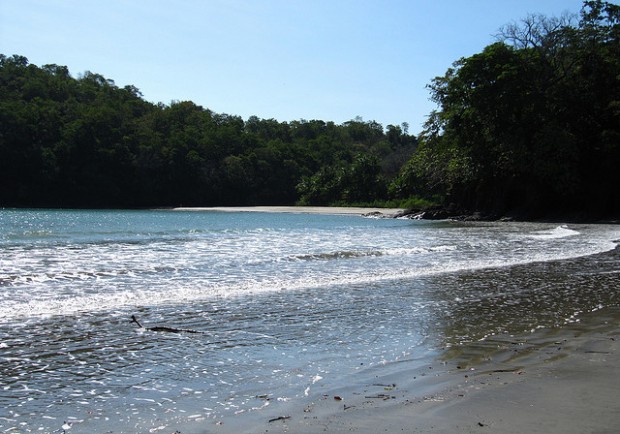
BTimes
You’ve probably heard of beautiful Bocas del Toro, a group of islands off Panama’s Caribbean coast that, in recent decades, has become one of the country’s most popular tourist destinations.
But there’s also another emerging destination just a few hours away on Panama’s Pacific side that we think is, in many ways, superior (or at least on par) with its Caribbean counterpart.
That place is Boca Chica, Panama.
Because of their coastal locales, the two share many common attractions. However, each has specific areas where it excels beyond its competitor.
Both are fantastic places to visit or live, but–to help you decide if one of these destinations could be right for your next vacation or even your permanent home overseas–take a look at how the two stack up in several important categories.
Round #1: Accessibility
Winner: Boca Chica
The best way to reach Bocas del Toro is by plane, which is a 40 minute flight from Panama City or San Jose, Costa Rica. By land, travel is far less simple. Bocas del Toro is on the Caribbean (northern) side of the country, and the Pan American highway generally hugs the Pacific (southern) side. As a result, it takes hours to get from Bocas del Toro to any other decent-sized city, such as Boquete and David.
Boca Chica, however, is on Panama’s Pacific coast a short distance from the town of David, just over half an hour in fact, thanks to a new 4-lane highway. Even in a slow boat, you could get to one of Boca Chica’s closer islands from the airport in David in about 40 minutes or so.
That’s not to say that Boca Chica isn’t remote. Due to the fact that it has less people and tourist attractions, it feels much more secluded than Bocas del Toro once you get there. It’s just the ‘getting there’ part that’s much more advanced.
What’s more, Boca Chica also boasts proximity to a number of other adventures and attractions throughout the Chiriqui province, one of the nation’s biggest up-and-coming areas for tourism. There’s hiking and whitewater rafting at Volcan Baru, the country’s highest peak, coffee plantations and canopy tours in Boquete, and a number of other places to visit nearby.
Round #2: Consumer Goods and Services
Advantage: Boca Chica
Due to the problems with access and proximity to a large city, what’s available to you in Bocas del Toro is mostly limited to whatever is offered or sold locally. There are grocery stores, banks, ATMs, and a number of restaurants and bars. The town also offers basic health care in the form of a few public (and even a handful of private) clinics.
However, most (or, in some cases, all) of these are located in Bocas Town on the main island of Isla Colon. That means that if you’re staying elsewhere you’ll need to take one of the many water taxis, which are available on up into the wee hours of the morning.
If you need something beyond the local options, you have two options. You can drive the 4 hours over the mountain ridge to David where there’s practically every kind of service imaginable: hardware stores, modern hospitals, repair shops, government offices, and a variety of dining and shopping options. Or you can incur the cost (and the wait) associated with having goods shipped.
Boca Chica has roughly the same local options, in the way of small retail establishments. The major difference between the two is that the latter is a mere 40 minutes from David. As a result, it’s reasonable to conceive of driving into town for a world-class steak dinner or towing your boat into the city to a reliable mechanic.
Viva Tropical
Round #3: Investment Potential
Winner: Boca Chica by a Large Margin
Bocas del Toro, while still a great place to invest in property, is already very much on the radar of many travelers and would-be expats. Because it’s a well-known tourist destination with an established expat community, the prices in the area reflect that.
On the other hand, Boca Chica offers all the same gorgeous scenery and opportunities for adventure at prices that still represent a great value. But, most importantly, the Boca Chica area has screamin’ investment potential.
We mentioned that it’s close to David, much closer than Bocas del Toro. Well, factors like location and accessibility play a huge role when it comes to property valuation. As does infrastructure.
And both of those are better in and around Boca Chica, particularly in terms of the easy access to David and its international airport. Even more prophetic is what’s currently going on at said airport: millions of dollars in renovations and expansions that will soon open its runways to international flights from the U.S. (among other countries) for the first time in history.
What will result is more visitors and new residents in Boca Chica, which will in turn lead to the need for new businesses, even better infrastructure, and continually rising home and land prices.

Viva Tropical
Round #4: Atmosphere
Outcome: Boca Chica for Solitude, Bocas del Toro for Socializing
Both Boca Chica and Bocas del Toro have a great vibe. They’re just different in their appeal.
Bocas del Toro is your quintessential Caribbean beach town. It’s fun and funky with many of its buildings and businesses built out over the water on stilts (no high rise condominiums here). It’s charming and quaint, that is until nightfall when things can tend to get a little crazy as Bocas del Toro is known for its partying nightlife. Peace and quiet can be found, but you’ll have to venture outside of town or to one of the smaller islands.
Boca Chica, on the other hand, is quieter and a bit more subtle. Instead of hovering atop the water, its lodges and resorts are tucked away into hillsides or scattered among the many islands of the archipelago. There are good times to be had on Boca Chica evenings as well, but they’re usually in the form of lively happy hours on restaurant patios rather than in thumping discos.

Autoridad de Turismo de Panamá
Round #5: Tourist Infrastructure
Advantage: Bocas del Toro
By comparison, Bocas del Toro is the much more established of the two areas, particularly when it comes to tourist attractions in Bocas del Toro. Populated by locals, as well as an established expat community, it caters to backpackers, families, honeymooners, and more.
Bocas del Toro has plenty of hotels and restaurants, most of which are concentrated in and around Bocas Town. There are also dive shops, deep sea fishing charters, a number of boat cruises and tours, bike and moped rentals, and various land and sea excursions…everything you’d expect to find in a Caribbean beach town.
On the other hand, many of these same operations are just beginning to appear in Boca Chica. You can enjoy most of these same activities there. You just might have a harder time locating a few of them (with the fishing, sailing, and other aquatic adventures being the overwhelming exception, as they’re all abundant in Boca Chica).
As mentioned, Boca Chica is poised for tremendous growth in the coming years. The potential for new tourism offerings is certainly there. It’s also another great investment option for entrepreneurs who want to open a boutique hotel or sport fishing lodge.
Round #6: Surfing
Advantage: Bocas del Toro
Both Boca Chica and Bocas del Toro have beautiful beaches that are perfect for swimming or sunning, including long stretches of secluded beaches where you can find yourself totally alone.
However, if hitting the surf is the excitement you crave, you’re better off in Bocas del Toro.
Some of the best spots include Bluff Beach, which has large enough waves even for advanced surfers; Carenero Point, which has the islands’ longest left break and perfect tubes when the conditions are right; and Isla Batimentos, which is home to the popular Wizard Beach and Red Frog surf spots.
There’s good surfing to be found near Boca Chica, but getting there will require a little longer drive or boat ride than in Bocas del Toro.
Round #7: Snorkeling
Advantage: Bocas del Toro
The same goes for snorkeling. There are a few private beaches in Boca Chica where you can enjoy a day of snorkeling. You can also take a 45 minute boat ride to the waters around the nearby Islas Secas, or a longer 2 to 3 hour trip to Coiba National Park, one of the largest marine parks in the world.
The options in Bocas del Toro are much more prevalent. One of the best places is Bahia de Almirante in Admiral Bay, with its protected coral reefs, clear waters, and few waves. In and around Bocas del Toro you can see reefs, kelp forests, shipwrecks, caves, over two dozen types of coral, and hundreds of species of fish.
Another popular spot is Hospital Point. It’s only five minutes away by boat, making it easily accessible and a great way to get in a little exploring without taking up too much of your day. You can rent equipment for as little as $12 per day and hire one of many locals along the wharf to drop you off and pick you up for around $3.

Chuck Holton
Round #8: Diving
Verdict: Boca Chica Wins
Bocas del Toro has a number of good options for scuba diving, often the same spots you would go for snorkeling as some of the reefs go down as deep as 60 feet. However, the waters around Boca Chica offer some of the world’s best dives, according to National Geographic.
Islas Ladrones, which lies 27 miles due south, is teeming with schools of jack, snapper, and barracuda. There are also smaller species like surgeonfish, parrotfish, triggerfish, angelfish, and more that can be seen year round. You can also spot several species of shark and, at certain times of the year, giant manta rays and humpback whales. Visibility near the island is 30-80 meters.
Slightly farther away, along Isla de Coiba, you can also explore a 330,000-acre reef which contains 60 of the world’s 75+ species of hard and soft coral. In these protected waters you’ll also find mullet, stingray, puffers, moray eels, and gentle sea turtles.
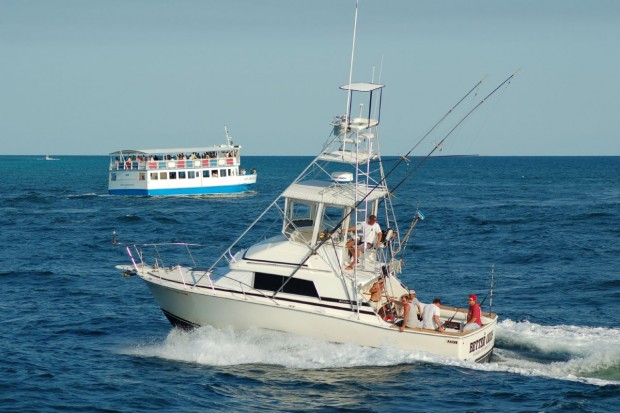
CMC corkle 2005
Round #9: Fishing
Winner: Boca Chica Hands-Down
As you could guess based on the abundance of species represented in Boca Chica, the fishing in its waters is second to none. Fishing lodges make up a big majority of the tourist accommodations in the area, and we’ve lost count of the number of world record catches that were landed in and around Boca Chica.
Much of these whoppers were reeled in near Hannibal Bank, a world-famous fishing hotspot where the ocean floor rises sharply from thousands of feet deep to a mere 120 feet. This underwater cliff is home to the merging of schools of inshore fish with the offshore species who feed on them. Marlin in excess of 1,000 pounds and tuna over 300 pounds have been caught in these waters, as well as snapper, amberjack, and snook.
These and other species can also be caught in Bocas del Toro. The best fishing is a bit more seasonal there and, while still world-class, it isn’t even in the same ballpark as Hannibal Bank.
Round #10: Land Exploration
Verdict: Boca Chica Takes the Round
Being composed at least partially of islands, both Bocas del Toro and Boca Chica have plenty of options for exploring. Each island offers its own varied topography and environment. You can find hundreds of different species of monkeys, reptiles, birds, and plants, many still unidentified.
We’re giving this round to Boca Chica based mainly on the fact that its islands and jungles have a much more otherworldly appeal to them. A number of its islands are completely covered in untouched rainforests, with an abundance of old growth trees so ancient-looking that you would almost bet they pre-date the great flood.
One such is Boca Chica Island, the location of our latest Adventure Colony. To help maintain the island’s prehistoric feel we’ve created Monte Vida Park, a 50-acre crowd funded preserve dedicated to protecting the surrounding rainforests and in turn adding value to property on the island.
Because of Boca Chica’s incredible investment potential, as well as its stunning natural environment, it was a natural choice when we were looking for a spot to establish a place where like-minded people could take advantage of all the area has to offer.

Did you know that Panama economy is one of the fastest growing in the world? It’s one thing to hear that, but it’s another to see clear and simple evidence.
Here are 8 statistics to help you understand why Panama’s growing economy is an attractive place for investment.


Rinaldo W.
Ecuador vs. Nicaragua. Which is the better place to live overseas?
When it comes to choosing a destination in Latin America, both Nicaragua and Ecuador are great options. Both enjoy incredible eco-diversity, numerous opportunities for adventure, and a whole lot of bang for your buck.
Ecuador has consistently been named one of the world’s best places to retire. Nicaragua, which has historically remained off many expats’ radars due to its troubled past, has risen to the ranks of being the safest country in Central America. Today it’s emerging as one of the top destinations in the region.
So, which of these countries is the better option for your family’s much-anticipated move abroad? Well, that depends on you and how you’d like your life to look in your new home overseas.
While we can’t make a recommendation that’s right for everyone we can show you how the two stack up in several important categories in this Ecuador vs. Nicaragua stand-off.

Use the Infographic on your site:
Round #1 – Lifestyle Hacks
Winner: Nicaragua
One of the best ways to improve your lifestyle when living overseas is by hiring domestic help, something many can’t afford in North America. For instance, in Ecuador the cost to hire a maid for the day is $10.
Sound like a good deal? Not as good as Nicaragua where you can employ a full-time helper, like a nanny or caretaker, for just over $100 per month (depending on their hours and responsibilities). Domestic help is generally easy to find, but it’s important to screen applicants carefully. A safe bet is to hire a close friend or family member of another maid who is a known good worker.

Theragans
Round #2 – Internet Connectivity
Advantage: Ecuador
In terms of Internet penetration, speed, and quality, Ecuador wins this category. Overall it has more widespread affordable access, with over 35% of the population connected (vs. 10% in Nicaragua).
The main difference between the two is with Internet access in rural areas. In Nicaragua there isn’t any. By contrast, Ecuador has public access centers, called Infocentros, that are available (and free) even in more remote areas.
Connectivity is definitely on the agenda of both countries’ governments. Even Nicaragua has increased its availability 30-fold in the past 5 years alone. However, it still lags a considerable distance (12,628 internet hosts to Ecuador’s 170,538) behind Ecuador, whose goal is Internet access in 50% of its households by 2015.

Johnny Chunga
Round #3 – Living Options
Outcome: Ecuador for Variety, Nicaragua for Safety
While both Ecuador and Nicaragua boast their share of colonial towns, coastal paradises, and mountain hideaways, Ecuador’s four distinct regions offer much greater diversity in scenery and climate.
Popular Ecuadorian cities include the mountain towns of Cuenca and Loja, with their colonial charm and modern amenities. Also, on the coast, are places like Salinas and Montanita, which attract a large number of beach-goers. Ecuador is also home to the Galapagos Islands, perfect for nature-lovers.
Nicaragua also has its fair share of expat hotspots, and many are growing at increasing rates. Granada, which is situated on Lake Nicaragua, is a popular favorite. As is Leon, another colonial city that also boasts close proximity to the Pacific Ocean. Nearby beach towns include San Juan del Sur, famous for its surfing and nightlife. The Corn Islands are also an option for those seeking a Caribbean vibe.
It’s also worth noting that Nicaragua is now the safest nation in Central America, while crime continues to be a problem in Ecuador. However, it’s entirely possible to live safely in either location (and without burglar bars). What’s important is to use common sense and avoid appearing overly “flashy” or waving wads of large bills when paying for items.

Game of Light
Round #4 – Green Living
Clear Winner: Ecuador
When it comes to conservation and sustainability, Nicaragua is the land of missed opportunity. The largest country in Central America (and the least populated), Nicaragua is full of natural resources. However, several factors are preventing the nation from realizing its potential.
The lack of enforceable land rights has led to massive deforestation and a lack of government regulation. Pesticide use is widespread, and there’s little safe drinking water. Only 6% of the nation’s forests are protected.
Compare this with Ecuador, which has the lowest environmental footprint in the world. It’s also the only country in the world whose constitution protects the rights of its natural environment. Ecuador is also home to Yasuni National Park, the most biodiverse spot on the planet. Their efforts to protect it from the harmful effects of drilling its 800-million barrel oil reserve have been among the most creative in history.

Barefoot Expeditions
Round #5 – Cost of Living
Slight Edge: Ecuador
While both countries enjoy a very reasonable cost of living, prices in Ecuador are generally more affordable. This is particularly true when it comes to consumables, like groceries and restaurant meals (26% and 24% higher in Nicaragua, respectively). It’s also true of the country’s inexpensive health care.
In Ecuador, a couple could live simply on about $1200 per month, including rent which runs around $450 on average. Factored into this amount are expenses such as public transportation (in other words, not owning a car) and once-per-week maid service.
Two big exceptions are rent and transportation to North America. Home rentals run around 33% less in Nicaragua. It’s also much cheaper (and shorter) to fly to the U.S. More on that coming up.

Julie Rubinic
Round #6 – Ease of Access
Winner: Nicaragua
Ecuador has two international airports, Quito (UIO) and Guayaquil (GYE), although most travelers fly into Quito. Flights arrive from U.S. cities like Miami, Houston, and New York, as well as nearby Panama City, Panama, or Bogota, Colombia.
Due to its close proximity to the U.S., Nicaragua offers frequent short flights to a number of major U.S. cities. American Airlines has 3 daily flights from Miami. There are also daily flights from Atlanta (Delta) and Houston (Continental). Spirit Airlines also offers 3 flights per week from Fort Lauderdale.
In addition to international flights, which land at Sandino International Airport in Managua, there are also a number of domestic airlines that fly to cities across Nicaragua, including the Corn Islands. Nicaragua also offers short flights to nearby Costa Rica and Panama.

Vilseskogen
But once you’re in Ecuador, getting around’s a breeze.
It’s worth mentioning that, while Nicaragua is easier to get TO, Ecuador is a piece of cake to get around IN. The country’s transportation system is bordering on excellent. Thanks to subsidized fuel costs, there are inexpensive domestic flights. You can also fill up your car for as little as $1 per gallon.
Round #7 – Business Climate
Slight Advantage: Ecuador (for Now)
Let’s face it. Neither of these two countries has a gleaming record of political stability. Ecuador saw 48 presidents in its first 131 years as a republic. And while Nicaragua’s Daniel Ortega has certainly done some good for the nation’s economy, he’s not exactly known for his friendliness to businesses. He’s also currently pushing legal reform that will essentially result in the possibility of his limitless reelection.
As a result, this category was a tough one to call. We’re awarding it to Ecuador, mainly because Rafael Correa has a somewhat better track record as a political leader. In addition, the Ecuadorian government has been taking strides towards reducing its influence in various sectors and allowing independent businesses to function more…well, independently…due to new privatization laws. As a result, the country has seen considerable economic growth.
While we’re on the subject of government and bureaucracy, Ecuador also boasts the easier process for obtaining a visa. The whole ordeal is generally faster, cheaper, and less confusing than in Nicaragua where there aren’t a lot of resources for information. The biggest downside? If you leave for 6 months you lose your visa.

ST Jenna
Round #8 – Banking
Outcome: Nicaragua Wins
Both Nicaragua and Ecuador require that you jump through quite a few hurdles in order to open a bank account as a foreigner. However, once your account is established, you’ll generally find that Nicaragua offers the better banking experience for North Americans.
While it does use a different form of currency (the Cordoba), most establishments will also accept the U.S. dollar. (Note: Ecuador has had a dollarized economy since 2000.) What’s more, many Nicaraguan banks (6 at last count) hold relationships with U.S. financial institutions. This makes for an easy process when transferring money. However, it also means that “they” can see your money and where it’s going. Banks in Nicaragua also pay competitive interest rates on deposits.
The performance and transparency of Ecuador’s banks has improved in recent years. However, they still struggle with implementing and enforcing uniform regulations. Their accounting standards are also subpar. In possibly its worst offense, Ecuador also charges a 5% tax on all funds transferred out of the country. Ouch.
It’s easy to see why Nicaragua is the natural choice for banking of the two countries. That being said, neither of these is a place you’d want to choose for stashing large amounts of cash. There are just too many better options globally.

Dane Brian
Round #9 – Investment Opportunities
Winner: Ecuador
We mentioned that Correa has made some decent accomplishments during his tenure as president. One of the best ones from an investment standpoint? Infrastructure. Massive improvements in infrastructure.
Why does that matter? Glad you asked. Infrastructure upgrades (or even rumored ones) equal huge potential to savvy investors. Buying a beautiful piece of untouched beach that’s about to become more accessible due to a new road coming in is a tried and true strategy and one that we’ve written about extensively in our new ebook, Pay Dirt.
In addition to real estate, investing in tourism is also a smart move right now in Ecuador Real Estate. The country has a ton of amazing attractions, yet its existing tourist infrastructure is grossly underused. Plus the government offers a wealth of tax deductions and other incentives to foreign investors.

A. Scott
Similar laws and incentives exist to encourage tourism investment in Nicaragua, as well. Also, organizations like PRONicaragua aim to assist foreign investors by providing support services to those looking at potential business opportunities there.
Round #10 – Healthcare
Slight Edge: Ecuador
When it comes to Ecuador vs. Nicaragua, both countries enjoy clean, modern, quality healthcare facilities with well-trained medical staffs. However, the level of care and accessibility of treatment are slightly higher in Ecuador. Most of the doctors speak English, and many even trained in the U.S.
Costs are comparable in both countries, with a visit to a specialist costing no more than $25-$30 and an overnight stay in a private room still under $100. Accessibility is fairly widespread, but–as is true of most developing countries–availability and quality is far better in and around larger cities.
Perhaps the biggest difference in this category comes in the direction both countries’ systems are heading. While Nicaragua’s healthcare stands in need of some improvement, Ecuador’s government is currently taking strides to improve its own system.

Retro Traveler
Round #11 – Consumer Goods
Verdict: It’s a Tie
When it comes to consumer goods, Ecuador definitely wins for the availability of products. In Ecuador you can find a variety of domestic and imported products. However, due to recently imposed taxes and restrictions on imports, items such as vehicles and cell phones are becoming more scarce and expensive.
As a result, Nicaragua (although it has less to offer in the way of variety) may soon offer the better value on consumer products. This may become increasingly true as the country continues to attract more and more expats. Where expats are, imported products aren’t often far behind.

K. Kamikaze
Round #12 – Foreign Land Ownership
Victor: Ecuador
The laws of both countries are favorable towards foreigners who want to own land in either Ecuador or Nicaragua. Property rights are guaranteed in each nation’s constitution, and they apply equally to foreigners as well as nationals.
While Nicaragua does restrict property ownership near its borders, Ecuador has no restrictions whatsoever on foreigners owning property. The buying process is similar in both countries, requiring due diligence to carefully research the title and ownership. The services of a qualified attorney can simplify the buying process in either country.

K. Sevik
Ecuador vs. Nicaragua – Grand Champion?
While the match-up looks to have been a slaughter, with Ecuador taking the grand prize in this Ecuador vs. Nicaragua competition, we’d advise you to take this information with a grain of salt. While we’ve tried to remain as objective as possible, the decision of where to relocate as an expat is one that can only be made through your own careful consideration.
Articles and comparisons are helpful, but there’s just no substitute for seeing a destination with your own two eyes and exploring it with your own two feet. If one, or both, of these countries is on your short list, book a trip to check it out for yourself. A trip to the Latin tropics is sure to prove a delight for all the senses.
Map of Ecuador
Ecuador Fast Facts
- Population: About 15.49 million
- Typical temperature: Ecuador is known for its micro climates, learn more here.
- Major airports with U.S. flights: Quito, Cuenca and Guayaquil. Complete list of airports in Ecuador.
- Nearest U.S. consulate: Quito and Guayaquil
Map of Nicaragua
Nicaragua Fast Facts
- Population: About 5.99 million
- Typical temperature: There are three temperature zones in Nicaragua. In the lowlands (Pacific and Atlantic coast) temperatures vary roughly between 72° F at night and 86° F at daytime (22° C – 30° C). Temperature can reach 100° F in May (38° C). The central part of the country is about 9° F (5° C) cooler, and in the mountains in the north it’s about 18° F (10° C) cooler.
- Nearest airport with U.S. flights: Managua
- Nearest U.S. consulate: Managua


Alex E. Proimos
The nation of Panama has touted itself as “The Way.” The way to adventure, the way to realizing your dreams, the way to a dream vacation, or the way to whatever it is you may be looking for.
And it’s true.
Every year thousands of expats are finding exactly what they’re seeking in Panama. Whether it’s an opportunity to start their own business, the ability to experience new adventures with their family, or just a quiet place to settle down and enjoy the fruits of their labors.
So, what is the secret to Panama’s appeal? There are actually too many to name. But here are just a few facts about Panama and why expats continue to pick it as their destination of choice.
1. Panama has unmatched natural beauty and biodiversity.

Christoffer Undisclosed
Almost half of Panama’s land mass consists of rainforests, mountain cloud forests, and mangrove wetlands. And they’re all teeming with an abundance of flora and fauna. Not to mention all the aquatic species in the surrounding seas and coral reefs.
Much of the country’s biodiversity is due to its strategic position as a “biological corridor” connecting the Americas. Its Darien province, which is almost impenetrable and lacks much infrastructure, is considered by some as one of the most biodiverse areas in the entire world.
It’s home to jaguars, harpy eagles, American crocodiles, giant anteaters, and more. Among the country’s other species are over 10,000 types of plants (including 1,200 varieties of orchids and 1,500 types of trees) and over 250 types of mammals, several of which can be found nowhere else in the world.
2. Turtles and whales and birds…Oh, my!
Of all the animals to see in Panama, few are as prevalent and as fascinating as these. Five of the eight species of sea turtles in the entire world swim ashore to nest on Panama’s beaches. Several national parks encompass havens for these turtles that swim in by the thousands to lay their eggs in the sand.
Panama is also home to a whopping 972 species of birds, more than the U.S. and Canada combined. You can observe them in the mountains or in the mangroves. One of the best places is in Baru Volcano National Park, where you can spot the Resplendent Quetzal along with many other species.
Every year from June to November, humpback and sperm whales migrate to Panama’s Pacific Coast to mate. The sight of them leaping out of the water in areas like Coiba, the Gulf of Chiriqui, and the Pearl Islands is quite a sight to behold.
3. Finding the right climate in Panama is almost as easy as adjusting your thermostat.
In general, Panama has a warm, tropical climate with very little seasonal variation. Coastal areas are much more hot and humid, and the mountain towns are more temperate with less rainfall. The year is essentially divided into a rainy season (roughly April to December, give or take a month or two depending on location) and a much drier rest of the year.
Finding the right climate for you basically involves testing out spots on a sliding scale from Caribbean to Pacific and from lower to higher elevations. The Pacific coast is a bit cooler and drier, with a nice evening breeze. The Caribbean side, by contrast, gets significantly more rainfall and is a few degrees warmer.
Likewise, you can also adjust your temperature and humidity by moving further up into the mountains. It gets cooler and cooler (maybe even too cool for some), with areas like the Cordillera de Talamanca in western Panama even seeing a little bit of frost.
With such great weather year-round, Panama’s residents can enjoy its beauty and opportunities for adventure in every season! In other great news, while parts of Panama do see the occasional strong thunderstorm, it’s outside the hurricane belt.
4. Panama is an ocean lover’s paradise.

Diesel Demon
Panama is a narrow isthmus that connects Costa Rica in Central America with Colombia in South America. It’s lined by miles and miles of coastline on both the Pacific Ocean and Caribbean Sea. Its coastal ecosystems consist of gorgeous beaches, rocky cliffs, mangrove forests, and coral reefs.
As a result, Panama’s coasts offer opportunities for every water sport and activity imaginable. Coiba National Park contains the longest reef on Central America’s Pacific coast. Both it and Chiriqui Gulf National Marine Park are great places to go diving or snorkeling or watch whales and dolphins.
The name “Panama,” in the Indian language, means “abundance of fish.” It’s a great place for sport fishing, as a number of world record fish were caught of its shores. Surfing is also popular in Panama, particularly in world-famous Santa Catalina. Other available water sports include paddle boarding, kayaking, and kite surfing.
5. Panama’s fun doesn’t stop at the shore.
Panama’s interior offers a wealth of other options for adventure. Many hiking trails wind through the country’s jungles and rainforests, including several that run through Metropolitan Natural Park in Panama City, the only protected forest in Central America that’s located within the city limits.
A hike to the summit of Volcan Baru, the country’s highest point, affords visitors the opportunity to simultaneously take in views of both the Atlantic and Pacific Oceans. The most intrepid adventurers often start this hike at midnight in order to reach the peak by sunrise.
Not far from Volcan Baru, also in the Chiriqui province, is the mountain town of Boquete which offers some of the world’s best zip lining tours through the canopy of the cloud forest. The area also has some first-rate places for kayaking and whitewater rafting, with rapids ranging from Class III to Class V, depending on the season.
6. Panama’s capital city is truly cosmopolitan.

Jasperdo
Much of Panama enjoys great infrastructure for a developing country. In Panama City, it’s top-notch. There’s world-class shopping, fine dining, museums, modern medical facilities, and much more. And recent urban development has attracted even more residents to this thriving hub.
But it’s not all concrete and skyscrapers. As mentioned, Panama City has a 655-acre rain forest within its limits. There you can find a variety of birds and mammals, including toucans, parrots, and sloths.
There’s also a coastal strip with lots of green space that leads to the Old Town, Casco Viejo. This area, a UNESCO World Heritage site, is a unique blend of ancient and modern. With its boutique hotels, located in historic buildings, and open-air cafes it’s an eclectic mix of people and cultures.
7. Panama is a unique and diverse blend of people and customs.
Speaking of culture, Panama is a great place to go if you want to experience the real, authentic customs and traditions of a nation’s people. Panama is still home to 7 different indigenous tribes, although they represent only 6% of the country’s total population. They live in groups called comarcas, which are self-contained sovereignties, with many being very welcoming to visitors who want to observe how they live.
Among the cultural heritage of these ethnic groups are indigenous dances, like the tamborito and congo. They also produce a variety of handmade arts and crafts. These include molas (patchwork pictures that can be sewn to garments or used as pillow covers or wall hangings), jute bags, wood carvings, beaded jewelry, and woven baskets. (However, one of the most commonly mistaken facts about Panama is the origin of the Panama hat. It actually hails from Ecuador.)
Locals also celebrate a number of festivals, most notably Carnival which takes place four days before Ash Wednesday. Towns elect two queens to represent separate sections of the city. For five nights, the queens and their troupes entertain the crowds with parades, dancing, and fireworks.
8. The Panama Canal is an amazing piece of living history.
The largest contributor (directly and indirectly) to the nation’s GDP, the Panama Canal is such an integral part of the story of the country’s progress. And it’s currently undergoing a massive expansion.
The 90-year old waterway, which is already operating at almost 100% of its ability, will have doubled its capacity by the time its over $5 billion expansion project is completed in 2015. A new Observation Center gives visitors the opportunity to watch the construction, as well as take in views of Gatun Lake. Also available are full and partial tours through the canal, where visitors can experience the journey for themselves.
9. Panama enjoys a pleasantly low cost of living.
While it’s true that the cost of living is low throughout most of Latin America, it’s difficult to find a much better bang for your buck than in Panama. Costs vary, of course, from one area to the next (with larger cities requiring much more money to live on than more rural areas).
However, it’s within reason that a couple could enjoy a nice standard of living for $1,500 or less, including rent, in most parts of Panama. And that includes such luxuries as the services of a maid and gardener.
Other services that are quite reasonable in Panama include reliable high-speed internet, public transportation, and excellent health care.
10. Panama is an excellent place to invest or do business.
Not only is Panama a great place to visit or live, it’s very friendly to investors or those who want to open a business, particularly in the tourism industry. Its tax laws are favorable, and setting up a Panamanian corporation is relatively simple.
The government has also recently signed into legislation a number of incentives that make it even more attractive to invest in Panama.
Whether you want to start up an outfit that offers ATV jungle tours, or you just want to buy a piece of land and build your own little piece of island paradise, Panama is a great place to make that happen.
Bonus Facts About Panama…#11. Panama is home to two Adventure Colonies.
I know what you’re thinking. What’s an Adventure Colony, right?
Adventure Colonies are our one-of-a-kind developments that are specially tailored towards would-be expats like you who share our love for the natural environment and a life lived a bit more simply. After reading these facts about Panama, I’m sure you can see why we chose it for our first two projects.
Playa Burica is located on Panama’s Pacific coast on a peninsula the country shares with Costa Rica. Its oceanside lots are covered with untouched jungle, making it great for adventure lovers. It’s also a savvy investment choice, as several factors make the area prime for a boom in the coming years.
Our newest development, Boca Chica Island, is a 400 acre private island covered in jungle and rainforest. It lies 10 minutes off of Panama’s Pacific coast and is surrounded by about 50 other mostly uninhabited islands. We think Robinson Crusoe would approve.
If your idea of a dream destination abroad involves something more–or in this case, less–than a string of high-rise condos and all-inclusive resorts, then maybe an Adventure Colony could be right for you.
Map of Panama
Panama Fast Facts
- Population: 3.8 million
- Typical temperature: Temperature typically varies from 72°F to 91°F
- Nearest airport with U.S. flights: U.S. Bound flights leave daily from Tocumen International Airport
- Nearest U.S. consulate: Panama City


Viva Team
Craigslist.org has long been a great resource for buying or selling anything from real estate to sofas to used cars. And Craigslist Costa Rica is an excellent way for expats to locate things they need when living overseas. However, like any online transaction, it’s important to exercise a great deal of caution when exchanging money or goods with complete strangers.
Most of these tips deal with how to buy goods or services without getting screwed. However, much of the same advice also applies when selling items as well. In fact, it’s even possible to become the victim of fraud when merely applying for a job on Craigslist.
One of the most common sources of fraud on Craigslist Costa Rica involves real estate. Sellers advertise properties they don’t own or that don’t exist and try to get unsuspecting expats or tourists to wire money in advance to buy or rent them sight unseen. Spotting these types of scams can be tricky, but the rules below can help you weed out the legitimate deals from the scams.
Some tips may be common sense. Some may never occur to you until you’re walking away from the Western Union office $1000 poorer while some guy in Russia is laughing all the way to the bank.
Here are some of the best ways you can successfully navigate Craigslist Costa Rica and avoid any scams or otherwise bum deals.
While You’re Searching: How to Spot Red Flags in Craigslist Costa Rica Ads
-
Do your homework before you begin searching. Whether you’re looking for electronics or automobiles, it’s important to have an understanding of the features and specifications of the items before you begin your search. Know what options are available and how much the item generally sells for, so you can select exactly the right product and be well prepared to negotiate a fair price.
-
If it sounds too good to be true, it probably is. This is true for everything from items for sale or rent to job postings. If the photos of that flat in the city center look like they’re straight out of an international travel magazine, they may actually be. Especially if the monthly rental rate is a fraction of the amount you already know other properties in the area are going for (because you took our advice above and did your homework). If something appears to be drastically below the market value, there’s probably a reason.
-
Make sure any photos show the actual item for sale. If the seller has posted a picture of the item from the internet, ask them to provide photos of the one they’re actually selling. If it’s an item whose aesthetic value matters (like furniture), have them take pictures of all sides, including close-ups of any damages or flaws.
-
Cross-check any company or brand names referenced in the ad. Many scammers use the name, website, and even logo of real companies to lend credibility to their fraudulent posts. Contact the company involved to make sure the deal is legit. For example, a piece of real estate might actually be listed by the company described. However, the ad itself could be a scam and not posted by the agent of record.
-
Verify whether the ad has been posted in multiple locations. Craigslist users are only permitted to post their items for sale in one city, as those who attempt to do otherwise are often involved in a scam. You can search the entire site by going to search craigslist and entering some of the details of the item. You can also copy and paste some distinctive part of the item description into a Google search bar to see if anything turns up.
-
Beware of any ads that are full of grammatical errors or odd word choices. Many scams originate overseas, and bad writing is usually an obvious sign of a foreign seller. However, this can be a bit trickier in Latin American countries where the seller could speak English, Spanish, or something else entirely. Just try to make sure the errors aren’t excessive. If someone is comfortable enough posting a legitimate ad in Spanish (even when it isn’t their native tongue), then they probably care enough to try to get it right. Errors should be minimal.
-
Avoid any sellers that seem way too eager to get rid of their items. Reasons for wanting to unload things quickly often include factors such as divorce, relocation, or even deployment. If a seller cites one of these and is selling a large number of items, or asking discount prices for high-value stuff, stay away.
P. Paouline
Communicating with the Seller: How to Make Sure They Aren’t Shady
-
If they pressure you, walk away. Sellers who are involved in a scam may be in a hurry to get the transaction completed. If they try to rush you, possibly by telling you there are multiple buyers interested, it could be a red flag.
-
Be wary of sellers who respond too quickly or at odd hours. Sure, smartphones have given us the ability to respond to email within seconds. But if you consistently receive lightning-fast responses, it could be because you’re dealing with someone who’s sitting behind a computer scamming people for a living. The same is true if all of your inquiries are addressed at odd hours of the night, even though the seller claims to be local.
-
Do not, under any circumstances, provide any personal information. This includes everything from your home address to your social security number to financial information, like your bank account number. Don’t do it. Sellers or employers may claim they need it for credit or background checks, but if they’re needed these can wait until you’ve verified that the product and the seller are legit.
-
Make arrangements to meet in a public place. Don’t ever agree to meet the seller at their home, and don’t dare invite them to yours. Instead, suggest somewhere well-lit with plenty of people around. A bank lobby is a great choice, for a number of reasons. Take someone with you if you have concerns, but at minimum at least make sure someone knows where you’re going.
-
Be clear on the terms of the transaction. Verify the payment type and that the seller will have the item with them for your inspection. Negotiate a price, based on your knowledge of the product and its market value, but make sure the seller understands it’s contingent on your evaluation of the physical item itself.
The Transaction: How to Walk Away with a Great Deal
-
Be leery of wire transfers. Don’t ever wire money up front. Ever. Period. Not even a partial payment. This is the most common trick scammers use to get your money. Sometimes sellers may sometimes ask for a deposit (for instance, for a vacation property), but at least with a credit card payment, you can get your money back if you get scammed.
-
More on wire transfers. That’s right. They’re so scary they get two bullets. Some scammers pay sellers with fraudulent cashier’s checks, asking them to wire the difference to a third party (often a business partner or someone they owe money to). There are also job postings where scammers, claiming they can’t receive direct payments from their customers, seek to hire people to accept the funds and wire it to them (in exchange for a percentage of the funds). This is just a way of helping them scam someone else.
-
Avoid any questionable payment methods. Aside from wire transfers, other common tricks are to use an online escrow service. These are more often fraudulent than not. Also, don’t pay for anything sight unseen no matter what the payment method. The same is true if you’re selling. Beware of any buyer who offers to send you a payment without inspecting your item.
-
Understand that Craigslist does not handle any transactions. Some scammers try to gain buyers’ confidence by assuring that they or their transactions are guaranteed or certified by Craigslist. They may even have an official-looking email from the website itself. The truth is that Craigslist does nothing of the sort. Neither do they process or protect any payments.
-
Inspect your item (or the payment), and you’re done! If you’ve met in a bank lobby like we suggested, then have a seat with your seller and inspect each other’s offering. Make sure the product and all of its features are in working order. Plug it into an outlet if needed. If it’s not to your satisfaction, you can still walk away. The same is true for the money. Go ahead and deposit the funds or cashier’s check to make sure the bills or documents are authentic.
Following these tips isn’t a guarantee that you won’t get screwed when using Craigslist Costa Rica, but they’re still good guidelines for transacting business online. If you use good judgment and common sense, then hopefully you can find a great apartment or the perfect dining room set with minimal hassle.

For decades, expatriates from Canada and the U.S. have been crossing the border into Mexico looking for something better. Their reasons vary, but among them are less taxation, more personal freedoms, a lower cost of living, a higher quality of life, warmer weather, and a slower pace.
In fact, there are more U.S. residents living abroad in Mexico than in any other country in the world. Recent estimates by the U.S. State Department have the total number of U.S. expats living in Mexico nearing 1 million. That’s up from only about 200,000 just a decade ago. However, this number could be even higher.
U.S. illegals in Mexico are just as common.
Just as many Mexicans cross over into the U.S. illegally, likewise there are many U.S. citizens who overstay the time allotted on their tourist visa. Others go back and forth like nomads, without ever establishing formal residency.
As a result, it’s difficult to say exactly how many U.S. citizens are living in Mexico, or–for that matter–exactly where they are living. However, recently released data shows the 20 cities with the highest number of residents who register themselves as U.S. citizens. These locations account for 46.8% of all U.S. expats over the age of 50.

U.S. expats in Mexico graph by Yucatan Times
Say ‘hello’ to the new kid on the block.
While many of the cities that made the list should come as no surprise, one up-and-comer that’s worth noting is the town of Merida on the Yucatan Peninsula. As the data shows, 1.1% of all U.S. citizens over the age of 50 have established their permanent residency in Merida.
What’s even more remarkable is the rate at which the area’s foreign population is growing.
In 2012, 476 foreigners received their permanent residence cards in the Yucatan. In the early part of 2013, that number has seen a 30% increase. That kind of growth could bump the Yucatan up into 8th place out of all expat destinations in Mexico.
Why the influx of foreigners to the Yucatan?
Well, for one thing it’s beautiful. Once covered in cattle ranches, fishing villages, and logging outfits, parts of the area were targeted years ago by the Mexican government as an ideal spot for a world-class leisure destination.
Today it boasts beautiful sand beaches, turquoise waters, ancient Mayan ruins, mangrove forests, lush jungles, first-rate resorts, low-key island getaways, happening nightlife, aquatic life, and a wealth of adventures to experience on both land and sea.
Not to mention, the Yucatan has quite a few specialized housing areas that are designed to attract foreign retirees. Altogether, there are 36 of these developments throughout the country, and you can find at least one in all three states in the Yucatan region: Quintana Roo, Yucatan, and Campeche.
So, where else are the expats going?
Expats can be found all over Mexico. In big cities, tiny villages, beach hotspots, and mountain towns. Here are a few of the major areas where you’ll find expats in Mexico, along with some details about some of the top cities that made the list in each category.
Border Towns
Not surprisingly, a number of U.S. citizens choose to live in places that are in close proximity to the border of their home country. These areas are popular places for multinational companies to establish their facilities. They’re also quite convenient for quick trips back to wherever “home” is, or even just to one of the large U.S. cities that is usually situated just across the border. Here are a few of the most popular ones:
-
Tijuana – The largest city on the Baja peninsula (and the 7th largest in Mexico), Tijuana is an important manufacturing center that’s home to a number of multinational conglomerates. A growing cultural center, it’s home to a rapidly growing number of U.S. citizens, many of whom still work in Southern California but prefer the lower cost of living south of the border.
-
Mexicali – With a highly educated population, Mexicali boasts one of the highest standards of living in Mexico. It’s a cosmopolitan city with a large middle class. It’s also home to Silicon Border, a large industrial park that hopes to become a global hub for semiconductor manufacturing. Mexicali is also known as an important sports town.
-
Juarez – Located on the Rio Grande, Juarez has been dubbed “The City of the Future” for its rapidly growing industrial sector.

Jeremy Andrews
Beach Towns
Mexico is unique in that it offers options for beach towns on a number of coasts. There’s the Baja Peninsula which is bordered by both the Pacific Ocean and the Gulf of California. On the eastern side of the country is the Gulf of Mexico and, on the southern side of the Yucatan Peninsula, the Caribbean Sea. Among all those shores are sand beaches, rocky cliffs, and shores that give way to lush mountains or even deserts.
-
Ensenada – Dubbed the “Cinderella of the Pacific,” this city is a popular cruise ship destination, a wine-growing region, and a haven for a variety of exotic flora and fauna. It’s home to the great white shark, Guadalupe fur seal, puma, ocelot, roadrunner, and more. It’s also popular among North American snowbirds, as well as young Californians who want to work in California but enjoy a lower cost of living.
-
Playas de Rosarito – Located on the Baja Peninsula, this area has always had a largely tourist-based economy. During prohibition when many U.S. residents began to cross the border into the speakeasies of Tijuana, Rosarito became a popular getaway among the more affluent clientele and the Hollywood crowd.
-
Puerto Vallarta – Puerto Vallarta is one of Mexico’s most highly developed tourist destinations. It caters to a large number of tourists and expats, including cruise ships and a growing LGBT population. It’s been called the “San Francisco of Mexico.”
-
Los Cabos – Composed of the twin cities of Cabo San Lucas and San Jose del Cabo, this area was once a fishing community. Today its economy is geared towards tourism, although sport fishing is one of its largest draws, as is golf. It’s also one of the top spots in the country for whale watching.
Interior Cities
From bustling cosmopolitan cities to quiet mountain towns, Mexico’s interior also houses a large number of U.S. expats. Many of these places offer top-notch infrastructure, quality medical facilities, and great scenery.
-
Chapala – This popular city is located on the north shore of Lake Chapala, the largest freshwater lake in Mexico. Famous for its mariachi music, this area is home to one of the country’s largest expat populations, many of which live in the village of Ajijic, a town of roughly 5,000 inhabitants.
-
San Miguel de Allende – Home to a growing number of U.S. expats, this city has seen its economy shift from agriculture and industry to commerce centered around tourists and foreign residents. San Miguel has a well-preserved historic center, a mild climate, rich culture, and low crime.
-
Guadalajara – When considering the fact that the city’s suburb of Zapopan also made the top 20, this area contains a very large number of foreign residents. There’s a historic city center with ancient buildings, public parks, and beautiful squares. Guadalajara also has a thriving manufacturing industry and serves as one of Mexico’s important cultural centers.
-
Monterrey – This area has the highest per capita income in Mexico and is one of its most developed cities. It’s been heavily influenced by decades of U.S. immigrants, resembling its North American neighbors even more than cities located along the border. An important industrial and business center, Monterrey ranked 5th in all of Latin America for Quality of Life in a survey by Mercer Human Resource Consulting.

Jack Newton
What the numbers don’t show…
It’s important to note that, while statistically accurate, the numbers don’t necessarily paint a perfect picture of what the expat population in those cities actually looks like. The list merely shows the top places where expats are actually registered.
What the data doesn’t take into account is those who don’t register or those who are only in Mexico for part of the year (i.e. snowbirds). Since places like Quintana Roo, Cancun, and Playa del Carmen contain the seasonal homes of many from the U.S., a visit to one of those places would have you wondering why every city on the entire Yucatan Peninsula didn’t make the list.
Someone who’s spent some time on the Yucatan would easily argue that it’s home to as many expats as places like San Miguel, Chapala, and Rosarito. The likely explanation is that the expats in those areas have made those cities their more permanent home.
Another thing to consider is that some of the cities on the list have high populations in general, such as Guadalajara (3rd highest in the nation), Leon (5th), Juarez (6th), Tijuana (7th), Zapopan (8th), and Monterrey (9th). So it’s entirely possible that you could arrive and still find yourself wondering where on earth all the gringos are.
Not to mention, just because these areas are popular among the majority of U.S. expats, it doesn’t mean they’re the best destinations for you. They could be, if you are looking for a large city or a place with a high concentration of expats. But if you want to branch out and integrate yourself into the local community, your ideal destination probably isn’t on this list.
Come check it out for yourself!
The best solution if you’re searching for a place to become an expat in Latin America is to take a trip down and see things for yourself. While there’s nothing data-oriented or official about just laying eyes on a place, there’s no substitute for getting your feet on the ground and experiencing a city firsthand. So, narrow down your search. Then book your flight.
Map of Yucatan, Mexico
Mexico Fast Facts
- Population: 120.8 million
- Typical temperature: temperatures reach 90 to 92 degrees in the Yucatan.
- Nearest airport with U.S. flights: Merida International Airport
- Nearest U.S. consulate: Merida, Mexico

For would-be expats looking to relocate to Central America, Costa Rica and Panama are natural front runners.
And for good reason.
Located adjacent to one another at the southernmost end of Central America, the two are quite similar in many ways. Both consistently top the lists of best places to retire in Latin America, and the world for that matter.
They both boast amazing vistas, near-perfect climates, modern amenities with a low cost of living, excellent health care, and some really great options for how you can spend your free time. However, there are a few areas where one nation has a slight advantage over its neighbor.
While many areas of consideration depend largely on personal preference, we lined up Panama vs. Costa Rica in a head-to-head cage match to see which one comes out on top.

Use the Infographic on Your Own Site
Round #1: Lifestyle Hacks
Advantage: Costa Rica
Both Panama and Costa Rica offer the opportunity to simplify your life by hiring out a number of services that, quite frankly, you’d just rather not have to do on your own. You can easily enlist the help of a gardener, a driver, a tutor for your children, or even a full-time maid who cleans your house, buys your groceries, does your laundry, and prepares your meals six days a week (for less than $15 per day).
While the costs are fairly close, domestic help can be a bit more expensive in Costa Rica. Why’d we pick it as the winner if it’s the more expensive of the two? Easy.
When comparing Panama vs. Costa Rica, Costa Rica has a much more customer-oriented service culture. So, while you may pay a few more dollars per day for domestic help in Costa Rica, the extra money is totally worth it in terms of the quality of personal service you’ll receive.
Round #2 – Connectivity
Winner: Panama by a Landslide
Due in part to a long-standing U.S. military presence, Panama is one of the most connected countries in Latin America. Broadband internet service is available in most cities and is very affordable. There are also numerous free wi-fi hotspots nationwide.
In fact, Panama was recently named #2 in all of Latin America for technology and internet penetration. It also earned the #1 spot for wireless availability. That’s why so many multinational companies like Dell, 3M, and Philips are choosing to establish regional headquarters there.
By contrast, Costa Rica is light years behind its Central American neighbors in terms of internet speed. Although its average connection speed has increased 43% percent in the past year, it’s still only 2.1 megabytes per second. (Streaming a movie requires 1.5 Mbps, or 4 Mbps in high definition.)
Brian Gratwicke
Round #3 – Living Options
Outcome: Varies by Region
This category is a hard one to call. Both Costa Rica and Panama have such varied topography and eco-climates. Not to mention all the other factors that can vary greatly from one region to the next, such as climate, infrastructure, and proximity to attractions.
For comparison’s sake, we’ll compare Panama vs. Costa Rica in four subcategories and examine the top cities expats are choosing for each type of area.
-
Mountain towns…Winner: Panama A popular mountain destination for North American expats in Costa Rica is Atenas. Located in the Central Valley, it enjoys mild weather year-round, great views of the surrounding mountains, proximity to San Jose, and an established expat community. Boquete, Panama, offers all those things plus cooler temps, better roads and infrastructure, and a million things to do nearby, from ziplining through cloud forests to climbing volcanoes to sport fishing off the coast.
-
City living…Champion: Panama Again Panama City, the nation’s capital, is a vibrant cosmopolitan city that caters to residents and travelers looking for both business and adventure. It offers world-class shopping and dining, as well as a 655-acre rain forest that’s within its city limits. On the other hand, San Jose, Costa Rica, is much smaller, much less attractive, and much more limited in terms of anything interesting to do.
-
Beach communities…Advantage: Costa Rica Beach living is right in Costa Rica’s wheelhouse. Towns like Nosara and many, many more have been drawing nomads and expats for decades, and the country caters very well to this genre. Costa Rica’s beach towns have everything you need, from aquatic adventures to quaint accommodations. Panama has a few good options, such as Coronado near the capital, but none can hold a candle to the laid-back coastal cities of Costa Rica.
-
Island retreats…No Contest: Panama Costa Rica was almost a no-show for this match. There just simply aren’t many island living options available for comparison. Cano Island offers a serene natural setting among the reefs, but with such slim pickings island ownership is pretty much out of the question. However, in Panama, you can own your own piece of paradise on our own Boca Chica Island, a 400-acre private island offering lots ranging from 5 to 50 acres. It’s just off the coast in an area that’s surrounded by a multitude of land and sea adventures.
Round #4 – Green Living
Winner: Costa Rica, Hands Down
Both Panama and Costa Rica have great options for living in harmony with nature. However, Costa Rica is committed to protecting its natural environment, due largely to its importance in the country’s eco-tourism industry. Almost ¼ of its total area is dedicated to parkland.
Over 90% of the country’s electricity comes from renewable energy sources, with a plan to increase this to 95% by 2014. It’s also on its way to becoming the first carbon-free economy in the world.
Both countries have tons of options for eco-tourism, from jungle tours to mangrove exploration to scuba diving.

Smilla4
Round #5 – Cost of Living
Slight Edge: Panama
Panama and Costa Rica both boast a cost of living that is a fraction of that of the U.S. or Canada. However, from the cost of property to the cost of a bunch of bananas, prices are a bit lower in Panama on average.
It’s true that in both countries there are certain regions or cities (typically the most developed or heavily-touristed areas) where everything from rent to a three-course meal runs close to North American prices, but in general you can find more places in Panama where those expenses are considerably less.
One of the largest contributing factors to Panama’s affordability for many expats is its Pensionado Program. Available to “retirees” of any age, those who meet the income requirements can qualify for discounts ranging from 15-50% on everything from health care to entertainment.
Round #6 – Ease of Access
Verdict: It’s a Tie
Panama and Costa Rica are fairly neck and neck in this category, each for their own reason. Panama takes the prize for international arrivals and departures. Its Tocumen International Airport has flights to several North American cities, as well as various points in South America, making Panama a great destination for those who want easy access to faraway places.
Costa Rica wins for being a great jumping-off point for other adventures throughout Central America, due to its more central location and affordable travel options.
Round #7 – Business Climate
Advantage: Panama
The International Finance Corporation ranked Panama 55th in the world for ease of doing business, compared to a rank of 102 for Costa Rica. Their findings are based on an examination of 10 factors to determine which countries are most conducive to the startup and operation of a local business.
And the difference is obvious if you’ve experienced the business climate of the two nations. Panama’s government is extremely pro-business and pro-investor. It’s also something of a tax haven. Costa Rica on the other hand is much more bureaucratic, with slower processes and higher taxes and fees.

Arturo Sotillo
Round #8 – Banking
Winner: Costa Rica (For Now)
With changing regulations, in both the U.S. as well as Costa Rica and Panama, this category tends to fluctuate greatly over time. However, for the past few years at least, banking for North Americans has typically been easier in Costa Rica.
This is mainly in terms of opening and holding a bank account. Both countries share many of the same requirements (identification, proof of residence and income, etc.). However, Costa Rica only requires a $25 minimum deposit (vs. Panama’s $1,000). Panamanian banks may also ask for additional documents such as proof of employment or reference letters from one or more North American banks.
One difference worth noting is that Panama’s official currency is the dollar, while Costa Rica uses the colon. Because it’s so thinly traded, the colon generally follows the dollar. However, in the event of a financial crisis, this could mean problems for Costa Rica.
Round #9 – Investment Opportunities
Our Pick: Panama
To put this showdown into perspective, let’s use the analogy that Panama is basically the Costa Rica of twenty years ago. When North American retirees began to get tired of the overcrowded expat communities and rising costs of Mexico, they turned to Costa Rica. Now that Costa Rica has reached mega-expat status, people are looking to Panama.
Costs are still lower and, as a result, there is much more capacity for growth. In addition to those factors, the Panamanian government is and has been placing heavy emphasis on tourism investment, largely in the form of tax incentives. It’s also possible for foreign residents to obtain financing in Panama, something they can’t get in Costa Rica.
Round #10 – Healthcare
Outcome: Too Close to Call
Healthcare is excellent in both Costa Rica and Panama. The two countries both have inexpensive public health care, with Costa Rica’s being touted as one of the world’s best low-cost medical programs. In fact, the quality of its health care system is ranked 36th in the world by the WHO, with the U.S. in 37th place.
Both countries also have private hospitals available, where many of the doctors speak English and trained in the U.S. Panama has several state-of-the-art hospitals that are affiliated with world-renowned facilities in the U.S., such as Johns Hopkins.
Panama’s only drawback is the accessibility of its modern private medical facilities. They’re often found only in the largest cities, specifically Panama City and David. Those in rural areas may have trouble finding the care they need, as often only first aid is available in the most remote areas.

World Bank
Round #11 – Consumer Goods
Winner: Panama
We mentioned that the cost of living is slightly higher in Costa Rica. This is especially true when it comes to consumer goods, like groceries–for instance–which generally run about 15-20% higher than in Panama. Exports are also taxed more heavily in Costa Rica, so as a result a lot of products are much harder to find.
Costa Rica also has a higher value added tax (VAT), 14% vs. 7% in Panama. It also has a lot more taxes on luxury items like cars, electronics, and appliances. Compare this with Panama which has lower taxes and even a number of duty-free zones.
These factors have made Panama quite the shopping hub for folks in Latin America. In fact, on one of our last trips to Ecuador we met some people who were on their way back from Panama City where they’d gone specifically to buy several flat screen TVs, due to the country’s lower prices and better selection.
Round #12 – Foreign Land Ownership
Undisputed Champ: Panama
Panama has virtually no restrictions on the ownership of property by foreigners. In fact, there’s only one, and here it is. Foreigners, or foreign owners of Panamanian corporations, can’t own property within 10 kilometers of the country’s borders. That’s it. Also, under Panamanian law, foreigners have all the same protections as citizens.
By contrast, Costa Rica’s land ownership laws are not as liberally applied to foreigners. Land considered restricted or concession areas, including 95% of all beachfront property, is not eligible to be owned by foreign residents (unless they’ve lived in Costa Rica for at least 5 years). The only option for use of this kind of property is through 49% ownership in a corporation with a native Costa Rican.
The buying process is also much easier in Panama, where a good attorney can help to simplify things like title searches, purchase agreements, and the registering of the deed.

Coco Lime Monkey
Panama vs. Costa Rica…Which is the Grand Champion?
Were you keeping score during that match-up of Panama vs. Costa Rica? If so, we would advise you to take our recommendations with a grain of salt. Panama and Costa Rica both offer a host of great places to live as an expat. And determining which one is right for you depends 100% on your values and what you want out of your life in a new location.
Want to Learn about Residency Options?
Each one of these countries has different strengths, but you can listen to our interviews with the experts and find out what it takes to become a resident or if you need to do it at all. The Costa Rica residency interview is here and the Panama residency discussion can be found here.
Our best advice? Plan a trip down to Central America. Check out both of these amazing expat destinations and choose for yourself which one is right for your family.