


Arden
When many expats think of Costa Rica climate, the first thing that comes to mind is tropical. Costa Rica is warm and tropical, and while this is true in many regions of Costa Rica, the climate in this small country is very diverse and varies from region to region.
It may be surprising that such a small country is made up of so many micro-climates, but if you have been planning on making a move down to Costa Rica, it’s good to know a little more about the different climate zones before you commit to a spot.
Costa Rica climate
Costa Rica is located close to the equator and sits between 8°-11° North latitude, providing it with the ideal weather that attracts more expats each year. While the Costa Rica climate is known to be like ‘eternal spring’ with the average temperature ranging between 21.7°C (71°F) and 28°C (81°F), the country’s climate will change drastically as you move throughout the regions, so take the time to experience as many as possible before you take the plunge.
Rainy season vs. dry season
Like many tropical countries, the Costa Rica climate is split into two seasons, rainy and dry. The dry season or summer (named ‘verano’ by Spanish colonizers) generally runs from December to April, while the rainy season or winter (‘invierno’) spans from May to November.
Yet even the dry and rainy season will vary slightly from region to region and the distinct topography of each place will have an influence on the climate.
The sweeping mountain ranges that spread from northwest to southwest split Costa Rica into two regions, the Caribbean slope and the Pacific slope. And the rainy and dry season differs on each slope.
Along the Caribbean slope the rainy season spans from late April through to December while the Pacific slope experiences its rainy season from May to November.
But it doesn’t end there. The climate on each slope will also change according to the region. The Northern portion of the Pacific slope will experience an extreme dry season with little to no rain and the Southern half will have a shorter and less intense dry season.
So now that you know the basics of Costa Rica climate, you can begin to take a closer look at the different climate zones, a factor that will help many expats in choosing the ideal spot to call home.
Central Valley
The Central Valley of Costa Rica, that includes the capital city of San Jose, attracts many expats and tourists with its ‘eternal spring’ climate. But even in the valley the climate will change from warm and dry to chilly and humid depending on which side you choose.
When it comes to Costa Rica climate, it all depends on elevation.
The western suburb of San Jose, Pavas, sits at an elevation of 3, 280 ft. (1000 m), giving it an ideal average temperature of 71°F (22°C), while in the foothills of the Poás Volcano (located on an elevation of 6, 070 ft.) on the opposite side of Central Valley, the average temperature is a much cooler 62°F (17.4°C).
But no matter where you choose to settle, in the Central Valley, you can expect to be greeted with moderate temperatures, clear mornings, and rainy evenings, making it the perfect combination for many expats.
North Pacific

Jarle Naustvik
The gorgeous North Pacific region is the most popular region in Costa Rica due to its warm sunny weather and numerous beaches like Playa Conchal, Playa Ocotal and Playa Coco, to name a few.
Liberia, the capital city of Guanacaste can be found in the North Pacific region and boasts an average temperature of 82°F (28°C), perhaps a little too hot for some expats, but just right for others.
Central Pacific
This region of Costa Rica includes the provinces of Puntarenas and San Jose and is home to many popular expat destinations like Dominical, Uvita and Jaco.
In Puntarenas to the north, it is not uncommon for the daytime high to reach the low 90s and while this may seem a bit on the hot side, the cool breeze coming off the Pacific works wonders to help manage the heat.
South Pacific

real world photos
The South Pacific is home to some of the country’s most diverse landscapes and in this region you can enjoy both mountain ranges and majestic stretches of rainforest, including the Corcovado National Park (home of the world’s only Jaguar reserve).
As a result of this varied topography, the climate in the South Pacific bounces from hot to cold. In some higher areas the temperature can dip as low as 50°F (10°C) making a light jacket a must.
Near the coast, the average temperature remains high year round, from the low 80s to the low 90s, but a more moderate climate can be found in the Valle del General (the general valley) and the temperature here will hover around the high 70s to the low 80s.
Caribbean
Spanning the length of the Caribbean coast, the Caribbean region is quite humid, and here, heavy rainfall can sometimes last for days.
Although it rains throughout the year, you will find drier weather in September and October, which incidentally, are the wettest months in the Central Valley.
Northern Zone
In the Northern Zone, the climate will differ in accordance with the altitude. In the areas that sit at a higher elevation, the temperature can drop to the low sixties, while the lowlands remain in the high seventies to low eighties.
The Northern Zone is also home to the Monteverde Cloud Forest Reserve, a breathtaking, mist covered forest that has become a popular tourist spot.
So which climate is right for you?
With cool temperatures in the highlands, eternal spring in the Central Valley and heat along the Pacific and Caribbean coasts, the Costa Rica climate is extremely diverse and definitely something all expats should consider.
To make sure that you pick the right region for you, rent before you buy and experience the many different micro-climates Costa Rica has to offer until you find that perfect match and the perfect place to call home.


That First Taste of Free Air
You feel it the moment you step out of the airport, and are busy cruising down the highway to your destination. It’s not just in the traffic that crosses double yellow lines or ignores stop lights if the road is clear. It’s in the vehicles themselves; sometimes crowded to the maximum, with luggage tied to the top, sometimes appearing to be tied up just to keep the vehicle together.
Maybe you’ll notice a truck filled with workers or one that has a hammock swinging lazily in back, with the occupant blissfully taking in the sunlight. The buses lumber by, so packed, passengers cling to the door frames. If you brave one of these second-class, local buses, you might feel you’re in a barnyard. Chickens squawk from crates packed under the seat, and there might even be a goat or a lamb that somebody’s transporting to the market.
It’s a reminder of how America was before seat belt laws and strict traffic regulations, before traffic citations became profitable. If you have someplace to go, nobody cares about the means you use of getting there.
Slowing Down
Outside the city hubs, vehicles are relatively sparse. The most common mode of transportation is by bus. Pedestrians, farmers pushing along a few cows, wash women with piles of clothing on their heads are not an uncommon sight along rural roads.
This daily life, so unencumbered by appointments and punching a clock, begins to seep into you. You find yourself hurrying less and relaxing more, spending time doing those things you’ve always dreamed of doing, but never found the time or the opportunity. You begin to think about your new found freedom, that began with a freedom from worry.
The Economic Race
It seems odd that so many of the citizens who are immigrating from the United States into Central America are doing so out of a longing for freedom, but sadly enough, as a country founded on the liberties of all people, it has become a system of rules and regulations designed to give advantages and privileges to some, while penalizing and suppressing the many.
That hectic pace felt so distinctly in urbanized America is the desperate measure of a people determined to keep their heads above water. The American dream for many married couples, of a fine little home and a two-car garage, can’t possibly be realized unless both are working and they take out a twenty year loan. Those over sixty who had been planning to enjoy the benefits of their golden years, find their retirement or social security checks just aren’t enough, and take on part-time jobs for which they are over-qualified, but too financially distressed to refuse.
Then there are the young singles, working hard and studying for a degree that may not be very helpful for finding work. Jobs that had once taken an associate’s degree, now take a master’s, and debt-strapped students wallow in student loans.
When Life Becomes Stifling
The opportunities once offered in America don’t seem so plentiful anymore. Innovation, imaginative ideas, are either swallowed in a maelstrom of bureaucratic paperwork, or take a long time to mature, making the process uncomfortable for non-entrepreneurial types. For every proposal, no matter how universally beneficial, there is opposition. The red tape ticks away at finances, valuable time, and eventually, motivation.
America can barely breathe. You cannot even build a porch for your house, on your own property, without permits and inspectors. In some communities, there are agreed-upon house colors, and regulations concerning what you may have in your yard. You may discover you don’t even have a right to grow a garden instead of a water wasting lawn. The attempts to create a uniform standard of living within specified zones has swept away the concept that one’s home is one’s castle. The spirit of these rules makes sense, they are for the benefit of environment, home prices, and people’s safety, but in today’s world the rules are wielded like weapons against creativity and individuality.
You’re as Free as Your Neighbor
The migration into Central America is made up of people who have grown weary with asking for permission. The safety net hovering over American social affairs feels more like an entrapment net, encumbering freedom of travel with security checks and invasive techniques, such as airport scans and cell phone tracking.
Homes and small businesses are regulated with so many expensive codes and mandatory health care. The U.S. constituents are strapped with so many liability laws, they become nervous about allowing the neighbor kids to come over and play on a trampoline.
Coping with Drawbacks
The expats have had to make some adjustments. In an area where there is little to no regulation, cities can turn ugly fast, while everybody builds whatever they want and a smorgasbord of buildings go up. If your neighbor wants to begin his day at six in the morning, banging away at his new addition, and you want to sleep until seven, it’s best to just roll over with your pillow.
While the cities offer the modern conveniences, the farther away you are from them, the fewer commodities, such as super consistent electricity, paved roads, libraries, and U.S. foods you’ll find. You may find a lower quality in many of the common household tools, such as for gardening or carpentry.
There is a role reversal once you are an expat. You are suddenly a minority in a foreign country. You’ll feel subjected to the same type of scrutiny as given any minority. You may get pulled over just because you look like a gringo. If you are aspiring to become a global citizen, this actually aids in perspective. Outside the dynamics of the western world, you are a minority.
You Still Feel Freer than You Did in the United States
There is an enormous amount of satisfaction in living and breathing freely, without the rigid controls over an over-regulated government. It’s a learning experience in getting along with others of different cultural backgrounds and lifestyles. It allows you ample opportunities for evaluating your own beliefs. It teaches you resourcefulness with the tools and materials on hand.
For the health-oriented, it becomes advantageous to acquire a taste for the native foods. This isn’t too hard, considering the volume of fresh tropical fruits and delicious sea fare that abound in Central America’s market. Not only do you benefit from the organics, but buying local is cheaper than the shipped-in U.S. market.
The Growing Family of Expats
Families make up a vital force in the expat community. Sometimes, they come down for a year to absorb the cultural setting or as a reprieve from restrictive American life. Sometimes, they arrive with more permanent intentions in mind.
The challenge for these families, if they remain within a residential area removed from the major cities, is finding good schools. But like pioneers, they draw upon their own resourcefulness, enjoying the opportunity to educate their children in the manner they feel is best, maybe even starting their own school.
As We Look Forward
It is, in every sense, a type of pioneering. The expats that settle in Central America don’t hate their country. They hate the limits placed on their abilities to make conscious choices. They no longer wish to be treated like a kid, they trust their own ability to decide what is best.
They know this freedom comes with a price. They are moving into a different culture with different customs. They must depend on their own abilities to cope with change, to problem solve, to develop good relationships with others, but it’s all part of the excitement, the adventure. These are the stimuli for growth and development, the fundamentals of increased awareness, and the reward is an evolving society, ready to explore the new boundaries of individual rights and harmonious communities.
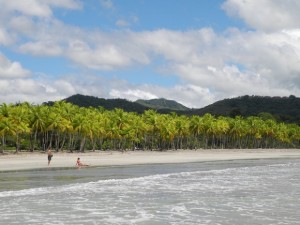
With hundreds of miles of pristine beach, Costa Rica is home to some of the most incredible beaches in the world. Here is our list of the best beaches in Costa Rica, which are not only some of the most beautiful, but also those with adventurous activities, wildlife, and often complete solitude.
Playa Cocles

Sean
The jungle beach town of Playa Cocles in the South Caribbean is easily one of the best places to live or visit in all of Costa Rica. The stunning jungle-backed beaches stretch for miles with barreling waves for surfers, incredible wildlife for nature lovers, and deserted patches for those seeking relaxation.
The neighborhood hosts a world class yoga studio, several spas, a Costa Rican chocolate café, and an incredible variety of international restaurants. The Caribbean flavor from nearby Puerto Viejo, a short two miles away, trickles in and it’s not uncommon to hear Reggae or eat coconut curry stew on the road.
Cocles will definitely rank as one of the best beaches in Costa Rica for those desiring true jungle immersion with a strong expat community focused on healthy living and those brave enough to surf the epic waves.
Manuel Antonio

Xiao Zhuli
Manuel Antonio may be the most popular beach in all of Costa Rica. It certainly has a reputation for being an American tourist destination, and the many expensive Americanized restaurants reflect that.
However the beautiful beaches in the national park are some of the most stunning in the country and teeming with wildlife. Spotting iguanas, coati, sloths, and all four species of monkeys is likely inside the park and often on the beach. During migration season you can see whales and dolphins offshore. Other outdoor adventures like parasailing, ziplining, and horseback riding are also available.
If you can’t stand the crowds, come during the very beginning or end of the dry season to enjoy sunny days and beautiful sunsets on relatively empty beaches.
Playa Samara

Daniel Stanberg
Playa Samara is one of the most beloved beaches in all of Costa Rica. Laid-back hotels and restaurants line the horseshoe bay, yet the shore remains empty, offering solitude and relaxation. The relatively flat sea is perfect for kayaking, fishing, paddleboarding, or learning to surf. Nearby wilderness beaches are perfect for exploration.
The town has an expat presence with sushi bars, Italian restaurants, and Canadian-owned hostels, but maintains its small town authenticity. Fishermen are everywhere selling their fresh catch on the shore. Delicious sodas (Costa Rican cafes) pile plates high with rice and beans and seared seasoned carne.
It is a great place for families, expats looking to invest in a business, vacationers, and backpackers.
Playa Guiones

Chris Gold
If you enjoy surfing and yoga, expect to arrive in Playa Guiones and never leave. The town, which is in the Nosara region of the Nicoya Peninsula, sits on a white sand horseshoe bay with excellent waves for beginner, intermediate, and advanced surfers. The many surf schools and board rentals make learning and practicing very accessible.
The Nosara Yoga Institute in Playa Guiones put Costa Rica on the yogi map and now several studios and yoga retreat centers reside in Playa Guiones and nearby beaches.
Beyond yoga and surf, there is plenty to do in Playa Guiones. The town has lovely cafes and restaurants and the expansive beach makes for great walks. Every evening at sunset the town gathers on the shore to watch the epic sunsets.
Nearby Playa Rosada and Punta Pelada are also beautiful and can be walked to from Playa Guiones.
Manzanillo

Diana
The intimate beach coves hidden in the wildlife refuge of Manzanillo are some of the most beautiful beaches in Costa Rica, if not the world. Turquoise water crashes on the golden sand, dramatic cliffs offer stunning views, and the lush jungle filled with animals spans for miles. Take a nature hike, snorkel the reef, or simply relax.
For added adventure, take a tour through the jungle spotting howler monkeys and sloths, hike to the viewpoint for amazing views of the crashing waves and nearby beach coves, then climb into the coral caves where bats seek refuge.
The town is a small distinctly Caribbean fishing village with a few local Caribbean restaurants and cabinas. Popular Puerto Viejo Limon and the many beach towns near it offer options for other restaurants and lodging and are a bike or short bus ride away.
Pavones

Arturo Sotillo
The black sand beaches in Pavones are some of the most dramatic on the Pacific Coast. Glowing frothy green sea kisses the dark shimmering black shore for an incredible contrast. The surrounding wilderness will make you feel like you’ve reached the end of the earth and the sunsets are positively spectacular.
Beyond its beauty, Pavones is famous for its long left point break. Grab a surfboard and ride the wave that put this town on the map. If you’re more of a swimmer, a cool, clear water river runs for miles from the hills down to the beach. Climb to the top and take inner tubes down, jump off the bridge with locals, or simply cool off and explore.
Restaurants and accommodations are inexpensive and locally owned and even with the influx of surfers the town maintains its Costa Rican charm.
Playa Barrigona

Massie
This beach is so beautiful, even Mel Gibson owns property here. Scenic country roads connect Playa Barrigona with nearby Samara making it an undiscovered but accessible place to visit. The sand is white with a pink hue and at low tide you can climb large stretches of sand dollar-covered rocks. Olive ridley turtles come from all over to lay their eggs on the shore during the rainy season, making it a very special place ecologically as well. The riptides are strong so take care with little ones and do not go out swimming.
San Juanillo

Enrique Balsevicius
A short drive from the popular surf beach Playa Guiones in Nosara, is the secret white sand beach of San Juanillo. Fishing boats rock on the turquoise sea and millions of shells wash up on the shore. Explore the massive rocks or float in the clear water. The town itself is quite small and authentically Costa Rican.
Playa Uvita’s “Whale Tale”

CostaRicaProperty
The area of Uvita is famous for its incredible marine life and frequent whale spottings, but few know about the secret “whale tale” beach. During high tide the shore is completely submerged, but as the tide recedes a beautiful sandy peninsula reveals itself for relaxation and exploration.
Playa Carrillo

M.Prinke
The peaceful palm tree-lined horseshoe bay of Playa Carillo on the Nicoya Peninsula might be as close to paradise as it gets. The white sand beaches and calm water makes it a perfect beach for relaxation and sunbathing. Boating and fishing are also quite popular due to the calm sea. It is also possible to spot crocodiles in the nearby river. The town has restaurants and accommodations, but travelers will find a larger community in the nearby town of Samara, which is a pleasant hike or a short bus ride away.
Best Beaches in Costa Rica?
The answer really depends on you. Do you have a favorite beach that we’ve missed?


Sal Falko
In recent years Central America has received an influx of North Americans investing in local business. Countries like Belize, Nicaragua, Costa Rica, and Panama have become increasingly popular places for baby boomers to retire. Why has this generation chosen to settle offshore?
Quality of Life
With warm weather year round and stunning beaches, lakes, volcanoes, and hillside, Central America has an appealing climate. Many small jungle beach towns are popular among tourists, making foreign investment a lucrative possibility. For those looking for city comforts, most cities lie in close proximity to incredible wilderness. Granada, Nicaragua sits near a stunning lake and volcano and also has great restaurants, nightlife, and culture. Plentiful fruit and vegetables and many outdoor activities also make healthy living not only possible, but easy.
Lower Cost of Living
Even more expensive Central American countries like Costa Rica offer a lower cost of living than the United States. It is very possible for individuals to live comfortably on less than $1,000 per month. Nearby Panama is even more affordable and food, entertainment, and lodging in Nicaragua is half the cost of Costa Rica. This low cost of living is incredibly appealing to baby boomers looking to retire and live abroad without sacrificing luxuries like dining out, maid service, and travel.
Proximity to the U.S.
Central America is an inexpensive, quick flight from the United States, making investment or a permanent move less daunting. Individuals are still able to visit their families or live part time in each place.
Return on Investment
While some investors plan to live and settle in Central America, others buy property simply to earn income from their investment. Property costs are low and vacation rentals can yield a good salary, making these foreign investments a popular choice for those looking to save for retirement.

Costa Rica is home to some of the most beautiful beaches in the entire world. Whether you are looking for five star luxury, epic waves, jungle immersion, or your own private paradise, you will find it here.
In short: GO!
For those planning a trip, here is a list of some useful and lesser-known facts about this small but dense Central American gem.
Photo Credit: Halle
1. It Is Possible to Spot Animals Virtually Anywhere
Costa Rica is home to over 150 national parks filled with rare and endangered flora and fauna. It’s well worth a trip into some of the less trodden regions, namely Manzanillo on the South Caribbean and the Osa Peninsula on the South Pacific, but it is possible to find animals virtually anywhere.
In the small surf town of Pavones don’t be surprised to look up from your surfboard and see ten Scarlet Maccaws soaring over your head.
In Puerto Viejo Talamanca traffic jams are often caused by three toed sloths crossing the road.
In the town of Manuel Antonio be careful that a monkey doesn’t steal your lunch or your passport!
Look around and you will be amazed at what you see.
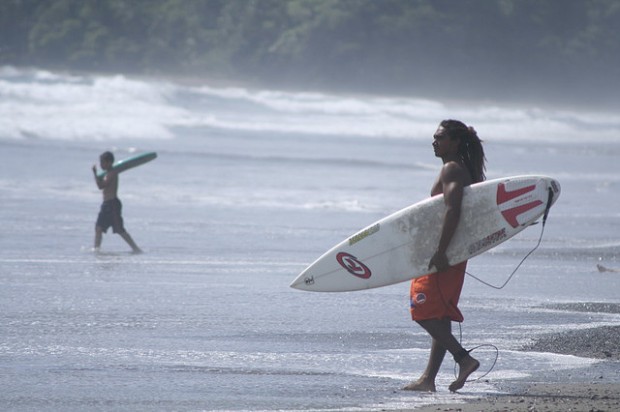
Photo Credit: F. Sosa
2. The Caribbean Coast Is Worlds Away from the Pacific
Though it’s only a four hour ride from the major airport terminal in San Jose to the South Caribbean Coast, it may feel like you’ve entered a different continent.
Homes are painted bright Caribbean colors, reggae music plays in the streets from sarong shops, rastas sell lobster stew and coconut rice on every corner, and Jamaican Creole mingles with heavily accented Spanish. The ocean is turquoise and covered in coral reef.
Costa Ricans in the rest of the country may tell you not to go. “It’s too dangerous.” Ignore them. It’s one of the best parts of the entire country.
3. Always Use the Pronoun “Usted”
In many Latin American countries, including Mexico, it is absolutely appropriate to use the pronoun “tu” when referring to “you”.
“Tu tienes un novio?” (Do you have a boyfriend?)
Well, in Costa Rica it is incredibly impolite to use the “tu” form. Generally they understand that you are a foreigner and will not take offense, but blend in better and show some respect by using “usted.”
“Usted quiere una novia?” (Do you want a girlfriend?)
4. It Is Expensive
Costa Rica has a reputation for being expensive. That reputation is well deserved. Plan to budget around double what you would spend in other Central American countries like Guatemala and Nicaragua.
You can strike deals on hotels and housing rentals in the low season, but food and restaurants tend to consistently be the same price as Western countries like the United States. Certain items, like cheese, are imported and cost nearly double what they do in the U.S.
5. You Can Drink the Water
In most of the country it is absolutely safe to drink water from the tap. In Pavones and Corcovado National Park the water comes from mountain springs and actually tastes better than bottled. The water is also safe to drink on the entire Nicoya Peninsula.
With water costing around $1 a liter in grocery stores, much more in restaurants, this is a huge money saver. Besides, do you want to put more plastic into the Earth?
Keep in mind this is not true everywhere. Some locals drink the water on the South Caribbean but I have heard horror stories from tourists who have done the same.
6. The Rip Currents Are Relentless
The surf in Costa Rica is world class, which can make for extremely dangerous swimming. Always check with locals before jumping in and never swim alone.
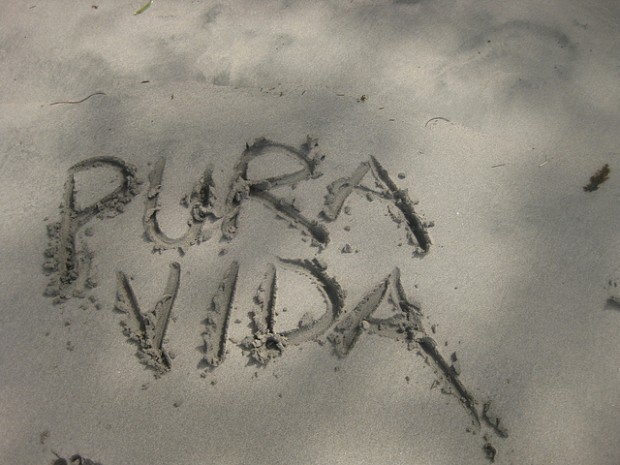
Photo Credit: Kate
7. Learn the Meaning of Pura Vida
Don’t be surprised when you hear locals say “pura vida” in response to virtually anything. “How are you?” “Pura vida.”
“Oh, excuse me.” “Pura vida.”
“The whole town is flooded and the roads are closed for the next week?!!!” “Ah, pura vida.”
This phrase, which directly translates to “pure life”, encompasses an entire way of life in Costa Rica.
It means letting go of what you can’t control. It means accepting what life hands you and making the most of it. It means finding happiness wherever you are, whatever your situation.
I suggest you learn it quickly and use it as often as possible.

Want to swing through the jungle like Tarzan? Then take up canyoning and Costa Rica is the perfect place to give it a try.
This emerging eco-sport is a combination of waterfall rappelling, down climbing, river tracing, and hiking. Check out our picks for the most incredible, if not a bit off the beaten-path, places to go canyoning.
1. Hang by a rope in Jaco.
Jaco might be home to the most rappel lines in all of Costa Rica. It is also where you will navigate down a 300 foot waterfall through a series of smaller falls and finally end up dipping into calm pools, the perfect spot for a bit of bird watching.

Photo Credit: Gina Grove
2. Uvita, is for beginners.
This is where Mother Nature built her own waterfall theme park. It’s a great place to begin canyoning. Most treks involve rappelling through several waterfalls of varying heights from smallest to biggest, making it a great stepping stone into the sport.

Photo Credit: Eevryday Family Blog
3. Turrialba meshes zip lines and waterfalls, high up in a cloud forest.
Turrialba is home to the Pacuare river and the Puente Vigas Canyon and sits just a two hour drive below San Jose, the nation’s capital. Canyoning at Turrialba is just a bit more difficult than at Uvita, with waterfall rappelling, vertical climb downs, and zip lines through a rustic cloud forest.

Photo Credit: Saku Yanini
4. Waterfalls are Monteverde.
Prepare to get wet, Monteverde is known for its waterfalls. Getting to these isolated waterfalls will have you hiking through a cloud forest into a remote canyon surrounded by primary rainforest. Definitely a true canyoning experience.

Photo Credit: Graeme Churchard
5. Go big, go large at The Lost Canyon.
The Lost Canyon is hands-down said to be the best spot for canyoning in all of Costa Rica. Near the Arenal Volcano, it is rugged, mountainous terrain making for an memorable canyoneering experience.

Photo Credit: Lars Olsson
Have an incredible canyoning experience you would like to share or just know of a great spot we missed? Leave us a comment below!

For many, a trip to the Caribbean is often associated with cushy cruises, all-inclusive resorts, 24 hour buffets, and non-stop blended cocktails, not necessarily things that people travelling to Costa Rica are looking to find.
Instead, most expats make the move down to Costa Rica to get closer to nature, to find adventure, or to simply submerge themselves in the laid-back lifestyle of the locals.
Luckily the province of Limon (the most culturally diverse province in Costa Rica) and the beach towns of Cahuita and Puerto Viejo de Talamanca, have something a little different to offer. Saturated with Caribbean heritage, both towns provide expats and tourists alike with a true taste of the Caribbean, without all the extras.
Located between the Caribbean Sea and the central mountains, Cahuita and Puerto Viejo each share a Creole culture that is unique to Costa Rica.
In fact, the first person to settle in Cahuita was an afro-Caribbean fisherman named William Smith in 1828, and from there many other fishermen followed, eventually creating an afro-Caribbean fishing village.
So what can expats expect to find?
A blend of Caribbean and Costa Rican culture wrapped up in a relaxed, beach town setting that is very welcoming of expats.
Locals in this region typically speak Spanish or an africanized-creole English, the radio will play variations of both salsa and reggae and you will be able to enjoy traditional Costa Rican cuisine like gallo pinto (rice and beans) as well as Caribbean favorites like spicy jerk chicken.
Cahuita

Costa Rica Cahuita
Found near the southern end of Costa Rica’s Caribbean coast, Cahuita is not yet overrun with tourists. Upon entry you will instead be welcomed by a laid-back, local village type vibe, complete with porches and hammocks.
With only around 4,000 residents, Cahuita was once secluded from the rest of Costa Rica. Only in the last thirty years has the town begun to emerge from this isolation, especially after the construction of the highway between Puerto Limon (27 miles north of Cahuita) and Costa Rica’s capital San Jose.
Without a doubt, the main attraction of Cahuita, other than its sandy beaches and crystal blue water, is the Cahuita National Park. Covering 6.5 square miles of land and sea and an additional 86 square miles of marine area, the Cahuita National Park is actually a small reserve as far as Costa Rican reserves go. Visitors to this majestic reserve can expect to find monkeys, iguanas, birds, sea turtles, snakes, and sloths living in the lush rainforests, mangrove swamps, and coral reef (Costa Rica’s largest) of the Cahuita National Park.
Puerto Viejo de Talamanca

puerto viejo CR – Magalie L’Abbe
The larger of the two coastal villages, Puerto Viejo can be found just ten miles south of Cahuita and is quickly becoming a Costa Rican tourist hotspot for its world class surfing.
With all of the charms of Cahuita, but on a larger scale, Puerto Viejo is full of restaurants, bars, and nightclubs for those that crave an exciting night life, but still has that relaxed beach town feel for those that don’t.
Like Cahuita, this town has much to offer for both expats and tourists and you can spend your days surfing, hiking, horseback riding, and boogie boarding or simply stretched out on a hammock breathing in the Caribbean breeze.
Living on Costa Rica’s Caribbean coast
For expats coming down to Cahuita or Puerto Viejo, it is always recommended that you rent before you buy. This is so you can be absolutely certain that you’ve chosen the perfect spot. But don’t worry some do buy real estate on Costa Rica’s Caribbean coast.
However, jumping from rental to rental is a trend with expats in this region. But don’t let that worry you, for moving around down here is nothing like moving around back home.
Almost all of the rentals in these towns come fully furnished, and because of this, people can pack up their few things in a heartbeat.
Why do they move?
With of all the options it can be hard to make a decision. Do you want to live by the beach or in the hills? In an apartment or a house? If a house, what style of house? If you basically only need to pack some clothing and a few pots and pans, it’s easy to pick up and go whenever the mood strikes.
So if Costa Rica’s hidden Caribbean coast has you intrigued, plan a trip down to see what it’s all about. And like the many expats before you, take some time before you buy and rent around, as you look for that ideal location along this breathtaking coast.

Nosara, Costa Rica is becoming increasingly popular among traveling surfers, because of its more laid-back, relaxed atmosphere than its bustling neighbor to the north, Tamarindo, while boasting world class surf almost all year long.
Most surfers visiting Nosara head straight for Playa Guiones, which is, hands down, one of the most consistent breaks in Costa Rica. Playa Guiones is a swell magnet and Punta Guiones (at the South end of the beach) juts farther out into the Pacific than many other points in Costa Rica. Which means Playa Guiones picks up both North and South facing swells bringing surfable waves over 300 days a year.
Like it so much you want to move here? So did others, and the result is a growing expat community. Thankfully, most seem intent on keeping development and over-building to a minimum.

The Costa Rica 3 Count, where we bring you 3 Costa Rica stories that you shouldn’t miss.

Photo Credit: Berny Mills
1. Border Crossing Mistakes (and Why They Make You Look Dumb)
Walking across a land border seems like you’re entering into a no-man’s-land of confusion. At an airport, VIPs enter and zoom through in blackened sedans, but when you walk across a frontier, especially in a developing country, you get a window into how ordinary people and traders travel. Such is the case when crossing on foot from Costa Rica to Nicaragua.
2. Costa Rica Hotels are King in Sustainability
Costa Rica is leading a growing trend of low-carbon to no-carbon footprint hotels. Currently there are 29 hotels labeled as “five leaves,” Costa Rica’s distinction of sustainability, which means these hotels ensure their operations are at a near zero environmental impact.
3. You Don’t Have to Give Up Your Golf Game When Moving to Costa Rica
If you want to become an expat in Central America, rejoice, you don’t give up your golf game when you move. Golf is blossoming in such far-flung, but expat-friendly, locations as Nicaragua, Honduras, and Costa Rica.


Costa Rica has been called a paradise by many, but according to Promed, council for the international promotion of Costa Rica Medicine, it is also a health care paradise, a place where tourists can come to receive quality medical treatment at a fraction of what they would pay back home.
Sound a little too good to be true?
A survey conducted by Patients Beyond Borders (the most trusted source in medical travel) can clearly illustrate this point, for in 2011 a patient could expect to pay:
- $88,000 for a coronary artery bypass graft in the United States or $9,500 in India
- $33,000 in America for a hip replacement, or $12,500 for the same procedure in Mexico.
This is why the medical tourism industry is booming and why more and more people are opting to leave their homes behind to hop on a plane and seek medical attention elsewhere. In fact, according to Helmut Wachowiak, a Professor at the International University of Applied Sciences in Germany, the global medical tourism market is worth 40-50 billion dollars and is growing about twenty percent each year.
For many people, the idea of combining medical treatment with a vacation may sound a bit odd, but with medical tourism companies like Dr. Holiday out there to build itineraries around medical appointments, it can be a convenient and cost efficient option.
The simple truth is, people need affordable, quality medical treatment, and the idea of recuperating in a tropical paradise like Costa Rica often tips the scales.
So what makes Costa Rica the right choice?
To begin with, Costa Rica is in close proximity to the United States, immediately giving them an edge over Asian and South American countries. And to top it off, U.S. citizens don’t even need a visa to enter.
While the idea of leaving your home and jetting off to a foreign destination to receive medical treatment may sound daunting, according to Promed, Costa Rica has one of the best public health systems on the American continent. If you choose to receive treatment in Costa Rica, you can rest assured that you will be treated by certified professionals working in an internationally accredited hospital like the Clinica Biblica Hospital in Costa Rica’s capital, San Jose.
The Clinica Biblica Hospital was the first facility in the region to receive Joint Commission International Accreditation, which is a set of standards designed by a group of global health care professionals. And to accommodate foreign patients, many establishments, including the Clinica Biblica Hospital, have international departments that offer visitors concierge services like accommodation information and sightseeing tours.
While it is true that some American doctors try to discourage medical tourism, saying that the quality of treatment and follow-up care might not be as good as back home, the standard of care in the private sector of Costa Rica is considered high by both the medical community and past patients.
What medical treatments are available?
The health care professionals in Costa Rica offer numerous treatments at much lower rates, treatments like:
- Plastic surgery
- Dermatology
- Gastric bypass surgery
- Neurology
- Orthopedics
- Cardiology
- Ear, eye and throat care, and
- high risk pregnancy
But currently, one of the most in demand medical tourist procedures in Costa Rica is dental care.
Dental care in Costa Rica
Massimo Manzi, the Director at Promed, estimated that 40,000 medical tourists came to Costa Rica in 2011, and of those 40,000, around 15,000 came seeking dental treatment.
Again, this is mainly cost related, and since, according to Biotech Business Week, 45% of American’s don’t have dental insurance, it should come as no surprise that they are searching for alternative options.
Receiving dental care in Costa Rica will cost 30-40% less than in the United States (Deloitte Center for Health Solutions). So for many, the choice is quite simple; they can spend a large amount of money getting a crown back home, or they can take a medical vacation to Costa Rica, get the crown for less, and then spend a few extra days relaxing on the beach.
Medical tourism might not be for everyone, but it’s a serious option that many people are choosing to try. So if you are in need of medical or dental treatment and you expect the bill to be overwhelming, do your research, pack your bags, and get the medical/dental attention you need as you take a little vacation to gorgeous Costa Rica.

Costa Rica’s forests cover less than 0.03% of the Earth’s surface, yet it contains nearly 5% of the planet’s plant and animal species. Clearly this tiny country is an incredible place to experience our planet at its most abundant!
1. Ballena National Marine Park – Puntarenas, Central Pacific Region
This unique park is along one of the more remote stretches of Costa Rica’s coastline, on the southern end of the Central Pacific region, and encompasses several beaches. The park gets its Spanish name for a peculiar sandbar formation at Playa Uvita beach that goes straight out toward the ocean before splitting and curving in two directions, much like a whale’s tale.

Photo Credit: David Herskovits
2. Palo Verde National Park – Guanacaste, Pacific Coast Region
This is an undiscovered jewel in the Costa Rican park system. The animal population is spectacular. The trail system leaves something to be desired, but this certainly means fewer crowds, and there are a number of areas that can be explored by boat.

Photo Credit: Rod David
3. Caño Negro Wildlife Refuge – Alajuela, Costa Rica – Nicaraguan Border
Nature cruises through these wetlands are quite popular, but don’t worry, there are thousands of acres to explore. A boat trip here or in Tortuguero, or Damas estuary is certainly the easiest and maybe the best way to see a lot of wildlife on your visit to Costa Rica.

Photo Credit: David Berkowitz
4. Manuel Antonio National Park – Quepos, Pacific Coast Region
For a tame, up-close glimpse of the rain forest and some of its more photogenic inhabitants, Manuel Antonio National Park is a favorite. Located on the central Pacific coast, Manuel Antonio is one of Costa Rica’s most visited—and smallest—national parks.

Photo Credit: Emmanuelle Bourgue
5. Monteverde Cloud Forest and Biological Reserve – Monteverde, Cordillera de Tilarán Mountain Range
Costa Rica’s most famous cloud forest reserve is packed with an astonishing variety of life: 2,500 plant species, 400 species of birds, 500 types of butterflies, and more than 100 different mammals have been catalogued so far.
Photo Credit: Jardín Botánico Nacional
Let us know where you get up-close-and-personal with nature in Costa Rica.

What could be better than taking a trip to the gorgeous tropics of Central America? How about making the trip affordable?
Due to the booming tourism industry, this may seem easier said than done, and unfortunately, many once budget-friendly destinations, are no longer so. But that doesn’t mean it’s not possible.
Each year tourists from around the world come to experience the tropical climate, Latin culture and exotic beauty of Central America, but many don’t realize that it can be done on a budget.
Costa Rica, Panama, Nicaragua, and El Salvador are four popular Central American countries that can be truly experienced without breaking the bank in the process.
First Stop, Costa Rica

The most popular tourist destination on the list, and arguably the most tourist friendly, Costa Rica can tend to be a bit pricey But don’t worry, there are ways to keep your costs down.
In big cities like San Jose, prices will typically be higher, so hop on a bus and head for one of the smaller beach towns. A five hour direct bus to a town like Santa Theresa will cost you around ten dollars.
Remember to exchange your money into the local currency colones, as usually only expensive items/places accept American money. Seek out cheap accommodations at a hostel (around ten dollars) and start exploring the beauty of Costa Rica.
On to Panama

Photo: Martha de Jong
Although the tourism industry here is not quite as developed as their northern neighbor Costa Rica, Panama is just as beautiful and the prices are often lower. Again, buses will be the cheapest mode of transportation and hostels your best bet for reasonably priced accommodations (around twelve dollars for a bed). As a perk, many hostels will have communal kitchens, so take advantage of the local market and cut another cost by cooking your own meals. If cooking on vacation isn’t for you, try to avoid restaurants aimed at tourists and instead look for street stalls and small cafes.
Next It’s Nicaragua

Photo: McMallan
Just north of Costa Rica, Nicaragua, known as the land of lakes and volcanoes, is cheaper and attracts a lot less tourists. In fact, you can catch a bus from Costa Rica to Nicaragua for just a few dollars, but remember, you will have to pay a fee of seven or eight dollars to get into the country. Once you are in Nicaragua, exchange your money into córdoba’s and head for small towns like El Trasito, Popoyo and Playa Maderas to soak up the sun and experience the amazing surf. If you visit Isla de Ometepe, be sure to hike up the double-volcano nestled in a lake filled with fresh water sharks, or you can try remote Little Corn Island for cheap kayaking and snorkeling.
Last Stop – El Salvador

Photo: Amber and Bryan via flickr
While El Salvador may not be as popular a tourist destination as the others, most who visit are pleasantly surprised. The people are friendly and welcoming and there are many wonderful, and cost efficient things to enjoy, like taking a trip to the beach town of El Tunco just an hour from the capital San Salvador. Yes the food is a little pricey, but the hostels are cheap and the surfing and swimming is unbeatable. Explore San Salvador on a five dollar bike tour that takes place every Thursday night, or take a leisurely stroll around the city to check out the politically-charged street art.
Ready to go? Remember these tips:
- Take advantage of local transit. While bus rides may be longer, the cost is substantially less.
- Eat like a local. Avoid tourist-targeted restaurants and look for low-key local spots.
- Make the most of happy hour.
- Visit “free” national parks for hiking and observing nature and wildlife.
- Stay in a hostel. Typically group and private rooms are offered.
- Surf and swim – it’s free!
It’s a common misconception to think that a good holiday means an expensive holiday. Cliché but true, the best things in life are free, especially when you are somewhere as beautiful as Central America. The sun, the mountains, the beaches, the surfing, it’s all free and all unforgettable. If you are not overly concerned with five star transport and accommodation, Costa Rica, Panama, Nicaragua, and El Salvador can all be yours at a reasonable cost. So do your research, book your plane ticket and get ready to discover the wonders of Central America without putting a dent in your wallet.