



Costa Rica. There are very few countries that Wikipedia seems to have as much of a crush on. To sum up Costa Rica, Wiki talks about Costa Rica’s abolished army, that she’s on the list of 22 older world democracies, has a high human development rate and is ranked five in the world (first of all Americas) in terms of the 2012 Environmental Performance Index.
Wiki is head-over-heels, it seems.
Through all that flattery, there’re facts. Statistics. Awards. Let’s analyze the truth of what the search engine’s saying by looking to the latter of Costa Rica’s attributes today: to their environmental sustainability.
What Costa Rica Was Then (pre-2008)
Before the economic crisis in 2008, coastal urban development was booming. Urban property was valuable and life was good.
Then the crisis.
Property dropped up to 40% overnight.
What Costa Rica Is Now
Now, it isn’t the urban property that’s valuable as much as the rural. And no, I don’t mean for you to dust off your dungarees and become a coffee farmer (because this market also got hit by the recession; I hate to tell you, put those denims back in the attic!) but to notice the ecological value that has gone up instead.
Costa Ricans have been interacting with the land, and by doing so have increased its ecological value. Be it through reforestation, where value is given by the oxygen production and purification of carbon dioxide emissions, or the potential of wind farms in Guanacaste, these attitudes have changed the face of Costa Rica.

Photo: MD Verde
It is now the place where farmers voluntarily subject to environmental restrictions. It’s the place where the natural wealth in the ground is valuable, not just what you can build on it.
Having lived in places where by the end of the day you can see a cloud of smog looming over the city, this attitude is a literal breath of fresh air.
The best part about this all, of course, is that property prices are rock bottom for top notch locations. According to InternationalLiving.com’s Global Real Estate Index 2012 – which highlights the world’s 27 most attractive, and possibly lucrative, real estate hotspots outside the U.S. – Ecuador’s Pacific Coast came out tops. And that was just for its extremely low property costs and good quality housing stock.
Natural beauty, natural sustainability, at a great cost.
What’s stopping you?

The Travel 3 Count, where we bring you 3 travel stories that you shouldn’t miss.
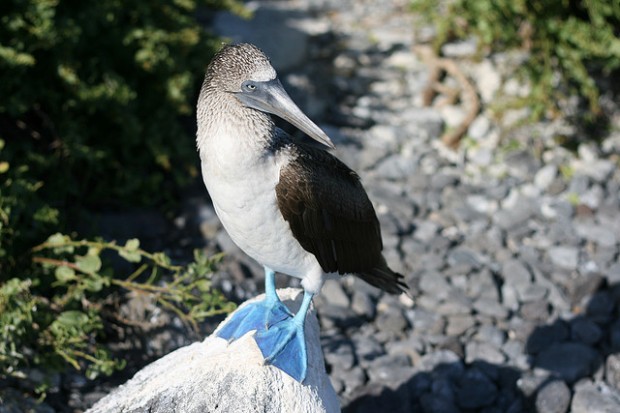
Ecuador’s Galapagos is a must see destination in 2013.
1. Destinations to Watch in 2013
First Up: Conde Nast Traveller’s destinations to watch in 2013 list includes some of Latin America’s gems. Here are the top Latin America destinations to watch in 2013.
- Panama. No longer just a place where ships pass in the night, Panama is the cool Caribbean destination of the moment.
- Mexico’s Mayan Riviera. The Mayan Riviera is set for a bounteous year in 2013.The vibe is deliberately hippy-chic, lo-fi by day and up-tempo at night and is a great place to stay for discerning travelers seeking barefoot luxury.
- Ecuador’s Galápagos Islands Galápagos is one of the most fascinating places on earth, an evolutionary melting pot. It’s already at the top of many wishlists, for the intrepid and for animal-lovers.
2. 21 Cheap Places to Visit… Where Does Latin America Come In?
Up Next. Want to travel, but don’t want to spend lots of money? These 21 cheap travel destinations let you get the most bang for your buck. Want to try it? Tim Leffel’s can help. His mission is to show cheapos how to find travel destinations they can afford.
Where is his favorite cheap spot in Central America’s? Ometepe, Nicaragua.
In Nicaragua, it’s a wide-open blank slate, because there isn’t much tourism outside of Granada and San Juan Del Sur. That means there are but a few nice hotels and restaurants and your main mode of transportation is mostly on chicken buses. But if you want cheap and exciting, Nicaragua is your choice.
3. 6 Must See Latin American Destinations
Finally: With over 7 million square miles to cover and 430 million people to meet between Central and South America, deciding where to start your Latin American adventure can be a little tricky, but with Bootsnall Travel Guide’s six must-see Latin American destinations, the planning just got easier.
- 1. Quito, the Amazon, and Cuenca – Ecuador
- 2. Rio de Janeiro and Iguazu Falls – Brazil
- 3. Lima, Cuzco, Lake Titicaca and Machu Picchu – Peru
- 4. Buenos Aires to Santiago via Bariloche – Argentina & Chile
- 5. La Paz, Sucre and more – Bolivia
- 6. San Jose to Panama City – Costa Rica & Panama
Adventure-lovers rejoice! These top sports are certain to deliver pure beach bliss, idyllic islands, curious creatures, and small towns packed with charm.

Just off the beaten track, yet possessing all of the natural beauty of the Central Pacific, Matapalo, Costa Rica is a welcomed escape from many of Costa Rica’s typical tourist destinations.
Be warned; Matapalo is extremely remote, so your choices for restaurants, bars, shops, and and hotels is limited. But there is plenty to do; especially popular local activities which include surfing, hiking, kayaking, jungle hikes, fishing, and more.
There is no doubt, Matapalo combines dense jungles, breathtaking beaches, and world class surfing in a peaceful, remote setting. Just what you would expect of one of Costa Rica’s most ecologically diverse areas.


Photo Credit: fetus karate via Flickr
Sandwiched between Nicaragua and Colombia, between the Caribbean Sea and the Pacific Ocean, Panama and Costa Rica certainly have a lot in common. Situated in the heart of Central America, these two small nations are both rich in culture and scenic beauty, making them wildly popular tourist destinations, attracting people from all over the world each year.
Then what is it that makes Panama City, according to America Economia, a prime business location over San Jose, Costa Rica? While both cities were ranked relatively high on the list of “Best Cities for Business in Latin America”, with Panama ranking seventh, and San Jose twelfth, what exactly was it that allowed Panama City to jump those five extra spots?
What makes Panama so prime?
The answer lies in Panama’s economy, an economy prime for foreign businesses. Along with the fact that Panama has been a dollarized country for over 100 years, instantly making foreign investors feel more comfortable, Panama also has specific laws put in place to protect foreign investments.
A businessman himself, current President Ricardo Martinelli is behind many of the laws promoting foreign business and trade that have made Panama, economically, the fastest growing country in the Western Hemisphere.
Conducting business in another country can be a daunting task simply because you are working in a place with a different economic climate than your own. Yet while many countries tend to put up barriers, Panama has been working to demolish them. In Panama, foreign entrepreneurs are not only welcomed, but encouraged to purchase or open new businesses, and due to dollarization, Panama’s stable banking sector and USA-Panama free trade, foreign business owners will be more inclined to do so.
Panama has many advantages that make foreign businesses run exceptionally smooth. The Panama Canal, a 48 mile ship canal that connects the Atlantic Ocean to the Pacific Ocean, plays a vital role in regards to trade and global influx by allowing goods to be imported and exported at a significantly faster rate.
 Near the Panama Canal entrance is the Panama Pacifico, a 1,400 hectare business ‘park’ built on what was once the United States Howard Air Force Base. Any business built within the park will be free from income taxes, import duties, real estate taxes, remittance tax, international calling tax, and dividend tax, making it an ideal spot.
Like Panama, Costa Rica’s official language is Spanish and much of their national revenue is fueled from trade and tourism. Unlike Panama, the national currency in Costa Rica is the colone, which gives Panama an immediate edge when it comes to conducting foreign business. Ranked twelfth on the list, which is still very respectable, the main reason Costa Rica fell short to its neighbor is because of its inaccessibility to foreign business in comparison.
Why not Costa Rica?
While Panama welcomes foreign business with open arms, Costa Rica tends to keep them at arm’s length. According to the Small Business Administration in the United States, only half of all businesses will survive five years. Unfortunately in Costa Rica, the success rate is even lower. Why exactly is this?
- Acquiring permanent residency in Costa Rica is difficult. In Costa Rica, unless your planned business is going to require more than $200,000 in capital investment, you won’t be getting residency. You, like most foreigners living in Costa Rica, will have to remain a “tourist” and leave the country periodically every 30 to 90 days to renew your visa. Of course to many, it is a small price to pay to reside in such a beautiful country.
- Starting a business in Costa Rica will be expensive and a little tedious. Gathering all of the necessary paperwork and permits together will take 160 days and will cost more than the average annual income.
- Once the business is established, it will also be expensive to run. As a direct result of the nation’s small population, and with no Panama Canal, foreign business owners can be expected to pay premium on things like imported foods, construction supplies, and technology as they are transported through the mountains.
At number seven and twelve on a list of forty-six cities, both Panama and Costa Rica have exceptional business climates for those considering opening a business in a breathtaking tropical environment. With thousands of tourists flocking to these cities each year to enjoy the luscious landscapes, exciting wildlife and Latin American culture, either city, according to America Economia, would be considered a wise selection. Yet between the two, Panama comes out on top. A dollarized country with a business-savvy President and laws tailored to promote foreign business and trade, Panama City is awarded the title of city with the best business climate.

Cuenca, Ecuador Named Top Expat Destination for 2013
The world’s top retirement spot? In truth, it depends on you. There are many appealing options for a new life in retirement as an expat, as many people are now looking for ways to stretch their dollars. It makes sense, living expenses can be cheaper, cultural experiences richer and the lifestyle more satisfying as an expat.
The top retirement spots for 2013 have a variety of cultural offerings, climates, and lifestyles. Each destination is desirable in its own way, but they all offer something increasingly hard to come by at home: A good quality of life for a reasonable price.
Here is a guide to the best places to retire overseas in 2013:
1. Ecuador
Living on $1,600 a month including rent isn’t unreasonable in a place like Cuenca, Ecuador. Buying a house or condo near the water could cost you less than a quarter of popular U.S. destinations of similar climate. When you make the move, Ecuador allows you to import your household goods duty-free, and with its new, simplified visa process, it’s no wonder Ecuador tops the list as a best-value retirement paradise.
But for many, the true draw is the perfect climate. The nation lies on the equator. The beaches are tropical, but up in the Andes, the weather is mild and spring-like year-round. Best bonus yet, it’s one of the best countries for an expat business start-up.
2. Panama
In Panama’s capital city you can have all the U.S. comforts of a big city, including outstanding healthcare, restaurants, and daily activities. On a monthly budget of $1,700 to $2,500 a month you could eat out regularly, have a housekeeper come in a few times a week, and enjoy movie dates a few times a month.

View of Panama City skyline, a top expat destination for 2013
Panama’s major draw is its Pensionado (pensioner) visa, where qualified retirees achieve residence status fairly quickly. The program entitles visa holders to discounts on medical treatment, dining, movies, and more. Most expats in Panama regret they didn’t come sooner, as many say they chose Panama for the friendly people…its rainforest…plentiful beaches and the choice of secluded or city living lifestyles.
In Panama it’s possible to put a toe in the Pacific after breakfast and in the Atlantic before dinner…on the same day. There are cloud forests for bird watching, such as the resplendent quetzal, and even orchid gazing, all in the same weekend.
3. Malaysia
Malaysia is Asia’s Panama. That is to say, this country is a regional and a global hub, for trade, for business, and for culture. Malaysia is a multi-ethnic and multi-cultural country which attracts many tourists annually.
Penang, Malaysia offers expats an affordable living under $2,000 a month in what is considered “luxury housing” in the states. Here, an expat can eat out often and enjoy all the things the city has to offer along with top notch medical care at an affordable price.
Malaysian expats feel the country has everything. Its weather is a tropical 82 F all year round and its beaches, islands, and jungles are pristine. It has some of the region’s best street food, great restaurants, bars, shopping malls, and movie theaters—and it’s all affordable.
4. Mexico
Mexico’s colorful and vibrant culture does rank high with expats who live here…look deeper and Mexico has much to offer. Mexico is an easy, convenient choice for many expats who are seeking a first-world country at bargain prices. No wonder a million or more expats make Mexico their home.
Today’s Mexico offers modern highways and airports, cable and satellite TV, Internet, and many other items expats enjoy at home. Want your “big” U.S. lifestyle abroad, you’ll get it in Mexico with an overall cost of living at about half of what you’d pay in the U.S. or Canada.
And one of Mexico’s biggest pluses is its sheer size and variety. If you want beach, Mexico has thousands of miles of it—chic resorts, sleepy beach towns, and everything in between. Prefer cool, mountain scenery? Mexico has that, too. More likely than not, whatever you’re looking for in a retirement destination you will find it in Mexico.
5. Costa Rica
Costa Rica is where you go to live the lush life. It is lush with nature—misty rain forests, extraordinary wildlife, active volcanoes, and fabulous beaches—as well as such comforting amenities as malls, supermarkets, restaurants, museums, and social clubs.
U.S. retirees have flocked here for years, drawn by its mild climate, prosperity, literacy rate, health care, and, significantly, stable government. Another plus: Costa Rica’s commitment to a thriving natural park system that is second to none in Latin America. This is as biodiverse a country as you’ll find anywhere. The country offers micro-climates, meaning you can fine-tune your weather by moving up and down the hills.
Though not the bargain it was a decade ago, Costa Rica continues to draw moderate-income retirees, who meet the country’s requirement of income of $1,000 per month from Social Security or a pension. Best part, residence is easy enough that just about anybody can do it. Residents are eligible to join the universal health-care system, known as Caja. The cost, based on income, can be as low as $49 a month. After that, care is free.
6. Nicaragua
Want a budget-friendly retirement destination? Think Nicaragua. Geographically, the nation is blessed with two long coastlines and two big lakes, plus volcanoes, highlands, rain forest, and rivers. In this manner, it has everything Costa Rica and Panama have, but it’s less discovered and developed and available to adventurers and eco-travelers at bargain rates.
Property values have fallen significantly in this country over the past several years, thanks to Ortega’s re-election and then the global recession. As a result, you can buy one of Granada’s classic Spanish-colonial haciendas for $50,000 or less. A couple could live comfortably in this city on a budget of $1,200 per month.
Best of all, its lower cost of living does not mean you have to sacrifice the quality of life, in fact, it’s possible to live in Nicaragua with even more luxuries than you were accustomed to, simply because the prices are so low.
Retired Expat Communities
All these destinations have large expat communities, so doing your research can put you among other people like you; with similar interests. Learning a foreign language will probably be a requirement; but again if you have a sense of adventure, and don’t want the typical cookie cutter retirement this could be something new and stimulating.

The Costa Rica 3 Count, where we bring you 3 stories that you shouldn’t miss.
How to open a bank account in Costa Rica as an expat.
1: How to Open a Bank Account in Costa Rica, (Without Losing your Cool)
First up: The rumors are true, setting up your first bank account in Costa Rica can be nightmare, but luckily, once that’s done, banking is pretty straightforward.
It’s best to check with the bank and know the requirements to set up an account, but most now require that an applicant have Costa Rican residency to open an account.
But generally ask for:
- Passport
- Residency documents
- Utility
- Letter of recommendation from a financial institution in your country
- Letter from your employer with the official stamp of the company (if employed)
- Reference letters from current account holders at the bank you are applying
2. What Type of Overseas Property Buyer Are You?
Next Up: Great news for those thinking about buying property in Costa Rica, the current combination of world property market, foreign currency rates, and economic factors are presenting unique opportunities.
If you have been looking at property for some time, or you have an overseas destination that you love and keep going back to, or even if you have considered retiring there one day, you will be happy to know, the timing is perfect.
3. 10 Things to Consider When Deciding to Rent or Buy as an Expat
Finally. Buying real estate in Costa Rica, or anyplace overseas, is fundamentally about diversification. When soon-to-be expats decide to make the move abroad, the first big question he or she often considers is where – but in reality this question should be: Is it best for me to buy my retirement residence overseas or rent?
San Jose, Costa Rica and Panama City are good examples, both offer expats lifestyle options, and neighborhoods just a mile or two away from each other can make for dramatically different living experiences. Buying before giving yourself a chance to understand this can mean the difference between loving your new life overseas and regretting it.