


It’s as Beautiful as They Say
There is a very good reason Costa Rica has enjoyed its spot as a number one tourist destination and settlement area of choice among retirees for years. Apart from an accommodating residency plan, a stable government, and ease in exchanging the dollar for the colon, one of the facts about Costa Rica is that, for a country not much larger than the size of Vermont, it has one of the most diverse environments and climates imaginable.
Those who live there and those who visit, rave about the explosions of colorful birds that decorate the sky, and the exquisite flowers creating equally colorful explosions across Costa Rica’s virulent landscape. People come to Costa Rica not only for its magnificent mountains, studded with volcanoes, its rain forests and sparkling beaches, but because of Costa Rica’s progressively greener policies.
Quick Facts about Costa Rica Geography
The diversity of its climate is due to its structure. The central spine of Costa Rica contains a range of towering mountains, divided into the Cordillera Central, and the Cordillera de Talamanca. These mountains separate the Pacific Ocean and Caribbean Sea watersheds, on the tapering Central American tail, measuring no more than approximately 100 miles across at its narrowest point.
The tallest mountain in Costa Rica is located in the Central Range, the active volcano, Irazu, at 11,259 feet. Three other active volcanoes nestle within the Cordillera Central Range, although most of the 67 volcanoes in Costa Rica are dormant or extinct.
Although Costa Rica enjoys twelve hours of sunlight per day, with a mean average temperature of eighty degrees, the temperature can rapidly grow cooler in the higher elevations. Travelers using the mountain passes are advised to have layered clothing; shorts and tee-shirts for the central plains, sweaters and long pants for the elevations. During the rainy season, they are advised to carry rubber boots.
Costa Rica’s Bio-Diversity
The various micro-climates of Costa Rica create the perfect setting for bio-diversity. Nearly five percent of the world’s bio-diversity can be found in this tiny country. Of its 12,119 species of plants, 950 are unique; native only to Costa Rica. It also has over 100 native trees and 1,400 types of orchids.
The combined numbers of various birds, freshwater fish, amphibians, reptiles and mammals equal over 1,700 species. Because Costa Rica understands its role as stewards of such a unique heritage, in recent years, it has placed into practice some very progressive and successful, environmental laws. In 2010, it was named the winner of the Future Policy Award at the global summit on bio-diversity held in Nagoya, Japan.
Facts about Costa Rica’s Entrance as an Environmental Leader
 Costa Rica has been making conservation history. Although it had taken substantial losses in deforestation, Costa Rica passed a National Forestry Law in 1969 to initiate recovery from the environmental damages. The policy was slow in gaining headway. Due to the insistence by the World Bank and the IMF to increase agricultural exports to service their debt, Costa Rica lost an additional 29% of its forests to cattle ranching and farm cultivation between the years 1970-1980.
In 1996, Costa Rica attached a “payment for environmental service” program to its Forestry Law. Land-owners were compensated for the benefits gained by society as a whole for maintaining sound environmental practices. Taxpayers’ benefits included the provision of fresh water for consumption and hydro-electric purposes, the mitigation of green house gasses, and the protection of bio-diversity for the purposes of research and the preservation of its natural beauty.
Costa Rica currently has 25 National Parks and 58 wildlife refuges. Combined with its forest reserves and protected zones, 27% of its national territory is now under environmental protection laws.
Eco-Tourists Love Costa Rica
The pay-out for recovering its wilderness lands wasn’t immediately economical. One of the interesting facts about Costa Rica is that, lacking a military, it can pour a great deal of its tax base into other programs. However, Costa Rica suffered its own years of inflation, with a 20% poverty level that had not been reduced in fifteen years, despite urban growth. It actually fell from 28th place to 47th in the Human Development Index between the years 1990 and 2005.
In the last few years, however, it has seen a thriving industry in eco-tourism. This has caused a trickle-down effect, stimulating the economy as a whole. The towns close to the national parks are directly benefitted as tourists use the services of hotels, restaurants, transportation, and handicraft shops.
Swinging from the Trees
More than one quarter of Costa Rica is covered with rain forest. Since rain forests have very dense brush, as well as a high canopy of trees, hiking through one can give you the feeling you live in a shadow world as a hobbit who has lost his way into his village. Costa Rica, however has a solution for this. The hiking trails often contain walkways or skywalks and bridges, so you can walk above the tree canopy for some spectacular views of the tumbling forest below you.
For the truly adventurous, there is the canopy tour. First developed by U.S. scientists who wanted a way to study trees without disturbing the plant, insect or animal life, the canopy tour consists of platforms built into the strongest trees, with a zip line strung between them. Tourists may then swing from tree to tree throughout the forest with the use of a harness. Canopy tour operators can be found within all the national forests of Costa Rica. There are some risks, however. Occasionally, an operator will use broken or substandard equipment, so it’s best to know something about the sport before zip-lining.
The Not So Green Facts about Costa Rica
Costa Rica’s early urban and agricultural development were largely responsible for the critical deforestation experienced before the 21st century. Agriculture continues to be the biggest threat to Costa Rica’s green image. According to the World Resources Institute, Costa Rica is the biggest importer of pesticides in the world. The use of pesticides has been concentrated enough to pollute crucial waterways enough to even cause chemical poisoning in humans.
Experts state that the reason is because Costa Rica has not yet created a strong agricultural policy for the education and use of organic techniques. Farmers still rely on the methods used by corporate farmers, applying the same pesticides to their land over and over again.
Another issue that has erupted to the surface is the proposal to remove 1,000 hectares of the Rincon de la Vieja National Park for the development of a geothermal energy plant. Opponents state the project would disrupt the eco-systems within this National Heritage Site.
The Sustainable Future
Although eco-tourism has become one of Costa Rica’s biggest industries, Costa Rica cannot ignore the needs of its inhabitants. Agriculture continues to be a major export, and energy solutions still need to be addressed. Costa Rica’s challenge will be in finding ways to balance their ecology with development, but the good news is, typical of Central American thinkers, Costa Rican leaders view challenges as a means of exercising innovative thought. Considering the policies they’ve already implemented to make Costa Rica both a green and thriving economy, their problem-solving methods are sure to continue to gain global acclamation.

When you close your eyes and picture your dream retirement, what do you see? How about smooth, powder-white sand beaches and crystal blue water, all wrapped up with moderate, year-round weather at an affordable price? The beautiful island of Roatan Honduras, can offer expats all of the above and the best part is, you don’t have to be dreaming to make it a reality.

Timothy Wildy
The largest of the Bay Islands, Roatan can be found just off the northern coast of mainland Honduras, encompassed by the clear, warm waters of the Caribbean.
Approximately 31 miles long and less than 5 miles wide at its widest point, Roatan only has a population of around 28,400 people, but this island paradise attracts thousands of tourists to its pristine shores each year.
In fact, Island Magazine named Roatan the #1 island in the world to retire to in 2011 and it was also listed on Kiplinger.com as one of “8 great places to retire abroad”.
But what is it about Roatan, Honduras, that is making expats choose this island over the many other fantastic Central American retirement destinations out there?
Scenic beauty and the perfect climate
Along with unspoiled beaches, lush forests, and the turquoise waters of the Caribbean, Roatan also has that year-round moderate weather that so many expats crave.
As is expected in any tropical environment, there are hot and rainy seasons in Roatan. The first rainy season will occur from June to July and the second (the winter rainy season) will span from October to February respectably.
The average temperature in Roatan is a perfect 28°C, with the lowest temperature being around 22°C and the highest, 31° C. So pack away your heavy coats, for in Roatan, you will never need more than a light jacket to be comfortable.
It’s not yet thick with crowds
Although this may change as Roatan continues to gain recognition, the island is not yet densely populated. If you choose to settle down in Roatan, you will be free of some of the crowds that would be simply unavoidable in other popular expat spots in Central America.
Actually the current balance is quite ideal. Because Roatan is not yet congested with tourists, the prices remain very affordable, and yet, because the tourism industry is an important aspect of Roatan’s economy, the island is filled with amenities like restaurants and bars that can be great additions for local expats.
There is an established expat community
Again, even though Roatan isn’t overrun with tourists and expats, there is definitely an established expat community in Roatan Honduras.
And with 4 modern supermarkets, bilingual schools (teaching English and Spanish) and other first world amenities available on the island, adjusting to Roatan life can be made a little easier for North American expats.
Friendly locals
In Roatan, expats can not only expect to be welcomed by their fellow expats, but by the friendly locals as well.
The local people in Roatan, Honduras, are made up of a unique blend of cultures from different ethnic backgrounds, but the largest population of locals are of Indian and Spanish decent.
And while Spanish is the national language in Honduras, many locals also speak good English and some are even predominantly English speaking, which makes communicating in Roatan easy for North American expats.
A home away from home
One of the major dilemmas that many retirees face when deciding on a location for a second, or even primary home, is how much distance they are willing to put between them and their families back in the U.S.
On the one hand, relocating to an affordable tropical paradise may sound almost too good to be true, but on the other, not being able to run over to see the grandkids every day could be a deal breaker for some expats.
A home in Roatan, Honduras, can be the perfect solution for expats in this predicament.
Honduras is only a short 2.5 hour flight from Houston, Texas, and with flights arriving to and from on a daily basis, North American expats can realistically be lounging on the beach one day and enjoying Thanksgiving with their families the next.
It’s easy to get residency
Getting residency in Roatan is a relatively simple process and you can be granted a retirement Visa as long as you can prove that you have a monthly income of $1,500.
Once you’ve acquired that, you can own up to ¾ acres of land in your own name, the property taxes are very low and any foreign earned income will not be taxed at all.
It’s a great time to buy
The real estate market in Roatan is actually related to the U.S. economy, which consequently, is where the largest number of Roatan expats hail from.
After the housing crisis that reached an all-time low in 2008, the housing market in the U.S. is beginning to improve and the market today is prime for buyers due to extremely low prices. The same goes for Roatan, but just like in the states, these low prices won’t stick around indefinitely.
Exploring Roatan Honduras

viva team
The largest town in Roatan, Honduras, is Coxen Hole, where the airport, government offices, and cruise ship docks can be found.
But unless you’re catching a flight, Coxen Hole isn’t the best area for expats. The streets are very busy and unfortunately, some of the slums are unsafe (especially at night).
The French Harbour of Roatan is the second largest community on the island and is filled with amenities like grocery stores, banks, and even a shopping center.
In Punta Gorda, you will find the largest population of Garifuna people. Tied to their African heritage, the Garifuna continue to play African drums and to speak in their native tongue.
The west end of Roatan is definitely more popular with tourists, and in the bohemian West End Village, expats can find restaurants, bars, shops, dive centers, and a lot of excitement.
However, this excitement can best be experienced at night as people come out to dance, listen to live music, and walk along half-moon bay, the crescent shaped beach that the village is built along.
Of course, for those that would rather steer clear of the crowds, privacy can be found on the east end of Roatan. Here you can sunbathe, snorkel, dive, and stroll the mangrove forests in a much more solitary environment.
Slow down and live like a local
Like in many areas of Central America, the pace of life in Roatan is slow and relaxed, the complete opposite of life in America.
Enjoy the simple things in life as you spend your days lounging on the beach, scuba diving, hiking through the lush forests, or stretching out in a hammock with a good book.
And after stocking up with fresh produce from the local market, cook flavorful and inexpensive meals made up of fish, blue crab, shrimp, mangoes, coconut, and plantains and be sure to get a taste of authentic Honduran cuisine by trying local dishes like delicious conch soup.
Hit the beach
If you are a beach lover, West Bay Beach can’t be beat. Described by Lonely Planet as “pitch perfect”, West Bay Beach is what you expect the Caribbean to be, a true tropical oasis.
Soak in the the sun on the sprawl of white sand, swim or snorkel in the warm waves, or maybe try your hand at paragliding.
You can catch a water taxi from West End Village that will take you to West Bay Beach in around 10 minutes for under $3. What could be better?
Diver’s paradise
Life in Roatan, Honduras, can be calm and relaxed, but it can also be lively and invigorating depending on how you choose to spend your days.
One of the most popular pastimes in Roatan is scuba diving, so if you are a diver, you are definitely in for a treat.
There are dozens of dive sites scattered throughout Roatan, including the 2nd largest coral reef system on the planet that is located just offshore. You will experience life underwater as you observe seawalls, shipwrecks, sea turtles, dolphins, and whales all in the gorgeous warm waters of the Caribbean.
With so much to offer, what is keeping expats from immediately jumping on the next plane to Roatan, Honduras?
Crime in Roatan
When many people think of Honduras, the first thing that comes to mind is crime and you may find yourself asking, “Is Honduras safe?”
It can’t be denied. Despite the fact that thousands of tourists fly in and out of Roatan each year, Honduras does have crime. And with gangs, the drug cartel, and the highest per capita murder rate, it’s no wonder that some expats feel wary.
The truth of the matter is, the majority of the crime in Honduras is situated on the mainland in the country’s major cities.
The islands, like Roatan, are much safer due to limited access. Most of the traffic coming in and out of Roatan arrives through monitored access points like the airport and ferry terminals and Roatan also uses a primary road that makes police stops quite easy.
If you are nervous about crime, protect yourself by making smart decisions. Don’t walk in large cities at night, don’t display expensive items like jewelry, and always avoid the slums.
Is Roatan right for you?
Roatan is a beautiful island community that will remind you what it means to truly enjoy life. If you have been looking for a retirement spot with ideal weather, picture perfect beaches and affordable prices that’s only a short plane ride away, consider Roatan, Honduras.
Book a flight, pack your bags and take a tour around the island to see if life in Roatan is in fact the life for you.
Diving in Belize is unprecedented. It is one of the top activities in Belize, which is known as a top scuba diving and snorkeling destination in Central America, and for good reason.
Belize is home to the Belize Barrier Reef, second only to Australia’s Great Barrier Reef, as well as offering divers three open-ocean atolls, not to mention the famous Blue Hole.
Like to dive? Then the following video will make you want to pack your bags and head off to Belize for your next diving adventure.
Have a favorite spot in Belize to dive? Let us know in the comments section so we can pass it along!

Photo: Wesley & Brandon Rosenblum
Crave a small-town mountain lifestyle without the bad weather? Cotacachi, Ecuador might just be the place for you.
In the past few years, Cotacachi, only a two-hour drive north of Quito and nestled in the Ecuador Andes, has become increasingly popular with expats, especially those of retirement age.
Have you visited Cotacachi or live there? We look forward to hearing from you, leave us a comment below!

The Marvelous Canal
The Panama Canal is listed as one of the seven greatest industrial marvels of the modern world. It has a well-deserved reputation. The engineering feat spans across fifty miles. The turn of the century visionaries battled a nearly impenetrable jungle, and an equally unforgiving rain forest, as well as tumultuous mountains. The builders and workers on the canal would face every type of tropical disease imaginable; most particularly yellow fever and malaria. What they accomplished was the most important navigational route in the world for shipping goods from the Atlantic side of the North American Continent to the Pacific.
What Makes the Panama Canal Remarkable

U.S. Navy
The Panama Canal is not the longest canal in the world, nor even in North America. With over three hundred miles in length, the Eerie outstrips it by far. Nor is using a lock system anything new. Locks were used as early as 960 A.D., by the Chinese, and well incorporated into nineteenth century architecture. However, no other canal has had to meet the challenges that went into the construction of the one in Panama.
Prior to the building of the Panama Canal, most canals were built across relatively flat land. The locks developed were used to control the amount of water flow over uneven land or to make a river more easily navigable.
When the construction of the Panama Canal began by France in 1881, the ambition was a sea level canal. Buoyed with confidence by the completion of the Suez Canal, private financiers backed the builder, Ferdinand de Lesseps to begin a similar project in Panama.
Lesseps was completely unprepared for the far more hostile environment. Torrential rains and landslides in the unstable mountains continuously hampered his efforts. Diseases ran rampant. By 1889, France had given up in defeat. During the eight year construction period, it had cost the investors $287,000,000, with an additional loss in human lives at 22,000, including nearly the entire family of the Panama project’s Director General, Jules Dingler. The Panama Canal enterprise had cleared eleven miles.
Crossing the Great Divide
Lesseps’ determination to build a sea level canal was ruled by a flawed logic. He was unfamiliar with North American geology and the Great Divide, which extends up through the Rocky Mountains into Canada.
This is an area where the mountains were formed by two tectonic plates colliding together. His sea level would be a constantly shifting, sliding floor that not only held two separate oceans, but contained two separate plates, sliding, grinding and colliding with each other.
By 1902, when the United States purchased the abandoned canal from France, the world had begun going through some rapid technical and scientific advancements. President Theodore Roosevelt chose John Frank Stevens for his Chief Engineer, a man who advocated using a lock-based system that would raise the ships to the level of the mountains, instead of attempting to dig to sea level.
A New Landscape

Curtis Fry
One of the difficulties Lesseps had encountered was the Chagres Rivers. Influenced by the changing tides and seasonal rains, the winding river resisted the efforts to tame it, flooding without warning, toppling layers of freshly cut work with it. Stevens’ proposal included damming the river and creating a lake as part of the Panama Canal route.
The War on Mosquitos
The crew that landed in Panama in the 1880’s were mystified by the diseases that occupied the region. They suspected it had to do with unsanitary conditions and attempted to keep their dwellings as clean as possible. Yet malaria and yellow fever seemed impervious to cautious lifestyles.
As science entered the twentieth century, so did its knowledge that mosquitos were the carriers of these dreaded diseases. The U.S. crew sent in to begin building the new lock system canal, also came prepared to make war on mosquitos.
Stagnant pools were drained and mosquito infested areas were sprayed. An adequate sewage system was put into the French built town. Netting was placed over all doors and windows. By the time the Panama Canal was built, the disease carrying mosquitos had been eradicated along with malaria and yellow fever.
The Developing Canal
Another advantage of the ushered in new century was a deeper understanding of hydraulics. Steam power was in full gear. A railroad had already been built crossing the strait of Panama, close to the location they wished to build. The work that had begun primarily from manual labor was now made easier with steam shovels and cranes.
If the equipment used was the best the time period had to offer, the technology involved in building the canal was a concept so modern, its ingenuity continues to be admired. The new canal had constructed what was at the time, the world’s largest dam and artificially created lake. Three sets of double locks controlled the water height, with one set raising the vessel eighty feet as it entered Gatún Lake. The locks and dam required four and a half million cubic yards of concrete. The extensive electrical system used to power the locks was one of the earliest complex systems ever used.
The Panama Canal Today
Bruce Tuten
Each day, an average of forty ships pass through the Panama Canal. Four percent of the world’s trade and sixteen percent of the U.S. trade uses the shipping route through Panama.
The flourishing business nurtured a flourishing city. The buildings left by the early French effort to settle in the lush, tropical region, were absorbed by the American workers, who improved and expanded them, added to them, inexorably shaping the settlement into a highly industrial city.
The advanced architecture and technology of the Panama Canal has influenced the development of Panama City. Sleekly modern, its appeal draws businesses, investors, entrepreneurs and international residents.
The Panama Canal also draws a booming industry of tourists. The canal is not only one of the seven engineering wonders of the modern world, it’s beautiful. The sparkling Caribbean waters give way gently to a graceful, winding river, that broadens into the tropical forest setting of the Gatún Lake. Dotted throughout the lake are a number of islands, including the world famous wildlife sanctuary, the Barro Colorado Island.
Future Economic Impact
Traffic through the Panama Canal is so extensive, ships wait in long lines to be cleared for passage. As global industry grapples with the problems of resource demands and economy, ships have grown larger to accommodate global trade more efficiently. Where once a Panamax was the largest ship size to pass through the locks, there are a growing number of larger ships that are forced to take their cargo on the extra nautical miles sailing around Cape Horn.
Panama has begun earnestly on a third shipping lane that will reduce the average waiting period for passage.
The project will not only increase the number and size of the ships passing through its locks, it is expected to increase trade on the U.S. East Coast. Presently, the Post-Panamax ships bypassing the canal are also bypassing East Coast ports, carrying their cargo to the over-crowded Los Angeles ports. The longer journey, and consequent added expense, has added to the price of imported goods, further straining an already distressed economy.
In anticipation of Panama’s expansion plans, scheduled to be completed by 2015, the Port Authority of New York and New Jersey have already spent $800 million on dredging and deepening their ports to accommodate the giant post-Panamax ships, and have authorized an extra billion for raising the Bayonne Bridge fifty feet higher. At present, a fully loaded post-Panamax ship is able to go under the bridge and into the harbor, but once unloaded, would not be able to make it out as it then sits taller in the water.
Sound Management for the Panama Canal

Robert Ciavarro
The government of Panama has already begun to look for new ways to allow vessels to pass through the canal within their scheduled transit time. A new service, called Just In Time, uses Satellite Automatic System technology for tracking vessels within 2,000 nautical miles before arrival to ensure they can arrive at the canal in their scheduled booking time. The trial service is designed to allow vessels more energy efficiency by reducing their waiting period at anchor before beginning their actual canal transit.
An issue that has become critical over recent years is the depleting water resources in Gatún Lake. The current canal loses fresh water each time the locks open during the downward lock cycle. The widened canal design would use water saving devices at each lock, for a total of nine basins, conserving and recycling sixty percent of fresh water use.
Why Panama Is a Solid Investment
Panama’s economic policies have made it the leader among Central American countries. With the canal as its center for trade, the gross domestic product per capita is $11,700. As its major investor, the United States is inexorably tied to the canal, depending on its services to mitigate the rising costs of fuel. Seventy percent of the traffic through the Panama Canal is in vessels from or bound for U.S. shores. It is the quickest route for bringing Asian products to the Pacific waters of commerce.
Although a new canal through Nicaragua and a route through the Northwest Passage have been discussed, and are even on the planning tables of some countries, both regions come with their difficulties. A canal through Nicaragua would be three times the length of the Panama Canal. Although it would utilize the rivers and the enormous Lake Nicaragua, separated by only a narrow strip of land, it would cost approximately 40 billion dollars and take eleven years to build. Opponents to the canal state the consequences to Nicaragua’s delicate environment could be disastrous.
Ownership of the Northwest Passage is still in dispute. The waterway is a journey through a treacherous ocean that is rarely ice free. Beside the human risk, there is risk to a number of endangered species of marine life.
The Practical Choice
The cost of the Panama Canal expansion is approximately $5.35 billion, a sum that will easily realize profit within a few years. The volume of traffic has continued to increase on a yearly basis despite the appearance of Post-Panamax ships. With the new locks in place, it will be able to handle three times its current volume, as well as accommodate larger vessels.
Panama has consistently shown a peaceful international resolve, a strong sense of responsibility toward its environment, and commitment to its people. Its foresight, beginning with the most advanced engineering feat of its time, continues to mark it as a country that forges ahead with practical applications for the future. Because of its skilled management of its affairs, which include economic stability through good stewardship, Panama remains the most practical Central American investment and the hub of maritime travel.

Nosara is famed for its incredible yoga classes, retreats, and teacher trainings, epic surf breaks, and jaw-dropping sunsets. But what else can you do in Nosara? Here is our list of some lesser known, though extremely worthy, things to do when in Nosara, Costa Rica.
Take an Off Road Adventure

Photo: Howling Monkey Adventures
Howling Monkey Adventures leads groups on tours of Nosara’s hidden beaches, jungle wildlife, and mountain terrain… from behind the wheel of a TOMCAR. You drive the vehicle yourself for some adrenaline pumping adventure, along with tour guides who lead you to the best places. Custom tours can be designed for groups, and they provide a wide variety of options.
Nature excursions lead you deep into the jungle to spot howler monkeys and other wildlife, surf tours take you to the best surf spots on the Pacific Coast like Witch’s Rock, Playa Hermosa, and Pavones, and sunset tours go in the mountains for expansive views and night jungle observation.
Go on a Canopy Tour

KP Tice
There is no denying that canopy tours are one of the most popular activities in Costa Rica. Monteverde and Arenal are among the most famous places in the country to fly through the trees on a zipline, but Miss Sky Canopy Tours in Nosara actually has the longest tour of its kind in the world with over 11km of line.
It’s also likely the safest in Costa Rica as all lines are doubled which goes beyond the national safety standards. Enjoy wildlife and sweeping views of waterfalls, rivers, and the ocean while getting some thrills high above ground. The tour includes 21 runs, a stop at a waterfall for a cool swim, and a final stop on the top of a five story building with a disco bar at the top.
Paddle Boarding in Mangroves

ST Flight
The biological diversity of mangrove forests is truly magical. They support marine life by feeding fish with their dried leaves, house land animals like birds and crabs, filter toxins with their roots to protect deep seawater from contamination, and stabilize soil to prevent land erosion.
Nosara is home to many stunning mangroves and stand up paddle board tours make it possible to explore on water at your own pace. Experience Nosara has tours that run along the Rio Montana and Rio Nosara through mangrove tunnels and hidden trails that lead to Playa Nosara. You will spot amazing wildlife while essentially walking on water around the mangrove’s watery perimeter.
Explore the Rio Nosara in a Kayak

Chris Goldberg
Experience one of Costa Rica’s most beautiful rivers deep in the jungle inside of a kayak. Wander through mangroves, observe wildlife, and possibly spot some crocodiles. Guided tours allow you to see animals up close and personal while getting some great exercise. Drifter Kayaking leads 3-4 hour long tours where they take you down the Rio Nosara identifying wildlife along the way.
Help Baby Turtles at the Ostional Turtle Refuge

Liz
Imagine watching thousands, perhaps hundreds of thousands, of baby turtles scamper from their nests towards the ocean as an important right of passage. Year round, turtles come out from the sea to lay their eggs on the sandy shore of Playa Ostional, a couple of miles from Nosara. About a month and a half later the eggs hatch and baby turtles run to the ocean to begin their lives as turtles.
This incredible sight is called an “arribada”. While you can watch turtle nesting year round, the peak season coincides with the rainy season from July to December. Observers can come to simply marvel in the incredible spectacle, or volunteer to help the turtles make it to shore by protecting the hatchlings from vultures and dogs.
The ranger station is open from 8 a.m. to 4 p.m. and guided tours are available with park employees. However, the best time to observe is often in the middle of the night between 8 p.m. and 4 a.m. a few days before the new moon. Flash photography is prohibited so stay as the sun comes up. Contact the Asociacion de Desarollo de Ostional for more information.
Take a Nature Walk in the Nosara Biological Reserve

Bob Cotton
Explore the beautiful flora and fauna in the Nosara Biological Reserve on a self-guided hike. On this 35 hectare private reserve on the southern side of the Rio Nosara, it is possible to spot monkeys, coatis, armadillos, deer, wildcats, and 270 species of birds. The hike takes about two hours and early in the morning is the best time for bird sightings.

Lake Chapala is home to an estimated 40,000 expats, with roughly half being from the United States. The region is actually a series of small villages, mostly on the north shore, with Ajijic being the crown jewel of the area in terms of artisans, charm, and amenities.
No matter which you choose to call home, there is a happy hum of activity in the area. What draws so many? Check out a few of the most compelling reasons retirees and families are moving to Lake Chapala:
- The most-developed expat/English infrastructure in Mexico.
- Affordable, top-notch medical care is available.
- Close proximity to a major airport.
- A lower cost of living.
- A sense of a real community.
Some say, Lake Chapala is a one in a million place with everything it offers. Of course, one size doesn’t fit all but if you’re looking for a paradise with a low cost of living, an established English infrastructure and activities, modern amenities, near-perfect climate, and a friendly community, a visit to Lake Chapala might be in order.


The Peaceful Country
The Latin American countries are often associated with periods of intense upheaval, political corruption, and violent revolutions. Progress and democratic process was laborious and only accomplished with enormous struggle. Panama, however, has never had a prolonged period of bloodshed and violence. Its history is one of usually dissolving its disputes by peaceful means and taking a pragmatic look at the future.
Panama’s Early Independence
Formerly a region of Colombia, Panama stated its independence from its mother country in 1903. Its proclamation was stimulated by a three hundred year old dream to build a canal through the narrow isthmus, shortening the journey for inter-continental traffic, and creating a cheaper trade route for the shipping industry. In 1819, the Spanish government formally authorized the building of a canal, but no action was taken, and interest eventually faded.
The French first undertook the project in 1881. After examining a proposal set forth by Ferdinand Marie de Lesseps, the builder of the Suez Canal, the French government authorized the construction of a sea-level canal through Panama and a company to undertake the construction.

For eight years, the company struggled with obstacles they had not previously considered. The Pacific tidal range was twenty feet, whereas the Atlantic range was only one foot. The labor was done by primarily by hand, making navigation slow and cumbersome. Workers were often plagued with malaria, yellow fever, and other tropical diseases. In 1889, they abandoned the project and offered to sell it to the United States.
The Little Rebellion
When the United States accepted the project, it also accepted a commitment to protect the sovereign rights of the Panama people. The initial proposal, presented to the Colombian government, was met with rejection. Already unhappy with their ties to Colombia, the citizens of Panama chose to stage a rebellion and declare themselves an independent country.
It was probably the most bloodless rebellion in history. Siding with the Panama people, the United States blocked rail transportation into Colombia and sent a few warships into the zone. With the jungles of the Darien Strait their only recourse to combating the insurrection, Colombia relinquished its claims to Panama, allowing it to be recognized as an independent country. During the three day blockade, a few shots were fired, but there were no deaths or injuries.
The Beginnings of Economic Stability
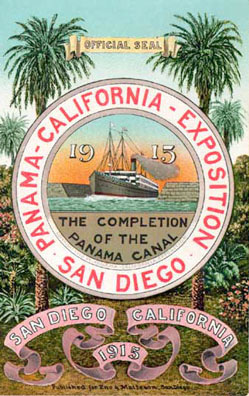 The United States compensated France forty million dollars for their abandoned project, and ten million dollars to the Panama government for the right to build a canal on a thirteen mile strip. The preparatory labor included paving the roads, the introduction of screened windows and the installation of city-wide water systems to prevent water stagnation and contamination. Swamps were drained, and insect breeding areas were covered with oil and larvicide. After two years of sanitation efforts, mosquito borne diseases were nearly eliminated. Despite these efforts however, 5,600 workers died of diseases and accidents during the construction phase of the canal.
The canal formally opened on August 15, 1914. The United States had spent 374 million dollars on its construction, including building what was then, the largest dam in the world, a massive, sophisticated electrical system for powering and controlling the flow of water into the locks and spillways, and a number of housing facilities for workers and guards.
An Issue of Ownership
The building of the Panama Canal was a spectacular success. The project was declared one of the seven wonders of the modern world. The city of Panama experienced a quality of life found in few other places within the Central American network. However, by the early 1960’s, many of the Panama citizens felt the United States had profited from their engineering feat long enough and the canal rightfully belonged to Panama. A series of student demonstrations were staged, one of which involved the deaths of twenty Panamanians and three U.S. soldiers.
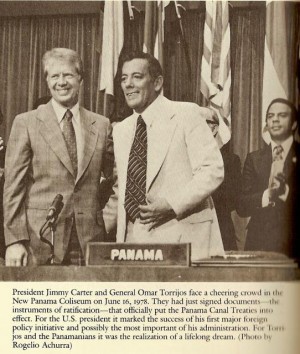 In 1974, negotiations began for the settlement of the issue. The Torrijos-Carter Treaty was signed in 1977 by U.S. President, Jimmy Carter and Omar Torrijos, the leader of Panama, granting Panama full control over the canal on conditions of neutrality. On December 31, 1999, Panama assumed full command over the waterway. The canal remains one of Panama’s primary sources of revenue.
Panama’s One Black Eye
Panama’s history has been one of diplomacy and negotiation. Its strong ties with the United States have lasted over a hundred years. However, from the civil unrest and rebellion that spread through many of the Central American countries, emerged an ambitious leader. Manuel Antonio Noriega Moreno began his rise to power as a career soldier involved with the CIA. Throughout the 1970’s and 1980’s, he aided U.S. backed guerillas in Nicaragua, and set up listening posts in Panama, despite the canal’s declaration of neutrality.
Noriega’s association with the CIA allowed him to build almost unlimited power within his country as he skillfully manipulated government agencies to support what appeared to be the mutual benefit of both countries. Noriega, however, was skilled at working both sides of the fence.
Although he outwardly supported Panama leader, Omar Torrijos, when Torrijos died in a 1981 plane crash, it was rumored Noriega had planted a bomb.
In 1985, he allowed the first presidential elections in sixteen years to be held in Panama. However, when it became clear he would not win, Noriega halted the count. His opposition still won by a slim margin, although analysts concur that if the votes had all been counted, PRD candidate, Nicolas Ardito Barletta Vallarino would have won by a landslide. In 1989, he was again accused of rigging the elections.
Noriega’s career was embellished with the grisly murders of outspoken opponents, whose deaths were never fully proven to be connected to him. The highly criticized 1989 elections resulted in deteriorating relationships with the U.S., and a statement of war.
On December 20, 1989, the U.S. invaded Panama. Five days later, Noriega surrendered. He was charged with racketeering, money laundering, drug trafficking, and absentee murder.
Panama Today
Panama has recovered from the social conflicts that had once made Central America a hotbed of politics. It is now the fastest growing country in Central America with one of the most robust economies. The conversion to the dollar has favored its energetic growth, with investors from the United States, Canada, and the European Union.
Much of Panama’s growth has been credited to sound business policies, which include a planned expansion of the canal that remains one of Panama’s greatest sources of income, and the Colon Free Zone, which supports national and international commerce, ranging from transportation to commercial activities.
Transportation facilities for Panama include the Pan-American highway, which extends into Alaska, the Caribbean to Pacific highway, six airports, five ocean ports with modernized cargo handling facilities, a trans-isthmus railway and the canal, which annually passes 12,000 merchant ships from 75 different countries.
With more than 120 international banks, Panama has become a crucial regional hub, with a diversified ownership structure, low reliance on wholesale funding and high capital and liquidity rates. Panama’s open policies have made investment easy for both individuals and enterprises.
No other country in Central America has changed so quickly. From a small, struggling region breaking away from its parent country, to an independent voice speaking out for what is best for Panama, it has shown itself to be resilient, imaginative, and creative. An investment in Panama is an investment in a future filled with promises of greater things to come.
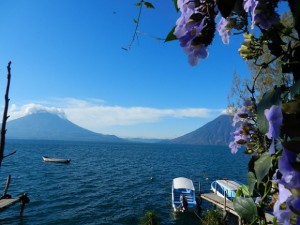
The tranquil setting of Lake Atitlan, Guatemala, has lured many expats to its shores with the tantalizing combination of a low cost of living, colorful local culture and the laid-back lifestyle that so many of us crave.

J.s. Barrie
Considered by many to be the most picturesque lake in the world, the icy blue basin that is now Lake Atitlan was the product of one of the strongest volcanic eruptions in the planet’s history.
Nestled in the Guatemalan highlands, against a majestic backdrop of three volcanoes, Lake Atitlan can offer expats a taste of authentic Guatemalan life, without the tourist traps that can now be found scattered throughout Central America.
Why Lake Atitlan?
The initial reason that many expats are flocking to Lake Atitlan is simple, serenity and scenic beauty. A little slice of heaven, the 50 square mile lake, mist filled rain forests, and mountainous trails are all the convincing many expats need before deciding to make Lake Atitlan their new home.
Ideal weather
But if they come for the scenic beauty, it’s the year round spring-like climate that often seals the deal.
Positioned 15° above the equator and 1560 meters (5100 feet) above sea level, the climate in Lake Atitlan is never too hot and never too cold. And even during the rainy season, the sun shines almost every day.

Cynthia Lawson
Close to home
Although many expats are dying to get away from the bustle of North American life, it doesn’t necessarily mean that they want to leave it behind all together.
Many expats plan to fly back and forth to visit friends and family, and for Americans, Central America and Lake Atitlan in particular can be the perfect solution. You can live the small mountain town life without having to be completely cut off from the world.
It’s a two and a half hour drive from Lake Atitlan to the colonial town of Antigua and to Guatemala City where international flights arrive on a regular basis.
Low cost of living
There is nothing quite like living in a tropical paradise without having to shell out obscene amounts of money to do so.
The cost of living in Lake Atitlan, like many areas in Central America, is quite moderate and allows expats to enjoy Guatemalan life to the fullest while on a budget.
And depending on what you want to spend and the lifestyle you want to live, Lake Atitlan has plenty of options.
It’s possible to rent a small room in a simplistic indigenous house for as low as $50 a month, and at the opposite end of the spectrum, a luxury vacation rental can cost upwards of $1,500 a week.
But each Lake Atitlan village offers expats a different standard of living and because of this, prices will vary drastically. So before you make a final decision, be sure to shop around.
Villages and local culture
Lake Atitlan is surrounded by twelve indigenous villages, each one unique in its own way. When selecting a village to call home, consider what is most important to you.
If having a stunning view is a top priority, the North and Northeast side of the lake are the most popular, but if you want to be close to as many North American amenities as possible, villages to the West side like Panajachel will most likely be the place for you.
Living side by side, both the local and expat communities are open and friendly and you can expect to make many new and interesting friends as you sink into Lake Atitlan life.
The locals, including the Kakquichel Maya and the Tz’utujil, still dress in traditional colorful garb and if you choose to settle down in Lake Atitlan, you will get to experience Mayan culture on a daily basis.
Visit the market
Make weekly trips to the colorful Solola market near the village of Panajachel for an authentic taste of Mayan culture.
Tuesday and Fridays are market days and you will be able to fill your shopping bags with all the fresh produce, fish, handmade clothing, thread, and fabric you can carry.
The Solola market is not aimed at tourists so you won’t find tourist aimed souvenirs at this market.
And on your way back from the Solola market, why not see what your fellow expats have for sale. Embracing the small town life, many expats sell things like organic chocolate, jewelry and stained glass to make a little extra income. Before you know it, you may find your home decorated with the handmade ceramics, woven crafts, and freshly cut orchids that you pick up each day.
Experience a new way of living
If you do decide to purchase or rent property in Lake Atitlan, get ready to slow down and live the small mountain town life.
In all likelihood you will spend your days enjoying the exotic wildlife, cooking meals made with fresh local ingredients, keeping active by hiking the trails, swimming or practicing yoga, and watching the sunset over the crystal lake.
Time tends to slow down in Lake Atitlan so don’t be surprised if a lot of the big city stresses you bring with you eventually start to melt away.

Luis Guillermo Pineda Rodas
But it’s not for everyone
While days filled with breathtaking scenery, perfect weather, and a low cost of living might seem too good to be true for some expats, others may find that Lake Atitlan life is not for them.
Because Lake Atitlan is in the highlands, two and a half hours from the larger Guatemalan cities, some expats feel too secluded.
If you need to be close to large city amenities and don’t necessarily crave small town living, the villages of Lake Atitlan may not be for you.
Also, Lake Atitlan has not yet been cultivated for tourists like many other spots in Central America and because of this, not all areas are easily accessible.
Much of the lake’s shoreline can only be reached by boat and residents have to rely on the winding footpaths and undeveloped roads to move through the hills.
Trouble in paradise
For decades Lake Atitlan has been renowned for its stunning beauty, but unfortunately in recent years it has been facing some environmental issues that have resulted in many expats moving on to look elsewhere.
In 2009, the clear waters of the lake became brown and murky as a result of an abundance of cyanobacteria that was feeding on the high levels of phosphorous found in the water.
A problem fifty years in the making, the cyanobacteria began to multiply when the Guatemalan government brought black bass into the lake and unknowingly tampered with the ecosystem. The bass ate the organisms that ate the bacteria and the bacteria inevitably increased.
Realizing that something needed to be done in order to keep expats and tourists from abandoning the lake, the government began to work on a $350 million dollar plan to clean up the lake.
Then in 2010, Lake Atitlan experienced a record amount of rain that raised the water level by three meters in a matter of days. Over the next few years, Lake Atitlan raised by an astounding seventeen meters and sadly many home and farms were flooded as a result.
Fortunately today, in 2013, the cyanobacteria have receded and Lake Atitlan is blue once more. And while the water levels are continuing to rise (although at a slower pace), the beauty and serenity of Lake Atitlan continues to attract expats.
Experience Lake Atitlan
So make a trip down to Lake Atitlan and experience it for yourself. Rent before you buy and hop around between the villages to get a good sense of what each has to offer you.
Stroll the mountain paths, visit the local markets, stretch out in a hammock and watch the sunset out over the smooth body of water as you determine if Lake Atitlan life is the life for you.
The Belize 3 Count, where we bring you 3 Belize travel stories that you shouldn’t miss.
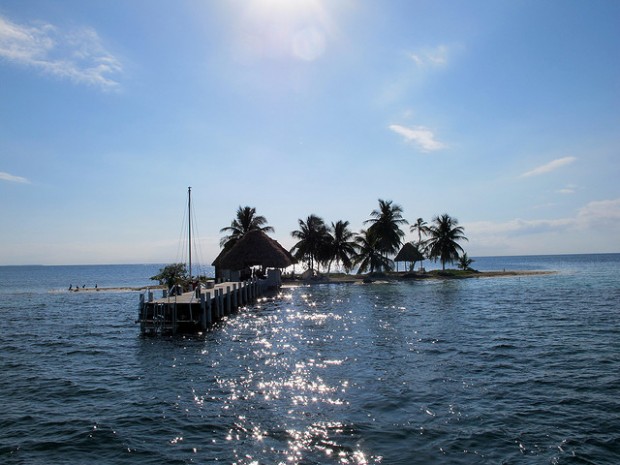
Viva Team
1. Travel Channel’s Ultimate Guide to Belize
Belize is gaining attention as a prime travel destination in Central America and has caught the attention of the Travel Channel, who has put its spotlight on Belize, offering up what it describes as the ultimate travel guide to Belize.
2. Want to Learn How to Dive? Think Belize
Dreaming of getting your dive ticket? Looking for a combination of idyllic conditions and reputable dive outfits, Lonely Planet narrowed down the top spots to get certified, and Belize tops its list.
3. Belize Takes Stand to Protect Barrier Reef from Oil Drilling
Belize’s Supreme Court has declared offshore oil drilling contracts issued by the Government of Belize in 2004 and 2007 null and void, halting the government’s immediate effort to allow offshore oil drilling in the Meso American Reef, the world’s second largest barrier reef.


Knights Bridge
Expat and real estate developer Park Wilson talks about the best Panama visa and residency options and why they’re the main ones he’d recommend to someone wanting to relocate to Panama.
Park: I’ve been an expat in Panama for about 6 years now, and one of the questions I get asked a lot is which visa is the best for other expats to pursue. Obviously, this can vary from one individual to the next, based on their specific needs. But, from my own experience and from talking to tons of other expats who have gone through the process, I could easily narrow it down to two that I think make the most sense and the non-option that has made the most sense for me.
The Pensionado Visa. And the one for Nationals of Specific Countries (NSC).
They both have their pros and cons, but in my opinion these two have the best benefits and require the least amount of effort. Here’s a little more information, including the pros and cons of each.
Pensionado Visa
The Pensionado Visa is an option designed for pensioners of all ages and comes complete with a neat little bundle of discounts and advantages for its recipients. You’ll have to jump through a few extra hoops to qualify, but the end result can really be worth it. Here’s the skinny on this visa.
Qualifications
-
Monthly income of $1,000 for life from a guaranteed source such as a pension or annuity
-
Or income of $750 per month and a $100,000 minimum investment in Panamanian real estate
-
An additional $250 monthly income for each dependent child
Benefits
-
50% off on recreation and entertainment such as movies, theaters, sports, etc.
-
50% off hotels Monday through Thursday (30% off on weekends)
-
50% off passports
-
30% off public transportation like buses, trains, and boats
-
25% off airfare
-
25% off restaurants (15% off fast food)
-
25% off electrical, telephone, and water service
-
20% off doctors and specialists
-
20% off prosthetics and other personal assistance devices
-
15% off hospitals and private clinics
-
15% off dental and optometry services
-
10% off prescription medications
-
tax-free importation of household goods, up to $10,000
-
tax-free importation of a vehicle, or tax-free purchase of a local vehicle, every 2 years
The Pensionado visa also allows expats to obtain a cedula, Panama’s national identification card. It also makes them eligible for permanent residency, but not citizenship.
Some Drawbacks
While most would say it’s worth it, the Pensionado visa can be a lot of trouble to obtain. And not everyone gets it. The process takes about 6 months and requires a hefty amount of paperwork and may require you to continue to prove solvency.
Another problem is that the Pensionado visa restricts you from having a job. You can own a business that you operate, but otherwise Panama historically frowns on foreigners coming in and taking jobs away from Panamanians. So, if you don’t want the hassle or if you plan to seek outside employment, the Pensionado visa may not be the one for you.
No worries. You’ll get to enjoy most of the same discounts anyway once you reach retirement age.
Nationals of Specific Countries Visa
The other visa that I would highly recommend is one that was recently made possible in order to attract much-needed skilled labor to accommodate Panama’s growing economy. It’s quick, painless, and fairly easy to qualify. And it has the added benefit of allowing you to hold a job or start a business. It’s required in fact. Here are the qualifications for the visa offered to nationals of specific countries (NSC):
Qualifications
-
$5,000 in a Panamanian bank (plus an additional $2,000 for each dependent)
-
One of the following:
-
evidence of investment in Panamanian real estate
-
proof of ownership in a Panamanian business or corporation
-
or a letter and contract of employment from a Panamanian company
-
Oh, and one more thing. You have to be coming from one of these 47 countries “that maintain friendly, professional, economic, and investment relationships with the Republic of Panama”:
Andorra, Argentina, Australia, Austria, Brazil, Belgium, Canada, Chile, Croatia, Cyprus, Czech Republic, Denmark, Estonia, France, Finland, Germany, Greece, Hong Kong, Hungary, Ireland, Israel, Japan, Latvia, Liechtenstein, Lithuania, Luxembourg, Norway, Malta, Monaco, Montenegro, Netherlands, New Zealand, Poland, Portugal, San Marino, Serbia, Singapore, Slovakia, South Africa, South Korea, Spain, Switzerland, Sweden, Taiwan, United Kingdom, United States, or Uruguay.
Also eligible are applicants’ dependent spouses, children under 18 (or between 18 and 25 if they’re students), dependent parents, and family members with disabilities.
Benefits
The NSC visa doesn’t have any discounts or other monetary perks like the Pensionado. Its main attractive feature is that it gives you the freedom to work, and requires a very minimal investment.
Another perk is that, because the need for workers is great, Panama’s current administration is really cranking these visas out fast. And, it’s immediate permanent residency. No renewals. No waiting. Recipients can also apply for citizenship after 5 years, something that isn’t possible with a lot of visas.
That’s why a lot of folks are calling this one the “fast track” visa. It’s great for young entrepreneurs who might not otherwise be able to afford to make such a move.
Some Drawbacks
I really can’t think of a negative thing to say about this visa. Other than the fact that it isn’t right for someone who doesn’t have the $5,000 investment or doesn’t want to have to work. Other than that, it’s a great opportunity for ambitious would-be expats.
The Non-Visa Option
Another option, or you could call it a non-option, is not to apply for any visa at all. This is actually what I’ve been doing, and it has worked out quite well. You see, U.S. citizens are automatically given a 6-month visa upon entering Panama. And there’s no limit to the number of times you can be granted this visa.
So, because I live so close to Costa Rica, it’s really no trouble at all for me to hop over the border, stay for a few days, and then head back to Panama where I get another 6-month visa. This option is fairly common. I know a lot of people who do it.
Bottom Line
If you have the guaranteed income and are ready to enjoy a retirement lifestyle, go with the Pensionado visa. The benefits are worth it. If you have less of an initial investment and want to build a business or career in a place that better rewards your efforts, the specific countries visa is your ticket.
Then again, if you don’t mind some occasional travel, then don’t get a visa at all. There are plenty of options, or non-options, available. Find the one that’s right for you.
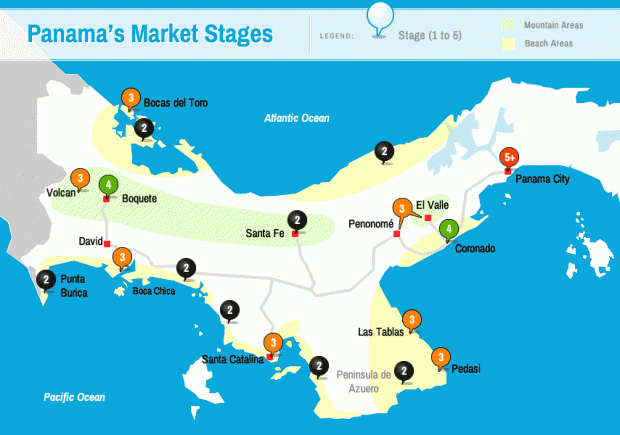
Sometimes the real estate market in countries like Panama appears to be flat out insane.
Prices don’t make sense. Some places that hardly have any infrastructure have expensive land. How in the world do you move forward with any rational decision in a market like that?
These are the questions that led us to come up with our work on the stages of land development in Central America. If you don’t yet understand this concept, you are playing with fire when evaluating whether or not you are getting a “good deal.”
Good, now that you understand the concept of Market stages, how do you apply it to Panama?
Start by using this map as a starting point to learn the stages of the different areas in Panama.
Is it an exact model of the country? No. Is it accurate enough to help you make smarter decisions. Absolutely.
P.S. Here is a bigger version of the map.

Click for Larger Version