


Peter Chapman, Financial Times reporter and author of Bananas: How the United Fruit Company Changed the World, joins the show to discuss a fascinating history of Central America known by few. This is an intriguing story that has inspired many from the Latin region to speak up, from Che Guevara to Pablo Neruda.
He covers the rise of United Fruit Company, one of the most powerful companies in the world during the early to mid 1900’s, and its integral part in forming many of Central America’s nations. For 100 years the company controlled most of the region; they rigged elections and massacred people, all while building their banana empire.
Peter also talks about how United Fruit Company set the blueprint for multinational companies today.
Enjoy the show.
Listen to the show
You can listen to the show using the player above or grab it and listen on the go via one of the following options:
- Click here to download the mp3
- Click here to subscribe via iTunes
- Click here for the RSS feed (non iTunes)
- Click here for the show archive
React to the Show
We appreciate your reaction to episodes of Viva Tropical Radio and feedback about how we’re doing. Send us your thoughts any time in an email or comment below.
Show Notes
Congratulations! You’ve made up your mind to go expat. Your expat status is imminent. But there’s still a looming question repeating itself in the back of your mind. “What do I need to know that I don’t already know about expat living?” There’s only one answer. Read to succeed. Then write a book based on your own personal experience.

SMS
Read Expat Books
This was my advice to John and Jessica. John Ellington and Jessica Horne met in Ecuador during a college study program abroad. Three kids and twenty-one years later, they’re acting on their dream of moving abroad. John says once they started a family, he doubted they would ever make it happen. But Jessica’s desire to raise their kids outside the U.S. grew stronger as their middle child entered school. This year the Ellingtons decided to place their family home on the market. They knew the real estate sign in the yard would be the catalyst to focus them on the move. John and Jess spent their honeymoon in Ecuador. And they vacationed several times throughout the years in Central America. They fell in love with the Latin lifestyle and culture. They had no doubt they wanted to move to Central or South America. But like all soon-to-be expats, their minds were bombarded with questions. “Where’s the best place to rent or invest? How do we go about buying property? How can we grow our income?”
The Expat Learning Curve
John and Jess sensed they were facing a big expat learning curve. Investment incentives, education, cost of living, health care, residency and visa requirements were all crucial elements. Where could they find the answers? Who could help guide them to expat status? In his search for answers, John stumbled across Viva Tropical’s free eBook, Pay Dirt. Drawn there by the Adventure Colony Lifestyle in Panama, John had uncovered the expert expat advice he was so desperate for. But still the overriding question loomed: “What else do I need to know about expat living?” So, I referred John and Jess to expat interviews with expats on the ground in Panama. And I pulled together this list of expat guides and handbooks (which you can see on Pinterest) that all potential expats should find helpful.

Pete
8 Expert Expat Books You Must Read
These are based on real-life expat experiences. They cover issues and concerns that confront all expats in their move abroad.
1. The Expert Expatriate: Your Guide to Relocation Abroad
This book tells you pretty much everything you need to know about relocating abroad. Melissa Hess and Patricia Linderman detail what to do before the move, during the move, and how to settle in.
2. Retirement Without Borders: How to Think About Retiring Abroad–in Mexico, France, Italy, Spain, Costa Rica, Panama, and Other Sunny, Foreign Places
Author Barry Golson knows a lot about retiring in foreign places. He and his wife have lived in six beautiful countries. His how-to-guide covers major expat issues like health care, finances, real estate, taxes, and immigration. You’ll get the facts from Barry and his team of resident expat writers who now call these foreign countries “home.”
3. Living and Retiring in Cuenca: 101 Questions Answered
A soon-to-be Cuenca, Ecuador expat describes this book as an “invaluable resource.” He writes: “Connie has taken the information that has taken me over a year to gather and distilled it into a well-organized and enjoyable read.” Perhaps you know nothing about why Cuenca is called the “Emerald of South America.” Or maybe you know exactly why it’s a new hotspot for expat living. Either way you’ll benefit from the Q&A.
4. Costa Rica Chica
One reader described this book as “just plain fun reading.” She says the author “did a great job of bringing the reader right into their lives in Dallas, their process of deciding whether or not to move, and then their actual move.” In her early 40’s, Jen Seymour quit her job and sold everything. She and her husband, Greg, packed 9 suitcases and headed for Costa Rica to retire early and simplify their life. Find out how they did it and why they’re so happy they made the move.
5. The Gringo Guide to Panama
Business executive and world traveler Elizabeth Vance relocated to Central America in 2008. Elizabeth introduces you to the realities of expat life in Panama. Find out What to Know Before You Go (Book 1) and what More to Know Before You Go (Book 2).
6. Third Culture Kids, Revised Edition: The Experience of Growing Up Among Worlds
Some say this book explains exactly how they feel. A book about living your formative years outside your birth country. David Pollock will enlighten you and your kids about the emotional tolls of expat life on children. Learn how moving abroad impacts personal development and identity.
7. Here We Are There We Go–Teaching and Traveling with Kids in Tow
Jill Dobbe’s travel memoir details the trials and tribulations of traveling abroad with kids. Overseas educators Jill and Dan (and their young kids) travelled, lived, and worked in over 25 countries over 10 years, including a remote Pacific island and Africa. Their return to the U.S. with teenagers is living proof it can be done.
8.The Grown-Up’s Guide to Running Away from Home: Making a New Life Abroad
In this guide for mid-life adults moving abroad, Roseanne Knorr provides detailed advice on topics like how to choose a destination, finances, and maintaining family relations stateside. Access interviews with other expats and gain the courage to chase the overseas adventure you’re hungry for.
If you haven’t yet chosen your destination, you’ll want to subscribe to receive the Viva Tropical eBook, Top 50 Places, coming soon. This new expert expat book will provide information on how to choose a destination, cost of living and finances, international health care, and working abroad. Meanwhile, visit the Viva Tropical Book Store for more recommended expert expat books. And I wish you all the best for your expat journey!

Author of Deep: Freediving, Renegade Science, and What the Ocean Tells Us about Ourselves, James Nestor joins the show and describes his journey from surface dweller to swimming with sperm whales.
James also tells us that he learned the human body is uniquely adapted to the underwater environment.
Other things covered on this show are the freaky but true free diving championships in Greece, going 2500 feet under water in a D.I.Y. submarine, and speaking with the whales. Tune in to hear all this and more and add a little adventure to your day.
Listen to the show
You can listen to the show using the player above or grab it and listen on the go via one of the following options:
- Click here to download the mp3
- Click here to subscribe via iTunes
- Click here for the RSS feed (non iTunes)
- Click here for the show archive
React to the Show
We appreciate your reaction to episodes of Viva Tropical Radio and feedback about how we’re doing. Send us your thoughts any time in an email or comment below.
Show Notes
James Nestor Deep
Please buy James Nestor’s book Deep, now in paperback with new and expanded sections.

Mexico: A State of Mind.
How’s your state of mind? Feeling confident and resilient? Flexible and fluid? Are you poised for adventure south of the border?
Freedom and opportunity reign in Mexico. And that’s why expats love it!

Chris Martino
Living in Mexico: What’s Not to Love?
The vibrant culture, beaches, deserts, mountains, and oceans. World-class surfing and snorkeling. Fresh seafood, Mexican and international cuisine.
Mexico offers outstanding opportunities to start a business, purchase real estate, and invest. Its low home prices and low cost of living afford you a superior quality of life.
You get superb health care facilities and state-of-the-art health care. Mexico’s modern infrastructure is solid. And high-speed communication makes your work and personal life easy.
Mexico has a number of International Airports that service flights from around the world. And good roads that make it easy to traverse the country for both business and pleasure.
Okay, I get it. Why not move your life to Mexico?
But, if you want to love living in Mexico, there are a few facts you need to know before you go.

Christopher William Adach
Living in Mexico: Your 5-Item Checklist (Before You Go)
1. Learn What It’s Like to Live in Mexico: Read Books, Blogs, and Forums.
Explore the realities of daily life through stories of ordinary expats. Read books like San Miguel de Allende: A Place In The Heart. This is a collection of stories about true expats.
Novels about Mexico can also provide unique insights about Mexico. You may know John Scherber’s popular Murder in Mexico mystery series. The Girl From Veracruz is his latest release.
The good news is, you can find these books (and pretty much everything else you need to know) on the MexConnect blog-style magazine site.
The website covers everything from articles about living in Mexico, to travel and food. Culture and arts, history, and business. And the best part is, you can join one of Mexconnect’s many forums.
Tune in for timely advice and share with other forum members. You’ll absorb copious amounts of information from experienced expats living in Mexico.
2. Learn Spanish: It’s Your Key to Thriving in Mexico.
Don’t just speak Spanish. Live and celebrate life in Spanish. There is nothing more influential in the outcome of your expat transition to Mexico.
There are many language learning options. Choose from a number of reputable self-paced programs. Rosetta Stone, Pimsleur, and Duolingo are all popular. You can also download apps for your mobile devices.
However, if you’re a procrastinator, a self-paced approach may not work. You may be better served by registering for Spanish classes at a local venue.
Your absolute best option is to enroll in Spanish Immersion in Mexico. This style of learning ensures you will fully engage in Mexico’s language and culture.
The Spanish Institute of Puebla and Instituto Cultural Oaxaca are two highly regarded Spanish language and culture schools in Mexico.
3. Understand Mexico’s Immigration Policies: Which Visa Is Right for You?
There are many kinds of Mexico Visas. Like many expats, you may not think twice about operating long-term on your Mexico Tourist Visa. But you may be missing out on real benefits with a Residency Visa.
Do you plan to live in Mexico six months a year (or more?) If so, you should consider the benefits of holding a temporary Visa versus a permanent Visa.
There are different ways to go about obtaining a Visa. So you may want to consider hiring an immigration lawyer who knows the immigration system well. It could save you money and hassle in the long run.
Make sure you understand the apostille process. You’re required to have a certified or notarized document (apostille) for any legal action (Visas included). This process alone is arduous. You will need birth certificates, marriage certificates, death certificates, and divorce decrees.
And there may be more. An immigration attorney or an experienced apostille service can ensure you have the correct documents. And that you navigate the process as quickly (and as stress-free) as possible.
4. Understand Mexico’s Banking System
Mexico’s banking system has a volatile history. But it survived the global financial crisis and recent financial reform. The banking system emerged more stable and profitable.
Opening the market to foreign banks with new customer service technologies, employee training, and management programs positively influenced Mexico’s banking system.
But you still need to be on your toes when banking in Mexico. Watch for high multi-layered charges and commissions. Expect high borrowing rates and low deposit rates. And not-so-good customer service.
You’re still likely to experience long lines at the counter, so you may want to do most of your banking online.
5. Learn How to Shop Smart and Save Money.
Markets and trade are deeply rooted in Mexico culture. Smart shopping is buying local. Scope out local food markets and stores where locals shop. You’ll definitely pay less than if you buy name brands.
Stay away from supermarkets and imported items whenever possible. You’ll find your best deals on staples like breads, meats, veggies, and fruits at local family markets and mobile street vendors. Get to know the local butcher. Think “fresh.” And avoid mass-produced pre-packaged foods.
Avoid shopping malls, department stores and mega stores. Shop for clothing and shoes with local shop owners and market traders. They’re usually open to negotiation. They may be inclined to make a special price just for you.
Shop local crafters for home furnishings as well. Local artisans’ handmade furnishings are crafted from local woods, recycled, and other local materials. If they’re not obvious, use your best Spanish to ask locals where you can find a local furniture maker.

Christopher William Adach
Living in Mexico: What to Research Next
This checklist gets you off to a good start. And learning is simply a part of the journey. Here are four more items you may want to research next.
- Long-term living costs in Mexico
- How to prepare your budget
- How are Mexico properties valued?
- Mexico’s tax structure
Be patient and flexible. Be adventurous. And make the most of living in Mexico.

As more and more baby boomers reach retirement age, the interest in finding places to retire in Latin America is also increasing. The choices for an expat retirement have never been larger; beaches, islands, mountain areas, even larger cities all offer the promise of enjoying the pleasures and natural beauty of a tropical paradise.
2015 promises to be an exciting year for retirees as there are so many locations to choose from. Learning about these unique and special spots and what they offer is as easy a clicking a mouse.
The Best of the Best – Top Places to Retire in Latin America
With so many possible destinations for retirees in Central and South America, compiling a list of the best places is not easy. Yet there are some locations that, literally, stand head and shoulders above the others. Here, then, is our list of the top eight places to retire in the coming year:

Lucy Nieeto
8. Mérida, Mexico
This growing city in the northern part of the Yucatan Peninsula has become a magnet for those expats who want to experience the cultural and historical vibe of colonial Mexico combined with a contemporary setting.
With increased media attention given to this cultural and financial center of the Yucatan, it is little wonder that Mérida has garnered the interest of Americans seeking to rebuild and restore the historical center and become immersed in the daily life of this special place. Constant improvements in infrastructure also make living here a desirable choice.

Perry McKenna
7. Roatán, Honduras
Located off the coast of Honduras, Roatán has long been a destination for cruise ships, scuba divers, and a myriad of other tourists. In recent years, however, expat retirees have also begun to settle here, recognizing the potential to own island property near the Mesoamerican Reef System (second largest in the world).
With regular international flights by U.S. carriers, such as American, Delta, and United, improved access to Roatán has also added to the influx of new expats. The expansion and improvements of the public works systems in both West End Village and Coxen Hole have increased the number of those seeking an island refuge.
El Capitan
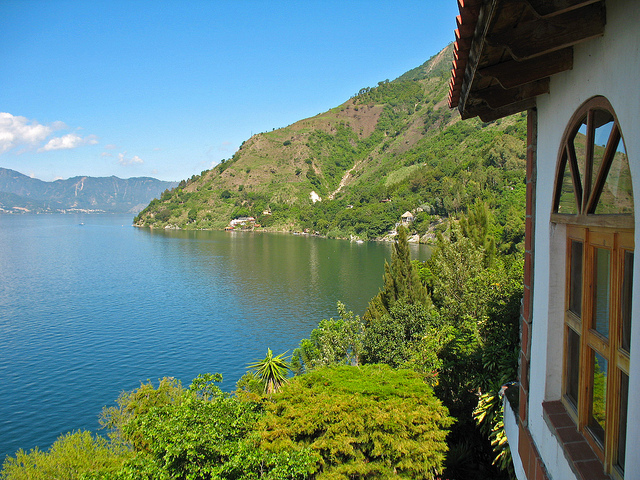
6. Lake Atitlán, Guatemala
If the idea of living in a serene lakeside village in the Guatemalan Highlands is your idea of a retirement paradise, the region around Lake Atitlán is the place for you. The fifteen small communities that surround Central America’s deepest lake are well off the beaten path and have long been places where meditation and Mayan culture have blended in harmony.
One of the best kept Latin American secrets, Lake Atitlán is gaining a larger audience among expats who are looking for a more simplistic, ecologically-connected lifestyle “somewhere else.”

Meredith Cook
5. Canoa Beach, Ecuador
With 17 kilometers of pristine sand, Canoa is the longest beach in Ecuador and is part of what promises to become Ecuador’s “Gold Coast.” Though primarily known for adventure sports like hang gliding, paragliding, and kitesurfing, the area has also become a prime expat destination.
This laid-back fishing village captures the rustic charm of Ecuadorian culture with a beach-party vibe; certainly the best of two worlds. Prices are still low and the potential for a high return on your investment continues to grow.

David Ellis
4. Quito, Ecuador: Our Top City Location
Quito has gotten a lot of exposure recently as being one of the most desirable expat locations in the world. At 9,350 feet, Quito is the highest capital city in the world and is also a UNESCO World Heritage location. With a modern infrastructure, tax breaks for seniors on property taxes, and use of the U.S. dollar as official currency, Quito promises to be a prime retirement destination for years to come.
When you factor in the new Mariscal Sucre International Airport, the moderate climate, and a rich cultural heritage, it is no wonder that Quito would be our choice for the top city location to retire in Latin America.

Parisa
3. Boquete, Panama: Our Top Mountain Location
Known as the “Napa Valley of Coffee,” Boquete came into focus as an expat destination after AARP named it as one of the best places to retire. Located on the Caldera River in Panama’s mountain highlands, this community has become known as much for its music and arts scene as its stunning views and caffeinated product-judged by many to be among the finest in the world.
A large expat community, the many discounts available to seniors, and favorable property prices have all contributed to Boquete’s popularity among foreign retirees and made it an obvious choice for the top mountain retirement location in Latin America.

Viva Tropical
2. Boca Chica, Panama: Our Top Island Location
Located in the Chiriqui National Marine Park, Boca Chica may just be one of the best kept secrets for a retirement mecca in Central or South America. While Chiriqui has long been known as a mountain destination, Boca Chica and the islands around it have come into their own as a great place to retire and invest.
The actual island of Boca Chica is six miles from the town of the same name and is unique in that it is covered in primary rainforest. Offering world-class sport fishing, snorkeling, and diving, the area’s growing real estate development offers the promise of an island paradise that is readily accessible to the U.S. from the nearby Enrique Malek International Airport in David.
All this tropical potential makes Boca Chica a clear choice for our top island location for retirees, investors, and expats.

Dakine Kane
1. And Our Top Beach Location and Number 1 on the Top Places to Retire is….?
Here are some clues to help you guess:
- This location has both a Blue Zone and a Blue Flag.
- There are yoga centers, bohemian/hippy hangouts, and artist collectives happily existing side by side.
- Four beach locations offer an eco-friendly family experience.
- Real estate prices are still affordable.
To see if you guessed correctly, and to learn more about our top eight retirement destinations (as well as other locations in Latin America), download our free e-book and begin your research on the best places to live and thrive in Latin America.

For many new or potential expats, one of the biggest perceived barriers to moving to the Latin tropics is the issue of learning the language. Since most of the countries in the Latin tropics speak Spanish as their official language, this is just another hurdle that many foreigners face, especially those who’ve never really been exposed to the language.
Then again, as more and more North Americans are discovering the region and moving by the thousands each year to the Latin tropics, is learning Spanish even necessary?

Daniel Lobo
Do Expats to Latin America Really Have to Learn Spanish?
The truth is…it depends. Mostly on you and the lifestyle you plan to live. If you plan to move to a heavily touristed area or exploding expat destination, live in a gated community of other people like you, eat in the same chain restaurants you find in North America, buy expensive imported products in the big box stores, and never immerse yourself in the local culture…then no. You don’t ultimately have to learn Spanish to do any of that.
There is enough of a long-standing expat presence in much of Latin America and enough English-speaking locals (in most of the mid- to larger-size cities) that you could easily get by only speaking English. You could find businesses that cater to expats, professionals who speak excellent English, and even translators for those really important legal transactions.
However, if you’ve made the decision to leave your home environment in search of a new adventure in the Latin tropics, then I doubt any of that sounds very appealing to you.
You Do if You Want to Maximize Your Expat Experience
What generally does appeal to most expats is the idea of meeting new people (who aren’t exactly like them), embarking on new adventures, trying new things, and becoming a more engaged and well-rounded version of themselves. If you’re going to achieve that, Debes aprender a hablar español.
Not only will learning how to interact with the locals enhance your experience as an expat. It also helps build mutual respect from their point of view as well. Locals in the Latin tropics are generally friendly and welcoming to most foreigners, especially those who’ve decided to call the region home. However, it speaks volumes to them to see newcomers going the extra mile to embrace their language and culture.
They understand that you’ll stumble in the beginning. And they won’t laugh at you…much. In fact, most will slow down and help you with your pronunciation if you get it wrong. (Hint: It’s arroz con “PO-yoh”, not “POL-lo” as it’s spelled.) The main thing that makes an impact with them is that you’re trying.

Anina Imhof
You Don’t Have to Be Fluent Before You Even Hit the Ground
What’s important to remember as you prepare for your transition as an expat is that it’s not necessary that you become fluent in Spanish before you ever set foot in your new country. In fact, it’s okay if you know little to nothing of the language when you arrive. There’s a hefty learning curve involved and plenty of resources to help you along the way.
Here are a few tips that helped each of us in the beginning and that we now offer as advice to new expats we meet:
- Use Google Translate or a similar app to help you in the beginning. Yeah, you’re gonna look like a tourist, but using apps that can translate from Spanish to English in real time can be a lifesaver when you’re first learning the ropes. The new Word Lens feature translates printed text using your smartphone camera, even when you don’t have an internet connection.
- Don’t frequent only English speaking businesses and establishments. The temptation will be there to only interact with people who speak your language, but don’t give in to it. You’ve got to stretch yourself if you’re ever going to feel comfortable in conversation with locals.
- Use every opportunity to practice. Try to make conversation with your cab driver, your waitress, and the guy that does your yardwork. Conversing with a variety of people will help you learn all the idioms and phrases that are specific to your part of the Latin tropics.
- Enroll in a class at a Spanish language school. This is one of the best ways to learn to Speak the language, and there are many reputable ones throughout Latin America. You can also hire a tutor to come to your home and give your family private lessons.
- Hire trustworthy English-speaking professionals to help you with legal matters. If you’re buying a house, navigating the immigration process, investing in a business, or doing anything else with important ramifications, it is absolutely essential that you find a reputable professional to help you. Get recommendations from other expats.

Geir Halvorsen
Don’t Let the Language Barrier Stand in Your Way
While learning the language is a necessary part of an expat’s transition, it should be the least of your worries. Rather than being a barrier that prevents you from blending in with the culture, you should see it as one of the most fun parts of your expat experience.
Learning a new language has been proven to sharpen the mind, even helping to stave off diseases like dementia and Alzheimer’s. For younger expats, it provides a fun challenge for the entire family, although the kids will likely pick it up the fastest. And the benefits for bilingual expat children will be realized as they apply for jobs and build their career.
Whatever your stage of life, learning a new language is always a great idea. What are you waiting for? Que lo pruebes!


Photo Credit: Fred Pompermayer
Mark Healey discusses spearfishing, riding sharks, and how to stay calm when a 50-ft. wave pounds you. A long-time water enthusiast, Mark reveals how he gets ready for giant surf and how to tell if a shark is right for riding.
Josh and Mark also discuss breathing techniques as well as the disconnect between marine scientists and people who are in the water every day. An inspiring discussion that we hope will motivate you to start your own ocean adventure.
Listen to the show
You can listen to the show using the player above or grab it and listen on the go via one of the following options:
- Click here to download the mp3
- Click here to subscribe via iTunes
- Click here for the RSS feed (non iTunes)
- Click here for the Gallivanting show archive
React to the Show
We appreciate your reaction to episodes of Viva Tropical Radio and feedback about how we’re doing. Send us your thoughts any time in an email or comment below.

Show Notes
Learn More About Mark Healey here.
Check out Mark riding sharks and giant waves.
Mark offers elite access to incredible ocean experiences here.
Mark is grateful to his sponsors:



With all the excitement involved when getting ready to become an expat, it is important to keep in mind a few “must know” tips to help with the transition. Making and following a checklist ahead of time can prevent issues during the move and make your arrival a time of celebration and exploration.
The transition to expat status is also a transition from your stateside existence to a different way of being. Understanding how much you will need to live on and other financial considerations is an important aspect to moving abroad.

JPmatth
Top 8 Must-Know Tips Every Expat Needs
There are a number of tips that can really make your arrival as an expat much easier and much less stressful (and, yes, there will be some stress!!). Below is a list of the top 8.
1. Have a Plan
Doing your homework ahead of time can help you select which Central or South American location is the best fit for you. Research online, interact using social media with expat groups, and learn about the culture, geography, etc. of those countries and/or regions that interest you.
Be realistic in terms of how much it will cost you to make your move and maintain the kind of lifestyle you are thinking of. All budget-related matters should be done before – not after – your arrival.
The number one reason that becoming an expat may fall short of your expectations is if you end up having to face the harsh reality of “too much life left at the end of the money.” While this kind of monetary examination may cause you to put a hold on your plans, it can also provide both the knowledge and incentive to help you reach your paradise in the future.
There is no substitute for actually visiting the place you are thinking of calling home. If possible, make a number of visits to explore various parts of the country. Being there can help you decide whether you want a beach lifestyle, the tranquility of the mountains, a rustic village, a larger city, or something in between.
2. Explore
Once you arrive, start exploring your new environment. Learning where the locals like to shop, eat, visit, etc. can help you immerse yourself in the daily routine of your expat existence.
Part of this exploration should involve finding out your options for your utilities (water, heat, electricity, and garbage) as well as amenities such as phone, cable/satellite, and internet service. You will quickly discover that getting these items is a lot different than what you had come to expect in the states.
3. Experience the Seasons (All of Them)
Hopefully, you did look into the various climates and seasons of your Central or South American destination beforehand. While most countries have two basic seasons (rainy and dry), there are a number of micro-climates that also have unique variations. You may have the opportunity to experience everything from a dry desert climate to a tropical jungle. Be prepared (in terms of clothing, etc.) for all of them.
While entertaining, these locations are not a true representation of daily life. Once you have fully settled, you’ll have plenty of time to visit and experience these options, if you wish.

Wallygrom
4. Avoid Tourist Traps
With tourism a major industry in many Latin American countries, it isn’t surprising that any number of “tourist traps” (those areas designed to cater to the casual visitor/vacationer) can be found. Since your purpose in moving is to make this a new home, you should avoid these “tourist-centric” areas, at least initially.
Another area of discovery that should be an important part of your exploration is to learn what is required to establish a local bank account. Banking rules differ from country to country (and things have been made even more difficult with the increased impact of FATCA on foreign accounts), so it is important to learn what is and isn’t available to you. Additionally, it may be necessary to research what options can be utilized to access your funds from the U.S. or Europe while abroad.
5. Eat Like a Local
There is no better way to quickly immerse yourself in the culture of your new home than to eat like the locals eat. Shop at the local farmers’ markets, choose the specialties from restaurants that the locals go to, and, if you have an interest, learn to prepare those dishes at home.
This is also a great way to begin to learn Spanish (assuming that you do not already speak the language). Food truly is a universal language and, as you learn the names of fruits, vegetables, and dishes, you’ll find that you are also learning to speak with the locals as well.
Becoming part of the culture where your tropical paradise is located is an incredibly important part of the expat adventure. Remember this is not just a vacation, this is the place you have chosen for the next phase of your life.
Your tropical escape will have its ups and downs; not unlike anyplace else. However, when you fully commit yourself to becoming part of your Latin American world, the potential is limitless.
6. Keep an Open Mind
Keeping your mind open to the possibilities of expat life can expand your viewpoint in ways that could astound you. Perhaps the hardest thing for expats – even those who have been in their chosen location for some time – is being patient with the pace of life. It’s important to remember that the more relaxed approach to things, like appointments and bureaucracy, was one of the things that you found attractive about the idea of relocation.
The trade-off is that you cannot (and should not) expect that things will be done “immediately” or “on time.” To put it another way: Don’t sweat the small stuff.
It’s also important to remember that your cultural references will be different from the locals around you. You are a guest (even if a permanent one), in their country; be respectful and willing to learn those differences. You may be pleasantly surprised at the results.

Anoldent
7. Tie Up Loose Ends
Just because you’ve made the move, doesn’t mean that you can forget about matters back home. Driver’s licenses, medicines (and related medical issues) are other important aspects that can have a direct effect on your expat plans.
Get confirmations that everything that you put in place prior to your departure is correct and in order. The last thing an expat needs is to discover that something they thought was resolved now requires additional attention. Keeping the lines of communication open is always an important expat safety net.
8. One Final Tip
Becoming an expat is an experience like no other. Allowing yourself to truly look forward and to accept that the unknown can be an exciting and wonderful adventure can be the best tip of all. Begin the journey today; go online and read the experiences of others. Tomorrow is but a mouse click away.

If you’ve been thinking about leaving home to live abroad as an expatriate, now is a great time to make your move. While you want to have a few ducks in a row, you can’t wait until the moon and the stars align in some cosmically perfect configuration. Sometimes you have to look at the overall global conditions for emigration and if they’re good enough, just jump. Here’s our list of eight reasons why being an expat escape artist rocks and why that’s true today in particular.

Ostrosky
You Will Gain Valuable Language Skills
While there are a few countries outside of the U.S. and the U.K. where English is the official language, most countries speak something else. Even if you don’t take formal language lessons, you will learn the native language where you live because it will make escape artist living so much easier. Unless you want to take your chances with cryptic menu items when you dine out or drink household cleaner thinking it’s fruit juice, you will learn at least some rudimentary vocabulary.
If you hang out with locals, you’ll learn a whole lot more. Immersion is the easiest and most natural way to learn a language, so living abroad puts you head and shoulders above learning a language in school only. That competency or even fluency will be a huge advantage at work, socializing, or just watching foreign films.
Don’t worry about being fluent in any language before departing. Do what you can to learn the basics, and know that you’ll pick up more as you go.
You Can Advance Your Career
In addition to language skills, being culturally adept can land you job promotions or freelance work you never dreamed of before. Even if you return to the U.S., you’ll have the knowledge you gained living overseas to apply to any number of fields. Some common areas where language and foreign etiquette come in particularly handy include
- logistics, transportation, and shipping
- food and wine
- teaching
- health and medicine
- fine and performing arts
- writing and publishing
Many U.S.-based companies are currently adding more jobs abroad than they are at home. And while you still have to pay the IRS even if you work from a foreign country, the reverse is true as well; they have to pay you any refunds you’re entitled to.

Panama ATP
Entrepreneurial Opportunities Abound for the Escape Artist
If you’ve contemplated changing careers or better yet, starting your own business, there are plenty of opportunities overseas. Moving out of the country is a completely legitimate and organic way to reinvent yourself, especially career-wise. This is a perfect time to try something you’ve always wanted to do but couldn’t when you were tied to the working-to-live mentality (versus living to work, which is so much more fun).
No matter what kind of business you intend to run in your new locale, it’s best to have some kind of income source in place before you leave. Living in a foreign country can be challenging enough without having to worry about money too. Some popular ways expats fund their lives abroad include
- sale of property in the U.S.
- investment property purchase in their new location (rental units, B & B, etc.)
- savings
- working remotely (practicing law, writing, etc.)
- passive income (investments, book sales, etc.)
- grants and stipends
- funding from an existing business to open a new branch or satellite
Many countries make obtaining a visa easier if you are opening a business there that benefits the local citizens, such as recycling, retail of indigenous arts and crafts, or education. Some require a certain amount of money be available to invest in the business, so be sure to check out the rules wherever you are headed.

Eskimo Jo
You Can Leave Stress Behind
Until you spend a certain amount of time living outside the U.S., you probably won’t realize how aggressive, competitive, and stressful American life has become. Many cultures, especially those of Latin America, take a much more relaxed approach to life. While they may drive with the speed of nuclear missiles, everything else moves a lot slower. Food and conversation are savored, and there is less time spent in front of the television.
The downside of this is that it’s generally harder to get things done. Lines at government offices can snake for blocks, and seemingly simple things like paying bills or getting your tires rotated can take the better part of a day. The plumber who says he’ll be there at 10 may come at noon – or he might not show up until two days later. Waiting for cable or Internet service can seem interminable.
This is all part of the balance of being an escape artist. Relax, take a deep breath, and trust that everything will get done eventually. And take comfort in the fact that a lot of stressful stuff from the States, like maintaining your lawn or cleaning your house, can be eliminated or done cheaply by paid help in your new country.
Your Resourcefulness Will Increase Exponentially
There will be times when you have challenges that seem overwhelming. This is actually a good thing, because it will push your resourcefulness in new directions. Once you have made it through to the other side, you will have a new level of self-confidence and know you can get through anything. Whether it’s dealing with roadside breakdowns, water shortages, banking failures, or medical emergencies, you will figure it out – because you have to.

WFT.Travel
You Will Learn to Love Your Own Company
Unless you live alone on your own island and never leave, you’ll make friends and acquaintances in your new overseas home. But until that happens, you may be on your own for a while. Even once you meet people you want to hang out with, you’ll still have times when your own company is all you’ve got.
Being comfortable with solitude is definitely a helpful trait if you want to be an expat, and if you don’t start off knowing how to be okay with being alone, you will probably end up there. For women especially, this can be disconcerting.
Of course you need to be safe going out alone, but dining or attending events solo can give you new self-assuredness, and you may make some friends in the process. Some seasoned expats suggest getting used to being alone first at home before trying it abroad.
You Will Feel Rejuvenated
There’s nothing like moving to a new place to feel both physically and psychologically rejuvenated. You’ll be in new surroundings (often with better weather), and you’ll have the opportunity to take up an alternative career to start different hobbies. If you’re single, there’s a whole new dating pool to sample too.
Because diets in most parts of the world are healthier than in the U.S., and in many countries you’ll be walking or bike riding more, it’s easier to get the diet and exercise you need. Plus, giving up the stress that comes with living in the U.S. can make anyone look and feel younger.

Barbara Eckstein
You Will Never Be Bored or Boring
There’s one thing for sure about living overseas as an expat escape artist: it’s never boring. Between the natural beauty of a new location, a different culture to appreciate, and a widening circle of friends and colleagues, your mind will be kept occupied all day, every day. You’ll never be boring either. Once you’ve lived abroad you’ll have enough cocktail party chatter and writing material for the rest of your life.
Like most people who take up the expat lifestyle, you may like it so much, you’ll never go home again. If the expat way of living even remotely intrigues you, be sure to check out our article links here, then head to our home page to start learning more about where you might like to escape to – in a year or maybe even a month or a week, your whole life could change in amazing ways.


Viva Tropical Radio
Scott Nichols joins the podcast to discuss his trials and tribulations of building a house in Central America. He is currently in the middle of a building project and took the time to stop and share with us his progress and knowledge about all things building in Latin America.
He and Josh tackle the topics of:
- How to find a builder
- What to know before you design a house
- Why certain materials are more expensive
This episode is a must-listen for anyone who is considering building a house in the Latin Tropics for living or investment.
Listen to the show
You can listen to the show using the player above or grab it and listen on the go via one of the following options:
- Click here to download the mp3
- Click here to subscribe via iTunes
- Click here for the RSS feed (non iTunes)
- Click here for the show archive
React to the Show
We appreciate your reaction to episodes of Viva Tropical Radio and feedback about how we’re doing. Send us your thoughts any time in an email or comment below.

One of the biggest considerations for expats seeking to buy their retirement or getaway home in Latin America is the taxes on real estate. Comparing property taxes of the most popular destinations for expats is an important step to deciding the best location for your tropical retreat.
Once the decision is made to become an expat, finding a home in paradise will involve some research. Looking at the unique qualities of each country and the properties available is a great way to begin your journey.

Tropical House in Paradise
Comparing Property Taxes in Latin America Country by Country
Countries in Latin America have widely different approaches as to what real property should be taxed and when. Similarly, the calculations of property taxes can be confusing for expats trying to choose which location might be a good fit for their budget.
What follows is a brief overview, by country, of the tax structure for real property. This comparison will also include any taxes imposed at the time of sale or transfer of title as well as when payment of these assessments are due.

Anoldent
Belize
Belize has a fairly straightforward approach to property taxes. For residential property, the tax rate will be between 1% and 1.5% of the value as set by the Department of Natural Resources. These are payable each year by April 1st at any Lands Department office. When looking for your Belizean retreat, making this calculation is easy.
Residents in Belize City can take advantage of a 10% discount if taxes are paid by March 31st. There is a 25% discount on property taxes for Senior Citizens (over 65) that certainly is a great incentive for expat retirees.
Investors and developers of large plots of undeveloped land (parcels over 300 acres) are subject to a Speculation Tax. This tax is computed based on 5% of the undeveloped value of the property.
When a title is transferred, a transfer tax is collected as part of the buying process. There is no tax for values under $10,000; for values in excess of that amount, the tax is a flat 5%.

Didier Baertschiger
Costa Rica
For all of the attention and growth that Costa Rica has experienced in the last decade, property taxes still remain as some of the lowest anywhere, including the U.S. The tax rate is 0.25% of the registered property valued as determined by the local governments or municipalities.
Some of the very large and high-end properties have been subject to a luxury tax based on such items as size, custom furnishings, and fixtures. These rates are still surprisingly low; in 2013 it was estimated that that this tax was in the range of 0.1% to .25% of property value.
Changes to the transfer tax of 1.5% may impact some buyers. While the percentage has stayed the same, the basis for the calculation (property value) cannot be less than the highest recorded fiscal value. Fortunately, this amount will usually be less than the market price of the parcel. With low tax rates, finding your home in the land of Pura Vida is still a great option.

Casey
Ecuador
Ecuador has some of the lowest property taxes in Latin America. The tax rates are progressive from 0.025% to 0.5% of the value as assessed by municipal officials.
These values are considerably lower than the purchase price – often by as much as 25% to 75%. As a result, it is rare to pay over $400 in annual taxes.
There are also deductions and discounts that can appeal to expats. Homeowners over the age of 65 only have to pay half the amount of the tax assessed.
Additionally, deductions for mortgages to purchase or improve the property are possible. Ranging between 20% and 40%, these must be requested and cannot exceed 50% of the value of the property. Ecuadorian real estate may provide some of the most affordable options in the region.

Waterways
El Salvador
El Salvador is unique in that there is no property tax assessed for owning real estate. Although there is no annual assessment, when property is transferred, a transfer tax is triggered.
The tax, paid as part of the buying and selling process, equals 3% of the value over $28,571.43 of the purchase price. Non-residents also are subject to a 25% capital gains tax when selling property unless the sale occurs within three years of taking possession of the property.
The El Salvadoran government is considering a tax reform package that would include a tax on property that does not have any productive function except for private leisure or recreation. This “luxury tax” would be assessed at the rate of 1% of the value over $350,000 even if the property has not been developed.
Whether or not this tax will be enacted is uncertain. Regardless, the great majority of expats will not be impacted because of the high dollar threshold of the assessment. Low prices enhance the attractiveness of the selection of properties available.

Stefano Ravalli
Guatemala
Guatemala uses the cadastral value of real property to calculate the tax owed. The word “cadastral” refers to the extent, value of, or ownership of real property and is used widely throughout Central America.
Taxes are calculated in local currency (the Guatemalan quetzal) by local authorities. When converted to U.S. dollars, it becomes apparent that these are quite reasonable for the great majority of expat residents. Below is a chart showing the tax rates:
PROPERTY TAX |
|
| TAX BASE, GTQ (US$) | TAX RATE |
| Up to 2 million (US$255,428) | 0% |
| 2 million – 20 million (US$2,554,278) | 0.20% |
| 20 million – 70 million (US$8,939,975) | 0.60% |
| Over 70 million (US$8,939,975) | 0.90% |
| Source: Global Property Guide | |
As can be seen, there is no property tax owed on properties valued under $255,428. The taxes are due annually and are paid to local municipalities where the property is located. Searching for properties under this dollar amount may be easier than you might imagine.

Chamo Estudio
Honduras
Honduras has one of the few property tax laws that permit 12 monthly payments instead of just a single annual amount. The tax rate itself is based on value assessed by the municipality and can be calculated at $3.50 per every $1,000 of assessed value.
For example, a property value at $100,000 would have a yearly tax of $350.00. Spread out over twelve monthly payments, each installment would be for $29.16. Buying property in Honduras with the ability to spread out yearly taxes is an attractive prospect.
As a result of new tax reforms that went into effect on January 1, 2014, property transfers carried out by nonresidents are now subject to an increased 4% (previously 2%) withholding tax over the transfer value to be withheld by the acquiring party.
One important feature of the Honduras tax scheme is the incentive program for projects or plans that would increase tourism to Roatan. Under this program, property taxes may be given a 20 year exemption. This is a powerful incentive for investors looking for a location to develop and build.

Chris Goldberg
Mexico
Mexico was the first Latin American country to attract expats. The older expat enclaves, such as Puerto Vallarta, have demonstrated the potential for living and investing in Central and South America. Mexico still has a great selection of properties and lots to interest expat buyers.
Property taxes in Mexico vary from state to state. Each state’s tax department sets the assessed value and the tax rate can range from 0.05% to 1.2%, depending on the property location. Other variables such as whether the lot is improved, if there is poor access, and if it is only used seasonally also factor into the assessment.
The assessment itself is done at the time of sale or transfer and will remain the same until the property is sold again. The taxes are due at the beginning of the year although the tax amounts are not available until mid-January of the year they are due. Since tax bills are not sent out, it is up to the property owner to go to the tax office with a previous bill to obtain the current one.
Payments can be made in six installments during the first ten days of every second month; ( i.e. January, March, May, July, September, and November). Failure to pay the taxes when due can result in steep penalties; in some cases as high as 3% for every month the payment is past due.
Mexico also charges an acquisition tax on every transfer of real property regardless of whether it is through a sale, donation, trust, or other method. The rates can range from 2% to 3.3%, again varying by state and is owed as part of the transfer process.

Daniel Fajardo Valenti
Nicaragua
Nicaragua has, perhaps, the easiest property tax scheme in Latin America. The tax is a flat 1% and are calculated at 80% of the cadastral value of the property (land, buildings, and permanent improvements) as assessed by the local office.
In the city of Managua, the calculation is slightly different. There the figure is based on 80% of the cadastral value LESS 40,000 Nicaraguan Cordobas (NIO); roughly equaling $1,624 in U.S. dollars.
Since there is no up-to-date national registry for property values, property taxes are less important than in other locations. With a lack of proper records, many small communities do not even collect the taxes which has led some to view paying them as a voluntary, rather than mandatory, act. Many of these smaller towns and villages have attractive and unique properties that are worth a look.
There is a 30% capital gains tax assessed on property sales. Again, this is based on the land value and not the sale price.

Bocas Del Toro
Panama
Panama is unique among the countries in the region in that the property taxes are national and are collected by the Ministry of Economics and Finance. The tax rate is a maximum 2.1% and is based on the assessed value – usually the declared value in the original sale documents. Expats are increasingly interested in the homes and lots available here and the possibilities that Panama offers new arrivals.
The calculation is based on the value of the land plus the declared value of any improvements made. If a transaction is made for an amount in excess of this amount, that will automatically increase the value of the property for tax purposes. Payments can be made in three installments: April 30th, August 31st, and December 31st.
Property taxes are graduated depending on the assessed value. Below is a chart showing this breakdown: Value of the property Property Tax Rate US$ 0.00 up to US$ 30K (exempted) 0% US$ 30K up to US$ 50K 1.75% US$ 50K up to US$ 75K 1.95% US$ 75K and above 2.10%
Condominiums, however, use a slightly different formula:
Property Tax Rate for Condos:
Value of the property Property Tax Rate US$ 0.00 up to US$ 30K (exempted) 0% US$ 30K up to US$ 100K 0.75% US$ 100K and above 1.0%
The 20 year exemption on property taxes that was so attractive to investors ended in 2009. That program has been replaced by a revised set of exemptions:
- 15 years Up to US$ 100,000.00
- 10 years From US$ 100,000.00 to US$ 250,000.00
- 5 years Above US$ 250,000.00
- Commercial Use/Non-residential improvements have 10 year exoneration regardless of the property value
Lastly, Panama does have a transfer that is the greater of a) 2% of the total sale price or; b) the declared value of the parcel plus the value of improvements plus 5% for each year the property was owned.
A Brief Note on U.S. Property Taxes – Paradise Is Cheaper!!
While the various property tax schemes throughout these tropical locations may seem confusing, there is one important element to keep in mind: U.S. property taxes are higher!!!
22 of the 50 states have median property taxes in excess of 1%. New Jersey is the highest at 1.89%. When combined with other property-related taxes and fees, the overall cost of property ownership far outstrips most of the Central and South American locations expats desire. In a very real sense, paradise is cheaper and living there is easier now than ever before.

If you travel to the tropics, it’s inevitable that you’ll meet up with some of the area’s tiniest yet most fascinating and sometimes scary creatures: bugs. Read on for a look at nine you might encounter in Latin America, from the little but powerful Bullet Ant to the Giant Helicopter Damselfly. And here’s some advice worth heeding: these guys are strictly for looking at–no touching.

David M. Jensen
Costa Rican Hairy Caterpillar
The tropics are full of poisonous caterpillars, and the Costa Rican Hairy Caterpillar is no exception. This ghostly beautiful but dangerous insect excretes poison as a defense mechanism against predators.
Many tropical caterpillars use poison to protect themselves. Reactions in humans can vary from irritating rashes to nausea to bleeding to death from anticoagulants, so it’s best to never touch any caterpillar you find.

SA 3.0
Scorpion
Many people associate scorpions with the desert, but did you know they can live in the rain forest too? Central America is home to 400 species of scorpions. Fourteen can be found in Costa Rica, but fortunately none of those are poisonous. In the tropics of Latin America, scorpions prefer damp, shady areas, including caves and human homes.
This arachnid (the same family as spiders) can be found throughout Costa Rica, including Cocos Island. You can’t miss it with its eight legs and two lobster-like pincers in front (called pedipalps). Its massive jaws, called chelicerae, help scorpions eat insects, spiders, and even each other.
But the business end of the scorpion is the tail, which is where its stinger is located. If you’re in a spot frequented by scorpions, take care to shake out your shoes before putting them on, and think twice about reaching into dark places without taking a peek first.
The rainy season from May to October is often the best time to see all kinds of wildlife in Central America, including insects and arachnids, as well as whales and turtles. The moisture offers the kind of habitat that many bugs need, and it provides a lush green backdrop for your travels. This is a perfect time to check out places like Costa Rica, when the tourists will be few and the spectacular waterfalls plentiful.

Insect Pod
Kissing Bug
The Kissing Bug, AKA Chagas Bug, is in a group of insects known as Assassin Bugs. While it sounds romantic, the Kissing Bug actually takes its name from biting humans on the face at night to eat their blood. This bite can become a vector for the parasitic protozoan Trypanosoma cruzi to enter the body, causing heart failure and even death in what is known as Chagas Disease.
Residents of rural areas are at greatest risk from Kissing Bug bites, especially if they have thatched roofs or grass elements to their homes. This provides the perfect habitat for the insect. The upside to the Assassin Bug is that it eats other insects, so it is beneficial to farmers.

myrmecos
Hercules Beetle
The amazing Hercules Beetle can lift 850 times its own weight! This species is threatened because its rainforest habitat is rapidly diminishing. The Hercules Beetle lives in rotten tree trunks and eats fallen fruit and decomposing leaves.
If you live in Honduras, you may catch a glimpse of this insect, as they are fairly common there and hard to miss, topping out at almost seven inches long.

Geoff Gallice
Bullet Ant
Don’t let the Bullet Ant’s diminutive size fool you. This insect delivers a sting that’s so powerful it’s said to feel like being shot by a bullet. Some people have even described it as the worst insect sting in the world. Fortunately its bite isn’t fatal, but you won’t ever forget it.
Bullet Ants can be found throughout Costa Rica in nests of roughly 700 ants under bushes and trees. One hectare can hold as many as three nests. That’s a LOT of ants when their bite is that nasty!

Marciani
Thorn Tree Hopper
Sadly, the Thorn Tree Hopper only lives a few months. This colorful and crafty Tree Hopper sports a protuberance on its back that looks just like a thorn–the perfect camouflage for it’s prickly environment. Usually found at the edge of forested land, the Thorn Tree Hopper is more nimble than it looks and can both jump and fly away from predators.

Roachforum
Central American Giant Cockroach
This is another tropical bug that likes dark, moist spaces. The Central American Giant Cockroach eats decaying plants, bat guano, and fruits, as well as dead animals and insects. One of the largest insects in the world, this monster can grow up to ten centimeters long.
Some people find these kinds of bugs super creepy, but others think they’re really interesting. If you’re in the latter category, Latin America is the place to be, as there are millions of bug species you could spend your whole life researching. If you’re just getting interested in entomology, these stunning photos of bugs will help you identify common species.

Lviatour
Giant Helicopter Damselfly
Another extra-large bug, the Giant Helicopter Damselfly can reach over seven inches in length. It has two sets of wings, which allows it to both hover and move in multiple directions–all the better for catching its favorite diet of mosquitoes.
It’s not the nicest insect to its own kind, however. Young naiads kill each other vying over their watery habitat in tree holes, until there is only one juvenile damselfly to every liter of liquid.

Bandwagonman
Leaf-cutter Ant
One of the coolest insects ever, the Leaf-cutter Ant works in colonies that perform “task partitioning,” completing jobs like a miniature assembly line. Their workers, soldiers and queens divide and conquer when it comes to defoliating plants and trees–one of the reasons they are also unfortunately considered a crop pest.
Because of Latin American deforestation, the Leaf-cutter Ant has adapted to forest gap lands, often moving from the rainforest into plantation or farmland. If you are lucky enough to see these guys in action, be sure to take some pictures, or better yet a movie, to capture their incredibly well-organized work methods.
The Latin American tropics are full of wondrous creatures found nowhere else on earth. Help protect their natural habitats, and they will be around for a long time for us to enjoy–from a distance, of course.