


Mario Arias
Does your idea of owning property in the tropics involve a panoramic view of your own private beach, the presence of abundant exotic plants and animals, and the absence of annoyances like noisy neighbors, motorized vehicles, and tourist traps?
If so, then perhaps you should expand your real estate search parameters to include island properties or even entire islands for sale in Latin America. And, for some really great island options, might we also suggest narrowing your search to Panama.
Off its Pacific and Caribbean coasts lie a number of spectacular, often uninhabited, islands whose ecosystems include rainforests, coral reefs, mangroves, cloud forests, and sandy beaches. And these are home to tropical flowers, shady palms, ancient trees, and animals you’ve never seen in any textbook.
Once relatively unknown, Panama’s islands have been gaining popularity as the country’s government has taken a number of drastic measures to encourage both tourism and investment in the country and its many archipelagos.
Today there are a number of private islands for sale, including some that are going for rock-bottom prices, making them primed for impressive appreciation as improvements to the country’s already good infrastructure continue to cause property values to climb.
While there are a few restrictions, it’s entirely possible for foreigners to own islands or waterfront island lots in Panama. In fact, the entire buying process in Panama is relatively simple compared to many of its Central American neighbors.
We’ve written more extensively about the steps in our Panama real estate guide. Here’s a quick recap, along with a few stipulations that apply specifically to island property.
Rights of Possession vs. Titled Property
In Panama, there are two types of property available for purchase. The first is titled property which, once purchased, belongs to you and is titled in your name in the public registry. You pay taxes on it and can do with it as you wish.
With Rights of Possession (ROP) property, the title is owned by the Panamanian government. You can still use it however you’d like. You just don’t hold the title and, consequently, you don’t pay property taxes.
Sound kind of cool, yet a little bit scary at the same time? Yeah, you’re right on both counts. ROP property can be a great investment. It’s also one of the best, if not only, ways to get your hands on some really desirable real estate in Panama, as most (but not all) islands and beachfront properties are ROP land.
The way to eliminate any risks associated with this type of real estate purchase is to do your due diligence to research the ownership rights. There may be conflicting claims to the property, involving multiple parties or even several generations of family members. There can also be squatters who might make a claim for the land.
Resolving any of these potential issues on the front end is absolutely essential to purchasing ROP property and being able to walk away from the transaction with peace of mind, knowing no one else can come back and try to take it for themselves.
Don’t Even Start the Process Without Consulting an Attorney
At this point, it may go without saying (but we’re going to say it anyway)…you absolutely need to hire a qualified attorney who has experience with all types of real estate transactions in Panama, including island real estate and ROP property.
And, by experience, we mean someone who has verifiable references or who comes highly recommended by another friend or professional whom you know and trust. Not just the one with the best website or the neatly bundled real estate buying package with the price tag that ends in $???.99.
Even if your real estate transaction seems straightforward enough, we strongly suggest hiring a qualified attorney, realtor, and any other professional(s) you need to handle the entire process and save you a lot of headaches. Having a team of professionals you can trust is the most important piece of the puzzle that comes together into a picture of you lying in that hammock without a care in the world.
The Buying Process
At the end of the day, the process of buying an island in Panama looks a lot like buying real estate pretty much anywhere in North America. You’ll search online or with a realtor and look at places you’re considering. Note: There’s no MLS in Panama, so you do have to get a bit more creative in order to find available properties. Our Panama Real Estate site is a good place to start.
Once you find the right one, you’ll sign a contract and pay a deposit, like earnest money. Once the title or ownership rights have been researched (this is generally the longest part of the process and may also include a survey), you’ll complete a bill of sale and have it notarized. Then a new title or certificate will be created and approved.
When all is in order, and not a minute before, then you’ll actually transfer the money to the seller from the bank or escrow company who’s been holding it in trust. You’ll also pay any other applicable commissions or service charges, like closing costs. If your property is titled, it can then be recorded in the public registry.
A Note About Waterfront Property
There is a specific restriction regarding beachfront property, which also affects island owners. The first 20 meters from the high tide mark on all Panama beaches is public access. So if you plan to build anything within this area, you’ll need to obtain a concession. This applies to anything from a pier to entire home on stilts over the water.
This process can take a while, and unfortunately you’ll need the concession in order to get a building permit. The good news is that this only applies to the public access area. All that means is that you’ll need to build your house first, while your request is awaiting approval, and then the dock or waterfront gazebo can come later.
Panama’s Most Attractive Archipelagos
So, now that you know how, all that’s really left is WHERE you should search for your island home in Panama. Here are a few of the most beautiful and popular choices.

VivaTropical
Boca Chica
When we mentioned those areas where island real estate can be had for a bargain with some incredible investment potential to boot, this is the main place we had in mind. Boca Chica, on Panama’s Pacific coast, is a true hidden gem that is just beginning to come into its own as a destination for island lovers, fishing enthusiasts, and investors.
With over 50 islands, boasting all kinds of ecosystems, this archipelago is absolutely breathtaking. There’s currently little in the way of tourist infrastructure, which offers a practically blank slate for entrepreneuring expats.
And tourists are definitely anticipated, as the nearby (less than an hour away) Enrique Malek International Airport in David will soon be receiving flights from the U.S. and other destinations for the first time ever. These along with several other infrastructure improvements will mean big things for the Boca Chica area.
The islands themselves, including Boca Chica Island, a 400-acre private development and the home of our latest Adventure Colony, are wild and untouched. Although only a few minutes from the mainland by boat, you’ll feel like you’re a million miles and several centuries away from civilization.

Gaspar Serrano
Pearl Islands
Located near the capital of Panama City, the Pearl Islands can be reached in 15 minutes by plane or 2 hours by ferry. Once there, you’ll feel immediately a part of the rich history of pirates and treasures that gave the archipelago its name.
On the islands you’ll find secluded beaches, bird sanctuaries, coral reefs, and only a few small settlements, although tourism has been increasing as of late. The islands’ beautiful beaches have formed the backdrop for the filming of several seasons of the hit series “Survivor.”
The calm waters surrounding the islands are ideal for fishing, snorkeling, and sailing. The enhanced focus on tourism makes these islands another great investment opportunity.
The most visited of the Pearl Islands, Contadora (so named because it was the location where the pirates counted their pearls), is a resort island where many wealthy Panamanians and foreigners own second homes. There are also a number of luxury tourist accommodations.

Panapro
Bocas del Toro
On Panama’s Caribbean coast, is the archipelago of Bocas del Toro, Panama’s most visited tourist destination. The epitome of the laid-back Caribbean lifestyle, its postcard-worthy skyline includes a number of dwellings and other tourist attractions built out on stilts atop the water.
This archipelago is a popular place for snorkeling and scuba diving, as well as surfing. It has also hosted episodes of the “Survivor” series and as a result has been gaining even more popularity among tourists worldwide.
The six large and numerous small islands offer spectacular beaches that stand out against the thick rainforests, making it an ideal place for ecotourism. However, it also has its share of development, particularly on Isla Colon, which has a fair share of tourist accommodations and a small airport that offers daily flights to Panama City and David.
Although it’s the most developed of Panama’s archipelagos, there are still remote lots that can be found for a reasonable deal if you’re willing to venture away from the tourist areas.

Seibert
Veraguas Islands
If you’re looking to get out…way out…then Veraguas Island and its surrounding area might be a good place to check out. This remote group of islands is covered in lush jungles and offers proximity to Coiba National Park, which includes the largest uninhabited, forested island in the Americas.
The islands also boast a varied assortment of marine life, some white sand beaches, and a number of possibilities for their use. They would make a great setting for a remote residence, an ecotourism outfit, or a private resort in an untouched natural setting.
These ideas should give you a great start, but there are plenty of other islands to choose from in Panama and beyond. Check back frequently to our listings of islands for sale throughout Latin America.

Andrew Henderson travels the world looking for opportunity and ways to protect his wealth. Find out why he is absolutely convinced you are insane to not keep some of your wealth in a different country.
We also talk about second passports and opening foreign bank accounts as further ways to diversify your exposure to liability. The offshore world can be complicated and vast, but all you need is a little knowledge to get started.
Tune in now and begin moving down the path before it’s too late.
In this episode, we discuss:
- Why you need to get some money offshore now.
- Why you need a second passport.
- How to get a new offshore bank account.
- Why you can’t rely on your government to protect all your wealth.
And much more.
Listen to the show
You can listen to the show using the player above or grab it and listen on the go via one of the following options:
- Click here to download the mp3
- Click here to subscribe via iTunes
- Click here for the RSS feed (non iTunes)
- Click here for the show archive
React to the Show
We appreciate your reaction to episodes of Viva Radio and feedback about how we’re doing.
Send us your thoughts any time in an email or comment below.
The Show Notes
- Who is Andrew Henderson?
- Andrew’s website Nomad Capitalist
- Vivatropical Offshore Strategy Guide

What’s your favorite part about the tropics?
Is it the warm sea breezes? Maybe the laid-back lifestyle? Maybe it’s just the idea of being in a land that offers more freedom. Or maybe getting some of your life back by having great domestic help?
Today, let’s see some Hibiscus!

First, you have to understand that these flowers are HUGE!

So it’s rainy season now and we’re getting ready to do some planting on our island and out on our Burica project. I’ve been looking for hibiscus, which there is quite a bit of here in Panama.

But I hit the mother load today!

I found a lady that has over 100 colors of hibiscus! 100 different colors!

I mean, really….100 different colors? At any rate, I snapped a few photos as I was buying them. Were planning on loading down the parcels with them so that we’ll have our own little mini “vivero” or nursery on the property.

And if you don’t know much about hibiscus (other than that there are tons of colors and the flowers get big!), then they grow tall. Like 15′ tall, tall. They are great for planting property lines.

As far as where to plant them, they don’t like overly wet areas. So don’t put them where you might have water pooling. They are also an extremely hardy plant. Josh was just mentioning to me that they are planting them in his back yard at the moment. They literally broke off some of the branches, stuck them in the ground, and left them.

Then there are some certain fertilizers that make them flower more. You can trim them or just let them go nuts, like these that you see in the photos.

They prefer sun over shade.


So what are your favorite flowers in the tropics? Even better. Why do you love the tropics?

Everyone wants their own island. It’s a scientific fact. And, studies have shown that if you own one, you are cool. The very fact that you are an owner means you join an elite group of people. We don’t want to come off as overly snobbish, but the idea is that islands are cool and so are island owners. And, more importantly, it’s not as hard as you think it is to own one.

Photo by Mor
Why Buy Your Own Private Island
There are many reasons why someone would want their own island. One type of person would want the seclusion necessary to build a secret villain lair (only kidding). But, the privacy that you receive as a result of owning a private island is unparalleled. You are the master of your domain!
Another reason to buy your own island is the fact that it may be cheaper to own than waterfront property in the States. In Central America, there are several listing sites you can check out that have affordable properties, like our listing site!
It’s not about being listed among Ellison, Gates, or Jay-Z, either. While looking at their million-dollar islands is really fun, many islands in the Caribbean can be had for less than $1,000,000.

Boris G.
What Sorts of Factors Should Play into Buying Your Own Island?
First and foremost, the most important factor is (say it with me) location, location, location. If your island is out in the middle of the Pacific, hours by private plane from anywhere, the expenses will add up. But, then again, that may be the style of island you’re looking for! For most, you’ll want an island no more than an hour away by boat from a town of importance for provisioning purposes.
The amount of privacy that your island affords you may also be important to you. For one, an island in the middle of nowhere will give you a lot of privacy. Other islands for sale, especially the more affordable ones, may be a part of a larger archipelago and be relatively close to other islands. Who knows… your neighbors might be nice!
Water
Yet another factor you’ll want to consider is water: both fresh and saltwater. Does your island have a freshwater spring? That would be very important, or you’re going to run into headaches down the line. I hear that desalination facilities are quite expensive these days!
Utilities
Other islands closer to the mainland may have utilities provided by the shore. Even more amazing, ones in tropical locations may be able to subsist on rainwater alone. It’s all about understanding the ecosystem where your island lives.
How are you going to turn the lights on? Many islands have generators, and with the rapid drop in price of solar panels, islands are becoming more and more equipped with power day-by-day. An internet connection seems necessary these days, and can be provided by satellite, though that is still costly.
You’ll also want to know about the water around your island. Is it full of reefs, making it hard to land ships? Is it good for diving?
Titles
A major issue is ownership rights of the islands. Hiring a local expert is key for this matter, as the local government may have special rules about resource ownership, beach ownership, or what improvements you may make to your new land. And, you’ll want to make sure there are no indigenous land rights issues involved, as those can play a role in the purchasing predicament.
Caretakers
Many island owners have bought these pieces of paradise to retire, and so they choose to higher a local employee to live on the island and care after it, especially if they are not living on the island full-time.
Living Quarters
Finally, and most importantly, does your island already have a house on it? Many islands come ‘unimproved,’ which means the burden is on you to construct a home, utilities, septic system, and dock. This is a major undertaking, and could skyrocket the final price of your paradise. And, if there is a house already on the island, is it up to your standards of building? Many homes may not be hurricane or weather-ready.

Cool Islands to Aspire to Buy
Everyone needs a goal in life, right? Well, if your goal is to own the largest private island, you’re in for some stiff competition. Let’s take a look at some heavy-hitter island owners.
Larry Ellison
Larry Ellison bought Lanai. Like, the Hawaiian island. Well, 98% of the island, which includes 88,000 acres of pineapple plantations and fifty miles of beaches. The price was undisclosed, but rest assured it was in the hundreds of millions, if not billions.
Richard Branson
One of the more famous private island owners, you can actually stay on Branson’s Necker Island, in the British Virgin Islands. But, it will cost you. The $293 million dollar, 74-acre island hosts celebrity getaways and weddings all the time, and you can bet the price tag matches the cache.
David Copperfield
Magic pays off, apparently. David Copperfield purchased Musha Cay in the Bahamas, which is really 11 separate islands transformed into a resort paradise. The price for landlubbers to come ashore? Just $265,000 a week.
Mel Gibson
If there’s someone that needs a private island with lots of privacy, it’s Mel Gibson. He bought an island in Fiji, Mago Island, in 2005. At 8.5 square miles, and 166 miles by sea away from the capital of Fiji, Suva, I’m guessing that he’ll have plenty there.
Louis Moore Bacon
Mr. Bacon wins the prize for buying a non-tropical island. His $11 million dollar island off the shores of New York isn’t his private paradise. He’s made it a point to restore the island to its former glory, ravaged by logging and deforestation. The island has some of the best turtle populations in New York. And, for fun, Bacon leads his friends on hunts of the invasive deer population on occasion. It’s fun, and good for the environment!

Sergio Quesada
So, you’ve seen your competition, and you’ve seen what it takes to own an island. Do you still want to own one? As mentioned above, it’s not as expensive as you think to own your own paradise. If you are still interested, definitely check out our listing page here, and see if any of the islands match your dreams.

Viva Tropical Radio
This week we are joined by Karl Spaeth, expat business entrepreneur and Nosara Costa Rica resident.
He talks about his long road to figuring out how to support himself while living in paradise. Karl finally came up with the right formula and his business is booming. His product? Temple of White Dog ginger beer.
Join our discussion to find out how Karl went from driving deliveries of his ginger beer on his motorbike to getting approached by an American juice entrepreneur who just sold his own company to Starbucks.
In this episode, we discuss:
- How you can start a similar business.
- How Karl got the attention he needed to sell his ginger beer.
- What licenses he needed, if any.
- If you have your idea, how to get it noticed in Costa Rica.
And much more.
Listen to the show
You can listen to the show using the player above or grab it and listen on the go via one of the following options:
- Click here to download the mp3
- Click here to subscribe via iTunes
- Click here for the RSS feed (non iTunes)
- Click here for the show archive
React to the Show
We appreciate your reaction to episodes of Viva Radio and feedback about how we’re doing.
Send us your thoughts any time in an email or comment below.
The Show Notes
- Viva Tropical’s Complete Guide to Nosara, Costa Rica
- Learn more about Temple of the White Dog Ginger Beer

Tired of living or vacationing on the mainland and only enjoying the view of the islands from a distance? Maybe it’s time you gave island life a try.
Island living offers all of the amazing things you love about being in the tropics. Except it comes with a panoramic 360 degree view and without all the tourist traps and high-rise developments you might have to endure on mainland beaches.
It’s also entirely attainable!
Whether you choose to find a quiet lot on a larger, more developed island or even go looking for an entire private island for sale, here are 20 pics to remind you what you could be waking up to every day if you decided to call an island your home.
Boca Chica, Panama

VivaTropical
Off Panama’s Pacific Coast, in the Gulf of Chiriquí, lies an archipelago of over 50 islands, which National Geographic described as “myriad emerald isles strewn like jewels in a sapphire sea.”
Galapagos Islands, Ecuador

Planet Gordon
Located roughly 600 miles off the coast of Ecuador, the Galapagos Islands were described by Charles Darwin as a place where, “in both space and time, we seem to be brought somewhat nearer to that great fact–that mystery of mysteries–the first appearance of new beings on this earth.”
Marietas Islands, Mexico

Khayla
Off the coast of Puerto Vallarta, Mexico, lie Las Marietas Islands. Now a national park, thanks to efforts first championed by Jacques Cousteau, they’re home to the island of Playa de Amor which is pictured above. More commonly known as Hidden Beach, this area is accessible only by swimming through a short tunnel from the open ocean.
South Water Caye, Belize

Jorge Torres
Belize’s South Water Caye Marine Reserve is another protected marine park. It offers long stretches of white sand, some gorgeous views, and a resort with luxury accommodations.
Roatan, Honduras

John Colby
Direct flights from the U.S. make Roatan an ideal destination for tourists and expats alike. It’s just developed enough to offer a wide variety of restaurants, bars, and other goods and services. Yet it doesn’t suffer from the overcrowding that plagues a lot of islands that offer these same great amenities.
Little Corn Island, Nicaragua

August Gregg
Little Corn Island is one of Nicaragua’s best kept secrets. It’s home to beautiful beaches, a number of diving and snorkeling spots, and some of the Caribbean’s friendliest folks. It’s a great place to get away and relax, while still enjoying a few modern conveniences.
Utila, Honduras

Simon Hooks
One of the Bay Islands of Honduras, Utila is one of the most affordable places to enjoy a scuba diving vacation. It offers over 60 dive spots on and around the Mesoamerican Barrier Reef, as well as some amazing sunsets.
Isla del Cano, Costa Rica

Jason Barnes
Located near Costa Rica’s Drake Bay, Isla del Cano is significant for both its environmental and archeological value. On land are headstones that are believed to mark the graves of pre-Colombian indigenous tribes, and in the waters surrounding the island are a wide variety of coral and a wealth of marine life.
Bocas del Toro, Panama

Roman Königshofer
The islands of Bocas del Toro are one of Panama’s most popular Caribbean destinations. From lush rainforests to crystal clear reefs to thick mangroves to authentic indigenous villages to pristine beaches to a slow, laid-back lifestyle, they have everything they need to compete with the top spots in the region.
Isla Holbox, Mexico

D. Aniela
Located in Quintana Roo, north of Cancun, Isla Holbox is a welcome break from the high-rise hustle and bustle. Its sandy streets and open-air bars and restaurants offer a much more relaxed atmosphere. It’s also a great place to see whale sharks, which feed in the plankton-rich waters that surround the island.
Laughing Bird Caye, Belize

D. Scott
Just over 10 miles off the coast of Placencia, Belize, lies the photogenic Laughing Bird Caye. While no overnight stays are allowed on the island, it’s a popular stop for diving and snorkeling outfits due to its many unique coral formations. Its picnic tables and grills make it a convenient spot to break for lunch.
Dunbar Rock, Honduras

Sonja Stark
Dunbar Rock is a privately-owned island and home to Dunbar Villa, which offers gracious accommodations, amazing views, and a top-notch diving experience. It’s also a great example of what you get when you combine island ownership with a little imagination and ingenuity.
Tortuga Island, Costa Rica

Mauricio Diaz E
Tortuga Island lies off the tip of Costa Rica’s Nicoya Peninsula. Its many opportunities for adventure make it a popular place for day tours. These attractions include tranquil beaches, zip line canopy tours, snorkel and dive sites, and plenty of places for hiking or enjoying aquatic activities.
San Blas Islands, Panama

Ben Kucinski
Also known as the Kuna Yala archipelago, these islands total 378 in number although only 49 are inhabited. Located just east of the Panama Canal, they’re home to mostly Kuna Indians. Visitors, however, are entirely welcome, with accommodations and meals consisting of small huts and the local fishermen’s catch of the day.
Cozumel, Mexico

Mega Udonitron
Also located near Cancun is the island of Cozumel, which has become increasingly popular among tourists in recent years. Mexico’s largest island, it offers attractions in every category, such as snorkeling, bird watching, and shopping. February’s Carnival is a festive celebration and a great time to visit.
Ambergris Caye, Belize

Ian Morton
Claiming over half of all tourists to Belize, Ambergris Caye was also named the #1 best island in the world by the users of TripAdvisor. For the second year in a row. It’s convenient due to its proximity to the mainland as well as to the Belize Barrier Reef and some of the world’s best diving. It’s a great place to live or visit. Laid-back, but with all the modern conveniences.
Cayos Cochinos, Honduras

Dennis García
Also part of the Bay Islands, the Cayos Cochinos are two small islands and 13 small coral cays that occupy a land area of less than 1 square mile. They’re part of a protected marine area, which National Geographic described as “a marine biologist’s dream: protected by the government, off-limits to commercial divers and fishermen, and busy with creatures that may not yet have names.”
Ometepe Island, Nicaragua

Ashokboghani
With a name that means “two hills” in the native language, Ometepe Island houses two towering volcanoes connected by a small strip of land. Its fertile soil and excellent fishing allow its local population to thrive. They also warmly cater to tourists who come to the island, located in Lake Nicaragua, to enjoy its beautiful landscapes, rich archaeological history, and hospitality.
Coco Island, Costa Rica

Petrusbarbygere
Costa Rica is ripe with pirate tales, and none of its locales can top the rich history of Coco Island. Dubbed the world’s most beautiful island by Jacques Cousteau, this destination was considered for one of the new seven wonders of the world. It’s easy to see why its miles of rugged coastline might be popular among marauders or merely adventure-seeking vacationers.
Contadora Island, Panama

Gaspar Serrano
Part of the Pearl Islands archipelago, Isla Contadora is a popular tourist destination located in the Gulf of Panama. With regular flights to and from Panama City, it’s a convenient and easily accessible destination. A resort island, it’s also dotted with impressive homes owned by wealthy Panamanians.
Living on or owning your own island may not seem like a possibility to you. But the reality is, it’s easier than you think.
Depending on the level of development and amenities available, island ownership can be surprisingly affordable. And Central America is a fantastic place to score a tropical island getaway for a fraction of the cost of what the rest of the globe has to offer.
To learn more check out our listings, updated frequently, of Central American islands for sale.
Viva Tropical Radio
Author, Ayahuasca, and plant expert Jonathon Miller Weisberger joins us from his lodge located deep in the jungle of the Osa Peninsula in Costa Rica. His book Rainforest Medicine is a classic study on the subject of plant medicine as used in indigenous cultures, specifically Ayahuasca and the Secoya people from the Upper Amazon.
Join the discussion about the history of Ayahuasca use in indigenous cultures and how the West’s new interest in the plant is growing, while at the same time overlooking years of history and experience built up by the indigenous people of the Amazon.
Tune in and hear about the “vine of the soul,” at least while the cell phone signal holds up.
In this episode, we discuss:
- What is a Shaman?
- What is Ayahuasca?
- How the Secoya people use the vine and why you should pay attention.
- What not to do if you decide to pursue the vine.
- Why this ancient culture and practice is getting lost.
And much more.
Listen to the show
You can listen to the show using the player above or grab it and listen on the go via one of the following options:
- Click here to download the mp3
- Click here to subscribe via iTunes
- Click here for the RSS feed (non iTunes)
- Click here for the show archive
React to the Show
We appreciate your reaction to episodes of Viva Tropical Radio and feedback about how we’re doing. Send us your thoughts any time in an email or comment below.
About the Author
With over 20 years experience of ground-level environmental and cultural conservation, author Jonathon Miller Weisberger’s commitment to preserving the fascinating, unfathomably precious relics of the indigenous legacy shines through.
Chief among these treasures is the “shimmering” “golden” plant-medicine science of Ayahuasca or yajé, a rainforest vine that was popularized in the 1950s by Western travelers such as William Burroughs and Alan Ginsberg. It has been sampled, reviled, and celebrated by outsiders ever since.
Currently sought after by many in the industrialized West for its powerful psychotropic and life-transforming effects, this sacred brew is often imbibed by visitors to the Upper Amazon and curious seekers in faraway venues, sometimes with little to no working knowledge of its principles and precepts.
Perceiving that there is an evident need for in-depth information on Ayahuasca if it is to be used beyond its traditional context for healing and spiritual illumination in the future, Miller Weisberger focuses on the fundamental knowledge and practices that guide the use of Ayahuasca in indigenous cultures.
Weaving first-person narrative with anthropological and ethnobotanical information, Rainforest Medicine aims to preserve both the record and ongoing reality of Ayahuasca’s unique tradition and, of course, the priceless forest that gave birth to these sacred vines.
The Show Notes
- Visit Jonathon’s lodge just south of Drake Bay bordering Corcovado National Park, Costa Rica
- Join Jonathon on a trip to Ecuador in November to visit Secoya People. Check here for details.
- Join Secoya elders in Costa Rica when they visit Jonathon’s lodge in January 2015. See here for dates and times.
- Buy Jonathon’s book: Rainforest Medicine: Preserving Indigenous Science and Biodiversity in the Upper Amazon. Featuring words from Amazonian shamans–the living torchbearers of these sophisticated spiritual practices–the book stands as testimony to this sacred plant medicine’s power in shaping and healing individuals, communities, and nature alike.

Not every tropical island looks like something you’d see on a postcard. But if you’re looking for a destination that’s both picturesque and serene, then these five Panama islands are your hands-down best options.
San Blas Islands

Ben Kucinski
Although they’ve suffered a bit of an identity crisis (with the name being changed to Kuna Yala and then finally Guna Yala in 2011, although San Blas is still the moniker by which they’re best known), this archipelago is one of Panama’s most visually and culturally stunning destinations.
Made up of a total of 378 islands, of which only 49 are inhabited, the islands are almost entirely occupied by the Guna (or Kuna) Indians. The hundreds of white sand islands, spread out across the turquoise water, are dotted with palm trees and the thatched huts of the local inhabitants.
The Guna people are welcoming to visitors, yet not to big business, which allows for an authentic cultural experience with no tourist traps or ugly hotels to spoil the vibe. The islands have been featured numerous times in National Geographic for their perfect marriage of tropical beauty and bona fide culture.
Rated the #3 tropical paradise in the world by Lonely Planet in 2011, the San Blas Islands offer opportunities for snorkeling, diving, sailing, and kayak tours of the islands. On land, you can also explore the dense rainforests or visit one of the Guna Indian villages.
Bocas del Toro

Marc Wisniak
The number one tourist destination in Panama, the islands of Bocas del Toro perfectly fit the bill of what most people are looking for in a Caribbean getaway. They offer white sand beaches, towering palms, aquatic adventures, and the most adorable little clusters of cabins built on stilts right out in the water.
Bocas Town, on Isla Colon, is a city of about 13,000 and boasts plenty of restaurants, hotels, bars, and other tourist attractions. However, if you’re looking for a bit more solitude, there are plenty of places where you can find a practically deserted stretch of beach or hike through thick rainforests with nothing but a few rare birds to keep you company.
The islands also claim some of Panama’s best surfing, with a wide variety of surf breaks for all skill levels. Catamaran tours are a great way to see the islands, as well as the mangroves, dolphins, manatees, and the red dart frogs that live exclusively on one of the islands.
Make sure you don’t miss the gorgeous Zapatilla Keys Beach where a whopping 18 different countries have come to film their “Survivor” series. There are also a number of great spots for snorkeling and diving, as well as river tours that lead to an authentic Ngobe Bugle Indian village.
Pearl Islands

Gaspar Serrano
Located in the Gulf of Panama about 30 miles from Panama City, the Pearl Islands archipelago includes about 100 islands, many of which are uninhabited. Also home to three seasons of CBS’s “Survivor,” the islands offer some of the country’s most beautiful scenery.
The most popular of the islands is Contadora Island. Its small airport makes it easily accessible. And its luxury hotels, restaurants, and 9-hole golf course are conveniently tucked in among the island’s 13 beautiful beaches.
The island’s name means “counter” in Spanish, aptly named since the island served as a spot where Spanish conquistadors would go to tally their pearl harvest. Thousands were found during the 16th century, including a 400-year-old, 31 carat pearl now owned by Elizabeth Taylor.
You can still buy pearls on the islands today, but their biggest attractions are their sparsely-populated, postcard-worthy beaches.
Isla Grande

2 BP
Just a few miles off the coast of Portobelo, a picturesque town with rich Spanish history, lies Isla Grande. Home to the popular Bananas resort, it’s a top destination among Panama City residents who want to get away from the hubbub of the city and relax on the island’s palm-lined beaches.
The quaint little island is home to only a few hundred people who mostly earn their living off fishing and coconuts, trends that are evident in the island’s cuisine. It boasts a relaxed vibe and a considerable amount of rainfall due to its location on the country’s northern Caribbean coast.
Isla Grande also offers some excellent snorkeling and scuba diving. The waters between it and Portobelo claim a number of shipwrecks and coral reefs.
Boca Chica

VivaTropical
Located in the Gulf of Chiriqui, Boca Chica boasts over 50 islands scattered throughout the gulf off the coast of the town of Boca Chica. The islands are easily accessible thanks to a newly widened highway to the city of David, where the large international airport will soon be receiving flights from the U.S. and other destinations.
Newly emerging as an up-and-coming tourist destination, the area has a few lodging options, including a fishing lodge and an eco-boutique hotel. But what it currently lacks in tourist infrastructure, it easily makes up for in impressive scenery and uninhabited islands waiting to be explored.
There are ghostly mangroves, otherworldly ancient rainforests, white sand beaches, and a myriad of flora and fauna. On Boca Chica Island itself is Monte Vida Park, a 50-acre crowd-funded park that’s the first of its kind.
Also nearby are Coiba Island and Hannibal Bank, which are home to some of the best fishing in the entire world, as evidenced by the astounding number of world record catches that occurred in their waters. Popular species include yellowfin tuna, blue and black marlin, sailfish, and dorado.
See our Panama articles for more information on these and other popular destinations. You can also check out our listings of islands for sale if you’re interested in making your tropical paradise experience a little more long term.

It’s true that the consumer marketplace is becoming increasingly more global. Look around you. Check the tags on some of your clothing, the stickers on your fruit, or the assembly information on your electronics.
Chances are you’re surrounded by things that were grown, developed, or manufactured in places other than North America. It’s the state of the world these days.

Victor Amark
Now look at your investments. The odds are here that you’re probably buying goods from all corners of the globe yet your portfolio is heavily, if not entirely, invested in only U.S. stocks and other financial products. And that’s understandable.
International investing is an intimidating concept, particularly for the individual investor but even for the large firm whose name may appear on your quarterly financial statement. (Although that has more to do with the fact that they lack the resources to due the necessary due diligence or the willingness to assume any risks associated with foreign investments.)
It’s not that your broker doesn’t see the value of international options. It’s just that pitching them to his boss (who would be required to sign off on such an unconventional investment) would probably get him laughed out of the office at best. Most firms just aren’t set up to accept those types of holdings.
*Note: An obvious exception here are mutual funds, as there are many international funds where advisors will probably recommend that you stash 20-30% of your portfolio. Individual foreign stocks are also becoming increasingly more accessible, but they can often result in more hassle and foreign commissions.
What we’re suggesting is more of a hands-on approach to your international investing. You’ll save on commissions and fees, and you’ll also have the ability to sell underperforming stocks and reap the tax benefits.
That being said, we aren’t investment gurus or tax professionals. We’re just a couple of guys who’ve seen from our own experience in the international market that the following are some very real truths and benefits to international investing.

Victor Amark
1. If you only invest in U.S. markets, you’re missing out on over half of the options out there.
It’s true that the U.S. stock market is the world’s largest. However, when looking at the bigger picture, it only represents 49% of the $24.2 trillion value (as of 2010) of the world’s stocks. Throw in the U.K. (10%), Japan (10%), the rest of Europe (19%), the Pacific (6%), and Canada (5%) and you’ve doubled your choices.
If you’re limiting your portfolio to only U.S. stocks and domestic mutual funds, you’re only skimming the surface of the available investment options.
2. If you assume the U.S. is always number one, you’re wrong.
Whether you realize it or not, the U.S. isn’t always at the top of the charts when it comes to investment performance. In fact, in looking at the past four decades, the U.S. stock market came in dead last in two of them when compared to the annualized returns of other world indexes (according to the Ibbotson Stocks, Bonds, Bills, and Inflation Yearbook).
If you’re wondering, those worst decades were the 1970s (5.9%) and the 2000’s (-.9%). Only in the 90s did the U.S. outperform all the other indexes with 18.2% returns.
Interestingly, over the course of those 40 years, all the indexes averaged between 9.6% and 10.7%, with the U.S. coming it at an even 10%. So, while there’s not one region that consistently outperforms the others, the U.S. does not do so either. In other words, there’s just no logical reason to ignore international investments.
3. Neither is the U.S. leading in innovation.
There was a time when the U.S. was leading the world in technology, development, and innovation. That time was the 1970s. It’s well behind us.
Today the country cranking out the most patents is Japan. The U.S. is next, followed by China and South Korea. If you look at patent applications relative to factors like GDP and population, the U.S. falls even further down the list.
This just proves that the U.S. is no longer the leader in innovation and economic development. Other nations are catching up fast, and the only way to take advantage and ride the wave of their rapid growth is to invest in international stocks.
F Delventhal
4. Diversification protects against a number of risks.
We mentioned that there are ups and downs across the global market and it’s impossible to know which will perform well in any given year. Different countries are affected in various ways by things such as economic and political stimuli, as well as natural disasters and other factors. Investing in countries with little cross-correlations can greatly reduce risk.
Performance is understandably a huge motivating factor for international diversification. When money is invested in assets with similar long-term returns but differing short-term returns, the most effective strategy has proven to be holding a varied mix of those investments.
For example, given the 1970-2010 average returns mentioned earlier, $1,000 invested in a global portfolio turned into $65,307 vs. $49,378 in only Pacific stocks, $49,655 in U.S. stocks, or $63,906 invested in ony European stocks. Consequently, the best strategy appears to be to hold a portfolio that’s diversified across several countries.
*The exception here is during periods of global financial crises, in which across-the-board losses are often unpreventable.
Exchange risks are another area where diversification offers protection. Since the relationships between currency values change on a daily basis, international investing can also provide a hedge against the struggling U.S. dollar. Considering the U.S. government finances much of its shenanigans by merely printing more money, this is an important benefit.
5. While there are risks with international investments, they’re easily outnumbered by the benefits.
No investment comes without some level of risk. And, considering the volatility of international markets, international stocks are more risky than domestic ones.
When dealing with overseas investments there are also factors like political instability and shaky property rights. Other worries include looser government regulations, which can lead to problems like manipulation and fraud.
There are also the aforementioned exchange risks should another country’s currency lose value in relation to the dollar. So an increase in the exchange value of the dollar, a good thing for the U.S. in general, would in essence actually hurt the value of your foreign investments.
Not to mention, it’s hard enough to keep up with the goings on in the domestic economy, much less monitor headlines to determine if China’s bubble is likely to burst or whether Greece’s economic turmoil could in turn send all of Europe down the tubes.
Then again, it’s equally difficult and even more risky to rely solely on the performance of U.S. stocks. Despite the volatility in markets across the globe, the Vanguard Total International Stock Index reports a 7.21% 3-month return vs. only a 4.79% increase for the S&P 500 during the same period.
Pat (Cletch) Williams
6. Real estate is a great option for a less volatile long-term investment.
When choosing from a number of vehicles in which to invest abroad, real estate is a great option for even the most amateur investor. It offers some huge benefits over less tangible investments. Not to mention, it’s actually something you can USE if you’d like.
Real estate is finite. There’s only so much of it. Values can certainly fluctuate, but at the end of the day it always holds some intrinsic value. That’s more than you can say about a stock certificate. Land also has the benefit of being exempt from exchange risks, since it’s a hard asset that retains its value independent of any fluctuations in currency values.
Another perk is that a land investment is also yours to do with as you choose. You can sell it, rent it, develop it, or merely hold on to it for a while until a significant event, such as a new road or nearby development, causes its value to increase due to no action on your part whatsoever.
Not to mention, owning land is FUN. When you invest in a piece of property or a development, you have the ability to influence what goes on there. You’re invested not only in the dirt and trees, but in the community and its future.
Why We Believe So Strongly in International Real Estate Investments
This is one of the things we love about building our Adventure Colonies. We go in to emerging areas, find land that’s a great deal, develop it into usable lots or home sites, and then sell those to people who share our vision for the area.
Some buy the land to use as a place to retire or raise their families. Others choose a spot where they can launch the ecotourism business they’ve always dreamed of. Still more simply invest in the project because they believe in our mission and see can see the potential to profit tremendously as the surrounding area continues to grow and develop. And land investments can meet all of those goals.
If you’d like to learn more about investing in international real estate and our proven blueprint for success in this arena, check out our free ebook Pay Dirt. We believe in this model for international land investment, and we’d love to share our experience with you.


Paul D’Ambra
Almost everyone has at some point found him- or herself on vacation in a tropical setting, looked across the water to a secluded island, and thought…I want to vacation there.
For the more intrepid traveler, maybe it even goes a step further. Perhaps you’ve found yourself wanting to actually LIVE there. Or, heck, even own the whole stinkin’ island for yourself.
But then there’s that little voice in the back of your mind that beckons you back to reality. You know the one. The little whisper reminding you that there aren’t any 24 hour pharmacies on that island, that there are however a number of poisonous critters, and that there may also not be any internet access to speak of.
So you wonder. Could you really do it? I mean, sure you could survive there for a few days, or maybe even a week. But could you really live on a sparsely populated, or even…[gulp]…DESERTED island?
It’s true that island life isn’t for everyone. It’s basically a matter of considering your priorities and values, as well as weighing the pros and cons of living in a remote setting. We should also add that a number of those pros and cons pull double duty, as what is one man’s ideal picture of paradise might be another’s vision of absolute hell on earth.
It’s a weighted ranking system, really. And one where only you can assign each positive or negative attribute the importance it deserves. But to help you out, here are a few of the best and worst realities about living on an island.

Paul D’Ambra
Pro: Their undisturbed beauty is unrivaled by any planned development you can fathom.
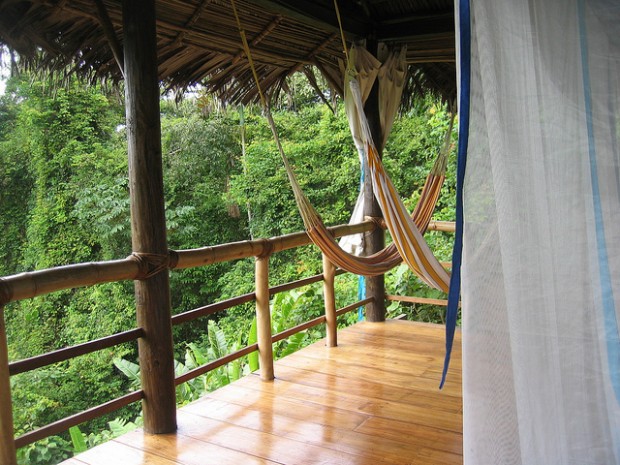
Picture it. Powdery sand beaches, colorful splashes of tropical flora…with no signs of human intervention other than a hammock slung between two trees that’s gently calling your name. All this sits on the shores of the warm turquoise waters of your own private swimming pool that stretches infinitely toward the horizon.
There are no high-rise condos to block your view, no obnoxious souvenir vendors peddling their wares, and no loud neighbors blaring Jimmy Buffett on constant replay. Just you and whomever and whatever you’ve elected to bring with you.
Con: Sometimes a little development is a good thing.
Sure you’re considering island life because of its simplicity. But keep in mind that many islands, particularly the smaller, undeveloped ones, lack any utilities or infrastructure whatsoever. There may be no electricity, no hot water, no phones, no convenience stores.
What’s more, some islands that aren’t developed have remained that way because it’s not possible to get permission to develop them. So you can’t assume that you can later add some of the amenities you desire. That’s not always an option.
Compromise: If you’re someone who absolutely has to have a little bit of development to feel content or secure, you have basically two options available to you.
The first option is to choose a relatively larger island that has a few more amenities. There are some great options, like Roatan, Honduras, or Ambergris Caye, Belize, that offer all of the perks of island living but also have access to goods and services you might not find on a smaller island.
You won’t exactly be living the life of Robinson Crusoe, unless you can find a secluded lot somewhere well off the beaten path, but you’ll have those creature comforts you crave. You’ll also pay considerably more for property on one of these more developed islands.
Another alternative is to choose a secluded, private island that’s NEAR a place that has more development. A perfect example is Boca Chica Island, Panama. (Unashamed plug for our island!) There you can be completely alone with your thoughts and then, after only a 10-minute boat ride, find yourself on the mainland with access to all of the basic necessities you might need. For even more variety, the large city of David is only another half hour away once you reach the shore.

Salvatore Freni Jr
Pro: Island living is the epitome of freedom and easy living.
With no nosy neighbors, no authorities, no subdivision covenants, no schedules or deadlines, island life gives you the once-in-a-lifetime opportunity to live your life exactly the way you want to.
You make the rules. You set the agenda and the dress code. You essentially create your own reality. You can get up when you want to, spend your time doing whatever it is that fuels your existence, maybe take a siesta, and then get up and do it all again.
Con: There’s such a thing as something that’s too easy and too free.
While some people might jump at the chance to live a life of leisure and do nothing but swim, surf, fish, or snooze, there are others among you who might already be asking yourself what you’re going to do AFTER you’re done doing all those things.
The truth is that, for some, island life can become a bit monotonous and…well…downright boring without something productive to do or some way of contributing. Cabin fever can set in really quickly, especially if you’re living somewhere that’s completely deserted.
People from first-world countries have been conditioned to seek challenges and find satisfaction in overcoming obstacles. And by that we mean something a little more difficult than just figuring out how to get the coconuts down from that really tall tree.
Without enough healthy struggles, many people might quickly become frustrated with an all-too-easy lifestyle.
Compromise: Again another option is to choose a more populated or developed island with a few more options for socializing or a wider variety of activities to participate in.
You can also stick with the more secluded place and just look for other ways to find your purpose. A lot of island dwellers choose their locations because they’re the perfect setting for working remotely. The solitude and natural surroundings are great fuel for uncluttered thinking and ultimate productivity.

WWT
Pro: There’s an unlimited supply of fresh fish, fruit, and more.
Talk about fresh, organic, wild-caught foods. It doesn’t get any more natural than all of the amazing ingredients that are readily available on a tropical island.
You’ve never caught fish so easily in your life. And everything that grows on the trees is such a great natural complement to the flavors of the seafood. Coincidence? We think not.
So many people report weight loss and better health after moving to a tropical destination, even if they aren’t even trying to focus on their health. It’s just a natural consequence of island living, which is also often much more inherently active than even other tropical living options.
Con: On an island there’s little else in the way of supplies and consumer goods.
Depending as always on the level of development of your particular island, there may be very little access to the goods and services you need. You may have no stores at all, maybe just one, or perhaps only a boat that comes periodically to the island from the mainland and may or may not have the things you’re after.
The level of inconvenience to you will also depend on how high-maintenance your needs are. If you’re only slightly bummed that the local store doesn’t carry your brand of breakfast cereal, than that’s no biggie. If you absolutely can’t handle the fact that you never know whether the supply boat will have milk this week or not, then that’s a bigger issue.
There’s also the issue of paying slightly more for what’s sometimes lesser quality items, due to the added cost of transporting the goods. Transportation and availability become even more time- and money-consuming when it comes time to build an island home or make repairs or renovations as everything has to be brought over by boat.
Compromise: There isn’t really a whole lot you can do about this issue. What’s available is what’s available and your best bet is to just learn to have an extra measure of patience and to sweet talk the local business owners every opportunity you get.
This is also another area where living on a more populated island, or one that’s closer to civilization, affords you a much higher number of options in terms of goods and services. You just have to find the right balance between solitude and convenience.

Paul D’Ambra
Pro: Owning an island will make you a big hit at parties.
Let’s face it. Island ownership is the ultimate status symbol. Islands are the real estate equivalent of diamonds, extremely beautiful and valuable in their own right, but made even more desirable by their rarity.
Islands convey exclusivity, freedom, power, and a lot of other qualities associated with celebrities and other elite groups. It’s like having a yacht, except it’s a solid investment in real property.
Nothing shuts up the token show-off or the one-upper who’s bragging about his last blowout vacation like when you casually mention, “Yeah, that sounds kind of like my private island.”
That’s not to say that you should buy an island just for the bragging rights. In fact, that’s far from the mindset of most people who invest in island real estate. But there’s still the satisfaction of knowing you could brag about it. If you wanted to.
Con: There probably won’t be many parties on your deserted island.
Unless you’re willing to throw a soiree and somehow transport several dozen of your closest friends out to the island to attend it, you’re probably going to have to go elsewhere to find the above-described cocktail party.
Otherwise you’re going to have to be the one traveling to maintain any semblance of a social life. For that matter, you’re also going to have to travel a considerable distance for things like matches, movie nights, boat repairs, and access to postal services.
These occasional trips might not be a big issue to some, but it can be frustrating to run out of paint with ¾ of your room completed and a 45 minute one-way haul to the nearest hardware store.
Compromise: When loneliness creeps in or you discover your significant other just ate the last slice of bread you’ll get for a week, the best solution is to remind yourself of all of the amazing benefits to island living that far outweigh the occasional inconvenience.
Running out of eggs is a small price to pay for a panoramic view of both sunrise and sunset from your wrap-around porch. Spotty internet is not a bad trade-off when compared with the ability to enjoy complete solitude and total silence, save the howler monkeys and toucans flitting overhead.
Island living isn’t for everyone. And it isn’t for the faint of heart. But if you’re one of those for whom this lifestyle is a perfect fit, you’ll spend the rest of your days wondering why you didn’t make the leap sooner.
Don’t waste another one merely staring at that island in the distance. See what’s available and give island living a try for yourself.
William Friar
Thousands of North Americans each year are leaving their homes and their homeland and heading for the Latin Tropics. And they aren’t all retirees.
In fact, the median age for expats is getting lower and lower as many young families, entrepreneurs, and business owners are joining the ranks of the hordes of senior citizens living in the tropics collecting their Social Security checks.
However, unlike their retired counterparts, these savvy individuals aren’t just coming for the nice weather and lower cost of living. They’re also in it for the world of opportunity available just a little further south.
Why Do Expats Choose to Do Business in Latin America?
Whether they’re retirees looking to supplement their pensioner’s income or young dreamers hoping to make it big in paradise, there are a number of factors that motivate expats to go into business overseas.
They’re looking for a new experience.
Maybe you’ve always dreamed of opening a bed and breakfast, or perhaps you just want a way to make a living pursuing your passion for deep sea fishing. If so, you’re in the same boat (pun intended) as a number of other North Americans with a desire to spend their livelihood doing something they truly enjoy.
Baby boomers are particularly prone to this mindset. As many of them near retirement age, they view the rest of their lives as a beginning, not an end. It’s a time to explore new frontiers and rediscover themselves.
They’re taking advantage of the lower operating costs.
Not only does it cost less to live in Latin America, practically every aspect of opening and running a business runs significantly less than in North America. That’s true of everything from corporate taxes to printing costs to legal services to accountants and more.
With far less start-up capital required, it’s much easier to stretch your dollar. As a result, you can attempt those things you’ve always wanted to try, without worrying quite so much about the risks involved.
They realize the world is becoming increasingly flatter.
With so many people working online these days, there’s an increasing number of professions where literally all you need is an internet connection and you can work from anywhere in the world.
Many expats start online businesses, launch websites, or try their hand at freelancing. North American employers are also increasing receptive to allowing their employees to work from abroad. They recognize the valuable experience their workers, and as a result their companies, gain from the multicultural exposure.
Quite frankly, they need the money.
The decline of the global economy took quite a toll on the pension funds of those nearing retirement, as well as the investment and savings accounts of…well, everyone else. Refusing to give up their dreams of moving overseas, many North Americans, young and old, instead found themselves having to tweak their expat game plans a bit.
They’ve still moved down, but instead of spending 100% of their time relaxing or pursuing their hobbies, many have opted to work at least part time to supplement their families’ income. They teach yoga classes, lead guided tours, or blog about their travels.

William Friar
What Are Some Common Expat Business Ventures?
When it comes to finding a niche market or coming up with a profitable business concept, there’s literally no end to the creativity of North American expats living abroad. However, there are a few genres that lend themselves quite well to the expat lifestyle.
Real Estate
Seeing as how they’ve been through the whole process of finding their ideal property and either making a real estate purchase or negotiating a rental contract, most expats are already naturally well-versed in the ins and outs of the real estate market in their area.
They know what other expats are looking for, since they’ve recently been in the same situation. Not to mention, these expats can easily earn the trust of other new expats who share in their new careers abroad working as real estate agents.
Land Investment
Speaking of real estate, those with an eye for potential (or a relationship with someone who has a proven track record of successful developments) can profit tremendously by investing in raw land in emerging areas.
By buying property that’s somewhat lacking in infrastructure, early land pioneers can make a substantial profit when the government or large developers begin to take interest in an area and build large-scale projects that drastically increase its value.
Tourism
Since many expats are themselves travelers, adventure seekers, and nature enthusiasts, it only makes sense that they might fare well by catering to other tourists. They open operations like deep sea fishing lodges, jungle tour companies, and white water rafting outfits.
Not only do they get to make a living doing what they love, they also give back by employing locals, encouraging sustainable practices, and teaching others about the area, the culture, or the environment.
Hospitality
All those tourists need places to eat, sleep, and drink. So the obvious next suggestion for expat businesses is the hospitality industry. From boutique hotels to beachside tiki bars to restaurants serving up fusion cuisine, many expats find success just by choosing a niche business and filling a gap in the area’s lodging and dining offerings.
Import/Export
Something that will quickly catch your eye in the tropics is the large number of unique items that just aren’t found in your home country. Things like hand-carved vessels, woven baskets, and colorful textiles can all be purchased inexpensively in Latin America and sold in mass quantities in other parts of the world.
While it can be a tricky enterprise to pull off, compared to some of the other options that don’t involve tariffs, the import/export business can be a rewarding and profitable one for the expat who’s willing to do all the necessary research and planning.
Which Option Will Best Fund Your Expat Life?
Too many would-be expats rule out the idea of moving overseas simply because they think they won’t be able to do all the things they want to do with the budget they have to work with. However, with the right combination of ingenuity and persistence, you can easily find a way to make your expat life pay for itself.
Think of it this way. Whatever it is you envision when you think of your life overseas—hiking your way through virgin rainforests, eating fresh-caught seafood with your toes in the sand—chances are, there are hundreds of other folks who have the same dream. They just need someone to make it a reality.
It’s up to you. So what’s it gonna be?


If there’s any link between immigration and economic growth, then it’s high time U.S. politicians took a page from the Panama visa playbook.
While that may sound odd, to suggest that a developed nation should take political cues from a third-world country, it makes a bit more sense when you consider the fact that Panama has posted GDP growth rates averaging around 8.5% over the past decade.
During that same time frame, the U.S. has hovered mostly between 0% and 4%, with a lovely plunge down to -8% circa 2009.
During this period of starkly contrasting economic up- and down-turns, the two nations have also seen their governments’ stances on immigration diverge in opposite directions.
Lady Liberty Is a Liar
First the U.S. Historically a nation that welcomed immigrants from troubled nations, particularly those who had something to offer the economy, the U.S. has become home to over 11 million undocumented workers, a limited number (85,000 to be exact) of work visas for foreigners, and a talented pool of international students who are having to go elsewhere to find work following graduation.
What happened to The New Colossus? “Give me your tired, your poor.” I have a feeling the ancestors of many U.S. residents are rolling over in their borrowed graves.
Oh, and despite this willing group of skilled workers, 39% of U.S. employers reported having trouble filling jobs last year, according to a survey conducted by the Manpower Group. Yet unemployment still held steady between 7% and 8%. Go figure.
Washington’s response? Uh, well, they don’t seem to have one. At least, not yet. Immigration reform is a topic that’s been debated, delayed, and avoided by politicians on both sides of the aisle. Currently, there’s still no resolution in sight.
Panama’s Predicament
Contrast this with Panama. It’s a country that hasn’t been all that hospitable to foreign workers.
Most Panamanian visas prevented immigrants from working for domestic companies, and strict labor union policies kept companies from employing foreigners to fill more than 10% of their available jobs (15% for experts and those in skilled technical roles). All in an effort to keep outsiders from taking jobs away from Panamanians.
These tactics worked,and Panama has enjoyed low unemployment rates (currently near 4%). However, it’s also been blazing a trail as one of the world’s fastest-growing economies.
In a race to catch countries like Singapore and position itself as a communications, logistics, finance hub, Panama has been a frenzy of activity. The construction of new hotels, office buildings, and housing complexes have created a demand for service and construction workers. A multi-billion dollar canal expansion alone has generated more than 30,000 jobs.
Good news, right? Well, yeah, all except for the fact that it’s a bit of a stretch for a country of only 3.5 million people that has no way of importing additional manpower with any kind of quickness.
Not to mention, many of the jobs needing to be filled couldn’t be staffed with Panamanians due to languages or other special skills needed. This kind of training could be provided, but that takes time. So do improvements to the country’s education system, although those were still implemented anyway.

Michaelseangallagher
If You Can’t Beat ’em, Find a Shortcut
Panama needed a solution fast, and President Ricardo Martinelli delivered one when he signed an executive order offering immediate permanent residency to citizens of 48 countries that “maintain friendly, professional, economic, and investment relationships with the Republic of Panama.”
Known as the “Specific Countries” or “Friendly Countries” visa, the decree created a fast track to citizenship for skilled workers who could help meet Panama’s increasing demand. Not only can they meet immediate staffing needs, they can also help train Panamanians for technical jobs and management-level positions they couldn’t have otherwise attained.
It’s quite brilliant really. Rather than fight the labor unions or create a virtual filibuster of political back-and-forth, Martinelli just handled it.
Labor unions want 90% of workers to be citizens? Well, now new residents are attending mass legalization ceremonies called “melting pots” where they’re immediately granted a work permit. They legalized over 5,000 foreign workers in April alone.
Panama is serious about sustaining its record growth and embracing the talent of skilled workers from all corners of the globe. For now, anyway.
There’s a New Sheriff in Town
A new president, Juan Carlos Varela, will take office in July of this year. It remains to be seen whether he will repeal Martinelli’s Friendly Countries visa, as is generally the custom of new incoming administrations.
The president-elect of Panama usually undertakes, as their first order of business, the act of cleaning house and replacing and reversing all the people and policies employed by the previous leader. Hopefully, though, he too has been solidly convinced by the incumbent’s actions and will leave the groundbreaking visa program as is.
The majority of the nation has taken note of the tremendous success the country has seen by acknowledging the need for a talented and diverse workforce in order to sustain its economic growth.
Now, if only Washington would follow suit.