


Do you want to explore the world and telecommute? Can you work from your laptop? If so, here are 9 awesome places where you should be doing it.
1. Matapalo, Osa, Costa Rica
Watch Scarlett Macaws fly by as you talk to your friends back home in their cubicle.

Photo Credit: Photography critiques
2. Lake Yojoa, Honduras
Sip some of the world’s best coffee while updating your cloud files.

Photo Credit: aaronernestoortizlopez
3. Barra de la Cruz, Mexico
Check your emails between swells.

Photo Credit: Acer Acera
4. Boca Chica Island, Panama
Kick your feet up in a glass house, watch the monkeys hop from tree to tree while on your next conference call.
Photo Credit: Emerging Terrains
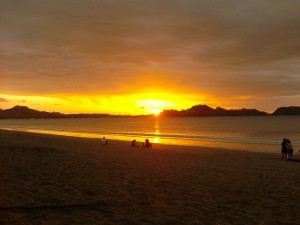
5. San Juan del Sur, Nicaragua
Watch the sun set, while your friends are stuck in traffic.

Photo Credit: Sean9141
6. Playa Las Flores, El Salvador
Turn casual Friday attire into beach attire: flip-flops are mandatory.

Photo Credit: AdventuraCuscatleca
7. Caye Caulker, Belize
Trade in your windowless cubicle for the word’s best vista.

Photo Credit: Mukster
8. Playa Canoa, Ecuador
Dine on freshly caught fish at your next business dinner at Canoa Ecuador.

Photo Credit: Read George
9. Lake Atitlan, Guatemala
Click send, then hit the water for some kayaking.

Photo Credit: Mike Sten
Got any better places to telecommute? Let us know in the comments.

Intransit.tv takes us on a video tour of Nicaragua’s second colonial city, Leon. Join in with the locals who are hosting the city’s colonial rival, Granada, in a baseball match and enjoy some authentic Nicaraguan food with our video guide, Peter.
Leon, Nicaragua is the second largest city in Nicaragua. And after Granada, which is better preserved, León has the best colonial architecture in Nicaragua.
Visiting here means you are relatively on your own. There will be the sporadic backpacker here and there, and as of late, tour groups have taken to visiting as well, but this is still a university town, and off the beaten tourist route.

The Ecuador 3 Count, where we bring you 3 Ecuador stories that you shouldn’t miss.

Photo Credit: Rinaldo Wurglitsch
1. Why Are You Waiting? 4 Fantastic Reasons Why Now Is the Time to Invest
First Up: Not so long ago, you would have been nuts to invest in Ecuador. Socialistic leader Rafael Correa has just secured another 4 year term and vows to keep at his “citizen revolution”, which so far, is unfavorable for Western investors. Foreign direct investment now stands at less than 1% of GDP – but there are reasons to consider Ecuador for investment. We’ve listed the top 4 reasons to take the leap and invest in Ecuador.
2. Why Haven’t You Checked Out Cotacachi?
Next Up: One reason for Ecuador’s popularity with the retired gringo set is the climate. Many move to Cuenca and Quito, but there are also the spectacular Ecuadorean Andes. As expat Susan Haskens found, not only is Ecuador budget-friendly, it also comes with spectacular views.
3. Here’s Why Alice Traded in Cleveland for Cuenca
When Alice Goers decided to retire she know it would be beyond Cleveland, Ohio. Moving overseas was something else entirely, an idea that, when she began planning for her retirement, didn’t even occur. Alice made a list of all the things that were important to her in retirement, and then she began researching everything she could on the idea of retiring to a new country where she might find those things. She found it all in Cuenca, Ecuador.


Panama has long been an attractive destination for expats of all ages, with its favorable residency requirements and unmatched retiree benefits. But if you were thinking you had a few more years to slave away in a cubicle and a few more dollars to save before you could make your move to this Central American haven…
Think again.
In a recent executive decree, Panama’s President Ricardo Martinelli signed into effect a new visa option for those who want to escape the ever-tightening choke hold of the American government, but aren’t quite yet able to get by on their current retirement savings… Retiring to Panama Just Got Easier!
What’s different about Panama’s new visa?
The new visa, called the Immediate Permanent Residency visa, gives instant residency status to those who wish to engage in professional and economic activities, start a business, or get a job in Panama. This is in contrast to options such as the pensioner’s visa that explicitly prevents retirees from taking jobs away from Panamanians.Also different are the solvency requirements. Instead of an investment of anywhere from $60,000-$300,000, the new visa requires a mere $5,000 in a Panamanian bank account. Another benefit is the option of obtaining citizenship after five years in the country, something that isn’t offered at all by many of the other visas.These are all perks that can benefit retirees as well. It gives them the opportunity to work if they want (or if they can’t afford not to), and it basically serves as a fast pass that sends them directly to the head of what was once a long line of steps toward immigration.
What prompted the President’s decree?
Over the years Panama’s government has implemented a number of incentives that have made the country an extremely attractive place to do business. As a result, its economy has been growing at a tremendous rate, experiencing a whopping 10.6% increase in 2011 alone. This, coupled with an unemployment rate of only 4.5%, has led to a shortage of educated, trained, English-speaking workers.
The government recognizes that the long-term solution is, of course, education. They have already begun to pour millions into the country’s education system. But for the meantime the best way to find qualified labor is to import it. They’re looking specifically for “workers in growth sectors such as logistics, tourism, banking, and those making Panama a regional hub for multinational companies,” explained Minister of the Presidency Demetrio Papadimitriu.
What would it be like to work or own a business in Panama?
Panama’s business community is heavily English-speaking, recognizes the U.S. dollar as its official currency (alongside the balboa), and bears an awful lot of other similarities to the States. Well, on the surface at least. Panama’s laws are much more favorable to investors and businesses. There are fewer restrictions on banks and corporations and much greater financial privacy. The country is home to several large duty-free zones, and personal taxes are reasonable as well, with none levied on income earned outside of the country.
Who qualifies for the new visa?
The new visa is available to those who hold a passport from one of 47 specific countries (currently, as the number has increased several times since the initial decree) “that maintain friendly, professional, economic, and investment relationships with the Republic of Panama,” including the U.S. and Canada. A full list is included below. Also eligible are applicants’ dependent spouses, children under 18 (or between 18 and 25 if they’re students), dependent parents, and family members with disabilities.
In order to qualify, applicants need $5,000 in a Panamanian bank (plus $2,000 for each dependent) and one of the following: evidence of investment in Panamanian real estate, proof of ownership in a Panamanian business or corporation, or a letter and contract of employment from Panamanian company. Throw in a clean police record and a passport, and you’re well on your way to personal and financial freedom.
What are the first steps towards obtaining immediate residency?
Because the employment requirements must be met before the application can be completed, you should probably start there. You’ll need a work permit, which is issued by the Ministry of Labor. The next step is finding a job or setting up a corporation, which is not a very difficult or expensive process in Panama. However, since several government entities are involved and the paperwork is all in Spanish, it wouldn’t be a bad idea to hire a competent attorney to assist you with the whole process.
What are the “specific countries” that are recognized by the decree?
Alphabetically, the 47 countries are Andorra, Argentina, Australia, Austria, Brazil, Belgium, Canada, Chile, Croatia, Cyprus, Czech Republic, Denmark, Estonia, France, Finland, Germany, Greece, Hong Kong, Hungary, Ireland, Israel, Japan, Latvia, Liechtenstein, Lithuania, Luxembourg, Norway, Malta, Monaco, Montenegro, Netherlands, New Zealand, Poland, Portugal, San Marino, Serbia, Singapore, Slovakia, South Africa, South Korea, Spain, Switzerland, Sweden, Taiwan, United Kingdom, United States, and Uruguay.

Costa Rica’s forests cover less than 0.03% of the Earth’s surface, yet it contains nearly 5% of the planet’s plant and animal species. Clearly this tiny country is an incredible place to experience our planet at its most abundant!
1. Ballena National Marine Park – Puntarenas, Central Pacific Region
This unique park is along one of the more remote stretches of Costa Rica’s coastline, on the southern end of the Central Pacific region, and encompasses several beaches. The park gets its Spanish name for a peculiar sandbar formation at Playa Uvita beach that goes straight out toward the ocean before splitting and curving in two directions, much like a whale’s tale.

Photo Credit: David Herskovits
2. Palo Verde National Park – Guanacaste, Pacific Coast Region
This is an undiscovered jewel in the Costa Rican park system. The animal population is spectacular. The trail system leaves something to be desired, but this certainly means fewer crowds, and there are a number of areas that can be explored by boat.

Photo Credit: Rod David
3. Caño Negro Wildlife Refuge – Alajuela, Costa Rica – Nicaraguan Border
Nature cruises through these wetlands are quite popular, but don’t worry, there are thousands of acres to explore. A boat trip here or in Tortuguero, or Damas estuary is certainly the easiest and maybe the best way to see a lot of wildlife on your visit to Costa Rica.

Photo Credit: David Berkowitz
4. Manuel Antonio National Park – Quepos, Pacific Coast Region
For a tame, up-close glimpse of the rain forest and some of its more photogenic inhabitants, Manuel Antonio National Park is a favorite. Located on the central Pacific coast, Manuel Antonio is one of Costa Rica’s most visited—and smallest—national parks.

Photo Credit: Emmanuelle Bourgue
5. Monteverde Cloud Forest and Biological Reserve – Monteverde, Cordillera de Tilarán Mountain Range
Costa Rica’s most famous cloud forest reserve is packed with an astonishing variety of life: 2,500 plant species, 400 species of birds, 500 types of butterflies, and more than 100 different mammals have been catalogued so far.
Photo Credit: Jardín Botánico Nacional
Let us know where you get up-close-and-personal with nature in Costa Rica.

What could be better than taking a trip to the gorgeous tropics of Central America? How about making the trip affordable?
Due to the booming tourism industry, this may seem easier said than done, and unfortunately, many once budget-friendly destinations, are no longer so. But that doesn’t mean it’s not possible.
Each year tourists from around the world come to experience the tropical climate, Latin culture and exotic beauty of Central America, but many don’t realize that it can be done on a budget.
Costa Rica, Panama, Nicaragua, and El Salvador are four popular Central American countries that can be truly experienced without breaking the bank in the process.
First Stop, Costa Rica

The most popular tourist destination on the list, and arguably the most tourist friendly, Costa Rica can tend to be a bit pricey But don’t worry, there are ways to keep your costs down.
In big cities like San Jose, prices will typically be higher, so hop on a bus and head for one of the smaller beach towns. A five hour direct bus to a town like Santa Theresa will cost you around ten dollars.
Remember to exchange your money into the local currency colones, as usually only expensive items/places accept American money. Seek out cheap accommodations at a hostel (around ten dollars) and start exploring the beauty of Costa Rica.
On to Panama

Photo: Martha de Jong
Although the tourism industry here is not quite as developed as their northern neighbor Costa Rica, Panama is just as beautiful and the prices are often lower. Again, buses will be the cheapest mode of transportation and hostels your best bet for reasonably priced accommodations (around twelve dollars for a bed). As a perk, many hostels will have communal kitchens, so take advantage of the local market and cut another cost by cooking your own meals. If cooking on vacation isn’t for you, try to avoid restaurants aimed at tourists and instead look for street stalls and small cafes.
Next It’s Nicaragua

Photo: McMallan
Just north of Costa Rica, Nicaragua, known as the land of lakes and volcanoes, is cheaper and attracts a lot less tourists. In fact, you can catch a bus from Costa Rica to Nicaragua for just a few dollars, but remember, you will have to pay a fee of seven or eight dollars to get into the country. Once you are in Nicaragua, exchange your money into córdoba’s and head for small towns like El Trasito, Popoyo and Playa Maderas to soak up the sun and experience the amazing surf. If you visit Isla de Ometepe, be sure to hike up the double-volcano nestled in a lake filled with fresh water sharks, or you can try remote Little Corn Island for cheap kayaking and snorkeling.
Last Stop – El Salvador

Photo: Amber and Bryan via flickr
While El Salvador may not be as popular a tourist destination as the others, most who visit are pleasantly surprised. The people are friendly and welcoming and there are many wonderful, and cost efficient things to enjoy, like taking a trip to the beach town of El Tunco just an hour from the capital San Salvador. Yes the food is a little pricey, but the hostels are cheap and the surfing and swimming is unbeatable. Explore San Salvador on a five dollar bike tour that takes place every Thursday night, or take a leisurely stroll around the city to check out the politically-charged street art.
Ready to go? Remember these tips:
- Take advantage of local transit. While bus rides may be longer, the cost is substantially less.
- Eat like a local. Avoid tourist-targeted restaurants and look for low-key local spots.
- Make the most of happy hour.
- Visit “free” national parks for hiking and observing nature and wildlife.
- Stay in a hostel. Typically group and private rooms are offered.
- Surf and swim – it’s free!
It’s a common misconception to think that a good holiday means an expensive holiday. Cliché but true, the best things in life are free, especially when you are somewhere as beautiful as Central America. The sun, the mountains, the beaches, the surfing, it’s all free and all unforgettable. If you are not overly concerned with five star transport and accommodation, Costa Rica, Panama, Nicaragua, and El Salvador can all be yours at a reasonable cost. So do your research, book your plane ticket and get ready to discover the wonders of Central America without putting a dent in your wallet.

Guatemala 3 Count, where we bring you 3 stories that you shouldn’t miss.

San Lucas, Guatemala tranquil yet growing quickly.
1. This Booming Location in Guatemala Might Surprise You
First up: San Lucas, Guatemala is booming, despite being one of the smallest municipalities in the nation. With a record number of housing developments fueled by its ideal weather conditions, abundant water, and situated on the Inter-American highway it has quickly grown into an attractive location not to just live, but also start a business.
2. Get Beyond Guatemala City (2 Secret Places Expats Should See)
Next up: Guatemala City is a chaotic home to 3.2 million people, and with a high crime rate, this is not a place that lures tourists. Instead head outside the city and go for the mountain highland town of Chichicastenango and the Mayan ruins of Tikal, the country’s best-known former Maya city.
3. How Guatemala is Carving Out a Utopia Lifestyle
Finally: The main street of Paseo Cayala, a nearly independent city on the edges of Guatemala City is a new start for a nation riddled by violence and crime. In this area the backers of Cayala hope to build Guatemala’s private city, targeting elites looking to escape crime and enjoy an unusual degree of autonomy from the chaotic capital.


Does the thought of becoming an Expat scare you? Here are nine tips on helping you make a smooth transition into life abroad.
1. Be Certain About Your Move
Moving is stressful. Go for the right reasons. If possible, visit the country before you make up your mind and most importantly, make your OWN opinions.
2. Will Your Benefits Follow You?
If this is a corporate move you might luck out and be eligible for relocation benefits. Ask, it’s worth knowing. If you are on Social Security, check with the embassy, the more information before the move, the more comfortable you will feel.
3. Make a Budget
Taking the time to make a budget is sometimes the difference between a successful relocation and a disaster. Before you go, find out what you can expect as your new cost of living…budget for the unexpected!
4. Insurance – What Type and Where?
Take the time and prearrange for the appropriate insurance (such as health, life, and travel) for yourself and your family. Find out what type of health care options, even insurance, and infrastructure are available to support you, especially if you suffer from a medical condition that requires treatment or medication.
5. Banking – Here or There?
More than likely you will need to open a bank account in your new country – look for information on the one that suits you best. Bring reference letters from your bank at home. Is it wise to keep your current account open? Most likely yes; do your homework and find out what foreign transaction fees you might incur. At the very least, you’ll need to tell your current bank that you’re moving.
6. Can I Take My Credit Cards?
Your credit card companies will need to be informed you’re moving; it is wise to also see if the cards you hold are widely accepted.
7. Will You Need to Exchange Currency?
When moving abroad you might not be using the same currency as your homeland. Therefore, even a 5 per cent shift in the exchange rate can make a huge difference in how far your money stretches. There are websites which can help, checkout www.x-rates.com and select the currencies. It provides historic information and you will know whether your exchange rate is good – and whether to wait a few more days before you run to the bank.
8. Yes, There Is Paperwork
Use this rule: if you might need it, take it. No matter how insignificant a document seems, it’s better to have it on hand, than be without. Chances are, at some point, you’ll have to show it to someone. Important documents you will want to think about include: birth certificates, police reports (often needed for immigration processing) wedding certificates, educational certificates, and medical certificates (including those for your pets).
9. Go Ahead, Make Friends!
Friends are like a security blanket, whether locals or fellow expats, nothing will help you feel more at ease than being able to rely on the assistance of your friends when you need it. Socializing is not time wasted, it’s what makes a new country feel like home. Picking up and moving to a new country can be both a bureaucratic and emotional nightmare at the best of times, but if you are prepared, you stand a good chance of a stress-free relocation.


Belize is well-known among tourists for its beautiful beaches, excellent fishing, Mayan ruins, coral reefs, and tropical climate. But not for its medical care.
At least, not yet.
Plans are currently underway for this Central American country to expand its already-thriving tourism sector to include another industry that is gaining popularity across the globe: medical tourism.
What is medical tourism?
Medical tourism, also called health tourism or medical travel, involves traveling to another country to seek medical treatment or health care.
Patients, often from the United States, Canada, or European countries, venture to international destinations where specialized or elective procedures can be obtained at a much lower cost than in their home countries.
Some commonly sought procedures are joint replacement, heart surgery, weight reduction surgery, and cosmetic procedures. Among the leaders in this $100 billion industry are countries such as Thailand, India, South Africa, and–more locally–Brazil, Costa Rica, and Panama.
Medical tourism dates back as far as the ancient Greeks who left the Mediterranean and ventured to Epidauria near the Saronic Gulf, which was said to be the sanctuary of Asklepios, the god of healing. Many later Greeks and Egyptians followed suit, traveling to baths and hot springs in the name of better health.
The practice has continued in recent centuries as Americans and Europeans have flocked in increasing numbers to health spas and sanitariums. Today, the medical travel experience comes complete with an agency that can arrange for all aspects of the patient’s trip, including airfare, hotel accommodations, and even the procedure itself.
What is the current status of health care in Belize?
While Belize certainly knows how to attract tourists, its health care industry may have some work to do before it can compete with even some of its Latin American neighbors. The cost is certainly low enough, with a hospital stay running around $7.50 per day and laboratory fees hovering around the $5 range.
However, the number of doctors and medical facilities is limited. There is approximately one physician and one hospital bed for every 1,000 Belizeans, one of the lowest concentrations in the area. Both private and public sector facilities exist. However, over half of them are located in the Belize City area.
With such a shortage of medical facilities and personnel, it’s often difficult to find services beyond the most basic care. As a result, many residents currently travel to Mexico for anything other than routine procedures. In contrast with the availability of medical care, the quality is quite good.
Many of Belize’s doctors were trained abroad and include volunteer doctors from countries like Cuba. The country currently has no medical laws or regulations and requires no international certifications. However, a series of reforms prompted by the Ministry of Health in the 1990’s has done much to improve the health care system overall.
What makes Belize a good candidate for medical tourism?
Among the tremendous advantages for Belize as it prepares to take the leap into medical tourism are its proximity and familiarity to the U.S. Just a short flight away from hubs such as Miami and Houston, Belize is the only country in Central America that has English as its official language.
In addition to having doctors who speak their own language, Americans are also sure to be put at ease by the friendlier and more compassionate bedside manner of Belizean medical professionals.
Another benefit is the fact that most lodging in Belize already embodies an atmosphere that is very conducive to healing, being made up of mostly small inns with no more than a dozen rooms. This tranquility, coupled with the low cost of treatment and a feeling of home, are an excellent recipe for recovery.
What can Belize hope to gain by emerging into the medical tourism industry?
More investment in its health care system will naturally only continue to lower the cost and improve the quality of the country’s already affordable and reliable medical treatments and facilities. The sparse density of hospitals and physicians would drastically change once the country began treating thousands more patients, and the availability of specialized care would also increase.
The plan promises a tremendous boost to the country’s revenue and the employment of medical professionals, such as nurses, technicians, and medical assistants. This growth of the health care industry will also fuel the growth of tourism in general. An influx of patients seeking medical treatment will generate the need for additional taxi drivers, hotel and spa workers, and tour operators.
What are the next steps for Belize?
While the push for medical tourism is being driven largely by the Inter-American Development Bank (IADB) and the Belize Trade and Investment Development Service (Beltraide), both the Ministry of Health and the medical community are heavily involved in the planning stages.
A major concern is the lack of integration of Belizean doctors and health professionals, since the country has already been opening its doors to foreign-owned facilities. At workshops held in the fall of 2012, doctors were assured that those plans and permits had been put on the back burner until the country’s own domestic plan had been implemented.
Among the first steps in the process will be decisions regarding the implementation of laws and regulations. Hospitals will have to undergo the necessary certification processes, which may require them to modify some of their current practices. Local doctors would also need to be trained in new treatments and procedures to bring them up to par with their competitors in the medical tourism industry.
Even those on the periphery of the proposed health care operations would likely be educated in areas such as first aid treatments and cardio-pulmonary resuscitation (CPR). Future medical travelers to Belize could benefit from the added peace of mind of knowing that even their tour bus driver and hotel receptionist could aid them in the event of a medical emergency.
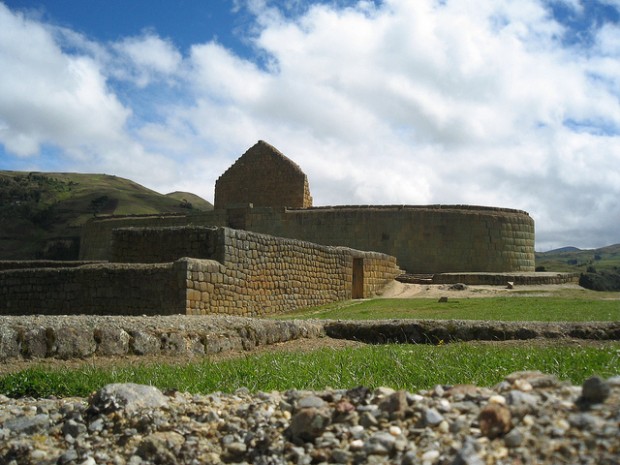
Of all of the cities in Ecuador, Cuenca is arguably the most charming with its cobblestone streets, old-world cathedrals, colonial parks, and mountain vistas. In Cuenca, there is never a lack of things for an expat to do over a weekend. We’ve rounded up five to get you started.
1. Eat Lunch at the Inca Ruins of Ingapirca
Just a two-hour drive outside of Cuenca is Ingapirca, the largest Inca ruins in Ecuador. As you explore by foot, take notice of typical regional handicrafts, including pottery, leather goods, and more. Many hotels offer guided tours to the ruins, known for its many stone structures surrounding the prominent circular sun temple. Find a comfortable seat and watch craftsmen weave Panama hats while you enjoy a typical Ecuadorian meal.
Inca stone ruins of Ingapirca, Ecuador
2. View Cuenca from Atop the Mirador de Turi
For an impressive view of Cuenca, take a taxi south of town along Avenida Solano to the stark white Church of Turi, that sits high on a hillside in the southern suburb of Turi. The views are especially grand on the holidays and in the evenings when all of Cuenca’s churches’ steeples and domes are lit throughout town.
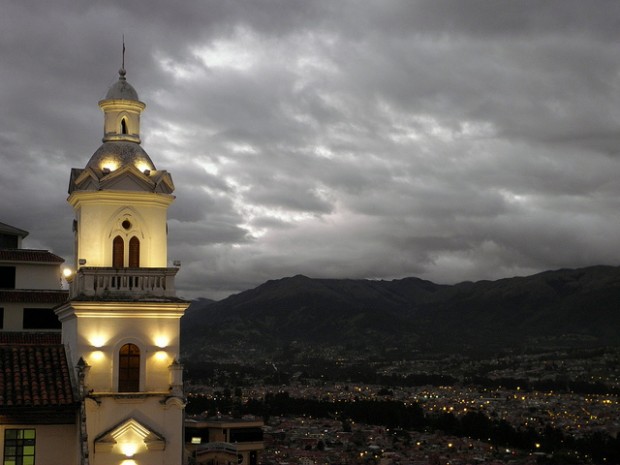
See Cuenca from atop Mirador de Turi.
3. See a Shrunken Head at Museo Pumapungo
Cuenca’s most important museum, Museo Pumapungo is home to five rare and eerie tzantza (shrunken heads) from the Shuar culture of the southern Oriente of Ecuador. Take your time, the museum is a great place to take in Ecuador’s vast cultural offerings where you can see traditional costumes of the country’s indigenous cultures, to Afro-Ecuadorians from Esmeraldas province, along with the cowboy-like montubios (coastal farmers) of the western lowlands.

See a shrunken head at Cuenca’s most important museum, Museo Pumapungo.
4. Take a Hiking Tour of Cajas National Park
With over 250 lakes and a natural abundance of flora and fauna, Cajas National Park is a popular hiking location at the doorstep of Cuenca. Offering all types of hiking grades, up to 12,000 feet, the park operates in all types of weather conditions, so be prepared. But if you need to get out of the city for a bit, it is a perfect day-long escape into nature.
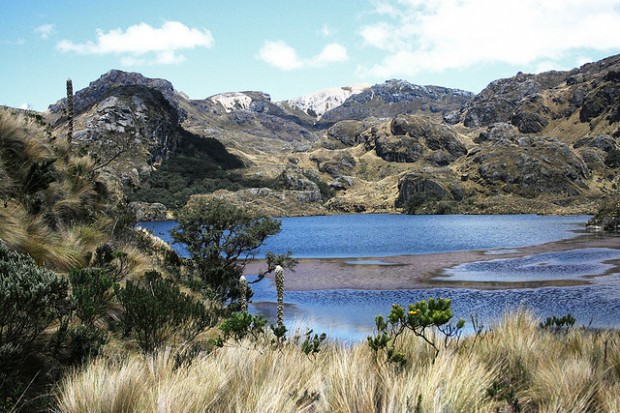
Day hike the Cajas National Park.
5. Take a Postcard-Worthy Picture of the Catedral de la Inmaculata Concepción
Make certain to charge your camera for the focal point of Parque Calderón, Catedral de la Inmaculata Concepción, with its signature twin blue domes that have become the city’s hallmark symbol. The massive church whose austere marble interior took nearly 80 years to complete from its 1885 start date has beautiful stained glass windows and is particularly compelling during an evening service.

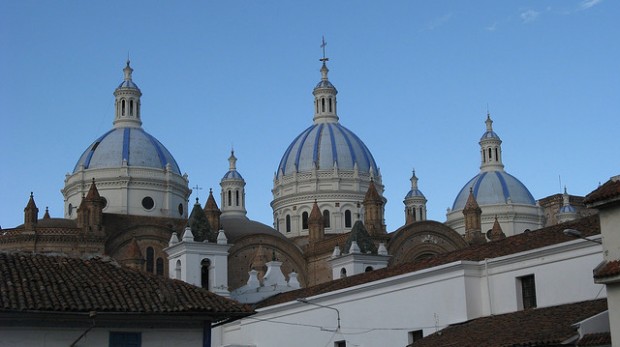
Take a photo of Cuenca’s most famous blue domes.
Did we miss your favorite spot in Cuenca? Let us know where you spend your weekends!


Cuenca, Ecuador photo by Jonathan Hood
When considering relocating to Latin America, many would-be expats quickly narrow their search down to the countries of Ecuador and Panama. And why wouldn’t they?
Ecuador has topped out International Living’s list of best places to retire for five years running, with Panama always following closely in the second or third spot. This list is based on an index of different factors such as climate, cost of living, culture, and many more. However, much of this criteria is highly subjective. The hot, humid climate you enjoy could be someone else’s idea of misery. Likewise the Burger King on the corner might be a welcome sight to some, but for you it might evoke the very feelings that prompted you to leave behind the cookie-cutter culture of the States.We’ve outlined some of the major differences between the two countries below, but don’t take our word for it. The best decision-making tool is your own observation. Plan a trip, and check things out for yourself.
Cost of Living
In this category, the advantage goes to Ecuador. In most parts of the country, you can easily get by on about $1,200 per month, including rent. This number gets even lower the further you venture into the rural areas where monthly rent can run as low as $150 per month. Combine that with an average cost of $1.90 for a four course meal, $1.50 for a gallon of gas, and the help of a domestic servant for a mere $10 a day. While it is possible to get by on the same $1,200 in Panama, it would be with a standard of living that more closely resembled that of the locals.
Real Estate
While Ecuador wins this one for its low cost homes, Panama may have a slight edge when it comes to the ease of the entire process. New homes in Ecuador are well below the $100/square foot price. That’s half the price of comparable homes in Panama, although the construction is different. Homes in Ecuador are built of cement and red clay.
The home buying process is easier in Panama, where international banks are quick to offer financing to foreign residents. Closing costs are twice as high in Panama (around 6%). However, property owners in Panama may be exempt from property taxes for a number of years if the home is their only residence.
Transportation
The infrastructure of Panama closely resembles that of the U.S., and its roads are much more well-maintained. Other than that, there’s little difference between the two countries. Ecuador offers several options for public transit, including buses and taxis, that average around $1 per hour. However, they may not be the safest options (See Safety below.) Panama offers similar modes of transportation for a slightly higher premium. Both countries offer convenient direct flights to several U.S. hubs from a few key cities.
Health Care
While health care in both countries is better than you’d expect, the quality may be slightly higher in Panama, particularly in David and Panama City. Panama boasts many private hospitals with English-trained and English-speaking doctors. In both countries the cost is lower than U.S. health care, up to 90% lower in Ecuador where doctors will even make house calls for less than $25. Both countries also offer a variety of health insurance options for foreigners.
Familiarity
Now here’s where personal preference really plays a big factor. While we can’t say which countries earns the most points in this category, we can tell you which one most closely resembles the culture of the U.S. It’s Panama. With a much larger and more established expat community, Panama will initially feel the most like home. It’s up to you to decide whether that’s the atmosphere you’re seeking.
Both countries use the U.S. dollar, so there’s little risks associated with currency exchange. English is widely spoken in both, although in Ecuador it’s largely confined to touristy locations and international business areas. Both are also home to many U.S.-based restaurant chains and other franchises. Modern conveniences are found in both, although internet service is reportedly much better in Panama. It’s true in both countries that communication is more accessible the closer you are to the larger cities.

Boquete, Panama photo by Ken Mayer
Climate
While this factor also depends greatly on your own personal taste, most will probably prefer Ecuador for its more temperate and varied climate. Panama is mostly hot and humid everywhere with large amounts of rainfall, particularly in May through December, although it’s slightly lower on the Pacific coast than the Caribbean side. The only real difference in the country’s climate is in the higher elevations where the temperatures and rainfall both decrease. Some areas may see temps in the 50’s versus the 84 degree average near the coast.
Ecuador experiences a more diverse climate across its four main regions. The mountainous Andean Sierra boasts average temperatures of 75 degrees by day and around 60 at night. With a lot of sunshine, 12-hour days, and relatively low humidity, its climate is considered by most to be nearly perfect. Ecuador’s coastal region and the Amazon rain forest more closely resemble the climate of Panama: hot and humid all year with temps ranging from 80 to 95 degrees and year-round rain. The Galapagos Islands have much milder temperatures and less rainfall.
Culture
While Ecuador and Panama both have plenty of cultural attractions, the edge here goes to Ecuador. While both countries boast many activities and forms of entertainment, those in Ecuador are often more authentic and less Americanized. With over 28 indigenous groups speaking more than 10 languages, evidence of the country’s heritage fills the marketplaces and festivals that abound in the South American nation. Panama is also a culturally rich country, but often in the form of museums and shopping districts.
Residency and Retirement Benefits
Panama wins this one, hands down. Requirements for a pensioner’s visa are similar between the two ($1000 per month income in Panama versus $800 in Ecuador). However Ecuador offers very few incentives for retirees. Panama, on the other hand, boasts a long list of discounts for those who qualify for its pensioners program. This includes savings of between 10 to 50 percent on virtually every category of goods and services including utilities, closing costs, entertainment, travel, and even health care. In addition, retirees can import up to $10,000 in household goods duty-free, as well as a personal vehicle every two years. And retirement in Panama has never been easier. Recent legislation has expanded its residency program to include individuals who may seek employment upon relocation, at least for citizens of the 47 “Specific Countries” on its list. This change was implemented to counteract the current labor shortage in the country.
Investment Potential
Buying property in both Panama and Ecuador can be a good investment. Since Ecuador generally offers more affordable options, its homes often have more potential for appreciation. However, even more advantageous than buying a home is the opportunity to invest in land in some of the more remote areas where expats are only just beginning to develop an interest. For those savvy enough to get in during the early stages, there’s much money to be made once development begins.
Investing in land won’t get you quite as far in Panama. Since expat communities there are more established, the lots are more expensive. You’d best build if you want to turn a profit. Panama does, however, have a much better rental market than Ecuador and more property management companies to provide assistance. Properties in Panama consistently experience higher occupancy and rent for a high premium.
Safety
While both countries have areas that are safer than others, Panama is definitely the safest overall. In fact it’s one of the safest in Central America, experiencing less violent crimes in a year than New York City does in a day. The country also saw the addition of the Tourism Police Force in 1992, which was specifically established to assist tourists in Panama City. Conversely, Ecuador is plagued with a murder rate of 19 people per every 100,000, four times that of the U.S. Even more alarming is the fact that much of the country’s violent crime occurs in areas heavily populated by tourists. Public transportation, especially taxis, are prime targets for criminals. It’s recommended that all taxis be radio-dispatched. Don’t just hail one on the street.
Schools
Panama wins again, with free public education that is a requirement for children ages 6 through 15. Investments are currently being made into the education system, to increase the number of educated adults in the workforce due to the labor shortage mentioned previously. Several good private schools also exist, many of which are bilingual. By stark contrast, Ecuador’s education system is in the bottom 50 world-wide. While it does have some private school options, most aren’t truly bilingual, only teaching English as a second language.
Things to Do
There is no shortage of activities in either Panama or Ecuador, and we would be hard-pressed to award this category to one country over the other. Both have options for exploring nature, such as whale or bird watching. There are also plenty of opportunities for adventure, like hiking or rafting. No matter what you’re into, you’re sure to find a place to enjoy your favorite hobby or perhaps develop a new one.
Costa Rica. There are very few countries that Wikipedia seems to have as much of a crush on. To sum up Costa Rica, Wiki talks about Costa Rica’s abolished army, that she’s on the list of 22 older world democracies, has a high human development rate and is ranked five in the world (first of all Americas) in terms of the 2012 Environmental Performance Index.
Wiki is head-over-heels, it seems.
Through all that flattery, there’re facts. Statistics. Awards. Let’s analyze the truth of what the search engine’s saying by looking to the latter of Costa Rica’s attributes today: to their environmental sustainability.
What Costa Rica Was Then (pre-2008)
Before the economic crisis in 2008, coastal urban development was booming. Urban property was valuable and life was good.
Then the crisis.
Property dropped up to 40% overnight.
What Costa Rica Is Now
Now, it isn’t the urban property that’s valuable as much as the rural. And no, I don’t mean for you to dust off your dungarees and become a coffee farmer (because this market also got hit by the recession; I hate to tell you, put those denims back in the attic!) but to notice the ecological value that has gone up instead.
Costa Ricans have been interacting with the land, and by doing so have increased its ecological value. Be it through reforestation, where value is given by the oxygen production and purification of carbon dioxide emissions, or the potential of wind farms in Guanacaste, these attitudes have changed the face of Costa Rica.

Photo: MD Verde
It is now the place where farmers voluntarily subject to environmental restrictions. It’s the place where the natural wealth in the ground is valuable, not just what you can build on it.
Having lived in places where by the end of the day you can see a cloud of smog looming over the city, this attitude is a literal breath of fresh air.
The best part about this all, of course, is that property prices are rock bottom for top notch locations. According to InternationalLiving.com’s Global Real Estate Index 2012 – which highlights the world’s 27 most attractive, and possibly lucrative, real estate hotspots outside the U.S. – Ecuador’s Pacific Coast came out tops. And that was just for its extremely low property costs and good quality housing stock.
Natural beauty, natural sustainability, at a great cost.
What’s stopping you?