


LEGISLATIVE ASSEMBLY LAW 24 (November 23, 1992).
By which, incentives for reforestation are established and reforestation activities are regulated in the Republic of Panama”
THE LEGISLATIVE ASSEMBLY DECREES THAT:
Article 1. The present Law regulates everything concerning reforestation. The following definitions apply to the present law:
1. Reforestation: The action of planting FOREST SPECIES on land lacking trees, whether for purposes of commercial, scenic, environmental, tourism, agricultural, forestry, creation of forested pastureland, energetic pursuits, or for any other purposes.
2. Forest Investment: The disbursed monies used for the purchase, rental or lease of land, equipment, machinery, motorized equipment, farming and forest vehicles and tools, nurseries, existing forest plantations, research, industrialization, insurance, contracting and subcontracting for the completion of the forest development plan, sawmills, roads, bridges, and other construction projects necessary for the development of reforestation, and to cover all other common and administrative expenses for the operation and maintenance of reforestation.
3. Indirect Forest Investment: Monies disbursed for the purchase of bonds, shares, and assets of companies dedicated to reforestation and all derived and related activities.
Article 2. The Executive Branch, conscious of its responsibility to all associates and taking into consideration the current growing rate of deforestation and its grave consequences for the country, declares the following as necessary:
1. To increase all forms of reforestation in the Republic of Panamá.
2. To regulate the incentives this Law refers to, through the National Institute of Natural Resources (INRENARE) and the Treasury Ministry, in consultation with related organizations.
These aforementioned regulations must be in forced within six (6) months from the enactment of this Law, in order to stimulate and encourage reforestation in all forms.
3. To establish a thirty (30) year period during which private reforestation is given priority and full support.
4. To promote the companies, associations, community groups and cooperatives involved in reforestation activities.
5. To promote the establishment, development, and improvement of the forest industry so that reforestation products are used as raw materials.
6. To study, investigate and promulgate all forms of reforestation and the means to accomplish same.
Article 3. Forest plantations are considered to be forest crops, and as such have the freedom to be utilized and commercialized as forestry products, nationally and internationally.
Nevertheless, owners of forest plantations should contact INRENARE for market guidelines and the corresponding transportation tables, which are provided at no charge, the data of which is used for statistical records. Forest plantations are the property of a person or company that has the corresponding property rights, except for the restrictions established by the Constitution regarding private property.
Article 4. The benefit to persons or companies derived from the commercialization of products obtained from forest plantations, until the final cut of the forest plantation, and whose establishment is carried out within twenty-five (25) years from the enactment of this Law, will be exempt from income tax, as long as the owners of these plantations are registered in the Forest Register of the National Institute of Natural Resources (INRENARE).
Article 5. Forest investment or indirect forest investments made by a person or company will be one hundred percent (100%) deductible from income tax, as long as the invested money is destined for the reforestation activity.
For indirect forest investments, the benefits established in this article may be used just once; the persons or companies who receive the benefits described in this article for their indirect forest investments, will be obligated to maintain their investments for a minimum of five (5) years.
Forest investments and indirect forest investments made in organizations, private institutions or educational institutions, dedicated to the investigation and research of forestry, the forest industry or the promotion of the forest sector, will be considered as expenses which are one-hundred percent (100%) deductible from income tax, as long as the invested money comes from a source other than the reforestation activity.
The company that illegally sells bonds, shares and assets which benefit from this Law and does not fulfill the objectives of this Law is committing fiscal fraud.
Article 6. The following items are exempt from import duty and other duties when introduced to the country: agricultural, forest, industrial and motorized machinery and equipment, materials, tools, agricultural chemicals, forest research equipment, seeds, cuttings and other forest plants, and any other elements necessary for the exclusive us of reforestation activities, handling and/or use of forest plantations. The Treasury Ministry will dictate the respective regulations.
Article 7. The farms that use more than fifty percent (50%) of their land for reforestation or that have a minimum of two hundred (200) hectares reforested are exempt from real estate tax and real estate transfer tax.
Article 8. The profits generated by bonds, shares and assets of associations dedicated to reforestation and its derived and related activities, and the gains obtained from the sale of these bonds, shares, and assets, will be exempt from income tax.
The owners of these bonds, shares and assets, may use these instruments as a guarantee for banking transactions.
Article 9. The Executive Branch will promote the creation of credit lines with preferential interest rates and “Preferential Forest Loans” for reforestation, through official credit institutions and private banks, savings and loan associations, finance companies or any other company previously registered in the Treasury Ministry, whose commercial activity is to give loans. The Executive Branch will offer full support to hasten, develop and strengthen this activity.
The “Preferential Forest Loans” will have a “Preferential Bond” of four (4) percentage points lower than the local market interest rate. The persons or companies who make these loans will receive a fiscal credit every year for the first ten (10) years of the loan; this fiscal credit will be applicable to the payment of national taxes, for an amount equivalent to the difference between the revenues the Bank would have obtained if it had charged the local market interest rate, and the revenues received from the interests of each of the “Preferential Forest Loans.” The Treasury Ministry will dictate the respective regulations.
The interest earned by those referred to in the first paragraph of this article will be exempt from income tax on loans granted to finance forest investments or indirect forest investments.
The interest paid for financing reforestation and its derived and related activities are one hundred (100) percent deductible from income tax.
Article 10. To encourage investments in reforestation, the Executive Branch will support alternatives to convert forest plantations, either through mortgage guarantee, bank and commercial guarantees, Tax Payment Certificates (Certificados de Abono Tributarios-CAT), bonds, exchanges, transfer of existing plantations, participation in stock exchange, trust funds and others.
Article 11. Every foreign investor that makes a forest investment or an indirect forest investment of forty thousand balboas (B/. 40,000) or more, within the Republic of Panamá, will be eligible for an immigrant visa as an investor, through the purchase of shares, bonds, assets or investments of his own.
The investor must maintain the forest investment until the final cut of the forest plantation, and the case of indirect forest investment, must maintain the investment for a minimum of ten (10) years.
Article 12. The Executive Branch will create all legal mechanisms in the shortest time possible, to conduct and make possible the exchange of external public debt for reforestation, in order to find funds, nationally and internationally, to finance private reforestation through a five (5) year cycle.
Article 13. The Ministry of Agricultural Development, through the Agrarian Reform Directorate, will provide the proper protection against squatting in every forest plantation and every area destined by its owners for reforestation. It is a felony to invade reforested land, so that there exists security for the investment and incentives for reforestation.
Article 14. Following a technical study between the insurance superintendent, insurance companies and INRENARE, a system of Forest Insurance will be developed to indemnify forest plantations against fires, plagues, diseases and other damages.
Article 15. The Executive Branch, for the purposes of this Law, will improve and facilitate, as quickly as possible, the transfer of relevant technologies between national and international organizations, which contribute to the development and optimum use of forest resources.
Article 16. All the norms and guidelines of the present Law will also apply to forest plantations created, or to be created, in the deforested areas of the Panamá Canal Water Basin and the protected wild area, as long as the category and norms for handling and development established by INRENARE permit. For these purposes, INRENARE will establish the minimum requirements, which the forest management plan should fulfill for such areas, in order to protect these areas and at the same time, ensure the best possible commercial use of plantations under these conditions.
Article 17. All norms and guidelines of the present Law will also apply to the following deforested areas:
1. Areas surrounding water sources that spring within a radius of one hundred (100) meters in hilly areas, and fifty (50) meters if they spring in flat land.
2. In rivers and streams, the width of the riverbed will be taken into consideration; the riverbed width will be left the same of both sides, and be a strip of no less that ten (10) meters.
3. Areas of water accumulation within a radius of fifty (50) meters from the water spring where the water is used for local consumption.
4. Natural or artificial reservoirs up to ten (10) meters from the maximum level of water.
In these areas, the necessary procedures for the cutting of mature trees may be carried out, that is, cutting tress that have reached the plantation rotation cycle, and have been previously marked by INRENARE. The owner or investor will be obligated to reforest the latter by the next rainy season.
Article 18. Forest plantations existing at the time of the enactment of this Law, as well as all others that will be established while this Law is in force, shall benefit from these incentives. For these purposes, the owners of forest plantations should inscribe in the Forest Register of INRENARE. In the case of forest plantations established before the enactment of this Law, the deadline to register is five (5) years from the time this Law comes into force.
Article 19. The owners of plantations who refuse to comply or who repeatedly fail to comply with the guidelines of this Law and its regulations, will be removed from the Forest Register of INRENARE for up to five (5) years and will have the rights to incentives and benefits granted by this Law suspended for the same length of time.
Article 20. This Law will come into force at the time of its enactment.
22 July 1998 Whereby provisions for the Legal Stability of Investments are adopted.
THE LEGISLATIVE ASSEMBLY DECREES
CHAPTER 1 INVESTMENT PROTECTION
Article 1. The State promotes and protects investments within the country, in all areas of economic activity established in the Law, and in any enterprise or contractual form in accordance with national legislation. For the purpose of this Law, an investment is the disposition of capital, in cash or credit facilities, capital goods or transfers of assets designated to the effective production of goods and services, in accordance with activities establishes in article 5 of this Law.
Article 2. Foreign investors and the enterprises in which they participate, have the same rights and duties as national investors and enterprises, with no other limitation than those established in the Political Constitution and the law, including those that refer to the freedom of trade and industry, and export and import. Furthermore, the freedom to dispose of the profits obtained in their investments, the freedom to repatriate their capital, dividends, interest and profits produced by their investments and the freedom to commercialize their production is guaranteed hereby to said investors.
Article 3. Property rights for investors have no limitations other than those established by the Political Constitution and the law.
Article 4. Copyrights and trademark rights of foreign investors are subject to the same regulations as established for national investors.
CHAPTER II APPLICATION SCOPE
Article 5. The present legal stability regulation is granted to individuals or private entities, foreign of domestic, who carry out investments within the national territory to develop the following activities. Tourism, industrial, agricultural, exports, agroforestry, mining, export processing zones, commercial and petroleum free zones, telecommunications, constructions, port and railroad development, and any all activities approved by the President’s Cabinet, previously recommended by the Ministry of Commerce and Industries.
Article 6. The Ministry of commerce and Industries is the authority in charge of enforcing this Law and the regulations that develop it.
Article 7. Except for information protected by law, government entities and public offices have to provide the information and assistance required by the Ministry of Commerce and Industries to enforce this Law.
Article 8. To receive the benefits of this Law, the investor must develop the investment in accordance with the investment plan presented for such purposes, must be duly registered in the entity in charge of promoting and supervising such investments, if it is the case, and must comply the other duties established in article 16 of this Law. Said entity, on sight of the petition of party in interest, shall certify the existence of the investment and shall send copy of it to the Ministry of Commerce and Industries, entity that shall decide to file or deny the file of the investment in the Registry, through a motivated opinion, within a term of six months.
Foreign and domestic investors who, previous to the promulgation of this Law, have been engaged in investments in accordance with the requirements as prescribed by article 16 and who are interested to receive the benefits of this Law, shall have a term of six months to do so, after the promulgation of this Law.
The legal and tax stability provisions in effect at the moment of their inscription in the registry provided for in this article shall be guaranteed to these investors, in the event that they were duly registered in the entity responsible for promoting and supervising the respective type of investment.
For the purposes of the previous paragraph, the entity responsible for promoting or supervising the activity, duly required by the interested party, must send to the National Board of Enterprise Development of the Ministry of Commerce and Industry, identified with the acronym “DINADE”, copy of the inscription, in order that the Board may file or deny the file of said investment in the Registry.
In the case of activities which investment does not require to be registered in an entity in charge of promoting and supervising it, the investor request from DINADE the authorization for the corresponding inscription, which may be denied or accepted by the Board, in order to obtain the benefits of this Law.
All inscription requests must follow the guidelines established in this article.
Article 9. The following are not allowed to obtain the benefits of this Law. Individuals or juridical entities who have been or might be convicted by domestic or foreign authority or court for tax or customs crime, those with outstanding, clear and due fiscal debts, or when a final judicial or administrative decision has been passed declaring the firm’s failure to comply with customs, tax or social security statues. Individuals who have been convicted or might be convicted by a foreign or domestic court for any of the crimes established in articles 255,257,258,260,262,263a,263b,263c,263ch,263e and 263g of the Criminal Code, which refer to crimes related to drugs, money laundering or legitimization, entities in which said individuals act as directors, officers or representatives. Those who have been convicted for crimes described in articles 190,197,265 and 267 of the Criminal Code, respectively, which are related to fraud, misappropriation, and forgery of public and private document.
To validate this numeral, a final judicial or administrative conviction declaring said person criminally responsible must exist. In the event that, after being registered in the DINADE Registry, an investor protected by this legislation incurs in any of the crimes outlined in numeral 1 and 2 of this article, the registration will be cancelled after the corresponding verification process has been accomplished and a motivated resolution has been issued. The same treatment will be dispensed to investors which have incurred in the situations established in numeral 1 and 2 of this article, when these circumstances are made know to the corresponding authorities after the registration, even if the crimes were incurred before the inscription. The cancellation of the registration will produce the extinction of all benefits the present Law offers the investor and the latter will be punishable law.
CHAPTER III GUARANTEES
Article 10. The individual or entity who develops investments in the activities prescribed in article 5 and who comply with the obligations set forth in article 16 of this Law, since its promulgation, shall receive the following benefits for the term of ten years.
Legal stability in such a manner, that even though new regulations that might vary its acquired rights herein be enacted, said new regulation shall not affect its constituted regimen, unless public utility or social interest causes shall exist. Tax stability within the national territory, subject only to existing tax laws at the time of its registration at the Ministry of Commerce and Industries, Indirect taxes are excluded from the tax stability contemplated herein. Municipal tax stability, to the extent that possible changes to the regulation on how to determine and pay municipal taxes could only affect investments protected under this Law every five years.
Stability in customs statutes derived form special laws, when these are enacted for special tax refund situations, exoneration’s, temporary admissions and similar. The President’s Cabinet faculty to modify all customs legislation shall nor constitute a violation of this guarantee.
Stability in labor statutes in relation to the laws in force at the time of the contract, pursuant to the Panamanian law and to the international pacts and agreements on the matter, ratified by the Republic of Panama.
Article 11. To assure the effects of the previous article, the DINADE shall send to the pertinent municipal and government authorities, a copy of the filed registry, which act as a proof in favor of the investor.
Article 12. If, during the enforcement of the law for the legal stability of investments, any exoneration or modification of the national taxes, which constitute part of the guaranteed tax statute, should expire, the investor shall pay taxes in accordance with the tax statute in effect at the time of its registration in the DINADE, unless the modification answers to public or social interests. If the abolishment of any of the taxes that form part of the guaranteed tax statute result from its substitution with a new tax, that investor shall pay the new tax up to an amount which does nor exceed the amount that he would have has to pay annually under the abolished law. Exoneration and their enforcement period will be regulated by the legal norms that enacted them.
Article 13. At any moment, investor registered in the DINADE shall elect, only once, to benefit from the tax statute applied to the investors nor protected by this Law. In that case, said statute will constitute, for the investor, the new parameter the same shall remain in force without modification, unless public or social interest mediate, for the rest of the ten year period provided by article 10 of the present Law.
The investor who elect to change the tax statute, in accordance with the aforementioned, shall notify such change to the DINADE, who shall issue the respective resolution, which shall be notifies to the Ministry of Finance and Treasury.
Likewise, investors who have elected to receive the benefits guaranteed by this Law, shall, at any time, after duly having notified DINADE, waive such guarantees and thus become bound to normal conditions that, in legal and tax matters, are in force to other investors not protected by this Law.
CHAPTER IV COUNCIL BOARD
Article 14. The Counsel Board for Investment Legal Stability herein named as the Counsel is created under the jurisdiction the Ministry of Commerce and Industries, and shall be integrated as follows:
The President of the Panamanian Association of Corporation Executives (APEDE), or a designated representative of that association.
The President of the Panamanian Chamber of Commerce, Industries and Agriculture, or a designated representative of that association.
The President of the National council of Private Enterprises (CONEP), or a designated representative of that association.
The President of the Panamanian Syndicate of Industrialists (SIP), or a designated representative of that association.
The President of the National Union of Agricultural Producers (UNPAP),or a designated representative of that association.
The President of the Panamanian Food Merchants Association (ACOVIPA), or a designated representative of that association.
The President of the Panamanian Association of Exporters (APEX), or a designated representative of that association.
A representative of any other association or body determined by the counsel. The members of the Counsel shall nor receive remuneration for the service renders.
Article 15. The duties of the Counsel Board shall be as follows: To advise the Ministry of Commerce and Industries on investment matters related to the interest of the investors protected.
To support, through recommendations, opinions and analysis of the respective groups, all efforts conducted by DIANADE.
To recommend to the Ministry of Commerce and Industries the inclusion of new activities in the present stability regulation, pursuant to article 5 of this Law.
CHAPTER V INVESTORS OBLIGATIONS
Article 16. All investors interested in receiving the benefits of this Law shall comply the following procedure:
To present to the competent authority in charge of regulation and supervising the investment, whichever the case may be, an investment plan which includes the obligation to invest two million dollars ($2,000.000.00), which shall be developed in the period established by the law that regulates the respective activity, or, in other cases.
The amount of the planned investment.
Number of employment planned to be created.
Any additional information that DINADE might require, based on the nature of the pertinent activity, as long as it is necessary to evaluate the viability of the petition.
Execute, maintain and develop the pertinent investment, during the agreed term and according to the investment plan.
To faithfully fulfill the group of norms, strategies and actions, established by or to be established by the Government, to orient, condition and determine the conservation, use, administration and utilization of the environment and natural resources, taking the necessary provisions, as ordered by the pertinent authorities, in order to avoid any negative effect on the environment.
To strictly comply the laws and regulations, regarding of the activity linked to the type of activity in reference to pay on time the taxes, fees and contributions and other social and labor charges to which the business may be founded.
To waive to any diplomatic claim, whenever the enterprises are totally or partially held by foreign capital or wherever foreigners are the owners or control the stock or participation in them, with the exception of cases of denial of justice.
To fulfill all tax and labor laws and regulations obligations assumed puremant the precision of this Law.
Article 17. The investor’s default of whichever of the obligations outlined in the previous article, shall produce the loss of the protection system a term that shall not exceed a two years term, computed from the time of the registration, except that the nature of the investment demands a term extension, that DINADE shall determine it.
Once the term for the investment have elapsed, the investor must accredit the amount invested and the activity developed, which shall be done through an affidavit, the certification of a certified public accountant and the corresponding evidence annexes. The affidavit certification shall be presented to the authority in charge of supervising the investment, or to the DINADE in the case of activities that does not require to be registered with an authority in charge of promoting and supervising their investment.
For the purpose of this Law, with the exception of those activities where the authority in charge of supervising the investment has disposed the content of the respective investment plan, the plan should contain at least the following information.
If the investor is an individual, the name and personal description of the investor, including the number of the personal identity card or passport number.
If the investor is a juridical entity, foreign or domestic, or must include a copy of the Articles of Incorporation and a certification signed by the Public Registry certifying the names of the directors, officers, legal representative,resident agent, authorized capital stock and any other information of the corporation.
This certification is valid for two months.
A detailed and precise description of the activity, including the feasibility studies, blueprints and any technical studies the project might require or need guaranteed by this Law, unless force major can be proven.
This decision shall only be adopted after the investor’s default has been proven, through summary proceeding and it shall be decreed through a motivated resolution issued DINADE, who will notify the investor, who might appeal in the manner provided in article 20.
Article 18. The Government shall indemnify the investor in the event that, for social or public interest, an investment protected by this Law be expropriated, as long as that decision causes damages which can be proven. The indemnity shall he determining in the manner provided in article 22 of this Law.
The investor will not receive said indemnity if the investment have been insured against country risk by a foreign government, by the World Bank Multilateral Guarantee Agency (MIGA) or any other local insurance company. The government will encourage local insurance companies to offer investment insurance for the activities described in this Law.
Article 19. When, in accordance with this Law, a foreign government, an international organization or a foreign or domestic insurance company, has issued the investor any insurance or financial guarantee against country risk, the Government shall recognize the investor’s subrogation rights, when that insurance or financial guarantee has been paid out.
CHAPTER VI General Rules
Article 20. Any controversies, claims and differences that arise between the government and investors with regard to the application, execution or interpretation of this Law, will be settled in a direct and friendly manner through conciliation, in accordance with the conciliation Rules of the Panamanian Center of the Conciliation and Arbitration. Supervisory actions from national and municipal tax administrations and administrative acts of interpretation and tax collection and other public order rules are excluded from the conciliatory and arbitration process referred to herein. If no solution is reached within the thirty days the conciliatory process has been promoted and after the corresponding claim has been presented the investor might elect to refer.
Through a decision of the competent governmental or judicial authority. Through judgement, in accordance with the Arbitration Rules of the Panamanian center of conciliation and arbitration. Arbitration judgement shall be definite and obligatory for the litigating parties and shall be definite and obligatory for the litigating parties and shall be executed in accordance with national legislation.
These cases in which exist the causes of causation based on form or annulment based on prevarication exists, as provided in articles form or annulment based on prevarication exists, as provided in articles 1151 and 1441 of the Judicial Code, respectively, are excluded from the above paragraph.
Article 21. The Government shall nor take direct or indirect measures of modification or derogation of laws which carry the same effect, against investments developed under the protection of this law, unless such measures the adopted under the following criteria. That paid measures be adopted based on public utility or social interest and in accordance with the Political Constitution. That said measure not is discriminatory. That paid measure implies the payment of adequate indemnity.
Article 22. The indemnity referred to in the previous article shall be based on the market value, according to fiscal laws, of the investments affected on the date immediately previous to that in which the adopted measure is communicated to the affected party.
When there is a difficulty to determine said value, the indemnity may be fixed according to the principles of evaluation generally applied, taking into account the amount of capital invested, its depreciation, the amount of repatriated capital up to date, replacement value and other relevant factors.
In any of the cases deserved in the previous article, the procedure for payment of the indemnity shall adjust to that established in Part II, Title XVI, Book II of the Judicial Code.
Article 23. This Law shall nor affect the rights, conditions or benefits granted to investments by virtue of treaties for the promotion and protection of investments undersigns by the Republic of Panama.
Article 24. The Executive Branch will regulate the precision contained in this Law.
Article 25. This Law shall be effective as of its promulgation and it revokes law regulation, which contravenes it.
PROMULGATE IT AND COMPLY WITH.
Approved on third debate at the Justo Arosemena Palace, Panama City, on the 18th day of July, nineteen hundred and ninety eight.
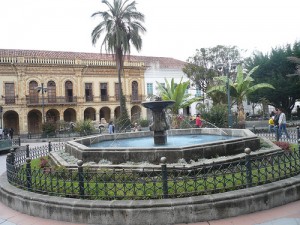

Cuenca, Ecuador Named Top Expat Destination for 2013
The world’s top retirement spot? In truth, it depends on you. There are many appealing options for a new life in retirement as an expat, as many people are now looking for ways to stretch their dollars. It makes sense, living expenses can be cheaper, cultural experiences richer and the lifestyle more satisfying as an expat.
The top retirement spots for 2013 have a variety of cultural offerings, climates, and lifestyles. Each destination is desirable in its own way, but they all offer something increasingly hard to come by at home: A good quality of life for a reasonable price.
Here is a guide to the best places to retire overseas in 2013:
1. Ecuador
Living on $1,600 a month including rent isn’t unreasonable in a place like Cuenca, Ecuador. Buying a house or condo near the water could cost you less than a quarter of popular U.S. destinations of similar climate. When you make the move, Ecuador allows you to import your household goods duty-free, and with its new, simplified visa process, it’s no wonder Ecuador tops the list as a best-value retirement paradise.
But for many, the true draw is the perfect climate. The nation lies on the equator. The beaches are tropical, but up in the Andes, the weather is mild and spring-like year-round. Best bonus yet, it’s one of the best countries for an expat business start-up.
2. Panama
In Panama’s capital city you can have all the U.S. comforts of a big city, including outstanding healthcare, restaurants, and daily activities. On a monthly budget of $1,700 to $2,500 a month you could eat out regularly, have a housekeeper come in a few times a week, and enjoy movie dates a few times a month.

View of Panama City skyline, a top expat destination for 2013
Panama’s major draw is its Pensionado (pensioner) visa, where qualified retirees achieve residence status fairly quickly. The program entitles visa holders to discounts on medical treatment, dining, movies, and more. Most expats in Panama regret they didn’t come sooner, as many say they chose Panama for the friendly people…its rainforest…plentiful beaches and the choice of secluded or city living lifestyles.
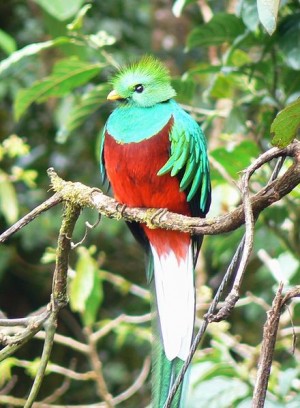
In Panama it’s possible to put a toe in the Pacific after breakfast and in the Atlantic before dinner…on the same day. There are cloud forests for bird watching, such as the resplendent quetzal, and even orchid gazing, all in the same weekend.
3. Malaysia
Malaysia is Asia’s Panama. That is to say, this country is a regional and a global hub, for trade, for business, and for culture. Malaysia is a multi-ethnic and multi-cultural country which attracts many tourists annually.
Penang, Malaysia offers expats an affordable living under $2,000 a month in what is considered “luxury housing” in the states. Here, an expat can eat out often and enjoy all the things the city has to offer along with top notch medical care at an affordable price.
Malaysian expats feel the country has everything. Its weather is a tropical 82 F all year round and its beaches, islands, and jungles are pristine. It has some of the region’s best street food, great restaurants, bars, shopping malls, and movie theaters—and it’s all affordable.
4. Mexico
Mexico’s colorful and vibrant culture does rank high with expats who live here…look deeper and Mexico has much to offer. Mexico is an easy, convenient choice for many expats who are seeking a first-world country at bargain prices. No wonder a million or more expats make Mexico their home.
Today’s Mexico offers modern highways and airports, cable and satellite TV, Internet, and many other items expats enjoy at home. Want your “big” U.S. lifestyle abroad, you’ll get it in Mexico with an overall cost of living at about half of what you’d pay in the U.S. or Canada.
And one of Mexico’s biggest pluses is its sheer size and variety. If you want beach, Mexico has thousands of miles of it—chic resorts, sleepy beach towns, and everything in between. Prefer cool, mountain scenery? Mexico has that, too. More likely than not, whatever you’re looking for in a retirement destination you will find it in Mexico.
5. Costa Rica
Costa Rica is where you go to live the lush life. It is lush with nature—misty rain forests, extraordinary wildlife, active volcanoes, and fabulous beaches—as well as such comforting amenities as malls, supermarkets, restaurants, museums, and social clubs.
U.S. retirees have flocked here for years, drawn by its mild climate, prosperity, literacy rate, health care, and, significantly, stable government. Another plus: Costa Rica’s commitment to a thriving natural park system that is second to none in Latin America. This is as biodiverse a country as you’ll find anywhere. The country offers micro-climates, meaning you can fine-tune your weather by moving up and down the hills.
Though not the bargain it was a decade ago, Costa Rica continues to draw moderate-income retirees, who meet the country’s requirement of income of $1,000 per month from Social Security or a pension. Best part, residence is easy enough that just about anybody can do it. Residents are eligible to join the universal health-care system, known as Caja. The cost, based on income, can be as low as $49 a month. After that, care is free.
6. Nicaragua
Want a budget-friendly retirement destination? Think Nicaragua. Geographically, the nation is blessed with two long coastlines and two big lakes, plus volcanoes, highlands, rain forest, and rivers. In this manner, it has everything Costa Rica and Panama have, but it’s less discovered and developed and available to adventurers and eco-travelers at bargain rates.
Property values have fallen significantly in this country over the past several years, thanks to Ortega’s re-election and then the global recession. As a result, you can buy one of Granada’s classic Spanish-colonial haciendas for $50,000 or less. A couple could live comfortably in this city on a budget of $1,200 per month.
Best of all, its lower cost of living does not mean you have to sacrifice the quality of life, in fact, it’s possible to live in Nicaragua with even more luxuries than you were accustomed to, simply because the prices are so low.
Retired Expat Communities
All these destinations have large expat communities, so doing your research can put you among other people like you; with similar interests. Learning a foreign language will probably be a requirement; but again if you have a sense of adventure, and don’t want the typical cookie cutter retirement this could be something new and stimulating.

The Panama 3 Count, where we bring you 3 Panama stories that you shouldn’t miss.
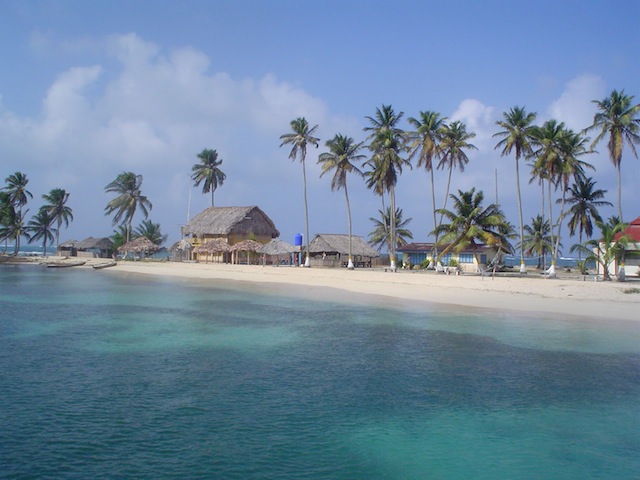
Photo:
1: 3 Easy Places to “Reside” Overseas
I wouldn’t choose where to retire overseas based on residency options, but there are countries working hard to attract foreign retirees and would be good places to start your retire-overseas search. In Panama, Belize, and Nicaragua, for example, three of the most foreign retiree-friendly places in the world, the process has been formalized and simplified, and the path is well-worn.
2: Who Wants to Help Count 10,000 Arthropods in Panama
There are more species of insects than pretty much anything else in the world, and scientists know there are millions they haven’t even identified yet. Now, in a tropical rainforest in Panama, a multinational team of scientists has just completed the first ever insect census.
3: Where Do the World’s Happiest People Live?
The world’s happiest people aren’t in Qatar, the richest country by most measures. They are found in Latin America, where seven of the world’s 10 most joyful countries are located, according to a Gallup poll of 150,000 people worldwide.
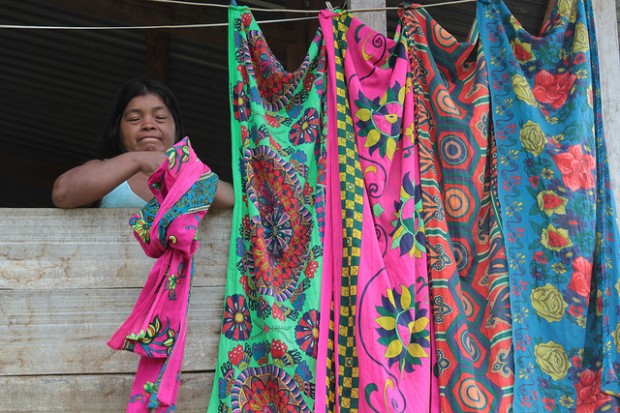
Photo Credit: Acnur Las Americas
When it comes to exploring Central America, Panama’s Darien province marks the end of the road for most travelers. Located on Panama’s eastern border, it contains the area known as El Tapon (meaning “The Plug”). This 99 mile stretch through the swamplands and rainforests along the Panama-Colombia border accounts for the only unfinished stretch of the Pan-American highway, which stretches all the way from Alaska to Argentina.
Often heralded as Central America’s own Bermuda Triangle, the Darien is regarded by many as Panama’s last true frontier. As the country’s least populated and least tame province, it’s easy to see why it has begun to attract a few of the area’s more adventurous travelers. While not easy to reach, its ecological and cultural attractions are easily worth the extra effort and associated risks.
Location and Terrain
Due to its topography, and the fact that the road literally ends in Yaviza, much of the Darien province is accessible only by plane or boat. A 45-minute flight from the nation’s capital will land you in La Palma, the capital of the province. Flights are also available via AirPanama to Garachine or Sambu. A few villages, such as La Chunga and Villa-Grecia are accessible by way of the Rio Sambu. However, the majority of the area is often most easily navigated on foot or by hollowed-out canoe. And, while a few hotels exist, lodging in clean but rustic huts or even in tents is much more common.
Comprising much of the Darien province is Darien National Park, Panama’s largest. The park contains habitats from sandy beaches to rocky coasts to mangroves to rain forests. And not the kind of rain forests that have clearly marked trails and snowcone stands. The forests of the Darien still remain largely untouched by civilization and were named a natural World Heritage Site by UNESCO in 1981. The area is home to four species of macaw, the rare Harpy eagle, tapirs, several endangered species of monkeys, and a host of other remarkable animals.
Culture and Inhabitants
Also among the undisturbed features of the Darien province are the people themselves. The Embera-Wounaan live along the riverbanks in villages containing no more than 5 to 20 houses, which are elevated structures with no walls. Unless they are in town men generally wear no more than a loin cloth, and women only a skirt. Children wear no clothes until puberty, and everyone is barefoot. Their bodies are painted with a black dye made from berries that is thought to repel insects. On special occasions, this dye is also used to paint geometric patterns on their bodies.
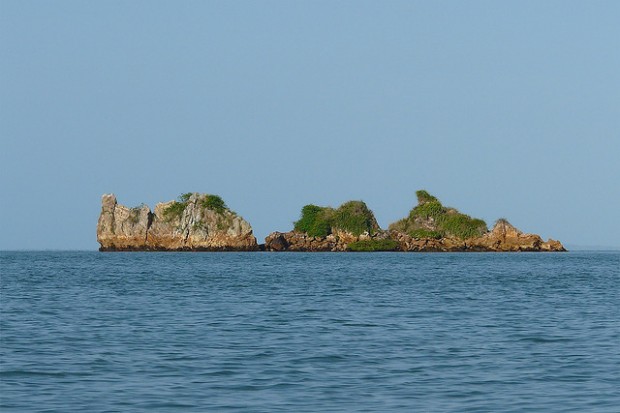
Photo Credit: Rita Willart
The Darien’s other inhabitants consist mainly of outlaws. What was once a subculture of pirates and run-away slaves is now a network of Revolutionary Armed Forces of Columbia (FARC) guerillas, who use the area for buying and stowing firearms, and the United Self-Defense Forces (known as paramilitaries) who oppose them. These groups, combined with poachers and drug traffickers, make much of the area unsafe for travel. The good news is that many tourist sights are only accessible by plane and, consequently, unreachable by those who might wish harm.
Nature and Activities
Many opportunities are available for adventurers who wish to spend their vacation just a little further off the grid. The Punta Patino Nature Reserve offers options for exploring, hiking, boating, and bird watching. No bucket list is complete without a stay at Pinas Bay’s Tropic Star Lodge, which is considered by some to be the best fishing resort in the world. With an abundance of marlin, sailfish, tuna, grouper, and many more, the resort has served as the backdrop for over 300 world records. Nearby Biroquera offers visitors the opportunity to intermingle with local tribespeople and experience their crafts, native dances, and more. Guided hiking tours abound throughout the area.
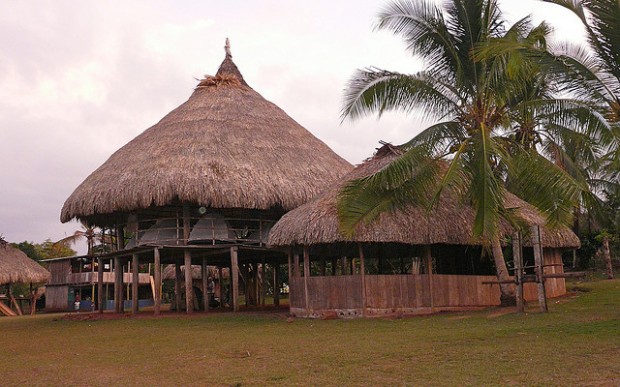
Photo Credit: Rita Willart
Dangers and Threats
Although much of the Darien is regarded as safe, exploring its depths is not for the faint of heart. Many deadly species, including crocodiles, boa constrictors, jaguars, and wild boar, lurk in its midst. As do poachers, of both plants and animals, who would kill to protect their livelihood. These same predators that pose a threat to tourists also threaten the sustainability of the ecosystem itself. This is due largely in part to the guerillas and paramilitaries that make the area too dangerous to patrol. The government and conservation organizations simply lack the resources and protection they need to do their jobs.
Also a concern for the area is the frequent mention of bridging the Pan-American Highway gap, which would undermine the subsistence of native cultures and habitats. As the Darien is threatened, so is Panama’s border and, ultimately, the rest of the Americas. Since the region has always served as a natural barrier between Panama and its South American neighbors, the country and the rest of Central and North America have remained safe from dangers such as foot and mouth disease which is currently isolated to South America alone. While conservation and law enforcement efforts are continuously improving, the fact remains that Panama’s last frontier may be slowly slipping away.
Don’t miss out on all it has to offer.
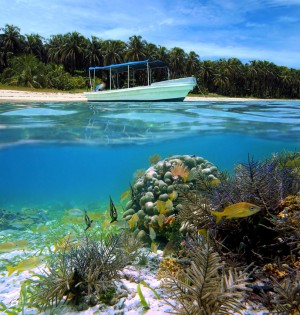

As an expat, moving to Panama is a big step as well as a rewarding one. It’s so easy to just pack your bags and venture abroad. And yet, you should be aware that there are certain risks involved in settling overseas. Experts warn that there are a number of easy mistakes to make; here are some of the worst issues expats face when they first move abroad.
1. Expats Don’t Do Enough Visa Research
The first thing to consider when moving abroad is the rules of the country in which you’d like to live. Most countries require a visa for foreign nationals who wish to move there; check with the immigration department of the country for specific regulations. If you will be searching for a job upon arrival or working remotely for a company in your home country, you will likely need to enter on a tourist visa and apply for a more permanent visa when you are in country.
2. Expats Overlook the Little Things
Before you move, change your address with your bank and other financial institutions. If you will be moving frequently or if you need to keep a U.S. address, consider using a mail service, which will provide an address and receive your mail; some services will scan the envelopes and send you an email.
3. Expats Pack Too Much or Too Little
Depending on the length of your planned move abroad and your situation, you will need to pack differently. If you are planning to move for a long period of time, invest more in packing; you will need to ship your belongings. If you are moving abroad for a shorter period of time, consider packing less. Most necessities can be purchased abroad, and travel is easier when you are not burdened with piles of clothing and home accessories.
4. Expats Underestimate the Cost of Living
One of the biggest mistakes made in that first move abroad is to underestimate just how much it may cost to live in a new and unfamiliar country. The danger lies in the amounts that people tend to budget for food, utilities, and other essentials. Some countries are promoted as cheap alternatives to the U.S., but it’s not until the bills start coming in that the differences become apparent. The solution is to assume you will need far more than planned for in your original budget.
5. Expats Are Forgetful of Money Management
If you will be receiving pay when you are living abroad, you will need to open a local bank account. Check with your bank to make sure that your debit card will be usable overseas; if you have a PIN that is more than four digits, you may need to change it. Call your bank and credit card companies before you leave to alert them that you are moving so that unusual activity does not prompt an account freeze.
6. Expats Forget to Budget Moving Costs
When people first arrive in a new country, particularly if it is their first contract or posting abroad, the new and exciting surroundings often put them into ‘vacation mode’. For the first three to six months they want to absorb the culture and the bright lights of their new country of residence and they spend like they are on vacation.
7. Expats Are Sometimes Too Vulnerable
Research is essential, especially for self-made expats who have to figure out everything on their own. Not only do they have to struggle with red tape, but impostors may feel right at home among clueless strangers. Other people’s dreams of living abroad can turn into a lucrative business for con artists. One rule of thumb.
8. Expats Forget to Avoid Scams
Seek out the help of other expatriates, especially those who’ve spent a few years navigating the culture and bureaucracies. They have a wealth of knowledge that most are willing to part with to make your transition smoother.
The urge to spend your life sipping exotic drinks may be so strong that you are willing to do whatever it takes. However, if you use some common sense, you will eventually be able to enjoy your cocktail under a swaying palm tree after all.

The Panama 3 Count, where we bring you 3 Panama stories that you shouldn’t miss.
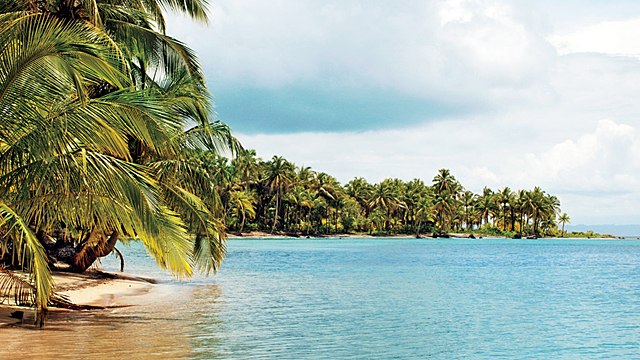
Photo Credit: Conde Nast Traveler
1: Bocas del Toro, Panama: The Laid-Back and Easy Way
Columbus landed there. Graham Greene made it on his third try. Now Conde Nast’s man in Panama, Peter Stevenson, falls under the laid-back spell of the islands of the Bocas del Toro. Welcome to the Caribbean that time forgot.
2: Panama Adds 29,000 Small Businesses (Machine Translation)
An astonishing 29,000 small businesses were opened in Panama in 2012 serving three main areas, mini-casinos, bars, and grill-type restaurants. Criticism has arisen around the Panama Emprende program, which fast-tracks licenses for these businesses, saying the country doesn’t need any more bars or mini-casinos.
3: 3 Economic Powerhouses of Central America (Machine Translation)
Panama, Costa Rica, and Nicaragua are spearheading economic growth in Central America, according to projections from the Central American Bank for Economic Integration.

“You’ll never find rainbows if you’re looking down.” – Charlie Chaplin
Rainbows mean many things to many people. To some they are merely a meteorological phenomenon. To others, who subscribe to certain ancient myths, they serve as a bridge that connects humans to the gods. To still more they represent the promise of God’s preservation. In Irish folklore, the rainbow marked the hiding place for the leprechaun’s pot of gold. It was a mythical place that, since the rainbow is an optical effect that depends on the location of the viewer, could of course never be found. Or could it?
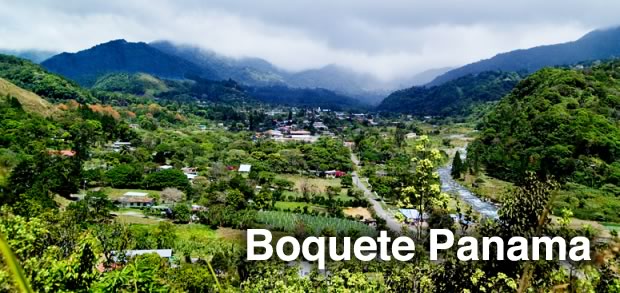
To residents of Boquete Panama, frequent rainbows are the product of the bajareque, a delicate drizzle that sometimes accompanies the north winds that blow down from the mountains. The rainbows arch, often in multiples, over the Valley of Flowers and Eternal Spring, aptly named due to the town’s vast array of exotic flora and its balmy weather that rarely registers above 80 or below 70 degrees Fahrenheit.
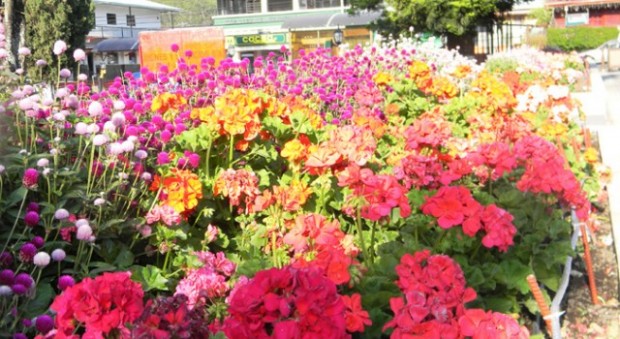
Situated in Panama’s highlands, Boquete is nestled into the lush mountains less than 40 miles from the border the country shares with Costa Rica. Located in the Chiriquí Province, the town (actually a group of six smaller districts) sits on the Caldera River approximately a half hour drive from the capital city of David and 340 miles from Panama City. Its elevation of almost 4,000 feet above sea level helps to alleviate the sweltering humidity experienced by some of its coastal neighbors.
Instead Boquete enjoys perpetual spring-like temperatures and breathtaking panoramic views of the surrounding mountains. With a population of less than 20,000, about as many as New York’s Madison Square Garden can seat, residents of Boquete enjoy the small-town atmosphere that so many expatriates seek when leaving their native lands.
Just in case you need any further convincing…
Here are a few of the reasons Boquete, Panama, may be the best place for you.
Its location provides endless sources for adventure.
For the thrill-seeker, the mountains around Boquete offer opportunities for hiking, such as the Sendero de los Quetzales trail or the ascent to the top of the Volcan Baru, a dormant volcano that is also the nation’s highest point. Rock climbing, zip lining, whitewater rafting, and horseback riding round out the list of other available action-packed adventures.
For the slightly more faint of heart, the above areas can also be explored by vehicle, although the country’s push for ecotourism would encourage exploration that leaves the least impact on the natural environment. Also offered are more leisurely tours of the local coffee plantations and rain forests, as well as trips to the hot springs of the nearby Caldera River.
No matter what your preferred method of sightseeing, you needn’t venture far to enjoy the spectacular flora and fauna of Boquete. The mountains and forests boast an array of flowers: lilies, hibiscus, roses, carnations, sunflowers, and orchids. The region is also home to over 900 species of birds, including the Resplendent Quetzal which was regarded as sacred by the ancient Mayans.
The climate is perfect.
 Repeatedly named as a top retirement destination by groups such as AARP, Boquete, Panama, enjoys spring-like weather all year round. Perhaps the only thing that differentiates the seasons is the rainfall that occurs during the summer (roughly May through October) and ceases during the winter months (November through April). The combination of the moist climate and fertile, volcanic soil results in a rich agricultural bounty of coffee beans, strawberries, oranges, and much more.
Culture abounds.
The mountains around Boquete are home to the Ngobe-Bugle people. This indigenous group is comprised of farmers and artisans. They fashion chaquiras (bead necklaces), baskets, chacara (woven bags) and nahua (the garments of their native dress). Likewise the Kuna people are famous for their bright molas, a colorful textile art form.
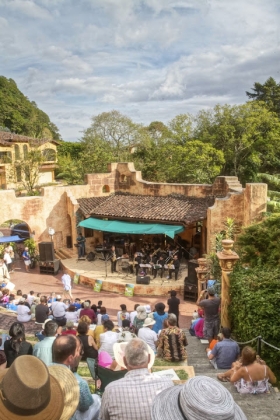
Boquete is home to a vibrant music and art community. The Boquete Jazz & Blues Festival is the largest in the province of Chiriquí. The Boquete Community Players, an expat theater group, was started to promote an appreciation of the arts and foster a sense of community among the expatriates. The group recently opened its new venue alongside the Caldera River. The organization also hosts the annual Chiriquí Art Expo.
Boquete’s arms are wide open to expats.
Panama’s Pensionado (Pensioners’) Program offers a lifetime visa for retirees, with little expense or hassle and no minimum age requirement. Pensionados receive discounts of up to 50 percent on entertainment, 30-50 percent on hotels, 25-30 percent on transportation, 30-50 percent on hotels, 25 percent on restaurants, 25 percent on power and utilities, and 15 percent on hospital and private clinic services.
Panama is pro-business and pro-investor. The country also has favorable corporate and personal tax laws. Foreign-earned income is not taxed, and new home purchases can be tax exempt for a certain number of years.
Others have already paved the way.
Due to an already-established community of expats, newcomers to Boquete will find many of the same conveniences they enjoyed back home. Essentials such as cellular phone service and high speed internet are readily available.
Organizations such as Rotary International and Lions Club International have established chapters in the area. These and many other philanthropic initiatives have been started by local expatriates. Through Animales de Boquete, they strive to control the animal population and improve overall animal health. A group called Amigos de Boquete feeds hundreds of local school children each day. Another organization called Buenos Vecinos collects food and monetary donations to assist the hungry and elderly.

It goes without saying that, no matter how spectacular the perks of a particular destination, it may not be everyone’s answer to the question “If you could live anywhere in the world, where would it be?”
Here are a few of the reasons Boquete, Panama, may be a better place for someone else.
The cost of living, while low, isn’t the lowest you’ll find in Central America or even Panama.
While still far less than the cost of living in the United Sates (60-70 percent less per some expats), the cost to live in Boquete, Panama, is higher than that of living in other mountain villages. However the old adage that ‘you get what you pay for’ may hold very true in this case. The prevalent amenities and luxurious accommodations available in Boquete do not come without a price.
That being said, the cost of living is STILL quite low. A modest 3-bedroom/2-bathroom home on a decent lot can be purchased for under $150,000. To rent the same property would run you in the neighborhood of $800 per month. A taxi will drive you across town for $1-2. A haircut costs around $5, and dinner for two with a bottle of wine will set you back a mere $30.

The mountains aren’t for everyone. Say, for instance, a beach person.
While Boquete is not ON the beach, it is near it. Panama is an S-shaped country that borders the Caribbean Sea on one side and the Pacific Ocean on the other. Slightly smaller than the state of South Carolina, the country is 110 miles across at its widest point. Boquete’s location lends itself to a view of both oceans from atop the Volcan Baru. So what you sacrifice in proximity, you regain in panorama.
The mountainous terrain also makes Boquete somewhat of a difficult place to access. Buses from David, the capital of the province, leave every 45 minutes. Flights from Panama City to David range from $80-$100. Taxis are available for local travel. However, the city of Boquete itself is very pedestrian-friendly. Also to be considered is the fact that the abundance of local businesses, such as grocery stores and even shopping malls, eliminates the need for frequent travel outside of town.
The well-established expatriate community may dishearten the would-be pioneer.
Those wanting to immerse themselves in the local culture, learn the language, and dress in authentic garb would have much preferred Boquete a decade ago. Today there are almost as many expatriates as there are Panamanians. Recent years have seen the addition of 1,000 homes, and the area now features over 10 gated communities.

On the flip side, this could also be regarded as a benefit to those who want to relocate to paradise without losing too many of the things to which they’re accustomed back home. For instance, the dollar is the national currency of Panama.
So now, over 100 years since the city was first founded on April 11, 1911, Boquete, Panama, has become a mecca for international tourism and a magnet for refugees from all across the globe. A bowl-shaped valley tucked into the mountains of Panama’s highlands, it is a true cultural melting pot and, until recently, one of the region’s best-kept secrets. With a name that means “gap” or “opening” in Spanish, perhaps it’s no coincidence that the town was first founded by gold-seekers who were hunting a shorter and faster route to the Pacific. Who knows? Maybe those leprechauns were onto something.

Whether it’s best suited for you or more appropriate for someone else, there is no doubt that Boquete, Panama, is indeed a treasure. If Boquete is the home away from home of which you’ve always dreamed, we look forward to seeing you. If your search for the destination of your dreams must continue, we wish you the best. May the road rise up to meet you…

AJ Smith is an architect from the U.S. who is building a project on Boca Chica Island, Panama for a client. He recently returned from a fact-finding mission in Asia where he studied techniques and styles used there for building exotic and inexpensive dwellings. We thought our readers could get some value from hearing about what he learned overseas. The article is focused on Boca Chica Island, but there is still a wealth of knowledge and perspective for anyone building in the jungle environment. Enjoy!

AJ Smith
1. What techniques have you found that could reduce cost and or beautify a project on Boca Chica Island?
Simple Balinese rooflines can be a great addition to Boca Chica Island. In some cases the roof also becomes part of the wall so there is an efficiency of material but it also becomes the most prominent feature of the building giving it a definitive island style. With many repetitive members, the technical difficulty of construction is reduced. If you are trying to achieve longer spans, site built trusses composed of smaller members can help reduce the need for lots of labor and hoisting equipment.
2. After touring Bali, what materials would be the most cost-effective for a project on Boca Chica Island?
I believe concrete, concrete block, milled timbers, bamboo, and natural roofs can all be cost-effective materials to use on the island. I had initially been hesitant to use concrete because the logistics of mixing large quantities and pouring onsite without the use of heavy machinery seemed daunting. After visiting the Gili islands, a place with no motor vehicles, only bicycles and horse carts, I saw this would not present much of a problem. A great deal of the structures I saw were primarily made of concrete and concrete block. They are able to mix and pour large quantities of concrete by creating mixing pits and careful coordination of lots of manual labor. One of the most impressive examples I saw was a 30 meter long pool poured without a single cold joint.
Many of the wall and roof structures I saw were all composed of small- to medium-sized framing members. Milled timbers generally created the primary structure while bamboo was a secondary framing member. It creates a very clean and simple look that has a strong tropical esthetic. By utilizing this style of framing you can avoid the cost of locating, sourcing, transporting, and erecting large timbers.
Natural roofs were a common feature almost everywhere I traveled in SE Asia, employing a wide variety of materials. In Bali they use a thin light grass that has a very appealing feathery look. In Cambodia they use a short wide leaf, in Thailand a coarse palm leaf is common. I’d like to experiment a bit with palm and grass roofs in Boca Chica to try to achieve a similar look and life span I saw throughout SE Asia.
3. Any new, exciting concept you came across in general that you are excited to try?

AJ Smith
One of the most interesting things I saw was the Lumbung style house. These were traditionally used in agricultural areas for housing and rice drying. They are characterized by a raised pier foundation, an arched grass roof that serves as the walls as well, and are open on two sides. I saw a huge amount of adaptations of this style for bungalows. Subtle differences in roof lines and the addition of short walls create a multitude of layout options and customization. I believe they can be built quickly and inexpensively on Boca Chica but still greatly reinforces the island feel many are seeking. Since researching the structures, my client and I have decided to build a small lumbung bungalow first as we prepare for the larger more technical structures of the project.
4. In Bali you see lots of intricate craftsmanship, was there anything that jumped out at you to try in Panama?
There is amazing woodwork and craftsmanship in Bali. I was particularly drawn to the carved wood screens, paneling, and ornamentation. I would really like to use carved wood screens on some of the open aired structures we will be building as well as some of the ornamental ridge caps. I worry that finding the same craftsmanship in Panama may be difficult. We’ll have to see what our local labor source provides. We may just go with more straightforward elements to simplify the building process. I also researched prefab architecture while I was there and visited a few building centers. Prefab can be a great solution for the island to bring in a high quality of construction but it is not the cost-effective solution. In Bali they will fully build, disassemble, label, package, and ship any design you give them. The main benefit to this would be a quality building, with a high level of craftsmanship, which could be assembled onsite quite quickly. The local labor pool could then focus on assembly rather than having to either find or train them to execute the more intricate joinery and woodwork. Another less expensive option utilizing prefab would be to build the majority of the project onsite using local materials and import select prefab elements like a roof and its framing members, or wood screens, paneling, and doors.
5. If you were your client what would you want to build? (Explain your dream idea for the island.)

AJ Smith
For myself, I would start out very simple and basic but with lots flexibility for future expansion. We are still waiting to see how Boca Chica Island develops. As it begins to become more of a tourist destination I think it’s important to have the ability to adapt and encourage tourism.
My idea would be similar to the project we have planned. I would build a large open aired palapa with a kitchen and bar as a main place to hangout and a small one-bedroom bungalow with a full bath. This would give me the flexibility to add components as I see fit. The addition of a pool and more bungalows would probably follow soon after.
6. Are you taking clients? If so how can people reach you?
I’m always interested in speaking with prospective clients especially those interested in building something off-grid and in remote locations. They can contact me directly via email at [email protected] and see our body of work on our website www.forsitestudio.com
7. We get lots of questions about building in the jungle and how to create space without destroying the environment. Do you see this as a problem? How do you approach this challenge?

AJ Smith
The jungle is a huge natural amenity on Boca Chica and every site is unique because of the power of the landscape. My approach to building within the jungle is similar to remodeling a house. The canopy is your roof, the existing trees and vegetation are like walls, and your views are like windows. You work within the existing conditions to optimize your experience. It is necessary to maximize the shelter and shade created by the canopy but still create good flow within the space beneath. Large old growth trees are a means to organize space within the jungle. The location and design of the buildings directly respond to preserving the old trees while landscaping and pruning begin to define space beneath them and open up views to the surrounding landscape, ocean, and mountains in the distance. Through careful consideration the jungle becomes a great natural amenity creating privacy and a sense of intimacy within the site while at the same time it can create direction and awe to the scale of the expansive setting that surrounds the site and island.
8. The jungle has it own challenges in regards to maintenance, how would you combat this with design?

AJ Smith
Regular maintenance is unavoidable given the site and its remoteness, but thoughtful design can keep maintenance to a minimum. Wood-destroying insects are a primary concern in Central America. A raised pier foundation capped with termite barriers can help prevent termites. Regular spraying can be effective as well.
Careful landscaping directly around the home site can also help reduce maintenance. The jungle is always fighting to reclaim its space so clearing the more evasive rapid growth vegetation and replacing them with ornamental and beneficial plants can help a great deal in controlling animals and erosion.
We know that all projects on the island are going to be exposed to the elements. Wind, rain, and sun can all take their toll on a building. Use of quality materials such as select hardwoods, robust roofing, and high grade sealants can substantially reduce the long-term maintenance required to keep a project beautiful.
Another thing to be mindful of is that the buildings here may be uninhabited for long periods of time. Security from intrusion and the elements should be considered. By utilizing sliding screens, shutters, and other techniques the buildings can be locked down while unoccupied, minimizing potential damage and then quickly opened up when the occupants return.
9. Do you think AC is must have?
I do not think AC is a necessity. A well-designed home can be quite comfortable year-round given the island’s location and the prevailing winds. My preference is to have AC in the bedrooms as a place to retreat on the hottest days with no wind but it may not be utilized the majority of the time. In the end it really depends on the client. If they feel the need for an entire home that is climate-controlled then the power system can be designed to handle the load.
10 How do you think about the energy needs of a project vs. the design? What is the process?
The performance of a building directly corresponds to the amount of energy that is required to comfortably occupy it. We look first at passive design which will optimize the performance of a building before we introduce any active system (power, hvac, lighting, etc.) In the passive design phase we look at regional weather, the sun’s path of travel, and the immediate building site (tree cover, topography, etc). All of these variables then directly inform the design. Window and door locations that capture prevailing breezes and allow for good daylighting, roof overhangs that prevent sun from directly entering the home during the hottest months of the year, and how the home sits on the site to maximize cooling from the existing landscape are all effective ways to implement passive design. The building envelope also is a primary concern. Solid wall and roof composition, good insulation, and high quality windows and doors all directly affect the building envelope and its performance.
Once we feel the home performs as well as it can passively, we begin to look at introducing active systems as minimally as possible. Luckily, in recent years there have been huge steps taken in energy efficient components. We utilize DC power where possible, LED lighting, appliances specifically engineered for off-grid living, and variable speed HVAC systems. By using current technologies you can greatly reduce the power demands of a project and in turn decrease the size and cost of the power system needed as infrastructure.