


Panama has long been an attractive destination for expats of all ages, with its favorable residency requirements and unmatched retiree benefits. But if you were thinking you had a few more years to slave away in a cubicle and a few more dollars to save before you could make your move to this Central American haven…
Think again.
In a recent executive decree, Panama’s President Ricardo Martinelli signed into effect a new visa option for those who want to escape the ever-tightening choke hold of the American government, but aren’t quite yet able to get by on their current retirement savings… Retiring to Panama Just Got Easier!
What’s different about Panama’s new visa?
The new visa, called the Immediate Permanent Residency visa, gives instant residency status to those who wish to engage in professional and economic activities, start a business, or get a job in Panama. This is in contrast to options such as the pensioner’s visa that explicitly prevents retirees from taking jobs away from Panamanians.Also different are the solvency requirements. Instead of an investment of anywhere from $60,000-$300,000, the new visa requires a mere $5,000 in a Panamanian bank account. Another benefit is the option of obtaining citizenship after five years in the country, something that isn’t offered at all by many of the other visas.These are all perks that can benefit retirees as well. It gives them the opportunity to work if they want (or if they can’t afford not to), and it basically serves as a fast pass that sends them directly to the head of what was once a long line of steps toward immigration.
What prompted the President’s decree?
Over the years Panama’s government has implemented a number of incentives that have made the country an extremely attractive place to do business. As a result, its economy has been growing at a tremendous rate, experiencing a whopping 10.6% increase in 2011 alone. This, coupled with an unemployment rate of only 4.5%, has led to a shortage of educated, trained, English-speaking workers.
The government recognizes that the long-term solution is, of course, education. They have already begun to pour millions into the country’s education system. But for the meantime the best way to find qualified labor is to import it. They’re looking specifically for “workers in growth sectors such as logistics, tourism, banking, and those making Panama a regional hub for multinational companies,” explained Minister of the Presidency Demetrio Papadimitriu.
What would it be like to work or own a business in Panama?
Panama’s business community is heavily English-speaking, recognizes the U.S. dollar as its official currency (alongside the balboa), and bears an awful lot of other similarities to the States. Well, on the surface at least. Panama’s laws are much more favorable to investors and businesses. There are fewer restrictions on banks and corporations and much greater financial privacy. The country is home to several large duty-free zones, and personal taxes are reasonable as well, with none levied on income earned outside of the country.
Who qualifies for the new visa?
The new visa is available to those who hold a passport from one of 47 specific countries (currently, as the number has increased several times since the initial decree) “that maintain friendly, professional, economic, and investment relationships with the Republic of Panama,” including the U.S. and Canada. A full list is included below. Also eligible are applicants’ dependent spouses, children under 18 (or between 18 and 25 if they’re students), dependent parents, and family members with disabilities.
In order to qualify, applicants need $5,000 in a Panamanian bank (plus $2,000 for each dependent) and one of the following: evidence of investment in Panamanian real estate, proof of ownership in a Panamanian business or corporation, or a letter and contract of employment from Panamanian company. Throw in a clean police record and a passport, and you’re well on your way to personal and financial freedom.
What are the first steps towards obtaining immediate residency?
Because the employment requirements must be met before the application can be completed, you should probably start there. You’ll need a work permit, which is issued by the Ministry of Labor. The next step is finding a job or setting up a corporation, which is not a very difficult or expensive process in Panama. However, since several government entities are involved and the paperwork is all in Spanish, it wouldn’t be a bad idea to hire a competent attorney to assist you with the whole process.
What are the “specific countries” that are recognized by the decree?
Alphabetically, the 47 countries are Andorra, Argentina, Australia, Austria, Brazil, Belgium, Canada, Chile, Croatia, Cyprus, Czech Republic, Denmark, Estonia, France, Finland, Germany, Greece, Hong Kong, Hungary, Ireland, Israel, Japan, Latvia, Liechtenstein, Lithuania, Luxembourg, Norway, Malta, Monaco, Montenegro, Netherlands, New Zealand, Poland, Portugal, San Marino, Serbia, Singapore, Slovakia, South Africa, South Korea, Spain, Switzerland, Sweden, Taiwan, United Kingdom, United States, and Uruguay.

What could be better than taking a trip to the gorgeous tropics of Central America? How about making the trip affordable?
Due to the booming tourism industry, this may seem easier said than done, and unfortunately, many once budget-friendly destinations, are no longer so. But that doesn’t mean it’s not possible.
Each year tourists from around the world come to experience the tropical climate, Latin culture and exotic beauty of Central America, but many don’t realize that it can be done on a budget.
Costa Rica, Panama, Nicaragua, and El Salvador are four popular Central American countries that can be truly experienced without breaking the bank in the process.
First Stop, Costa Rica

The most popular tourist destination on the list, and arguably the most tourist friendly, Costa Rica can tend to be a bit pricey But don’t worry, there are ways to keep your costs down.
In big cities like San Jose, prices will typically be higher, so hop on a bus and head for one of the smaller beach towns. A five hour direct bus to a town like Santa Theresa will cost you around ten dollars.
Remember to exchange your money into the local currency colones, as usually only expensive items/places accept American money. Seek out cheap accommodations at a hostel (around ten dollars) and start exploring the beauty of Costa Rica.
On to Panama

Photo: Martha de Jong
Although the tourism industry here is not quite as developed as their northern neighbor Costa Rica, Panama is just as beautiful and the prices are often lower. Again, buses will be the cheapest mode of transportation and hostels your best bet for reasonably priced accommodations (around twelve dollars for a bed). As a perk, many hostels will have communal kitchens, so take advantage of the local market and cut another cost by cooking your own meals. If cooking on vacation isn’t for you, try to avoid restaurants aimed at tourists and instead look for street stalls and small cafes.
Next It’s Nicaragua

Photo: McMallan
Just north of Costa Rica, Nicaragua, known as the land of lakes and volcanoes, is cheaper and attracts a lot less tourists. In fact, you can catch a bus from Costa Rica to Nicaragua for just a few dollars, but remember, you will have to pay a fee of seven or eight dollars to get into the country. Once you are in Nicaragua, exchange your money into córdoba’s and head for small towns like El Trasito, Popoyo and Playa Maderas to soak up the sun and experience the amazing surf. If you visit Isla de Ometepe, be sure to hike up the double-volcano nestled in a lake filled with fresh water sharks, or you can try remote Little Corn Island for cheap kayaking and snorkeling.
Last Stop – El Salvador

Photo: Amber and Bryan via flickr
While El Salvador may not be as popular a tourist destination as the others, most who visit are pleasantly surprised. The people are friendly and welcoming and there are many wonderful, and cost efficient things to enjoy, like taking a trip to the beach town of El Tunco just an hour from the capital San Salvador. Yes the food is a little pricey, but the hostels are cheap and the surfing and swimming is unbeatable. Explore San Salvador on a five dollar bike tour that takes place every Thursday night, or take a leisurely stroll around the city to check out the politically-charged street art.
Ready to go? Remember these tips:
- Take advantage of local transit. While bus rides may be longer, the cost is substantially less.
- Eat like a local. Avoid tourist-targeted restaurants and look for low-key local spots.
- Make the most of happy hour.
- Visit “free” national parks for hiking and observing nature and wildlife.
- Stay in a hostel. Typically group and private rooms are offered.
- Surf and swim – it’s free!
It’s a common misconception to think that a good holiday means an expensive holiday. Cliché but true, the best things in life are free, especially when you are somewhere as beautiful as Central America. The sun, the mountains, the beaches, the surfing, it’s all free and all unforgettable. If you are not overly concerned with five star transport and accommodation, Costa Rica, Panama, Nicaragua, and El Salvador can all be yours at a reasonable cost. So do your research, book your plane ticket and get ready to discover the wonders of Central America without putting a dent in your wallet.


Cuenca, Ecuador photo by Jonathan Hood
When considering relocating to Latin America, many would-be expats quickly narrow their search down to the countries of Ecuador and Panama. And why wouldn’t they?
Ecuador has topped out International Living’s list of best places to retire for five years running, with Panama always following closely in the second or third spot. This list is based on an index of different factors such as climate, cost of living, culture, and many more. However, much of this criteria is highly subjective. The hot, humid climate you enjoy could be someone else’s idea of misery. Likewise the Burger King on the corner might be a welcome sight to some, but for you it might evoke the very feelings that prompted you to leave behind the cookie-cutter culture of the States.We’ve outlined some of the major differences between the two countries below, but don’t take our word for it. The best decision-making tool is your own observation. Plan a trip, and check things out for yourself.
Cost of Living
In this category, the advantage goes to Ecuador. In most parts of the country, you can easily get by on about $1,200 per month, including rent. This number gets even lower the further you venture into the rural areas where monthly rent can run as low as $150 per month. Combine that with an average cost of $1.90 for a four course meal, $1.50 for a gallon of gas, and the help of a domestic servant for a mere $10 a day. While it is possible to get by on the same $1,200 in Panama, it would be with a standard of living that more closely resembled that of the locals.
Real Estate
While Ecuador wins this one for its low cost homes, Panama may have a slight edge when it comes to the ease of the entire process. New homes in Ecuador are well below the $100/square foot price. That’s half the price of comparable homes in Panama, although the construction is different. Homes in Ecuador are built of cement and red clay.
The home buying process is easier in Panama, where international banks are quick to offer financing to foreign residents. Closing costs are twice as high in Panama (around 6%). However, property owners in Panama may be exempt from property taxes for a number of years if the home is their only residence.
Transportation
The infrastructure of Panama closely resembles that of the U.S., and its roads are much more well-maintained. Other than that, there’s little difference between the two countries. Ecuador offers several options for public transit, including buses and taxis, that average around $1 per hour. However, they may not be the safest options (See Safety below.) Panama offers similar modes of transportation for a slightly higher premium. Both countries offer convenient direct flights to several U.S. hubs from a few key cities.
Health Care
While health care in both countries is better than you’d expect, the quality may be slightly higher in Panama, particularly in David and Panama City. Panama boasts many private hospitals with English-trained and English-speaking doctors. In both countries the cost is lower than U.S. health care, up to 90% lower in Ecuador where doctors will even make house calls for less than $25. Both countries also offer a variety of health insurance options for foreigners.
Familiarity
Now here’s where personal preference really plays a big factor. While we can’t say which countries earns the most points in this category, we can tell you which one most closely resembles the culture of the U.S. It’s Panama. With a much larger and more established expat community, Panama will initially feel the most like home. It’s up to you to decide whether that’s the atmosphere you’re seeking.
Both countries use the U.S. dollar, so there’s little risks associated with currency exchange. English is widely spoken in both, although in Ecuador it’s largely confined to touristy locations and international business areas. Both are also home to many U.S.-based restaurant chains and other franchises. Modern conveniences are found in both, although internet service is reportedly much better in Panama. It’s true in both countries that communication is more accessible the closer you are to the larger cities.

Boquete, Panama photo by Ken Mayer
Climate
While this factor also depends greatly on your own personal taste, most will probably prefer Ecuador for its more temperate and varied climate. Panama is mostly hot and humid everywhere with large amounts of rainfall, particularly in May through December, although it’s slightly lower on the Pacific coast than the Caribbean side. The only real difference in the country’s climate is in the higher elevations where the temperatures and rainfall both decrease. Some areas may see temps in the 50’s versus the 84 degree average near the coast.
Ecuador experiences a more diverse climate across its four main regions. The mountainous Andean Sierra boasts average temperatures of 75 degrees by day and around 60 at night. With a lot of sunshine, 12-hour days, and relatively low humidity, its climate is considered by most to be nearly perfect. Ecuador’s coastal region and the Amazon rain forest more closely resemble the climate of Panama: hot and humid all year with temps ranging from 80 to 95 degrees and year-round rain. The Galapagos Islands have much milder temperatures and less rainfall.
Culture
While Ecuador and Panama both have plenty of cultural attractions, the edge here goes to Ecuador. While both countries boast many activities and forms of entertainment, those in Ecuador are often more authentic and less Americanized. With over 28 indigenous groups speaking more than 10 languages, evidence of the country’s heritage fills the marketplaces and festivals that abound in the South American nation. Panama is also a culturally rich country, but often in the form of museums and shopping districts.
Residency and Retirement Benefits
Panama wins this one, hands down. Requirements for a pensioner’s visa are similar between the two ($1000 per month income in Panama versus $800 in Ecuador). However Ecuador offers very few incentives for retirees. Panama, on the other hand, boasts a long list of discounts for those who qualify for its pensioners program. This includes savings of between 10 to 50 percent on virtually every category of goods and services including utilities, closing costs, entertainment, travel, and even health care. In addition, retirees can import up to $10,000 in household goods duty-free, as well as a personal vehicle every two years. And retirement in Panama has never been easier. Recent legislation has expanded its residency program to include individuals who may seek employment upon relocation, at least for citizens of the 47 “Specific Countries” on its list. This change was implemented to counteract the current labor shortage in the country.
Investment Potential
Buying property in both Panama and Ecuador can be a good investment. Since Ecuador generally offers more affordable options, its homes often have more potential for appreciation. However, even more advantageous than buying a home is the opportunity to invest in land in some of the more remote areas where expats are only just beginning to develop an interest. For those savvy enough to get in during the early stages, there’s much money to be made once development begins.
Investing in land won’t get you quite as far in Panama. Since expat communities there are more established, the lots are more expensive. You’d best build if you want to turn a profit. Panama does, however, have a much better rental market than Ecuador and more property management companies to provide assistance. Properties in Panama consistently experience higher occupancy and rent for a high premium.
Safety
While both countries have areas that are safer than others, Panama is definitely the safest overall. In fact it’s one of the safest in Central America, experiencing less violent crimes in a year than New York City does in a day. The country also saw the addition of the Tourism Police Force in 1992, which was specifically established to assist tourists in Panama City. Conversely, Ecuador is plagued with a murder rate of 19 people per every 100,000, four times that of the U.S. Even more alarming is the fact that much of the country’s violent crime occurs in areas heavily populated by tourists. Public transportation, especially taxis, are prime targets for criminals. It’s recommended that all taxis be radio-dispatched. Don’t just hail one on the street.
Schools
Panama wins again, with free public education that is a requirement for children ages 6 through 15. Investments are currently being made into the education system, to increase the number of educated adults in the workforce due to the labor shortage mentioned previously. Several good private schools also exist, many of which are bilingual. By stark contrast, Ecuador’s education system is in the bottom 50 world-wide. While it does have some private school options, most aren’t truly bilingual, only teaching English as a second language.
Things to Do
There is no shortage of activities in either Panama or Ecuador, and we would be hard-pressed to award this category to one country over the other. Both have options for exploring nature, such as whale or bird watching. There are also plenty of opportunities for adventure, like hiking or rafting. No matter what you’re into, you’re sure to find a place to enjoy your favorite hobby or perhaps develop a new one.
The Panama 3 Count, where we bring you 3 Panama stories that you shouldn’t miss.
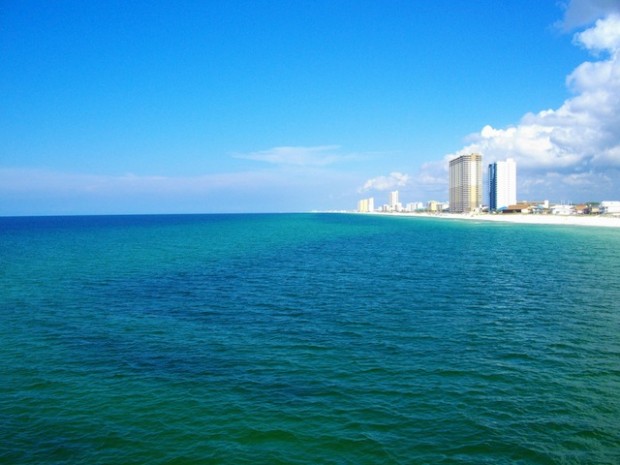
Photo: Bob Therina
1: Is Panama the Best Option in Central America?
Investment blogs and financial papers crow in unquestioning unison about the current and projected economic growth of Panama. As always, it’s tough to get a read on a place until you visit. And even then it can become harder to see the real picture.
2: What Donald Trump Can Teach You About Investing in Panama (Machine Translation)
U.S. billionaire Donald Trump has his sights set on expansion in Latin America and announced an additional investment of $100 million in Trump Tower Punta del Este in Panama, cementing his opinion that it’s a great time to invest in Latin America.
3: Is Privatization the Best for Panama’s Interior Airports? (Machine Translation)
The three interior airports of Panama will become privatized in a reversal of the decision to have them administered by Tocumen SA. The airports of David, Colon, and Rio Hato will be granted in concession to private companies instead. Meanwhile, budget Canadian airline Air Transat is in talks to offer flights to these same interior airports.

The Travel 3 Count, where we bring you 3 travel stories that you shouldn’t miss.
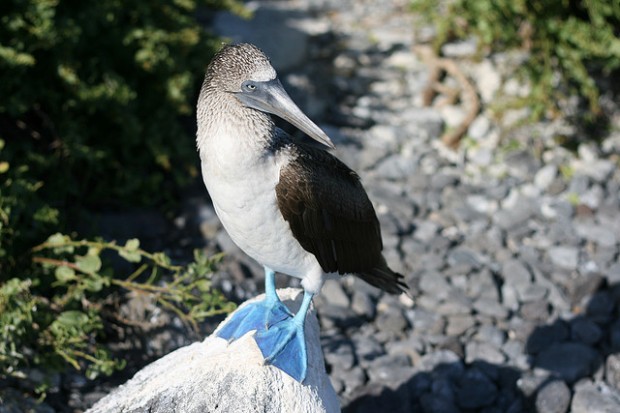
Ecuador’s Galapagos is a must see destination in 2013.
1. Destinations to Watch in 2013
First Up: Conde Nast Traveller’s destinations to watch in 2013 list includes some of Latin America’s gems. Here are the top Latin America destinations to watch in 2013.
- Panama. No longer just a place where ships pass in the night, Panama is the cool Caribbean destination of the moment.
- Mexico’s Mayan Riviera. The Mayan Riviera is set for a bounteous year in 2013.The vibe is deliberately hippy-chic, lo-fi by day and up-tempo at night and is a great place to stay for discerning travelers seeking barefoot luxury.
- Ecuador’s Galápagos Islands Galápagos is one of the most fascinating places on earth, an evolutionary melting pot. It’s already at the top of many wishlists, for the intrepid and for animal-lovers.
2. 21 Cheap Places to Visit… Where Does Latin America Come In?
Up Next. Want to travel, but don’t want to spend lots of money? These 21 cheap travel destinations let you get the most bang for your buck. Want to try it? Tim Leffel’s can help. His mission is to show cheapos how to find travel destinations they can afford.
Where is his favorite cheap spot in Central America’s? Ometepe, Nicaragua.
In Nicaragua, it’s a wide-open blank slate, because there isn’t much tourism outside of Granada and San Juan Del Sur. That means there are but a few nice hotels and restaurants and your main mode of transportation is mostly on chicken buses. But if you want cheap and exciting, Nicaragua is your choice.
3. 6 Must See Latin American Destinations
Finally: With over 7 million square miles to cover and 430 million people to meet between Central and South America, deciding where to start your Latin American adventure can be a little tricky, but with Bootsnall Travel Guide’s six must-see Latin American destinations, the planning just got easier.
- 1. Quito, the Amazon, and Cuenca – Ecuador
- 2. Rio de Janeiro and Iguazu Falls – Brazil
- 3. Lima, Cuzco, Lake Titicaca and Machu Picchu – Peru
- 4. Buenos Aires to Santiago via Bariloche – Argentina & Chile
- 5. La Paz, Sucre and more – Bolivia
- 6. San Jose to Panama City – Costa Rica & Panama
Adventure-lovers rejoice! These top sports are certain to deliver pure beach bliss, idyllic islands, curious creatures, and small towns packed with charm.
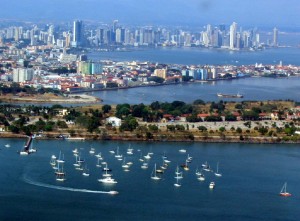
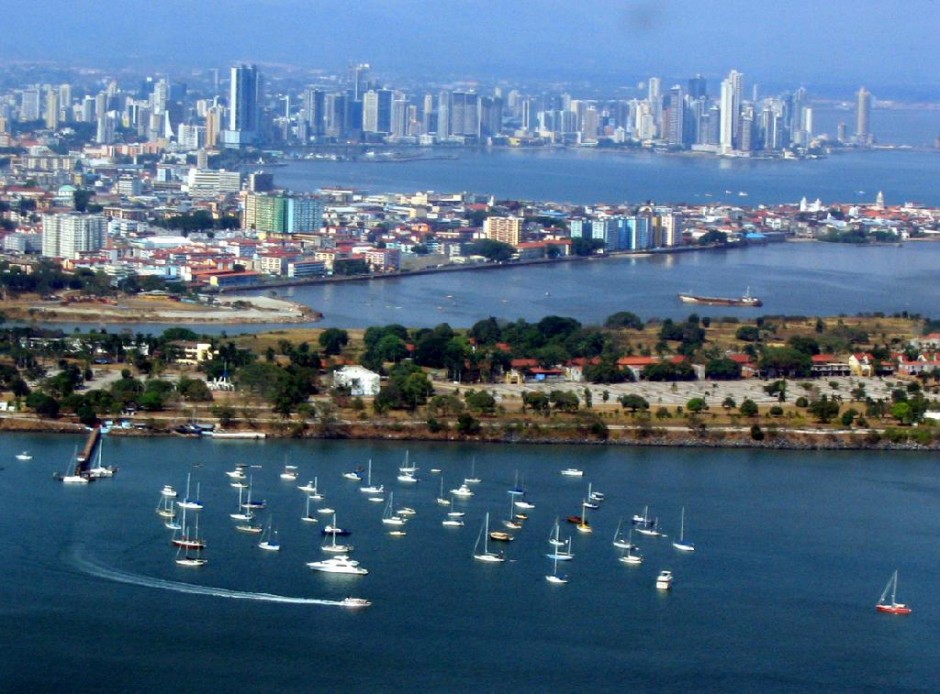
Panama City ranks as the cheapest place to live in Latin America.
A global study of the cost of living published by the EIU ranks the most expensive and cheapest cities in the world. While Tokyo continues to hold the top spot for the priciest places to live in; Panama City, Panama placed 8th among the world’s cheapest places to live.
The Global Survey Cost of Living, published twice a year by the EIU, compares hundreds of prices on 160 common products and services, such as food, drink, rent, utilities, education costs, and household items.
The 10 cheapest cities in the world
1. Karachi, Pakistan 2. Mumbai, India 3. New Delhi, India 4. Kathmandu, Nepal 5. Algiers, Algeria 6. Bucharest, Romania 7. Colombo, Sri Lanka 8. Panama City, Panama 9. Jeddah, Saudi Arabia 10. Tehran, Iran
Top 10 most expensive cities
1. Tokyo, Japan (up one place) 2. Osaka, Japan (up one place) 3. Sydney, Australia (up four places) 4. Oslo, Norway (up one place) 5. Melbourne, Australia (up four places) 6. Singapore (up three places) 7. Zurich, Switzerland (down six places) 8. Paris, France (down two places) 9. Caracas, Venezuela (up 25 places) 10. Geneva, Switzerland (down seven places)
The Economist Intelligence Unit’s Worldwide Cost of Living survey is a full service that enables human resources line managers and expatriate executives to compare the cost of living in 140 cities in 93 countries and calculate fair compensation policies for relocating employees.

The Panama 3 Count, where we bring you 3 Panama stories that you shouldn’t miss.
1: The PBS Guide to the History of the Panama Canal
For nearly a hundred years, the Panama Canal has stood for the triumph of technology over nature. But when it was built, at the dawn of the 20th century, it was simply an audacious gamble — a colossal engineering project, the likes of which the world had never seen.
2: The One Card You Need to Open a Bank Account in Panama
If all goes according to plan, Panama will soon roll out a simplified procedure for opening bank accounts in the country. The program will allow residents and legal foreign nationals with valid immigration cards to open bank accounts with a value of up to $1000.
3: Do You Recognize These Ways Panama Is Out Performing Costa Rica?
Tourism driven spending in Panama rose by 15% between 2010 and 2012 totaling $322 million in the last five years. The preferences of tourists include staying in the capital city, Panama Canal tours, Casco Viejo, and Panama’s interior, but spending was also increased in the conference and convention sector.

With the fastest growing economy in the Americas, Panama has often been compared to 1970’s Brazil or present day Singapore. And with ongoing projects such as a $5.3 billion expansion of the Panama Canal and a $13.6 billion government investment in infrastructure, this Central American country is not slowing down. Its sophisticated banks and stable economy attract investors worldwide.
In addition, the Panamanian government has a long history of establishing incentives and atmospheres that make investing in this beautiful landscape even more attractive. The list below highlights some of the more significant benefits:
Panama Incentives for Retirees & Expats
Retiree Tourist Visa
The Turista pensionado affords retirees (who must be a minimum of 18 years of age), who can show proof of income, the following benefits:
- Import of household goods (up to $10,000) free of taxes
- Import of a car for personal use every two years
- Property tax exemption on a home that is your only residence
- Discounts between 15-50 percent on restaurants, hotels, entertainment, and professional services
Panama Real Estate Laws
Law 54 – Foreign Investor Protection
This law grants foreign investors and their businesses the same rights and freedoms as Panama natives. They are also granted the right to dispose of their investment profits and repatriate their interest, dividends, and profits.
Article 44 – Private Property
This section of Panama’s constitution guarantees that the rights of property owners are protected for both Panamanians and foreigners alike.
Law 24 – Reforestation Investment
This law provides benefits, including a 25-year income tax exemption, to those who purchase property for the purpose of reforestation.
Law 2, 2006 – Island Property and Concessions
This law allows foreigners to purchase island property, for the first time ever, provided that it is used for the purpose of tourism and that certain other conditions are met. Concessions, or lease agreements, for government-owned land can also be granted for use in tourism.
Law 9 – Casco Viejo Development
These tax deductions and exemptions were created to encourage the restoration of this section of Panama City. Renovation costs are 100% tax deductible. Income from the sale or rental of the property is exempt for 10 years, and the property itself is exempt for 30.
Panama Investment Incentives & Protections
Banking & Currency
Panama uses the U.S. dollar as its currency and, as a result, has no exchange controls in place to limit the amount of currency that can be traded.
Law 8, 1944 – Tourism Investment
With as little as a $50,000 investment ($300,000 in metropolitan areas), those who wish to start a tourist-related business can enjoy a multitude of tax exemptions. These include import and property taxes, taxes relating to the use of airports or docks, and in some cases even income tax.
Bill 481 – Hotel Investments
This incentive is aimed mainly at hotel investments over $250,000 and include no tax on the import of building materials and tax exemptions on land and improvements for five years.
Law 58 – Outside Developments
This bill incentivizes the building or renovation of lodging facilities that are outside of the country’s Special Tourism Zones. Investment in areas such as the mountain regions or islands can result in tax-free importation of materials, equipment, and vehicles. A 20-year exemption on property taxes also applies.
Law 18 – Colon Free Zone
The Colon Free Zone is located at the Atlantic entrance to the Panama Canal. This free port is home to over 2,500 companies, employs over 28,000 people, and ships more than $16 billion each year. Companies operating within the zone, both foreign and domestic, are mostly free of taxes, provided that they meet a certain set of requirements. These include employing a minimum of 5 local workers, exporting a minimum of 60 percent of their merchandise, and maintaining certain reporting criteria.
Law 41, 2004 – Panama Pacifico
This area, formerly Howard Air Force Base, is another tax free zone established to attract certain categories of business. These include call centers, corporate headquarters, distribution and logistics centers, naval and aircraft goods and services, technology manufacturing, and the film industry. The site is also equipped with a One-Stop Shop that houses 12 governmental agencies under one roof for ease of conducting business, obtaining permits, etc.
Law 32, 1927 – Comprehensives and Simplified Regime of Free Zones
Passed in 2011, this act allows for the establishment of tax free zones anywhere in the country, provided that they do not interfere with the local ecosystem. To date, there are 14 free zones registered, nine of which are already operating.
Law 3 – Manufacturing Companies
Under this law, companies involved in the manufacturing and processing industry that export all of their products are exempt from direct taxes including import taxes on machinery and equipment.
Taxes
Panama is famous for its low taxes across the board. Income tax is only 7 percent after the first $9,000 and maxes out at only 27 percent. However, taxes only even apply to income from Panamanian sources. New home purchases are tax exempt for the first 20 years. Capital gains taxes are a low 10% and no inheritance tax exists.
The Panama 3 Count, where we bring you 3 Panama stories that you shouldn’t miss.
1: Top 10 Retirement Havens for 2013…Part 1
What are the best, the most comfortable, the most affordable, the most convenient, and the most rewarding spots worldwide for retirement in 2013? Huffington Post says the winners are…
2: Financial Times: What’s Not to Like About Panama
The narrow nation of Panama will grow three times Latin America’s average of 3.1% this year, among the highest in the region; add in the canal expansion, what’s not to like?
3: The One Industry Which Pumped More Than $600 Billion into Latin America
According to the World Travel and Tourism Council, the travel and tourism sector made a direct investment of $666 billion into the economies of Latin America.
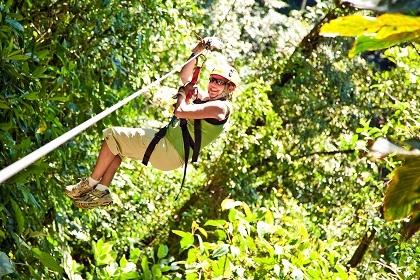

Panama is a smart choice for expats who want it all—in a country that really wants them. Located in the interior of Panama, Boquete is popular with the expat crowd, who enjoy a close proximity to pristine beaches and the growing city of David, along with expansive mountain views, and an affordable cost of living.
Here are five good reasons you will want to become an expat in Boquete.
1. Panama’s Friendly Retiree Residency Program
Most notably, Panama lures expats with one of the world’s best retiree residency programs. The Pensionado or Pensioners’ Program makes it easy for retirees to get residency here. The potential value for a pensioner on a budget is huge, as Panama offers a host of discounts to all its retirees. The long list of discounts includes reduced fares on movies, theaters, sporting events and other public events; discounts off transportation, hotels, even electric and other utilities, and much more.
Legal and application fees for the Pensionado visa are relatively inexpensive, particularly when compared to the money-saving benefits. Plus, the Pensionado program awards residency for life.
2. Panama is a Top-Rated Retirement Destination
Boquete is known for its expat community. Rated by the AARP as one of the world’s best retirement destinations, Boquete first began to attract an expat crowd in early 2001 and has continued to grow into a viable expat community. An hour’s flight from the nation’s capital of Panama City, Boquete is dotted with small cottages, one after another… Swiss-style cabins with magenta and coral bougainvillea spilling over their walls. No wonder Boquete is known as Panama’s flower capital.
3. Boquete Offers Stress-Free Living
Expats in Boquete will tell you their health has improved… not because they’ve done anything special, but because the place lends itself to healthy living. It’s easier to walk here than to drive. Everything is close and everyone is on foot.
There aren’t fast-food joints on every corner. But the market carries fresh ahi-grade tuna and sea bass and shrimp every day. And they’re a mere fraction of the price you’d pay back home. Baked with juicy tomatoes or slices of fat Boquete oranges, dinner for four will run you about $10.
You’ll meet painters and photographers and jewelry-makers here. The expat community has helped infuse Boquete with the arts. This quiet village now has a yearly jazz festival and an English-language theater troupe.
4. Take Up an Outdoor Activity
There’s much to do for lovers of the great outdoors, too. Boquete is the kind of place where you can go white-water rafting or hiking or birding…every day. You can have your own farm and livestock… grow rare orchids and bromeliads… pick limes and bananas from your very own trees. The land is rich and fertile, the climate is perfect. You can can even bird watch from the comfort of your home.
True, Boquete is known for its misty rain— called bajareque—as much as for its coffee and orchids. You can’t have one without the other. During the rainy season, from May through November, there will be afternoon showers… or downpours. But you see the sun most every morning.

Miniature humming birds of Boquete
5. The Cost of Living Is Low in Boquete
Panama ranked 8th on The Worldwide Cost of Living Survey, which is released twice a year by the EIU and compares hundreds of prices across 160 products and services, including items such as food, drink, rentals, utility bills, schooling costs, and household supplies. If you decide to buy a home in Panama, it is possible to live well, on less. Just be forewarned, if you bring along a lavish U.S. lifestyle to Boquete, your cost of living might be higher than you might expect. However, if you are willing to eat like a local, you can dine out for $4, get a glass of wine for $3, and enjoy an abundance of fresh fruits and vegetables for $10 a week.
Here, paradise comes at a price…but it’s a bit more economical.


Photo Credit: fetus karate via Flickr
Sandwiched between Nicaragua and Colombia, between the Caribbean Sea and the Pacific Ocean, Panama and Costa Rica certainly have a lot in common. Situated in the heart of Central America, these two small nations are both rich in culture and scenic beauty, making them wildly popular tourist destinations, attracting people from all over the world each year.
Then what is it that makes Panama City, according to America Economia, a prime business location over San Jose, Costa Rica? While both cities were ranked relatively high on the list of “Best Cities for Business in Latin America”, with Panama ranking seventh, and San Jose twelfth, what exactly was it that allowed Panama City to jump those five extra spots?
What makes Panama so prime?
The answer lies in Panama’s economy, an economy prime for foreign businesses. Along with the fact that Panama has been a dollarized country for over 100 years, instantly making foreign investors feel more comfortable, Panama also has specific laws put in place to protect foreign investments.
A businessman himself, current President Ricardo Martinelli is behind many of the laws promoting foreign business and trade that have made Panama, economically, the fastest growing country in the Western Hemisphere.
Conducting business in another country can be a daunting task simply because you are working in a place with a different economic climate than your own. Yet while many countries tend to put up barriers, Panama has been working to demolish them. In Panama, foreign entrepreneurs are not only welcomed, but encouraged to purchase or open new businesses, and due to dollarization, Panama’s stable banking sector and USA-Panama free trade, foreign business owners will be more inclined to do so.
Panama has many advantages that make foreign businesses run exceptionally smooth. The Panama Canal, a 48 mile ship canal that connects the Atlantic Ocean to the Pacific Ocean, plays a vital role in regards to trade and global influx by allowing goods to be imported and exported at a significantly faster rate.
 Near the Panama Canal entrance is the Panama Pacifico, a 1,400 hectare business ‘park’ built on what was once the United States Howard Air Force Base. Any business built within the park will be free from income taxes, import duties, real estate taxes, remittance tax, international calling tax, and dividend tax, making it an ideal spot.
Like Panama, Costa Rica’s official language is Spanish and much of their national revenue is fueled from trade and tourism. Unlike Panama, the national currency in Costa Rica is the colone, which gives Panama an immediate edge when it comes to conducting foreign business. Ranked twelfth on the list, which is still very respectable, the main reason Costa Rica fell short to its neighbor is because of its inaccessibility to foreign business in comparison.
Why not Costa Rica?
While Panama welcomes foreign business with open arms, Costa Rica tends to keep them at arm’s length. According to the Small Business Administration in the United States, only half of all businesses will survive five years. Unfortunately in Costa Rica, the success rate is even lower. Why exactly is this?
- Acquiring permanent residency in Costa Rica is difficult. In Costa Rica, unless your planned business is going to require more than $200,000 in capital investment, you won’t be getting residency. You, like most foreigners living in Costa Rica, will have to remain a “tourist” and leave the country periodically every 30 to 90 days to renew your visa. Of course to many, it is a small price to pay to reside in such a beautiful country.
- Starting a business in Costa Rica will be expensive and a little tedious. Gathering all of the necessary paperwork and permits together will take 160 days and will cost more than the average annual income.
- Once the business is established, it will also be expensive to run. As a direct result of the nation’s small population, and with no Panama Canal, foreign business owners can be expected to pay premium on things like imported foods, construction supplies, and technology as they are transported through the mountains.
At number seven and twelve on a list of forty-six cities, both Panama and Costa Rica have exceptional business climates for those considering opening a business in a breathtaking tropical environment. With thousands of tourists flocking to these cities each year to enjoy the luscious landscapes, exciting wildlife and Latin American culture, either city, according to America Economia, would be considered a wise selection. Yet between the two, Panama comes out on top. A dollarized country with a business-savvy President and laws tailored to promote foreign business and trade, Panama City is awarded the title of city with the best business climate.
National Assembly
Law No. 2
(January 7, 2006)
Which regulates the concessions for tourism investment and the sale of island property for tourism development ends and other provisions
THE NATIONAL ASSEMBLY
DECREES:
Chapter I
Concessions for Tourism Investment Article 1. The granting of administrative concessions for a term of up to forty years, prolonged for an additional term of up to thirty years, over the following areas located in the geographical territory which is destined for tourism development, according to the tourism policies approved by the Instituto Panameño de Turismo: island territories, coastal zones and lands which are property of the State, corresponds to the Ministerio de Economía y Finanzas, being the institution in charge of the administration, conservation and oversight of all assets which belong to the Republic of Panama.
In the areas destined for tourism development located in indigenous reserves, the due approval of the corresponding traditional reservation authorities shall be obtained.
Paragraph: The concessions which are granted on lands which are property of the State over continental or island property by virtue of this article, shall not affect pre-existing rights of possession which have been granted by the municipalities and the corresponding authorities, before this law came into effect.
Article 2. Irrespective of the provisions of the above article, concession contracts may be executed for a term of sixty years, prolonged for an additional thirty years, when it relates to projects whose investment amount, economic impact and potential for creation of employment, requires a contractual relationship of longer duration, in accordance with the parameters established by the Ministerio de Economía y Finanzas.
For the granting of the concessions provided for in this Law, a public hearing shall be required in accordance with the regulations established by the Executive Branch, via the Ministerio de Economía y Finanzas, which guarantees the principles of transparency, economy of process and responsibility.
return to top
Article 3. The concessions granted according to the terms of this Law may only be revoked or cancelled in the following cases:
By the expiration of the period for which they were granted.
By the express request of the concession holder, requested formally in writing, which shall be addressed to the Ministerio de Economía y Finanzas.
By the express abandonment of the improvements and projects built by the concession holder.
By using the improvements and the concession for a different purpose for which they where built and granted.
By a serious breach of an obligation which was imposed on the concession holder or by the failure to pay the rates and charges required by Law.
By transferring the concession granted without the due registration required by law.
When the established investment is not undertaken according to the agreed terms and conditions.
By the assignment to third parties in the cases established by law.
By not substantially fulfilling with the generation of direct and indirect employment established by the contract.
By the bankruptcy or creditors meeting of the concession holder, or by being in a state of suspension or failure to make payments, without the corresponding declaration of bankruptcy.
By administrative rescue, insofar as there is public interest or national security.
Upon finalising the agreed upon term of the concession, if the concession holder is up to date with their contractual responsibilities, the concession holder will have the right to request an extension of the term as provided for in articles 1 and 2 of this Law and the State will have discretion to adjust the price. Upon termination of the period agreed in the concession or the revocation or cancellation of the concession, all improvements built thereon will become, as of right, property of the State at not cost thereto.
Article 4. The Ministerio de Economía y Finanzas shall establish the requirements for the granting of the concessions established in this Law, among which shall be: the presentation of the survey of the plot, an approved project plan, the budget for the project and the work program, as well as the timeline for implementation, the type of public services, proof of financial capacity and the proof of source of the applicant’s funds, the certification from the Instituto Panameño de Turismo that the areas requested is within the tourism development zone; an approved environmental impact study, the certification that the applicant is duly registered in the Register of Tourism Companies and the presentation of bond in favour of the National Treasury, for no less than ten percent (10%) of the value of the projected venture, which shall expire on the date on which the registration of the improvements built is completed.
return to top
Article 5. The concession holder shall comply with the work program and the timeline for implementation agreed to until the project is finished, except in the case of Acts of God or force majeur which, in the latter case, are not caused by the concession holder. If the program is not kept to or the project is not completed according to the specifications agreed to, the Ministerio de Economía y Finanzas may declare the administrative revocation of the concession and order that the bond referred to in the above article, issued in favour of the State, and all rights of the concession be executed, without prejudice to the rights of subrogation which this Law concedes to financial entities which have granted funds for the undertaking of the project.
The Dirección de Catastro y Bienes Patrimoniales of the Ministerio de Economía y Finanzas and the Autoridad Nacional del Ambiente shall conduct a perpetual inspection of each of the stages of construction of the project, to ensure the fulfilment of the agreement. The same shall be done, as appropriate, by all institutions required by law to undertake the same.
In the case of breach of the resolution which authorises the environmental impact study, provisional suspension of the project shall be ordered.
Article 6. Once the Ministerio de Economía y Finanzas has provisionally approved the granting of a concession according to the terms of this Law, the interested party shall present, to the Contraloría General de la República, the bond which is to be provided. Likewise, it shall pay, in the Ministerio de Economía y Finanzas, the sum corresponding to two months of the concession, according to the amount which has been previously specified. After the deposit has been made, the Dirección de Catastro y Bienes Patrimoniales of the Ministerio de Economía y Finanzas shall publish, at the applicant’s expense, an edict in a newspaper of national circulation, for the period of five calendar days.
Upon expiration of this period, the applicant shall appear to be personally notified of the resolution which grants the provisional concession, and begin the construction of the proposed project, with prior approval of the construction blueprints and according to the plan and the timeline of the project, presented together with the application.
This procedure that not apply for the concessions which require the public hearing, contemplated in article 2 of this Law.
return to top
Article 7. The expenses inherent to the determination of the site or parcel which interests the applicant within the area, as well as delimiting, in a clear and specific manner through surveys, the measurements, boundaries, surface area and other corresponding data for the parcel over which a concession is requested, shall be solely and exclusively at the expense of the applicant.
Likewise, all the expenses inherent to the physical access and roadways to the parcels over which the concession is granted, as well as those relative to the provision of drinking water, electricity, waste collection, water treatment plans and other basic services which are required in the area granted, shall be at the applicant’s expense. All infrastructure or basic services which may cause an environmental impact, must be submitted according to the legal rules in effect regarding the matter.
Article 8. The area which is granted in concession on islands shall depend on the total surface area of the island. For this, the Ministerio de Economía y Finanzas shall establish the maximum areas which may be adjudicated to applicants, and shall distinguish the uses to which they will be destined, whether residential, tourism projects or economic development.
Article 9. The areas on islands requested in concession should have a right of way area for the access to those areas of public use. The Ministerio de Economía y Finanzas, through the Dirección de Catastro y Bienes Patrimoniales, shall coordinate with the Ministerio de Vivienda the establishment of the dimensions of these easements and the distance between them. For new projects, the beach easement shall not be inferior to twenty two metres, counted from the high tide mark. In those cases in which the beach easement can not comply with the requirement of twenty two meters or in special cases, such as mangroves, port installations, river mouths and drainage, the Dirección de Catastro y Bienes Patrimoniales shall coordinate with the Ministerio de Vivienda and the Autoridad Nacional del Ambiente and the Autoridad Marítima de Panamá the establishment of the easements, according to the case.
Paragraph: Those natural or legal persons who have, for more than five years, occupied the beach easements referred to in this article, before the promulgation of this Law, shall be recognised a concession according to their situation.
return to top
Article 10. The Ventanilla Única y Especial in the Dirección de Catastro y Bienes Patrimoniales of the Ministerio de Economía y Finanzas is hereby created. This Ventanilla Única y Especial shall have a centralised system for the processing and approval of the petitions and applications for administrative concessions, for the acquisition of the rights defined in this Law, and shall oversee the compliance with all the corresponding rules.
The Ventanilla Única y Especial shall receive the applications corresponding to the granting of concessions and, once the details are verified, the Ministerio de Economía y Finanzas may grant provisional concessions. The effects of this concession shall be of a provisional nature, until the construction projects proposed over the parcel or parcels given in concession are completed.
Upon the fulfilment of the requirements provided in this Law, the Ministerio de Economía y Finanzas shall approve the definitive concession and order the preparation of the corresponding contract.
The Ventanilla Única y Especial shall be made up by the institutions which have jurisdiction in this area, according to the regulations of this Law.
Article 11. The improvements and buildings erected according to the concession contracts which are granted under this Law, shall be filed in the corresponding section of the Registro Público, according to the procedure prescribed in the Judicial Code regarding Buildings on Foreign Property.
For the purposes of fixing the value of the improvements and the proof that these have been done at the expense of the concession holder, the court shall recognise the certification of the Dirección de Catastro y Bienes Patrimoniales in this respect.
Both in the registration of the lot of the State on which the concession is granted, as that which results from the registration of the improvements by the concession holder, the registrar shall make a marginal note establishing the limit of the ownership, as referred to in this Law.
Article 12. The contract in which the concession is formalised shall contain a description of the improvements and buildings which have been constructed by the concession holder according to the corresponding authorisations, specifying the location, the metes and bounds and surface area, as well as an indication of the bearing, the construction materials and the value of the improvements, among other things.
In the event that it has been agreed that the improvements shall be built in different stages, the concession holder shall request to the Ministerio de Economía y Finanzas, a certification regarding the termination of each of these stages, which must include the description of the improvements built thereon, for the purpose of registering these. This certification shall likewise be protocolised for the purpose of registration.
Article 13. In the event that the holder of a definitive concession breaches its obligations with third parties which have provided assets for the financing of the project, these may request, to the Ministerio de Economía y Finanzas, the subrogation with respect to the concession holder, for the purpose of recouping their balance due, as long as they agree to fulfil the agreement of the holder. The same procedure shall apply in the cases of provisional concessions.
Chapter I – Concessions for Tourism Investment | Chapter II – Vacation or Permanent Residential Units | Chapter III – Sale is Island Property for Tourism Development | Chapter IV – Final Provisions
Chapter II
Vacation or Permanent Residential Units Article 14. The buildings and residential units for the purpose of vacation, permanent or retirement lodging, built on property of the State which has been granted in concession to natural or legal persons, whether nationals or foreigners, of a permanent or provisional nature, at one or more times of the year in accordance with this Law, shall be considered to be of tourism interest and therefore destined to tourism activities.
Article 15. The residential units dealt with in this Chapter may only be built in the areas specified as tourism development zones, declared by the Consejo de Gabinete. The determination of these specified areas shall correspond to the Instituto Panameño de Turismo, in coordination with the Dirección de Catastro y Bienes Patrimoniales, the Ministerio de Vivienda and the Autoridad Nacional del Ambiente.
Article 16. The granting of concessions for the construction of residential units in the specified areas established in accordance with the above article, shall be limited to one parcel of land per applicant. The size of the parcel, the cost of the construction of the improvements built thereof, as well as the area which said improvements must cover of the total surface area of the land given in concession, shall be established by regulations.
Article 17. In the event that a natural or legal person is interested in undertaking a development which requires the promotion and commercialisation of tourism residential projects, the Ministerio de Economía y Finanzas shall study the application and, if it considers it viable, shall grant the corresponding concession, in accordance with the provisions of this Law.
Article 18. For the effects of this Chapter, tourism lodging projects with purposes of vacation or permanent lodging which are built within the zones declared for tourism development shall also be considered of tourism interest.
These tourism lodging projects shall be granted the tax incentives established in Law 8 of 1994 during the phase of construction and sale.
Chapter I – Concessions for Tourism Investment | Chapter II – Vacation or Permanent Residential Units | Chapter III – Sale is Island Property for Tourism Development | Chapter IV – Final Provisions
Chapter III
Sale of Island Property for Tourism Development Purposes Article 19. The Consejo de Gabinete, by recommendation of the Ministerio de Economía y Finanzas and the Instituto Panameño de Turismo, may declare as areas for special development for tourism improvement, the island areas which meet the special conditions for tourist attraction, according to the provisions of article 291 of the Constitution, insofar as the investment to be undertaken, in addition to the economic impact, will guarantee the creation of a significant number of jobs in the area. In their recommendations, the institutions should make emphasis on the ecotourism improvements.
For the purposes of this declaration, it shall be an essential requirement that the area in question is not built up.
Paragraph. The public infrastructure which the investor constructs shall pass, as of right, to be property of the State at no cost.
Article 20. The areas declared for special development for tourism improvement shall be subject to the following restrictions:
They shall not be less than ten kilometres from the border.
They shall not have been declared historical national domain or domains for humanity.
They shall not, by their characteristics, have been dedicated to the preservation of the environment or for forestry or scientific conservation ends.
They shall not form part of the indigenous reservations.
The sale of the areas declared to be special development according to this Law shall not exceed fifty percent (50%) of the total surface area of the territory of each island, nor shall it be transferred to the dominium of another State.
The tourism projects which are undertaken in areas declared for special development under this Law shall not exceed thirty percent (30%) of the total surface area of each island. In any case, the tourism projects must conserve thirty percent (30%) of the landscape view of the island beach front.
return to top
Article 21. The contracts which the State executes for the sale of island property within an area of special development shall be undertaken through the Ministerio de Economía y Finanzas, after holding a public hearing, whose regulation shall be issued by the Executive Branch, guaranteeing the principles of economy, responsibility and transparency.
Natural and legal persons interested in the development of tourism projects referred to in the above paragraph may participate in the sessions of public hearings.
Transitory paragraph. The island properties in which there are rights of possession or where projects which have been started or which have the corresponding permits for their commencement, and which satisfy the applicable laws before the entrance into effect of this Law, may be subject to direct sale, without meeting the requirement for holding the public hearing established in this Law.
Article 22. The sale and purchase contracts for island property which are executed according to this Law shall contain:
The description of the land sold, including the surface areas, metes and bounds.
The value of the land subject to the sale and purchase, which price shall not, at any time, be less than the mean of the appraisals done by the Ministerio de Economía y Finanzas and the Contraloría General de la República.
The estimated amount and details of the investments, including the amount of investment in public basic infrastructure which the buyer will need to develop, himself or through subcontractors, which must include physical access and roadways to the parcels sold, as well as provision of drinking water and electricity, waste collection, water treatment plants and other basic services, which the area requires, as well as the corresponding environmental impact study and the plan of environmental management, in accordance with Law 41 of 1998, Environmental Law of the Republic of Panama.
The integral description of the project in its final phase, including the amounts of the investment and the term for completion of the development of the project.
The description of the beach rights of way, which shall never be less than twenty two metres, counted from the high tide mark, except for those special cases established in Article 9 of this Law.
A clear and precise description of the inalienable assets located within the island territory which is subject to the sale, as well as other restrictions to full title in accordance with the law.
The amount of the bond which the buyer must consign to guarantee the undertaking of the project which is to be developed, which shall not be less than ten percent (10%) of the value of the contract and which shall remain in place until the project is completed. This bond shall expire proportionally to the completion of the registration of the improvements built thereon.
Any special terms of the contract.
The reason (cause) for which the contract may be revoked.
These contracts shall not contain clauses which limit or exclude the right of the Municipality, of the area in which the project is undertaken, to charge the taxes, rates or excises which they have the right to receive according to the Constitution or law.
return to top
Article 23. The projects which are presented for an area declared to be for special development, shall be prepared in accordance with the urbanisation plan which has been prepared, for this effect, by the Dirección General de Desarrollo Urbano of the Ministerio de Vivienda, in coordination with the Instituto Panameño de Turismo, the Autoridad Nacional del Ambiente, the Autoridad Marítima de Panamá, together with the Ministerio de Obras Públicas and the Dirección de Catastro y Bienes Patrimoniales of the Ministerio de Economía y Finanzas.
Transitory Paragraph. The absence of an urbanisation plan shall not obstruct the presentation of projects which present their own urbanisation plan, which may be approved by the corresponding authorities through the Ventanilla Única, established according to Article 10 of this Law, to provisionally adopt them as regulatory plans for the area.
Article 24. The State may administratively revoke the contract, where the stipulated investment is not undertaken according to the terms and conditions agreed upon. The following shall also be grounds for the administrative revocation of the contract:
Where the buyer is declared bankrupt by a court, or where they are financially or technically incapable, clearly and evidently, to complete the purpose of the contract, even where there is no judicial declaration of bankruptcy.
The dissolution of the buyer, when it is a legal person, or of any of the partners making up a joint venture or de facto association, unless the rest of the partners of the joint venture or association can complete the contract.
In the event of revocation of the contract, the title of the property given in sale shall revert to being property of the State. Nevertheless, the revocation of the contract to the buyer shall not affect title to property acquired by third parties in good faith, in accordance with this Law.
Chapter I – Concessions for Tourism Investment | Chapter II – Vacation or Permanent Residential Units | Chapter III – Sale is Island Property for Tourism Development | Chapter IV – Final Provisions
Chapter IV
Final Provisions Article 25. It corresponds to the Dirección de Catastro y Bienes Patrimoniales together with local government, to prepare the studies of the local tenure of the state properties which have been declared areas of national tourism interest and to delimit, specifically, the areas which may be subject to concession, respecting at all times the existing titles and rights of possession.
Article 26. Those natural persons domiciled in the area who have maintained a permanent and uninterrupted possession of the State lands on islands, for no less than a two year period before the entrance into effect of this Law, using said lands for a home or as the basis of their farming activity, shall be granted a concession over said lands for ninety years, without having to submit to a public hearing or having to consign a bond for the concessions, and being exempt from having to pay the corresponding charge.
Additionally, said persons shall fulfil the following requirements:
When it is a home for the applicant and his family, this shall have been built at least two years before the date on which the application is made, and must be the principal abode of the applicant’s family.
When it is parcels for farming, they must be in production, which shall be evidenced, for at least two years beforehand, counted backwards from the date on which this Law came into effect.
The domicile may be demonstrated by the registration of the applicant in the Electoral Roll of the area, which is certified by the Electoral Tribunal, and which is the interested party and their families were held to have voted in the last elections, as well as by the corresponding administrative authorities.
There may not be any opposition by third parties presented evidencing a better right for adjudication.
The permanent and uninterrupted possession referred to in this article shall be accredited by a ocular inspection undertaken by the Dirección de Catastro y Bienes Patrimoniales, in coordination with the corresponding corregidor. The results of this inspection may be complemented, at the applicant’s request, by the presentation of non-judicial testimony.
The concessions of this article shall be subject to the applicable rules of successions.
return to top
Article 27. The legal persons who have maintained a permanent and uninterrupted possession of the State lands on islands, for no less than two years before the entrance into effect of this law, shall evidence said possession through an ocular inspection undertaken by the Dirección de Catastro y Bienes Patrimoniales, in coordination with the corresponding corregidor, an shall have the right to be granted a concession.
Those legal persons who have duly acquired the rights of possession from a natural person resident in the area, who can demonstrate that they are within the framework established in article 26 of this Law, shall be subrogated in the place of that person for the effects of the granting of the concession.
In both cases, the term of the concession granted shall be subject to the terms provided in article 1, as well as all those requirements established in Chapters I and II of this Law, as applicable.
Article 28. Any natural or legal person to whom a concession, which has been granted in accordance with article 26, has been transferred, maintaining the same use of personal residence or agricultural development as the original concession holder, shall be subject to the same conditions in terms of duration and payment of the corresponding charge. Where the concession is transferred and the same conditions are not maintained, the natural or legal person shall be subject, in terms of the duration of the concession, to the requirements established in Chapters I and II of this Law, as applicable.
When the transfer is only of rights of possession recognised under the provisions of this Law, the applicant shall be subject to the requirements established in in Chapters I and II of this Law, as applicable.
Article 29. The natural or legal persons who allege that they have rights of possession over beach front or island property, by virtue of documents issued after the date of entry into effect of this Law, shall be subject to that established in articles 26, 27 or 28 in order to be held as opposition, for the purposes of opposing the occupation or the possession of an area which has been granted in concession to another person in accordance with this Law.
The concession holder shall have the right, where the opposition is decided in his favour, to request the immediate vacating of the concessioned area and the Dirección de Catastro y Bienes Patrimoniales may order the demolition of any improvements built thereon.
return to top
Article 30. The concession contracts celebrated in accordance with the terms of this Law shall not have any clauses which limit or exclude the rights of the city council, where the concession is located, to charge the taxes, rates or excises which, by mandate of the Constitution or the law, they have the right to receive from the concession holders.
Without prejudice to the foregoing, no municipal authority shall have the power to impede or delay the commencement of projects which have been authorised over lands granted in accordance with the terms of this Law, unless the interested party proposes to undertake construction or projects which are not described in the corresponding concession contract or which, having been so described, are being effected in a different way from that proposed. The concession holders shall always be obliged to pay the municipal taxes and rates, which the city councils regularly impose on buildings of a similar nature.
Article 31. The occupation and use of the areas declares of tourism interest without the express authorisation of the Ministerio de Economía y Finanzas, or without the formalisation of the corresponding contract, shall be penalised with a fine equivalent to the amount up to five times the value of the area occupied, and not less than Five Thousand Balboas (B/.5,000.00). In order to apply these fines, the appraisal undertaken in accordance with applicable rules shall be used, without prejudice to any criminal sanctions which may apply.
Additionally, the Ministerio de Economía y Finanzas, through the Dirección de Catastro y Bienes Patrimoniales, may order the demolition of any buildings constructed thereon, restoring the land to its original condition, and the occupation shall cover the cost of such demotion and restoration. Nevertheless, the Ministerio de Economía y Finanzas may adjudicate, rent or grant a concession to the occupants, in accordance with public interest.
Article 32. Construction over coral formations is prohibited, as well as any activity which leads to the death, bleaching or destruction of the ecosystem of which it forms a part. The protection of the coastal-marine resources shall be regulated by provisions adopted for this purpose by the Autoridad Marítima de Panamá in coordination with the Autoridad Nacional del Ambiente.
return to top
Article 33. The cutting, use and sale of mangrove forests, the products, parts or derivatives thereof is prohibited; except projects of tourism development who have prior approval of an environmental impact study and are in compliance with the applicable legislation.
Article 34. All natural or legal persons, whether concession or title holders of island properties, shall be subject to fulfilling the rules established by the Panamanian State with respect to national security.
Article 35. The concession holders or investors, contractors and subcontractors, shall hire, preferably from the area where the project is being undertaken, all manual labourers for the term of the construction.
Likewise, the concession holder or the project operator shall hire, preferably for the operation of the project, specialised personnel, if available, and non specialised personnel, from the area where the project is located.
The State shall train these residents in the different vocations required for these investments.
Article 36. The concession or sale contracts celebrated with the State in accordance with this Law, shall be countersigned by the Contraloría General de la República, without which they shall not be held to be valid.
Article 37. The Island Property Section of the Public Registry of Panama is hereby created, in which there shall be registered all titles relative to the sale of island property, the declaration, conveyance or transfer of the improvements build thereon which are given in concession, as well as other rights in rem which are arranged on these titles.
return to top
Article 38. Article 121 of the Tax Code shall read as follows:
Article 121. No foreign natural or legal person and no national legal person of foreign capital, whether partial or total, may acquire land from the State or private persons, which are situated less than ten kilometres (10KM) from the borders. However, the rights acquired upon the entry into effect of the Constitution shall be respected, but the corresponding assets may be expropriated at any time, with the payment of an adequate indemnification.
Article 39. Subsection 8 of Article 27 of the Agrarian Code shall read as follows:
Article 27. The following lands are exempt from the provisions of the previous article:
…
8. Marine islands. The sale of the portions of land occupied and possessed in marine islands, shall be subject to the provisions of the Constitution and the law.
Article 40. This Law modified article 121 of the Tax Code, subsection 8 of article 27 of the Agrarian Code and repeals articles 34, 35, 36, 37, 38 and 39 of Law 8 of the 14th of June 1994, as well as Executive Decree 3 of the 19th of January of 1972 and any other provisions which may be contrary hereto.
May it be Published and Done.
Approved in its third debate in the Justo Arosemena Palace, Panama City, on the 13th of December 2005.