



 It wasn’t easy moving to Central America. It’s not easy to uproot your family just like that. You keep wondering – is this really worth it? Will it work out?
Not so long ago I went back to the U.S. to visit everyone and it was through this visit that I saw just how much it has worked out.
Being back in the U.S. I immediately got sucked back into the fast-paced lifestyle
I mean, routine-wise, we did the same things as I do in Central America, but the ways in which I approach these things has entirely changed.
And so I came up with the ratio of effective living: to see the amount of time spent doing that which you love, versus all the other admin-stuff.
My pattern wherever I’ve lived is similar to most people’s: I get up. Eat. Drop kids at school. Work. Pick up kids. Cart to after school activities. Do some chores. Buy admin-stuff, like food. Cook that food. Clean up. Sleep. Repeat five times a week, forever.
In the U.S. it involved at least two hours a day in the car, just going to-and-fro, as well as shopping a heap of different places for different niche things. It involved different schools for different children, with their different schedules and different needs all over town.
It was time-consuming to put it lightly.
In Central America, however, life’s different
Choices are limited. When I go into the supermarket (where I do the weekly shop) I am limited with choice: instead of fifty different types of cheese there’ll be three. This limitation saves me time – it means I nab the cheddar and off I go, not worrying about the fact that it comes from the local dairy and not from France. Instead of being too exhausted after running around town for cheese all day I can actually use it for supper and sit down to eat the mac-and-cheese I just made for my family.
Having supper and breakfast is something I do with my family nearly every day. Things like these, things that are important to me, I can make time for. Why? Because I’m not sitting in traffic; because soccer practice and music lessons? They’re both offered at the same place: at school; because I actually have time.
Moving to Central America has improved my effective living ratio. Living here has shown me how to spend my time. It’s shown me how much of it that I have, and how I should use it. With the beach being five minutes away, it helps me focus on doing a quick shop and getting out there for a surf; time for a run. Time to myself.
It’s changed my approach to life. It means that I have time to do the things that I love.

I whipped out my calculator to put a value on my time. Say I am awake 16 hours a day. In the U.S., chores (fetching-and-carrying kids, shopping, traffic, those sort of mundane things) would take me around 3-4 hours a day.
So what, if it’s four hours that’s 75% of my day doing that which I want.
In Cental America, I’m living 95% effectively.
Not bad.
But wait…that’s 120 hours in a month wasted on the mundane.
And that’s only if you don’t count your job as mundane…otherwise add another 8 hours a day.
In Panama I spend 15 hours of a day doing the things that I want to: I use my time. I use it to surf, to spend time with my family, my friends. I spend time living. And effectively at that (93.7%).
It wasn’t an easy decision to move to Central America, to leave the comfort of the U.S. But the comfort living here has brought us all is worth it.
I’m living effectively. And I love it.
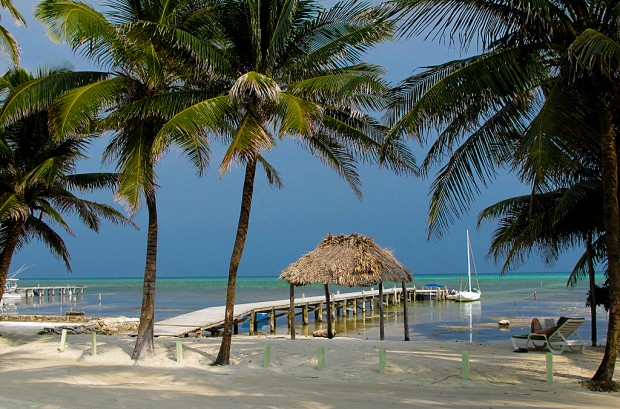
Expats are falling in love with Belize. Here is a 10 picture discovery of the most interesting, if not the most popular spots in this tiny, Central American nation.
1. Barrier Reef
Belize is home to the second longest continuous barrier reef in the world. Here you will find some of the best snorkeling and scuba-diving sites in the world. It is lined with hundreds and hundreds of small islands, or cayes. Many are uninhabited, but others are home to developed vacation destinations such as the islands of Caye Caulker and Ambergris Caye.
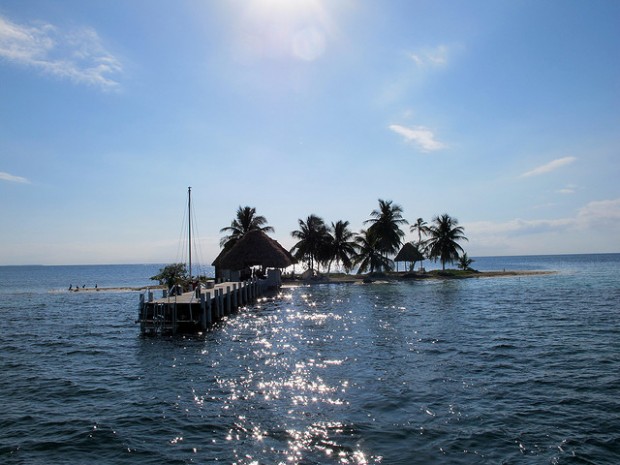
Belize’s Barrier Reef is lined with hundreds and hundreds of small islands, or cayes.
2. The Atolls
Belize’s three mid-ocean atolls are arguably more spectacular than the barrier reef and its many cayes. Unique formations of small islands and reef surrounding a mid-ocean saltwater lagoon, atolls are an isolated and stunning phenomena. Belize has three of them: Turneffe Island, Lighthouse Reef, and Glover’s Reef. These atolls are very sparsely developed, and any visit here will be imbued with a sense of adventure, isolation, and romance.

Turneffe Island, Belize, one of three spectacular mid-ocean atolls.
3. Crooked Tree Wildlife Sanctuary
Located in northern Belize, this preserve is a swampy lowland home to over 250 resident species of birds and serves as a resting spot for scores of migratory species, and the principal nesting site of the endangered jabiru stork, the largest bird in the Americas. The best way to explore Crooked Tree is by paddling around the network of lagoons in a dugout canoe.

Crooked Tree Wildlife Sanctuary is home to the endangered jabiru stork.
4. Actun Tunichil Muknal
Actun Tunichil Muknal is a cave in the Tapir Mountain Nature Reserve near San Ignacio. A sacred site for the Mayans, the cave contains many examples of pottery, ceramics, and stoneware, as well as several sets of human sacrificial remains, one of which (known as the “Crystal Maiden”) has been almost entirely covered in limestone crystals by the natural processes of the cave.
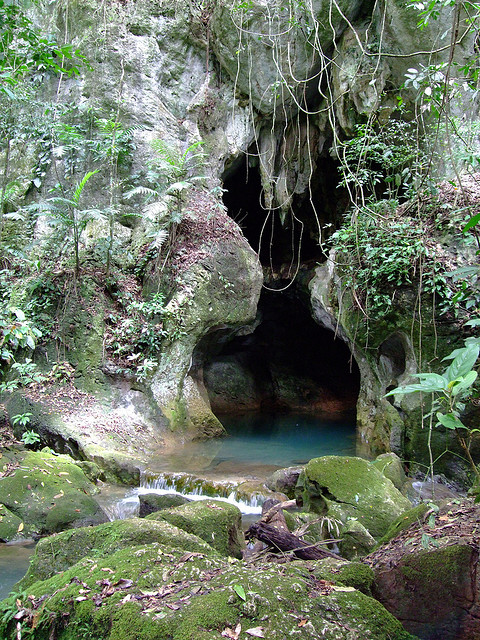
Inside this cave lies the remains of Mayan human sacrifices.
5. Ambergris Caye
The island is the top tourist destination in Belize, and is the largest of several hundred islands in the northernmost waters of Belize. Most people get around Ambergris Caye by simply walking. There are many quality hotels in town, and many resorts on the island are less than a mile from the town of San Pedro, the only urbanized area on the island.
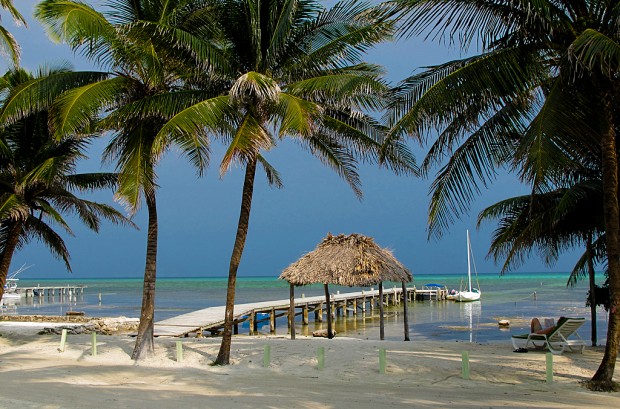
Ambergris Caye is the top tourist destination in Belize.
6. Caracol
Sitting high on the Vaca Plateau, 1650 ft. above sea level, Caracol is the largest Maya site in Belize. It was once one of the largest ancient Maya cities and at its peak around 650 AD it had an estimated population of about 150,000, more than twice as many people as Belize City has today. The largest pyramid in Caracol is Canaa or Sky Place, still the tallest man-made structure in all of Belize at 143 ft.

View from atop Vaca Plateau, Caracol, the largest Maya site in Belize.
7. Blue Hole
The Great Blue Hole is the most popular diving spot in Belize. This massive sinkhole under the water is near the Lighthouse Reef and creates a perfect circle of deep blue water. The deeper one dives into the Great Blue Hole, the clearer the water and the more breathtaking the scenery, as the array of bizarre stalactites and limestone formations become more complex and intense.
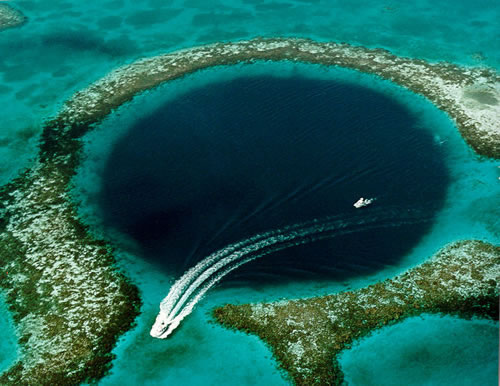
Blue Hole, Belize’s most popular diving spot.
8. Caves Branch River Tubing
Geologists recently discovered a vast subterranean network of Maya ceremonial caves. At the Nohoch Che’en Caves Branch Archaeological Reserve, guides will lead you across jungle pools to the caverns filled with artifacts like sacrificial skeletons. The spiritual underwater history lesson is a must-do.
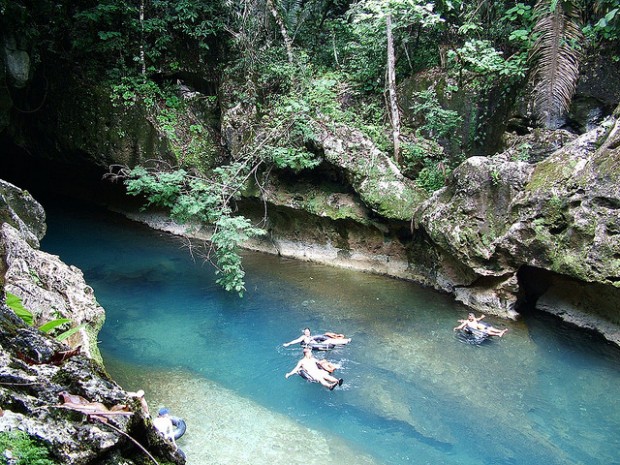
Belize caves plus tubing, equals a must-do.
9. Mennonites
In the 1950s some 3,000 Mennonites emigrated to Belize, where they established communities in the Orange Walk and Cayo districts. Today, there are an estimated 8,000 Mennonites in Belize. They are primarily located in farming areas and have no hotels or tourist facilities, but the unexpected sight, on dusty rural roads, of pale-skin folks in old-fashion dress—the women in long plaid dresses and the men with suspenders and straw hats—in horse-pulled buggies will remind you of how diverse Belizean culture really is.
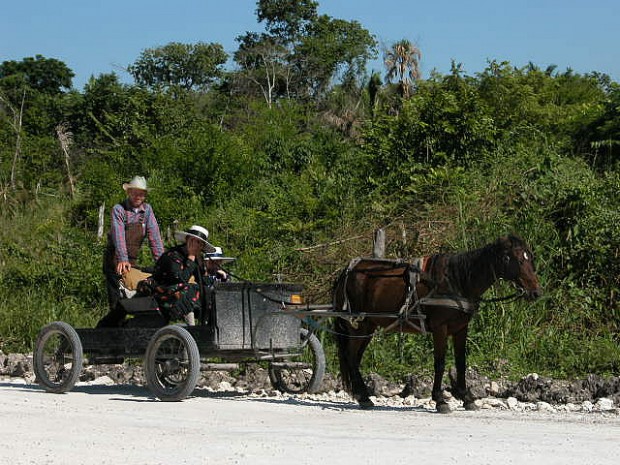
Belizean Mennonites embrace a simpler lifestyle.
10. Fly Fishing for Tarpon
The waters surrounding Ambergris Caye, Belize abound with fish and the island boasts some of the best fishing guides in the country. Tarpon are the largest, strongest, and most acrobatic of the Belize species. Even juvenile fish will put your angling skills to the test and strain your tackle beyond belief.
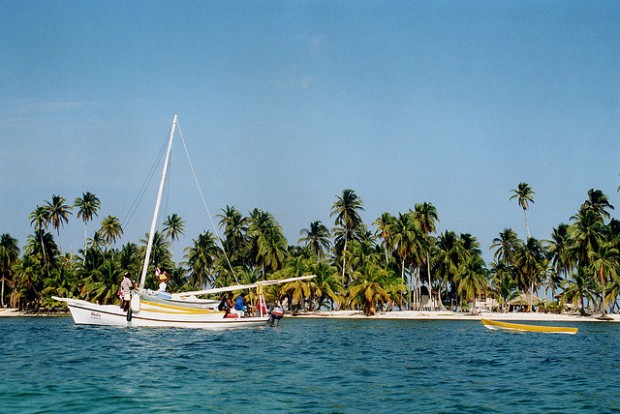
Belize offers up some of the best fishing spots in the Caribbean.
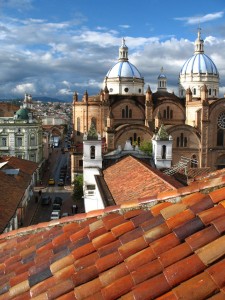
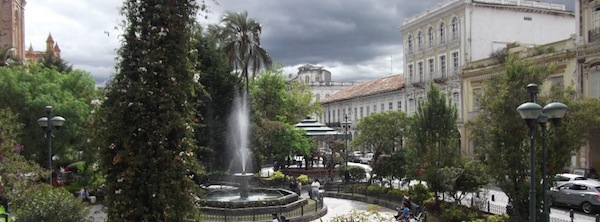
“Life should be better and richer and fuller for everyone, with opportunity for each according to ability or achievement” — Adam Truslow, coiner of “The American Dream”
So what does Cuenca, Ecuador have to do with The American Dream?
Short Answer: everything really associated with quality of life is more abundantly available in the very best cities of Latin America — with Cuenca, Ecuador a crown jewel among them — than in metro and suburban USA.
Cuenca, Latin America & The “Joy of Life Ratio”
Basically, it comes down to the Joy of Life Ratio.
You figure out the ratio by determining how many minutes out of every waking-hour in a typical day are spent:
- Doing what you love (or at least deeply enjoy) — amid beautiful and pleasant surroundings — in frustration-free and friendly environments — enhanced by beautiful weather
Versus how many minutes are spent
- Doing stuff you hate (or don’t want to do) — amidst clangorous, urban ugliness and/or soul-sucking suburban blandness — in an over-busy and time-crunched and grouchy atmosphere — made worse by inclimate weather
 Sure, the US has plenty of opportunity to pursue your passion, more than its share of beautiful cityscapes, and no small amount of lovely weather… But — and this is a giant BUT — the communities with the best mix of those things are now priced out of reach for for most Americans.
And even staying afloat in a simply “nice” city can start to take up all of your time and energy in order to pay the bills and have enough left over for a few evenings out, leaving many Americans to wonder if there isn’t a better option out there somewhere.
Many of them are now finding that better option in the best cities of Latin America, with Cuenca, Ecuador chief among them. That’s where they find much higher Joy of Life Ratios at prices the average American can thrive in.
Of course, which Latin American city and country offers YOU the best Joy of Life Ratio depends on:
- what your passions are (if your passions are sailing, surfing and scuba diving, Cuenca won’t be for you),
- what you, particularly, find the most beautiful and pleasant, and
- what your priorities are, in terms of amenities, city life vs. country life, and so on.
Cuenca Ecuador is the city of choice for those people who’d dream of living smack in the middle of Paris, Barcelona, or Sienna (or even Manhattan or San Francisco, for that matter) within walking distance of historical, beautiful architecture, culture, and food — at a price that’s affordable for someone needing more living space than a studio apartment.
In fact when Ecuadorians live overseas, whether in the US or Europe, they typically return to Cuenca, Ecaudor and purchase real estate. Regardless of where they grew up in Ecuador, when they come back, they tend to settle in the city of Cuenca. And this is for a mix of reasons, which I’ll call…
The Big Three Pros of Cuenca, Ecuador:
1. Cuenca’s Old World Character and Ideal Climate
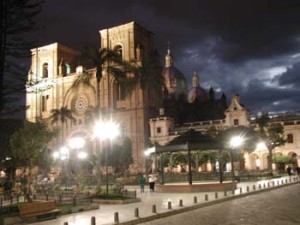
When more and more American cities and suburbs look like they were designed at corporate, Cuenca looks like something out of Europe with its gorgeous architecture, historic buildings, scenic public squares and parks, and tons of authentic character.
Just look at these pictures!
And for nature lovers, Cuenca sits at the cross-roads, so to speak of four major rivers and is surrounded by mountains, as it lies on the Ande’s mountain range. Most state parks are less beautiful than the cities average walking trail.
And outdoor beauty is important because the weather will make you want to be outside — with year round temperatures averaging in the mid-70s Fahrenheit, getting just cool enough in the evenings for a light sweater or jacket.
And all this in a city of only 500,000 people — about 100,000 people smaller than Portland, Oregon.
See a nice drone video of Cuenca despite the hilarious music.
2. Cuenca As a Welcoming, American-Friendly, Metropolitan City
As mentioned earlier, many Ecuadorians who have spent some time working, studying or living in the US, settle back in Cuenca when they come back to Ecuador.
That means the people in Cuenca like and are welcoming of Americans and happy to help make them part of the community. Many are fluent in English and the city has plenty of English-language bookstores, store owners, and people willing to accommodate non-Spanish speaking travelers and expats.
Overall Cuenca has a very metropolitan feel, alive with talents, dollars, and taste for life that these well-traveled and well-educated Ecuadorians and expats bring to it. Think of Cuenca as a combination of:

- Hip arts community — free symphonies, a mecca for painters and sculptors, and artisans
- College town — no less than 8 universities, and
- Tom-Sawyer-esque hometown — very family oriented with excellent schools, community involvement, safe environment.
Now think of all that rolled into a place that’s very reasonable and affordable to live.
For around $150,000 to $200,000 USD you can get a home within an easy walk of the city’s historic district, or Centro and be able to enjoy the city in a way that’s simply impossible with a US City when you’re forced into a suburb some 30 to 60 minutes away from the hart of downtown. Think of it like living near downtown Austin, or the Garden District of New Orleans, or near the Santa Monica pier — except at a price you can effort and without most of the hassles that come with living in a major metropolitan area.
Simply put, life is simpler and more enjoyable when you can walk everywhere you need to go and the walk is as beautiful and pleasant as one enjoys when strolling through historic Cuenca.
Click to learn more about real estate, cost of living, healthcare, & residency in Cuenca
Along with the beauty and cultural offerings comes all the other amenities you’d expect to find in any first rate city: an active night life, first-rate restaurants, shopping malls (if you want them), luxury boutiques, readily available high-speed internet access, and ease of travel, with an airport offering easy travel.
3. Low Cost of Living Coupled w/ Excellent Schools, Food, and Health Care
 We’ve already mentioned housing costs in Cuenca — they are affordably low, with luxury, furnished rentals running around $650 a month.
Factor in utilities, condo fees, cable, and everything else and you’re looking in the neighborhood of $900 a month — again for a furnished, luxury apartment in a desirable location. And the same goes for most anything else — eating out at a first-rate restaurant for two runs about $30. Buying groceries with plenty of grass-fed beaf, fresh seafood and veggies will run you about $250 a month — or about $60 a trip to the market.
And if you’d rather go to a supermarket than a farmers market — don’t ask me why you would but… as the Ecuador’s agricultural and tourism industries, Cuenca has plenty of supermarkets and malls.
Along with the lower cost of living comes the higher quality of life for families and retirees. Not only does Cuenca have an abundance of Universities, including University courses in spanish for expats, but the local schools are excellent and the community places a very high value on education in general.
Many people who move to Cuenca retire there, but if you’re moving your family there, you can rest assured that your kids will receive a first-class education without worry of payment for private schools.
And this low-cost for premium living extends right through to inexpensive, high quality health care, available at 18 hospitals and medical centers in the city, many of which are home to a large number of English-speaking doctors — something extremely important to both retirees and families!
Cuenca, Ecuador’s Short List of Negatives
So why might you decide NOT to move to Cuenca?
Well, the negatives are tightly related to many of the positives. In other words, many looking to move to Latin America like Cuenca because it’s both English language-friendly, already popular with and home to a growing community of expats, and has established industries around welcoming US expats into the community.
And all of that is great… unless you’d rather NOT join a crowd of expats, or would rather move to a city BEFORE it becomes “the next big thing,” or if you’ve already mastered Spanish and don’t care about English-language friendliness.
Also, if you’re idea of paradise includes beaches and water sports rather than mountain living, Cuenca, Ecuador isn’t your town. Ecuador has coastal towns, but Cuenca isn’t one of them.
Finally, if you’re primary consideration is how far your dollar will stretch, Cuenca may be less expensive than North America, but it’s certainly not the cheapest place to live in Latin America, and you can be sure that the steady stream of expats are only going to drive housing and rental prices up.
Comparing Cuenca, Ecuador to Your Other Latin American Options

If you ARE looking for a more tropical or Caribbean flavor to your retirement location, take a closer look at coastal Panama and Belize.
If you like Cuenca, but want something a bit pre-trend, consider looking into Medellin, Columbia and Mendoza, Argentina.

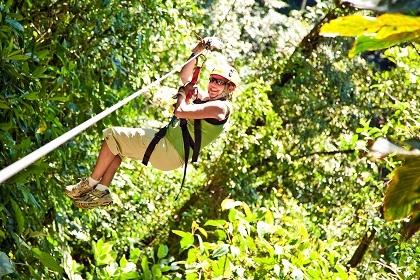

Panama is a smart choice for expats who want it all—in a country that really wants them. Located in the interior of Panama, Boquete is popular with the expat crowd, who enjoy a close proximity to pristine beaches and the growing city of David, along with expansive mountain views, and an affordable cost of living.
Here are five good reasons you will want to become an expat in Boquete.
1. Panama’s Friendly Retiree Residency Program
Most notably, Panama lures expats with one of the world’s best retiree residency programs. The Pensionado or Pensioners’ Program makes it easy for retirees to get residency here. The potential value for a pensioner on a budget is huge, as Panama offers a host of discounts to all its retirees. The long list of discounts includes reduced fares on movies, theaters, sporting events and other public events; discounts off transportation, hotels, even electric and other utilities, and much more.
Legal and application fees for the Pensionado visa are relatively inexpensive, particularly when compared to the money-saving benefits. Plus, the Pensionado program awards residency for life.
2. Panama is a Top-Rated Retirement Destination
Boquete is known for its expat community. Rated by the AARP as one of the world’s best retirement destinations, Boquete first began to attract an expat crowd in early 2001 and has continued to grow into a viable expat community. An hour’s flight from the nation’s capital of Panama City, Boquete is dotted with small cottages, one after another… Swiss-style cabins with magenta and coral bougainvillea spilling over their walls. No wonder Boquete is known as Panama’s flower capital.
3. Boquete Offers Stress-Free Living
Expats in Boquete will tell you their health has improved… not because they’ve done anything special, but because the place lends itself to healthy living. It’s easier to walk here than to drive. Everything is close and everyone is on foot.
There aren’t fast-food joints on every corner. But the market carries fresh ahi-grade tuna and sea bass and shrimp every day. And they’re a mere fraction of the price you’d pay back home. Baked with juicy tomatoes or slices of fat Boquete oranges, dinner for four will run you about $10.
You’ll meet painters and photographers and jewelry-makers here. The expat community has helped infuse Boquete with the arts. This quiet village now has a yearly jazz festival and an English-language theater troupe.
4. Take Up an Outdoor Activity
There’s much to do for lovers of the great outdoors, too. Boquete is the kind of place where you can go white-water rafting or hiking or birding…every day. You can have your own farm and livestock… grow rare orchids and bromeliads… pick limes and bananas from your very own trees. The land is rich and fertile, the climate is perfect. You can can even bird watch from the comfort of your home.
True, Boquete is known for its misty rain— called bajareque—as much as for its coffee and orchids. You can’t have one without the other. During the rainy season, from May through November, there will be afternoon showers… or downpours. But you see the sun most every morning.

Miniature humming birds of Boquete
5. The Cost of Living Is Low in Boquete
Panama ranked 8th on The Worldwide Cost of Living Survey, which is released twice a year by the EIU and compares hundreds of prices across 160 products and services, including items such as food, drink, rentals, utility bills, schooling costs, and household supplies. If you decide to buy a home in Panama, it is possible to live well, on less. Just be forewarned, if you bring along a lavish U.S. lifestyle to Boquete, your cost of living might be higher than you might expect. However, if you are willing to eat like a local, you can dine out for $4, get a glass of wine for $3, and enjoy an abundance of fresh fruits and vegetables for $10 a week.
Here, paradise comes at a price…but it’s a bit more economical.


Credit: Daniel Foster
It’s not surprising the Canadians fly south for a winter vacation, beating a path faster than the migrating geese. Canadian winters can reach some pretty teeth-chattering extremes, with dense snows in the mountainous regions and below-freezing winds rolling over the plains.
When Canadians fly south however, they want an adventure as rich in texture as they can receive in their own wildly beautiful and largely unpopulated country. They’ve found much of that delicious thrill by vacationing in Honduras. Charter flights since November of this year have increased 51% over the previous prime time season of November to April, last year.
The Attractiveness of Honduras
Honduras has some of the features Canadians enjoy: a few large population centers among vast stretches of wilderness areas, an indigenous culture, and a natural playground for outdoor enthusiasts. It also has some features the Canadian population doesn’t get to enjoy as part of their environment; ancient Mayan temples, incredible coral reefs, fresh tropical foods, and warm, shallow beaches. This gives them something to talk about when they go home.
It is a land that appeals to all social classes and lifestyles. It is possible to fly directly into many of the desirable locales, take a cruise ship, and spend your time in first class hotels. It is also very backpacker-friendly. In many areas of Honduras, all you have to do is back-pack in to a favorable, isolated spot, set up camp, and simply enjoy the beauty that surrounds you.
Honduras has something for everyone: the nature enthusiast, the anthropologist, beach lovers, scuba divers, kayakers, and those who simply like a good party.
Visa requirements are easy. You do not need a passport if you are a citizen of Canada, the United States, the United Kingdom, or Australia. The visa is good for up to ninety days, with the option of applying for an extension.
Currency Exchange
The most recommended way to travel in Honduras is to buy traveler’s checks and cash them at the banks. The exchange rate averages around five cents to a lempira. Always carry some of the Honduras currency in one hundred to two hundred lempira notes, for one or two days living expenses at a time. The lines at banks are often long, but it is the safest and most equitable exchange. ATM machines are often broken down or out of cash. Many stores and restaurants will accept dollars, but ask in advance.
Trujillo: The Humble Promise
Trujillo has a long history. In the Cuyamel caves, on the inland slopes of Mt. Capira and Mt. Calentura, evidence has been found of communities dating back to 1,200 to 6,000 B.C. It was the fourth and final stop Christopher Columbus made in his exploration of the Americas.

The modest beach town of 30,000 features an old Spanish fort on a bluff, with a row of cannons overlooking the spectacular bay.
You can live the high life in top-notch hotels that charge from $30 – $78 a night, or go local and secure a room for as cheaply as four dollars. Of course that will mean skipping the hot water. The various options include simply buying a straw mat and lounging out on the beach.
This banana coast town features a variety of things to do beyond basking in sun soaked sands and swimming in tranquil Caribbean water, or studying ancient history. The environment includes waterfalls, mountains, tropical forests and the Guaimoreto Lagoon Nature Reserve with a mangrove ecosystem and rare, tropical birds.
While the town of Trujillo is very poor, the government hopes to change this. It plans to turn Trujillo into a new, charter city, with a marina, shopping malls, and rail/ship and air transportation. It’s working energetically with foreign investors to give this quiet town by the sea a face lift, with the potential to employ hundreds of local, currently poverty-stricken workers.
Canadians Like Roatan
It’s difficult to hide a gem once it’s been discovered, and Roatan is no exception. The thirty-five mile long island nestles next to the largest barrier reef in the Caribbean and is the second largest reef system in the world. Canadians love taking their vacations in Roatan for several reasons.

There are resorts where you can stay at the west end of the island, but as you begin traveling east, development becomes more sparse, allowing you the option of privacy and mingling with the locals.
Scuba diving is the number one sport, but there is also snorkeling, kayaking, and deep sea fishing. Sandy Bay features mini-golf and there is a horseback riding ranch at the West End.
There is a road system, but many of the roads are unpaved. Traveling from one end of the island to the other can take more than an hour, but you can always take a boat or paddle your own canoe.
You can reach the island by boat or charter plane. Once there, you can even take a helicopter cruise to enjoy the highlights of the fantastic coral reefs and beautiful, largely untouched scenery Roatan has to offer.
A word of warning to beach campers. You can set your travel bag down anywhere on the beach and enjoy an exclusive, private setting. However, when the cruise ships come in, for a short while, you may find your isolated spot invaded with tourists jostling for a place in the sun, and the prices of food and drink suddenly doubling and tripling. Wait a couple of days and this will change, sending you back to that dream vacation of throwing away the clock and just listening to the sighs and murmurs of nature.
When You Can’t Get Enough of That Coral
The most avid seekers of that unique place to go, seek out the small island of Utila. In the middle of coral paradise, it’s also the thrill of a lifetime for the avid scuba diver. With over sixty scuba diving locations to choose from, you’re not only entering a landscape of fragile coral painting the underwater world with pastel cities, and brilliantly colored fish darting about their rainbow hued habitat, but dark, mysterious caves and the ghostly wrecks of sunken vessels.

Some divers have reported seeing the Whale Shark. Although a behemoth in size as the world’s largest fish, its gentle life is invested in zooplankton, snapper eggs and small, shrimp eating fish.
The population is small; only about 2,500 year round inhabitants; and tourism fairly light. As the closest island to the mainland port of La Caiba, it is easy to reach by boat, ferry or small plane. There are no national chain hotels or restaurants in Utila, but the hometown flavor of the locally owned businesses only add to the cultural charm.
The Fabulous Bay
Trujillo, Roatan and Utila are all within a short distance of each other, with Trujillo on the mainland, and Roatan and Utila within the Bay Islands. The white sand beaches and gentle blue waters make the area the perfect escape from crowded resorts and roaring traffic. You can even rent an entire small island to yourself for approximately $130 a night.
For the outdoor enthusiast, there is little it doesn’t have to offer except snow-boarding and ice sculptures, but give the innovative thinkers of Honduras a little time, and they’re sure to think of a solution for that, as well.
Canadians like to go where the adventure is as great as in their homeland. The Bay Islands never fail to satisfy that adventurous, pioneering spirit, while offering all the quiet, crystal beauty of the Caribbean Sea, as well.
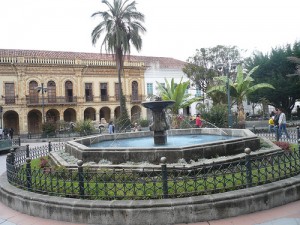

Cuenca, Ecuador Named Top Expat Destination for 2013
The world’s top retirement spot? In truth, it depends on you. There are many appealing options for a new life in retirement as an expat, as many people are now looking for ways to stretch their dollars. It makes sense, living expenses can be cheaper, cultural experiences richer and the lifestyle more satisfying as an expat.
The top retirement spots for 2013 have a variety of cultural offerings, climates, and lifestyles. Each destination is desirable in its own way, but they all offer something increasingly hard to come by at home: A good quality of life for a reasonable price.
Here is a guide to the best places to retire overseas in 2013:
1. Ecuador
Living on $1,600 a month including rent isn’t unreasonable in a place like Cuenca, Ecuador. Buying a house or condo near the water could cost you less than a quarter of popular U.S. destinations of similar climate. When you make the move, Ecuador allows you to import your household goods duty-free, and with its new, simplified visa process, it’s no wonder Ecuador tops the list as a best-value retirement paradise.
But for many, the true draw is the perfect climate. The nation lies on the equator. The beaches are tropical, but up in the Andes, the weather is mild and spring-like year-round. Best bonus yet, it’s one of the best countries for an expat business start-up.
2. Panama
In Panama’s capital city you can have all the U.S. comforts of a big city, including outstanding healthcare, restaurants, and daily activities. On a monthly budget of $1,700 to $2,500 a month you could eat out regularly, have a housekeeper come in a few times a week, and enjoy movie dates a few times a month.

View of Panama City skyline, a top expat destination for 2013
Panama’s major draw is its Pensionado (pensioner) visa, where qualified retirees achieve residence status fairly quickly. The program entitles visa holders to discounts on medical treatment, dining, movies, and more. Most expats in Panama regret they didn’t come sooner, as many say they chose Panama for the friendly people…its rainforest…plentiful beaches and the choice of secluded or city living lifestyles.
In Panama it’s possible to put a toe in the Pacific after breakfast and in the Atlantic before dinner…on the same day. There are cloud forests for bird watching, such as the resplendent quetzal, and even orchid gazing, all in the same weekend.
3. Malaysia
Malaysia is Asia’s Panama. That is to say, this country is a regional and a global hub, for trade, for business, and for culture. Malaysia is a multi-ethnic and multi-cultural country which attracts many tourists annually.
Penang, Malaysia offers expats an affordable living under $2,000 a month in what is considered “luxury housing” in the states. Here, an expat can eat out often and enjoy all the things the city has to offer along with top notch medical care at an affordable price.
Malaysian expats feel the country has everything. Its weather is a tropical 82 F all year round and its beaches, islands, and jungles are pristine. It has some of the region’s best street food, great restaurants, bars, shopping malls, and movie theaters—and it’s all affordable.
4. Mexico
Mexico’s colorful and vibrant culture does rank high with expats who live here…look deeper and Mexico has much to offer. Mexico is an easy, convenient choice for many expats who are seeking a first-world country at bargain prices. No wonder a million or more expats make Mexico their home.
Today’s Mexico offers modern highways and airports, cable and satellite TV, Internet, and many other items expats enjoy at home. Want your “big” U.S. lifestyle abroad, you’ll get it in Mexico with an overall cost of living at about half of what you’d pay in the U.S. or Canada.
And one of Mexico’s biggest pluses is its sheer size and variety. If you want beach, Mexico has thousands of miles of it—chic resorts, sleepy beach towns, and everything in between. Prefer cool, mountain scenery? Mexico has that, too. More likely than not, whatever you’re looking for in a retirement destination you will find it in Mexico.
5. Costa Rica
Costa Rica is where you go to live the lush life. It is lush with nature—misty rain forests, extraordinary wildlife, active volcanoes, and fabulous beaches—as well as such comforting amenities as malls, supermarkets, restaurants, museums, and social clubs.
U.S. retirees have flocked here for years, drawn by its mild climate, prosperity, literacy rate, health care, and, significantly, stable government. Another plus: Costa Rica’s commitment to a thriving natural park system that is second to none in Latin America. This is as biodiverse a country as you’ll find anywhere. The country offers micro-climates, meaning you can fine-tune your weather by moving up and down the hills.
Though not the bargain it was a decade ago, Costa Rica continues to draw moderate-income retirees, who meet the country’s requirement of income of $1,000 per month from Social Security or a pension. Best part, residence is easy enough that just about anybody can do it. Residents are eligible to join the universal health-care system, known as Caja. The cost, based on income, can be as low as $49 a month. After that, care is free.
6. Nicaragua
Want a budget-friendly retirement destination? Think Nicaragua. Geographically, the nation is blessed with two long coastlines and two big lakes, plus volcanoes, highlands, rain forest, and rivers. In this manner, it has everything Costa Rica and Panama have, but it’s less discovered and developed and available to adventurers and eco-travelers at bargain rates.
Property values have fallen significantly in this country over the past several years, thanks to Ortega’s re-election and then the global recession. As a result, you can buy one of Granada’s classic Spanish-colonial haciendas for $50,000 or less. A couple could live comfortably in this city on a budget of $1,200 per month.
Best of all, its lower cost of living does not mean you have to sacrifice the quality of life, in fact, it’s possible to live in Nicaragua with even more luxuries than you were accustomed to, simply because the prices are so low.
Retired Expat Communities
All these destinations have large expat communities, so doing your research can put you among other people like you; with similar interests. Learning a foreign language will probably be a requirement; but again if you have a sense of adventure, and don’t want the typical cookie cutter retirement this could be something new and stimulating.

The Ecuador 3 Count, where we bring you 3 Ecuador stories that you shouldn’t miss.

Up and close with giant tortoises – Santa Rosa – Santa Cruz Island, Galapagos Islands Ecuador
1: Here’s Why More Expats Are Exploring Ecuador
It’s all happening in Ecuador: as President Correa is re-elected, the nation opens a new international airport in Quito, where foodies are converging, the Galapagos Islands still lure visitors as a top Eco-destination and a stunning new rain forest eco-lodge opens in the clouds.
The only true way to see the cluster of islands known as the Galapagos is by boat. You can spend a few days or several weeks island hopping. They’re not pretty as such but enormously diverse in plant and animal life. One minute you’re walking over black molten rock and on the next island it is all lush green rolling hills with tortoises.
A visit to Quito’s Old Town food district is a blend of colonial and indigenous cultures through the melting pot of food, from ceviche to colaciones (roasted peanut). Ecuadorean cuisine really has to be experienced first-hand.
Three hours west of Quito sits a new eco-lodge nestled 3,000 ft up in the cloud forests. Mashpi Lodge. This name does not do it justice. Designed by Ecuadorean architect Alfredo Ribadeneira, with 22 rooms and suites decked out with Philippe Starck-designed bath tubs, it is a five-star glass enclosed space dome that looks like it’s come from the future and landed in the middle of a nature reserve. Here, Eco-friendly credentials and a team of experts are helping to chart the thousands of different species that inhabit the forest. The views are breathtaking.
2: How Being an Expat in Ecuador Will Change Your Life

Reinvent yourself in Ecuador.
Up second, surviving the first few days, months or years as an expat in Ecuador. The adrenaline has worn off a bit, you have unraveled a few of the mysteries of being a new expat. At first, expats find they’ve succeeded in establishing a routine that looks a lot like their old one… perhaps with better weather, nicer scenery, and lower cost of living. And that is okay for some, but watch out you don’t bring your homeland expectations to your new expat life.
But if you do have a real desire to change, reinvent yourself and grow, moving abroad can help make it possible. The thing to remember about moving abroad… the move itself will not immediately change you, yourself. You can’t simply move to another country one day and expect to wake up the next a different person. It takes time and adaptation.
Once you’ve taken a closer look at your expat life, you might just find it’s the right time to reinvent. Being an expat can help reveal things that may have been stuck in the corner of your brain for years… a novelist, a painter, a travel writer, an entrepreneur. You usually find them about the time you’ve taken care of the necessities, gotten used to your new expat life. And then it will be time to ask, “What do we do now?” and become someone or do something you never thought possible.
3. Foodies are Discovering Quito on Foot
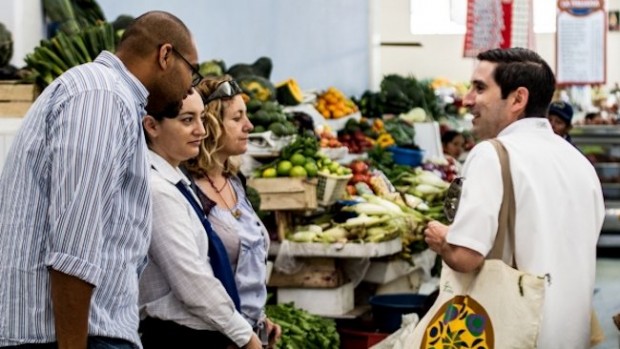
Executive Chef Andrés Dávila leads guests through outdoor markets and food shops along the colorful streets of the Ecuadorean capital.
Finally: Quito’s Great Food Walk. The city doesn’t yet have the foodie allure of Lima, but this South American capital is getting increasing attention for its cuisine. As more gastronomy-focused tours of Ecuador pop up each year, visitors are being offered excellent cups of locally grown coffee and addictive, Ecuadorean chocolates.
The newest and grandest hotel in the city center, Casa Gangotena offers guests a walking gastronomy tour. The morning tour with the hotel’s chefs skips the tourist district and heads directly to local shops and markets where traditional sweets, grains, and spices are featured. With a climate that goes from equatorial tropical seaside to high in the Andes, there’s little that won’t grow here in the rich volcanic soil.
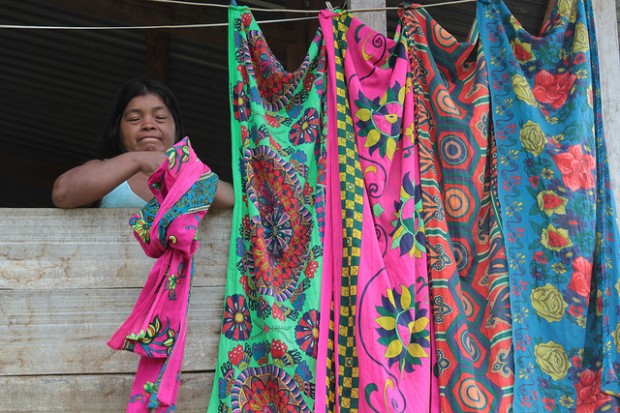
Photo Credit: Acnur Las Americas
When it comes to exploring Central America, Panama’s Darien province marks the end of the road for most travelers. Located on Panama’s eastern border, it contains the area known as El Tapon (meaning “The Plug”). This 99 mile stretch through the swamplands and rainforests along the Panama-Colombia border accounts for the only unfinished stretch of the Pan-American highway, which stretches all the way from Alaska to Argentina.
Often heralded as Central America’s own Bermuda Triangle, the Darien is regarded by many as Panama’s last true frontier. As the country’s least populated and least tame province, it’s easy to see why it has begun to attract a few of the area’s more adventurous travelers. While not easy to reach, its ecological and cultural attractions are easily worth the extra effort and associated risks.
Location and Terrain
Due to its topography, and the fact that the road literally ends in Yaviza, much of the Darien province is accessible only by plane or boat. A 45-minute flight from the nation’s capital will land you in La Palma, the capital of the province. Flights are also available via AirPanama to Garachine or Sambu. A few villages, such as La Chunga and Villa-Grecia are accessible by way of the Rio Sambu. However, the majority of the area is often most easily navigated on foot or by hollowed-out canoe. And, while a few hotels exist, lodging in clean but rustic huts or even in tents is much more common.
Comprising much of the Darien province is Darien National Park, Panama’s largest. The park contains habitats from sandy beaches to rocky coasts to mangroves to rain forests. And not the kind of rain forests that have clearly marked trails and snowcone stands. The forests of the Darien still remain largely untouched by civilization and were named a natural World Heritage Site by UNESCO in 1981. The area is home to four species of macaw, the rare Harpy eagle, tapirs, several endangered species of monkeys, and a host of other remarkable animals.
Culture and Inhabitants
Also among the undisturbed features of the Darien province are the people themselves. The Embera-Wounaan live along the riverbanks in villages containing no more than 5 to 20 houses, which are elevated structures with no walls. Unless they are in town men generally wear no more than a loin cloth, and women only a skirt. Children wear no clothes until puberty, and everyone is barefoot. Their bodies are painted with a black dye made from berries that is thought to repel insects. On special occasions, this dye is also used to paint geometric patterns on their bodies.
Photo Credit: Rita Willart
The Darien’s other inhabitants consist mainly of outlaws. What was once a subculture of pirates and run-away slaves is now a network of Revolutionary Armed Forces of Columbia (FARC) guerillas, who use the area for buying and stowing firearms, and the United Self-Defense Forces (known as paramilitaries) who oppose them. These groups, combined with poachers and drug traffickers, make much of the area unsafe for travel. The good news is that many tourist sights are only accessible by plane and, consequently, unreachable by those who might wish harm.
Nature and Activities
Many opportunities are available for adventurers who wish to spend their vacation just a little further off the grid. The Punta Patino Nature Reserve offers options for exploring, hiking, boating, and bird watching. No bucket list is complete without a stay at Pinas Bay’s Tropic Star Lodge, which is considered by some to be the best fishing resort in the world. With an abundance of marlin, sailfish, tuna, grouper, and many more, the resort has served as the backdrop for over 300 world records. Nearby Biroquera offers visitors the opportunity to intermingle with local tribespeople and experience their crafts, native dances, and more. Guided hiking tours abound throughout the area.
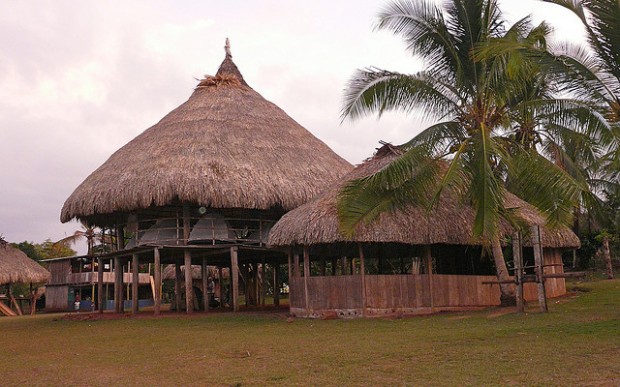
Photo Credit: Rita Willart
Dangers and Threats
Although much of the Darien is regarded as safe, exploring its depths is not for the faint of heart. Many deadly species, including crocodiles, boa constrictors, jaguars, and wild boar, lurk in its midst. As do poachers, of both plants and animals, who would kill to protect their livelihood. These same predators that pose a threat to tourists also threaten the sustainability of the ecosystem itself. This is due largely in part to the guerillas and paramilitaries that make the area too dangerous to patrol. The government and conservation organizations simply lack the resources and protection they need to do their jobs.
Also a concern for the area is the frequent mention of bridging the Pan-American Highway gap, which would undermine the subsistence of native cultures and habitats. As the Darien is threatened, so is Panama’s border and, ultimately, the rest of the Americas. Since the region has always served as a natural barrier between Panama and its South American neighbors, the country and the rest of Central and North America have remained safe from dangers such as foot and mouth disease which is currently isolated to South America alone. While conservation and law enforcement efforts are continuously improving, the fact remains that Panama’s last frontier may be slowly slipping away.
Don’t miss out on all it has to offer.
The Expat 3 Count, where we bring you 3 stories that you shouldn’t miss.
1. Expat Challenges: 3 Things Surveys Never Tell You About Being an Expat
First Up: Though you might dream of fun and adventure as an expat overseas, there are a few things you might wish someone would have told you before you packed up and left.
Becoming an expat is a challenge. Here are three expat tips to keep in mind when making the move overseas:
- It’s wise to create an income source before you leave your home country.
- Plug in to the local community of expats.
- Finally, get a major credit card.
There are many reasons to make the move to be an expat, and if you make it prepared, it will be a rewarding and thrilling experience.
2. Yes, Expats Are Entitled to Refunds from the IRS
Americans living abroad may not believe this, but filing their U.S. tax return could mean cash in their pockets.
Greenback expat tax services points out that if you earn income anywhere in the world, as a U.S. citizen, you will likely be obligated to pay American taxes as well. The U.S. is one of the only nations in the world that requires its citizens to file taxes on money earned while living in another country.
But this is not a bad option, as many expats could be entitled to a tax refund. As the Internal Revenue Service pointed out in a recent memo to expats, ‘even if you are not required to file a tax return, you may still want to file. You may get a refund if you’ve had too much federal income tax withheld from your pay or qualify for certain tax credits.’ It’s worth checking out.
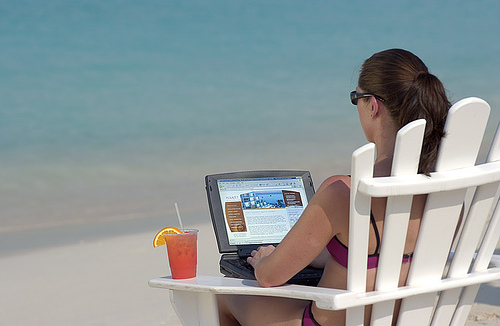
You too can find work as an expat.
3. The Best Ways to Find Work When You Want to Be an Expat
Finally: More than 6 million Americans call themselves expats, the largest number ever recorded, and more are waiting in the wings to start a new life abroad. Costa Rica, Panama and Nicaragua are expat hotspots for those seeking a tropical lifestyle while still remaining employed.
It’s not hard to understand why so many Americans are considering becoming expats as the current job market in the U.S. is highly competitive. Meanwhile many countries, such as Panama, are booming. Interestingly enough, many of these jobs are a direct result of American companies expanding their overseas branches.

Change is daunting. Change is difficult. It’s as good as a holiday, and mostly it’s for the better. If you’re looking for a change let’s face it: you probably need it. And if that change is becoming an expat in Panama, it’s a big one. It needs a lot of consideration. It’s stressful.
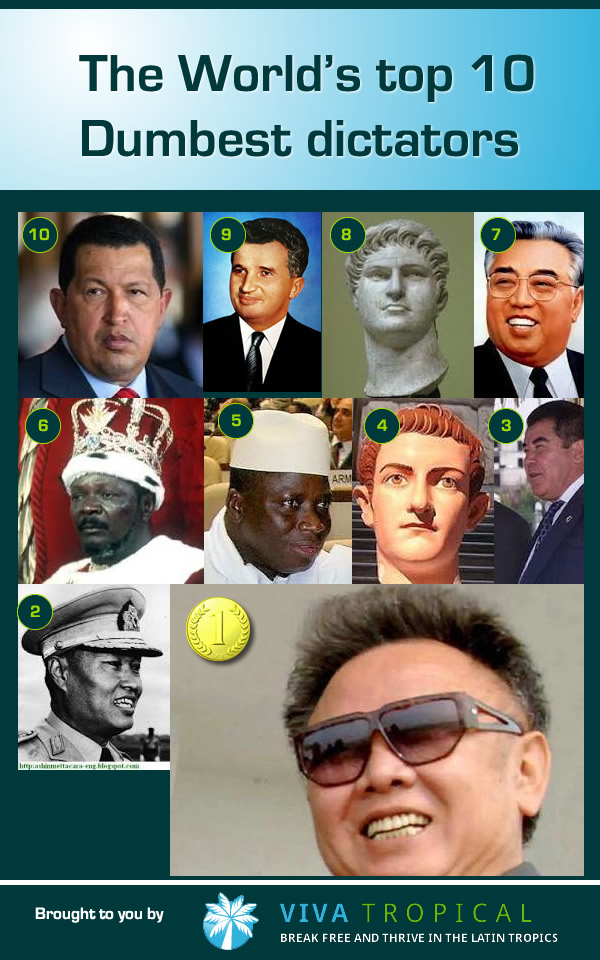
But the great thing is, you’re moving to somewhere which isn’t. To make the journey (pun intended) a little more light-hearted, today we bring you the list of the world’s Top Ten Dumbest Dictators, to show you what some countries dealt with before they realised that they too needed a change!
10. Hugo Chávez
While I know this is probably not-quite-PC (because he died recently) but a life like his cannot go by without admiring that which he did. The late President of Venzuela, Chávez ruled from 1999. And ruled he most certainly did.
My personal favourite jaunt of his was when he suddenly realised that Simon Bolivar (who died in 1830 of tuberculosis) did not actually die from TB but had, in fact, been assassinated. Now everybody and their sister has a small conspirator inside them, so maybe you’re saying ‘so what?’.
So what indeed…He decided the matter needed to be solved and ordered Bolivar’s remains to be exhumed. He then held a live Twitter feed throughout the exhumation (which he was watching) and tweeted ‘Bolivar Lives!’. He also asked Jesus Christ to bring him back to life (unfortunately, Christ didn’t seem to have much of a sense of humour on that one).
A level-headed man, Chávez logically worked out that the Haiti earthquake of 2010 was deliberately caused by a U.S. earthquake machine. This said by a member of the UN…
His supporters, ever loyal, are grieving his death (and will continue to do so until someone exhumes him back to life!).
9. Nicolae Ceausescu
Meet Romania’s 1965 communist dictator. A romantic man at heart, Ceausescu forced all Romanian scientists to include his illiterate wife’s name in their research. While this was obviously not grand enough of a gesture, he decided to build a palace in the capital. To fund this project (on which 700 architects and 20,000 workers were to work at all hours of the day) he exported all of the country’s agricultural and industrial production.
It took his people 24 years to decide that they didn’t want a leader that lead with his heart. They eliminated that problem: and executed the man (his sceptre still in hand!).
8. Emperor Nero
Good old Nero was a real mommy’s boy. I mean, the woman poisoned Emperor Claudius so that her son would become emperor. In true mommy’s boy fashion, he took after her. And over her. I don’t mean literally, because yes he technically was ruling over her, but over her life. He decided that her time was up.
So the next thing on his mind was how to do it. A creative soul, he rigged a chair with a weight to flatten her to death. And failed. Then he rigged a ship to sink, but she swam safely to shore. A sore loser, he dropped the creativity out the window (not rigged) and hired an assassin to get the job done. And that was that.
Surprisingly he became rather unpopular so he committed suicide leaving us all with the (humorous, but not to him) words: ‘what an artist dies with me’.
Moral of the story? No one dies when you’re too creative at it.
7. Kim II Sung
The best thing I can say about this man is that he had great pearly whites. His dentist must have benefited so well from this particular dictator, who’s mission was to make beautiful North Korea ugly by erecting over 3000 monuments of himself. He also made it mandatory for all North Koreans to wear a badge of him (do you think they had the dentist’s number on the back? I hope so).
He liked to refer to himself as the ‘Sun of the Nation’. I’m sure that was also teeth-related.
6. Jean-Bedel Bokassa
 Bokassa started off well. He was the president of the Central African Republic in 1966 (thank the French!). He was a good leader, and at some point this got to his head.
Literally, he went mad. He decided to create the Central African Empire to make himself Emperor Bokassa. No Emperor is complete without a ceremony, of course, which he modelled on the coronation of Napoleon Bonaparte. On this ceremony, he splurged a third of the national budget (yes, nearly $30 million!) and sent the country into bankruptcy.
Because of this bankruptcy children started to complain about the expensive school uniforms that they had to buy with his face on them. He sent them to jail, and had 100 children killed. Then, and only then, did the French decide to remove him from power.
5. Yahya Jammeh
Jammeh is still alive and kicking and you’ll find him kicking along in Gambia, if you’re looking for a miracle healer, that is. This dictator alleges that he’s found a cure for AIDS. Yes. A cure. And if you don’t believe it, he has a governmental agency dedicated to the cause: meet PTPG (Presidential Treatment Programme Group). From them, you can get a list of the local herbs that will cure this incurable disease!
4. Emperor Caligula
Some emperors lead by example. Some don’t. Caligula, the Roman Emperor, was one such man. For starters, he made his sister his mistress and then ordered Rome to weeks of mourning when she died. That was, no laughing and no bathing (for Pete’s Sake. How could you even think of bodily hygiene when your incestial Emperor is sad?).
He never loved another woman since…and so moved swiftly on. To horses. Yes. Caligula loved his horse. He treated him, Incitatus, like a mistress: he bought him royal clothing and treasures. He even made him into senator and later elevated him to the position of consul! (Yes. Rome had a Vice-President horse. Deal with it.)
Among his quirks was the time he declared war on Poseidon, the sea god. He had his soldiers collect seashells from the beach as their form of attack.
Still dealing with it? His guards couldn’t, and killed Caligula.
3. Saparmurat Niyazov
 Niyazov was the dictator of Turkmenistan from 1990 until his death in 2006. If you think his name is a tongue-twister you’d have your work cut out for you in Turkmenistan, because he renamed the month of January after himself, and ‘bread’ after his mother. His personal best was when he built an ice palace (an ice palace in his desert capital, that is)! He banned beards, he banned the practise of lip-syncing (sorry Beyoncé!) and he banned the chewing of tobacco (encouraging citizens to chew bones instead – better for your teeth you know).
The height of his career was when he wrote his book The Ruhnama (‘Book of the Soul’) – about how to live life. He said it needed equal respect as that of the Quaran. The difference between the Ruhnama and the Quaran, however, was that if you read the Ruhnama three times you would automatically go straight to heaven! To illustrate what it meant to go straight to heaven he launched a copy of the book into space in 2005.
2. Ne Win
Ne Win, was new in (see what I did there?) power in Burma through a military coup in 1962. A new man, he thought, meant a new currency. What better way than by changing the old currency to denominations of his favourite numbers: 15, 30, 45 and 90?! Obviously, he banned the old currency so everyone lost their savings along the way. He logic-ed this out (this and walking backwards on bridges, for instance) that this would make him live to be 90. He died at 91, but not before he was forced out of power.
1. Kim Jong II
And the Dumbest Dictator award goes to….North Korea’s Kim Jong II! Firstly, let’s look to what he was all about. He composed six operas, invented the hamburger and was the world’s greatest golfer. (Shooting 38-under par on a regulation 18 hole golf course, that included 11 hole-in-ones. Casual.) And that’s not all! He was also a global fashion phenomenon, was born under a bright star and a double rainbow (because being born under a bright star itself was far too mainstream-nativity-scene for good old Kim) and kidnapped South Korean director Shin Sang-Ok and forced him to produce movies (because the North Korean film industry was not making enough classics for him, it seems!). He also is the only recorded person ever to be able to change the weather with his moods.
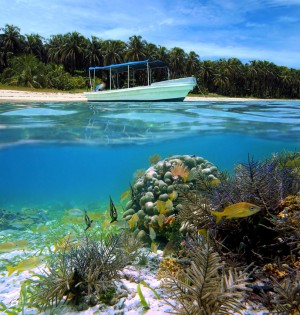
Go ahead, take your shoes off and dip your toes into the clear, aquamarine waters of the Caribbean..that’s what life is about in Caye Caulker, Belize. When you are here, you’re welcome to spend your days snorkeling, fishing, diving, or lying peacefully in your own hammock.
Life on this small, 5 mile long, island off the coast of Belize is all about being laid-back. Spend your day on the beach, explore underwater wonders, and dine on local seafood specialties. And despite growing tourism, Caye Caulker remains a small village with a distinct cultural flavor not necessarily found in large-scale tourist development.
Caye Caulker Airport
Small airplanes land on the only asphalt-paved airstrip of Caye Caulker Airport, and are continually shuttling visitors on a well-connected network of barrier islands. Or you may prefer to get to the island as the locals do, on a water taxi.
Once on the island, the main mode of transport is simply walking. The paths are well defined, and crossing the island takes 20 minutes at most. Bicycles and golf carts are also very common and can be easily rented.

As an expat, moving to Panama is a big step as well as a rewarding one. It’s so easy to just pack your bags and venture abroad. And yet, you should be aware that there are certain risks involved in settling overseas. Experts warn that there are a number of easy mistakes to make; here are some of the worst issues expats face when they first move abroad.
1. Expats Don’t Do Enough Visa Research
The first thing to consider when moving abroad is the rules of the country in which you’d like to live. Most countries require a visa for foreign nationals who wish to move there; check with the immigration department of the country for specific regulations. If you will be searching for a job upon arrival or working remotely for a company in your home country, you will likely need to enter on a tourist visa and apply for a more permanent visa when you are in country.
2. Expats Overlook the Little Things
Before you move, change your address with your bank and other financial institutions. If you will be moving frequently or if you need to keep a U.S. address, consider using a mail service, which will provide an address and receive your mail; some services will scan the envelopes and send you an email.
3. Expats Pack Too Much or Too Little
Depending on the length of your planned move abroad and your situation, you will need to pack differently. If you are planning to move for a long period of time, invest more in packing; you will need to ship your belongings. If you are moving abroad for a shorter period of time, consider packing less. Most necessities can be purchased abroad, and travel is easier when you are not burdened with piles of clothing and home accessories.
4. Expats Underestimate the Cost of Living
One of the biggest mistakes made in that first move abroad is to underestimate just how much it may cost to live in a new and unfamiliar country. The danger lies in the amounts that people tend to budget for food, utilities, and other essentials. Some countries are promoted as cheap alternatives to the U.S., but it’s not until the bills start coming in that the differences become apparent. The solution is to assume you will need far more than planned for in your original budget.
5. Expats Are Forgetful of Money Management
If you will be receiving pay when you are living abroad, you will need to open a local bank account. Check with your bank to make sure that your debit card will be usable overseas; if you have a PIN that is more than four digits, you may need to change it. Call your bank and credit card companies before you leave to alert them that you are moving so that unusual activity does not prompt an account freeze.
6. Expats Forget to Budget Moving Costs
When people first arrive in a new country, particularly if it is their first contract or posting abroad, the new and exciting surroundings often put them into ‘vacation mode’. For the first three to six months they want to absorb the culture and the bright lights of their new country of residence and they spend like they are on vacation.
7. Expats Are Sometimes Too Vulnerable
Research is essential, especially for self-made expats who have to figure out everything on their own. Not only do they have to struggle with red tape, but impostors may feel right at home among clueless strangers. Other people’s dreams of living abroad can turn into a lucrative business for con artists. One rule of thumb.
8. Expats Forget to Avoid Scams
Seek out the help of other expatriates, especially those who’ve spent a few years navigating the culture and bureaucracies. They have a wealth of knowledge that most are willing to part with to make your transition smoother.
The urge to spend your life sipping exotic drinks may be so strong that you are willing to do whatever it takes. However, if you use some common sense, you will eventually be able to enjoy your cocktail under a swaying palm tree after all.