


The decision to pack up and leave the familiarity of life in the United States in exchange for the freedoms of life in the tropics isn’t an easy one. Nor is it one to be taken lightly. Although some online quizzes may proclaim the ability to pinpoint your ideal destination in under a minute, you might be just as well served by haphazardly throwing a few darts at a map…blindfolded.
Now please don’t misunderstand. A light-hearted quiz might be a fun diversion during those last few long hours of a Friday afternoon at the office. And, if you’re like so many other Americans who desire a better life but have no idea where to start, it might be a first step in the right direction.
However, relocating overseas takes a lot of consideration and careful planning, not to mention some quality time spent in your potential new home to make sure it’s a good fit for you.
Below are some initial factors you might want to consider when deciding if…no, make that…specifically what part of the tropics is right for you.
What Can I Afford?
This is the number one question on most people’s minds when they’re considering relocating, so let’s just start there. When choosing a home in Latin America, cost is an important factor to consider. You may want to weigh out how the cost of living in various locations stacks up to that of the U.S or whether you would be able to get by on Social Security alone. You may find that some of your desired areas are more affordable than you think.
While the cost of living varies greatly from one country to the next, monthly expenses can run as low as $1,500 in countries like Panama, Ecuador or Nicaragua.
Just How Far Removed Will I Be?
Moving to the tropics doesn’t mean just leaving your home. It involves relocating to a place far from friends, family, and the conveniences to which you’ve grown accustomed. So, how hard will it be to get to where you want to go once you’ve found your tropical home?
Things you might want to consider when choosing your new address should include factors like how close the city is to a major airport. And then, how long is the flight back to the States when you do get ready to visit? You might also want to think about the proximity of hospitals, schools, or a business district where you can work, if you so desire.
What Are My Healthcare Options?
Healthcare is another factor to consider when making the ultimate decision of where to relocate. Like many other variables the quality and cost of healthcare can vary greatly from one area to the next.
But overall it’s quite good and seems to be improving. Many doctors have even spent time training in the U.S. and speak English well. Visit the Joint Commission International website for more information on accredited hospitals near your desired location.
There’s also the question of health insurance. While Medicare won’t be an option, there are other U.S. insurance policies whose coverage will extend overseas. In addition, most countries have their own national healthcare systems which are available to expats. Check in to all of the options available to you before you make any decisions.
What Type of Setting and Climate Suits Me Best?
Whether you’re looking for a beach retreat in a tropical climate or a mountain haven with four distinct seasons, a multitude of options awaits you. The same is true for those seeking rural relaxation or a bustling city center. This is where the importance of spending time in your desired area really comes into play. A lot of people like to vacation on the beach. Not everyone wants to live on one.
And, while owning your own island sounds magical, it probably isn’t right for someone who enjoys having access to a local convenience store that’s open all night. Think about what type of atmosphere it is that really makes you tick, and build your future around that.
What Will I Do When I Get There?
So, maybe you’ve seen photos showcasing the hiking and surfing opportunities throughout Latin America, and maybe you’re worried because those activities don’t interest you. The attractions, events, cuisine, and culture throughout Latin America are as varied as the cities that house them.
There’s no need to force yourself to fit into a mold that doesn’t suit you. Do your homework, and research the types of activities available in the area you’re targeting. Find the place with the lifestyle that speaks to you. Whatever your interests or hobbies, you’re sure to find a place that will accommodate them. Who knows? You might even pick up a few more hobbies along the way.
How Will I Fit In?
One final question you might need to ask yourself before diving headfirst into another culture is the question of how easy it will be to acclimate to your new surroundings once you arrive. What are the people like? Is there already an established expat community? Are the locals welcoming to outsiders? Will I need to learn a new language? How readily available are the foods to which I’m accustomed?
No matter how many other aspects match your criteria, there is no substitute for being just plain old comfortable in your day-to-day life. As mentioned before, spend some time in your prospective new community. Get to know the locals, the climate, and the culture.
You’ll know it’s the right place when it already feels like home.
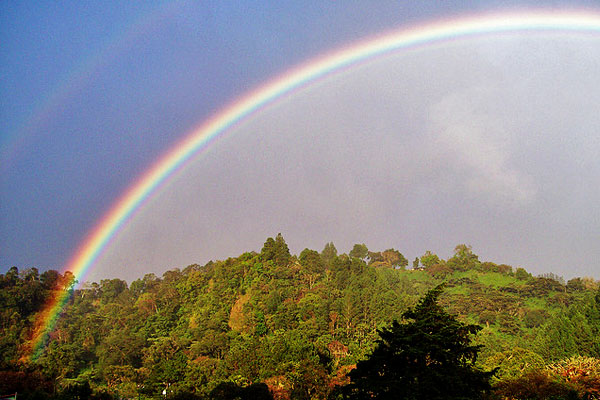
“You’ll never find rainbows if you’re looking down.” – Charlie Chaplin
Rainbows mean many things to many people. To some they are merely a meteorological phenomenon. To others, who subscribe to certain ancient myths, they serve as a bridge that connects humans to the gods. To still more they represent the promise of God’s preservation. In Irish folklore, the rainbow marked the hiding place for the leprechaun’s pot of gold. It was a mythical place that, since the rainbow is an optical effect that depends on the location of the viewer, could of course never be found. Or could it?
To residents of Boquete Panama, frequent rainbows are the product of the bajareque, a delicate drizzle that sometimes accompanies the north winds that blow down from the mountains. The rainbows arch, often in multiples, over the Valley of Flowers and Eternal Spring, aptly named due to the town’s vast array of exotic flora and its balmy weather that rarely registers above 80 or below 70 degrees Fahrenheit.
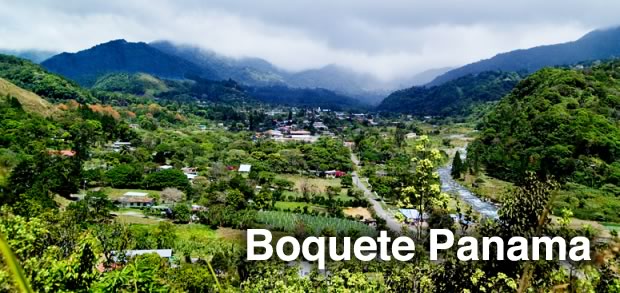
Situated in Panama’s highlands, Boquete is nestled into the lush mountains less than 40 miles from the border the country shares with Costa Rica. Located in the Chiriquí Province, the town (actually a group of six smaller districts) sits on the Caldera River approximately a half hour drive from the capital city of David and 340 miles from Panama City. Its elevation of almost 4,000 feet above sea level helps to alleviate the sweltering humidity experienced by some of its coastal neighbors.
Instead Boquete enjoys perpetual spring-like temperatures and breathtaking panoramic views of the surrounding mountains. With a population of less than 20,000, about as many as New York’s Madison Square Garden can seat, residents of Boquete enjoy the small-town atmosphere that so many expatriates seek when leaving their native lands.
Just in case you need any further convincing…
Here are a few of the reasons Boquete, Panama, may be the best place for you.
Its location provides endless sources for adventure.
For the thrill-seeker, the mountains around Boquete offer opportunities for hiking, such as the Sendero de los Quetzales trail or the ascent to the top of the Volcan Baru, a dormant volcano that is also the nation’s highest point. Rock climbing, zip lining, whitewater rafting, and horseback riding round out the list of other available action-packed adventures.
For the slightly more faint of heart, the above areas can also be explored by vehicle, although the country’s push for ecotourism would encourage exploration that leaves the least impact on the natural environment. Also offered are more leisurely tours of the local coffee plantations and rain forests, as well as trips to the hot springs of the nearby Caldera River.
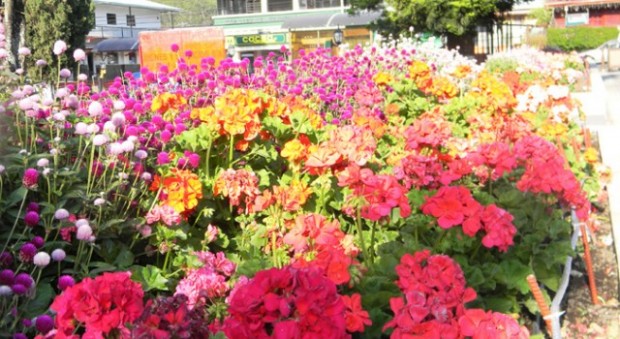
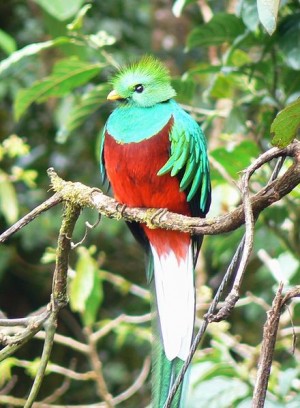
No matter what your preferred method of sightseeing, you needn’t venture far to enjoy the spectacular flora and fauna of Boquete. The mountains and forests boast an array of flowers: lilies, hibiscus, roses, carnations, sunflowers, and orchids. The region is also home to over 900 species of birds, including the Resplendent Quetzal which was regarded as sacred by the ancient Mayans.
The climate is perfect.
 Repeatedly named as a top retirement destination by groups such as AARP, Boquete, Panama, enjoys spring-like weather all year round. Perhaps the only thing that differentiates the seasons is the rainfall that occurs during the summer (roughly May through October) and ceases during the winter months (November through April). The combination of the moist climate and fertile, volcanic soil results in a rich agricultural bounty of coffee beans, strawberries, oranges, and much more.
Culture abounds.
The mountains around Boquete are home to the Ngobe-Bugle people. This indigenous group is comprised of farmers and artisans. They fashion chaquiras (bead necklaces), baskets, chacara (woven bags) and nahua (the garments of their native dress). Likewise the Kuna people are famous for their bright molas, a colorful textile art form.
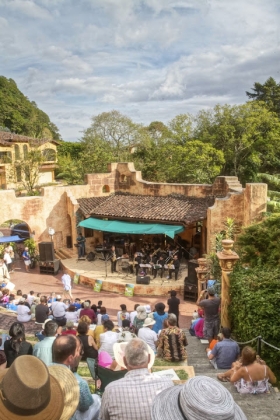
Boquete is home to a vibrant music and art community. The Boquete Jazz & Blues Festival is the largest in the province of Chiriquí. The Boquete Community Players, an expat theater group, was started to promote an appreciation of the arts and foster a sense of community among the expatriates. The group recently opened its new venue alongside the Caldera River. The organization also hosts the annual Chiriquí Art Expo.
Boquete’s arms are wide open to expats.
Panama’s Pensionado (Pensioners’) Program offers a lifetime visa for retirees, with little expense or hassle and no minimum age requirement. Pensionados receive discounts of up to 50 percent on entertainment, 30-50 percent on hotels, 25-30 percent on transportation, 30-50 percent on hotels, 25 percent on restaurants, 25 percent on power and utilities, and 15 percent on hospital and private clinic services.
Panama is pro-business and pro-investor. The country also has favorable corporate and personal tax laws. Foreign-earned income is not taxed, and new home purchases can be tax exempt for a certain number of years.
Others have already paved the way.
Due to an already-established community of expats, newcomers to Boquete will find many of the same conveniences they enjoyed back home. Essentials such as cellular phone service and high speed internet are readily available.
Organizations such as Rotary International and Lions Club International have established chapters in the area. These and many other philanthropic initiatives have been started by local expatriates. Through Animales de Boquete, they strive to control the animal population and improve overall animal health. A group called Amigos de Boquete feeds hundreds of local school children each day. Another organization called Buenos Vecinos collects food and monetary donations to assist the hungry and elderly.

It goes without saying that, no matter how spectacular the perks of a particular destination, it may not be everyone’s answer to the question “If you could live anywhere in the world, where would it be?”
Here are a few of the reasons Boquete, Panama, may be a better place for someone else.
The cost of living, while low, isn’t the lowest you’ll find in Central America or even Panama.
While still far less than the cost of living in the United Sates (60-70 percent less per some expats), the cost to live in Boquete, Panama, is higher than that of living in other mountain villages. However the old adage that ‘you get what you pay for’ may hold very true in this case. The prevalent amenities and luxurious accommodations available in Boquete do not come without a price.
That being said, the cost of living is STILL quite low. A modest 3-bedroom/2-bathroom home on a decent lot can be purchased for under $150,000. To rent the same property would run you in the neighborhood of $800 per month. A taxi will drive you across town for $1-2. A haircut costs around $5, and dinner for two with a bottle of wine will set you back a mere $30.

The mountains aren’t for everyone. Say, for instance, a beach person.
While Boquete is not ON the beach, it is near it. Panama is an S-shaped country that borders the Caribbean Sea on one side and the Pacific Ocean on the other. Slightly smaller than the state of South Carolina, the country is 110 miles across at its widest point. Boquete’s location lends itself to a view of both oceans from atop the Volcan Baru. So what you sacrifice in proximity, you regain in panorama.
The mountainous terrain also makes Boquete somewhat of a difficult place to access. Buses from David, the capital of the province, leave every 45 minutes. Flights from Panama City to David range from $80-$100. Taxis are available for local travel. However, the city of Boquete itself is very pedestrian-friendly. Also to be considered is the fact that the abundance of local businesses, such as grocery stores and even shopping malls, eliminates the need for frequent travel outside of town.
The well-established expatriate community may dishearten the would-be pioneer.
Those wanting to immerse themselves in the local culture, learn the language, and dress in authentic garb would have much preferred Boquete a decade ago. Today there are almost as many expatriates as there are Panamanians. Recent years have seen the addition of 1,000 homes, and the area now features over 10 gated communities.

On the flip side, this could also be regarded as a benefit to those who want to relocate to paradise without losing too many of the things to which they’re accustomed back home. For instance, the dollar is the national currency of Panama.
So now, over 100 years since the city was first founded on April 11, 1911, Boquete, Panama, has become a mecca for international tourism and a magnet for refugees from all across the globe. A bowl-shaped valley tucked into the mountains of Panama’s highlands, it is a true cultural melting pot and, until recently, one of the region’s best-kept secrets. With a name that means “gap” or “opening” in Spanish, perhaps it’s no coincidence that the town was first founded by gold-seekers who were hunting a shorter and faster route to the Pacific. Who knows? Maybe those leprechauns were onto something.

Whether it’s best suited for you or more appropriate for someone else, there is no doubt that Boquete, Panama, is indeed a treasure. If Boquete is the home away from home of which you’ve always dreamed, we look forward to seeing you. If your search for the destination of your dreams must continue, we wish you the best. May the road rise up to meet you…
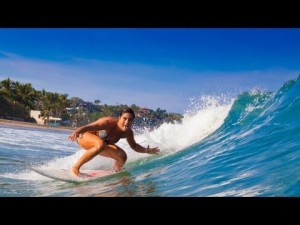
Sayulita may be a growing tourist town, but don’t worry, it isn’t a tourist trap. This sleepy fishing village offers up incredible beaches, lush jungles and a taste of rural Mexico. Located on the Pacific coast of Nayarit, Mexico, this pueblo is slowly gaining popularity with expats, but more importantly, it’s packed with fun.
Here’s just a sampling of what you can do
- World Class Surfing
- Humpback Whale Watching
- Sea Turtle Releasing
- Sea Fishing
- Great Golfing
- Jungle Biking
- Boating
- Snorkeling
- Beach Lounging
- Eat a world famous Sayulita Fish Taco
Don’t worry, surfing and water sports isn’t all there is to do in Sayulita. But you will like it here if you’re into being outdoors. There are some nice trails to run, mountain bike, or just hike. You can even take a casual walk to your own private beach – great places to watch the sunset. Oh and don’t forget to try a fish tacos.
Are you a high roller home owner or a jet setter? Maybe you’re a bit of both! Check out our infographic and decide What kind of expat you are!


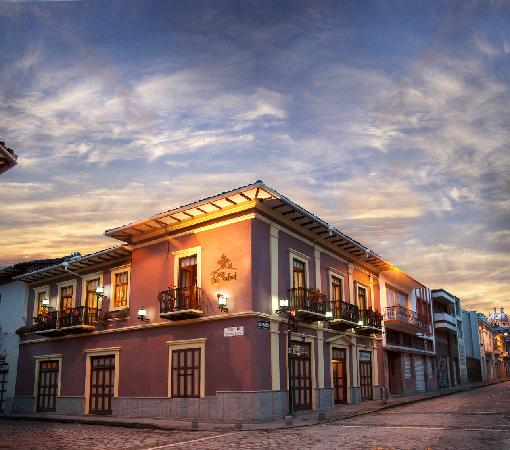
Affordable Cuenca, Ecuador
Thinking about making the move abroad and wondering where is the best location for a soon-to-be expat? Your answer might just be Ecuador, the newest hot spot destination for retirees and expats wanting the good life without the financial stress.
Ecuador is the world’s best place to retire overseas on a retirement budget. Here you can live better than you do in the U.S. for less money. The cost of living is low, and the cost of real estate is one of the lowest for Latin America. With monthly estimated living expenses ranging from $900 to $1,400, Ecuador surpasses Panama, Mexico, and Costa Rica.
1. Real Estate in Ecuador Is Affordable
If you want to call Ecuador home for good, the process of buying a house is straightforward. Real estate prices are still relatively low. Some expats find it is still possible to build new residential construction for under $100 per square foot. But remember, this is local construction… cement or red clay brick. There is almost no wood construction in Ecuador.
2. Getting Around Ecuador Is Cheap and Easy
Most expats find getting around Ecuador easy; most choose to ditch their cars and use public transportation or walk. Ecuador also has a good mass transit system. Quito, the nation’s capital, is well-equipped with buses and taxis, most of which are constantly available and cost an average of $1.00 per hour of travel.
3. Ecuador Offers Great Health Care
Most expats are pleasantly surprised with the medical system in Ecuador, especially the quality of care. Medical costs are one-tenth of what they are in the States and the hospitals are state-of-the-art and offer many healthcare options for expats.
4. Latin American Cuisine at Its Best
So how’s the food? One would be hard-pressed to go hungry in Ecuador for lack of options. In Quito and Guyaquil, you can get any type of food in the world; while outside of the city, local fruits and vegetables are in abundance along with chicken and pork. As one moves closer to the shore, the cuisine varies slightly. The same fresh fruit and vegetables are complemented by a huge variety of fresh fish.

5. American Culture
As much as an expat retiree may want to get away from it all, a little homesickness is inevitable from time to time. Ecuador’s English-speaking expats along with other English-speaking people and American franchises, is enough to ward off homesickness should it arise. Cuenca is a popular mountain town, which now has a few thousand English-speaking expats living there.
6. Ecuador’s Currency Is the U.S. Dollar
One thing to remember about Ecuador is that this country uses the U.S. dollar. For an American expat, this means it’s easier to understand what things really cost; it’s easier to keep track of your spending; and, very important, you avoid any currency-exchange risk. You may still have local inflation to contend with, but you won’t have to worry about that being compounded when the exchange rate goes against you.

AJ Smith is an architect from the U.S. who is building a project on Boca Chica Island, Panama for a client. He recently returned from a fact-finding mission in Asia where he studied techniques and styles used there for building exotic and inexpensive dwellings. We thought our readers could get some value from hearing about what he learned overseas. The article is focused on Boca Chica Island, but there is still a wealth of knowledge and perspective for anyone building in the jungle environment. Enjoy!

AJ Smith
1. What techniques have you found that could reduce cost and or beautify a project on Boca Chica Island?
Simple Balinese rooflines can be a great addition to Boca Chica Island. In some cases the roof also becomes part of the wall so there is an efficiency of material but it also becomes the most prominent feature of the building giving it a definitive island style. With many repetitive members, the technical difficulty of construction is reduced. If you are trying to achieve longer spans, site built trusses composed of smaller members can help reduce the need for lots of labor and hoisting equipment.
2. After touring Bali, what materials would be the most cost-effective for a project on Boca Chica Island?
I believe concrete, concrete block, milled timbers, bamboo, and natural roofs can all be cost-effective materials to use on the island. I had initially been hesitant to use concrete because the logistics of mixing large quantities and pouring onsite without the use of heavy machinery seemed daunting. After visiting the Gili islands, a place with no motor vehicles, only bicycles and horse carts, I saw this would not present much of a problem. A great deal of the structures I saw were primarily made of concrete and concrete block. They are able to mix and pour large quantities of concrete by creating mixing pits and careful coordination of lots of manual labor. One of the most impressive examples I saw was a 30 meter long pool poured without a single cold joint.
Many of the wall and roof structures I saw were all composed of small- to medium-sized framing members. Milled timbers generally created the primary structure while bamboo was a secondary framing member. It creates a very clean and simple look that has a strong tropical esthetic. By utilizing this style of framing you can avoid the cost of locating, sourcing, transporting, and erecting large timbers.
Natural roofs were a common feature almost everywhere I traveled in SE Asia, employing a wide variety of materials. In Bali they use a thin light grass that has a very appealing feathery look. In Cambodia they use a short wide leaf, in Thailand a coarse palm leaf is common. I’d like to experiment a bit with palm and grass roofs in Boca Chica to try to achieve a similar look and life span I saw throughout SE Asia.
3. Any new, exciting concept you came across in general that you are excited to try?

AJ Smith
One of the most interesting things I saw was the Lumbung style house. These were traditionally used in agricultural areas for housing and rice drying. They are characterized by a raised pier foundation, an arched grass roof that serves as the walls as well, and are open on two sides. I saw a huge amount of adaptations of this style for bungalows. Subtle differences in roof lines and the addition of short walls create a multitude of layout options and customization. I believe they can be built quickly and inexpensively on Boca Chica but still greatly reinforces the island feel many are seeking. Since researching the structures, my client and I have decided to build a small lumbung bungalow first as we prepare for the larger more technical structures of the project.
4. In Bali you see lots of intricate craftsmanship, was there anything that jumped out at you to try in Panama?
There is amazing woodwork and craftsmanship in Bali. I was particularly drawn to the carved wood screens, paneling, and ornamentation. I would really like to use carved wood screens on some of the open aired structures we will be building as well as some of the ornamental ridge caps. I worry that finding the same craftsmanship in Panama may be difficult. We’ll have to see what our local labor source provides. We may just go with more straightforward elements to simplify the building process. I also researched prefab architecture while I was there and visited a few building centers. Prefab can be a great solution for the island to bring in a high quality of construction but it is not the cost-effective solution. In Bali they will fully build, disassemble, label, package, and ship any design you give them. The main benefit to this would be a quality building, with a high level of craftsmanship, which could be assembled onsite quite quickly. The local labor pool could then focus on assembly rather than having to either find or train them to execute the more intricate joinery and woodwork. Another less expensive option utilizing prefab would be to build the majority of the project onsite using local materials and import select prefab elements like a roof and its framing members, or wood screens, paneling, and doors.
5. If you were your client what would you want to build? (Explain your dream idea for the island.)

AJ Smith
For myself, I would start out very simple and basic but with lots flexibility for future expansion. We are still waiting to see how Boca Chica Island develops. As it begins to become more of a tourist destination I think it’s important to have the ability to adapt and encourage tourism.
My idea would be similar to the project we have planned. I would build a large open aired palapa with a kitchen and bar as a main place to hangout and a small one-bedroom bungalow with a full bath. This would give me the flexibility to add components as I see fit. The addition of a pool and more bungalows would probably follow soon after.
6. Are you taking clients? If so how can people reach you?
I’m always interested in speaking with prospective clients especially those interested in building something off-grid and in remote locations. They can contact me directly via email at [email protected] and see our body of work on our website www.forsitestudio.com
7. We get lots of questions about building in the jungle and how to create space without destroying the environment. Do you see this as a problem? How do you approach this challenge?

AJ Smith
The jungle is a huge natural amenity on Boca Chica and every site is unique because of the power of the landscape. My approach to building within the jungle is similar to remodeling a house. The canopy is your roof, the existing trees and vegetation are like walls, and your views are like windows. You work within the existing conditions to optimize your experience. It is necessary to maximize the shelter and shade created by the canopy but still create good flow within the space beneath. Large old growth trees are a means to organize space within the jungle. The location and design of the buildings directly respond to preserving the old trees while landscaping and pruning begin to define space beneath them and open up views to the surrounding landscape, ocean, and mountains in the distance. Through careful consideration the jungle becomes a great natural amenity creating privacy and a sense of intimacy within the site while at the same time it can create direction and awe to the scale of the expansive setting that surrounds the site and island.
8. The jungle has it own challenges in regards to maintenance, how would you combat this with design?

AJ Smith
Regular maintenance is unavoidable given the site and its remoteness, but thoughtful design can keep maintenance to a minimum. Wood-destroying insects are a primary concern in Central America. A raised pier foundation capped with termite barriers can help prevent termites. Regular spraying can be effective as well.
Careful landscaping directly around the home site can also help reduce maintenance. The jungle is always fighting to reclaim its space so clearing the more evasive rapid growth vegetation and replacing them with ornamental and beneficial plants can help a great deal in controlling animals and erosion.
We know that all projects on the island are going to be exposed to the elements. Wind, rain, and sun can all take their toll on a building. Use of quality materials such as select hardwoods, robust roofing, and high grade sealants can substantially reduce the long-term maintenance required to keep a project beautiful.
Another thing to be mindful of is that the buildings here may be uninhabited for long periods of time. Security from intrusion and the elements should be considered. By utilizing sliding screens, shutters, and other techniques the buildings can be locked down while unoccupied, minimizing potential damage and then quickly opened up when the occupants return.
9. Do you think AC is must have?
I do not think AC is a necessity. A well-designed home can be quite comfortable year-round given the island’s location and the prevailing winds. My preference is to have AC in the bedrooms as a place to retreat on the hottest days with no wind but it may not be utilized the majority of the time. In the end it really depends on the client. If they feel the need for an entire home that is climate-controlled then the power system can be designed to handle the load.
10 How do you think about the energy needs of a project vs. the design? What is the process?
The performance of a building directly corresponds to the amount of energy that is required to comfortably occupy it. We look first at passive design which will optimize the performance of a building before we introduce any active system (power, hvac, lighting, etc.) In the passive design phase we look at regional weather, the sun’s path of travel, and the immediate building site (tree cover, topography, etc). All of these variables then directly inform the design. Window and door locations that capture prevailing breezes and allow for good daylighting, roof overhangs that prevent sun from directly entering the home during the hottest months of the year, and how the home sits on the site to maximize cooling from the existing landscape are all effective ways to implement passive design. The building envelope also is a primary concern. Solid wall and roof composition, good insulation, and high quality windows and doors all directly affect the building envelope and its performance.
Once we feel the home performs as well as it can passively, we begin to look at introducing active systems as minimally as possible. Luckily, in recent years there have been huge steps taken in energy efficient components. We utilize DC power where possible, LED lighting, appliances specifically engineered for off-grid living, and variable speed HVAC systems. By using current technologies you can greatly reduce the power demands of a project and in turn decrease the size and cost of the power system needed as infrastructure.