


Deciding in which Central American country you would like to live and spend some or all of your year, requires very careful thought and planning!

5 Luxury Homes in Central America
To give you an idea of available luxury property for sale, we briefly compare four very different Central American countries and showcase 5 different properties in Honduras, Costa Rica, Nicaragua and Mexico.
Nicaragua is a country of lakes and volcanoes and will be the site of the second trans-americas canal bringing shipping from the Caribbean through to the Pacific.
This will bring prosperity and jobs and Nicaragua will change, in the same way that Panama adapted to its world class status over the last hundred years as a result of its Canal.
Nicaragua has some beautiful resort and residential developments on the Pacific and on the Caribbean coasts, as well as farms and homesteads for sale in the countryside.
Costa Rica is a small country which is on target to reach its carbon neutral status by 2021, and it is the first developing country in the world to trade in Carbon Credits. Costa Rica has long been a country conscious and proud of its environmental heritage and takea its countryside stewardship very seriously. The country has a big international residential sector mainly along the coasts and it is known more for its green boutique hotels than large world class developments.
Honduras is a country of political contrasts, and the offshore Bay Islands are somewhat different from the mainland. They are tourism centric, sophisticated and are home to many world-class tourism developments. The large number of international residents bring wealth and growth to these islands.
Mexico is the 13th largest country in the world and the 11th richest. It offers something for everyone and is the most connected by sea and air of all the Central American countries other than Panama. Geographically and culturally Mexico perhaps has more choices to offer than any of its smaller neighbours, and for the more cosmopolitan visitor and expat its a great destination.
Costa Rica Estate for Under $1 MM
A charming, private estate a few seconds walk from the sea in Punta Uva, Costa Rica, is on the market for just under $1 Million US. A quiet countryside spot, this will suit an owner looking for peace and tranquility and lots of space.
The main house comes with verandahs, galleries and a pool and jacuzzi. The guest house and caretakers house are each fully fitted with a bathroom and a kitchen. All three homes are finished with the most beautiful local woods including teak. The mature tropical gardens meander down to the white sand beach.

Costa Rica Estate for Under $1 MM
Mexico Riviera Maya Luxury Managed Condo $275,000+

Mexico Riviera Maya Luxury Managed Condo $275,000+
If you are looking for a vibrant night life, somewhere to lay your hat and go out to play then this is a great solution in Mexico.
Once a place of small fishing villages, the Riviera Maya coastline has since been developed into a modern tourist corridor offering the very best of high-end luxury resorts, fine dining, nightlife, spa retreats, shopping and golf in Mexico.
1, 2 & 3 bedroom managed condos in a luxury resort condominium with 5 Star restaurant, just steps from the beach.
You can come and go as you please, earn a rental when you’re not there, and never worry about your investment.
Nicaragua San Juan del Sur Luxury Home Under $500,000
An interesting, unique architect designed home with swimming pool and beautiful views over Nacascolo Bay. Just 10 mins drive to the town of San Juan del Sur, and yet situated in the quiet countryside.

Nicaragua San Juan del Sur Luxury Home Under $500,000
The house has an interesting brick ceiling and the focal point is the flow of water, with a 50 ft X 15 ft tear-drop shaped swimming pool with two in-pool seating areas. The pool is surrounded by flag stones and lined completely with lovely mosaic Spanish tiles. A water fall system that originates in the centre of the home, cascades into the pool. The living spaces wrap around the visually warm dining room which is open to cool breezes during the heat of the day.
Costa Rica Nosara Luxury Villa in a Gated Community Under $1 MM

Costa Rica Nosara Luxury Villa in a Gated Community Under $1 MM
Nestled within a gated community is this secluded villa and guest cottage, offering clear ocean and mountain views. It includes a swimming pool and is within 5 minutes of the beach and airport.
This is another managed property that comes complete with friends and neighbours and the security of a gated community, whilst also being great investment. The property includes a main house (consisting of 3 bedrooms), a rancho with pool table, garage for 2 cars and a 1 bedroom guest cottage.
Honduras Bay Islands Affordable Luxury Investment Home $250,000 USD
The final property is a highly investable charming 4 bedroom, 2 bathroom house, arranged as two separate apartments, set within 0.14 acres of landscaped gardens. This is comfortable luxury at a really affordable price on the small Caribbean island of Utila, where the diving is world famous and there are many tourist resorts.

Honduras Bay Islands Affordable Luxury Investment Home $250,000 USD
Located in a residential area in a quiet part of town, the home has a leisure pool and is at the end of a concrete paved private cul-de-sac road surrounded with secure 6ft high coral rock perimeter walls. The two apartments are being sold fully furnished along with a four wheel drive vehicle. This is really a turn-key occupation!
Five very different properties, all with a touch of luxury Central American style! Happy house-hunting!
Editors Note: The following guests post was by Deb Andrews, Editor and Social Media Queen for http://www.caribbeanlandandproperty.com/blog Love writing about Caribbean life and living, most especially our fragile environment.


Viva Tropical
Editors Note: Todays post was written by Andrew Henderson. International entrepreneur. Citizen of the world. Free man. Andrew Henderson is the Nomad Capitalist, traveling to dozens of countries each year to inform his readers about offshore banking, living overseas, international businesses, and other top secret manly pursuits.
James Bond is near the pinnacle of manliness. As the cliché hoes, men want to be him and women want to be with him. Suave and unflappable, he crisscrosses the globe in luxury, using phony overseas companies and passports as cover, maintaining an international network of contacts, and dating exotic foreign women.
He knows the value of the world on a string. His job demands it.
You can learn a valuable lesson from James Bond. In an age when the manly art of sound fiscal management has become a lost art, I’d like to suggest you brush up on the financial tools used by über manly spies and everyday men alike. Chief among them: the offshore bank account.
You don’t have to work for MI6 to have some dough offshore. While Hollywood has suggested that the only people engaged in offshore banking are tony art thieves cavorting along the Swiss Alps and wispy-moustached drug runners fleeing to Panama, the reality is anyone can have an offshore bank account.
Best of all, it takes as little as $100 to get started, and it’s legal when you take the right steps.
Offshore banking is all about diversification. For as long as humans have been subject to government, men have positioned their assets out of the hands of greedy kings and feudal lords. They built countless castles to protect their treasure going back centuries. These days, with the global financial market turned on its ear, diversifying your assets is a prudent move.
Why bank offshore?
To protect against “taxes”. Now, it’s next to impossible to hide money in your offshore bank account or avoid taxes. And I don’t recommend it; the fines and penalties Uncle Sam will slap on you if caught are outlandish. No, the kind of taxes I’m talking about are the ones you don’t know about yet: wealth taxes, retirement account taxes, and general wealth confiscation. Blue-chip countries like Ireland and Hungary have dipped their fingers into their citizens’ retirement savings when they “needed” the money. In the United States, Congress has dropped one IOU after another into the Social Security lockbox for years. Having money offshore (and not in an easy-to-grab IRA) means it’s a lot harder for them to impose a “tax” – read: theft – on your assets when they’re in dire straits five weeks from now.
Cyprus. One day, you have $100,000. The next day, you don’t. Or at least you have less. While banking officials in Cyprus eventually caved in and imposed a “wealth tax” that hit larger savers the hardest, they were more than willing to clip ten percent off everyone’s accounts. Legislators in Canada are now pushing a budget bill that would allow depositors to take the hit if banks go under. The whole government safety net is a lie.
It’s cool. Imagine you’re talking to the leggy blonde in the little black dress at your next cocktail party. You casually drop, “I was talking to my banker in Hong Kong the other day…” into the conversation. Instant cool. As the business lead who called my teenage home when I was at school told my mother, “what, he’s only 16?! He sounded like a billionaire!” No one has to know whether you have $500 or $500,000 in your offshore account.
As one who travels to a dozen or two countries a year, I have plenty of opportunities to open bank accounts in other countries. But what if you’re stuck in cubicle-land or chained to your desk working for the man?
How to Get Started
There are ways to open an offshore bank account from your couch. First, you need to decide what type of account you want. Do you just want to move part of your savings? Are you looking to diversify into a foreign currency? Perhaps you want to own gold overseas? You can do all that and more. Banks in other countries are amazingly more full-featured than those in the United States.
If all you want to do is move a few bucks somewhere else, you can do that with a multinational bank like HSBC. If you have enough money, they’ll open a “Premiere” account for you in your home country, then allow you to open other attached accounts in whichever other country you choose. You’ll get a personal banker in each country and no fees when transferring money through their system.
If you don’t meet their minimums (often $20,000 to $100,000), you have two options. One is to visit the country where you’d like to open an account. First, realize that the old-hat places that successful men of yesteryear relied on are largely gone. Switzerland has all but shut out Americans, and their continued defacing of their bank secrecy laws means you wouldn’t want to bank there anyway. Liechtenstein, Luxembourg, and many of the other old-money European jurisdictions you’d expect to find someone walking around with secretive briefcase in hand are largely inaccessible to non-resident foreigners.
The one exception is Andorra. Landlocked between France and Spain, it’s a tiny principality that still does banking old school. This is as close to old-school manliness as you’re going to get. There are about half a dozen banks mostly still run by the original banking families that started them. Huge mega-banks are kept away there, which means Andorran banks have been able to maintain huge capital ratios. Some of these banks are tight-lipped about their restrictions, but a reasonable chunk of cash will get you in. But you have to visit. Fly into Barcelona, mingle with some Catalan girls on the beach or head to the south of France, and make a weekend out of it.
Singapore and Hong Kong are also two stable jurisdictions that are open to foreigners. I met a banker on the street who said she’d open a savings account for me with $1. While many offshore banks offer foreign currency accounts, these two really take the cake. If you REALLY want to feel like a manly spy, open your account in Swiss francs or Chinese yuan or New Zealand dollars. Do your research on the best currency and go for it. You can even open an account denominated in gold in some countries like Mongolia or Malaysia.
And if you’re really adventurous, consider opening an account in a far-flung place like Mongolia or Ukraine, where interest yields in local currency can top 15%. Of course, a little discretion goes a long way. Countries with confiscatory dictators or regimes sanctioned by foreign governments: bad. Countries where banks need more money to lend to growing businesses: worth considering. In a few of these cases, you can also open an account from your living room, notably Mongolia.
Manliness is about defying convention wisdom
Moving some money offshore where you can diversify your sovereign risk is a prudent move. Most banks in established places have deposit insurance just like the FDIC, but make sure to check in each country and know the risks. It’s not like the EU or the US is the safest place in the world to bank, anyway. (The US is 40th, actually.)
Being well-traveled is a positive trait in a man, so I encourage you to find a stable country that interests you and check out their banking. There’s nothing un-manly about spending a week in Hong Kong hiking, meeting exotic women, gambling in nearby Macau, and buying gold or opening a foreign bank account.
Every country has their own reporting requirements for tax purposes, so make sure you’re in compliance. In the US, that means a couple different forms each year if your account values exceed a combined $10,000. Remember, you’re not trying to hide money; you’re trying to protect it. After all, it’s hard to keep your well-coiffed glow behind bars.
But play by the rules and you’ll be on your way to outpacing The Most Interesting Man in the World. You think he keeps all his money in a low-interest checking account at Wells Fargo?


Jason Mrachina
Editors Note: Todays post was written by Andrew Henderson. International entrepreneur. Citizen of the world. Free man. Andrew Henderson is the Nomad Capitalist, traveling to dozens of countries each year to inform his readers about offshore banking, living overseas, international businesses, and other top secret manly pursuits.
I was all alone on the streets one day. Literally, it was just me. The weather was hot and balmy. Even in a T-shirt, I could feel the sweat sticking to me.
There was no place to buy a drink. Nowhere to sip from a drinking fountain. It was just me and the open road.
For on Friday afternoons, all of Bandar Seri Begawan – the Sultanate of Brunei’s only real city – shuts down by order of the Sultan. Every business is required to shutter for Friday prayers. And the streets are literally desolate.
To be honest, I just might get put in jail for writing this.
But for those who need to understand just how important diversifying your assets offshore is, your reading this information just might be worth it.
The Sultan of Brunei personally owns every inch of land within his tiny kingdom. His face adorns every single scrap of currency and every coin. He rules, despite having a constitution in place, with absolute authority, getting sweetheart deals for his family members and screwing foreign investors.
Can you imagine keeping your money in a country where speaking out against a Sultan could result in your assets being frozen?
On the other side of the world, Argentine president Cristina Kirchner has pulled out all the stops to wipe away any semblance of economic freedom in her country.
She’s forced people to turn in their US dollars and hold pesos, which are inflating at 30-100% a year. She’s snooped on credit card purchases of Argentinians who travel abroad to make sure they’re not moving money. She’s imposed almost every capital control you can imagine.
And, like the Sultan of Brunei, she is perfectly willing to throw people in jail if they disagree with her freedom-sucking policies. She bankrupts her own citizens, and economists who speak the truth get thrown in the pokey.
Meanwhile, the Vietnamese government is considering the world’s next great gold confiscation. In a country where the people shun the free-falling local currency in favor of keeping hard assets at home, the government needs something drastic to stop the bleeding and “stabilize” their currency.
The examples of wealth confiscation go on and on; the scope of the excuses that birth them is as wide as the list of countries who have tried to pull them.
Cyprus. Hungary. Thailand. The United States.

Fabo Lens
Each of us has the good – or not so good – fortune of being born between a couple of imaginary stripes on a map politicians call “borders”. It used to be, the United States was the best place to be born. They actually do a study.
These days, the US barely cracks the top twenty, alongside bastions of freedom like the United Arab Emirates. (At least the UAE has real economic growth prospects.)
Along with that sliding ranking is the ranking of bank safety in the United States. In 2008, US banks were ranked 40th most stable; UK banks came in right behind them at 44th.
Yet those lines we’re born between give us a sense of comfort. For some reason, we believe “our” country offers the best opportunity. It’s what we know best, and that makes us feel safe.
The reality is, just like Brunei, or Argentina, or Vietnam, chaos can strike at any time. Freedom isn’t exactly on the upswing in the United States or much of the western world. What is on the upswing is politicians saying “you didn’t build that” as an excuse to take money from your bank account for a “bail-in”, steal off the top of your retirement account, or confiscate your gold to “stabilize” the currency.
You may think “it can’t happen here”, but that’s exactly what people in all these other countries thought. Think of how many tragedies throughout history could have avoided if people thought “it CAN happen here.”
As a perpetual traveler who spends time in dozens of countries, I can tell you that your country – even if it’s the #1 world superpower – is just another country to the rest of the world. There’s no magic pixie dust that makes your banks safer, your money better protected, or your politicians less capable of theft.
My knowledge of this fact is why I recommend offshore finance to anyone with assets they want to protect.
It doesn’t have to be a lot. Heck, you can open offshore bank accounts with a few hundred dollars. To some people, a few hundred or a few thousand dollars may be able to give them a fighting chance if something happens to their bank account at home. For others, a more intricate plan is required.
Politicians and the media in their back pocket want you to think “offshore” is a dirty word. When Mitt Romney ran for President of the United States, the media took aim at his “evil” offshore accounts as evidence he was “unpatriotic”.
But patriotism has nothing to do with it. Your government doesn’t really care what happens to your money. They care about maintaining power.
Show me an example in history where governments did anything for their people when the currency collapsed, inflation devalued their life savings, their gold got confiscated, or their retirement account got seized.
I think you know the answer.
The reality is, there are countries that offer greater economic freedom than your home country. Countries like Singapore and Hong Kong have built themselves from muddy jungles into economic powerhouses because they’ve offered a better way to bank and invest.
Small countries know they have to be easy to work with, or else their economic engine could come to a screeching halt. Recently, for example, Singapore announced it wants to be the best place in the world to store gold. As part of that initiative, they’re working to increase gold holdings within the country by more than five-fold in about as many years.
They won’t accomplish that by telling people “they didn’t build that” or using Sultan-like tactics to make life difficult for people.
The bottom line is that you never know what could happen in one country. It’s easy to think you know your country well enough to keep your money safe, but take one look at Cyprus and see just how easy it is for you to be shut out from accessing your money.
Instantly. With no recourse.
Offshore banking is about diversification. You wouldn’t hold your entire net worth in one company’s stock. Or own mutual funds that only invested in one sector of the economy.
Yet you may be committing what I believe is the biggest diversification error of all – geographical diversification.
While the idea of offshore finance sounds risky, the easiest way to get started is by merely opening a bank account in another country. Nothing crazy about that.
Many offshore banks have much higher liquidity ratios than American or Canadian banks. Some banks in Andorra have ratios as high as 30%. That means they’re not teetering on the verge of insolvency, waiting for one bad loan to break them in half.
In Hong Kong, banks are turning away business because they’ve got too much money. They don’t need westerners money unless said westerner has a relationship with an existing depositor. It’s not worth their hassle.
That’s because wealthy Chinese are flocking across the border to put their wealth in Hong Kong banks. Give the Chinese credit: they know enough not to trust their government to keep their money safe. Having been to China many times, I can tell you it’s more capitalistic than the US in many ways. Even so, the Chinese haven’t bought the government propaganda the way most westerners do.
Banks in places like these are stronger and take far fewer risks than many western banks who had to be bailed out by the nanny state. While it may seem “risky” to deposit money offshore, it can actually be far less risky than depositing it in your home country if you know what you’re doing.
The world is a wide open place. Plenty of people far from where you live have plenty of money and they, too, want to keep it safe. I can assure you this: the vast, vast majority of them aren’t putting it in the same banks as you.
And their money is just fine.

Many people move to the tropics of Latin America in search of a healthier lifestyle in nature, however making this transition can be difficult.
The abundance of fried foods and sugary processed treats and lack of health food stores and gyms can in fact lead some to live less healthy than they did in the first world. So how can one be sure to live healthfully in Latin America? Here are some tips to consider.
Grow your own food or shop at the Farmer’s Markets

Kevin Krejci
Did you know that Costa Rica is one of the top users of pesticides in the world? Immersed in the jungle we may simply assume that all of our produce is fresh and local.
Unfortunately this is not always the case. In fact even coastal towns may be selling frozen fish from as far away as Asia! For this reason it’s particularly important to ensure that your food is coming from local fishermen and farmers. Many towns with expat communities have farmer’s markets and community-supported agriculture programs. Why not hop on board?
It’s a great way to connect with your community and the environment. Many locals and transplants sell farm fresh produce, dairy, homemade cheeses, whole grain unprocessed bread, even probiotic rich kombucha.
In health-conscious towns throughout Central America including Nosara and Puerto Viejo in Costa Rica and Boquete in Panama, expats have created their own markets for sharing health foods. Some sell organic produce from their own gardens and import specialty items like essential oils, spices, himalayan salt, and more.
You can also learn to grow your own food and many communities have garden shares where you can learn from others and share farming space. Your meat and fish can be purchased from local fishermen and hunters, or why not take up fishing as a hobby and catch what you need?
Find healthy hobbies
With a big transition it can be difficult to maintain your workout routine. When the sun is shining the gym may be the last place you want to be, if the town even has one. The good news is that there are tons of healthy, athletic outdoor activities you can partake in that are also plenty of fun.
If you’re on the coast take up surfing, go for runs on the beach, learn stand up paddleboarding, take hikes and connect with nature.
If you’re in the city ride your bike to get around, participate in yoga classes, and find some nearby wilderness to explore. One of the great advantages of living in Latin America is that nature is never far away, so seek it out and move your body at the same time. You will likely notice that outdoor activities are easy to integrate into your lifestyle here.
Drop the “vacation” mentality

Chi King
Feeling like you’re on a permanent vacation is great, so long as that does not become a life of unhealthy indulgence. Cocktail hour, hammock lazing, and meals out in restaurants are all treats that can make us feel relaxed and pampered.
However, in excess they can make us feel sluggish and demotivated. Can daily yoga, sunset gazing, cooking a healthy meal on a beach bonfire, and jungle exploration feel just as decadent?
Absolutely. The point of retiring and getting off of the grid is not to settle into a life of doing nothing, it’s to engage in activities that you enjoy. In fact when you participate in a motivating, active lifestyle you may find yourself craving more time outdoors connecting with others.
Plan ahead
A drastic difference between Latin America and North America is that it is often quite difficult to find healthy, ready-made foods. Forget about stopping in at Whole Foods and visiting the salad bar. For this reason planning meals ahead is especially important.
Keep your fridge well stocked in case you have difficulty accessing fresh produce, fish, meat, and dairy. Prepare salads at home for beach picnics and pack healthy snacks for hikes and trips like almonds, watermelon, hard boiled eggs, young coconut, and carrot sticks with guacamole. This prevents you from being hungry in a place where your only options may be fried chicken and empanadas… as delicious as they sometimes are!
Bring some staples from home

Adam Wyles
Latin America is still developing and for that reason it can be nearly impossible to access certain health foods and supplements. If there are specific herbs, organic nuts and seeds, and supplements you take, it’s a good idea to bring a stash with you. It’s advisable to do some research ahead of time and find out what health stores do exist and what they supply.
The opportunity to become a healthier individual and family certainly exists in Latin America, it just takes some transitioning. Find the health-centric community and you can quickly discover the many secrets for accessing health foods from home while staying active in the natural environment.


If you’re considering living abroad, then I’m sure you’ve heard this story. Guy goes to Costa Rica on a surfing trip. He falls in love with the place. What was supposed to be a long weekend turns into two weeks. While he’s there he starts scoping out a place to live.
Guy goes home and collects his wife. They sell everything and buy a house near the beach in the tropics for forty grand. They move to paradise. He makes a living teaching gringos how to surf. She opens up a cafe in a beachside cabana. And they all live happily ever after.
Sounds great, right? Right? Wrong.
That’s not to say that the above scenario can’t happen. Apparently it did for that guy. It’s just that it isn’t the norm. In fact, it’s quite the anomaly. Hence the reason so many marketers like to tell that story, to make you think you could be next.
Unfortunately, though, thousands of expats every year live out stories that more closely resemble this one…
Guy gets tired of working behind a desk 50 hours per week. He’s sick of watching his taxes increase and his freedoms decrease. Guy says, “Honey, let’s move to the tropics!” His wife says, “Um…okay?”
Guy researches countries on the Internet and settles on one he thinks they’ll like. They pick a city in Central America and plan a trip down to visit. They stay at a local resort, sip piña coladas, and think “This is the life.” So they buy a little house and relocate their family.
Fast forward a few months. It’s the rainy season now, so it rains every day. The roof leaks, and they can’t find a single contractor who’ll finish the job. His “get rich quick” scheme is taking a little longer than expected.
The place they’ve moved has few expats, and they’re having trouble making friends. She’s sick of the weather and bored out of her mind. Frustrated, she announces that she’s moving back to the States. Alone.
While this second scenario is a much more accurate picture of many couples and individuals who try their hand at living abroad, it doesn’t have to be.
This couple just missed out on the next, and ultimately the most important, step in the whole process.
They may have picked out dishes and curtains for their new place. But they overlooked a lot of more crucial issues like how they were going to meet people, what activities were going to fill their newfound free time, and how they were going to cope when they encountered difficulties.
These and other considerations are all part of the mental preparation for moving abroad. Just as important as choosing a location, packing your belongings, and getting your paperwork in order is the need to formulate a shared vision for what your life will look like in your new home. And a carefully drawn plan of attack for you to implement once you arrive.
There are a lot of reasons that people cite for why they didn’t fare so well in what they thought was going to be the destination of their dreams. But almost all of them share the same underlying lack of sufficient mental preparation. Here are some of the most common mental mistakes expats make when living abroad, along with our suggestions of how you can avoid them.
#1. They have unrealistic expectations.
Erma Bombeck said it best. “The grass is always greener over the septic tank.” And when you’re fed up with life in the U.S., it’s easy to see living abroad as the answer to all of the things that frustrate you about your current life.
While living overseas can be great, it’s never going to be perfect. Too many expats over-romanticize life abroad, only to be met with great disappointment when things don’t go exactly as planned.
Like the guy in our scenario learned, doing business in another country can be a real challenge. Your plan to meet a Latin hottie and live happily ever after, might make a better Lifetime movie than a reality show. Not to mention, living in a developing country presents a whole other set of issues that many expats just aren’t prepared to deal with.
The bottom line is that when you get your feet on the ground in your new country, and you remove those rose-colored glasses to wipe off the fog from the sweltering humidity, you may begin to see that everything isn’t always going to be sunshine and rainbows.
How to Prepare:
Don’t be naive. While it’s fun to let yourself believe that everything will work itself out and you’ll never have any problems, it just isn’t realistic. A better approach is to actively anticipate hurdles and be prepared to deal with them.
Learn some common complaints about the area where you’re headed and decide if they’re things you can handle. If they aren’t, maybe you should reconsider your destination, or even your move altogether. If the concerns are manageable ones for you, go ahead and decide exactly how you’re going to deal with them.
Living abroad, like living anywhere, is all about trade-offs. Think long and hard about what you value and what you’re willing to do without in order to have what’s most important to you. If freedom, opportunity, and adventure are your priorities, you’ll find them in Central America. If punctuality’s something you need to maintain your sanity, you’ll go crazy there.
Most importantly, and we can’t stress this enough, have a PLAN. Whatever your goals–launching a new business, meeting the man or woman of your dreams, becoming a world-champion surfer, etc.–map out the steps you’re going to take to make them happen. Be ready to get started as soon as you arrive.
#2. They get bored.
Many expats make the mistake of thinking that, once they move to the tropics, every day for the rest of their lives is going to be like a vacation. That usually lasts less than a month. When the honeymoon phase is over, even living abroad in paradise can start to lose its luster.
Lying in a hammock and drinking beer all day can quickly get old (not to mention wreak havoc on your health). And with nothing to fill your time and hold your attention, all the cracks in your new life will start to show through.
Besides, no matter what you might think, there’s virtually no one who can live [happily] doing absolutely nothing all the time. Sounds nice, but it doesn’t work. You’re eventually going to need a purpose. Or, at the very least, a pastime.
How to Prepare:
When making preparations to move abroad, try to see it as planning a life instead of just a really long vacation. Sure, you’ll have the time and freedom to do things you never could back in the U.S., but you also want to enjoy a meaningful existence. The hedonistic lifestyle can quickly become an empty one.
When you visit the cities you’re considering, look at the locals and other expats. See how they live and what they do. Think realistically about what you’ll do once you get there. Look at your current lifestyle and see what matches up.
Find opportunities to explore new hobbies, volunteer, and stay active both physically and socially. Not only will these activities stave off the boredom, they’ll help you get plugged in and find community in your new home.
#3. They aren’t on the same page.
Sadly many couples who move to the tropics have lopsided enthusiasm. One may be thirsty for adventure, while the other one hates being so far away from family. This partner may be gung-ho about a new business opportunity, which requires their companion to put their career on hold as a sacrifice.
It could even be as simple as a difference of opinion about where to move. He wants a small beach community, while she wants a more cosmopolitan city.
Whatever the discrepancy, it’s important to share the same vision and values. And it’s important to negotiate any compromises before you come, not after. The stress of an international move is hard enough. Throw in the lack of a support system and a whole slew of temptations in your new city, and it’s a recipe for disaster for a relationship that is already on the rocks.
Too many expat couples quickly find themselves getting a divorce, all because they failed to communicate about their goals.
How to Prepare:
Before making any decisions about living abroad, have a candid conversation with your partner about exactly what it is you want. Make sure you agree on important issues like where to move and what you’ll do when you get there.
With so many great places to live in Central America, there is almost surely a place that can accommodate both parties’ interests, so that no one has to sacrifice their dreams unnecessarily. If one wants a cooler climate, but the other wants to live near the beach, find a place on a lush mountainside overlooking the sea from a higher elevation.
The same compromise goes for your interests as well. If one of you is a theater buff and the other thrives on giving back, find a place where an established expat community has formed both a local theater group and a humanitarian organization that assists the local indigenous group.
#4. They have no idea what they are getting into.
Much expat turnover can be attributed to simply failing to do an adequate amount of homework. Many of the common complaints–such as unpleasant weather, inferior amenities, and lack of other expats–could be avoided with just a little more research into the destination city.
For families living abroad, a common mistake is to fail to take into account the needs of the children. If a city has a large expat community, but they’re all retirees, then the children might have trouble making friends. If the local school is subpar or there’s no private alternative, parents may need to homeschool.
While disappointment is never a good thing as an expat, it’s never more frustrating than when the issue could have been avoided entirely…with just the slightest bit of extra sleuthing.
How to Prepare:
Make sure your research on your destination city is exhaustive. Find out everything you can about it, from the perspective of a resident, not a tourist. Experience it in all seasons. Talk to other expats who live there. Talk to some who have left!
Think about what you require to live comfortably (e.g. high speed Internet, local yoga classes, etc.). Does your city have those things? Conversely, what are some of your biggest pet peeves (e.g. low water pressure, long waits at the health clinic, etc.)? Is there anything in your new city that’s likely to drive you bananas? What about the other members of your family? Will their needs be fulfilled there?
If you don’t yet feel like you could write a 10-page essay (from memory) on all the various aspects of your destination city and its surroundings, then maybe you need to keep researching. At the very least, you’ll go into the move with confidence knowing you’ve investigated every aspect as carefully as you possibly could.
That being said, realize that–if things don’t turn out exactly like you thought–there are still plenty of options available to you. If you’re unhappy in your destination city, there might be a better one a few towns over. One of the beauties of becoming an expat is that you have the freedom to pull the plug at any time if another, more appealing door opens for you.
#5. They don’t give it enough time.
Even expats who’ve lived and thrived abroad for decades will tell you that a little bit of homesickness and disorientation is completely normal, especially in the early days. But many new expats take it to mean something that it doesn’t.
Many react to those emotions by withdrawing and isolating themselves further. Rather than reaching out and embracing their new culture, they try to almost recreate their home country in their new country.
They eat at restaurant chains they recognize from home. They surround themselves with mementos and reminders of the things they left. They eventually begin to romanticize “home” and even start to forget or minimize the reasons they left.
Even those who seek the companionship of other expats can get caught in the trap of trying to only surround themselves with things that are familiar and comfortable. Before they know it, the only solution is to return to where they came from.
How to Prepare:
Rather than focusing on the challenges of your new city, especially as you struggle to acclimate yourself, remember what drew you there to begin with. If it was the weather, spend lots of time outside enjoying it. If it was freedom, glance at a few U.S. headlines now and then as a reminder of the negative things you gave up.
Living abroad is really all about attitude and optimism. It’s also about endurance.
Do yourself a favor and promise that you’ll give it a minimum of six months before you throw in the towel. It takes at least that long to really get settled into a Latin country. To find people you’re comfortable with and establish a routine.
Most importantly, be open to new experiences and let yourself be pleasantly surprised by the new things your new city has to offer. Remember that the opportunity to enjoy a new culture is one of the reasons you chose to live abroad, and you just can’t do that effectively at an Outback Steakhouse.
Avoid these mistakes when living abroad
Just as important as the physical logistics of moving abroad are all the ways you’ll need to mentally prepare to relocate. Don’t make the move without a plan for what you’ll do when you get there. Have those important conversations with your family now.
D Barefoot
Central America is a great place to call home. We certainly like it here. But we also know it isn’t for everyone.
While some of the negatives of living in a developing country can be managed by carefully choosing your specific area, there are others that can never be overcome. Period.
That’s important to know before you spend valuable time and money transplanting your life and all your worldly goods to a place thousands of miles away from friends and family. Every year, tons of expats move to Central America only to realize that a life in the Latin tropics isn’t right for them.
We don’t want that to happen to you.
We probably don’t have to tell you all of the many things there are to love about living abroad in Central America. But we’re going to anyway. We’re going to tell you the not-so-great things as well.
Of course, we firmly believe that the benefits of living here far outweigh any negatives. But that’s for you to decide. Here’s a list of what we think are some of the biggest pros and cons of living abroad in Central America.
The Pros of Living Abroad in Central America
1. Freedom
Sure, U.S. citizens sing about being “the land of the free.” But, if you really want to understand what freedom feels like, move to Central America. Theirs is a life lived less encumbered.
Freedom from virtually all government regulation. Freedom from neighborhood covenants. Freedom from the rat race and 60-hour work weeks. Freedom from cell phone tapping. Freedom from the need to keep up with the Joneses.
There’s nothing like it.
2. Cost of Living
Particularly in a time when your U.S. dollar seem to be stretching a shorter distance than ever before, the thought of living on between $1000-$2000 per months sounds pretty tempting. And it’s entirely possible almost anywhere you go in Central America. And that includes housing.
While costs vary greatly from one location to the next (and are, of course, higher in the larger cities), it isn’t unheard of to find a decent 2-bedroom house for under $500 per month. Dinner for two at a world-class restaurant, with a bottle of wine, will set you back no more than $30. You can get a dozen roses for $4 and a four-course lunch for $2.50.
The affordability of Central America is one reason it attracts so many retirees who can live an extremely comfortable retirement without sacrificing anything about their lifestyle.
3. Affordable Health Care
Almost everything is cheaper in Central America. And health care is no exception. It’s so inexpensive that many expats choose to self-insure their medical costs. However, for those who do choose health insurance coverage, they can get it for as little as $50 per month for coverage that pays 100% for in-network providers.
Doctor visits cost generally around $25, and that includes an extended time with the actual physician who may send you home with his or her private cell phone number. A specialist costs closer to $50, and an ER visit runs around $100.
Many countries even offer free health care at public clinics and hospitals, although a lot of expats opt to pay for private care. Most larger cities have hospitals that rival those in the U.S.
A lot of medical practitioners in Central America speak English, and many doctors even trained in the U.S. As a result, many Central American countries are beginning to emerge on the medical tourism scene, with patients traveling abroad to undergo procedures ranging from heart transplants to facelifts.
4. Climate
The countries of Central America boast some of the best weather you’ll find anywhere in the world. There’s really no winter at all, with the only distinctions in seasons coming as a result of a few rainier months each year.
While generally mild everywhere, the climate does vary from location to location. In general, coastal areas are warmer with higher humidity. Highs can get into the upper 80’s and low 90’s.
However, you only have to move up to a slightly higher elevation to get a little bit of relief from the heat. Many areas in the highlands never even reach 80 degrees and have a spring-like climate year-round.
The steady, temperate climate means there’s no need for two separate wardrobes. With just a light jacket or sweater and an umbrella you’re set for day and nighttime in any season.
5. Fresh Produce
The perpetual spring-like weather in Central America means that fruits and vegetables can be grown year round. And they’re like nothing you’ve ever eaten. Maybe like nothing you’ve ever even SEEN.
Farmer’s markets are loaded with the usual favorites, like plantains and mangoes. You can also find jicama, tomatillos, papayas, and guava.
Also among the offerings are more unusual options like nopals and prickly pears, respectively the stems and fruit of the prickly pear cactus. You might also see yuca root, tamarind, and chayote squash.
Fruit and vegetables in Central America are fresh, organic, locally-grown, and widely available. They’re also affordable. You can buy a week’s worth of produce for a family of four for less than eight bucks.
And nothing’s ever out of season.
6. Nature
The countries of Central America are some of the most ecologically and biologically diverse places in the world. And rather than driving cross country to experience a different climate or ecosystem, all you have to do is drive up or down the mountain.
Central America has it all. From beautiful beaches to active volcanoes to coral reefs to lush rain forests to mountain waterfalls. And each of those areas is teeming with rare, and often endangered, species of plants and animals.
The region is home to sea turtles, jaguars, toucans, sloths, snakes, monkeys, and much more. It also offers great sites for bird and butterfly watching. If adventure’s your gig, there are also opportunities for jungle expeditions, white water rafting, and some of the world’s best sport fishing.
7. Uncharted Territory
For many, Central America represents a place where you can truly find that new frontier that can never, ever be had in the U.S. With miles of unexplored reefs, untouched beaches, and undiscovered jungles, you can truly feel like a pioneer.
You can explore these areas (often only on foot or horseback), and–if you’ve got good negotiating skills–you might even call them yours.
Whether you want to build a hut and live like Robinson Crusoe, or just spend an afternoon alone on a deserted beach and then call it a day, you can do that in Central America.
8. Indigenous Culture
Depending on where you go in Central America, there are a number of opportunities to experience the culture of the area’s indigenous people groups or even live alongside them. You’ll see women washing clothes in the river and drying them on rocks. Many still practice the religious ceremonies of the Mayans and turn to alternative healers for medical treatment.
They set up booths in local markets to sell their wares: bead jewelry, straw goods, and textiles. They hunt, farm, and raise livestock. Many groups wear their own colorful native dress, and there are dozens of indigenous languages spoken throughout Central America.
9. The Simple Life
We’re not sure how or why, but in Central America the days seem longer. Things move slower, and there’s time left over for so many more things you could never have fit into your schedule back in the U.S.
The workaholic lifestyle is unheard of here. It’s replaced with 2-hour lunches and shorter work weeks. Many businesses still close for lunch. And, in fact, lunch is often a time that is reserved for families to spend together.
Most of Central America is untouched by consumerism, and there’s less of a need to have more and get more and do more. While some of the larger cities are becoming increasingly more North American in their practices, a simpler, slower pace of life is easy to find wherever you go.
Cons of Living Abroad in Central America
1. Crime
While some are certainly safer than others, the countries of Central America present some real concerns in terms of violence and crime. While there’s the obvious drug trafficking and its related criminal activity, there’s also a gang problem.
Some of the countries in Central America have alarmingly high homicide rates, and tourists often fall victim to burglary and theft. Many nations are taking great strides in this area, but there’s still a lot of room for improvement.
The good news is that much of the more violent crime often occurs in areas that aren’t necessarily as popular for expats. The biggest concerns in areas populated by foreigners are petty theft, pickpocketing, and other scams aimed at gringos.
Our best advice is to use common sense. Don’t leave valuable items in an unlocked car, and don’t run around flashing wads of cash.
2. Consumer Selection
While Central America does have ample options when it comes to fresh fruits and vegetables, in some other areas the selection can be lacking. The more dead set you are on having the same products and goods you enjoy in the U.S., the more disappointed you’ll be in the options available to you.
It’s not that there are a lot of things you can’t find here at all. It’s just that they might not be the same quality or same brands you’re used to. However, they will be cheaper. Imported and gourmet items are some of the only things that could end up costing you MORE in Central America.
So, if you can find a comparable substitute, you’re likely to save considerable money buying the local option. Likewise, if there’s something you absolutely can’t live without, you can have it shipped to you. But you’ll pay a pretty penny.
3. The Simple Life
No, we’re not crazy. Yes, we realize this was also the “Pro” list. The reason it appears again here is because the slow, simple pace of life isn’t for everybody. If you’re someone who thrives on busy-ness, you could actually become bored by the lack of hubbub in Central America.
Likewise you won’t find all of your North American television channels and other conveniences you’re used to. Certainly the larger cities offer more options and activities, but even there it’s not uncommon for businesses to close early. However, most areas have a vibrant night life, particularly the more touristy cities.
If the loss of a large social network is your complaint, it’s also easy to find other expats and enjoy regularly scheduled activities such as theater groups and poker nights.
4. Lack of Sophistication
While Central America offers plenty of culture, it’s often in the form of local culture. Things like art museums and live music venues are sparse and are usually found in only the larger cities. Even then, the scheduled exhibits and performers will be few and far between. They’ll also be mostly local talent.
You can find a variety of cuisines, especially in more populated areas, as well as specialty shops. Larger cities offer modern shopping malls and supermarket chains. You can even find movie theaters (some with flicks in English) and bowling alleys.
In addition to the cultural sophistication, many are often turned off by the level of infrastructure in Central America. Roads are often poorly maintained. Airports have unpaved runways. And contaminated water sources can be a concern.
5. Education
Although it’s not a problem for many expats, particularly retirees, the education system in many parts of Central America leaves a lot to be desired. While it’s free and compulsory in most countries, classroom sizes are often large, resulting in a poor student to teacher ratio.
Some areas do have bilingual schools. Private schools are also an option, although they can be expensive. Many expats instead opt to homeschool their children, giving them more freedom and flexibility to make good use of their time in their new country.
Central America does have a number of good universities and language schools.
6. Inefficiency
Central America marches to the rhythm of a different drum. And it’s often a slower and more erratic pace than most North Americans are used to. It’s very easy for expats to become frustrated at how things are run and how long it often takes to accomplish what seems to be such a relatively simple task.
Government requirements and processes are continually changing. People are always late, even in business settings. Contractors often leave work unfinished and never come back. It can be taxing to say the least.
The only real solution for this issue is to be prepared and set your expectations accordingly.
7. Difficulty Doing Business
While Central America is a great place to live, it’s a difficult place to do business. For starters, the type of visa you hold can limit your ability to work. Many countries protect their citizens by refusing to give jobs to foreigners if there’s a citizen who can do the job.
For those who want to open a business, that’s a whole other can of worms. The business climate of Central America is very different from that of the U.S. Combine that with the inefficiencies and delays mentioned above, and it can be a recipe for disaster.
While these pros and cons of living abroad in Central America are general observations, the individual countries and cities offer a variety of other perks and problems. If you think the downsides of living in Central America are things you could overlook, the next step is narrowing down the specific country you’d like to consider.
If you are one of many North Americans searching for the best place to live in the world, but don’t know where to begin, then these rankings are for you.
In this inaugural retirement power rankings, I have put together a comprehensive grouping based on the most important criteria for living a happy overseas life.
While most of Central America has a warm tropical climate and a relatively low cost-of-living, each country, city, and town is different and will have something unique to offer you.
To help narrow your search, I have ranked 15 of Latin America’s top destinations based on the combined criteria of value, beauty, ease of access, and healthcare, and quality of life. The number one selection meets the most of the chosen criteria.
So move through the ranked cities and towns, determine which attributes are most important to you, and begin compiling your own list of possible destinations as you search for the best place to live in the world and the perfect spot to call home.
1) Cuenca, Ecuador

Photo: Bill Grenn
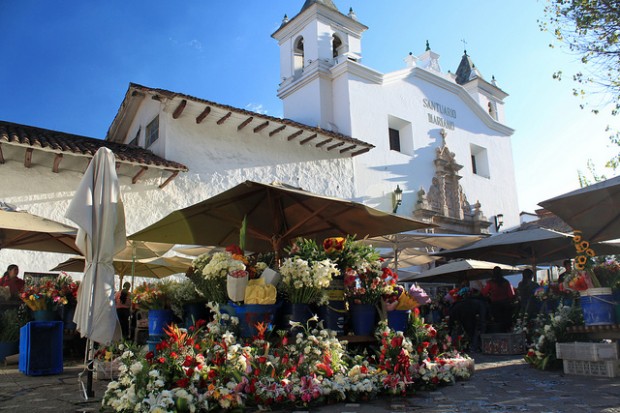
Nestled in the Andes and surrounded by four sprawling rivers, the friendly city of Cuenca, Ecuador has become the best place to live in the world for many expats. Cuenca is the ideal retirement spot for expats who like having large city amenities like bars and shopping malls at their fingertips, while living in a tropical environment.
The cobbled streets and historic architecture make Cuenca look like a snapshot straight from a European postcard and the vibe of the city allows expats to live like they would in Paris or San Francisco, but at a fraction of the cost.
A city of 500,000 respectably, Cuenca locals are extremely welcoming of North American expats and many of the people and store owners speak English, making it easy for expats to settle into Cuenca life.
The perfect place to retire or even to raise a family, this artisan community promotes education (there are 8 universities in Cuenca) and has a good health care system comprised of 18 hospitals and medical centers. Time will tell if Cuenca can last atop the ratings or become a passing fad.
2) Boquete, Panama

Rita Willeart
Boquete is the old Cuenca, and other than being slightly more expensive and a bit smaller, it’s still an incredible option and one of the best places to live in the world.
Known as the valley of flowers and eternal spring, Boquete makes its home in the Panama highlands at an elevation of 4,000 feet, which allows it to avoid some of the humidity that can be found in other areas of the country.
Bursting with exotic flora and accented with rainbows that appear frequently as a result of the bajareque (light rainfall that comes down from the mountains with the north wind) the scenic beauty of the surrounding area of Boquete is truly a sight to be savored.
A town of 20,000, but only a 30 minute drive from the Chiriquí capital of David, in Boquete you can relish in the small town life. The downtown area is not the most attractive place in the world, but its good food and ease of living make up for it in spades.
Hike, rock climb, horseback ride, and experience the culture of the local Ngobe-Bugle people as you learn to enjoy what several others have already learned: this is a great place to live.
3) Nosara, Costa Rica

Photo: Jason Ewa
A small town located in the Nicoya Peninsula, on the northwest Pacific coast, Nosara is a well-known surfer’s and Yoga paradise.
Nosara is the highest ranked beach area on the list, and it has a fighting chance to be a contender with all its offerings, but its Achilles Heel is that it can be a little expensive. Comparable to the cost of living in many U.S. towns, Nosara is not for the budget-minded.
People come to Nosara to soak in the small beach town vibe, and with a two and a half hour drive to Liberia, a four hour drive to San Jose and an undeveloped road leading into town, the town remains remote.
Yet, despite its remote location, Nosara is filled with expats who think of this as a benefit. There isn’t much for local culture and Nosara can actually feel like an English-speaking town.
But what Nosara lacks in local culture, it makes up for in natural beauty.
With four miles of white sand beach of Playa Guiones and access to Playa Pelada (a bordering neighborhood of Playa Guiones), for many expats, Nosara is a little slice of heaven.
4) Roatan, Honduras

Photo: Matteo Tarenghi
Not everyone wants to live on an island, but this place is well worth it even with the negative headlines often received by the country of Honduras.
Retire in Roatan, Honduras, and spend each day enjoying the unspoiled beaches and crystal blue ocean without having to worry about the crowds like you do in other parts of Central America.
The largest bay island in Honduras, Roatan is only a 2.5 hour flight from Houston, Texas, making it beautiful, as well as convenient.
And while it isn’t yet choked with tourists and expats, it may not remain a retirement secret for long. In 2011, Island Magazine named Roatan the number one island in the world to retire to and with so many amazing islands out there, that is definitely a bold statement. Because of this it comes as no surprise that many expats consider Roatan to be the best place to live in the world.
There is an established expat community in Roatan and getting residency is quite simple. You can be granted a retirement Visa as long as you can prove an annual income of $1,500 a month, which makes settling down in the paradise of Roatan, a very achievable dream.
5) Granada, Nicaragua

Photo: Soul Surfer
Described by some as one of the world’s best retirement destinations, in Granada, expats can set out the welcome mat in a luxurious and affordable colonial home that would have cost them an arm and a leg back in the states.
In fact, a couple can live well in Granada on a budget of around $1,200 a month.
With temperatures that hover in the 80s throughout the year and the cool breeze that blows in from Lake Cocibolca, the weather in Granada is ideal and definitely a huge draw for many North American expats.
Granada also has one of the safest communities in Nicaragua, around 1,000 expats already living in town and best of all, it will only take a two hour plane ride from Miami, Florida, to make the trip down. The only knock on Granada is that it can be perceived as a little gritty, the streets are not pristine as are other colonial cities of the region. This shouldn’t stop you though, Granada is really good value and not a huge compromise.
6) Ambergris Caye, Belize

Photo: Viv and Jill
Belize is gaining popularity with expats and tourists alike, not only for its tropical rainforests and Caribbean beaches, but also because it’s a democratic and English-speaking nation that is very welcoming of visitors.
You may know already that John MacAfee, the notorious software developer, chose to live here and could have chosen anywhere else in the whole world. (Look it up on Google if you missed this story.)
Ambergris Caye is the largest island in Belize and the island’s only town, San Pedro, is known as the dive and water sport capitol of Belize.
The island is also home to the second largest coral reef system in the world and this magnificent reef lies a half mile east of Ambergris Caye and runs along its entire 25 mile length.
Retirees that come to Ambergris Caye will enjoy the mild climate, the beautiful beach setting and the colorful blend of cultures, from Creole to Mayan, as they kick off their shoes and sink into island living.
7) Lake Atitlan, Guatemala

Photo: Simon and Vickie
Let’s just get this out of the way, I know the lake is polluted but this still doesn’t change the fact that this little town is an awesome place to live. The area is completely unique in terms of what is offered combined with the incredible opportunity to live around an amazing indigenous culture.
The deep basin of Lake Atitlan was the product of one of the strongest volcanic eruptions in history.
This vast, blue body of water is set against a backdrop of three volcanoes and is surrounded by twelve indigenous villages, many of which are still inhabited by the local Maya.
Expats come to Lake Atitlan to get away from it all and with a two and a half hour drive to Guatemala City and Antigua, life in Lake Atitlan can definitely feel tranquil and remote.
Like many areas in Central America, expats coming to Lake Atitlan can expect to live comfortably on a small budget, but with so many villages and each with a different standard of living, prices will fluctuate, so be sure to shop around.
If you choose life on the lake, get ready to enjoy the simple things in life. Take a walk to the local market to stock up on fresh food and hand-made crafts, hike the mountain trails, or simply stretch out in a hammock and watch the sun set on the water.
8) Escazu, Costa Rica

Photo: Alex Centeno
Costa Rica remains, without a doubt, the most popular Central American destination, and for many, it’s considered the best place to live in the world. After one visit to this tropical paradise, it isn’t hard to see why.
This suburb of the capital city, San Jose, can be found tucked in the Central Valley and is the best place to retire in Costa Rica for expats that want every service available.
Encompassed by lush mountain views and several choices for living and eating, Escazu can offer expats the best of both worlds, gorgeous weather, while living in an urban environment.
While Escazu is more expensive than other areas in Costa Rica, it remains cheaper than urban life in North America and a couple can still live comfortably on a budget of around $2,500 a month.
And with a strong expat community and big city amenities like great restaurants, shopping malls, and an excellent and affordable health care system, it’s no wonder many expats are choosing Escazu.
9) San Juan del Sur, Nicaragua

Photo: David Amsler
Because of this popularity, the town has experienced some economic development in recent years and improvements have been made both to the waterfront and to the central park area.
In San Juan del Sur expats can live the beach town life complete with great restaurants, exciting bars and even language schools. There is also a growing alternative scene that does appeal to people who care about the environment and values things like creating your own solar power.
To make your way down to San Juan del Sur, you can hop on a bus from Managua to the municipal markets of Rivas and then board another bus that will take you on to your possible retirement destination. Nicaragua is a very poor country, but don’t let this get in the way of at least exploring it as an option. If you do, you might miss out on something great.
10) Antigua, Guatemala

Photo: Michael Swigart
Picturesque Antigua is a modern city that is rich with history. This 16th century city was founded by Spanish colonists and is filled with colonial style homes and cobblestone streets that simply beckon you to get outside to enjoy the city’s charms.
One hour from Guatemala City, Antigua has a population of 30,000 and while the cost-of-living here might be considered high for Guatemala, the prices are cheap compared to anything you might find in North America of a similar caliber.
Of course, the costs again will vary depending on what you are looking for. While a large, fully restored colonial home near the city center might cost anywhere from a few hundred thousand to a million, there are many lovely smaller homes that can be purchased for under $100,000 or even $50,000.
And with clean, well-preserved streets (the government makes preservation a priority) and no serious crime problem, in Antigua you can feel safe and comfortable as you explore your new home.
11) Panama City, Panama

Photo: WLT
If you like Miami but feel like there are not enough people who speak Spanish, then Panama City could be the perfect solution. With its ultra modern skyline and true metropolitan feel, Panama City offers a unique lifestyle only compared to a Miami Vice breed of Miami.
Hailed as Central America’s most affordable capital city, Panama City is definitely a city on the rise.
With an excellent business climate, Panama is the prime location for expats looking to put their money and live an urban life. Panama’s renowned privacy laws are no doubt a draw for individuals who value privacy but want to live in a very modern city. The established expat community and many expat-run businesses can provide the comforts of home, in a unique and modern tropical setting.
12) Cotacachi, Ecuador

Colleen Taugher
Slow down and live the small town life in Cotacachi, Ecuador, a town of only 9,000 that continues to be relatively undiscovered by expats.
This remote mountain village is hidden between a pair of volcanoes, but is only two hours from busy Quito, Ecuador’s capital city.
In Cotacachi, you will have the unique opportunity to really immerse yourself in the rich culture of the Quichua people, who live side by side with expats and continue to dress in their traditional garb. You can even walk along Lake Cuicocha and witness local Quichua shamans performing cleansing rituals on the serene shores.
Known for hand-crafted leather goods and local markets, Cotacachi is for expats who really want to live and experience authentic Ecuadorian life, but still have a great leather hand bag.
And while there is a medical clinic in town, most residents will make a trip to the nearby towns of Otavolo or Ibarra, or even Quito for any major medical procedures.
13) Playa Papagayo, Costa Rica

Photo: Josie MacDonagh
Bar none, the greatest option for the ultra-wealthy.
In the province of Guanacaste on Costa Rica’s northwest Pacific coast there is a retirement spot that not many know about.
If you are looking to retire in a luxury beach location, the community of Peninsula Papagayo just might be your best option.
This area is the country’s highest profile development and will cover 2,300 acres with 15 miles of coastline.
Currently in Papagayo, there is a Four Seasons Hotel frequented by Brad Pitt, and over 300 condos. Playing 18 holes on the local course has been compared to a life-altering experience.
14) Boca Chica, Panama

Photo: David Curry
If you crave the serenity of island living, without the bustle of large scale beach resorts, look to Boca Chica to find your perfect match.
Boasting some of the most pristine beaches in Central America, Boca Chica can offer retirees many private island settings with a growing expat community that is not yet overly congested with tourists.
Resting against the Pacific Ocean, in Boca Chica you can live out your golden years fishing, snorkeling, scuba diving, and taking advantage of the outstanding national marine park in the near vicinity.
The Chiriquí Gulf National Park is comprised of islands and sea and is filled with white-tip sharks, rays, and sea turtles. You can also visit a white sand, palm-lined beach and expect to see no one else.
15) Canoa, Ecuador

Photo: Patricio Lopetegui
Located along the dry looking northern coast, Canoa, Ecuador is the ideal spot for expats that small town living in place with personality.
Recognized as a water sport hot spot, in Canoa you will spend your days surfing, paragliding, kayaking or simply walking along the stretch of unspoiled shore.
A burgeoning expat community can be found in Canoa (made up of more residents than investors) and the town is steadily continuing to expand as more westerners learn what South Americans already know about this Ecuadorian gem.
The town now has a bilingual elementary school and more expat-run restaurants and businesses, but despite this development, the prices are low and the adventure is high.
So where is the best place to live in the world?
With so many amazing spots to choose from, it might take some time before you make a final decision on the best place to live in the world.
Don’t rush into buying, rent around and test the waters in a couple different areas before settling down for the long haul in your own personal paradise.

Sam Shall
Expats head down to Central America for the scenic beauty, the year-round spring-like weather and the low cost of living that makes these countries a prime retirement spot.
But now something new is drawing them in, the promise of world class health care at extremely affordable rates. And with such a short commute from Central America to the U.S., what could be better for North American expats?
For many people, choosing to travel overseas to receive medical treatment is basically a no-brainer (especially after the recession) and medical tourism is experiencing a new wave of popularity.
But does quality of Medical Treatment have to be sacrificed?
In short, no, the treatment you receive abroad can be just as good as the treatment you would have received back home and in fact, many expats claim that the treatment they received abroad was superior, with lower costs and shorter waits.
Recognizing the opportunity and getting on board with medical tourism, many of America’s top health care branches are expanding out to include countries that are known to be popular retirement spots and well-known insurers like Blue Cross are putting their own medical tourism programs into action.
So where in Central America can expats find the best health care?
1) Ecuador
First on the list is Ecuador and Cuenca in particular.
According to former U.S. hospital administrator Alex McClellan, Cuenca, Ecuador, may just be the newest medical tourism hot spot. And having worked in the medical tourism industry for years, in countries like Mexico, India, and China, McClellan knows a thing or two about the industry.
In Cuenca, expats can expect to pay around 7-10% of what they would have paid for medical procedures back home, without having to sacrifice quality.
A heart bypass that would cost $130,000 in the U.S., will cost closer to $10,000 in Cuenca and a hip replacement priced at anywhere from $43,000 to $51,000, only $8,000.
With price differences like that, it’s no wonder retirees are looking to Ecuador for the perfect spot to settle down.
2) Mexico
Next up is Mexico. Originally a popular spot for medical tourists due to its close proximity to the United States, Mexico now boasts many great medical facilities like Angeles Health.
The largest private hospital network in the country, Angeles Health has over 23 hospitals, 2,000 beds and 200 operating rooms, all staffed by 11,000 trained health care professionals.
Because of this, Angeles Health has become a sought out spot for medical tourists and the U.S.-based Angeles Health subsidiary is constantly setting up treatments for North American medical tourists.
3) Costa Rica
Already one of the most popular expat destinations in Central America, the high standard of health care that can be accessed in Costa Rica is just icing on the cake for many expats.
In Costa Rica, expats can receive the medical attention they require, in one of the many private accredited hospitals and again, the prices are much, much lower than back in the states; 50-70% lower in fact and the wait time for treatment or surgery is virtually non-existent, something that definitely cannot be said about the U.S.
While cosmetic and dental procedures were the most common medical tourist lures in the past, today many other surgeries and medical treatments are being performed, bringing in even more expats and medical tourists.
4) Panama
Each year, Panama is drawing in more expats with its beaches, weather and excellent business climate, but now, foreigners are coming for the health care system as well.
Many world class health care facilities can be found across Panama, each staffed with medical professionals trained to use the latest technology.
- Clinica Hospital San Fernando: is Panama’s first private hospital and is known for its excellent inpatient pharmacy.
- Centro Medico Paitilla (affiliated with Cleveland Clinic): can be found in the center of Panama City and is a great choice for tertiary care.
- Hospital Punta Pacifica: is a John Hopkins-affiliated hospital and offers exceptional treatment for minimally invasive cardiac surgery, general surgery, neuro-surgery, and urology procedures.
When expats leave North America behind in search of the perfect retirement spot, their Medicare and private health insurance can’t be brought with them.
Fortunately the boom of medical tourism that is rushing through Central America at an incredible rate is making it possible for expats to get quality health care without having to fly back home.
If you are thinking about moving down to Central America, to live out your retirement years in tropical bliss, consider Ecuador, Mexico, Costa Rica, or Panama.
These countries can give you the best of both worlds, the paradise you crave, coupled with the first world medical facilities you need to make you feel safe and comfortable.

BattenKill Canoe
Retirement used to mean that your best days were behind you. The word itself conjures up images of senior citizens gathering for breakfast every morning at the same local cafe or meeting up for their weekly game of bridge.
Retirees were those who had resigned themselves to their fixed income and holed up at home to live out the rest of their days in peace. The more well-to-do might spend a month or an entire season in Florida in a mobile home park, or maybe even a condominium. But most just counted down the days until they got put in a home and lost their last final shred of dignity.
Those days are over.
Today’s retirees are not content to waste away playing checkers and reading their AARP magazine. They’re adventuresome, fearless, and all the more vivacious because of the gusto with which they’re approaching their retirement years.
For many, retirement means something very different these days than it did even a decade ago. Those uneventful, sedentary lifestyles are being replaced with travel, exploration, and sometimes even a new start in another context.
Retirees are traveling and moving overseas more than ever before.
Travel among retirees is at an all-time high. The travel industry has recognized this demographic as a vital segment of their customer base and has begun catering to the mature traveler.
And the travel itself even looks different. Today’s retirees are less likely to spend their vacation on a crowded tour bus being shuttled from one city to the next. Many are taking a more DIY approach, planning their own adventures and steering clear of the more cookie-cutter travel experiences.
Since much of the current retired generation has traveled extensively during their working years, many are now targeting locations that are a little farther off the beaten path. If they traveled to a well-known European city years ago, they may decide to visit its lesser-traveled neighbor when they return. Multi-generational travel has also grown in popularity, as many retirees want to see the world with their children and grandchildren in tow.
In addition to their short-term travel, more Americans than ever are retiring overseas. It’s unclear just how many, but a reported 350,000 Americans receive their Social Security checks in countries outside the U.S. And in a recent study by Travel Market Report, an estimated 3.3 million baby boomers plan to retire abroad.
So what’s causing this trend among current retirees?
Maybe they’re born with it.
Americans who are currently entering retirement age are part of the “baby boom” generation, which includes those born between the years of 1946 (following the end of World War II) and 1964, when more babies were born than in any previous period in history.
While there are a number of suggestions as to why this boom occurred, many speculate that it was the result of a spirit of anticipation of future comfort and prosperity that led postwar families to want to have more children. Young couples in those days desired something better than their Depression-era parents had, and they wanted their children to have an even better life than they themselves planned to enjoy.
No doubt baby boomers came into this world with an inborn sense of optimism and an inherent drive to surpass all expectations. And this characteristic is evident in their travel and retirement decisions. Today’s retirees have a spirit that is not afraid.
Could it be a culturally-driven thirst for adventure?
In today’s world, it seems like everyone has a “bucket list.” A mental inventory, or maybe even one they’ve put down on paper, of all the things they want to do before their time is up. Add to this the fact that nearly every prime time network has a whole lineup of reality television shows set in remote destinations and featuring a slew of death-defying challenges and adventures.
There are travel magazines, travel-themed TV shows, and even entire networks tailored to those who have a desire to see the world and experience other cultures. As a result, retiring baby boomers are more aware than ever of the options that are available to satisfy their wanderlust.
Cross-country RV trips to the Grand Canyon are being replaced with 14-day cruises to Grand Cayman. And instead of weekend trips to Florida with the family, they’re heading to Peru to hike Machu Picchu with their kids and grandkids. And they’re hanging in there with the spryest of them.
Maybe it’s the calm and contentment.
As people age, studies show that their enjoyment comes less and less from the anticipation of some future event and more so from relishing the here and now. And many retirees feel like traveling to or living in another country can greatly affect their enjoyment of their current state.
For many, it means spending time outdoors and enjoying the serenity and peacefulness that nature has to offer. This may be why so many of today’s retirees choose to visit or relocate to areas with milder climates and undisturbed natural habitats.
Spending time in another location better enables retirees to avoid common stressors, like political dissatisfaction or financial worries. The absence of stress has been proven to improve health and decrease one’s risk of illness, particularly heart disease.
For this reason, many retirees are embracing the possibility of enjoying a stress-free lifestyle in those all-important latter years. Many are finding this decision to be hugely beneficial.
Or is a lack of money prompting baby boomers to retire overseas?
Still another possible reason today’s retirees may be choosing to travel and especially live overseas is the fact that they can enjoy a much lower cost of living, without sacrificing any of their quality of life.
Living in the States these days is not cheap, especially for those in retirement. The recent global financial crisis did quite a number on the pocketbooks of many American families. Many suffered severe hits to their 401k’s (an average of 18 years worth of gains). Home prices also fell 23% from 2007 to 2010.
Not everything is down, though. On the contrary, taxes have never been higher. And the average 65-year-old couple will pay $240,000 in out-of-pocket medical expenses over the rest of their lifetime, versus $160,000 a decade ago.
It’s no wonder that, in a recent Retirement Confidence Survey conducted by the Employee Benefit Research Institute, only 14% of employees were “very confident” they’d have enough money to live comfortably in retirement.
As many retirees are learning, this comfortable retirement can much more easily be found overseas. Housing costs are much lower than the U.S. average. Good health care, often as good as can be found in the U.S., can be obtained for a fraction of the cost.
Expats can often enjoy a pedestrian lifestyle, buy fresh produce from local markets, and enjoy excellent meals at local restaurants for much less than they would pay in the U.S. for the same cuisine. Add to that the abundance of inexpensive activities they can participate in, especially in more-established villages or those with a large tourist or expat presence.
And with today’s technology it’s even easier and cheaper than ever to stay connected to family back home. So, there’s one less barrier to breaking free and spending their retirement the way they’ve always dreamed.
No matter the reason, they don’t seem to be slowing down.
Whatever it is that’s prompting them, baby boomers are changing the face of retirement as we know it. The travel industry is certainly taking notice, as many of the biggest names in the industry have launched campaigns tailored towards retirees.
Interestingly, quite a few foreign countries are also jumping on the bandwagon. Between foreigner-friendly tax laws and special discounts for retirees, many nations are welcoming both tourists and expats with open arms. See for yourself some examples of what these countries are doing. A little research can help you decide if overseas retirement could be right for you.


That First Taste of Free Air
You feel it the moment you step out of the airport, and are busy cruising down the highway to your destination. It’s not just in the traffic that crosses double yellow lines or ignores stop lights if the road is clear. It’s in the vehicles themselves; sometimes crowded to the maximum, with luggage tied to the top, sometimes appearing to be tied up just to keep the vehicle together.
Maybe you’ll notice a truck filled with workers or one that has a hammock swinging lazily in back, with the occupant blissfully taking in the sunlight. The buses lumber by, so packed, passengers cling to the door frames. If you brave one of these second-class, local buses, you might feel you’re in a barnyard. Chickens squawk from crates packed under the seat, and there might even be a goat or a lamb that somebody’s transporting to the market.
It’s a reminder of how America was before seat belt laws and strict traffic regulations, before traffic citations became profitable. If you have someplace to go, nobody cares about the means you use of getting there.
Slowing Down
Outside the city hubs, vehicles are relatively sparse. The most common mode of transportation is by bus. Pedestrians, farmers pushing along a few cows, wash women with piles of clothing on their heads are not an uncommon sight along rural roads.
This daily life, so unencumbered by appointments and punching a clock, begins to seep into you. You find yourself hurrying less and relaxing more, spending time doing those things you’ve always dreamed of doing, but never found the time or the opportunity. You begin to think about your new found freedom, that began with a freedom from worry.
The Economic Race
It seems odd that so many of the citizens who are immigrating from the United States into Central America are doing so out of a longing for freedom, but sadly enough, as a country founded on the liberties of all people, it has become a system of rules and regulations designed to give advantages and privileges to some, while penalizing and suppressing the many.
That hectic pace felt so distinctly in urbanized America is the desperate measure of a people determined to keep their heads above water. The American dream for many married couples, of a fine little home and a two-car garage, can’t possibly be realized unless both are working and they take out a twenty year loan. Those over sixty who had been planning to enjoy the benefits of their golden years, find their retirement or social security checks just aren’t enough, and take on part-time jobs for which they are over-qualified, but too financially distressed to refuse.
Then there are the young singles, working hard and studying for a degree that may not be very helpful for finding work. Jobs that had once taken an associate’s degree, now take a master’s, and debt-strapped students wallow in student loans.
When Life Becomes Stifling
The opportunities once offered in America don’t seem so plentiful anymore. Innovation, imaginative ideas, are either swallowed in a maelstrom of bureaucratic paperwork, or take a long time to mature, making the process uncomfortable for non-entrepreneurial types. For every proposal, no matter how universally beneficial, there is opposition. The red tape ticks away at finances, valuable time, and eventually, motivation.
America can barely breathe. You cannot even build a porch for your house, on your own property, without permits and inspectors. In some communities, there are agreed-upon house colors, and regulations concerning what you may have in your yard. You may discover you don’t even have a right to grow a garden instead of a water wasting lawn. The attempts to create a uniform standard of living within specified zones has swept away the concept that one’s home is one’s castle. The spirit of these rules makes sense, they are for the benefit of environment, home prices, and people’s safety, but in today’s world the rules are wielded like weapons against creativity and individuality.
You’re as Free as Your Neighbor
The migration into Central America is made up of people who have grown weary with asking for permission. The safety net hovering over American social affairs feels more like an entrapment net, encumbering freedom of travel with security checks and invasive techniques, such as airport scans and cell phone tracking.
Homes and small businesses are regulated with so many expensive codes and mandatory health care. The U.S. constituents are strapped with so many liability laws, they become nervous about allowing the neighbor kids to come over and play on a trampoline.
Coping with Drawbacks
The expats have had to make some adjustments. In an area where there is little to no regulation, cities can turn ugly fast, while everybody builds whatever they want and a smorgasbord of buildings go up. If your neighbor wants to begin his day at six in the morning, banging away at his new addition, and you want to sleep until seven, it’s best to just roll over with your pillow.
While the cities offer the modern conveniences, the farther away you are from them, the fewer commodities, such as super consistent electricity, paved roads, libraries, and U.S. foods you’ll find. You may find a lower quality in many of the common household tools, such as for gardening or carpentry.
There is a role reversal once you are an expat. You are suddenly a minority in a foreign country. You’ll feel subjected to the same type of scrutiny as given any minority. You may get pulled over just because you look like a gringo. If you are aspiring to become a global citizen, this actually aids in perspective. Outside the dynamics of the western world, you are a minority.
You Still Feel Freer than You Did in the United States
There is an enormous amount of satisfaction in living and breathing freely, without the rigid controls over an over-regulated government. It’s a learning experience in getting along with others of different cultural backgrounds and lifestyles. It allows you ample opportunities for evaluating your own beliefs. It teaches you resourcefulness with the tools and materials on hand.
For the health-oriented, it becomes advantageous to acquire a taste for the native foods. This isn’t too hard, considering the volume of fresh tropical fruits and delicious sea fare that abound in Central America’s market. Not only do you benefit from the organics, but buying local is cheaper than the shipped-in U.S. market.
The Growing Family of Expats
Families make up a vital force in the expat community. Sometimes, they come down for a year to absorb the cultural setting or as a reprieve from restrictive American life. Sometimes, they arrive with more permanent intentions in mind.
The challenge for these families, if they remain within a residential area removed from the major cities, is finding good schools. But like pioneers, they draw upon their own resourcefulness, enjoying the opportunity to educate their children in the manner they feel is best, maybe even starting their own school.
As We Look Forward
It is, in every sense, a type of pioneering. The expats that settle in Central America don’t hate their country. They hate the limits placed on their abilities to make conscious choices. They no longer wish to be treated like a kid, they trust their own ability to decide what is best.
They know this freedom comes with a price. They are moving into a different culture with different customs. They must depend on their own abilities to cope with change, to problem solve, to develop good relationships with others, but it’s all part of the excitement, the adventure. These are the stimuli for growth and development, the fundamentals of increased awareness, and the reward is an evolving society, ready to explore the new boundaries of individual rights and harmonious communities.


Sal Falko
In recent years Central America has received an influx of North Americans investing in local business. Countries like Belize, Nicaragua, Costa Rica, and Panama have become increasingly popular places for baby boomers to retire. Why has this generation chosen to settle offshore?
Quality of Life
With warm weather year round and stunning beaches, lakes, volcanoes, and hillside, Central America has an appealing climate. Many small jungle beach towns are popular among tourists, making foreign investment a lucrative possibility. For those looking for city comforts, most cities lie in close proximity to incredible wilderness. Granada, Nicaragua sits near a stunning lake and volcano and also has great restaurants, nightlife, and culture. Plentiful fruit and vegetables and many outdoor activities also make healthy living not only possible, but easy.
Lower Cost of Living
Even more expensive Central American countries like Costa Rica offer a lower cost of living than the United States. It is very possible for individuals to live comfortably on less than $1,000 per month. Nearby Panama is even more affordable and food, entertainment, and lodging in Nicaragua is half the cost of Costa Rica. This low cost of living is incredibly appealing to baby boomers looking to retire and live abroad without sacrificing luxuries like dining out, maid service, and travel.
Proximity to the U.S.
Central America is an inexpensive, quick flight from the United States, making investment or a permanent move less daunting. Individuals are still able to visit their families or live part time in each place.
Return on Investment
While some investors plan to live and settle in Central America, others buy property simply to earn income from their investment. Property costs are low and vacation rentals can yield a good salary, making these foreign investments a popular choice for those looking to save for retirement.


When you decide to spend time in the Latin Tropics, there are a lot of things that you’ll need to think about. Where you’re going to stay, what you’re going to see while you’re there, what you’re going to pack, and how you’re going to keep yourself safe. When you’re traveling in unfamiliar territories, this last consideration is key. One of the things that many tourists and expats worry about is the threat of snakes.
Snakes are a very common animal. There are over three thousand known species, and they live on almost every continent. Latin America is no exception. The region is home to an abundance of snakes, both venomous and nonvenomous. Some of the more dangerous snakes in this part of the world include the Bushmaster, the Fer de Lance Viper, the Eyelash Viper, and the Coral Snake.
The Good News
- The vast majority of snakes are nonvenomous, and are harmless to humans. Out of the 3,000 plus known species, only 750 are venomous.
- Snakes do not naturally prey on humans. They usually prefer to keep their distance, and documented attacks are rare. Bites generally only happen when snakes are threatened or injured.
- Dangerous snakes tend to avoid heavily populated areas.
- Snakes are most active at night, which makes them easier to avoid.
- If the worst does happen and you do get bitten, modern medicine is up to the challenge. The majority of people who sustain snake bites get the treatment they need to survive.
- In fact, it’s estimated that 90% of people who are bitten by a snake make a full recovery.
- Victims of snake bites usually have a six hour window to seek treatment. This means that, should you need, you would have plenty of time to get to the nearest hospital.

How to Stay Safe
- Be aware of areas where snakes are likely to hide in. Dead foliage, fallen trees and other situations that create dark, shady areas are likely to attract snakes.
- Look around you. Don’t step anywhere or touch anything without looking first. Being aware of your environment in this way will help to protect you.
- Don’t travel into the jungle alone.
- Wear appropriate clothing. If you are visiting an area where there are likely to be snakes, such as the rainforest, make sure that you are wearing sturdy footwear and protective pants. Most smaller snakes won’t be able to bite through them.
- If you do see a snake, don’t panic. Try not to make any sudden startling movements, such as running away, and don’t try to attack the snake.
How Worried Should You Be?
Most visitors to Latin America will have no problem at all with the local wildlife: snakes included. It is very rare to be bitten by a snake, and if you follow the advice above for staying safe it would be very unlikely that it would happen to you. In fact, it’s often cited that you are more likely to be struck by lightning than you are to be bitten by a venomous snake. For this reason, the threat of snakes isn’t something that should put you off your trip!
The Latin Tropics is a beautiful part of the world, and we think that everyone should experience it. The dangers presented by snakes is certainly something to bear in mind and to take precautions against, but don’t let your worries take over.