


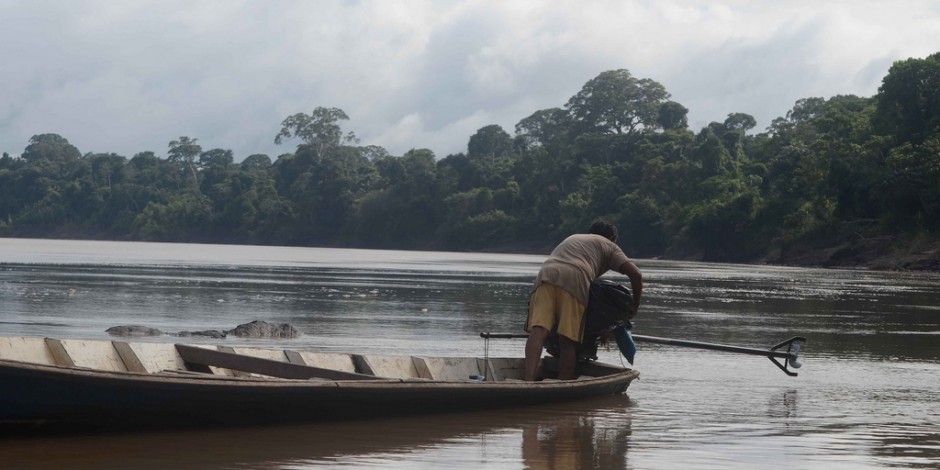
“Carumba!” the driver shouted. What was he going on about? Oh, there it is. The spluttering of the outboard engine. And then, no more spluttering. And no more engine. There we were, in the middle of the ocean in a dug-out canoe. With no engine.
“Carumba!” the driver said again. I wanted to say something else. You see, I had a plan. I needed to check out the progress on our island project and go to the bank that Saturday. So the business man in me worked it out logically. The trip to the island itself should take three hours, in an ideal, non-Central-American world.
I multiplied that by three (which I like to call the Cultural Harmonizer and it goes something like this: for every unit of time you expect to complete a task, multiply that by at least three and harmony will follow. Note: works in most countries). Nine hours should see me on and off the island leaving plenty of time to make a bank deposit before it closes. Right? Wrong. Wrong wrong wrong.
Culture, you see, makes all the difference. In arranging my trip to the island, I booked this boat with a picture of what I thought was clear and specific language. I asked for a fast boat big enough for the driver, a worker, and me. I got a dug-out canoe with a five horsepower engine. And now that five horsepower was zero. And we were floating backwards. Even though the boat trip on the way there had taken an hour instead of the 18 minutes as I’d expected, I wasn’t worried; according to my skillful Cultural Harmonizer calculation… We still had plenty of time for me to complete my objectives.
So while the driver was pulling off the duct tape from the engine, doing something that looked like a French plait with the wires, and occasionally scolding the rusty engine with a slap from his palm, I went to work. I went to work looking for the paddle in our tiny canoe. Turns out, that stick underneath the mound of a fishing net which I was using as a seat was the paddle, really? There is no “real” paddle? No problem, I thought. I’ve done plenty of paddling. Let’s try and figure out which end is which and off we go.
The thing was insanely heavy, maybe 50 lbs., and didn’t have a blade or any paddle shape, let alone a handle. After an hour of maneuvering this pole, my arms were cramped and against my better judgment, I admitted defeat. There was no way we were going to make it in time. Our boat was literally moving backward down the mangroves with the outgoing tide. The Cultural Harmonizer theory needed to be adjusted, it is not an exact science, but it appears it can be modified for any country. I missed the bank that day, and received several concerned calls after missing payroll. The businessman within me learned a lot from these types of experiences that always seem to accompany expat life.
I realized that I am the stranger in a strange land. Especially when you’re dealing with a culture so different to your own where fast means five horsepower, and boat means hollowed out log. If you are new to a country, using this calculation can be very helpful when managing your stress levels; though it might take a bit of time to learn how to calibrate, it can be a very handy tool. The culture in any given place has lots of momentum; notice how it works, then do what you do. Carumba!

If you’re hoping to retire to a beach haven overseas, may we suggest Panama? The Latin American country has a great deal of culture to offer, as well as beautiful scenery and fabulous weather. And the Panama beaches are an important part of the package.
Panama has many draws as an overseas retirement location, including vibrant communities, great quality inexpensive housing, and the beaches are some of the best. In fact, one of the best things about the country is that it has beaches leading onto two oceans: the Pacific and the Caribbean. In fact, Panama has over 1,500 miles of coastline!
Panama Beaches
In the past, Panama’s beaches have often been overlooked. Many of them are very rural and remote, and they haven’t typically been popular tourist destinations. However, there are some absolutely gorgeous areas of coastline in the country, and we don’t think that you should overlook them.
If you’re thinking about visiting or retiring to Panama, take a look at these top five beach areas in the country.
Coronado

Coronado Panama
Set only an hour away from Panama City, Coronado is a beach town that is well-loved by expats and Panamanians alike. The beaches themselves are an impressive site to behold. The beaches in this area have fantastic black and white sand, and are great fun to visit.
Away from the beach, the town of Coronado also has a range of leisure facilities including bars, restaurants, shops and a plaza area. This is a very popular area, and has a great expat community. This area is very different from the rest of the beach areas on the list: purely because of how developed it is. Coronado is the destination for you if you want to be able to shop in an American-style grocery store and meet up with friends for a nearby round of golf.
Boca Chica

Photo by Boca Chica Island
The Boca Chica area is wonderful if you’re looking for a rural, romantic spot to spend time with a loved one. The landscape here is made up of hills, valleys, and banana plantations. It also has a perfectly tropical climate. In the past, this was a very remote area, but it is fast becoming the next up and coming spot. The new airport in nearby David will soon be accommodating direct flights to the United States and Canada, which will make traveling here very easy.
The beaches in Boca Chica benefit from fine sand, dark beautiful water, and a quiet, peaceful atmosphere. Factor in the Chiriqui Marine Park, and the coast at Boca Chica is very attractive.
Bocas Del Toro

Bocas Del Toro is an area that’s made up of six islands, along with a number of uninhabited islets. It’s a beautiful part of the country, and is described by Conde Nast as “the Caribbean that time forgot.”
This area is popular with tourists and expats for many reasons. It has a great community, and is also home to some of the most typically beautiful beaches in the whole of Panama.
Here, you can expect to see flawless white sandy beaches and clear, turquoise water. Because of this, the beaches in this area are particularly popular snorkelling destinations.
Santa Catalina

The Lonely Planet has reported that Santa Catalina has the potential to be the next great Central American beach destination.
This laid-back town is mainly populated by laid-back Panamanian fishermen, but it does have a huge draw for tourists and expats alike: great surf! The beaches of Santa Catalina offer incredible surfing opportunities. Because of this, the town is growing, and is developing more and more facilities for expats.
Because of the relaxed atmosphere of the town, it also has a growing reputation for having a healthy attitude. There’s a real focus in the town on healthy food, as well as yoga. Santa Catalina is one of the few places in Panama with this sort of vibe.
Pedasi

Pedasi is a small town set in the outback of Panama. It’s a relaxed, low-key place with a rich history of folklore. If you visit the town, you can expect to be greeted by friendly residents, great food, and maybe even a beach party or two. There’s also something a little out of the ordinary waiting for you at Pedasi. In this area, some of the beaches feature beautiful lava covered sand.
But it’s not all quiet here. There are also a great deal of sports opportunities to choose from. Whether you’re into surfing, scuba diving, sports fishing, or horseback riding, you’ll find something to enjoy in the area.
The one downside of Pedasi is that property prices are quite high here compared to other rural areas with limited services.
Is One of these Panama Beach Areas Right for You?
Panama is a beautiful country that offers a lot more value for money than other more typical holiday or retirement destinations. It’s an inexpensive place to live, and this is true even in some of the more popular coastal areas.
If you’re looking for the ideal beach destination, to visit or even to retire to, one of these five areas might be the one for you.

Roatan, one of the Bay Islands in Honduras, just may be the world’s best island for expats.
1. Roatan is near-perfect island living.
Roatan’s growing expat community is now supporting many modern conveniences along with almost everything you can buy at home, and some that you can’t, like a never-ending vista.

Photo Credit: J Hound
2. Here, you can take up a new hobby.
The water is clear and warm and the beaches are white-sand. The world’s second largest coral reef lies just offshore, making the Bay Islands a favorite with divers.
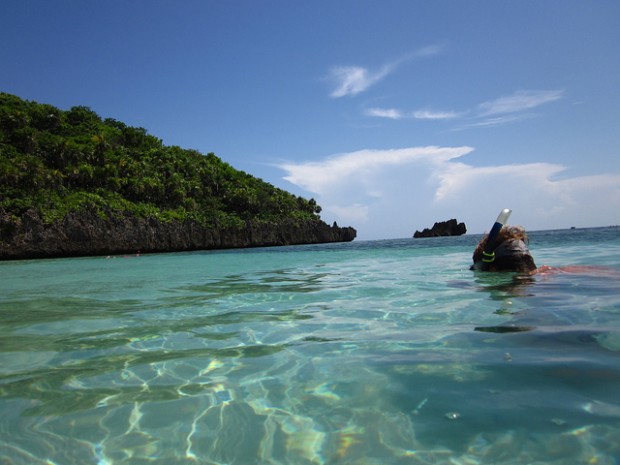
Photo Credit: Alex in Wanderland
3. Even make a few new aquatic friends.
Nature abounds in the Bay Islands; from ziplines to hands-on dolphin encounters, Roatan holds endless possibilities for making new friends.
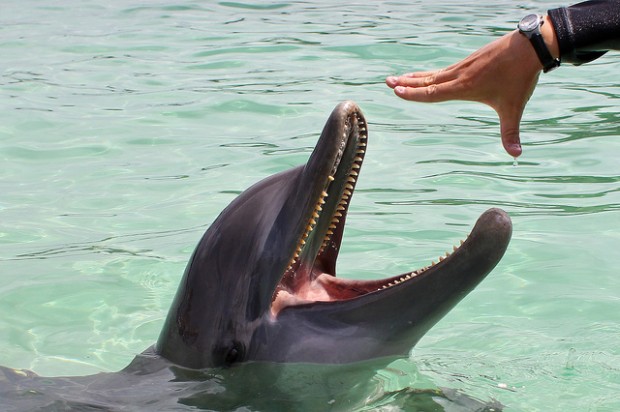
Photo Credit: Dolphin Encounter
4. You are encouraged to kick back and soak up the view.
Roatan is said to be where white sand meets clear, turquoise water on some of the world’s best beaches.
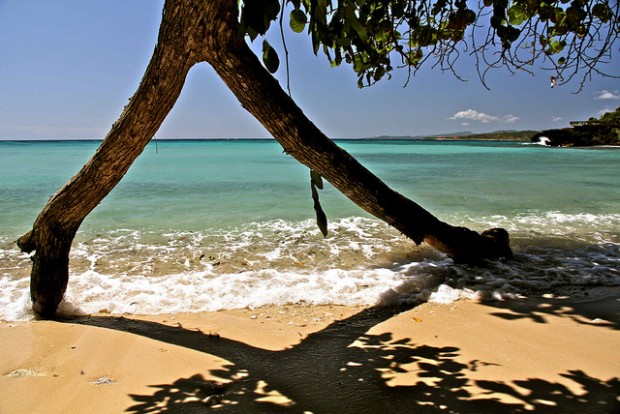
Photo Credit: P. Cheng
5. Without a doubt, life in Roatan might just be like an endless vacation.
Life is simpler and your needs are less. The price of U.S. goods is higher as you might expect on an island, but local goods are quite inexpensive and you will find they meet most of your needs.
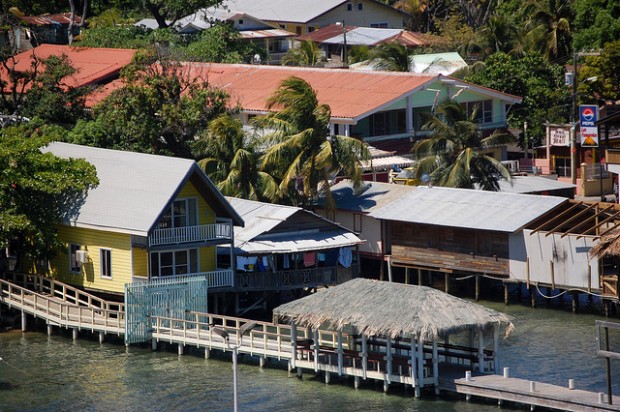
Photo Credit: P. Cheng
Have a favorite reason why you call Roatan home? Let us know!
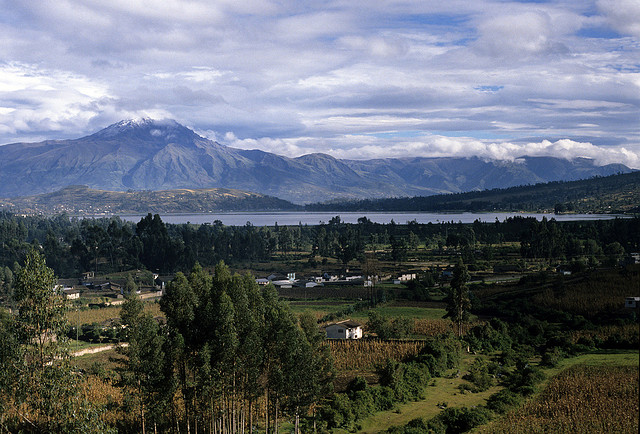
Cotacachi Ecuador. Photo by Thomas Aleto
If you could retire anywhere in the world, where would it be? Florida? Hawaii? For more and more people, especially North Americans, the answer is Cotacachi, Ecuador, a utopian town sought out for its scenic beauty, rich culture, ideal climate, and low cost of living.
Tucked between the breathtaking mountains of Volcan Imababura and Volcan Cotacachi in the Ecuadorian Andes, Cotacachi is but a ninety minute drive north from the Ecuador capitol of Quito. An artisan town, famous for their hand-crafted leather goods, Cotacachi just might be the ideal place for those that crave the small town life.
Why Cotacachi?
With so many options out there, what is it about Cotacachi, Ecuador that makes it such a popular choice for expats?
Climate
Expats are choosing to settle down in Cotacachi for many reasons, but one of the biggest appeals is the climate. Not too hot and not too cold, Cotacachi is just right with an average daytime temperature of 70-75 degrees F and an average night time temperature of 50-55 degrees F.
And because Ecuador is positioned just north of the equator at an elevation of 8,000 feet, Cotacachi will experience this ideal, spring-like climate throughout the year.
The chance to slow down
For many, Cotacachi is the perfect place to slow down and savor the simple things in life. You can hike, ride horseback, and fish, or simply head down to the local market to stock up on delicious organic food. These markets are open daily in Cotacachi, but the biggest market will always be on Sunday when the locals come out to sell everything from fruits and vegetables to hand-woven goods, spices, and freshly picked flowers.
Of course, due to its small size (the length of the village can be walked in thirty minutes) there are certain things that you won’t find in town, like major shopping centers or an exciting nightlife. But not to worry, for it is only a twenty minute drive to the nearest city, Ibarra.
Convenient location
Although Cotacachi embraces the laid-back lifestyle, away from the bustle of city life, it is in no way isolated. The capital of Ecuador, Quito, is only an hour and a half away from Cotacachi and international flights arrive in Quito daily.
So for the occasions when a small trip to the local market just won’t do, the city of Quito is there to offer all of the urban amenities you could possibly need.
Rich culture
The local people in Cotacachi, the Quichua, are a very spiritual people and they really cherish their traditions. Most of the Quichua continue to dress in colorful, traditional garb and shamanic and healing rituals are still performed on a daily basis.
In Cotacachi you can have a Shaman cleanse your aura or mix you up a custom batch of medicine to help heal your ailments.
But don’t be intimidated, for the Cotacachi locals are known to be very friendly and welcoming to expats, and you can expect to make a few new friends as they introduce you to life in their village.
Beautiful and budget friendly
Another great thing about retiring to or visiting Cotacachi, Ecuador, is the cost. The cost of living in Cotacachi is quite low and you will be able to enjoy this scenic paradise on a budget, making living in a place like Ecuador not just a dream, but for many expats, a reality.
Renting an apartment in Cotacachi can start as low as $150 per month and because the town is so small, cars aren’t necessary. Of course, if you so desire, taxis are available to whisk you around the village for little more than a dollar and a round trip bus ride to Ibarra will only cost you ninety cents.
Is Cotacachi the place for you?
So if you have been thinking of making a move down to South America, Cotacachi, Ecuador just might be the place for you. Do your research, consult a local realtor, and make a trip down to Cotachaci to see what life in this mountain village is really all about. Who knows, you may just find your new home, or at the very least, a great new place to visit.

When you move from a city to a small expat town, it can be extremely hard to fit in.
Here are 13 rules to set you on the right path for small town living as an expat .
In a city, rhythms and lifestyle are so different compared to a small town. Time is of the essence, you have anonymity if you want it, and your actions are rarely judged. If a chance encounter with someone significant occurs in the city, you jump to take advantage of opportunity before it disappears forever.
This is not customarily the case in a small town; in fact, it’s almost the opposite, jumping on an opportunity to meet someone might backfire from being perceived as too aggressive.
Here are 13 rules to set you on the right path, even if you are the new guy.
1. Relax and Take Your Time
People living in small communities have their routine down. They have their friends, activities, and habits already defined. Be aware of this, making room for you means changing their routine, so give it time. Take it slow and be patient, social opportunities will come up without you pushing too hard.
2. Don’t Gossip
Gossiping is very common, everyone knows everything about one another. Gossip can be traded like currency, who slept with who, who is having business trouble, who said what at the last party. You will be challenged to not get involved, not to give your opinion, but do not perpetuate gossip. If you stay out of the gossip circle you are not in danger of creating a relationship based on gossip, (which never last) and even better, you will show you can be trusted. This is what leads to strong long term relationships with good people.
3. People Come Out of the Woodwork
Often the most intriguing people are not at the party. When someone has a good happy rhythm in a small town they often are not looking to be seen. They have found a magic formula and don’t need to socialize at parties to fill a void, these people can be very interesting and discovering them can be a real find.
4. You Are Not a Mind Reader
Try not to interpret everyone else’s actions as liking your or not liking you. Avoid this mind trap, it will lead to nothing but self consciousness and being miserable. Let it go, don’t waste time worrying about what so and so said, or why so and so didn’t call you for their birthday. Stay busy and stay the course great opportunities are in front of you.
5. Respect the Locals
Small towns were there before you got there and will be there when you leave. The residents who are there have a history, which can make them seem irrational at times. For example someone may hate someone else for something that happened 10 years ago, but they won’t let it go. Do not judge; respect the history even if they are not over it yet, chances are they never will be.
6. Understand the Game
Newcomers to small towns predictably look for acceptance. The quickest path to acceptance is to prove your dependability. So, sticking to your own business, and being authentic when social opportunities present themselves is the fastest route. No need to be a recluse, take advantage of every encounter you have, just don’t force it. Do not try get to know people quickly, this goes against the rhythm. You are new to them, and new is an unknown quantity. Once dependability has been established then progress can be made.
7. Stay Busy
Find things you love to do with or without people. Sometimes it is lonely, but if you have a passion that fills your time it will be a giant help as you slowly build up trust and friendship.
8. You Will See People You Know All the Time
You really don’t need to be a social butterfly to get to know people. In fact, limiting your exposure is a good idea. If it’s a small enough town, you will have unplanned interactions with people all the time, at the store, the gas station, parties, etc. Remember there is a finite amount of people, so friendship is a marathon, not a sprint. You may be able to build lasting relationships just from seeing the same person every morning at your favorite breakfast joint.
9.Track Record Matters
Don’t treat people differently based on who you think is watching. This gets noticed in small places. Treat people the same no matter who is watching. Your track record will precede you, people talk. Its up to you, do you want a positive track record or a negative one.
10. Be Mysterious and Unaffected
This is a great way to meet no one and be lonely in a city, but in small towns it can be an excellent strategy. People want to hang out with intriguing people; if they believe you don’t need them, they will come calling. If they think you have a needy personality they will avoid you like a leper. Walking this fine line is laborious, but knowing it exists is really the point.
11. Don’t Hang Out with Your Buddies Too Much
It is so easy to get lulled into habitually socializing with the same people every weekend, hanging with them at parties, or inviting them over all the time. The problem with this is socializing too much can eventually destroy the relationship. Don’t take great friendships for granted, be disciplined and manage your friendships to keep them interesting for the long term. Novelty is highly valued commodity in a small town.
12. Secrets Will Get Out
Secrets have a way of revealing themselves when given enough time. Avoiding the need for secrets in general is smart, but if it is necessary, take the time to discover who you can trust first. You need a reliable network of friends. Hold off on being impulsive with classified information or behavior until you know who is who.


Costa Rica has been called a paradise by many, but according to Promed, council for the international promotion of Costa Rica Medicine, it is also a health care paradise, a place where tourists can come to receive quality medical treatment at a fraction of what they would pay back home.
Sound a little too good to be true?
A survey conducted by Patients Beyond Borders (the most trusted source in medical travel) can clearly illustrate this point, for in 2011 a patient could expect to pay:
- $88,000 for a coronary artery bypass graft in the United States or $9,500 in India
- $33,000 in America for a hip replacement, or $12,500 for the same procedure in Mexico.
This is why the medical tourism industry is booming and why more and more people are opting to leave their homes behind to hop on a plane and seek medical attention elsewhere. In fact, according to Helmut Wachowiak, a Professor at the International University of Applied Sciences in Germany, the global medical tourism market is worth 40-50 billion dollars and is growing about twenty percent each year.
For many people, the idea of combining medical treatment with a vacation may sound a bit odd, but with medical tourism companies like Dr. Holiday out there to build itineraries around medical appointments, it can be a convenient and cost efficient option.
The simple truth is, people need affordable, quality medical treatment, and the idea of recuperating in a tropical paradise like Costa Rica often tips the scales.
So what makes Costa Rica the right choice?
To begin with, Costa Rica is in close proximity to the United States, immediately giving them an edge over Asian and South American countries. And to top it off, U.S. citizens don’t even need a visa to enter.
While the idea of leaving your home and jetting off to a foreign destination to receive medical treatment may sound daunting, according to Promed, Costa Rica has one of the best public health systems on the American continent. If you choose to receive treatment in Costa Rica, you can rest assured that you will be treated by certified professionals working in an internationally accredited hospital like the Clinica Biblica Hospital in Costa Rica’s capital, San Jose.
The Clinica Biblica Hospital was the first facility in the region to receive Joint Commission International Accreditation, which is a set of standards designed by a group of global health care professionals. And to accommodate foreign patients, many establishments, including the Clinica Biblica Hospital, have international departments that offer visitors concierge services like accommodation information and sightseeing tours.
While it is true that some American doctors try to discourage medical tourism, saying that the quality of treatment and follow-up care might not be as good as back home, the standard of care in the private sector of Costa Rica is considered high by both the medical community and past patients.
What medical treatments are available?
The health care professionals in Costa Rica offer numerous treatments at much lower rates, treatments like:
- Plastic surgery
- Dermatology
- Gastric bypass surgery
- Neurology
- Orthopedics
- Cardiology
- Ear, eye and throat care, and
- high risk pregnancy
But currently, one of the most in demand medical tourist procedures in Costa Rica is dental care.
Dental care in Costa Rica
Massimo Manzi, the Director at Promed, estimated that 40,000 medical tourists came to Costa Rica in 2011, and of those 40,000, around 15,000 came seeking dental treatment.
Again, this is mainly cost related, and since, according to Biotech Business Week, 45% of American’s don’t have dental insurance, it should come as no surprise that they are searching for alternative options.
Receiving dental care in Costa Rica will cost 30-40% less than in the United States (Deloitte Center for Health Solutions). So for many, the choice is quite simple; they can spend a large amount of money getting a crown back home, or they can take a medical vacation to Costa Rica, get the crown for less, and then spend a few extra days relaxing on the beach.
Medical tourism might not be for everyone, but it’s a serious option that many people are choosing to try. So if you are in need of medical or dental treatment and you expect the bill to be overwhelming, do your research, pack your bags, and get the medical/dental attention you need as you take a little vacation to gorgeous Costa Rica.


photo by Nick Chik
If you’re a would-be expat who’s searching, not for a promise of what a tropical destination could be, but for the world-class lifestyle it delivers today…look no further than the beaches of Puerto Vallarta, Mexico.
This popular retirement haven and tourist hotspot already has almost every luxury for which the other destinations yearn. At only a slightly higher price tag. Recently named one of the top overseas retirement options by the longtime former editor of International Living, Puerto Vallarta was also named AARP’s best place to retire internationally and was dubbed the world’s friendliest city by Conde Nast Magazine.
Puerto Vallarta’s Location
Puerto Vallarta lies on Mexico’s Pacific Coast at the junction of the states of Nayarit and Jalisco. Situated in Banderas Bay, the region is divided by the River Cuale. It sits at the foot of the Sierra Madres, so as you move inland its pristine beaches give way to quaint hillside villages.
The area shares the same latitude as the Hawaiian islands and enjoys an almost perfect climate. It’s mostly dry and sunny year round, with temperatures ranging from 80 to 85 degrees by day, which drop to between 55 and 65 degrees at night. Summers (roughly June to October) are hotter and more humid.
Another important factor to note about Puerto Vallarta’s location is that it is comfortably removed from most of the more dangerous cities in Mexico, many of which are in close proximity to the U.S. border and whose crime rates and drug trafficking are well documented by U.S. news sources.
Accessibility
A more appealing aspect of Mexico’s proximity to the U.S. is the ease of access for those who wish to make it their retirement destination. Not only could you inexpensively travel back and forth as needed, but you’d have no trouble convincing friends and family back home to come and visit.
Now given the fact that Puerto Vallarta offers the same or better amenities than many desirable U.S. cities, you might have some difficulty getting them to leave. Luckily you won’t have to go far to drop them off at the city’s own international airport, which has direct flights to many major cities across the U.S.
Development
While the climate and accessibility of Puerto Vallarta are great, they’re not what sets this desirable retirement destination apart from the rest. Unlike many similar tropical locations, this region does not claim to be up-and-coming. Puerto Vallarta, by contrast, has already arrived.
Thanks to decades of investment into the area by developers, as well as the Mexican government itself, the area boasts a highly developed infrastructure and many modern amenities. Its paved roads, power plants, high-speed internet, water treatment and distribution facilities, cable television and other features easily rival that of any U.S. city.
In addition, the area offers quality healthcare, including modern hospitals, highly-trained English-speaking physicians, and even those practicing alternative healing methods.

photo by risket O
Puerto Vallarta’s Cost of Living
So, exactly what is the price tag on this piece of Latin American paradise? You might be surprised to find out that you can get by on a mere $2000 per month in Puerto Vallarta and that decent housing can be found for as little as $700 monthly.
While this is still higher than the cost of living in nearby Panama, and certainly more than that of countries like affordable Ecuador, it’s considerably less than its U.S. counterparts. By comparison, this is a far cry from what you would pay for the same lifestyle in any U.S. city situated on the picturesque Pacific Coast.
Activities and Amenities
Essentially it isn’t the cost that should be compared to other retirement cities in Latin America. It’s the amenities. Few other places offer the same number of dining, entertainment, and other leisure options.
For instance, it would be absurd to imagine renting a boat slip in a California bay for as little as $100 per month. In addition to the high level of infrastructure and other conveniences, Puerto Vallarta boasts a wealth of options for your amusement.
With seven golf courses, numerous marinas, world-class dining, shopping malls, beachside restaurants and nightlife, there’s no shortage of things to do.
Due to its location, the region offers activities such as hiking, zip lining, horseback riding, and other attractions. Also available are opportunities for absolutely anything you ever wanted to do in the water. From snorkeling to surfing to fishing to boating to scuba diving…Puerto Vallarta has it all. Due to the established expat community, the area also has numerous cultural attractions such as museums, theaters, and festivals.
Puerto Vallarta’s Expat Community
Speaking of expats, Puerto Vallarta has its share. More American retirees relocate to Mexico than any other country. The influx of U.S. retirees has rendered the need for Spanish almost useless in Puerto Vallarta. In addition, the country, and Puerto Vallarta specifically, is also home to expats from nations across the globe.
The area is a melting pot of cultures, and has greatly benefited from their influence. Those who have gone before have only paved the way for the hosts of expats that are to come. For that, we thank them.

Do you want to explore the world and telecommute? Can you work from your laptop? If so, here are 9 awesome places where you should be doing it.
1. Matapalo, Osa, Costa Rica
Watch Scarlett Macaws fly by as you talk to your friends back home in their cubicle.

Photo Credit: Photography critiques
2. Lake Yojoa, Honduras
Sip some of the world’s best coffee while updating your cloud files.

Photo Credit: aaronernestoortizlopez
3. Barra de la Cruz, Mexico
Check your emails between swells.

Photo Credit: Acer Acera
4. Boca Chica Island, Panama
Kick your feet up in a glass house, watch the monkeys hop from tree to tree while on your next conference call.
Photo Credit: Emerging Terrains
5. San Juan del Sur, Nicaragua
Watch the sun set, while your friends are stuck in traffic.

Photo Credit: Sean9141
6. Playa Las Flores, El Salvador
Turn casual Friday attire into beach attire: flip-flops are mandatory.

Photo Credit: AdventuraCuscatleca
7. Caye Caulker, Belize
Trade in your windowless cubicle for the word’s best vista.

Photo Credit: Mukster
8. Playa Canoa, Ecuador
Dine on freshly caught fish at your next business dinner at Canoa Ecuador.

Photo Credit: Read George
9. Lake Atitlan, Guatemala
Click send, then hit the water for some kayaking.

Photo Credit: Mike Sten
Got any better places to telecommute? Let us know in the comments.

Intransit.tv takes us on a video tour of Nicaragua’s second colonial city, Leon. Join in with the locals who are hosting the city’s colonial rival, Granada, in a baseball match and enjoy some authentic Nicaraguan food with our video guide, Peter.
Leon, Nicaragua is the second largest city in Nicaragua. And after Granada, which is better preserved, León has the best colonial architecture in Nicaragua.
Visiting here means you are relatively on your own. There will be the sporadic backpacker here and there, and as of late, tour groups have taken to visiting as well, but this is still a university town, and off the beaten tourist route.


Panama has long been an attractive destination for expats of all ages, with its favorable residency requirements and unmatched retiree benefits. But if you were thinking you had a few more years to slave away in a cubicle and a few more dollars to save before you could make your move to this Central American haven…
Think again.
In a recent executive decree, Panama’s President Ricardo Martinelli signed into effect a new visa option for those who want to escape the ever-tightening choke hold of the American government, but aren’t quite yet able to get by on their current retirement savings… Retiring to Panama Just Got Easier!
What’s different about Panama’s new visa?
The new visa, called the Immediate Permanent Residency visa, gives instant residency status to those who wish to engage in professional and economic activities, start a business, or get a job in Panama. This is in contrast to options such as the pensioner’s visa that explicitly prevents retirees from taking jobs away from Panamanians.Also different are the solvency requirements. Instead of an investment of anywhere from $60,000-$300,000, the new visa requires a mere $5,000 in a Panamanian bank account. Another benefit is the option of obtaining citizenship after five years in the country, something that isn’t offered at all by many of the other visas.These are all perks that can benefit retirees as well. It gives them the opportunity to work if they want (or if they can’t afford not to), and it basically serves as a fast pass that sends them directly to the head of what was once a long line of steps toward immigration.
What prompted the President’s decree?
Over the years Panama’s government has implemented a number of incentives that have made the country an extremely attractive place to do business. As a result, its economy has been growing at a tremendous rate, experiencing a whopping 10.6% increase in 2011 alone. This, coupled with an unemployment rate of only 4.5%, has led to a shortage of educated, trained, English-speaking workers.
The government recognizes that the long-term solution is, of course, education. They have already begun to pour millions into the country’s education system. But for the meantime the best way to find qualified labor is to import it. They’re looking specifically for “workers in growth sectors such as logistics, tourism, banking, and those making Panama a regional hub for multinational companies,” explained Minister of the Presidency Demetrio Papadimitriu.
What would it be like to work or own a business in Panama?
Panama’s business community is heavily English-speaking, recognizes the U.S. dollar as its official currency (alongside the balboa), and bears an awful lot of other similarities to the States. Well, on the surface at least. Panama’s laws are much more favorable to investors and businesses. There are fewer restrictions on banks and corporations and much greater financial privacy. The country is home to several large duty-free zones, and personal taxes are reasonable as well, with none levied on income earned outside of the country.
Who qualifies for the new visa?
The new visa is available to those who hold a passport from one of 47 specific countries (currently, as the number has increased several times since the initial decree) “that maintain friendly, professional, economic, and investment relationships with the Republic of Panama,” including the U.S. and Canada. A full list is included below. Also eligible are applicants’ dependent spouses, children under 18 (or between 18 and 25 if they’re students), dependent parents, and family members with disabilities.
In order to qualify, applicants need $5,000 in a Panamanian bank (plus $2,000 for each dependent) and one of the following: evidence of investment in Panamanian real estate, proof of ownership in a Panamanian business or corporation, or a letter and contract of employment from Panamanian company. Throw in a clean police record and a passport, and you’re well on your way to personal and financial freedom.
What are the first steps towards obtaining immediate residency?
Because the employment requirements must be met before the application can be completed, you should probably start there. You’ll need a work permit, which is issued by the Ministry of Labor. The next step is finding a job or setting up a corporation, which is not a very difficult or expensive process in Panama. However, since several government entities are involved and the paperwork is all in Spanish, it wouldn’t be a bad idea to hire a competent attorney to assist you with the whole process.
What are the “specific countries” that are recognized by the decree?
Alphabetically, the 47 countries are Andorra, Argentina, Australia, Austria, Brazil, Belgium, Canada, Chile, Croatia, Cyprus, Czech Republic, Denmark, Estonia, France, Finland, Germany, Greece, Hong Kong, Hungary, Ireland, Israel, Japan, Latvia, Liechtenstein, Lithuania, Luxembourg, Norway, Malta, Monaco, Montenegro, Netherlands, New Zealand, Poland, Portugal, San Marino, Serbia, Singapore, Slovakia, South Africa, South Korea, Spain, Switzerland, Sweden, Taiwan, United Kingdom, United States, and Uruguay.

Costa Rica’s forests cover less than 0.03% of the Earth’s surface, yet it contains nearly 5% of the planet’s plant and animal species. Clearly this tiny country is an incredible place to experience our planet at its most abundant!
1. Ballena National Marine Park – Puntarenas, Central Pacific Region
This unique park is along one of the more remote stretches of Costa Rica’s coastline, on the southern end of the Central Pacific region, and encompasses several beaches. The park gets its Spanish name for a peculiar sandbar formation at Playa Uvita beach that goes straight out toward the ocean before splitting and curving in two directions, much like a whale’s tale.

Photo Credit: David Herskovits
2. Palo Verde National Park – Guanacaste, Pacific Coast Region
This is an undiscovered jewel in the Costa Rican park system. The animal population is spectacular. The trail system leaves something to be desired, but this certainly means fewer crowds, and there are a number of areas that can be explored by boat.

Photo Credit: Rod David
3. Caño Negro Wildlife Refuge – Alajuela, Costa Rica – Nicaraguan Border
Nature cruises through these wetlands are quite popular, but don’t worry, there are thousands of acres to explore. A boat trip here or in Tortuguero, or Damas estuary is certainly the easiest and maybe the best way to see a lot of wildlife on your visit to Costa Rica.

Photo Credit: David Berkowitz
4. Manuel Antonio National Park – Quepos, Pacific Coast Region
For a tame, up-close glimpse of the rain forest and some of its more photogenic inhabitants, Manuel Antonio National Park is a favorite. Located on the central Pacific coast, Manuel Antonio is one of Costa Rica’s most visited—and smallest—national parks.

Photo Credit: Emmanuelle Bourgue
5. Monteverde Cloud Forest and Biological Reserve – Monteverde, Cordillera de Tilarán Mountain Range
Costa Rica’s most famous cloud forest reserve is packed with an astonishing variety of life: 2,500 plant species, 400 species of birds, 500 types of butterflies, and more than 100 different mammals have been catalogued so far.
Photo Credit: Jardín Botánico Nacional
Let us know where you get up-close-and-personal with nature in Costa Rica.

What could be better than taking a trip to the gorgeous tropics of Central America? How about making the trip affordable?
Due to the booming tourism industry, this may seem easier said than done, and unfortunately, many once budget-friendly destinations, are no longer so. But that doesn’t mean it’s not possible.
Each year tourists from around the world come to experience the tropical climate, Latin culture and exotic beauty of Central America, but many don’t realize that it can be done on a budget.
Costa Rica, Panama, Nicaragua, and El Salvador are four popular Central American countries that can be truly experienced without breaking the bank in the process.
First Stop, Costa Rica

The most popular tourist destination on the list, and arguably the most tourist friendly, Costa Rica can tend to be a bit pricey But don’t worry, there are ways to keep your costs down.
In big cities like San Jose, prices will typically be higher, so hop on a bus and head for one of the smaller beach towns. A five hour direct bus to a town like Santa Theresa will cost you around ten dollars.
Remember to exchange your money into the local currency colones, as usually only expensive items/places accept American money. Seek out cheap accommodations at a hostel (around ten dollars) and start exploring the beauty of Costa Rica.
On to Panama

Photo: Martha de Jong
Although the tourism industry here is not quite as developed as their northern neighbor Costa Rica, Panama is just as beautiful and the prices are often lower. Again, buses will be the cheapest mode of transportation and hostels your best bet for reasonably priced accommodations (around twelve dollars for a bed). As a perk, many hostels will have communal kitchens, so take advantage of the local market and cut another cost by cooking your own meals. If cooking on vacation isn’t for you, try to avoid restaurants aimed at tourists and instead look for street stalls and small cafes.
Next It’s Nicaragua

Photo: McMallan
Just north of Costa Rica, Nicaragua, known as the land of lakes and volcanoes, is cheaper and attracts a lot less tourists. In fact, you can catch a bus from Costa Rica to Nicaragua for just a few dollars, but remember, you will have to pay a fee of seven or eight dollars to get into the country. Once you are in Nicaragua, exchange your money into córdoba’s and head for small towns like El Trasito, Popoyo and Playa Maderas to soak up the sun and experience the amazing surf. If you visit Isla de Ometepe, be sure to hike up the double-volcano nestled in a lake filled with fresh water sharks, or you can try remote Little Corn Island for cheap kayaking and snorkeling.
Last Stop – El Salvador

Photo: Amber and Bryan via flickr
While El Salvador may not be as popular a tourist destination as the others, most who visit are pleasantly surprised. The people are friendly and welcoming and there are many wonderful, and cost efficient things to enjoy, like taking a trip to the beach town of El Tunco just an hour from the capital San Salvador. Yes the food is a little pricey, but the hostels are cheap and the surfing and swimming is unbeatable. Explore San Salvador on a five dollar bike tour that takes place every Thursday night, or take a leisurely stroll around the city to check out the politically-charged street art.
Ready to go? Remember these tips:
- Take advantage of local transit. While bus rides may be longer, the cost is substantially less.
- Eat like a local. Avoid tourist-targeted restaurants and look for low-key local spots.
- Make the most of happy hour.
- Visit “free” national parks for hiking and observing nature and wildlife.
- Stay in a hostel. Typically group and private rooms are offered.
- Surf and swim – it’s free!
It’s a common misconception to think that a good holiday means an expensive holiday. Cliché but true, the best things in life are free, especially when you are somewhere as beautiful as Central America. The sun, the mountains, the beaches, the surfing, it’s all free and all unforgettable. If you are not overly concerned with five star transport and accommodation, Costa Rica, Panama, Nicaragua, and El Salvador can all be yours at a reasonable cost. So do your research, book your plane ticket and get ready to discover the wonders of Central America without putting a dent in your wallet.