


Theft Is Part of Life for Expats
Traveling to, or living in, a foreign country can be an exciting and life-changing experience. However, theft can, and sometimes does, happen and that can turn that idyllic scenario into a nightmare. Learning some easy steps for keeping safe can save both time and money later on.
Understanding the reasons why theft is so commonplace, and how to guard against it, are important tools for anyone looking for a tropical escape to move to. By taking some simple precautions, you can protect your belongings and your peace of mind throughout Latin America and elsewhere.
Alex Lane
Why Does Theft Happen to Expats?
First and foremost, the average income in most (if not all) Latin American countries is far less than the U.S., Canada, or Europe. This is not to say that these countries are poorer; a real argument can be made that for all that may be lacking in material or monetary measures, it is more than made up for in terms of a more relaxed and healthier lifestyle and outlook on life in general.
Nonetheless, when tourists, expats, and even seasoned investors visit these areas, they often become the focus of those individuals looking for expensive items (cameras, laptops, cell phones, etc.) that would not be otherwise obtainable. This is not much different than could be encountered in any tourist area in the world; just because the weather is tropical, and the pace is relaxed, doesn’t mean theft can’t or won’t happen.
Magda Wojtyra
Enforcement Is Easier Said Than Done
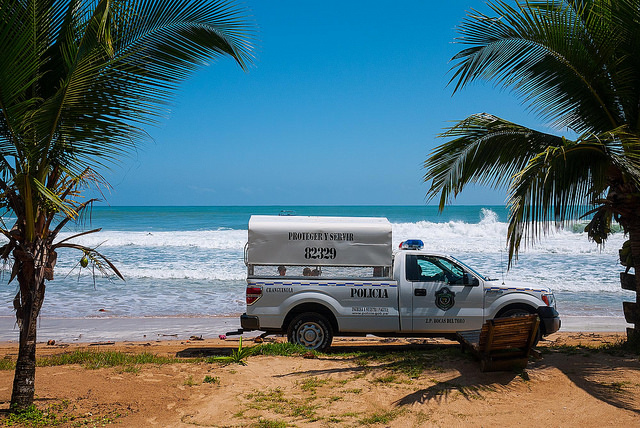
A second major factor contributing to foreigners becoming the victims of theft is the simple fact that local police authorities are usually undermanned and often view property theft as a less serious matter. Even in those areas where there is an active police presence, such as beaches or resorts, the incidence of theft of personal belongings is still high.
Reporting a theft can be a challenge in and of itself. If you are not conversant in the local language, usually Spanish, trying to make a complaint can be a frustrating experience. Even calling 911 (or the local equivalent) may not generate a response for hours; again, this lack of a rapid response is not dissimilar to that in many U.S. cities.
Even if the police catch the thief, or thieves, the chance of getting your property back is slim to none. In many cases, when something is stolen, it is a crime of opportunity. If the thief can’t use it or sell it, the item(s) will be tossed by the side of the road or in the garbage. It also isn’t uncommon that these “banditos” are known to local authorities and could be let off with a stern warning not to do it again; suffice it to say, that’s a warning that falls on deaf ears.
Added together, these factors make it understandable why the potential for theft from tourists and expats is considerable. However, the existence of the problem does not make it an inevitable occurrence.
What Are Target Items?
Obviously, cash and credit cards are number one on thieves’ lists. Right behind those items are passports; there is a growing market for foreign passports, particularly U.S. and European, that has made these identification documents very desirable targets.
Electronics of all kinds, computers, laptops, tablets, digital cameras, cell phones, etc., have long been high on the list of items stolen. Even older models may be viewed as “new” in countries where the ability to buy such products is limited.
Finally, any other personal valuables such as jewelry, clothing, or even shoes can be targets. If it can be used or resold, it might be worth taking.
bartb_pt
Preventive Measures – Reduce Your Risk
There are a number of common-sense approaches to keeping safe throughout Central America. Some areas are safer than others, of course, and the same can also be said of most populated areas in the U.S. and Europe. But in a real sense, location does matter here – more than in other parts of the world.
Here are some tips to help you lower your “theft profile:”
Know Where You Are.
Learning what areas of the city, town, or village you’re staying in are the “rough” parts is often as easy as speaking to other expats, talking to local residents, or checking social media. Avoiding these locations or limiting the time you spend in them (if you have to/want to be there) is a major way to reduce your potential for being robbed.
Avoid Cash and Flash.
Leaving expensive items such as cameras, tablets, and cell phones out in the open is often an invitation to having them stolen. Too many times people will bring their electronics to areas such as the beach, leave them on their towels or beach chairs unattended and, upon returning from a swim in the ocean, discover that those items are gone. It may seem obvious not to do that kind of thing, but it does happen far more often than you might expect.
Similarly, flashing a large amount of money in places like clubs or bars is not a wise idea (in any location in the world). Just because you may not be paying attention doesn’t mean that others aren’t. A related matter would be leaving purses or wallets exposed without someone watching them; again, this happens far more than you might imagine.
Locks Are Good Things – Use Them.
For many expats, living in paradise means being more relaxed, not having to worry about security, and enjoying the tropical experience. This is certainly a romantic vision and one that, unfortunately, ignores some basic realities.
Always keep your car locked when you park it, especially in high tourist areas. Even with police being present, an unlocked car or truck is an open invitation. When there are crowds clamoring to see the sights, it is unrealistic to expect that security or police can (or will) watch everyone. On a related note, don’t leave valuables or luggage in your vehicle unattended; again, this is like putting a “welcome” sign to thieves looking for an easy score.
Even though it may feel wrong, use the locks on your residence. Expat residential areas are often scouted for those places where a simple, unlocked door can provide a gateway for the treasures within.
Keeping Safe Makes Life Easier
Being an expat, immersing yourself in new cultures, and enjoying the potential that life in the tropics holds can be the most rewarding experience one can have. Using common sense when it comes to you and your belongings can make your expat life easier and more enjoyable. The world is out there; travel safe and enjoy the journey.
Up Next

7 of the Top Places U.S. Expats Are Living in Latin America (and Why)

Central America's Best Real Estate Buy

The World’s Top 10 Best Places to Put Your Money

Nosara, Costa Rica Everything You Need to Know. I Mean Everything.
Imagine a small, beautiful beach town surrounded by jungle and wildlife with a peaceful multicultural community and many of the comforts of home. That place, named by National Geographic as one of the top surf …
(Read It)
Panama City, Panama Real Estate Market Update
Today we have a guest post written by Kent Davis, owner of one of the most successful real estate brokerages in Panama City The Panama City real estate market may have finally taken a turn in …
(Read It)
Top 133 Costa Rica Websites for Expats and Investors
Did you know there are dozens and dozens of great resources on Costa Rica for expats and investors? Sure, we have a ton of resources for Costa Rica on our site, and a whole bunch …
(Read It)
The Truth about Living in Costa Rica: The Good, the Bad, and the Muddy
It's easy to find tons of articles and information out there highlighting all the great benefits of living in Costa Rica. But it's also easy to read those blogs and marketing pieces and think, "Yeah, it …
(Read It)
Why Nosara, Costa Rica Is Not Your Average Surfing Town
A deeper look at Nosara and its history will quickly reveal that this long-time mecca for surfing enthusiasts offers so much more than just the sand and sea. The increasing interest in the area as a …
(Read It)
Expats Are Still Falling in Love with Nosara and Here’s Why
What was once the up-and-coming expat haven of Nosara, Costa Rica, has blossomed into one of Costa Rica's most established expat communities that continues to be ranked near the top of the list of most desirable destinations in the Latin …
(Read It)

I travel to Uganda twice a year (10 trips and counting) and all this is very true there, as well. Not much violent crime, but a lot of petty theft. Our rules to live by there, which we’ll follow when we find our place to retire outside the US, include the above, as well as:
* NEVER leave anything in your car, especially a purse, laptop case, backpack, or other electronic device, that can be seen from outside. It doesn’t matter if your car is locked or not – it will disappear.
* NEVER wear your purse behind your arm. Swing it around in front and keep a hand on it.
* NEVER get money out of your wallet at a market. Before you go to the market, put some cash in your pocket and use that. If you think you’ll spend a good bit, divide it between 2 pockets so you aren’t pulling a lot out at once.
* NEVER keep your cell phone in your back pocket.
* If you drive with the windows open, close them at stops or make sure you’re not on the phone at a stop. If you are, have your phone over the ear on the inside of the car. People will snatch your phone right out of your hand
* Put your car seatbelt around your purse strap when driving, so if someone opens your door, they can’t snatch your bag.
* If you’re out somewhere and need to step out to the restroom, either take your purse or backpack, or make sure the people you’re with know they’re supposed to watch it. Better yet, hand it to them.
* Don’t spend a lot on a local cell phone. I’m on my 5th even with all the precautions (most of them were stolen in my first several visits – I’ve learned!). Make sure you keep important numbers somewhere else, not just on your phone, so when it’s stolen (not IF, WHEN) you still have them.
Hey Jennings! Great tips, thanks for taking the time to comment.