


What could be better than taking a trip to the gorgeous tropics of Central America? How about making the trip affordable?
Due to the booming tourism industry, this may seem easier said than done, and unfortunately, many once budget-friendly destinations, are no longer so. But that doesn’t mean it’s not possible.
Each year tourists from around the world come to experience the tropical climate, Latin culture and exotic beauty of Central America, but many don’t realize that it can be done on a budget.
Costa Rica, Panama, Nicaragua, and El Salvador are four popular Central American countries that can be truly experienced without breaking the bank in the process.
First Stop, Costa Rica

The most popular tourist destination on the list, and arguably the most tourist friendly, Costa Rica can tend to be a bit pricey But don’t worry, there are ways to keep your costs down.
In big cities like San Jose, prices will typically be higher, so hop on a bus and head for one of the smaller beach towns. A five hour direct bus to a town like Santa Theresa will cost you around ten dollars.
Remember to exchange your money into the local currency colones, as usually only expensive items/places accept American money. Seek out cheap accommodations at a hostel (around ten dollars) and start exploring the beauty of Costa Rica.
On to Panama

Photo: Martha de Jong
Although the tourism industry here is not quite as developed as their northern neighbor Costa Rica, Panama is just as beautiful and the prices are often lower. Again, buses will be the cheapest mode of transportation and hostels your best bet for reasonably priced accommodations (around twelve dollars for a bed). As a perk, many hostels will have communal kitchens, so take advantage of the local market and cut another cost by cooking your own meals. If cooking on vacation isn’t for you, try to avoid restaurants aimed at tourists and instead look for street stalls and small cafes.
Next It’s Nicaragua

Photo: McMallan
Just north of Costa Rica, Nicaragua, known as the land of lakes and volcanoes, is cheaper and attracts a lot less tourists. In fact, you can catch a bus from Costa Rica to Nicaragua for just a few dollars, but remember, you will have to pay a fee of seven or eight dollars to get into the country. Once you are in Nicaragua, exchange your money into córdoba’s and head for small towns like El Trasito, Popoyo and Playa Maderas to soak up the sun and experience the amazing surf. If you visit Isla de Ometepe, be sure to hike up the double-volcano nestled in a lake filled with fresh water sharks, or you can try remote Little Corn Island for cheap kayaking and snorkeling.
Last Stop – El Salvador

Photo: Amber and Bryan via flickr
While El Salvador may not be as popular a tourist destination as the others, most who visit are pleasantly surprised. The people are friendly and welcoming and there are many wonderful, and cost efficient things to enjoy, like taking a trip to the beach town of El Tunco just an hour from the capital San Salvador. Yes the food is a little pricey, but the hostels are cheap and the surfing and swimming is unbeatable. Explore San Salvador on a five dollar bike tour that takes place every Thursday night, or take a leisurely stroll around the city to check out the politically-charged street art.
Ready to go? Remember these tips:
- Take advantage of local transit. While bus rides may be longer, the cost is substantially less.
- Eat like a local. Avoid tourist-targeted restaurants and look for low-key local spots.
- Make the most of happy hour.
- Visit “free” national parks for hiking and observing nature and wildlife.
- Stay in a hostel. Typically group and private rooms are offered.
- Surf and swim – it’s free!
It’s a common misconception to think that a good holiday means an expensive holiday. Cliché but true, the best things in life are free, especially when you are somewhere as beautiful as Central America. The sun, the mountains, the beaches, the surfing, it’s all free and all unforgettable. If you are not overly concerned with five star transport and accommodation, Costa Rica, Panama, Nicaragua, and El Salvador can all be yours at a reasonable cost. So do your research, book your plane ticket and get ready to discover the wonders of Central America without putting a dent in your wallet.


Does the thought of becoming an Expat scare you? Here are nine tips on helping you make a smooth transition into life abroad.
1. Be Certain About Your Move
Moving is stressful. Go for the right reasons. If possible, visit the country before you make up your mind and most importantly, make your OWN opinions.
2. Will Your Benefits Follow You?
If this is a corporate move you might luck out and be eligible for relocation benefits. Ask, it’s worth knowing. If you are on Social Security, check with the embassy, the more information before the move, the more comfortable you will feel.
3. Make a Budget
Taking the time to make a budget is sometimes the difference between a successful relocation and a disaster. Before you go, find out what you can expect as your new cost of living…budget for the unexpected!
4. Insurance – What Type and Where?
Take the time and prearrange for the appropriate insurance (such as health, life, and travel) for yourself and your family. Find out what type of health care options, even insurance, and infrastructure are available to support you, especially if you suffer from a medical condition that requires treatment or medication.
5. Banking – Here or There?
More than likely you will need to open a bank account in your new country – look for information on the one that suits you best. Bring reference letters from your bank at home. Is it wise to keep your current account open? Most likely yes; do your homework and find out what foreign transaction fees you might incur. At the very least, you’ll need to tell your current bank that you’re moving.
6. Can I Take My Credit Cards?
Your credit card companies will need to be informed you’re moving; it is wise to also see if the cards you hold are widely accepted.
7. Will You Need to Exchange Currency?
When moving abroad you might not be using the same currency as your homeland. Therefore, even a 5 per cent shift in the exchange rate can make a huge difference in how far your money stretches. There are websites which can help, checkout www.x-rates.com and select the currencies. It provides historic information and you will know whether your exchange rate is good – and whether to wait a few more days before you run to the bank.
8. Yes, There Is Paperwork
Use this rule: if you might need it, take it. No matter how insignificant a document seems, it’s better to have it on hand, than be without. Chances are, at some point, you’ll have to show it to someone. Important documents you will want to think about include: birth certificates, police reports (often needed for immigration processing) wedding certificates, educational certificates, and medical certificates (including those for your pets).
9. Go Ahead, Make Friends!
Friends are like a security blanket, whether locals or fellow expats, nothing will help you feel more at ease than being able to rely on the assistance of your friends when you need it. Socializing is not time wasted, it’s what makes a new country feel like home. Picking up and moving to a new country can be both a bureaucratic and emotional nightmare at the best of times, but if you are prepared, you stand a good chance of a stress-free relocation.


When it comes to real estate, there are always two choices: should you be renting or should you buy? Wherever you are in the world, whether New York City, Panama, or Ecuador: those two options never change. If you’re planning to start a new life overseas, you’re going to have to think carefully about which of them is going to be best suited to your upcoming overseas adventure.
The general wisdom is that buying is a better investment. When you buy a home, the money that goes towards paying the mortgage is money that you’ll be able to recoup if and when you decide to sell. However, if you’re thinking about emigrating or retiring to a tropics location like Panama or Nicaragua, you may find that renting is the best option, at least in the short term.
Why Should You Rent?
The first six months of any overseas move is a very crucial time. This is the time when you will either settle in to your new home and begin to thrive, or when you decide that it’s just not for you. Because of this, many sources recommend that for the first six months of your overseas move you rent. This gives you a bumper zone to decide:
- Whether the life in your new country is for you, and,
- Whether you have picked the right location within that country.
If you rent initially, you have the freedom to decide whether or not you’ve made the right decision with no long-lasting financial implications or responsibilities. If you decide that you want to go back home, or that you want to be in a different type of neighborhood, no problem! You don’t have to worry about selling up, and going through the extra costs of a move: you can just give notice on your lease and make your next move.
In addition to giving you greater flexibility during the first part of your big move, renting can have many other benefits for expats.
- You don’t need to worry about home maintenance. If you own your own home and something goes wrong: you’ll need to start the daunting process of looking for a contractor. If you’re renting, you’ll have a landlord at the end of the phone who will manage everything for you.
- You don’t need to manage the expense of importing furniture or buying new. You can rent a home already furnished, which takes away the trouble and the expense of deciding what to do about furniture.
- You don’t need to consider as many legal aspects. There are far fewer legal considerations to think about when you rent instead of buy. This can be a huge draw if you’re feeling daunted by the amount of paperwork involved in a move overseas.
- You don’t need to find local finance options to get a mortgage. Some of the most popular tropical locations such as Nicaragua, Ecuador, and Uruguay just don’t have local options available for financing. If you don’t have the means to buy a home outright, in some locations renting will be all that’s available.
The Bottom Line
When you’ve owned your own home for most of your life, it can be difficult to come to terms with the idea of renting. But the truth is that it’s often the best option for your move to the tropics: at least at first. Renting a place to live will allow you the flexibility to get used to your new surroundings and decide if the first place you’ve settled is where you want to remain long term.
The reasons to relocate to a haven overseas like Santa Fe, Panama, or Monte Verde, Costa Rica are wide and varied: but most people don’t do it primarily because they want to be a Latin American real estate owner! Remember that starting a new life in the tropics is more about the adventure than the investment opportunity! Why not stop buying, and start living?
If you decide to move forward with the renting process, you won’t need to do it all on your own. Think about using the services of a rental agent who is based in your destination country, and make sure you’ve considered these 14 pointers for renting abroad.

The Travel 3 Count, where we bring you 3 travel stories that you shouldn’t miss.
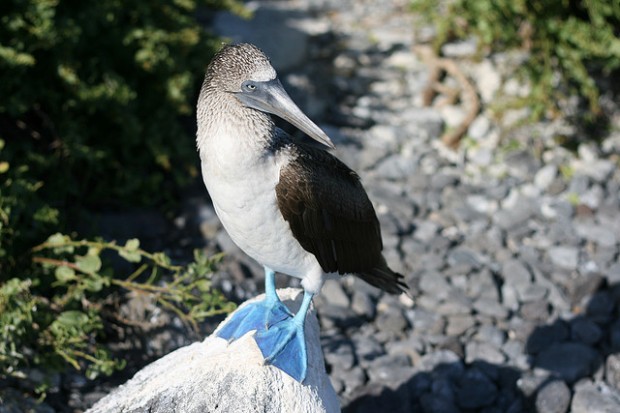
Ecuador’s Galapagos is a must see destination in 2013.
1. Destinations to Watch in 2013
First Up: Conde Nast Traveller’s destinations to watch in 2013 list includes some of Latin America’s gems. Here are the top Latin America destinations to watch in 2013.
- Panama. No longer just a place where ships pass in the night, Panama is the cool Caribbean destination of the moment.
- Mexico’s Mayan Riviera. The Mayan Riviera is set for a bounteous year in 2013.The vibe is deliberately hippy-chic, lo-fi by day and up-tempo at night and is a great place to stay for discerning travelers seeking barefoot luxury.
- Ecuador’s Galápagos Islands Galápagos is one of the most fascinating places on earth, an evolutionary melting pot. It’s already at the top of many wishlists, for the intrepid and for animal-lovers.
2. 21 Cheap Places to Visit… Where Does Latin America Come In?
Up Next. Want to travel, but don’t want to spend lots of money? These 21 cheap travel destinations let you get the most bang for your buck. Want to try it? Tim Leffel’s can help. His mission is to show cheapos how to find travel destinations they can afford.
Where is his favorite cheap spot in Central America’s? Ometepe, Nicaragua.
In Nicaragua, it’s a wide-open blank slate, because there isn’t much tourism outside of Granada and San Juan Del Sur. That means there are but a few nice hotels and restaurants and your main mode of transportation is mostly on chicken buses. But if you want cheap and exciting, Nicaragua is your choice.
3. 6 Must See Latin American Destinations
Finally: With over 7 million square miles to cover and 430 million people to meet between Central and South America, deciding where to start your Latin American adventure can be a little tricky, but with Bootsnall Travel Guide’s six must-see Latin American destinations, the planning just got easier.
- 1. Quito, the Amazon, and Cuenca – Ecuador
- 2. Rio de Janeiro and Iguazu Falls – Brazil
- 3. Lima, Cuzco, Lake Titicaca and Machu Picchu – Peru
- 4. Buenos Aires to Santiago via Bariloche – Argentina & Chile
- 5. La Paz, Sucre and more – Bolivia
- 6. San Jose to Panama City – Costa Rica & Panama
Adventure-lovers rejoice! These top sports are certain to deliver pure beach bliss, idyllic islands, curious creatures, and small towns packed with charm.
If you don’t spend your nights jaunting around casinos, ordering martinis shaken, not stirred, and casually assassinating a whale or two on the way out then you’re probably not James Bond.
So if you’re not James Bond, and if you’re not a crook (we’re just going to cross our fingers and hope you aren’t…but if you are, thanks for reading!) then why would you need an offshore account? And what are the chances of you getting one without spending all the money that you want to put in it?
We’ve done some research for you and figured out the how’s, the where’s, the why’s and the who’s, because we’re here to help you out!
Why Bank Offshore?
Everyone has their own reasons: some do it because they are always travelling (and it just makes sense to put their money where they get the best benefits), some do it to avoid tax, some do it because they don’t trust their country’s economy (look at Zimbabwe, for instance) and some do it because what they’re doing is illegal.
Whatever the reason (let’s hope the latter isn’t it!), you’ve been thinking about putting some money overseas, and now you want to know the logistics.
How to open an offshore account?
Firstly, you have to realize that this is going to cost. So make sure you aren’t putting aside that $10 that your five year old son has been saving for the last two years. As to how much, that varies from country to country.
If you’re a U.S. citizen here’s a quick heads up: it is legal for you to invest your money overseas, but if it’s over $10,000 then you’ll have to declare it. Also, U.S. citizens are required to do a lot of paperwork or you could get into deep water. Be safe, and get someone who knows what they’re doing to help you out with dotting your i’s and crossing your t’s.
Logistically, you can do it all from your office desk. You don’t need to go to the country to open an offshore account. Through email and telephone you can complete the whole process these days. This, however is not ultimate. Rather make the trip, and build a rapport. And remember, if you haven’t been to the place, you should be thinking about the ‘who’.
Who to open an offshore account with?
Who are you investing your money with? In terms of a country as a whole, double check on their stability: a coup, an accounting scandal, or even something as innocent as a natural disaster could wipe out your entire investment. At least if you visit the place before you invest you’ll have a look at the functioning of that country: and if you get off the plane and into a civil war…well then maybe plan B wasn’t such a bad plan after all!
The country might be fine, but do remember this is a shady area of law. With shady areas come shady characters. It’s very important not to get mixed up in here too…how embarrassing to lose your investment because you deposited your money into the account of an arms dealer? Protect your reputation, and use a company that has a good one too.
Another nifty review of good legitimate banks is through Fitch Ratings. This website allows you to make a free profile with which you can check the ratings of banks from all over.
Where?
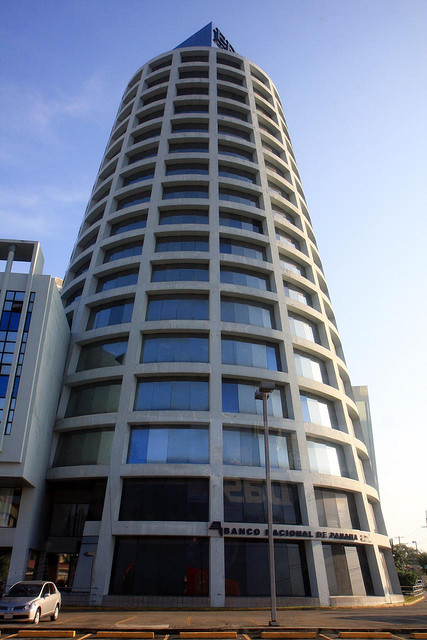
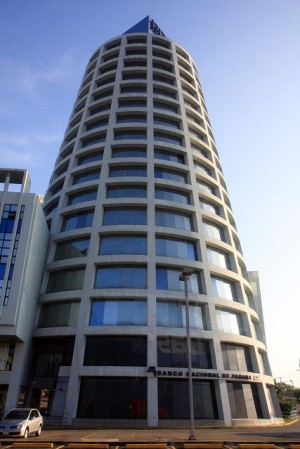
Photo by Steve Velo
It depends. I know you didn’t want me to say that, and that you wanted a ‘winner-takes-all’ answer, but here’s where you need to decide what you want.
You need to decide how secretive you want to be and how easy it is to track your account to you personally (by registering as a business entity, for instance) or whether you want an account that rather protects the account’s details itself.
If you choose a country which won’t disclose your information to the IRS, for instance, then the responsibility lies with you to declare it, or not. The Matador Network has made a list of the 10 Best Countries in which to open an offshore account, naming Panama as their number one.
If you follow this list, at least you know your money’s going to a beautiful place. And also, if you’ve been storing it for illegal reasons, you might end up here too! (I take that back. There’s no place for crooks in Panama, rather go invest in Cayman Islands. Or anywhere else. We only have good solid investment banks for good solid people folks.)
Most of all, be smart.
Good luck!

 It wasn’t easy moving to Central America. It’s not easy to uproot your family just like that. You keep wondering – is this really worth it? Will it work out?
Not so long ago I went back to the U.S. to visit everyone and it was through this visit that I saw just how much it has worked out.
Being back in the U.S. I immediately got sucked back into the fast-paced lifestyle
I mean, routine-wise, we did the same things as I do in Central America, but the ways in which I approach these things has entirely changed.
And so I came up with the ratio of effective living: to see the amount of time spent doing that which you love, versus all the other admin-stuff.
My pattern wherever I’ve lived is similar to most people’s: I get up. Eat. Drop kids at school. Work. Pick up kids. Cart to after school activities. Do some chores. Buy admin-stuff, like food. Cook that food. Clean up. Sleep. Repeat five times a week, forever.
In the U.S. it involved at least two hours a day in the car, just going to-and-fro, as well as shopping a heap of different places for different niche things. It involved different schools for different children, with their different schedules and different needs all over town.
It was time-consuming to put it lightly.
In Central America, however, life’s different
Choices are limited. When I go into the supermarket (where I do the weekly shop) I am limited with choice: instead of fifty different types of cheese there’ll be three. This limitation saves me time – it means I nab the cheddar and off I go, not worrying about the fact that it comes from the local dairy and not from France. Instead of being too exhausted after running around town for cheese all day I can actually use it for supper and sit down to eat the mac-and-cheese I just made for my family.
Having supper and breakfast is something I do with my family nearly every day. Things like these, things that are important to me, I can make time for. Why? Because I’m not sitting in traffic; because soccer practice and music lessons? They’re both offered at the same place: at school; because I actually have time.
Moving to Central America has improved my effective living ratio. Living here has shown me how to spend my time. It’s shown me how much of it that I have, and how I should use it. With the beach being five minutes away, it helps me focus on doing a quick shop and getting out there for a surf; time for a run. Time to myself.
It’s changed my approach to life. It means that I have time to do the things that I love.

I whipped out my calculator to put a value on my time. Say I am awake 16 hours a day. In the U.S., chores (fetching-and-carrying kids, shopping, traffic, those sort of mundane things) would take me around 3-4 hours a day.
So what, if it’s four hours that’s 75% of my day doing that which I want.
In Cental America, I’m living 95% effectively.
Not bad.
But wait…that’s 120 hours in a month wasted on the mundane.
And that’s only if you don’t count your job as mundane…otherwise add another 8 hours a day.
In Panama I spend 15 hours of a day doing the things that I want to: I use my time. I use it to surf, to spend time with my family, my friends. I spend time living. And effectively at that (93.7%).
It wasn’t an easy decision to move to Central America, to leave the comfort of the U.S. But the comfort living here has brought us all is worth it.
I’m living effectively. And I love it.

FATCA, or the Foreign Account Tax Compliance Act, was enacted in 2010 and has been in effect since January 2013. This Act was passed with good intentions: to target those who evade tax in the U.S. by not disclosing their offshore accounts to the IRS. That’s good, I thought, people must pay taxes or suffer the consequences.
And then I read on. The key provisions of FATCA force all global financial companies to report the details of U.S. account holders with more than $50,000 to the Internal Revenue Service (IRS), the U.S. tax authority. This is because the U.S. is one of the only countries to tax their citizens on their worldly income.
What does FATCA mean?
It means that Foreign Financial Institutes (FFIs) must act as pro bono tax collectors for the IRS, or suffer hefty penalties. It goes on to state that if a U.S. citizen refuses to give out these details then the FFI’s must impose a 30% tax on all payments/transfers associated with the account.
So already, if you’re an FFI, you can start to feel a little twitchy about dealing with FATCA. So what if all FFIs just ignore the whole thing? This Act seems to have thought of everything (but the prejudice it is creating!) and goes on to say that if an FFI doesn’t register with the IRS and comply with these provisions of reporting and taxing, that the FFI itself will be charged with 30% Withholding Tax.
World economics
It is (conservatively) estimated that FATCA will have an initial worldly cost of $10 billion, with the cost to a large global bank (like HSBC, for instance) staggering at $100 million. This looked at in the broader scheme of things where the IRS itself has estimated that FATCA will bring in less than a billion dollars in revenue.
It’s only natural that small FFIs are trying to exclude U.S. citizens from banking with them, while the larger banks are dealing with the logistical nightmare with deciding what constitutes a U.S./non-U.S. investor, and sharing that information about their investors to all international branches.
Legally speaking
Let’s talk about the legalities of it. FATCA itself, a U.S. piece of legislation, conflicts with the laws of other countries. In some countries the sharing of personal details (as required by FATCA) is illegal for a company to do. Companies who do not want to break the law may not be able to comply with FATCA, and will therefore be charged a Withholding Tax for being a legally abiding entity.
And this even if you are dealing with Non-U.S. transactions between Non-U.S. businesses not in the U.S., you must still conform to U.S. legislation. How is that logical? Simply, it’s not.
Another outcome from the Act could lead to U.S. taxes being imposed on international transactions. The International Swaps and Derivatives Association put it like this:
The pass-thru payment rules could potentially impose US withholding tax on an interest made by a British bank’s London office to a German bank’s Frankfurt office if the German bank is a non-participating FFI and the British bank is a participating FFI, providing the British bank holds any US assets in any of its global offices.
Such a transaction would require the British bank to withhold a 30% tax on the exchange.
There are lots of knitty-gritty, investor-jargon details on this, if you’d like to find out more: http://americansabroad.org/issues/fatca/fatca-is-bad-for-america-why-it-should-be-repealed/
This sort of legislation needs to be repealed. But that can only happen if we all stand up and say ‘what the FAC!’
Stay tuned.
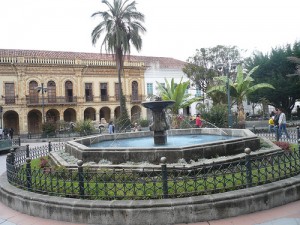

Cuenca, Ecuador Named Top Expat Destination for 2013
The world’s top retirement spot? In truth, it depends on you. There are many appealing options for a new life in retirement as an expat, as many people are now looking for ways to stretch their dollars. It makes sense, living expenses can be cheaper, cultural experiences richer and the lifestyle more satisfying as an expat.
The top retirement spots for 2013 have a variety of cultural offerings, climates, and lifestyles. Each destination is desirable in its own way, but they all offer something increasingly hard to come by at home: A good quality of life for a reasonable price.
Here is a guide to the best places to retire overseas in 2013:
1. Ecuador
Living on $1,600 a month including rent isn’t unreasonable in a place like Cuenca, Ecuador. Buying a house or condo near the water could cost you less than a quarter of popular U.S. destinations of similar climate. When you make the move, Ecuador allows you to import your household goods duty-free, and with its new, simplified visa process, it’s no wonder Ecuador tops the list as a best-value retirement paradise.
But for many, the true draw is the perfect climate. The nation lies on the equator. The beaches are tropical, but up in the Andes, the weather is mild and spring-like year-round. Best bonus yet, it’s one of the best countries for an expat business start-up.
2. Panama
In Panama’s capital city you can have all the U.S. comforts of a big city, including outstanding healthcare, restaurants, and daily activities. On a monthly budget of $1,700 to $2,500 a month you could eat out regularly, have a housekeeper come in a few times a week, and enjoy movie dates a few times a month.

View of Panama City skyline, a top expat destination for 2013
Panama’s major draw is its Pensionado (pensioner) visa, where qualified retirees achieve residence status fairly quickly. The program entitles visa holders to discounts on medical treatment, dining, movies, and more. Most expats in Panama regret they didn’t come sooner, as many say they chose Panama for the friendly people…its rainforest…plentiful beaches and the choice of secluded or city living lifestyles.
In Panama it’s possible to put a toe in the Pacific after breakfast and in the Atlantic before dinner…on the same day. There are cloud forests for bird watching, such as the resplendent quetzal, and even orchid gazing, all in the same weekend.
3. Malaysia
Malaysia is Asia’s Panama. That is to say, this country is a regional and a global hub, for trade, for business, and for culture. Malaysia is a multi-ethnic and multi-cultural country which attracts many tourists annually.
Penang, Malaysia offers expats an affordable living under $2,000 a month in what is considered “luxury housing” in the states. Here, an expat can eat out often and enjoy all the things the city has to offer along with top notch medical care at an affordable price.
Malaysian expats feel the country has everything. Its weather is a tropical 82 F all year round and its beaches, islands, and jungles are pristine. It has some of the region’s best street food, great restaurants, bars, shopping malls, and movie theaters—and it’s all affordable.
4. Mexico
Mexico’s colorful and vibrant culture does rank high with expats who live here…look deeper and Mexico has much to offer. Mexico is an easy, convenient choice for many expats who are seeking a first-world country at bargain prices. No wonder a million or more expats make Mexico their home.
Today’s Mexico offers modern highways and airports, cable and satellite TV, Internet, and many other items expats enjoy at home. Want your “big” U.S. lifestyle abroad, you’ll get it in Mexico with an overall cost of living at about half of what you’d pay in the U.S. or Canada.
And one of Mexico’s biggest pluses is its sheer size and variety. If you want beach, Mexico has thousands of miles of it—chic resorts, sleepy beach towns, and everything in between. Prefer cool, mountain scenery? Mexico has that, too. More likely than not, whatever you’re looking for in a retirement destination you will find it in Mexico.
5. Costa Rica
Costa Rica is where you go to live the lush life. It is lush with nature—misty rain forests, extraordinary wildlife, active volcanoes, and fabulous beaches—as well as such comforting amenities as malls, supermarkets, restaurants, museums, and social clubs.
U.S. retirees have flocked here for years, drawn by its mild climate, prosperity, literacy rate, health care, and, significantly, stable government. Another plus: Costa Rica’s commitment to a thriving natural park system that is second to none in Latin America. This is as biodiverse a country as you’ll find anywhere. The country offers micro-climates, meaning you can fine-tune your weather by moving up and down the hills.
Though not the bargain it was a decade ago, Costa Rica continues to draw moderate-income retirees, who meet the country’s requirement of income of $1,000 per month from Social Security or a pension. Best part, residence is easy enough that just about anybody can do it. Residents are eligible to join the universal health-care system, known as Caja. The cost, based on income, can be as low as $49 a month. After that, care is free.
6. Nicaragua
Want a budget-friendly retirement destination? Think Nicaragua. Geographically, the nation is blessed with two long coastlines and two big lakes, plus volcanoes, highlands, rain forest, and rivers. In this manner, it has everything Costa Rica and Panama have, but it’s less discovered and developed and available to adventurers and eco-travelers at bargain rates.
Property values have fallen significantly in this country over the past several years, thanks to Ortega’s re-election and then the global recession. As a result, you can buy one of Granada’s classic Spanish-colonial haciendas for $50,000 or less. A couple could live comfortably in this city on a budget of $1,200 per month.
Best of all, its lower cost of living does not mean you have to sacrifice the quality of life, in fact, it’s possible to live in Nicaragua with even more luxuries than you were accustomed to, simply because the prices are so low.
Retired Expat Communities
All these destinations have large expat communities, so doing your research can put you among other people like you; with similar interests. Learning a foreign language will probably be a requirement; but again if you have a sense of adventure, and don’t want the typical cookie cutter retirement this could be something new and stimulating.

When IRA’s (Individual retirement accounts) were introduced in 1974, they seemed to be the dream shelter for reducing taxable income. The funds were handed over to a custodian who would typically invest in stocks and bonds that would increase the value of the IRA.
Since the average person earning a middle class wage is either wary or unskilled at increasing individual assets through stock market speculations, this custodial service felt like a safety net during the era of a robust economy.
All good things come to an end. Over the last few years, many IRA investors have felt the uncomfortable slump of mutual funds that vanished down the tube and bonds that sat around doing next to nothing.
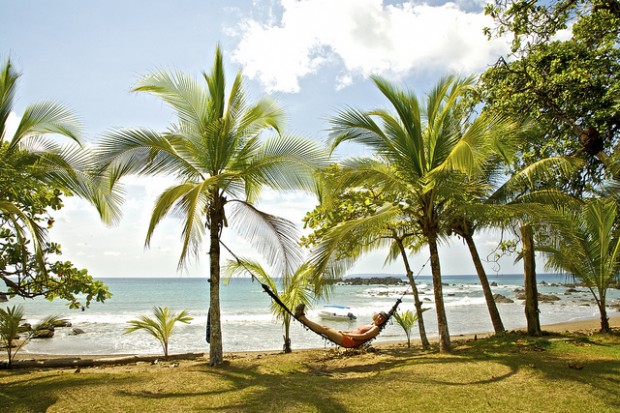
Use your IRA to buy your dream home in paradise
Why Self-Directed IRA’s
Motivated by the uncertain market, there is a growing trend among IRA holders to switch from traditional IRA’s to self-directed IRA’s. Typically, IRA custodians place restrictions on what you, the investor, may or may not do with your funds. You may not invest in collectibles, such as antique furniture, stamps or artwork. You may not invest in life insurance.
Many traditional IRA custodians do not permit real estate investments unless it is held indirectly, such as in a real estate investment trust. The range of investments are much broader with a self-directed IRA.
The account owner must still go through a custodian or trustee, who ensures that all transactions are within the requirements of the IRS, but the holder takes charge of how the money is to be invested. Typical uses of self-directed IRA’s include mortgages, franchises, partnerships, private equity, and real estate.
Real Estate Investments
Real estate has become a hot topic. Under the terms, real estate may include both U.S. and international residential and commercial properties, raw land, farm land, property renovation, development, and rental income.
Even if you haven’t reached retirement age yet, you may use your IRA funds to purchase and rent out your valuable investment, with the proceeds rolling back to your IRA account, tax free.
Where the American Dream Failed
Foreign investment is really the best way to go. The financial advice of the U.S. real estate market today is to invest in rental units. As America falls deeper into debt, even rental units face a dubious future with increasing restrictions, code regulations, and insurance demands dwindling away at the profit income.
You could find yourself the proprietor of a trailer park, or an apartment complex, with clients that come and go, with no more regard for your property than for a second-hand car, and your retirement years spent straightening out quarrels, repairing faulty plumbing, and cleaning up the refuse others have left behind. Lawsuits are an endless headache for rental unit owners and property depreciation is always a dangerous possibility.
While the country that once invited in the poor and tired masses becomes the poor and tired masses, Latin America is on the fast track to growth. The IRA funds that you invested in a modest home to rent out until the day you no longer had to punch a clock could purchase twice the grace and beauty, along with fewer restrictions and more opportunities to enjoy the life of adventure you dreamed about having upon retiring.
Investing in Foreign Real Estate with a Self-Directed IRA
You can buy your dream property on the Caribbean outright if you have enough funds in your self-directed IRA LLC bank account. Purchasing outright means paying all the closing costs, along with any taxes, fees or insurance required to settle the deal.
If you don’t have enough, you can partnership with a family member, friend or a colleague, with the percentage paid according to the agreement of property ownership by your shared agreement.
Your options for what you do with your foreign investment are liberal. You can use undeveloped land to create a tourist attraction. You can make improvements on a developed piece and rent it, or simply decide this is where you wish to have your home, and rent it out until retirement.
Live Free
Your home is no longer your castle north of the border. Even if you own your property outright, you are restricted by regulations and zoning codes that tell you what you can and cannot have, and in some cases, even the color you paint your house.
The cost of living is so high, a few thousand dollars a month still puts many in the low income bracket. By investing in foreign property with your self-directed IRA, you can expect a higher standard of living and live free, with fewer restrictions on what you can do with your new home.
The Expat 3 Count, where we bring you 3 stories that you shouldn’t miss.
1. Expat Challenges: 3 Things Surveys Never Tell You About Being an Expat
First Up: Though you might dream of fun and adventure as an expat overseas, there are a few things you might wish someone would have told you before you packed up and left.
Becoming an expat is a challenge. Here are three expat tips to keep in mind when making the move overseas:
- It’s wise to create an income source before you leave your home country.
- Plug in to the local community of expats.
- Finally, get a major credit card.
There are many reasons to make the move to be an expat, and if you make it prepared, it will be a rewarding and thrilling experience.
2. Yes, Expats Are Entitled to Refunds from the IRS
Americans living abroad may not believe this, but filing their U.S. tax return could mean cash in their pockets.
Greenback expat tax services points out that if you earn income anywhere in the world, as a U.S. citizen, you will likely be obligated to pay American taxes as well. The U.S. is one of the only nations in the world that requires its citizens to file taxes on money earned while living in another country.
But this is not a bad option, as many expats could be entitled to a tax refund. As the Internal Revenue Service pointed out in a recent memo to expats, ‘even if you are not required to file a tax return, you may still want to file. You may get a refund if you’ve had too much federal income tax withheld from your pay or qualify for certain tax credits.’ It’s worth checking out.
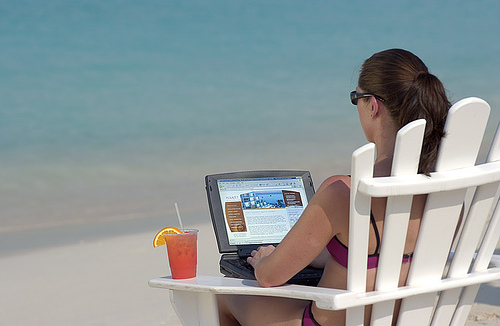
You too can find work as an expat.
3. The Best Ways to Find Work When You Want to Be an Expat
Finally: More than 6 million Americans call themselves expats, the largest number ever recorded, and more are waiting in the wings to start a new life abroad. Costa Rica, Panama and Nicaragua are expat hotspots for those seeking a tropical lifestyle while still remaining employed.
It’s not hard to understand why so many Americans are considering becoming expats as the current job market in the U.S. is highly competitive. Meanwhile many countries, such as Panama, are booming. Interestingly enough, many of these jobs are a direct result of American companies expanding their overseas branches.


Change is daunting. Change is difficult. It’s as good as a holiday, and mostly it’s for the better. If you’re looking for a change let’s face it: you probably need it. And if that change is becoming an expat in Panama, it’s a big one. It needs a lot of consideration. It’s stressful.
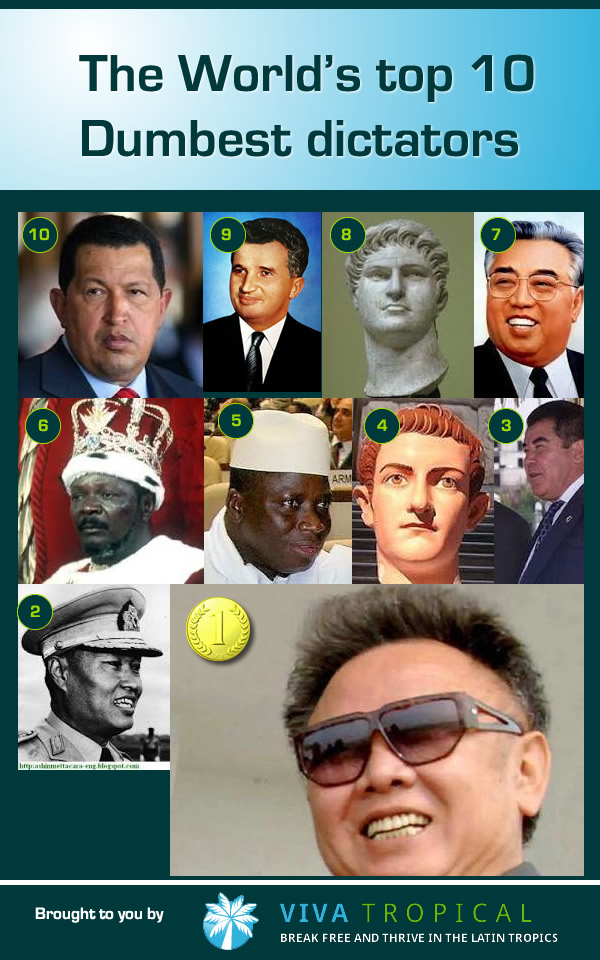
But the great thing is, you’re moving to somewhere which isn’t. To make the journey (pun intended) a little more light-hearted, today we bring you the list of the world’s Top Ten Dumbest Dictators, to show you what some countries dealt with before they realised that they too needed a change!
10. Hugo Chávez
While I know this is probably not-quite-PC (because he died recently) but a life like his cannot go by without admiring that which he did. The late President of Venzuela, Chávez ruled from 1999. And ruled he most certainly did.
My personal favourite jaunt of his was when he suddenly realised that Simon Bolivar (who died in 1830 of tuberculosis) did not actually die from TB but had, in fact, been assassinated. Now everybody and their sister has a small conspirator inside them, so maybe you’re saying ‘so what?’.
So what indeed…He decided the matter needed to be solved and ordered Bolivar’s remains to be exhumed. He then held a live Twitter feed throughout the exhumation (which he was watching) and tweeted ‘Bolivar Lives!’. He also asked Jesus Christ to bring him back to life (unfortunately, Christ didn’t seem to have much of a sense of humour on that one).
A level-headed man, Chávez logically worked out that the Haiti earthquake of 2010 was deliberately caused by a U.S. earthquake machine. This said by a member of the UN…
His supporters, ever loyal, are grieving his death (and will continue to do so until someone exhumes him back to life!).
9. Nicolae Ceausescu
Meet Romania’s 1965 communist dictator. A romantic man at heart, Ceausescu forced all Romanian scientists to include his illiterate wife’s name in their research. While this was obviously not grand enough of a gesture, he decided to build a palace in the capital. To fund this project (on which 700 architects and 20,000 workers were to work at all hours of the day) he exported all of the country’s agricultural and industrial production.
It took his people 24 years to decide that they didn’t want a leader that lead with his heart. They eliminated that problem: and executed the man (his sceptre still in hand!).
8. Emperor Nero
Good old Nero was a real mommy’s boy. I mean, the woman poisoned Emperor Claudius so that her son would become emperor. In true mommy’s boy fashion, he took after her. And over her. I don’t mean literally, because yes he technically was ruling over her, but over her life. He decided that her time was up.
So the next thing on his mind was how to do it. A creative soul, he rigged a chair with a weight to flatten her to death. And failed. Then he rigged a ship to sink, but she swam safely to shore. A sore loser, he dropped the creativity out the window (not rigged) and hired an assassin to get the job done. And that was that.
Surprisingly he became rather unpopular so he committed suicide leaving us all with the (humorous, but not to him) words: ‘what an artist dies with me’.
Moral of the story? No one dies when you’re too creative at it.
7. Kim II Sung
The best thing I can say about this man is that he had great pearly whites. His dentist must have benefited so well from this particular dictator, who’s mission was to make beautiful North Korea ugly by erecting over 3000 monuments of himself. He also made it mandatory for all North Koreans to wear a badge of him (do you think they had the dentist’s number on the back? I hope so).
He liked to refer to himself as the ‘Sun of the Nation’. I’m sure that was also teeth-related.
6. Jean-Bedel Bokassa
 Bokassa started off well. He was the president of the Central African Republic in 1966 (thank the French!). He was a good leader, and at some point this got to his head.
Literally, he went mad. He decided to create the Central African Empire to make himself Emperor Bokassa. No Emperor is complete without a ceremony, of course, which he modelled on the coronation of Napoleon Bonaparte. On this ceremony, he splurged a third of the national budget (yes, nearly $30 million!) and sent the country into bankruptcy.
Because of this bankruptcy children started to complain about the expensive school uniforms that they had to buy with his face on them. He sent them to jail, and had 100 children killed. Then, and only then, did the French decide to remove him from power.
5. Yahya Jammeh
Jammeh is still alive and kicking and you’ll find him kicking along in Gambia, if you’re looking for a miracle healer, that is. This dictator alleges that he’s found a cure for AIDS. Yes. A cure. And if you don’t believe it, he has a governmental agency dedicated to the cause: meet PTPG (Presidential Treatment Programme Group). From them, you can get a list of the local herbs that will cure this incurable disease!
4. Emperor Caligula
Some emperors lead by example. Some don’t. Caligula, the Roman Emperor, was one such man. For starters, he made his sister his mistress and then ordered Rome to weeks of mourning when she died. That was, no laughing and no bathing (for Pete’s Sake. How could you even think of bodily hygiene when your incestial Emperor is sad?).
He never loved another woman since…and so moved swiftly on. To horses. Yes. Caligula loved his horse. He treated him, Incitatus, like a mistress: he bought him royal clothing and treasures. He even made him into senator and later elevated him to the position of consul! (Yes. Rome had a Vice-President horse. Deal with it.)
Among his quirks was the time he declared war on Poseidon, the sea god. He had his soldiers collect seashells from the beach as their form of attack.
Still dealing with it? His guards couldn’t, and killed Caligula.
3. Saparmurat Niyazov
 Niyazov was the dictator of Turkmenistan from 1990 until his death in 2006. If you think his name is a tongue-twister you’d have your work cut out for you in Turkmenistan, because he renamed the month of January after himself, and ‘bread’ after his mother. His personal best was when he built an ice palace (an ice palace in his desert capital, that is)! He banned beards, he banned the practise of lip-syncing (sorry Beyoncé!) and he banned the chewing of tobacco (encouraging citizens to chew bones instead – better for your teeth you know).
The height of his career was when he wrote his book The Ruhnama (‘Book of the Soul’) – about how to live life. He said it needed equal respect as that of the Quaran. The difference between the Ruhnama and the Quaran, however, was that if you read the Ruhnama three times you would automatically go straight to heaven! To illustrate what it meant to go straight to heaven he launched a copy of the book into space in 2005.
2. Ne Win
Ne Win, was new in (see what I did there?) power in Burma through a military coup in 1962. A new man, he thought, meant a new currency. What better way than by changing the old currency to denominations of his favourite numbers: 15, 30, 45 and 90?! Obviously, he banned the old currency so everyone lost their savings along the way. He logic-ed this out (this and walking backwards on bridges, for instance) that this would make him live to be 90. He died at 91, but not before he was forced out of power.
1. Kim Jong II
And the Dumbest Dictator award goes to….North Korea’s Kim Jong II! Firstly, let’s look to what he was all about. He composed six operas, invented the hamburger and was the world’s greatest golfer. (Shooting 38-under par on a regulation 18 hole golf course, that included 11 hole-in-ones. Casual.) And that’s not all! He was also a global fashion phenomenon, was born under a bright star and a double rainbow (because being born under a bright star itself was far too mainstream-nativity-scene for good old Kim) and kidnapped South Korean director Shin Sang-Ok and forced him to produce movies (because the North Korean film industry was not making enough classics for him, it seems!). He also is the only recorded person ever to be able to change the weather with his moods.

As an expat, moving to Panama is a big step as well as a rewarding one. It’s so easy to just pack your bags and venture abroad. And yet, you should be aware that there are certain risks involved in settling overseas. Experts warn that there are a number of easy mistakes to make; here are some of the worst issues expats face when they first move abroad.
1. Expats Don’t Do Enough Visa Research
The first thing to consider when moving abroad is the rules of the country in which you’d like to live. Most countries require a visa for foreign nationals who wish to move there; check with the immigration department of the country for specific regulations. If you will be searching for a job upon arrival or working remotely for a company in your home country, you will likely need to enter on a tourist visa and apply for a more permanent visa when you are in country.
2. Expats Overlook the Little Things
Before you move, change your address with your bank and other financial institutions. If you will be moving frequently or if you need to keep a U.S. address, consider using a mail service, which will provide an address and receive your mail; some services will scan the envelopes and send you an email.
3. Expats Pack Too Much or Too Little
Depending on the length of your planned move abroad and your situation, you will need to pack differently. If you are planning to move for a long period of time, invest more in packing; you will need to ship your belongings. If you are moving abroad for a shorter period of time, consider packing less. Most necessities can be purchased abroad, and travel is easier when you are not burdened with piles of clothing and home accessories.
4. Expats Underestimate the Cost of Living
One of the biggest mistakes made in that first move abroad is to underestimate just how much it may cost to live in a new and unfamiliar country. The danger lies in the amounts that people tend to budget for food, utilities, and other essentials. Some countries are promoted as cheap alternatives to the U.S., but it’s not until the bills start coming in that the differences become apparent. The solution is to assume you will need far more than planned for in your original budget.
5. Expats Are Forgetful of Money Management
If you will be receiving pay when you are living abroad, you will need to open a local bank account. Check with your bank to make sure that your debit card will be usable overseas; if you have a PIN that is more than four digits, you may need to change it. Call your bank and credit card companies before you leave to alert them that you are moving so that unusual activity does not prompt an account freeze.
6. Expats Forget to Budget Moving Costs
When people first arrive in a new country, particularly if it is their first contract or posting abroad, the new and exciting surroundings often put them into ‘vacation mode’. For the first three to six months they want to absorb the culture and the bright lights of their new country of residence and they spend like they are on vacation.
7. Expats Are Sometimes Too Vulnerable
Research is essential, especially for self-made expats who have to figure out everything on their own. Not only do they have to struggle with red tape, but impostors may feel right at home among clueless strangers. Other people’s dreams of living abroad can turn into a lucrative business for con artists. One rule of thumb.
8. Expats Forget to Avoid Scams
Seek out the help of other expatriates, especially those who’ve spent a few years navigating the culture and bureaucracies. They have a wealth of knowledge that most are willing to part with to make your transition smoother.
The urge to spend your life sipping exotic drinks may be so strong that you are willing to do whatever it takes. However, if you use some common sense, you will eventually be able to enjoy your cocktail under a swaying palm tree after all.