


When IRA’s (Individual retirement accounts) were introduced in 1974, they seemed to be the dream shelter for reducing taxable income. The funds were handed over to a custodian who would typically invest in stocks and bonds that would increase the value of the IRA.
Since the average person earning a middle class wage is either wary or unskilled at increasing individual assets through stock market speculations, this custodial service felt like a safety net during the era of a robust economy.
All good things come to an end. Over the last few years, many IRA investors have felt the uncomfortable slump of mutual funds that vanished down the tube and bonds that sat around doing next to nothing.
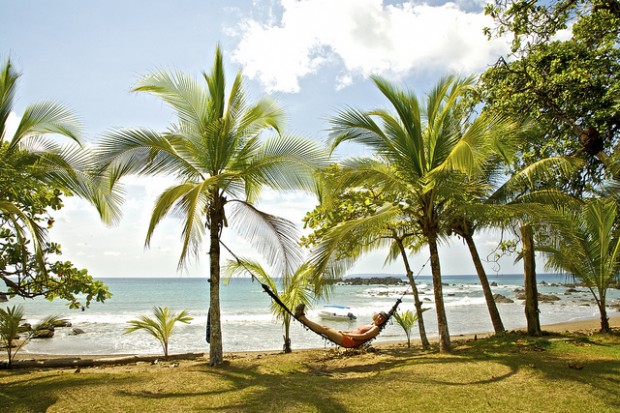
Use your IRA to buy your dream home in paradise
Why Self-Directed IRA’s
Motivated by the uncertain market, there is a growing trend among IRA holders to switch from traditional IRA’s to self-directed IRA’s. Typically, IRA custodians place restrictions on what you, the investor, may or may not do with your funds. You may not invest in collectibles, such as antique furniture, stamps or artwork. You may not invest in life insurance.
Many traditional IRA custodians do not permit real estate investments unless it is held indirectly, such as in a real estate investment trust. The range of investments are much broader with a self-directed IRA.
The account owner must still go through a custodian or trustee, who ensures that all transactions are within the requirements of the IRS, but the holder takes charge of how the money is to be invested. Typical uses of self-directed IRA’s include mortgages, franchises, partnerships, private equity, and real estate.
Real Estate Investments
Real estate has become a hot topic. Under the terms, real estate may include both U.S. and international residential and commercial properties, raw land, farm land, property renovation, development, and rental income.
Even if you haven’t reached retirement age yet, you may use your IRA funds to purchase and rent out your valuable investment, with the proceeds rolling back to your IRA account, tax free.
Where the American Dream Failed
Foreign investment is really the best way to go. The financial advice of the U.S. real estate market today is to invest in rental units. As America falls deeper into debt, even rental units face a dubious future with increasing restrictions, code regulations, and insurance demands dwindling away at the profit income.
You could find yourself the proprietor of a trailer park, or an apartment complex, with clients that come and go, with no more regard for your property than for a second-hand car, and your retirement years spent straightening out quarrels, repairing faulty plumbing, and cleaning up the refuse others have left behind. Lawsuits are an endless headache for rental unit owners and property depreciation is always a dangerous possibility.
While the country that once invited in the poor and tired masses becomes the poor and tired masses, Latin America is on the fast track to growth. The IRA funds that you invested in a modest home to rent out until the day you no longer had to punch a clock could purchase twice the grace and beauty, along with fewer restrictions and more opportunities to enjoy the life of adventure you dreamed about having upon retiring.
Investing in Foreign Real Estate with a Self-Directed IRA
You can buy your dream property on the Caribbean outright if you have enough funds in your self-directed IRA LLC bank account. Purchasing outright means paying all the closing costs, along with any taxes, fees or insurance required to settle the deal.
If you don’t have enough, you can partnership with a family member, friend or a colleague, with the percentage paid according to the agreement of property ownership by your shared agreement.
Your options for what you do with your foreign investment are liberal. You can use undeveloped land to create a tourist attraction. You can make improvements on a developed piece and rent it, or simply decide this is where you wish to have your home, and rent it out until retirement.
Live Free
Your home is no longer your castle north of the border. Even if you own your property outright, you are restricted by regulations and zoning codes that tell you what you can and cannot have, and in some cases, even the color you paint your house.
The cost of living is so high, a few thousand dollars a month still puts many in the low income bracket. By investing in foreign property with your self-directed IRA, you can expect a higher standard of living and live free, with fewer restrictions on what you can do with your new home.

Antigua, Guatemala may be the most spectacular and best-preserved colonial city in Latin America. The Spanish Colonial style permeates every part of this mountain town: its houses, churches, squares, parks, and ruins, also its traditions and folklore as well.
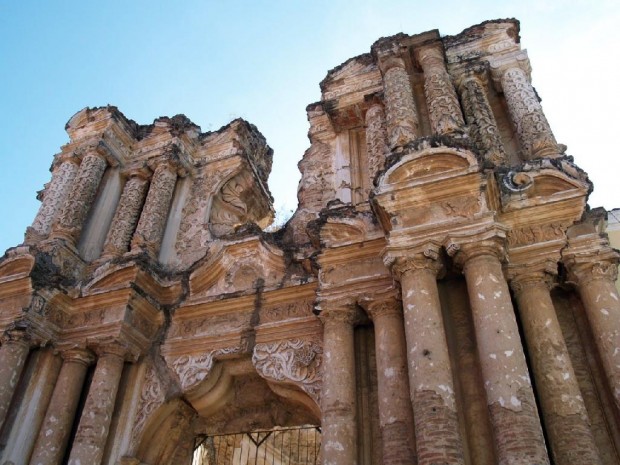
Visitors will find an amazing array of colonial monuments in Antigua, some of which have survived the earthquakes, some that lie in ruins, and others that were painstakingly restored according to their original construction plans. Many of those buildings are open to the public and give their visitors a fascinating glimpse into the history of Antigua more than two centuries ago.
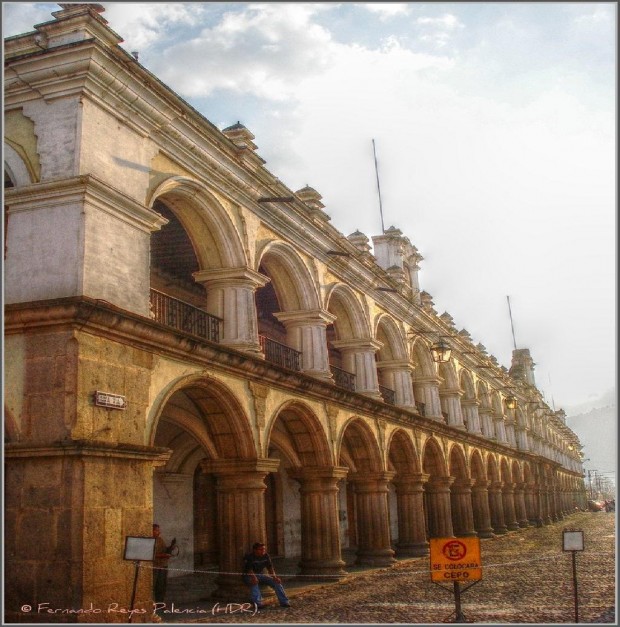
Antigua is a UNESCO World Heritage Site, and is located in the central highlands of Guatemala, only about 25 miles from Guatemala City. The colonial City also makes for an ideal base to explore the rest of the country.

The Expat 3 Count, where we bring you 3 stories that you shouldn’t miss.
1. Expat Challenges: 3 Things Surveys Never Tell You About Being an Expat
First Up: Though you might dream of fun and adventure as an expat overseas, there are a few things you might wish someone would have told you before you packed up and left.
Becoming an expat is a challenge. Here are three expat tips to keep in mind when making the move overseas:
- It’s wise to create an income source before you leave your home country.
- Plug in to the local community of expats.
- Finally, get a major credit card.
There are many reasons to make the move to be an expat, and if you make it prepared, it will be a rewarding and thrilling experience.
2. Yes, Expats Are Entitled to Refunds from the IRS
Americans living abroad may not believe this, but filing their U.S. tax return could mean cash in their pockets.
Greenback expat tax services points out that if you earn income anywhere in the world, as a U.S. citizen, you will likely be obligated to pay American taxes as well. The U.S. is one of the only nations in the world that requires its citizens to file taxes on money earned while living in another country.
But this is not a bad option, as many expats could be entitled to a tax refund. As the Internal Revenue Service pointed out in a recent memo to expats, ‘even if you are not required to file a tax return, you may still want to file. You may get a refund if you’ve had too much federal income tax withheld from your pay or qualify for certain tax credits.’ It’s worth checking out.
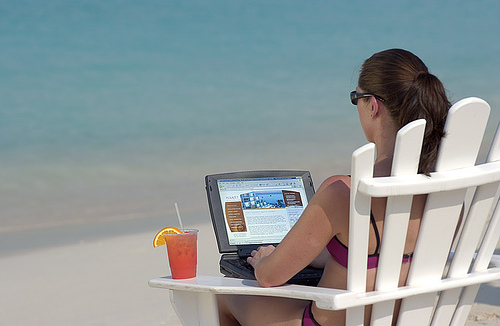
You too can find work as an expat.
3. The Best Ways to Find Work When You Want to Be an Expat
Finally: More than 6 million Americans call themselves expats, the largest number ever recorded, and more are waiting in the wings to start a new life abroad. Costa Rica, Panama and Nicaragua are expat hotspots for those seeking a tropical lifestyle while still remaining employed.
It’s not hard to understand why so many Americans are considering becoming expats as the current job market in the U.S. is highly competitive. Meanwhile many countries, such as Panama, are booming. Interestingly enough, many of these jobs are a direct result of American companies expanding their overseas branches.

Change is daunting. Change is difficult. It’s as good as a holiday, and mostly it’s for the better. If you’re looking for a change let’s face it: you probably need it. And if that change is becoming an expat in Panama, it’s a big one. It needs a lot of consideration. It’s stressful.
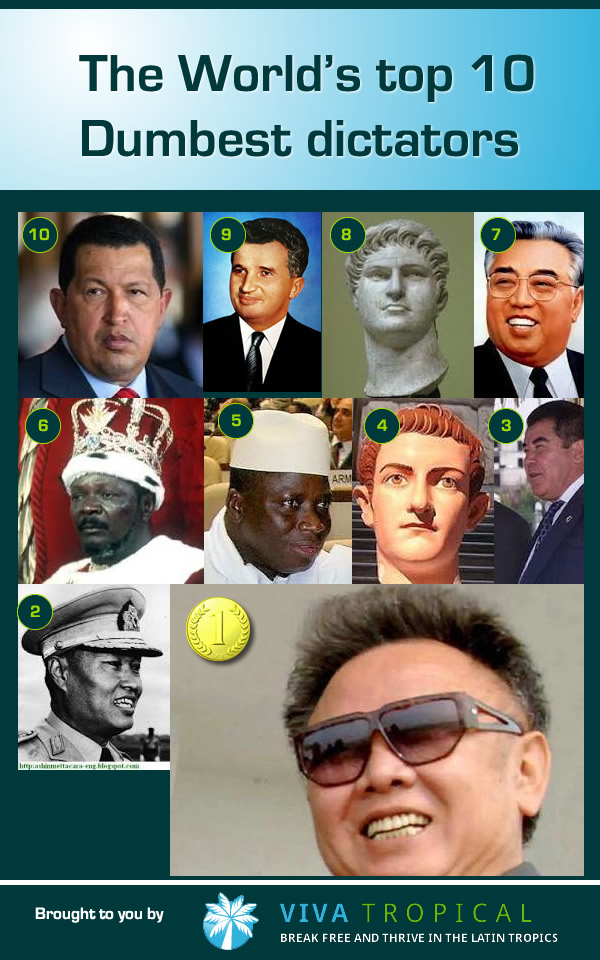
But the great thing is, you’re moving to somewhere which isn’t. To make the journey (pun intended) a little more light-hearted, today we bring you the list of the world’s Top Ten Dumbest Dictators, to show you what some countries dealt with before they realised that they too needed a change!
10. Hugo Chávez
While I know this is probably not-quite-PC (because he died recently) but a life like his cannot go by without admiring that which he did. The late President of Venzuela, Chávez ruled from 1999. And ruled he most certainly did.
My personal favourite jaunt of his was when he suddenly realised that Simon Bolivar (who died in 1830 of tuberculosis) did not actually die from TB but had, in fact, been assassinated. Now everybody and their sister has a small conspirator inside them, so maybe you’re saying ‘so what?’.
So what indeed…He decided the matter needed to be solved and ordered Bolivar’s remains to be exhumed. He then held a live Twitter feed throughout the exhumation (which he was watching) and tweeted ‘Bolivar Lives!’. He also asked Jesus Christ to bring him back to life (unfortunately, Christ didn’t seem to have much of a sense of humour on that one).
A level-headed man, Chávez logically worked out that the Haiti earthquake of 2010 was deliberately caused by a U.S. earthquake machine. This said by a member of the UN…
His supporters, ever loyal, are grieving his death (and will continue to do so until someone exhumes him back to life!).
9. Nicolae Ceausescu
Meet Romania’s 1965 communist dictator. A romantic man at heart, Ceausescu forced all Romanian scientists to include his illiterate wife’s name in their research. While this was obviously not grand enough of a gesture, he decided to build a palace in the capital. To fund this project (on which 700 architects and 20,000 workers were to work at all hours of the day) he exported all of the country’s agricultural and industrial production.
It took his people 24 years to decide that they didn’t want a leader that lead with his heart. They eliminated that problem: and executed the man (his sceptre still in hand!).
8. Emperor Nero
Good old Nero was a real mommy’s boy. I mean, the woman poisoned Emperor Claudius so that her son would become emperor. In true mommy’s boy fashion, he took after her. And over her. I don’t mean literally, because yes he technically was ruling over her, but over her life. He decided that her time was up.
So the next thing on his mind was how to do it. A creative soul, he rigged a chair with a weight to flatten her to death. And failed. Then he rigged a ship to sink, but she swam safely to shore. A sore loser, he dropped the creativity out the window (not rigged) and hired an assassin to get the job done. And that was that.
Surprisingly he became rather unpopular so he committed suicide leaving us all with the (humorous, but not to him) words: ‘what an artist dies with me’.
Moral of the story? No one dies when you’re too creative at it.
7. Kim II Sung
The best thing I can say about this man is that he had great pearly whites. His dentist must have benefited so well from this particular dictator, who’s mission was to make beautiful North Korea ugly by erecting over 3000 monuments of himself. He also made it mandatory for all North Koreans to wear a badge of him (do you think they had the dentist’s number on the back? I hope so).
He liked to refer to himself as the ‘Sun of the Nation’. I’m sure that was also teeth-related.
6. Jean-Bedel Bokassa
 Bokassa started off well. He was the president of the Central African Republic in 1966 (thank the French!). He was a good leader, and at some point this got to his head.
Literally, he went mad. He decided to create the Central African Empire to make himself Emperor Bokassa. No Emperor is complete without a ceremony, of course, which he modelled on the coronation of Napoleon Bonaparte. On this ceremony, he splurged a third of the national budget (yes, nearly $30 million!) and sent the country into bankruptcy.
Because of this bankruptcy children started to complain about the expensive school uniforms that they had to buy with his face on them. He sent them to jail, and had 100 children killed. Then, and only then, did the French decide to remove him from power.
5. Yahya Jammeh
Jammeh is still alive and kicking and you’ll find him kicking along in Gambia, if you’re looking for a miracle healer, that is. This dictator alleges that he’s found a cure for AIDS. Yes. A cure. And if you don’t believe it, he has a governmental agency dedicated to the cause: meet PTPG (Presidential Treatment Programme Group). From them, you can get a list of the local herbs that will cure this incurable disease!
4. Emperor Caligula
Some emperors lead by example. Some don’t. Caligula, the Roman Emperor, was one such man. For starters, he made his sister his mistress and then ordered Rome to weeks of mourning when she died. That was, no laughing and no bathing (for Pete’s Sake. How could you even think of bodily hygiene when your incestial Emperor is sad?).
He never loved another woman since…and so moved swiftly on. To horses. Yes. Caligula loved his horse. He treated him, Incitatus, like a mistress: he bought him royal clothing and treasures. He even made him into senator and later elevated him to the position of consul! (Yes. Rome had a Vice-President horse. Deal with it.)
Among his quirks was the time he declared war on Poseidon, the sea god. He had his soldiers collect seashells from the beach as their form of attack.
Still dealing with it? His guards couldn’t, and killed Caligula.
3. Saparmurat Niyazov
 Niyazov was the dictator of Turkmenistan from 1990 until his death in 2006. If you think his name is a tongue-twister you’d have your work cut out for you in Turkmenistan, because he renamed the month of January after himself, and ‘bread’ after his mother. His personal best was when he built an ice palace (an ice palace in his desert capital, that is)! He banned beards, he banned the practise of lip-syncing (sorry Beyoncé!) and he banned the chewing of tobacco (encouraging citizens to chew bones instead – better for your teeth you know).
The height of his career was when he wrote his book The Ruhnama (‘Book of the Soul’) – about how to live life. He said it needed equal respect as that of the Quaran. The difference between the Ruhnama and the Quaran, however, was that if you read the Ruhnama three times you would automatically go straight to heaven! To illustrate what it meant to go straight to heaven he launched a copy of the book into space in 2005.
2. Ne Win
Ne Win, was new in (see what I did there?) power in Burma through a military coup in 1962. A new man, he thought, meant a new currency. What better way than by changing the old currency to denominations of his favourite numbers: 15, 30, 45 and 90?! Obviously, he banned the old currency so everyone lost their savings along the way. He logic-ed this out (this and walking backwards on bridges, for instance) that this would make him live to be 90. He died at 91, but not before he was forced out of power.
1. Kim Jong II
And the Dumbest Dictator award goes to….North Korea’s Kim Jong II! Firstly, let’s look to what he was all about. He composed six operas, invented the hamburger and was the world’s greatest golfer. (Shooting 38-under par on a regulation 18 hole golf course, that included 11 hole-in-ones. Casual.) And that’s not all! He was also a global fashion phenomenon, was born under a bright star and a double rainbow (because being born under a bright star itself was far too mainstream-nativity-scene for good old Kim) and kidnapped South Korean director Shin Sang-Ok and forced him to produce movies (because the North Korean film industry was not making enough classics for him, it seems!). He also is the only recorded person ever to be able to change the weather with his moods.
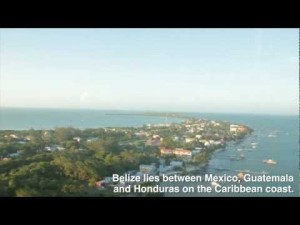
Go ahead, take your shoes off and dip your toes into the clear, aquamarine waters of the Caribbean..that’s what life is about in Caye Caulker, Belize. When you are here, you’re welcome to spend your days snorkeling, fishing, diving, or lying peacefully in your own hammock.
Life on this small, 5 mile long, island off the coast of Belize is all about being laid-back. Spend your day on the beach, explore underwater wonders, and dine on local seafood specialties. And despite growing tourism, Caye Caulker remains a small village with a distinct cultural flavor not necessarily found in large-scale tourist development.
Caye Caulker Airport
Small airplanes land on the only asphalt-paved airstrip of Caye Caulker Airport, and are continually shuttling visitors on a well-connected network of barrier islands. Or you may prefer to get to the island as the locals do, on a water taxi.
Once on the island, the main mode of transport is simply walking. The paths are well defined, and crossing the island takes 20 minutes at most. Bicycles and golf carts are also very common and can be easily rented.
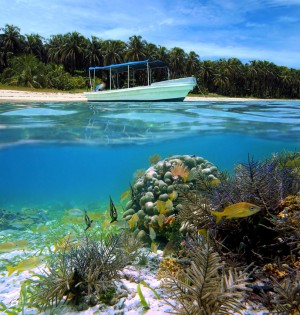

As an expat, moving to Panama is a big step as well as a rewarding one. It’s so easy to just pack your bags and venture abroad. And yet, you should be aware that there are certain risks involved in settling overseas. Experts warn that there are a number of easy mistakes to make; here are some of the worst issues expats face when they first move abroad.
1. Expats Don’t Do Enough Visa Research
The first thing to consider when moving abroad is the rules of the country in which you’d like to live. Most countries require a visa for foreign nationals who wish to move there; check with the immigration department of the country for specific regulations. If you will be searching for a job upon arrival or working remotely for a company in your home country, you will likely need to enter on a tourist visa and apply for a more permanent visa when you are in country.
2. Expats Overlook the Little Things
Before you move, change your address with your bank and other financial institutions. If you will be moving frequently or if you need to keep a U.S. address, consider using a mail service, which will provide an address and receive your mail; some services will scan the envelopes and send you an email.
3. Expats Pack Too Much or Too Little
Depending on the length of your planned move abroad and your situation, you will need to pack differently. If you are planning to move for a long period of time, invest more in packing; you will need to ship your belongings. If you are moving abroad for a shorter period of time, consider packing less. Most necessities can be purchased abroad, and travel is easier when you are not burdened with piles of clothing and home accessories.
4. Expats Underestimate the Cost of Living
One of the biggest mistakes made in that first move abroad is to underestimate just how much it may cost to live in a new and unfamiliar country. The danger lies in the amounts that people tend to budget for food, utilities, and other essentials. Some countries are promoted as cheap alternatives to the U.S., but it’s not until the bills start coming in that the differences become apparent. The solution is to assume you will need far more than planned for in your original budget.
5. Expats Are Forgetful of Money Management
If you will be receiving pay when you are living abroad, you will need to open a local bank account. Check with your bank to make sure that your debit card will be usable overseas; if you have a PIN that is more than four digits, you may need to change it. Call your bank and credit card companies before you leave to alert them that you are moving so that unusual activity does not prompt an account freeze.
6. Expats Forget to Budget Moving Costs
When people first arrive in a new country, particularly if it is their first contract or posting abroad, the new and exciting surroundings often put them into ‘vacation mode’. For the first three to six months they want to absorb the culture and the bright lights of their new country of residence and they spend like they are on vacation.
7. Expats Are Sometimes Too Vulnerable
Research is essential, especially for self-made expats who have to figure out everything on their own. Not only do they have to struggle with red tape, but impostors may feel right at home among clueless strangers. Other people’s dreams of living abroad can turn into a lucrative business for con artists. One rule of thumb.
8. Expats Forget to Avoid Scams
Seek out the help of other expatriates, especially those who’ve spent a few years navigating the culture and bureaucracies. They have a wealth of knowledge that most are willing to part with to make your transition smoother.
The urge to spend your life sipping exotic drinks may be so strong that you are willing to do whatever it takes. However, if you use some common sense, you will eventually be able to enjoy your cocktail under a swaying palm tree after all.


The decision to pack up and leave the familiarity of life in the United States in exchange for the freedoms of life in the tropics isn’t an easy one. Nor is it one to be taken lightly. Although some online quizzes may proclaim the ability to pinpoint your ideal destination in under a minute, you might be just as well served by haphazardly throwing a few darts at a map…blindfolded.
Now please don’t misunderstand. A light-hearted quiz might be a fun diversion during those last few long hours of a Friday afternoon at the office. And, if you’re like so many other Americans who desire a better life but have no idea where to start, it might be a first step in the right direction.
However, relocating overseas takes a lot of consideration and careful planning, not to mention some quality time spent in your potential new home to make sure it’s a good fit for you.
Below are some initial factors you might want to consider when deciding if…no, make that…specifically what part of the tropics is right for you.
What Can I Afford?
This is the number one question on most people’s minds when they’re considering relocating, so let’s just start there. When choosing a home in Latin America, cost is an important factor to consider. You may want to weigh out how the cost of living in various locations stacks up to that of the U.S or whether you would be able to get by on Social Security alone. You may find that some of your desired areas are more affordable than you think.
While the cost of living varies greatly from one country to the next, monthly expenses can run as low as $1,500 in countries like Panama, Ecuador or Nicaragua.
Just How Far Removed Will I Be?
Moving to the tropics doesn’t mean just leaving your home. It involves relocating to a place far from friends, family, and the conveniences to which you’ve grown accustomed. So, how hard will it be to get to where you want to go once you’ve found your tropical home?
Things you might want to consider when choosing your new address should include factors like how close the city is to a major airport. And then, how long is the flight back to the States when you do get ready to visit? You might also want to think about the proximity of hospitals, schools, or a business district where you can work, if you so desire.
What Are My Healthcare Options?
Healthcare is another factor to consider when making the ultimate decision of where to relocate. Like many other variables the quality and cost of healthcare can vary greatly from one area to the next.
But overall it’s quite good and seems to be improving. Many doctors have even spent time training in the U.S. and speak English well. Visit the Joint Commission International website for more information on accredited hospitals near your desired location.
There’s also the question of health insurance. While Medicare won’t be an option, there are other U.S. insurance policies whose coverage will extend overseas. In addition, most countries have their own national healthcare systems which are available to expats. Check in to all of the options available to you before you make any decisions.
What Type of Setting and Climate Suits Me Best?
Whether you’re looking for a beach retreat in a tropical climate or a mountain haven with four distinct seasons, a multitude of options awaits you. The same is true for those seeking rural relaxation or a bustling city center. This is where the importance of spending time in your desired area really comes into play. A lot of people like to vacation on the beach. Not everyone wants to live on one.
And, while owning your own island sounds magical, it probably isn’t right for someone who enjoys having access to a local convenience store that’s open all night. Think about what type of atmosphere it is that really makes you tick, and build your future around that.
What Will I Do When I Get There?
So, maybe you’ve seen photos showcasing the hiking and surfing opportunities throughout Latin America, and maybe you’re worried because those activities don’t interest you. The attractions, events, cuisine, and culture throughout Latin America are as varied as the cities that house them.
There’s no need to force yourself to fit into a mold that doesn’t suit you. Do your homework, and research the types of activities available in the area you’re targeting. Find the place with the lifestyle that speaks to you. Whatever your interests or hobbies, you’re sure to find a place that will accommodate them. Who knows? You might even pick up a few more hobbies along the way.
How Will I Fit In?
One final question you might need to ask yourself before diving headfirst into another culture is the question of how easy it will be to acclimate to your new surroundings once you arrive. What are the people like? Is there already an established expat community? Are the locals welcoming to outsiders? Will I need to learn a new language? How readily available are the foods to which I’m accustomed?
No matter how many other aspects match your criteria, there is no substitute for being just plain old comfortable in your day-to-day life. As mentioned before, spend some time in your prospective new community. Get to know the locals, the climate, and the culture.
You’ll know it’s the right place when it already feels like home.
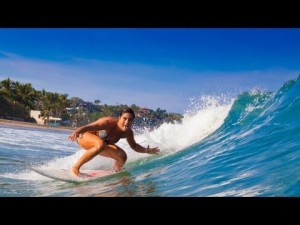
Sayulita may be a growing tourist town, but don’t worry, it isn’t a tourist trap. This sleepy fishing village offers up incredible beaches, lush jungles and a taste of rural Mexico. Located on the Pacific coast of Nayarit, Mexico, this pueblo is slowly gaining popularity with expats, but more importantly, it’s packed with fun.
Here’s just a sampling of what you can do
- World Class Surfing
- Humpback Whale Watching
- Sea Turtle Releasing
- Sea Fishing
- Great Golfing
- Jungle Biking
- Boating
- Snorkeling
- Beach Lounging
- Eat a world famous Sayulita Fish Taco
Don’t worry, surfing and water sports isn’t all there is to do in Sayulita. But you will like it here if you’re into being outdoors. There are some nice trails to run, mountain bike, or just hike. You can even take a casual walk to your own private beach – great places to watch the sunset. Oh and don’t forget to try a fish tacos.
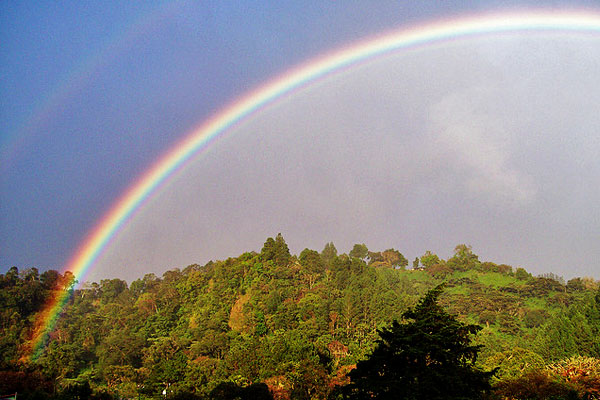
“You’ll never find rainbows if you’re looking down.” – Charlie Chaplin
Rainbows mean many things to many people. To some they are merely a meteorological phenomenon. To others, who subscribe to certain ancient myths, they serve as a bridge that connects humans to the gods. To still more they represent the promise of God’s preservation. In Irish folklore, the rainbow marked the hiding place for the leprechaun’s pot of gold. It was a mythical place that, since the rainbow is an optical effect that depends on the location of the viewer, could of course never be found. Or could it?
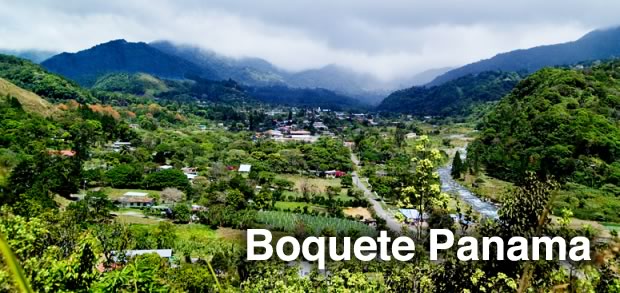
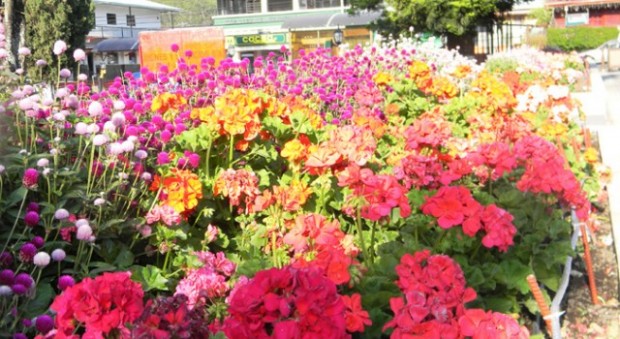
To residents of Boquete Panama, frequent rainbows are the product of the bajareque, a delicate drizzle that sometimes accompanies the north winds that blow down from the mountains. The rainbows arch, often in multiples, over the Valley of Flowers and Eternal Spring, aptly named due to the town’s vast array of exotic flora and its balmy weather that rarely registers above 80 or below 70 degrees Fahrenheit.
Situated in Panama’s highlands, Boquete is nestled into the lush mountains less than 40 miles from the border the country shares with Costa Rica. Located in the Chiriquí Province, the town (actually a group of six smaller districts) sits on the Caldera River approximately a half hour drive from the capital city of David and 340 miles from Panama City. Its elevation of almost 4,000 feet above sea level helps to alleviate the sweltering humidity experienced by some of its coastal neighbors.
Instead Boquete enjoys perpetual spring-like temperatures and breathtaking panoramic views of the surrounding mountains. With a population of less than 20,000, about as many as New York’s Madison Square Garden can seat, residents of Boquete enjoy the small-town atmosphere that so many expatriates seek when leaving their native lands.
Just in case you need any further convincing…
Here are a few of the reasons Boquete, Panama, may be the best place for you.
Its location provides endless sources for adventure.
For the thrill-seeker, the mountains around Boquete offer opportunities for hiking, such as the Sendero de los Quetzales trail or the ascent to the top of the Volcan Baru, a dormant volcano that is also the nation’s highest point. Rock climbing, zip lining, whitewater rafting, and horseback riding round out the list of other available action-packed adventures.
For the slightly more faint of heart, the above areas can also be explored by vehicle, although the country’s push for ecotourism would encourage exploration that leaves the least impact on the natural environment. Also offered are more leisurely tours of the local coffee plantations and rain forests, as well as trips to the hot springs of the nearby Caldera River.
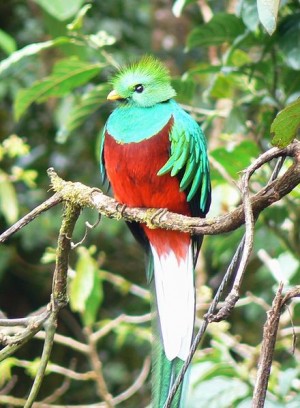
No matter what your preferred method of sightseeing, you needn’t venture far to enjoy the spectacular flora and fauna of Boquete. The mountains and forests boast an array of flowers: lilies, hibiscus, roses, carnations, sunflowers, and orchids. The region is also home to over 900 species of birds, including the Resplendent Quetzal which was regarded as sacred by the ancient Mayans.
The climate is perfect.
 Repeatedly named as a top retirement destination by groups such as AARP, Boquete, Panama, enjoys spring-like weather all year round. Perhaps the only thing that differentiates the seasons is the rainfall that occurs during the summer (roughly May through October) and ceases during the winter months (November through April). The combination of the moist climate and fertile, volcanic soil results in a rich agricultural bounty of coffee beans, strawberries, oranges, and much more.
Culture abounds.
The mountains around Boquete are home to the Ngobe-Bugle people. This indigenous group is comprised of farmers and artisans. They fashion chaquiras (bead necklaces), baskets, chacara (woven bags) and nahua (the garments of their native dress). Likewise the Kuna people are famous for their bright molas, a colorful textile art form.
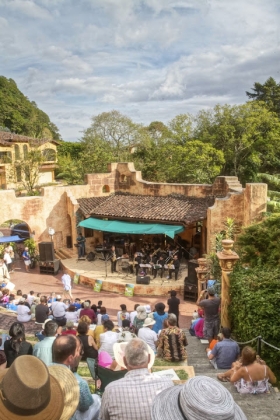
Boquete is home to a vibrant music and art community. The Boquete Jazz & Blues Festival is the largest in the province of Chiriquí. The Boquete Community Players, an expat theater group, was started to promote an appreciation of the arts and foster a sense of community among the expatriates. The group recently opened its new venue alongside the Caldera River. The organization also hosts the annual Chiriquí Art Expo.
Boquete’s arms are wide open to expats.
Panama’s Pensionado (Pensioners’) Program offers a lifetime visa for retirees, with little expense or hassle and no minimum age requirement. Pensionados receive discounts of up to 50 percent on entertainment, 30-50 percent on hotels, 25-30 percent on transportation, 30-50 percent on hotels, 25 percent on restaurants, 25 percent on power and utilities, and 15 percent on hospital and private clinic services.
Panama is pro-business and pro-investor. The country also has favorable corporate and personal tax laws. Foreign-earned income is not taxed, and new home purchases can be tax exempt for a certain number of years.
Others have already paved the way.
Due to an already-established community of expats, newcomers to Boquete will find many of the same conveniences they enjoyed back home. Essentials such as cellular phone service and high speed internet are readily available.
Organizations such as Rotary International and Lions Club International have established chapters in the area. These and many other philanthropic initiatives have been started by local expatriates. Through Animales de Boquete, they strive to control the animal population and improve overall animal health. A group called Amigos de Boquete feeds hundreds of local school children each day. Another organization called Buenos Vecinos collects food and monetary donations to assist the hungry and elderly.

It goes without saying that, no matter how spectacular the perks of a particular destination, it may not be everyone’s answer to the question “If you could live anywhere in the world, where would it be?”
Here are a few of the reasons Boquete, Panama, may be a better place for someone else.
The cost of living, while low, isn’t the lowest you’ll find in Central America or even Panama.
While still far less than the cost of living in the United Sates (60-70 percent less per some expats), the cost to live in Boquete, Panama, is higher than that of living in other mountain villages. However the old adage that ‘you get what you pay for’ may hold very true in this case. The prevalent amenities and luxurious accommodations available in Boquete do not come without a price.
That being said, the cost of living is STILL quite low. A modest 3-bedroom/2-bathroom home on a decent lot can be purchased for under $150,000. To rent the same property would run you in the neighborhood of $800 per month. A taxi will drive you across town for $1-2. A haircut costs around $5, and dinner for two with a bottle of wine will set you back a mere $30.

The mountains aren’t for everyone. Say, for instance, a beach person.
While Boquete is not ON the beach, it is near it. Panama is an S-shaped country that borders the Caribbean Sea on one side and the Pacific Ocean on the other. Slightly smaller than the state of South Carolina, the country is 110 miles across at its widest point. Boquete’s location lends itself to a view of both oceans from atop the Volcan Baru. So what you sacrifice in proximity, you regain in panorama.
The mountainous terrain also makes Boquete somewhat of a difficult place to access. Buses from David, the capital of the province, leave every 45 minutes. Flights from Panama City to David range from $80-$100. Taxis are available for local travel. However, the city of Boquete itself is very pedestrian-friendly. Also to be considered is the fact that the abundance of local businesses, such as grocery stores and even shopping malls, eliminates the need for frequent travel outside of town.
The well-established expatriate community may dishearten the would-be pioneer.
Those wanting to immerse themselves in the local culture, learn the language, and dress in authentic garb would have much preferred Boquete a decade ago. Today there are almost as many expatriates as there are Panamanians. Recent years have seen the addition of 1,000 homes, and the area now features over 10 gated communities.

On the flip side, this could also be regarded as a benefit to those who want to relocate to paradise without losing too many of the things to which they’re accustomed back home. For instance, the dollar is the national currency of Panama.
So now, over 100 years since the city was first founded on April 11, 1911, Boquete, Panama, has become a mecca for international tourism and a magnet for refugees from all across the globe. A bowl-shaped valley tucked into the mountains of Panama’s highlands, it is a true cultural melting pot and, until recently, one of the region’s best-kept secrets. With a name that means “gap” or “opening” in Spanish, perhaps it’s no coincidence that the town was first founded by gold-seekers who were hunting a shorter and faster route to the Pacific. Who knows? Maybe those leprechauns were onto something.

Whether it’s best suited for you or more appropriate for someone else, there is no doubt that Boquete, Panama, is indeed a treasure. If Boquete is the home away from home of which you’ve always dreamed, we look forward to seeing you. If your search for the destination of your dreams must continue, we wish you the best. May the road rise up to meet you…
Are you a high roller home owner or a jet setter? Maybe you’re a bit of both! Check out our infographic and decide What kind of expat you are!


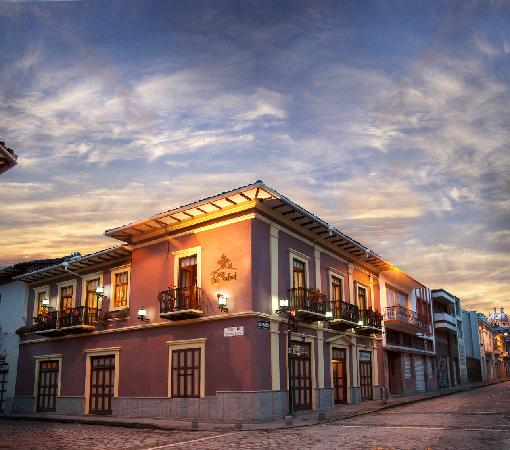
Affordable Cuenca, Ecuador
Thinking about making the move abroad and wondering where is the best location for a soon-to-be expat? Your answer might just be Ecuador, the newest hot spot destination for retirees and expats wanting the good life without the financial stress.
Ecuador is the world’s best place to retire overseas on a retirement budget. Here you can live better than you do in the U.S. for less money. The cost of living is low, and the cost of real estate is one of the lowest for Latin America. With monthly estimated living expenses ranging from $900 to $1,400, Ecuador surpasses Panama, Mexico, and Costa Rica.
1. Real Estate in Ecuador Is Affordable
If you want to call Ecuador home for good, the process of buying a house is straightforward. Real estate prices are still relatively low. Some expats find it is still possible to build new residential construction for under $100 per square foot. But remember, this is local construction… cement or red clay brick. There is almost no wood construction in Ecuador.
2. Getting Around Ecuador Is Cheap and Easy
Most expats find getting around Ecuador easy; most choose to ditch their cars and use public transportation or walk. Ecuador also has a good mass transit system. Quito, the nation’s capital, is well-equipped with buses and taxis, most of which are constantly available and cost an average of $1.00 per hour of travel.
3. Ecuador Offers Great Health Care
Most expats are pleasantly surprised with the medical system in Ecuador, especially the quality of care. Medical costs are one-tenth of what they are in the States and the hospitals are state-of-the-art and offer many healthcare options for expats.
4. Latin American Cuisine at Its Best
So how’s the food? One would be hard-pressed to go hungry in Ecuador for lack of options. In Quito and Guyaquil, you can get any type of food in the world; while outside of the city, local fruits and vegetables are in abundance along with chicken and pork. As one moves closer to the shore, the cuisine varies slightly. The same fresh fruit and vegetables are complemented by a huge variety of fresh fish.

5. American Culture
As much as an expat retiree may want to get away from it all, a little homesickness is inevitable from time to time. Ecuador’s English-speaking expats along with other English-speaking people and American franchises, is enough to ward off homesickness should it arise. Cuenca is a popular mountain town, which now has a few thousand English-speaking expats living there.
6. Ecuador’s Currency Is the U.S. Dollar
One thing to remember about Ecuador is that this country uses the U.S. dollar. For an American expat, this means it’s easier to understand what things really cost; it’s easier to keep track of your spending; and, very important, you avoid any currency-exchange risk. You may still have local inflation to contend with, but you won’t have to worry about that being compounded when the exchange rate goes against you.